Article

Dual Effects of Education Expenditure on Life Expectancy: An Empirical Assessment of Crowding-Out and Complementarity


UNE Business School, University of New England, Armidale, NSW 2351, Australia
*
Authors to whom correspondence should be addressed.
Econometrics 2025, 13(4), 44; https://doi.org/10.3390/econometrics13040044

Submission received: 20 September 2025 / Revised: 2 November 2025 / Accepted: 5 November 2025 / Published: 14 November 2025

Abstract

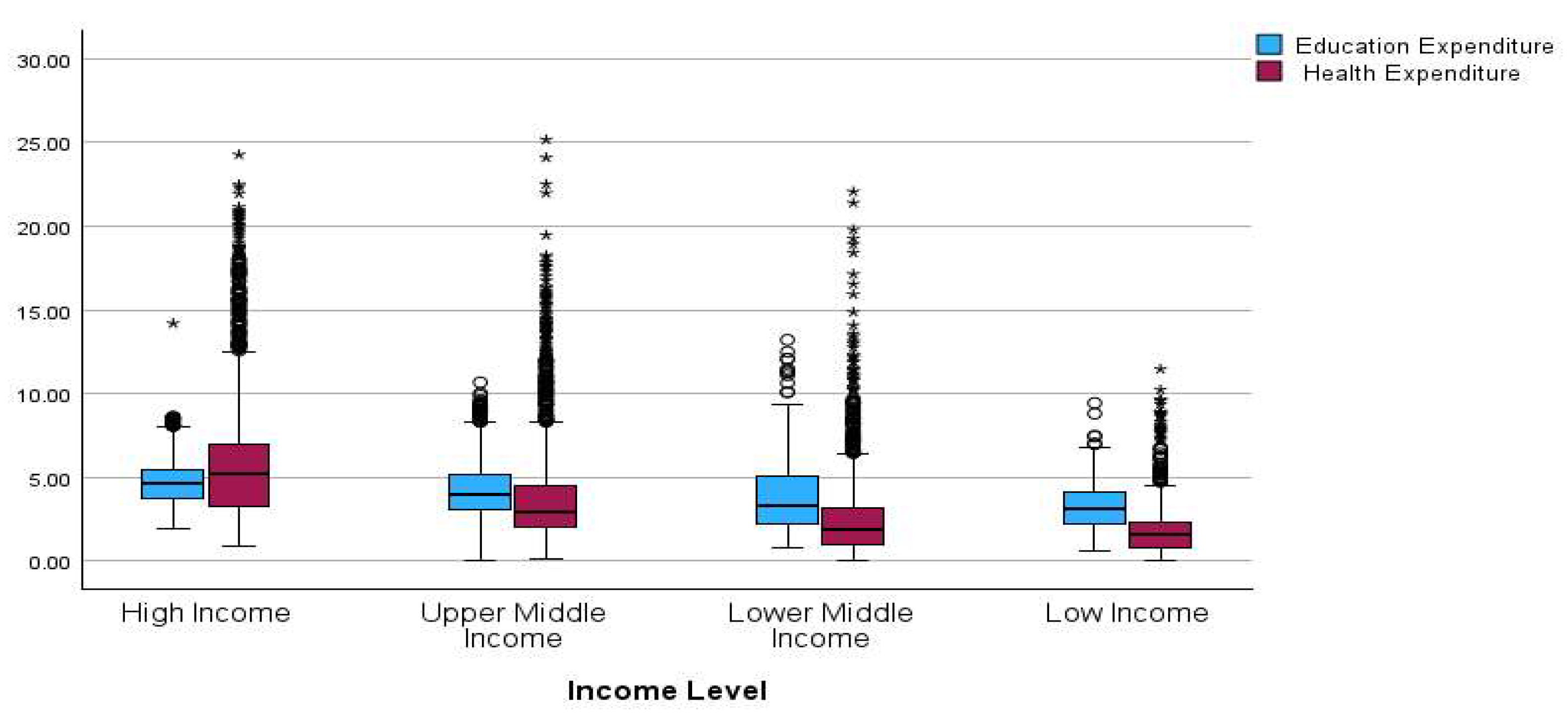
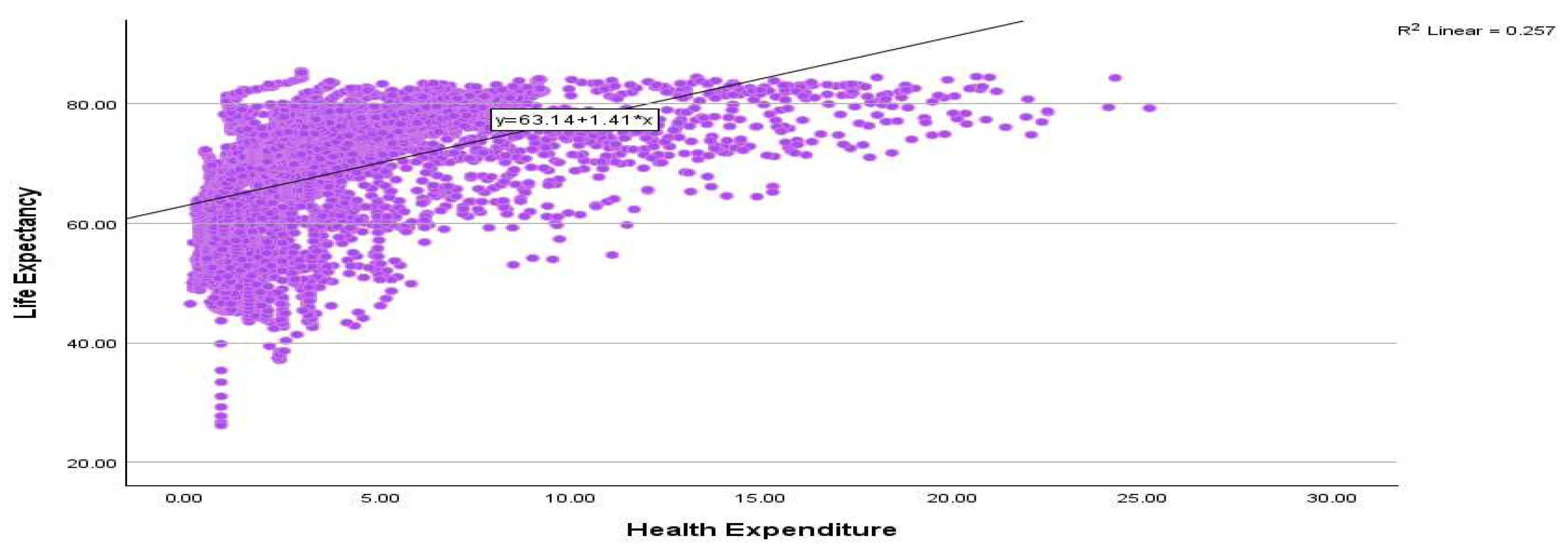
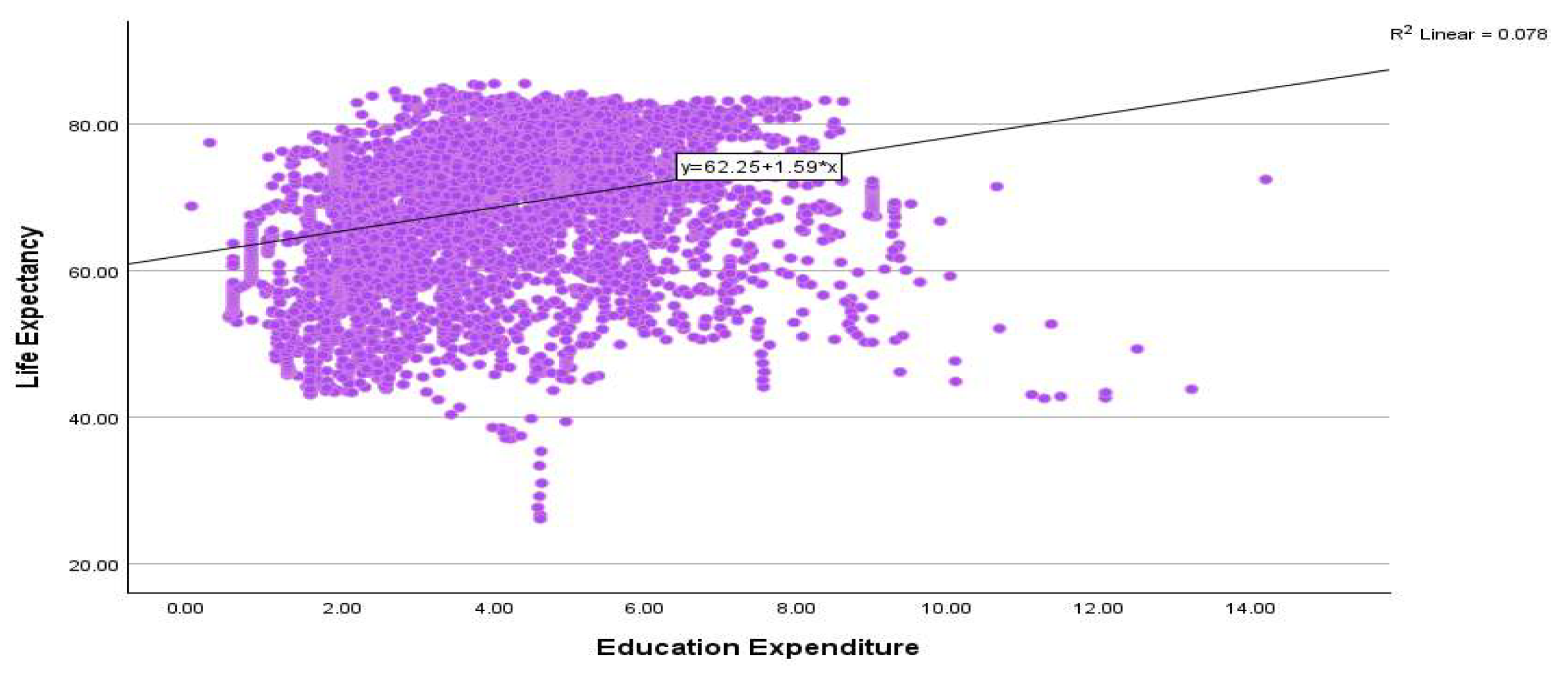
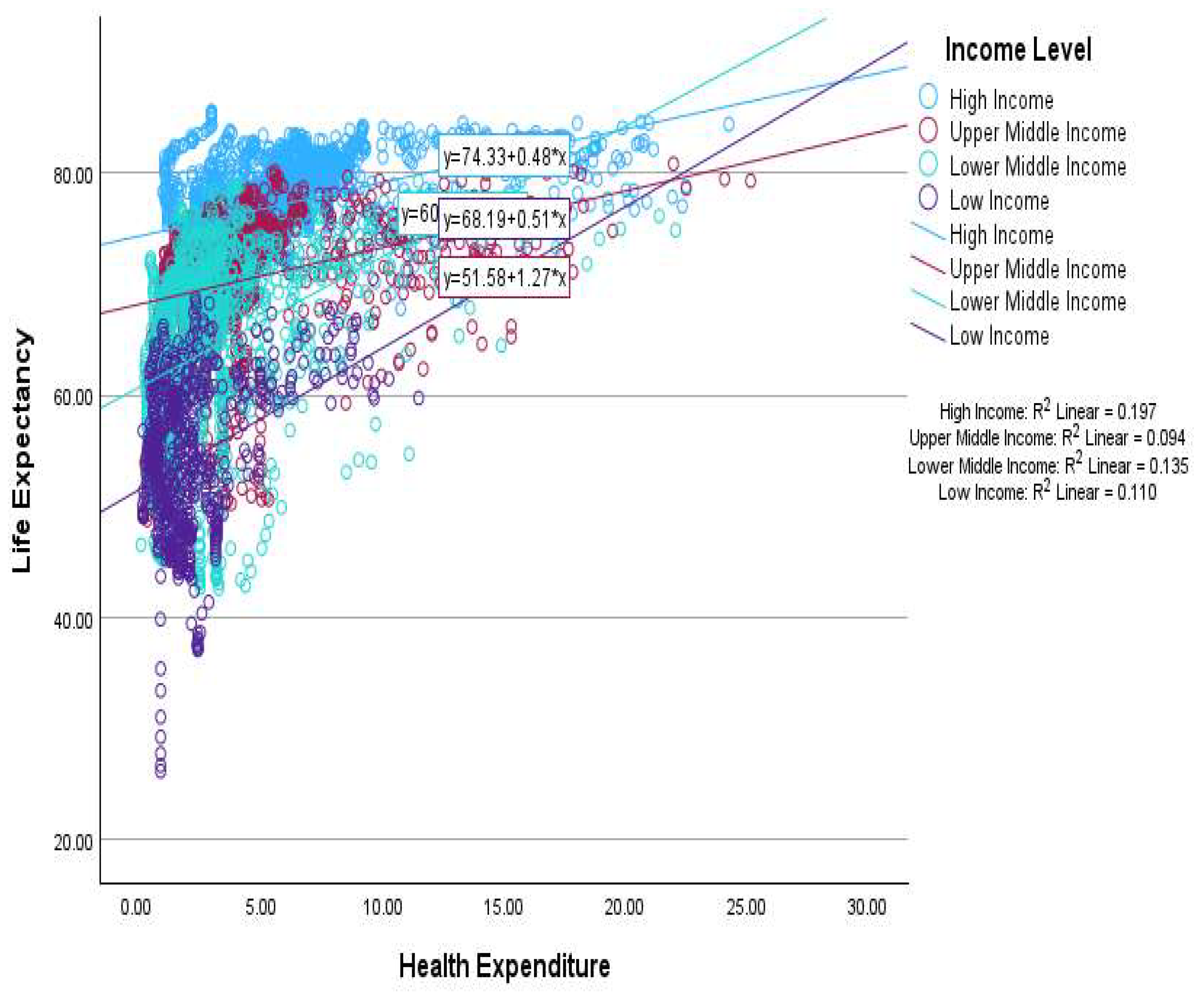
This study investigates whether public education expenditure crowds out or complements health investment in influencing life expectancy across 158 countries from 1990 to 2023. Graphical analysis shows that in high-income countries, health expenditure consistently exceeds education spending, reflecting mature complementarity between the two sectors. In contrast, in low- and middle-income countries, education spending often surpasses health expenditure, suggesting potential short-term crowding-out risks where fiscal resources are limited. Using Fully Modified Ordinary Least Squares (FMOLS), Two-Stage Least Squares (2SLS), and bootstrap estimation, the results reveal a predominantly crowding-in relationship that varies by income level. Bootstrap estimates from the life expectancy Model indicate that the coefficient of education expenditure (eexp) is −0.003 for high-income countries (HICs), 0.005 for upper-middle-income countries (UMCs), 0.045 *** for lower-middle-income countries (LMCs), and −0.010 for low-income countries (LICs). Bootstrap estimates show that the effect of education expenditure on life expectancy is insignificant in high- and upper-middle-income countries, strongly positive in lower-middle-income countries, and negative but insignificant in low-income countries. The coefficient of government health expenditure (dgghe) is 0.007 ***, 0.007 ***, 0.017 ***, and 0.035 *** for HICs, UMCs, LMCs, and LICs, respectively. Government health expenditure exerts a consistently positive and highly significant effect across all groups, strongest in low- and lower-middle-income countries. Sobel’s z-statistics (9.62, 8.70, 7.68, and 3.07) confirm a significant indirect effect of education on life expectancy through health expenditure. Health expenditure and GDP per capita enhance life expectancy, while inequality and inflation reduce it. Overall, education and health investments are mutually reinforcing but depend on fiscal capacity and governance quality, necessitating coordinated fiscal frameworks for sustainable human development.
Keywords: crowding-out; education expenditure; health expenditure; life expectancy crowding-out; education expenditure; health expenditure; life expectancy