Plants Used for Tick and Tick-Borne Disease Control in South Africa: Ethnoveterinary Knowledge, Bioactivity Evidence, and Translation Pathways

 ,
,  , and
, and
Abstract
1. Introduction
2. Methods
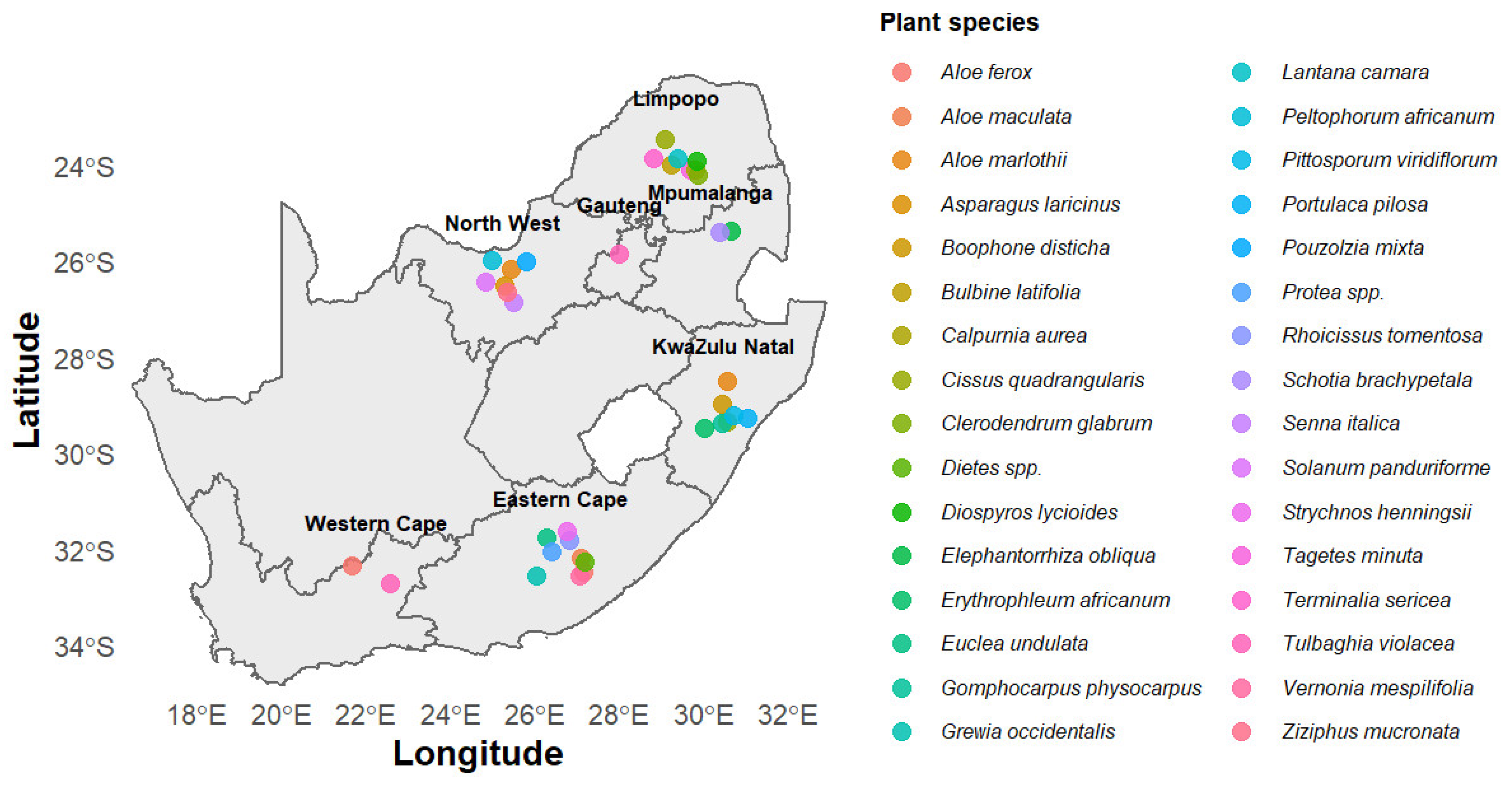
3. Ethnoveterinary Knowledge Landscape in South Africa
4. Experimental Evidence and Bioactive Basis for Efficacy
4.1. In Vitro and Field Efficacy

| Plant (Family) | Preparation/Extract | Assay | Tick Species/Stage | Doses Tested | Outcome | Refs. |
|---|---|---|---|---|---|---|
| Lippia javanica (Verbenaceae) | Aqueous leaf (10–20% w/v) | Field spray on cattle | Mixed cattle ticks | 10–20% | ↓ tick burdens; less effective than amitraz but significant | [30,51] |
| Lippia javanica (Verbenaceae) | Various leaf extracts | Repellency/Field summary | Mixed species | — | Efficacy near commercial industrial levels (contextual) | |
| Azadirachta indica (Meliaceae) | Seed kernel water extract (5–10%) | Field (goats/cattle) | Rhipicephalus spp. | 5–10% | ↓ infestation vs. controls; variable efficacy vs. flumethrin/amitraz | [52] |
| Azadirachta indica (Meliaceae) | Neem seed oil | LPT (larvae) | R. (B.) decoloratus larvae | 20–100% | 100% mortality within 27 h (at ≥20% concentration) | [47] |
| Calpurnia aurea (Fabaceae) | Acetone/ethanol leaf/flower | AIT (adults) | Rhipicephalus turanicus adults | ~1–20% | Adult mortality up to ~81% | [49] |
| Cleome gynandra (Cleomaceae) | Acetone leaf | AIT (adults) | R. turanicus adults | ~1–20% | Adult mortality ~78% | [49] |
| Tabernaemontana elegans (Apocynaceae) | Leaf hydroethanol | AIT (adults) | R. turanicus adults | Up to 20% | High adult mortality (≥65% at top dose) | [49] |
| Schkuhria pinnata (Asteraceae) | Whole-plant extract | AIT (adults) | R. turanicus adults | Up to 20% | Adult mortality ~67% (top dose) | [49] |
| Aloe rupestris (Asphodelaceae) | Leaf extract | AIT (adults) | R. turanicus adults | Up to 20% | Adult mortality ~66% (top dose) | [49] |
| Tagetes minuta (Asteraceae) | Essential oil | Repellency; In vitro | Rhipicephalus spp.; R. appendiculatus | 0.025–1% | High repellency; significant in vitro efficacy | [40,53] |
| Cymbopogon citratus (Poaceae) | Essential oil; Decoction | LPT; AIT; Repellency | R. microplus; R. sanguineus | 10–40 mg/mL; Topical | Dose-dependent mortality and repellency | [54,55] |
| Clausena anisata (Rutaceae) | Essential oil | LPT; Topical tests | A. variegatum; R. (B.) spp. (larvae, engorged ♀) | μL/mL; 5–75 μL topical | Low larval LC50; impaired oviposition/egg hatch | [33,56] |
| Aloe ferox (Asphodelaceae) | Powdered crystals (oral) | Field trial (oral) | R. (B.) decoloratus | Label-like dosing | Mixed/insufficient efficacy; palatability issues | [57,58] |
4.2. Phytochemical Profiles and Bioactivity of Key Species
5. Safety, Toxicity, and Regulatory Considerations
Target Animal and User Safety
| Plant (Family) | Safety in Target Species | Key Mammalian Toxicity Data | Operator and Environmental Safety | Regulatory Status and Remarks | References |
|---|---|---|---|---|---|
| Lippia javanica (Verbenaceae) | No adverse effects in cattle at 10–20% spray. | Mixed results in mouse studies at high doses; generally tolerable. | Standard PPE is advised for EO due to low environmental persistence. | Widespread community use requires a crucial formulation. | [30] |
| Azadirachta indica (Meliaceae) | Practical: monitor for GI upset with high oral doses. | Neem oil rat LD50 ~31.95 g/kg; toxicity in livestock with improper use. | Avoid aquatic release; use PPE for oil handling. | Widely adopted; requires quality standardisation. | [67,68,70] |
| Clausena anisata (Rutaceae) | No livestock field safety data (lab use only). | Mammalian data are sparse; however, they indicate that these species are highly active against ticks. | Potential dermal/eye irritation; standard EO precautions. | Further toxicity and residue studies are needed. | [56,71] |
| Tagetes minuta (Asteraceae) | Dog studies show efficacy; however, there is limited data on livestock. | Can be irritating at high dermal doses; limited LD data. | Risk of dermal irritation and photosensitisation; use PPE. | Best as a repellent adjunct; needs livestock data. | [69] |
| Cymbopogon citratus (Poaceae) | Limited field safety data for tick control. | Generally favourable toxicology at low dermal doses. | EO volatility reduces residue risk; PPE advised. | Promising repellent; requires cattle studies. | [54] |
| Calpurnia aurea (Fabaceae) | No field safety data (lab use only). | Limited data indicate that some related species contain alkaloids. | Unknown residue profile; avoid in food animals. | Prioritise toxicity studies before field use. | [49] |
| Schkuhria pinnata (Asteraceae) | No field safety data (lab use only). | Very sparse mammalian toxicity data. | Unknown operator and environmental risks. | Requires a complete safety assessment. | [49] |
| Aloe ferox (Asphodelaceae) | Poor palatability; practicality concerns. | Known anthraquinone laxative effects: GI distress. | Residue data unclear; avoid in dairy cattle. | Not recommended for tick control. | [57,58] |
6. Tick Vectors, Small Mammal Hosts, and Ecology
7. Cost and Accessibility of Ethnoveterinary Acaricides Compared with Commercial Synthetics
8. Residue and Environmental Considerations
Sustainability Considerations for Ethnoveterinary Acaricides
9. The Regulatory Pathway for Botanicals in South Africa
10. Knowledge Gaps and Future Research Priorities
11. Conclusions and Recommendations
Supplementary Materials
Author Contributions
Funding
Data Availability Statement
Conflicts of Interest
Abbreviations
| % | Percentage |
| ↑ | Increase |
| ↓ | Decrease or reduction |
| ♀ | Female (engorged adult tick stage) |
| A. sculptum | Amblyomma sculptum |
| A. variegatum | Amblyomma variegatum |
| Act 36 of 1947 | Fertilisers, Farm Feeds, Seeds and Remedies Act (South Africa) |
| ADMET | Absorption, Distribution, Metabolism, Excretion and Toxicity |
| AI | Artificial Intelligence |
| AIT | Adult Immersion Test |
| Anaplasma spp. | Anaplasma species |
| Babesia spp. | Babesia species |
| Bm86 | Boophilus microplus antigen used in anti-tick vaccines |
| CFU | Colony Forming Unit |
| D. nitens | Dermacentor nitens |
| DNA | Deoxyribonucleic Acid |
| EO | Essential Oil |
| EOs | Essential Oils (plural) |
| EVM | Ethnoveterinary Medicine |
| GC–MS | Gas Chromatography–Mass Spectrometry |
| GI | Gastrointestinal |
| GIS | Geographic Information Systems |
| H. anatolicum | Hyalomma anatolicum |
| H. longicornis | Haemaphysalis longicornis |
| H. rufipes | Hyalomma rufipes |
| H. scupense | Hyalomma scupense |
| LC50 | Lethal Concentration 50 |
| LD50 | Lethal Dose 50 |
| LIT | Larval Immersion Test |
| LPT | Larval Packet Test |
| mg/mL | Milligram per millilitre |
| NMR | Nuclear Magnetic Resonance |
| PPE | Personal Protective Equipment |
| R. (B.) | Rhipicephalus (Boophilus) subgenus designation |
| R. (B.) decoloratus | Rhipicephalus (Boophilus) decoloratus |
| R. appendiculatus | Rhipicephalus appendiculatus |
| R. microplus | Rhipicephalus microplus |
| R. sanguineus | Rhipicephalus sanguineus |
| R. turanicus | Rhipicephalus turanicus |
| RD50 | Repellent Dose 50 |
| RIT | Resistance Intensity Test |
| spp. | Species plural (multiple species within a genus) |
| TAS | Target Animal Safety |
| TBD | Tick-Borne Disease |
| Theileria spp. | Theileria species |
| USD | United States Dollar |
| w/v | Weight per Volume |
| μL | Microlitre |
References
- Makwarela, T.G.; Nyangiwe, N.; Masebe, T.; Mbizeni, S.; Nesengani, L.T.; Djikeng, A.; Mapholi, N.O. Tick Diversity and Distribution of Hard (Ixodidae) Cattle Ticks in South Africa. Microbiol. Res. 2023, 14, 42–59. [Google Scholar] [CrossRef]
- Giraldo-Ríos, C.; Betancur, O. Economic and Health Impact of the Ticks in Production Animals. In Ticks and Tick-Borne Pathogens; Abubakar, M., Kanchana Perera, P., Eds.; IntechOpen: Rijeka, Croatia, 2018. [Google Scholar]
- Makwarela, T.G.; Seoraj-Pillai, N.; Nangammbi, T.C. Tick Control Strategies: Critical Insights into Chemical, Biological, Physical, and Integrated Approaches for Effective Hard Tick Management. Vet. Sci. 2025, 12, 114. [Google Scholar] [CrossRef]
- Monakale, K.S.; Ledwaba, M.B.; Smith, R.M.; Gaorekwe, R.M.; Malatji, D.P. A systematic review of ticks and tick-borne pathogens of cattle reared by smallholder farmers in South Africa. Curr. Res. Parasitol. Vector-Borne Dis. 2024, 6, 100205. [Google Scholar] [CrossRef]
- Dzemo, W.; Thekisoe, O.; Vudriko, P. Risk factors contributing to tick-acaricide control failure in communal areas of the Oliver Tambo district eastern cape province, South Africa. Exp. Appl. Acarol. 2024, 93, 17–33. [Google Scholar] [CrossRef] [PubMed]
- Heylen, D.J.A.; Labuschagne, M.; Meiring, C.; van der Mescht, L.; Klafke, G.; Costa Junior, L.M.; Strydom, T.; Wentzel, J.; Shacklock, C.; Halos, L.; et al. Phenotypic and genotypic characterization of acaricide resistance in Rhipicephalus microplus field isolates from South Africa and Brazil. Int. J. Parasitol. Drugs Drug Resist. 2024, 24, 100519. [Google Scholar] [CrossRef]
- Githaka, N.W.; Kanduma, E.G.; Wieland, B.; Darghouth, M.A.; Bishop, R.P. Acaricide resistance in livestock ticks infesting cattle in Africa: Current status and potential mitigation strategies. Curr. Res. Parasitol. Vector Borne Dis. 2022, 2, 100090. [Google Scholar] [CrossRef]
- Dzemo, W.D.; Vudriko, P.; Ramatla, T.; Thekisoe, O. Acaricide Resistance Development in Rhipicephalus (Boophilus) microplus (Acari: Ixodidae) Populations Against Amitraz and Deltamethrin on Communal Farms of the King Sabata Dalindyebo Municipality, South Africa. Pathogens 2023, 12, 875. [Google Scholar] [CrossRef]
- Masika, P.J.; Sonandi, A.; Van Averbeke, W. Tick control by small-scale cattle farmers in the Central Eastern Cape Province, South Africa. J. S. Afr. Vet. Assoc. 1997, 68, 45–48. [Google Scholar] [CrossRef] [PubMed]
- Mollong, E.; Lébri, M.; Marie-Magdeleine, C.; Lagou, S.M.; Naves, M.; Bambou, J.-C. Sustainable management of tick infestations in cattle: A tropical perspective. Parasites Vectors 2025, 18, 62. [Google Scholar] [CrossRef] [PubMed]
- Murapa, R.E. Spatio-Temporal Variation in the Dipping Frequency of Communal Cattle at the Wildlife-Livestock Interface in the Mnisi Study Area Mpumalanga South Africa. Master’s Thesis, University of Pretoria, Pretoria, South Africa, 2018. [Google Scholar]
- Nyangiwe, N.; Matthee, S. Ticks (Acari: Ixodidae) and tick-borne diseases affecting communal cattle and the control methods practiced by farmers in the Eastern Cape Province of South Africa. Vet. World 2025, 18, 746. [Google Scholar] [CrossRef]
- Rosario-Cruz, R.; Domínguez-García, D.I.; Almazán, C. Inclusion of Anti-Tick Vaccines into an Integrated Tick Management Program in Mexico: A Public Policy Challenge. Vaccines 2024, 12, 403. [Google Scholar] [CrossRef] [PubMed]
- Zhou, W.; Li, M.; Achal, V. A comprehensive review on environmental and human health impacts of chemical pesticide usage. Emerg. Contam. 2025, 11, 100410. [Google Scholar] [CrossRef]
- Sanhokwe, M.; Mupangwa, J.; Masika, P.J.; Maphosa, V.; Muchenje, V. Medicinal plants used to control internal and external parasites in goats. Onderstepoort J. Vet. Res. 2016, 2016, 83. [Google Scholar] [CrossRef]
- Ndou, R.V.; Materechera, S.A.; Mwanza, M.; Otang-Mbeng, W. Perceptions of ethnoveterinary medicine among animal healthcare practitioners in South Africa. Onderstepoort J. Vet. Res. 2024, 2024, 91. [Google Scholar] [CrossRef]
- Ndou, R.V.; Materechera, S.A.; Mwanza, M.; Otang-Mbeng, W.; Ijane, M.F. Indigenous knowledge and use of medicinal plants for ethnoveterinary within the North West Province, South Africa. Front. Vet. Sci. 2023, 10, 1273562. [Google Scholar] [CrossRef]
- Zantsi, S.; Ngcobo, N.; Nqandeka, M.H. Animal health care and ethnoveterinary animal remedies among smallholder farming households in South Africa. Dev. Pract. 2025, 35, 596–605. [Google Scholar] [CrossRef]
- Tayo, G.M.; Poné, J.W.; Komtangi, M.C.; Yondo, J.; Ngangout, A.M.; Mbida, M. Anthelminthic activity of Moringa oleifera leaf extracts evaluated in vitro on four developmental stages of Haemonchus contortus from goats. Am. J. Plant Sci. 2014, 5, 1702–1710. [Google Scholar] [CrossRef]
- Chitura, T.; Shiba, M.R.; Afful, D.B.; Shai, K.; Muvhali, P.T.; Tsotetsi-Khambule, A.M. In vitro anthelmintic activity of seven medicinal plants used to control livestock internal parasites in chief Albert Luthuli municipality, South Africa. Livest. Res. Rural Dev. 2019, 31, 3. [Google Scholar]
- Phaahla, C.S.; Shai, J.L.; Maduna, V.; Moropeng, R.C.; Magano, S.R. Documentation of ethnoveterinary knowledge and alternative practices for cattle tick control in Sekhukhune District, Limpopo Province, South Africa. Front. Vet. Sci. 2024, 11, 1488960. [Google Scholar] [CrossRef]
- Van Puyvelde, L.; Geysen, D.; Ayobangira, F.X.; Hakizamungu, E.; Nshimiyimana, A.; Kalisa, A. Screening of medicinal plants of Rwanda for acaricidal activity. J. Ethnopharmacol. 1985, 13, 209–215. [Google Scholar] [CrossRef] [PubMed]
- Wanzala, W. Potential of Traditional Knowledge of Plants in the Management of Arthropods in Livestock Industry with Focus on (Acari) Ticks. Evid. Based Complement. Altern. Med. 2017, 2017, 8647919. [Google Scholar] [CrossRef]
- Dipeolu, O.; Mongi, A.; Punyua, D.; Latif, A.; Amoo, A.; Odhiambo, T.R. Current concepts and approach to control of livestock ticks in Africa. Discov. Innov. 1992, 4, 35–44. [Google Scholar]
- Ndungu, M.; Lwande, W.; Hassanali, A.; Moreka, L.; Chhabra, S.C. Cleome monophylla essential oil and its constituents as tick (Rhipicephalus appendiculatus) and maize weevil (Sitophilus zeamais) repellents. Entomol. Exp. Appl. 1995, 76, 217–222. [Google Scholar] [CrossRef]
- Lwande, W.; Ndakala, A.J.; Hassanali, A.; Moreka, L.; Nyandat, E.; Ndungu, M.; Amiani, H.; Gitu, P.M.; Malonza, M.; Punyua, D. Gynandropsis gynandra essential oil and its constituents as tick (Rhipicephalus appendiculatus) repellents. Phytochemistry 1999, 50, 401–405. [Google Scholar] [CrossRef]
- Chungsamarnyart, N.; Jiwajinda, S.; Jansawan, W.; Kaewsuwan, U.; Buranasilpin, P. Effective Plant Crude-Extracts on the Tick (Boophilus miscroplus) I. Larvicidal Action. Agric. Nat. Resour. 1988, 22, 37–41. [Google Scholar]
- Mthi, S.; Rust, J.; Yawa, M.; Tyasi, L. Ethnoveterinary medicinal plants application for the treatment of tick-borne diseases in cattle around the Eastern Cape Province of South Africa. J. Med. Plants Econ. Dev. 2020, 4. [Google Scholar] [CrossRef]
- Shava, E.; Thakhathi, R. Challenges in the Implementation of Community Development Projects in the Eastern Cape Province, South Africa. J. Hum. Ecol. 2016, 56, 363–373. [Google Scholar] [CrossRef]
- Madzimure, J.; Nyahangare, E.T.; Hamudikuwanda, H.; Hove, T.; Stevenson, P.C.; Belmain, S.R.; Mvumi, B.M. Acaricidal efficacy against cattle ticks and acute oral toxicity of Lippia javanica (Burm F.) Spreng. Trop. Anim. Health Prod. 2011, 43, 481–489. [Google Scholar] [CrossRef]
- Sandasi, M.; Malope, F.; Kamatou, G.; Combrinck, S. Chapter 16—Lippia javanica. In The South African Herbal Pharmacopoeia; Viljoen, A., Sandasi, M., Fouche, G., Combrinck, S., Vermaak, I., Eds.; Academic Press: Cambridge, MA, USA, 2023; pp. 345–363. [Google Scholar]
- Ghosh, S.; Tiwari, S.; Srivastava, S.; Sharma, A.K.; Kumar, D.; Ray, D.; Rawat, A. Acaricidal properties of Ricinus communis leaf extracts against organophosphate and pyrethroids resistant Rhipicephalus (Boophilus) microplus. Vet. Parasitol. 2012, 192, 259–267. [Google Scholar] [CrossRef]
- Eyabana, M.; Nuto, Y.; Akpéni, B.; Kasseney, B.D.; Gomina, M.; Panawé, T. Effect of the Essential Oil of Clausena anisata (Rutaceae) and Palm Kernel Vegetable Oil on Engorged Females of Three Species of Ixodidae Cattle Ticks. Eur. Sci. J. 2018, 14, 517. [Google Scholar] [CrossRef]
- Islam, S.; Talukder, S.; Ferdous, J.; Hasan, M.; Sarker, Y.; Sachi, S.; Alim, M.; Sikder, D.M. In-Vitro Efficacy of Verenda (Ricinus communis) Leaves Extract Against Ticks in Cattle. Bangladesh J. Vet. Med. 2018, 16, 81–86. [Google Scholar] [CrossRef][Green Version]
- Lawal, I.O.; Ajayi, H.; Dairo, P.O.; Ogunbamowo, P.O. Comparative studies of essential oils of Clausena anisata (Hook) using solvent-free microwave extraction and hydrodistillation methods. J. Med. Plants Econ. Dev. 2019, 3. [Google Scholar] [CrossRef]
- Salau, V.F.; Erukainure, O.L.; Olofinsan, K.A.; Schoeman, R.L.S.; Matsabisa, M.G. Lippia javanica (Burm. F.) Herbal Tea: Modulation of Hepatoprotective Effects in Chang Liver Cells via Mitigation of Redox Imbalance and Modulation of Perturbed Metabolic Activities. Front. Pharmacol. 2023, 14, 1221769. [Google Scholar] [CrossRef] [PubMed]
- Chakale, M.V.; Asong, J.A.; Struwig, M.; Mwanza, M.; Aremu, A.O. Ethnoveterinary Practices and Ethnobotanical Knowledge on Plants Used Against Cattle Diseases Among Two Communities in South Africa. Plants 2022, 11, 1784. [Google Scholar] [CrossRef]
- Wang, K.; Zhang, W.; Gao, H.; Pan, X.; Wu, X.; Xu, J.; Zheng, Y.; Yu, M.; Dong, F. New Insights into Occupational Exposure and Risk Assessment of Nanopesticides and Conventional Pesticides for Agricultural Workers. ACS Agric. Sci. Technol. 2024, 5, 128–137. [Google Scholar] [CrossRef]
- Moyo, B.; Masika, P.J. Tick control methods used by resource-limited farmers and the effect of ticks on cattle in rural areas of the Eastern Cape Province, South Africa. Trop. Anim. Health Prod. 2009, 41, 517–523. [Google Scholar] [CrossRef]
- Nchu, F.; Magano, S.R.; Eloff, J.N. In vitro anti-tick properties of the essential oil of Tagetes minuta L. (Asteraceae) on Hyalomma rufipes (Acari: Ixodidae). Onderstepoort J. Vet. Res. 2012, 79, 1–5. [Google Scholar] [CrossRef]
- Mkwanazi, M.V.; Ndlela, S.Z.; Chimonyo, M. Indigenous knowledge to mitigate the challenges of ticks in goats: A systematic review. Vet. Anim. Sci. 2021, 13, 100190. [Google Scholar] [CrossRef]
- Mkwanazi, M.V.; Chimonyo, M.; Ndlela, S.Z. Sustainable Utilization of Indigenous Plants to Mitigate Ticks and Tick-Borne Diseases Amongst Selected Rural Households of KwaZulu-Natal Province, South Africa. In Goat Science-Environment, Health and Economy; Kukovics, S., Ed.; IntechOpen: London, UK, 2023. [Google Scholar]
- Tlotlo, R.; Olivier, D. Review on Literature of the Plant Elephantorrhiza Elephantine on its Healing Properties and Recent Acquired Knowledge of its Medicinal Activities (2000–2020). Pharmacogn. J. 2022, 14, 715–721. [Google Scholar] [CrossRef]
- Dautel, H. Test systems for tick repellents. Int. J. Med. Microbiol. 2004, 293 (Suppl. S37), 182–188. [Google Scholar] [CrossRef]
- Sousa, A.B.B.; Bianchi, D.; Santos, E.M.; Dias, S.R.; Peleja, P.L.; Santos, R.R.; Mercado Caruso, N.; Minervino, A.H.H. First Description of Acaricide Resistance in Populations of Rhipicephalus microplus Tick from the Lower Amazon, Brazil. Animals 2022, 12, 2931. [Google Scholar] [CrossRef]
- Jongejan, F.; Berger, L.; Homminga, L.; Hulsebos, I.; Petersen, A.; Ferreira, P.T.; Reck, J.; Klafke, G. Resistance intensity test (RIT): A novel bioassay for quantifying the level of acaricide resistance in Rhipicephalus microplus ticks. Parasites Vectors 2024, 17, 480. [Google Scholar] [CrossRef]
- Choudhury, M.K. Toxicity of Neem Seed Oil Against the Larvae of Boophilus decoloratus, a One-Host Tick in Cattle. Indian J. Pharm. Sci. 2009, 71, 562–563. [Google Scholar] [CrossRef] [PubMed]
- Selles, S.M.A.; Kouidri, M.; González, M.G.; González, J.; Sánchez, M.; González-Coloma, A.; Sanchis, J.; Elhachimi, L.; Olmeda, A.S.; Tercero, J.M.; et al. Acaricidal and Repellent Effects of Essential Oils Against Ticks: A Review. Pathogens 2021, 10, 1379. [Google Scholar] [CrossRef]
- Fouche, G.; Sakong, B.; Adenubi, O.; Dzoyem, J.; Naidoo, V.; Leboho, T.; Wellington, K.; Eloff, J. Investigation of the acaricidal activity of the acetone and ethanol extracts of 12 South African plants against the adult ticks of Rhipicephalus turanicus. Onderstepoort J. Vet. Res. 2017, 84, e1–e6. [Google Scholar] [CrossRef]
- Pratibha, J.; Pranita, M.; Alka, S.; Devika, D. Evaluation of in vitro acaricidal efficacy of Ricinus communis against tick infestation in cattle. Int. J. Adv. Biochem. Res. 2025, 9, 151–154. [Google Scholar] [CrossRef]
- Maroyi, A. Lippia javanica (Burm.f.) Spreng.: Traditional and Commercial Uses and Phytochemical and Pharmacological Significance in the African and Indian Subcontinent. Evid. Based Complement. Altern. Med. 2017, 2017, 6746071. [Google Scholar] [CrossRef] [PubMed]
- Schwalbach, L.; Greyling, J.; David, M. The efficacy of a 10% aqueous Neem (Azadirachta indica) seed extract for tick control in Small East African and Toggenburg female goat kids in Tanzania. S. Afr. J. Anim. Sci. 2003, 33, 83–88. [Google Scholar] [CrossRef]
- Wanzala, W.; Hassanali, A.; Mukabana, W.R.; Takken, W. Repellent Activities of Essential Oils of Some Plants Used Traditionally to Control the Brown Ear Tick, Rhipicephalus appendiculatus. J. Parasitol. Res. 2014, 2014, 434506. [Google Scholar] [CrossRef]
- Pazinato, R.; Volpato, A.; Baldissera, M.D.; Santos, R.C.; Baretta, D.; Vaucher, R.A.; Giongo, J.L.; Boligon, A.A.; Stefani, L.M.; Da Silva, A.S. In vitro effect of seven essential oils on the reproduction of the cattle tick Rhipicephalus microplus. J. Adv. Res. 2016, 7, 1029–1034. [Google Scholar] [CrossRef]
- Agwunobi, D.; Pei, T.; Wang, K.; Yu, Z.; Liu, J. Effects of the essential oil from Cymbopogon citratus on mortality and morphology of the tick Haemaphysalis longicornis (Acari: Ixodidae). Exp. Appl. Acarol. 2020, 81, 37–50. [Google Scholar] [CrossRef] [PubMed]
- Eyabana, M.; Nuto, Y.; Rabiétou, B.; Kasseney, B.D.; Gomina, M. Acaricidal effect of essential oil of Clausena anisata (Rutaceae) on larvae of three tick species: Amblyomma variegatum, Rhipicephalus (Boophilus) decoloratus and Rhipicephalus (Boophilus) microplus. J. Entomol. Nematol. 2018, 10, 23–32. [Google Scholar] [CrossRef][Green Version]
- Spickett, A.; van der Merwe, D.; Matthee, O. The effect of orally administered Aloe marlothii leaves on Boophilus decoloratus tick burdens on cattle. Exp. Appl. Acarol. 2007, 41, 139–146. [Google Scholar] [CrossRef] [PubMed]
- Fourie, J.; Fourie, L.; Horak, I. Efficacy of orally administered powdered aloe juice (Aloe ferox) against ticks on cattle and ticks and fleas on dogs. J. S. Afr. Vet. Assoc. 2005, 76, 193–196. [Google Scholar] [CrossRef] [PubMed]
- Gay, M.; Lempereur, L.; Francis, F.; Megido, R.C. Control of Dermanyssus gallinae (De Geer 1778) and Other Mites with Volatile Organic Compounds, a Review. Parasitology 2020, 147, 731–739. [Google Scholar] [CrossRef]
- Adhikari, K.; Bhandari, S.; Niraula, D.; Shrestha, J. Use of Neem (Azadirachta Indica A. Juss) as a Biopesticide in Agriculture: A Review. J. Agric. Appl. Biol. 2020, 1, 100–117. [Google Scholar] [CrossRef]
- Al-Fifi, Z. Effect of Different Neem Products on the Mortality and Fitness of Adult Schistocerca gregaria (Forskal). J. King Abdulaziz Univ.-Sci. 2009, 21, 299–315. [Google Scholar] [CrossRef]
- Sharma, V.; Walia, S.; Dhingra, S.; Kumar, J.; Parmar, B.S. Azadirachtin-A and Tetrahydroazadirachtin-A Concentrates: Preparation, LC-MS Characterization and Insect Antifeedant/Igr Activity Against Helicoverpa armigera (Hübner). Pest Manag. Sci. 2006, 62, 965–975. [Google Scholar] [CrossRef]
- Aftab, M.; Razzaq, M.; Moqaddas, A.; Ishtiaq, H. Guardians of Citrus Groves: An in-Depth Analysis of Neem Leaf Extract’s Effects on Asian Citrus Psyllid Attractiveness, Diaphorina citri Kuwayama, and Its Potential for Integrated Pest Management. J. Health Rehabil. Res. 2024, 4, 1802–1806. [Google Scholar] [CrossRef]
- Khalil, M.S. Abamectin and Azadirachtin as Eco-Friendly Promising Biorational Tools in Integrated Nematodes Management Programs. J. Plant Pathol. Microbiol. 2013, 4, 1000174. [Google Scholar] [CrossRef]
- Hanash, A.A. Estimation Insecticidal Action of Abamectin and Neem Oil Against Tuta absoluta Insect (Lepidoptera: Gelechiidae). Wasit J. Pure Sci. 2023, 2, 131–135. [Google Scholar] [CrossRef]
- Shafie, H.E.; Almahy, A. Effect of Storage Conditions and Duration on the Potency of Neem (Azadirachta indica A. Juss) Seeds as a Home-Made Insecticide. Agric. Biol. J. N. Am. 2012, 3, 385–390. [Google Scholar] [CrossRef]
- Webb, E.; David, M. The efficacy of neem seed extract (Azadirachta indica) to control tick infestation in Tswana, Simmentaler and Brahman cattle. S. Afr. J. Anim. Sci. Afr. Soc. Anim. Sci. 2002, 32, 1–6. [Google Scholar] [CrossRef]
- Deng, Y.X.; Cao, M.; Shi, D.X.; Yin, Z.Q.; Jia, R.Y.; Xu, J.; Wang, C.; Lv, C.; Liang, X.X.; He, C.L.; et al. Toxicological evaluation of neem (Azadirachta indica) oil: Acute and subacute toxicity. Environ. Toxicol. Pharmacol. 2013, 35, 240–246. [Google Scholar] [CrossRef]
- Gonzaga, B.C.F.; Barrozo, M.M.; Coutinho, A.L.; Pereira e Sousa, L.J.M.; Vale, F.L.; Marreto, L.; Marchesini, P.; de Castro Rodrigues, D.; de Souza, E.D.F.; Sabatini, G.A.; et al. Essential oils and isolated compounds for tick control: Advances beyond the laboratory. Parasites Vectors 2023, 16, 415. [Google Scholar] [CrossRef]
- Braga, T.M.; Rocha, L.; Chung, T.Y.; Oliveira, R.F.; Pinho, C.; Oliveira, A.I.; Morgado, J.; Cruz, A. Azadirachta indica A. Juss. In Vivo Toxicity—An Updated Review. Molecules 2021, 26, 252. [Google Scholar] [CrossRef] [PubMed]
- Pavela, R.; Maggi, F.; Lupidi, G.; Mbuntcha, H.; Woguem, V.; Womeni, H.M.; Barboni, L.; Tapondjou, L.A.; Benelli, G. Clausena anisata and Dysphania ambrosioides essential oils: From ethno-medicine to modern uses as effective insecticides. Environ. Sci. Pollut. Res. Int. 2018, 25, 10493–10503. [Google Scholar] [CrossRef] [PubMed]
- Godeluck, B.; Duplantier, J.M.; Bâ, K.; Trape, J.F. A Longitudinal Survey of Borrelia crocidurae Prevalence in Rodents and Insectivores in Senegal. Am. J. Trop. Med. Hyg. 1994, 50, 165–168. [Google Scholar] [CrossRef]
- Horak, I.G.; Welman, S.; Hallam, S.L.; Lutermann, H.; Mzilikazi, N. Ticks of Four-Toed Elephant Shrews and Southern African Hedgehogs. Onderstepoort J. Vet. Res. 2011, 78, 243. [Google Scholar] [CrossRef] [PubMed]
- Mgode, G.; Mhamphi, G.G.; Katakweba, A.; Thomas, M.C. Leptospira Infections in Freshwater Fish in Morogoro Tanzania: A Hidden Public Health Threat. Tanzan. J. Health Res. 2014, 16, 112–117. [Google Scholar] [CrossRef]
- Adelabu, O.A.; Iweriebor, B.C.; Okoh, A.I.; Chikwelu, L. Genomic Profiling for Piroplasms in Feeding Ixodid Ticks in the Eastern Cape, South Africa. Pathogens 2020, 9, 1061. [Google Scholar] [CrossRef]
- Arora, A.; Bansal, S.; Ward, P.S. Do Farmers Value Rice Varieties Tolerant to Droughts and Floods? Evidence from a Discrete Choice Experiment in Odisha, India. Water Resour. Econ. 2019, 25, 27–41. [Google Scholar] [CrossRef]
- Fuente, J.d.l.; Isabel, G.F.d.M.; Gortázar, C. Challenges at the Host-Arthropod-Coronavirus Interface and COVID-19: A One Health Approach. Front. Biosci.-Landmark 2021, 26, 379–386. [Google Scholar] [CrossRef]
- van den Heever, M.J.; Lombard, W.A.; Bahta, Y.T.; Maré, F.A. Cost-Effectiveness of Acaricide Application Methods Against Heartwater Disease in South Africa. Agriculture 2023, 13, 568. [Google Scholar] [CrossRef]
- Rodriguez-Vivas, R.I.; Jonsson, N.N.; Bhushan, C. Strategies for the control of Rhipicephalus microplus ticks in a world of conventional acaricide and macrocyclic lactone resistance. Parasitol. Res. 2018, 117, 3–29. [Google Scholar] [CrossRef]
- Gebremedhin, S. Assessment of the Protective Effect of Male Circumcision from HIV Infection and Sexually Transmitted Diseases: Evidence from 18 Demographic and Health Surveys in Sub-Saharan Africa. East Afr. J. Public Health 2011, 7, 295–299. [Google Scholar] [CrossRef] [PubMed]
- Mawela, K.G. The Toxicity and Repellent Properties of Plant Extracts Used in Ethnoveterinary Medicine to Control Ticks. Master’s Thesis, University of Pretoria, Pretoria, South Africa, 2008. [Google Scholar]
- Konnai, S.; Imamura, S.; Nakajima, C.; Witola, W.H.; Yamada, S.; Simuunza, M.; Nambota, A.; Yasuda, J.; Ohashi, K.; Onuma, M. Acquisition and Transmission of Theileria Parva by Vector Tick, Rhipicephalus appendiculatus. Acta Trop. 2006, 99, 34–41. [Google Scholar] [CrossRef] [PubMed]
- Muhanguzi, D.; Picozzi, K.; Hatendorf, J.; Thrusfield, M.; Welburn, S.C.; Kabasa, J.D.; Waiswa, C. Prevalence and Spatial Distribution of Theileria parva in Cattle Under Crop-Livestock Farming Systems in Tororo District, Eastern Uganda. Parasites Vectors 2014, 7, 91. [Google Scholar] [CrossRef] [PubMed]
- Nyahangare, E.T.; Mvumi, B.M.; Magona, C.; Eloff, J.N. An Aqueous Extract of Maerua edulis (Gilg & Ben) DeWolf Tuber Is as Effective as a Commercial Synthetic Acaricide in Controlling Ticks on Cattle In Vivo. Ind. Crops Prod. 2017, 110, 88–93. [Google Scholar] [CrossRef]
- Timkin, P.; Gafforov, Y.; Wang, M.; Qiao, K.; Ajiev, A.; Pamirsky, I.; Golokhvast, K. Elucidating fungicide complex formation mechanisms with Phytophthora infestans target proteins: In silico insights. BioRisk 2025, 23, 79–81. [Google Scholar] [CrossRef]
- Fuente, J.d.l.; Almazán, C.; Canales, M.; José Manuel Pérez de la, L.; Kocan, K.M.; Willadsen, P. A Ten-Year Review of Commercial Vaccine Performance for Control of Tick Infestations on Cattle. Anim. Health Res. Rev. 2007, 8, 23–28. [Google Scholar] [CrossRef]
- Lucas André Dedavid e, S.; Ali, A.; Termignoni, C.; Vaz, I.d.S. Vaccination Against Rhipicephalusmicroplus: An Alternative to Chemical Control? Ciênc. Rural 2024, 54, e20230161. [Google Scholar] [CrossRef]
- Aslan, K.S.Ü. Aromatherapy Application in Nursing Care: Systematic Analysis of Studies Conducted over the Past Decade in Turkey. J. Tradit. Med. Complement. Ther. 2018, 1, 61–69. [Google Scholar] [CrossRef]
- Erdal, S.; Özdoğan, M.H.; Yıldırım, D.; Küni, A.; SelÇUk, S.; Güneri, A.; Arslan, E. Effects of Orange Oil Aromatherapy on Pain and Anxiety During Invasive Interventions in Patients with Hematopoietic Stem Cell Transplants. J. Infus. Nurs. 2024, 47, 54–60. [Google Scholar] [CrossRef]
- Voștinaru, O.; Hegheş, S.C.; Filip, L. Safety Profile of Essential Oils; IntechOpen: London, UK, 2020. [Google Scholar] [CrossRef]
- Nyahangare, E.T.; Mvumi, B.M.; Mutibvu, T. Ethnoveterinary plants and practices used for ecto-parasite control in semi-arid smallholder farming areas of Zimbabwe. J. Ethnobiol. Ethnomed. 2015, 11, 30. [Google Scholar] [CrossRef] [PubMed]
- Van der Merwe, D.; Swan, G.; Botha, C. Use of ethnoveterinary medicinal plants in cattle by Setswana-speaking people in the Madikwe area of the North West Province of South Africa. J. S. Afr. Vet. Assoc. 2001, 72, 189–196. [Google Scholar] [CrossRef]
- Anjarwalla, P.; Belmain, S.; Sola, P.; Jamnadass, R.; Stevenson, P. Handbook on Pesticidal Plants; World Agroforestry Centre (ICRAF): Nairobi, Kenya, 2016; Volume 64. [Google Scholar]
- Daraban, G.M.; Hlihor, R.M.; Suteu, D. Pesticides vs. Biopesticides: From Pest Management to Toxicity and Impacts on the Environment and Human Health. Toxics 2023, 11, 983. [Google Scholar] [CrossRef]
- Karaoğlan, B.; Alkassab, A.T.; Borges, S.; Fisher, T.; Link-Vrabie, C.; McVey, E.; Ortego, L.; Nuti, M. Microbial pesticides: Challenges and future perspectives for non-target organism testing. Environ. Sci. Eur. 2024, 36, 205. [Google Scholar] [CrossRef]
- Selogatwe, K.M.; Asong, J.A.; Struwig, M.; Ndou, R.V.; Aremu, A.O. A Review of Ethnoveterinary Knowledge, Biological Activities and Secondary Metabolites of Medicinal Woody Plants Used for Managing Animal Health in South Africa. Vet. Sci. 2021, 8, 228. [Google Scholar] [CrossRef] [PubMed]
- Obaid, M.K.; Islam, N.; Alouffi, A.; Khan, A.Z.; da Silva Vaz, I.; Tanaka, T.; Ali, A. Acaricides Resistance in Ticks: Selection, Diagnosis, Mechanisms, and Mitigation. Front. Cell. Infect. Microbiol. 2022, 12, 941831. [Google Scholar] [CrossRef]
- Gomes, M.D.F.; Matos, R.d.S.; Barreto, L.P.; Mascarin, G.M.; Rizzo, P.V.; Freitas, F.M.C.; Márcia Cristina de Azevedo, P.; Caio Márcio de Oliveira, M.; Fernandes, É.K.K. From the Laboratory to the Field: Efficacy of Entomopathogenic Nematodes to Control the Cattle Tick. Pest Manag. Sci. 2022, 79, 216–225. [Google Scholar] [CrossRef] [PubMed]
- Quadros, D.G.d.; Johnson, T.L.; Whitney, T.R.; Oliver, J.D.; Chávez, A.S.O. Plant-Derived Natural Compounds for Tick Pest Control in Livestock and Wildlife: Pragmatism or Utopia? Insects 2020, 11, 490. [Google Scholar] [CrossRef]
- Ibrahium, S.M.; Aboelhadid, S.M.; Wahba, A.A.; Farghali, A.A.; Miller, R.J.; Abdel-Baki, A.A.S.; Al-Quraishy, S. Preparation of Geranium Oil Formulations Effective for Control of Phenotypic Resistant Cattle Tick Rhipicephalus annulatus. Sci. Rep. 2022, 12, 11693. [Google Scholar] [CrossRef]
- Alimi, D.; Hajri, A.; Jallouli, S.; Sebaï, H. Efficacy of Synergistic Activity of Seed Oils from Carthamus tinctorius (Safflower) and Nasturtium officinale (Watercress) on Lethality of the Cattle Tick Hyalomma scupense (Acari: Ixodidae). Open Vet. J. 2022, 12, 80. [Google Scholar] [CrossRef]
- Coşkun, Ş.; Girişgin, O.; Kürkçüoğlu, M.; Malyer, H.; Girişgin, A.O.; Kırımer, N.; Başer, K.H.C. Acaricidal Efficacy of Origanum onites L. Essential Oil Against Rhipicephalus turanicus (Ixodidae). Parasitol. Res. 2008, 103, 259–261. [Google Scholar] [CrossRef] [PubMed]
- Godara, R.; Rafiqi, S.I.; Sharma, R.; Katoch, R.; Yadav, A.; Pilania, P.; Verma, P.K. Acaricidal Activity of Alstonia scholaris and Sida cordifolia Leaf Extracts Against Hyalomma anatolicum Ticks. Indian J. Anim. Sci. 2021, 90, 1461–1464. [Google Scholar] [CrossRef]
- Coulibaly, A.; Hema, D.M.; Kiendrébéogo, M.; Nébié, R.C.H. Comparative Study of Two Monoterpenes Effect on Rhipicephalus microplus Tick. Eur. Sci. J. 2023, 19, 34. [Google Scholar] [CrossRef]
- Castro, K.N.d.C.; Canuto, K.M.; Brito, E.S.d.; Costa, L.M.; Andrade, I.M.d.; Magalhães, J.A.; Barros, D.M.A. In Vitro Efficacy of Essential Oils with Different Concentrations of 1,8-Cineole Against Rhipicephalus (Boophilus) microplus. Rev. Bras. Parasitol. Vet. 2018, 27, 203–210. [Google Scholar] [CrossRef]
- Koç, S.; Gültekin, Z.N.; Kahraman, Ş.; Cengiz, A.; Polat, B.; Calışkan, C.; Tufan-Çetin, Ö.; Çetin, H. Larvicidal and Repellent Effects of Essential Oils on the Brown Dog Tick (Rhipicephalus sanguineus Sensu Lato) with Description of New Larval Repellent Activity Test Method. Exp. Appl. Acarol. 2024, 92, 263–273. [Google Scholar] [CrossRef]
- Nwanade, C.F.; Wang, M.; Wang, T.; Zhang, X.; Wang, C.; Yu, Z.; Liu, J. Acaricidal Activity of Cinnamomum cassia (Chinese Cinnamon) Against the Tick Haemaphysalis longicornis Is Linked to Its Content of (E)-Cinnamaldehyde. Parasites Vectors 2021, 14, 330. [Google Scholar] [CrossRef] [PubMed]
- Lebouvier, N.; Hüe, T.; Hnawia, E.; Lesaffre, L.; Menut, C.; Nour, M. Acaricidal Activity of Essential Oils from Five Endemic Conifers of New Caledonia on the Cattle Tick Rhipicephalus (Boophilus) microplus. Parasitol. Res. 2013, 112, 1379–1384. [Google Scholar] [CrossRef]
- Taha, M.; Ali, A.A.B. Evaluation of Phytochemicals and Essential Oils of Cupressus Semprevirens in Controlling Cattle Tick Rhipicephalus annulatus (Acari: Ixodidae). BMC Plant Biol. 2025, 25, 307. [Google Scholar] [CrossRef]
- Araújo, L.X.; Novato, T.P.L.; Zeringóta, V.; Matos, R.d.S.; Senra, T.O.S.; Maturano, R.; Prata, M.C.A.; Daemon, E.; Monteiro, C.M.d.O. Acaricidal Activity of Thymol Against Larvae of Rhipicephalus microplus (Acari: Ixodidae) Under Semi-Natural Conditions. Parasitol. Res. 2015, 114, 3271–3276. [Google Scholar] [CrossRef]
- Figueiredo, A.; Nascimento, L.M.; Lopes, L.G.; Giglioti, R.; Albuquerque, R.D.D.G.d.; Santos, M.G.; Falcão, D.Q.; Nogueira, J.; Rocha, L.; Chagas, A.C.d.S. First Report of the Effect of Ocotea Elegans Essential Oil on Rhipicephalus (Boophilus) microplus. Vet. Parasitol. 2018, 252, 131–136. [Google Scholar] [CrossRef]
- Castro, K.N.C.; Lima, D.F.; Vasconcelos, L.C.; Leite, J.R.; Santos, R.C.d.; Paz-Neto, A.A.; Costa, L.M. Acaricide Activity In Vitro of Acmella oleracea Against Rhipicephalus microplus. Parasitol. Res. 2014, 113, 3697–3701. [Google Scholar] [CrossRef]
- Novato, T.P.L.; Araújo, L.X.; Monteiro, C.M.d.O.; Maturano, R.; Senra, T.d.O.S.; Matos, R.d.S.; Gomes, G.A.; Carvalho, M.G.d.; Daemon, E. Evaluation of the Combined Effect of Thymol, Carvacrol and (E)-Cinnamaldehyde on Amblyomma sculptum (Acari: Ixodidae) and Dermacentor nitens (Acari: Ixodidae) Larvae. Vet. Parasitol. 2015, 212, 331–335. [Google Scholar] [CrossRef]
- Abdelali, S.K.; Souttou, K.; Kacimi-Elhassani, M.; Aissaoui, L. Assessment of the Acaricidal Efficacy of Rosmarinus officinalis Essential Oil Against Dogs’ Ticks, Rhipicephalus sanguineus (Acari: Ixodidae), and Its Chemical Composition. Rev. Ciênc. Agrovet. 2024, 23, 544–553. [Google Scholar] [CrossRef]
- Kobenan, K.C.; Tia, V.E.; Ochou, G.E.C.; Kouakou, M.; Bini, K.K.N.; Dagnogo, M.; Dick, A.E.; Ochou, O.G. Comparaison Du Potentiel Insecticide Des Huiles Essentielles De Ocimum gratissimum L. Et De Ocimum canum Sims Sur Pectinophora gossypiella Saunders (Lepidoptera: Gelechiidae), Insecte Ravageur Du Cotonnier en Côte D’Ivoire. Eur. Sci. J. 2018, 14, 286. [Google Scholar] [CrossRef]
- Lima, A.S.; Milhomem, M.N.; Monteiro, O.S.; Arruda, A.C.P.; Castro, J.A.M.; Fernandes, Y.M.L.; Maia, J.G.S.; Costa, L.M. Seasonal Analysis and Acaricidal Activity of the Thymol-Type Essential Oil of Ocimum Gratissimum and Its Major Constituents Against Rhipicephalus microplus (Acari: Ixodidae). Parasitol. Res. 2017, 117, 59–65. [Google Scholar] [CrossRef] [PubMed]
- Prakash, V. GC-MS (Gas Chromatography and Mass Spectroscopy) Analysis of Methanol Leaf Extract of Rhododendron arboreum Sm. of District Sirmaur, Himachal Pradesh. J. Drug Deliv. Ther. 2023, 13, 123–126. [Google Scholar] [CrossRef]
- Mohanty, S.K.; Nayak, Y.; Sahoo, L. Comprehensive Phytochemical Analysis of Momordica charantia Ethanol Extract: Insights from Gas Chromatography-Mass Spectroscopy and In-Silico ADMET Studies. Asian J. Agric. 2024, 9. [Google Scholar] [CrossRef]
- Venkateswarlu, G.; Singh, S.; Bodla, R. Phytochemical Evaluation, GC-MS Analysis of Ethanol Extract of Endemic Plant of Boswellia ovalifoliolata Leaves. J. Nat. Remedies 2025, 25, 215–222. [Google Scholar] [CrossRef]
- Shagal, M.H.; Baba, A.; Abdulkadir, Y.; Aisha, K.U. Isolation and Characterization of Methanolic Stem Bark Extracts of Polyalthia longifolia and Root Extract of Annona senegalensis Plants. J. Health Wellness Saf. Res. 2025, 7. [Google Scholar] [CrossRef]
- Okwute, S.K.; Adeniyi, B.A. Phytochemical and Volatile Components Evaluation of Antimicrobial Root Extracts of Dichrostachys cinerea (Sickle Bush) (Fabaceae) (L) Wight & Arn. Dutse J. Pure Appl. Sci. 2024, 10, 316–324. [Google Scholar] [CrossRef]
- Axiotis, E.; Petrakis, E.A.; Halabalaki, M.; Mitakou, S. Phytochemical Profile and Biological Activity of Endemic Sideritis sipylea Boiss. In North Aegean Greek Islands. Molecules 2020, 25, 2022. [Google Scholar] [CrossRef]
- Hu, C.; Liang, Y.Z.; Guo, F.-Q.; Li, X.; Wang, W. Determination of Essential Oil Composition from Osmanthus fragrans Tea by GC-MS Combined with a Chemometric Resolution Method. Molecules 2010, 15, 3683–3693. [Google Scholar] [CrossRef]
- Reme, S.; Keisar, L.D.; Chitra, R.; Ramalakshmi, A.; Kumaresan, D.; Manikanda, B.N. Phytochemical Profiling of Bioactive Compounds in Telosma Cordata (Tonkin Jasmine) Flower Extract Using GC-MS Technique. Plant Sci. Today 2025, 12, 11372. [Google Scholar] [CrossRef]
- Baba, R.T.; Oluboyo, B.O.; Egbebi, A.H.; Aladodo, M.; Dangana, Z.A.; Muhammad, Z.K.; Sowole, H.B.; Sani, H.U.; Yakubu, F. Investigation of the Phytochemical Constituents of Euphorbia hirta and Senna alata Using Qualitative, Quantitative and Gas Chromatography–Mass Spectrometry (GC-MS) Analysis. Caliphate J. Sci. Technol. 2025, 7, 282–290. [Google Scholar] [CrossRef]
- Bekhradian, A.; Karami, B.; Rajabi, H.R. Green Synthesis of Silver/Silver Oxide Nanostructures Using the Malva sylvestris Extract Prior to Simultaneous Distillation Extraction: Synthesis, Phytochemical and Biological Analysis. Environ. Sci. Pollut. Res. 2024, 31, 60341–60358. [Google Scholar] [CrossRef]
- Eltawaty, S.; Suliman, M.B.; El-Hddad, S.S.A.; Emgwer, H.; Shaieb, F. Phytochemical Screening, GC–MS Analysis, and Antibacterial Activity of Dittrichia graveolens (L.) Greuter. Trop. J. Nat. Prod. Res. 2025, 9, 1476. [Google Scholar] [CrossRef]
- Oualdi, I.; Merzouki, M.; Ouahhoud, S.; Chakrone, K.; Benabbes, R.; Yousfi, E.B.; Challioui, A.; Hammouti, B.; Touzani, R. Essential Oils of Artemisia herba-alba, Mentha pulegium, and Cedrus atlantica: Chemical Compositions, In Vitro, In Vivo, In Silico Antifungals Activities, and Genotoxicity. Asean J. Sci. Eng. 2025, 5, 45–60. [Google Scholar] [CrossRef]
- Bhandari, D.P.; Chaudhary, P.; Upadhyaya, S.R.; Ranjitkar, R.; Satyal, R.; Adhikari, A.; Satyal, P.; Parajuli, N. Chemical Variability, Antioxidant and Larvicidal Efficacy of EOs from Citrus sinensis (L.) Osbeck Peel, Leaf, and Flower. Horticulturae 2024, 10, 566. [Google Scholar] [CrossRef]
- Mohammadi, S.; Movefeghi, A.; Delazar, A.; Hamedeyazdan, S.; Bahadori, M.B.; Nazemiyeh, H. Isolation and Characterization of Bioactive Compounds from Scotch Thistle (Onopordum acanthium L.) Seeds. Pharm. Sci. 2025, 31, 288–293. [Google Scholar] [CrossRef]
- Nair, R.R.; Gangaprasad, A. Gc-MS Analysis of Methanolic Stem Extract of Gynochthodes Ridsdalei, Razafim and B. Bremer, an Endemic, Endangered Medicinal Plant of Southern Western Ghats. Int. J. Curr. Pharm. Res. 2017, 9, 98. [Google Scholar] [CrossRef][Green Version]
- Wang, F.; Liu, S.; Luo, M.; Qin, Y.; Pan, L.; Liu, Y.; Yan, L. Analysis of Essential Oil of Nardostachys chinensis Batal by GC-MS Combined with Chemometric Techniques. Acta Chromatogr. 2015, 27, 157–175. [Google Scholar] [CrossRef]
- Susanti, Y.; A’yun, A.Q. Phytochemical, Antioxidant, and Antibacterial Activity of Essential Oil Hyptis Capitata Using Solvent-Free Microwave Extraction. J. Appl. Agric. Sci. Technol. 2024, 8, 450–460. [Google Scholar] [CrossRef]
- Jaenson, T.G.T.; Pålsson, K.; Borg-Karlson, A.K. Evaluation of Extracts and Oils of Tick-repellent Plants from Sweden. Med. Vet. Entomol. 2005, 19, 345–352. [Google Scholar] [CrossRef] [PubMed]
- Kyasa, S.K. Investigating Terpenoid Constituents in Commercial Essential Oils to Learn and Practice GC–MS and Literature Research Skills. J. Chem. Educ. 2020, 97, 1966–1969. [Google Scholar] [CrossRef]
- Fiadorwu, J.; Subedi, K.; Todd, D.A.; Basti, M.M. Multipronged Approach to Profiling Metabolites in Beta vulgaris L. Dried Pulp Extracts Using Chromatography, NMR, and Other Spectroscopy Methods. Foods 2023, 12, 3510. [Google Scholar] [CrossRef] [PubMed]
- Ashour, M.D.A.M.S.H.; Hafez, S.; Habeeb, S.M.; Allam, N.A.T. Proteomics and Metabolic Patterns of Hyalomma Dromedarii Ticks Treated with Citrus sinensis Var Balady Peels’ Oil Extract. Egypt. J. Vet. Sci. 2023, 54, 1073–1095. [Google Scholar] [CrossRef]
- Ugwu, C.N.; Ezinwanne, O.B.; Victor, O.N.; Attama, A.A. Evaluation of Antibacterial Properties and Gas Chromatography-Mass Spectroscopy (Gc-Ms) Profile of Essential Oil from Lemon Peel. Afr. J. Pharm. Res. Dev. 2025, 17, 96–113. [Google Scholar] [CrossRef]
- Satapathy, S.S.; Bhuyan, R.; Sahoo, A.; Sahoo, C.; Bhuyan, S.K. Phytochemical Profiling of All Parts of Spilanthes paniculata (Toothache Plant) for Therapeutic Implications. Res. J. Biotechnol. 2024, 19, 79–84. [Google Scholar] [CrossRef]
- Masoum, S.; Seifi, H.; Ebrahimabadi, E.H. Characterization of Volatile Components in Calligonum comosum by Coupling Gas Chromatography-Mass Spectrometry and Mean Field Approach Independent Component Analysis. Anal. Methods 2013, 5, 4639. [Google Scholar] [CrossRef]
- Valibeik, A.; Tavakoli, N.; Amiri, H.; Heydari, R.; Hasanvand, L.; Rostami, R.; Dastjerd, N.T.; Ahmadvand, H. Composition of the Essential Oils, Antioxidant and Antibacterial Activities of the Methanolic Extract of Prangos uloptera. Immunopathol. Persa 2022, e29278. [Google Scholar] [CrossRef]
- Tran, T.H.; Quyen, N.T.C.; Trúc, T.T.; Quân, P.M. Evaluate the Chemical Composition of Kaffir Lime (Citrus hystrix) Essential Oil Using the Classical Method. IOP Conf. Ser. Mater. Sci. Eng. 2020, 991, 012014. [Google Scholar] [CrossRef]
- Sapkota, S.; Kadariya, I.P.; Pandey, M.; Risal, P.; Basnet, B.B. Antioxidant Activity of Essential Oil of Artemisia vulgaris Collected from Sub-Tropical Region of Bagmati Province, Nepal. J. Agric. For. Univ. 2022, 203–207. [Google Scholar] [CrossRef]
- Al-Hayali, O.Z.; Marjani, M.F.A.L.; Maleki, A. Evaluation of Rosmarinus Officinalis Leaves Essential Oils Activity Against Vancomycin Intermediate Staphylococcus aureus (VISA) Isolated from Baghdad Hospital Patients. Iraqi J. Sci. 2023, 64, 2153–2167. [Google Scholar] [CrossRef]
- Hüe, T.; Cauquil, L.; Fokou, J.B.H.; Dongmo, P.M.J.; Bakarnga-Via, I.; Menut, C. Acaricidal Activity of Five Essential Oils of Ocimum Species on Rhipicephalus (Boophilus) microplus Larvae. Parasitol. Res. 2014, 114, 91–99. [Google Scholar] [CrossRef]
- Kishore, V.; Loach, N.; Srivastava, C.N.; Mohan, L. Toxicity Evaluation and Chemical Composition of Capsicum Frutescens for Natural Control of Asian Blue Tick, Rhipicephalus (Boophilus) microplus (Acari: Ixodidae). J. Basic Appl. Zool. 2021, 82, 53. [Google Scholar] [CrossRef]
- Maggi, F.; Papa, F.; Giuliani, C.; Bini, L.; Venditti, A.; Bianco, A.; Nicoletti, M.; Iannarelli, R.; Caprioli, G.; Sagratini, G.; et al. Essential Oil Chemotypification and Secretory Structures of the Neglected Vegetable Smyrnium olusatrum L. (Apiaceae) Growing in Central Italy. Flavour Fragr. J. 2014, 30, 139–159. [Google Scholar] [CrossRef]

Disclaimer/Publisher’s Note: The statements, opinions and data contained in all publications are solely those of the individual author(s) and contributor(s) and not of MDPI and/or the editor(s). MDPI and/or the editor(s) disclaim responsibility for any injury to people or property resulting from any ideas, methods, instructions or products referred to in the content. |
© 2025 by the authors. Licensee MDPI, Basel, Switzerland. This article is an open access article distributed under the terms and conditions of the Creative Commons Attribution (CC BY) license (https://creativecommons.org/licenses/by/4.0/).
Share and Cite
Makwarela, T.G.; Seoraj-Pillai, N.; Malatji, D.P.; Nangammbi, T.C. Plants Used for Tick and Tick-Borne Disease Control in South Africa: Ethnoveterinary Knowledge, Bioactivity Evidence, and Translation Pathways. Plants 2025, 14, 3720. https://doi.org/10.3390/plants14243720
Makwarela TG, Seoraj-Pillai N, Malatji DP, Nangammbi TC. Plants Used for Tick and Tick-Borne Disease Control in South Africa: Ethnoveterinary Knowledge, Bioactivity Evidence, and Translation Pathways. Plants. 2025; 14(24):3720. https://doi.org/10.3390/plants14243720
Chicago/Turabian StyleMakwarela, Tsireledzo Goodwill, Nimmi Seoraj-Pillai, Dikeledi Petunia Malatji, and Tshifhiwa Constance Nangammbi. 2025. "Plants Used for Tick and Tick-Borne Disease Control in South Africa: Ethnoveterinary Knowledge, Bioactivity Evidence, and Translation Pathways" Plants 14, no. 24: 3720. https://doi.org/10.3390/plants14243720
APA StyleMakwarela, T. G., Seoraj-Pillai, N., Malatji, D. P., & Nangammbi, T. C. (2025). Plants Used for Tick and Tick-Borne Disease Control in South Africa: Ethnoveterinary Knowledge, Bioactivity Evidence, and Translation Pathways. Plants, 14(24), 3720. https://doi.org/10.3390/plants14243720