Direct Effects of Capsaicin on Voltage-Dependent Calcium Channels of Mammalian Skeletal Muscle
 , and
, and
Abstract
1. Introduction
2. Materials and Methods
2.1. Preparation of Transverse Tubule Membranes
2.2. 45Ca2+ Efflux Assay
2.3. Data Analysis
2.4. Primary Cultures of Rat Skeletal Muscle Cells
2.5. Electrophysiological Recordings
2.6. Molecular Docking and System Preparation
2.7. Membrane System Construction
2.8. Molecular Dynamics Simulations
2.9. Trajectory Analysis
3. Results
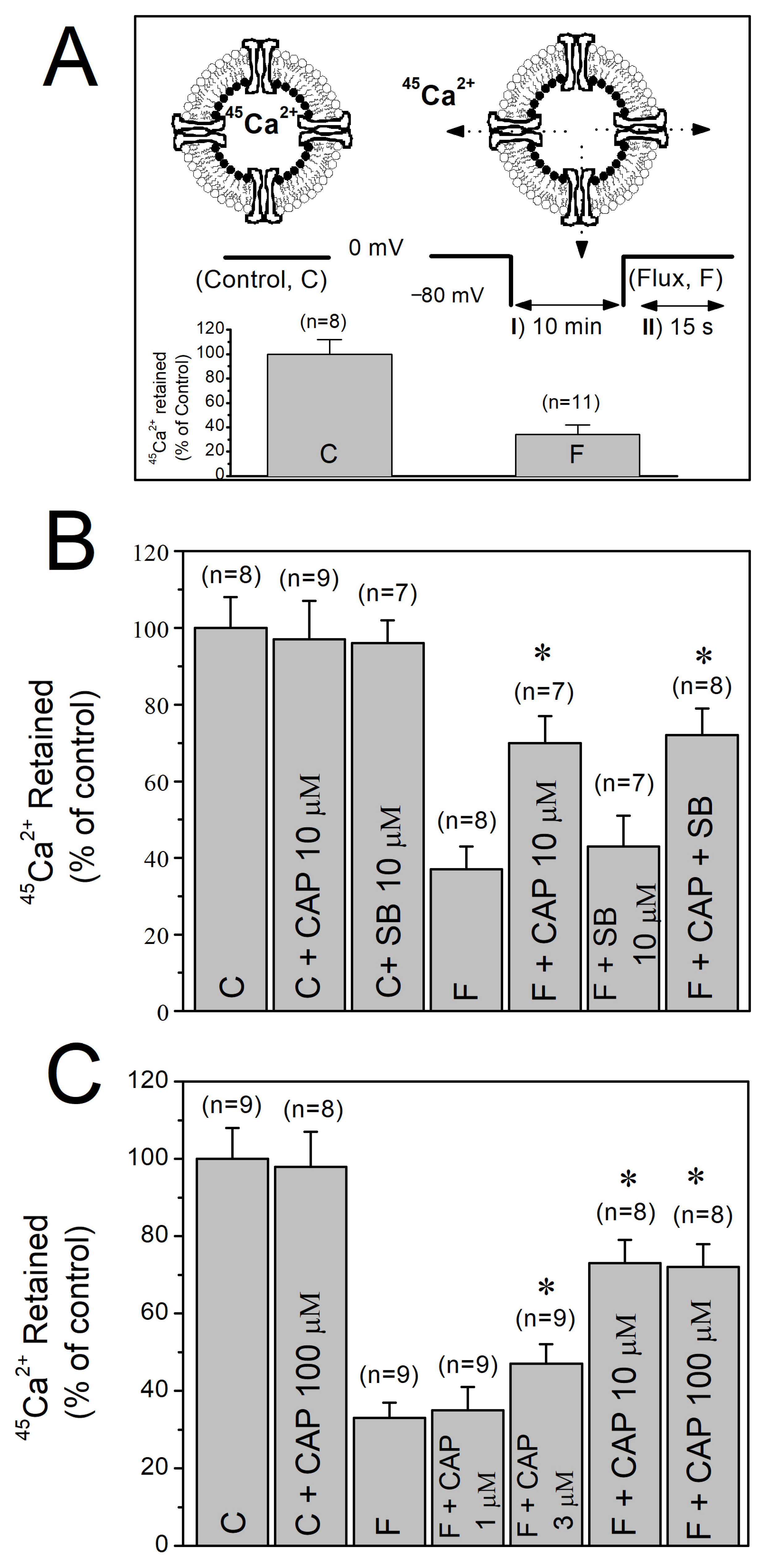
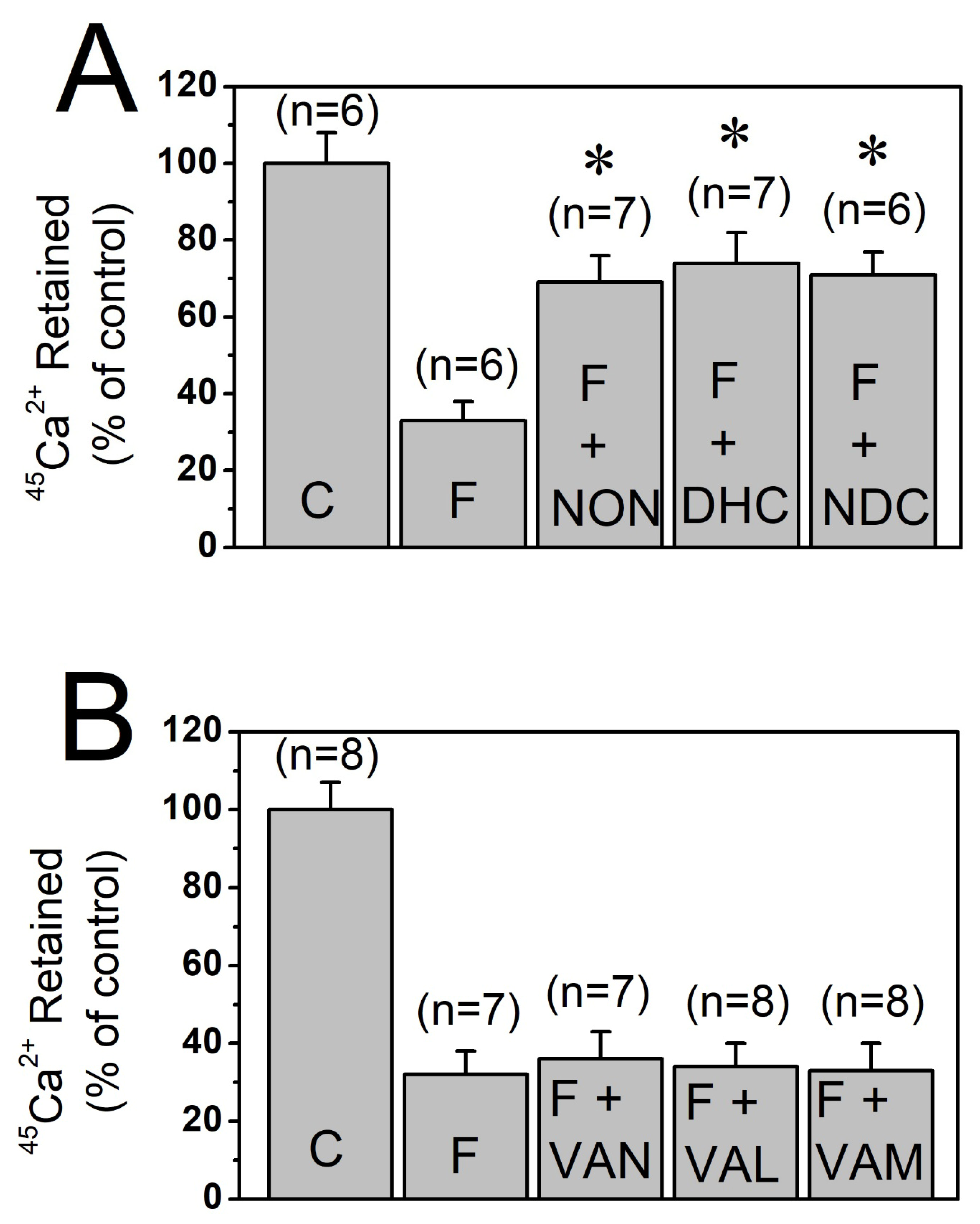
3.1. Effect of Capsaicin on Depolarization-Induced Ca2+ Fluxes
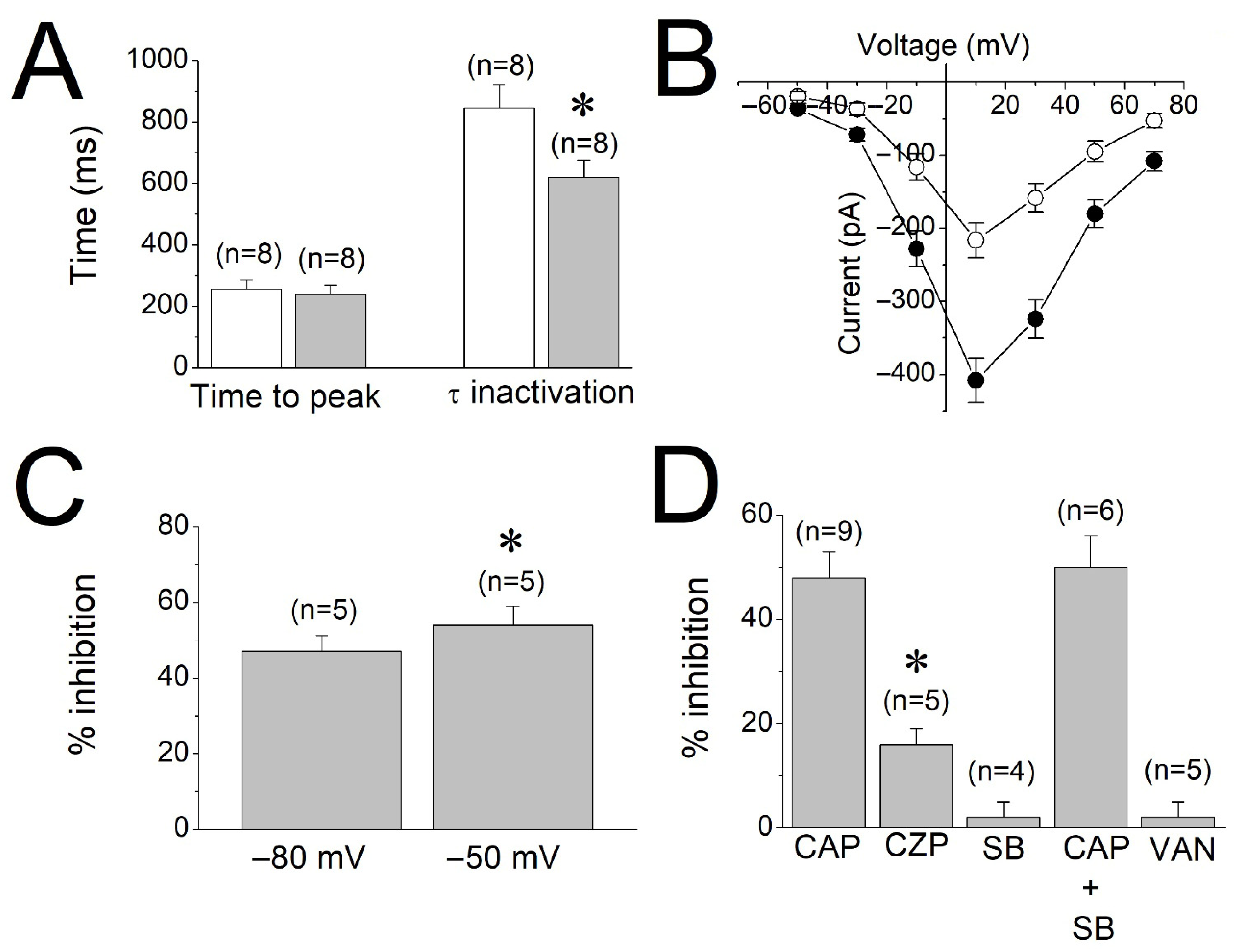
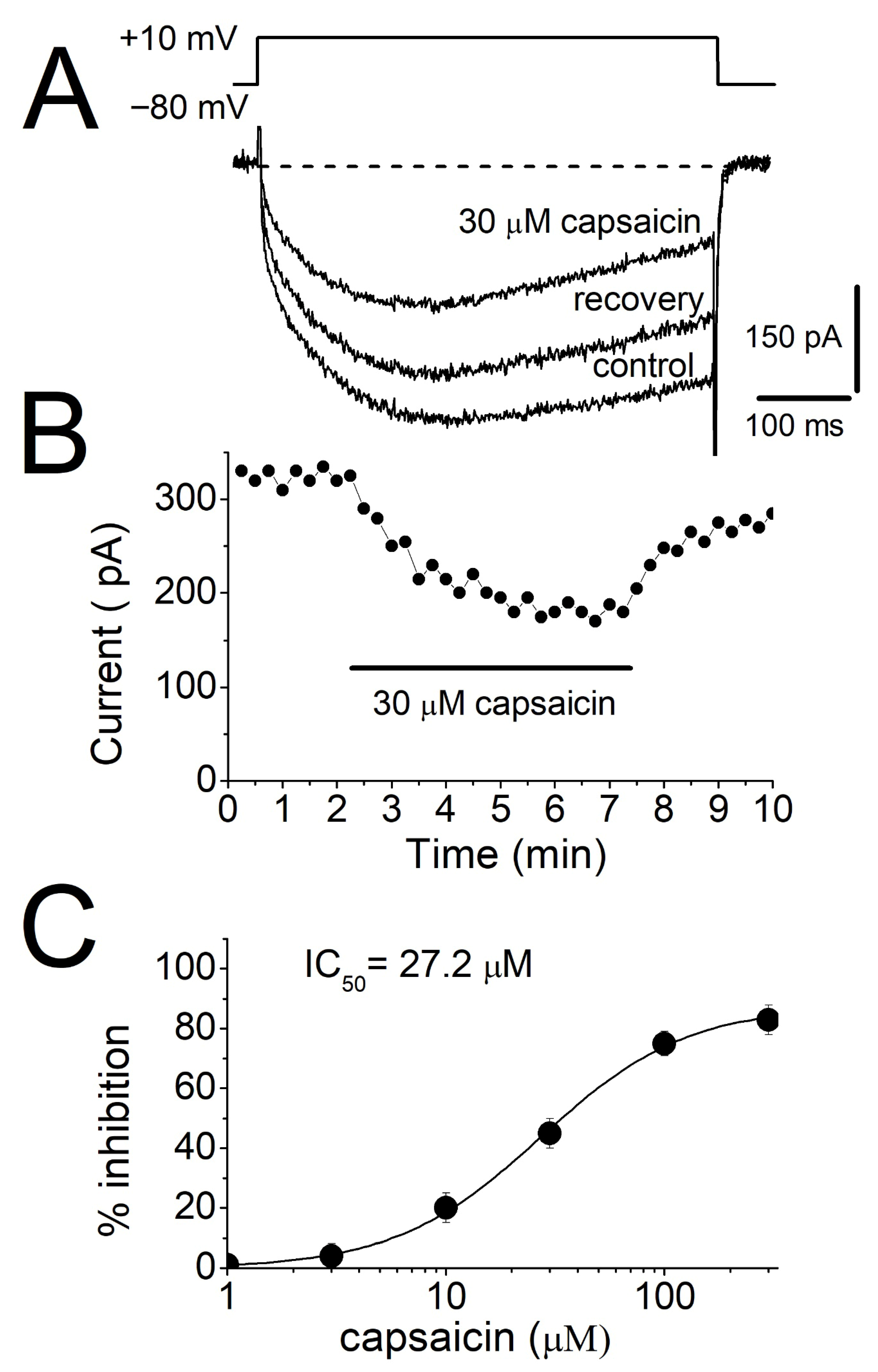
3.2. The Effects of Capsaicin on the L-Type Calcium Currents Recorded in Rat Skeletal Muscle Myotubes
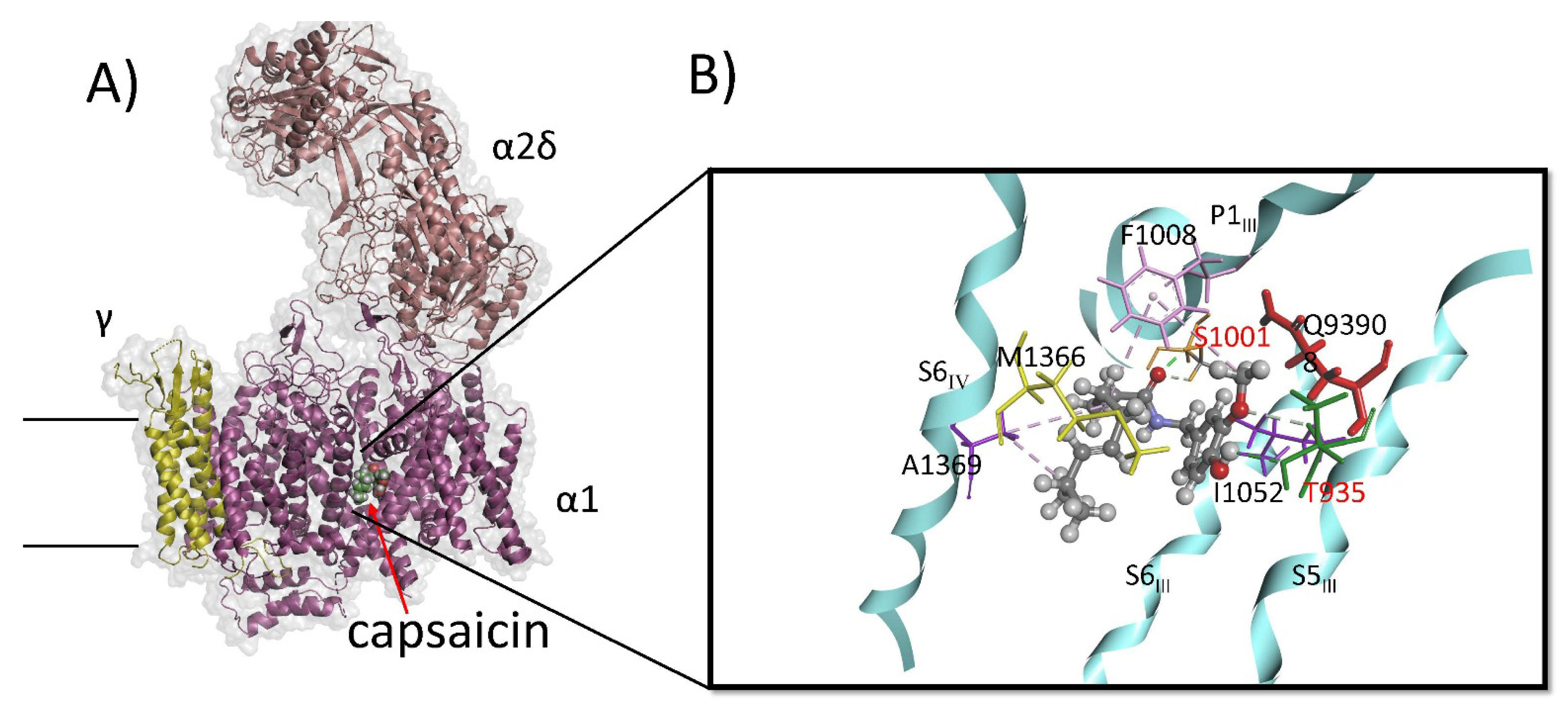
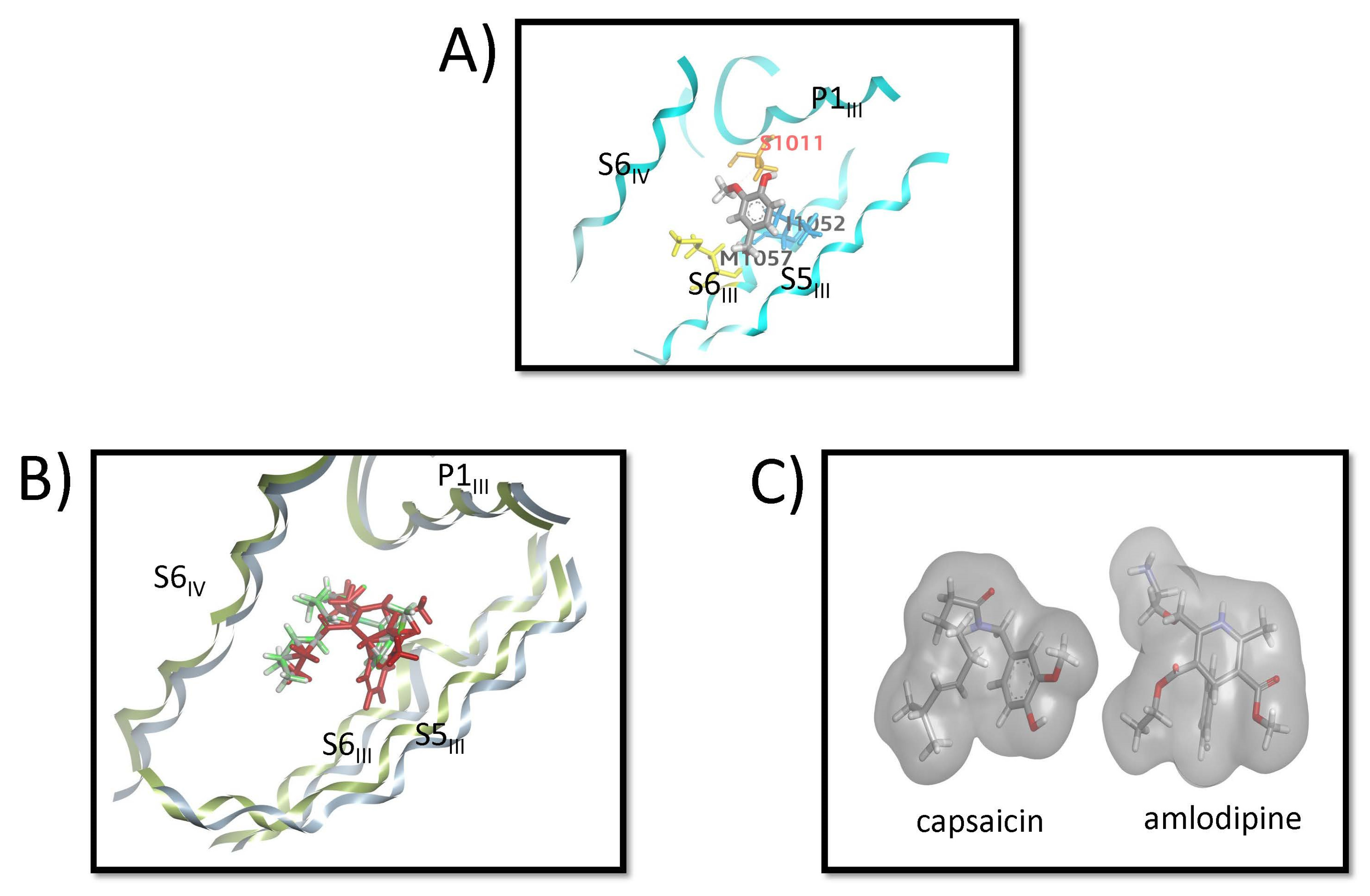
3.3. Docking Studies and Molecular Dynamics Simulations
4. Discussion
5. Conclusions
Supplementary Materials
Author Contributions
Funding
Institutional Review Board Statement
Informed Consent Statement
Data Availability Statement
Acknowledgments
Conflicts of Interest
References
- Bibollet, H.; Kramer, A.; Bannister, R.A.; Hernández-Ochoa, E.O. Advances in CaV1.1 gating: New insights into permeation and voltage-sensing mechanisms. Channels 2023, 17, 2167569. [Google Scholar] [CrossRef] [Scilit] [PubMed]
- Wu, J.; Yan, N.; Yan, Z. Structure-Function Relationship of the Voltage-Gated Calcium Channel Cav1.1 Complex. Adv. Exp. Med. Biol. 2017, 981, 23–39. [Google Scholar] [CrossRef] [Scilit] [PubMed]
- Dayal, A.; Schrötter, K.; Pan, Y.; Föhr, K.; Melzer, W.; Grabner, M. The Ca2+ influx through the mammalian skeletal muscle dihydropyridine receptor is irrelevant for muscle performance. Nat. Commun. 2017, 8, 475. [Google Scholar] [CrossRef] [Scilit]
- Gonzalez-Serratos, H.; Valle-Aguilera, R.; Lathrop, D.A.; Garcia, M.C. Slow inward calcium currents have no obvious role in muscle excitation-contraction coupling. Nature 1982, 298, 292–294. [Google Scholar] [CrossRef] [Scilit]
- Bannister, R.A.; Pessah, I.N.; Beam, K.G. The skeletal L-type Ca2+ current is a major contributor to excitation-coupled Ca2+ entry. J. Gen. Physiol. 2009, 133, 79–91. [Google Scholar] [CrossRef] [Scilit]
- Oz, M.; Frank, G.B. Decrease in the size of tetanic responses produced by nitrendipine or by extracellular calcium ion removal without blocking twitches or action potentials in skeletal muscle. J. Pharmacol. Exp. Ther. 1991, 257, 575–581. [Google Scholar] [CrossRef] [Scilit] [PubMed]
- Oz, A.M.; Frank, G.B.; Dunn, S.M. Voltage-dependent calcium fluxes in skeletal muscle transverse tubule membranes in the range of late afterpotentials. Can. J. Physiol. Pharmacol. 1993, 71, 518–521. [Google Scholar] [CrossRef] [Scilit]
- Lee, C.S.; Dagnino-Acosta, A.; Yarotskyy, V.; Hanna, A.; Lyfenko, A.; Knoblauch, M.; Georgiou, D.K.; Poché, R.A.; Swank, M.W.; Long, C.; et al. Ca2+ permeation and/or binding to CaV1.1 fine-tunes skeletal muscle Ca2+ signaling to sustain muscle function. Skelet. Muscle 2015, 5, 4. [Google Scholar] [CrossRef] [Scilit]
- Bibollet, H.; Nguyen, E.L.; Miranda, D.R.; Ward, C.W.; Voss, A.A.; Schneider, M.F.; Hernández-Ochoa, E.O. Voltage sensor current, SR Ca2+ release, and Ca2+ channel current during trains of action potential-like depolarizations of skeletal muscle fibers. Physiol. Rep. 2023, 11, e15675. [Google Scholar] [CrossRef] [Scilit]
- Robin, G.; Allard, B. Voltage-gated Ca2+ influx through L-type channels contributes to sarcoplasmic reticulum Ca2+ loading in skeletal muscle. J. Physiol. 2015, 593, 4781–4797. [Google Scholar] [CrossRef] [Scilit]
- Flucher, B.E.; Tuluc, P. How and why are calcium currents curtailed in the skeletal muscle voltage-gated calcium channels? J. Physiol. 2017, 595, 1451–1463. [Google Scholar] [CrossRef] [Scilit]
- Sultana, N.; Dienes, B.; Benedetti, A.; Tuluc, P.; Szentesi, P.; Sztretye, M.; Rainer, J.; Hess, M.W.; Schwarzer, C.; Obermair, G.J.; et al. Restricting calcium currents is required for correct fiber type specification in skeletal muscle. Development 2016, 143, 1547–1559. [Google Scholar] [CrossRef] [Scilit] [PubMed]
- Georgiou, D.K.; Dagnino-Acosta, A.; Lee, C.S.; Griffin, D.M.; Wang, H.; Lagor, W.R.; Pautler, R.G.; Dirksen, R.T.; Hamilton, S.L. Ca2+ Binding/Permeation via Calcium Channel, CaV1.1, Regulates the Intracellular Distribution of the Fatty Acid Transport Protein, CD36, and Fatty Acid Metabolism. J. Biol. Chem. 2015, 290, 23751–23765. [Google Scholar] [CrossRef] [Scilit] [PubMed]
- Chen, F.; Liu, Y.; Sugiura, Y.; Allen, P.D.; Gregg, R.G.; Lin, W. Neuromuscular synaptic patterning requires the function of skeletal muscle dihydropyridine receptors. Nat. Neurosci. 2011, 14, 570–577. [Google Scholar] [CrossRef] [Scilit]
- Kaplan, M.M.; Sultana, N.; Benedetti, A.; Obermair, G.J.; Linde, N.F.; Papadopoulos, S.; Dayal, A.; Grabner, M.; Flucher, B.E. Calcium Influx and Release Cooperatively Regulate AChR Patterning and Motor Axon Outgrowth during Neuromuscular Junction Formation. Cell Rep. 2018, 23, 3891–3904. [Google Scholar] [CrossRef] [Scilit]
- Basith, S.; Cui, M.; Hong, S.; Choi, S. Harnessing the Therapeutic Potential of Capsaicin and Its Analogues in Pain and Other Diseases. Molecules 2016, 21, 966. [Google Scholar] [CrossRef] [Scilit]
- Fattori, V.; Hohmann, M.S.; Rossaneis, A.C.; Pinho-Ribeiro, F.A.; Verri, W.A. Capsaicin: Current Understanding of Its Mechanisms and Therapy of Pain and Other Pre-Clinical and Clinical Uses. Molecules 2016, 21, 844. [Google Scholar] [CrossRef] [Scilit]
- Trujillo, X.; Ortiz-Mesina, M.; Uribe, T.; Castro, E.; Montoya-Pérez, R.; Urzúa, Z.; Feria-Velasco, A.; Huerta, M. Capsaicin and N-arachidonoyl-dopamine (NADA) decrease tension by activating both cannabinoid and vanilloid receptors in fast skeletal muscle fibers of the frog. J. Membr. Biol. 2015, 248, 31–38. [Google Scholar] [CrossRef] [Scilit] [PubMed]
- Giuriato, G.; Venturelli, M.; Matias, A.; Soares, E.; Gaetgens, J.; Frederick, K.A.; Ives, S.J. Capsaicin and Its Effect on Exercise Performance, Fatigue and Inflammation after Exercise. Nutrients 2022, 14, 232. [Google Scholar] [CrossRef] [Scilit]
- Oz, M.; Lorke, D.E.; Howarth, F.C. Transient receptor potential vanilloid 1 (TRPV1)-independent actions of capsaicin on cellular excitability and ion transport. Med. Res. Rev. 2023, 43, 1038–1067. [Google Scholar] [CrossRef] [Scilit]
- Alzaabi, A.H.; Howarth, L.; El Nebrisi, E.; Syed, N.; Susan Yang, K.H.; Howarth, F.C.; Oz, M. Capsaicin inhibits the function of α7-nicotinic acetylcholine receptors expressed in Xenopus oocytes and rat hippocampal neurons. Eur. J. Pharmacol. 2019, 857, 172411. [Google Scholar] [CrossRef] [Scilit]
- Nebrisi, E.E.; Prytkova, T.; Lorke, D.E.; Howarth, L.; Alzaabi, A.H.; Yang, K.S.; Howarth, F.C.; Oz, M. Capsaicin Is a Negative Allosteric Modulator of the 5-HT3 Receptor. Front. Pharmacol. 2020, 11, 1274. [Google Scholar] [CrossRef] [Scilit]
- Kuenzi, F.M.; Dale, N. Effect of capsaicin and analogues on potassium and calcium currents and vanilloid receptors in Xenopus embryo spinal neurones. Br. J. Pharmacol. 1996, 119, 81–90. [Google Scholar] [CrossRef] [Scilit] [PubMed]
- Isaev, D.; Yang, K.S.; Shabbir, W.; Howarth, F.C.; Oz, M. Capsaicin Inhibits Multiple Voltage-Gated Ion Channels in Rabbit Ventricular Cardiomyocytes in TRPV1-Independent Manner. Pharmaceuticals 2022, 15, 1187. [Google Scholar] [CrossRef] [Scilit]
- Oz, M.; Tchugunova, Y.B.; Dunn, S.M. Endogenous cannabinoid anandamide directly inhibits voltage-dependent Ca2+ fluxes in rabbit T-tubule membranes. Eur. J. Pharmacol. 2000, 404, 13–20. [Google Scholar] [CrossRef] [Scilit]
- Dunn, S.M. Voltage-dependent calcium channels in skeletal muscle transverse tubules. Measurements of calcium efflux in membrane vesicles. J. Biol. Chem. 1989, 264, 11053–11060. [Google Scholar]
- Rosemblatt, M.S.; Scales, D.J. Morphological, immunological and biochemical characterization of purified transverse tubule membranes isolated from rabbit skeletal muscle. Mol. Cell Biochem. 1989, 87, 57–69. [Google Scholar] [CrossRef] [Scilit]
- Oz, M.; Tchugunova, Y.; Dinc, M. Differential effects of endogenous and synthetic cannabinoids on voltage-dependent calcium fluxes in rabbit T-tubule membranes: Comparison with fatty acids. Eur. J. Pharmacol. 2004, 502, 47–58. [Google Scholar] [CrossRef] [Scilit] [PubMed]
- Neville, C.; Rosenthal, N.; McGrew, M.; Bogdanova, N.; Hauschka, S. Skeletal muscle cultures. Methods Cell Biol. 1997, 52, 85–116. [Google Scholar] [PubMed]
- Alptekin, A.; Galadari, S.; Shuba, Y.; Petroianu, G.; Oz, M. The effects of anandamide transport inhibitor AM404 on voltage-dependent calcium channels. Eur. J. Pharmacol. 2010, 634, 10–15. [Google Scholar] [CrossRef] [Scilit]
- Cognard, C.; Constantin, B.; Rivet-Bastide, M.; Imbert, N.; Besse, C.; Raymond, G. Appearance and evolution of calcium currents and contraction during the early post-fusional stages of rat skeletal muscle cells developing in primary culture. Development 1993, 117, 1153–1161. [Google Scholar] [CrossRef] [Scilit] [PubMed]
- Gao, S.; Yan, N. Structural Basis of the Modulation of the Voltage-Gated Calcium Ion Channel Cav1.1 by Dihydropyridine Compounds*. Angew. Chem. Int. Ed. Engl. 2021, 60, 3131–3137. [Google Scholar] [CrossRef] [Scilit] [PubMed]
- Kim, S.; Chen, J.; Cheng, T.; Gindulyte, A.; He, J.; He, S.; Li, Q.; Shoemaker, B.A.; Thiessen, P.A.; Yu, B.; et al. PubChem 2019 update: Improved access to chemical data. Nucleic Acids Res. 2019, 47, D1102–D1109. [Google Scholar] [CrossRef] [Scilit]
- Morris, G.M.; Huey, R.; Lindstrom, W.; Sanner, M.F.; Belew, R.K.; Goodsell, D.S.; Olson, A.J. AutoDock4 and AutoDockTools4: Automated docking with selective receptor flexibility. J. Comput. Chem. 2009, 30, 2785–2791. [Google Scholar] [CrossRef] [Scilit] [PubMed]
- Trott, O.; Olson, A.J. AutoDock Vina: Improving the speed and accuracy of docking with a new scoring function, efficient optimization, and multithreading. J. Comput. Chem. 2010, 31, 455–461. [Google Scholar] [CrossRef] [Scilit]
- Schott-Verdugo, S.; Gohlke, H. PACKMOL-Memgen: A Simple-To-Use, Generalized Workflow for Membrane-Protein-Lipid-Bilayer System Building. J. Chem. Inf. Model. 2019, 59, 2522–2528. [Google Scholar] [CrossRef] [Scilit]
- Case, D.A.; Cheatham, T.E., 3rd; Darden, T.; Gohlke, H.; Luo, R.; Merz, K.M., Jr.; Onufriev, A.; Simmerling, C.; Wang, B.; Woods, R.J. The Amber biomolecular simulation programs. J. Comput. Chem. 2005, 26, 1668–1688. [Google Scholar] [CrossRef] [Scilit]
- Case, D.A.; Aktulga, H.M.; Belfon, K.; Cerutti, D.S.; Cisneros, G.A.; Cruzeiro, V.W.D.; Forouzesh, N.; Giese, T.J.; Götz, A.W.; Gohlke, H.; et al. AmberTools. J. Chem. Inf. Model. 2023, 63, 6183–6191. [Google Scholar] [CrossRef] [Scilit]
- Roe, D.R.; Cheatham, T.E., 3rd. PTRAJ and CPPTRAJ: Software for Processing and Analysis of Molecular Dynamics Trajectory Data. J. Chem. Theory Comput. 2013, 9, 3084–3095. [Google Scholar] [CrossRef] [Scilit]
- Gunthorpe, M.J.; Rami, H.K.; Jerman, J.C.; Smart, D.; Gill, C.H.; Soffin, E.M.; Luis Hannan, S.; Lappin, S.C.; Egerton, J.; Smith, G.D.; et al. Identification and characterisation of SB-366791, a potent and selective vanilloid receptor (VR1/TRPV1) antagonist. Neuropharmacology 2004, 46, 133–149. [Google Scholar] [CrossRef] [Scilit]
- Lotteau, S.; Ducreux, S.; Romestaing, C.; Legrand, C.; Van Coppenolle, F. Characterization of functional TRPV1 channels in the sarcoplasmic reticulum of mouse skeletal muscle. PLoS ONE 2013, 8, e58673. [Google Scholar] [CrossRef] [Scilit]
- Xin, H.; Tanaka, H.; Yamaguchi, M.; Takemori, S.; Nakamura, A.; Kohama, K. Vanilloid receptor expressed in the sarcoplasmic reticulum of rat skeletal muscle. Biochem. Biophys. Res. Commun. 2005, 332, 756–762. [Google Scholar] [CrossRef] [Scilit] [PubMed]
- Soldatov, N.M.; Oz, M.; O’Brien, K.A.; Abernethy, D.R.; Morad, M. Molecular determinants of L-type Ca2+ channel inactivation. Segment exchange analysis of the carboxyl-terminal cytoplasmic motif encoded by exons 40-42 of the human alpha1C subunit gene. J. Biol. Chem. 1998, 273, 957–963. [Google Scholar] [CrossRef] [Scilit]
- Feldmeyer, D.; Melzer, W.; Pohl, B.; Zöllner, P. A possible role of sarcoplasmic Ca2+ release in modulating the slow Ca2+ current of skeletal muscle. Pflugers Arch. 1993, 425, 54–61. [Google Scholar] [CrossRef] [Scilit]
- Stroffekova, K. Ca2+/CaM-dependent inactivation of the skeletal muscle L-type Ca2+ channel (Cav1.1). Pflugers Arch. 2008, 455, 873–884. [Google Scholar] [CrossRef] [Scilit]
- Docherty, R.J.; Yeats, J.C.; Piper, A.S. Capsazepine block of voltage-activated calcium channels in adult rat dorsal root ganglion neurones in culture. Br. J. Pharmacol. 1997, 121, 1461–1467. [Google Scholar] [CrossRef] [Scilit]
- Walpole, C.S.; Wrigglesworth, R.; Bevan, S.; Campbell, E.A.; Dray, A.; James, I.F.; Perkins, M.N.; Reid, D.J.; Winter, J. Analogues of capsaicin with agonist activity as novel analgesic agents; structure-activity studies. 1. The aromatic “A-region”. J. Med. Chem. 1993, 36, 2362–2372. [Google Scholar] [CrossRef] [Scilit]
- Swain, J.; Kumar Mishra, A. Location, Partitioning Behavior, and Interaction of Capsaicin with Lipid Bilayer Membrane: Study Using Its Intrinsic Fluorescence. J. Phys. Chem. B 2015, 119, 12086–12093. [Google Scholar] [CrossRef] [Scilit] [PubMed]
- Cowan, L.M.; Strege, P.R.; Rusinova, R.; Andersen, O.S.; Farrugia, G.; Beyder, A. Capsaicin as an amphipathic modulator of NaV1.5 mechanosensitivity. Channels 2022, 16, 9–26. [Google Scholar] [CrossRef] [Scilit]
- Lundbaek, J.A.; Birn, P.; Tape, S.E.; Toombes, G.E.; Søgaard, R.; Koeppe, R.E., 2nd; Gruner, S.M.; Hansen, A.J.; Andersen, O.S. Capsaicin regulates voltage-dependent sodium channels by altering lipid bilayer elasticity. Mol. Pharmacol. 2005, 68, 680–689. [Google Scholar] [CrossRef] [Scilit]
- Ingólfsson, H.I.; Thakur, P.; Herold, K.F.; Hobart, E.A.; Ramsey, N.B.; Periole, X.; de Jong, D.H.; Zwama, M.; Yilmaz, D.; Hall, K.; et al. Phytochemicals perturb membranes and promiscuously alter protein function. ACS Chem. Biol. 2014, 9, 1788–1798. [Google Scholar] [CrossRef] [Scilit]
- Tsuchiya, H. Biphasic membrane effects of capsaicin, an active component in Capsicum species. J. Ethnopharmacol. 2001, 75, 295–299. [Google Scholar] [CrossRef] [Scilit]
- Torrecillas, A.; Schneider, M.; Fernández-Martínez, A.M.; Ausili, A.; de Godos, A.M.; Corbalán-García, S.; Gómez-Fernández, J.C. Capsaicin Fluidifies the Membrane and Localizes Itself near the Lipid-Water Interface. ACS Chem. Neurosci. 2015, 6, 1741–1750. [Google Scholar] [CrossRef] [Scilit]
- Efimova, S.S.; Zakharova, A.A.; Ostroumova, O.S. Alkaloids Modulate the Functioning of Ion Channels Produced by Antimicrobial Agents via an Influence on the Lipid Host. Front. Cell Dev. Biol. 2020, 8, 537. [Google Scholar] [CrossRef] [Scilit]
- Flucher, B.E. Skeletal muscle CaV1.1 channelopathies. Pflugers Arch. 2020, 472, 739–754. [Google Scholar] [CrossRef] [Scilit]
- Tang, Z.Z.; Yarotskyy, V.; Wei, L.; Sobczak, K.; Nakamori, M.; Eichinger, K.; Moxley, R.T.; Dirksen, R.T.; Thornton, C.A. Muscle weakness in myotonic dystrophy associated with misregulated splicing and altered gating of CaV1.1 calcium channel. Hum. Mol. Genet. 2012, 21, 1312–1324. [Google Scholar] [CrossRef] [Scilit] [PubMed]
- Santoro, M.; Piacentini, R.; Masciullo, M.; Bianchi, M.L.; Modoni, A.; Podda, M.V.; Ricci, E.; Silvestri, G.; Grassi, C. Alternative splicing alterations of Ca2+ handling genes are associated with Ca2+ signal dysregulation in myotonic dystrophy type 1 (DM1) and type 2 (DM2) myotubes. Neuropathol. Appl. Neurobiol. 2014, 40, 464–476. [Google Scholar] [CrossRef] [Scilit] [PubMed]
- Cisco, L.A.; Sipple, M.T.; Edwards, K.M.; Thornton, C.A.; Lueck, J.D. Verapamil mitigates chloride and calcium bi-channelopathy in a myotonic dystrophy mouse model. J. Clin. Investig. 2024, 134, e173576. [Google Scholar] [CrossRef] [Scilit] [PubMed]
- Grant, R.; Sutton, D.L.; Behan, P.O.; Ballantyne, J.P. Nifedipine in the treatment of myotonia in myotonic dystrophy. J. Neurol. Neurosurg. Psychiatry 1987, 50, 199–206. [Google Scholar] [CrossRef] [Scilit]
- Bhattacharya, S.K.; Palmieri, G.M.; Bertorini, T.E.; Nutting, D.F. The effects of diltiazem in dystrophic hamsters. Muscle Nerve 1982, 5, 73–78. [Google Scholar] [CrossRef] [Scilit]
- Johnson, P.L.; Bhattacharya, S.K. Regulation of membrane-mediated chronic muscle degeneration in dystrophic hamsters by calcium-channel blockers: Diltiazem, nifedipine and verapamil. J. Neurol. Sci. 1993, 115, 76–90. [Google Scholar] [CrossRef] [Scilit]
- Matsumura, C.Y.; Pertille, A.; Albuquerque, T.C.; Santo Neto, H.; Marques, M.J. Diltiazem and verapamil protect dystrophin-deficient muscle fibers of MDX mice from degeneration: A potential role in calcium buffering and sarcolemmal stability. Muscle Nerve 2009, 39, 167–176. [Google Scholar] [CrossRef] [Scilit]
- Altamirano, F.; Valladares, D.; Henríquez-Olguín, C.; Casas, M.; López, J.R.; Allen, P.D.; Jaimovich, E. Nifedipine treatment reduces resting calcium concentration, oxidative and apoptotic gene expression, and improves muscle function in dystrophic mdx mice. PLoS ONE 2013, 8, e81222. [Google Scholar] [CrossRef] [Scilit]
- Iwata, Y.; Katanosaka, Y.; Shijun, Z.; Kobayashi, Y.; Hanada, H.; Shigekawa, M.; Wakabayashi, S. Protective effects of Ca2+ handling drugs against abnormal Ca2+ homeostasis and cell damage in myopathic skeletal muscle cells. Biochem. Pharmacol. 2005, 70, 740–751. [Google Scholar] [CrossRef] [Scilit] [PubMed]
- Rollyson, W.D.; Stover, C.A.; Brown, K.C.; Perry, H.E.; Stevenson, C.D.; McNees, C.A.; Ball, J.G.; Valentovic, M.A.; Dasgupta, P. Bioavailability of capsaicin and its implications for drug delivery. J. Control. Release 2014, 196, 96–105. [Google Scholar] [CrossRef] [Scilit] [PubMed]
- O’Neill, J.; Brock, C.; Olesen, A.E.; Andresen, T.; Nilsson, M.; Dickenson, A.H. Unravelling the mystery of capsaicin: A tool to understand and treat pain. Pharmacol. Rev. 2012, 64, 939–971. [Google Scholar] [CrossRef] [Scilit] [PubMed]
- Wohlrab, J.; Neubert, R.H.; Heskamp, M.L.; Michael, J. Cutaneous drug delivery of capsaicin after in vitro administration of the 8% capsaicin dermal patch system. Skin. Pharmacol. Physiol. 2015, 28, 65–74. [Google Scholar] [CrossRef] [Scilit]
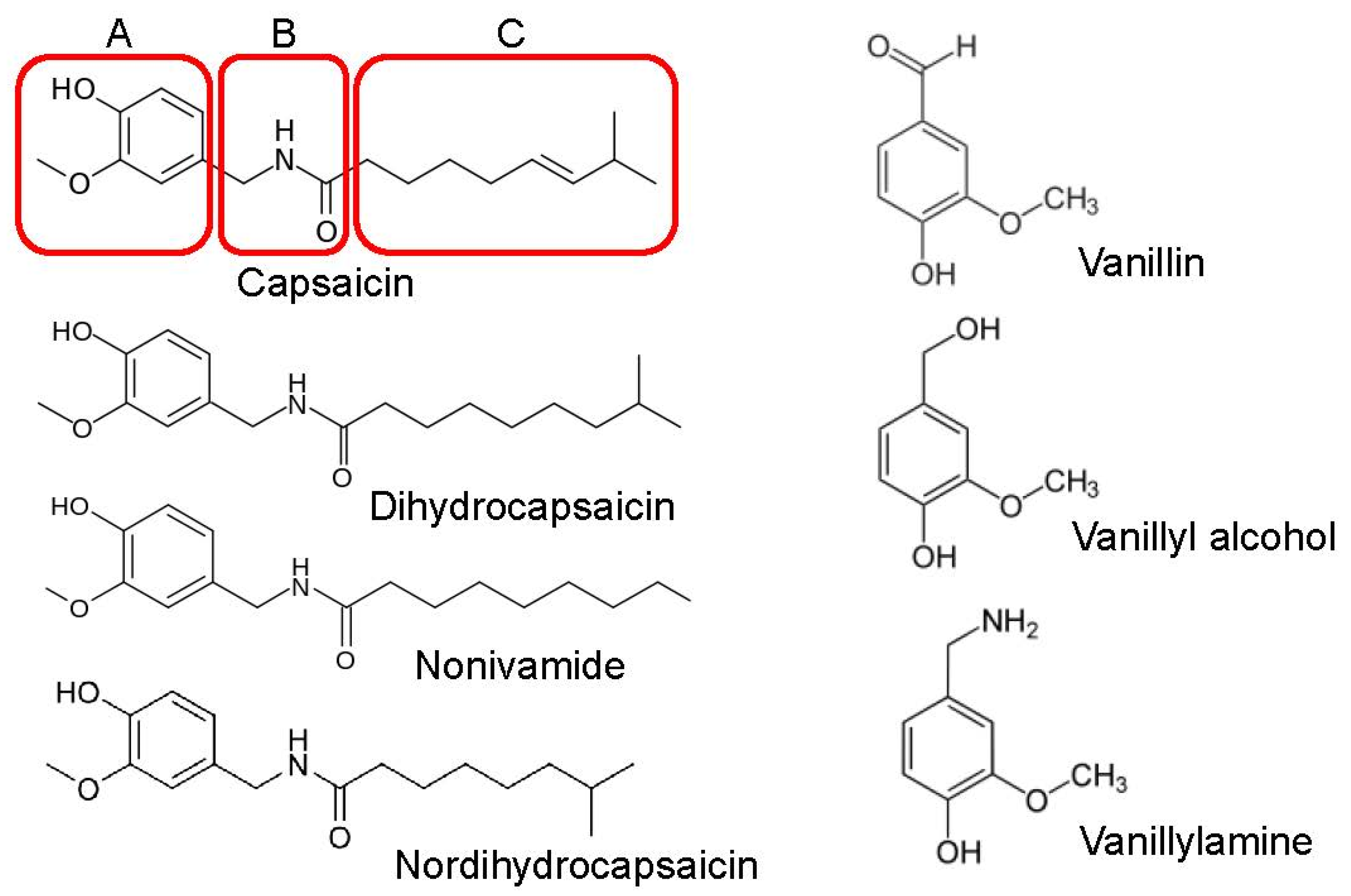





| Compounds | Free Energy of Binding, kcal/mol |
|---|---|
| 1. Capsaicin | −6.9 |
| 2. Dihydrocapsaicin | −6.8 |
| 3. Nonivamide | −6.4 |
| 4. Nordihydrocapsaicin | −6.7 |
| 5. Vanillin | −4.9 |
| 6. Vanillyl alcohol | −5.0 |
| 7. Vanillylamine | −4.9 |
Disclaimer/Publisher’s Note: The statements, opinions and data contained in all publications are solely those of the individual author(s) and contributor(s) and not of MDPI and/or the editor(s). MDPI and/or the editor(s) disclaim responsibility for any injury to people or property resulting from any ideas, methods, instructions or products referred to in the content. |
© 2026 by the authors. Licensee MDPI, Basel, Switzerland. This article is an open access article distributed under the terms and conditions of the Creative Commons Attribution (CC BY) license.
Share and Cite
Isaev, D.; Prytkova, T.; Mohamed, B.; Mahgoub, M.O.; Yang, K.-H.S.; Oz, M. Direct Effects of Capsaicin on Voltage-Dependent Calcium Channels of Mammalian Skeletal Muscle. Biomolecules 2026, 16, 135. https://doi.org/10.3390/biom16010135
Isaev D, Prytkova T, Mohamed B, Mahgoub MO, Yang K-HS, Oz M. Direct Effects of Capsaicin on Voltage-Dependent Calcium Channels of Mammalian Skeletal Muscle. Biomolecules. 2026; 16(1):135. https://doi.org/10.3390/biom16010135
Chicago/Turabian StyleIsaev, Dmytro, Tatiana Prytkova, Badarunnisa Mohamed, Mohamed Omar Mahgoub, Keun-Hang Susan Yang, and Murat Oz. 2026. "Direct Effects of Capsaicin on Voltage-Dependent Calcium Channels of Mammalian Skeletal Muscle" Biomolecules 16, no. 1: 135. https://doi.org/10.3390/biom16010135
APA StyleIsaev, D., Prytkova, T., Mohamed, B., Mahgoub, M. O., Yang, K.-H. S., & Oz, M. (2026). Direct Effects of Capsaicin on Voltage-Dependent Calcium Channels of Mammalian Skeletal Muscle. Biomolecules, 16(1), 135. https://doi.org/10.3390/biom16010135