Article

Investigation of Shredded Glass Fiber Composites from Post-Industrial and Post-Consumer Waste from Wind Turbine Blades for Reuse in Structural Epoxy Resin Plates


by
Bianca Purgleitner
1,*,
Barbara Liedl
2 and
Christoph Burgstaller
1,2
1
Transfercenter für Kunststofftechnik GmbH, Franz-Fritsch-Str. 11, 4600 Wels, Austria
2
School of Engineering, University of Applied Sciences Upper Austria, Stelzhamerstr. 23, 4600 Wels, Austria
*
Author to whom correspondence should be addressed.
Fibers 2026, 14(5), 47; https://doi.org/10.3390/fib14050047
Submission received: 25 March 2026 / Revised: 16 April 2026 / Accepted: 22 April 2026 / Published: 24 April 2026

Highlights

What are the main findings?
  • Shredded wind turbine blades (WTB) and shredded post-industrial laminate cutoffs were recycled in new epoxy resin plates whereby lower fraction sizes (0.1–0.4 mm) achieved higher tensile properties in pressed plates than larger particles (0.4–1.4 mm).
  • Lower epoxy resin viscosity led to higher mechanical values in new recycled fiber-reinforced composites.
What are the implications of these findings?
  • Glass fiber-reinforced polymers (GFRP) from shredded WTB and post-industrial laminate cutoffs can be recycled in structural composite plates.
  • Pretreatment of the glass fiber-reinforced polymers (GFRP) from post-consumer source (like WTB) is necessary to enhance homogeneity and mechanical values.

Abstract
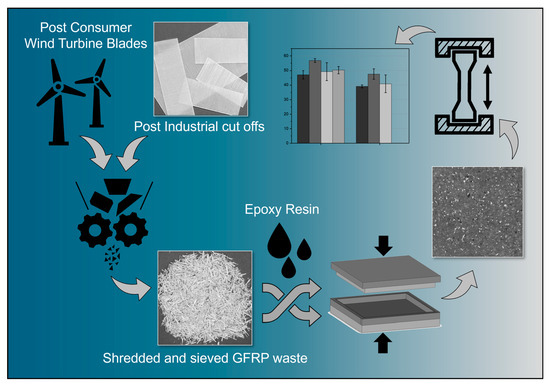
The global expansion of wind energy increases the need for sustainable recycling strategies for glass fiber-reinforced plastic (GFRP) from end-of-life wind turbine blades (WTB). Mechanical recycling is currently the most economically and ecologically viable technology. This study compares post-industrial (PI) waste from laminate cutoffs and post-consumer (PC) GFRP waste from end-of-life WTBs to investigate the influence of waste origin, pretreatment of shredded GFRP, different particle sizes and various matrix formulations on the tensile modulus and tensile strength of pressed bulk molding compounds produced with virgin epoxy resin. Thermogravimetric analysis showed a fiber content of up to 70 wt.%, but the resin residues on the embedded glass fibers dimmish a sufficient bonding of the new matrix system. Finer GFRP fractions consistently yielded higher tensile modulus and strength, with PI and pretreated PC materials performing best. The findings of this study demonstrate that controlled particle size distribution, impurity removal and optimized resin viscosity are key factors to achieve reliable mechanical performance and enable high-value recycling routes for glass fiber composite waste.

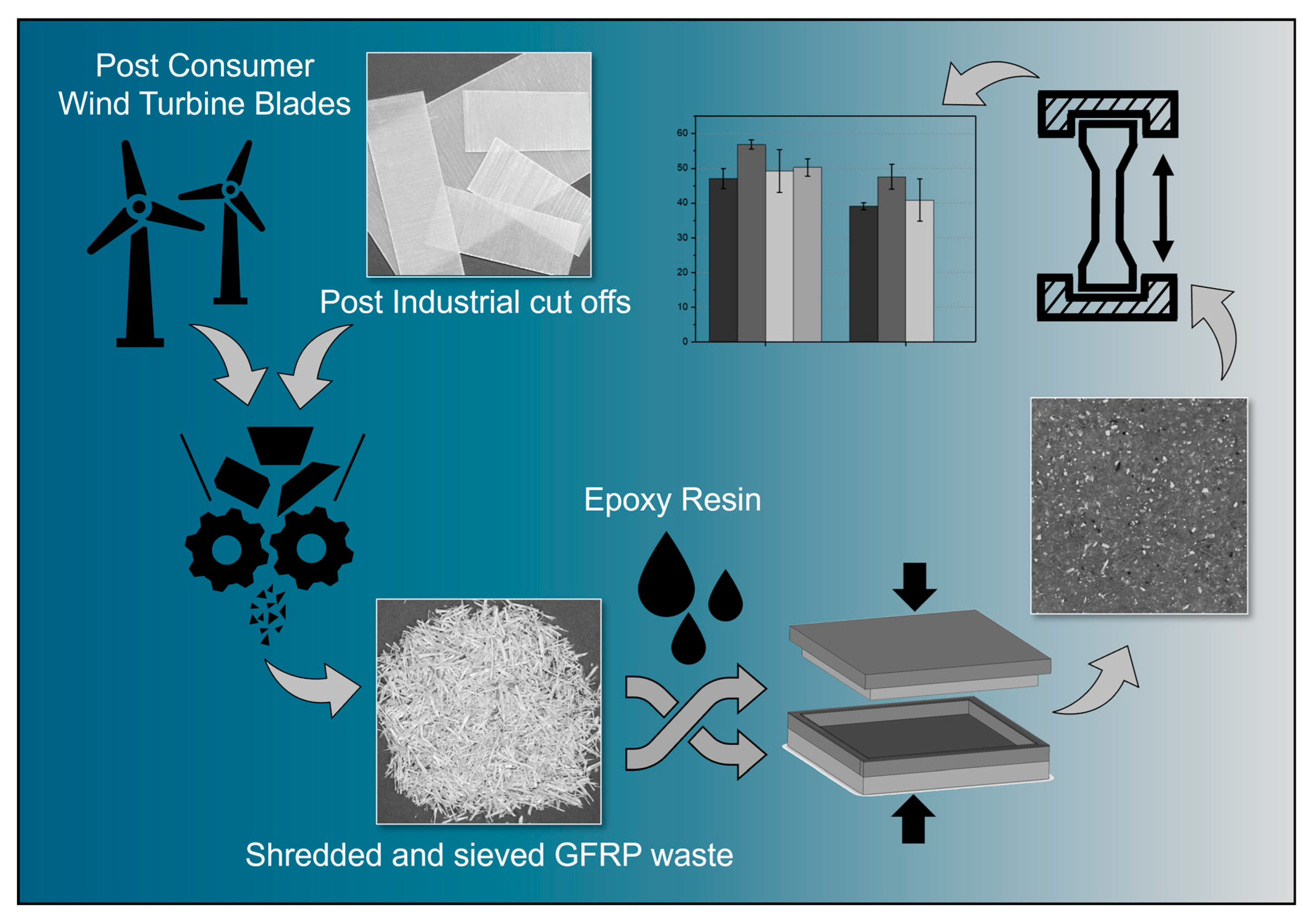
Graphical Abstract

1. Introduction

The global expansion of wind energy, essential for decarbonization (European Green Deal), brings a critical challenge: the end-of-life management of wind turbine blades. With an operational lifespan of 20–25 years, the first generation of turbines is now being decommissioned, creating an urgent waste stream [1,2,3,4]. Wind turbine blades (WTB) are predominantly manufactured from glass fiber-reinforced plastic composites (GFRP). These materials are engineered for exceptional mechanical performance, low density and excellent corrosion resistance. However, the thermoset matrix (typically epoxy, polyester, or vinyl ester resin) is permanently cross-linked, rendering conventional recycling methods extraordinarily difficult [5].
European thermoset composite waste accessible for recycling in 2025 is predicted to be about 228 kt, whereof 15.3 kt come from wind energy. Even more (45.5 kt) comes from production waste that is generated during manufacturing processes such as prepreg layup, pultrusion, and compression molding [6]. These post-industrial (PI) residues arise in form of expired prepreg rolls, dry fiber offcuts, trimming residues, and rejected components that fail quality control, creating a consistent, high purity material output derived exclusively from pre consumer processing steps. For many years, landfilling and incineration were the primary disposal practices used in the composites sector [7]. Nowadays, environmental awareness and legislative regulations [8] are pushing the need to develop sustainable disposal solutions and establish a closed value chain.
Although composite recycling has been investigated for more than 30 years [9,10] sustainable and economically viable recycling solutions in industrial applications are still rare. Recycling technologies for fiber-reinforced composites encompass three principal approaches:
Thermal methods (pyrolysis at 450–800 °C, fluidized bed combustion at 450–550 °C) enable matrix decomposition and fiber recovery, although tensile strength reductions of 50–64% are commonly reported due to thermal degradation. The energy consumption for these processes is enormous (Table 1) which makes it uneconomical even for carbon fiber recovery [11,12,13].
Chemical solvolysis employs solvents under subcritical or supercritical conditions to depolymerize the resin, recovering fibers with medium strength retention [12]. However, supercritical conditions require temperatures exceeding 300 °C and pressures above 221 bar, which means high energy consumption, precarious process parameters and expensive corrosion-resistant reactors [13,14,15].
Mechanical recycling (encompassing crushing, milling, and grinding) currently represents the most industrially mature technology [12,16,17]. On the one hand this methodology is industrial scalable, requires only simple machinery and has low energy consumption, on the other hand it incurs a significant loss in material strength due to grinding and cutting and fails to make optimal use of the material’s inherent characteristics. Table 1 clearly stresses the benefit of the low energy (and therefore also cost) demand compared to the other state-of-the-art recycling processes. A further benefit is the ability to process GFRP parts of diverse shapes and sizes and still gain the same size distribution of the recycling material stream.
Table 1. Comparison of efficiency, mechanical strength and energy demand of different GFRP recycling techniques adapted from [14] with data from [7,18,19,20].
Recycling
Technique
Energy Demand
in MJ/kg
Fiber Recovery
Rate in %
Tensile Strength
Maintained in %
Mechanical0.4–4.858–9879
Pyrolysis10–3655–8335–80
Fluidized Bed30–406650
Solvolysis26–9145–9531–58
Beyond recycling, the repurposing of complete or segmented WTB has emerged as a promising alternative strategy [21,22]. State-of-the-art procedures classify the turbine blades in high loaded, low loaded, complete and segmented structures and use them according to their classification in suitable applications such as climbing towers, playgrounds, photovoltaic floating pontoons and loungers, whereby significant environmental savings can be achieved [21,23]. The current demand for these re-use solutions is not yet enough to cover the upcoming end-of-life WTB waste streams if governments won’t adopt ambitious standards and maybe financial incentives. The parts unsuitable for structural recycling must be returned to an alternative recycling method whereby mechanical recycling seems to be the most viable process, as the blade is already pre-cut. In the end the reuse is not a final solution but a temporal shift in the waste problem, so over time, all GFRP will need to be recycled or treated as waste.
During the milling or grinding process of WTB parts the glass fiber is not separated from the polymer matrix, only the macroscopic structure is changed. The result is a mixture of cured resin with fibers in different aspect ratios and all other components that were used in the manufacturing process of the WTB, like balsa wood, coatings, and optional fillers. Therefore, the shredded material must be cleaned and sieved before further use of the resin and fiber fraction. Still, there are key aspects that need to be optimized and evaluated, like the influence of the cutting and sieving parameters on the fiber aspect ratio [24]. Mechanical recycling devaluates the mechanical properties of the fiber by decreasing the tensile strength by approximately 22% [13,25]. Recent studies demonstrate successful integration of shredded GFRP into polymer matrices, concrete, and gypsum composites with improved flexural strength and crack resistance [11], but useful applications require more than technical feasibility. Practical aspects like vertical integration, thriving upscaling, material passports, regional recycling hubs and policy mechanisms such as extended producer responsibility need to be clarified [26]. For all the recycling routes presented in this introduction the same circumstance applies: unless the benefits in performance are not persuading and financial attractive business models for recycled or reused WTB waste applications are not developed, the only drive to use GFRP waste are ambitious standards or financial incentives from the government and engaged legislation that will make manufacturers liable for what ultimately happens to their WTBs [27].
Nevertheless, there is a growing consensus that GFRP from post-industrial and post-consumer waste streams can and should be recycled for substituting new fibers. To overcome current limitations in recycling routes, one of the thriving measures can be the improvement of mechanical performance of recycled GFRP, so that it can serve as a reinforcement material in new composite materials once more, instead of being used as a filler.
This work presents a comparative study of post-industrial GFRP waste and post-consumer end-of-life WTBs. The aim of this work was to investigate the influence of waste origin, pretreatment, different particle sizes of shredded GFRP as well as various matrix formulations on the tensile modulus and tensile strength of pressed bulk molding compounds produced with virgin epoxy resin to establish a robust foundation for high-value recycling routes.

2. Materials and Methods

2.1. Materials

In this study, shredded GFRP from end-of-life WTB and from PI production waste was investigated to evaluate the influence factors for mechanical performance in pressed epoxy resin plates. The base material (supplied in from BCUB GmbH, Vienna, Austria) was an end-of-life WTB that was roughly cut and shredded, so the particle size was widely distributed from below 10 µm to elongated pieces with a length of more than three cm. For one of the materials, no further cleaning treatment but sieving was applied. The coarse fraction of over 1.4 mm was not used in this study. A certain amount of the raw material from BCUB was further treated in different floatation plants at laboratory scale to get rid of the metal and other impurities. For comparison with the state-of-the-art, an industrially cleaned GFRP material from shredded WTB (Thornmann Recycling Sp z o.o., Warsaw, Poland) was purchased, which served as reference material. The exact technology from the laboratory and the industrial scale pretreatment is unknown, as the performing companies keep their technology confidential to preserve their technological advantage. Although it is also named “cleaning” in this paper, it cannot be guaranteed, that existing surface contaminations are removed by the performed process steps.
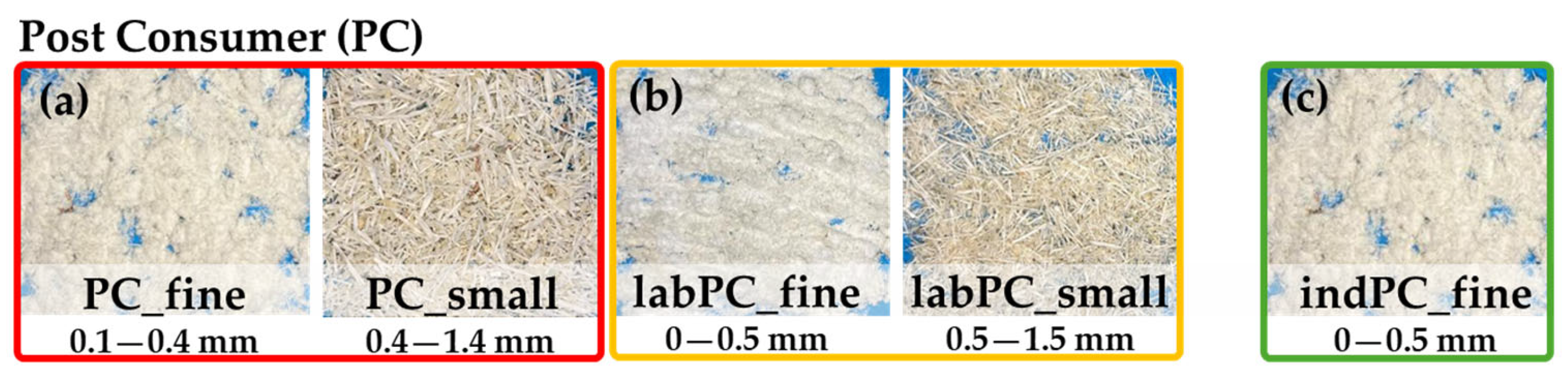
All post-consumer materials used are shown in Figure 1. Due to the different material distributors, the used fiber fractions are not exactly the same but very similar. For better readability we use the appendix “_fine” for the particle sizes of 0.1–0.4 mm and 0–0.5 mm and “_small” for 0.4–1.4 mm and 0.5–1.5 mm. The prefix “lab” is used for the in laboratory scale cleaned WTB waste and the prefix “ind” stands for the industrially cleaned source material.
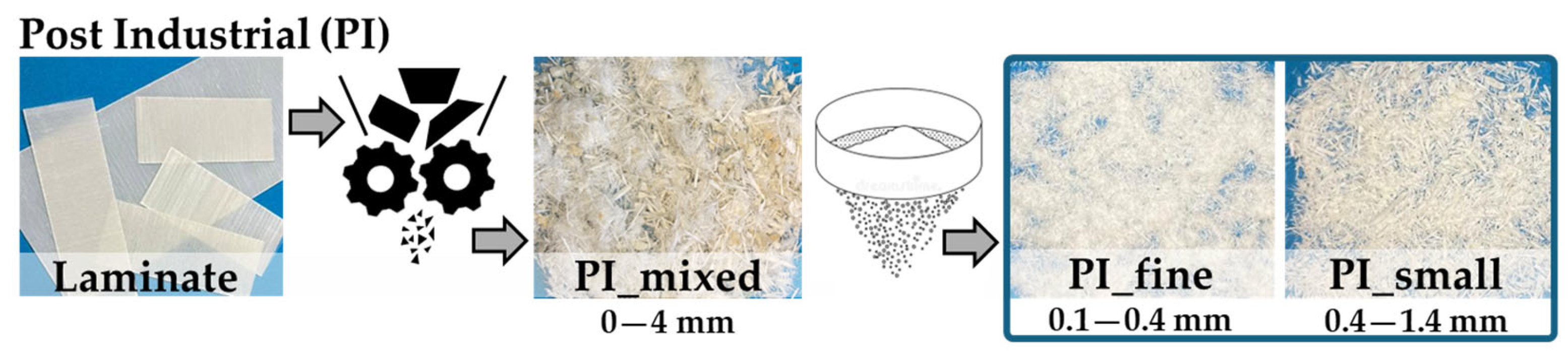
To compare the mechanical characteristics of GFRP from different sources a post-industrial (PI) waste from laminate cutoffs was provided from Danutec Composites GmbH & Co KG, Neumarkt, Austria. The treatment processes of this material and the used fractions are shown in Figure 2.
The test series using different epoxy resin types was performed with a small PC GFRP grade (PC_small 0.4–1.4 mm) and roughly cut PI-Laminate (PI_mixed 0–4 mm). A list of all GFRP waste materials used in this study can be found in Table 2.
The use of the optimal virgin resin system is crucial for the maximization of the mechanical performance. Therefore, different epoxy matrix systems were analyzed in combination with the GFRP waste samples. Epoxy resin systems were chosen because they are the mainly used thermosets for WTB production and will therefore add no new material properties to the second life composite system. To provide a good adhesion to all material components, lower viscosity materials with low tendency for crystallization during storage (in uncured state) were chosen. The resin systems and curing parameters are listed in Table 3. The resins from bto-epoxy GmbH, Amstetten, Austria were developed during this project in close coordination with the used GFRP material.

2.2. Methods

For the raw material from BCUB a particle size distribution was obtained by means of a sieving machine (Analysette 3, Fritsch GmbH, Idar-Oberstein, Germany). Using a Macro-TGA 701 (Leco, Mönchengladbach, Germany), the ash content (ISO 3451 [28], 625 °C for 2 h) of all GFRP fractions used was measured to receive an indication of the glass fiber content. From the finer fraction, scanning electron microscopy (SEM) pictures were taken with a MIRA3 from TESCAN, Brno, Czech Republic. The shredding of the PI cutoffs was done with a cutting mill (MAS1, Wittmann, Vienna, Austria) and the sieving for the PI and the untreated PC raw material was performed with a tumbling sieve (TSM 600 Allgaier, Uhingen, Germany).
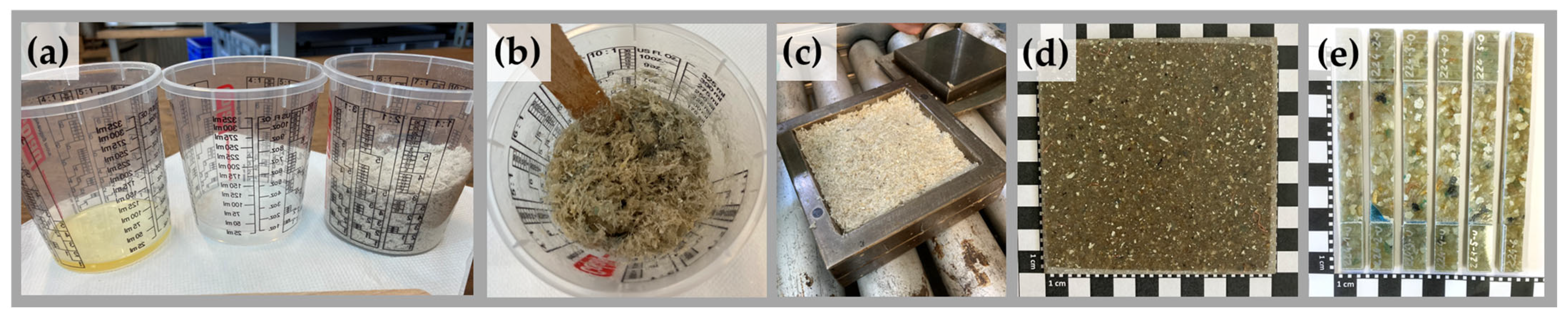
To evaluate the influence of GFRP size, origin, and epoxy resin viscosity on the mechanical properties in new composites, different test series were performed where the reinforcing materials of Table 2 were mixed with a minimum possible amount of epoxy resin of Table 3 and pressed into composite plates using a steel plate mold with the dimensions of 100 × 100 × 4 mm3 (Figure 3) and a heating press (Wickert WLP 80/4/3, Wickert Maschinenbau GmbH, Landau in der Pfalz, Germany). The steel surface was covered with a mold release agent (Loctite Frekote 700NC, Henkel AG & Co. KGaA, Düsseldorf, Germany) before the bulk molding composite mass was put into the mold and cured at 80 °C for 90 min under 100 bar piston pressure. The amount of GFRP reinforcing material in the virgin resin was kept constant, whereby the content of resin-hardener mixture was kept as low as possible to gain the highest possible stiffness.
Pure epoxy resin types were compared by producing 4 mm thick plates with a self-made vertical tool. Resin and hardener were mixed for 2 min in the recommended ratio and degassed for 20 min at room temperature. After that the mixture was filled in the preheated tool and cured in a temperature chamber at 80 °C for 90 min.
From all plates produced six specimens of 100 × 10 mm each were cut on a precision saw (Diadisc 4200, Mutronic Präzisionsgerätebau GmbH & Co.KG, Rieden am Forggensee, Germany) and glass fiber tabs were glued onto the clamping area to ensure failure within the measuring range of the specimen. After conditioning for at least 24 h in a KBF 720 climate chamber (BINDER GmbH, Tuttlingen, Germany) at standard climate (23 °C, 50% r.h.), tensile test referring to ISO 527-4 [29] were performed on a 20 kN universal test machine (Zwick/Roell, Ulm, Germany). It should be noted that the size of the specimen was adapted due to the small tool size to keep the use of material at a low but efficient amount.

3. Results and Discussion

3.1. Raw Material Analysis

The particle size distribution of the shredded WTB material varied significantly between the two delivery batches. In the first supply there were more finer fractions, whereas the second contained a higher proportion of particles larger than 1 mm (Figure 4). This difference is likely due to particle segregation during transport and storage, as finer particles tend to settle at the bottom while coarser ones accumulate near the top. Such a broad particle size range makes it challenging to maintain consistent delivery and product quality. Therefore, sieving into defined particle fractions is important to gain a homogenous source material for the aimed application.
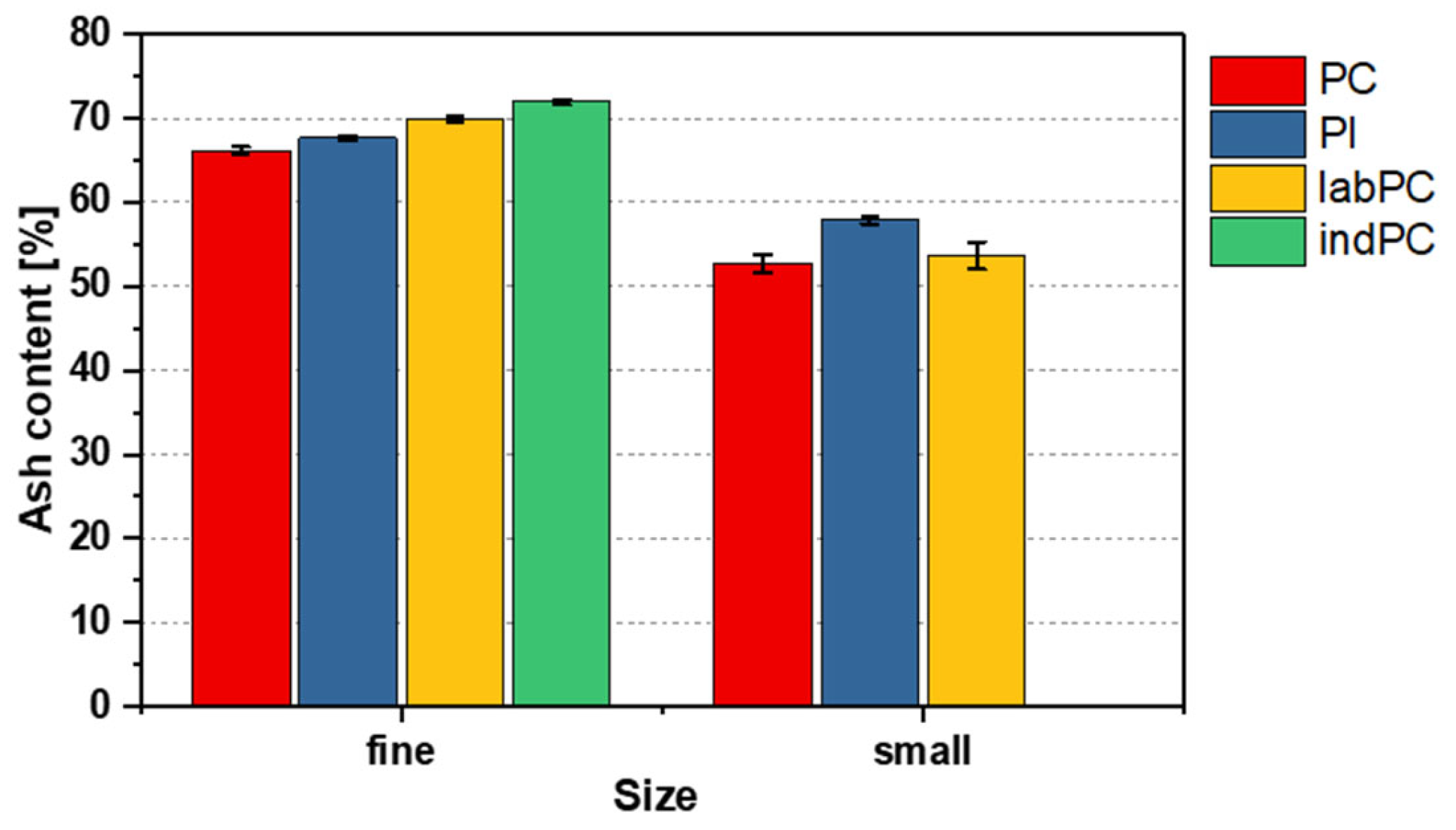
Assuming that the residue remaining after 2 h of combustion at 625 °C consists solely of glass fibers, all GFRP waste materials exhibited high fiber contents of up to approximately 70 wt.% (Figure 5). Smaller particle size fractions generally contained higher fiber proportions, with the industrially cleaned PC material showing the highest value. The standard deviation was low in the fine fraction and particularly for the PI material, which is reasonable given the absence of environmental or operational impurities. In contrast, larger particle fractions showed reduced ash content, likely due to impurities such as copper wires, epoxy foams, or balsa wood originating from wind turbine blade components. These results confirm that pre-cleaning reduces impurities and increases fiber content of composites produced from recycled GFRP.
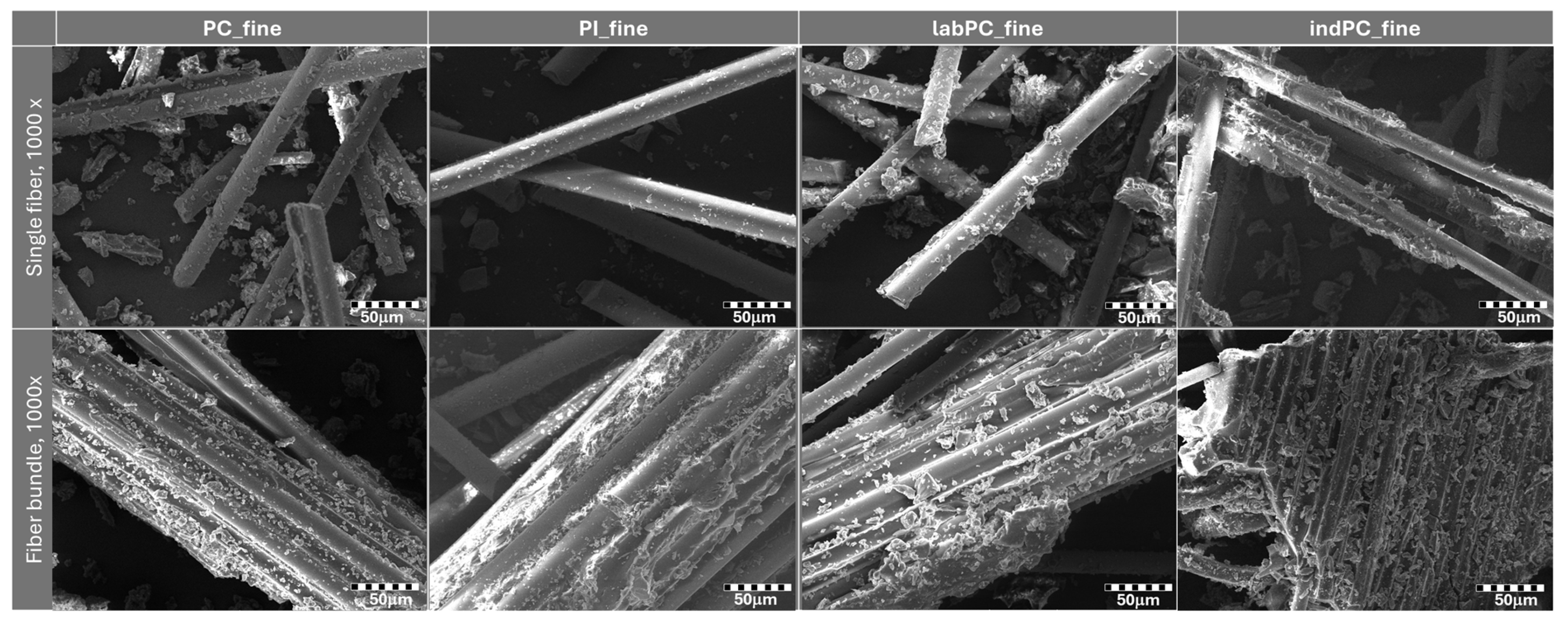
To investigate the source materials more closely, scanning electron microscopy (SEM) images were obtained of the fine particle fraction of all source materials. Figure 6 illustrates the surfaces of individual glass fibers and fiber bundles. Resin residues were clearly visible on all fibers, indicating incomplete separation during processing. The PI material appeared comparatively smoother and cleaner, with only minor surface contaminants. This observation highlights a major challenge in the reuse of mechanically recycled GFRP: the fibers are not present in their pure form but remain partially coated with cured resin, which provides a poor adhesive interface for the new matrix and consequently impairs stress transfer under load. Optimal composite performance can only be achieved when mechanical forces are effectively transmitted to the reinforcing fibers, requiring strong interfacial bonding between the fibers and the matrix [30] and in the case of recycled composites, also between the residual and newly applied epoxy resin. Although the old and new matrices may share similar chemical compositions, cured resin exhibits low reactivity toward uncured epoxy systems. While various coatings and adhesion promoters are available for glass fibers, to our knowledge, no effective, available treatment or additive has yet been developed to enhance epoxy–epoxy interfacial bonding.

3.2. Mechanical Characteristics of Compression Molded Plates

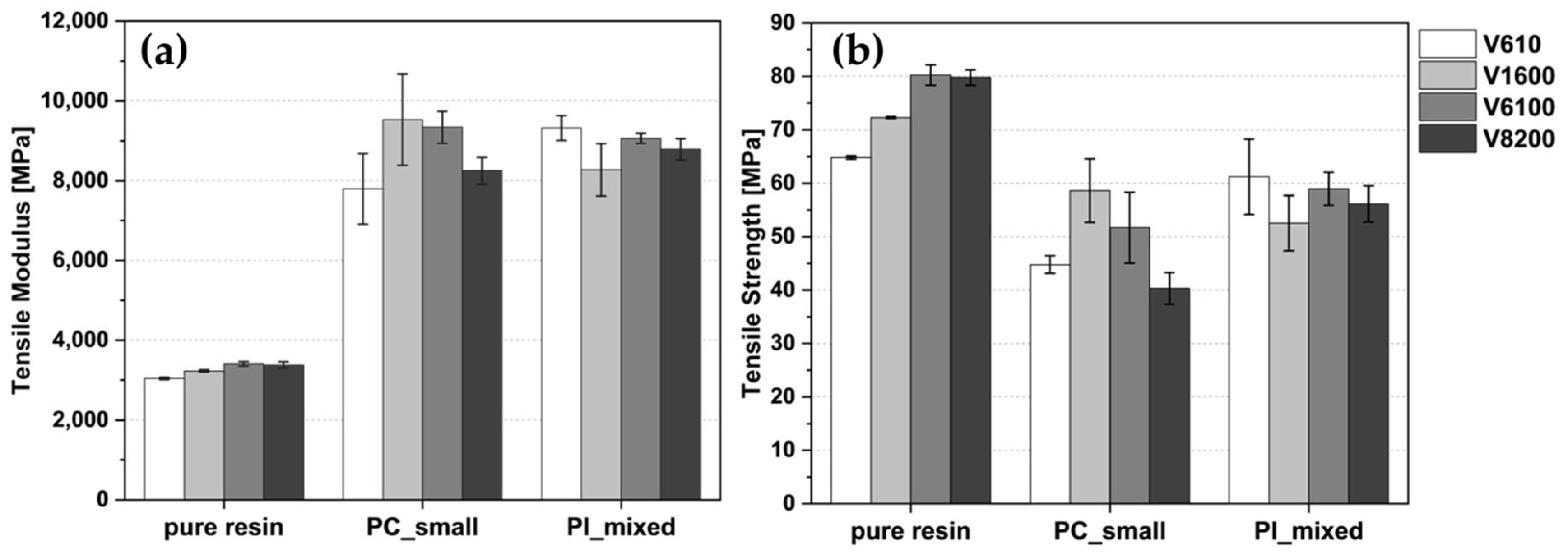
To identify the most suitable matrix system with optimal adhesion to the recycled GFRP material, four epoxy resins of varying viscosities were evaluated, both as pure systems and in combination with shredded PC and PI waste. The tensile tests of the cured pure resins indicated that tensile properties increased with higher resin viscosity (Figure 7) which may be caused by the higher molecular weight that relates to higher mechanical properties. It is well-established that the addition of reinforcing material generally increases the tensile modulus while the tensile strength will only enhance if the fiber length and adhesion between fiber and matrix material is sufficient. This phenomenon arises because the stiff fibers embedded in a comparatively soft matrix generate microscopic notch effects, which locally concentrate strain and thereby facilitate crack initiation [31]. Among the composite systems, the resins with lower viscosity exhibited higher mechanical performance, probably due to better fiber surface wetting. However, all reinforced samples displayed greater standard deviations due to the inherent inhomogeneity of the composite relative to the pure resin. For subsequent investigations, the V6100 resin was selected, as it demonstrated favorable mechanical performance, was well suited to the applied production process, and was developed for minimal crystallization tendency during storage of the uncured components.
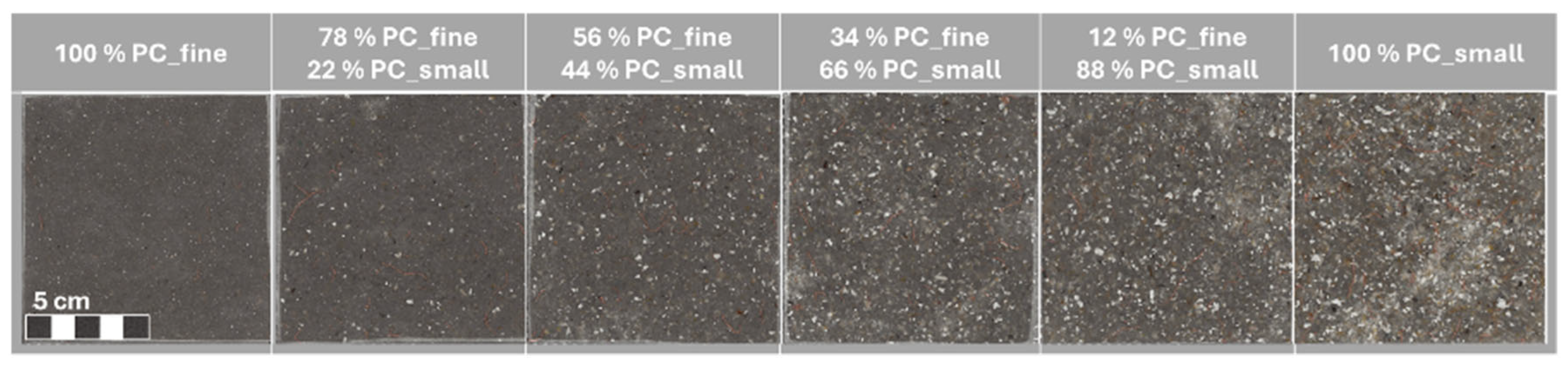
An additional test series was conducted to assess the effect of particle size in the PC material on the resulting mechanical properties. For this purpose, the fine and small fractions of GFRP derived from wind turbine blades (WTB) were systematically blended and subsequently pressed into composite plates using fresh epoxy resin. As this material originated from untreated, shredded WTB waste, it contained a considerable number of impurities. This is particularly evident in the increased presence of coarser particles from 0% to 100% PC_small content, that are most notably as the white inclusions attributed to residual acrylic paint (Figure 8).
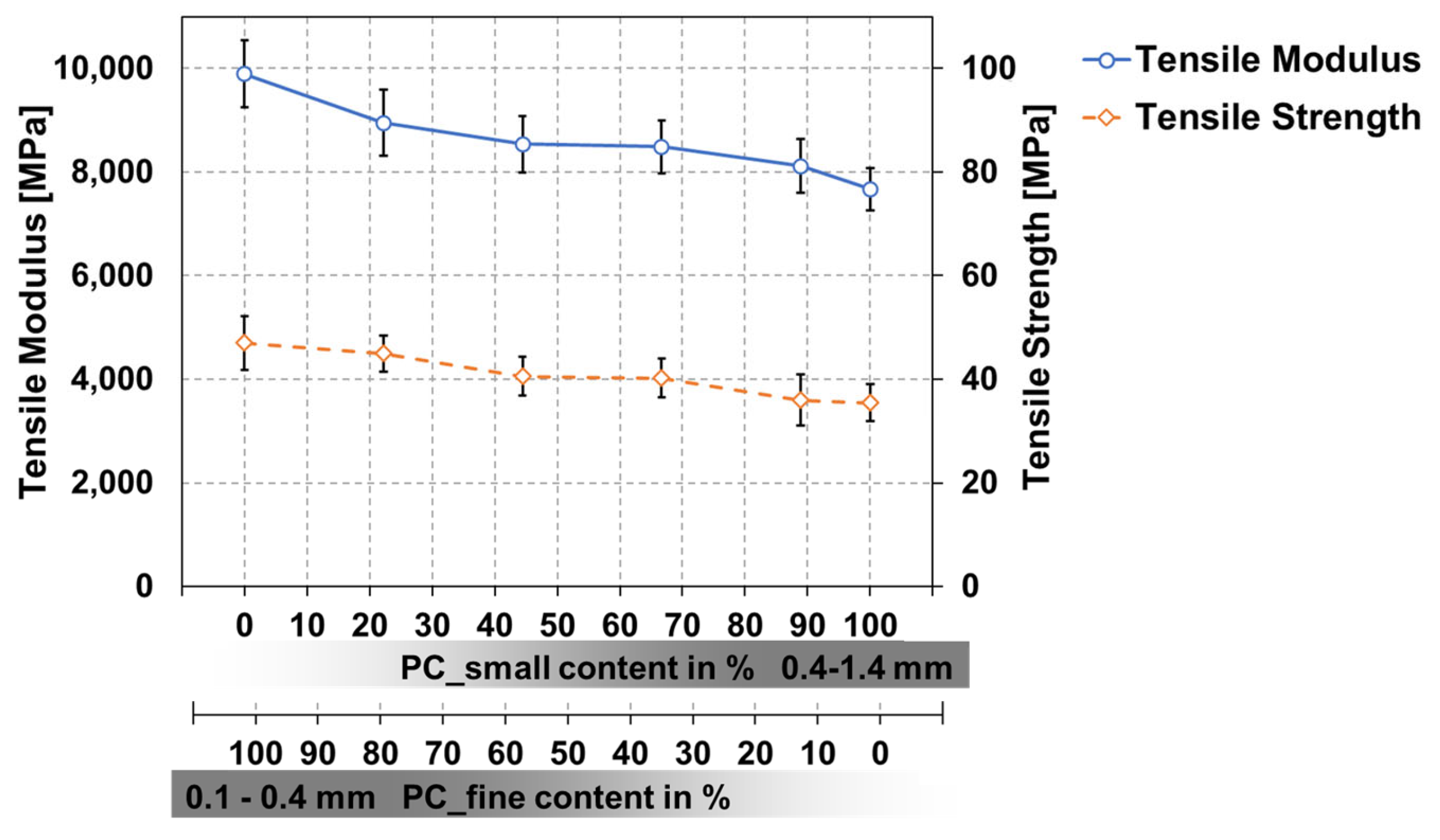
The results of this test series revealed that the finer particle fractions (PC_fine) exhibited superior mechanical properties. The composite with the coarser GFRP fraction (PC_small) has a 22% lower tensile modulus and a 25% lower tensile strength. Both values decrease almost linearly as the proportion of PC_small increases in the reinforcement mixture (Figure 9).
While the use of virgin glass fiber reinforcement typically results in higher strength with increasing fiber length [31], the recycled GFRP reinforcement demonstrated the opposite trend. This behavior can be attributed to the heterogeneous nature of the shredded and sieved waste material, which contains not only individual fibers but also fiber bundles embedded in cured resin. Consequently, the particle size and morphology vary considerably, leading to weaker interfacial bonding with the new matrix. It is well-established that smaller particles generally enhance tensile performance by providing a larger interfacial area for stress transfer and reducing local stress concentrations, whereas larger particles are more prone to cracking or debonding, thereby initiating failure [32].
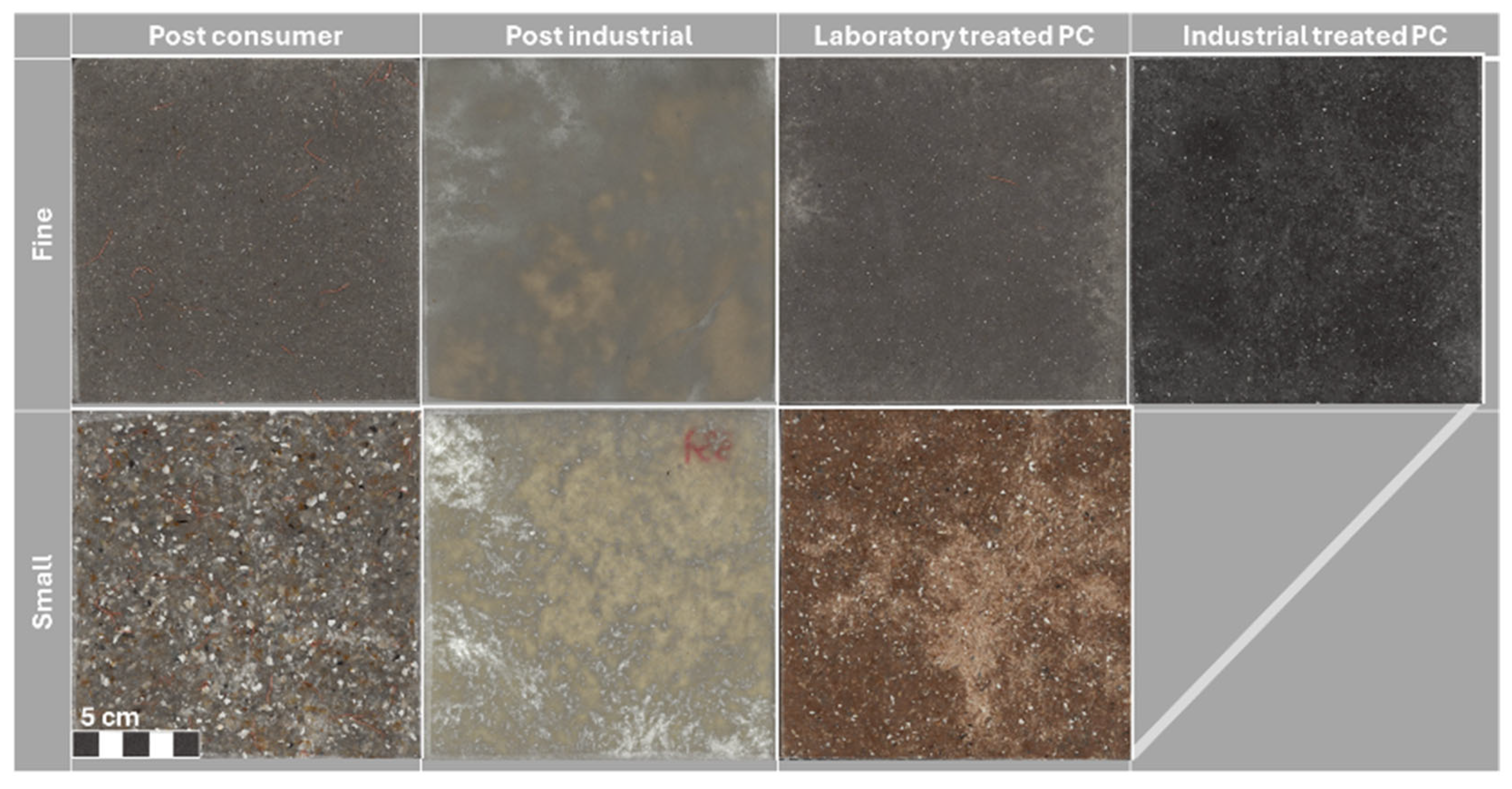
Composite plates using shredded and sieved GFRP waste combined with new epoxy resin (V6100) were fabricated. The resulting plates were readily distinguishable by their color and slightly by the surface roughness (Figure 10). Plates incorporating PI waste exhibited a slightly translucent appearance, whereas those produced from industrially treated GFRP displayed a dark gray coloration. The plate with the small labPC fraction material seems to have some dry fiber regions on the surface. In general, the distribution of the GFRP material in the composite plates seems to be consistent, therefore an isotropic behavior can be assumed, which was confirmed in a previous study [33].
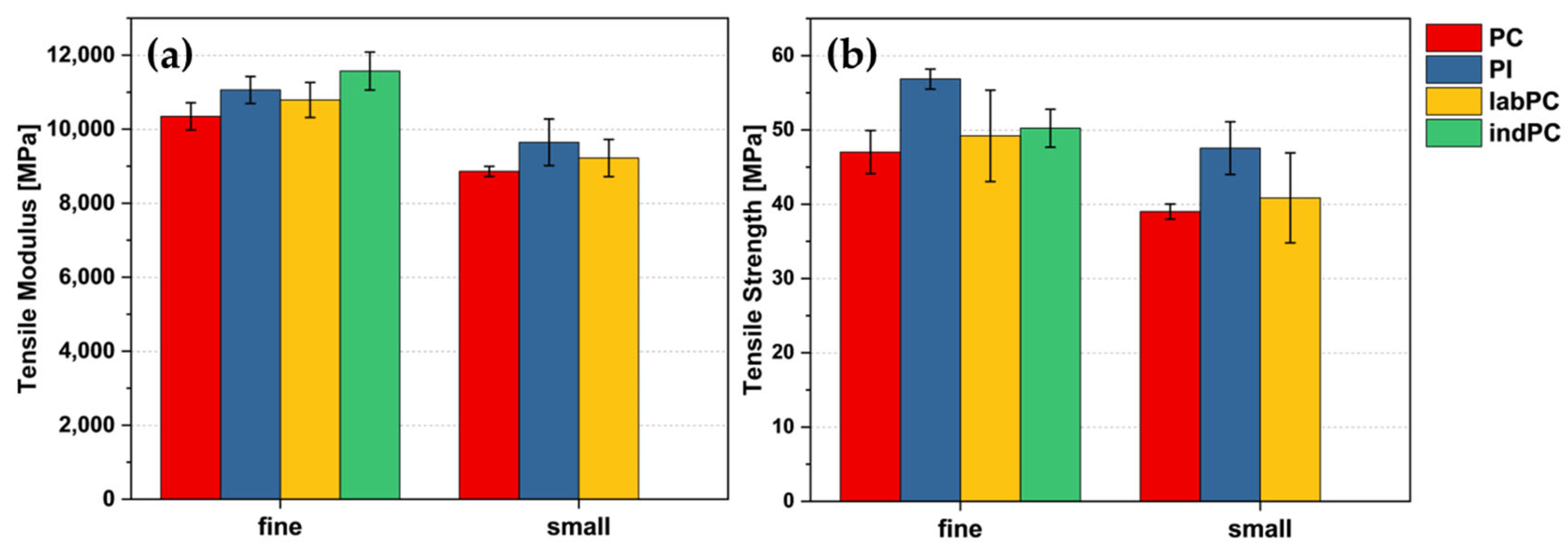
The tensile properties of the fabricated plates reaffirmed that the finer particle size fractions achieved the highest modulus and tensile strength. For the small fractions, the tensile modulus is 14% lower for the PC materials, 13% for the PI fractions and 15% for the labPC fractions. The reduction in the tensile strength from fine to small particle fractions is even higher with 17% for PC, 16% for PI and 17% for labPC fractions. Among the various material sources, the PI and industrially cleaned PC GFRP samples exhibited superior mechanical performance. Although the untreated PC material demonstrated reduced overall mechanical performance, its tensile modulus remained competitive (Figure 11).
These findings underscore the critical importance of adequate processing of recycled GFRP materials. In particular, the removal of impurities is essential. Especially metallic components have to be removed, as such inclusions can promote electrical conductivity, which may be unwanted, and oxidative degradation is possible whereby the fatigue strength of the material can be compromised.

4. Conclusions

This study successfully demonstrated that the waste origin, pretreatment of shredded GFRP, particle size, and matrix formulation significantly influence the tensile modulus and tensile strength of pressed bulk molding compounds produced with virgin epoxy resin. The findings provide a robust basis for developing high-value recycling strategies for composite waste.
  • Combustion tests of the source materials revealed high ash residue (consisting of mainly glass fibers) up to 70 wt.%, whereby the finer fractions (0.1–0.4 mm) showed higher amounts of residue than the coarser ones (0.4–1.4 mm). The industrially pretreated PC material and the PI type had the highest fiber content and the lowest standard deviation of the combustion test series.
  • Four epoxy resins with different viscosities were tested to find the most suitable matrix for recycled GFRP. Higher-viscosity resins showed higher tensile properties in pure resin plates, but low-viscosity systems performed best when reinforced with waste material. A medium-viscosity resin was chosen because it combined good strength with easy processability and low crystallization tendency in an uncured state.
  • Composites made with finer particle fractions consistently delivered the highest tensile strength and stiffness across all materials. Differences between fine (0.1–0.4 mm) and small fractions (0.4–1.4 mm)reached about 13–17%, depending on the GFRP source. PI and industrially cleaned PC composites exhibited the highest mechanical properties, while untreated PC showed reduced but still comparable stiffness. When the fractions were systematically mixed, the mechanical performance decreased almost linearly as coarse particle content increased.
The study demonstrates that controlled particle size and impurity removal are crucial for stable quality and performance of structural epoxy resin plates reinforced with GFRP waste. Cleaned and finely sieved materials yield stronger, more consistent composites.

Author Contributions

Conceptualization, B.P. and C.B.; methodology, B.P. and C.B.; validation B.P. and B.L.; investigation B.P. and B.L.; resources, C.B.; data curation B.P.; writing—original draft preparation, B.P. and B.L.; writing—review and editing, B.P., B.L. and C.B.; visualization, B.P.; supervision, C.B.; project administration, B.P.; funding acquisition, B.P. and C.B. All authors have read and agreed to the published version of the manuscript.

Funding

This research was funded by Upper Austrian Government and FFG GmbH within the project “rGFK goes Trailer” (FO999901698).

Data Availability Statement

The original contributions presented in the study are included in the article. Further inquiries can be directed at the corresponding author.

Acknowledgments

The authors acknowledge the team of technicians of TCKT for carrying out part of the lab work and the help of Markus Gillich in preparing the SEM micrographs.

Conflicts of Interest

Authors Bianca Purgleitner and Christoph Burstaller were employed by the company Transfercenter für Kunststofftechnik GmbH. The remaining authors declare that the research was conducted in the absence of any commercial or financial relationships that could be construed as a potential conflict of interest.

Abbreviations

The following abbreviations are used in this manuscript:
GFRPGlass fiber-reinforced plastic
WTBWind turbine blades
PIPost industrial
PCPost consumer
BMCBulk molding compound
SEMScanning electron microscope

References

  1. Jensen, J.P. Evaluating the Environmental Impacts of Recycling Wind Turbines. Wind Energy 2019, 22, 316–326. [Google Scholar] [CrossRef]
  2. Beauson, J.; Laurent, A.; Rudolph, D.P.; Pagh Jensen, J. The Complex End-of-Life of Wind Turbine Blades: A Review of the European Context. Renew. Sustain. Energy Rev. 2022, 155, 111847. [Google Scholar] [CrossRef]
  3. Fonte, R.; Xydis, G. Wind Turbine Blade Recycling: An Evaluation of the European Market Potential for Recycled Composite Materials. J. Environ. Manag. 2021, 287, 112269. [Google Scholar] [CrossRef] [PubMed]
  4. Liu, P.; Barlow, C.Y. Wind Turbine Blade Waste in 2050. Waste Manag. 2017, 62, 229–240. [Google Scholar] [CrossRef]
  5. Wang, Y.; Dong, B.; Dai, J.-G.; Lu, G.; Peng, K.; Wang, Y. Value-Added Recycling Strategies for Decommissioned Wind Turbine Blades: A Review. Renew. Sustain. Energy Rev. 2025, 222, 115950. [Google Scholar] [CrossRef]
  6. Reimagining End-of-Use Composites as a New Resource; EuCiA, 18 July 2025. Available online: https://eucia.eu/wp-content/uploads/2025/07/Reimagining-end-of-use-composites-as-a-new-resource.pdf (accessed on 11 March 2026).
  7. Paulsen, E.B.; Enevoldsen, P. A Multidisciplinary Review of Recycling Methods for End-of-Life Wind Turbine Blades. Energies 2021, 14, 4247. [Google Scholar] [CrossRef]
  8. Directive 2008/98/EC of the European Parliament and of the Council of 19 November 2008 on Waste and Repealing Certain Directives. Available online: https://eur-lex.europa.eu/eli/dir/2008/98/oj/eng (accessed on 9 March 2026).
  9. Murphy, J. Recycling of Reinforced Plastics. In The Reinforced Plastics Handbook, 1st ed.; Elsevier: Amsterdam, The Netherlands, 1994; pp. 318–338. [Google Scholar]
  10. Bledzki, A.K.; Goracy, K. The Use of Recycled Fiber Composites as Reinforcement for Thermosets. Mech. Compos. Mater. 1994, 29, 352–356. [Google Scholar] [CrossRef]
  11. Gonçalves, R.M.; Martinho, A.; Oliveira, J.P. Recycling of Reinforced Glass Fibers Waste: Current Status. Materials 2022, 15, 1596. [Google Scholar] [CrossRef]
  12. Hu, Y.; Zhang, Y.; Li, Y.; Wang, Y.; Li, G.; Liu, X. Wind Turbine Blade Recycling: A Re-view of the Recovery and High-Value Utilization of Decommissioned Wind Turbine Blades. Resour. Conserv. Recycl. 2024, 210, 107813. [Google Scholar] [CrossRef]
  13. Yang, Y.; Boom, R.; Irion, B.; Van Heerden, D.-J.; Kuiper, P.; De Wit, H. Recycling of Composite Materials. Chem. Eng. Process. Process Intensif. 2012, 51, 53–68. [Google Scholar] [CrossRef]
  14. Kaboré, M.W.; Perrin, D.; Idir, R.; Ienny, P.; Garcia-Diaz, É.; El Bitouri, Y. A Review on the Valorization of Recycled Glass Fiber-Reinforced Polymer (rGFRP) in Mortar and Concrete: A Sustainable Alternative to Landfilling. Polymers 2025, 17, 2664. [Google Scholar] [CrossRef]
  15. Karuppannan Gopalraj, S.; Kärki, T. A Review on the Recycling of Waste Carbon Fiber/Glass Fiber-Reinforced Composites: Fiber Recovery, Properties and Life-Cycle Analysis. SN Appl. Sci. 2020, 2, 433. [Google Scholar] [CrossRef]
  16. Pławecka, K.; Przybyła, J.; Korniejenko, K.; Lin, W.-T.; Cheng, A.; Łach, M. Recycling of Mechanically Ground Wind Turbine Blades as Filler in Geopolymer Composite. Materials 2021, 14, 6539. [Google Scholar] [CrossRef] [PubMed]
  17. Beauson, J.; Madsen, B.; Toncelli, C.; Brøndsted, P.; Ilsted Bech, J. Recycling of Shredded Composites from Wind Turbine Blades in New Thermoset Polymer Composites. Compos. Part Appl. Sci. Manuf. 2016, 90, 390–399. [Google Scholar] [CrossRef]
  18. Liu, P.; Meng, F.; Barlow, C.Y. Wind Turbine Blade End-of-Life Options: An Economic Comparison. Resour. Conserv. Recycl. 2022, 180, 106202. [Google Scholar] [CrossRef]
  19. Cunliffe, A.M.; Jones, N.; Williams, P.T. Pyrolysis of Composite Plastic Waste. Environ. Technol. 2003, 24, 653–663. [Google Scholar] [CrossRef]
  20. Bouzidi, Y.; Chikha, I.; Tazi, N.; Baklouti, S.; Rachida, I. Potential Recovery of Glass and Carbon Fibers from Wind Turbine Blades through Different Valorization Techniques. Wind Eng. 2023, 49, 897–909. [Google Scholar] [CrossRef]
  21. Johst, P.; Kucher, M.; Bühl, M.; Schulz, P.; Kupfer, R.; Schilling, L.; Santos, R.M.; Carneiro, C.; Voigt, P.; Modler, N.; et al. Identification and Environmental Assessments for Different Scenarios of Repurposed Decommissioned Wind Turbine Blades. Mater. Circ. Econ. 2023, 5, 13. [Google Scholar] [CrossRef]
  22. Joustra, J.; Flipsen, B.; Balkenende, R. Structural Reuse of Wind Turbine Blades through Segmentation. Compos. Part C 2021, 5, 100137. [Google Scholar] [CrossRef]
  23. Zhang, Y.; Van Caneghem, J.; Pontikes, Y.; Granata, G.; Lessard, L.; Van Vuure, A.W. Environmental and Economic Assessment of Mechanical Recycling of End-of-Life Wind Turbine Blades into Rebars and Comparison with Conventional Disposal Routes. Compos. Part Appl. Sci. Manuf. 2025, 190, 108711. [Google Scholar] [CrossRef]
  24. Pickering, S.J. Recycling Technologies for Thermoset Composite Materials—Current Status. Compos. Part Appl. Sci. Manuf. 2006, 37, 1206–1215. [Google Scholar] [CrossRef]
  25. Palmer, J.; Ghita, O.R.; Savage, L.; Evans, K.E. Successful Closed-Loop Recycling of Thermoset Composites. Compos. Part Appl. Sci. Manuf. 2009, 40, 490–498. [Google Scholar] [CrossRef]
  26. Rani, M.; Choudhary, P.; Krishnan, V.; Zafar, S. A Review on Recycling and Reuse Methods for Carbon Fiber/Glass Fiber Composites Waste from Wind Turbine Blades. Compos. Part B Eng. 2021, 215, 108768. [Google Scholar] [CrossRef]
  27. Zorić, D. The Landscapes of Wind Energy Waste. In Proceedings of the 112th ACSA Annual Meeting: Disruptors on the Edge, Vancouver, BC, Canada, 14–16 March 2024; ACSA Press: Washington, DC, USA, 2024; pp. 270–277. [Google Scholar]
  28. ISO 3451; Plastics—Determination of Ash. International Organization for Standardization: Geneva, Switzerland, 2008.
  29. ISO 527; Plastics—Determination of Tensile Properties. International Organization for Standardization: Geneva, Switzerland, 2019.
  30. AVK—Industrievereinigung Verstärkte Kunststoffe e.V. Handbuch Faserverbundkunststoffe/Composites, 4th ed.; Springe: Wiesbaden, Germany, 2014. [Google Scholar] [CrossRef]
  31. Ehrenstein, G.W. Faserverbund-Kunststoffe Werkstoffe—Verarbeitung—Eigenschaften, 2nd ed.; Hanser Verlag: München, Germany, 2006. [Google Scholar]
  32. Fu, S.Y.; Feng, X.Q.; Lauke, B.; Mai, Y.W. Effects of particle size, particle/matrix interface adhesion and particle loading on mechanical properties of particulate–polymer composites. Comp. Part B Eng. 2008, 39, 933–961. [Google Scholar] [CrossRef]
  33. Purgleitner, P.; Krenn, K.; Burgstaller, C. Untersuchungen zur strukturellen Verwertung von geschredderten Windradflügel in Bulk Moulding Compounds. In Proceedings of the 17 Recy & DepoTech Conference, Leoben, Austria, 13–15 November 2024. [Google Scholar]
Figure 1. Used fractions of shredded GFRP from end-of-life wind turbine blades. (a) Sieved raw material (b) in laboratory scale cleaned and sieved raw material (c) commercially available industrially cleaned GFRP milled in fine fraction.
Fibers 14 00047 g001
Figure 2. Process steps (shredding and sieving) of the used GFRP material fractions from post-industrial sources (laminate cutoffs).
Fibers 14 00047 g002
Figure 3. Production method of GFRP-epoxy-resin plates for mechanical characterization. (a) resin, hardener and GFRP in right proportion are (b) mixed together and (c) filled in a steel mold and pressed in a hot press. (d) Cured 100 × 100 × 4 mm3 plate (e) cut test specimens with tabs. Scale in (d,e): one square equals one cm.
Fibers 14 00047 g003
Figure 4. Particle size distribution (mass fraction of grain size and mass faction sum curve against mesh size) from (a) first delivery date and (b) second delivery date of shredded WTB material from the same big bag more than one year later.
Fibers 14 00047 g004
Figure 5. Ash content (mainly glass fibers) versus particle size fraction of GFRP from different sources and with different pretreatment. Due to the chosen size reduction method, no small fraction was available from indPC. The columns indicate from left to right the values for PC–PI–labP–indPC.
Fibers 14 00047 g005
Figure 6. SEM micrographs of the finer fractions of the used GFRP materials.
Fibers 14 00047 g006
Figure 7. Tensile modulus (a) and tensile strength (b) of different pure resins and with PC_small and PC_mixed reinforced pressed plates. The V-Number of the different resins indicates the viscosity value of the resin-hardener mixture.
Fibers 14 00047 g007
Figure 8. Pressed test 100 × 100 × 4 mm3 plates with different mixtures of fine and small PC GFRP fractions. From left to right the coarser fraction is increasing from zero to 100%.
Fibers 14 00047 g008
Figure 9. Tensile modulus and tensile strength versus fraction size content of PC GFRP.
Fibers 14 00047 g009
Figure 10. Pressed plates with GFRP material from different origins (horizontal) and size fractions (vertical). From the industrial cleaned PC source, there was no small fraction size but only the fine one.
Fibers 14 00047 g010
Figure 11. Tensile modulus (a) and tensile strength (b) of pressed epoxy resin plates filled with fine and small fraction sized GFRP material from different origins. The columns indicate from left to right the values for PC–PI–labP–indPC.
Fibers 14 00047 g011
Table 2. List of all GFRP materials used with distributor, origin, treatment steps and particle size.
NameDistributorOriginTreatment StepsParticle Size
PC_fineBCUBWTBShredded, sieved0.1–0.4 mm
PC_small0.4–1.4 mm
PI_fineDanutecLaminateShredded, sieved0.1–0.4 mm
PI_smallShredded, sieved0.4–1.4 mm
PI_mixedShredded0–4 mm
labPC_fineBCUBWTBShredded, sieved, cleaned0–0.5 mm
labPC_small0.5–1.5 mm
indPC_fineThornmannWTBShredded, sieved, cleaned0–0.5 mm
Table 3. List of the used epoxy resins and the curing parameters.
NameDistributorResinHardenerWeight RatioResin Viscosity c
V610Sika aBiresin CR83Biresin CH83-2100:30610 mPas
V1600bto bEpinal KR77.25Epinal IH77.72100:34600–1600 mPas
V6100Epinal KR44.39100:333900–6100 mPas
V8200Epinal KR44.43100:325800–8200 mPas
a Sika Deutschland GmbH, 72574 Bad Urach, Germany. b bto-epoxy GmbH, 3300 Amstetten, Austria. c at 25 °C.
Disclaimer/Publisher’s Note: The statements, opinions and data contained in all publications are solely those of the individual author(s) and contributor(s) and not of MDPI and/or the editor(s). MDPI and/or the editor(s) disclaim responsibility for any injury to people or property resulting from any ideas, methods, instructions or products referred to in the content.