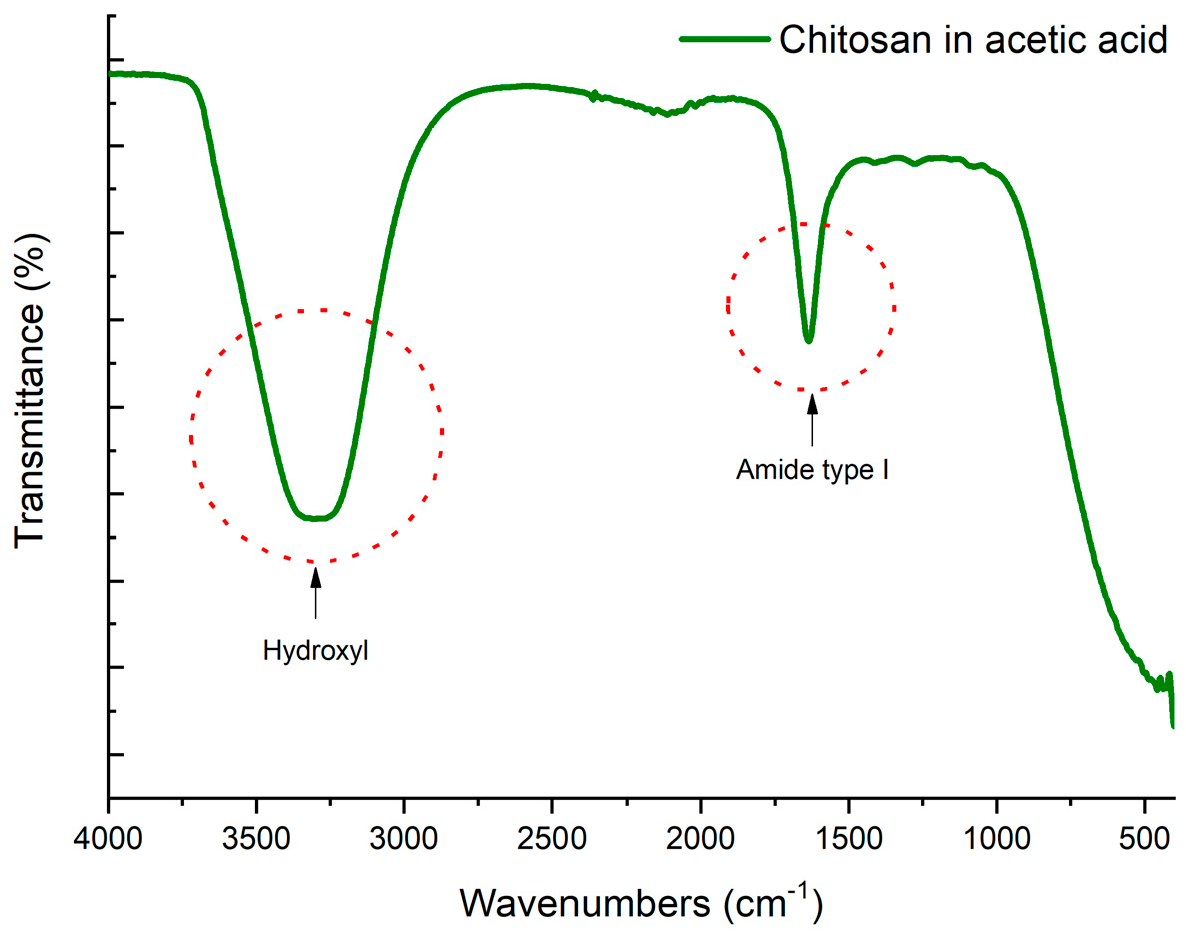
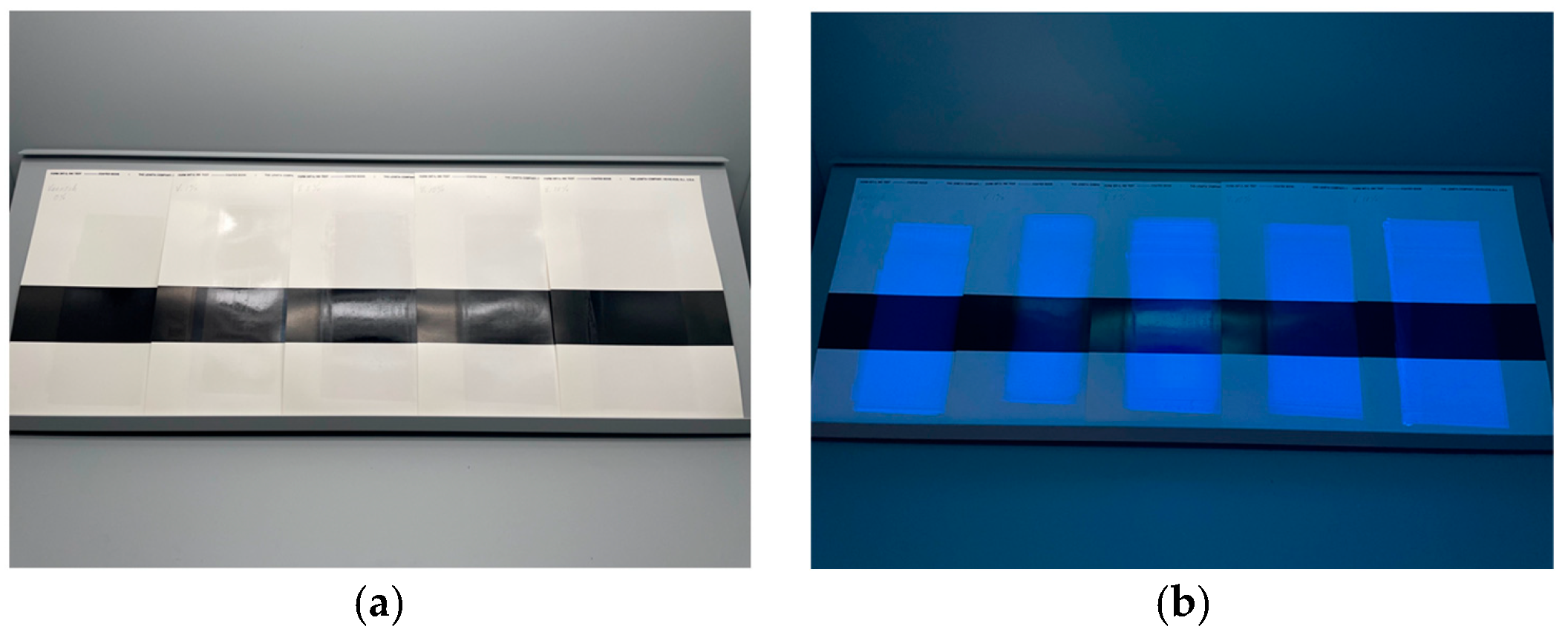
Assessing Epoxy-Acrylate/Chitosan Films for Banknote Coatings: Thermal, Mechanical, and Gloss Performance

 , , ,
, , ,  and
and
Abstract
1. Introduction
1.1. Varnishes
1.2. Chitosan as an Antimicrobial Agent
2. Materials and Methods
3. Results and Discussion
3.1. Characterization by FTIR Spectroscopy
3.2. Morphological Analysis (SEM)
3.3. Differential Scanning Calorimetry (DSC)
3.4. Dynamic Mechanical Análisis (DMA)
3.5. Gloss Measurement

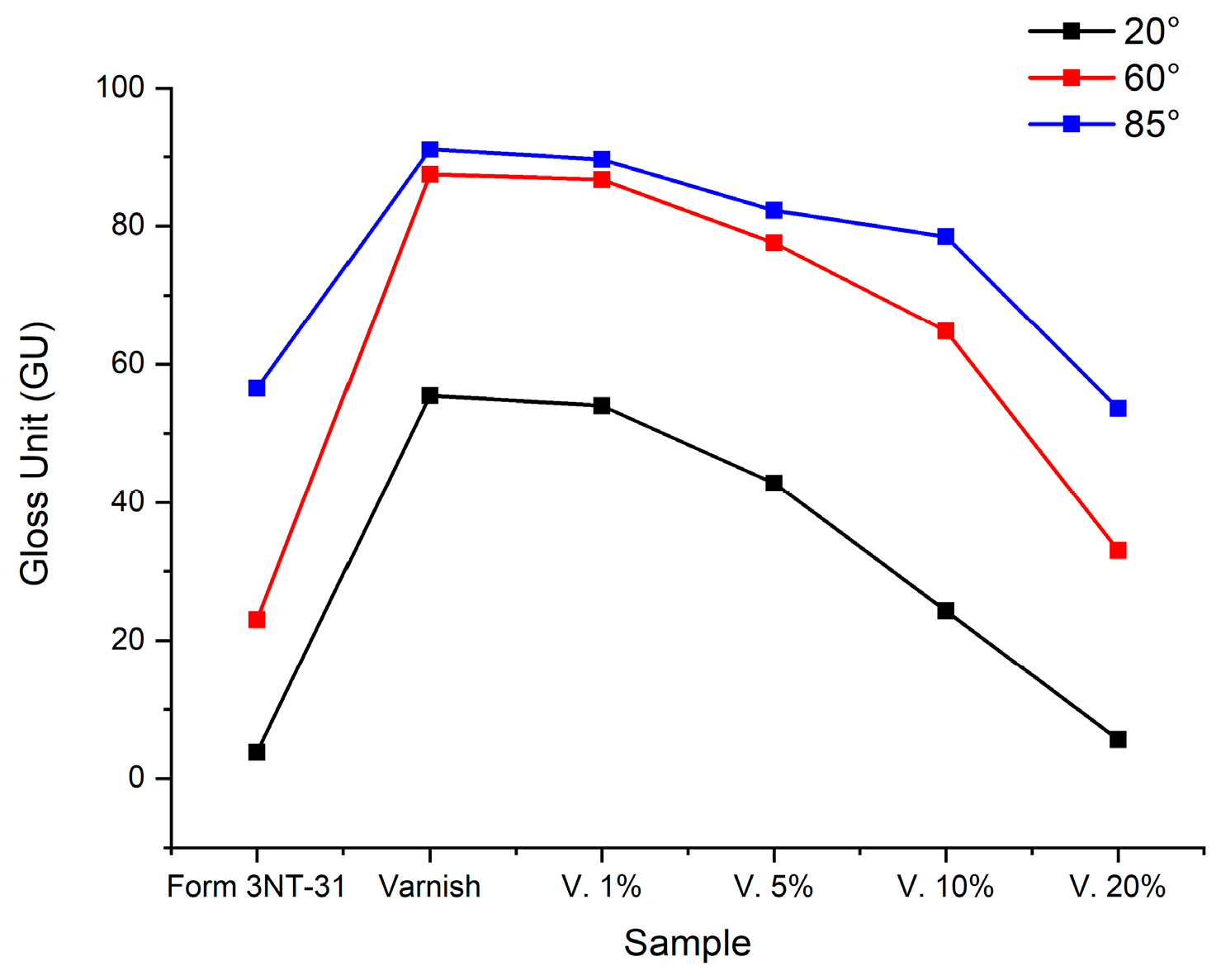
4. Conclusions
Supplementary Materials
Author Contributions
Funding
Institutional Review Board Statement
Informed Consent Statement
Data Availability Statement
Conflicts of Interest
References
- Edo, G.I.; Ndudi, W.; Ali, A.B.M.; Yousif, E.; Zainulabdeen, K.; Akpoghelie, P.O.; Isoje, E.F.; Igbuku, U.A.; Opiti, R.A.; Athan Essaghah, A.E. Chitosan: An Overview of Its Properties, Solubility, Functional Technologies, Food and Health Applications. Carbohydr. Res. 2025, 550, 109409. [Google Scholar] [CrossRef] [Scilit]
- Pardo-Castaño, C.; Bolaños, G. Solubility of Chitosan in Aqueous Acetic Acid and Pressurized Carbon Dioxide-Water: Experimental Equilibrium and Solubilization Kinetics. J. Supercrit. Fluids 2019, 151, 63–74. [Google Scholar] [CrossRef] [Scilit]
- Rinaudo, M.; Pavlov, G.; Desbrières, J. Influence of Acetic Acid Concentration on the Solubilization of Chitosan. Polymer 1999, 40, 7029–7032. [Google Scholar] [CrossRef] [Scilit]
- Giraldo, J.D.; Rivas, B.L. Direct Ionization and Solubility of Chitosan in Aqueous Solutions with Acetic Acid. Polym. Bull. 2021, 78, 1465–1488. [Google Scholar] [CrossRef] [Scilit]
- Ali, M.Z.; Srinivasan, S.; Akter, S. CTX-M-127 with I176F Mutations Found in Bacteria Isolates from Bangladeshi Circulating Banknotes. Sci. Rep. 2024, 14, 5866. [Google Scholar] [CrossRef] [Scilit]
- Meister, T.L.; Kirchhoff, L.; Brüggemann, Y.; Todt, D.; Steinmann, J.; Steinmann, E. Stability of Pathogens on Banknotes and Coins: A Narrative Review. J. Med. Virol. 2023, 95, e29312. [Google Scholar] [CrossRef] [Scilit]
- Elleboudy, A.A.F.; Elagoz, M.A.; Simonian, G.N.; Hasanin, M. Biological Factors Affecting the Durability, Usability and Chemical Composition of Paper Banknotes in Global Circulation. Egypt. J. Chem. 2021, 64, 2337–2342. [Google Scholar] [CrossRef] [Scilit]
- Todt, D.; Meister, T.L.; Tamele, B.; Howes, J.; Paulmann, D.; Becker, B.; Brill, F.H.; Wind, M.; Schijven, J.; Heinen, N. A Realistic Transfer Method Reveals Low Risk of SARS-CoV-2 Transmission via Contaminated Euro Coins and Banknotes. iScience 2021, 24, 102908. [Google Scholar] [CrossRef] [Scilit] [PubMed]
- Akter, S.; Roy, P.C.; Ferdaus, A.; Ibnat, H.; Alam, A.S.M.R.U.; Nigar, S.; Jahid, I.K.; Hossain, M.A. Prevalence and Stability of SARS-CoV-2 RNA on Bangladeshi Banknotes. Sci. Total Environ. 2021, 779, 146133. [Google Scholar] [CrossRef] [Scilit] [PubMed]
- Milosavljevi, M.; Okanovi, M.; Cicvari Kosti, S.; Jovanovi, M.; Radoni, M. COVID-19 and Behavioral Factors of e-Payment Use: Evidence from Serbia. Sustainability. 2023, 15, 3188. [Google Scholar] [CrossRef] [Scilit]
- Rawlinson, S.; Ciric, L.; Cloutman-Green, E. COVID-19 Pandemic -Let’s Not Forget Surfaces. J. Hosp. Infect. 2020, 105, 790–791. [Google Scholar] [CrossRef] [Scilit]
- Rocha-Gámez, J.; Tejeda-Villarreal, P.N.; Macías-Cárdenas, P.; Canizales-Oviedo, J.; Garza-González, E.; Ramírez-Villarreal, E.G. Microbial Contamination in 20-Peso Banknotes in Monterrey. J. Environ. Health 2012, 75, 20–23. [Google Scholar]
- Szadkowski, B.; Liwka-Kaszyska, M.; Marzec, A. Bioactive and Biodegradable Cotton Fabrics Produced via Synergic Effect of Plant Extracts and Essential Oils in Chitosan Coating System. Sci. Rep. 2024, 14, 8530. [Google Scholar] [CrossRef] [Scilit]
- Abd Alfadil, N.A.; Suliman Mohamed, M.; Ali, M.M.; El Nima, E.A.I. Characterization of Pathogenic Bacteria Isolated from Sudanese Banknotes and Determination of Their Resistance Profile. Int. J. Microbiol. 2018, 2018, 4375164. [Google Scholar] [CrossRef] [Scilit] [PubMed]
- Saad, A.A.E.-R.E.; Aydemir, C.; Özsoy, S.A.; Yenidoan, S. Drying Methods of the Printing Inks. J. Graph. Eng. Des. 2021, 12, 29–37. [Google Scholar] [CrossRef] [Scilit]
- Dossin, R.; Lavoratti, A.; Cercena, R.; Gonçalves Dal-Bó, A.; Zimmermann, M.V.G.; Zattera, A.J. Influence of Different Photoinitiatiors in the UV-LED Curing of Polyester Acrylated Varnishes. J. Coat. Tech. Res. 2023, 20, 393–402. [Google Scholar] [CrossRef] [Scilit]
- Majnari, I.; Bolana Mirkovi, I.; Golubovi, K. Influence of UV curing varnish coating on surface properties of paper. Teh. Vjesnik 2012, 19, 51–56. [Google Scholar]
- Hou, C.; Gui, Q. Preparation and Properties of UV Curing Varnish Suited for Various Substrates. J. Photochem. Photobiol. A Chem. 2024, 457, 115864. [Google Scholar] [CrossRef] [Scilit]
- Ahmad, S.I.; Christensen, L.; Baron, E.; Ahmad, S.I. Ed Ultraviolet Light in Human Health, Diseases and Environment; Springer: Berlin/Heidelberg, Germany, 2017; pp. 3–11. [Google Scholar]
- Borysiuk, P.; Derda, M.; Auriga, R.; Boruszewski, P.; Monder, S. Comparison of Selected Properties of Varnish Coatings Curing with the Use of UV and UV-LED Approach. Ann. Wars. Univ. Life Sci. 2015, 92, 49–54. [Google Scholar]
- Montes De Oca-Vásquez, G.; Esquivel-Alfaro, M.; Vega-Baudrit, J.R.; Jiménez-Villalta, G.; Romero-Arellano, V.H.; Sulbarán-Rangel, B. Development of Nanocomposite Chitosan Films with Antimicrobial Activity from Agave Bagasse and Shrimp Shells. J. Agric. Food Res. 2023, 14, 100759. [Google Scholar] [CrossRef] [Scilit]
- Heras, M.; Huang, C.-C.; Chang, C.-W.; Lu, K.-H. Trends in Chitosan-Based Films and Coatings: A Systematic Review of the Incorporated Biopreservatives, Biological Properties, and Nanotechnology Applications in Meat Preservation. Food Packag. Shelf Life 2024, 42, 101259. [Google Scholar] [CrossRef] [Scilit]
- Mohammadi Amirabad, L.; Jonoobi, M.; Mousavi, N.S.; Oksman, K.; Kaboorani, A.; Yousefi, H. Improved Antifungal Activity and Stability of Chitosan Nanofibers Using Cellulose Nanocrystal on Banknote Papers. Carbohydr. Polym. 2018, 189, 229–237. [Google Scholar] [CrossRef] [Scilit]
- Zarayneh, S.; Sepahi, A.A.; Jonoobi, M.; Rasouli, H. Comparative Antibacterial Effects of Cellulose Nanofiber, Chitosan Nanofiber, Chitosan/Cellulose Combination and Chitosan Alone against Bacterial Contamination of Iranian Banknotes. Int. J. Biol. Macromol. 2018, 118, 1045–1054. [Google Scholar] [CrossRef] [Scilit]
- Prasannamedha, G.; Senthil Kumar, P.; Shivaani, S.; Shankar, V.; Vo, D.-N.; Rangasamy, G. A Critical Review on the Fabrication of Chitosan Films from Marine Wastes. Polym. Bull. 2024, 81, 7551–7583. [Google Scholar] [CrossRef] [Scilit]
- Ahmed, M.; Saini, P.; Iqbal, U.; Sahu, K. Edible Microbial Cellulose-Based Antimicrobial Coatings and Films Containing Clove Extract. Food Prod. Process. Nutr. 2024, 6, 65. [Google Scholar] [CrossRef] [Scilit]
- Dinh, T.A.; Le, Y.N.; Pham, N.Q.; Ton-That, P.; Van-Xuan, T.; Ho, T.G.; Nguyen, T.; Phuong, H.H.K. Fabrication of Antimicrobial Edible Films from Chitosan Incorporated with Guava Leaf Extract. Prog. Org. Coat. 2023, 183, 107772. [Google Scholar] [CrossRef] [Scilit]
- Koeze, P.; van Gelder, A.T.; De Nederlandsche Bank, N.V. The Effect of Coating on the Durability of Banknotes; De Nederlandsche Bank: Amsterdam, The Netherlands, 1985. [Google Scholar]
- Bobu, E.; Nicu, R.; Obrocea, P.; Ardelean, E.; Dunca, S.; Balaes, T. Antimicrobial properties of coatings based on chitosan derivatives for applications in sustainable paper conservation. Cellul. Chem. Technol. 2016, 50, 689–699. [Google Scholar]
- Fatmawati, A.; Suseno, N.; Savitri, E.; Masui, G.; Ivony, F. Chitosan-Based Coating Application to Enhance Antimicrobial and Water Vapor Barrier Properties of Industry-Manufactured Paper. J. Kim. Sains Dan. Apl. 2024, 27, 515–522. [Google Scholar] [CrossRef] [Scilit]
- Jiang, A.; Patel, R.; Padhan, B.; Palimkar, S.; Galgali, P.; Adhikari, A.; Varga, I.; Patel, M. Chitosan Based Biodegradable Composite for Antibacterial Food Packaging Application. Polymers 2023, 15, 2235. [Google Scholar] [CrossRef] [Scilit] [PubMed]
- Noè, C.; Zanon, M.; Arencibia, A.; López-Muñoz, M.; Fernández de Paz, N.; Calza, P.; Sangermano, M. UV-Cured Chitosan and Gelatin Hydrogels for the Removal of As(V) and Pb(II) from Water. Polymers 2022, 14, 1268. [Google Scholar] [CrossRef] [Scilit] [PubMed]
- Kim, E.; Han, G.; Kim, J.; Noh, S.; Lee, J.; Ito, Y.; Son, T. Visible and UV-curable chitosan derivatives for immobilization of biomolecules. Int. J. Biol. Macromol. 2017, 104, 1611–1619. [Google Scholar] [CrossRef] [Scilit]
- Bayramoglu, G. Methacrylated Chitosan Based UV Curable Support for Enzyme Immobilization. Mater. Res. 2017, 20, 452–459. [Google Scholar] [CrossRef] [Scilit]
- Pilch-Pitera, B.; Krawczyk, K.; Kędzierski, M.; Pojnar, K.; Lehmann, H.; Czachor-Jadacka, D.; Bieniek, K.; Hilt, M. Antimicrobial Powder Coatings Based on Environmentally Friendly Biocides. ACS Sustain. Chem. Eng. 2024, 12, 10325–10339. [Google Scholar] [CrossRef] [Scilit]
- Rajczak, E.; Tylkowski, B.; Constantí, M.; Haponska, M.; Trusheva, B.; Malucelli, G.; Giamberini, M. Preparation and Characterization of UV-Curable Acrylic Membranes Embedding Natural Antioxidants. Polymers 2020, 12, 358. [Google Scholar] [CrossRef] [Scilit] [PubMed]
- Dixit, A.; Wazarkar, K.; Sabnis, A. Antimicrobial UV curable wood coatings based on citric acid. Pigment. Resin. Technol. 2021, 50, 533–544. [Google Scholar] [CrossRef] [Scilit]
- Assaifan, A.K.; Alfadul, H.; Albuaimi, M.S.; Alrebaish, A.S.; Al-Gawati, M. Scalable Flexographic Printing of Graphite/Carbon Dot Nanobiosensors for Non-Faradaic Electrochemical Quantification of IL-8. Talanta 2025, 295, 128371. [Google Scholar] [CrossRef] [Scilit]
- El-Hafian, E.A.; Elgannoudi, E.S.; Mainal, A.; Yahaya, A.H.B. Characterization of Chitosan in Acetic Acid: Rheological and Thermal Studies. Turk. J. Chem. 2010, 34, 47–56. [Google Scholar] [CrossRef] [Scilit]
- Do Amaral Sobral, P.J.; Gebremariam, G.; Drudi, F.; De Aguiar Saldanha Pinheiro, A.C.; Romani, S.; Rocculi, P.; Dalla Rosa, M. Rheological and Viscoelastic Properties of Chitosan Solutions Prepared with Different Chitosan or Acetic Acid Concentrations. Foods 2022, 11, 2692. [Google Scholar] [CrossRef] [Scilit] [PubMed]
- Sikorski, D.; Gzyra-Jagiea, K.; Draczyski, Z. The Kinetics of Chitosan Degradation in Organic Acid Solutions. Mar. Drugs 2021, 19, 236. [Google Scholar] [CrossRef] [Scilit]
- Rogovina, S.Z.; Vikhoreva, G.A. Polysaccharide-based polymer blends: Methods of their production. Glycoconj. J. 2006, 23, 611–618. [Google Scholar] [CrossRef] [Scilit]
- ASTM D823-18(2022); Standard Practices for Producing Films of Uniform Thickness of Paint, Coatings and Related Products on Test Panels. ASTM: West Conshohocken, PA, USA, 2022.
- ASTM D523-14(2018); Standard Test Method for Specular Gloss. ASTM: West Conshohocken, PA, USA, 2018.
- Macea, R.B.; De Hoyos, C.F.; Montes, Y.G.; Fuentes, E.M.; Ruiz, J.I.R. Síntesis y Propiedades de Filmes Basados En Quitosano/Lactosuero. Polímeros 2015, 5, 58–69. [Google Scholar] [CrossRef] [Scilit]
- Hernández Cocoletzi, H.; Águila Almanza, E.; Flores Agustin, O.; Viveros Nava, E.L.; Ramos Cassellis, E. Obtención y caracterización de quitosano a partir de exoesqueletos de camarón. Superf. Y Vacío 2009, 22, 57–60. [Google Scholar]
- Liu, H.; Wu, X.; Liu, Y.; Guo, Z.; Ge, Q.; Sun, Z. The Curing Characteristics and Properties of Bisphenol A Epoxy Resin/Maleopimaric Acid Curing System. J. Mater. Res. Technol. 2022, 21, 1655–1665. [Google Scholar] [CrossRef] [Scilit]
- Yan, Z.-G.; Wang, Z.-P.; Liu, Y.-Y.; Xiao, Y.; Yue, N. Research on Properties of Silicone-Modified Epoxy Resin and 3D Printing Materials. ACS Omega 2023, 8, 23044–23050. [Google Scholar] [CrossRef] [Scilit] [PubMed]
- Bednarczyk, P.; Mozelewska, K.; Nowak, M.; Czech, Z. Photocurable Epoxy Acrylate Coatings Preparation by Dual Cationic and Radical Photocrosslinking. Materials 2023, 14, 4150. [Google Scholar] [CrossRef] [Scilit] [PubMed]
- Rout, S.; Pradhan, S.; Mohanty, S. Evaluation of Modified Organic Cotton Fibers Based Absorbent Article Applicable to Feminine Hygiene. J. Nat. Fibers 2022, 19, 12814–12828. [Google Scholar] [CrossRef] [Scilit]
- Zakaria, T.Y.; El-Soda, M.; Ebrahim, H.S.; Gabr, A.M.M.; Hussein, M.H. Lady Rosetta Potato Farming: In Vitro Exploration of Chitosan and Derivatives for Multiplication, Microtuber Induction, and Somaclonal Variation Detection. Egypt. J. Bot. 2025, 65, 377–390. [Google Scholar] [CrossRef] [Scilit]
- Demarger-Andre, S.; Domard, A. Chitosan carboxylic acid salts in solution and in the solid state. Carbohydr. Polym. 1994, 23, 211–219. [Google Scholar] [CrossRef] [Scilit]
- Fila, K.; Podkościelna, B.; Szymczyk, K. The application of chitosan as an eco-filler of polymeric composites. Adsorption 2024, 30, 157–165. [Google Scholar] [CrossRef] [Scilit]
- Satheesh, B.; Tshai, K.Y.; Warrior, N. Thermal and Morphological Properties of Chitosan Filled Epoxy. Appl. Mech. Mater. 2014, 627, 12–17. [Google Scholar] [CrossRef] [Scilit]
- Sakurai, K.; Maegawa, T.; Takahashi, T. Glass transition temperature of chitosan and miscibility of chitosan/poly(N-vinyl pyrrolidone) blends. Polymer 2000, 41, 7051–7056. [Google Scholar] [CrossRef] [Scilit]
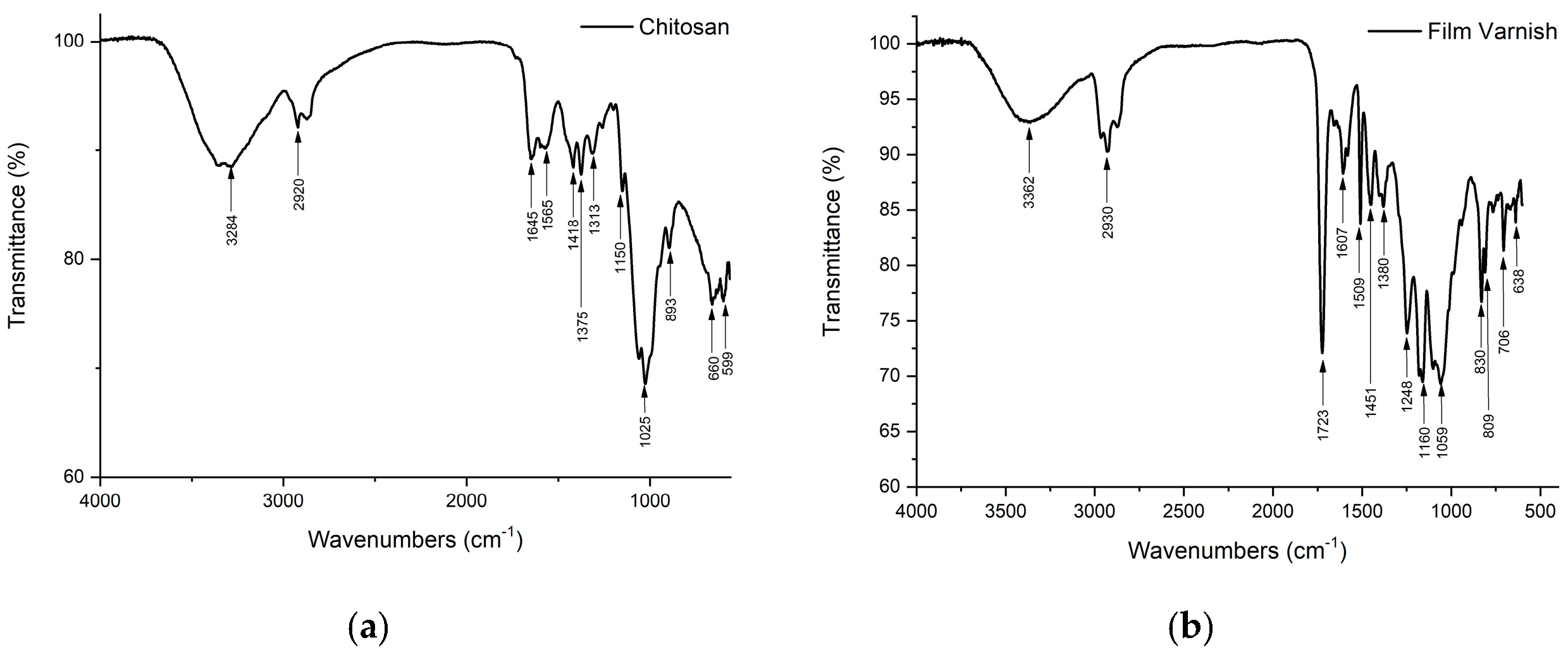

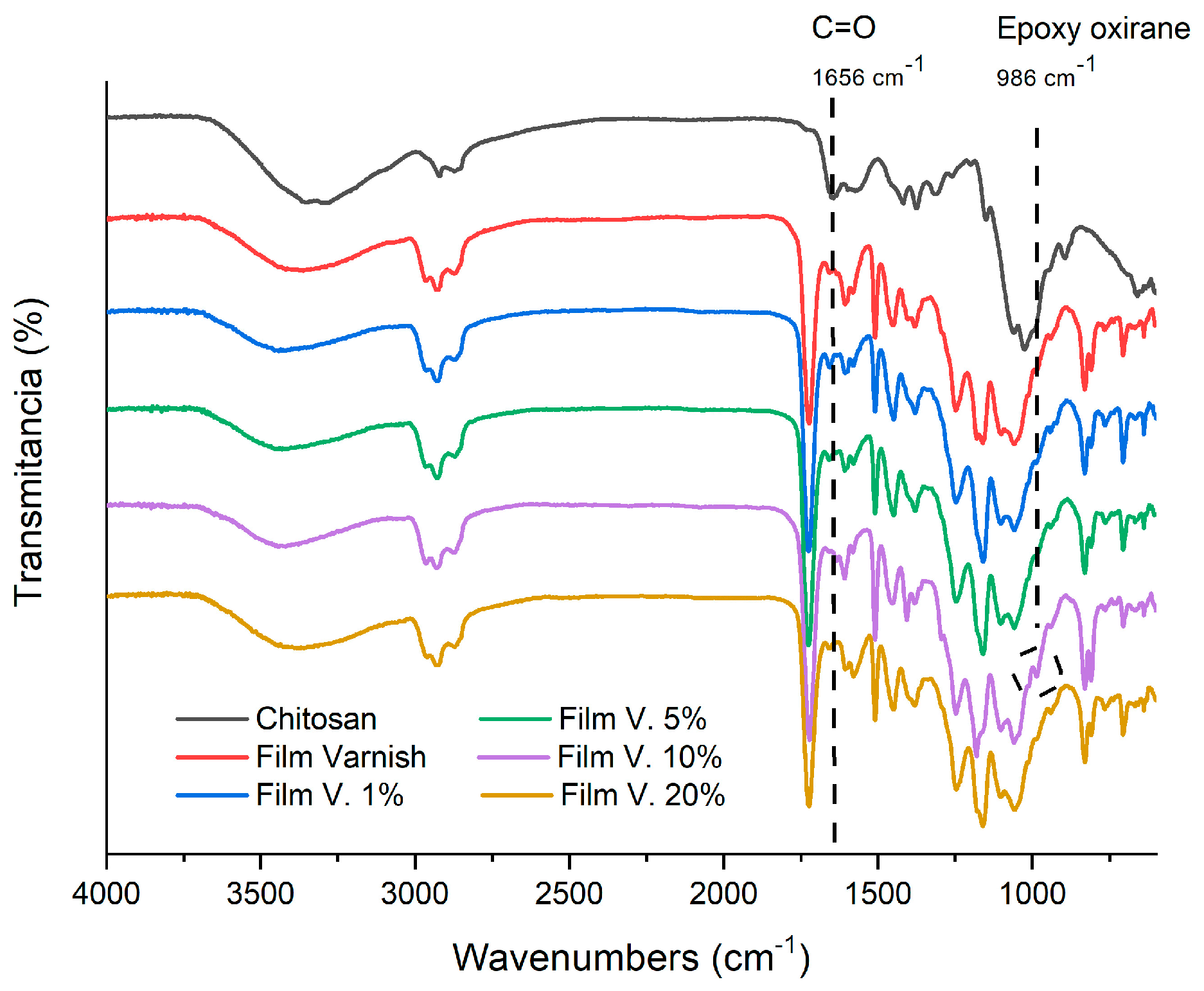
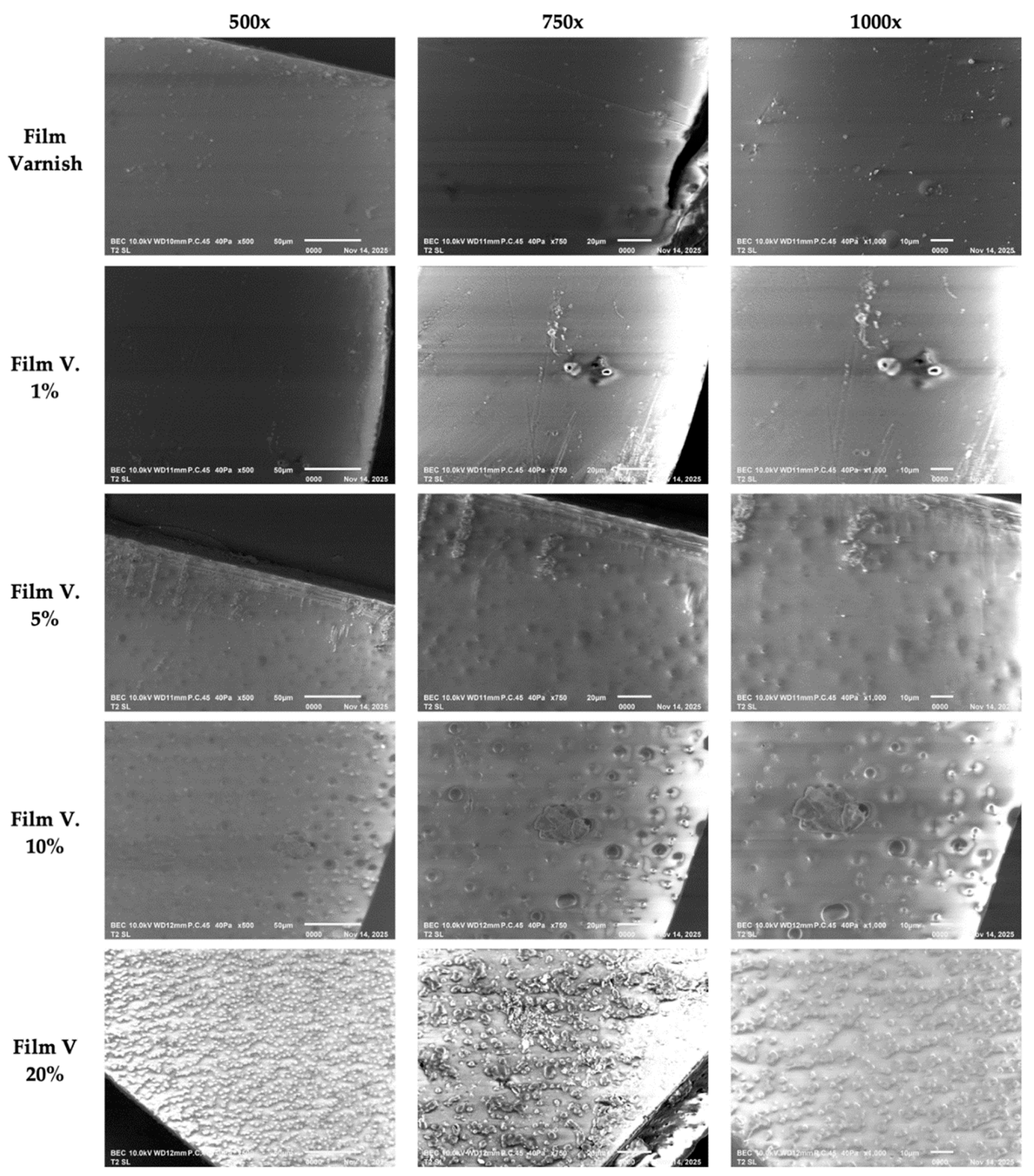
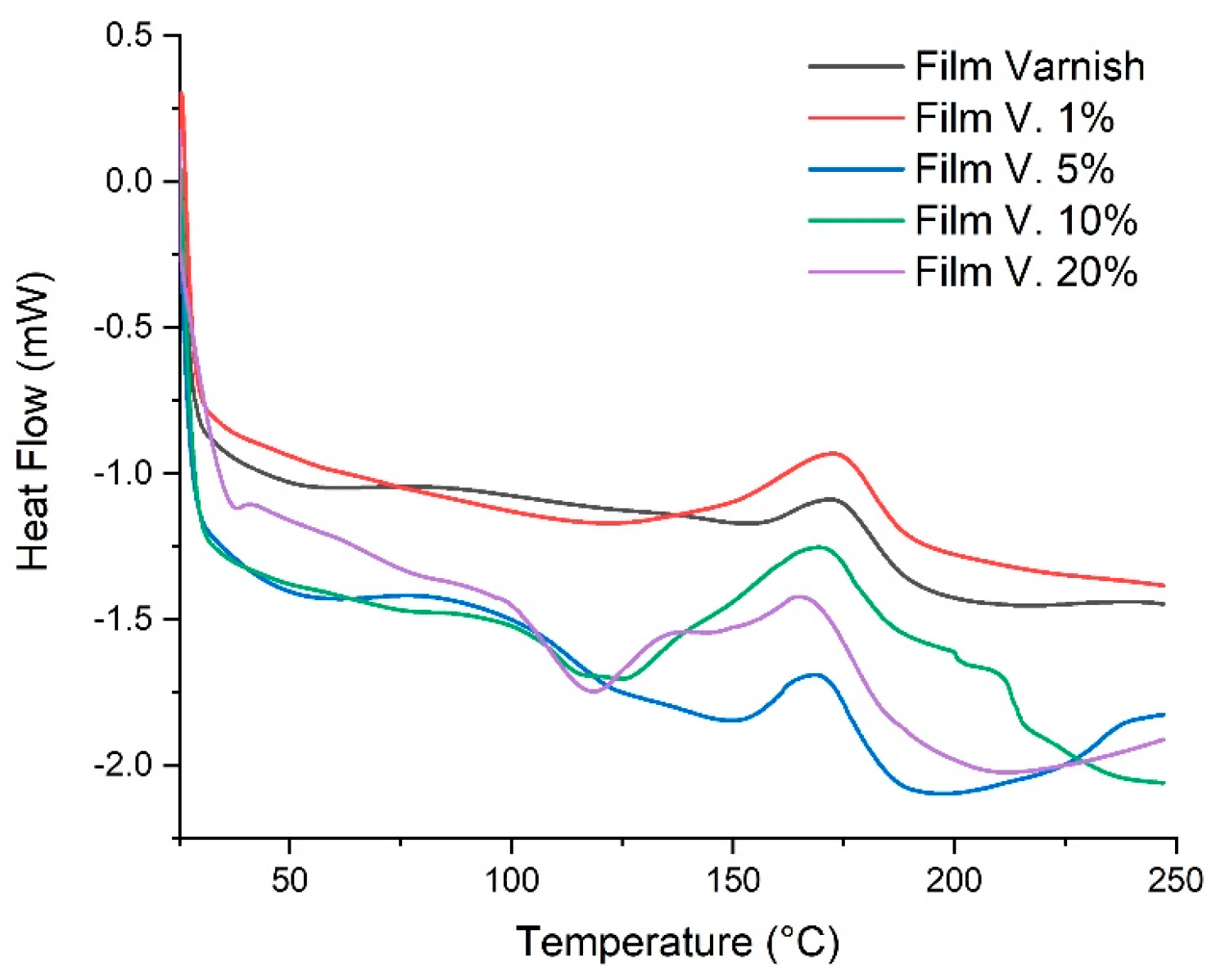
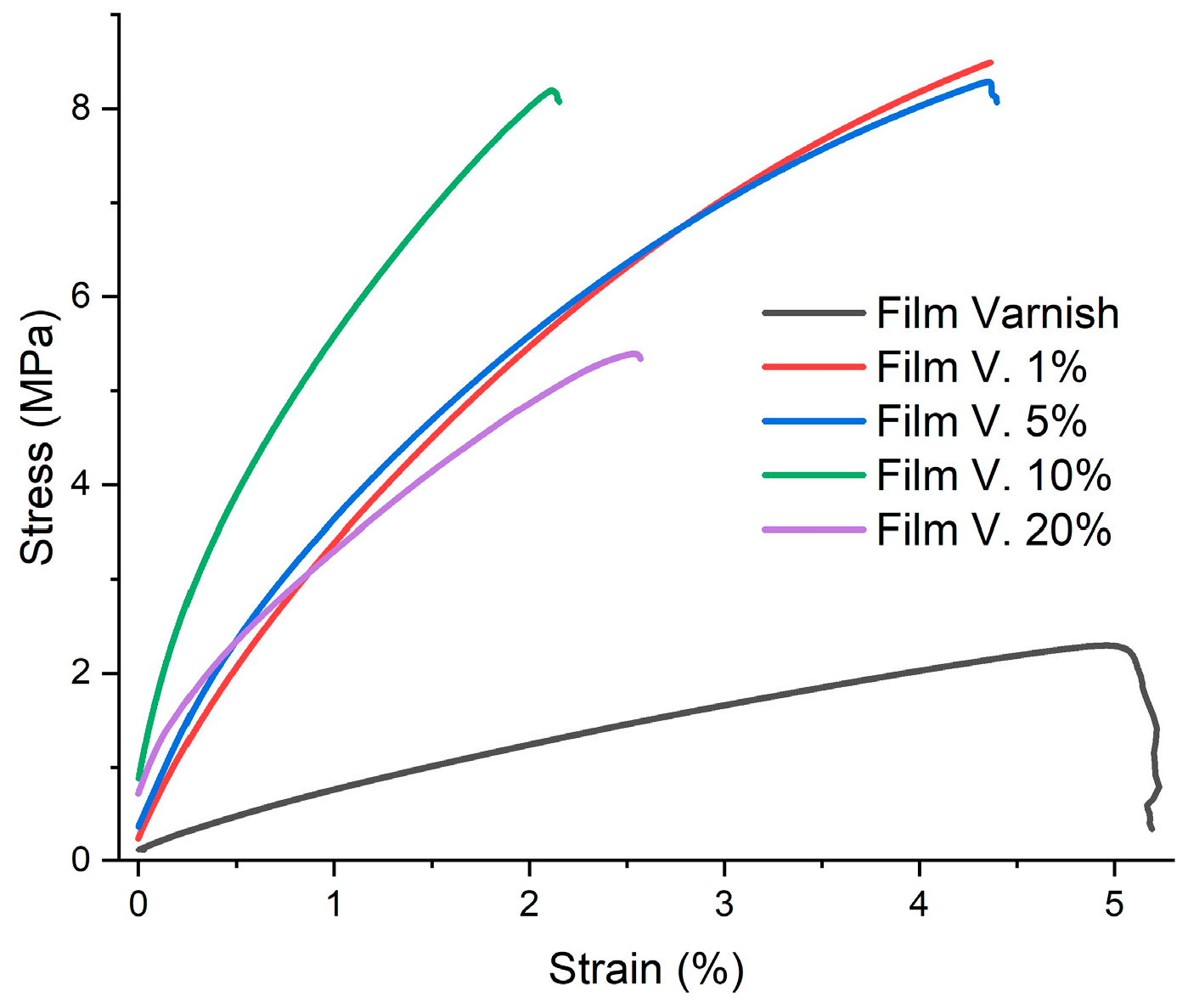

| Sample | Concentration (% w/w) | Solution 1.014% w/w (g) | Varnish (g) |
|---|---|---|---|
| Varnish | 0.0 | 0.0 | 10 |
| V. 1% | 1.500 | 0.1500 | 10 |
| V. 5% | 5.556 | 0.5556 | 10 |
| V. 10% | 10.663 | 1.0663 | 10 |
| V. 20% | 20.108 | 2.0108 | 10 |
| Sample Film | Size (mg) | Tg (°C) | Peakmax (°C) | ∆Hm (J/g) |
|---|---|---|---|---|
| 0% | 3.45 | 49 | 173 | 6.33 |
| 1% | 4.25 | 57 | 173 | 7.39 |
| 5% | 4.18 | 121 | 169 | 7.97 |
| 10% | 4.42 | 70 | 169 | 16.02 |
| 20% | 4.16 | 75 | 168 | 12.41 |
| Sample Film | Young’s Modulus (MPa) | Ultimate Strength (MPa) | Fracture (MPa) |
|---|---|---|---|
| 0% | 83.65 | 2.29630 | 1.41544 |
| 1% | 409.7 | 8.49145 | 8.49145 |
| 5% | 456.4 | 8.28764 | 8.27713 |
| 10% | 916.4 | 8.19461 | 8.14496 |
| 20% | 493.8 | 5.39345 | 5.35158 |
| Sample | 20° | 60° | 85° |
|---|---|---|---|
| Form 3NT-31 | 3.8 | 23.0 | 56.5 |
| Varnish | 55.5 | 87.5 | 91.1 |
| V. 1% | 54.0 | 86.7 | 89.6 |
| V. 5% | 42.8 | 77.6 | 82.3 |
| V. 10% | 24.3 | 64.8 | 78.5 |
| V. 20% | 5.6 | 33.0 | 53.6 |
Disclaimer/Publisher’s Note: The statements, opinions and data contained in all publications are solely those of the individual author(s) and contributor(s) and not of MDPI and/or the editor(s). MDPI and/or the editor(s) disclaim responsibility for any injury to people or property resulting from any ideas, methods, instructions or products referred to in the content. |
© 2025 by the authors. Licensee MDPI, Basel, Switzerland. This article is an open access article distributed under the terms and conditions of the Creative Commons Attribution (CC BY) license (https://creativecommons.org/licenses/by/4.0/).
Share and Cite
Granados Cerecero, G.; Barrientos Ramírez, S.; Montes de Oca Ramírez, G.; Castillo-Carvajal, L.C.; Baeza-Alvarado, M.D.; Barrientos-Montes de Oca, A. Assessing Epoxy-Acrylate/Chitosan Films for Banknote Coatings: Thermal, Mechanical, and Gloss Performance. Coatings 2025, 15, 1393. https://doi.org/10.3390/coatings15121393
Granados Cerecero G, Barrientos Ramírez S, Montes de Oca Ramírez G, Castillo-Carvajal LC, Baeza-Alvarado MD, Barrientos-Montes de Oca A. Assessing Epoxy-Acrylate/Chitosan Films for Banknote Coatings: Thermal, Mechanical, and Gloss Performance. Coatings. 2025; 15(12):1393. https://doi.org/10.3390/coatings15121393
Chicago/Turabian StyleGranados Cerecero, Gerardo, Sergio Barrientos Ramírez, Georgina Montes de Oca Ramírez, Laura Catalina Castillo-Carvajal, María Dolores Baeza-Alvarado, and Aitana Barrientos-Montes de Oca. 2025. "Assessing Epoxy-Acrylate/Chitosan Films for Banknote Coatings: Thermal, Mechanical, and Gloss Performance" Coatings 15, no. 12: 1393. https://doi.org/10.3390/coatings15121393
APA StyleGranados Cerecero, G., Barrientos Ramírez, S., Montes de Oca Ramírez, G., Castillo-Carvajal, L. C., Baeza-Alvarado, M. D., & Barrientos-Montes de Oca, A. (2025). Assessing Epoxy-Acrylate/Chitosan Films for Banknote Coatings: Thermal, Mechanical, and Gloss Performance. Coatings, 15(12), 1393. https://doi.org/10.3390/coatings15121393