Article

Functionality Investigations of Dry-Lubricated Molybdenum Trioxide Cylindrical Roller Thrust Bearings

1
Institute of Machine Design and Tribology, Leibniz Universität Hannover, An der Universität 1, 30823 Garbsen, Germany
2
Institute of Forming Technology and Machines, Leibniz Universität Hannover, An der Universität 2, 30823 Garbsen, Germany
3
Institute of Materials Science, Leibniz Universität Hannover, An der Universität 2, 30823 Garbsen, Germany
*
Authors to whom correspondence should be addressed.
Coatings 2022, 12(5), 591; https://doi.org/10.3390/coatings12050591

Submission received: 14 March 2022 / Revised: 20 April 2022 / Accepted: 22 April 2022 / Published: 26 April 2022

Abstract

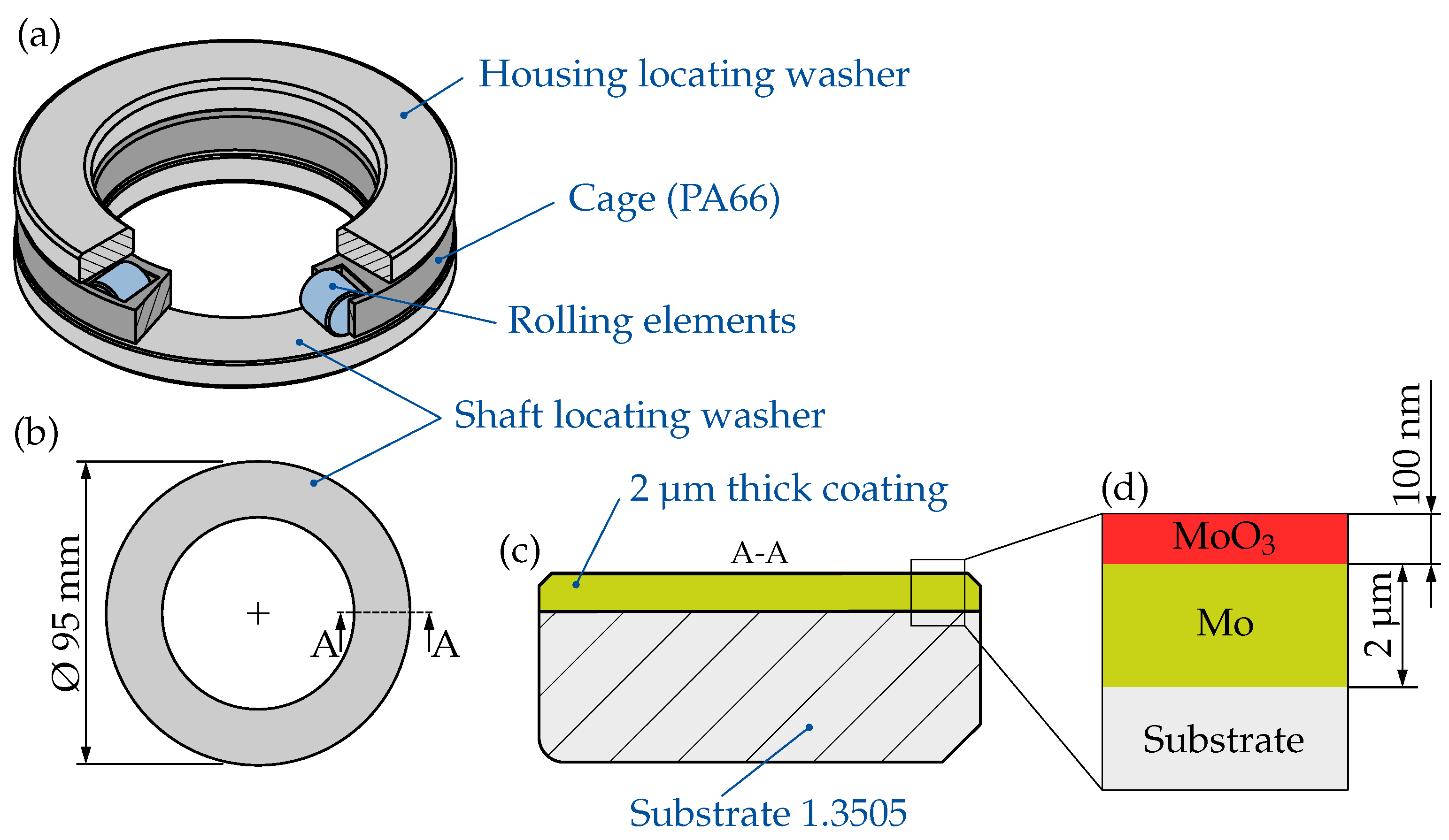
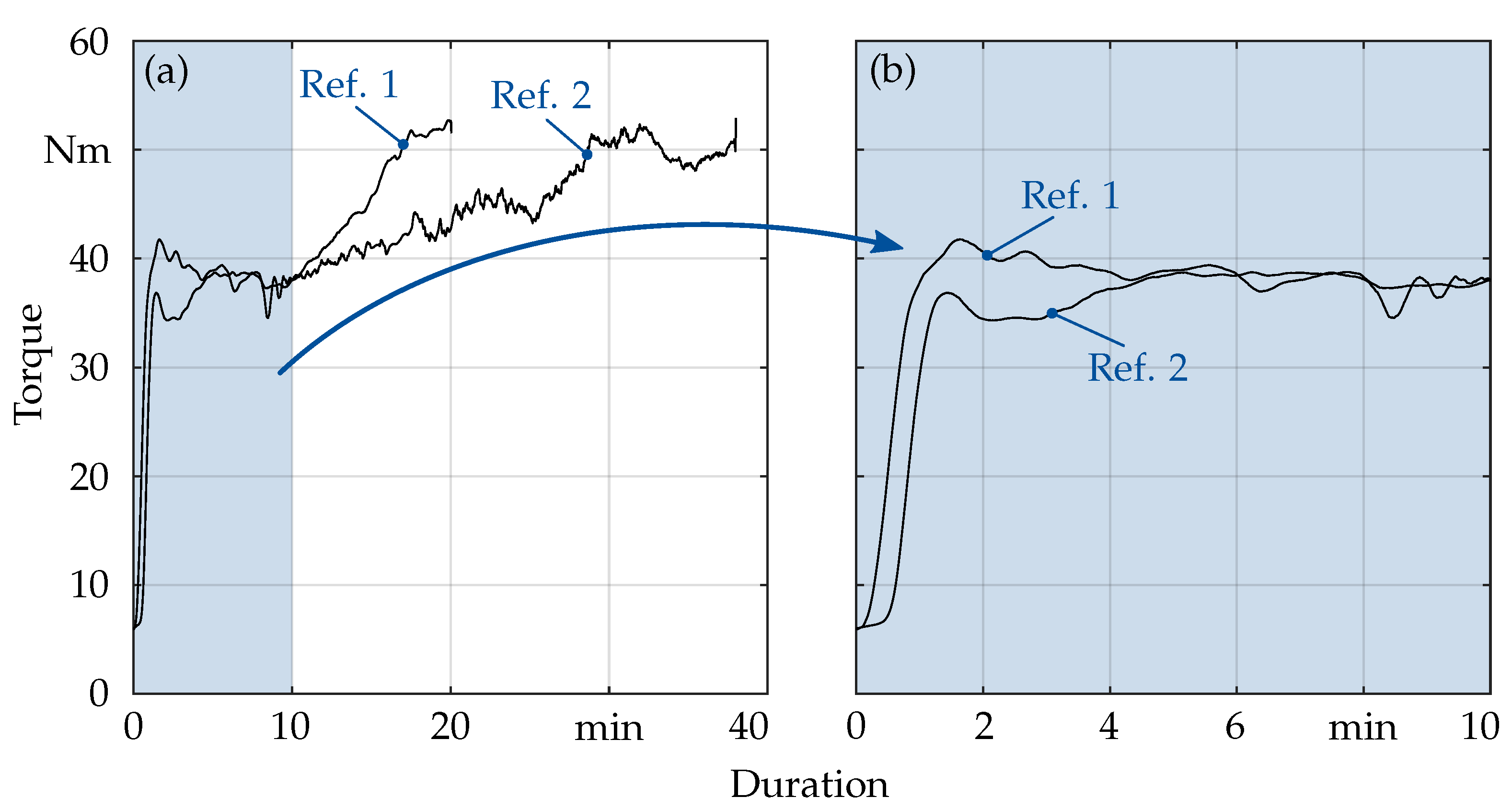
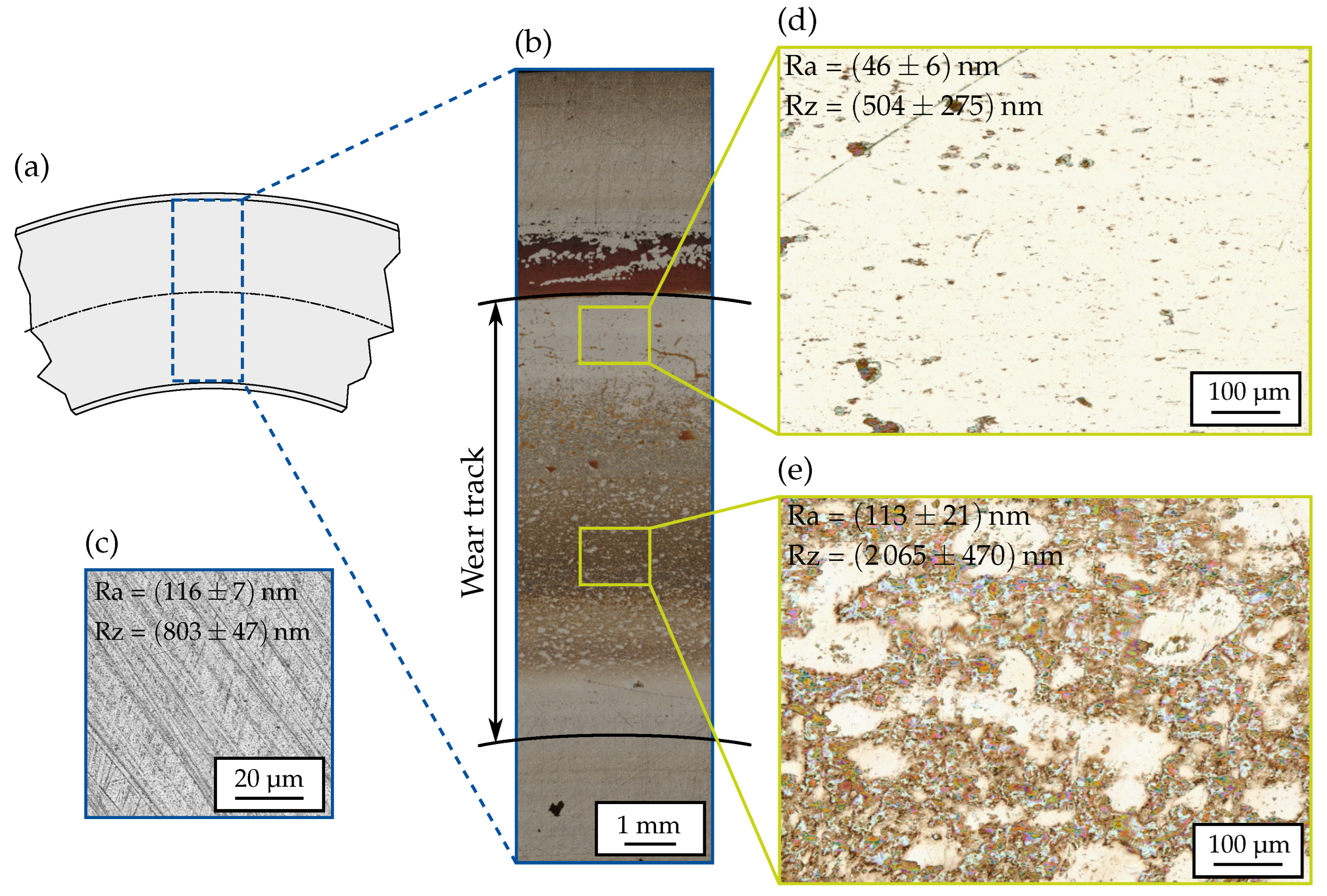
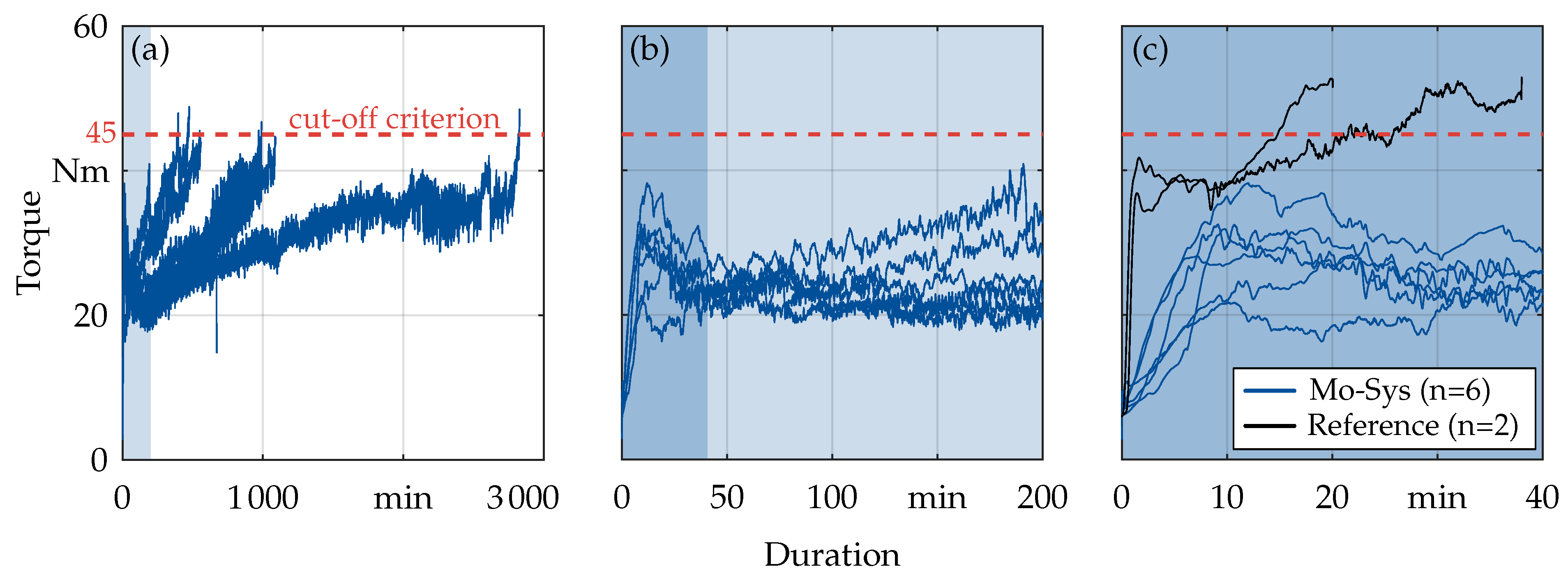
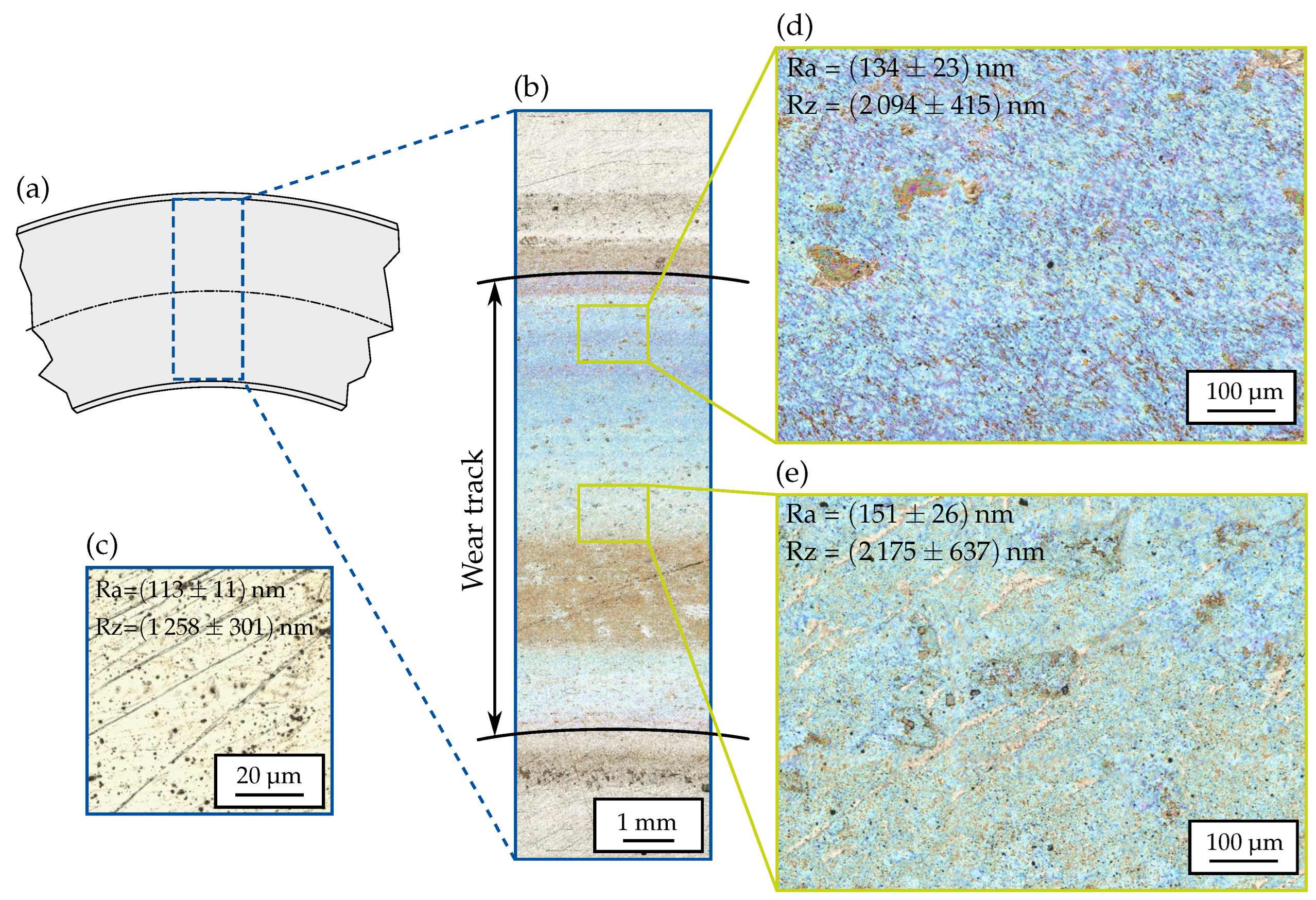
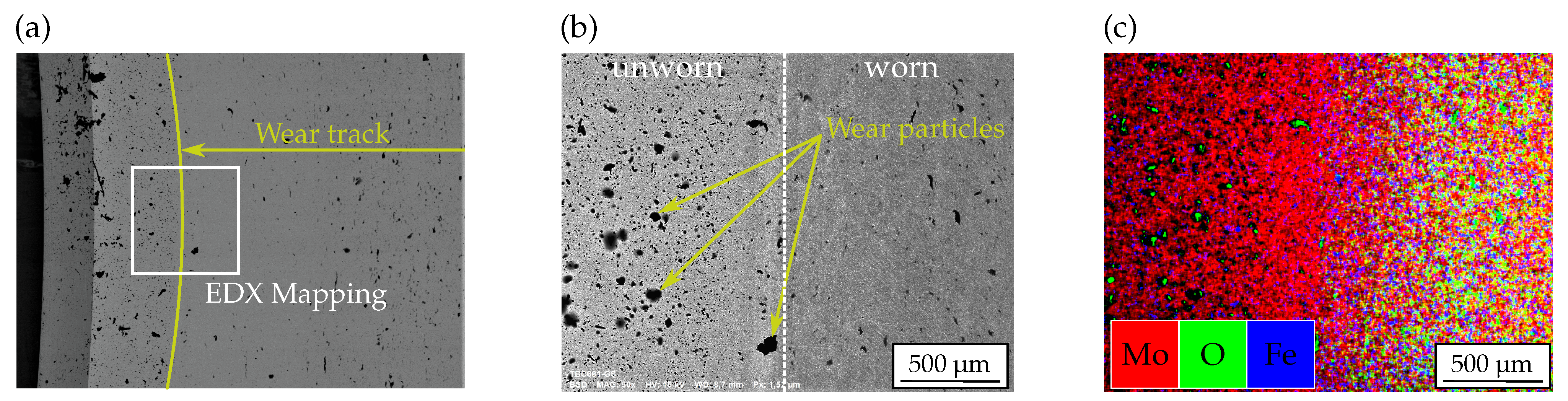
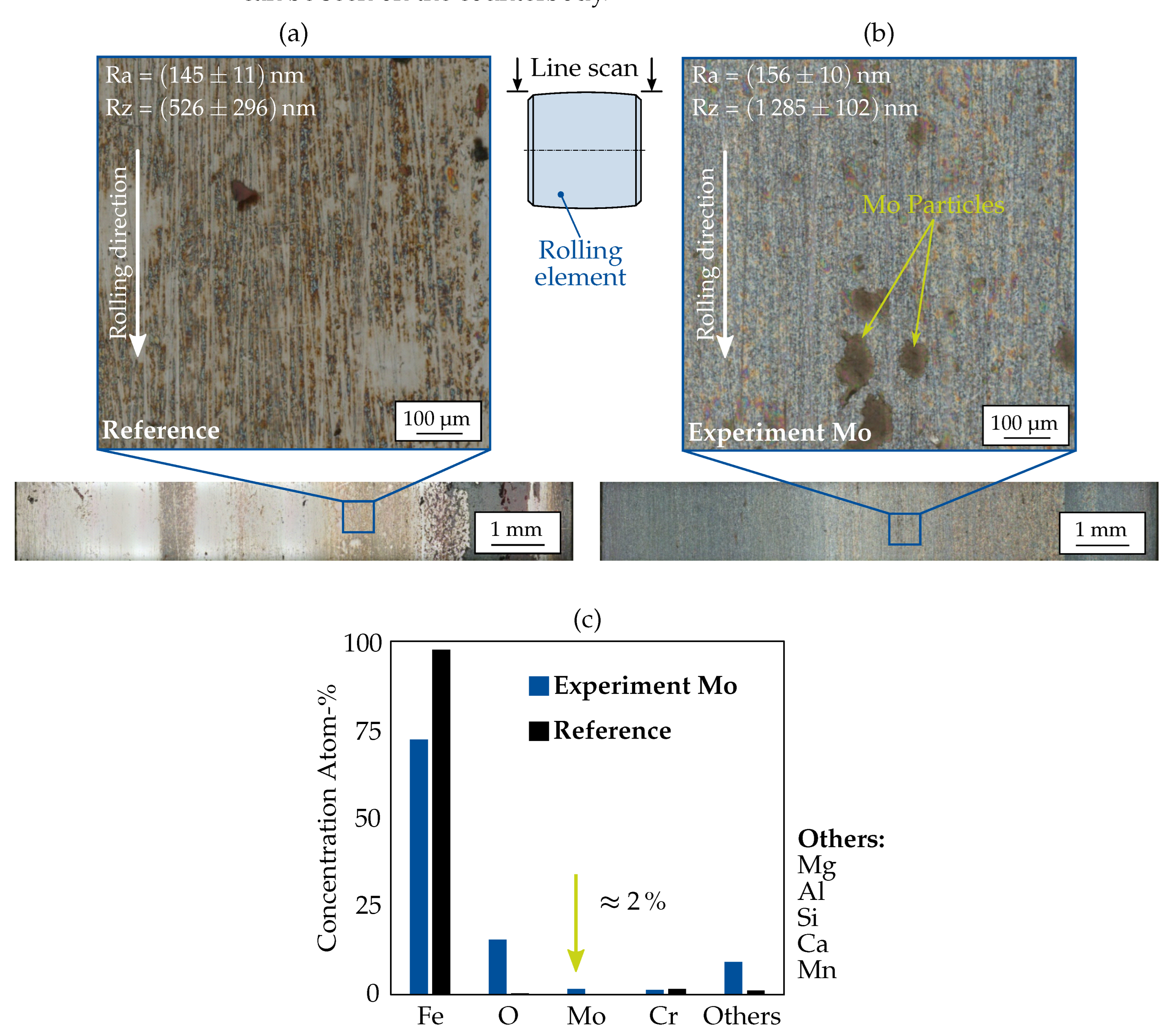
In addition to using conventional lubricants, such as oil and grease, rolling bearings can also be used with a dry lubricant. For example, the use of dry lubricant systems is necessary when the application of oils or greases is not possible (e.g., at high temperatures or in aerospace applications). The requirements of a solid lubricant are to reduce friction and wear of mechanical contact partners. In this work, a molybdenum-based coating system was applied by means of physical vapor deposition (PVD). The coating system consists of a molybdenum (Mo) reservoir with molybdenum trioxide (MoO3) as the top layer. The MoO3, which is particularly important for the run-in and the lubricating effect, is intended to continuously regenerate from the reservoir via tribo-oxidation. To determine the friction and wear behavior, cylindrical roller thrust bearings were used. Experiments demonstrated that the lubrication system is effective and that the frictional behavior has been improved. On the one hand, the frictional torque of the rolling bearings has been considerably reduced and, on the other, significantly extended operating times have been determined compared to unlubricated reference experiments. Simultaneously, material analyses have been carried out by means of scanning electron microscopy (SEM) and energy dispersive X-ray spectroscopy (EDX). The investigations showed that the MoO3 was transferred to uncoated bearing components. This improved the tribological behavior and reduced abrasive and adhesive wear.
Keywords: rolling bearing; dry lubricant; Mo-coating; PVD; friction; wear rolling bearing; dry lubricant; Mo-coating; PVD; friction; wear