
Comparative Effects of Cellulose- and Gelatin-Based Hemostatic Biomaterials on the Early Stage of Wound Healing—An In Vivo Study
 ,
,  ,
,
Abstract
1. Introduction
2. Methods
2.1. Investigated Hemostatic Biomaterials
2.2. Experimental Animal Model
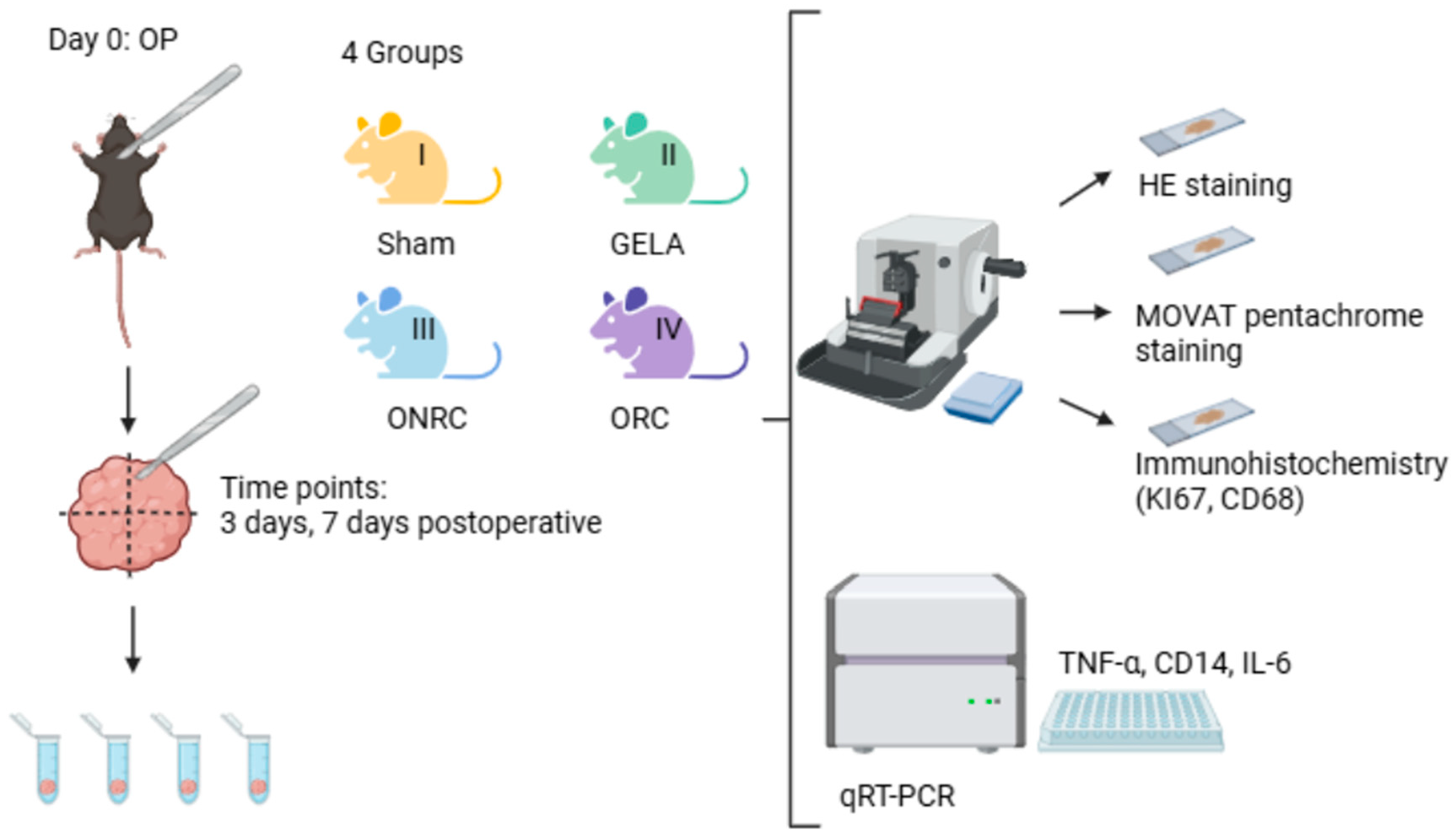
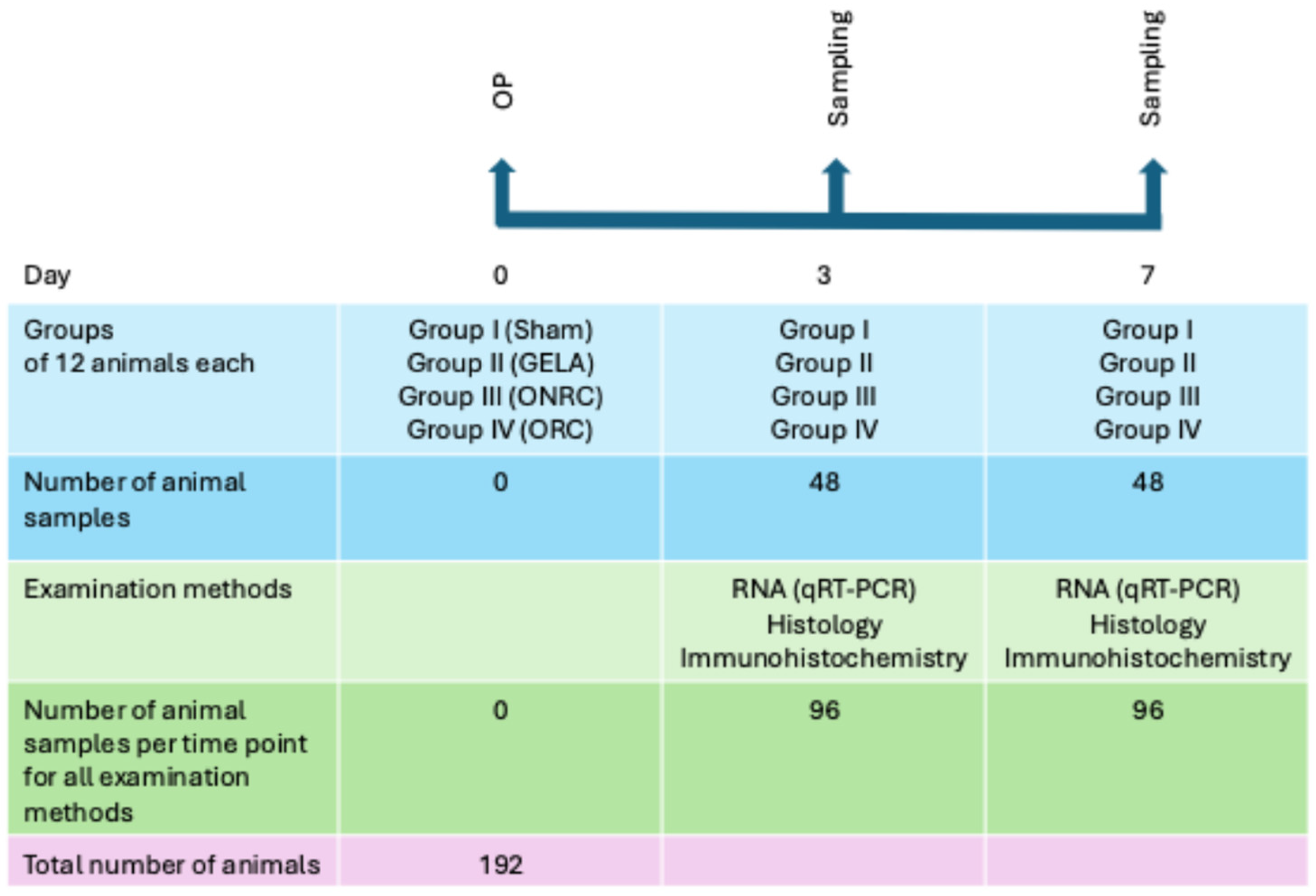
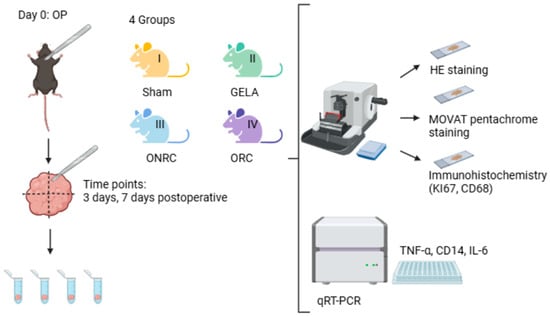
2.3. Experimental Design
- Group I—Sham (control group): No implantation of a hemostatic biomaterial
- Group II—GELA: Porcine gelatin-based hemostatic biomaterial
- Group III—ONRC: Oxidized non-regenerated cellulose
- Group IV—ORC: Oxidized regenerated cellulose
2.4. Surgical Procedure and Monitoring
2.5. Histological and Immunohistochemical Analysis
2.6. Quantitative Real-Time PCR (qPCR) Analysis of Immunomarkers
2.7. Statistical Analysis
3. Results
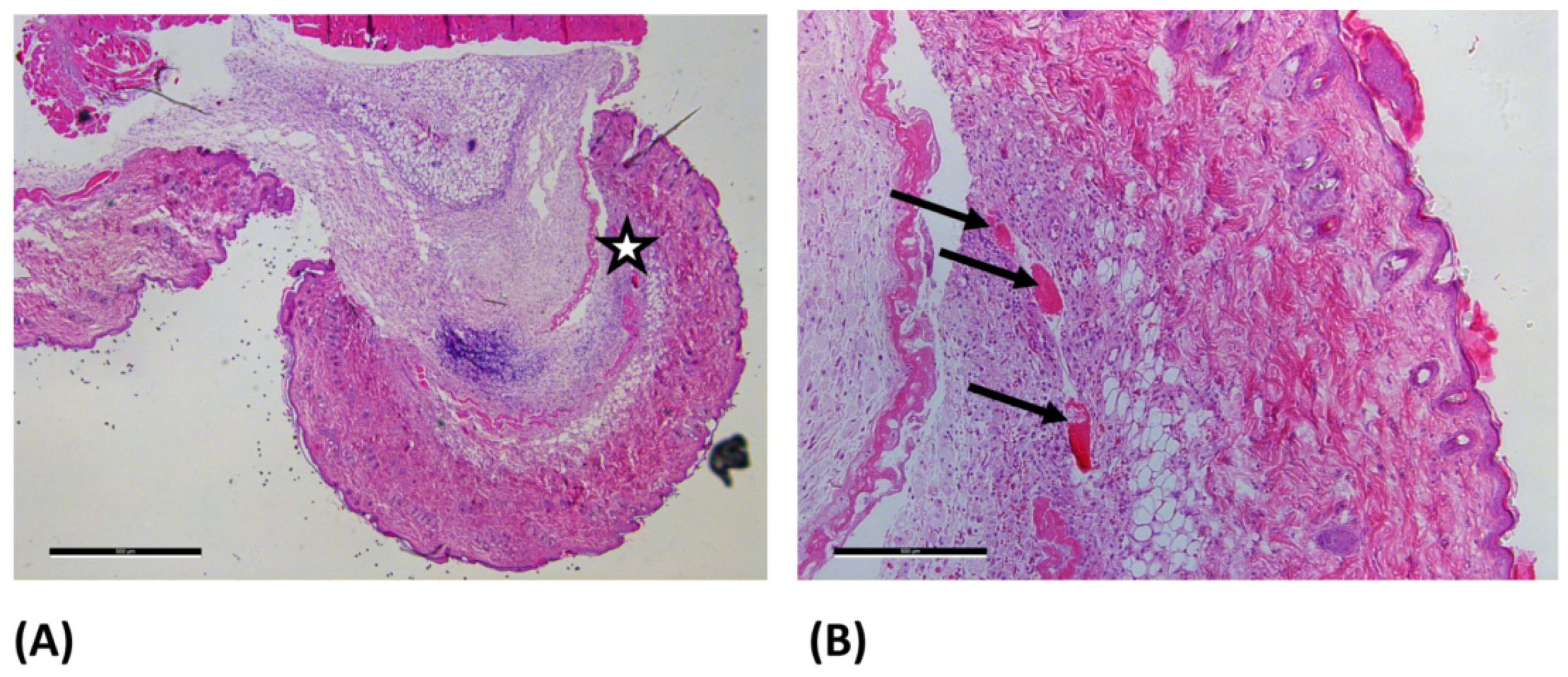
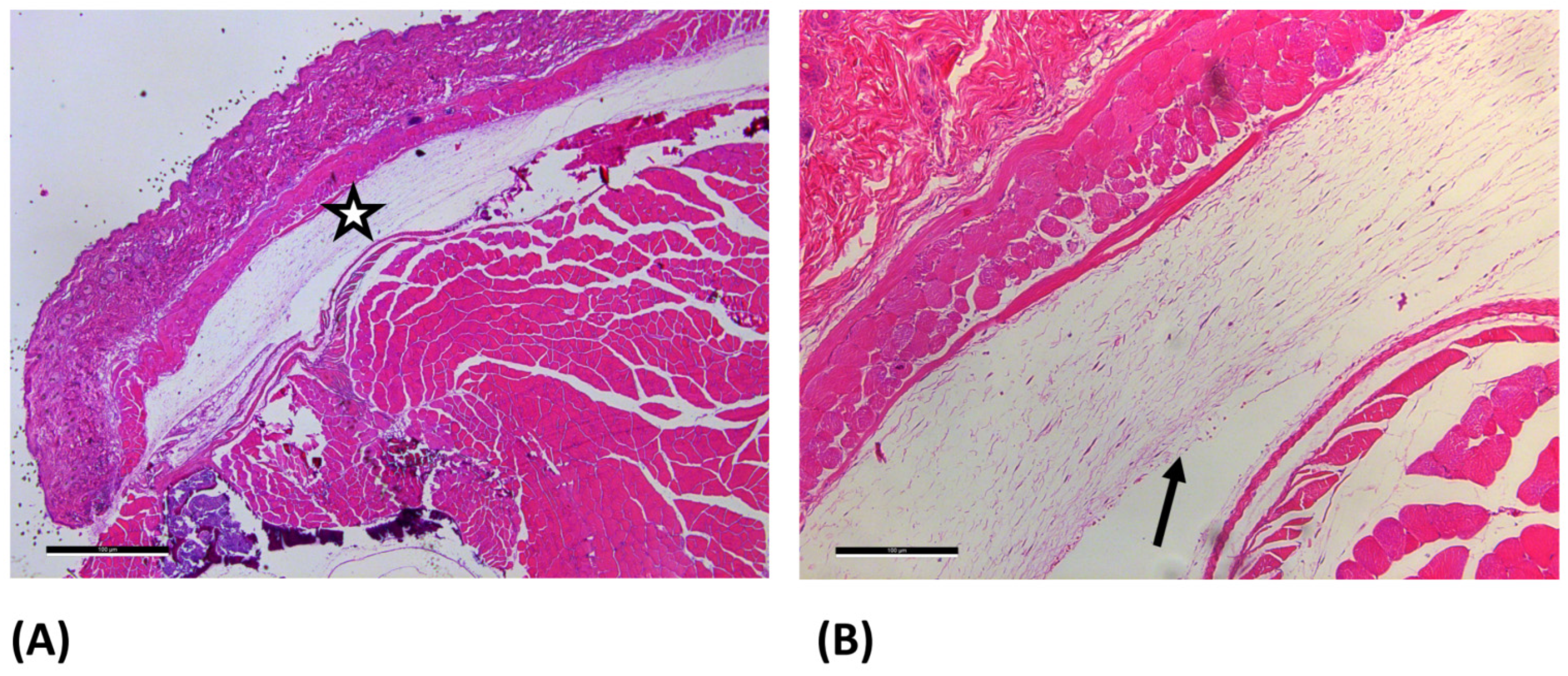
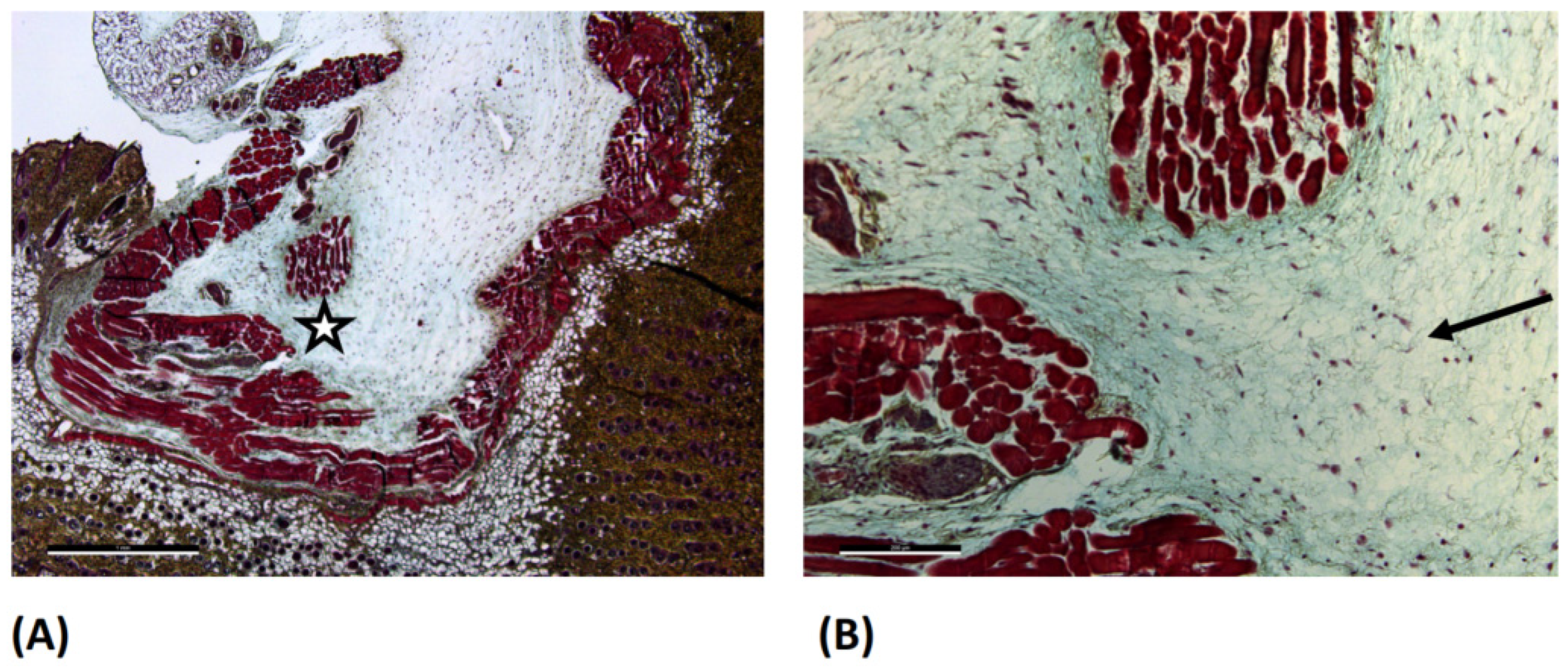
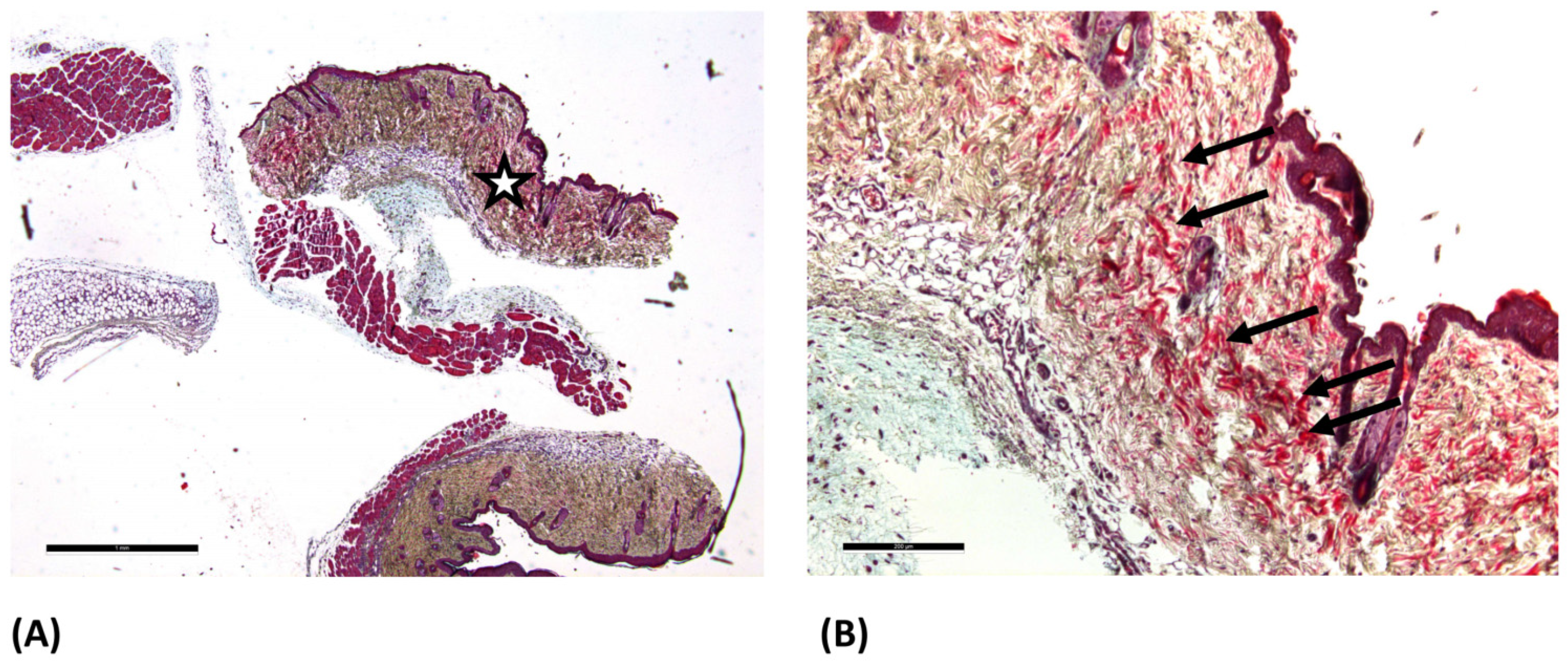
3.1. Hematoxylin–Eosin (HE) and Collagen (Movat Pentachrome—MP) Staining
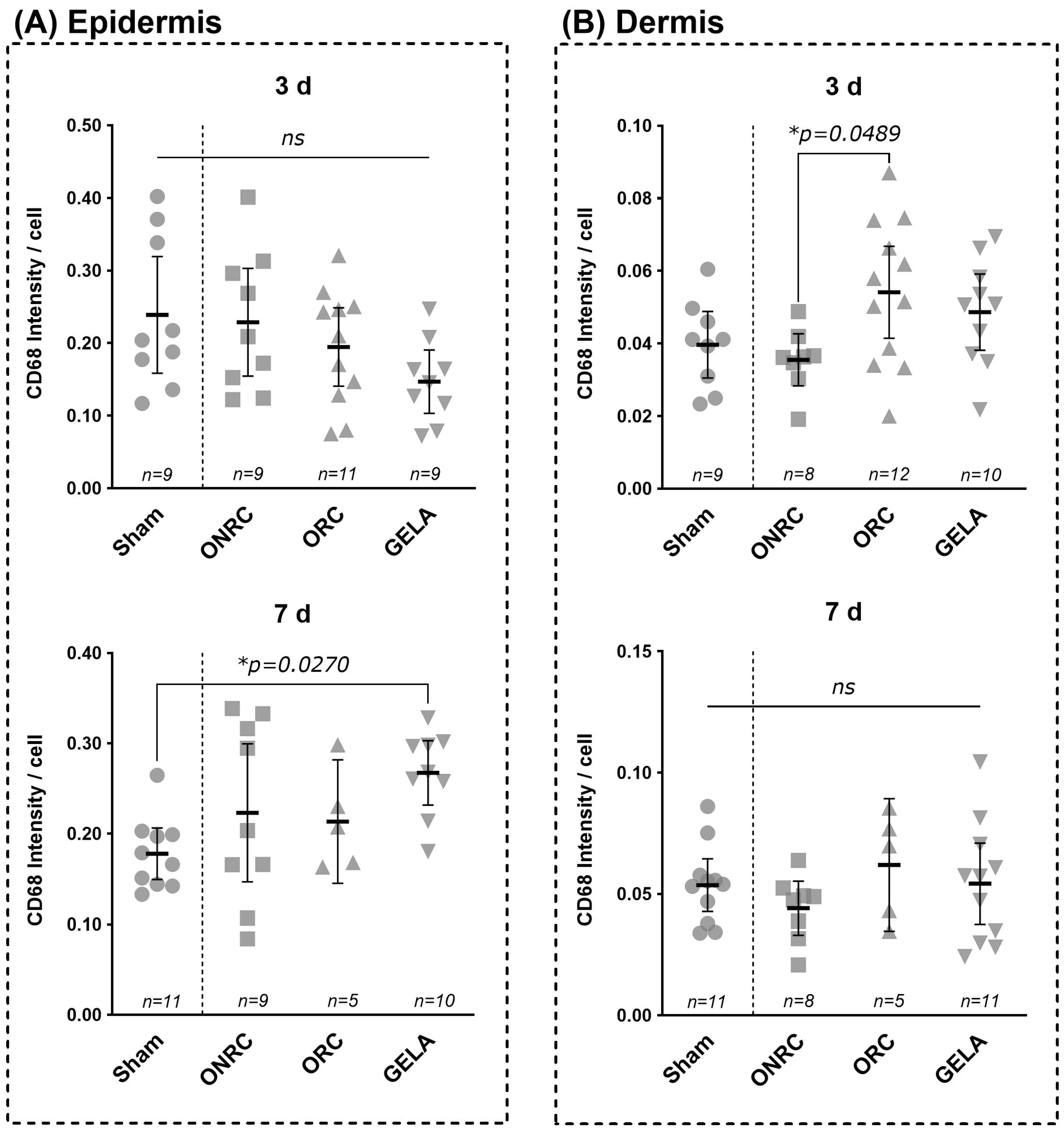
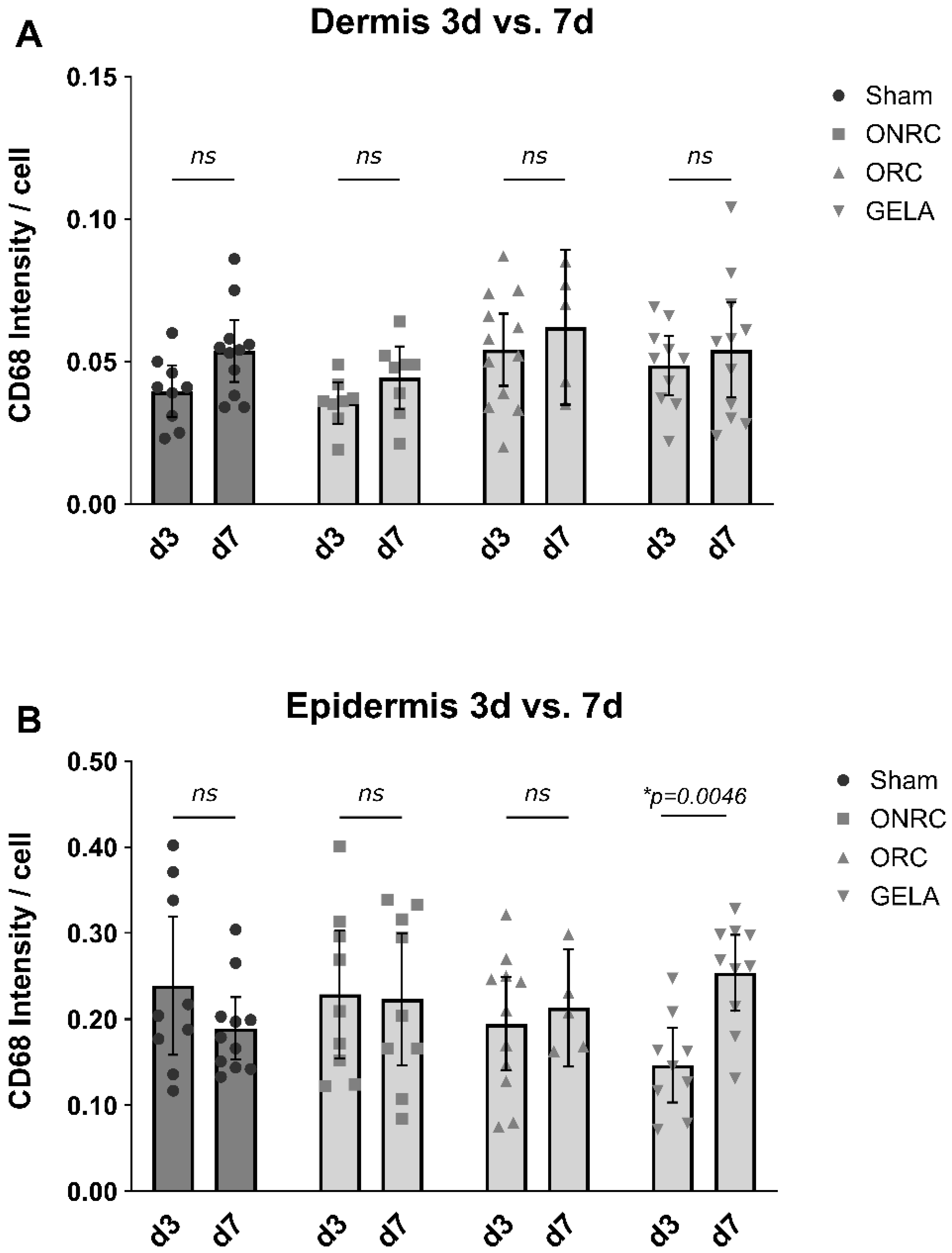
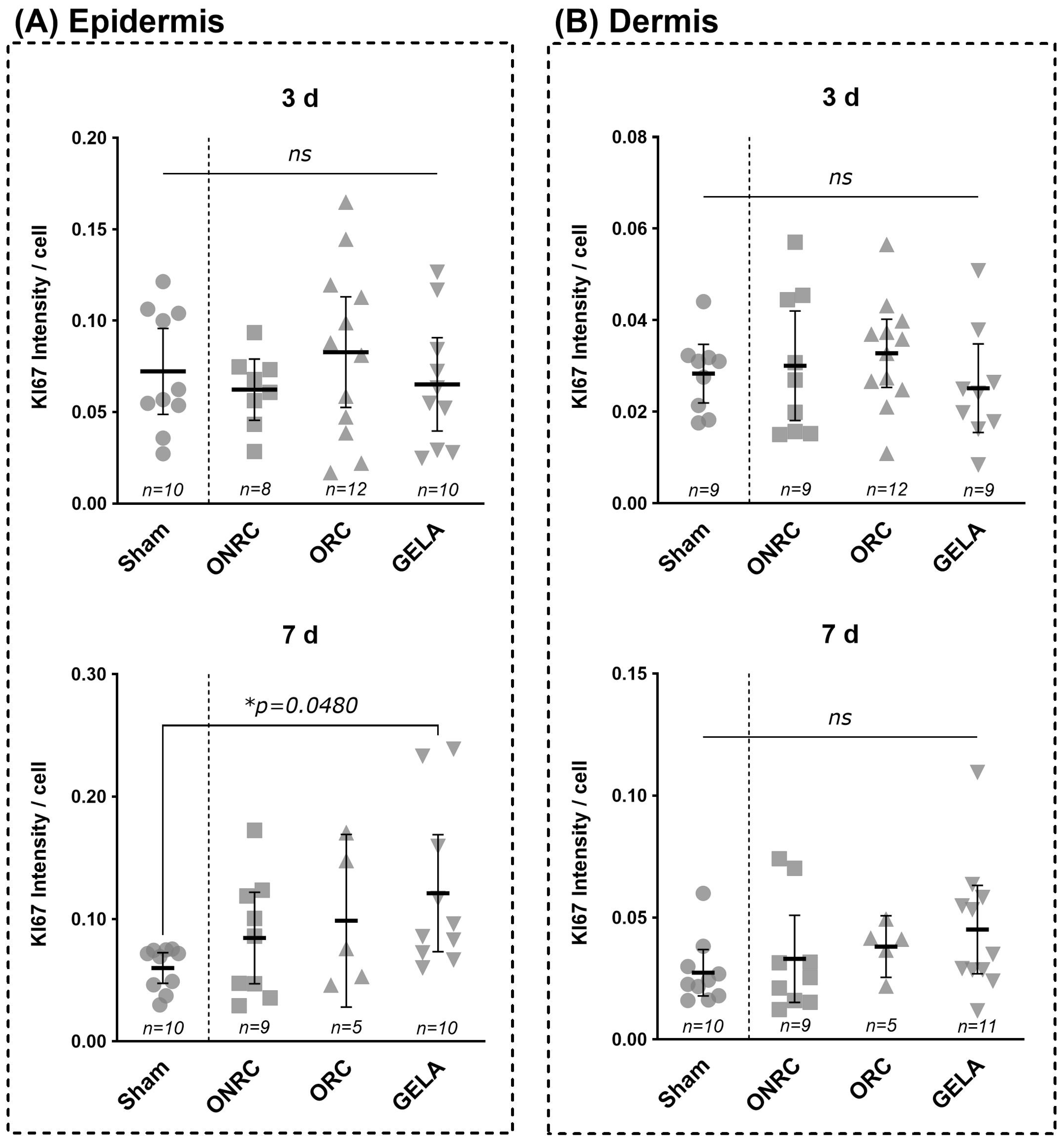
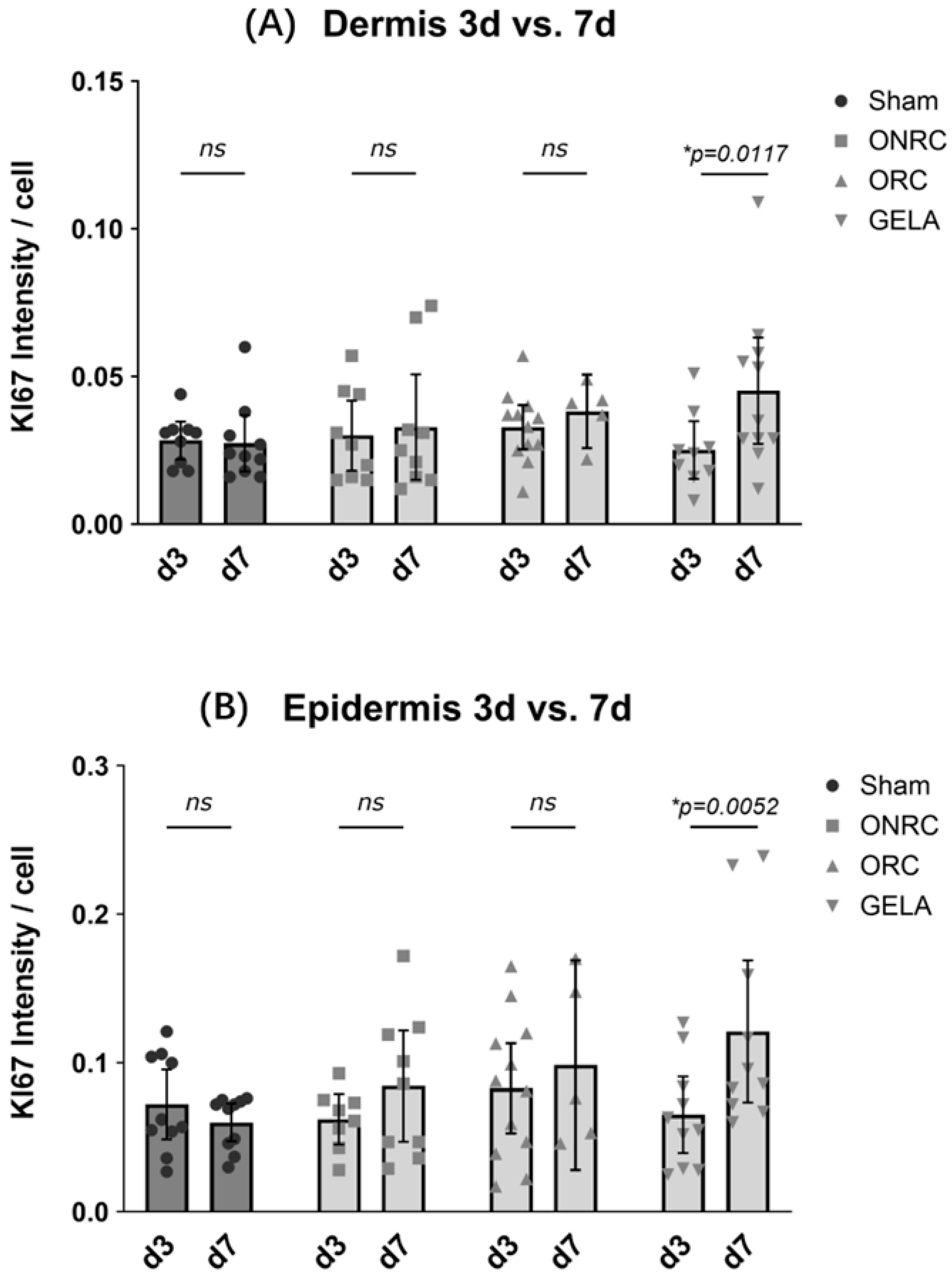
3.2. Immunohistochemical Evaluation of CD68 and Ki-67
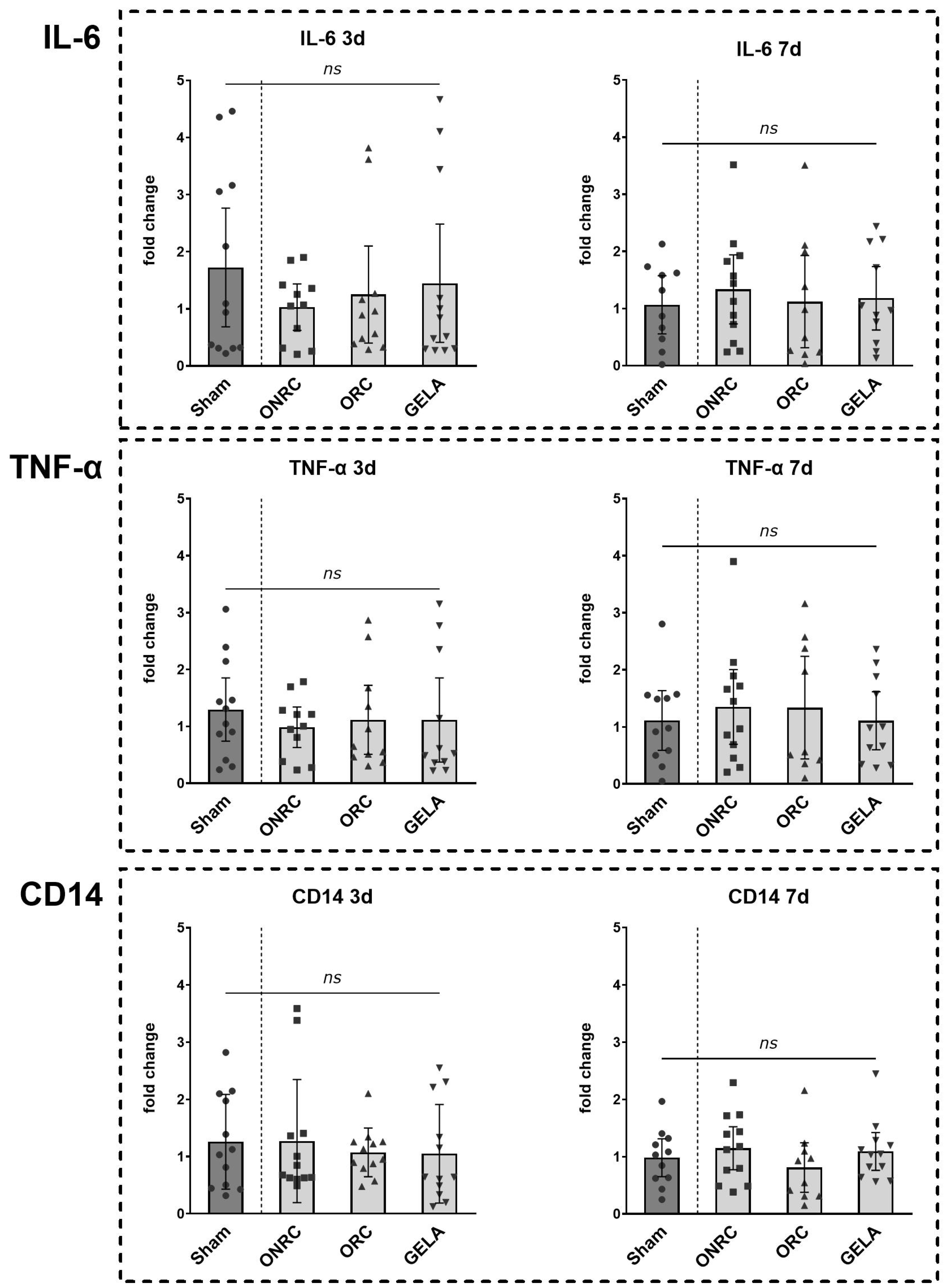
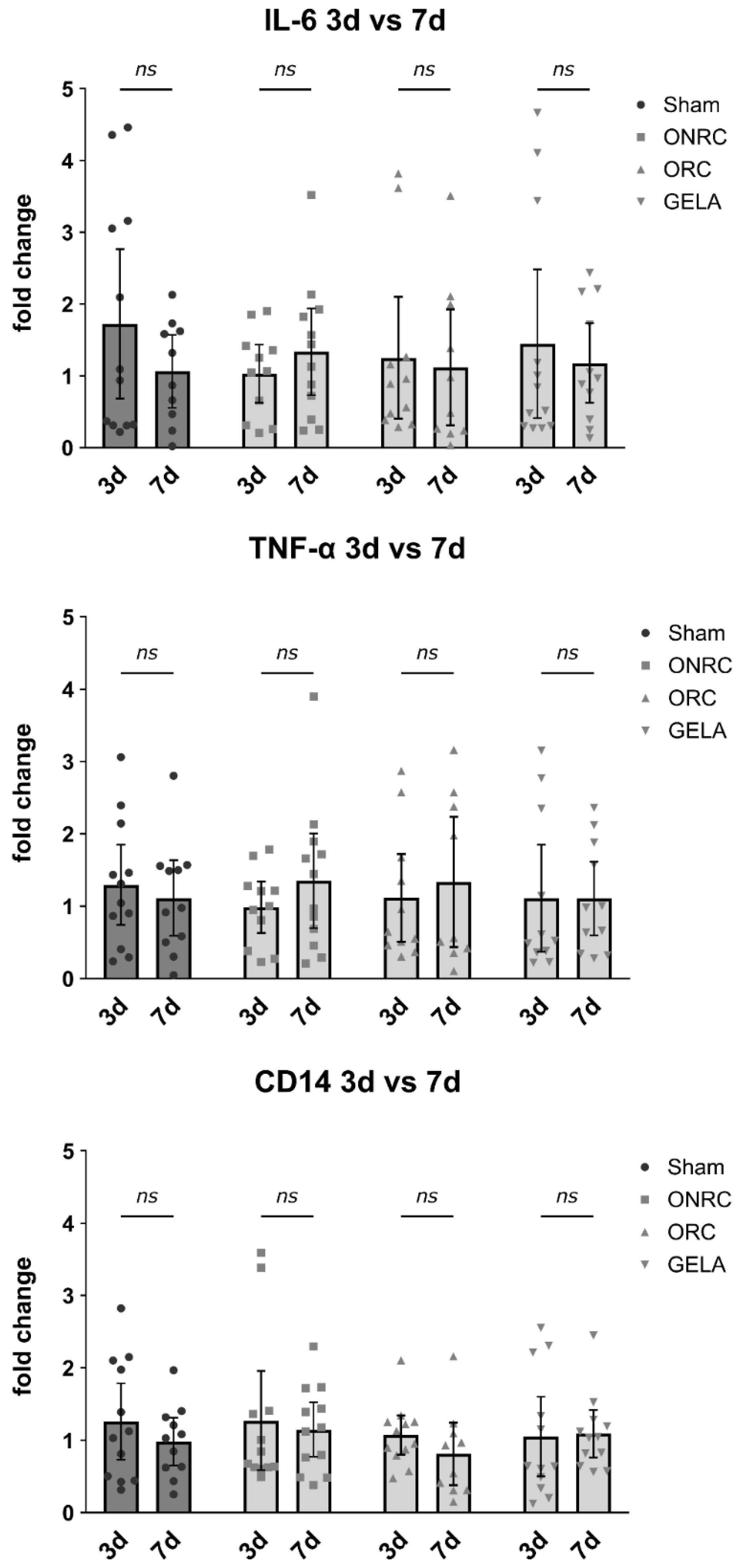
3.3. Quantification of Inflammatory Markers IL-6, TNF-α, and CD14
4. Discussion
5. Conclusions
6. Limitations
Author Contributions
Funding
Institutional Review Board Statement
Informed Consent Statement
Data Availability Statement
Conflicts of Interest
Abbreviations
| α-SMA | Alpha-smooth muscle actin |
| CD | Cluster of differentiation |
| DAPI | 4′,6-Diamidine-2-phenylindol |
| ECM | Extracellular matrix |
| EDTA | Ethylenediaminetetraacetic acid |
| ELISA | Enzyme-linked immunosorbent assay |
| FGF | Fibroblast growth factor |
| GELA | Gelatin-based hemostatic agent (GELITA TUFT-IT®) |
| HE | Hematoxylin-eosin staining |
| ME | Mercaptoethanol |
| MP | Movat pentachrome staining |
| IL | Interleukin |
| Ki-67 | Kiel 67 |
| PFA | Paraformaldehyde |
| ORC | Oxidized regenerated cellulose |
| ORNC | Oxidized non-regenerated cellulose |
| qPCR | Quantitative real-time polymerase chain reaction |
| ROS | Reactive oxygen species |
| TGFβ | Transforming growth factor β |
| TNFα | Tumour necrosis factor α |
| VEGF | Vascular endothelial growth factor |
References
- Guo, B.; Dong, R.; Liang, Y.; Li, M. Haemostatic materials for wound healing applications. Nat. Rev. Chem. 2021, 5, 773–791. [Google Scholar] [CrossRef]
- Brown, K.G.M.; Solomon, M.J. Topical haemostatic agents in surgery. Br. J. Surg. 2024, 111, znad361. [Google Scholar] [CrossRef]
- Wilkinson, H.N.; Hardman, M.J. Wound healing: Cellular mechanisms and pathological outcomes. Open Biol. 2020, 10, 200223. [Google Scholar] [CrossRef] [PubMed]
- Peña, O.A.; Martin, P. Cellular and molecular mechanisms of skin wound healing. Nat. Rev. Mol. Cell Biol. 2024, 25, 599–616. [Google Scholar] [CrossRef] [PubMed]
- Eming, S.A.; Krieg, T.; Davidson, J.M. Inflammation in wound repair: Molecular and cellular mechanisms. J. Investig. Dermatol. 2007, 127, 514–525. [Google Scholar] [CrossRef] [PubMed]
- Barrientos, S.; Stojadinovic, O.; Golinko, M.S.; Brem, H.; Tomic-Canic, M. Growth factors and cytokines in wound healing. Wound Repair Regen. 2008, 16, 585–601. [Google Scholar] [CrossRef]
- Koh, T.J.; DiPietro, L.A. Inflammation and wound healing: The role of the macrophage. Expert Rev. Mol. Med. 2011, 13, e23. [Google Scholar] [CrossRef]
- Wlaschek, M.; Scharffetter-Kochanek, K. Oxidative stress in chronic venous leg ulcers. Wound Repair Regen. 2005, 13, 452–461. [Google Scholar] [CrossRef]
- Ud-Din, S.; Bayat, A. Controlling Inflammation Pre-Emptively or at the Time of Cutaneous Injury Optimises Outcome of Skin Scarring. Front. Immunol. 2022, 13, 883239. [Google Scholar] [CrossRef]
- Chattopadhyay, S.; Raines, R.T. Review collagen-based biomaterials for wound healing. Biopolymers 2014, 101, 821–833. [Google Scholar] [CrossRef]
- Ricard-Blum, S. The collagen family. Cold Spring Harb. Perspect. Biol. 2011, 3, a004978. [Google Scholar] [CrossRef]
- Gurtner, G.C.; Werner, S.; Barrandon, Y.; Longaker, M.T. Wound repair and regeneration. Nature 2008, 453, 314–321. [Google Scholar] [CrossRef]
- Pastar, I.; Stojadinovic, O.; Yin, N.C.; Ramirez, H.; Nusbaum, A.G.; Sawaya, A.; Patel, S.B.; Khalid, L.; Isseroff, R.R.; Tomic-Canic, M. Epithelialization in Wound Healing: A Comprehensive Review. Adv. Wound Care 2014, 3, 445–464. [Google Scholar] [CrossRef] [PubMed]
- Liu, W.; Zu, L.; Wang, S.; Li, J.; Fei, X.; Geng, M.; Zhu, C.; Shi, H. Tailored biomedical materials for wound healing. Burns Trauma 2023, 11, tkad040. [Google Scholar] [CrossRef]
- Yu, P.; Zhong, W. Hemostatic materials in wound care. Burns Trauma 2021, 9, tkab019. [Google Scholar] [CrossRef] [PubMed]
- Lewis, K.M.; Spazierer, D.; Urban, M.D.; Lin, L.; Redl, H.; Goppelt, A. Comparison of regenerated and non-regenerated oxidized cellulose hemostatic agents. Eur. Surg. 2013, 45, 213–220. [Google Scholar] [CrossRef] [PubMed]
- Tripathi, D.; Rastogi, K.; Tyagi, P.; Rawat, H.; Mittal, G.; Jamini, A.; Singh, H.; Tyagi, A. Comparative Analysis of Collagen and Chitosan-based Dressing for Haemostatic and Wound Healing Application. AAPS PharmSciTech 2021, 22, 76. [Google Scholar] [CrossRef]
- Schneider, C.A.; Rasband, W.S.; Eliceiri, K.W. NIH Image to ImageJ: 25 years of image analysis. Nat. Methods 2012, 9, 671–675. [Google Scholar] [CrossRef]
- Anderson, J.M.; Rodriguez, A.; Chang, D.T. Foreign body reaction to biomaterials. Semin. Immunol. 2008, 20, 86–100. [Google Scholar] [CrossRef]
- Brown, B.N.; Ratner, B.D.; Goodman, S.B.; Amar, S.; Badylak, S.F. Macrophage polarization: An opportunity for improved outcomes in biomaterials and regenerative medicine. Biomaterials 2012, 33, 3792–3802. [Google Scholar] [CrossRef]
- Lin, Z.Q.; Kondo, T.; Ishida, Y.; Takayasu, T.; Mukaida, N. Essential involvement of IL-6 in the skin wound-healing process as evidenced by delayed wound healing in IL-6-deficient mice. J. Leukoc. Biol. 2003, 73, 713–721. [Google Scholar] [CrossRef]
- Mast, B.A.; Schultz, G.S. Interactions of cytokines, growth factors, and proteases in acute and chronic wounds. Wound Repair Regen. 1996, 4, 411–420. [Google Scholar] [CrossRef] [PubMed]
- Gupta, N.; Chetter, I.; Hayes, P.; AH, O.Y.; Moneta, G.L.; Shenoy, S.; Pribble, J.P.; Zuckerman, L.A. Randomized trial of a dry-powder, fibrin sealant in vascular procedures. J. Vasc. Surg. 2015, 62, 1288–1295. [Google Scholar] [CrossRef] [PubMed]
- Pierce, A.; Wilson, D.; Wiebkin, O. Surgicel: Macrophage processing of the fibrous component. Int. J. Oral Maxillofac. Surg. 1987, 16, 338–345. [Google Scholar] [CrossRef] [PubMed]
- Dimitrijevich, S.D.; Tatarko, M.; Gracy, R.W.; Wise, G.E.; Oakford, L.X.; Linsky, C.B.; Kamp, L. In vivo degradation of oxidized, regenerated cellulose. Carbohydr. Res. 1990, 198, 331–341. [Google Scholar] [CrossRef]
- Wagenhauser, M.U.; Garabet, W.; van Bonn, M.; Ibing, W.; Mulorz, J.; Rhee, Y.H.; Spin, J.M.; Dimopoulos, C.; Oberhuber, A.; Schelzig, H.; et al. Time-dependent effects of cellulose and gelatin-based hemostats on cellular processes of wound healing. Arch. Med. Sci. 2023, 19, 194–202. [Google Scholar] [CrossRef]
- Echave, M.; Oyagüez, I.; Casado, M.A. Use of Floseal®, a human gelatine-thrombin matrix sealant, in surgery: A systematic review. BMC Surg. 2014, 14, 111. [Google Scholar] [CrossRef]
- Sundaram, C.P.; Keenan, A.C. Evolution of hemostatic agents in surgical practice. Indian J. Urol. 2010, 26, 374–378. [Google Scholar] [CrossRef]
- Vyas, K.S.; Saha, S.P. Comparison of hemostatic agents used in vascular surgery. Expert Opin. Biol. Ther. 2013, 13, 1663–1672. [Google Scholar] [CrossRef]
- Zoucas, E.; Göransson, G.; Bengmark, S. Comparative evaluation of local hemostatic agents in experimental liver trauma: A study in the rat. J. Surg. Res. 1984, 37, 145–150. [Google Scholar] [CrossRef]
- Zhang, P.; Xu, X.; He, W.; Li, H.; Huang, Y.; Wu, G. Autocatalytically hydroxyl-producing composite wound dressing for bacteria-infected wound healing. Nanomedicine 2023, 51, 102683. [Google Scholar] [CrossRef] [PubMed]
- Liu, Y.; Tan, L.; Huang, Y.; Chen, M.; Li, M.; Cai, K.; Luo, Z.; Hu, Y. Multifunctional antibiotics-free hydrogel dressings with self-regulated nitric oxide-releasing kinetics for improving open wound healing. J. Mater. Chem. B 2023, 11, 3650–3668. [Google Scholar] [CrossRef] [PubMed]
- Valencia-Gómez, L.E.; Reyes-Blas, H.; Hernández-Paz, J.F.; Rodríguez-González, C.A.; Olivas-Armendáriz, I. Comparative Study of the Antibacterial, Biodegradable, and Biocompatibility Properties of Composite and Bi-Layer Films of Chitosan/Gelatin Coated with Silver Particles. Materials 2023, 16, 3000. [Google Scholar] [CrossRef] [PubMed]
- Yao, H.; Yuan, X.; Wu, Z.; Park, S.; Zhang, W.; Chong, H.; Lin, L.; Piao, Y. Fabrication and Performance Evaluation of Gelatin/Sodium Alginate Hydrogel-Based Macrophage and MSC Cell-Encapsulated Paracrine System with Potential Application in Wound Healing. Int. J. Mol. Sci. 2023, 24, 1240. [Google Scholar] [CrossRef]
- Wagenhauser, M.U.; Mulorz, J.; Ibing, W.; Simon, F.; Spin, J.M.; Schelzig, H.; Oberhuber, A. Oxidized (non)-regenerated cellulose affects fundamental cellular processes of wound healing. Sci. Rep. 2016, 6, 32238. [Google Scholar] [CrossRef]
- Gardeazabal, L.; Izeta, A. Elastin and collagen fibres in cutaneous wound healing. Exp. Dermatol. 2024, 33, e15052. [Google Scholar] [CrossRef]
- Huang, J.; Heng, S.; Zhang, W.; Liu, Y.; Xia, T.; Ji, C.; Zhang, L.J. Dermal extracellular matrix molecules in skin development, homeostasis, wound regeneration and diseases. Semin. Cell Dev. Biol. 2022, 128, 137–144. [Google Scholar] [CrossRef]
- Singer, A.J.; Clark, R.A. Cutaneous wound healing. N. Engl. J. Med. 1999, 341, 738–746. [Google Scholar] [CrossRef]
- Garabet, W.; Shabes, P.; Wolters, K.H.; Rembe, J.D.; Ibing, W.; Wagenhäuser, M.U.; Simon, F.; Schelzig, H.; Oberhuber, A. Effect of Gelatin-Based Hemostats on Fibroblasts and Relevant Growth Factors in Wound Healing. Gels 2023, 9, 504. [Google Scholar] [CrossRef]
- Kushibiki, T.; Mayumi, Y.; Nakayama, E.; Azuma, R.; Ojima, K.; Horiguchi, A.; Ishihara, M. Photocrosslinked gelatin hydrogel improves wound healing and skin flap survival by the sustained release of basic fibroblast growth factor. Sci. Rep. 2021, 11, 23094. [Google Scholar] [CrossRef]
- Ptaszek, L.M.; Portillo Lara, R.; Shirzaei Sani, E.; Xiao, C.; Roh, J.; Yu, X.; Ledesma, P.A.; Hsiang Yu, C.; Annabi, N.; Ruskin, J.N. Gelatin Methacryloyl Bioadhesive Improves Survival and Reduces Scar Burden in a Mouse Model of Myocardial Infarction. J. Am. Heart Assoc. 2020, 9, e014199. [Google Scholar] [CrossRef]
- Chen, C.; Tang, J.; Gu, Y.; Liu, L.; Liu, X.; Deng, L.; Martins, C.; Sarmento, B.; Cui, W.; Chen, L. Bioinspired Hydrogel Electrospun Fibers for Spinal Cord Regeneration. Adv. Funct. Mater. 2019, 29, 1806899. [Google Scholar] [CrossRef]
- Munadziroh, E.; Putri, G.A.; Ristiana, V.; Agustantina, T.H.; Nirwana, I.; Razak, F.A.; Surboyo, M.D.C. The Role of Recombinant Secretory Leukocyte Protease Inhibitor to CD163, FGF-2, IL-1 and IL-6 Expression in Skin Wound Healing. Clin. Cosmet. Investig. Dermatol. 2022, 15, 903–910. [Google Scholar] [CrossRef] [PubMed]
- Lee, E.G.; Luckett-Chastain, L.R.; Calhoun, K.N.; Frempah, B.; Bastian, A.; Gallucci, R.M. Interleukin 6 Function in the Skin and Isolated Keratinocytes Is Modulated by Hyperglycemia. J. Immunol. Res. 2019, 2019, 5087847. [Google Scholar] [CrossRef] [PubMed]
- Gallucci, R.M.; Simeonova, P.P.; Matheson, J.M.; Kommineni, C.; Guriel, J.L.; Sugawara, T.; Luster, M.I. Impaired cutaneous wound healing in interleukin-6-deficient and immunosuppressed mice. FASEB J. 2000, 14, 2525–2531. [Google Scholar] [CrossRef]
- Jawa, R.S.; Anillo, S.; Huntoon, K.; Baumann, H.; Kulaylat, M. Interleukin-6 in surgery, trauma, and critical care part II: Clinical implications. J. Intensive Care Med. 2011, 26, 73–87. [Google Scholar] [CrossRef]
- Rauchenwald, T.; Handle, F.; Connolly, C.E.; Degen, A.; Seifarth, C.; Hermann, M.; Tripp, C.H.; Wilflingseder, D.; Lobenwein, S.; Savic, D.; et al. Preadipocytes in human granulation tissue: Role in wound healing and response to macrophage polarization. Inflamm. Regen. 2023, 43, 53. [Google Scholar] [CrossRef]
- Brochhausen, C.; Schmitt, V.H.; Mamilos, A.; Schmitt, C.; Planck, C.N.; Rajab, T.K.; Hierlemann, H.; Kirkpatrick, C.J. Expression of CD68 positive macrophages in the use of different barrier materials to prevent peritoneal adhesions-an animal study. J. Mater. Sci. Mater. Med. 2017, 28, 15. [Google Scholar] [CrossRef]
- Mosser, D.M. The many faces of macrophage activation. J. Leukoc. Biol. 2003, 73, 209–212. [Google Scholar] [CrossRef]
- Schaffrick, L.; Ding, J.; Kwan, P.; Tredget, E. The dynamic changes of monocytes and cytokines during wound healing post-burn injury. Cytokine 2023, 168, 156231. [Google Scholar] [CrossRef]
- Uusitalo-Kylmälä, L.; Joensuu, K.; Hietanen, K.; Paloneva, J.; Heino, T.J. Evidence for the in vivo existence and mobilisation of myeloid angiogenic cells and pericyte-like cells in wound patients after skin grafting. Wound Repair Regen. 2023, 31, 111–119. [Google Scholar] [CrossRef] [PubMed]
- Power, C.; Wang, J.H.; Sookhai, S.; Street, J.T.; Redmond, H.P. Bacterial wall products induce downregulation of vascular endothelial growth factor receptors on endothelial cells via a CD14-dependent mechanism: Implications for surgical wound healing. J. Surg. Res. 2001, 101, 138–145. [Google Scholar] [CrossRef] [PubMed]
- Li, Y.; Sakamoto, M.; Matsuno, K.; Sawaragi, E.; Zhao, Q.; Dong, H.; Nakano, T.; Yamanaka, H.; Tsuge, I.; Tabata, Y.; et al. Potential of gelatin hydrogel nonwoven fabrics (Genocel) as a skin substitute in a diabetic mouse skin defect model. Regen. Ther. 2024, 27, 482–487. [Google Scholar] [CrossRef]
- Glavaš, H.; Vukobratović, M.; Keser, T. Infrared thermography as control of handheld IPL device for home-use. J. Cosmet. Laser Ther. 2018, 20, 269–277. [Google Scholar] [CrossRef] [PubMed]
- Lu, Y.; Zhao, M.; Peng, Y.; He, S.; Zhu, X.; Hu, C.; Xia, G.; Zuo, T.; Zhang, X.; Yun, Y.; et al. A physicochemical double-cross-linked gelatin hydrogel with enhanced antibacterial and anti-inflammatory capabilities for improving wound healing. J. Nanobiotechnol. 2022, 20, 426. [Google Scholar] [CrossRef]
- Chen, Z.; Wang, L.; Chen, C.; Sun, J.; Luo, J.; Cui, W.; Zhu, C.; Zhou, X.; Liu, X.; Yang, H.; et al. NSC-derived extracellular matrix-modified GelMA hydrogel fibrous scaffolds for spinal cord injury repair. NPG Asia Mater. 2022, 14, 20. [Google Scholar] [CrossRef]
- Sun, X.; Kaufman, P.D. Ki-67, more than a proliferation marker. Chromosoma 2018, 127, 175–186. [Google Scholar] [CrossRef]
- Li, L.T.; Jiang, G.; Chen, Q.; Zheng, J.N. Ki67 is a promising molecular target in the diagnosis of cancer (review). Mol. Med. Rep. 2015, 11, 1566–1572. [Google Scholar] [CrossRef]
- Jing, Y.; Yang, Y.; Hao, F.; Song, Y.; Zhang, X.; Zhang, Y.; Huang, X.; Hu, Q.; Ni, Y. Higher Ki67 expression in fibroblast like cells at invasive front indicates better clinical outcomes in oral squamous cell carcinoma patients. Biosci. Rep. 2018, 38, BSR20181271. [Google Scholar] [CrossRef]
- Rognoni, E.; Pisco, A.O.; Hiratsuka, T.; Sipilä, K.H.; Belmonte, J.M.; Mobasseri, S.A.; Philippeos, C.; Dilão, R.; Watt, F.M. Fibroblast state switching orchestrates dermal maturation and wound healing. Mol. Syst. Biol. 2018, 14, e8174. [Google Scholar] [CrossRef]
- Sarker, B.; Singh, R.; Silva, R.; Roether, J.A.; Kaschta, J.; Detsch, R.; Schubert, D.W.; Cicha, I.; Boccaccini, A.R. Evaluation of fibroblasts adhesion and proliferation on alginate-gelatin crosslinked hydrogel. PLoS ONE 2014, 9, e107952. [Google Scholar] [CrossRef]
- Tahri, S.; Maarof, M.; Masri, S.; Che Man, R.; Masmoudi, H.; Fauzi, M.B. Human epidermal keratinocytes and human dermal fibroblasts interactions seeded on gelatin hydrogel for future application in skin in vitro 3-dimensional model. Front. Bioeng. Biotechnol. 2023, 11, 1200618. [Google Scholar] [CrossRef]



| Agent | Abbreviation | Product Name | Manufacturer |
|---|---|---|---|
| Oxidized non-regenerated cellulose | ONRC | RESORBA® CELL | Resorba Medical GmbH, Nürnberg, Germany |
| Oxidized regenerated cellulose | ORC | TABOTAMP® | Ethicon, Johnson & Johnson Medical GmbH, Raritan, NJ, USA |
| porcine gelatin-based material | GELA | GELITA TUFT-IT® | GELITA medical GmbH, Eberbach, Germany |
| Marker | Tissue Layer | Time Point | Sham | ONRC | ORC | GELA |
|---|---|---|---|---|---|---|
| CD68 | Dermis | 3 d | n.s. | n.s. | ↑ vs. ONRC * | n.s. |
| CD68 | Epidermis | 7 d | 0.178 ± 0.040 | n.s. | n.s. | 0.267 ± 0.046 * |
| KI-67 | Dermis | 3 d | n.s. | n.s. | n.s. | n.s. |
| KI-67 | Epidermis | 7 d | 0.060 ± 0.018 | n.s. | n.s. | 0.121 ± 0.067 * |
| Gene | Time Point | Sham | ONRC | ORC | GELA |
|---|---|---|---|---|---|
| IL-6 | 3 d | 1.724 ± 1.637 | 1.030 ± 0.607 | 1.250 ± 1.266 | 1.448 ± 1.630 |
| IL-6 | 7 d | 1.064 ± 0.711 | 1.335 ± 0.951 | 1.120 ± 1.130 | 1.179 ± 0.826 |
| TNF-α | 3 d | 1.296 ± 0.874 | 0.985 ± 0.529 | 1.115 ± 0.902 | 1.111 ± 1.100 |
| TNF-α | 7 d | 1.113 ± 0.778 | 1.350 ± 1.031 | 1.337 ± 1.170 | 1.107 ± 0.757 |
| CD14 | 3 d | 1.258 ± 0.828 | 1.272 ± 1.076 | 1.073 ± 0.426 | 1.050 ± 0.864 |
| CD14 | 7 d | 0.983 ± 0.493 | 1.149 ± 0.592 | 0.812 ± 0.604 | 1.092 ± 0.519 |
Disclaimer/Publisher’s Note: The statements, opinions and data contained in all publications are solely those of the individual author(s) and contributor(s) and not of MDPI and/or the editor(s). MDPI and/or the editor(s) disclaim responsibility for any injury to people or property resulting from any ideas, methods, instructions or products referred to in the content. |
© 2026 by the authors. Licensee MDPI, Basel, Switzerland. This article is an open access article distributed under the terms and conditions of the Creative Commons Attribution (CC BY) license.
Share and Cite
Ströthoff, H.H.I.; Shabes, P.; Beckamp, K.H.; Wagenhäuser, M.U.; Ibing, W.; Rembe, J.-D.; Schelzig, H.; Garabet, W. Comparative Effects of Cellulose- and Gelatin-Based Hemostatic Biomaterials on the Early Stage of Wound Healing—An In Vivo Study. J. Funct. Biomater. 2026, 17, 64. https://doi.org/10.3390/jfb17020064
Ströthoff HHI, Shabes P, Beckamp KH, Wagenhäuser MU, Ibing W, Rembe J-D, Schelzig H, Garabet W. Comparative Effects of Cellulose- and Gelatin-Based Hemostatic Biomaterials on the Early Stage of Wound Healing—An In Vivo Study. Journal of Functional Biomaterials. 2026; 17(2):64. https://doi.org/10.3390/jfb17020064
Chicago/Turabian StyleStröthoff, Helena Hae In, Polina Shabes, Katharina Henrika Beckamp, Markus Udo Wagenhäuser, Wiebke Ibing, Julian-Dario Rembe, Hubert Schelzig, and Waseem Garabet. 2026. "Comparative Effects of Cellulose- and Gelatin-Based Hemostatic Biomaterials on the Early Stage of Wound Healing—An In Vivo Study" Journal of Functional Biomaterials 17, no. 2: 64. https://doi.org/10.3390/jfb17020064
APA StyleStröthoff, H. H. I., Shabes, P., Beckamp, K. H., Wagenhäuser, M. U., Ibing, W., Rembe, J.-D., Schelzig, H., & Garabet, W. (2026). Comparative Effects of Cellulose- and Gelatin-Based Hemostatic Biomaterials on the Early Stage of Wound Healing—An In Vivo Study. Journal of Functional Biomaterials, 17(2), 64. https://doi.org/10.3390/jfb17020064