1. Introduction
The artichoke (
Cynara cardunculus var.
scolymus L.) is a perennial plant belonging to the
Asteraceae family. It is widely cultivated in the Mediterranean region, where the warm and arid climatic conditions favor its growth [
1]. In addition to its historical role in regional diets, the crop has gained significant economic importance as an export commodity. This is due to updated international standards emphasizing quality attributes and postharvest handling requirements [
2]. Italy is the main producer, Spain the main exporter and France the largest importer of fresh and canned artichokes [
3]. In Spain, artichoke production predominantly relies on ‘Blanca de Tudela’ cultivar, which is protected under the Geographical Indication “Alcachofa de Tudela” and is considered the reference variety due to its early maturity, premium head quality, and strong market recognition [
4,
5,
6]. Maintained through clonal propagation, this cultivar also serves as the primary planting material in other Mediterranean production areas. The economic significance and cultural value of this cultivar, combined with its distinctive bioactive composition, highlight the need for optimized postharvest strategies to maintain quality and extend shelf-life.
From a nutritional and functional perspective, artichoke is a valuable source of phenolic compounds, such as chlorogenic acid and cynarin [
7]. These compounds are recognized for their antioxidant, anti-inflammatory, antimicrobial, and anticancer properties [
8]. However, the stability of these bioactive compounds is influenced by multiple factors, including genotype, farming practices, and postharvest treatments [
9]. Despite its nutritional and commercial value, the artichoke is highly perishable due to its high respiration rates, which make it susceptible to dehydration, enzymatic browning, and microbial deterioration [
10]. Quality loss during storage manifests as texture degradation, weight loss, a reduction in bioactive compounds content, and color changes. In particular, the conversion of chlorophyll into pheophytin during degradation is a critical factor affecting visual quality, as it results in brownish hues that negatively impact consumer acceptability [
11].
In recent years, the growing demand for artichokes in distant markets has made it necessary to develop more efficient preservation strategies to extend their shelf-life. Although various postharvest techniques have been investigated for minimally processed products, such as edible coatings, calcium chloride applications, and ozone treatments [
12,
13,
14], fewer studies have focused on preserving whole artichokes. In this sense, precooling is a critical process for maintaining the postharvest quality of fresh vegetables. The rapid reduction in temperature after harvest minimizes metabolic activity and slows the degradation of bioactive compounds [
15]. This technique is essential for reducing the respiration rate, preventing excessive water loss, and limiting microbial growth [
16,
17]. Additionally, modified atmosphere packaging (MAP) has proven to be an effective strategy for extending the shelf-life of artichokes. MAP involves altering the gaseous composition surrounding the product by reducing oxygen (O
2) levels and increasing carbon dioxide (CO
2) concentrations, thereby delaying physiological deterioration and preserving firmness and color [
18]. However, the effectiveness of MAP depends on various factors, such as the specific atmospheric composition, the permeability of the packaging materials, and the characteristics of the treated product [
10,
19].
Still, most postharvest studies have focused on the effects of storage temperature and gas composition rather than on integrating temperature management and packaging strategies. Palma et al. [
20] evaluated several commercial packaging systems for ‘Spinoso Sardo’ artichokes stored at 5 °C plus simulated marketing and reported that macro-perforated films that maintained high relative humidity and near-ambient O
2/CO
2 levels effectively preserved visual quality, phenolic content and antioxidant activity. The retention of these phenolic compounds is particularly important for the visual appearance of artichokes since their degradation triggers the browning process. This browning has been shown to be strongly negatively correlated with the overall acceptability of the artichokes, indicating that preserving phenolic content is key to maintaining both aesthetic and consumer-desired quality, as reported by Giménez-Berenguer et al. [
21]. In parallel, Capotorto et al. [
22,
23] showed that short-term high-CO
2 treatments (up to 24 h) applied prior to cold storage improved the quality of artichoke heads by reducing the respiration rate, limiting physiological disorders, and preserving the volatile profile of artichokes during subsequent storage at low temperatures.
The objective of film packaging is to preserve the quality and freshness of produce by establishing a modified atmosphere inside the package that results from the interaction between film permeability and product respiration, leading to stabilized levels of water vapor, O
2, and CO
2 that avoid the development of physiological disorders [
20]. However, the literature reports contrasting outcomes regarding the effectiveness of MAP in artichokes. While several studies describe beneficial effects, such as reduced mass loss, maintenance of firmness, and delayed browning, others report only moderate or negligible advantages, highlighting the variability of responses among studies [
18,
24,
25]. Although storage atmospheres in the range of 1–6% O
2 and 2–7% CO
2 have been proposed as reference optimal conditions for artichokes [
22], the physiological response to these atmospheres is strongly cultivar-dependent and influenced by the characteristics of the packaging system used [
26,
27]. Certain cultivars, such as ‘Madrigal’, exhibit high sensitivity to CO
2, with concentrations as low as 3% promoting pappus development in the receptacle, while levels exceeding 10% induce browning of internal bracts and blackening of the internal core. Similarly, atmospheres with O
2 concentrations below 2%, may trigger fermentative metabolism and internal blackening [
25,
28]. Therefore, the effectiveness of MAP in artichokes should be interpreted as dependent on the specific atmosphere passively generated by the interaction between cultivar physiology and packaging properties, rather than on compliance with a single predefined optimal O
2/CO
2 formulation. Consequently, a MAP configuration that is suitable for one cultivar may not be directly transferable to others.
In other horticultural commodities, the combination of rapid precooling and modified or controlled atmospheres has been shown to markedly improve postharvest performance [
16]. For instance, in apricot Dorostkar et al. [
29] applied an active MAP pre-treatment for 6 days using gas mixtures enriched in O
2 and CO
2, followed by storage at 2 °C for 28 days. This protocol reduced weight loss and softening, limited the development of physiological disorders, and almost doubled the commercial shelf-life, while maintaining higher contents of vitamin C, carotenoids and total phenolics that in control fruits. On the other hand, in fresh-cut broccoli, Dai et al. [
30] rapidly cooled the product and stored it at 4 °C under MAP with 100% O
2, observing that this combination extended shelf-life by up to 15 days, preserving the green color, firmness and antioxidant compounds, and reducing microbial growth compared to open-air storage. These studies support the hypothesis that temperature management and atmosphere modification may interact synergistically to maintain quality.
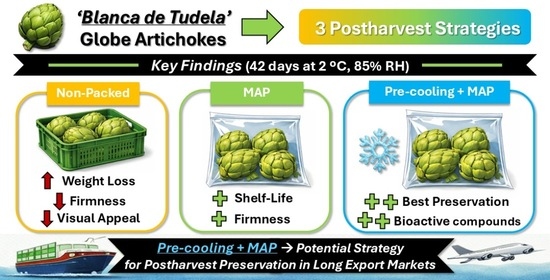
However, despite the extensive use of precooling and MAP as individual technologies, information is still scarce regarding their combined effect on whole globe artichokes stored for extended periods under commercial-like cold conditions. To our knowledge, no study has evaluated the effect of combining forced-air precooling with microperforated MAP on ‘Blanca de Tudela’ artichokes stored at 2 °C for up to 42 days, integrating physiological (respiration and ethylene production), physicochemical (weight loss, firmness, color, phenolic content, antioxidant capacity) and sensory responses. This specific knowledge gap is addressed in the present work, which aims to determine whether combining forced-air precooling with microperforated MAP can effectively delay senescence and preserve the external and internal quality of whole artichokes compared with MAP alone and non-packed controls.
3. Results
3.1. Physicochemical and Functional Parameters of Non-Packed Artichokes During 42 Days of Storage
The physicochemical parameters (respiration rate, weight loss and firmness) and functional parameters (total phenols and total chlorophylls) of the non-packed artichokes were analyzed at harvest (day 0) and during 42 days of storage at 2 °C (
Table 2). The respiration rate value at harvest was 255.25 ± 6.86 mg CO
2 kg
−1 h
−1. The respiration rate decreased during the first 14 days of refrigerated storage (85.16 ± 3.43 mg CO
2 kg
−1 h
−1). However, after 28 days of storage, the respiration rate increased to 143.17 ± 7.17 mg CO
2 kg
−1 h
−1 reflecting a decline in artichoke quality over storage time.
Regarding weight loss, after 14 days of storage, the non-packed artichokes had lost 18% of their weight, showing noticeable signs of dehydration. Although the product may no longer be marketable, it was kept under refrigerated conditions for up to 42 days alongside the treated samples in order to evaluate the evolution of the analyzed quality parameters. The weight loss increased to 46.94 ± 1.76% after 42 days of refrigerated storage.
At harvest time, the firmness value was 10.10 ± 0.34 N mm−1, decreasing to 2.21 ± 0.17 after 14 days and to 1.52 ± 0.17 N mm−1 at the end of the experiment (42 days). With respect to total phenols, the results showed values of 7.03 ± 0.67 g GAE kg−1 DW at harvest time. Values decreased throughout the storage period, reaching 3.30 ± 0.25 g GAE kg−1 DW after 42 days. Finally, total chlorophylls content was 3.64 ± 0.10 g kg−1 DW on the day of harvest, showing a reduction from day 14 (3.32 ± 0.28 g kg−1 DW) to day 42 (0.80 ± 0.12 g kg−1 DW).
3.2. Effect of MAP Strategy and Pre-Cooling on the Physicochemical Parameters and Postharvest Quality of Artichoke
3.2.1. Composition of the Internal Atmosphere Within the Packaging
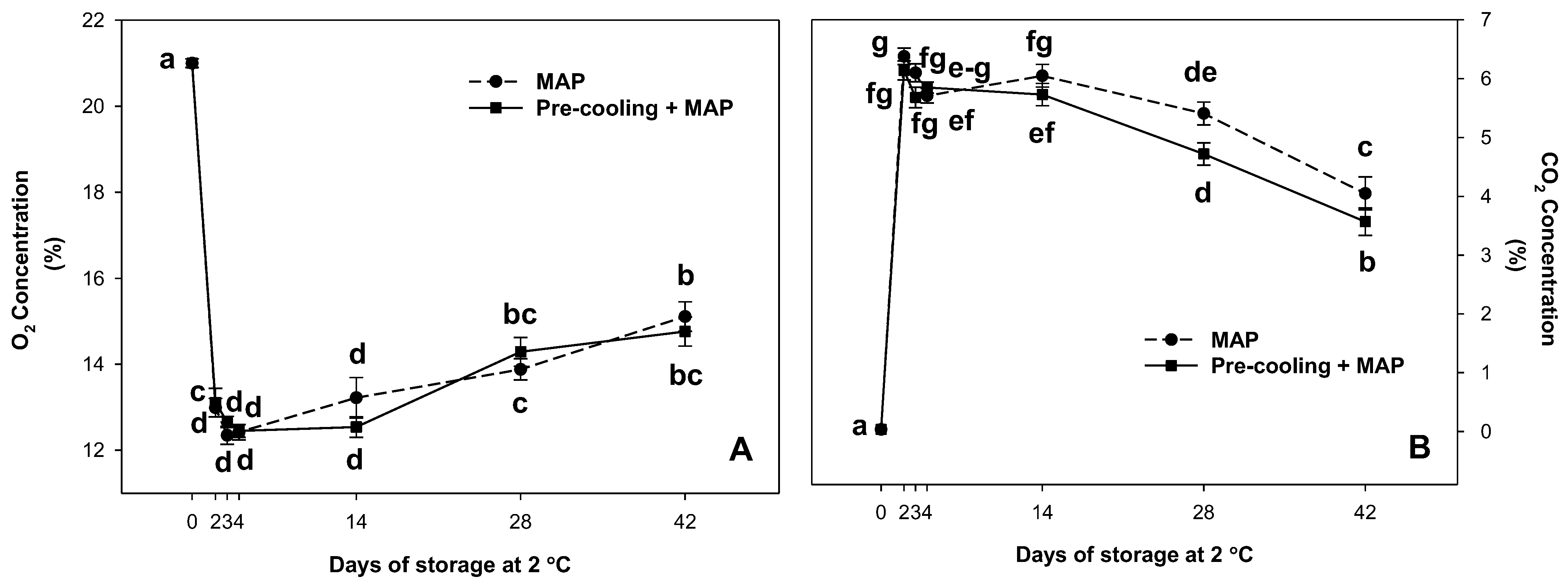
The oxygen and carbon dioxide concentrations inside the packaging films were assessed on days 2, 3, and 4 and on days 14, 28, and 42 of storage (
Figure 1). A sharp decrease in oxygen concentration together with a rapid increase in carbon dioxide levels was observed during the first days of storage in both treatments, reflecting the high respiration rate of the artichokes. Measurements during days 2–4 indicated that the internal atmosphere stabilized early in the storage period, reaching a relatively steady state by day 3, with only gradual changes occurring thereafter.
Regarding oxygen concentration (
Figure 1A), significant (
p < 0.05) differences were detected throughout storage time. After the initial decrease, oxygen levels showed a gradual increase during refrigerated storage. Differences between MAP and Pre-cooling + MAP treatments were observed at specific sampling times, particularly at intermediate and late storage stages, with slightly higher oxygen concentrations generally recorded in the MAP treatment.
With respect to carbon dioxide concentration (
Figure 1B), a rapid accumulation was detected during the first days of storage, followed by a progressive decrease over time. Significant (
p < 0.05) differences were observed both among storage days and between treatments. From day 14 onwards, the MAP treatment consistently showed higher CO
2 concentrations compared to Pre-cooling + MAP, with these differences becoming more pronounced at days 28 and 42 of storage.
3.2.2. Respiration Rate
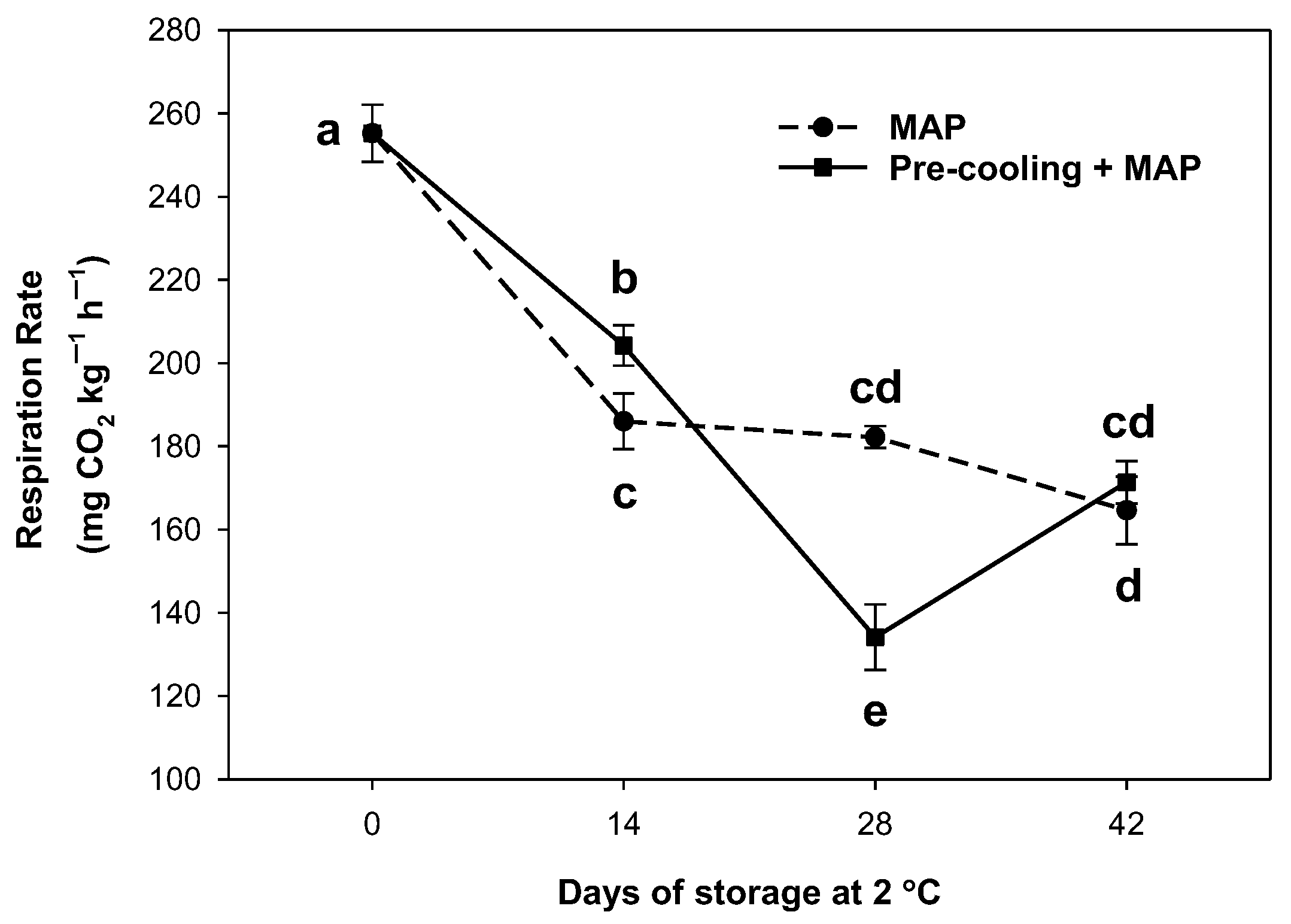
The respiration rate of artichokes packaged under MAP and Pre-cooling + MAP conditions was monitored during refrigerated storage (
Figure 2). At harvest, artichokes showed a high respiration rate (255.25 ± 6.86 mg CO
2 kg
−1 h
−1); however, a significant (
p < 0.05) reduction in respiration rate was observed during storage in both treatments, with marked differences among storage times. On day 14, respiration rates significantly decreased compared to harvest, with Pre-cooling + MAP samples showing higher values than MAP. At day 28, a further reduction was detected, particularly in the Pre-cooling + MAP treatment, which exhibited the lowest respiration rate during the entire storage period (134.16 ± 19.29 mg CO
2 kg
−1 h
−1), significantly lower than that observed in MAP samples (182.25 ± 2.64 mg CO
2 kg
−1 h
−1).
By day 42, respiration rates increased again in both treatments, although significant differences between treatments were still detected, with MAP samples showing higher values than Pre-cooling + MAP.
3.2.3. Weight Losses
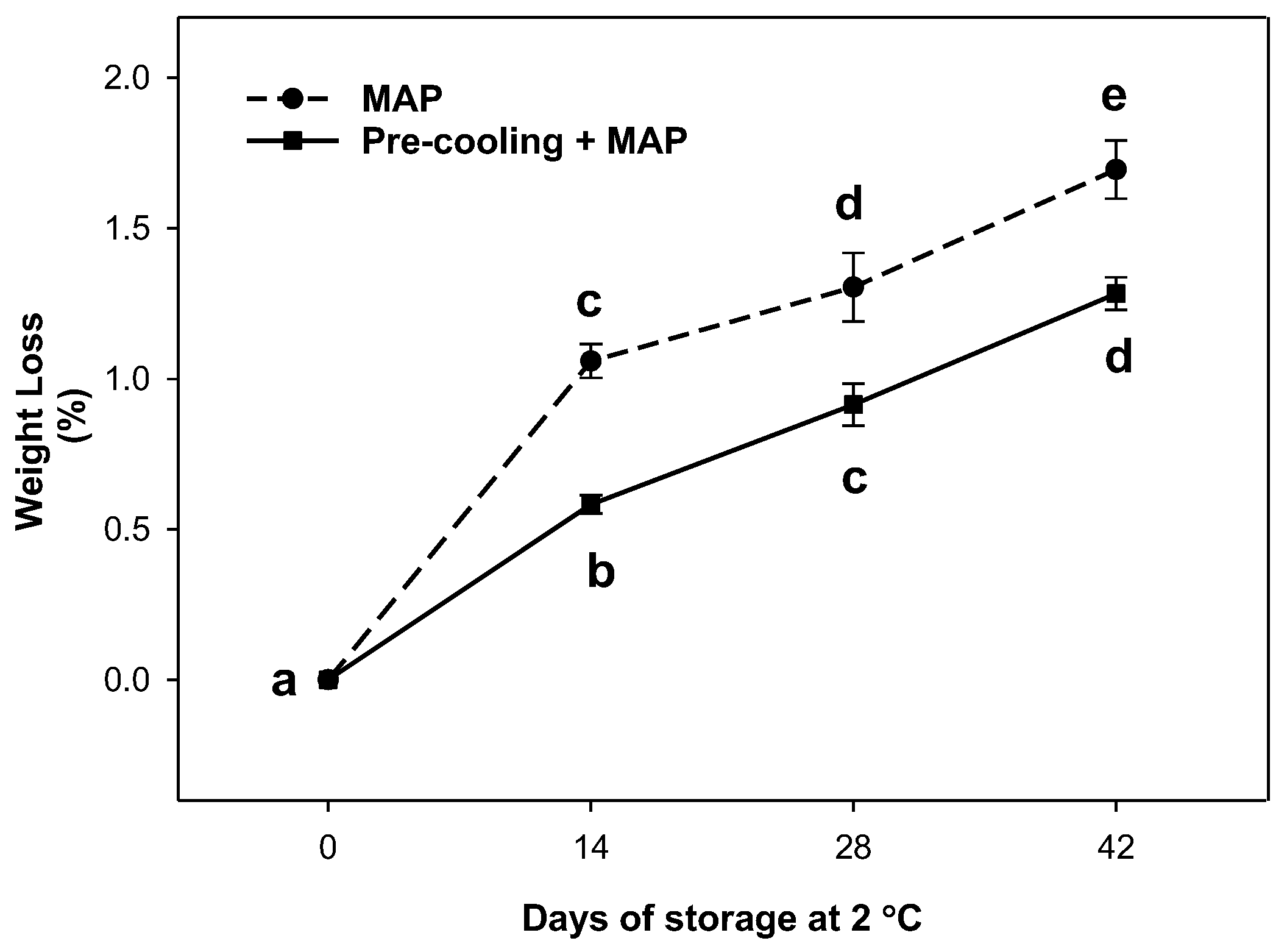
Weight loss of artichokes packaged under MAP and Pre-cooling + MAP conditions increased progressively during refrigerated storage (
Figure 3) and significant (
p < 0.05) differences were observed among storage times and between treatments.
Artichokes packaged under MAP showed a higher weight loss than those subjected to Pre-cooling + MAP at all sampling times. On day 14, MAP samples reached a weight loss of 1.06 ± 0.06%, whereas Pre-cooling + MAP samples showed significantly lower values (0.58 ± 0.03%). This increasing trend continued throughout storage. On day 28, weight loss further increased in both treatments, with MAP samples showing higher values than Pre-cooling + MAP. After 42 days of storage, weight loss remained below 2% in both treatments, reaching 1.70 ± 0.10% in MAP samples and 1.28 ± 0.05% in Pre-cooling + MAP samples, with these differences being statistically significant.
3.2.4. Firmness Evolution During Storage
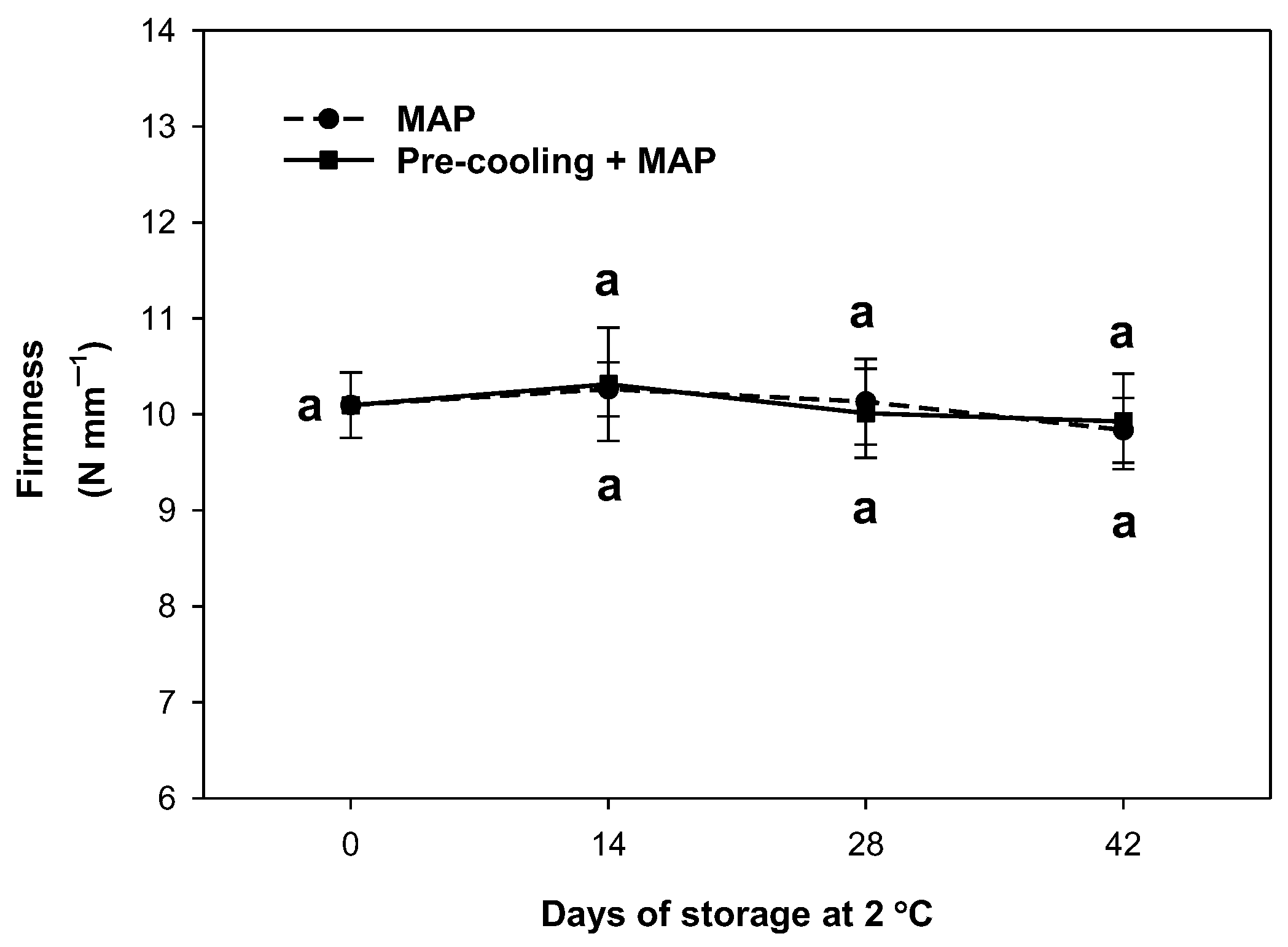
No significant differences in firmness values were observed between the MAP and Pre-cooling + MAP treatments throughout the storage period (
Figure 4). At harvest (day 0), artichokes exhibited an initial firmness of 10.10 ± 0.34 N mm
−1. As storage progressed, firmness values remained relatively stable during the first stages of storage, with slight fluctuations observed thereafter.
In the MAP treatment, firmness values were 10.26 ± 0.28 N mm−1, 10.13 ± 0.45 N mm−1, and 9.83 ± 0.34 N mm−1 at 14, 28, and 42 days, respectively. Similarly, the Pre-cooling + MAP treatment showed firmness values of 10.31 ± 0.59 N mm−1 at day 14, 10.01 ± 0.47 N mm−1 at day 28, and 9.93 ± 0.50 N mm−1 at day 42.
Overall, both treatments exhibited comparable trends, with no statistically significant differences between MAP and Pre-cooling + MAP at any sampling time.
3.2.5. Changes in Total Phenolic Content During Storage
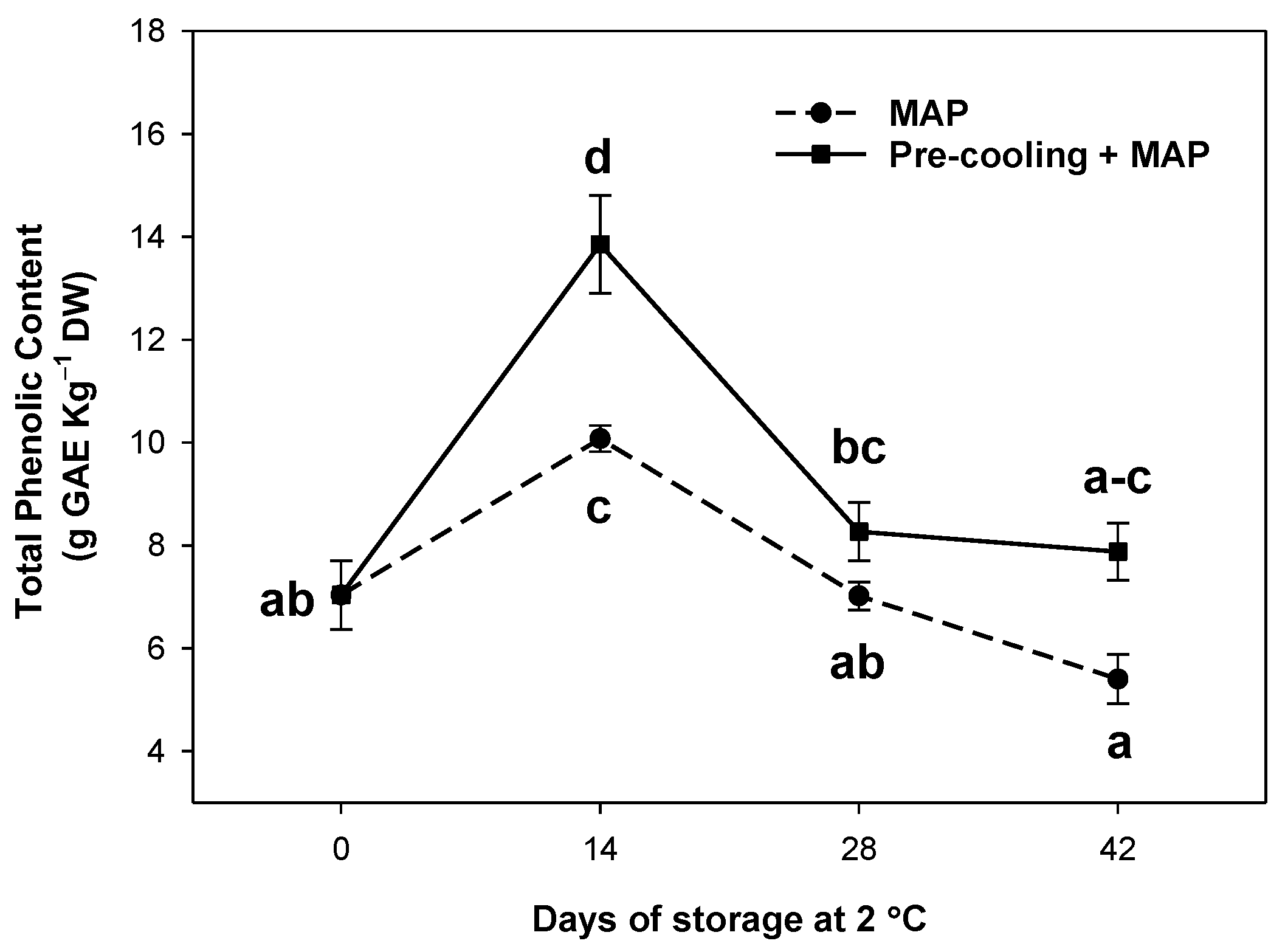
The total phenolic content of artichokes at harvest was 7.03 ± 0.67 g GAE kg
−1 DW (
Figure 5). During storage, significant (
p < 0.05) changes in total phenolic content were observed depending on storage time and treatment. In both MAP and Pre-cooling + MAP treatments, phenolic content increased during the first 14 days of storage, reaching values of 10.08 ± 0.26 and 13.86 ± 0.95 g GAE kg
−1 DW, respectively. At this sampling time, Pre-cooling + MAP samples showed significantly higher phenolic content than MAP samples.
After day 14, a significant decrease in total phenolic content was recorded in both treatments. On day 28, phenolic levels declined but remained higher in Pre-cooling + MAP samples compared to MAP. By the end of storage (day 42), total phenolic content further decreased in both treatments, reaching values of 5.40 ± 0.48 g GAE kg−1 DW in MAP samples and 7.88 ± 0.55 g GAE kg−1 DW in Pre-cooling + MAP samples, with statistically significant differences between treatments. Overall, Pre-cooling + MAP samples maintained higher total phenolic content than MAP samples throughout storage, and notably, phenolic levels in Pre-cooling + MAP remained higher than those recorded at harvest at the end of storage, whereas MAP samples showed lower values than at day 0.
3.2.6. Evolution of Chlorophyll Content During Cold Storage
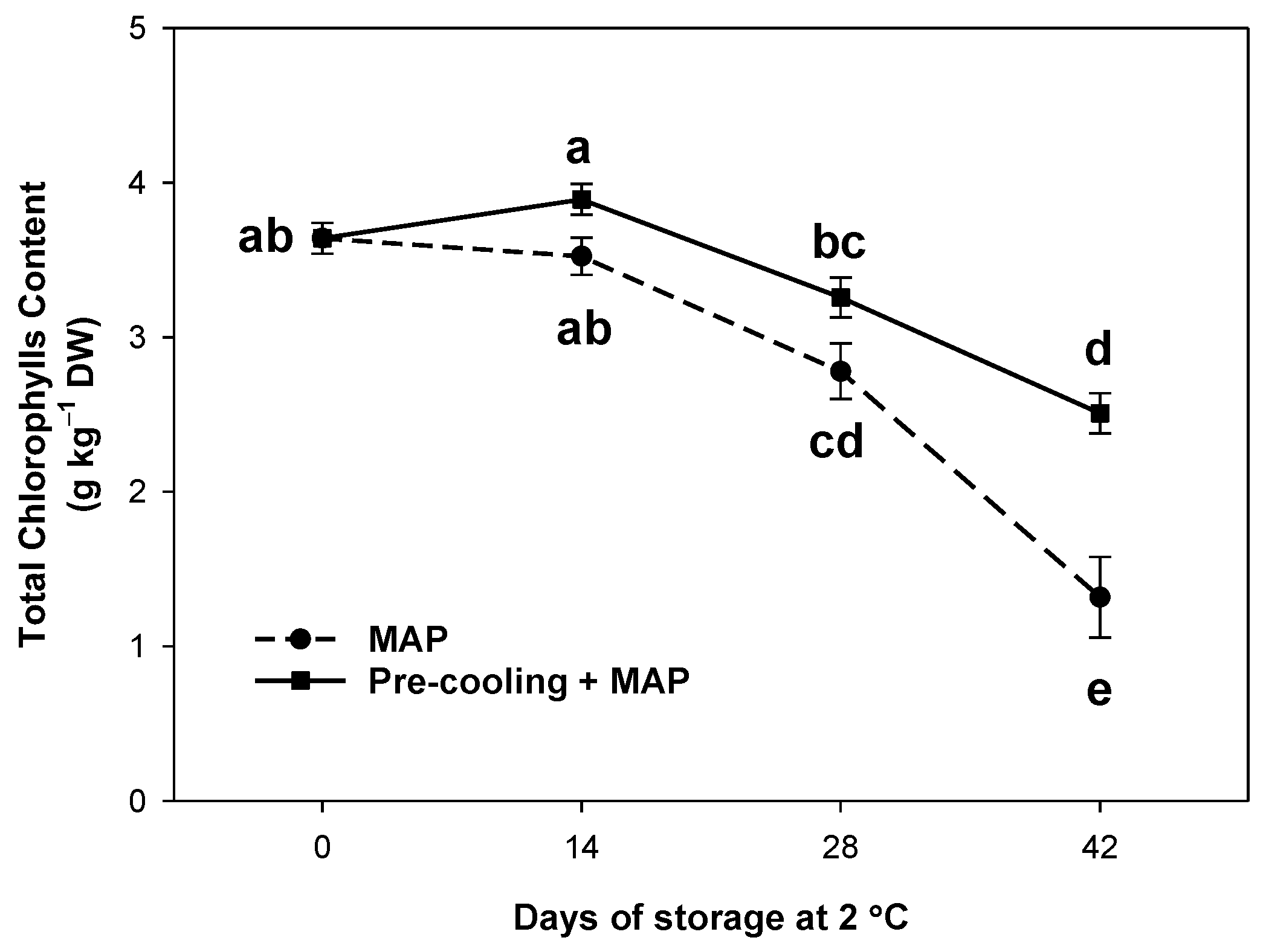
At harvest, the total chlorophyll content in artichokes was 3.64 ± 0.10 g kg
−1 and during refrigerated storage, this parameter exhibited significant (
p < 0.05) changes as a function of both storage time and treatment (
Figure 6). After 14 days of storage, chlorophyll content remained relatively stable in both treatments, although Pre-cooling + MAP samples showed significantly higher values (3.89 ± 0.10 g kg
−1 DW) than MAP samples (3.52 ± 0.12 g kg
−1 DW). After this period, a significant decrease in total chlorophyll content was observed in both treatments. On day 28, chlorophyll levels declined further, with Pre-cooling + MAP samples maintaining significantly higher values than MAP samples. By the end of storage (day 42), a pronounced reduction in total chlorophyll content was recorded in both treatments, reaching values of 1.32 ± 0.26 g kg
−1 DW in MAP samples and 2.51 ± 0.13 g kg
−1 DW in Pre-cooling + MAP samples, with statistically significant differences between treatments. Overall, Pre-cooling + MAP samples maintained higher total chlorophyll content than MAP samples throughout storage.
3.3. External Visual and Sensory Quality Evolution
The evolution of the external visual quality of whole ‘Blanca de Tudela’ artichokes stored at 2 °C under the different postharvest treatments is presented in
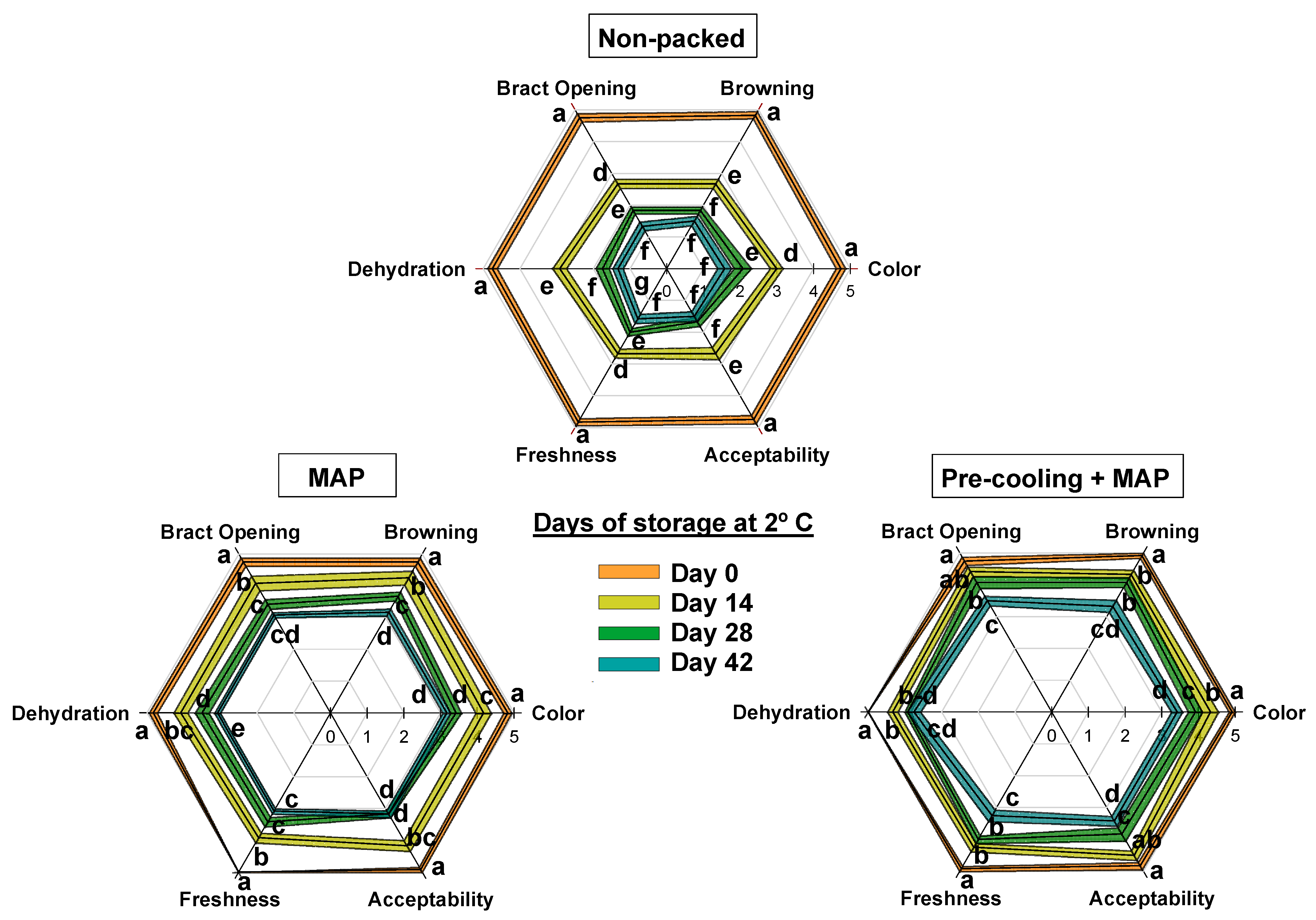
Figure 7. These radar plots provide an integrated overview of the main visual quality attributes (color, external browning, bract opening, dehydration, freshness and overall acceptability) and clearly illustrate the different rates of quality degradation among treatments during storage.
At harvest (day 0), all artichokes exhibited very high sensory scores, ranging from 4.7 to 5.0 for all evaluated attributes, with no relevant differences among treatments. As storage progressed, marked differences became evident. Non-packed artichokes showed a rapid and pronounced decline in all visual attributes, particularly color, freshness and overall acceptability, from day 14 onwards. By day 28, none of the non-packed samples reached a score above 3 for overall acceptability, which in this study was defined as the minimum threshold for general commercial acceptance. This indicates a clear loss of marketability at this stage.
In contrast, artichokes stored under MAP exhibited a significantly slower deterioration. Although moderate reductions in color and freshness were observed from day 28 onwards, MAP samples maintained overall acceptability scores above the acceptability threshold throughout the entire storage period, including at day 42. However, the combined Pre-cooling + MAP treatment showed the best performance, consistently presenting the highest scores for all visual attributes during storage. Even after 42 days at 2 °C, Pre-cooling + MAP samples maintained overall acceptability values above 3.4, evidencing a strong preservation of external quality.
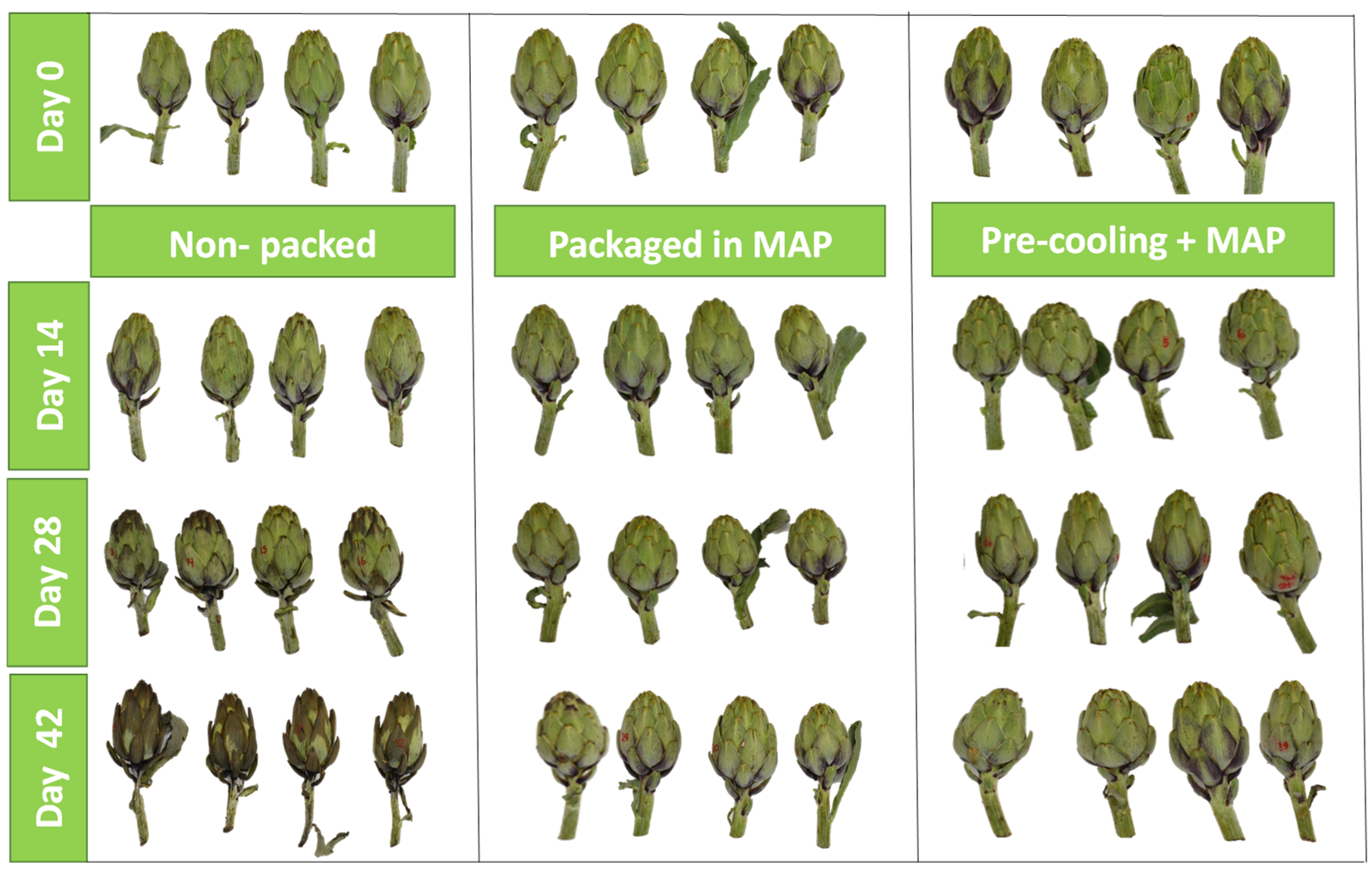
The photographic documentation shown in
Figure 8 corroborates the sensory results obtained from the radar charts. Non-packed artichokes displayed evident visual deterioration from day 14 onwards, characterized by intense browning, dehydration symptoms and loss of bract integrity, which became particularly severe by day 28. Conversely, MAP-treated artichokes retained a visually acceptable appearance for a longer period, while those subjected to Pre-cooling + MAP preserved the best external quality throughout storage, with limited browning, reduced dehydration and structurally intact bracts even at the end of the 42-day storage period.
Overall, both the results consistently demonstrate that the application of MAP, and especially its combination with pre-cooling, was effective in maintaining the external visual quality and commercial acceptability of artichokes during prolonged refrigerated storage, whereas non-packed artichokes rapidly fell below acceptable quality limits.
3.4. Exploratory Correlation Coefficients Analysis Among Postharvest Quality Parameters
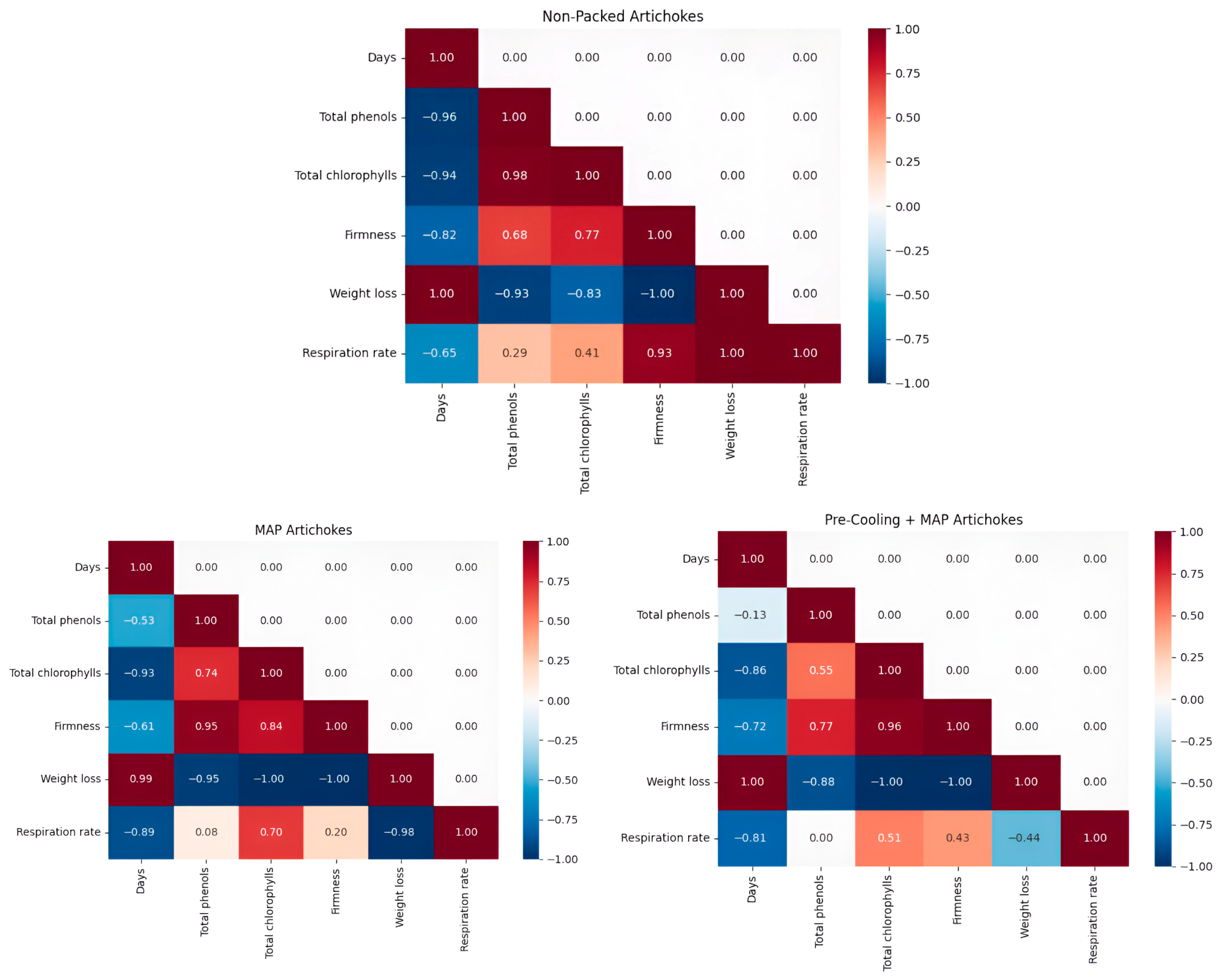
The Pearson correlation coefficients (r) among postharvest quality parameters of artichoke samples under different storage strategies (Non-packed, MAP, and Pre-cooling + MAP) are presented in
Figure 9. Due to the limited number of sampling points, these correlations should be interpreted as exploratory indicators rather than definitive physiological relationships. Perfect or near-perfect correlations (r = ±1.00) observed in some cases primarily reflect the small sample size and the sequential nature of the time points and should not be overinterpreted.
Despite this limitation, the correlation patterns provide insight into general trends. Overall, storage duration showed negative relationships with total phenolic content, total chlorophylls, firmness, and respiration rate, which may indicate a general tendency toward a decline in biochemical attributes, pigment levels, and metabolic activity as storage progressed. Conversely, weight loss exhibited a strong positive correlation with storage time across all treatments, which could suggest its usefulness as a key indicator of progressive deterioration during cold storage.
When comparing treatments, differences in the strength of the correlations were observed. In non-packed artichokes, storage time showed negative associations with total phenolic content (r = −0.96), total chlorophylls (r = −0.94), and firmness (r = −0.82), and a strong positive association with weight loss (r = 1.00), consistent with the expected deterioration of quality during cold storage. These associations may suggest that, in the absence of protective packaging, deterioration-related processes progressed more rapidly and were closely interrelated. Respiration rate also showed positive associations with firmness (r = 0.93) and weight loss (r = 1.00), which could indicate that metabolic activity was closely associated with tissue softening and moisture loss, potentially contributing to accelerated senescence. In addition, total phenolic content and chlorophylls were strongly correlated (r = 0.98), suggesting that their degradation may have occurred concurrently, which could be linked to faster browning and visual deterioration.
Under MAP storage, these relationships were generally weaker, which may reflect the protective role of the modified atmosphere. In this condition, storage time exhibited a moderate negative correlation with phenolic content (r = −0.53) and firmness (r = −0.61). The reduced strength of these associations could suggest that MAP delayed biochemical and structural degradation processes. Respiration rate showed a stronger correlation with storage duration (r = −0.89) than in non-packed artichokes, which may indicate that MAP contributed to a reduction in respiratory activity and a slowdown of biochemical senescence. Firmness and total phenolic content maintained a strong positive correlation (r = 0.95), suggesting that tissue integrity may be associated with the retention of bioactive compounds under MAP conditions, while chlorophyll content and firmness also displayed moderate to strong positive correlations (r = 0.84).
In the Pre-cooling + MAP treatment, overall correlations were weaker, consistent with the protective effect of combining pre-cooling with modified atmosphere. Storage time showed minimal correlation with phenolic content (r = −0.13), whereas respiration rate remained negatively correlated with storage progression (r = −0.81), indicating that the combined treatment effectively limited metabolic activity and preserved overall quality. Within this treatment, moderate positive correlations were observed between respiration rate and chlorophyll content (r = 0.51) and firmness (r = 0.43), while moderate negative correlations were noted with weight loss (r = −0.44). Strong positive associations between chlorophyll content and firmness (r = 0.96), together with perfect negative correlations with weight loss (r = −1.00), may highlight the link between tissue hydration and preservation of visual and structural quality.
All correlations are exploratory and should not be interpreted as causal. Nevertheless, the observed patterns align with expected postharvest behavior, suggesting that MAP and specially Pre-cooling + MAP treatments may contribute to mitigating quality loss by maintaining tissue integrity, slowing water loss, and preserving metabolic balance.
4. Discussion
The postharvest behavior of globe artichoke is governed by the interaction between metabolic activity, water balance, and biochemical stability, all of which may directly determine visual, textural, and nutritional quality. The present study integrates these dynamics using a treatment-oriented approach, highlighting how MAP, and particularly its combination with pre-cooling, could modulate these mechanisms during prolonged cold storage.
The use of polypropylene packaging in MAP and Pre-cooling + MAP treatments may play a decisive role in stabilizing the internal atmosphere and limiting metabolic acceleration. In the present study, early stabilization of gas composition by day 3 (
Figure 1) suggests that both packaging strategies could rapidly reach a quasi-equilibrium state, as a result of the interaction between film permeability and product respiration. This dynamic equilibrium, rather than strict compliance with target O
2 and CO
2 concentrations, appears to be critical for mitigating respiratory stress during the initial postharvest phase. Accordingly, the mechanistic interpretation of MAP effectiveness in the present study should be framed in terms of packaging-driven atmospheric regulation tailored to cultivar physiology, instead of assessment with universal optimal storage ranges. This interpretation is consistent with previous reports indicating that polypropylene packaging, due to its lower permeability to O
2 and CO
2 compared with other common materials such as polyvinyl chloride or polyethylene, can effectively maintain a modified internal atmosphere and stabilize internal gas composition [
18]. Importantly, the present findings suggest that the physiological responses observed should be interpreted in relation to the atmosphere dynamically generated by the tested packaging system, rather than by comparison with generalized recommended O
2/CO
2 ranges reported in the literature. This packaging-specific perspective helps reconcile discrepancies among studies and highlights the relevance of film properties and package design in determining MAP effectiveness in specific globe artichokes cultivars.
Artichokes are characterized by inherently high respiration rates, which may strongly limit their postharvest life [
38]. In non-packed samples, the observed initial decline followed by a later increase in respiration (
Table 2) could reflect progressive tissue dehydration and cellular disruption under uncontrolled atmospheric conditions. This biphasic pattern might indicate an early metabolic slowdown followed by stress-induced respiratory reactivation as senescence progresses [
39]. In contrast, both MAP-based treatments appeared to moderate respiratory activity throughout storage, with respiration rates remaining substantially lower and more stable than in non-packed artichokes, with rates ranging from 134 to 182 mg CO
2 kg
−1 h
−1 (
Figure 2). These values are considerably higher than those reported by Gil-Izquierdo et al. [
18], who documented respiration rates of 35–40 mL CO
2 kg
−1 h
−1 at 5 °C in ‘Blanca de Tudela’ artichokes stored in modified atmosphere packaging. The observed differences may be attributed to several factors: in the study by Gil-Izquierdo et al. [
18], harvested artichokes were stored at 0 °C until the next day before the experiment, the harvest took place in January, and the average head weight was larger (≈170 g) compared to the present study (≈131 g). In addition, that study did not specify either the flower head order or the developmental stage of the artichokes at harvest, both of which are known to significantly influence respiratory behavior [
34]. In the present work, only secondary flower heads harvested at an intermediate developmental stage were used. Previous research by Giménez et al. [
34] demonstrated that respiration rate in ‘Blanca de Tudela’ artichokes varies significantly with flower head order, with secondary heads exhibiting intermediate respiration rates between primary and tertiary heads. Respiration rate is also strongly influenced by harvest timing and environmental conditions, and similar results were reported by Giménez et al. [
34] in ‘Blanca de Tudela’ and Palma et al. [
40] in ‘Spinoso Sardo’, where respiratory activity at harvest was higher in spring than in winter. These factors likely explain the higher respiration rates observed in our May-harvested, smaller secondary heads compared to the January-harvested, larger heads of Gil-Izquierdo et al. [
18].
It is hypothesized that this phenomenon is attributable to the metabolically active state of artichokes, as seen with the ‘Blanca de Tudela’ cultivar, which has previously been identified as having remarkably high respiration levels [
10,
18]. Recent studies further suggest that respiration in whole artichokes could be strongly influenced by cultivar, storage temperature and atmospheric composition. Capotorto et al. [
22] reported considerable variability in respiration among different cultivars and demonstrated that pre-cooling can effectively suppress metabolic activity during the early stages of storage. Similarly, Palma et al. [
20] showed that modified atmosphere packaging (MAP) helps to reduce browning and preserving phenolic compounds, which are crucial for both visual and nutritional quality. These findings emphasize the importance of integrating pre-cooling with MAP as a combined postharvest strategy, particularly for intact ‘Blanca de Tudela’ heads, to optimize shelf-life and maintain product quality under commercial storage conditions. Consistent with this interpretation, Gomaa et al. [
41] reported that MAP significantly reduced respiration rates during cold storage of whole artichokes. In the present study, although respiration was reduced under both MAP-based treatments, the combination of pre-cooling and MAP resulted in a more pronounced and sustained decrease during the intermediate storage period compared to MAP alone. This enhanced effect may be likely attributable to the synergistic action between rapid field heat removal and the establishment of a stabilized modified internal atmosphere. Pareek et al. [
39] emphasized that pre-cooling is a fundamental postharvest step which, when integrated with controlled atmosphere technologies, can significantly reduce metabolic activity. Similarly, Saltveit [
38] highlighted that lowering storage temperature effectively suppresses respiration and extends shelf-life. The decline in respiration observed after 28 days in the Pre-cooling + MAP treatment indicates the efficacy of this integrated approach in reducing initial tissue temperature, limiting water loss and maintaining metabolic stability throughout storage. The relationship between respiration rate, weight loss and firmness is critical, as elevated metabolic activity accelerates transpiration and the consumption of internal reserves, leading to faster deterioration [
39,
42]. In this study, exploratory Pearson correlation analysis revealed strong associations between respiration, firmness and weight loss under non-packed conditions. Under MAP and Pre-cooling + MAP, these correlations were weaker, indicating a decoupling of metabolic activity from structural degradation and suggesting improved physiological stability. This observation aligns with previous findings that low respiration rates are associated with prolonged shelf-life, reduced nutrient loss and improved visual and textural quality [
43]. Furthermore, Giménez-Berenguer et al. [
21,
35,
44] reported that tertiary artichoke heads, which had lower respiratory rates, were more suitable for prolonged storage [
34]. Together, these results underscore the importance of applying integrated storage strategies, such as Pre-cooling + MAP, to effectively modulate respiration and delay senescence in globe artichokes [
45].
Dehydration emerged as one of the main drivers of postharvest deterioration and reduced shelf-life in globe artichokes, particularly in non-packed samples, where water loss could rapidly exceed commercially acceptable thresholds. In contrast, both MAP and Pre-cooling + MAP treatments significantly reduced weight loss throughout storage, with the combined strategy consistently showing the lowest values over the 42-day period (
Figure 3). In these treatments, weight loss remained below 2%, confirming their superior effectiveness in limiting transpiration and preserving product quality. This protective effect is attributed to the barrier properties of the packaging films, which reduce vapor pressure gradients around the product, together with the moderation of metabolic activity under refrigerated conditions [
18,
38,
46,
47]. Similar reductions in weight loss have been reported for minimally processed artichokes stored in low-permeability films [
46], as well as for other vegetables subjected to rapid cooling strategies, such as vacuum or container cooling [
48]. The superior performance of Pre-cooling + MAP highlights the importance of early field heat removal in preventing accelerated moisture loss during the initial postharvest stages, in agreement with studies showing that delayed pre-cooling significantly increases dehydration and decay in artichokes [
49]. Recent research further supports the effectiveness of MAP in reducing water loss and preserving firmness and bioactive compounds in whole artichokes [
20,
22], while pre-cooling has been shown to minimize initial water loss and metabolic stress, thereby extending shelf-life [
50,
51]. Despite refrigeration, artichokes may still experience substantial dehydration, with reported weight losses of up to 15% after 14 days [
34], whereas storage at lower temperatures markedly limits moisture loss compared to higher temperatures [
52]. In the present study, Exploratory Pearson correlation analysis may suggest strong positive associations between storage duration and weight loss across all treatments, confirming dehydration as a primary indicator of quality decline and tissue degradation over time, a process that could be mitigated by appropriate storage strategies [
53,
54]. Although the observed weight-loss differences are statistically significant, the absolute magnitude (≈0.4–0.5%) is relatively small and, by itself, unlikely to represent a decisive economic advantage within typical export chain tolerances, where natural variability due to handling, storage, and transport is expected. Therefore, this result should be interpreted primarily as an indicator of improved postharvest performance rather than a standalone economic outcome. Importantly, the relevance of the treatments is reinforced by their combined positive effects on other critical quality parameters, including reduced respiration rate, maintenance of phenolic and chlorophyll content, firmness stability, and visual acceptability during storage. Taken together, these improvements contribute to a more consistent preservation of overall product quality under export-oriented cold storage conditions, while the economic significance of such incremental gains ultimately depends on commercial handling practices and acceptance thresholds defined by exporting companies.
Firmness is closely linked to weight loss and represents a key quality attribute influencing consumer acceptance [
40,
53]. In this study, firmness was consistently measured at the equatorial section of the artichoke heads using a well-established and sufficiently sensitive method for instrumental texture evaluation validated in previous studies [
34,
53,
55]. Both MAP and Pre-cooling + MAP treatments maintained relatively stable firmness during refrigerated storage, with only a slight decreasing trend observed after day 14 (
Figure 4), whereas non-packed artichokes exhibited a rapid and pronounced loss of firmness. The marginally higher firmness values recorded on day 14 compared to harvest could be attributed to inherent biological variability among individual heads, as independent samples were evaluated at each sampling point. No significant differences were detected between MAP and Pre-cooling + MAP, indicating that once dehydration is effectively controlled, the barrier properties of the packaging film alone may be sufficient to preserve tissue turgor throughout storage. Firmness loss in artichokes is primarily associated with dehydration and bract opening, which are natural physiological processes linked to postharvest senescence [
56]. This interpretation is supported by Pearson correlation exploratory analysis, which may reveal near-perfect negative correlations between firmness and weight loss across all treatments, which could reflect a direct biophysical mechanism whereby transpiration-driven water loss reduces cellular turgor pressure and leads to tissue collapse and perceived softening [
47,
53]. In addition, the relationship between firmness and respiration appeared treatment-dependent: under non-packed conditions, firmness was closely associated with both respiration rate and weight loss, whereas these correlations were markedly weaker under MAP and Pre-cooling + MAP, suggesting that controlled atmosphere storage may stabilize metabolic activity relative to structural degradation.
Phenolic compounds play a central role in both the nutritional value and oxidative stability of artichokes due to their bioactive and antioxidant properties [
57,
58,
59,
60]. In agreement with Gil-Izquierdo et al. [
18], phenolic content increased during the early stages of storage under MAP, likely as a stress-induced response involving activation of the phenylpropanoid pathway and accumulation of di-caffeoylquinic acids, which are among the main bioactive compounds in artichokes. However, those authors also reported a subsequent decline during prolonged storage, attributed to compound degradation or metabolic alterations within the tissue [
18]. The present study substantially extends these observations by suggesting that the application of pre-cooling prior to MAP could not only enhance the initial accumulation of phenolics but also sustains significantly higher levels throughout extended storage. Notably, even after 42 days, Pre-cooling + MAP samples retained phenolic concentrations above harvest values, whereas MAP-only samples declined below initial levels (
Figure 5). This prolonged retention may indicate that pre-cooling improves tissue physiological resilience, possibly by inducing early metabolic adjustments that favor antioxidant synthesis and slow oxidative degradation. Exploratory correlations might further support this interpretation, revealing strong positive associations between phenolic content, firmness, and chlorophyll, highlighting possible protective role of phenolics in maintaining structural integrity and pigment stability during storage [
35,
53]. In contrast, phenolic content showed negative correlations with weight loss, underscoring the importance of moisture retention in limiting oxidative degradation [
47]. Moreover, in Pre-cooling + MAP samples, correlations between phenolics and respiration appeared negligible, suggesting that pre-cooling may partially decouple phenolic metabolism from respiratory activity and mitigate oxidative losses.
Chlorophyll content is a key determinant of both the visual and nutritional quality of artichokes, influencing consumer perception of freshness and acceptability [
12,
61,
62,
63]. During storage, total chlorophyll exhibited a progressive decline, which was strongly treatment-dependent. Non-packed artichokes experienced rapid pigment loss from day 28 onwards, reaching critically low levels by day 42, which may reflect accelerated senescence driven by dehydration and oxidative breakdown of chlorophyll [
5,
53,
64]. In contrast, MAP and, particularly, Pre-cooling + MAP effectively delayed chlorophyll degradation, maintaining higher pigment levels throughout the storage period (
Figure 6). Although a slight decrease was observed during the first two weeks, these treatments may provide substantial protection against pigment loss in the later stages, with Pre-cooling + MAP yielding the highest retention on day 42. The protective effect could be likely related to reduced oxygen availability and lower respiration rates, which may limit reactive oxygen species (ROS) accumulation, a key driver of chlorophyll catabolism during senescence [
5,
62]. Chlorophyll content also appeared to correlate strongly with firmness and negatively with weight loss, which may emphasize the interdependence between tissue hydration, structural integrity, and visual quality [
35,
40,
47]. Additionally, the influence of respiration on chlorophyll degradation could be modulated by treatment, being more pronounced in non-packed samples and attenuated under MAP or Pre-cooling + MAP, reflecting the stabilization of metabolism under controlled storage conditions.
Visual and image-based sensorial assessments of whole ‘Blanca de Tudela’ artichokes further suggest the superior performance of Pre-cooling + MAP in preserving postharvest quality (
Figure 7 and
Figure 8). At harvest, all treatments exhibited similarly high scores (4.7–5.0) for color, freshness, and overall acceptability, but during storage, Pre-cooling + MAP maintained the highest values for all visual attributes, remaining above the commercial acceptability limit (≥3) even after 42 days at 2 °C. MAP-only samples ranked intermediate, while non-packed artichokes declined rapidly, falling below the threshold by day 28. The enhanced sensory performance of Pre-cooling + MAP aligns with previous reports on fresh-cut ‘Blanca de Tudela’ artichokes, where maintenance of visual quality and overall liking was closely associated with reduced browning and dehydration, and where scores around 3 were considered indicative of practical shelf-life limits [
6,
21,
37]. This advantage may be likely related to more effective control of physiological activity, reduced oxidative degradation of phenolics, lower browning, and better maintenance of external turgidity, as evidenced by higher scores for color, bract opening, and dehydration over time. Image analysis reinforced these observations, showing that MAP-based strategies could effectively mitigate water loss and firmness decline, while non-packed samples exhibited accelerated deterioration due to higher metabolic activity and absence of a protective barrier [
18].
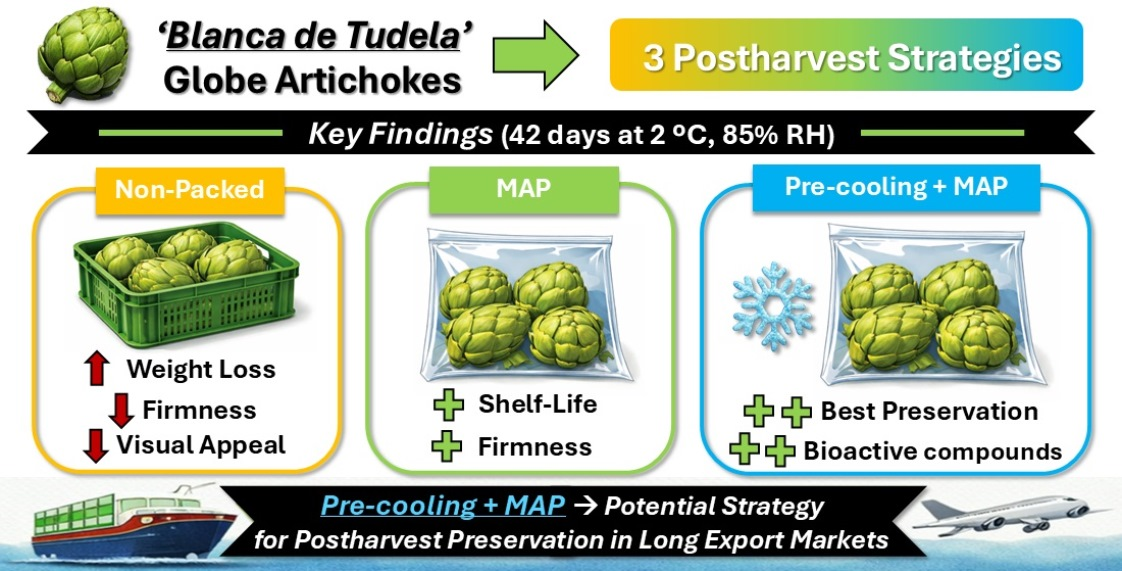
Overall, the integration of pre-cooling with MAP appears to be the most effective strategy for delaying senescence and preserving the physicochemical, functional, and sensory quality of whole ‘Blanca de Tudela’ artichokes. While MAP alone may significantly improve storage performance compared to non-packed samples, the addition of pre-cooling could provide an added advantage by mitigating early metabolic stress and reinforcing long-term quality retention. It is important to note that these conclusions are grounded in the defined sensory acceptability thresholds (score ≥ 3) and represent measured quality retention under controlled conditions; true commercial shelf-life would require validation under actual supply-chain scenarios, including transport, retail handling, and buyer-specific criteria.
It should also be acknowledged that the capacity of artichokes to respond to postharvest strategies such as MAP and pre-cooling may be strongly conditioned by preharvest environmental and agronomic factors. Previous research indicates that genotype, climatic conditions, and crop management practices influence key quality determinants at harvest, including macro and micro mineral content, quantitative and qualitative phenolic profile, respiration rate, firmness, and overall physiological status, which in turn affect postharvest performance [
33,
65,
66,
67,
68]. For example, variation in phenolic accumulation and browning susceptibility among different cultivars and flower head orders has been observed, with both genetic background and developmental factors contributing to these differences [
21,
35,
44]. Indeed, in the study of Giménez-Berenguer et al. [
21], it was shown that cultivar and flower head order determine suitability for fresh-cut processing, with secondary heads often presenting an intermediate balance between phenolic content and browning risk relative to main or tertiary heads. In the present study, secondary heads were selected because they may offer intermediate suitability for both fresh and fresh-cut markets, reflecting a compromise between nutritional attributes and visual quality. Nonetheless, environmental variables such as soil conditions, irrigation, and light exposure during cultivation may further modulate physiological traits that determine how artichokes respond to storage environments [
33,
66,
69,
70,
71]. Therefore, while postharvest handling has a direct impact on quality retention, the preharvest physiological status of the produce may shape the extent and direction of these responses, and should be considered when extrapolating results across growing regions or production systems.
Nevertheless, these findings demonstrate treatment-specific mechanisms and highlight the added value of combining temperature management with atmospheric control for extended cold storage of globe artichokes.





 ,
,