Quality Differences in Ziziphus jujuba Mill. cv. Jinsi from Different Geographical Origins: A Comprehensive Multi-Indicator and Multivariate Statistical Evaluation

Abstract
1. Introduction
2. Materials and Methods
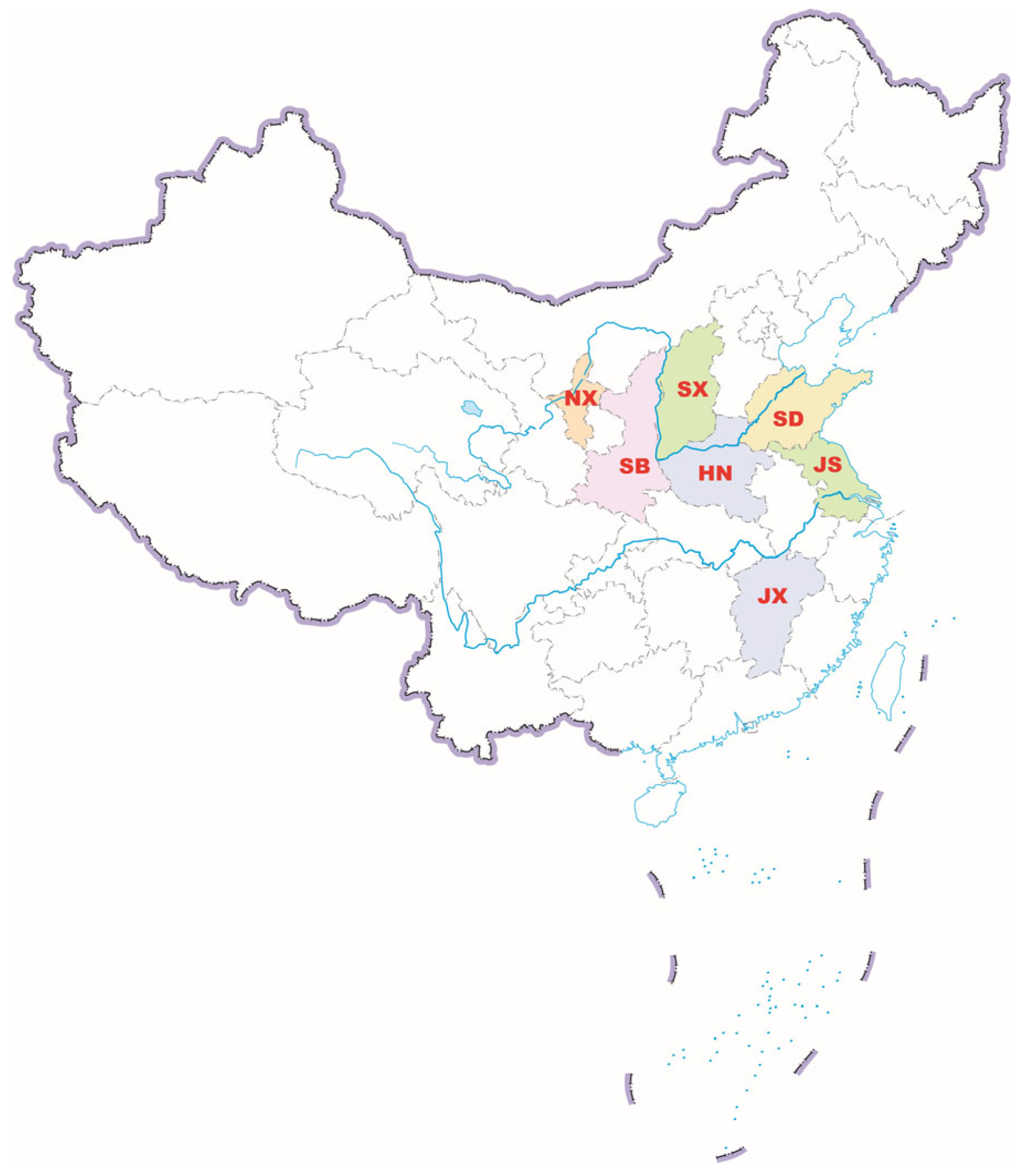
2.1. Sample Collection
2.2. Appearance Attribute Measurement
2.3. Colorimetric Measurement
2.4. SO2 Residue Determination
2.5. Determination of Four Aflatoxin Contents
2.6. Electronic Nose Measurement of Odor
2.7. Electronic Tongue Measurement of Flavor
2.8. Determination of Total Triterpenes, Total Flavonoids, and Total Polysaccharides
2.9. HPLC Determination of Oligosaccharide Content
2.10. Statistical Analysis
3. Results
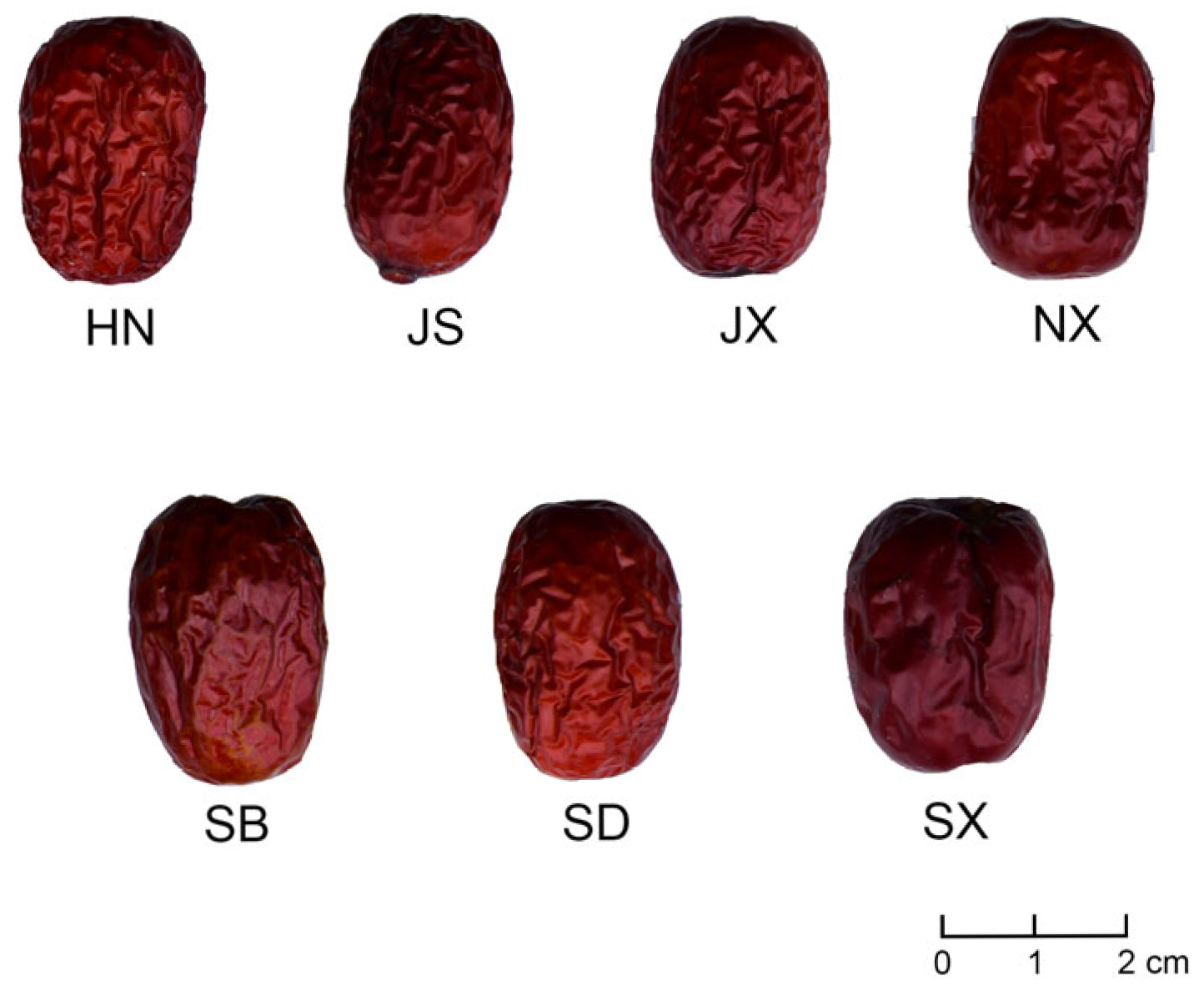
3.1. Analysis of Appearance Attributes
3.1.1. Morphological Measurement Results
3.1.2. Colorimetric Measurement Results
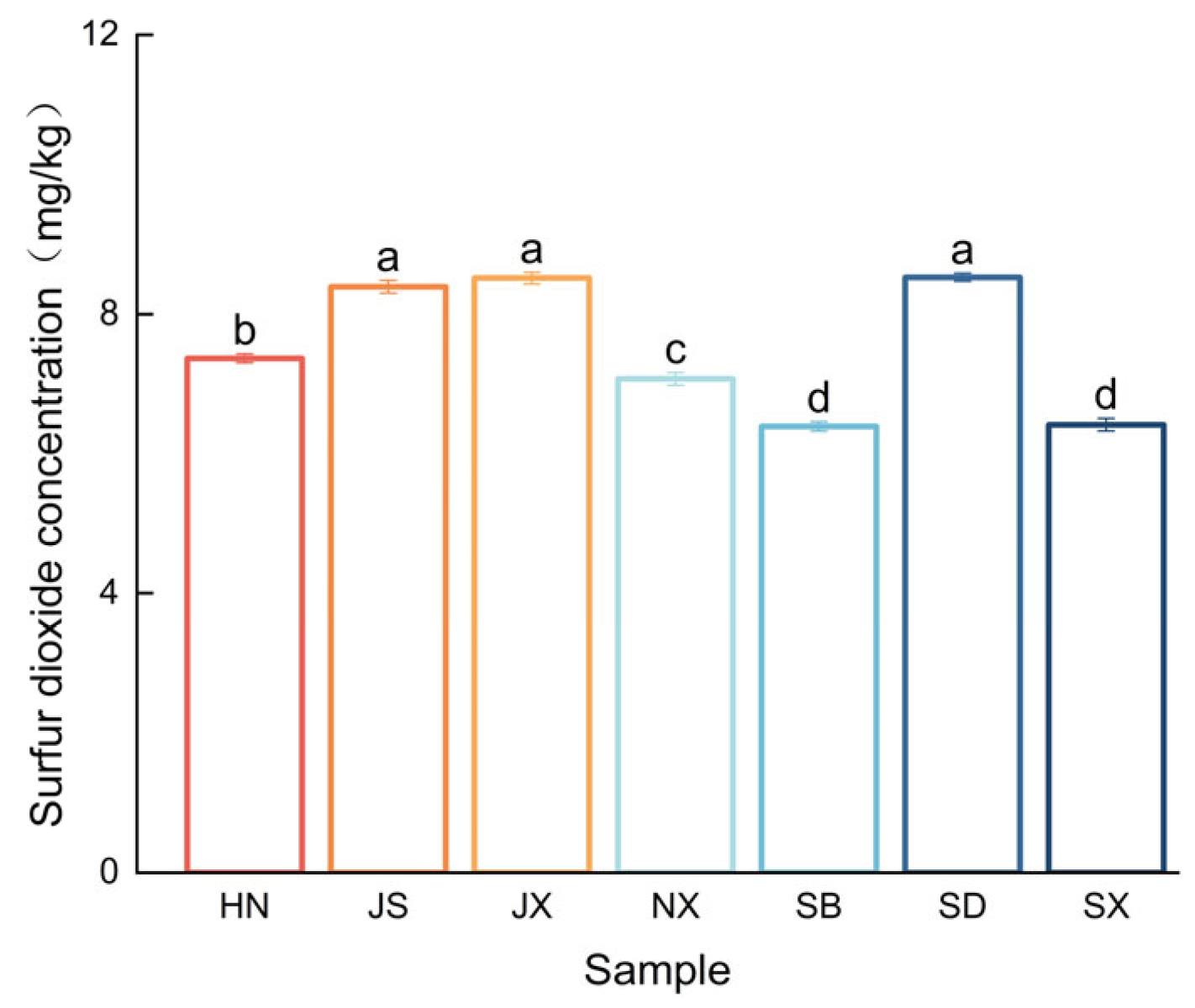
3.2. SO2 Residue Determination Results
3.3. Results of the Determination of Four Aflatoxin Contents
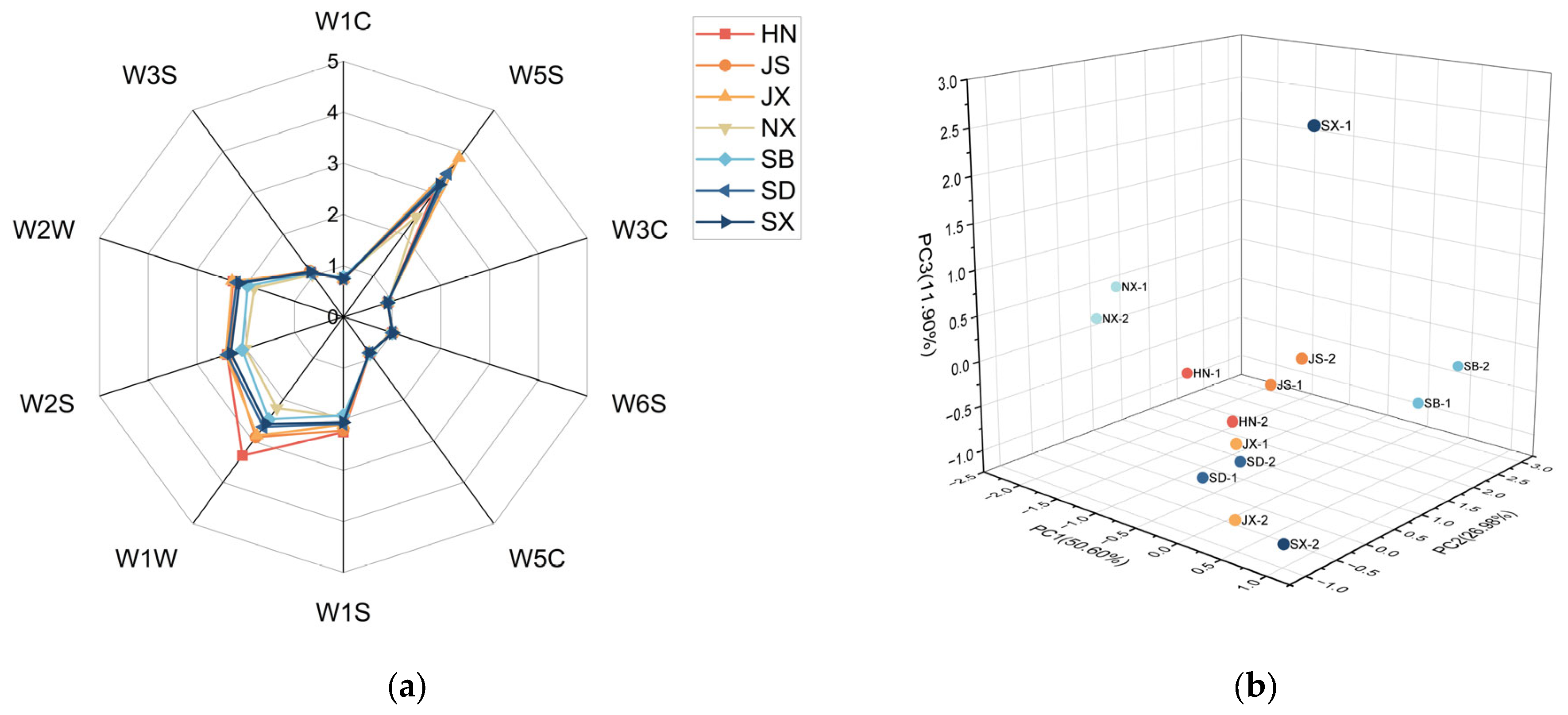
3.4. Electronic Nose Measurement Results
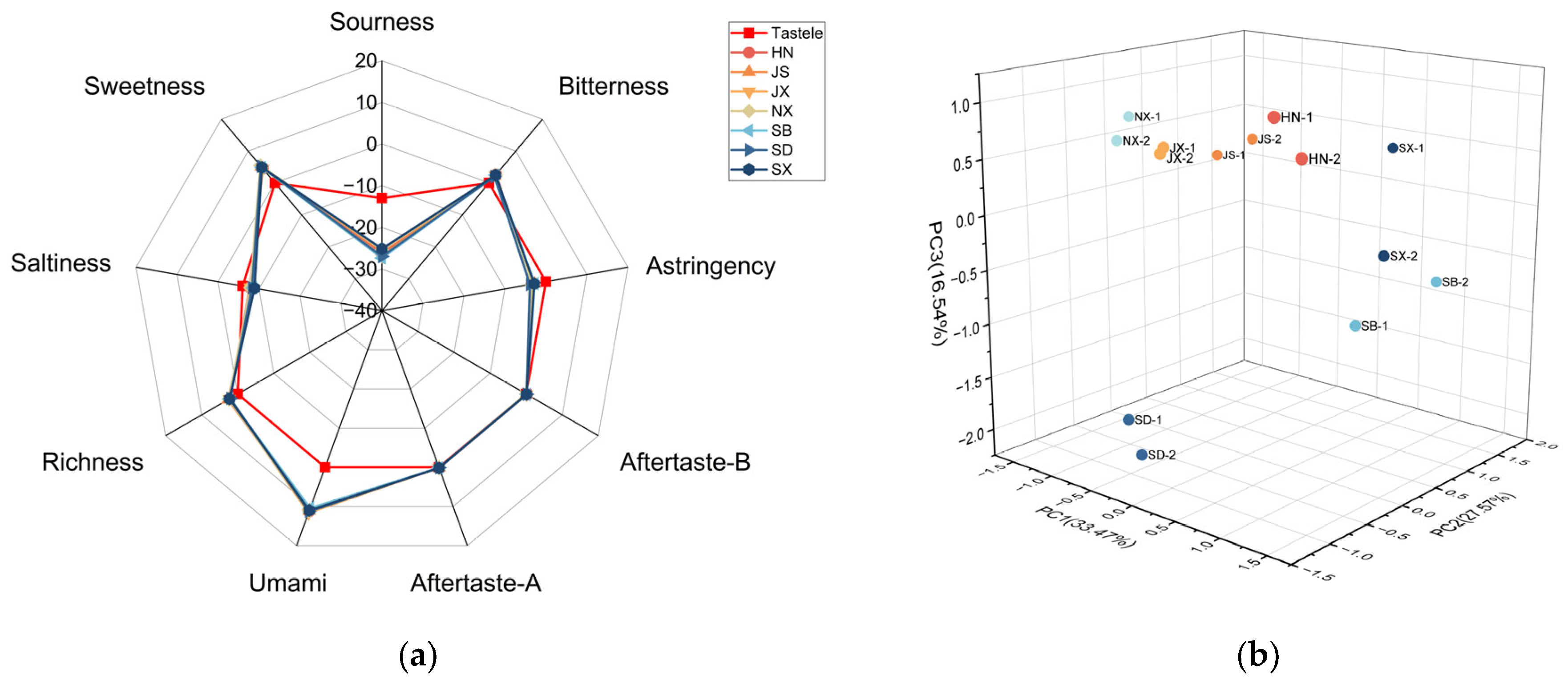
3.5. Electronic Tongue Measurement Results
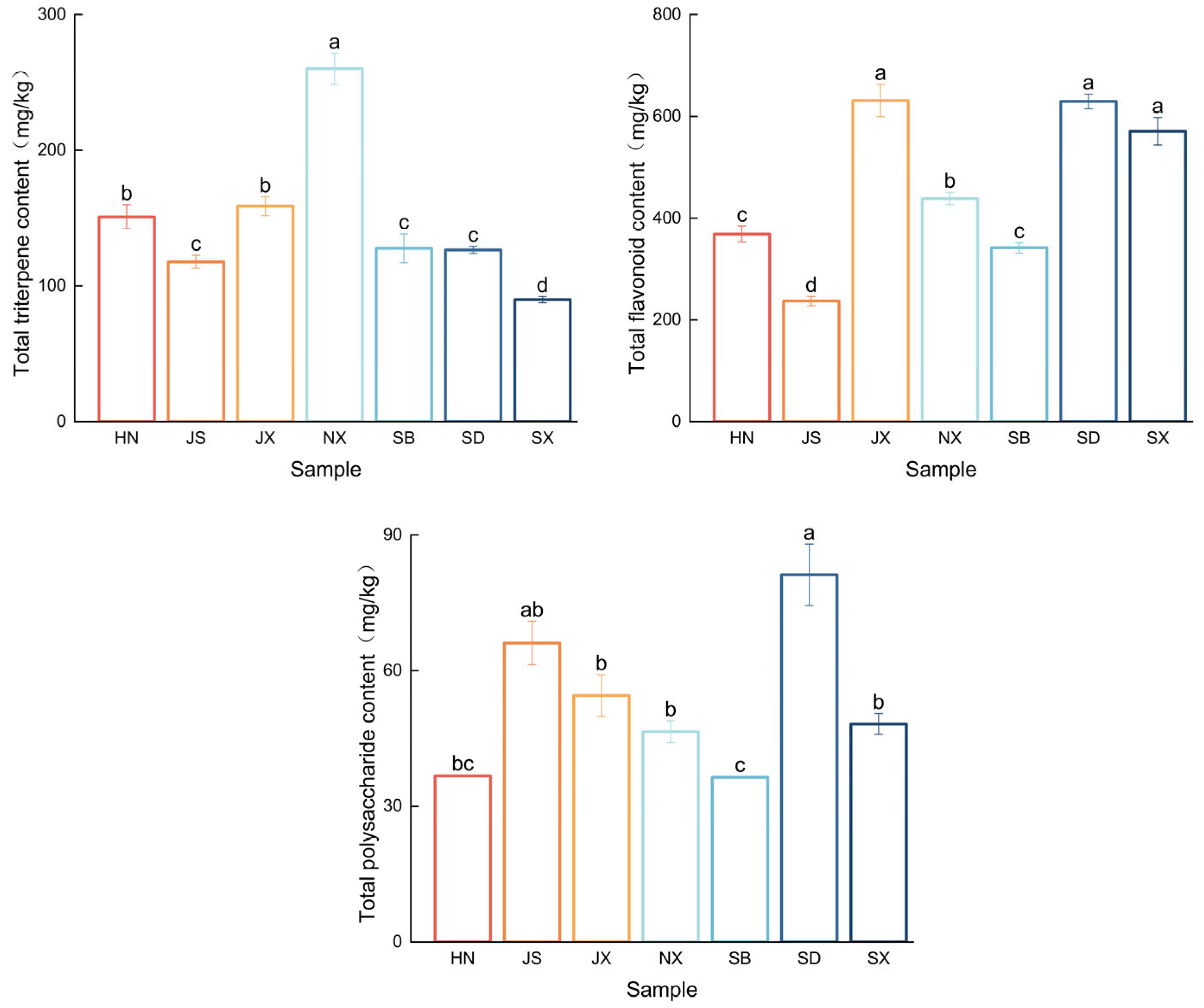
3.6. Total Triterpenes, Total Flavonoids, and Total Polysaccharides Content
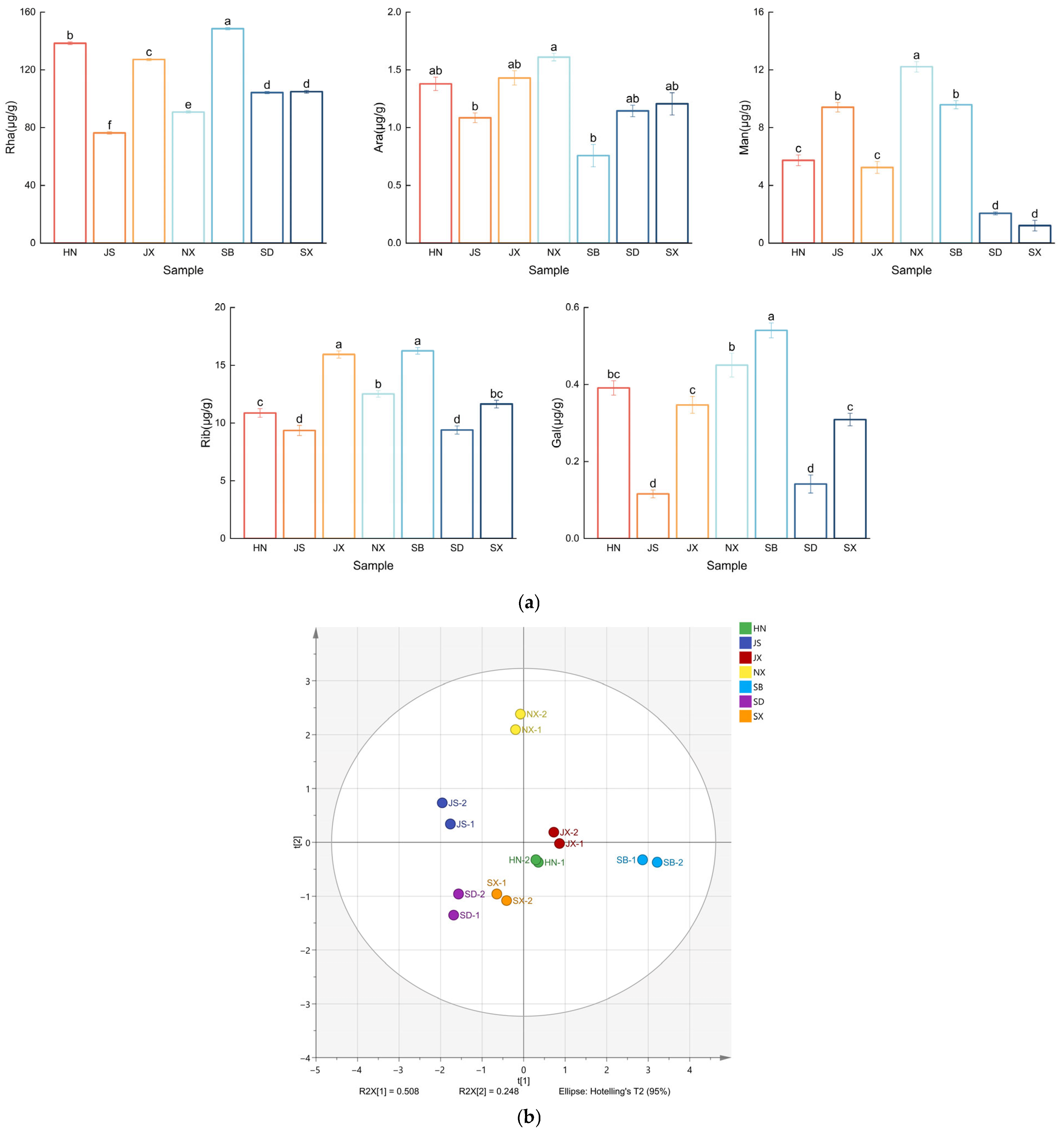
3.7. Oligosaccharide Content Analysis
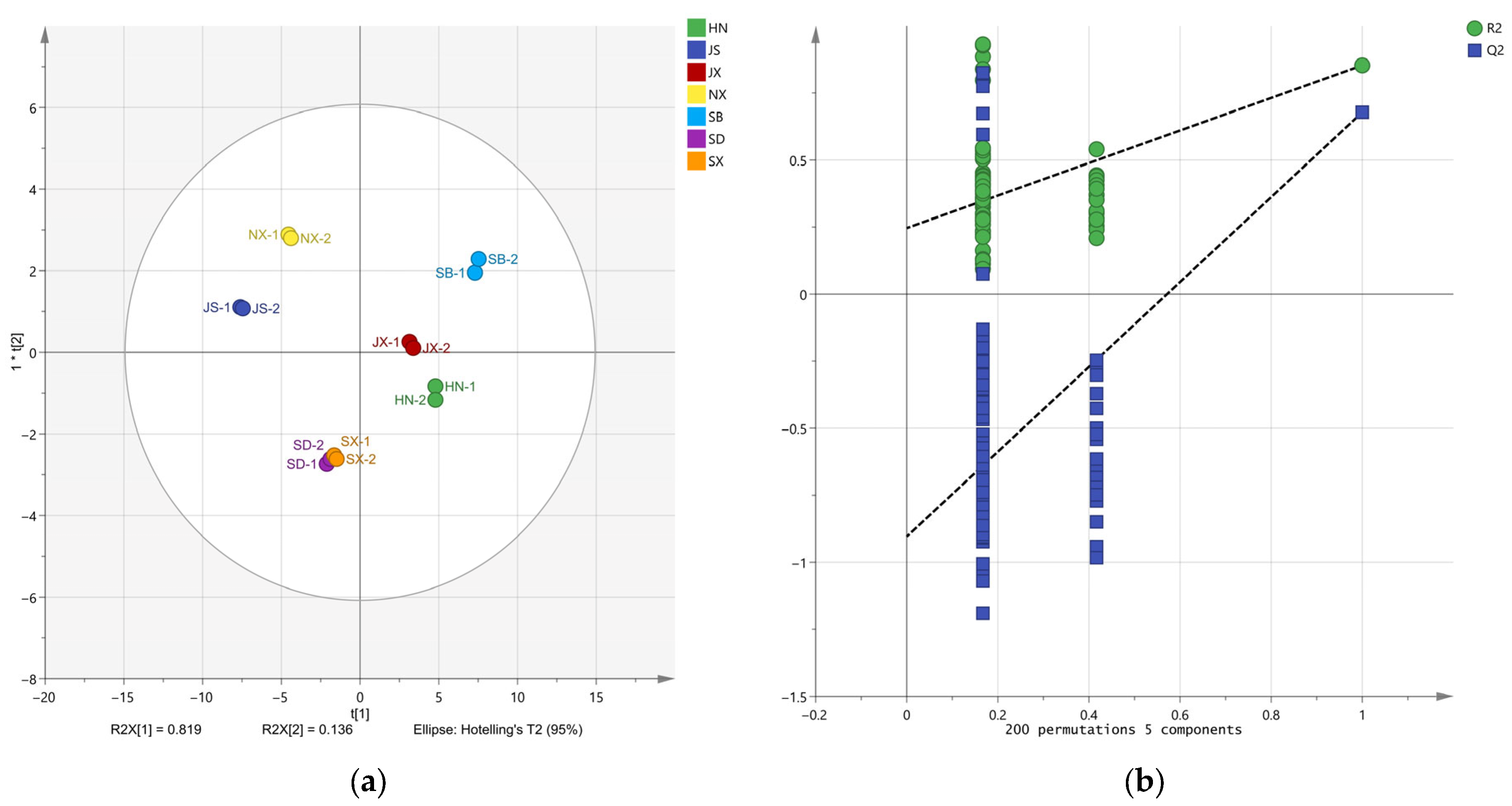
3.8. Entropy Weight TOPSIS Analysis
4. Discussion
5. Conclusions
Supplementary Materials
Author Contributions
Funding
Institutional Review Board Statement
Informed Consent Statement
Data Availability Statement
Conflicts of Interest
References
- Popstoyanova, D.; Gerasimova, A.; Gentscheva, G.; Nikolova, S.; Gavrilova, A.; Nikolova, K. Ziziphus jujuba: Applications in the Pharmacy and Food Industry. Plants 2024, 13, 2724. [Google Scholar] [CrossRef]
- Ben Ayed, R.; Hanana, M.; Ercisli, S.; Karunakaran, R.; Rebai, A.; Moreau, F. Integration of Innovative Technologies in the Agri-Food Sector: The Fundamentals and Practical Case of DNA-Based Traceability of Olives from Fruit to Oil. Plants 2022, 11, 1230. [Google Scholar] [CrossRef]
- Wu, Z.; Zhang, S.; Liu, L.; Wang, L.; Ban, Z. The Grade of Dried Jujube (Ziziphus jujuba Mill. Cv. Junzao) Affects Its Quality Attributes, Antioxidant Activity, and Volatile Aroma Components. Foods 2023, 12, 989. [Google Scholar] [CrossRef]
- Ji, X.; Zhang, S.; Jin, X.; Yin, C.; Zhang, Y.; Guo, X.; Lin, X. Systematic Comparison of Structural Characterization of Polysaccharides from Ziziphus jujuba Cv. Muzao. Molecules 2023, 28, 562. [Google Scholar] [CrossRef] [PubMed]
- Li, W.; Liang, C.; Bao, F.; Zhang, T.; Cheng, Y.; Zhang, W.; Lu, Y. Chemometric Analysis Illuminates the Relationship among Browning, Polyphenol Degradation, Maillard Reaction and Flavor Variation of 5 Jujube Fruits during Air-Impingement Jet Drying. Food Chem. X 2024, 22, 101425. [Google Scholar] [CrossRef] [PubMed]
- Liu, Y.; Sang, Y.; Guo, J.; Zhang, W.; Zhang, T.; Wang, H.; Cheng, S.; Chen, G. Analysis of Volatility Characteristics of Five Jujube Varieties in Xinjiang Province, China, by HS-SPME-GC/MS and E-nose. Food Sci. Nutr. 2021, 9, 6617–6626. [Google Scholar] [CrossRef] [PubMed]
- Huang, C.; Lu, L.; Du, J.; Huang, X. Correlation Study of Traits and Chemical Composition of Tinosporae Radix Based on “Quality Evaluation through Morphological Identification”. Chin. Tradit. Herb. Drugs 2025, 56, 1366–1376. [Google Scholar]
- Zhu, X.; Dong, W.; Zhao, Y.; Chen, P.; Li, M.; Chen, M.; Li, W.; Fei, C. Integrated Electronic Eye, Electronic Nose and High Performance Liquid Chromatography for Identification of Raw and Salt-Processed Psoralea Corylifolia Fructus. J. Pharm. Biomed. Anal. 2025, 263, 116915. [Google Scholar] [CrossRef] [PubMed]
- GB 5009.34-2022; Determination of Sulfur Dioxide in Foods. Standardization Administration of the People’s Republic of China: Beijing, China, 2022.
- Guo, X.; Yang, R.; Wang, Y.; Wang, J.; Wang, Y.; Zou, H.; Yan, Y. Prediction of Chemical Composition and Sensory Information of Codonopsis Radix Based on Electronic Nose. Molecules 2025, 30, 1146. [Google Scholar] [CrossRef]
- Zhang, X.; Wu, H.; Lin, L.; Du, X.; Tang, S.; Liu, H.; Yang, H. The Qualitative and Quantitative Assessment of Xiaochaihu Granules Based on E-Eye, e-Nose, e-Tongue and Chemometrics. J. Pharm. Biomed. Anal. 2021, 205, 114298. [Google Scholar] [CrossRef]
- Van Nguyen, H.; Trong Le, N.; Nguyen Le, N.T.; Duong, T.D.; Thuc Le, T.; Thi Nguyen, H.T.; Phung, H.T.; Thi Nguyen, H. Extraction, Purification, and Evaluation of Bioactivities of Total Triterpenoids from Persimmon (Diospyros kaki L.f.) Leaves. Process Biochem. 2024, 139, 70–80. [Google Scholar] [CrossRef]
- Wang, J.; Huang, X.; Chen, Z.; Chen, N.; Yang, M.; Liang, C.; Yu, Y.; Shi, D. Extraction and Purification of Total Flavonoids from Zanthoxylum planispinum Var. Dintanensis Leaves and Effect of Altitude on Total Flavonoids Content. Sci. Rep. 2025, 15, 7080. [Google Scholar] [CrossRef]
- Yue, F.; Zhang, J.; Xu, J.; Niu, T.; Lü, X.; Liu, M. Effects of Monosaccharide Composition on Quantitative Analysis of Total Sugar Content by Phenol-Sulfuric Acid Method. Front. Nutr. 2022, 9, 963318. [Google Scholar] [CrossRef]
- Shi, S.; Zhang, J.; Zhang, J.; Ma, S.; Hu, Y.; Zhu, H.; Wang, H.; Jiang, M.; Wang, Y. Structural Characterization of Raw and Wine-Steamed Polygonatum Cyrtonema Hua Oligosaccharides and Their Bioactivity on Immune Regulation via Modifying the Gut Microbiota. Int. Immunopharmacol. 2025, 153, 114468. [Google Scholar] [CrossRef]
- Camarero, M.C.; Briegas, B.; Corbacho, J.; Labrador, J.; Román, Á.-C.; Verde, A.; Gallardo, M.; Gomez-Jimenez, M.C. Variations in Fruit Ploidy Level and Cell Size between Small- and Large-Fruited Olive Cultivars during Fruit Ontogeny. Plants 2024, 13, 990. [Google Scholar] [CrossRef] [PubMed]
- Li, H.; Suo, Y.; Li, H.; Sun, P.; Li, S.; Yuan, D.; Han, W.; Fu, J. Cytological and Transcriptome Analyses Provide Insights into Persimmon Fruit Size Formation (Diospyros kaki Thunb.). Int. J. Mol. Sci. 2024, 25, 7238. [Google Scholar] [CrossRef] [PubMed]
- Duan, Y.; Liu, S.; Zhu, Y.; Wang, Y.; Yan, F.; Liu, Z.; Shi, X.; Liu, P.; Liu, M. The Influences of Soil and Meteorological Factors on the Growth and Fruit Quality of Chinese Jujube (Ziziphus jujuba Mill.). Plants 2023, 12, 4107. [Google Scholar] [CrossRef] [PubMed]
- Pandey, S.K.; Maurya, J.P.; Aryal, B.; Drynda, K.; Nair, A.; Miskolczi, P.; Singh, R.K.; Wang, X.; Ma, Y.; De Souza Moraes, T.; et al. A Regulatory Module Mediating Temperature Control of Cell-Cell Communication Facilitates Tree Bud Dormancy Release. EMBO J. 2024, 43, 5793–5812. [Google Scholar] [CrossRef] [PubMed]
- Jia, H.; Wang, X.; Sun, W.; Mu, X.; Gao, P.; Zhao, G.; Li, Z. Estimation of Soil Erosion and Evaluation of Soil and Water Conservation Benefit in Terraces under Extreme Precipitation. Water 2022, 14, 1675. [Google Scholar] [CrossRef]
- Sibeko, D.S.; Shikwambana, K.; Mathaba, N. Effect of Ripening Temperature on Early-Season “hass” Avocado Fruit Exocarp Colour Development and Pigmentation during Ripening. Hortic. Sci. 2024, 51, 152–159. [Google Scholar] [CrossRef]
- Welsch, R.; Beyer, P.; Hugueney, P.; Kleinig, H.; von Lintig, J. Regulation and Activation of Phytoene Synthase, a Key Enzyme in Carotenoid Biosynthesis, during Photomorphogenesis. Planta 2000, 211, 846–854. [Google Scholar] [CrossRef]
- Liu, X.; Huang, Q.; Liang, Y.; Lu, Z.; Liu, W.; Yuan, H.; Li, H. Genome-Wide Identification and Expression Analysis of ‘NanGuo’ Pear Revealed Key MYB Transcription Factor Family Genes Involved in Anthocyanin Accumulation. Horticulturae 2024, 10, 989. [Google Scholar] [CrossRef]
- Arias, L.A.; Berli, F.; Fontana, A.; Bottini, R.; Piccoli, P. Climate Change Effects on Grapevine Physiology and Biochemistry: Benefits and Challenges of High Altitude as an Adaptation Strategy. Front. Plant Sci. 2022, 13, 835425. [Google Scholar] [CrossRef] [PubMed]
- Dabravolski, S.A.; Isayenkov, S.V. The Role of Anthocyanins in Plant Tolerance to Drought and Salt Stresses. Plants 2023, 12, 2558. [Google Scholar] [CrossRef]
- Gao, X.; Huo, H.; Bao, H.; Wang, J.; Gao, D. Changes of Active Substances in Ganoderma Lucidum during Different Growth Periods and Analysis of Their Molecular Mechanism. Molecules 2024, 29, 2591. [Google Scholar] [CrossRef] [PubMed]
- He, Y.; Hao, Q.; Chen, P.; Qin, Y.; Peng, M.; Yao, S.; He, X.; Yu, Q.; Agassin, R.H.; Ji, K. Cloning of PmMYB6 in Pinus Massoniana and an Analysis of Its Function. Int. J. Mol. Sci. 2023, 24, 13766. [Google Scholar] [CrossRef] [PubMed]
- Hao, J.; Lou, P.; Han, Y.; Zheng, L.; Lu, J.; Chen, Z.; Ni, J.; Yang, Y.; Xu, M. Ultraviolet-B Irradiation Increases Antioxidant Capacity of Pakchoi (Brassica rapa L.) by Inducing Flavonoid Biosynthesis. Plants 2022, 11, 766. [Google Scholar] [CrossRef] [PubMed]
- Tan, X.; Li, H.; Zhang, Z.; Yang, Y.; Jin, Z.; Chen, W.; Tang, D.; Wei, C.; Tang, Q. Characterization of the Difference between Day and Night Temperatures on the Growth, Photosynthesis, and Metabolite Accumulation of Tea Seedlings. Int. J. Mol. Sci. 2023, 24, 6718. [Google Scholar] [CrossRef]
- Di, P.; Yang, X.; Wan, M.; Han, M.; Zhang, Y.; Yang, L. Integrative Metabolomic and Transcriptomic Reveals Potential Mechanism for Promotion of Ginsenoside Synthesis in Panax Ginseng Leaves under Different Light Intensities. Front. Bioeng. Biotechnol. 2023, 11, 1298501. [Google Scholar] [CrossRef] [PubMed]
- Iqbal, M.A.; Khan, M.A.; Azam, M.; Bhatti, M.I.N.; Feroze, M.A.; Zulfiqar, B.; Umar, H.; Asif, M. Seasonal Fluctuations of N, P and K in Leaves Influenced Nutrient Requirement during Fruit Development Stages in Different Olive Genotypes. Braz. Arch. Biol. Technol. 2022, 65, e22210347. [Google Scholar] [CrossRef]
- Maluleke, M.K.; Moja, S.J.; Nyathi, M.; Modise, D.M. Nutrient Concentration of African Horned Cucumber (Cucumis metuliferus L.) Fruit under Different Soil Types, Environments, and Varying Irrigation Water Levels. Horticulturae 2021, 7, 76. [Google Scholar] [CrossRef]
- Jiang, C.; Ge, J.; He, B.; Zhang, Z.; Hu, Z.; Li, Y.; Zeng, B. Transcriptomic Analysis Reveals Aspergillus Oryzae Responds to Temperature Stress by Regulating Sugar Metabolism and Lipid Metabolism. PLoS ONE 2022, 17, e0274394. [Google Scholar] [CrossRef]
- Morales-Solis, A.; Pérez-López, A.; Ramírez-Guzmán, M.E.; Espinosa-Solares, T.; Alia-Tejacal, I. ARIMAX Modelling: Response of Hass Avocado Respiration Rate to Environmental Factors. Horticulturae 2024, 10, 700. [Google Scholar] [CrossRef]
- Li, Y.; Ye, Z.; Li, Q. Precise Identification of Food Smells to Enable Human–Computer Interface for Digital Smells. Electronics 2023, 12, 418. [Google Scholar] [CrossRef]
- Brosset, A.; Blande, J.D. Volatile-Mediated Plant–Plant Interactions: Volatile Organic Compounds as Modulators of Receiver Plant Defence, Growth, and Reproduction. J. Exp. Bot. 2022, 73, 511–528. [Google Scholar] [CrossRef] [PubMed]
- Yao, S.; Li, L.; Xiong, H.; Zhang, P.; Ju, T.; Chen, Z.; Zheng, L. The Involvement of Arbuscular Mycorrhizal Fungi in Modulating Polyamine Metabolism and Low-Temperature Tolerance Enhancement in White Clover. Front. Plant Sci. 2025, 16, 1571852. [Google Scholar] [CrossRef] [PubMed]
- Raza, A.; Charagh, S.; Abbas, S.; Hassan, M.U.; Saeed, F.; Haider, S.; Sharif, R.; Anand, A.; Corpas, F.J.; Jin, W.; et al. Assessment of Proline Function in Higher Plants under Extreme Temperatures. Plant Biol. 2023, 25, 379–395. [Google Scholar] [CrossRef] [PubMed]
- Dias, M.C.; Pinto, D.C.G.A.; Costa, M.; Araújo, M.; Santos, C.; Silva, A.M.S. Phytochemical and Antioxidant Profile of the Medicinal Plant Melia Azedarach Subjected to Water Deficit Conditions. Int. J. Mol. Sci. 2022, 23, 13611. [Google Scholar] [CrossRef] [PubMed]
- Zhang, S.; Wu, S.; Yu, Q.; Shan, X.; Chen, L.; Deng, Y.; Hua, J.; Zhu, J.; Zhou, Q.; Jiang, Y.; et al. The Influence of Rolling Pressure on the Changes in Non-Volatile Compounds and Sensory Quality of Congou Black Tea: The Combination of Metabolomics, E-Tongue, and Chromatic Differences Analyses. Food Chem. X 2023, 20, 100989. [Google Scholar] [CrossRef]
- Ma, W.-F.; Li, Y.-B.; Nai, G.-J.; Liang, G.-P.; Ma, Z.-H.; Chen, B.-H.; Mao, J. Changes and Response Mechanism of Sugar and Organic Acids in Fruits under Water Deficit Stress. PeerJ 2022, 10, e13691. [Google Scholar] [CrossRef]
- Li, S.; Shen, Y.; Zheng, S.; Zhu, Q.; Cai, L.; Wang, Y.; Zhao, X. ZjFAS2 Is Involved in the Fruit Coloration in Ziziphus jujuba Mill. by Regulating Anthocyanin Accumulation. Front. Plant Sci. 2023, 14, 1142757. [Google Scholar] [CrossRef] [PubMed]
- Wang, Y.; Shan, W.; Li, Y.; Han, Y.; Li, X.; Wang, C. Improving Hawthorn Fruit Pulp Processing and Quality through Optimized Freeze-Thaw Cycles. J. Food Compos. Anal. 2025, 137, 106882. [Google Scholar] [CrossRef]
- Nurhayati, N.; Apriyanto, M. Sensory Evaluation of Chocolate Bar Production Materials of Dry Cocoa Seeds in Various Fermentation Treatments. Czech J. Food Sci. 2021, 39, 58–62. [Google Scholar] [CrossRef]
- Zhou, Y.; Chen, C.; Yuan, J.; Xue, J.; Chen, H.; Liu, X.; Cai, Z.; Wu, N.; Yang, W.; Cheng, J. A Study for Quality Evaluation of Lysimachiae Herba from Different Origins Based on Fingerprint-Activity Relationship Modeling and Multi-Component Content Determination. J. Ethnopharmacol. 2024, 325, 117840. [Google Scholar] [CrossRef] [PubMed]
- Yang, R.; Yang, Y.; Hu, Y.; Yin, L.; Qu, P.; Wang, P.; Mu, X.; Zhang, S.; Xie, P.; Cheng, C.; et al. Comparison of Bioactive Compounds and Antioxidant Activities in Differentially Pigmented Cerasus Humilis Fruits. Molecules 2023, 28, 6272. [Google Scholar] [CrossRef]
- Song, H.; Zhang, Z.; Li, Y.; Zhang, Y.; Yang, L.; Wang, S.; He, Y.; Liu, J.; Zhu, D.; Liu, H. Effects of Different Enzyme Extraction Methods on the Properties and Prebiotic Activity of Soybean Hull Polysaccharides. Heliyon 2022, 8, e11053. [Google Scholar] [CrossRef]
- Hill, D.R.; Chow, J.M.; Buck, R.H. Multifunctional Benefits of Prevalent HMOs: Implications for Infant Health. Nutrients 2021, 13, 3364. [Google Scholar] [CrossRef] [PubMed]
- Amorim, C.; Cardoso, B.B.; Silvério, S.C.; Silva, J.C.; Alves, J.I.; Pereira, M.A.; Moreira, R.; Rodrigues, L.R. Designing a Functional Rice Muffin Formulated with Prebiotic Oligosaccharides and Sugar Reduction. Food Biosci. 2021, 40, 100858. [Google Scholar] [CrossRef]



| Sample | Origin | Growth Pattern | Sample | Origin | Growth Pattern |
|---|---|---|---|---|---|
| HN-1 | Henan | Cultivation | NX-2 | Ningxia | Cultivation |
| HN-2 | Henan | Cultivation | SB-1 | Shaanxi | Cultivation |
| JS-1 | Jiangsu | Cultivation | SB-2 | Shaanxi | Cultivation |
| JS-2 | Jiangsu | Cultivation | SD-1 | Shandong | Cultivation |
| JX-1 | Jiangxi | Cultivation | SD-2 | Shandong | Cultivation |
| JX-2 | Jiangxi | Cultivation | SX-1 | Shanxi | Cultivation |
| NX-1 | Ningxia | Cultivation | SX-2 | Shanxi | Cultivation |
| Origin | Annual Mean Temperature/°C | Total Precipitation/mm | Annual Average Sunshine Hours/h | Harvesting Period |
|---|---|---|---|---|
| Henan | 14.4 | 558.8 | 2174.0 | mid-to-late September |
| Jiangsu | 15.4 | 1140.0 | 2182.4 | mid-October |
| Jiangxi | 17.9 | 1735.0 | 1664.6 | early October |
| Ningxia | 9.9 | 168.0 | 2990.0 | mid-September |
| Shaanxi | 13.2 | 745.0 | 1980.0 | late September |
| Shandong | 12.4 | 578.2 | 2605.2 | late September |
| Shanxi | 11.6 | 528.0 | 2807.0 | mid-September |
| Number | Sensor | Performance |
|---|---|---|
| 1 | W1C | Sensitive to aromatic compounds |
| 2 | W5S | High sensitivity, responsive to nitrogen oxides |
| 3 | W3C | Ammonia solution, sensitive to aromatic components |
| 4 | W6S | Primarily selective for hydrogen gas |
| 5 | W5C | Sensitive to alkane and aromatic components |
| 6 | W1S | Sensitive to methane and other short-chain alkanes |
| 7 | W1W | Sensitive to sulfides |
| 8 | W2S | Sensitive to alcohols, ethers, aldehydes, and ketones |
| 9 | W2W | Sensitive to aromatic compounds and organosulfur compounds |
| 10 | W3S | Sensitive to alkanes |
| Time/min | A % (Potassium Dihydrogen Phosphate) | B % (Acetonitrile) |
|---|---|---|
| 0 | 82 | 18 |
| 22 | 82 | 18 |
| 30 | 60 | 40 |
| 32 | 60 | 40 |
| 33 | 82 | 18 |
| Appearance Traits | Length | Width | Weight | |
|---|---|---|---|---|
| Sample | ||||
| HN | 28.27 ± 2.76 c | 19.37 ± 1.07 c | 3.98 ± 0.70 d | |
| JS | 29.83 ± 2.44 b | 19.67 ± 1.06 c | 3.85 ± 0.57 d | |
| JX | 30.70 ± 2.88 b | 21.00 ± 1.55 b | 4.41 ± 0.81 c | |
| NX | 29.69 ± 2.32 bc | 19.10 ± 1.54 c | 3.61 ± 0.69 d | |
| SB | 31.35 ± 3.19 b | 21.73 ± 1.26 b | 4.92 ± 0.94 b | |
| SD | 31.32 ± 2.72 b | 21.19 ± 1.35 b | 5.10 ± 0.96 b | |
| SX | 34.67 ± 3.88 a | 24.61 ± 3.25 a | 6.15 ± 1.84 a | |
| Chromaticity | L* | a* | b* | ΔE | |
|---|---|---|---|---|---|
| Sample | |||||
| HN | 63.45 ± 0.38 d | 7.19 ± 0.02 c | 14.34 ± 0.06 e | 2.34 ± 0.12 c | |
| JS | 65.33 ± 0.27 a | 7.33 ± 0.14 b | 14.18 ± 0.46 ef | 3.32 ± 0.08 b | |
| JX | 64.60 ± 0.41 c | 7.60 ± 0.37 b | 14.67 ± 0.20 d | 2.44 ± 0.04 c | |
| NX | 62.73 ± 0.20 e | 6.51 ± 0.09 e | 15.06 ± 0.03 c | 2.40 ± 0.07 c | |
| SB | 65.05 ± 0.10 b | 8.26 ± 0.20 a | 15.59 ± 0.10 a | 2.15 ± 0.08 d | |
| SD | 61.83 ± 0.07 f | 5.05 ± 0.08 f | 14.15 ± 0.02 f | 4.25 ± 0.05 a | |
| SX | 63.15 ± 0.02 d | 6.68 ± 0.02 d | 15.16 ± 0.01 b | 2.19 ± 0.02 d | |
Disclaimer/Publisher’s Note: The statements, opinions and data contained in all publications are solely those of the individual author(s) and contributor(s) and not of MDPI and/or the editor(s). MDPI and/or the editor(s) disclaim responsibility for any injury to people or property resulting from any ideas, methods, instructions or products referred to in the content. |
© 2025 by the authors. Licensee MDPI, Basel, Switzerland. This article is an open access article distributed under the terms and conditions of the Creative Commons Attribution (CC BY) license (https://creativecommons.org/licenses/by/4.0/).
Share and Cite
Pei, T.; Ji, J.; Gong, H.; Yue, R.; Zhang, J.; Ma, X.; Lin, L.; Jin, L. Quality Differences in Ziziphus jujuba Mill. cv. Jinsi from Different Geographical Origins: A Comprehensive Multi-Indicator and Multivariate Statistical Evaluation. Agriculture 2025, 15, 2570. https://doi.org/10.3390/agriculture15242570
Pei T, Ji J, Gong H, Yue R, Zhang J, Ma X, Lin L, Jin L. Quality Differences in Ziziphus jujuba Mill. cv. Jinsi from Different Geographical Origins: A Comprehensive Multi-Indicator and Multivariate Statistical Evaluation. Agriculture. 2025; 15(24):2570. https://doi.org/10.3390/agriculture15242570
Chicago/Turabian StylePei, Tianrui, Jie Ji, Huaqian Gong, Ronghua Yue, Jialing Zhang, Xiaohui Ma, Li Lin, and Ling Jin. 2025. "Quality Differences in Ziziphus jujuba Mill. cv. Jinsi from Different Geographical Origins: A Comprehensive Multi-Indicator and Multivariate Statistical Evaluation" Agriculture 15, no. 24: 2570. https://doi.org/10.3390/agriculture15242570
APA StylePei, T., Ji, J., Gong, H., Yue, R., Zhang, J., Ma, X., Lin, L., & Jin, L. (2025). Quality Differences in Ziziphus jujuba Mill. cv. Jinsi from Different Geographical Origins: A Comprehensive Multi-Indicator and Multivariate Statistical Evaluation. Agriculture, 15(24), 2570. https://doi.org/10.3390/agriculture15242570