Ulmus pumila Linné (Ulmi) Extract Attenuates Inflammatory Responses in Atopic Dermatitis by Modulating Lipid Peroxidation and Oxidative Stress
 ,
,  , ,
, ,  ,
,
Abstract
1. Introduction
2. Materials and Methods
2.1. Extraction and Sampling
2.2. Animals and Experiments
2.3. Hematoxylin and Eosin (H&E) Staining
2.4. Immunohistochemistry (IHC) Staining
2.5. Cell Culture Maintenance
2.6. HaCaT Cell Viability
2.7. Evaluation of Intracellular ROS Production by DCF-DA Assay in HaCaT Cell
2.8. Protein Extraction and Western Blotting
2.9. Antioxidant Capacity Analysis
2.10. Total Polyphenol and Flavonoid Content
2.11. LC-QTOF-MS/MS Analysis Conditions
2.12. Molecular Docking Analysis
2.13. Statistical Analysis
3. Results
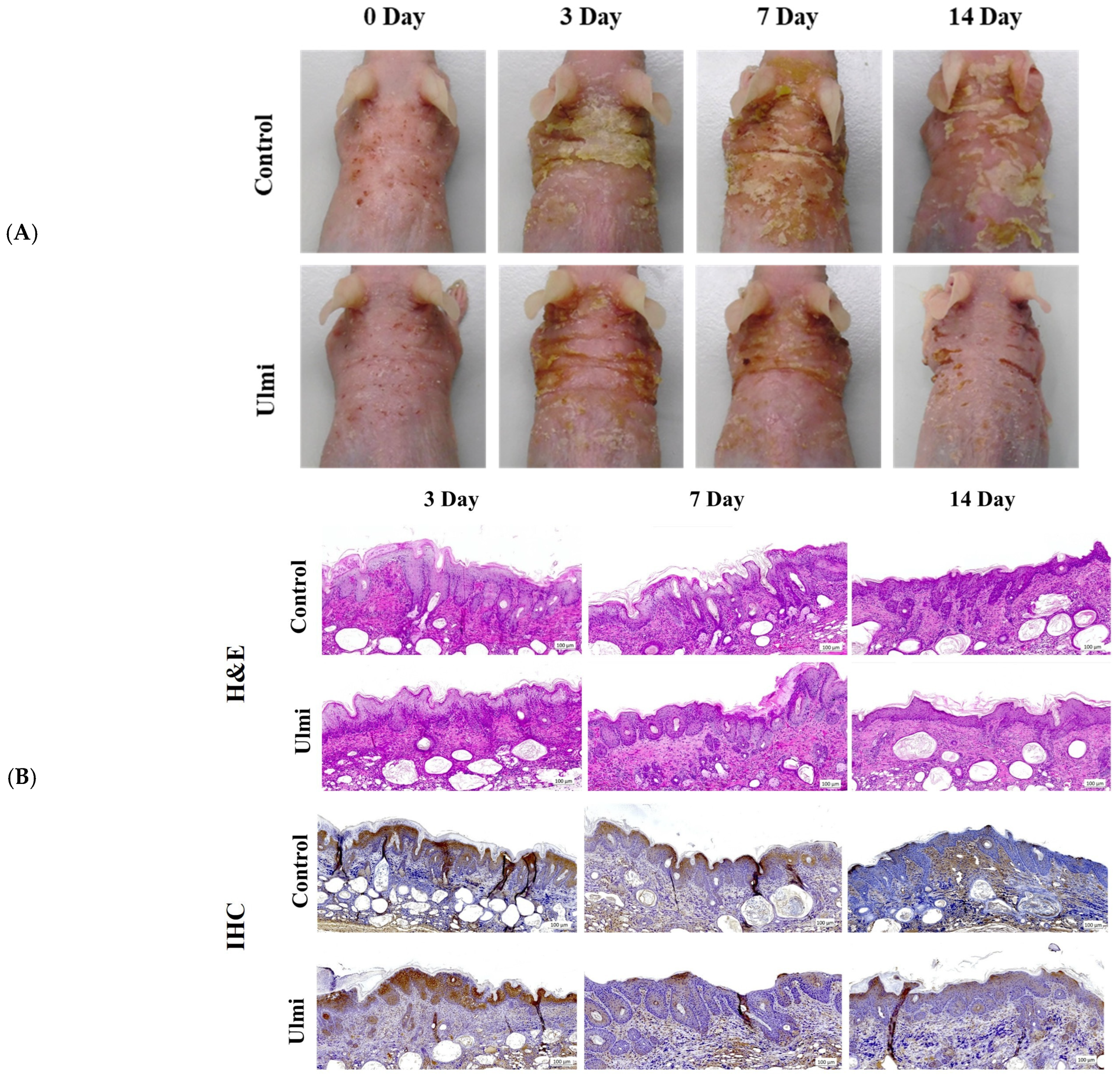
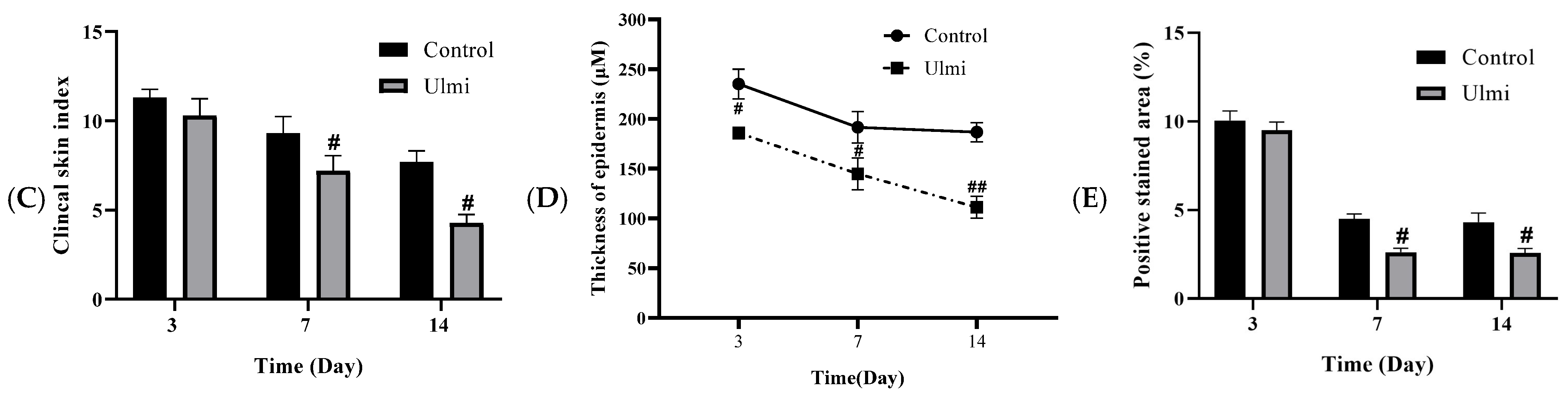
3.1. Effect of Ulmi on Skin Inflammation, Clinical Skin Index, Epidermal Thickness, and Inflammatory Response in DNCB-Induced SKH-1 Mice
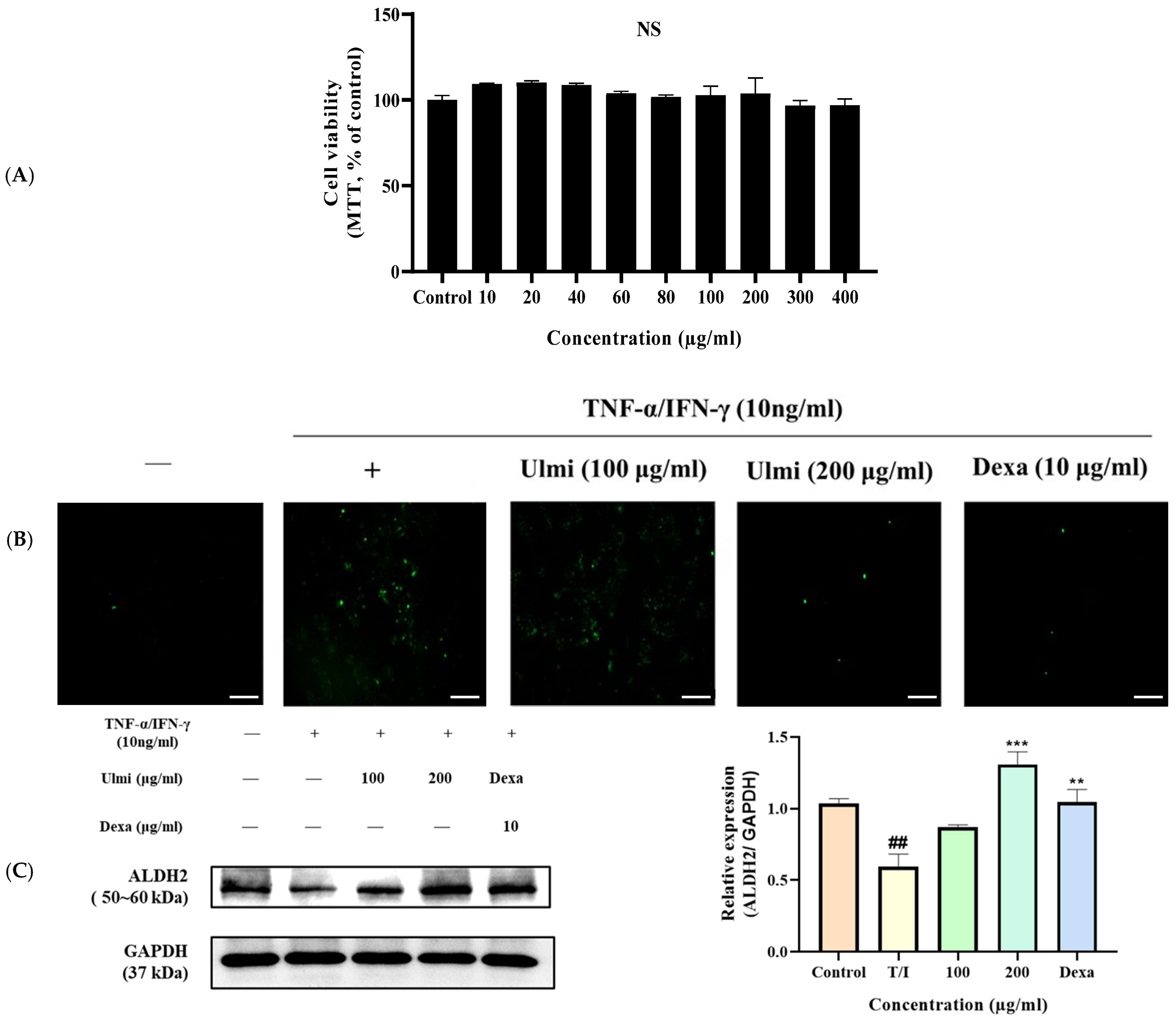
3.2. Ulmi Activates ALDH2 in TNF-α/IFN-γ Induced Oxidative Stress Conditions
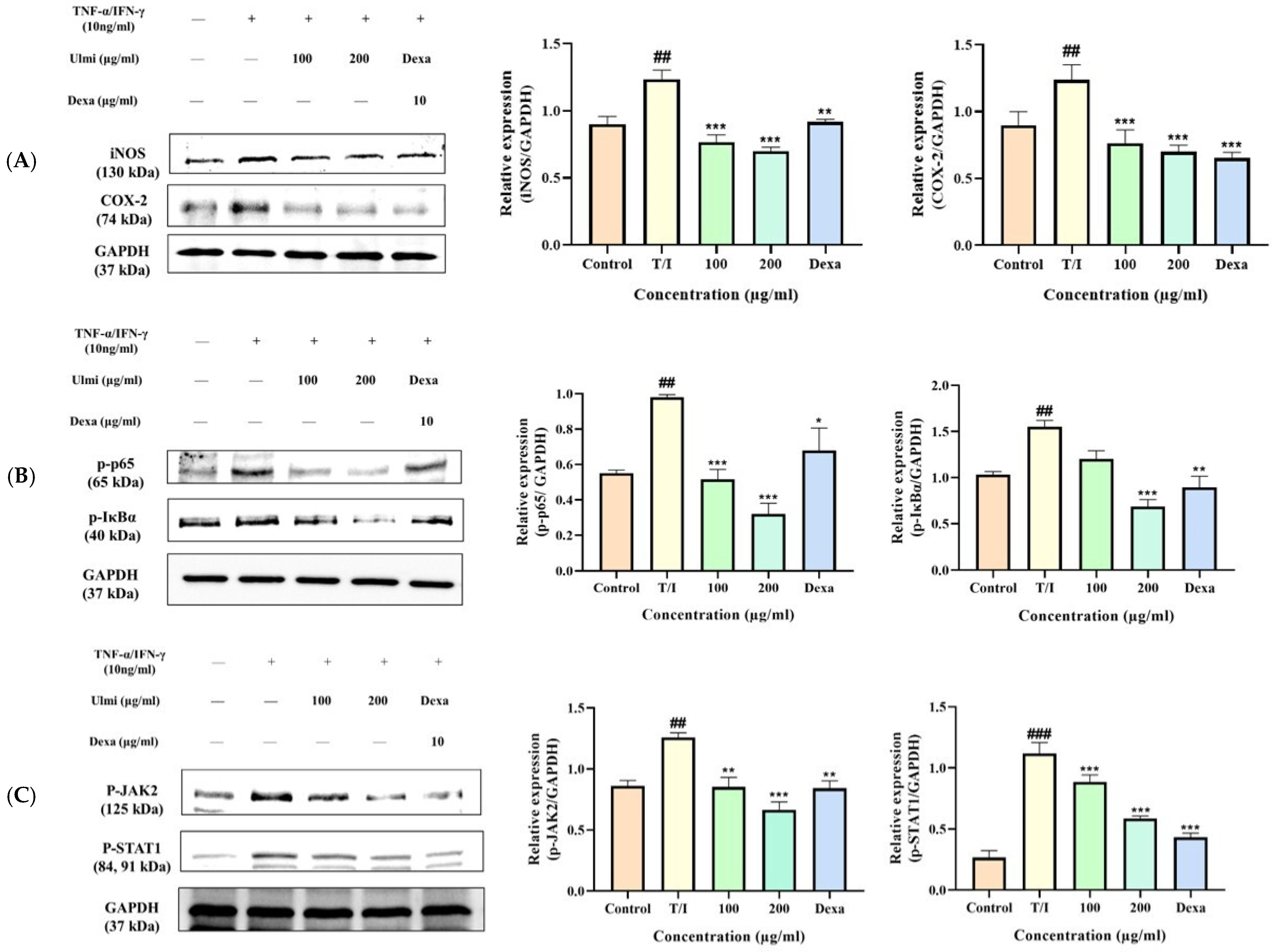
3.3. Ulmi Extract Attenuates Pro-Inflammatory Mediator Expression via Inhibition of NF-κB and JAK/STAT Pathway Activation in TNF-α/IFN-γ-Stimulated HaCaT Cells
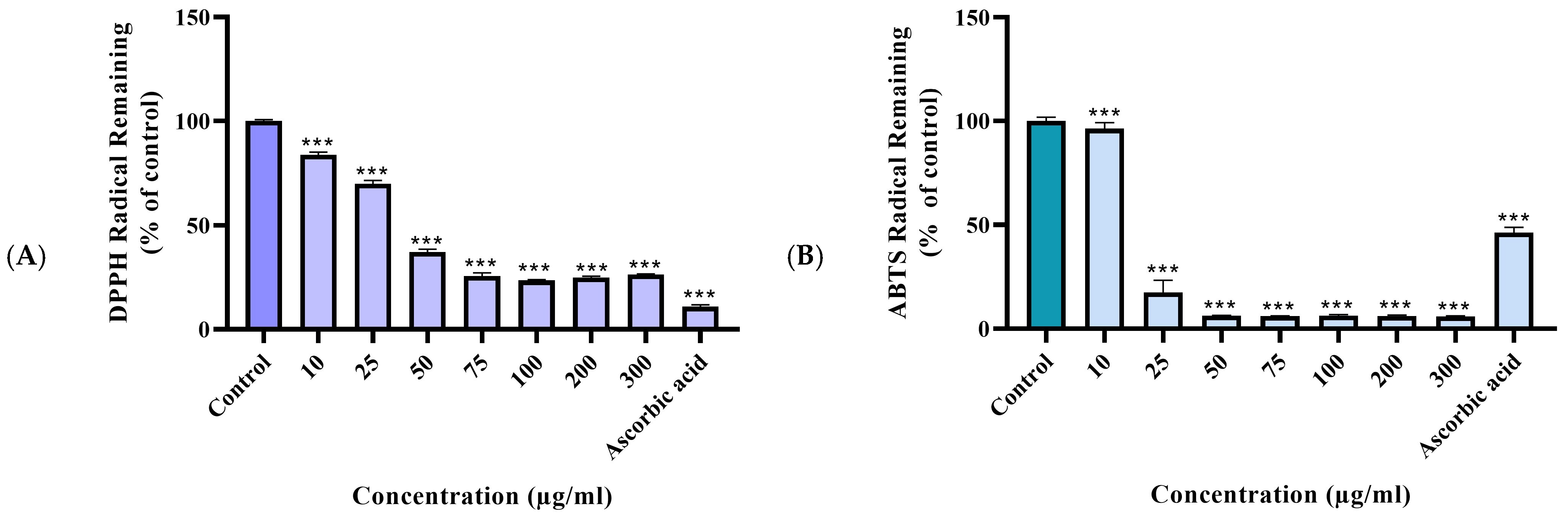
3.4. TPC, TFC, Antioxidant of Ulmi
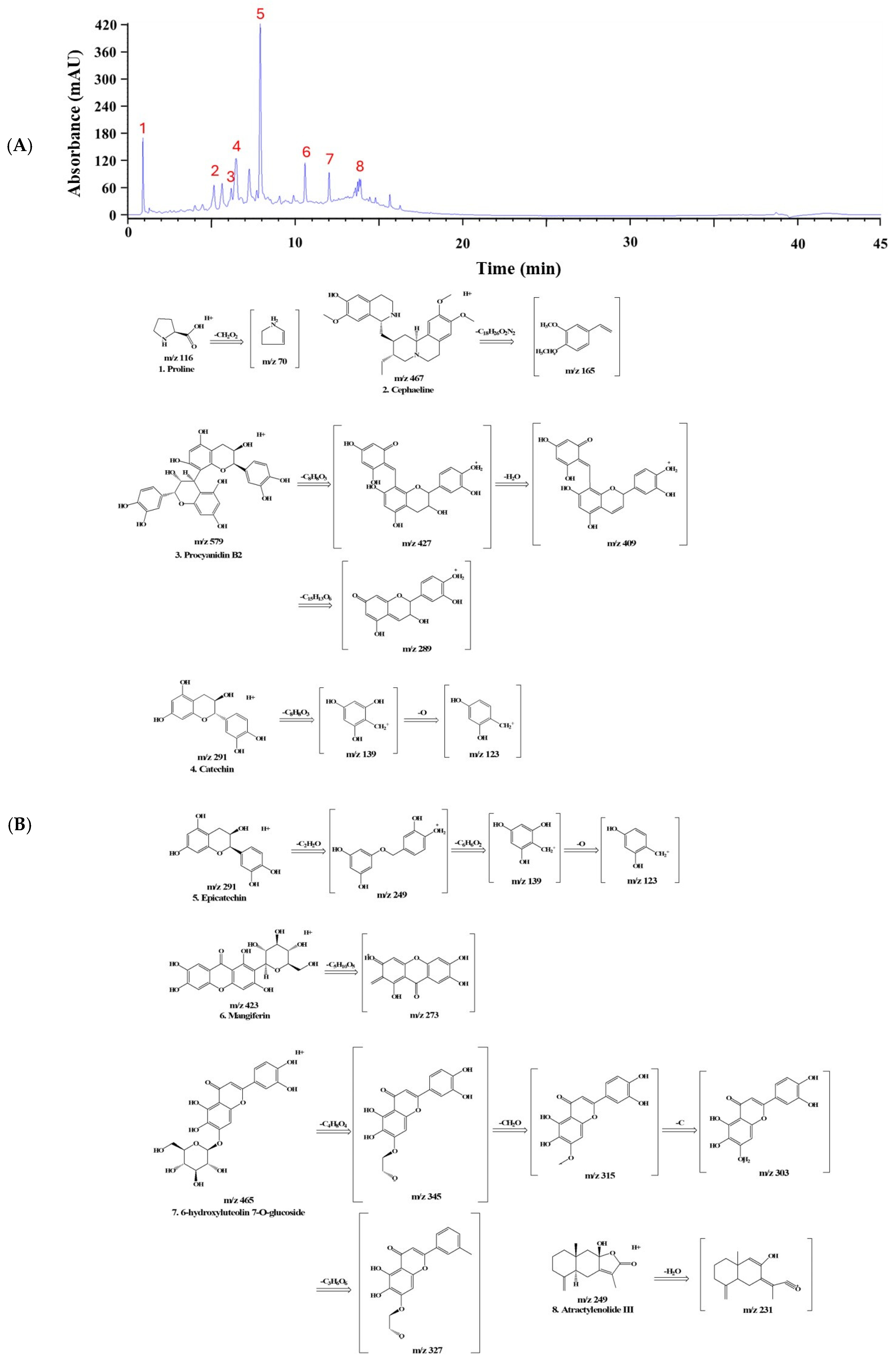
3.5. LC-QTOF-MS-MS Analysis of Ulmi Components
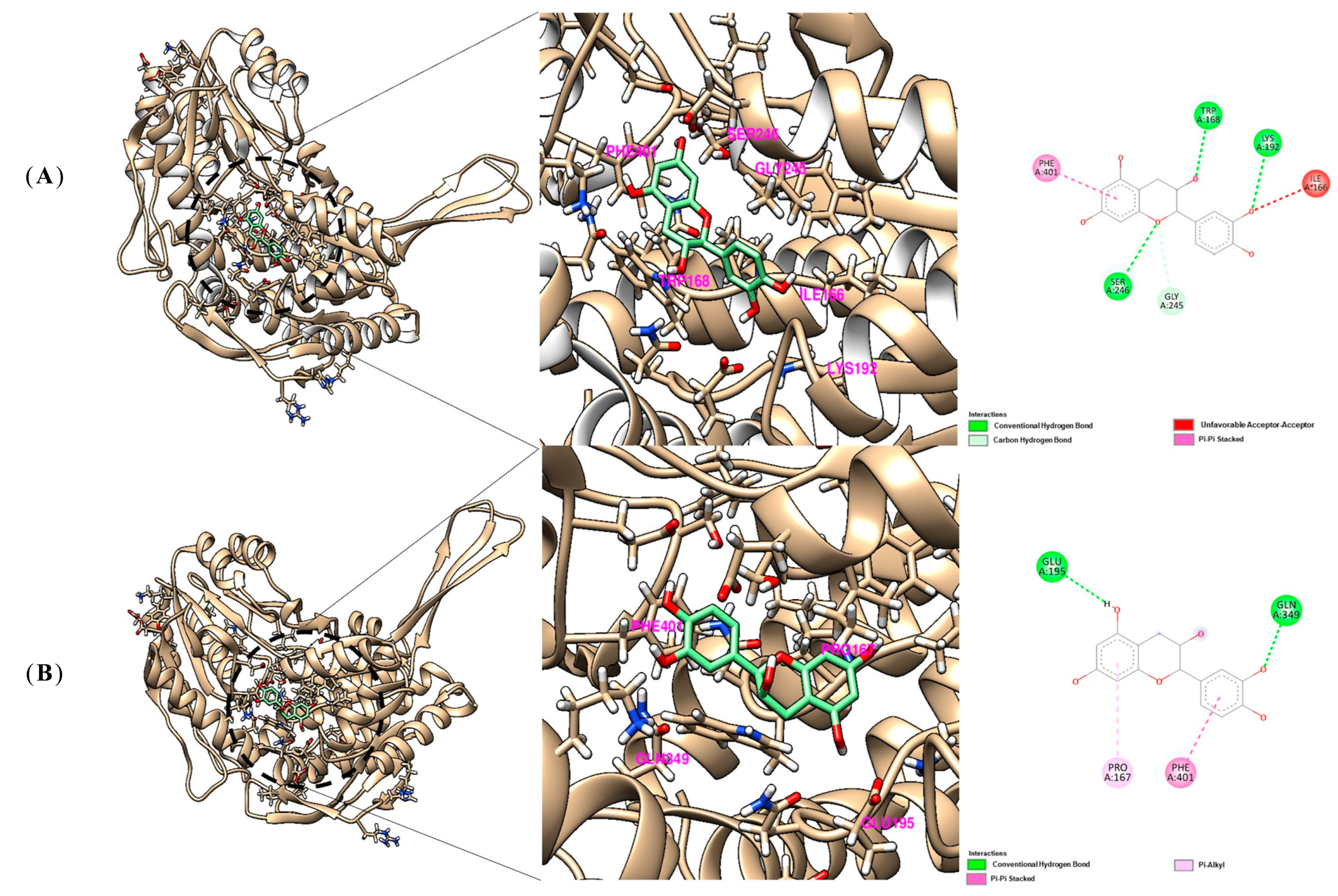
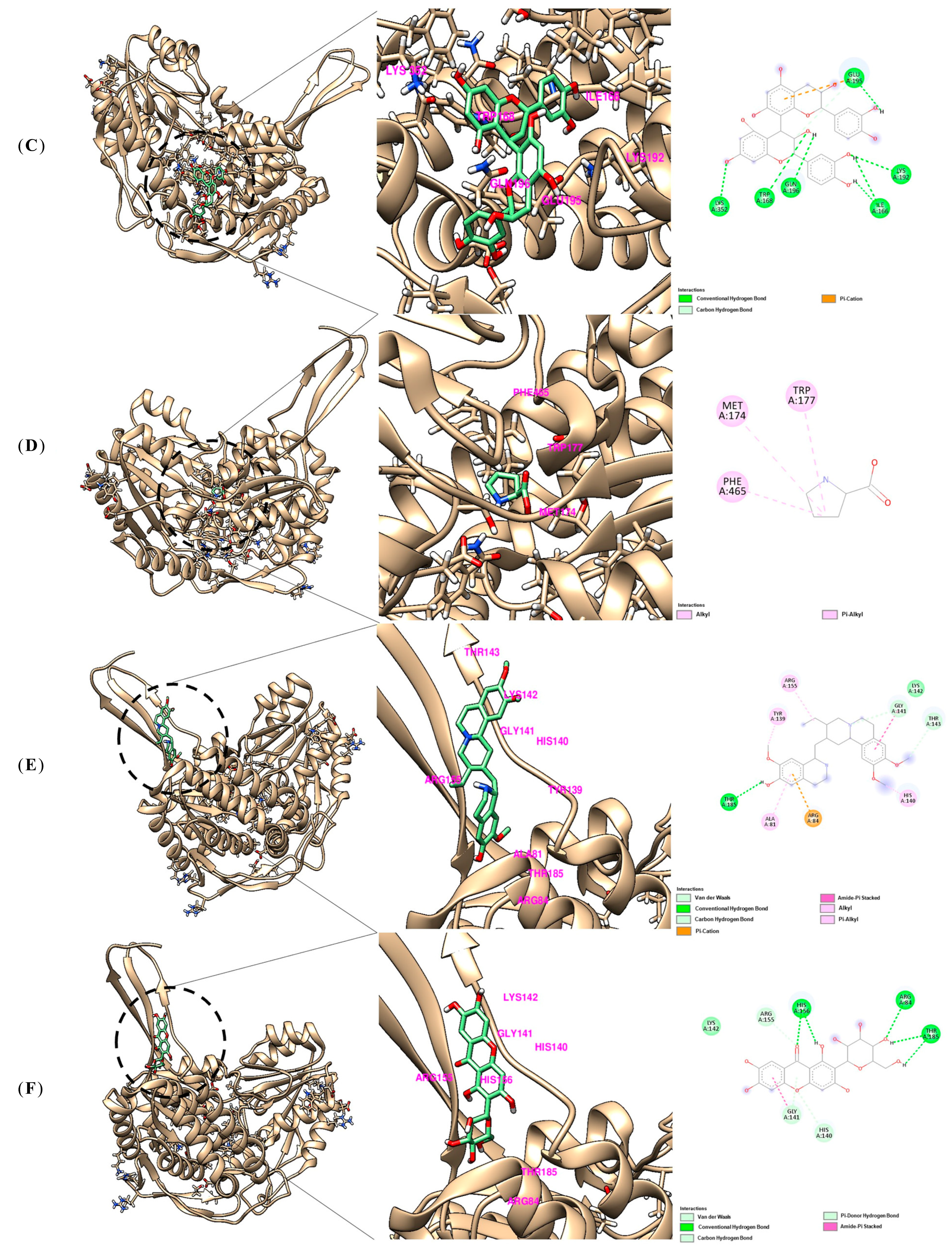
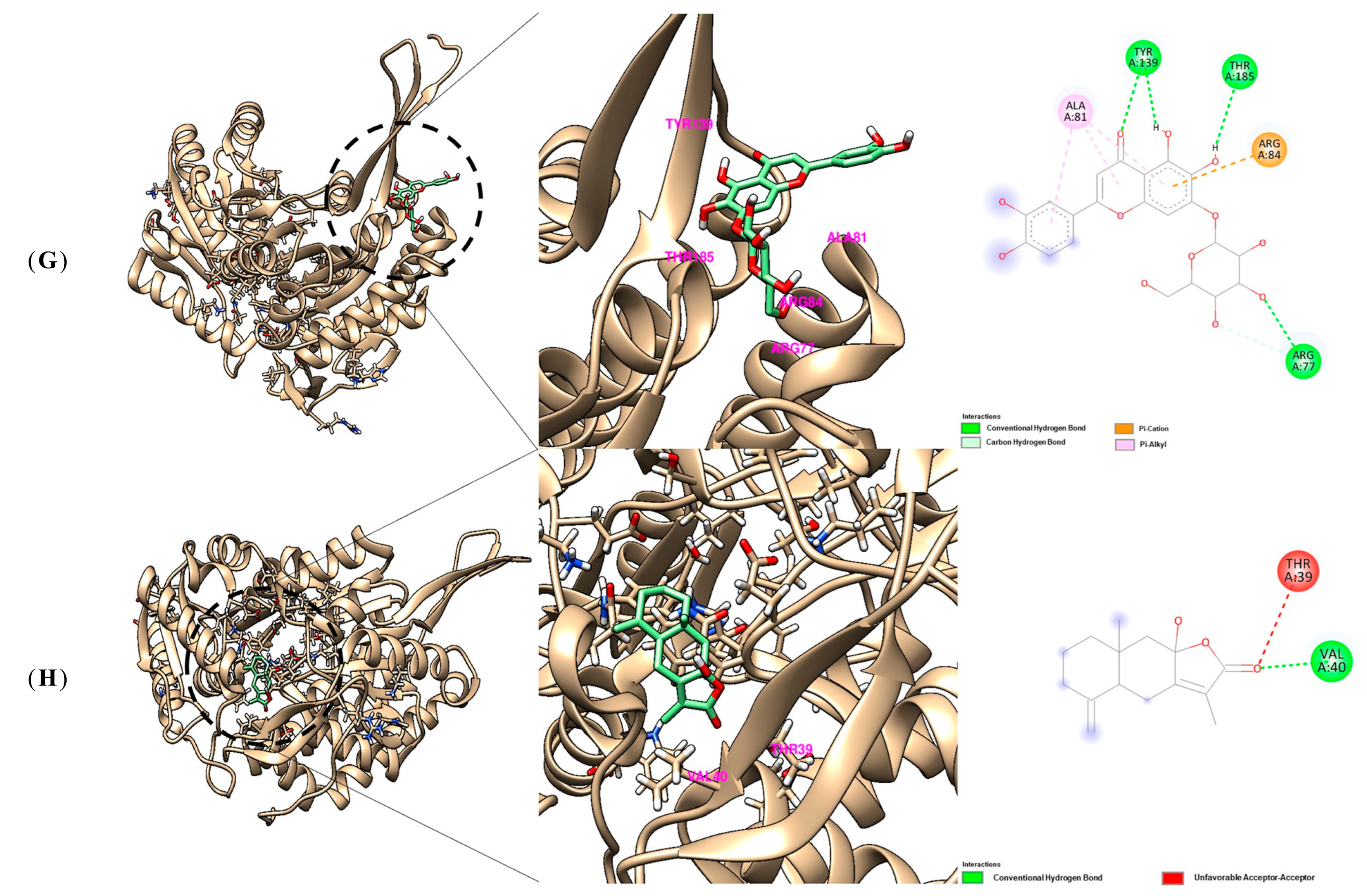
3.6. Molecular Docking Analysis of UImi-Derived Compounds with ALDH2
4. Discussion
5. Conclusions
Author Contributions
Funding
Institutional Review Board Statement
Informed Consent Statement
Data Availability Statement
Conflicts of Interest
Abbreviations
| AD | Atopic dermatitis |
| DNCB | 2,4-Dinitrochlorobenzene |
| HaCaT | Human keratinocyte cell line |
| SKH-1 | Hairless mouse strain |
| ALDH2 | Mitochondrial aldehyde dehydrogenase 2 |
| ROS | Reactive oxygen species |
| 4-HNE | 4-Hydroxynonenal |
| TNF-α | Tumor necrosis factor-alpha |
| IFN-γ | Interferon-gamma |
| NF-κB | Nuclear factor kappa B |
| JAK | Janus kinase |
| STAT | Signal transducer and activator of transcription |
| iNOS | Inducible nitric oxide synthase |
| COX-2 | Cyclooxygenase-2 |
| MTT | 3-(4,5-dimethylthiazol-2-yl)-2,5-diphenyltetrazolium bromide |
| LC-QTOF-MS/MS | Liquid chromatography–quadrupole time-of-flight tandem mass spectrometry |
| IHC | Immunohistochemistry |
| H&E | Hematoxylin and eosin |
| DCF-DA | 2′,7′-dichlorofluorescin diacetate |
| Dexa | Dexamethasone |
| SDS-PAGE | Sodium dodecyl sulfate-polyacrylamide gel electrophoresis |
| TPC | Total polyphenol content |
| TFC | Total flavonoid content |
| GAE | Gallic acid equivalent |
| QE | Quercetin equivalent |
References
- Devadasan, S.; Sarkar, R.; Barman, K.D.; Kaushik, S. Role of Serum Melatonin and Oxidative Stress in Childhood Atopic Dermatitis: A Prospective Study. Indian Dermatol. Online J. 2020, 11, 925–929. [Google Scholar] [CrossRef] [Scilit]
- Luo, Y.; Hu, J.; Zhou, Z.; Zhang, Y.; Wu, Y.; Sun, J. Oxidative stress products and managements in atopic dermatitis. Front. Med. 2025, 12, 1538194. [Google Scholar] [CrossRef] [Scilit]
- Yu, S.Y.; Kim, S.H.; Choo, J.H.; Hwang, S.Y. Influences of environmentally hazardous substances on atopic dermatitis: A review. Mol. Cell. Toxicol. 2025, 21, 481–493. [Google Scholar] [CrossRef] [Scilit]
- Jaganjac, M.; Tirosh, O.; Cohen, G.; Sasson, S.; Zarkovic, N. Reactive aldehydes--second messengers of free radicals in diabetes mellitus. Free Radic. Res. 2013, 47, 39–48. [Google Scholar] [CrossRef] [Scilit]
- McCracken, E.; Valeriani, V.; Simpson, C.; Jover, T.; McCulloch, J.; Dewar, D. The lipid peroxidation by-product 4-hydroxynonenal is toxic to axons and oligodendrocytes. J. Cereb. Blood Flow Metab. Off. J. Int. Soc. Cereb. Blood Flow Metab. 2000, 20, 1529–1536. [Google Scholar] [CrossRef] [Scilit]
- Agrawal, R.; Hu, A.; Bollag, W.B. The Skin and Inflamm-Aging. Biology 2023, 12, 1396. [Google Scholar] [CrossRef] [Scilit]
- Yu, C.; Wang, Y.; Hu, Y.; Wang, Y.; Zhang, W.; Xiao, Q.; You, X. Therapeutic effect of Drynariae rhizoma water extract on DNCB-induced atopic dermatitis in mice. Mol. Cell. Toxicol. 2026. [Google Scholar] [CrossRef] [Scilit]
- Lee, B.W.; Detzel, P.R. Treatment of childhood atopic dermatitis and economic burden of illness in Asia Pacific countries. Ann. Nutr. Metab. 2015, 66, 18–24. [Google Scholar] [CrossRef] [Scilit] [PubMed]
- Ross, G. Treatments for atopic dermatitis. Aust. Prescr. 2023, 46, 9–12. [Google Scholar] [CrossRef] [Scilit] [PubMed]
- Xu, W.; Meng, K.; Wu, H.; Miura, T.; Suzuki, S.; Chiyotanda, M.; Tanaka, S.; Sugiyama, K.; Kawashima, H.; Hirano, T. Vitamin K(2) immunosuppressive effect on pediatric patients with atopic dermatitis. Pediatr. Int. Off. J. Jpn. Pediatr. Soc. 2019, 61, 1188–1195. [Google Scholar] [CrossRef] [Scilit] [PubMed]
- Ghamrawi, R.; Bell, K.A.; Balogh, E.A.; Strowd, L.C.; Feldman, S.R. Current and emerging biologics for the treatment of pediatric atopic dermatitis. Expert Opin. Biol. Ther. 2020, 20, 1435–1445. [Google Scholar] [CrossRef] [Scilit] [PubMed]
- Uva, L.; Miguel, D.; Pinheiro, C.; Antunes, J.; Cruz, D.; Ferreira, J.; Filipe, P. Mechanisms of action of topical corticosteroids in psoriasis. Int. J. Endocrinol. 2012, 2012, 561018. [Google Scholar] [CrossRef] [Scilit] [PubMed]
- Ono, E.; Lenief, V.; Lefevre, M.A.; Cuzin, R.; Guironnet-Paquet, A.; Mosnier, A.; Nosbaum, A.; Nicolas, J.F.; Vocanson, M. Topical corticosteroids inhibit allergic skin inflammation but are ineffective in impeding the formation and expansion of resident memory T cells. Allergy 2024, 79, 52–64. [Google Scholar] [CrossRef] [Scilit] [PubMed]
- Sauder, D.N. Mechanism of action and emerging role of immune response modifier therapy in dermatologic conditions. J. Cutan. Med. Surg. 2004, 8, 3–12. [Google Scholar] [CrossRef] [Scilit]
- Harvey, J.; Lax, S.J.; Lowe, A.; Santer, M.; Lawton, S.; Langan, S.M.; Roberts, A.; Stuart, B.; Williams, H.C.; Thomas, K.S. The long-term safety of topical corticosteroids in atopic dermatitis: A systematic review. Skin. Health Dis. 2023, 3, e268. [Google Scholar] [CrossRef] [Scilit]
- Chiricozzi, A.; Comberiati, P.; D’Auria, E.; Zuccotti, G.; Peroni, D.G. Topical corticosteroids for pediatric atopic dermatitis: Thoughtful tips for practice. Pharmacol. Res. 2020, 158, 104878. [Google Scholar] [CrossRef] [Scilit]
- Frazier, W.; Bhardwaj, N. Atopic Dermatitis: Diagnosis and Treatment. Am. Fam. Physician 2020, 101, 590–598. [Google Scholar]
- Jo, H.M.; Kim, D.Y.; Lee, H.M.; Choi, I.H. Effects of Salvia microphylla on skin barrier function and atopic dermatitis-related inflammation in human HaCaT cells. Mol. Cell. Toxicol. 2025, 22, 141–150. [Google Scholar] [CrossRef] [Scilit]
- Johnson, E.; Groben, P.; Eanes, A.; Iyer, P.; Ugoeke, J.; Zolnoun, D. Vulvar skin atrophy induced by topical glucocorticoids. J. Midwifery Women’s Health 2012, 57, 296–299. [Google Scholar] [CrossRef] [Scilit] [PubMed]
- Barnes, L.; Kaya, G.; Rollason, V. Topical corticosteroid-induced skin atrophy: A comprehensive review. Drug Saf. 2015, 38, 493–509. [Google Scholar] [CrossRef] [Scilit]
- Sparling, K.; Butler, D.C. Oral Corticosteroids for Skin Disease in the Older Population: Minimizing Potential Adverse Effects. Drugs Aging 2024, 41, 795–808. [Google Scholar] [CrossRef] [Scilit]
- Chastain, D.B.; Spradlin, M.; Ahmad, H.; Henao-Martínez, A.F. Unintended Consequences: Risk of Opportunistic Infections Associated With Long-term Glucocorticoid Therapies in Adults. Clin. Infect. Dis. Off. Publ. Infect. Dis. Soc. Am. 2024, 78, e37–e56. [Google Scholar] [CrossRef] [Scilit]
- Gooderham, M.J.; Bissonnette, R.; Grewal, P.; Lansang, P.; Papp, K.A.; Hong, C.-H. Approach to the assessment and management of adult patients with atopic dermatitis: A consensus document. Section II: Tools for assessing the severity of atopic dermatitis. J. Cutan. Med. Surg. 2018, 22, 10S–16S. [Google Scholar] [CrossRef] [Scilit] [PubMed]
- Kim, J.; Kim, B.E.; Leung, D.Y. Pathophysiology of atopic dermatitis: Clinical implications. Allergy Asthma Proc. 2019, 40, 84–92. [Google Scholar] [CrossRef] [Scilit]
- González, R.; Ballester, I.; López-Posadas, R.; Suárez, M.D.; Zarzuelo, A.; Martínez-Augustin, O.; Sánchez de Medina, F. Effects of flavonoids and other polyphenols on inflammation. Crit. Rev. Food Sci. Nutr. 2011, 51, 331–362. [Google Scholar] [CrossRef] [Scilit]
- Tandon, A.; Singh, S.J.; Chaturvedi, R.K. Stem Cells as Potential Targets of Polyphenols in Multiple Sclerosis and Alzheimer’s Disease. BioMed Res. Int. 2018, 2018, 1483791. [Google Scholar] [CrossRef] [Scilit]
- Chakraborty, B.; Mukerjee, N.; Maitra, S.; Zehravi, M.; Mukherjee, D.; Ghosh, A.; Massoud, E.E.S.; Rahman, M.H. Therapeutic Potential of Different Natural Products for the Treatment of Alzheimer’s Disease. Oxidative Med. Cell. Longev. 2022, 2022, 6873874. [Google Scholar] [CrossRef] [Scilit] [PubMed]
- Zhang, Y.; Heinemann, N.; Rademacher, F.; Darvin, M.E.; Raab, C.; Keck, C.M.; Vollert, H.; Fluhr, J.W.; Gläser, R.; Harder, J.; et al. Skin care product rich in antioxidants and anti-inflammatory natural compounds reduces itching and inflammation in the skin of atopic dermatitis patients. Antioxidants 2022, 11, 1071. [Google Scholar] [CrossRef] [Scilit] [PubMed]
- Han, M.; Wang, X.; Wang, J.; Lang, D.; Xia, X.; Jia, Y.; Chen, Y. Ameliorative effects of epigallocatechin-3-gallate nanoparticles on 2, 4-dinitrochlorobenzene induced atopic dermatitis: A potential mechanism of inflammation-related necroptosis. Front. Nutr. 2022, 9, 953646. [Google Scholar] [CrossRef] [Scilit]
- Zafar, A.; Lahori, D.; Namit, A.F.; Paxton, Z.; Ratna, N.; Thornton, D.; Ramana, K.V. Curcumin in Inflammatory Complications: Therapeutic Applications and Clinical Evidence. Int. J. Mol. Sci. 2025, 26, 9366. [Google Scholar] [CrossRef] [Scilit]
- Cho, Y.R.; Han, E.J.; Heo, E.; Jayasinghe, A.M.K.; Won, J.; Lee, S.; Kim, T.; Kim, S.K.; Lim, S.; Woo, S.O.; et al. Propolis suppresses atopic dermatitis through targeting the MKK4 pathway. Biofactors 2025, 51, e2119. [Google Scholar] [CrossRef] [Scilit]
- Kim, M.J.; Yang, Y.J.; Min, G.Y.; Heo, J.W.; Son, J.D.; You, Y.Z.; Kim, H.H.; Kim, G.S.; Lee, H.J.; Yang, J.H.; et al. Anti-inflammatory and antioxidant properties of Camellia sinensis L. extract as a potential therapeutic for atopic dermatitis through NF-κB pathway inhibition. Sci. Rep. 2025, 15, 2371. [Google Scholar] [CrossRef] [Scilit]
- Smeh-Skrbin, A.; Dobrić, I.; Krnjević-Pezić, G.; Vrzogić, P. Naphthalene in the treatment of patients with atopic dermatitis. Acta Dermatovenerol. Croat. 2007, 15, 15–19. [Google Scholar]
- Madaan, A. Epiceram for the treatment of atopic dermatitis. Drugs Today (Barc. Spain 1998) 2008, 44, 751–755. [Google Scholar] [CrossRef] [Scilit]
- Fai, D.; Fai, C.; Di Vito, M.; Martini, C.; Zilio, G.; De Togni, H. Cardiospermum halicacabum in atopic dermatitis: Clinical evidence based on phytotherapic approach. Dermatol. Ther. 2020, 33, e14519. [Google Scholar] [CrossRef] [Scilit]
- Zhang, T.; Zhao, Q.; Ye, F.; Huang, C.Y.; Chen, W.M.; Huang, W.Q. Alda-1, an ALDH2 activator, protects against hepatic ischemia/reperfusion injury in rats via inhibition of oxidative stress. Free Radic. Res. 2018, 52, 629–638. [Google Scholar] [CrossRef] [Scilit]
- Giri, S.; Nayak, S.K.; Hembram, P. The role of aldehyde dehydrogenases (ALDH) gene families in response to biotic and abiotic stress in plants. Proc. Indian Natl. Sci. Acad. 2025, 1–11. [Google Scholar] [CrossRef] [Scilit]
- Kim, M.J.; Yang, Y.J.; Heo, J.W.; Son, J.D.; You, Y.Z.; Yang, J.H.; Park, K.I. Potential Chondroprotective Effect of L. Water Extract on SW1353 Cell. Int. J. Mol. Sci. 2025, 26, 1901. [Google Scholar] [CrossRef] [Scilit]
- Lee, J.-H.; Lee, Y.-K.; Choi, Y.-R.; Park, J.; Jung, S.K.; Chang, Y.H. The characterization, selenylation and anti-inflammatory activity of pectic polysaccharides extracted from Ulmus pumila L. Int. J. Biol. Macromol. 2018, 111, 311–318. [Google Scholar] [CrossRef] [Scilit] [PubMed]
- Čižmárová, B.; Hubková, B.; Tomečková, V.; Birková, A. Flavonoids as promising natural compounds in the prevention and treatment of selected skin diseases. Int. J. Mol. Sci. 2023, 24, 6324. [Google Scholar] [CrossRef] [Scilit]
- Bieber, T. Novel therapies based on the pathophysiology of atopic dermatitis. J. Dtsch. Dermatol. Ges. 2019, 17, 1150–1162. [Google Scholar] [CrossRef] [Scilit] [PubMed]
- Raimondo, A.; Serio, B.; Lembo, S.J.I. Oxidative stress in atopic dermatitis and possible biomarkers: Present and future. Indian J. Dermatol. 2023, 68, 657–660. [Google Scholar] [CrossRef] [Scilit]
- Zhang, Q.; Huang, L.; Zhou, L.; Fang, W.; Xu, J.; Ma, S.; Ge, C.; Sun, L.; Bu, C.; Wu, W.J. Tenuigenin exerts neuroprotective effects by activating the Nrf2/HO-1 pathway to perform antioxidant activity and inhibit neuronal ferroptosis, preventing epilepsy in immature mice. Mol. Cell. Toxicol. 2025, 22, 375–390. [Google Scholar] [CrossRef] [Scilit]
- Kumar, H.; Kim, I.S.; More, S.V.; Kim, B.W.; Choi, D.K. Natural product-derived pharmacological modulators of Nrf2/ARE pathway for chronic diseases. Nat. Product. Rep. 2014, 31, 109–139. [Google Scholar] [CrossRef] [Scilit]
- Keum, Y.S. Regulation of Nrf2-Mediated Phase II Detoxification and Anti-oxidant Genes. Biomol. Ther. 2012, 20, 144–151. [Google Scholar] [CrossRef] [Scilit]
- Andrés, C.M.C.; Pérez de la Lastra, J.M.; Bustamante Munguira, E.; Juan, C.A.; Plou, F.J.; Pérez Lebeña, E. Electrophilic Compounds in the Human Diet and Their Role in the Induction of the Transcription Factor NRF2. Int. J. Mol. Sci. 2024, 25, 3521. [Google Scholar] [CrossRef] [Scilit]
- Choi, Y.H. Albiflorin reduces lipopolysaccharide-induced inflammatory responses and oxidative stress by regulating the NF-κB and Nrf2/HO-1 signaling pathways in RAW 264.7 macrophages. Mol. Cell. Toxicol. 2026, 1–14. [Google Scholar] [CrossRef] [Scilit]
- Alruhaimi, R.S.; Hassanein, E.H.; Alnasser, S.M.; Ahmeda, A.F.; Althagafy, H.S.; Sabry, M.; Ahmed, A.A.; Mahmoud, A.M. Protective role of S-carboxymethylcysteine against cyclophosphamide nephrotoxicity: Involvement of Nrf2/HO-1 signaling and suppression of oxidative stress, inflammation, and apoptosis. Mol. Cell. Toxicol. 2025, 22, 309–322. [Google Scholar] [CrossRef] [Scilit]
- Ren, Q.; Qu, L.; Yuan, Y.; Wang, F. Natural Modulators of Key Signaling Pathways in Skin Inflammageing. Clin. Cosmet. Investig. Dermatol. 2024, 17, 2967–2988. [Google Scholar] [CrossRef] [Scilit] [PubMed]
- Lim, C.U.; Kim, M.J.; Yang, Y.J.; Heo, J.W.; Kim, H.H.; Kim, Y.H.; Kim, Y.W.; Park, K.I. Salicornia europaea extract regulates inflammatory signaling pathways in LPS-stimulated HaCaT cells. Mol. Cell. Toxicol. 2026. [Google Scholar] [CrossRef] [Scilit]
- Weinstein, R.; Naber, C.E.; Brumme, K. Revisiting dexamethasone use in the pediatric emergency department. Curr. Opin. Pediatr. 2024, 36, 251–255. [Google Scholar] [CrossRef] [Scilit]
- Xie, C.; Hu, M.; Niu, B. Mangiferin can alleviate atopic dermatitis-like responses in mice and HaCaT cells. Mol. Cell. Toxicol. 2024, 21, 755–768. [Google Scholar] [CrossRef] [Scilit]
- Bucciantini, M.; Leri, M.; Nardiello, P.; Casamenti, F.; Stefani, M. Olive Polyphenols: Antioxidant and Anti-Inflammatory Properties. Antioxidants 2021, 10, 1044. [Google Scholar] [CrossRef] [Scilit]
- Xu, W.; Lu, H.; Yuan, Y.; Deng, Z.; Zheng, L.; Li, H. The Antioxidant and Anti-Inflammatory Effects of Flavonoids from Propolis via Nrf2 and NF-κB Pathways. Foods 2022, 11, 2439. [Google Scholar] [CrossRef] [Scilit]
- Nani, A.; Tehami, W. Targeting inflammasome pathway by polyphenols as a strategy for pancreatitis, gastrointestinal and liver diseases management: An updated review. Front. Nutr. 2023, 10, 1157572. [Google Scholar] [CrossRef] [Scilit]
- Kisseih, E.; Lechtenberg, M.; Petereit, F.; Sendker, J.; Zacharski, D.; Brandt, S.; Agyare, C.; Hensel, A. Phytochemical characterization and in vitro wound healing activity of leaf extracts from Combretum mucronatum Schum. & Thonn.: Oligomeric procyanidins as strong inductors of cellular differentiation. J. Ethnopharmacol. 2015, 174, 628–636. [Google Scholar] [CrossRef] [Scilit]
- Chen, Y.; Lai, L.; You, Y.; Gao, R.; Xiang, J.; Wang, G.; Yu, W. Quantitative Analysis of Bioactive Compounds in Commercial Teas: Profiling Catechin Alkaloids, Phenolic Acids, and Flavonols Using Targeted Statistical Approaches. Foods 2023, 12, 3098. [Google Scholar] [CrossRef] [Scilit] [PubMed]
- Shanmugam, B.; Shanmugam, K.R.; Ravi, S.; Subbaiah, G.V.; Ramakrishana, C.; Mallikarjuna, K.; Reddy, K.S. Exploratory Studies of (-)-Epicatechin, a Bioactive Compound of Phyllanthus niruri, on the Antioxidant Enzymes and Oxidative Stress Markers in D-galactosamine-induced Hepatitis in Rats: A Study with Reference to Clinical Prospective. Pharmacogn. Mag. 2017, 13, S56–S62. [Google Scholar] [CrossRef] [Scilit] [PubMed]
- Tran, N.; Pham, B.; Le, L. Bioactive Compounds in Anti-Diabetic Plants: From Herbal Medicine to Modern Drug Discovery. Biology 2020, 9, 252. [Google Scholar] [CrossRef] [Scilit]
- Fraga, C.G.; Galleano, M.; Verstraeten, S.V.; Oteiza, P.I. Basic biochemical mechanisms behind the health benefits of polyphenols. Mol. Asp. Med. 2010, 31, 435–445. [Google Scholar] [CrossRef] [Scilit]
- Rasheed, A.; Ali, G.; Islam, M.R.; Rauf, A.; Ajaj, R.; Hemeg, H.A.; Iriti, M. Mechanistic Insights into the Pharmacological Actions of Flavonoids: A Comprehensive Review. Nat. Prod. Commun. 2026, 21, 1934578X261416331. [Google Scholar] [CrossRef] [Scilit]
- Pandey, P.; Lakhanpal, S.; Mahmood, D.; Kang, H.N.; Kim, B.; Kang, S.; Choi, J.; Choi, M.; Pandey, S.; Bhat, M.; et al. An updated review summarizing the anticancer potential of flavonoids via targeting NF-kB pathway. Front. Pharmacol. 2025, 15, 1513422. [Google Scholar] [CrossRef] [Scilit]
- Yin, Q.; Wang, L.; Yu, H.; Chen, D.; Zhu, W.; Sun, C. Pharmacological effects of polyphenol phytochemicals on the JAK-STAT signaling pathway. Front. Pharmacol. 2021, 12, 716672. [Google Scholar] [CrossRef] [Scilit]
- Li, Y.; Xie, J.; Liao, M. Patchouli alcohol attenuates DNFB-induced atopic dermatitis-like inflammatory dermatitis associated with NF-κB/STAT6 signaling and macrophage polarization. Mol. Cell. Toxicol. 2026, 1–12. [Google Scholar] [CrossRef] [Scilit]
- Hao, B.; Yang, Z.; Liu, H.; Liu, Y.; Wang, S. Advances in flavonoid research: Sources, biological activities, and developmental prospectives. Curr. Issues Mol. Biol. 2024, 46, 2884–2925. [Google Scholar] [CrossRef] [Scilit] [PubMed]
- Luo, D.; Liu, L.; Huang, Q.; Zhang, H.M.; Yu, Z.M.; Hu, M.; Li, J.X.; Liang, F.X.; Chen, R. Crosstalk between Acupuncture and NF-κB in Inflammatory Diseases. Evid.-Based Complement. Altern. Med. eCAM 2020, 2020, 7924985. [Google Scholar] [CrossRef] [Scilit] [PubMed]
- Ociepa, K.; Danilewicz, M.; Wągrowska-Danilewicz, M.; Peterson-Jęckowska, R.; Wójcicka-Rubin, A.; Lewkowicz, N.; Zajdel, R.; Żebrowska, A. Expression of the Selected Proteins of JAK/STAT Signaling Pathway in Diseases with Oral Mucosa Involvement. Int. J. Mol. Sci. 2022, 24, 323. [Google Scholar] [CrossRef] [Scilit]
- Caiazzo, G.; Caiazzo, A.; Napolitano, M.; Megna, M.; Potestio, L.; Fornaro, L.; Parisi, M.; Luciano, M.A.; Ruggiero, A.; Testa, A.; et al. The Use of JAK/STAT Inhibitors in Chronic Inflammatory Disorders. J. Clin. Med. 2023, 12, 2865. [Google Scholar] [CrossRef] [Scilit]
- Demirci Yildirim, T.; Kahraman, A.; Köken Avşar, A.; Onen, F.; Akar, S.; Sari, İ. Quantitative analysis of JAK/STAT signaling pathway in patients of inflammatory skin disorders. Rheumatol. Int. 2024, 44, 3009–3015. [Google Scholar] [CrossRef] [Scilit] [PubMed]





| Items | Concentration | |
|---|---|---|
| Ulmi | Total polyphenol (GAE mg/g) 1 | 105.955 ± 0.003 |
| Total flavonoid (QE mg/g) 2 | 57.099 ± 0.400 |
| Peak No. | Rt (min) | Formula | Compound | [M + H]+ | MS/MS |
|---|---|---|---|---|---|
| 1 | 0.91 | C5H9NO2 | Proline | 116 | 70 |
| 2 | 5.15 | C28H38N2O4 | Cephaeline | 467 | 165 |
| 3 | 6.19 | C30H26O12 | Procyanidin B2 | 579 | 427, 409, 289 |
| 4 | 6.47 | C15H14O6 | Catechin | 291 | 139, 123 |
| 5 | 7.92 | C15H14O6 | Epicatechin | 291 | 249, 139, 123 |
| 6 | 10.60 | C19H18O11 | Mangiferin | 423 | 273 |
| 7 | 12.04 | C21H20O12 | 6-hydroxyluteolin 7-O-glucoside | 465 | 345, 327, 315, 303 |
| 8 | 13.84 | C15H20O3 | Atractylenolide III | 249 | 231 |
| Binding Ligand | Interacting Residues | Binding Energy (kcal/mol) |
|---|---|---|
| Proline | MET 174, TRP 177, PHE 465 | −4.8 |
| Cephaeline | ALA 81, ARG 84, TYR 139, HIS 140, GLY 141, LYS 142, THR 143, ARG 155, THR 185 | −7.9 |
| Procyanidin B2 | ILE 166, TRP 168, LYS 192, GLU 195, GLN 196, LYS 352 | −9.5 |
| Catechin | ILE 166, TRP 168, LYS 192, GLY 245, SER 246, PHE 401 | −7.9 |
| Epicatechin | PRO 167, GLU 195, GLN 349, PHE 401 | −8.2 |
| Mangiferin | ARG 84, HIS 140, GLY 141, LYS 142, ARG 155, HIS 156, THR 185 | −8.2 |
| 6-hydroxyluteolin 7-O-glucoside | ARG 77, ALA 81, ARG 84, TYR 139, THR 185 | −8.9 |
| Atractylenolide III | THR 39, VAL 40 | −7.4 |
Disclaimer/Publisher’s Note: The statements, opinions and data contained in all publications are solely those of the individual author(s) and contributor(s) and not of MDPI and/or the editor(s). MDPI and/or the editor(s) disclaim responsibility for any injury to people or property resulting from any ideas, methods, instructions or products referred to in the content. |
© 2026 by the authors. Licensee MDPI, Basel, Switzerland. This article is an open access article distributed under the terms and conditions of the Creative Commons Attribution (CC BY) license.
Share and Cite
Kim, M.J.; Jang, M.J.; You, Y.Z.; Yang, Y.J.; Heo, J.W.; Kim, H.H.; Kim, H.H.; Jeong, S.H.; Kim, G.S.; Kim, Y.W.; et al. Ulmus pumila Linné (Ulmi) Extract Attenuates Inflammatory Responses in Atopic Dermatitis by Modulating Lipid Peroxidation and Oxidative Stress. Antioxidants 2026, 15, 683. https://doi.org/10.3390/antiox15060683
Kim MJ, Jang MJ, You YZ, Yang YJ, Heo JW, Kim HH, Kim HH, Jeong SH, Kim GS, Kim YW, et al. Ulmus pumila Linné (Ulmi) Extract Attenuates Inflammatory Responses in Atopic Dermatitis by Modulating Lipid Peroxidation and Oxidative Stress. Antioxidants. 2026; 15(6):683. https://doi.org/10.3390/antiox15060683
Chicago/Turabian StyleKim, Min Jung, Mi Jin Jang, Young Zoo You, Ye Jin Yang, Ji Woong Heo, Hee Ho Kim, Hun Hwan Kim, Se Hyo Jeong, Gon Sup Kim, Young Woo Kim, and et al. 2026. "Ulmus pumila Linné (Ulmi) Extract Attenuates Inflammatory Responses in Atopic Dermatitis by Modulating Lipid Peroxidation and Oxidative Stress" Antioxidants 15, no. 6: 683. https://doi.org/10.3390/antiox15060683
APA StyleKim, M. J., Jang, M. J., You, Y. Z., Yang, Y. J., Heo, J. W., Kim, H. H., Kim, H. H., Jeong, S. H., Kim, G. S., Kim, Y. W., Yang, J.-H., Jeon, R., An, S.-H., & Park, K. I. (2026). Ulmus pumila Linné (Ulmi) Extract Attenuates Inflammatory Responses in Atopic Dermatitis by Modulating Lipid Peroxidation and Oxidative Stress. Antioxidants, 15(6), 683. https://doi.org/10.3390/antiox15060683