Article

Application of Soft-Clustering to Assess Consciousness in a CLIS Patient

Department of Neuromorphic Information Processing, Leipzig University, Augustusplatz 10, 04109 Leipzig, Germany
*
Author to whom correspondence should be addressed.
Brain Sci. 2023, 13(1), 65; https://doi.org/10.3390/brainsci13010065

Submission received: 25 November 2022 / Revised: 12 December 2022 / Accepted: 21 December 2022 / Published: 29 December 2022

Abstract

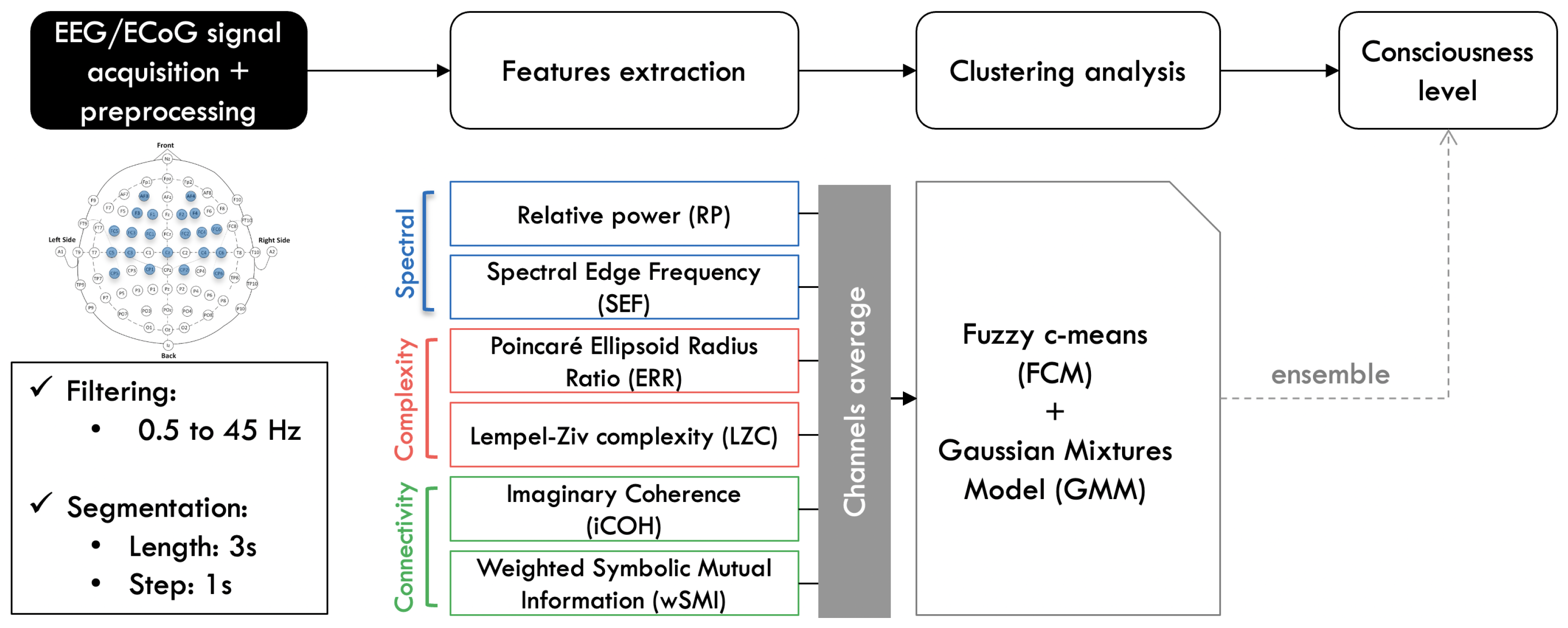
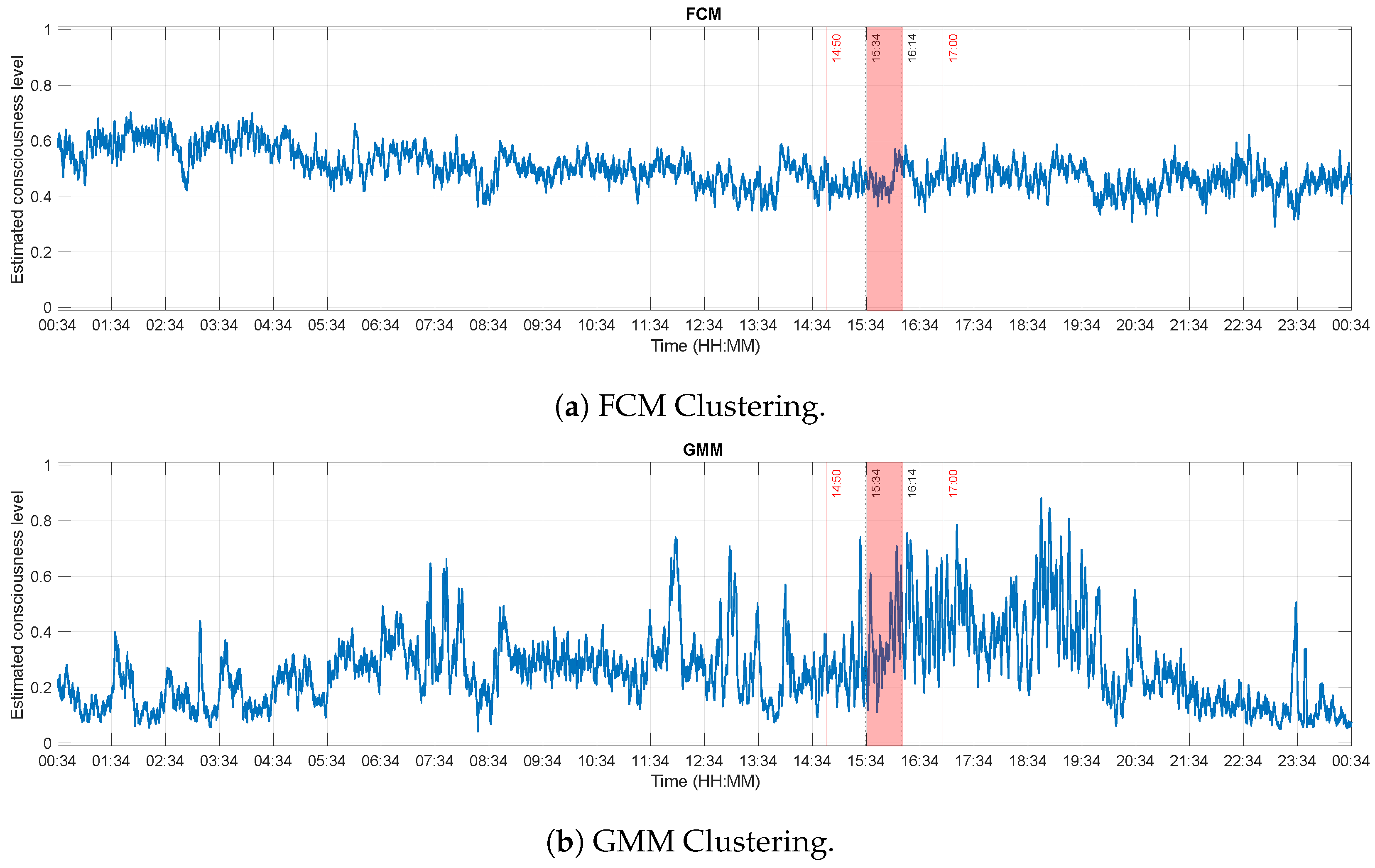
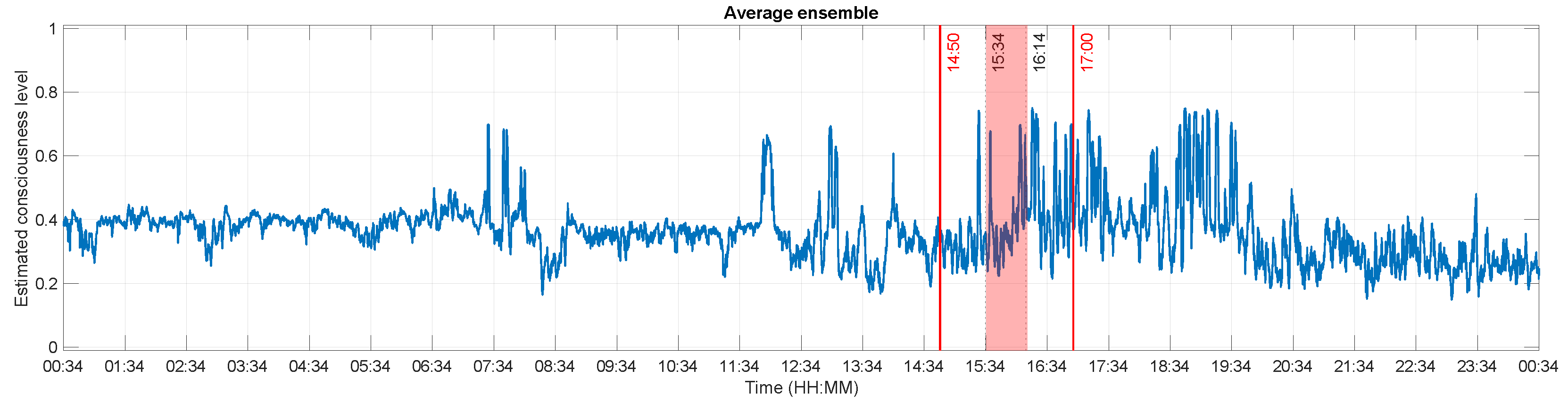
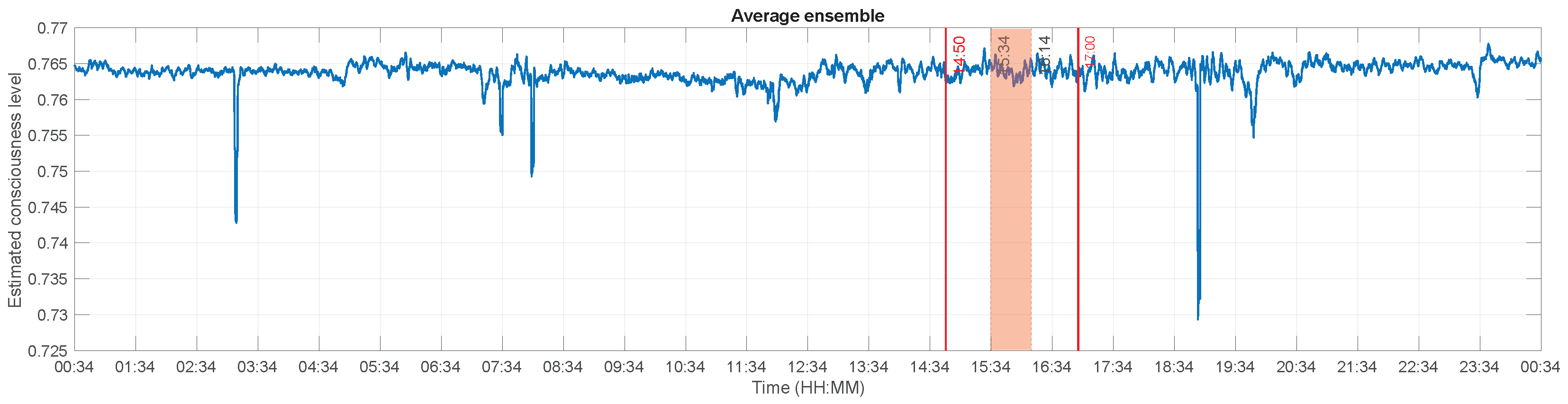
Completely locked-in (CLIS) patients are characterized by sufficiently intact cognitive functions, but a complete paralysis that prevents them to interact with their surroundings. On one hand, studies have shown that the ability to communicate plays an important part in these patients’ quality of life and prognosis. On the other hand, brain-computer interfaces (BCIs) provide a means for them to communicate using their brain signals. However, one major problem for such patients is the difficulty to determine if they are conscious or not at a specific time. This work aims to combine different sets of features consisting of spectral, complexity and connectivity measures, to increase the probability of correctly estimating CLIS patients’ consciousness levels. The proposed approach was tested on data from one CLIS patient, which is particular in the sense that the experimenter was able to point out one time frame Δt during which he was undoubtedly conscious. Results showed that the method presented in this paper was able to detect increases and decreases of the patient’s consciousness levels. More specifically, increases were observed during this Δt, corroborating the assertion of the experimenter reporting that the patient was definitely conscious then. Assessing the patients’ consciousness is intended as a step prior attempting to communicate with them, in order to maximize the efficiency of BCI-based communication systems.
Keywords: completely locked-in syndrome; complexity; connectivity; consciousness; electrocorticogram; features extraction; soft-clustering; spectral analysis completely locked-in syndrome; complexity; connectivity; consciousness; electrocorticogram; features extraction; soft-clustering; spectral analysis