Skip to Content
Applied SciencesApplied Sciences
  • Article
  • Open Access

16 January 2026

Lessons Learned and Proposed Solutions for Drilling Wells in the San Juan Basin for a CO2-Storage Project

,
,
,
,
,
and
Department of Petroleum and Natural Gas Engineering, New Mexico Institute of Mining and Technology, Socorro, NM 87801, USA
*
Authors to whom correspondence should be addressed.

Abstract

This paper synthesizes lessons learned from drilling a CO2-storage stratigraphic well in the San Juan Basin (New Mexico, USA) to clarify drivers of operational incidents and to inform future well planning. A literature review of regional drilling problems was combined with pre-drill engineering based on offset-well history and a geomechanical model, including casing, cementing, and hydraulics designs developed in commercial software; these designs were compared with field execution to extract incident-specific lessons. The most frequent problems observed are lost circulation, stuck pipe, and poor control of drilling parameters, consistent with complex lithology and reservoir pressure depletion that reduces fracture pressure below anticipated values. Based on the lessons learned, three mitigations are proposed as follows: (1) update the geomechanical model with the latest pore, fracture pressure estimates; (2) apply underbalanced drilling using nitrified mud by injecting nitrogen through a parasite string while drilling intermediate and production sections; and (3) maintain operating limits (weight on bit < 44.5 kN, top-drive rotation < 45 rpm, and pump rate < 1.32 m3/min) to improve fluid returns through low-fracture-pressure intervals. Simulation results support the applicability of the proposed solutions.

1. Introduction

The Department of Energy initiated the Carbon Storage Assurance Facility Enterprise (CarbonSAFE) in 2016. The CarbonSAFE was formed with the goal of developing safe and commercial methods for capturing carbon dioxide (CO2) from industrial sources and storing it underground in geologic formations [1]. New Mexico Tech was awarded the CarbonSAFE Phase III project titled “San Juan Basin CarbonSAFE Phase III: Ensuring Safe Subsurface Storage of CO2 in Saline Reservoirs” [2] (hereafter called The Project). The main objectives of The Project are to investigate long-term CO2 storage in the San Juan Basin (SJB) of Northwest New Mexico. Within this framework, the project targets the Entrada Sandstone at around 2500 m depth to permanently store over 50 million tonnes of CO2 across 30 years through one to three Class VI injection wells, with injection rates up to 2 million tonnes per year while maintaining bottom hole pressures below fracture limits [3,4]. Long-term containment will be supported by monitoring wells, full Area of Review (AoR) delineation, and a post-injection surveillance period of at least 100 years, in compliance with EPA Class VI regulations [5].
The project envisions that many class VI wells will be completed using data from the stratigraphic wells in the San Juan Basin (SJB) area in the near future. According to the U.S. Environmental Protection Agency [6], class VI wells are used to inject CO2 into underground rock formations for long-term storage, also known as geologic sequestration. Drilling and completing these class VI wells with high wellbore integrity is essential for ensuring the CO2 is trapped in the formations for centuries to come [7,8].
Since oil and gas have been produced in this area for more than 100 years, most hydrocarbon reservoirs have been depleted, leading to changes in geomechanics properties of formation rocks [9]. The pore pressures, minimum and maximum horizontal stress, formation breakout pressures, etc., of the reservoirs are very much different from the in-situ conditions [10,11]. Therefore, there is a great need of updating the geomechanics models, rock properties, formation lithology, and formations. This update will help minimize drilling and completion problems when new wells are drilled in the area [12,13].
The objective of this study is to perform a thorough review on the drilling and completing of the stratigraphic well of the project. Detailed analysis and root causes will be carried out for every lesson learnt from drilling and completing this well. We will then propose changes for drilling and completing new wells in this area and the nearby area.
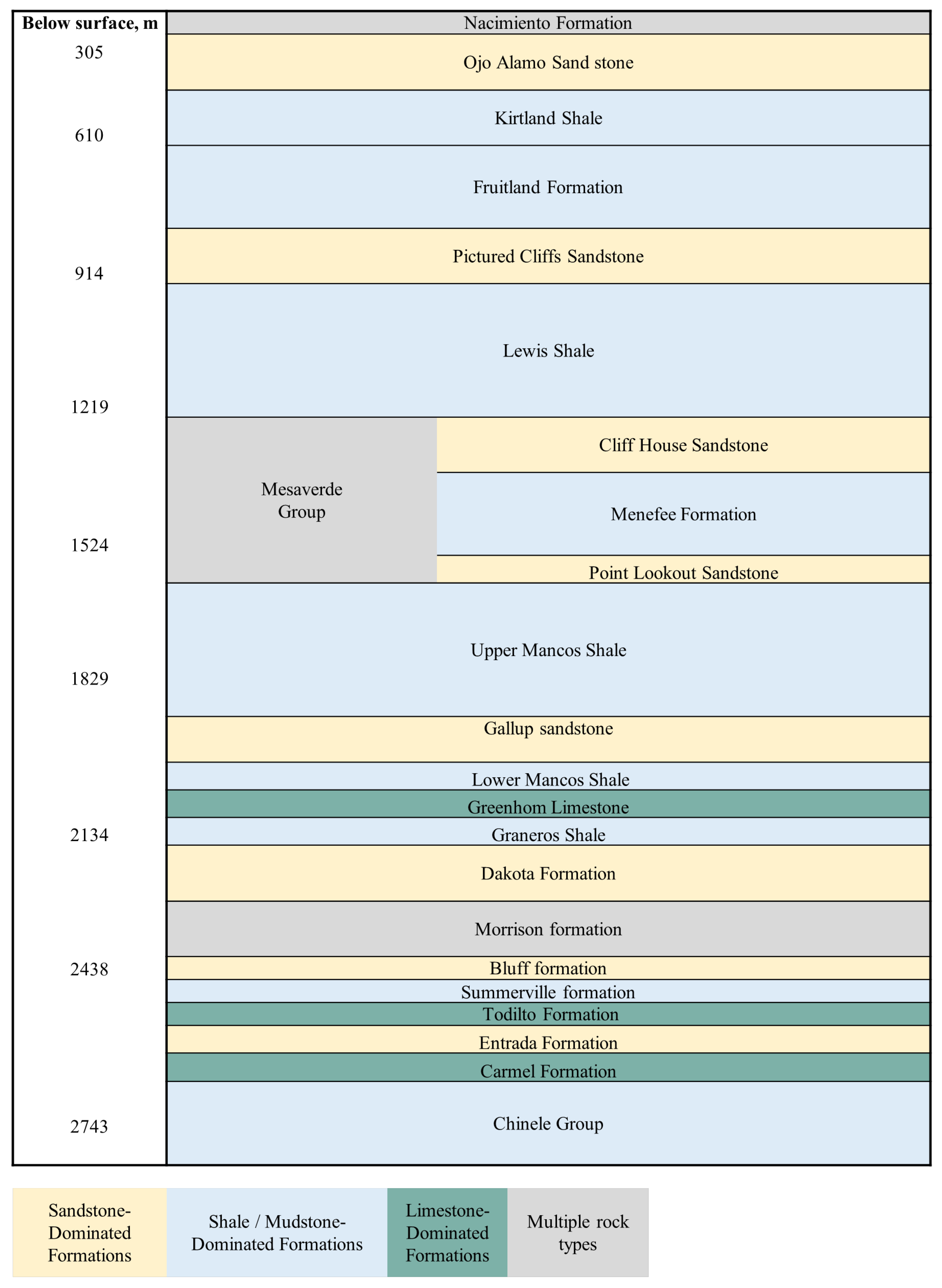
The SJB consists of Cretaceous Lewis, Menefee, and Mancos shales, which are thick and widespread; however, the target formation of the project is deeper, in the Entrada formation [8,9,10,11,12,13,14]. The Summerville formation and Todilto formation can also serve as seals for this project. Figure 1 shows the depths and the lithologies of the SJB.
Figure 1. Depths and the lithologies of the SJB.
The Project focuses on Entrada Sandstone formation as a main target formation for CO2 storage. The Shallow Entrada in the southeastern region of the basin has porosity levels exceeding 23% and permeability exceeding 296 × 10−3 μm2 [15,16]. Although the porosity and permeability in the deeper sections of the area have significantly decreased due to burial compaction and cementation, the Entrada Sandstone serves as a potential site for the disposal of saltwater and the injection of acid gas across a substantial portion of the SJB [14]. The Todilto formation of about 4.57 m thick and the Summerville formation of about 38.71 m thick are the two primary caprocks laying above the Entrada sandstone [8,9,10,11,12,13,14,15,16,17]. The well was designed to reach to a true vertical depth of about 2682 m.

2. Materials and Methods

2.1. A Review of Common Problems During Drilling Wells in the San Juan Basin

From the drilling reports of nearby wells in the area, there are three common problems that drillers might encounter when drilling and completing wells in the SJB: fluid losses, stuck pipe, and poor cement job [18,19]. Fluid losses are expected, starting from the Fruitland formation and all the way to the Entrada formation. Due to medium to severe fluid losses in these formations, it is reasonable to expect there are many unconsolidated and permeable zones, naturally fractured formations, induced fracture formations, and caverns [20]. Loose and shallow porous sands could be one of the reasons that cause fluid losses in the shallower formations [21]. Natural fractures might exist in carbonate rocks, sandstone, or shale formations [22]. Depending on the width of these fractures, mild, medium or severe losses might occur. Induced fractures can also be present due to surge pressures happening while drilling. If vertical-induced fractures exist, sudden and complete losses can happen [23]. Finally, caverns are also expected in the SJB due to the fact that total losses occur very suddenly [24,25]. Caverns are normally related to limestone formations that have been leached by water. Large sizes of caverns can cause a drill string to drop suddenly following with a severe and total loss [23]. Fluid loss can lead to well collapse, difficulty in running casings, poor hole cleaning, sloughing, or caving [26]. In addition, because of fluid loss during the process of running casing and cementing, a portion of the cement will be lost, resulting in an insufficient volume of cement and poor zonal isolation [27]. The most common remedial method when losses occur is the use of LCM [23]. However, excessive usage of LCMs might cause damages on formations, stuck pipe, plugging off flow area on downhole tools, etc. [28]. In addition, if severe losses happen, the effectiveness of using LCMs is very low [29]. In some cases, they do not work at all [30].
Stuck pipe is another common issue encountered when drilling wells in the SJB [18], often due to formation breakouts [31]. A strong signal of formation breakouts is a rapid increase in torque [32]. If the top drive’s power is not enough or if the applied torque exceeds the maximum makeup torque of pipe joints to free up the drill string, cut pipe and sidetrack operations might have to be executed [33]. These operations are expensive, and they produce very high non-productive time which ultimately causes very high overall cost to complete the well [34]. Another reason that causes stuck pipe is the differential pressure sticking [35]. Under normal drilling operations, a thin filter cake is formed around the open hole wellbore to prevent filtrates from flowing into the formations [36]. However, when fluid losses happen and LCMs are used, a much thicker mud cake will be built around the open-hole and cause a high differential pressure difference between the mud column and the near wellbore pore pressure [28]. Pipes can be stuck under this high differential pressure difference. To mitigate the differential pressure sticking, lighter fluids and minimal LCMs should be used [35]. Pipe rotation and reciprocating pipe are another two key operating parameters to reduce stuck pipe due to differential pressure sticking [37]. In addition, modern drilling practice increasingly uses downhole vibration and shock monitoring also improves parameter controllability and mitigates stuck-pipe risk [38,39,40].
Poor cement job is another common concern when completing wells in the SJB [41]. Poor cement job will leave many micro-channels and micro-annuli along cement sheath that provide pathways for gases to travel into or between underground drinking water aquifers [42,43]. Therefore, it is important to have long good cement bonding intervals. When performing cementing operations on wells in the SJB, no cement returning to the surface is very common due to the fluid losses [44]. There are many depleted zones ranging from the Fruitland to the Entrada formation causing low to very low pore pressures on these depleted formations [45,46]. Cement slurry densities have to be low and a multistage cementing technique is needed to cement intermediate and production casings [47]. However, due to many reasons such as up-dip and down-dip lithology, unexpected depleted and unconsolidated formations, presence of caverns, etc., it is very challenging to guarantee a successful cementing operation on wells at the SJB [44]. A careful cementing design using the most updated geomechanics models and a proper cementing operation are essential to minimize poor cement jobs.

2.2. Well Planning

2.2.1. Pore and Fracture Pressures Prediction

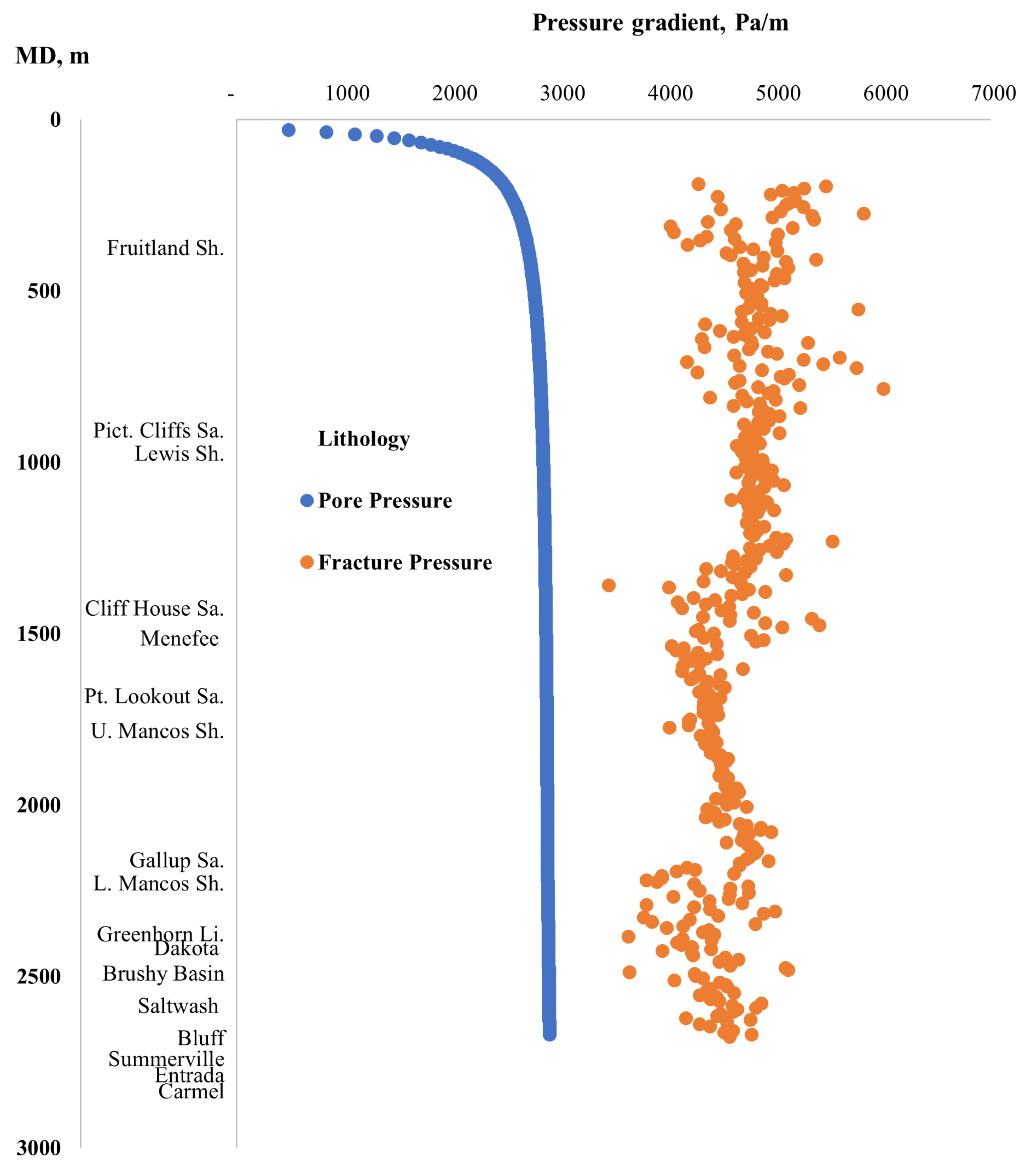
Before conducting drilling, geomechanics models were reviewed and developed to obtain the formation pore pressure and fracture pressure. Geomechanical inputs were compiled from five offset wells located within 10 miles of SJB CarbonSAFE #1. Available datasets used to develop the model include gamma ray, spontaneous potential, resistivity, and neutron porosity, supplemented by one core laboratory dataset providing relative-permeability measurements. Figure 2 shows the pore pressure gradient, fracture pressure gradient, and the lithology of the well. The prediction reviews that the pore pressure is expected to be normal from the surface to the Entrada formation with an average pressure gradient of 2785 Pa/m. From the Dakota to the Entrada formations, the fracture pressure gradient seems to be lower than the normal fracture pressure gradient which is about 4637 Pa/m. This reduction in the fracture pressure is mainly due to the depletion of the reservoirs [46].
Figure 2. Prediction of pore pressure gradient, fracture pressure gradient, and lithology of area.

2.2.2. Casing Design

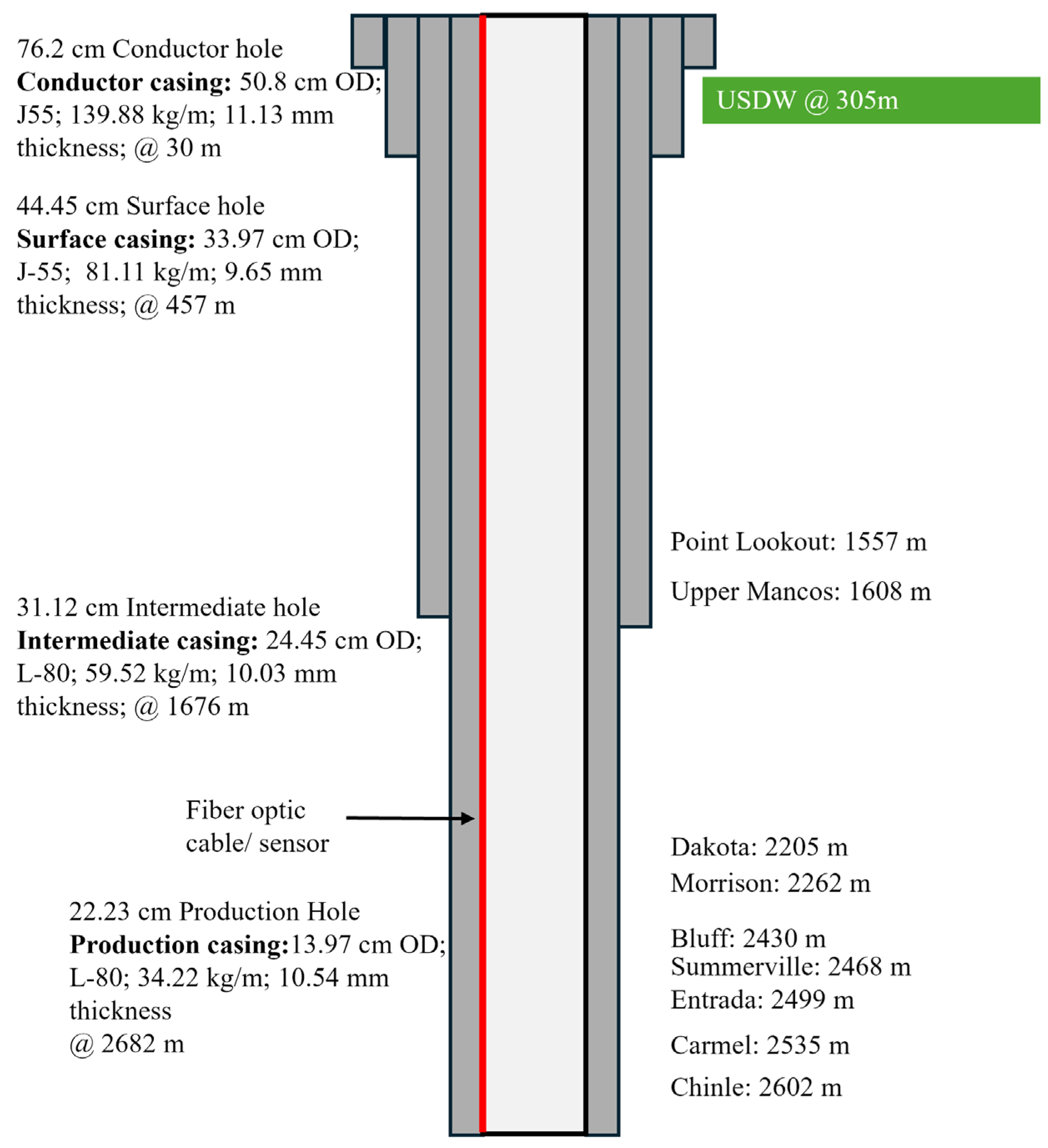
Based on the estimations of the pore and fracture pressures, lithology, and worst-case scenarios during the entire life of the well, casing setting depth, casing size, casing grade, and casing weight were proposed. Figure 3 shows the detailed casing design for the well. The surface casing, intermediate casing, and production casing are suggested to be set at 457 m, 1676 m, and 2682 m, respectively. Details of these casings are presented in Table 1. PPSC Drilling v2 Software was used to double check the burst, collapse, and axial loads under the worst-case scenarios to ensure the integrity of the selected casings.
Figure 3. Casing design for the well.
Table 1. Casing selection for the well.

2.2.3. Cementing Design

From the geomechanics model and the casing design, details of the cementing design for each casing string were also planned before drilling. Table 2 shows the detailed cementing design for the well. Due to low fracture pressure formations, two-stage cementing operations were proposed for the intermediate and production casings. Even with two stage cementing operations, low cement slurry densities must be used to avoid lost circulation. The densities of the spacer, lead cement slurry, tail cement slurry, and displacement fluid are 1198, 1198, 1498, and 1078 kg/m3, respectively. With a pumping rate of from 4 to 5 barrels per minute, the Equivalent Circulating Density (ECD) is maintained below the fracture pressures. When cementing the production casing, it takes a total of about 4 h to complete the two stage cement operations. Most of the cement slurries on the market have a thickening time from 6 to 8 h and therefore, the maximum pumping time of 4 h is very reasonable.
Table 2. Cementing design for the well.

3. Results

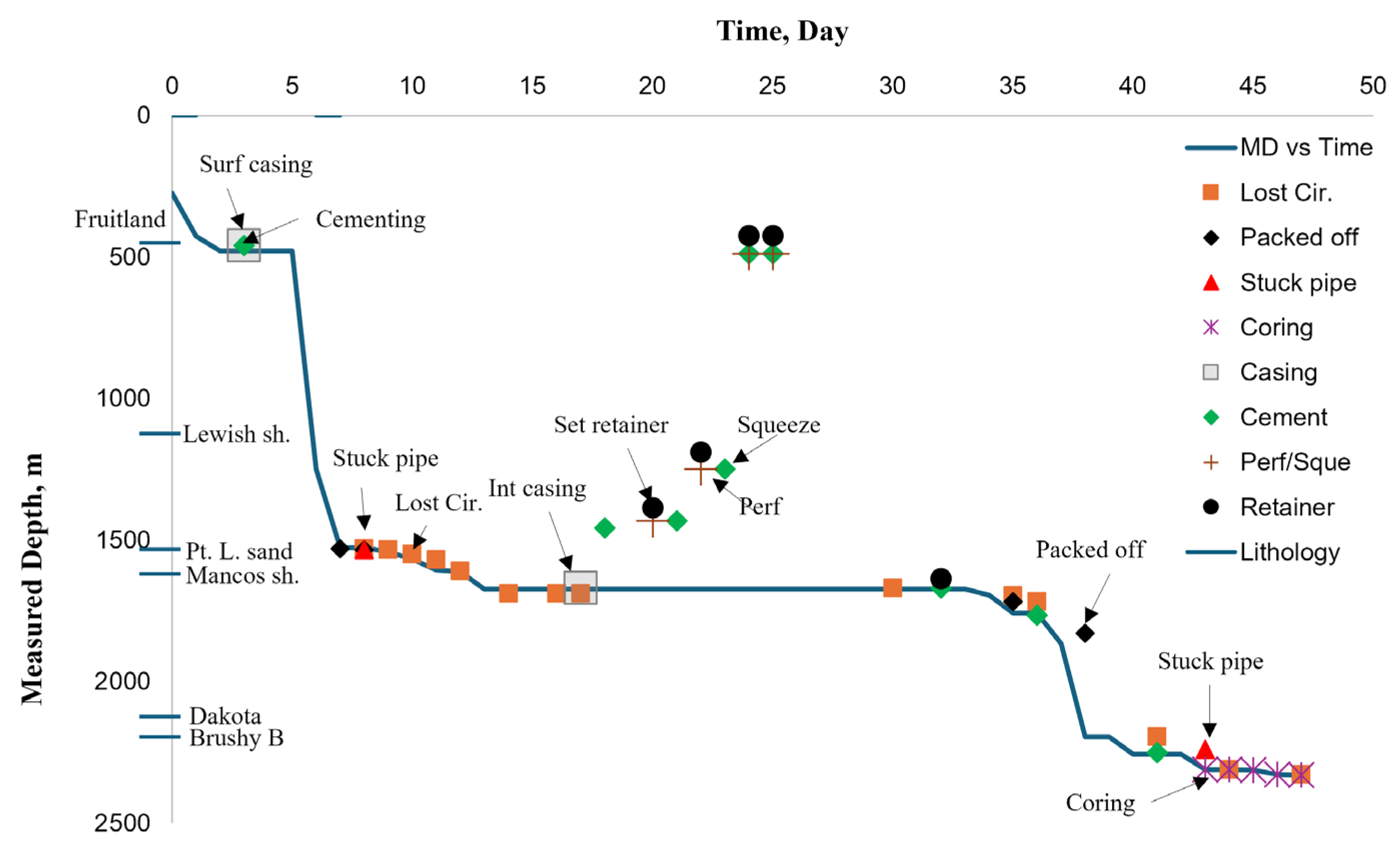
The well was spud on 26 November 2022. Figure 4 shows a summary of the key drilling problems that occurred when drilling the well.
Figure 4. Summary of key incidents occurred when drilling the well.
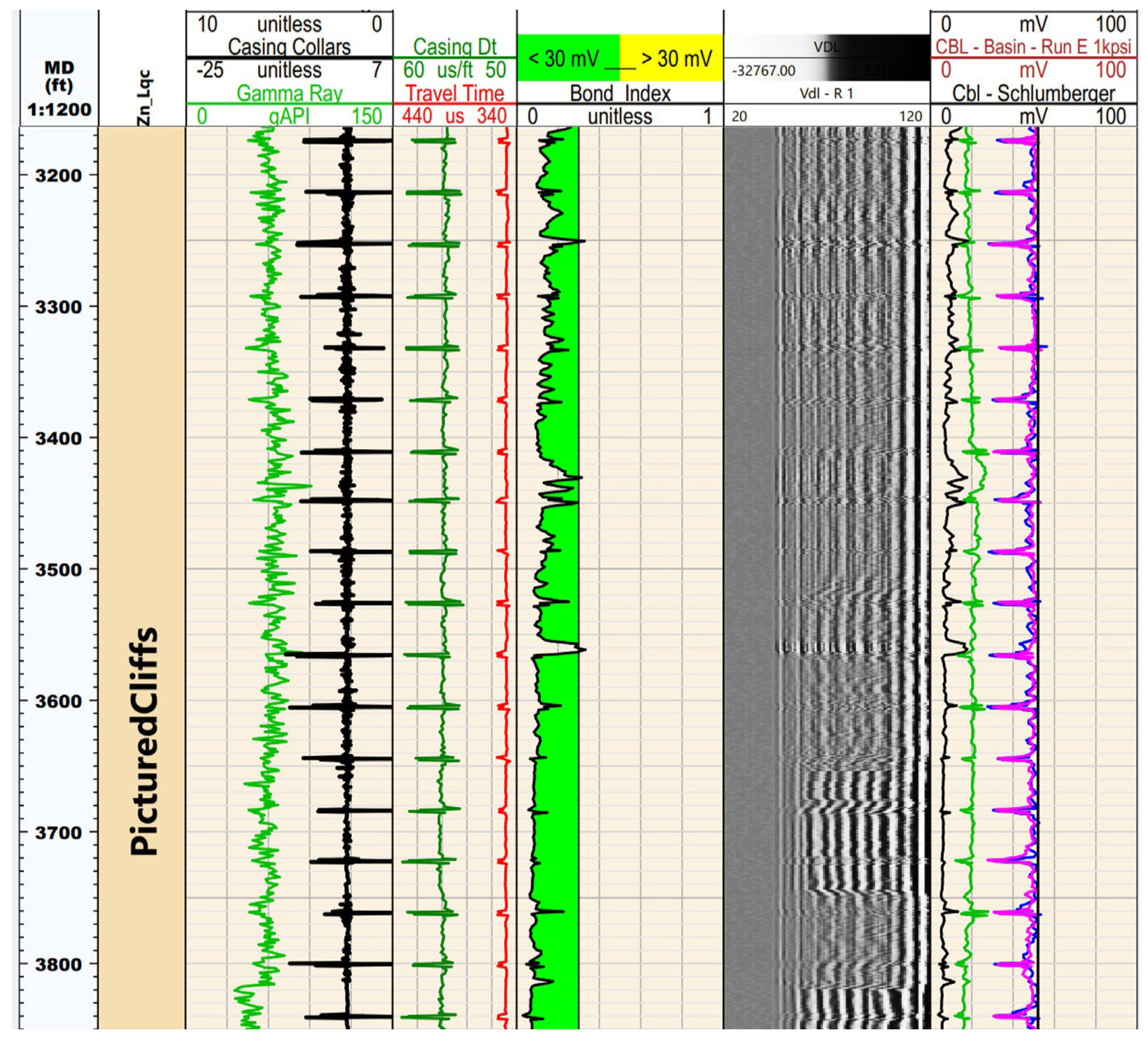
It took about 4 days to complete drilling, running, and cementing the surface casing set at 457 m. As expected, there were almost no problems when drilling through the Fruitland formation. A pressure test was conducted, and good cement bonding was confirmed by the characteristic Cement Bond Log (CBL) and Variable Density Log (VDL) responses, where low signal amplitudes, attenuated waveforms, and high bond index values indicated good cement bonding between casing and cement. A 3 m open hole was drilled to conduct the Formation Integrity Test (FIT). However, the shoe was unable to hold pressure, and the FIT failed. This failure may be attributed to the ECD during cementing exceeding the formation’s fracture pressure, which could have induced fractures and subsequent fluid leak-off. Notably, the CBL/VDL responses indicate good cement bonding across the surface casing interval, which reduces the likelihood that the failed FIT was driven primarily by gross cementing deficiencies. However, no independent downhole diagnostic specifically confirming fracture opening at the shoe was available. Therefore, the loss mechanism is interpreted as pressure-induced fracture opening based on the operational sequence and the predicted operating window, while recognizing that localized cement-related leakage pathways or elevated natural permeability could also contribute.
When the bit advanced a few feet into the Point Lookout (PL) sand formation at about 1524 m, a total loss was observed. Different types of LCMs were used without success. It took about 10 days to drill about 91 m from the top of the PL sand formation into the Mancos shale formation of about 6 m. Most of the time, drilling operations were carried out without return, meaning this was a blind drilling. A lot of fluid volumes and LCMs were lost into the formation during this blind drilling.
When the true depth reached 1707 m, the 24.45 cm intermediate casing was run. Shortly after running the intermediate casing, drillers and cementers realized that the check valve on the float collar became plugged off due to the excessive LCMs used before that. The cementing program was modified accordingly. Instead of pumping the first stage from 1676 m to 1433 m, cementers activated the external casing packer at the depth of about 1433 m. The Diverter Tool (DV tool) was activated to pump cement slurry into the intermediate casing annulus. However, this cement operation was not successful due to severe cement losses into the formations. CBL confirmed that there was almost no cement behind the casing.
The following decisions were made, as shown in Figure 4: (1) perforate the casing at the depth of 1433 m; (2) set a retainer at a depth of 1387 m; (3) squeeze 1749 kg/m3 cement; (4) wait on cement and run a temperature log; and (5) determine the TOC. This procedure was repeated four times before seeing the cement returns, indicating the upper section of the casing annulus (from 1433 m to the surface) was full of cement.
After drilling out the float collar and the casing shoe, severe losses were observed again. CBL was conducted to examine if there was any cement behind the lower part (from 1433 m to 1676 m) of the intermediate casing. The CBL data clearly indicated that some of the cement slurries, pumped during the first stage of cementing operations, were pushed down into the PL sand formation below the external casing packer. Squeezing cement into the casing shoe was proposed and conducted; however, this operation did not yield expected results. Severe losses were seen right after drilling out the cement plug at the casing shoe to go into the new Mancos shale formation. A retainer was set, and another squeeze cement was carried out to have a good seal at the shoe.
It took drillers about 7 days to drill to the top of the core point, which is about 2310 m. During drilling this interval, losses were controlled until the top of the Dakota formation was reached. When drilling into the Dakota formation, severe losses were seen, and blind drilling was executed a few times to reach the top of the core point. Starting from 8 January 2023, coring operations were carried out to retrieve approximately 137 m of core samples from the Brushy basin member of the Morrison, Saltwash Member, Bluff, Summerville, Todilto, Entrata, and Carmel formations.

4. Discussion

4.1. Depleted Formation

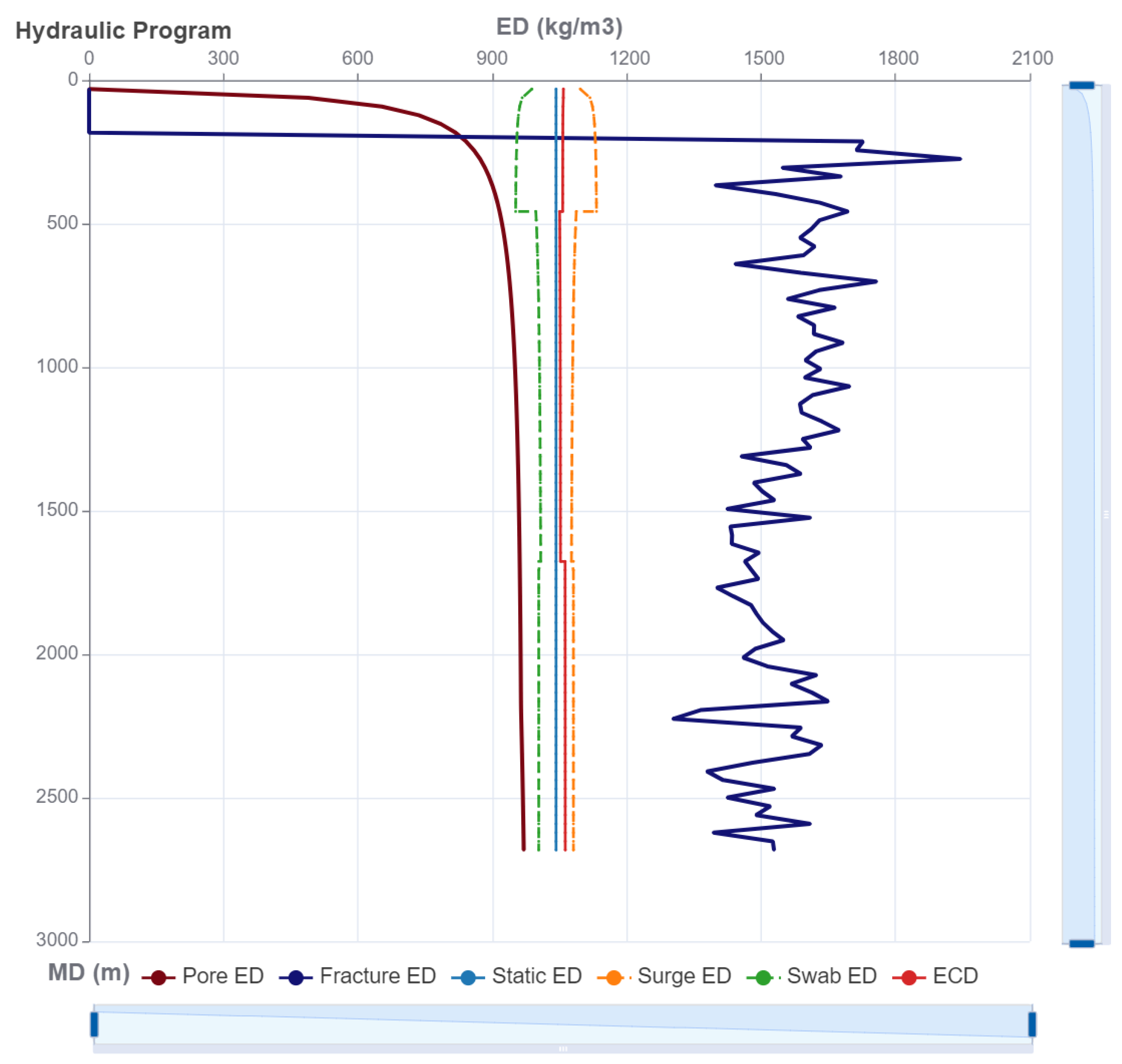
Based on the geomechanics model prediction prior to drilling, the ECD, surge, and swab data are plotted and presented in Figure 5 using PPSC Drilling Software with a mud weight of 1042 kg/m3 and circulation rates as suggested in Table 2. As a result of the data, drilling operations through the surface, intermediate, and production casings should be successful. However, the drilling process resulted in severe fluid loss and pipe sticking.
Figure 5. Hydraulics data in the surface, intermediate, and production casing holes of the well.
The unexpectedly lower fracture formation pressure could be caused by depletion of the area [48]. A depletion occurs in the oil and gas industry when the pressure and fluid content of a formation decrease over time [49]. Since the depletion formation has low formation pressure as a result of fluid withdrawal, it will be sensitive to drilling with high density drilling mud, which can fracture it and cause further problems. During drilling the well, equivalent circulating density was not high; however, the fluid loss situation occurred.
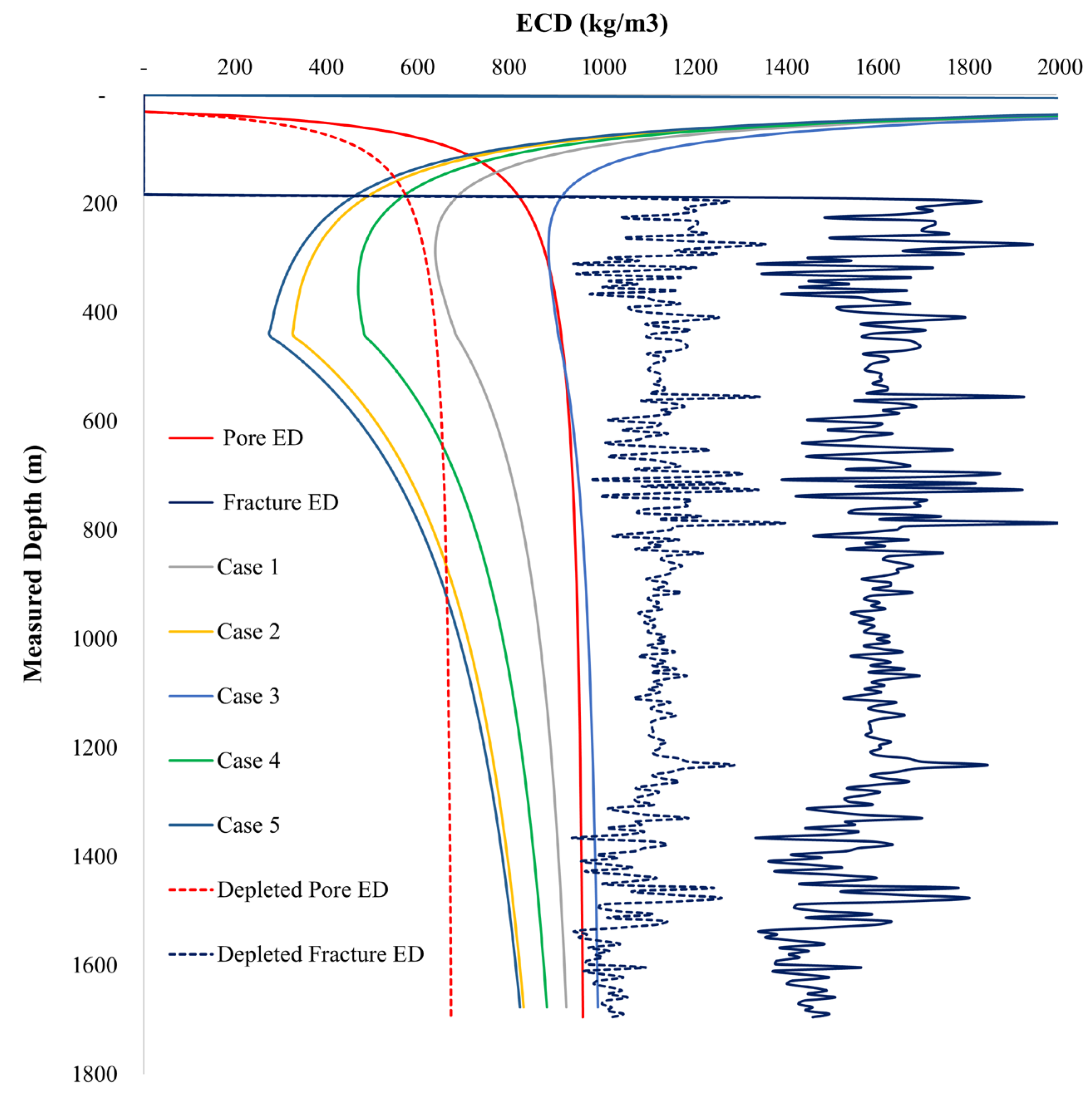
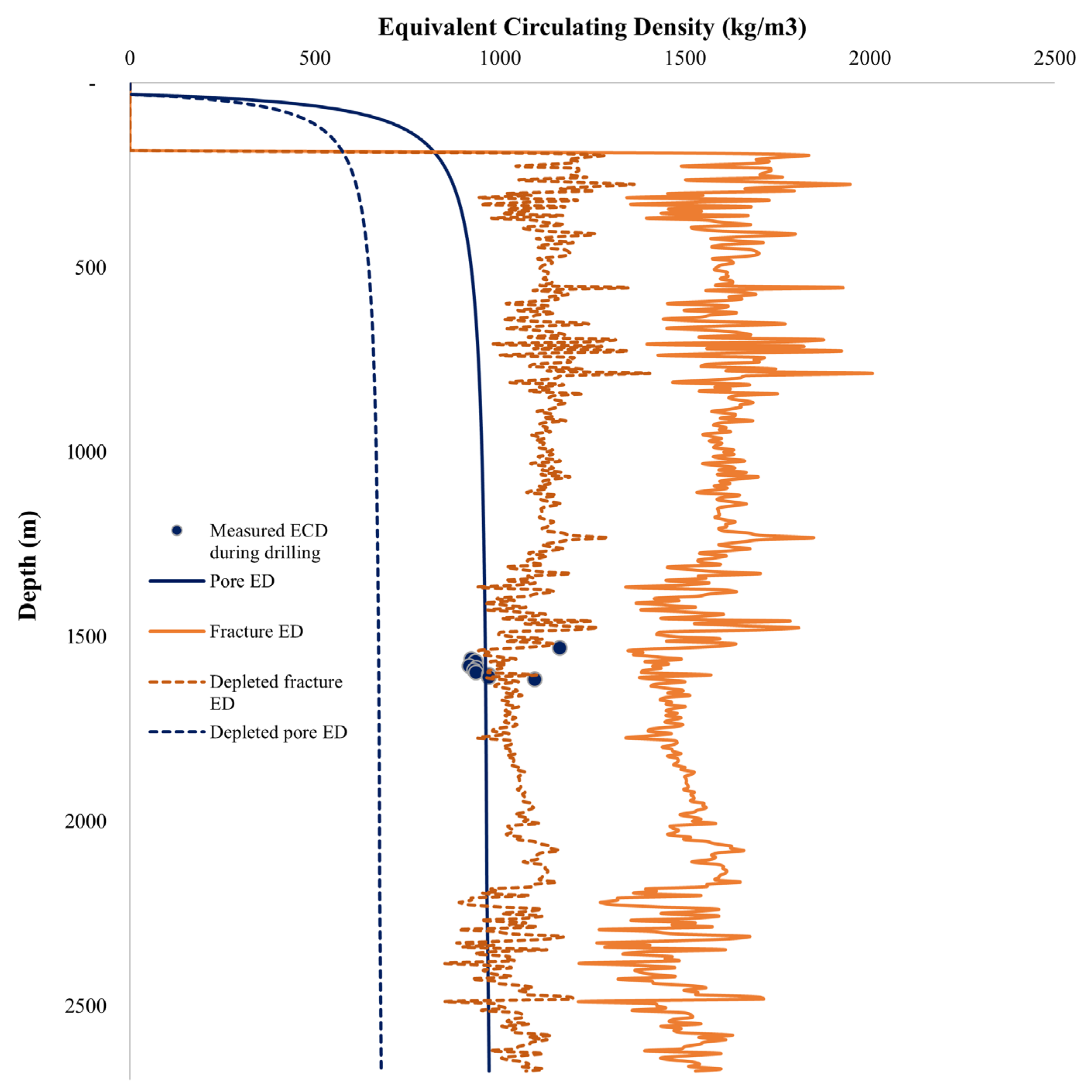
To quantify the depletion effect, the predicted fracture equivalent density (ED) from the pre-drill geomechanical/hydraulics model is compared to the depleted fracture ED inferred from measured ECD at depths where severe or total losses occurred (Table 3). In the Point Lookout interval (1530–1603 m), the inferred depleted fracture ED ranges from 917.87–1162.32 kg/m3 (7.66–9.70 ppg), whereas the pre-drill model predicts 1383.71–1570.32 kg/m3 (11.55–13.11 ppg). The predicted fracture ED exceeds the inferred depleted fracture ED by 327.03–599.73 kg/m3 (2.73–5.01 ppg), with an average difference of 480.96 kg/m3 (4.01 ppg). In the overlying Upper Mancos (1609–1615 m), the average deviation remains 376.15 kg/m3 (3.14 ppg).
Table 3. Quantitative comparison between inferred depleted fracture ED (from measured ECD at loss intervals) and predicted fracture ED (pre-drill model) in the Point Lookout and Upper Mancos intervals.
These quantitative deviations confirm that depletion substantially reduced the fracture tolerance relative to pre-drill expectations. Figure 6 shows measured ECD during drilling in the depths that have fluid loss situations. From the measured ECD, the depleted fracture ED and pore ED can be predicted. Since the formation has been depleted, the current formation data may not be accurate. Therefore, the use of outdated data may lead to incorrect design and operations, which could result in fluid loss, stuck pipe, or well instability due to differential pressure.
Figure 6. Depleted pore ED and fracture ED based on measured ECD during drilling the well.

4.2. Stuck Pipe

When the bit advanced a few feet into the PL sand formation, the drill string pipe became very tight. This incident occurred due to the excessive uses of LCMs which causes high differential pressure between the wellbore and the formation (known as differential pressure sticking). Since the pore pressure is much lower than the fluid pressure and the excessive use of LCMs, thick filter cake formed on the wellbore wall [28]. This filter cake will serve as a barrier and prevent communication between the drilling mud and the formation [36]. The differential pressure between the drilling mud and the pore pressure was high enough, causing the drill string to be stuck on one side of the bore hole. However, the power of the top drive used to drill this well was large enough to free up the drill string.

4.3. Fluid Loss

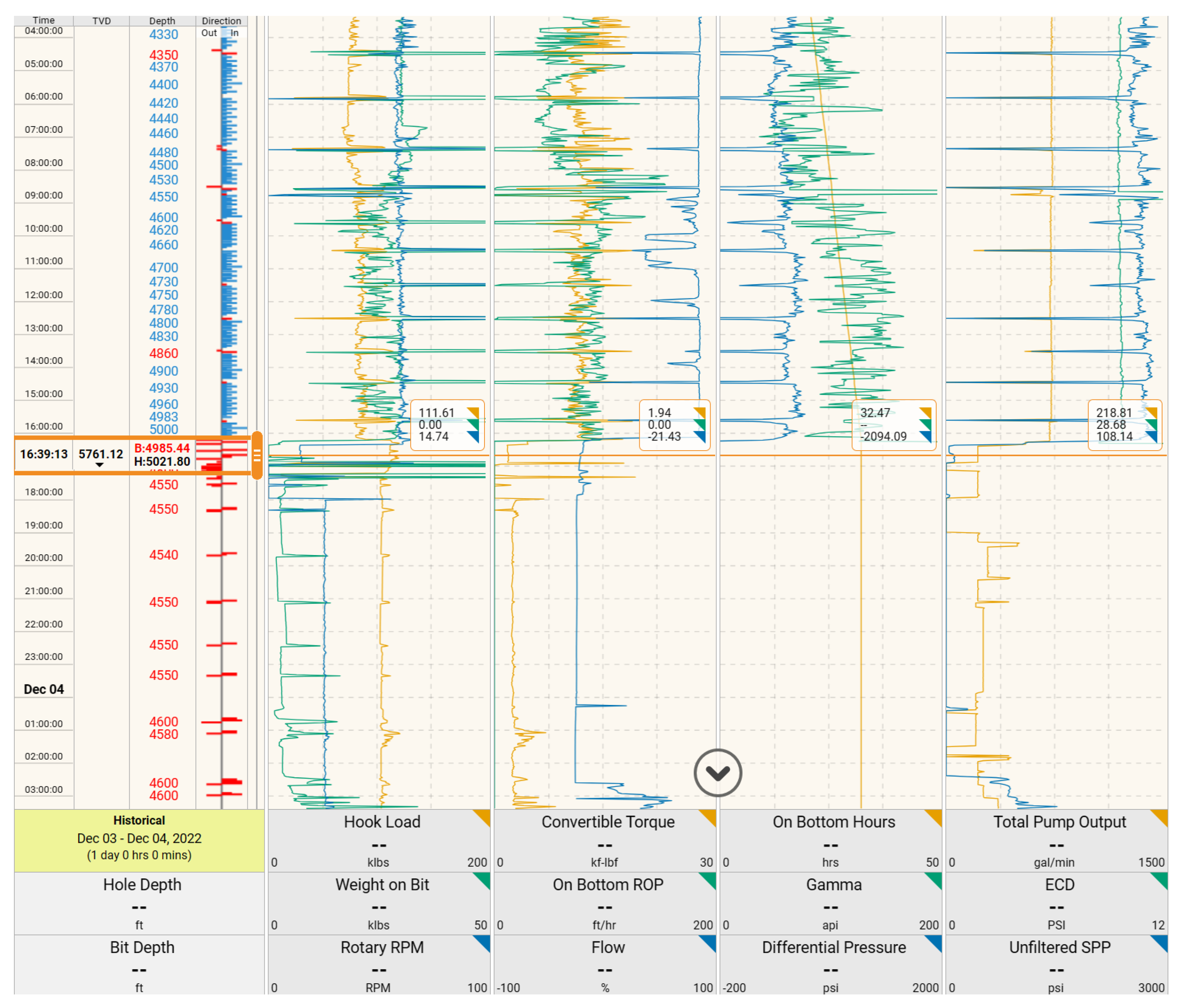
According to the drilling report, when the pipe was drilled to a depth of 1524 m, the return of fluid suddenly decreased from 88% to 0% as shown in Figure 7. This indicates that a total amount of fluid was lost. The main reason for fluid loss in this well was an underpressurized formation where the fracture pressure gradient is much lower than the predicted values. The formation fracture pressure is significantly reduced at this depth, as shown in Figure 6, which means that the formation is sensitive and easy to be fractured at this depth [48]. As a result, drilling fluid entered the formation through these induced fractures. It is anticipated that the induced fracture heights penetrated through multiple zones due to the fact that there were cement slurries traveling from one formation to another formation. Due to the high production concentration in the Mesaverde and Dakota formations in recent years [9], the depletion process is occurring more quickly. As a result, the formation pressure in these regions is insufficient to sustain formation stability under the effect of hydraulic static pressure inside the casing and other factors during drilling.
Figure 7. Drilling parameters versus time and depth, as exported directly from the rig monitoring software. The software output is displayed in field units (e.g., depth in ft, ECD in ppg, torque in klbf.ft, pressure in psi, and flow in gal/min). (SI unit conversions are provided for reference: 1 ft = 0.305 m, 1 ppg = 119.8 kg/m3, 1 klbf.ft = 1.356 kN·m, 1 psi = 6.895 kPa, and 1 gal/min = 1.32 m3/min. All numerical values discussed in the manuscript text and tables are presented in SI units for consistency).

4.4. Blind Drilling

The 91 m of blind drilling conducted over approximately 10 days in the Point Lookout sand had significant implications for subsequent wellbore integrity and cementing operations through mechanisms of drilling-induced fracture (DIF) propagation and cross-formational hydraulic communication. Prolonged blind drilling creates sustained elevated wellbore pressure that initiates and propagates DIFs in depleted formations through three primary mechanisms [50]: (i) continuous fluid injection maintains pressure at fracture tips, enabling tensile and shear propagation when injection timescales exceed leak-off timescales [50,51]; (ii) severely depleted fracture gradients lower DIF initiation thresholds, making even modest overbalance sufficient to initiate fractures [52]; and (iii) extended drilling duration (10 days) allows fracture growth, pore-pressure diffusion, and stress redistribution that enlarge and interconnect fracture networks [50]. These drilling-induced fractures propagating from the wellbore can intersect pre-existing natural fractures, bedding planes, and sand/shale interfaces, particularly the high-angle interface between Point Lookout sand and Mancos shale, to create continuous hydraulic pathways between formations under depletion-altered stress states [52]. The substantial LCM volumes used during blind drilling had limited effectiveness, as continued total losses suggest fracture apertures exceeded typical LCM bridging capacity or that fracture networks were too extensive for effective sealing [53,54]. This interconnected DIF network created during blind drilling directly explains the cement slurry migration observed during intermediate casing cementing operations: cement slurry preferentially flowed into open fractures under gravity and overbalance pressure rather than filling the annulus [55,56], with CBL data confirming cement pushed below the external casing packer into the Point Lookout sand via cross-formational pathways [52,55]. The resulting incomplete annular cement coverage necessitated four squeeze cement operations to restore zonal isolation, a critical concern for long-term CO2 containment in Class VI wells. For future Class VI wells in the San Juan Basin, the proposed solutions in Section 5 including updated geomechanical models accounting for depletion effects, underbalanced drilling with nitrified mud, and controlled drilling parameters, are specifically designed to prevent prolonged blind drilling and maintain wellbore pressure below depleted fracture gradients, thereby avoiding DIF propagation and associated wellbore integrity challenges [48,54].

4.5. Using LCM

LCM refers to a substance or mixture of substances, that serves primarily to prevent fluid loss by sealing permeable zones or reducing drilling mud density [57]. For drilling wells in the SJB, it is recommended that 35% LCM should be added to drilling mud, and the viscosity should be maintained at 0.045 Pa·s. It may be necessary to use 50 to 60% LCM if losses are severe [58]. In this well, multiple LCM blends were pumped while drilling from the Point Lookout (PL) sand into the Mancos shale during severe-loss intervals. However, circulation losses did not improve, indicating that the loss mechanism could not be effectively sealed by continued LCM escalation. Material usage records show that LCM loading reached unusually high levels. During drilling the intermediate hole, cumulative LCM mass exceeded 454 kg (>1000 lb), including 152 kg of NEWGEL HY polymer (336 lb), 185 kg of calcium sulfate (407 lb), 45 kg of Fiber Seal (100 lb), and multiple granular additives, resulting in peak concentrations of approximately 114–143 kg/m3 (40–50 ppb) in the active mud system. In the production hole, total LCM usage exceeded 1134 kg (>2500 lb), with NTEGRAL I and V products alone totaling 1032 kg (91 bags; 2275 lb) and peak concentrations reaching 86–114 kg/m3 (30–40 ppb). These concentrations and cumulative loadings are at the upper end of, or exceed, typical successful field applications reported in the literature. Table 4 summarizes LCM usage in this well and compares it with literature-based operational thresholds.
Table 4. Summary of LCM usage and operational thresholds.
The unusually high LCM loading contributed to several operational challenges. First, under sustained losses, high-solids, and low-fluid-loss, LCM systems can behave in a proppant-like manner: appropriately graded blends at high concentrations may form load-bearing particle packs in fractures, maintaining fracture openness through mechanical support rather than sealing [61,62]. This behavior is consistent with the continued total losses observed despite escalating LCM treatments and can further reduce the formation’s ability to sustain pressure, thereby increasing loss rates. Second, excessive LCM promotes thick, low-permeability filter cake, which can increase differential sticking risk and contribute to wellbore instability and non-productive time [28]. Third, shortly after running the intermediate casing, the float collar check valve plugged off, indicating that cumulative particle loading exceeded equipment handling capacity. The literature guidance for operations involving float equipment recommends controlling solids loading and limiting particle size to reduce plugging risk, while cumulative mass limits depend on tool geometry and the use of protective circulation devices [37,61].

4.6. Cementing Failure

Two-stage cementing operations were not able to perform for the intermediate casing due to being plugged off on the float collar. This plugged off on the float collar was due to the excessive usage of LCMs to mitigate losses during the drilling operations. Because of this failure, the original two stage cementing operation plan was modified. A series of perforation, setting retainer, squeeze cement, and running CBL to determine the TOC was executed to have cement returning to the surface. It took about 8 days to cement the intermediate casing. The CBL as shown in Figure 8 confirmed that there was an interval of more than 183 m of good cement bonding. Due to severe cement losses when cementing the production casing, similar cementing operations were conducted until cement return was seen at the surface.
Figure 8. CBL for the intermediate casing of the well. The figure is exported directly from Schlumberger logging software, which uses field units: depth in ft, gamma ray in API units, travel time in µs/ft, pressure in psi, and amplitude in mV. (For reference, the corresponding SI conversions are 1 ft = 0.305 m, 1 µs/ft = 3.281 µs/m, and 1 psi = 6895 Pa. All values discussed in the manuscript text and tables are presented in SI units).
The challenges when cementing the intermediate and production casings were from the following reasons:
  • Excessive use of LCMs might cause some unexpected incidents such as plugging off on the float collar and uncontrollable lost circulations [28].
  • The fracture pressure is much lower than the values predicted using the geomechanics model.
  • Caverns and high permeable coal zones might exist above the Mancos shale formation. This makes cementing operations very challenging [44].

4.7. Proposed Solution for Drilling New Wells in the Area

4.7.1. Updating the Geomechanical Model

Due to the depletion of the formation, the current formation data may not be accurate. Prior to drilling, the geomechanics model predicted that a mud density of 1019–1042 kg/m3 would be suitable for drilling this well. Using PPSC Drilling Software with the mud weight of 1042 kg/m3, surge and swab equivalent density are plotted and reported in Figure 5. The information indicates that drilling operations through the intermediate, production, and surface casings must be carried out successfully.
Nevertheless, significant losses occurred, indicating that depletion has resulted in a substantially lower fracture formation pressure than anticipated [63]. As a result, the geomechanic model needs to be updated with the most recent well data. In order to have the most recent predictions on pore pressure, fracture pressure, collapse pressure, overburden stress, and breakout pressure, the geomechanic model should be updated using data from the extended leak-off test or mini frac test, lost circulation events, sonic log, rock physical properties, etc.

4.7.2. Underbalanced Drilling

The minimum water-based drilling fluid density used during the blind drilling to drill the intermediate casing hole of the well was 1007 kg/m3. Total losses were observed when the bit started advancing to the PL formation. Total cement losses also occurred at this depth interval. In addition, a small amount of formation gases was recorded and flared at the surface when drilling the intermediate casing hole. Therefore, the pressure operating window to avoid lost circulation and prevent major gas kicks is small when drilling the intermediate and production casing. Air drilling has been quite common in the past, but this technology faces unique challenges such as potential downhole fires, wellbore collapse and ununiform, gas kicks, and poor hole cleaning [64]. Therefore, we propose the use of nitrified mud underbalanced drilling fluid for drilling new wells in the area. Using nitrified mud underbalance technology, one can control the fluid density in a range from 479 to 827 kg/m3 using water as a based fluid [65]. The advantages of nitrified mud in comparison to air or foam drilling fluid are as follows:
  • Minimal additional surface equipment: rotating BOP, gas separator, and compressor [52].
  • Flexible to control the ECD by changing injected nitrogen gas (N2) rate [65,66,67].
  • Easier to control and more stable during drilling operations [68].
  • Ability to inject N2 while drilling is stopped and circulation is shut down [66].
  • No effects on the downhole mud motor when injecting N2 into the annulus [67,68].
  • Ability to use common downhole tools, such as measure while drilling or log while drilling, when injecting into the annulus [66].

  • Less corrosion concerns as compared to air drilling [67,68].
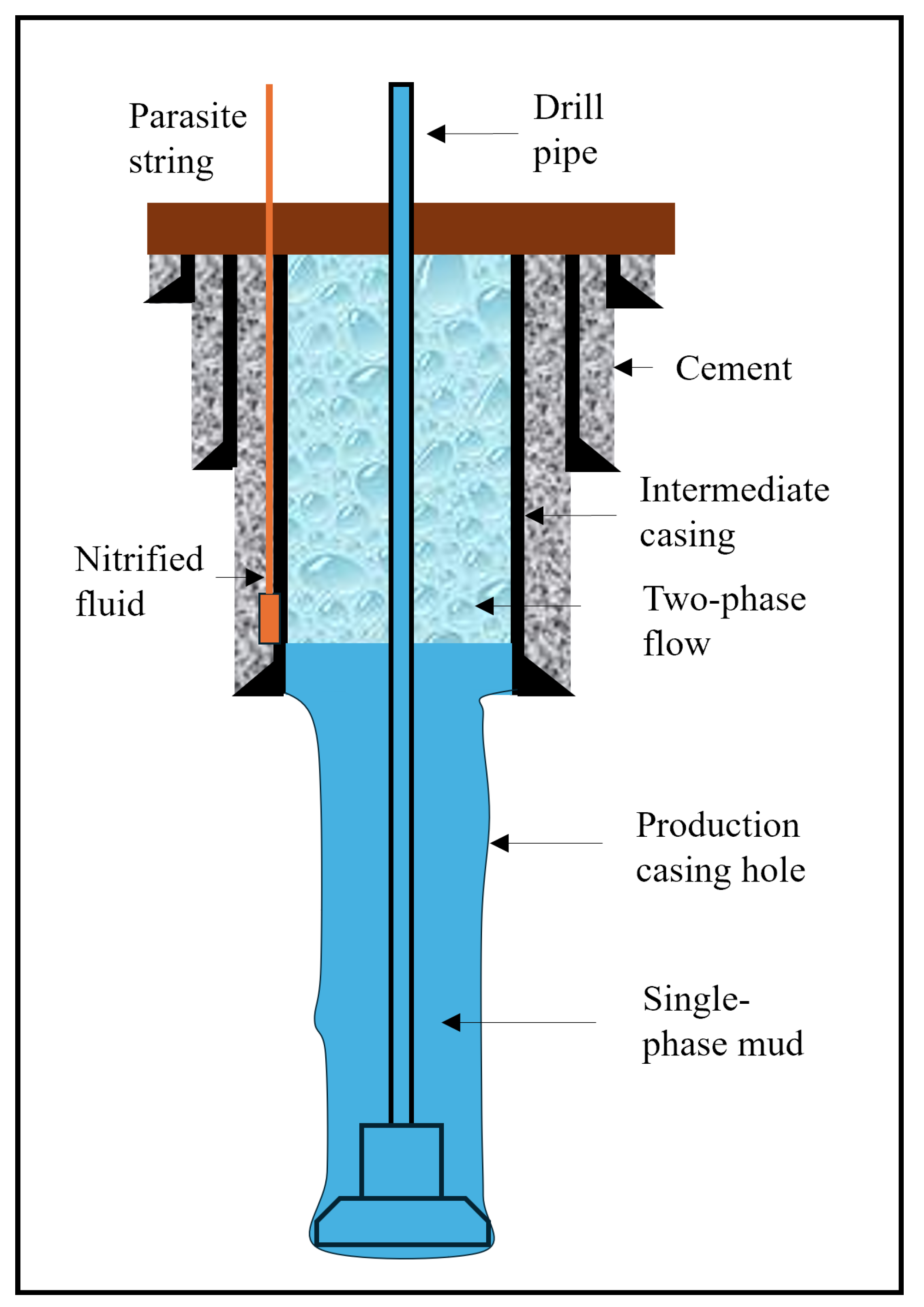
By injecting N2 into the surface and intermediate casing annulus while drilling the intermediate and production casing holes, respectively, one can control the ECD values in a range from 479 to 827 kg/m3 [65]. These controlled ECD values guarantee to mitigate fluid losses and hence minimize the non-productive time. The parasite string can be installed by strapping 3.81 cm tubing to the 33.97 cm casing and connecting it through a specially designed injection tie-in sub, a modified float collar with a welded lug. As casing is run, parasite joints were added in parallel and secured with hinged clamp. In the 31.12 cm hole with 24.45 cm casing, a 2.54 cm parasite string was applied to maintain clearance while still providing effective air injection [67,68]. Injecting N2 into the annuli can be conducted using a parasite string run behind the surface or intermediate casing as shown in Figure 9.
Figure 9. Schematic for nitrified mud drilling with N2 injection into the casing annulus.
Nitrogen injection through the parasite string creates a gas–liquid two-phase return column above the injection depth. In this study, N2 is injected into the casing annulus at the parasite-string outlet; thus, flow is modeled as single-phase liquid below the injection point and two-phase (N2 + liquid) above the injection point along the annular return to surface. Using the well geometry, mud properties, and operating inputs in Table 5 together with the N2 and liquid pump-rate cases in Table 6 and Table 7, we computed the flowing-pressure profile and ECD for the sensitivity analysis. The annular pressure profile during nitrogen injection is treated as a steady, 1D homogeneous mixture-flow problem, where the effective mixture density and mixture velocity vary with depth primarily due to pressure-dependent gas expansion. The governing differential form is
d P = a P b P + 1 1 + e c P + d 2 d L
The equivalent circulating density at a given depth is calculated from the flowing pressure as
E C D @ g i v e n   d e p t h = F P @ g i v e n   d e p t h 0.052 × M D × c o s θ = P s + d P 0.052 × M D × c o s θ
where P s is the surface pressure at the annulus outlet boundary for the modeled return path. The detailed definitions and calculations of a ,   b ,   c ,   d , and e are provided in Appendix A.
Key assumptions include steady-state conditions, fully mixed gas–liquid flow (no slip), and negligible effects of temperature transients and cuttings loading. These assumptions are adequate for comparing relative ECD trends across injection- and pump-rate scenarios; however, errors may become significant under strongly transient operations (e.g., pump shutdowns or rapid rate changes), highly deviated wells with stratified flow, conditions where N2 deviates from ideal-gas behavior, or when cuttings loading materially alters mixture properties. In such cases, final design should rely on a calibrated multiphase hydraulics model and/or field calibration using downhole pressure measurements.
Based on the above two-phase hydraulics model, a sensitivity analysis was conducted to evaluate the effect of N2 injection rate and liquid pump rate on the flowing-pressure profile and ECD. Table 5 shows general information about drilling and Table 6 shows different cases in sensitive analysis for drilling intermediate holes with nitrified mud technology.
Table 5. Input information of drilling intermediate hole with the nitrified fluid drilling method.
ParameterValue (Field Unit)Value (SI Unit)
Surface casing depth1500 ft457 m
Surface casing OD13.375 in33.97 cm
Intermediate open hole ID12.25 in31.12 cm
Intermediate casing depth5500 ft1676 m
Drill pipe OD5 in12.70 cm
Drill collar OD8.25 in20.96 cm
Drill collar length300 ft91.5 m
Mud density8.5 ppg1019 kg/m3
Mud plastic viscosity30 cP0.03 Pa.s
Mud yield strength5 lb/100 ft2239.4 Pa
N2 specific gravity0.97 (-)0.97 (-)
Solid density21.58 ppg2586 kg/m3
Rate of penetration (ROP)50 ft/h15 m/h
Surface pressure100 psi689.5 kPa
Rotation40 rpm40 rpm
Depth of parasite string1450 ft442 m
Table 6. Different cases of nitrified fluid drilling for intermediate hole section.
CasesN2 Injection Rate
(m3/Min)
Fluid Injection Rate
(m3/Min)
Case 156.631.14
Case 2113.271.32
Case 3169.901.32
Case 456.632.27
Case 5169.902.27
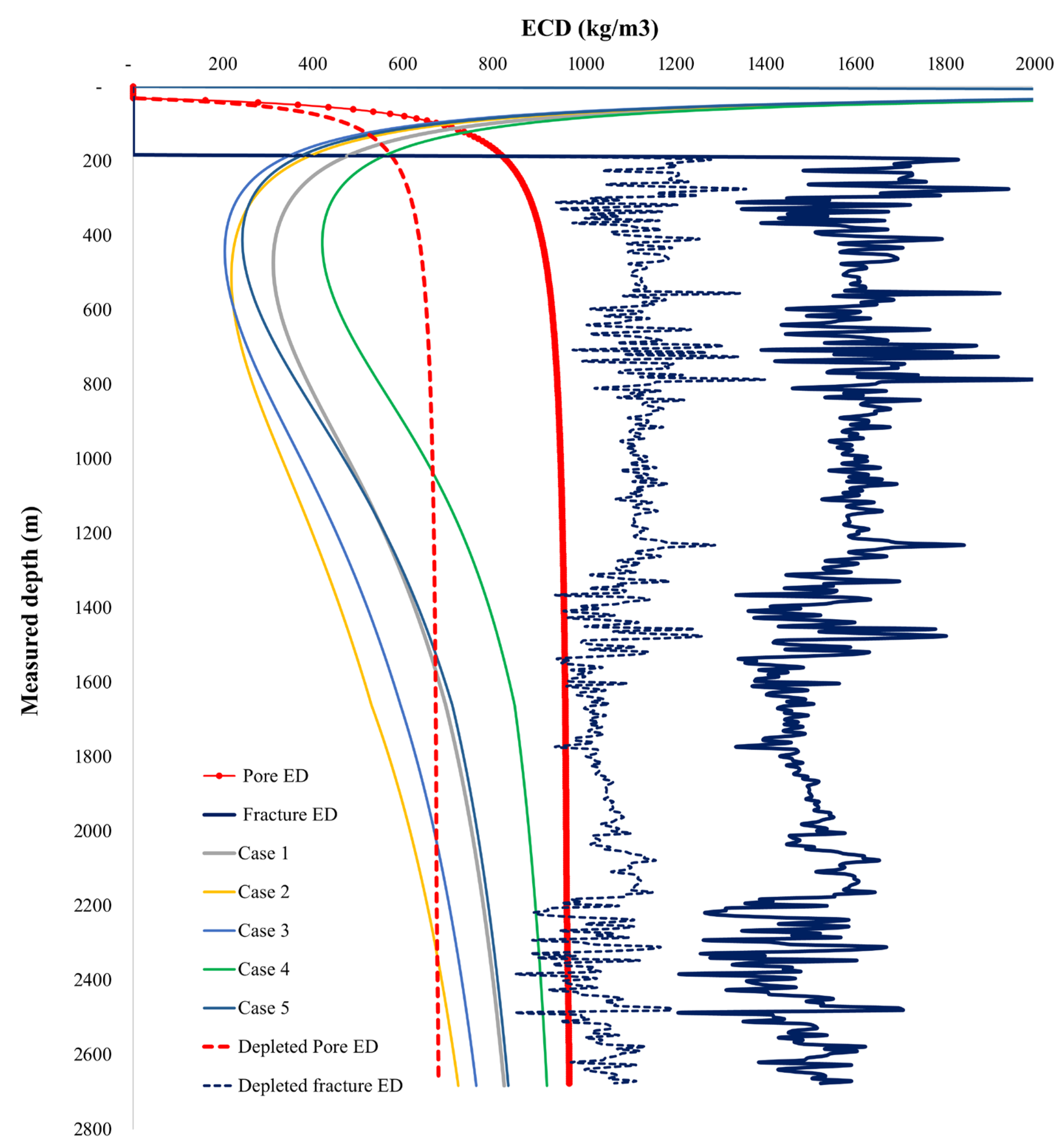
Figure 10 shows the result for intermediate hole with different N2 injection rate and mud pump rate when applying nitrified mud underbalance technology.
Figure 10. Sensitive analysis for nitrified mud drilling during drilling the intermediate hole of the well.
To distinguish acceptable reduced-pressure drilling conditions from elevated influx risk, we apply a simple operating-window criterion:
P p ( z ) 0.052 × T V D ( z ) + E D i n f l u x E C D ( z ) P f depl ( z ) 0.052 × T V D ( z ) E D l o s s
Here, E D influx and E D loss are conservative safety margins that ensure the predicted E C D remains safely above the depleted pore-pressure equivalent density while staying below the depleted fracture-initiation limit. In this study, we use E D influx = E D loss = 24   k g m 3   0.2   p p g ; P f depl ( z ) and P p depl ( z ) are the depleted fracture and pore pressures at depth z , respectively; TVD ( z ) is the true vertical depth at depth z ; and E C D ( z ) is the equivalent circulating density at depth z .
Results show that when drilling the intermediate hole section with the assumption that formation pressure has been depleted based on measured ECD during drilling, cases 1, 2, 4, and 5 could help to prevent fluid loss because the ECD is lower than the depleted fracture pressure; however, it can be kicked when applying cases 2, 4, or 5 because the ECD is lower than the pore pressure. Therefore, applying nitrified mud technology to this intermediate hole section in case 1 is applicable.
Sensitive analysis for the drilling production hole is also considered in this study, with the same assumption of mud properties, drill pipe, drill collar, and drilling operations. Table 7 shows the information of five different cases used in sensitive analysis for drilling production hole with nitrified mud underbalance technology. Figure 11 shows the result of the production hole with different N2 injection rates and mud pump rates when applying nitrified mud underbalance technology.
Figure 11. Sensitive analysis for nitrified mud drilling during drilling production hole of the well.
Table 7. Different cases of nitrified mud drilling for production hole section.
CasesN2 Injection Rate
(m3/Min)
Fluid Injection Rate
(m3/Min)
Case 156.630.76
Case 2113.270.76
Case 3169.901.51
Case 456.631.51
Case 5169.902.27
Results from Figure 11 show that this technology can help to prevent fluid loss in depleted formations with proposed N2 injection rate and fluid injection rate in cases 1 and 5. By slowly pumping, ECD can be reduced effectively. Instead of pumping 1.51 m3/min fluid, 0.76 m3/min shows an effective result with a smaller N2 injection rate. Therefore, it is recommended to drill the production hole with nitrified mud drilling technology and a slow pump rate.
While the sensitivity analyses demonstrate that nitrified-mud underbalanced drilling effectively maintains ECD below depleted fracture pressures in the San Juan Basin, field implementation requires careful consideration of several operational constraints. Gas detection systems must be modified to account for N2 dilution effects on H2S and CO2 sensors [69]. Well control for nitrified-mud underbalanced drilling mandates rotating control devices (RCDs) rated for underbalanced service, automated managed pressure drilling (MPD) controllers, and nitrogen generation capacities to maintain target bottomhole pressures while managing annular pressure variations [70,71]. For CO2 storage applications under EPA Class VI regulations, continuous real-time monitoring of annular pressure, wellhead pressure, and return flow rates is essential, with data acquisition systems integrated into the MPD control loop to document pressure integrity and formation response throughout drilling operations [72].

4.7.3. Two-Stage Cementing with Aerating Fluid

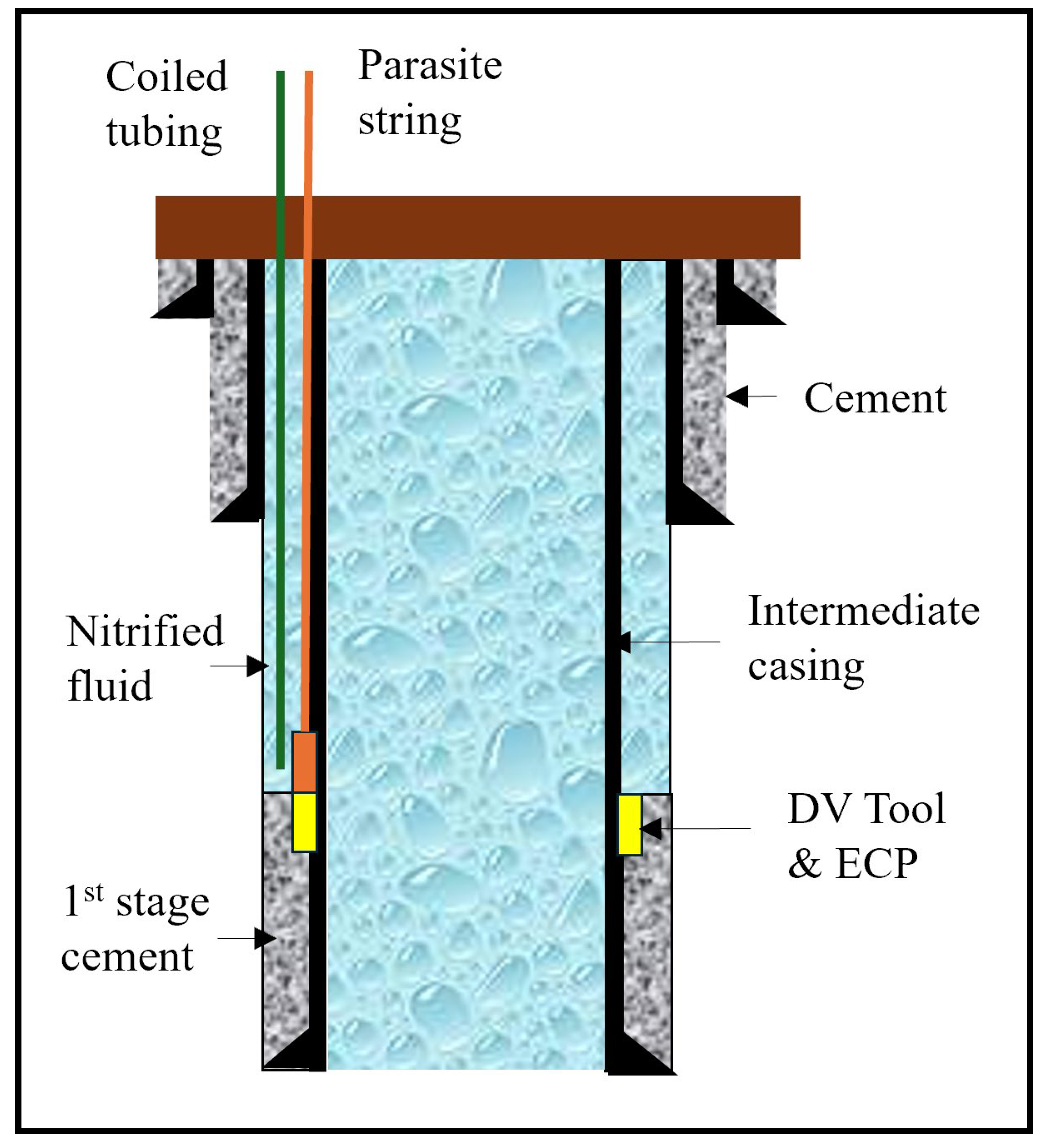
The original two-stage cementing design as shown in Table 2 did not work well because the formation fracture pressures were much lower than the predicted values. Therefore, we propose modifying the two-stage cementing design by injecting nitrified fluid into the annulus above the DV tool through coiled tubing during the first stage cementing operations, as illustrated in Figure 12. After the 1st stage cementing operations are conducted, the coiled tubing is removed and the 2nd stage cementing operations will be carried out normally.
Figure 12. Two-stage cementing operations using nitrified fluid above the DV tool.

4.7.4. Monitor Drilling Operation

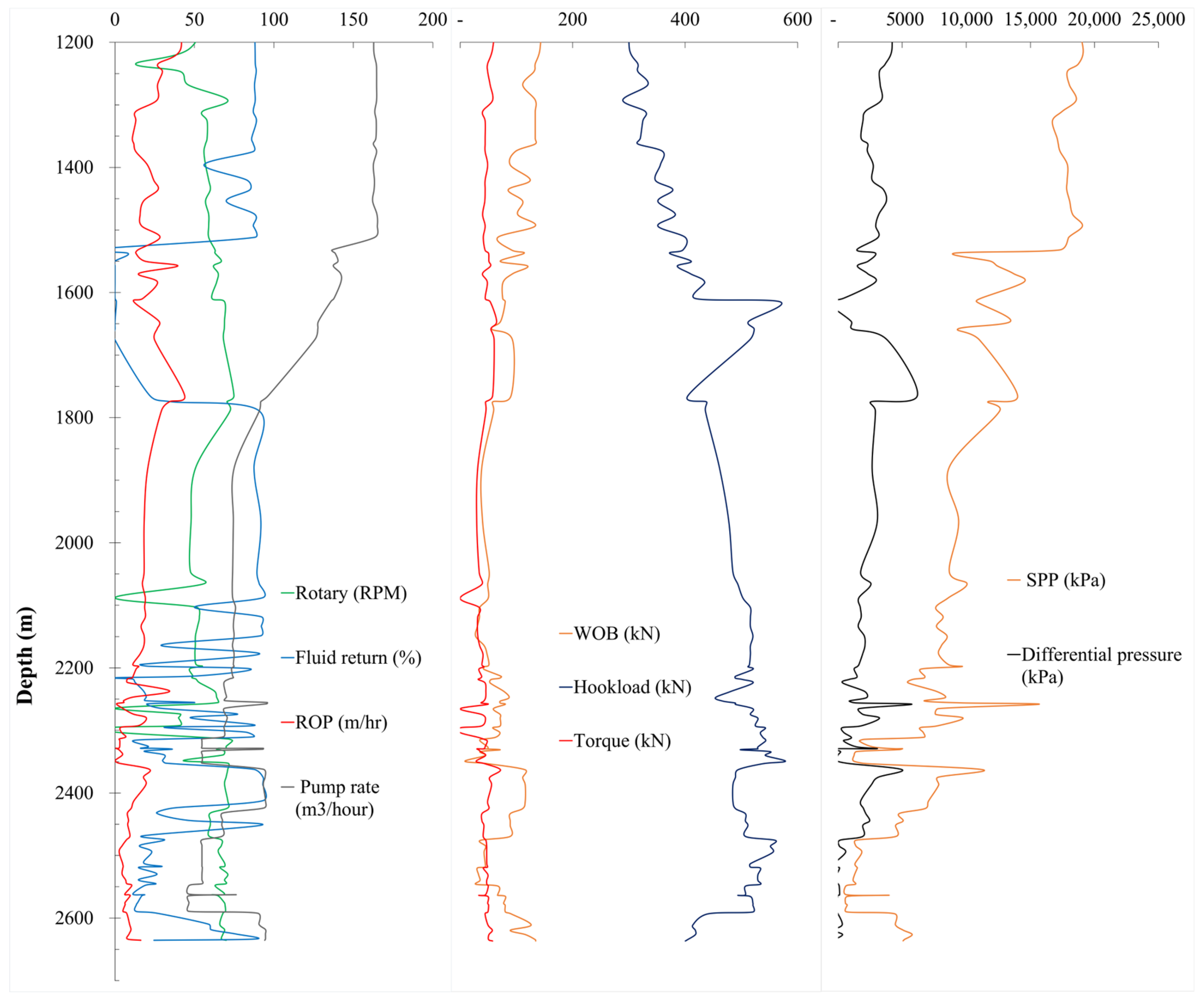
The drilling operation also has an impact on the fluid loss situation. Fast drilling (high Rate of Penetration (ROP)) with a high Weight On Bit (WOB), high rotation speed, and high pump rate can increase ECD and apply more force into the formation. In addition, high annular velocity in the annulus formed by the drill collars and the open hole will cause severe fluid losses because the mud cake is eroded under this high annular velocity condition. This high fluid velocity open hole interval will also generate high frictional pressure drop leading to much higher ECD which can potentially induce formation fractures leading to total losses. Figure 13 illustrates the positive effects of changing drilling operations after encountering total fluid loss when drilling the production casing hole of the well. Details of the drilling operation changes are presented in Table 8. With the changes as shown in Table 8, the fluid return was improved from 0 to more than 90% which was a significant success. However, this improvement occurred across depth intervals that may not be strictly lithologically equivalent; therefore, while the operational sequence suggests that parameter changes likely contributed to improved returns, lithology, natural fracturing, and local permeability variations may act as confounding factors, and a unique causal attribution cannot be made from these field observations alone. Nevertheless, from an operational standpoint, the results support adopting a conservative drilling mode in depleted intervals to mitigate losses. Accordingly, for future wells in the area, it is recommended to keep the drilling operations when drilling new wells as follows: WOB around 44,500 N, rotation speed from the top drive about 45 rpm, and pump rate about 1.32 m3/min to minimize fluid losses.
Figure 13. Drilling operation of the well according to depth.
Table 8. Effects of changing the drilling parameters on the fluid return.

5. Conclusions

Drilling wells in the SJB will encounter many problems, of which fluid loss, stuck pipes, and poor cementing are the most common. This is because the area has been depleted, which makes the formation fracture pressure much lower than expected. In order to overcome these issues, we suggest the following key operations for drilling new wells in the area:
  • Update the geomechanical model to have the latest pore, fracture, collapse, and breakout pressures.
  • Apply underbalanced drilling technique using nitrified mud by injecting N2 into the annulus using a parasite string when drilling the intermediate and production casing holes. This will help to mitigate fluid losses and non-productive time.
  • Controlling the drilling parameters is also a key technique to minimize fluid loss. Keeping the WOB under 44,500 N, the speed of top drive rotation under 45 rpm, and the pump fluid rate under 1.32 m3/min are recommended to have good fluid return during drilling through sensitive formations which have low fracture pressure.
  • To avoid cement losses when cementing the intermediate and production casings, it is recommended to use the two-stage cementing technique in conjunction with nitrified fluid above the DV tool.
Although this study focused on the San Juan Basin, the lessons learned are broadly applicable to other CO2 storage projects, especially those targeting depleted hydrocarbon reservoirs. Since such formations are common candidates for storage due to their proven capacity and existing data, they share similar challenges of low fracture pressure, fluid losses, and cement placement issues; therefore, the recommendations provided here can help improve drilling success and well integrity across a wide range of CO2 sequestration sites.

Author Contributions

Conceptualization, V.T.N., W.A. and T.N.; methodology, V.T.N., W.A., T.N. and S.W.; software, T.N.; validation, V.T.N., W.A., T.N., S.W., D.P., H.D. and H.V.; formal analysis, V.T.N.; data curation, V.T.N., D.P. and H.V.; writing—original draft preparation, V.T.N.; writing—review and editing, V.T.N., W.A., T.N., S.W., D.P., H.D. and H.V.; visualization, V.T.N., S.W., D.P., H.D. and H.V.; supervision, W.A. and T.N.; project administration, W.A. and T.N.; funding acquisition, W.A. All authors have read and agreed to the published version of the manuscript.

Funding

This research was funded by the U.S. Department of Energy (DOE), Award Number DE-FE0031890. The APC was waived for this publication.

Institutional Review Board Statement

Not applicable.

Data Availability Statement

The data supporting the reported results are publicly available in the following datasets: (1) Pore pressure and fracture pressure, and (2) Daily Activities Summary, accessible at the URLs below (public access, no restrictions). Pore pressure and fracture pressure: https://docs.google.com/spreadsheets/d/1HRk_pu2LZEar96pZ4Qk1V3bda-j013hY/edit?usp=drive_link&ouid=118081637025990695771&rtpof=true&sd=true (accessed on 9 January 2026). Daily Activities Summary: https://docs.google.com/spreadsheets/d/1dIATBU8Gxyr_s0SekzO2ytde_3iAtukt/edit?usp=drive_link&ouid=118081637025990695771&rtpof=true&sd=true (accessed on 9 January 2026).

Acknowledgments

We acknowledge the support from the Petroleum Department and the Petroleum Recovery Research Center of New Mexico Tech for this study.

Conflicts of Interest

The authors declare no conflicts of interest. The funders had no role in the design of the study; in the collection, analyses, or interpretation of data; in the writing of the manuscript; or in the decision to publish the results.

Abbreviations

The following abbreviations are used in this manuscript:
AoRArea of Review
APIAmerican Petroleum Institute
BOPBlowout preventer
CBLCement Bond Log
CO2Carbon dioxide
CarbonSAFECarbon Storage Assurance Facility Enterprise
DV toolDiverter Tool (stage cementing tool)
DIFDrilling-induced fracture
ECDEquivalent Circulating Density
EDEquivalent density
EPAU.S. Environmental Protection Agency
FITFormation Integrity Test
IDInner diameter
LCMLost circulation material
MPDManaged pressure drilling
N2Nitrogen gas
NPTNon-productive time
ODOuter diameter
OHOpen hole
PLPoint Lookout sand formation
RCDRotating control devices
ROPRate of penetration
RPMRevolutions per minute
SJBSan Juan Basin
SIInternational System of Units
TOCTop of cement
TVDTrue vertical depth
VDLVariable Density Log
WOBWeight on bit

Appendix A

This appendix summarizes the closed-form hydraulics formulation for aerated-mud drilling in inclined wells. The model combines hydrostatic and frictional pressure components under bubbly-flow, no-slip assumptions, while accounting for injected liquid and gas, formation influx through grouped parameters.
Over a small measured-depth increment d L , the local annular pressure change d P is expressed in the compact form Equation (1). In this formulation, the mixture specific weight and mixture velocity are written as functions of pressure using the parameter groups a ,   b and c , d , respectively, as follows: m x = a P b P + 1 and v m x = c P + d . The definitions and calculation procedures for a , b , c , and d are provided in Equations (A1)–(A4).
a = 0.0014 d b 2 S s R O P + 0.25 ρ m Q m + 1.44 S l Q f + 0.019 S g Q g T Q g
b = 0.033 Q m + 0.023 Q f T Q g
c = 9.77 T Q g A
d = 0.33 Q m + 0.22 Q f A
The friction term is included through the grouped parameter e , which lumps the Moody friction factor f , flow geometry, gravity, and inclination effects.
e = f 2 g D H c o s θ
The friction factor f is evaluated with the fully rough turbulent form (Equation (A6)):
f = 1 ( 1.74 2 l o g 2 ε D H ) 2
A liquid-holdup correction factor may be applied to better match multiphase field measurements. In the original calibration, this correction factor is correlated to the downstream gas–liquid ratio (GLR) and used as a multiplier on friction factor.
C F f = 13.452 0.02992 × G L R 2
Because the in situ G L R depends on the local pressure (Equation (A8)), it should be handled implicitly during pressure calculations. Therefore, pressure at a given depth is obtained by iterating (or using a numerical solver such as spreadsheet “Goal Seek”) while enforcing the boundary condition P = P s at L = 0 .
G L R = 14.7 Q g P s + P 2 × 144 Q m 7.48 + 5.615 Q f 60
where
P : Average pressure between bottom and surface in lb/ft2.
P s : Pressure at surface in lb/ft2.
dL: Measure length in ft.
g = 32.2 ft/s2: Gravitational acceleration.
d b : Bit diameter in inch.
S s ,   S l ,   S g : Specific gravity of solid, liquid, and gas.
ROP: Rate of penetration in ft/hr.
ρ m : Mud density in ppg.
Q m , Q g : Mud rate in gpm and gas rate in scf/min.
Q f : Formation influx rate in bbl/hr.
T: Fluid temperature in °R.
θ : Inclination angle.
A: Wetted cross-sectional area of the annulus in in2.
D H : Hydraulic diameter in ft.
ε : Relative roughness. Same unit as DH.
C F f : Correction factor for f.
FP: Flowing pressure in lb/ft2.

References

  1. CarbonSAFE Initiative. U.S. Department of Energy, National Energy Technology Laboratory. Available online: https://www.netl.doe.gov/carbon-management/carbon-storage/carbonsafe (accessed on 15 September 2025).
  2. HigherGov. Cooperative Agreement DE-FE0031890: San Juan Basin CarbonSAFE Phase III: Ensuring Safe Subsurface Storage of CO2 in Saline Reservoirs. Available online: https://www.highergov.com/grant/DEFE0031890/ (accessed on 15 September 2025).
  3. San Juan CarbonSAFE. San Juan Basin CarbonSAFE Phase III: Ensuring Safe Subsurface Storage of CO2 in Saline Reservoirs. Available online: https://www.sanjuancarbonsafe.org/ (accessed on 15 September 2025).
  4. U.S. Department of Energy, Office of Fossil Energy and Carbon Management. FOA 1999 Project Selections. Available online: https://www.energy.gov/fecm/foa-1999-project-selections (accessed on 15 September 2025).
  5. U.S. Environmental Protection Agency. Geologic Sequestration of Carbon Dioxide: Underground Injection Control (UIC) Program Class VI Implementation Manual for UIC Program Directors; EPA 816-R-18-001; Office of Water (4606M): Washington, DC, USA, 2018. Available online: https://www.epa.gov/sites/default/files/2018-01/documents/implementation_manual_508_010318.pdf (accessed on 15 September 2025).
  6. U.S. Environmental Protection Agency. Class VI Wells Used for Geologic Sequestration of Carbon Dioxide. Available online: https://www.epa.gov/uic/class-vi-wells-used-geologic-sequestration-carbon-dioxide (accessed on 15 September 2025).
  7. Iyer, J.; Lackey, G.; Edvardsen, L.; Bean, A.; Carroll, S.A.; Huerta, N.; Smith, M.M.; Torsæter, M.; Dilmore, R.M.; Cerasi, P. A review of well integrity based on field experience at carbon utilization and storage sites. Int. J. Greenh. Gas Control 2022, 113, 103533. [Google Scholar] [CrossRef]
  8. Nguyen, V.T.; Nguyen, C.T.; Ampomah, W.; Wang, S.; Pham, D.; Chu, T.H.T. Screening CO2 storage wells to identify corrective actions with a machine learning model. SPE J. 2025, 30, 6668–6682. [Google Scholar] [CrossRef]
  9. Engler, T.W.; Brister, B.S.; Chen, H.-Y.; Teufel, L.W. Oil and Gas Resource Development for San Juan Basin, New Mexico: A 20-Year Reasonable Foreseeable Development (RFD) Scenario Supporting the Resource Management Plan for the Farmington Field Office; New Mexico Institute of Mining and Technology: Socorro, NM, USA; Bureau of Land Management: Santa Fe, NM, USA, 2001. [Google Scholar]
  10. Chan, A.W.; Zoback, M.D. Deformation Analysis in Reservoir Space (DARS): A Simple Formalism for Prediction of Reservoir Deformation with Depletion. In Proceedings of the SPE/ISRM Rock Mechanics Conference, Irving, TX, USA, 20–23 October 2002; Society of Petroleum Engineers: Richardson, TX, USA, 2002. [Google Scholar] [CrossRef]
  11. Zheng, W.; Xu, T.; Baihly, J.; Malpani, R.; Li, J.; Zhang, R. Advanced Modeling of Production-Induced Pressure Depletion Impact on Infill Well Using Cloud Computation in the Haynesville. In Proceedings of the International Petroleum Technology Conference, Beijing, China, 22 March 2019. [Google Scholar] [CrossRef]
  12. MacLeod, B.A. Jasmine: The challenges of delivering infill wells in a variably depleted HPHT field. Pet. Geosci. 2023, 29, 103–118. [Google Scholar] [CrossRef]
  13. Fambon, L.; Joffroy, G. Case Study: HPHT Infill Well Drilled Successfully in a Highly Depleted Reservoir on a UKCS Field; Drilling Contractor: Houston, TX, USA, 2008; pp. 40–51. Available online: https://drillingcontractor.org/dcpi/dc-julyaug08/DC_July08_TotalCaseStudy.pdf (accessed on 15 September 2025).
  14. Ampomah, W.; Wang, S.; El-Kasseh, G. Overview of Safe Subsurface Storage of CO2 in Saline Reservoirs: San Juan Basin CarbonSAFE Phase III. In Proceedings of the 16th International Conference on Greenhouse Gas Control Technologies (GHGT-16), Lyon, France, 23–27 October 2022. [Google Scholar]
  15. Huffman, A.C., Jr. Petroleum Geology and Hydrocarbon Plays of the San Juan Basin Petroleum Province; U.S. Geological Survey Open-File Report 87-450 B; U.S. Geological Survey: Reston, VA, USA, 1987. [Google Scholar] [CrossRef]
  16. Fassett, J.E. Oil and gas resources of the San Juan Basin, New Mexico and Colorado. In Geology of the Four Corners Country; Fassett, J.E., Zeigler, K.E., Lueth, V.W., Eds.; 61st Annual Fall Field Conference Guidebook; New Mexico Geological Society: Socorro, NM, USA, 2010; pp. 181–196. [Google Scholar] [CrossRef]
  17. Primasari, I.; Ampomah, W.; Chen, H.Y.; Tu, J.; Bui, D.; Ulmer-Scholle, D.; Chu, S. The Implementation of Underground CO2 Sequestration: Analysis of Caprock Leakage on the Todilto Shale of the San Juan Basin. In Proceedings of the Carbon Capture, Utilization, and Storage Conference (CCUS), Houston, TX, USA, 11–13 March 2024. [Google Scholar] [CrossRef]
  18. Bland, D.M. Coalbed methane from the Fruitland Formation, San Juan Basin, New Mexico. In San Juan Basin IV; Lucas, S.G., Kues, B.S., Williamson, T.E., Hunt, A.P., Eds.; 43rd Annual Fall Field Conference Guidebook; New Mexico Geological Society: Socorro, NM, USA, 1992; pp. 373–383. [Google Scholar] [CrossRef]
  19. Robinson, S.D.; Bealessio, T.M.; Shafer, R.S. Casing Drilling in the San Juan Basin to Eliminate Lost Returns in a Depleted Coal Formation. In Proceedings of the IADC/SPE Drilling Conference, Orlando, FL, USA, 4–6 March 2008. [Google Scholar] [CrossRef]
  20. Okafor, Z.; Higgins-Borchardt, S.M.; Akinniranye, G.; Bratton, T.; Avila, R.; Boone, D. Managed-pressure drilling using a parasite aerating string. SPE Drill. Complet. 2010, 25, 564–576. [Google Scholar] [CrossRef]
  21. Drilling Specialties Company. Lost Circulation Guide; Revised 2014/DSG; Chevron Phillips Chemical Company LP: Woodlands, TX, USA, 2014; Available online: https://www.drillingspecialties.com (accessed on 9 January 2026).
  22. Scott, P.; Redburn, M.; Nesheim, G. A Pragmatic Approach to Lost Circulation Treatments: What Every Drilling Engineer Should Know. In Proceedings of the AADE Fluids Technical Conference and Exhibition, Houston, TX, USA, 14–15 April 2020. [Google Scholar]
  23. Mitchell, R.F.; Miska, S.Z. (Eds.) Fundamentals of Drilling Engineering; Society of Petroleum Engineers: Richardson, TX, USA, 2011. [Google Scholar]
  24. Halliburton. BridgeBlend Lost Circulation Material Cures Losses and Reduces Rig Time: Case Study—Iraq; Document No. H014799; Halliburton: Houston, TX, USA, 2024; Available online: https://www.halliburton.com/en/resources/total-losses-cured-in-vuggy-formation (accessed on 9 January 2026).
  25. Drilling Manual. Loss Circulation Drilling Classification and Types. Available online: https://www.drillingmanual.com/mud-loss-lost-circulation-problem-in-drilling-operations/ (accessed on 9 January 2026).
  26. Mirabbasi, S.M.; Ameri, M.J.; Alsaba, M.; Karami, M.; Zargarbashi, A. The evolution of lost circulation prevention and mitigation based on wellbore strengthening theory: A review on experimental issues. J. Petrol. Sci. Eng. 2022, 211, 110149. [Google Scholar] [CrossRef]
  27. Carpenter, C. Lost circulation simulated accurately in primary cementing-job design. J. Petrol. Technol. 2025, 77, 1–4. [Google Scholar] [CrossRef]
  28. Bachelot, A.; Ricaud, J.; Arquey, G.; Benaissa, S. Preventing Differential Sticking and Mud Losses in Highly Depleted Sands. In Proceedings of the AADE 2004 Drilling Fluids Conference, Houston, TX, USA, 6–7 April 2004; Available online: https://www.aade.org/application/files/5715/7295/4819/AADE-04-DF-HO-27.pdf (accessed on 9 January 2026).
  29. Kibikas, W.; Nakagawa, S.; Ingraham, M.; Bauer, S.; Chang, C.; Dobson, P.; Kneafsey, T.; Samuel, A. Evaluation of lost circulation material sealing for geothermal drilling. Energies 2024, 17, 2703. [Google Scholar] [CrossRef]
  30. Jaf, P.T.; Razzaq, A.A.; Ali, J.A. The state-of-the-art review on the lost circulation phenomenon, its mechanisms, and the application of nano and natural LCM in the water-based drilling fluid. Arab. J. Geosci. 2022, 15, 11104. [Google Scholar] [CrossRef]
  31. Marbun, B.; Somawijaya, A.; Novrianto, A.R.; Hasna, H.; Anshari, M.R. Study of Prevention and Mitigation of Stuck Pipe in Geothermal Drilling. In Proceedings of the 41st Workshop on Geothermal Reservoir Engineering, Stanford University, Stanford, CA, USA, 22–24 February 2016; Available online: https://pangea.stanford.edu/ERE/pdf/IGAstandard/SGW/2016/Marbun2.pdf (accessed on 9 January 2026).
  32. Lenamond, C. A Graphical Hole Monitoring Technique to Improve Drilling in High-Angle and Inclined Deepwater Wells in Real Time. In Proceedings of the AADE 2003 National Technology Conference “Practical Solutions for Drilling Challenges”, Houston, TX, USA, 1–3 April 2003; American Association of Drilling Engineers: Houston, TX, USA, 2003. Available online: https://www.aade.org/application/files/3615/7304/4606/AADE-03-NTCE-24-Lenamond.pdf (accessed on 9 January 2026).
  33. Kingdom Drilling Services Ltd. CEDOG 3.2 Guidelines & Reference: Stuck Pipe Management—Best Practice Operating Guidelines; Rev. 2.0. Available online: https://www.my-spread.com/storage/files/1616073605_7367_7bd7da7833f90c4001de533f12701afc.pdf (accessed on 9 January 2026).
  34. Ahmed, O.S.; Aman, B.M.; Zahrani, M.A.; Ajikobi, F.I. Stuck pipe early warning system utilizing a moving window machine learning approach. In Proceedings of the Abu Dhabi International Petroleum Exhibition & Conference, Abu Dhabi, United Arab Emirates, 11–14 November 2019. [Google Scholar] [CrossRef]
  35. DeGeare, J.; Haughton, D.; McGurk, M. 5—Pipe sticking. In The Guide to Oilwell Fishing Operations: Tools, Techniques, and Rules of Thumb; Gulf Professional Publishing: Burlington, MA, USA, 2003; pp. 12–22. [Google Scholar] [CrossRef]
  36. Al Jaber, J.; Bageri, B.S.; Gamal, H.; Elkatatny, S. The role of drilled formation in filter cake properties utilizing different weighting materials. ACS Omega 2021, 6, 24039–24050. [Google Scholar] [CrossRef]
  37. Fazal, M.A.; Ahmad, S.H.; Yousuf, A.; ur Rehman, A.; Noor, S.M.; Nazir, I. Engineered Ultra-Low Invasion Loss Control Solution Allows Circulation, Ensuring Cement Placement and Zonal Isolation in Liner Cementing Jobs and through Coiled Tubing—Case Studies. In Proceedings of the Society of Petroleum Engineers, Virtual, 19 December 2023. [Google Scholar] [CrossRef]
  38. Landar, S.; Velychkovych, A.; Ropyak, L.; Andrusyak, A. A Method for Applying the Use of a Smart 4 Controller for the Assessment of Drill String Bottom-Part Vibrations and Shock Loads. Vibration 2024, 7, 802–828. [Google Scholar] [CrossRef]
  39. Dong, G.; Chen, P. A Review of the Evaluation, Control, and Application Technologies for Drill String Vibrations and Shocks in Oil and Gas Well. Shock Vib. 2016, 2016, 7418635. [Google Scholar] [CrossRef]
  40. Zhang, Y.; Ashok, P.; Fu, H.; Chen, D.; van Oort, E. A Review of Drilling Vibration Control Strategies: Modeling, Tools, Applications, and Future Directions. SSRN Electron. J. 2025, 60. [Google Scholar] [CrossRef]
  41. Beckstrom, J.A.; Boyer, D.G. Aquifer-protection considerations of coalbed methane development in the San Juan Basin. SPE Form. Eval. 1993, 8, 71–79. [Google Scholar] [CrossRef]
  42. Hammond, P.A.; Wen, T.; Brantley, S.L.; Engelder, T. Gas well integrity and methane migration: Evaluation of published evidence during shale-gas development in the USA. Hydrogeol. J. 2020, 28, 1481–1502. [Google Scholar] [CrossRef]
  43. Darrah, T.H.; Vengosh, A.; Jackson, R.B.; Warner, N.R.; Poreda, R.J. Noble gases identify the mechanisms of fugitive gas contamination in drinking-water wells overlying the Marcellus and Barnett Shales. Proc. Natl. Acad. Sci. USA 2014, 111, 14076–14081. [Google Scholar] [CrossRef]
  44. Rucker, R.; Sauvageau, K.; Randolph, T. A New Approach to an Old Problem—Lightweight Liquid Concrete. In Proceedings of the Society of Petroleum Engineers, Oklahoma City, OK, USA, 24–27 March 2001. [Google Scholar] [CrossRef]
  45. Broadhead, R.F.; Rinehart, A. The Oil and Natural Gas Potential of Sandoval County, New Mexico and Its Relationship to Groundwater: Supplementary Report; Revised; New Mexico Bureau of Geology and Mineral Resources, New Mexico Institute of Mining and Technology: Socorro, NM, USA, 2018. Available online: https://www.sandovalcountynm.gov/wp-content/uploads/2018/11/NMTechSupplementSandovalReportRevised.pdf (accessed on 9 January 2026).
  46. U.S. Bureau of Indian Affairs. Southern Ute Oil & Gas Plays. Available online: https://www.bia.gov/sites/default/files/dup/assets/as-ia/ieed/ieed/pdf/DEMD_OG_SouthernUte_OilGasPlays_508.pdf (accessed on 9 January 2026).
  47. Adjei, S.; Elkatatny, S. Overview of the lightweight oil-well cement mechanical properties for shallow wells. J. Petrol. Sci. Eng. 2021, 198, 108201. [Google Scholar] [CrossRef]
  48. O’Reilly, G.; Chan, A.W. Navigating the Depleted Fracture Gradient during Operations: From Concept to Drilling, Open-Hole FIT Management and Cementing. In Proceedings of the International Petroleum Technology Conference, Virtual, 16 March 2021. [Google Scholar] [CrossRef]
  49. Satter, A.; Iqbal, G.M. Reservoir fluid properties. In Reservoir Engineering: The Fundamentals, Simulation, and Management of Conventional and Unconventional Recoveries; Gulf Professional Publishing: Boston, MA, USA, 2016; pp. 81–105. [Google Scholar] [CrossRef]
  50. Wang, H.; Towler, B.F.; Soliman, M.Y. Wellbore Geomechanics of Extended Drilling Margin and Engineered Lost-Circulation Solutions. SPE J. 2017, 22, 1178–1195. [Google Scholar] [CrossRef]
  51. Aadnoy, B.S.; Belayneh, M. Elastoplastic Fracturing Model for Wellbore Stability Using Non-Penetrating Fluids. J. Pet. Sci. Eng. 2004, 45, 179–192. [Google Scholar] [CrossRef]
  52. Scheldt, T.; Andrews, J.S.; Lavrov, A. Understanding Loss Mechanisms: The Key to Successful Drilling in Depleted Reservoirs? SPE Drill. Compl. 2020, 35, 230–245. [Google Scholar] [CrossRef]
  53. Magzoub, M.I.; Salehi, S.; Hussein, I.A.; Nasser, M.S. Loss circulation in drilling and well construction: The significance of applications of crosslinked polymers in wellbore strengthening: A review. J. Pet. Sci. Eng. 2020, 185, 106653. [Google Scholar] [CrossRef]
  54. Zhang, J.; Feng, Y.; He, B.; Hu, H.; Deng, J. Wellbore Strengthening for Addressing Lost Circulation in Fractured Formations: A Comprehensive Review. Rock Mech. Rock Eng. 2025, 58, 1–32. [Google Scholar] [CrossRef]
  55. Lavrov, A.; Tronvoll, J. Modeling Mud Loss in Fractured Formations. In Proceedings of the SPE Conference, Abu Dhabi, United Arab Emirates, 10–13 October 2004. Paper SPE-88700-MS. [Google Scholar] [CrossRef]
  56. Siddiqi, F.A.; Caballero, C.A.B.; Moretti, F.; AlMahroos, M.; Aswal, U.; Atriby, K. Engineered Composite Lost Circulation Solution to Successfully Cure Total Losses During Drilling Across Naturally Fractured Formations in Ghawar Gas Field, Saudi Arabia. In Proceedings of the SPE Conference, Abu Dhabi, United Arab Emirates, 15–18 November 2021. Paper SPE-207748-MS. [Google Scholar] [CrossRef]
  57. Alsaba, M.; Nygaard, R.; Hareland, G.; Contreras, O. Review of Lost Circulation Materials and Treatments with an Updated Classification. In Proceedings of the AADE Fluids Technical Conference & Exhibition, Houston, TX, USA, 15–16 April 2014; American Association of Drilling Engineers: Houston, TX, USA, 2014. Available online: https://www.aade.org/application/files/9315/7260/3856/AADE-14-FTCE-25.pdf (accessed on 9 January 2026).
  58. ConocoPhillips. San Juan Basin Drilling Manual; Internal company document; ConocoPhillips: Houston, TX, USA, 2015. [Google Scholar]
  59. Guo, K.; Kang, Y.; Xu, C.; Lin, C.; Xie, Z.; You, L.; Huang, T.; You, Z. A Quantitative Evaluation Method for Lost Circulation Materials in Bridging Plugging Technology for Deep Fractured Reservoirs. SPE J. 2025, 30, 4706–4725. [Google Scholar] [CrossRef]
  60. Pazziuagan, D.; Giles, A.; Martin, J.; Dixon, M.; Van Beest, E. A Field-Proven Wellbore Strengthening Method for Helping Prevent Lost Circulation in Highly Depleted Mature Fields: Ultra-Deepwater Gulf of Mexico. In Proceedings of the Offshore Technology Conference, Houston, TX, USA, 4–7 May 2020. Paper OTC-30508-MS. [Google Scholar] [CrossRef]
  61. Razavi, O.; Karimi Vajargah, A.; van Oort, E.; Aldin, M.; Govindarajan, S. Optimum Particle Size Distribution Design for Lost Circulation Control and Wellbore Strengthening. J. Nat. Gas Sci. Eng. 2016, 35, 836–850. [Google Scholar] [CrossRef]
  62. Collins, N.; Kharitonov, A.; Whitfill, D.; Miller, M. Comprehensive Approach to Severe Lost Circulation Problems in Russia. In Proceedings of the SPE Russian Oil and Gas Conference and Exhibition, Moscow, Russia, 26–28 October 2010. Paper SPE-135704-MS. [Google Scholar] [CrossRef]
  63. Alberty, M.W.; McLean, M.R. Fracture Gradients in Depleted Reservoirs—Drilling Wells in Late Reservoir Life. In Proceedings of the SPE/IADC Drilling Conference, Amsterdam, The Netherlands, 27 February 2001. [Google Scholar] [CrossRef]
  64. Lyons, W.C.; Guo, B.; Graham, R.L.; Hawley, G.D. Air and Gas Drilling Manual: Applications for Oil and Gas Recovery Wells and Geothermal Fluids Recovery Wells, 3rd ed.; Gulf Professional Publishing: Burlington, MA, USA, 2009; ISBN 978-0-12-370895-3. [Google Scholar]
  65. Andersen, H.; Vigrestad, A.; Kuru, E. Hydraulic Optimization of Aerated Mud Drilling for Maximum Drilling Rate. In Proceedings of the IADC/SPE Managed Pressure Drilling and Underbalanced Operations Conference and Exhibition, San Antonio, TX, USA, 12–13 February 2009. [Google Scholar] [CrossRef]
  66. Refaai, A.G.; Alsayed, N.A.; Mohamed, I.S.; Wahba, A.M. A comparative study of drillstring gas injection method and parasite casing string gas injection method for aerated liquid drilling. Pakistan J. Life Soc. Sci. 2024, 22, 9996–10005. [Google Scholar] [CrossRef]
  67. Westermark, R.V. Drilling with a Parasite Aerating String in the Disturbed Belt, Gallatin County, Montana. In Proceedings of the IADC/SPE Drilling Conference, Dallas, TX, USA, 10–12 February 1986. [Google Scholar] [CrossRef]
  68. Gala, D.M.; Morales, J.D.; Cutler, J. Successful Application of Underbalanced Drilling Wells Using Parasite String Injection Continues in the Rockies. In Proceedings of the AADE National Technical Conference and Exhibition, New Orleans, LA, USA, 31 March–2 April 2009; Available online: https://www.aade.org/application/files/8115/7303/4624/2009NTCE-04-03_Tech_Paper.pdf (accessed on 9 January 2026).
  69. Hussain, I.; Al-Enezi, D.; Al-Khaldy, A.; Sulaiman, S.; Hayat, S. Nitrified Water as UBD Medium—Perfect Recipe for a Corrosion Nightmare. In Proceedings of the International Petroleum Technology Conference (IPTC), Doha, Qatar, 19–22 January 2014. Paper IPTC-17598-MS. [Google Scholar] [CrossRef]
  70. Ashraf, Q.; Khalid, A.; Luqman, K.; Hadj-Moussa, A.; Hussain, M.; Hamim, N. Underbalanced Nitrified Foam Drilling Enabled Operator to Drill without Damage and Achieve an Unprecedented Production Rate from a Depleted and Fractured Limestone Formation in Pakistan. In Proceedings of the International Petroleum Technology Conference, Dhahran, Saudi Arabia, 13–15 January 2020. Paper IPTC-20221-MS. [Google Scholar] [CrossRef]
  71. Podust, A.; Starkey, C.; Wood, J.; Cameron, G. Nitrogen Cap Drilling: A Managed Pressure Drilling Alternative for Highly Fractured Carbonate Reservoir. In Proceedings of the IADC/SPE Managed Pressure Drilling and Underbalanced Operations Conference and Exhibition, Amsterdam, The Netherlands, 9–10 April 2019. Paper SPE-194535-MS. [Google Scholar] [CrossRef]
  72. Berg, C.; Stakvik, J.Å.; Kulikov, S.; Badrawi, M.; Kaasa, G.O.; Dubovstev, A.; Korolev, S.; Veliyev, G. Automated Pressure Control for UBD Operations: Case Study and Field Validation. SPE Drill. Compl. 2020, 35, 038–047. [Google Scholar] [CrossRef]
Disclaimer/Publisher’s Note: The statements, opinions and data contained in all publications are solely those of the individual author(s) and contributor(s) and not of MDPI and/or the editor(s). MDPI and/or the editor(s) disclaim responsibility for any injury to people or property resulting from any ideas, methods, instructions or products referred to in the content.

Article Metrics

Citations

Article Access Statistics

Multiple requests from the same IP address are counted as one view.