


Abstract
The study investigates repetitive and time-consuming professional activities performed by occupational health and safety (OHS) specialists in the construction sector in Poland and their attitudes toward the use of modern digital tools, including solutions based on artificial intelligence (AI). The research was conducted using a questionnaire survey, with a purposive sample and a snowball method. A total of 102 individuals participated in the study, of whom 94 valid responses were included in the analysis. The data were examined using descriptive statistics and chi-square tests. The results showed that the most repetitive and time-consuming activities include documentation analysis, report preparation, inspections, and communication. Nearly 46% of respondents indicated that selected elements of their work could be automated or supported by digital tools, while 33% reported using AI-based solutions in everyday practice. Statistically significant relationships were identified between respondents’ age and both their level of concern about new technologies and their perception of technological support potential. No significant relationships were found for enterprise ownership or size. The findings indicate substantial potential for the implementation of digital and AI-supported tools in routine OHS activities. Future research should involve larger and more homogeneous samples, incorporate probabilistic sampling, and explore organisational and competence-related factors influencing technology adoption.
1. Introduction
Occupational health and safety (OHS) is defined as a set of principles and regulations designed to ensure safe working conditions and protect workers’ health. Therefore, it constitutes an integral component of the management system of any organisation, regardless of its business profile or workforce size [1]. Research on occupational health and safety also forms an important area of scientific inquiry, with its primary goal being the complete elimination of workplace accidents and the adverse effects of the work environment on workers’ health and well-being [2].
An analysis of the available statistical data on accident rates across different sectors of the economy indicates that the measures currently undertaken in the field of occupational health and safety remain insufficient. This is particularly evident in the construction industry, which has long been recognised as one of the most hazardous sectors of the economy, especially regarding the incidence of fatal accidents [3]. In 2022 alone, according to Eurostat data, a total of 3286 fatal occupational accidents were reported in the European Union, together with approximately 2.97 million incidents resulting in incapacity for work lasting at least four days [4]. The construction industry recorded the highest number of fatal workplace accidents, amounting to 754 cases and accounting for as much as 22.9% of all work-related deaths [4].
The causes of this situation can be attributed, among other factors, to the limited implementation of effective preventive measures, insufficient compliance with occupational regulations and standards, as well as inadequate training in safe work practices. Another contributing factor is the negative impact of the ongoing ageing of the European population, which has resulted in a shortage of qualified occupational health and safety specialists, together with the unsatisfactory level of remuneration in the construction sector, particularly in the countries of Eastern Europe [5,6]. These factors contribute to increased workload among OHS specialists, as a limited number of qualified professionals are required to supervise multiple construction sites simultaneously. As a result, OHS duties are often combined with other technical or managerial responsibilities, which may hinder the continuity, consistency, and effectiveness of health and safety supervision on construction sites, particularly in projects characterised by tight schedules and complex organisational structures. In addition, OHS specialists are confronted with a range of challenges, including the increasing complexity of construction processes, dynamic changes in the formal and legal environment, growing cognitive demands, and the phenomenon of digital fatigue [1,7].
The construction sector in Poland is characterised by a diverse project profile, including residential and commercial buildings, infrastructure and transport projects, as well as industrial and public utility facilities. The sector is organisationally heterogeneous and comprises both large general contractors operating on complex, multi-stage projects and small and medium-sized enterprises performing specialised or subcontracted works. Employment structures typically combine permanent engineering and technical staff with project-based recruitment of site workers and subcontractor crews, which results in a dynamic and multi-employer working environment.
Within this context, OHS responsibilities are carried out either by in-house health and safety services or by external OHS consultants providing contract-based support to multiple construction projects. The recruitment of OHS professionals generally requires formal qualifications in occupational safety, engineering or related technical fields, supplemented by legally regulated training and certification. In practice, OHS specialists combine formal competencies with project-specific experience, coordination skills and familiarity with construction processes, including documentation workflows, site inspections and incident investigation procedures. This organisational and competence framework shapes the scope of everyday tasks performed by OHS professionals and provides an important background for interpreting the results of the present study.
One possible approach to addressing these challenges is to enhance the work of occupational health and safety services through the deliberate implementation of modern tools that support OHS management processes, such as AI–based analytical platforms, digital registers of hazardous incidents, and mobile applications supporting ongoing inspection and monitoring activities.
The literature indicates that the automation and digitalisation of administrative processes in OHS management contribute to shortening the time required to perform repetitive tasks and increasing work efficiency through more effective information flow, faster incident reporting, and improved analysis of safety-related data [8,9]. At the same time, these processes enable OHS specialists to engage more extensively in preventive and control activities [8,10] and enhance decision-making processes. Consequently, automation and digitalisation may serve as a control mechanism that reduces the risk of human error and, in the long term, can contribute to lowering the number of hazardous events on construction sites. This, in turn, translates into fewer social insurance payouts and an overall improvement in workplace safety levels within enterprises, as confirmed by empirical research findings [10]. The growing importance of technological solutions that facilitate the automation of risk assessment, incident recording, training planning, and documentation management in compliance with applicable regulations is also confirmed by reports published by the European Agency for Safety and Health at Work [11] and the International Labour Organization [12].
The adaptation of digital technologies to construction practice in the field of OHS is a complex and multidimensional process. Studies conducted across various economic sectors indicate that the perceived ease of use and usefulness of digital tools are key determinants of their positive perception by users [13,14,15]. El Bouchikhi et al. [15], in a comprehensive literature review on the application of the Internet of Things (IoT) in OHS management systems, emphasise the potential for highly divergent perceptions of such solutions. On the one hand, they are seen as facilitating the automatic identification of hazards and supporting preventive actions, while on the other, as surveillance and control tools that may provoke anxiety. Concerns regarding privacy and data security stem from the current ambiguity of regulations governing IoT implementation and have a direct impact on users’ willingness to adopt these technologies [16]. Therefore, transparency in data processing and trust in device and service providers are of paramount importance.
The available scientific literature provides evidence that modern tools supporting the work of OHS services have the potential to enhance operational efficiency and improve the quality of working conditions. At the same time, it highlights the need to consider psychosocial factors such as employee satisfaction, data security, and the quality of implementation processes, which significantly affect the perception and effectiveness of technologies introduced in practice. However, previous studies focus predominantly on specific technologies or implementation case studies and provide limited insight into how OHS specialists themselves evaluate their everyday tasks in terms of repetitiveness, time consumption, and suitability for digital support.
Against this backdrop, there is still insufficient evidence on the extent to which individuals responsible for OHS are open to implementing innovative solutions, whether they perceive a need to optimise their work tasks, and how they assess the potential of new technologies to support or automate routine activities. This article aims to address this research gap by presenting findings from a questionnaire-based study that explores which tasks performed by OHS specialists in the construction sector are the most time-consuming and repetitive, and whether they can be automated or digitally supported. Another objective is to examine the attitudes of OHS specialists toward the use of modern technologies in their professional activities and their perceived need to improve work processes. The variables identified were analysed with respect to the respondents’ age and selected organisational characteristics, leading to the formulation of the following research hypotheses:
H1:
There is a relationship between the age of OHS specialists and their level of concern regarding the use of new technologies in professional practice.
H2:
There is a relationship between the age of OHS specialists and their perceived potential for new technologies to support work processes.
H3:
There is a relationship between the type of enterprise and employees perceived potential for the automation or technological support of work processes.
2. Research Method
2.1. Respondents
The study was addressed to individuals of working age in Poland, defined as those between 18 and 64 years old, who are professionally responsible for OHS in the Polish construction sector (hereinafter referred to as OHS specialists). This group includes both representatives of OHS services (e.g., specialists, inspectors, and OHS managers) and individuals performing independent technical functions in construction (e.g., site managers, works managers), whose responsibilities involve ensuring that construction activities comply with occupational health and safety regulations.
A total of 102 individuals participated in the study, of whom 94 (N = 94) completed the questionnaire fully and correctly. The target population of the study was defined as individuals professionally responsible for OHS in Poland. According to data published by the Central Institute for Labour Protection—National Research Institute, the number of enterprises providing OHS services in Poland is estimated at approximately 5.6 thousand, employing around 10,000 OHS specialists. Although not all these individuals work exclusively in the construction sector, this value may be treated as a conservative upper-bound estimate of the finite population relevant to the study.
Assuming a finite population of 10,000 potential respondents and 94 fully completed and valid questionnaires included in the analysis, the maximum sampling error does not exceed approximately 10% at a confidence level of 95%. This level of precision is acceptable for exploratory questionnaire-based studies and is consistent with the methodological assumptions adopted in the present study.
Exclusion criteria applied in the study included: incomplete or incorrectly completed questionnaires and responses provided by individuals who did not perform OHS-related duties in the construction sector. Only responses meeting these criteria were retained for further analysis, which ensured internal consistency and relevance of the final sample.
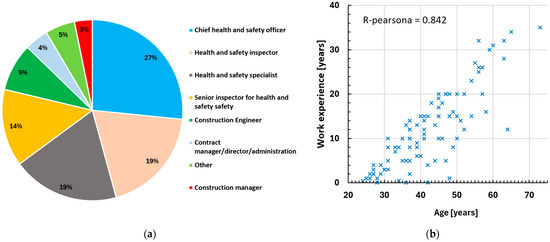
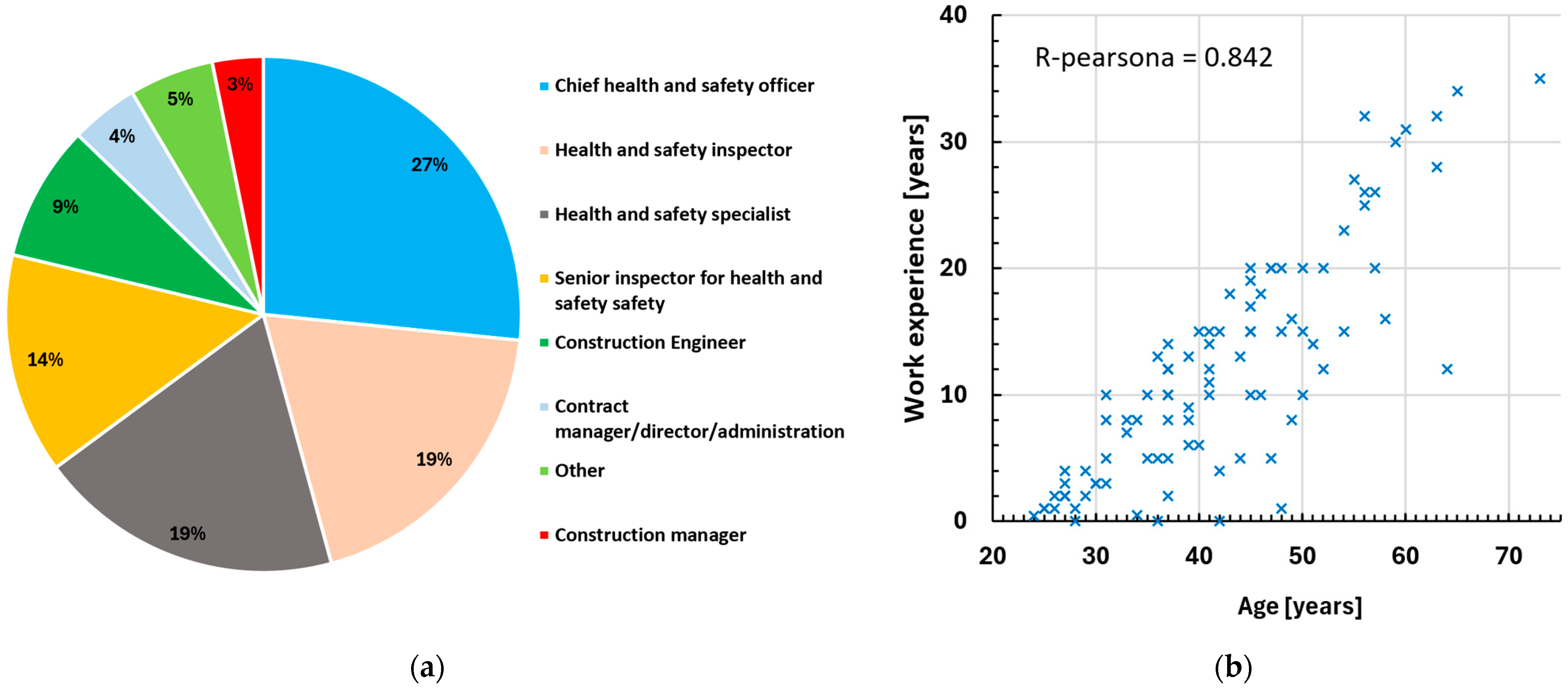
The respondents were between 24 and 64 years of age (N = 94, M = 42.12, SD = 10.69) and represented all voivodeships (administrative regions) of Poland. Women accounted for 31.9% of the sample (N = 30), men for 63.8% (N = 60), while 4.3% of respondents (N = 4) did not specify their gender. At the time of completing the questionnaire, the respondents were employed in various occupational positions, as illustrated in the pie chart shown in Figure 1a. They also demonstrated diverse levels of professional experience, ranging from no work experience to 34 years of practice (N = 94, M = 11.77, SD = 7.48). Figure 1b presents the relationship between the declared number of years of professional experience in the OHS construction sector and the respondents’ age. The size and ownership structure of the enterprises in which the respondents were employed at the time of the study are presented in Table 1 and Table 2.
Figure 1.
(a) Distribution of respondents by occupational position at the time of completing the questionnaire; (b) Relationship between respondents’ age and professional experience.
Table 1.
Frequency of occurrence of the categories of the variable concerning the size of enterprises employing respondents.
Table 2.
Frequency of occurrence of the categories of the variable concerning the ownership structure of enterprises employing the respondents.
2.2. Questionnaire Survey
The study employed a proprietary questionnaire developed by the authors of this article. The questionnaire consisted of three sections and contained a total of 12 questions. It was made available at the CERN-hosted Zenodo repository [17].
- Section I contained introductory questions concerning, among other aspects, the respondent’s year of birth, gender, the voivodeship (region) in which they work, professional experience related to the OHS sector, and their current job position.
- Section II focused on the allocation of working time and the repetitiveness of typical occupational activities. First, using a six-point response scale (Table 2), respondents were asked to indicate how much time, during an average 40 h working week, they devote to the following activities: communication (e.g., email correspondence, telephone conversations), document analysis, report preparation, participation in training (both as participants and instructors), attendance at meetings (e.g., site coordination meetings, OHS briefings), workplace inspections, and self-education (including learning to use software). Respondents were also allowed to specify other activities they perform as part of their professional duties. Subsequently, using the same six-point response scale (Table 3), respondents assessed whether the aforementioned activities were of a repetitive nature.
- Section III concerned the use of digital technologies. First, respondents were asked to indicate the information technology tools they employ in their daily work. The questions referred to the use of, among others, office software packages, risk management software, software for report and documentation preparation, error identification software, and simulation software. Subsequently, respondents expressed their attitudes toward the use of new technologies in professional practice by rating their agreement with the statement I am a person who has no concerns about using new technologies in everyday work on a five-point Likert scale (where 1 indicated strongly agree and 5 indicated strongly disagree). Finally, respondents were asked whether they perceive any processes in their professional work that could be supported by new technologies to improve work efficiency.
Table 3.
Response scales used for questions in Section II of the questionnaire.
2.3. Procedure
The study was prepared using the Microsoft Forms application and conducted using the Computer-Assisted Web Interview (CAWI) method between February 2024 and June 2025. CAWI functions by furnishing respondents with a web-based questionnaire that they can complete at their convenience. The questionnaire is hosted on a designated platform and is typically distributed via email. The process has been designed to be user-friendly, thereby enabling respondents to respond to questions in a manner that aligns with their preferences. This approach is expected to enhance engagement and consequently improve the quality of the data collected.
The selection of respondents for the sample was purposive, and the questionnaire was distributed using the snowball sampling technique. It is a non-probability sampling method in which new respondents are recruited by other respondents to be included in the sample. The snowball method is a useful research technique for identifying individuals with specific characteristics who might otherwise be difficult to identify (in the case of this study, OHS specialists).
After reading information about the study’s objectives and providing informed consent to participate, the respondents proceeded to complete the questionnaire.
After data collection, the responses were exported to Microsoft Excel for further analysis. Quantitative analysis included descriptive statistics and Pearson’s chi-square tests of independence, with the level of statistical significance set at α = 0.05, which is standard in exploratory questionnaire-based research of this type.
3. Results and Analysis
3.1. Time Consumption and Repetitiveness of Work-Related Activities
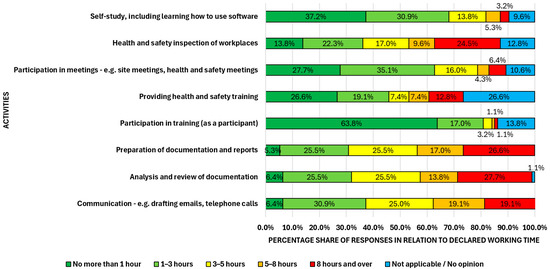
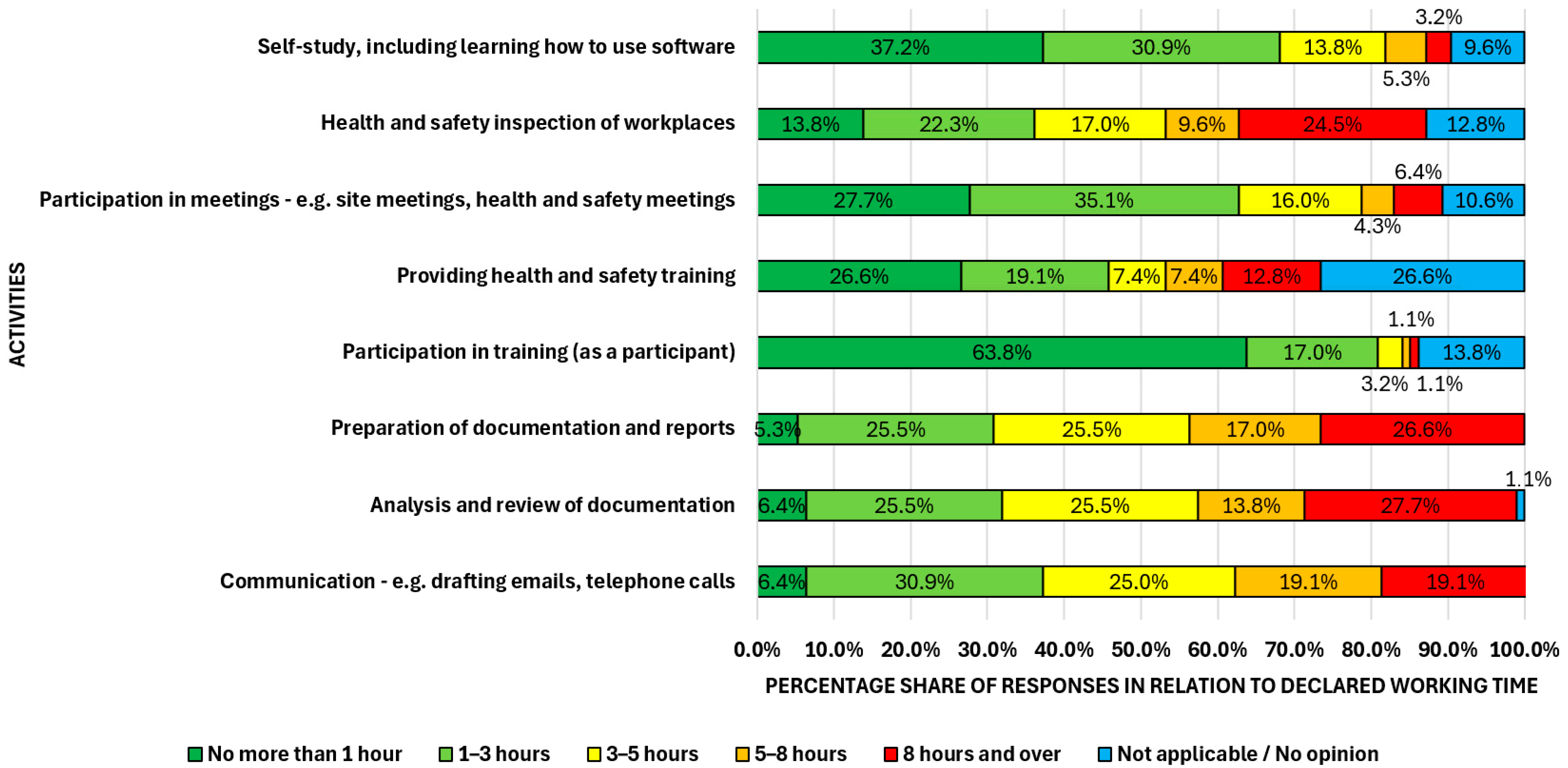
Figure 2 presents the percentage distribution of responses to the question concerning the time consumption of work-related activities, as assessed in Section II of the questionnaire.
Figure 2.
Percentage distribution of the declared working time devoted to individual occupational activities during an average working week.
The activities to which respondents devote the greatest amount of time during a typical working week include Analysis and review of documentation, Preparation of documentation and reports, Health and safety inspection of workplaces, and Communication. For each of these occupational activities, the proportion of respondents declaring that they spend eight hours or more per week amounted to 27.7%, 26.6%, 24.5%, and 19.1%, respectively, while the proportion of respondents reporting that they spend between five and eight hours per week on these activities was 13.8%, 17.0%, 9.6%, and 19.1%, respectively. Such a considerable share of the aforementioned activities in the overall structure of working time may indicate their operational complexity and the need for systemic support, for example, through digital documentation management platforms or the automation of reporting processes. In contrast, activities such as Participation in training, Self-study, and Participation in meetings occupy the least number of respondents’ working time. For instance, 63.8%, 37.2%, and 27.7% of respondents, respectively, declared that they devote less than one hour per week to these activities.
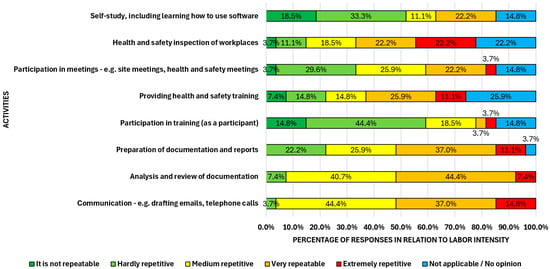
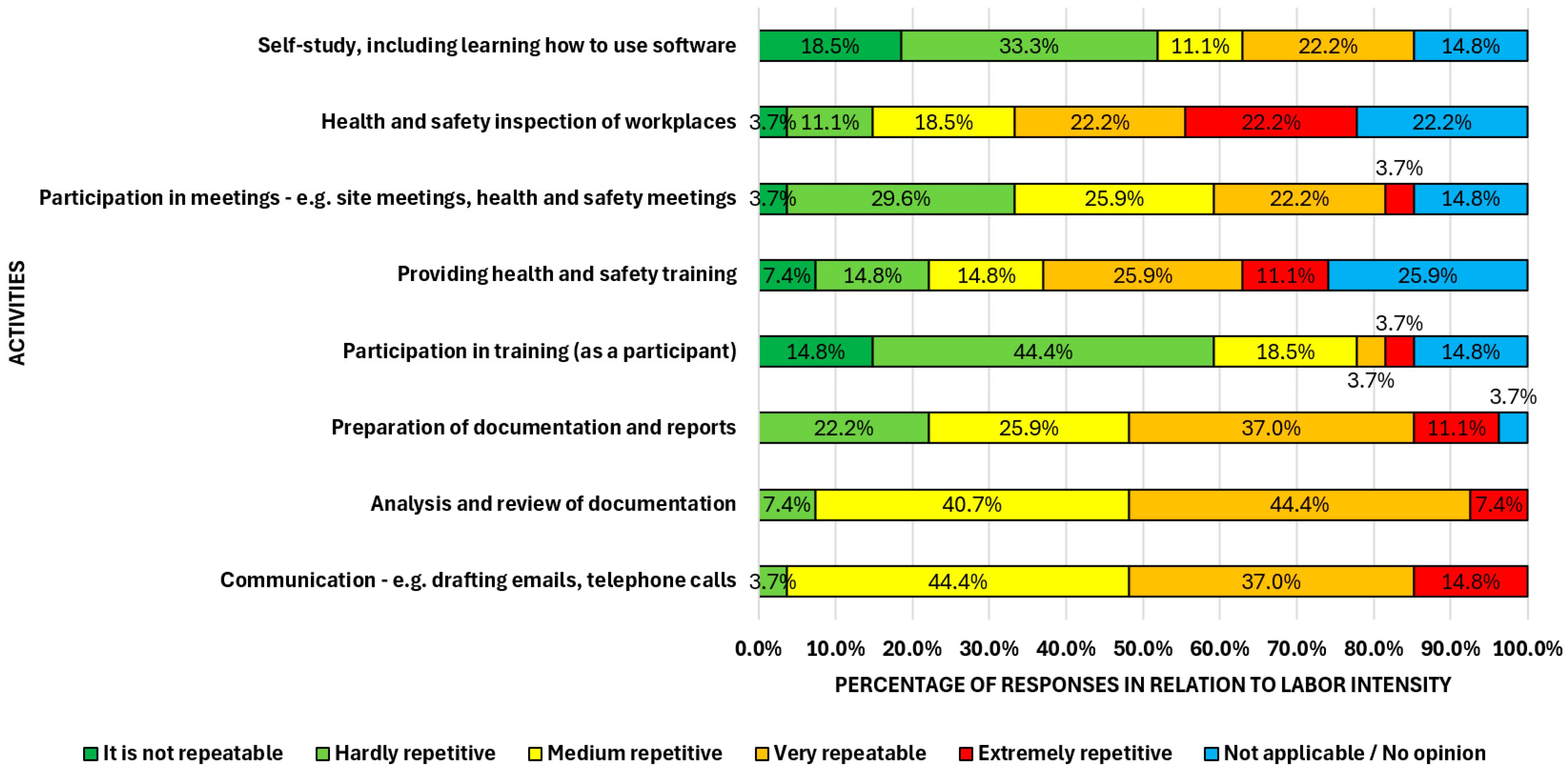
Figure 3 presents the percentage distribution of responses to the question about the repetitiveness of work-related activities, also assessed in Section II of the questionnaire.
Figure 3.
Percentage distribution of the declared level of repetitiveness of individual work-related activities during an average working week.
An analysis of Figure 3 shows that, according to the respondents, the most repetitive activities (extremely repetitive and very repetitive) are Communication (52%), Analysis and review of documentation (51.0%), Preparation of documentation and reports (48%), and Health and safety inspection of workplaces (44%), which may indicate their routine and schematic nature. In contrast, the least repetitive activities identified by respondents include Participation in trainings and Self-study—these activities were most frequently rated as hardly repetitive or not repeatable, which may suggest their incidental or variable character. The responses not applicable/no opinion accounted for a significant proportion in the case of Providing health and safety trainings and Health and safety inspection of workplaces, which may result from the diverse scope of respondents’ professional responsibilities.
An analysis of the obtained results indicates that the same activities identified by respondents as the most time-consuming were also evaluated as the most repetitive. For this reason, these activities are particularly predisposed to the implementation of tools that support their automation. Consequently, the greatest optimisation potential lies in occupational activities related to the creation and analysis of documentation, the performance of health and safety inspections, and communication activities that not only consume a significant portion of working time but are also characterised by a high degree of repetitiveness.
It is worth noting that nearly 25% of respondents also indicated other regularly performed tasks that were not included in the predefined list of activities. These included, among others, prevention and consulting in the field of occupational health and safety, analysis of the causes of occupational accidents along with the preparation of relevant documentation, drafting of decisions concerning exemptions from technical requirements, as well as activities related to the control of compliance with ISO standards. These tasks were most frequently performed for between one and five hours per week and were simultaneously assessed as highly repetitive. These characteristics further emphasise the need for a systematic approach and indicate potential for support through information technology tools, including solutions for compliance analysis, preparation of formal documentation, and the generation of recurring reports.
3.2. Attitudes Toward New Technologies and Their Use in Work Processes
To examine the extent to which OHS specialists use digital tools in their professional work and to explore their attitudes toward new technologies, the responses to the questions and statements included in Section III of the questionnaire were analysed.
First, the number of respondents currently using various digital tools was examined. The results of the conducted study clearly indicate that 100% of respondents use office software packages to support their daily professional duties. This confirms both the ubiquity and the fundamental importance of such tools in performing occupational health and safety tasks within the construction sector.
A relatively large proportion, 34.0% of respondents, declared that they use software for report and documentation preparation. Most respondents indicated the use of internal institutional systems developed to meet the needs of specific organisations. Individual responses referred to commercially available specialised systems such as Wosatec, Cority, Workflow, Dalux, HSEnet, SiteWorks, ICSMS, and Monitor.
Only 6.4% of respondents reported using software for error identification. These included, among others, Naviswork, SEOD, Nawigator, AI, and Monitor. Even fewer respondents declared the use of software for risk management and phenomenon simulation, such as Aloha, in their daily work, 5.3% and 1.0%, respectively.
A significant proportion of respondents (47.9%) declared that they also use other technologies and solutions supporting their daily work. The largest group (33%) reported using tools based on artificial intelligence (AI) algorithms, including ChatGPT, Copilot, and Gemini. Other responses mentioned project and communication management systems, such as LMS and Canva. Some respondents stated that they do not use any additional technologies or limit themselves to basic office tools.
These results indicate considerable potential to enhance the work of OHS specialists through the deliberate implementation of modern tools supporting OHS management processes, including information systems for documentation management, incident recording and data analysis, as well as solutions supported by AI algorithms.
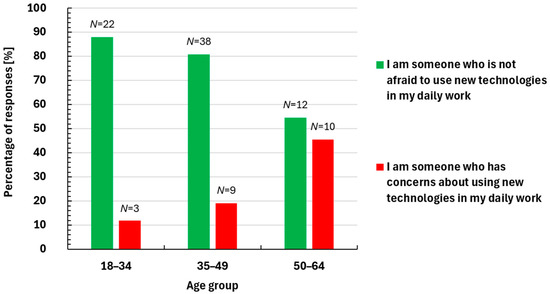
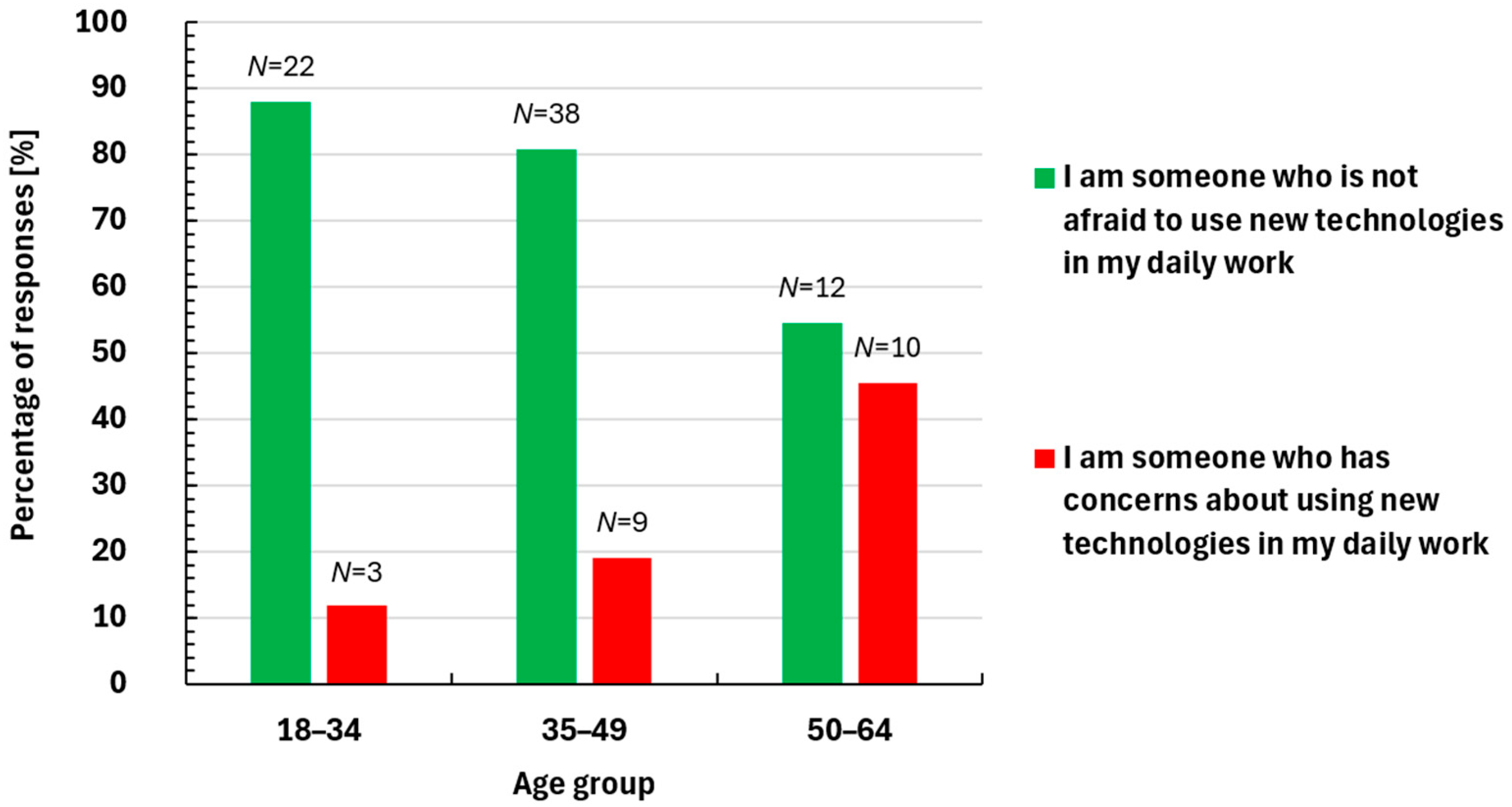
An analysis of the attitudes of OHS specialists in the construction industry toward new technologies shows that nearly 75% of them declared having no concerns about using such technologies in their work. To address research hypothesis H1, which posited a relationship between age and the level of concern regarding the use of new technologies, the distribution of responses to the statement I am a person who has no concerns about using new technologies in everyday work was compared across three age groups. To examine attitudes across age groups, hypothesis H1 was verified: “There is a relationship between the age of OHS specialists and their level of concern regarding the use of new technologies in professional practice”. First, based on the working-age population in Poland (18–64 years), the respondents were divided into three age groups: up to and including 34 years, from 35 to 49 years, and from 50 to 64 years. Next, due to the relatively small number of individual responses to the statement I am a person who has no concerns about using new technologies in everyday work within the respective age groups, the responses were categorised. Specifically, the answers mostly agree and strongly agree were classified as agreeing with the statement, while all remaining categories were classified as not agreeing with it.
The chi-square test conducted to examine the relationship between respondents’ age and the binary response to the statement I am a person who has no concerns about using new technologies in everyday work (with a significance level of α = 0.05) indicates statistical significance (χ2 = 8.26, p = 0.0161). The results for the 18–34 and 35–49 age groups are very similar, in both groups, more than 80% of respondents declared having no concerns about using new technologies in practice. In contrast, within the oldest age group, the proportions of respondents indicating no concerns and concerns about the use of new technologies in everyday work were 54.5% and 45.5%, respectively (Figure 4). These differences confirm a statistically significant association between age and the absence of concerns about using new technologies in everyday work, thereby supporting H1.
Figure 4.
Chart presenting percentage indicators and category frequencies of the attitudes of OHS specialists in the construction industry toward the use of new technologies in everyday work, by age group.
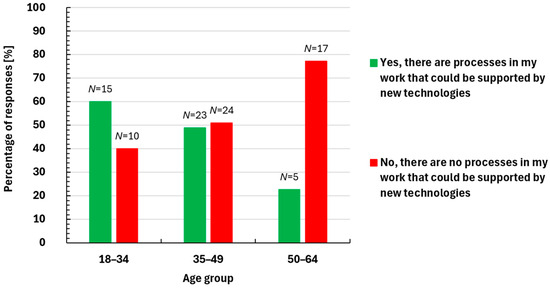
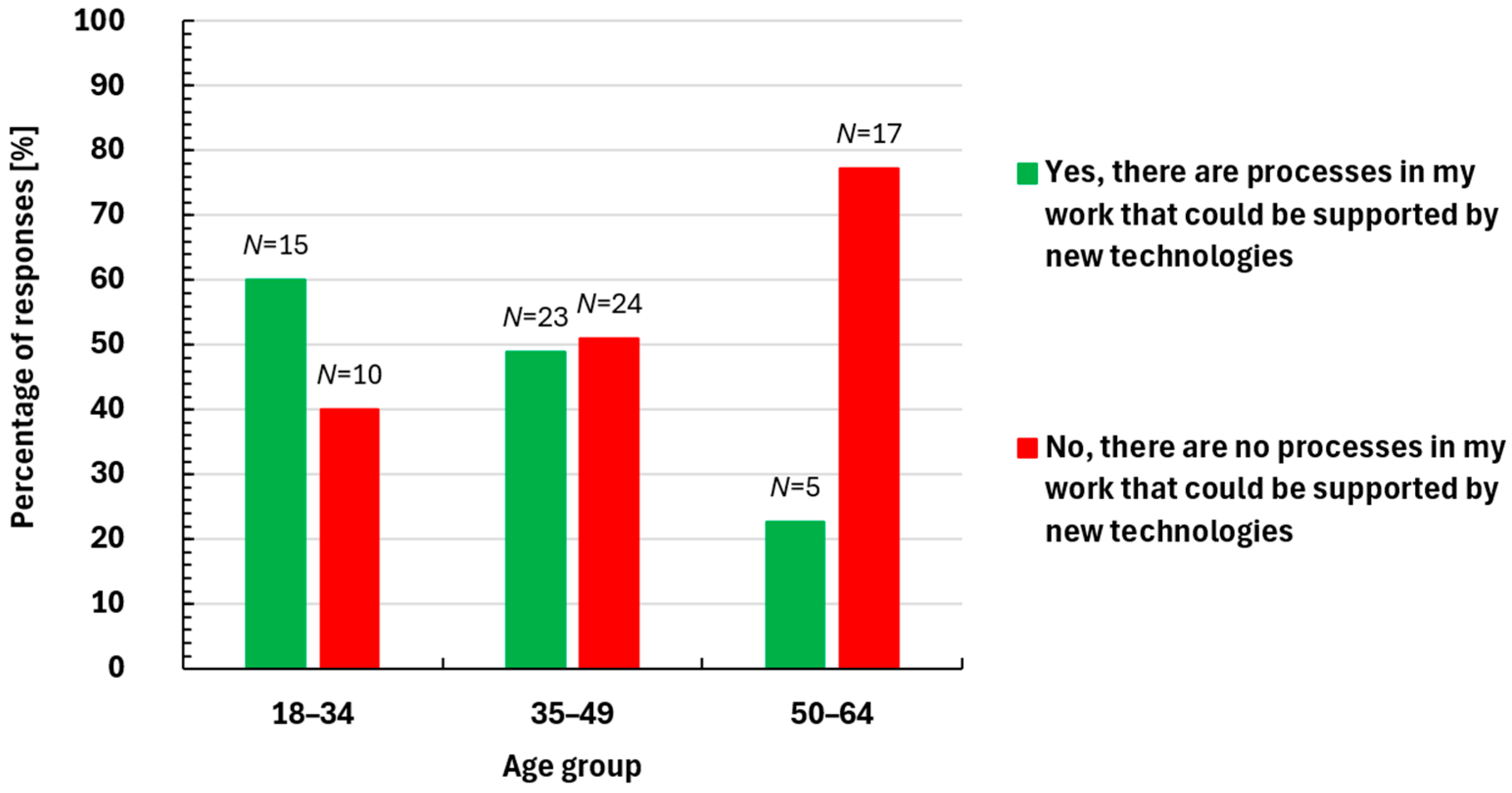
An analysis of how OHS specialists in the construction industry perceive the potential of new technologies to support their work processes shows that nearly half of the respondents (just under 46%) answered affirmatively to the question: In your opinion, are there any processes in your work that could be automated or supported by new technologies to improve everyday work?. This question was used to verify research hypothesis H2, which stated that the perceived potential for new technologies to support work processes is related to respondents’ age.
To verify whether there were age-related differences in this regard, a chi-square test was conducted, which revealed that the relationship between the variables was statistically significant (χ2 = 6.936; p = 0.0312).
Specifically, 60% of respondents in the 18–34 age group and 48.94% in the 35–49 age group declared that their work processes could be automated or supported by new technologies. Older respondents, aged 50 to 64, were significantly less likely to perceive such possibilities (22.7% answered YES while 77.27% answered NO), as illustrated in Figure 5. The statistically significant differences between age groups indicate that age is associated with the perceived potential for automation or technological support of work processes, which provides empirical support for hypothesis H2.
Figure 5.
Chart presenting percentage indicators and category frequencies of the perceived potential for new technologies to support work processes among OHS specialists in the construction industry, by age group.
3.3. Differences in Perceived Automation Potential by Enterprise Characteristics
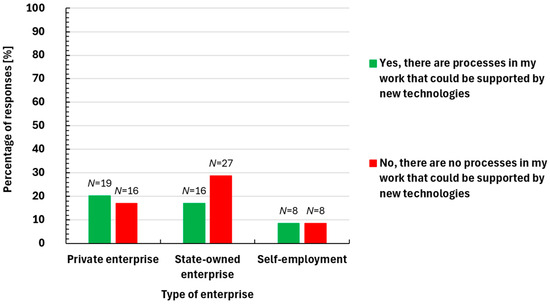
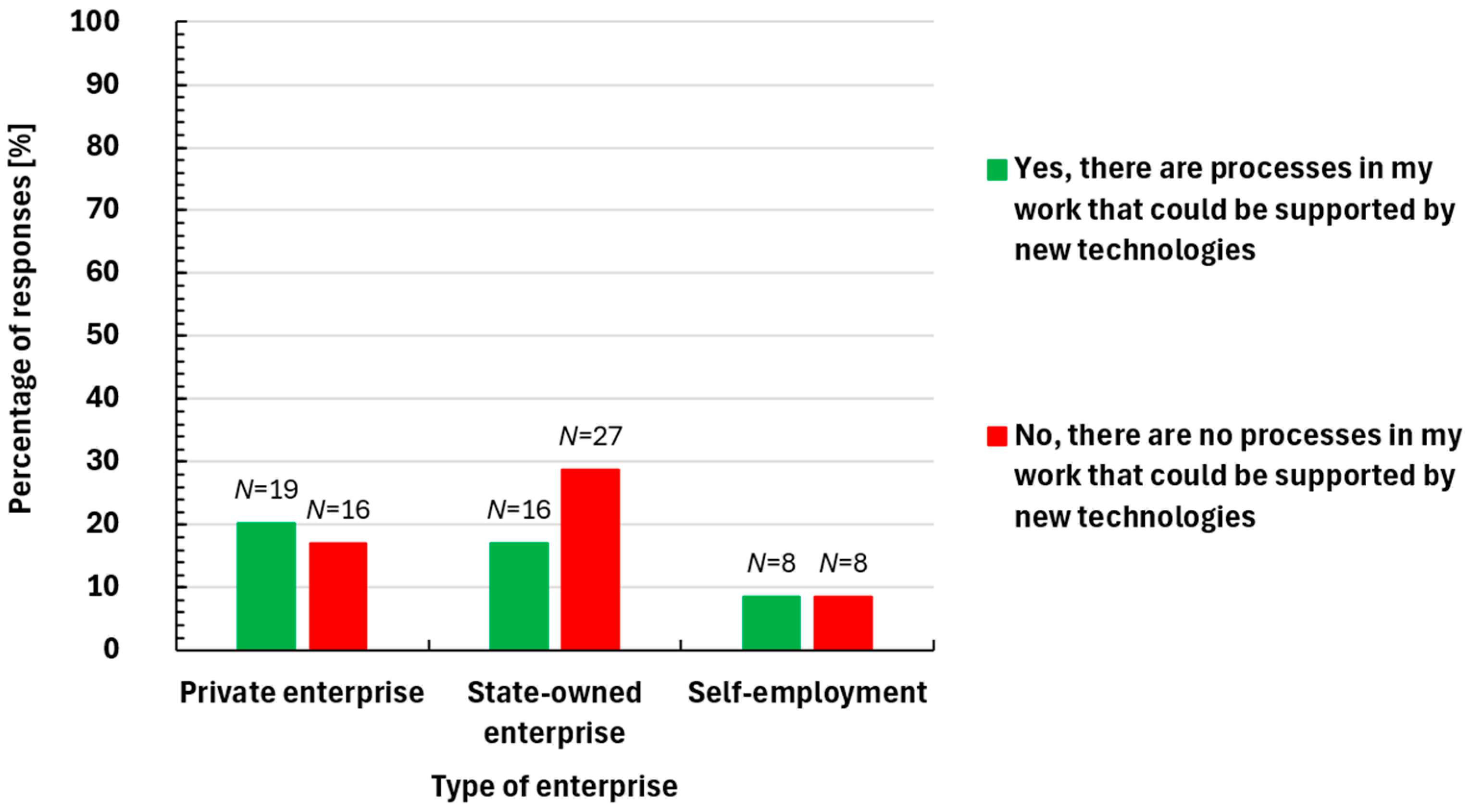
In the next step, research hypothesis H3 was verified. It assumed the existence of a relationship between the type of enterprise and employees’ perceived potential for the automation or technological support of work processes. To examine whether enterprise ownership differentiates employees’ perceptions of automation potential, responses were compared across private enterprises, state-owned enterprises, and self-employment.
As shown in Figure 6, respondents from private enterprises and self-employed individuals more frequently indicated the existence of processes that could be supported by new technologies, whereas respondents from state-owned enterprises more often reported the absence of such processes. The chi-square test did not reveal a statistically significant association between enterprise ownership and perceived automation potential (χ2 = 2.41, p = 0.30). The obtained results do not confirm the existence of a statistically significant relationship between enterprise ownership and the perceived potential for automation, therefore hypothesis H3 was not supported in this respect.
Figure 6.
Distribution of responses regarding the perceived potential for automation by enterprise ownership.
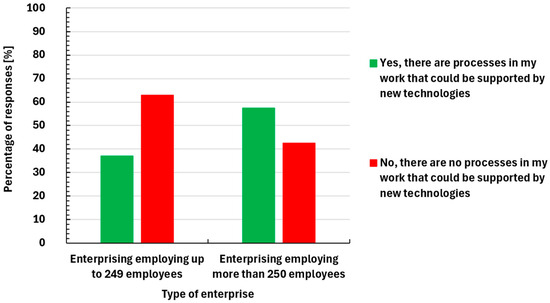
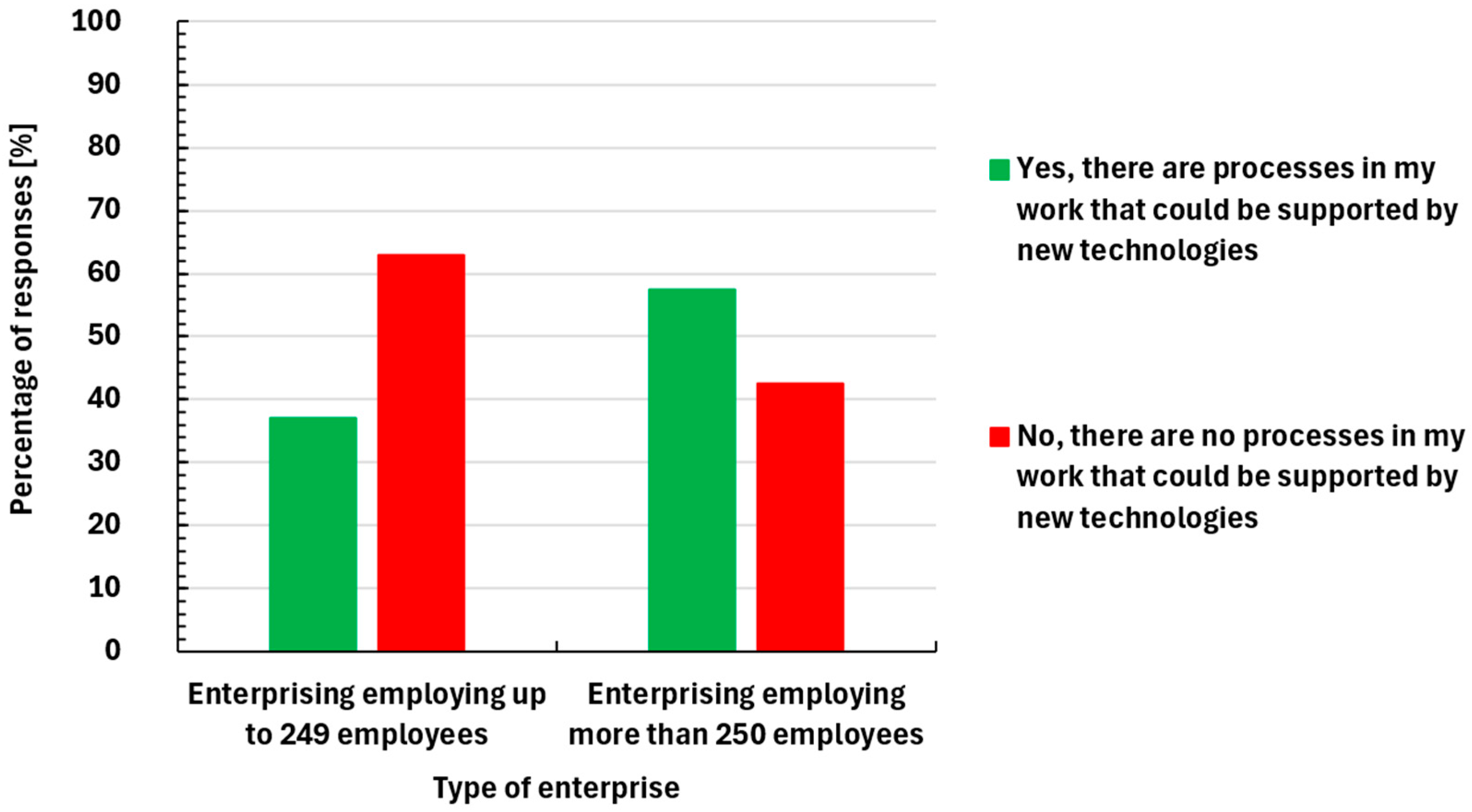
To examine whether enterprise size differentiates employees’ perceptions of the potential for automating or digitally supporting work processes, responses were compared between enterprises employing up to 249 employees and those employing more than 250 employees.
As illustrated in Figure 7, respondents employed in large enterprises more frequently reported the existence of processes that could be supported by new technologies compared to those working in small and medium-sized enterprises. The chi-square test did not indicate a statistically significant association between enterprise size and perceived automation potential (χ2 = 3.10, p = 0.078).
Figure 7.
Distribution of responses regarding the perceived potential for automation by the enterprise size based on the number of employees.
3.4. Discussion of Findings in the Context of Previous Research
Our findings are consistent with broader trends reported in the literature on occupational safety management and the digitalisation of OHS processes. In particular, the concentration of OHS specialists’ work on documentation analysis, report preparation, inspections and communication confirms that routine administrative and control-related activities constitute primary candidates for process optimisation and automation. Previous research has demonstrated that the digitalisation of repetitive OHS tasks contributes to shortening the time required to perform them, improving information flow and increasing overall work efficiency, thereby allowing OHS professionals to devote more effort to preventive and supervisory activities [8,9,10]. These conclusions are aligned with our empirical results, in which the same activities were simultaneously assessed as both the most time-consuming and the most repetitive, indicating their strong optimisation potential.
Real-world implementation evidence further supports these observations. The development and deployment of an automated OHS management system in an industrial enterprise resulted in a 33.3% reduction in occupational accidents, a measurable decrease in administrative workload and an increase in productivity, demonstrating the tangible benefits of process automation in safety management practice [10]. At the same time, similar to our findings, earlier research indicates that the practical adoption of more advanced safety technologies (including specialised risk-assessment systems and AI-based analytical tools) remains limited across many organisational contexts, particularly in the construction sector [9,18]. This gap between technological capabilities and their real-world uptake suggests a considerable untapped potential for integrating digital solutions into everyday OHS work processes.
The need to strengthen the digital transformation of OHS systems is also emphasised in international reports, which highlight that artificial intelligence, automation and digital technologies can support hazard recognition, enhance preventive mechanisms and improve the quality of decision-making in safety management. At the same time, these reports stress the importance of adequate governance frameworks, organisational readiness and responsible implementation processes to ensure that technological innovations translate into sustainable improvements in workplace safety [11,12].
The age-related patterns identified in our study likewise reflect broader tendencies described in previous research. Younger OHS practitioners demonstrated higher openness to new technologies and more frequently recognised opportunities for automation, whereas older specialists expressed greater caution and were less likely to indicate the potential for technological support of work processes. This disparity corresponds with findings from studies on technology adoption, which show that older users more often encounter barriers related to lower digital literacy, reluctance to modify established work routines and heightened concerns regarding privacy, data security and the perceived usefulness of new tools [13,14,15,16,19]. Such factors may directly reduce willingness to adopt innovations in safety management, including IoT-based monitoring platforms and AI-supported assistants, which (despite their functional benefits) may be perceived as intrusive or overly complex. These insights reinforce the importance of tailored implementation strategies, also reflected in our results, involving targeted training and competence-building for senior personnel, as well as initiatives aimed at strengthening user trust, transparency, and data governance across all age groups.
In contrast to many previous studies that focus primarily on individual technologies or selected implementation case studies, the present research contributes a practitioner- and task-centred perspective by examining how OHS specialists themselves evaluate the repetitiveness, time consumption and automation potential of their everyday work activities within the construction context. This perspective expands existing knowledge by linking patterns of digital tool adoption not only to organisational and technological determinants, but also to the structure and nature of professional tasks performed by OHS specialists, thereby offering a complementary empirical viewpoint on the conditions under which digital and AI-supported tools may be effectively integrated into OHS practice.
3.5. Methodological Considerations and Sample-Related Limitations
From a methodological perspective, the interpretation of the results should also consider the characteristics of the analysed dataset and the structure of the research sample. As part of the preliminary data verification (N = 94), no extreme outliers were identified in the metric variables (age, length of service) that could distort the outcomes of the chi-square tests. All remaining variables included in the analyses were measured using qualitative (ordinal and nominal) scales. In the case of such variables, the concepts of distance and proportional difference between categories are not defined in a statistically meaningful sense; therefore, the identification of outliers does not apply to these data types. The absence of extreme values in the metric variables, combined with the categorical nature of the remaining variables, indicates that the assumptions for the applied chi-square tests were met.
The moderate sample size, although adequate for exploratory research and consistent with the adopted sampling assumptions, nonetheless limits the statistical power of the analyses and the extent to which the results may be generalised beyond the studied group. Moreover, the purposive snowball sampling approach, while effective in reaching a specialised professional population, may have contributed to an uneven distribution of respondents across organisational contexts and professional roles.
The obtained sample contains a relatively high proportion of respondents employed in large enterprises with more than 250 employees (approximately 32% of all participants). This overrepresentation may shift the results toward higher levels of digitalisation and technological advancement, as large organisations typically possess greater financial, organisational and infrastructural capacity to implement specialised OHS tools than small and medium-sized enterprises.
Furthermore, the use of the CAWI technique and distribution via professional networks and social media platforms may have favoured the participation of respondents with higher levels of digital literacy. This effect may have resulted in a slightly more optimistic estimation of attitudes toward digital technologies and automation than would be expected in the general population of OHS specialists in the construction sector. These factors should be borne in mind when generalising the results beyond the studied group and highlight the need for further research based on probabilistic or stratified sampling strategies and more structurally diversified respondent groups.
4. Conclusions and Summary
Occupational health and safety specialists in the construction industry currently face numerous challenges in their professional practice, including the increasing complexity of construction processes, dynamic changes in the formal and legal environment, and growing cognitive demands, among others. The negative impact of these difficulties on work processes can be mitigated through the deliberate implementation of modern tools that support and streamline occupational health and safety management.
The conducted study made it possible to identify the most time-consuming and repetitive professional activities performed by occupational health and safety specialists in the Polish construction industry. These include activities related to documentation analysis, report preparation, health and safety inspections, and communication. The high degree of repetitiveness and significant time demands of these tasks justify the need for implementing modern technological solutions to support them, such as systems facilitating documentation management and information flow.
An important aspect of the study was the analysis of the use of digital tools by occupational health and safety specialists in the construction industry, including technologies based on artificial intelligence (AI) algorithms. Despite the widespread use of basic office tools, advanced systems supporting safety management, risk analysis, or report generation remain insufficiently disseminated. This indicates the existence of significant implementation potential, particularly in the context of the growing complexity of construction processes and staff shortages in the field of occupational health and safety. A relatively large proportion of respondents, as many as 33%, reported using solutions based on AI algorithms in their everyday work, with the main areas of application being documentation development, data analysis, and communication. This phenomenon may reflect an increasing adaptive capacity and a gradual rise in the acceptance of innovative technologies among OHS practitioners. It should be noted, however, that the implementation of AI-based tools is also associated with significant ethical and methodological challenges [18], which indicates the need for further research, particularly in relation to the quality and reliability of algorithm-generated outputs.
The analysis of the survey results revealed a significant relationship between respondents’ age and their attitudes toward the use of new technologies in practice. Younger individuals were clearly more likely to recognise opportunities for automation and expressed fewer concerns regarding its implementation, whereas older respondents tended to adopt a more reserved stance. This suggests the need to adapt implementation strategies to diverse demographic needs, including the incorporation of educational and competence-oriented training aspects.
The results presented in this study should also be interpreted considering several substantive limitations. First, the findings are based on self-reported questionnaire data, which may involve a degree of subjectivity in the assessment of work-time allocation, task repetitiveness and attitudes toward digital technologies. Second, the survey covered a limited set of explanatory variables and did not include factors such as digital competence, organisational support or prior experience with technology implementation, which may influence technology adoption in practice.
Future research should address these aspects by incorporating additional variables related to digital readiness and organisational context, as well as by extending the empirical scope of the analyses. The use of mixed methods designs, combining quantitative surveys with qualitative interviews or case studies, would enable a more comprehensive understanding of the mechanisms shaping the adoption of digital tools and automation in OHS management.
Author Contributions
Conceptualization, T.N. and Z.W.; methodology, T.N., Z.W. and A.H.; software, T.N. and Z.W.; validation, Z.W. and A.H.; formal analysis, T.N., Z.W. and A.H.; investigation, T.N., Z.W. and A.H.; resources, T.N., Z.W. and A.H.; data curation, T.N., Z.W. and A.H.; writing—original draft preparation, T.N., Z.W. and A.H.; writing—review and editing, T.N., Z.W. and A.H.; visualization, T.N. and Z.W.; supervision, T.N. and A.H.; project administration, T.N. All authors have read and agreed to the published version of the manuscript.
Funding
This research received no external funding.
Institutional Review Board Statement
Not applicable.
Informed Consent Statement
Not applicable.
Data Availability Statement
The original contributions presented in this study are included in the article. Further inquiries can be directed to the corresponding author.
Conflicts of Interest
The authors declare no conflicts of interest.
References
- Lis, T.; Małysa, T. Health and safety management in the aspect of implemented industry 4.0 solutions. Zesz. Nauk. Wyższej Szkoły Humanit. Zarządzanie 2021, 22, 95–105. [Google Scholar] [CrossRef] [Scilit]
- Wróbel, A. Health and safety at work—Concept and responsibility. Acta Univ. Wratislav. 2014, 96, 93–100. [Google Scholar]
- Heredia Morante, R.A.; del Río Merino, M.; Ros Serrano, A. The Accident Rate in the Construction Sector: A Work Proposal for Its Reduction through the Standardization of Safe Work Processes. Buildings 2024, 14, 2399. [Google Scholar] [CrossRef] [Scilit]
- Eurostat. Available online: https://ec.europa.eu/eurostat/statistics-explained/index.php?title=Accidents_at_work_statistics (accessed on 13 October 2025).
- Kaczorek, K. Analiza wynagrodzeń inżynierów na koniec roku 2024. Builder 2025, 333, 29. [Google Scholar] [CrossRef] [Scilit]
- Kaczorek, K. wynagrodzeń inżynierów budownictwa na koniec roku 2023. Builder 2024, 321, 52–61. [Google Scholar] [CrossRef] [Scilit]
- Parsakia, K.; Tabar, S.H.S.A. The Future of Occupational Health: Anticipating Risks in the Evolving Workplace. J. Foresight Public Health 2024, 1, 30–45. [Google Scholar]
- Koh, D.; Tan, A. Applications and Impact of Industry 4.0: Technological Innovations in Occupational Safety and Health. Saf. Health Work 2024, 15, 379–381. [Google Scholar] [CrossRef] [Scilit] [PubMed]
- Woźniak, Z.; Nowobilski, T. Current Research Directions on the Application of Artificial Intelligence in Construction in the Context of Occupational Safety. Mater. Bud. 2025, 1, 21–28. [Google Scholar] [CrossRef] [Scilit]
- Bochkovskyi, A.P.; Sapozhnikova, N.Y. Development of System of Automated Occupational Health and Safety Management in Enterprises. J. Achiev. Mater. Manuf. Eng. 2021, 107, 28–41. [Google Scholar] [CrossRef] [Scilit]
- Urzì Brancati, M.C. Digital Technologies at Work and Psychosocial Risks: Evidence and Implications for Occupational Safety and Health; Publications Office of the European Union: Brussels, Belgium, 2024. [Google Scholar] [CrossRef]
- International Labour Organisation. The Role of AI and Digitalization at Work: Global Report; International Labour Organisation: Geneva, Switzerland, 2025. [Google Scholar] [CrossRef] [Scilit]
- Hussain, A.; Zhiqiang, M.; Li, M.; Jameel, A.; Kanwel, S.; Ahmad, S.; Ge, B. The Mediating Effects of Perceived Usefulness and Perceived Ease of Use on Nurses’ Intentions to Adopt Advanced Technology. BMC Nurs. 2025, 24, 33. [Google Scholar] [CrossRef] [Scilit] [PubMed]
- Rosly, R.M.; Khalid, F.; Rosly, R.M.; Khalid, F. Evaluation of the “e-Daftar” System Using the Technology Acceptance Model (TAM). Creat. Educ. 2018, 9, 675–686. [Google Scholar] [CrossRef]
- El Bouchikhi, M.; Weerts, S.; Clavien, C. Behind the Good of Digital Tools for Occupational Safety and Health: A Scoping Review of Ethical Issues Surrounding the Use of the Internet of Things. Front. Public Health 2024, 12, 1468646. [Google Scholar] [CrossRef] [Scilit] [PubMed]
- Koohang, A.; Sargent, C.S.; Fuller, D.; Underwood, T. Issues in Information Systems Internet of Things (IoT): Users’ concerns about privacy and security. Issues Inf. Syst. 2023, 24, 191–202. [Google Scholar] [CrossRef] [Scilit]
- Nowobilski, T.; Woźniak, Z.; Hoła, A. Tools Supporting Occupational Health and Safety (OHS) in the Polish Construction Industry. Zenodo, 2025. Available online: https://doi.org/10.5281/zenodo.18102077 (accessed on 31 December 2025).
- Waqar, A.; Andri; Qureshi, A.H.; Almujibah, H.R.; Tanjung, L.E.; Utami, C. Evaluation of Success Factors of Utilizing AI in Digital Transformation of Health and Safety Management Systems in Modern Construction Projects. Ain Shams Eng. J. 2023, 14, 102551. [Google Scholar] [CrossRef] [Scilit]
- Bertolazzi, A.; Quaglia, V.; Bongelli, R. Barriers and facilitators to health technology adoption by older adults with chronic diseases: An integrative systematic review. BMC Public Health 2024, 24, 506. [Google Scholar] [CrossRef] [Scilit] [PubMed] [PubMed Central]

Disclaimer/Publisher’s Note: The statements, opinions and data contained in all publications are solely those of the individual author(s) and contributor(s) and not of MDPI and/or the editor(s). MDPI and/or the editor(s) disclaim responsibility for any injury to people or property resulting from any ideas, methods, instructions or products referred to in the content. |
© 2026 by the authors. Licensee MDPI, Basel, Switzerland. This article is an open access article distributed under the terms and conditions of the Creative Commons Attribution (CC BY) license.