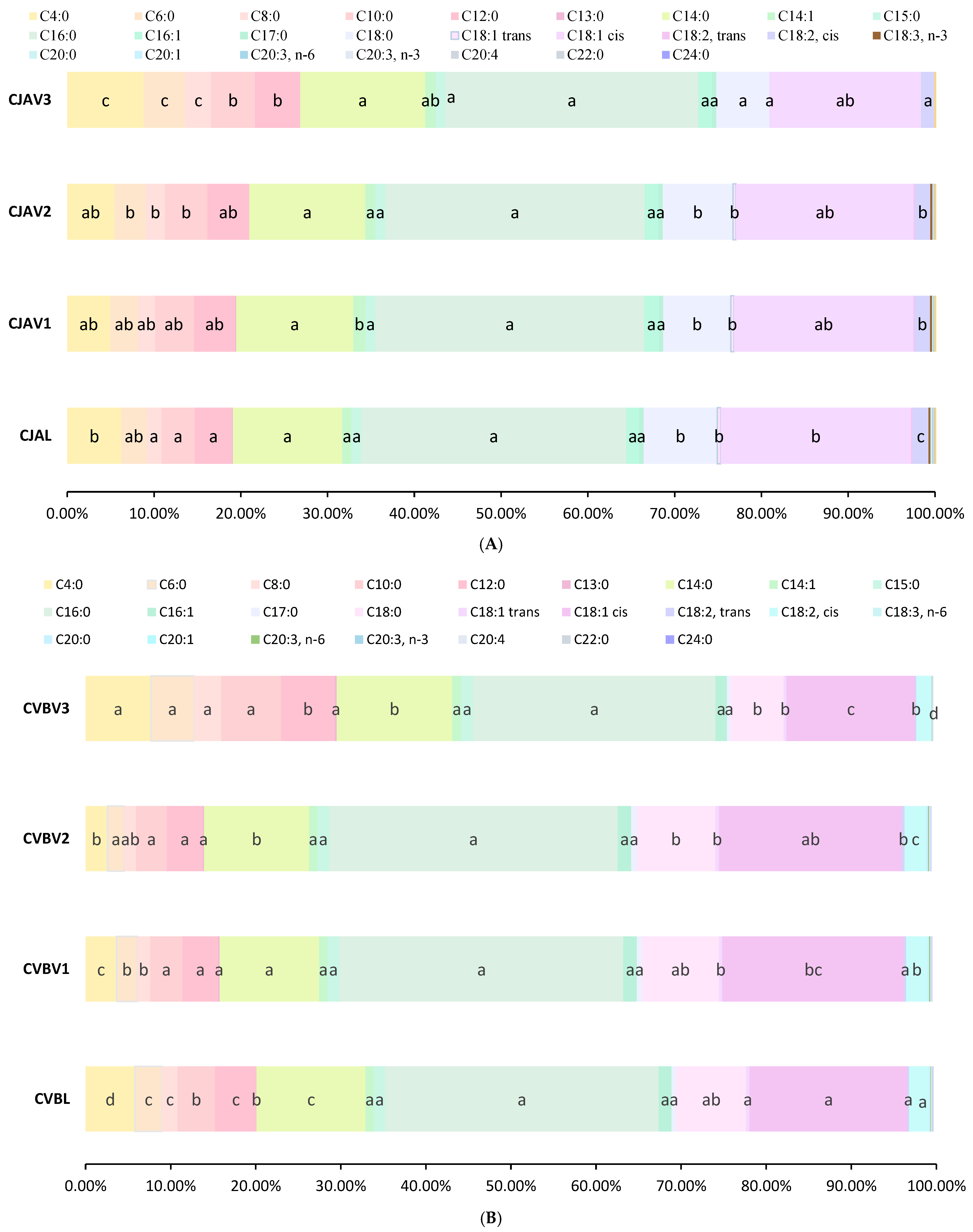
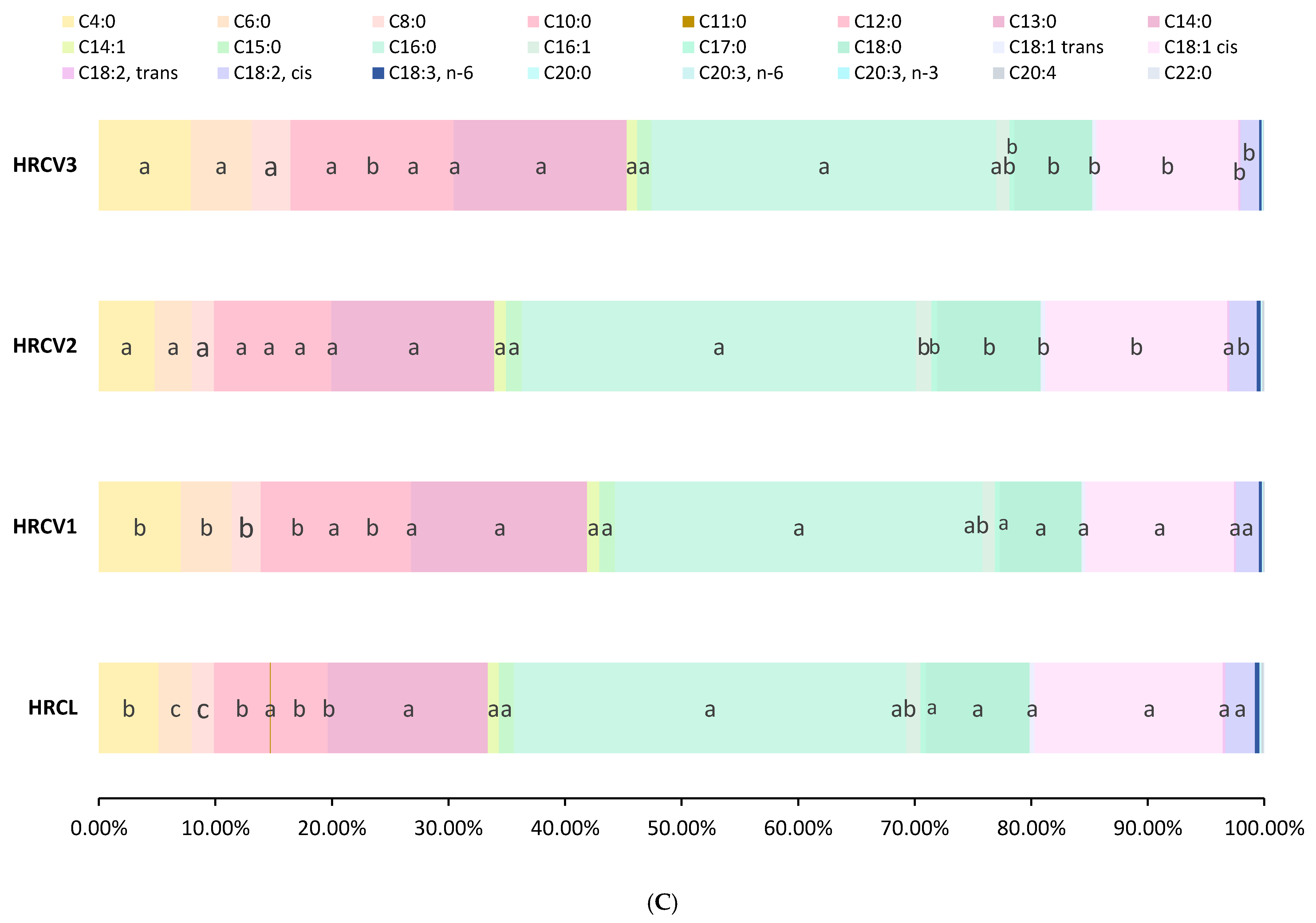
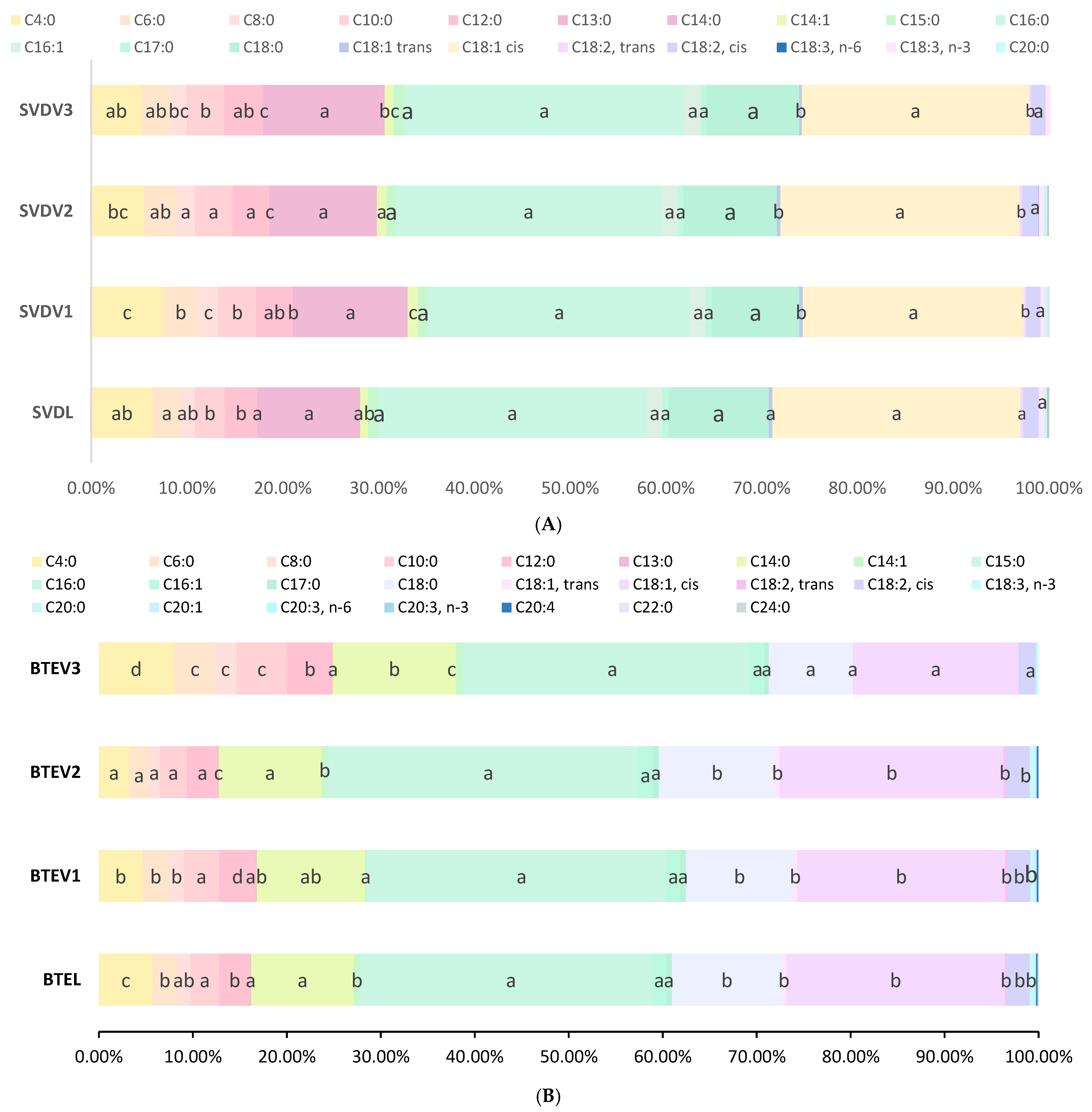
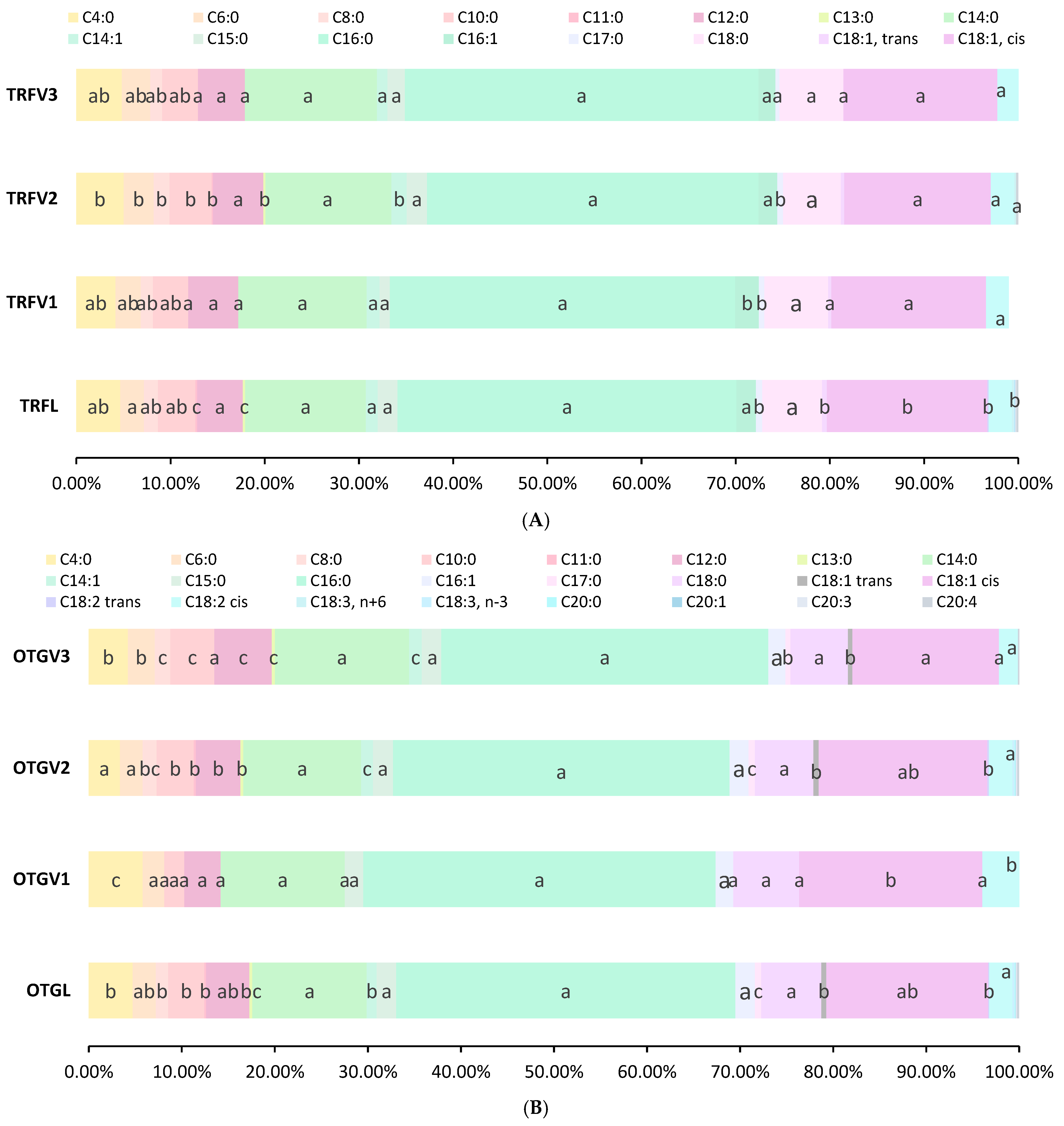
The Impact of Heavy Metal Contamination on the Fatty Acid Profile on Milk and on the Oxidative Stability of Dairy Products: Nutritional and Food Safety Implications


Abstract
1. Introduction
2. Materials and Methods
2.1. Samples
2.2. Chemical Analysis
2.3. Heavy Metal Analysis
2.4. Free Fatty Acid Analysis
2.4.1. Fat Extraction from Milk and Cheese Samples
2.4.2. Preparation of FAME for GC-FID Analysis
2.5. Statistical Analysis
3. Results and Discussions
4. Conclusions
Author Contributions
Funding
Institutional Review Board Statement
Informed Consent Statement
Data Availability Statement
Conflicts of Interest
Abbreviations
| AAS | Atomic Absorption Spectrophotometry |
| BT | Botoşani County |
| Cd | Cadmium |
| CJ | Cluj County |
| Cr | Chromium |
| Cu | Copper |
| CV | Covasna County |
| EPA | Eicosapentaenoic acid |
| FAME | Fatty Acid Methyl Esters |
| FFA | Free Fatty Acids |
| FID | Flame Ionization Detector |
| GC | Gas Cromatography |
| GC-FID | Gas Cromatography with Flame Ionization Detection |
| CLA | Conjugated linoleic acids |
| HPI | Health Promoting Index |
| HR | Harghita County |
| IA | Atherogenicity Index |
| IT | Thrombogenicity Index |
| LA | Linoleic acid |
| LM | Maximum legal limit for heavy metals |
| LOD | Limit of Detection |
| LOQ | Limit of Quantification |
| Mg | Magnesium |
| MUFA | Monounsaturated Fatty Acids |
| N-3 | Omega-3 Polyunsaturated Fatty Acids |
| N-6 | Omega-6 Polyunsaturated Fatty Acids |
| OT/OTG | Olt County |
| Pb | Lead |
| PUFA | Polyunsaturated Fatty Acids |
| R1 | Region 1 (Central Romania) |
| R2 | Region 2 (Northeastern Romania) |
| R3 | Region 3 (Southern Romania) |
| RSD | Relative Standard Deviation |
| RT | Retention time |
| SFA | Saturated Fatty Acids |
| SV | Suceava County |
| TR | Teleorman County |
| UI | Unsaturation Index |
| V1 | Blank cheese |
| V2 | Cheese with metal addition at maximum permitted level |
| V3 | Cheese with 10× metal addition at maximum permitted level |
| Zn | Zinc |
References
- Kailasapathy, K. Chemical composition, physical and functional properties of milk and milk ingredients. In Dairy Processing and Quality Assurance, 2nd ed.; Chandan, R.C., Kilara, A., Shah, N.P., Eds.; Wiley-Blackwell: Hoboken, NJ, USA, 2015; pp. 77–105. [Google Scholar] [CrossRef]
- Petrović, S.M.; Savić, S.R.; Petronijević, Ž.B. Macro- and micro-element analysis in milk samples by inductively coupled plasma-optical emission spectrometry. Acta Period. Technol. 2016, 47, 51–62. [Google Scholar] [CrossRef]
- Dauda, A.; Ochefu, A.O.; Idi, Y.; Gambo, B.M. Comparative analysis of nutritional, physicochemical, antioxidant, and microbial properties of cattle, sheep and goat milk. J. Agric. Food Environ. Anim. Sci. 2025, 6, 230–243. [Google Scholar]
- Acquavia, M.A.; Villone, A.; Rubino, R.; Bianco, G. A Comprehensive Review of Milk Components: Recent Developments on Extraction and Analysis Methods. Molecules 2025, 30, 1994. [Google Scholar] [CrossRef]
- Lindmark-Månsson, H. Fatty acids in bovine milk fat. Food Nutr. Res. 2008, 52, 1821. [Google Scholar] [CrossRef]
- Kasapidou, E.; Stergioudi, R.-A.; Papadopoulos, V.; Mitlianga, P.; Papatzimos, G.; Karatzia, M.-A.; Amanatidis, M.; Tortoka, V.; Tsiftsi, E.; Aggou, A.; et al. Effect of Farming System and Season on Proximate Composition, Fatty Acid Profile, Antioxidant Activity, and Physicochemical Properties of Retail Cow Milk. Animals 2023, 13, 3637. [Google Scholar] [CrossRef]
- Mollica, M.P.; Di Guida, F.; Vassallo, E.; Lionetti, L. Milk fatty acid profiles in different animal species: Focus on the potential effect of selected PUFAs on metabolism and brain functions. Nutrients 2021, 13, 1116. [Google Scholar] [CrossRef] [PubMed]
- Briffa, J.; Sinagra, E.; Blundell, R. Heavy metal pollution in the environment and their toxicological effects on humans. Heliyon 2020, 6, e04691. [Google Scholar] [CrossRef] [PubMed]
- Kaur, H.; Yadav, S.K.N.V. Whole-cell based electrochemical biosensor for monitoring lead ions in milk. Biotechnol 2010, 10, 259–266. [Google Scholar] [CrossRef]
- Jomova, K.; Alomar, S.Y.; Nepovimova, E.; Kuca, K.; Valko, M. Heavy metals: Toxicity and human health effects. Arch. Toxicol. 2025, 99, 153–209. [Google Scholar] [CrossRef] [PubMed]
- Yang, Y.; Zhao, M.; Qiu, L.; Lin, H. Effects of cadmium pollution on human health: A narrative review. Environ. Toxicol. Rev. 2025, 16, 225. [Google Scholar] [CrossRef]
- Jaishankar, M.; Tseten, T.; Anbalagan, N.; Mathew, B.B.; Beeregowda, K.N. Toxicity, mechanism and health effects of some heavy metals. Interdiscip. Toxicol. 2014, 7, 60–72. [Google Scholar] [CrossRef]
- Souto, M.R.S.; Pimenta, A.M.; Catarino, R.I.L.; Leal, M.F.C.; Simões, E.T.R. Heavy metals in milk and dairy products: Safety and analysis. Pollutants 2025, 5, 29. [Google Scholar] [CrossRef]
- Şahin, M.; Kaya, G.; Arıkan, B.; Alpaslan, M. A methodological approach to the assessment of trace elements in milk and dairy products. Sci. Total Environ. 2025, 91, 4443–4448. [Google Scholar] [CrossRef]
- Yadav, S.; Singh, S.; Kumar, R. Determination of toxic heavy metals (Pb, Cd, Hg) in cow milk by ICP–MS and risk assessment for consumers. Food Chem. 2022, 373, 131505. [Google Scholar] [CrossRef]
- Guetouache, M.; Guessas, B.; Bettache, M.; Medjekal, S. Composition and nutritional value of raw milk. Issues Biol. Sci. Pharm. Res. 2014, 2, 115–122. [Google Scholar]
- Rațu, R.N.; Cojocaru, C.; Nistor, C.; Tătaru, I. Effects of dairy cows management systems on the physicochemical and nutritional quality of milk and yogurt in a North-Eastern Romanian farm. Agriculture 2023, 13, 1295. [Google Scholar] [CrossRef]
- Gross, J.; Van Dorland, H.A.; Bruckmaier, R.M.; Schwarz, F.J. Milk fatty acid profile related to energy balance in dairy cows. J. Dairy. Res. 2011, 78, 479–488. [Google Scholar] [CrossRef]
- Fantuz, F.; Mazzi, M.; Ferraro, S.; Salimei, E. Detailed mineral profile of milk, whey, and cheese from cows, buffaloes, goats, ewes, and dromedary camels, and efficiency of recovery of minerals in their cheese. J. Dairy Sci. 2024, 59, 46–50. [Google Scholar] [CrossRef]
- Stojković, B.; Stojanović, B.; Davidović, V.; Ivetić, A.; Šimunović, S.; Ignjatović, A.; Grujičić, I. Effect of chromium propionate supplementation on lactation performance and blood parameters of Simmental cows in mid-lactation under heat stress. Chil. J. Agric. Res. 2025, 85, 268–276. [Google Scholar] [CrossRef]
- Codex Alimentarius Commission. General Standard for Contaminants and Toxins in Food and Feed (CXS 193-1995); FAO/WHO: Rome, Italy, 1995. [Google Scholar]
- European Commission. Commission Regulation (EC) No 149/2008 of 29 January 2008 amending Regulation (EC) No 396/2005 by establishing Annexes II, III and IV setting maximum residue levels for products covered by Annex I thereto. Off. J. Eur. Union 2008, L58, 1–398. [Google Scholar]
- European Commission. Commission Regulation (EU) 2023/915 of 25 April 2023 on maximum levels for certain contaminants in food and repealing Regulation (EC) No 1881/2006. Off. J. Eur. Union 2023, L119, 103–157. [Google Scholar]
- SR ISO 2446:2023; Milk—Determination of Fat Content. Romanian Standards Association (ASRO): Bucharest, Romania, 2023.
- Hy, A.; Chro, G.; Ac, M.F. AOAC Official Method 996.01—Fat (Total, Saturated, Unsaturated, and Monounsaturated) in cereal products. AOAC Int. 2006, 5. Available online: https://www.aoac.org/ (accessed on 17 November 2025).
- Fox, P.F.; Uniacke-Lowe, T.; McSweeney, P.L.H.; O’Mahony, J.A. Dairy Chemistry and Biochemistry, 2nd ed.; Springer International Publishing: Cham, Switzerland, 2015. [Google Scholar] [CrossRef]
- Walstra, P.; Wouters, J.T.M.; Geurts, T.J. Dairy Science and Technology, 2nd ed.; CRC Press: Boca Raton, FL, USA, 2006. [Google Scholar]
- European Commission. Commission Regulation (EC) No 333/2007 of 28 March 2007 laying down the methods of sampling and analysis for the official control of the levels of lead, cadmium, mercury, inorganic tin, 3-MCPD and benzo(a)pyrene in foodstuffs. Off. J. Eur. Union 2007, L88, 29–38. [Google Scholar]
- Ulbricht, T.L.V.; Southgate, D.A.T. Coronary heart disease: Seven dietary factors. Lancet 1991, 338, 985–992. [Google Scholar] [CrossRef]
- Kęszycka, M.M.; Czyżak, G.; Lipińska, P.; Wójtowski, J. Fatty acid profile of milk—A review. Bull. Vet. Inst. Pulawy 2013, 57, 135–139. [Google Scholar] [CrossRef]
- Lanier, S.J.; Corl, B.A. Challenges in enriching milk fat with polyunsaturated fatty acids. J. Anim. Sci. Biotechnol. 2015, 6, 26. [Google Scholar] [CrossRef] [PubMed]
- Chen, J.; Liu, H. Nutritional indices for assessing fatty acids: A mini-review. Int. J. Mol. Sci. 2020, 21, 6260. [Google Scholar] [CrossRef]
- Frelich, J.; Šlachta, M.; Hanuš, O.; Špička, J.; Samková, E. Fatty acid composition of cow milk fat produced on low-input mountain farms. Czech J. Anim. Sci. 2009, 54, 532–539. [Google Scholar] [CrossRef]
- Bielecka, M.; Ziajka, J.; Staniewski, B.; Nowak, H. Oxidative stability and health-related indices of anhydrous milk fat and vegetable oil blends. Int. Dairy J. 2023, 137, 105–118. [Google Scholar] [CrossRef]
- Yin, H.; Xu, L.; Porter, N.A. Free radical lipid peroxidation: Mechanisms and analysis. Chem. Rev. 2011, 111, 5944–5972. [Google Scholar] [CrossRef]



| Region/Area | Sample Code | Pb (%) | Cd (%) | Cu (%) |
|---|---|---|---|---|
| R1/CJ | AV2 | 87.53 | 93.57 | 89.24 |
| R1/CJ | AV3 | 81.46 | 84.88 | 77.39 |
| R1/CV | BV2 | 90.27 | 93.86 | 89.59 |
| R1/CV | BV3 | 85.40 | 85.20 | 78.86 |
| R1/HR | CV2 | 89.56 | 93.49 | 87.74 |
| R1/HR | CV3 | 83.29 | 84.51 | 77.03 |
| R2/SV | DV2 | 88.12 | 97.17 | 89.10 |
| R2/SV | DV3 | 81.65 | 88.60 | 77.60 |
| R2/BT | EV2 | 90.54 | 96.04 | 88.34 |
| R2/BT | EV3 | 80.28 | 88.30 | 83.46 |
| R3/TR | FV2 | 93.14 | 93.26 | 88.75 |
| R3/TR | FV3 | 86.25 | 86.39 | 82.06 |
| R3/OTG | GV2 | 90.89 | 95.90 | 89.07 |
| R3/OT | GV3 | 79.58 | 88.97 | 79.55 |
| No | Parameter/Index Name | Calculation Formula [30] | Physiological/ Nutritional Significance |
|---|---|---|---|
| 1 | PUFA/SFA | PUFA/SFA = ƩPUFA/ƩSFA | Overall degree of unsaturation; high values, healthier lipid profile |
| 2 | Atherogenic index | IA = (C12:0 + 4 × C14:0 + C16:0)/(ΣMUFA + ΣPUFA) | Estimates the potential of lipids to promote atherosclerosis; low values, antiatherogenic effect. |
| 3 | Thrombogenic index | IT = (C14:0 + C16:0 + C18:0)/(0.5 × ΣMUFA + 0.5 × ΣPUFA-n6 + 3 × ΣPUFA-n3 + ΣPUFA-n3/ΣPUFA-n6) | Reflects the potential risk of thrombus formation; low values, reduced cardiovascular risk. |
| 4 | Hypocholesterolemic/hypercholesterolemic ratio | HH = (C18:1CIS + ƩPUFA)/(C12:0 + C14:0 + C16:0) | Ratio between beneficial fatty acids and hypercholesterolemic fatty acids. |
| 5 | Health promotion index | HPI = 1/IA | The inverse of the IA index; high values, superior nutritional potential. |
| 6 | n−6/n−3 | n−6/n−3= Ʃn−6 PUFA/Ʃn−3 PUFA | Assessment of the ratio between pro-inflammatory (n−6) and anti-inflammatory (n−3) fatty acids; optimal ratio < 4. |
| 7 | Σn−3 PUFA (ω-3) | Ʃn−3 PUFA = C18:3CIS9,12,15 + C20:5 + C22:5 + C22:6 | Represents the total ω−3 fatty acids; contributes to cardiovascular protection |
| 8 | Σn−6 PUFA (ω-6) | Ʃn−6 PUFA = C18:2CIS9,12 + C18:3CIS6,9,12 + C20:3 + C20:4 + C22:4 | Total n−6 fatty acids; in excess, they can promote inflammation. |
| Parameter/Index Name | Optimal Range/Favorable Value 1 | Physiological Significance |
|---|---|---|
| SFA (%) | <70 | Excessive growth of saturated fatty acids accentuates membrane rigidity and increases atherogenic risk. |
| MUFA (%) | >25 | Monounsaturated fatty acids (MUFAs) lower LDL cholesterol and increase membrane fluidity. |
| PUFA (%) | >3 | Polyunsaturated acids have anti-inflammatory and cardioprotective effects. |
| PUFA/SFA | >0.045 | Evaluates the ratio between unsaturated fatty acids and saturated fatty acids. |
| IA | <3.0 | Low values indicate a low potential for promoting fatty deposits. |
| IT | <3.5 | Means there is a risk of thrombus formation, low values indicate a protective effect. |
| HH | >0.5 | The ratio between fatty acids that lower and those that raise serum cholesterol. |
| HPI | >0.35 | High HPI values indicate a protective nutritional effect. |
| n−3 PUFA (%) | >0.4 | Omega-3 fatty acids are acids with anti-inflammatory and anti-atherogenic properties. |
| n−6 PUFA (%) | 2–4 | Omega-6 acids are essential, but in excess they become pro-inflammatory. |
| n−6/n−3 (ω−6/ω−3) | <4–5 | A balanced ratio between n−6 and n−3 indicates a low metabolic risk. |
| Index Name | Region 1 | Region 2 | Region 3 | |||
|---|---|---|---|---|---|---|
| Milk | Cheese | Milk | Cheese | Milk | Cheese | |
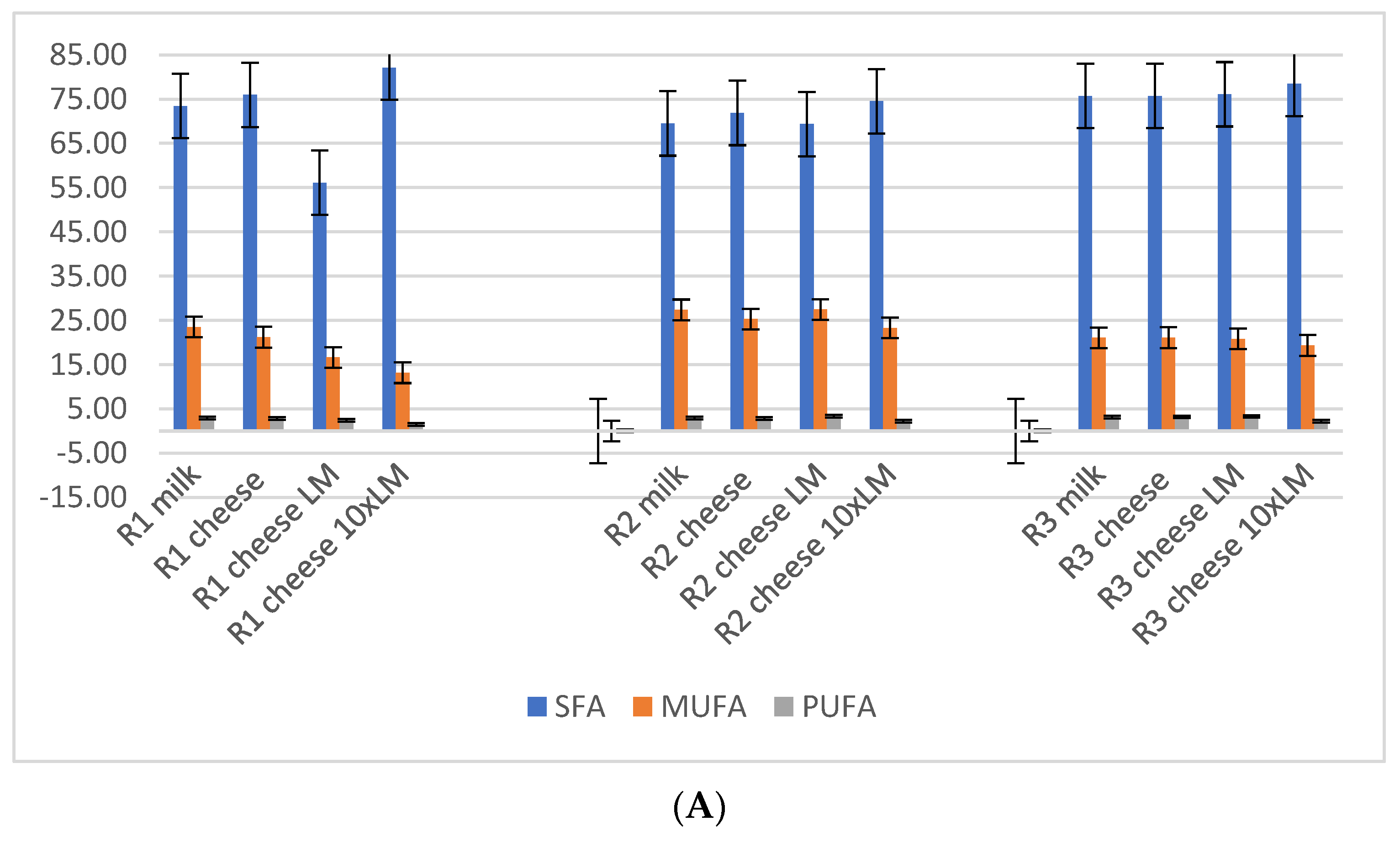
| SFA (%) | 74.74 ± 2.66 a | 75.97 ± 5.47 a | 69.64 ± 1.51 a | 71.88 ± 0.72 a | 75.73 ± 0.18 a | 75.71 ± 1.75 a |
| MUFA (%) | 22.24 ± 3.10 a | 21.21 ± 4.21 a | 27.38 ± 1.98 a | 25.27 ± 1.38 a | 22.04 ± 0.16 a | 21.10 ± 0.68 a |
| PUFA (%) | 3.02 ± 0.46 a | 2.82 ± 0.63 a | 2.97 ± 0.49 a | 2.85 ± 0.66 a | 3.14 ± 0.03 a | 3.19 ± 1.08 a |
| PUFA/SFA | 0.038 ± 0.00 a | 0.037 ± 0.01 a | 0.043 ± 0.01 a | 0.040 ± 0.01 a | 0.040 ± 0.00 a | 0.042 ± 0.01 a |
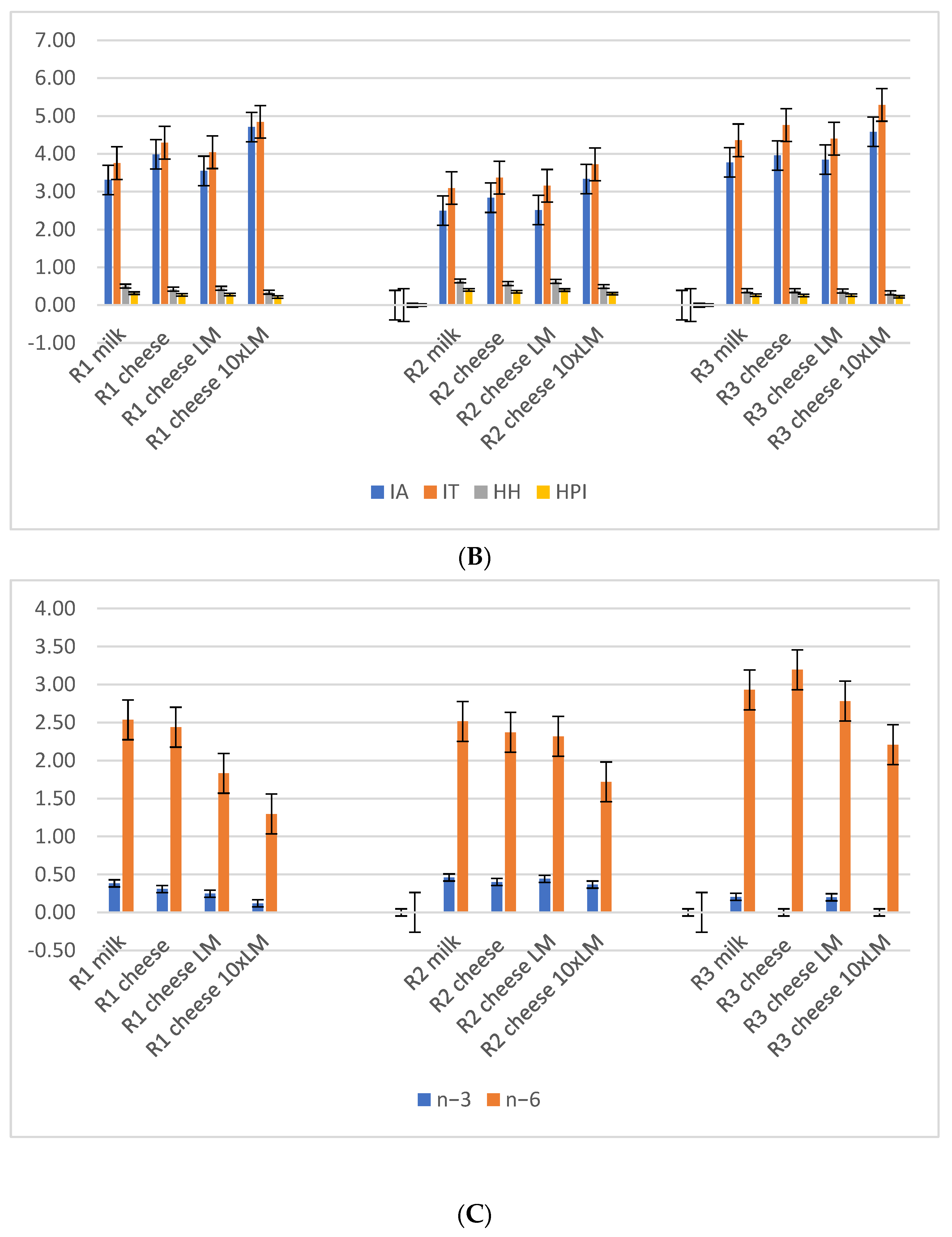
| IA | 3.56 ± 0.55 a | 3.98 ± 1.31 a | 2.50 ± 0.18 a | 2.84 ± 0.12 a | 3.77 ± 0.08 a | 3.96 ± 0.33 a |
| IT | 4.01 ± 0.52 a | 4.32 ± 1.12 a | 3.12 ± 0.36 a | 3.39 ± 0.39 a | 4.38 ± 0.04 a | 4.55 ± 0.27 a |
| HH | 0.46 ± 0.07 a | 0.42 ± 0.11 a | 0.64 ± 0.05 a | 0.57 ± 0.03 a | 0.38 ± 0.01 a | 0.38 ± 0.06 a |
| HPI | 0.28 ± 0.04 a | 0.27 ± 0.08 a | 0.40 ± 0.03 a | 0.35 ± 0.01 a | 0.27 ± 0.01 a | 0.26 ± 0.02 a |
| n−3 (%) | 0.33 ± 0.07 a | 0.31 ± 0.10 a | 0.46 ± 0.13 a | 0.40 ± 0.08 a | 0.21 ± 0.01 a | 0.197 ± 0.04 a |
| n−6 (%) | 2.48 ± 0.37 ab | 2.31 ± 0.56 ab | 2.25 ± 0.60 a | 2.17 ± 0.72 a | 2.80 ± 0.02 ab | 2.99 ± 1.08 b |
| n−6/n−3 | 7.79 ± 1.04 a | 7.76 ± 1.12 a | 7.76 ± 1.12 a | 5.72 ± 2.87 a | 13.68 ± 0.82 a | 15.14 ± 0.91 a |
Disclaimer/Publisher’s Note: The statements, opinions and data contained in all publications are solely those of the individual author(s) and contributor(s) and not of MDPI and/or the editor(s). MDPI and/or the editor(s) disclaim responsibility for any injury to people or property resulting from any ideas, methods, instructions or products referred to in the content. |
© 2025 by the authors. Licensee MDPI, Basel, Switzerland. This article is an open access article distributed under the terms and conditions of the Creative Commons Attribution (CC BY) license (https://creativecommons.org/licenses/by/4.0/).
Share and Cite
Chira, M.N.; Amariei, S.; Petraru, A. The Impact of Heavy Metal Contamination on the Fatty Acid Profile on Milk and on the Oxidative Stability of Dairy Products: Nutritional and Food Safety Implications. Appl. Sci. 2025, 15, 13193. https://doi.org/10.3390/app152413193
Chira MN, Amariei S, Petraru A. The Impact of Heavy Metal Contamination on the Fatty Acid Profile on Milk and on the Oxidative Stability of Dairy Products: Nutritional and Food Safety Implications. Applied Sciences. 2025; 15(24):13193. https://doi.org/10.3390/app152413193
Chicago/Turabian StyleChira, Maria Natalia, Sonia Amariei, and Ancuţa Petraru. 2025. "The Impact of Heavy Metal Contamination on the Fatty Acid Profile on Milk and on the Oxidative Stability of Dairy Products: Nutritional and Food Safety Implications" Applied Sciences 15, no. 24: 13193. https://doi.org/10.3390/app152413193
APA StyleChira, M. N., Amariei, S., & Petraru, A. (2025). The Impact of Heavy Metal Contamination on the Fatty Acid Profile on Milk and on the Oxidative Stability of Dairy Products: Nutritional and Food Safety Implications. Applied Sciences, 15(24), 13193. https://doi.org/10.3390/app152413193