Article

Optimized Green Cut-and-Fill Mining Method for Subsidence Control and Material Self-Sufficiency

1
China Energy Group Shanxi Dongpo Coal Industry Co., Ltd., Shuozhou 036000, China
2
State Key Laboratory of Digital Intelligent Technology for Unmanned Coal Mining, Anhui University of Science and Technology, Huainan 232001, China
3
School of Energy and Mining Engineering, Shandong University of Science and Technology, Qingdao 266590, China
*
Author to whom correspondence should be addressed.
Appl. Sci. 2025, 15(24), 12923; https://doi.org/10.3390/app152412923
Submission received: 14 October 2025 / Revised: 20 November 2025 / Accepted: 28 November 2025 / Published: 8 December 2025
(This article belongs to the Special Issue Advanced Technologies in Intelligent and Sustainable Coal Mining)

Abstract

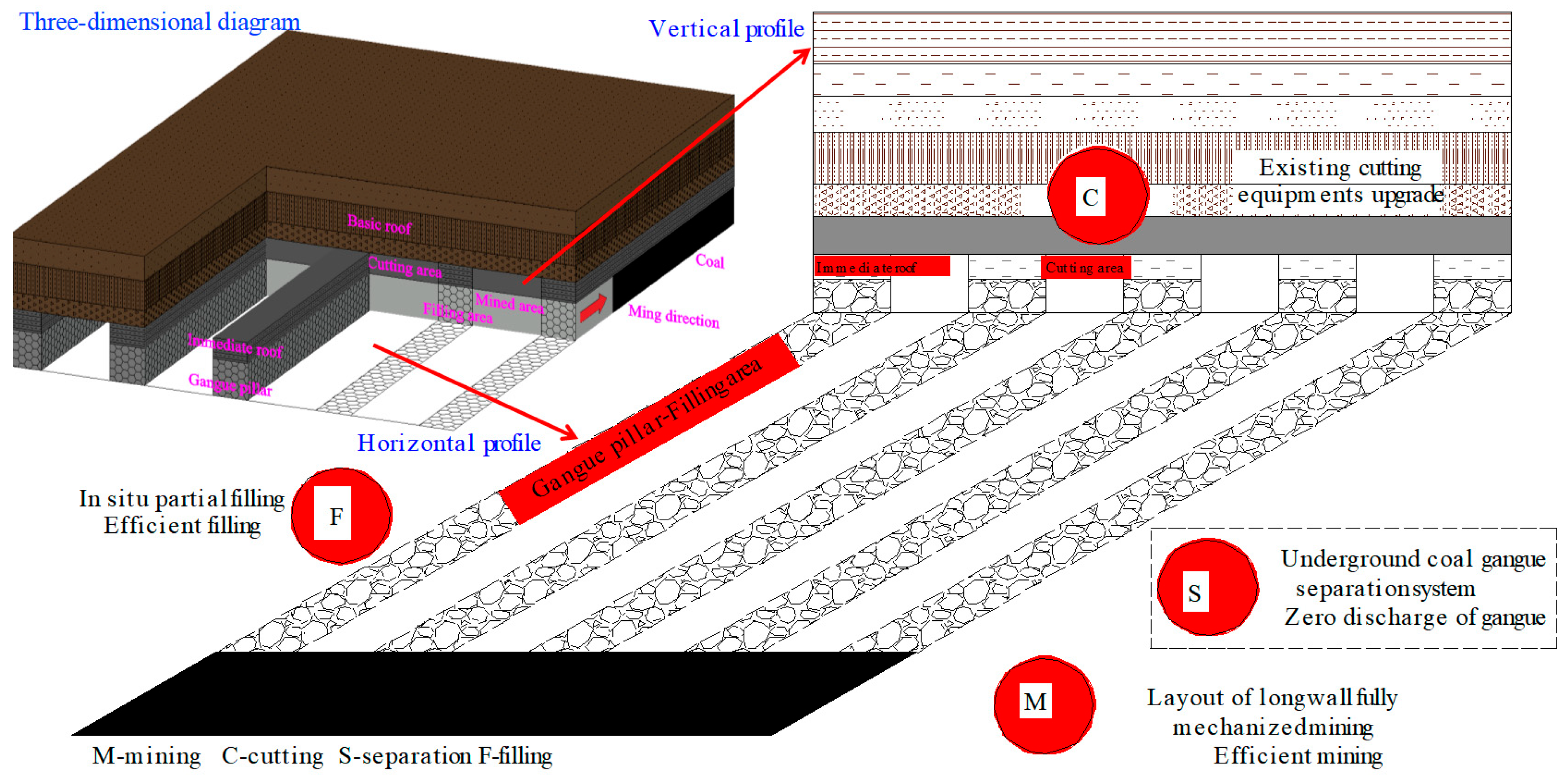
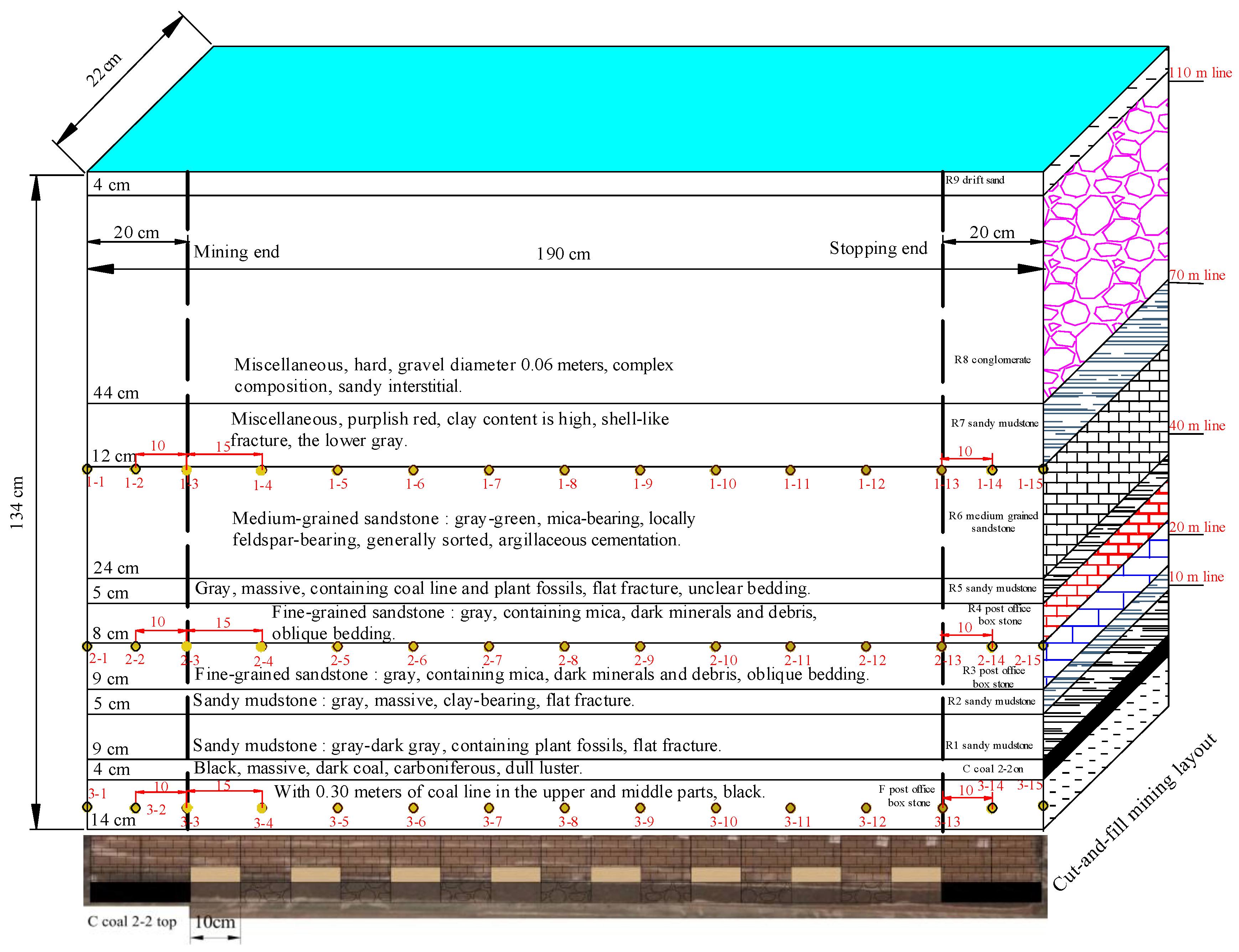
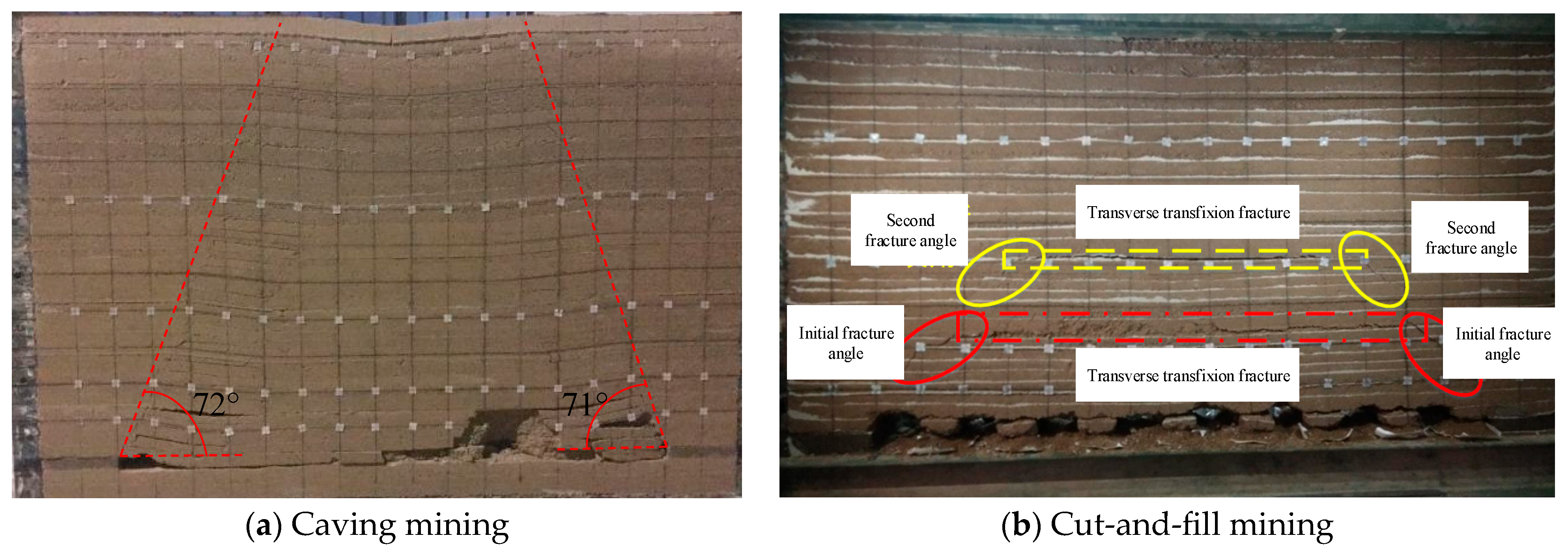
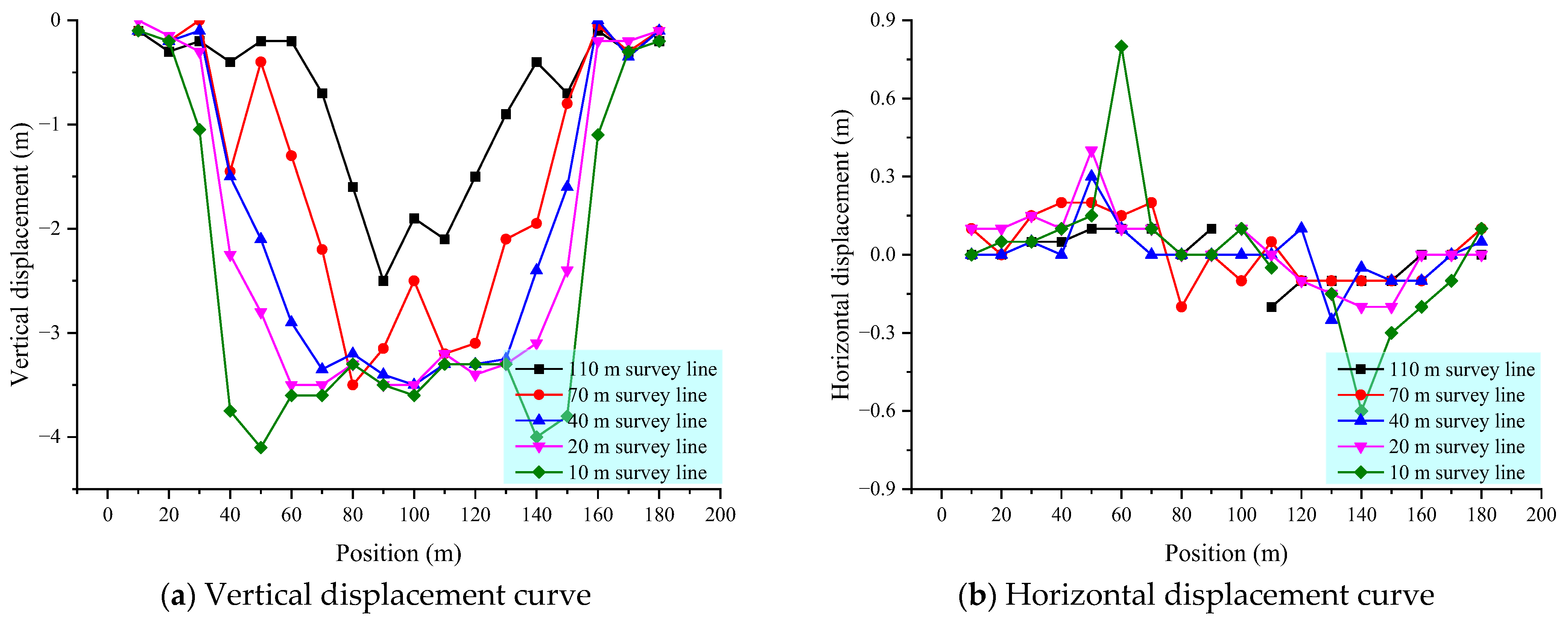
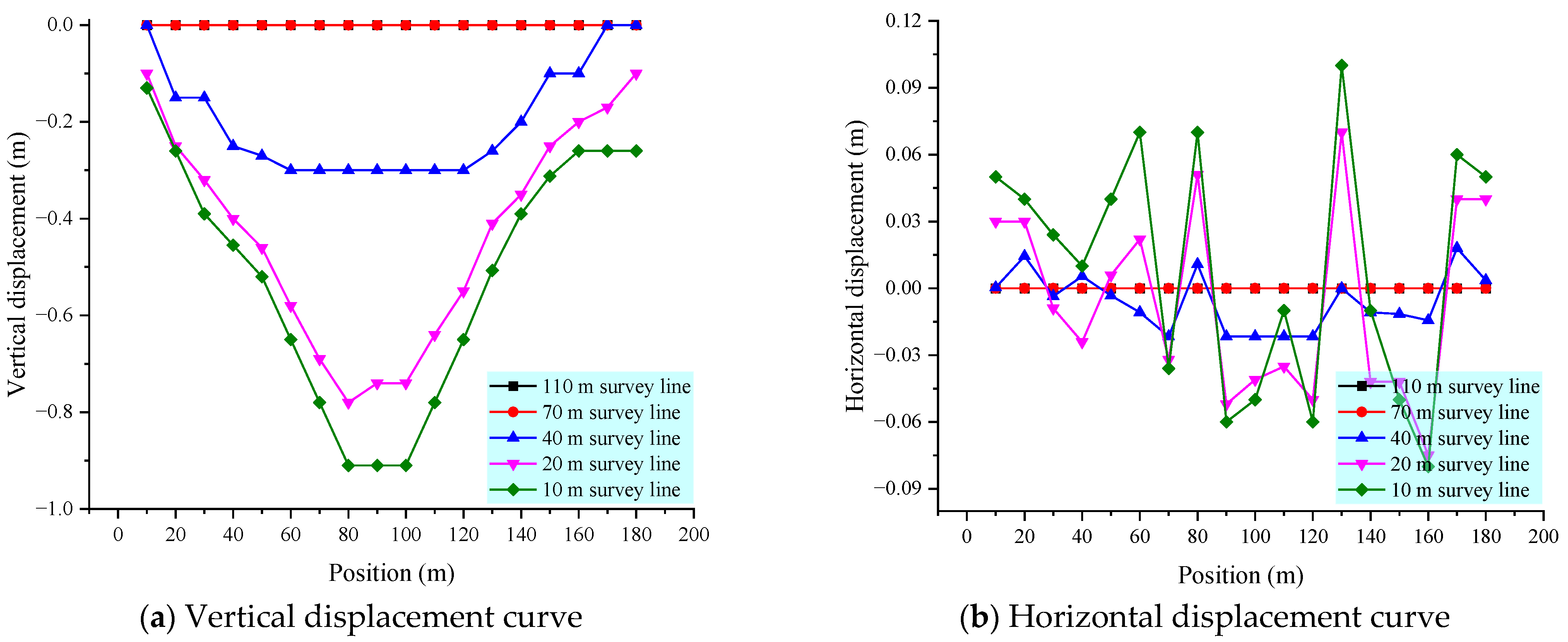
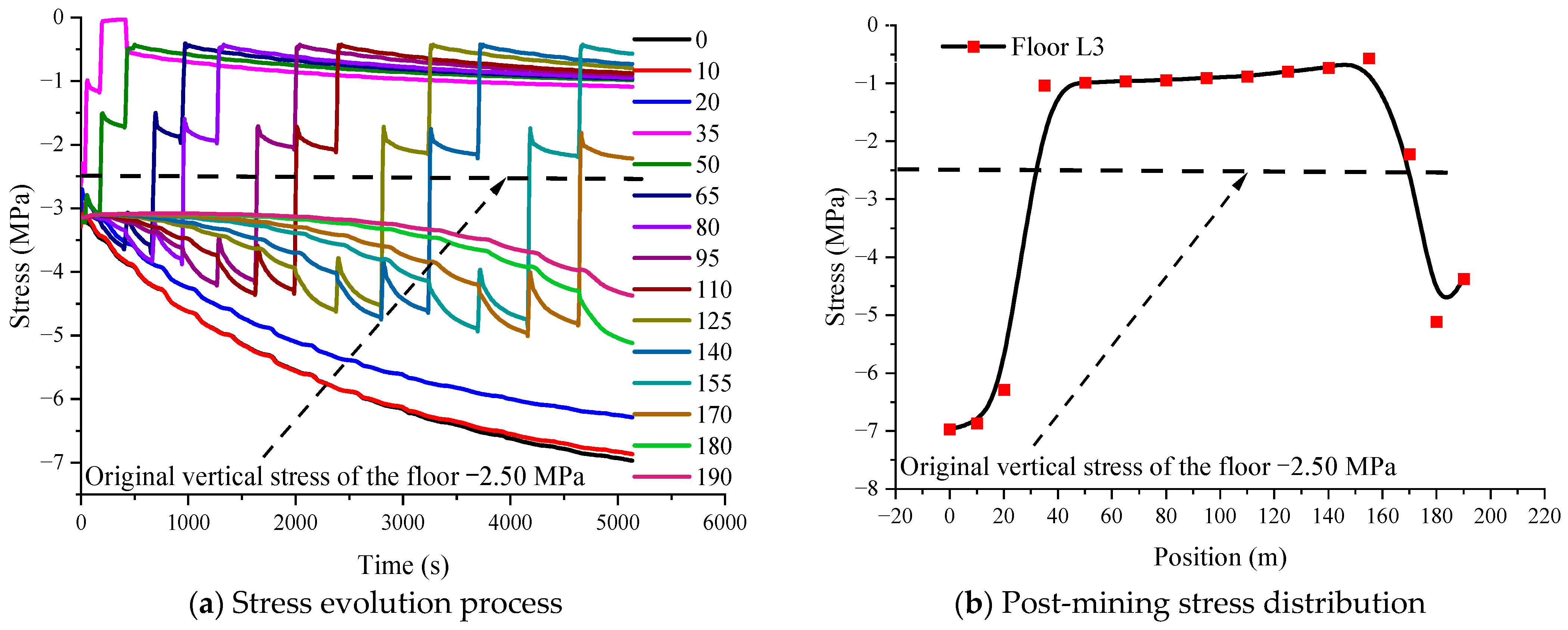
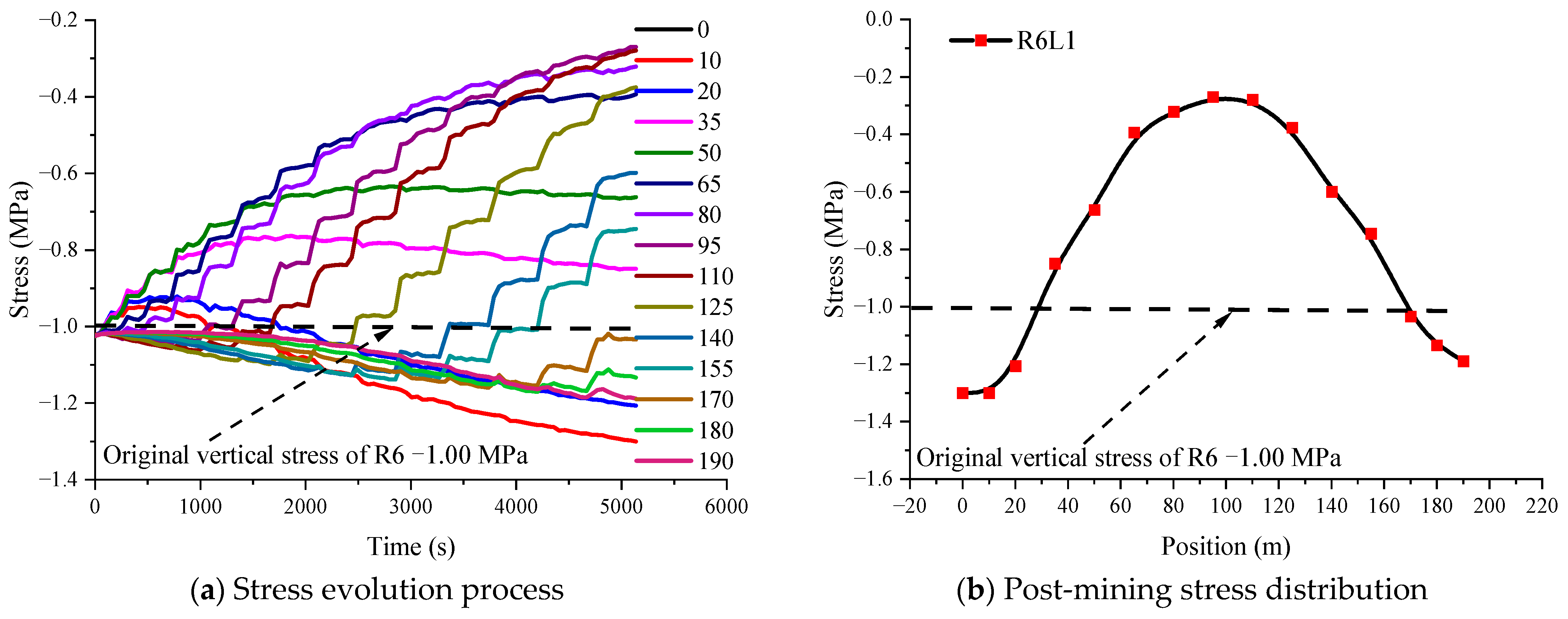
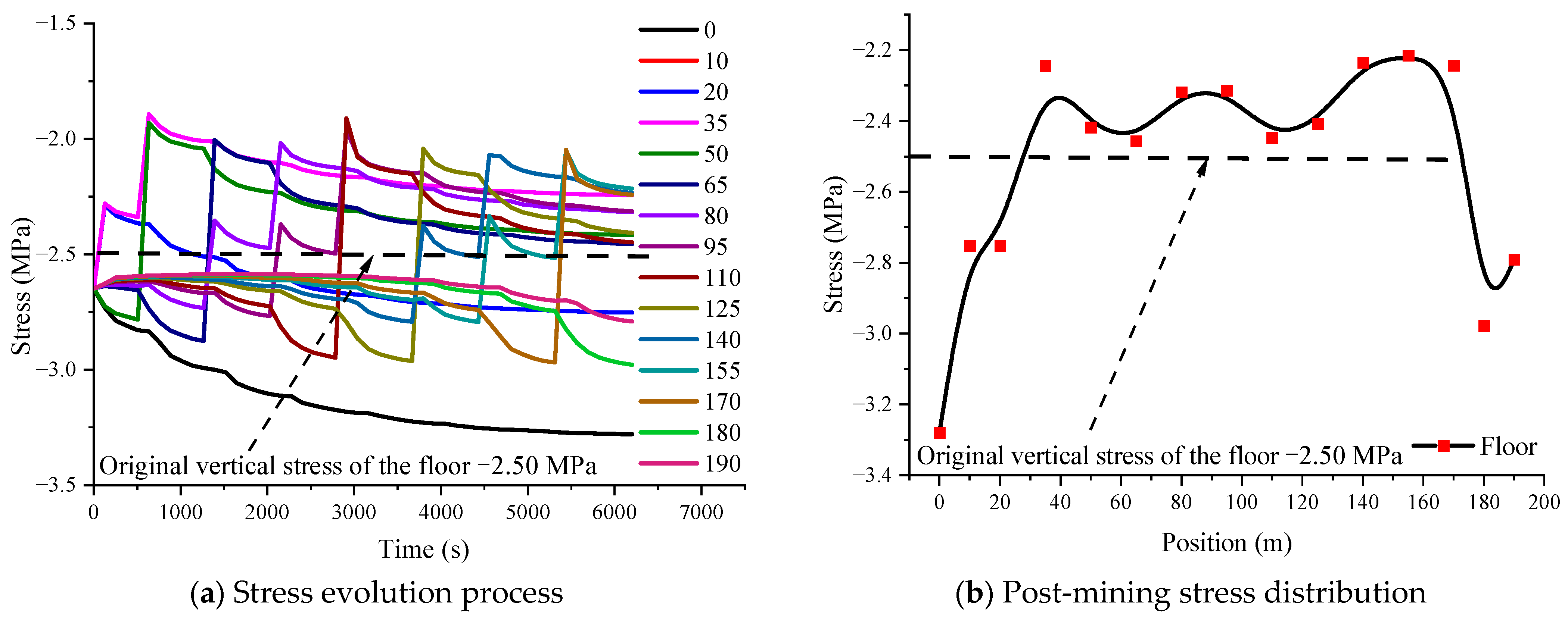
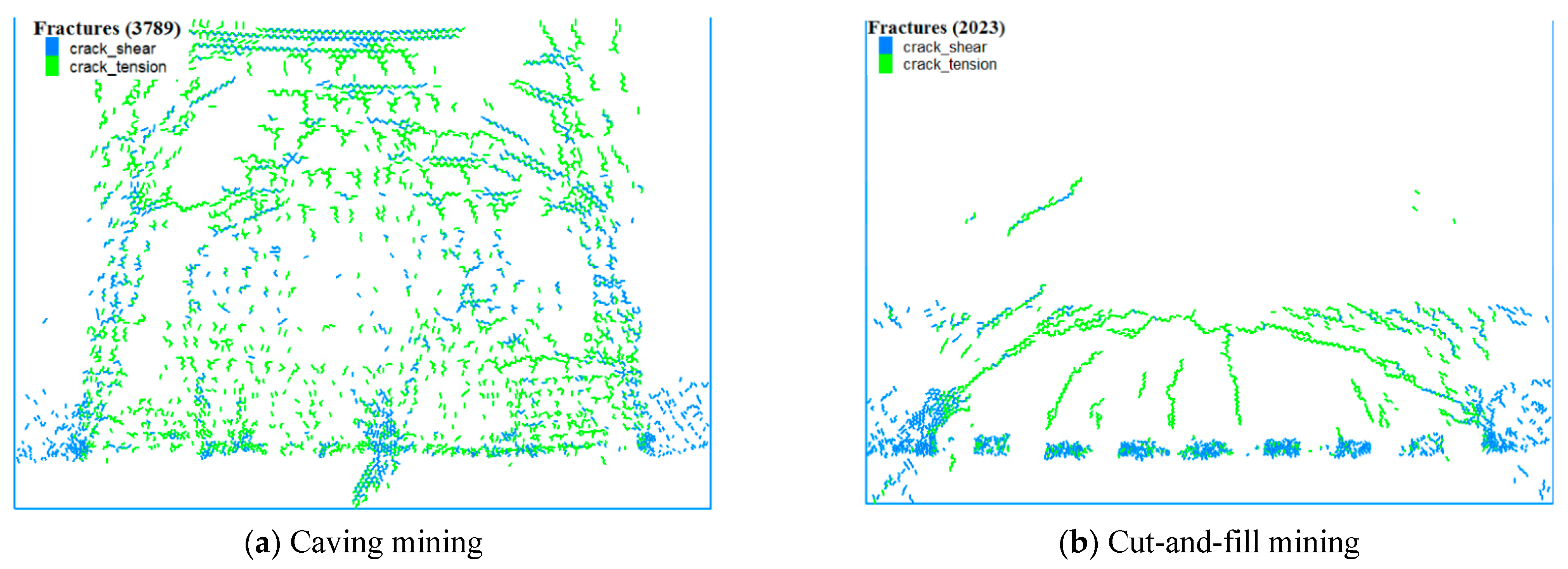
In the face of the urgent need for sustainable practices in the coal industry, we propose a novel green cut-and-fill mining method aimed at achieving material self-sufficiency and mitigating overburden subsidence. This method leverages the goaf roof as an in situ filling material, integrating long-wall caving mining efficiency with partial filling techniques. Through laboratory analog material modeling, numerical simulations, and structural mechanics modeling, we compare the performance of cut-and-fill mining and traditional caving mining methods. The results show that the cut-and-fill method offers more uniform and controlled deformation behavior. Specifically, vertical and horizontal displacements along 40 m survey lines are significantly reduced, with a maximum reduction on the order of millimeters, compared to caving mining. Furthermore, the floor stress concentration coefficient is lower, and the total number of fractures decreases, with shear fractures reduced by 8.8% and tensile fractures reduced by 66.9%. The gangue column in the cut-and-fill method effectively supports the goaf roof, preventing fracture formation and extending the deformation time. The results demonstrate the effectiveness of the cut-and-fill method for subsidence control, suggesting its potential for achieving green and sustainable coal mining practices.
Keywords: sustainable design; cut-and-fill mining; overburden subsidence control; stress evolution sustainable design; cut-and-fill mining; overburden subsidence control; stress evolution