Article

The Effect of Biopreparations and Biostimulants on the Chemical Composition and Microorganisms Associated with Verticillium Wilt of Horseradish Roots (Armoracia rusticana Gaertn.)


by
Katarzyna Gleń-Karolczyk
1,*,
Elżbieta Boligłowa
1,
Agnieszka Filipiak-Florkiewicz
2,
Adam Florkiewicz
3 and
Lidia Luty
4
1
Department of Microbiology and Biomonitoring, Faculty of Agriculture and Economics, University of Agriculture in Kraków, Mickiewicza 21, 31-120 Kraków, Poland
2
Department of Plant Products Technology and Nutrition Hygiene, University of Agriculture in Kraków, 122 Balicka, 30-149 Kraków, Poland
3
Department of Food Analysis and Quality Assessment, University of Agriculture in Kraków, 122 Balicka, 30-149 Kraków, Poland
4
Department of Statistics and Econometrics, University of Agriculture in Kraków, Al. Mickiewicza 21, 31-120 Kraków, Poland
*
Author to whom correspondence should be addressed.
Appl. Sci. 2021, 11(2), 680; https://doi.org/10.3390/app11020680
Submission received: 24 November 2020 / Revised: 29 December 2020 / Accepted: 8 January 2021 / Published: 12 January 2021
(This article belongs to the Special Issue Effective Microorganisms in Food Processing)

Abstract

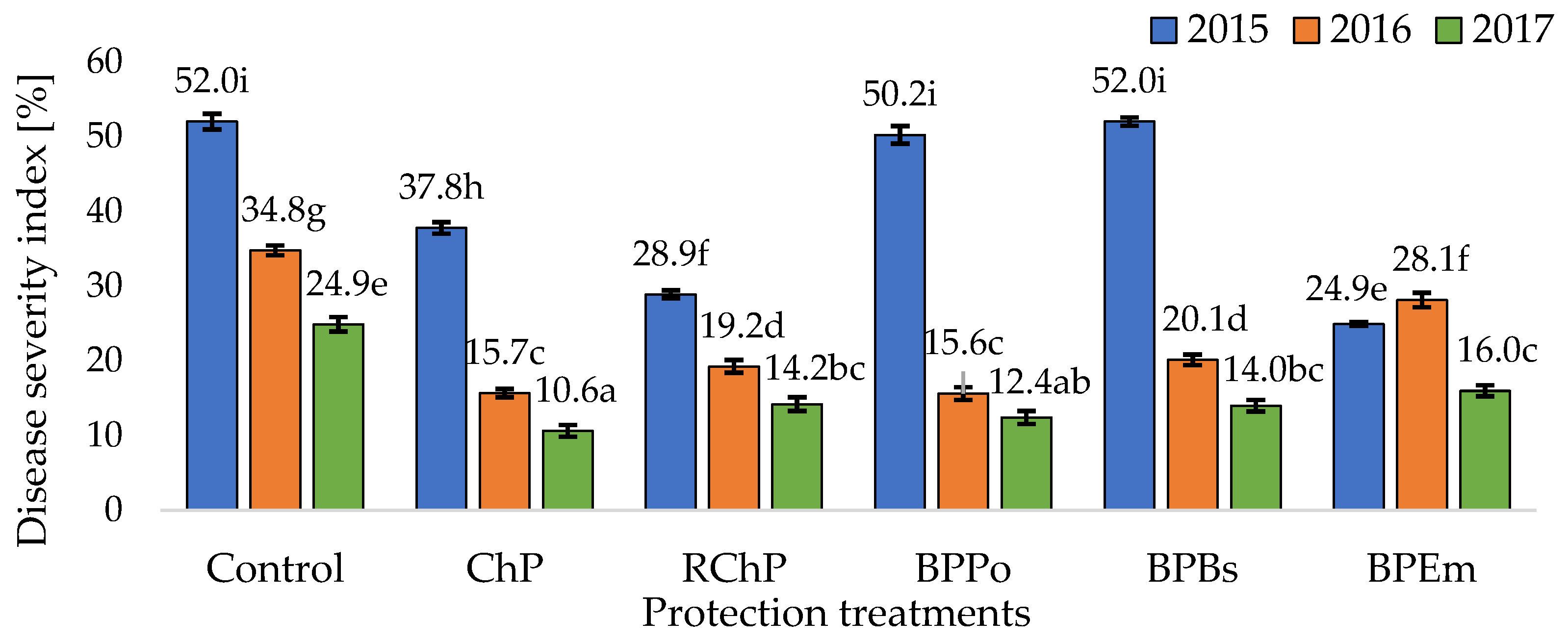
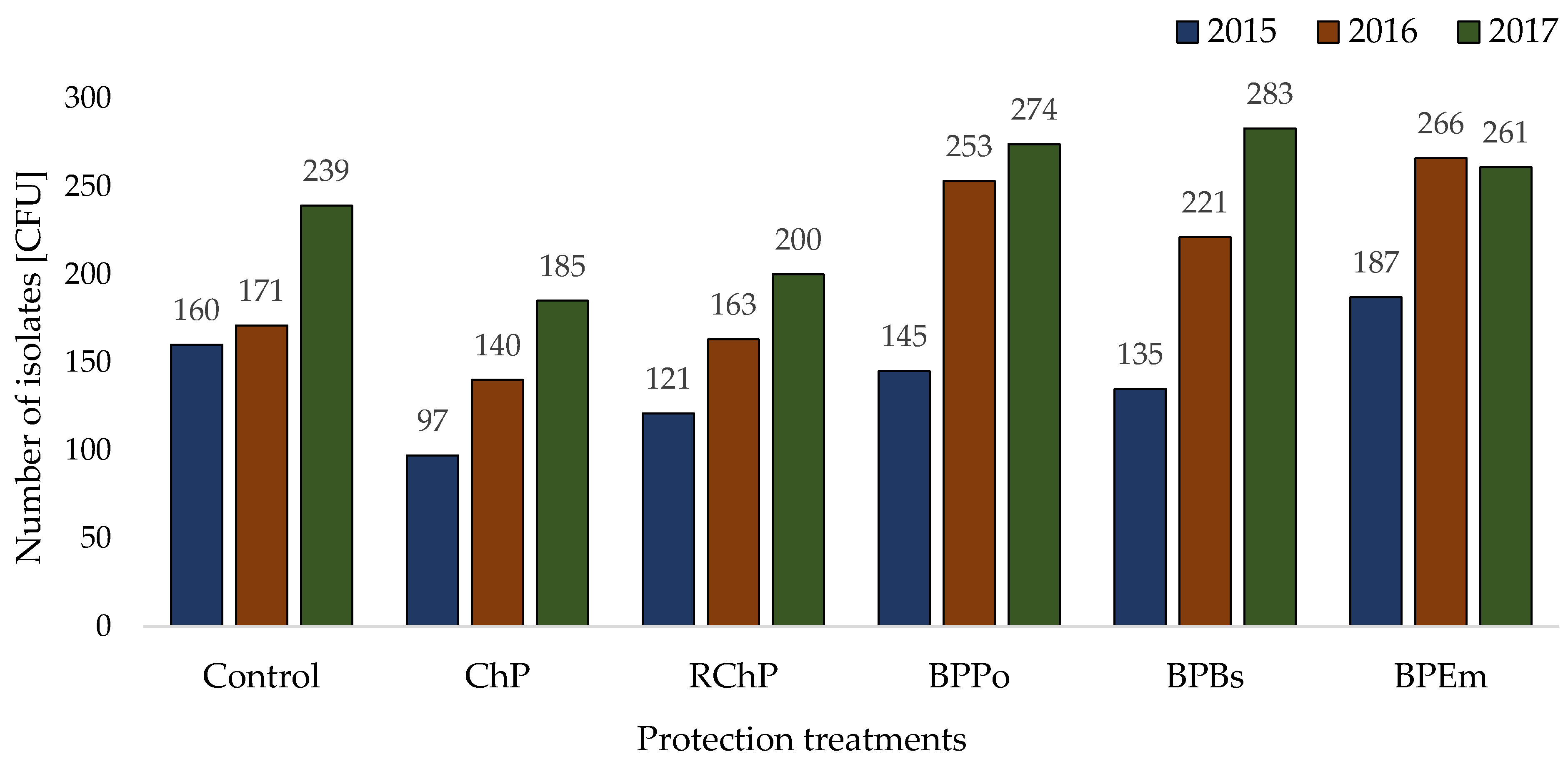
The basic foundation of plant production consists in plant protection treatments, which largely shape the quality of plant raw material intended for the food industry. Due to its long growing season, horseradish requires more treatments than average. Intensive protection based on synthetic pesticides favours the accumulation of their residues in plants and generates serious environmental problems. We have examined the effect of chemical protection and its reduced variant as well as three variants of biological protection, differentiated in terms of preparations used for seedlings treatment (Pythium oligandrum, Bacillus subtilis, and Ecklonia maxima), on the content of dry matter, protein, fat, carbohydrates, and the disease severity index (DSI) of Verticillium wilt of horseradish roots. The quantitative and qualitative changes in the microorganism communities associated with this disease were determined. Thirty-four species of fungi and Globisporangium irregulare have been shown to contribute to the pathogenesis of Verticillium wilt. The following were found with the highest frequency: Verticillium dahliae (14.37%), G. irregulare (6.87%), Ilyonectria destructans (6.73%), Fusarium acuminatum (6.53%), Rhisoctonia solani (6.75%), Epicoccum nigrum (5.56%), and Alternaria brassicae (5.36%).We found that water deficit promotes the increase of DSI and reduces the number and richness of fungal species isolated from diseased roots. The variant of biological protection with treatment of seedlings of E. maxima extract and with reduced chemical protectionin dry seasons give the best protective effects. Under conditions of optimal water supply, biological protection (P. oligandrum) is more effective than chemical protection. Biological protection increases biodiversity in the population of microorganisms that contribute to blackening of the conductive bundles of horseradish roots. There is a significant negative correlation between the number of isolated microorganisms and the DSI value. Increasing the number of the CFUs is accompanied by a reduction in the symptoms of Verticillium wilt of horseradish roots. Biological protection in years with sufficient water supply results in a significant increase in the content of dry matter, protein, and carbohydrates in horseradish roots. Under the influence of protective treatments, the ash content in the roots and its alkalinity decrease.
Keywords: horseradish roots; Verticillium wilt of horseradish roots; Bacillus subtilis; Pythium oligandrum; Ecklonia maxima; chemical composition horseradish roots; Verticillium wilt of horseradish roots; Bacillus subtilis; Pythium oligandrum; Ecklonia maxima; chemical composition