


Abstract
This study examines outcomes associated with a short-term intensive pedagogical experience aimed at developing social entrepreneurship competencies among university students at an Ashoka U–affiliated institution in Mexico. The program, Semana Tec de Agencia de Cambio, is a five-day experiential learning experience grounded in the SEL4C (Social Entrepreneurship Learning for Complexity) framework and designed to promote changemaking through interdisciplinary collaboration, reflection, and action. Using a quantitative quasi-experimental pre–post design (n = 210), data were collected through the validated Social Entrepreneur Profile (SEP), which assesses four dimensions: self-control, leadership, social awareness and social value, and social innovation and financial sustainability. Paired-samples t-tests indicated statistically significant increases (p < 0.001) across all dimensions, with small to medium effect sizes (Cohen’s d = 0.40–0.63). Multiple regression analysis showed that changes in social awareness and social value (β = 0.33, p < 0.001), leadership (β = 0.27, p = 0.004), and innovation and sustainability (β = 0.24, p = 0.006) were most strongly associated with overall changes in self-perceived competencies, explaining 58% of the variance (R2 = 0.58). Overall, the findings suggest that short-term intensive educational experiences grounded in active and interdisciplinary pedagogical approaches may contribute to measurable changes in students’ self-perceived social entrepreneurship competencies. Rather than evidencing consolidated transformation, the results are best interpreted as early indicators of competency activation within changemaker-oriented learning environments. The study contributes empirical insight into the use of intensive formats in social entrepreneurship education and situates the SEL4C framework as a coherent pedagogical reference within the Ashoka U context, without implying causal validation.
1. Introduction
The field of social entrepreneurship has become established as a key educational strategy for fostering social transformation within higher education. Beyond preparing competent professionals, universities face the challenge of cultivating in their students a critical and empathetic awareness oriented toward the common good, capable of responding to the complex problems of contemporary society (Loogma et al., 2013). Within this horizon, the student is conceived as a changemaker, a central figure in pedagogical models that integrate social innovation and university education, strengthening the capacity to generate systemic transformations through learning (Frydenberg & Andone, 2022).
One of the most influential initiatives in this field is Ashoka U, a global network that recognizes universities committed to education for social change (Ashoka U, 2025). Changemaker Campuses promote changemaking, ethical leadership, and social entrepreneurship as core competencies for global citizenship (Tramontin & Solesin, 2023). In Latin America, Tecnologico de Monterrey, Campus Guadalajara, is part of this network and has implemented educational experiences aimed at strengthening students’ capacity to identify social problems, design sustainable solutions, and engage in collaborative action (Vázquez-Parra et al., 2020).
Among these initiatives, the Tec Changemaker Week is a five-day intensive intervention based on the SEL4C methodology (Social Entrepreneurship Learning for Complexity), integrating conceptual input with ideation, research, and prototyping activities (Vázquez-Parra et al., 2024). Its experiential and transversal design enables the observation of socio-entrepreneurial competency development within a short but highly immersive learning period, characterized by sustained engagement and reflection (Cruz-Sandoval et al., 2023a).
Despite the growing interest in social entrepreneurship education, research has focused primarily on long-term programs, leaving an empirical gap regarding the potential of intensive experiences to generate transformative learning. Recent studies highlight that accelerated and experiential pedagogical formats can foster cocreation, reflection and social action, strengthening students’ entrepreneurial competencies (Whewell et al., 2022; Rodrigues, 2023; Baltador & Grecu, 2023; De Agapito et al., 2024). However, research evaluating their impact using pre–post designs and validated measurements remains limited (Ratten & Usmanij, 2021).
In response to this need, the present study examines the impact of an intensive educational intervention on the development of social entrepreneurship competencies. Amongst Ashoka U Changemaker Campus experiences, the Tec Changemaker Week is distinguished by its interdisciplinary design and its concentrated five-day structure, which demonstrates that a short duration does not preclude depth of learning when the process is grounded in complex thinking, critical reflection and collaborative action. With this purpose, the Social Entrepreneur Profile instrument was administered before and after the experience within a quantitative pre–post repeated measures design.
The questions that guided the study were:
- Does an intensive pedagogical intervention produce a significant change in students’ perceptions of their social entrepreneurship competencies?
- Which dimensions of the social entrepreneur profile show the greatest variations after the learning experience?
The general objective was to analyze the effects of an intensive educational experience on the development of social entrepreneurship competencies among students at an Ashoka U institution, providing empirical evidence on the effectiveness of short-term learning models for promoting Changemaking. The study thus contributes to the literature on educational innovation by showing that even brief interventions, when designed from a complex, reflective and collaborative perspective, can generate meaningful transformations in students’ self-perception of social entrepreneurial competence.
In addition, Mexico constitutes a paradigmatic emerging market, where structural inequalities, institutional volatility and heterogeneous access to opportunities shape the development of social entrepreneurship. These contextual conditions make short-term educational interventions particularly relevant, as they provide accelerated mechanisms to strengthen Changemaking in environments where social needs and entrepreneurial potential coexist intensely. Changemaking therefore is activated in action, through cultivating leadership, empathy and collaborative work, and a lifelong journey of changemaking starts.
While Ashoka U and the Tec Changemaker Week provide a meaningful institutional context for examining social entrepreneurship education, it is important to clarify the analytical scope of this study. The present research does not seek to evaluate institutional prestige, branding strategies, or the normative value of Changemaker accreditation itself. Rather, Ashoka U and the Tec Changemaker Week are treated as empirically situated learning environments that allow for the examination of how short-term, intensive pedagogical designs may influence students’ self-perceived social entrepreneurship competencies. This distinction is central to maintaining analytical neutrality, as the focus of the study lies in the pedagogical structure and learning dynamics of the intervention, rather than in institutional positioning or promotional narratives.
2. Theoretical Framework
2.1. Social Entrepreneurship and University Education for Change
Social entrepreneurship has become established as a field of action and research that brings together innovation, sustainability and social responsibility, offering new pathways for addressing the challenges of human development and equity. Unlike traditional entrepreneurship, its objective is not limited to the generation of economic value but centers on the creation of sustainable social value, promoting innovative solutions to complex problems in educational, environmental or community contexts (Vázquez-Parra et al., 2020). This approach has gained relevance in higher education, where the aim is to move beyond content-centered teaching toward experiences that promote social transformation through action (Bega et al., 2021). In university settings, social entrepreneurship is linked to the development of ethical, reflective and collaborative competencies that strengthen students’ agency as changemakers. Integrating professional training with critical awareness, empathy and social innovation enables future graduates to orient their practice toward improving their communities (Cruz-Sandoval et al., 2023a). Literature consistently argues that universities must assume an active role in promoting transformative citizenship by fostering experiences that connect complex thinking, community action and creative problem solving (Mazumdar, 2021).
Within this landscape, the Ashoka U network has been decisive in institutionalizing changemaker education, recognizing universities that integrate social entrepreneurship and innovation as crosscutting pillars of their educational, research and engagement missions (Whewell et al., 2022). Institutions accredited as Changemaker Campuses commit to preparing students who are capable of understanding and transforming their environment through empathy, ethical leadership and interdisciplinary collaboration (Ashoka U, 2025).
Tecnologico de Monterrey, Campus Guadalajara, a member of this network, has advanced pedagogical strategies aimed at strengthening students’ Changemaking (Tecnológico de Monterrey, 2024). Among these initiatives, the Tec Changemaker Week stands out as a short-term experiential learning model that combines reflection and social action. This experience applies the SEL4C methodology (Social Entrepreneurship Learning for Complexity), designed to foster empathy, creativity and collaborative leadership in real-world contexts (Vázquez-Parra et al., 2024; SEL4C, 2025). In this way, social entrepreneurship education within Ashoka U universities, and particularly at Tecnologico de Monterrey, is positioned at the intersection of educational innovation and social commitment. Learning processes are oriented toward the development of transformative competencies, integrating reflection, practice and empathy as essential components for assessing the impact of intensive programs such as the experience analyzed in this study (Tecnológico de Monterrey, 2025).
In emerging economies, universities play a critical role as entrepreneurial ecosystems, compensating for limitations in institutional support, financing structures and innovation infrastructure. In Mexico and Latin America, higher education institutions frequently act as catalysts for social innovation, particularly in regions where governmental or market mechanisms remain insufficient.
2.2. Social Entrepreneur Skills and Profile Assessment
The development of competencies for social entrepreneurship constitutes a central pillar in university education oriented toward creating changemakers. These competencies bring together knowledge, attitudes and skills that enable individuals to identify social problems, design sustainable solutions and carry out actions with positive impact (Zarch et al., 2016). Unlike traditional entrepreneurial competencies, those of a social nature are oriented toward ethical and community-driven goals, where success is measured by the social transformation achieved rather than by economic gain (Bega et al., 2021). From this perspective, universities that foster social innovation promote empathy, resilience, leadership and creativity as pillars of active and engaged citizenship (Inci, 2016).
In this context, the Social Entrepreneur Profile (SEP) instrument was developed as a tool to assess students’ perceptions of their own growth as social entrepreneurs. Its structure identifies four interdependent dimensions: self-control, leadership, social awareness and social value, and social innovation and financial sustainability (Vázquez-Parra et al., 2026). These dimensions reflect socioemotional and cognitive competencies related to ideation, decision making and transformative action, offering a comprehensive view of how personal initiative translates into collective and ethical commitment.
Self-control refers to the capacity for emotional self-regulation and persistence when facing the challenges inherent to social change; leadership refers to the ability to inspire and coordinate collaborative efforts; social awareness and social value relate to sensitivity toward human and environmental issues; and social innovation and financial sustainability refer to creativity oriented toward the viability of social projects (Cruz-Sandoval et al., 2023a; Vázquez-Parra et al., 2023). Together, these dimensions constitute a complex and contextual competence in which critical thinking, ethics and transformative action converge.
The validation of the instrument demonstrated a solid factorial structure and adequate reliability indices (α between 0.79 and 0.88), confirming its usefulness for measuring self-perceived achievement in diverse educational contexts. It also showed that the development of social entrepreneurial competencies varies according to the learning experiences encountered by students, which makes it possible to assess their evolution in intensive programs such as the Tec Changemaker Week (Vázquez-Parra et al., 2026).
In this sense, the use of the SEP goes beyond mere measurement: it functions as a pedagogical feedback mechanism that strengthens educational innovation and integral formation. In institutions committed to changemaker education, such as those belonging to the Ashoka U network, the assessment of entrepreneurial profiles acquires strategic value, as it helps identify progress, guide improvements and generate evidence about the impact of learning experiences. In this way, evaluation becomes a bridge between theory, practice and social transformation.
Beyond the SEP, Ashoka’s global work with leading social entrepreneurs and changemaker campuses has led to the identification of four core changemaking skills that are considered essential for advancing systems-level change: nurturing conscious empathy, organizing open, fluid and integrated teams, developing changemaking leadership, and practicing changemaking action (Ashoka, 2025). These skills describe, respectively, the capacity to understand the perspectives of others and act for the common good, to thrive in dynamic ecosystems of teams that mobilize around emerging problems and opportunities, to enable every team member to act as an initiator, and to design and implement innovative solutions whose primary value accrues to society. Conceptually, the four dimensions of the Social Entrepreneur Profile used in this study can be read as a complementary operationalization of these skills: self-control and social awareness resonate with conscious empathy; leadership is closely related to changemaking leadership and organizing open teams; and social innovation and financial sustainability reflects the practice of changemaking action. In this sense, the SEP provides a useful lens to examine how intensive educational experiences such as the Tec Changemaker Week support the development of the changemaking skills framework promoted by Ashoka.
Moreover, the Ashoka Changemaker Index offers a complementary global framework for assessing these four skills at the individual and institutional levels, opening avenues for future studies that triangulate SEP scores with changemaking skill profiles in Ashoka U campuses (Ashoka, 2025).
2.3. Educational Innovation and Transformative Learning for the Change Agency
Educational innovation has become a cornerstone of university transformation, particularly in contexts that seek to cultivate citizens who are critical, creative and committed to sustainability. In contrast to traditional models, it implies a paradigmatic shift that positions the student as the protagonist of their learning and as an active constructor of knowledge. From this perspective, learning is conceived as a complex process that integrates reflection, experience and social action, acknowledging that education not only transmits knowledge but also transforms people and contexts (Loogma et al., 2013). Transformative learning, proposed by Mezirow (2000) and taken up by contemporary social pedagogy, maintains that students modify their frames of reference when confronted with experiences that challenge their prior assumptions. This idea aligns with methodologies that promote experiential and reflective education, in which situated practice, collaboration and ethical decision making connect action with critical awareness (Mazumdar, 2021; Cruz-Sandoval et al., 2023b).
Within this framework, the SEL4C model (Social Entrepreneurship Learning for Complexity) represents an educational innovation aimed at developing complex competencies in real contexts. Built on the foundations of complex thinking, it articulates four phases, identification, investigation, ideation and socialization, which integrate analysis, empathy and creativity, promoting the connection between action and reflection (Vázquez-Parra et al., 2023). Its application in intensive experiences, such as the Tec Changemaker Week, has shown that students can develop socioemotional and entrepreneurial skills within concentrated periods of high engagement.
The Changemaking approach promoted by Ashoka U draws on this type of experience. Forming changemakers implies moving beyond content-based teaching to promote leadership, empathy, collaboration and transformative action as central elements of learning. Universities recognized as Changemaker Campuses operate as living laboratories of educational innovation, where participatory leadership and the creative resolution of social problems become integral learning experiences (Ashoka U, 2025; Solesin, 2020). The Tec Changemaker Week synthesizes these principles by combining an intensive pedagogical design with an open model of social innovation. Its short duration enhances students’ cognitive and emotional immersion, fostering group cohesion, self-efficacy and intrinsic motivation. This evidence reinforces the notion that short-term interventions, when grounded in complex thinking and collaborative learning, can generate significant effects on students’ self-perception of social entrepreneurship competencies (Vázquez-Parra et al., 2024; Semanas Tec, 2025).
Despite the growing body of literature supporting experiential and intensive formats in social entrepreneurship education, it is important to acknowledge that not all authors converge on their effectiveness or sustainability. While transformative learning theories emphasize the potential of disorienting experiences to catalyze shifts in meaning perspectives, they also stress that such transformations typically require extended processes of reflection, dialogue, and reintegration over time (Mezirow & Taylor, 2009). In this sense, several studies caution that short-term interventions may risk fostering superficial engagement or short-lived changes, particularly when outcomes are assessed primarily through self-reported perceptions (Ashwin, 2014). Critics further argue that high-intensity educational formats can amplify immediate enthusiasm without necessarily guaranteeing the long-term integration of competencies into students’ professional or civic trajectories, especially when instructional time is compressed and cognitive load is high (Kirschner et al., 2006).
From this perspective, claims regarding the transformative potential of short-term educational experiences should be interpreted with analytical caution. The literature suggests that such interventions may be more accurately understood as catalytic moments rather than as complete formative processes, whose enduring impact depends on subsequent opportunities for practice, reinforcement, and reflective integration within broader institutional ecosystems (Mezirow & Taylor, 2009; Ashwin, 2014). Recognizing these tensions is essential to avoid overgeneralization and to situate empirical findings within an emerging, rather than settled, area of inquiry, particularly in studies that focus on perceived competency development following intensive educational experiences.
It is also important to distinguish between full transformative learning, understood as a durable restructuring of meaning perspectives, and more proximal changes related to awareness, motivation, and self-perceived competence. While frameworks such as Ashoka’s changemaking skills and the SEL4C methodology are explicitly grounded in transformative learning theory, not all educational experiences designed under these models necessarily result in deep transformation in a strict theoretical sense. Particularly in short-term, high-intensity formats, learning outcomes may more accurately reflect processes of activation, sensitization, and dispositional change rather than consolidated transformation. From this standpoint, the present study does not claim to evidence complete transformative learning trajectories, but rather to capture early indicators of transformative potential as reflected in students’ self-perceived social entrepreneurship competencies following an intensive pedagogical experience.
Within this conceptual framing, the SEL4C methodology is approached in the present study not as a definitive model of transformative learning, but as a pedagogical design that intentionally creates conditions for short-term activation of socioemotional, cognitive, and ethical dimensions associated with changemaking. From this standpoint, the empirical contribution of the study lies in examining how such an intensive environment translates into measurable changes in students’ self-perceived social entrepreneurship competencies, rather than in asserting the consolidation of transformative learning trajectories.
It is important to distinguish between findings that are well established within literature and claims that remain emergent or contested. While there is robust consensus regarding the value of experiential, reflective, and socially situated learning for fostering awareness, engagement, and perceived competence, the capacity of short-term intensive formats to generate fully consolidated transformative learning outcomes remains an open and debated question. Accordingly, claims regarding transformation in such contexts should be understood as provisional and context-dependent, grounded in early indicators and dispositional shifts rather than in durable restructuring of meaning perspectives.
3. Materials and Methods
The present study was conducted using a quantitative quasi-experimental approach, employing a pre–post design with a single group and no control group. This type of design makes it possible to analyze changes in the perceived achievement of social entrepreneurship competencies before and after a specific educational intervention. The research focuses on an intensive five-day pedagogical intervention implemented as part of the Tec Changemaker Week, an institutional initiative at Tecnologico de Monterrey, Campus Guadalajara, aimed at preparing students to become changemakers. Through this design, the study sought to identify significant variations in the dimensions of the Social Entrepreneur Profile, derived from participation in an experiential learning activity based on the SEL4C methodology (Social Entrepreneurship Learning for Complexity). The choice of a quasi-experimental design responds to the purpose of assessing the formative impact of the experience under real educational conditions, prioritizing ecological validity over experimental control.
Based on this design, the following research hypotheses were formulated:
H1.
The intensive pedagogical intervention will produce a statistically significant increase in participants’ self-perception of social entrepreneurship competencies.
H1a.
The post-intervention means will be significantly higher than the pre-intervention means in the self-control dimension.
H1b.
The post-intervention means will be significantly higher than the pre-intervention means in leadership.
H1c.
The post-intervention means will be significantly higher than the pre-intervention means in social awareness and social value.
H1d.
The post-intervention means will be significantly higher than the pre-intervention means in social innovation and financial sustainability.
These hypotheses guided the comparative statistical analysis and the interpretation of the results, aiming to establish significant relationships between the intervention and competency development. This approach follows the logic of pre–post designs used in quasi-experimental educational research (Field, 2018; Gravetter & Wallnau, 2020), where the objective is not to isolate the intervention but to assess its formative effect in real learning contexts.
The study was developed in Mexico, a context classified as an emerging market, where social challenges such as inequality, informality and limited access to institutional support systems shape students’ perceptions of entrepreneurial agency.
3.1. Population
The population consisted of 210 university students from Tecnologico de Monterrey, Campus Guadalajara, who participated in the Tec Changemaker Week during the August–December 2025 semester. This intensive five-day pedagogical experience was oriented toward the development of social entrepreneurship competencies. The participants came from different undergraduate programs and represented all the Schools that make up the institution, which ensured a heterogeneous and interdisciplinary sample. This diversity was particularly valuable for observing how experiential learning and Changemaking manifest in varied educational contexts. The selection was non-probabilistic and intentional, including all students enrolled in the seven groups that comprised the intervention. The sample ranged from first-semester students to those nearing graduation, with a balanced gender distribution aligned with the overall composition of the campus.
The inclusion criteria considered all students officially enrolled in the Tec Changemaker Week, regardless of discipline, semester or gender. Only cases with incomplete participation in the pre or post measurements were excluded, and their data were removed from the statistical analysis. Although participation formed part of the academic experience, completing the instrument was voluntary, anonymous and confidential, with no impact on course evaluation. Finally, three descriptive tables were produced showing the distribution of participants by gender, semester and academic discipline, with the purpose of contextualizing the results and establishing a solid demographic basis for the analysis of the Social Entrepreneur Profile (Table 1, Table 2 and Table 3).

Table 1.
Population distribution by gender (N = 210).
Table 2.
Population distribution by semester of study (N = 210).
Table 3.
Population distribution by academic discipline (N = 210).
The composition of the sample reflects the disciplinary and educational diversity of the student body at Tecnológico de Monterrey. The balanced presence of men and women, together with the representation of different academic levels and areas of knowledge, strengthens the validity of the results and their applicability to broad university contexts. This heterogeneity also responds to the vision of comprehensive and interdisciplinary education promoted by the Ashoka U network, in which diversity of experiences and perspectives is a key element for the development of agency for change and social entrepreneurship.
3.2. Ethical Considerations
The study was conducted in accordance with the institutional ethical principles of Tecnologico de Monterrey and was approved by the Institutional Research Ethics Committee under protocol number P-IFE-202506-002. All procedures adhered to the confidentiality, anonymity and informed consent guidelines established in the SEL4C Privacy Notice (Tecnológico de Monterrey, 2023), publicly available at https://tec.mx/es/aviso-de-privacidad-sel4c (accessed on 24 November 2025). Participants were informed about the objectives of the study, the voluntary nature of their participation and the exclusive academic use of the data collected. The instrument was administered anonymously, and no sensitive information that could compromise students’ identities was gathered.
Furthermore, the research complied with the principles of respect, beneficence and justice outlined in the institution’s Code of Ethics for Research. All results were analyzed and reported in aggregate form, ensuring that no evaluation, grading or administrative decision was linked to individual performance. In doing so, the study met all ethical requirements necessary to safeguard scientific integrity and protect the well-being, privacy and rights of all participants.
3.3. Instrument
The Social Entrepreneur Profile (SEP) instrument, designed and validated by Vázquez-Parra et al. (2026), was used for data collection. The purpose of this instrument is to measure students’ self-perception of competencies associated with social entrepreneurship in higher education. The instrument was developed based on a theoretical framework that integrates social entrepreneurship theory, transformative education approaches and socioemotional competence models, acknowledging that the development of a social entrepreneur involves interconnected cognitive, affective and behavioral dimensions. Its application seeks to capture students’ subjective perception of their achievement in these competencies through items rated on a five-point Likert scale (1 = strongly disagree, 5 = strongly agree).
The questionnaire is composed of 24 items grouped into four dimensions that reflect key social entrepreneurship competencies: self-control, leadership, social awareness and social value, and social innovation and financial sustainability. Each dimension contains between four and seven items that make it possible to compute partial means and an overall score. The original statistical validation of the instrument demonstrated a coherent and stable factorial structure, confirmed through exploratory and confirmatory factor analyses (EFA and CFA). Model fit indices showed adequate goodness of fit (χ2/df = 1.87; CFI = 0.93; RMSEA = 0.045), and internal consistency reached Cronbach’s alpha values between 0.79 and 0.88 across the four dimensions, ensuring its reliability in diverse educational contexts (Vázquez-Parra et al., 2026).
In the present study, the instrument was administered at two points in time: before and after the intensive pedagogical intervention. The internal consistency results obtained in this sample corroborate the findings of the original validation, with α = 0.73 for Self-control, 0.89 for Leadership, 0.89 for Social awareness and social value and 0.85 for Social innovation and financial sustainability, confirming its suitability for pre–post assessment. The use of the instrument makes it possible to identify significant variations in students’ self-perception of competency achievement, providing empirical evidence of the formative impact of the intensive educational experience.
Taken together, the Social Entrepreneur Profile constitutes a valid and reliable tool for assessing the development of social entrepreneurship competencies in higher education, particularly in pedagogical innovation programs and changemaker education initiatives. Its application in this study offers a solid empirical basis for understanding how intensive, interdisciplinary and experiential learning experiences contribute to strengthening the student profile as an agent of social transformation.
3.4. Procedure and Data Analysis
Data collection was carried out at two points in time: before (pre) and after (post) the intensive pedagogical intervention corresponding to the Tec Changemaker Week. To minimize social desirability bias, which could arise from having the same instructors facilitate the experience, the instrument was administered online, anonymously and without instructor supervision. Each participant generated a unique identifier that allowed the pre and post measurements to be linked without revealing their identity. Participants were also informed that their responses would have no academic consequences and would be analyzed in aggregate for research purposes only, ensuring the authenticity and neutrality of the information provided.
Statistical processing was conducted using SPSS v.29 and Python 3.10, following the recommendations of Field (2018) and Gravetter and Wallnau (2020) for quasi-experimental studies with repeated measures. First, a descriptive analysis of means, standard deviations and variances was conducted for the four dimensions of the Social Entrepreneur Profile, self-control, leadership, social awareness and social value, and social innovation and financial sustainability, along with the overall score. These indicators made it possible to visualize average variations before and after the intervention through bar and radar charts.
Subsequently, internal consistency was assessed using Cronbach’s alpha for both measurements and compared with the results reported in the instrument’s original validation (Vázquez-Parra et al., 2026). The values obtained (α between 0.73 and 0.89) confirmed its reliability and psychometric stability, an essential condition for ensuring that the observed changes were attributable to the intervention rather than to measurement error (Taber, 2018).
To examine differences between pre and post measurements, a paired-samples t-test was applied, complemented by the calculation of effect size (Cohen’s d) according to Cohen’s (1992) interpretive criteria. This procedure allowed the study to evaluate both the statistical significance and the practical magnitude of changes in each dimension and in the overall score. As a complementary analysis, potential differences by gender, discipline and semester were explored using independent t-tests or ANOVA, as appropriate. Pearson correlations were also calculated among dimensions to identify interdependencies between competencies and the ways in which their development might mutually influence one another (Gravetter & Wallnau, 2020).
Assumptions of normality and absence of extreme values were verified through the Shapiro–Wilk test and visual inspection of histograms of the difference scores. In cases where normality was not met, the nonparametric Wilcoxon signed-rank test was applied, a robust alternative when parametric assumptions are violated (Rasch et al., 2011).
From a methodological standpoint, the quasi-experimental pre–post design adopted in this study entails explicit trade-offs that must be acknowledged. While the absence of a control group limits the possibility of establishing strong causal inferences, this design was intentionally selected to preserve ecological validity within an authentic educational setting. Consequently, the observed changes should be interpreted as associations temporally linked to the intervention rather than as definitive causal effects.
In addition, potential expectancy effects cannot be fully ruled out, as participation in an intensive, highly visible educational experience may heighten students’ awareness and motivation independently of specific instructional components. Likewise, selection bias may be present, given that participants were enrolled in an institutional initiative explicitly oriented toward changemaking, which may imply a pre-existing disposition toward social entrepreneurship. These limitations are inherent to practice-based educational research; however, making them explicit strengthens the interpretive rigor of the findings and situates the results within their appropriate methodological scope.
4. Results
To support a nuanced interpretation of the findings, the Section 4 prioritizes analyses that directly address the research questions, while clearly distinguishing them from complementary and exploratory procedures. Specifically, the paired-samples t-tests and the regression analysis were hypothesis-driven and designed to examine changes in students’ self-perceived social entrepreneurship competencies and the relative contribution of profile dimensions to overall change. In contrast, the normalized gain, subgroup comparisons, and correlational analyses were conducted for exploratory purposes, aimed at enriching understanding of learning dynamics, pattern coherence, and potential tendencies within the data rather than at testing predefined hypotheses. These exploratory analyses are presented to provide contextual depth and are not used to support the study’s main conclusions, thereby avoiding overinterpretation of secondary findings.
To provide an initial overview of the behavior of the variables before and after the intervention, the means and standard deviations (SD) of the four dimensions of the Social Entrepreneur Profile were calculated, as well as the overall total score. These indicators allow observation of average changes in self-perception of competencies without yet making inferences about their statistical significance (Table 4).
Table 4.
Means and standard deviations before and after the intervention.
From a descriptive perspective, an average increase is observed across all dimensions following the intensive pedagogical intervention. The largest gains appear in the competencies associated with innovation and financial sustainability (+0.34), followed by social awareness and social value (+0.33) and leadership (+0.31).
Before proceeding to the inferential analysis, the internal consistency of the Social Entrepreneur Profile was assessed for both the pre- and post-intervention applications by calculating Cronbach’s alpha (α) for each of its dimensions. This indicator estimates the degree of homogeneity among the items that make up each subscale, verifying the instrument’s stability and reliability within this sample (Table 5).
Table 5.
Cronbach’s alpha coefficients pre- and post-intervention.
The results show that the instrument maintains high internal consistency across all dimensions both before and after the intervention. The α values range from 0.73 to 0.91, indicating adequate item homogeneity and confirming the reliability of the instrument within this application context. The slight increase observed in the post-intervention values suggests that, following the learning experience, participants’ responses became marginally more consistent, which further reinforces the stability of the measurement model used.
To determine whether the differences observed between the pre- and post-intervention measurements were statistically significant, a paired-samples Student’s t-test was applied to each dimension of the Social Entrepreneur Profile as well as to the total score. Additionally, effect sizes (Cohen’s d) were calculated to estimate the practical magnitude of the variations identified. A significance level of α = 0.05 was adopted, and the results are reported in Table 6.
Table 6.
Results of paired t-tests pre- and post-intervention.
The results show statistically significant differences (p < 0.001) across all dimensions and in the total score of the instrument. The magnitude of these changes’ ranges from small to medium, with the most pronounced effects observed in the dimensions of social innovation and financial sustainability (d = 0.63) and social awareness and social value (d = 0.59). The total score indicates a significant overall improvement (t(103) = 7.24, p < 0.001, d = 0.71), reflecting a consistent increase in students’ self-perception of their social entrepreneurship competencies following the intensive intervention.
To deepen the understanding of the intervention’s impact, potential differences in post-intervention scores were explored according to three grouping variables: gender, academic discipline and semester of study. For gender, an independent-samples Student’s t-test was applied, whereas for discipline and semester, given the presence of more than two groups, a one-way ANOVA with Bonferroni post hoc comparisons was conducted. The results are summarized in Table 7.
Table 7.
Comparisons between groups in the total post-intervention score.
The results indicate that no statistically significant differences were identified in the post-intervention total score by gender, academic discipline, or semester of study (p > 0.05). Descriptively, average values were highly comparable across groups, suggesting that the intensive pedagogical intervention operated in a relatively homogeneous manner across diverse student profiles. These findings indicate that the development of social entrepreneurship competencies did not depend on specific demographic or disciplinary variables.
From an analytical perspective, rather than evidencing differentiated learning trajectories, the absence of marked subgroup patterns points to a transversal activation of social entrepreneurship competencies. This pattern may reflect the design of the intervention itself, characterized by interdisciplinary teamwork, shared problem contexts, and collective reflection, which may have mitigated differential effects typically associated with academic background or stage of study. In this sense, diversity within the sample appears to have shaped learning dynamics through interaction and exposure to multiple perspectives, while the pedagogical structure functioned as an equalizing mechanism. Nevertheless, future studies with larger samples or longitudinal designs could further explore whether more subtle or delayed differentiation effects emerge over time, particularly as competencies are transferred into professional or civic contexts.
To further explore the internal structure of the Social Entrepreneur Profile, correlations among its dimensions were examined in order to identify structural coherence and potential interdependence among the competencies assessed. Pearson correlation coefficients (r) were calculated for both the pre- and post-intervention measurements. The results are presented in Table 8.
Table 8.
Correlations between the instrument dimensions pre- and post-intervention.
The results show positive and significant correlations (p < 0.001) among all dimensions, both before and after the intervention. The strongest associations are observed between leadership and social awareness and social value (r = 0.67 post), as well as between leadership and innovation and sustainability (r = 0.61 post), suggesting a close relationship between the ability to influence social contexts and the capacity to generate sustainable proposals. More moderate correlations appear between self-control and the other dimensions, although they remain consistent and significant. Taken together, the data is consistent with the internal coherence of the social entrepreneur competency model, indicating interrelated development across its dimensions.
To provide a synthetic visualization of the variations observed in each dimension of the Social Entrepreneur Profile, a radar (or spider) chart was produced to compare pre- and post-intervention means jointly (Figure 1). This representation offers an integrated view of the results, facilitating the identification of relative growth in each competency following the intensive learning experience.
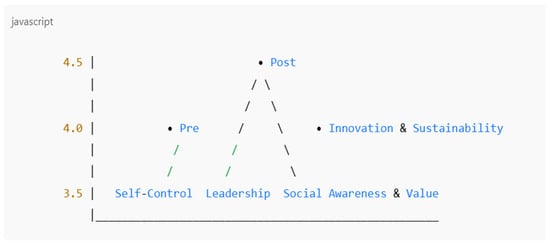
Figure 1.
Comparison of pre- and post-intervention means by dimension. Note. Created by the author. The figures show the pre- and post-averages for each dimension, according to the values reported in Table 4.
From the figure, a homogeneous expansion of the area defined by the post-intervention values can be observed, reflecting a consistent increase across all four dimensions. The most pronounced visual differences appear in social innovation and financial sustainability and in social awareness and social value, followed by leadership and self-control, while the overall shape of the profile remains preserved. This graphical representation reinforces the descriptive evidence of a global and balanced increase across social entrepreneurship competency dimensions following the intensive learning experience.
To complement the inferential analyses, the normalized gain (g) proposed by Hake (1998) was calculated (Table 9). This indicator, commonly used in pre–post educational studies, estimates the relative efficiency of learning or competency development. It expresses the improvement achieved in relation to the maximum possible gain given the scale used (1 to 5 in this case). The formula applied was:
Table 9.
Normalized percentage gain by dimension.
The results show that all dimensions present medium-level normalized gains, with g values ranging from 0.37 to 0.55. This indicates that students achieved between 37% and 55% of the maximum possible improvement in their self-perception of social entrepreneurship competencies. The greatest gain is observed in the dimension of social innovation and financial sustainability (g = 0.55), followed by social awareness and social value (g = 0.54), reinforcing the tendencies identified in the descriptive analyses and paired t-tests.
To examine the dynamic interdependence among competencies, Pearson correlation coefficients (r) were calculated using the difference scores (Δ = Post − Pre) for each dimension of the Social Entrepreneur Profile (Table 10). This analysis allows for identifying whether improvements in one competency are associated with gains in others, contributing to an understanding of the coherence of the integral development reflected in students’ self-perceived competency changes.
Table 10.
Correlations between the differences (Δ) of the dimensions.
To identify which dimensions of the profile contribute most significantly to the overall change in social entrepreneurship competency, a multiple linear regression analysis was conducted. The dependent variable corresponded to the total change (Δ Total = Post Score − Pre Score), while the independent variables were the changes in the four dimensions of the instrument: Δ Self-control, Δ Leadership, Δ Social awareness and social value, and Δ Social innovation and financial sustainability. This exploratory procedure allows for estimating the relative weight of each dimension in the perceived overall improvement (Table 11).
Table 11.
Results of the multiple linear regression model.
It should be noted that this regression analysis is not intended as a predictive or causal model. Given that the total change score is mathematically derived from the constituent dimensions of the Social Entrepreneur Profile, the analysis serves a decompositional and diagnostic purpose. Specifically, it is used to examine the relative salience of each dimension in accounting for perceived overall change, rather than to infer independent effects or directional causality.
The regression model explains 58% of the variance in the overall change in self-perceived competencies (R2 = 0.58, p < 0.001), indicating a satisfactory fit. Among the predictor dimensions, social awareness and social value (β = 0.33, p < 0.001), leadership (β = 0.27, p = 0.004) and innovation and sustainability (β = 0.24, p = 0.006) emerge as significant predictors of the perceived overall increase, whereas self-control does not reach statistical significance (p > 0.05). These results suggest that competencies related to social commitment, leadership capacity, and an orientation toward innovation are most strongly associated with the perceived overall improvement in the social entrepreneur profile.
5. Discussion
To consolidate the interpretive framing of the findings, it is important to underscore the distinction between activation and consolidation. While the results empirically demonstrate short-term activation of changemaking-related competencies, reflected in increased awareness, engagement, and self-perceived capacity, consolidated transformative learning should be understood as a longer-term process that extends beyond the temporal scope of the present intervention.
The results indicate statistically significant and positive changes in students’ self-perception of social entrepreneurship competencies following the intensive pedagogical experience. These findings suggest that short-term learning experiences grounded in active, interdisciplinary, and action-oriented pedagogical designs can contribute to measurable improvements in perceived competencies (Ashoka U, 2025; Solesin, 2020).
While the findings provide empirical evidence of statistically significant changes in students’ self-perceived social entrepreneurship competencies, it is important to distinguish between what is directly demonstrated by the data and what constitutes theoretical interpretation. The quantitative analyses substantiate changes in perceived competencies and their statistical associations; however, interpretations related to internalization, dispositional development, or transformative learning should be understood as analytically grounded but interpretive extensions rather than empirically verified outcomes. Making this distinction explicit allows the discussion to situate the results within broader theoretical frameworks while maintaining inferential discipline and avoiding overstatement.
The pattern of gains observed in this study also aligns with Ashoka’s four key changemaking skills. Increases in social awareness and social value and leadership are consistent with nurturing conscious empathy, organizing open and fluid teams, and developing changemaking leadership, while the improvement in social innovation and financial sustainability reflects students’ growing ability to practice changemaking action by designing solutions that create value primarily for society. From this perspective, the Tec Changemaker Week can be understood as a short-term learning environment that creates conditions for the activation of changemaking-related competencies, rather than as a comprehensive formative process. The observed pattern of gains aligns conceptually with Ashoka’s four key changemaking skills, particularly in relation to social awareness, leadership and innovation-oriented action (Ashoka, 2025).
The observed increases across all dimensions of the Social Entrepreneur Profile suggest that students developed greater awareness, motivation, and disposition toward social entrepreneurship-related competencies. Rather than evidencing consolidated transformation, these changes may reflect early indicators of attitudinal and dispositional activation, consistent with literature emphasizing the role of experiential and reflective learning in initiating processes of social innovation education (Tramontin & Solesin, 2023; Whewell et al., 2022).
From the perspective of the SEL4C model, the findings support the relevance of pedagogical approaches that integrate complex thinking, collaborative work and contextualized action. The homogeneity of results across disciplines, genders and semesters suggests that the learning experience operated in a transversal manner across diverse student profiles, a characteristic often highlighted in education aimed at systemic change (Vázquez-Parra et al., 2023, 2024). The Tec Changemaker Week thus stands out as an intensive learning environment capable of catalyzing complex competencies within a short period, offering a contrast to traditional semester-based course structures.
The correlational and regression analyses indicate that social awareness and social value, leadership, and innovation and sustainability are strongly associated with overall changes in the social entrepreneur profile. This pattern is consistent with frameworks that emphasize the interdependence of ethical awareness, leadership, and innovation in changemaker education, without implying directional causality (Bega et al., 2021). Moreover, the simultaneous strengthening of several dimensions confirms the interdependent and systemic nature of these competencies, consistent with the principles of complex thinking and integral human development proposed by the SEL4C model.
Taken together, these results suggest that short-term intensive learning experiences, when intentionally designed and supported by active methodologies, can be associated with measurable changes in students’ self-perceived socio-entrepreneurial competencies. The case of Tecnologico de Monterrey, Campus Guadalajara, illustrates how experiential learning and guided reflection may accelerate early stages of awareness, ideation and social commitment without requiring extended periods of formal instruction. Future research could further examine the sustainability of these changes through longitudinal designs and complementary assessment tools, such as the combined use of the Social Entrepreneur Profile and the Ashoka Changemaker Index.
From an emerging market perspective, these findings acquire relevance. In contexts where access to extended training, mentoring, and entrepreneurial ecosystems is often uneven, universities frequently function as primary platforms for competency development and social innovation. Within such settings, short-term intensive experiences may represent a pragmatic pedagogical response to structural constraints related to time, resources, and institutional reach, without implying equivalence to longer formative trajectories. This transversal pattern may be especially salient in emerging market contexts, where student cohorts often display high levels of heterogeneity in prior exposure to entrepreneurship and civic engagement. In such settings, intensive and collaborative pedagogical designs may operate as equalizing learning environments, facilitating shared access to changemaking-related competencies across diverse profiles.
Thus, the main findings that can be derived from these results are:
- Students showed statistically significant increases in self-control, leadership, social awareness and social value, and social innovation and financial sustainability. These results indicate that an intensive learning format can be associated with measurable improvements in complex competencies when articulated with active and collaborative learning strategies, in line with the pedagogy of action promoted by Ashoka U.
- The dimensions of social awareness, leadership, and innovation exhibited the largest increases and medium effect sizes. Taken together, these patterns suggest that the learning experience engaged cognitive, socioemotional, and ethical components of the social entrepreneur profile, consistent with the SEL4C model and the literature on changemaker formation (Vázquez-Parra et al., 2023; Solesin, 2020).
- No statistically significant differences were identified between subgroups, suggesting that the learning experience operated in a transversal manner across disciplinary backgrounds and educational contexts. This pattern is consistent with the principle of transversality in education for social change often highlighted in Ashoka U Campuses (Tramontin & Solesin, 2023).
- Positive and significant correlations among the difference scores (Δ) across all dimensions indicate that increases in one competency tend to be accompanied by gains in others. This co-variation pattern is consistent with conceptualizations of social entrepreneurship as a complex and systemic process integrating socioemotional, cognitive, and ethical skills.
- The multiple linear regression analysis indicated that changes in social awareness and social value, leadership, and innovation and sustainability were significantly associated with overall changes in the profile, explaining 58% of the variance in total change. This pattern highlights the central role of ethical awareness, leadership, and innovation-oriented competencies within the perceived development of changemaking capacity.
- Despite its short duration, the Tec Changemaker Week produced outcomes comparable to those reported in semester-long programs. These findings suggest that experiential learning, when guided by models such as SEL4C, may contribute to the activation of processes related to reflection, empathy, and social creativity within short timeframes, providing early indicators of transformative potential rather than evidence of consolidated transformation.
These findings are particularly relevant in emerging market contexts, where entrepreneurial ecosystems often rely on universities as key actors for strengthening human capital and fostering social innovation. From this perspective, the accelerated gains observed in the present study suggest that intensive pedagogical formats may partially mitigate certain contextual constraints typical of emerging economies, such as limited access to sustained training opportunities, mentoring, or well-developed entrepreneurial support networks. Importantly, this mitigating role should be understood as contextual and catalytic rather than substitutive, highlighting the differentiated meaning that short-term competency activation may acquire under conditions of structural constraint.
Beyond these primary findings, an additional result of relevance concerns the absence of statistically significant differences in post-intervention outcomes across gender, academic discipline, and stage of study. Rather than indicating a lack of sensitivity to contextual factors, this pattern suggests that the intensive pedagogical design functioned in a transversal manner, activating social entrepreneurship competencies across heterogeneous student profiles. From a theoretical standpoint, this finding aligns with changemaker education approaches that emphasize collective problem-solving, interdisciplinary collaboration, and shared meaning-making as mechanisms that attenuate structural differences among learners.
At the same time, this absence of statistically significant subgroup differences should be interpreted with analytical caution. While the homogeneous pattern of results may reflect the transversal functioning of the intensive pedagogical design, alternative explanations cannot be ruled out. In particular, the lack of subgroup differentiation may also be influenced by limitations in instrument sensitivity to detect subtle variations across profiles or by potential ceiling effects in self-perceived competencies within a high-engagement educational context. Acknowledging these possibilities helps to avoid overinterpretation and highlights the need for future research employing complementary measures and designs to further examine differential learning trajectories.
In this sense, diversity did not operate as a differentiating variable in terms of outcomes, but as a constitutive element of the learning environment itself. The results suggest that exposure to multiple perspectives within a structured experiential framework may contribute to relatively homogeneous gains in self-perceived competencies, reinforcing the idea that short-term intensive interventions can function as equalizing pedagogical spaces when designed around shared challenges and collaborative action.
An important methodological consideration concerns the reliance on self-reported measures to assess changes in social entrepreneurship competencies. While self-perception instruments such as the Social Entrepreneur Profile are widely used to capture subjective dimensions of learning, motivation, and agency, they are inherently susceptible to social desirability bias and to the potential inflation of perceived competence, particularly in high-engagement educational contexts. Participation in an intensive and highly visible intervention may heighten students’ awareness and enthusiasm, which can positively influence post-intervention self-assessments independently of deeper or sustained competency development.
From this standpoint, the results of the present study should be interpreted as reflecting changes in perceived competence and dispositional activation rather than objective performance or long-term behavioral change. Nevertheless, perceived competence constitutes a theoretically relevant construct in social entrepreneurship education, as shifts in self-efficacy, awareness, and perceived agency often represent necessary precursors for subsequent action. Future research could complement self-report measures with behavioral indicators, external assessments, or longitudinal designs to further examine the durability and enactment of the competencies activated during intensive learning experiences.
Theoretical and Practical Implications
The results of this study contribute empirical evidence to ongoing discussions on the development of social entrepreneurship competencies in intensive educational contexts. Rather than consolidating a definitive theoretical framework, the findings suggest that integrated pedagogical approaches aligned with social entrepreneurship and changemaking principles may support the activation of key socioemotional, cognitive, and ethical competencies within short-term learning environments. In this sense, the results are consistent with Ashoka U’s conceptualization of the university as a space that fosters changemaking dispositions through critical thinking, empathy, and social engagement (Ashoka U, 2025; Bega et al., 2021).
Similarly, the findings are consistent with the theoretical foundations of the SEL4C model (Social Entrepreneurship Learning for Complexity), particularly in relation to the interdependence among dimensions of the social entrepreneur profile. The correlational and regression analyses indicate that social awareness, leadership, and innovation-related competencies tend to develop in a coordinated manner, supporting the relevance of integrality and complex thinking as conceptual lenses for interpreting changes in self-perceived social entrepreneurship competencies (Vázquez-Parra et al., 2024). These patterns should be interpreted as associative rather than causal, in line with the study’s methodological scope.
The study also contributes to the emerging literature on intensive university learning formats, which remain comparatively underexplored. The observed changes suggest that high-immersion educational experiences may be associated with outcomes comparable to those reported in longer-duration programs, without implying equivalence in depth or sustainability. This finding invites further inquiry into how pedagogical intensity, duration, and sequencing interact in shaping learning processes in social entrepreneurship education (Tramontin & Solesin, 2023).
From a practical perspective, the findings offer insights for the design of short-term educational experiences in higher education. Intensive formats such as the Tec Changemaker Week illustrate how active methodologies, interdisciplinary collaboration, and engagement with social actors (e.g., social entrepreneurs or Ashoka Fellows) can create conditions conducive to the activation of socio-entrepreneurial competencies. While these formats should not be interpreted as substitutes for sustained formative processes, they may complement existing curricular structures by providing focused experiential opportunities aligned with contemporary demands for flexibility and relevance in higher education.
Finally, at the institutional level, the results highlight the potential value of international networks such as Ashoka U as spaces for methodological exchange, comparative learning, and collaborative reflection on changemaker education. The experience of Tecnologico de Monterrey illustrates how such partnerships can support the co-construction of shared pedagogical insights and learning communities, without implying direct institutional validation or generalized transferability of outcomes.
6. Conclusions
The present study examined the outcomes associated with an intensive pedagogical experience aimed at fostering social entrepreneurship competencies among university students at an Ashoka U campus. It addressed two central questions: To what extent is an intensive educational experience associated with changes in students’ self-perception of changemaking-related competencies? Which dimensions of the social entrepreneur profile are most closely associated with these changes?
The results indicate statistically significant and positive changes across all four dimensions of the Social Entrepreneur Profile, self-control, leadership, social awareness and social value, and social innovation and financial sustainability, with effect sizes ranging from small to medium. These findings suggest that short-term, intensive learning experiences grounded in active, interdisciplinary, and experiential pedagogical principles may contribute to measurable improvements in students’ perceived socio-entrepreneurial competencies. Rather than evidencing consolidated transformation, the results should be interpreted as early indicators of competency activation, consistent with the analytical scope of the study.
In terms of originality, this research contributes empirical evidence to a comparatively underexplored area: one-week intensive educational interventions in high-performance university settings. The use of a quantitative pre–post design and a validated self-perception instrument, together with the integration of the SEL4C framework as a guiding pedagogical model, provides methodologically robust insight into how accelerated learning formats may support the activation of socioemotional, cognitive, and ethical competencies in social entrepreneurship education. These findings extend existing literature by illustrating how changemaker-oriented principles can be operationalized within short-term educational experiences, without implying equivalence to longer or more sustained formative processes.
Several limitations should be acknowledged. The study did not assess the longitudinal persistence of the observed changes, and the findings cannot be generalized beyond the institutional and cultural context in which the intervention took place. In addition, reliance on self-reported measures limits the interpretation of results to perceived competence rather than objective performance. Future research could address these limitations by incorporating longitudinal designs, mixed-methods approaches, and comparative analyses between intensive and semester-long programs, as well as by examining the transfer of competencies to real-world social entrepreneurship initiatives across different Ashoka U campuses.
Beyond these general limitations, important inferential constraints should also be explicitly acknowledged. Given the quasi-experimental pre–post design without a control group, the study does not allow for strong causal attribution, and the observed changes may be influenced by factors such as expectancy effects, testing effects, or short-term maturation. Furthermore, although the discussion draws on transformative learning theory, the findings should not be interpreted as evidence of consolidated transformative learning processes. Rather, they reflect changes in self-perceived competencies and early indicators of dispositional activation within a highly engaging educational context. Making these distinctions explicit is essential to preserve analytical rigor and to situate the study’s contributions within their appropriate methodological and theoretical boundaries.
Overall, the findings suggest that intensive learning experiences, when intentionally designed and supported by coherent pedagogical frameworks, may function as complementary spaces for the activation of social entrepreneurship competencies in higher education. The case of Tecnologico de Monterrey illustrates how universities can experiment with short-term, high-engagement formats to foster awareness, motivation, and changemaking dispositions, contributing to broader institutional efforts in social innovation and human development without overstating claims of impact or transformation.
In addition, to further strengthen the empirical assessment of social entrepreneurship education, future research could move beyond perceptual measures by incorporating behavioral indicators of social entrepreneurship, such as students’ participation in social innovation projects, the initiation or continuation of social ventures, engagement with community partners, or observable decision-making and leadership behaviors in applied contexts. Integrating such behavioral evidence would allow for a more comprehensive assessment of how perceived competency development translates into sustained changemaking action.
Author Contributions
Conceptualization, J.C.V.-P. and F.A.M.-D.; methodology, J.C.V.-P.; software, J.C.V.-P.; validation, J.C.V.-P., S.L. and E.C.-V.; formal analysis, J.C.V.-P.; investigation, J.C.V.-P. and F.A.M.-D.; resources, E.C.-V. and D.S.M.B.; data curation, J.C.V.-P.; writing—original draft preparation, J.C.V.-P.; writing—review and editing, J.C.V.-P., F.A.M.-D. and S.L.; visualization, J.C.V.-P.; supervision, J.C.V.-P.; project administration, J.C.V.-P.; funding acquisition, E.C.-V. All authors have read and agreed to the published version of the manuscript.
Funding
This research received no external funding.
Institutional Review Board Statement
The study was conducted in accordance with the Declaration of Helsinki and approved by the Institutional Research Ethics Committee of Tecnologico de Monterrey (protocol code P-IFE-202506-002, approved on 15 June 2025).
Informed Consent Statement
Informed consent was obtained from all subjects involved in the study. All participants were informed about the objectives of the research, the voluntary nature of their participation, and the anonymous treatment of their data. No identifiable personal information was collected; therefore, written informed consent for publication was not required.
Data Availability Statement
The dataset generated and analyzed during the study is not publicly available due to ethical and privacy restrictions, as it contains educational records and anonymized responses collected under institutional confidentiality regulations. Data may be made available from the corresponding author upon reasonable request and with approval from Tecnologico de Monterrey’s Institutional Research Ethics Committee.
Acknowledgments
The authors express their gratitude to Tecnologico de Monterrey, Campus Guadalajara, for its institutional support and for the facilities provided for the development of the educational experience Tec Changemaker Week. The authors also acknowledge Ashoka U and Ashoka México for its guidance and leadership in promoting changemaker education at a global level. This work is framed within the shared commitment of both institutions to advancing educational innovation and social impact in higher education.
Conflicts of Interest
The authors declare no conflicts of interest.
Abbreviations
The following abbreviations are used in this manuscript:
| SEP | Social Entrepreneur Profile |
| SEL4C | Social Entrepreneurship Learning for Complexity |
| ANOVA | Analysis of Variance |
| CFA | Confirmatory Factor Analysis |
| EFA | Exploratory Factor Analysis |
| CFI | Comparative Fit Index |
| RMSEA | Root Mean Square Error of Approximation |
| SPSS | Statistical Package for the Social Sciences |
References
- Ashoka. (2025). The Ashoka changemaker index. Available online: https://cmi.ashoka.org/en (accessed on 24 November 2025).
- Ashoka U. (2025). Home | Ashoka U. Available online: https://ashokau.org/ (accessed on 24 November 2025).
- Ashwin, P. (2014). Knowledge, curriculum and student understanding in higher education. Higher Education, 67(2), 123–136. [Google Scholar] [CrossRef]
- Baltador, L. A., & Grecu, V. (2023). Developing sustainable entrepreneurs through social entrepreneurship education. Studies in Business and Economics, 18(2), 37–47. [Google Scholar] [CrossRef]
- Bega, E., Mongelli, L., Rullani, F., & Sedita, S. R. (2021). Social entrepreneurship and social innovation between global north and global south: The Ashoka case. Springer. [Google Scholar]
- Cohen, J. (1988). Statistical power analysis for the behavioral sciences (2nd ed.). Lawrence Erlbaum. [Google Scholar]
- Cohen, J. (1992). A power primer. Psychological Bulletin, 112(1), 155–159. [Google Scholar] [CrossRef] [PubMed]
- Cruz-Sandoval, M., Vázquez-Parra, J. C., Alonso-Galicia, P. E., & Carlos-Arroyo, M. (2023a). Perceived achievement of social entrepreneurship competency: The influence of age, discipline, and gender among women in higher education. Sustainability, 15(13), 9956. [Google Scholar] [CrossRef]
- Cruz-Sandoval, M., Vázquez Parra, J. C., Carlos Arroyo, M., & Medina Vidal, A. (2023b). Competency based learning: An approach integrating the domains of complex thinking competency in a group of Mexican students. European Journal of Contemporary Education, 12(2), 399–412. [Google Scholar] [CrossRef]
- De Agapito, F., Morais, L. P. V. X. C., Machado, A. B., & Dandolini, G. A. (2024). Entrepreneurial education and experiential learning: Expanding horizons and perspectives. Revista Pensamento Contemporâneo em Administração, 18(3), 1–20. [Google Scholar]
- Field, A. (2018). Discovering statistics using IBM SPSS statistics (5th ed.). SAGE. [Google Scholar]
- Frydenberg, M., & Andone, D. (2022, July 1–4). Developing digital competencies and future skills: An international project-based learning through open virtual mobilities in pandemic times. International Conference on Advanced Learning Technologies (ICALT) (pp. 30–32), Bucharest, Romania. [Google Scholar] [CrossRef]
- Gravetter, F. J., & Wallnau, L. B. (2020). Statistics for the behavioral sciences (11th ed.). Cengage Learning. [Google Scholar]
- Hair, J. F., Black, W. C., Babin, B. J., & Anderson, R. E. (2019). Multivariate data analysis (8th ed.). Cengage. [Google Scholar]
- Hake, R. R. (1998). Interactive-engagement versus traditional methods: A six-thousand-student survey of mechanics test data for introductory physics courses. American Journal of Physics, 66(1), 64–74. [Google Scholar] [CrossRef]
- Inci, B. (2016). Social entrepreneurship in Turkey: A content analysis assessing Ashoka Fellows. International Journal of Trade, Economics and Finance, 7(4), 105–112. [Google Scholar] [CrossRef]
- Kirschner, P. A., Sweller, J., & Clark, R. E. (2006). Why minimal guidance during instruction does not work. Educational Psychologist, 41(2), 75–86. [Google Scholar] [CrossRef]
- Loogma, K., Tafel-Viia, K., & Ümarik, M. (2013). Conceptualising educational changes: A social innovation approach. Journal of Educational Change, 14(3), 283–301. [Google Scholar] [CrossRef]
- Mazumdar, S. (2021). Education and social change: The basis of evolution and development of a contemporary society. International Journal of Multidisciplinary Research Academy, 4(9), 1303–1310. [Google Scholar] [CrossRef]
- Mezirow, J. (Ed.). (2000). Learning as transformation: Critical perspectives on a theory in progress. Jossey-Bass. [Google Scholar]
- Mezirow, J., & Taylor, E. W. (2009). Transformative learning in practice: Insights from community, workplace, and higher education. Jossey-Bass. [Google Scholar]
- Rasch, D., Pilz, J., Verdooren, L. R., & Gebhardt, A. (2011). Optimal experimental design with R (1st ed.). Chapman & Hall/CRC. [Google Scholar] [CrossRef]
- Ratten, V., & Usmanij, P. (2021). Entrepreneurship education: Time for a change in research direction? The International Journal of Management Education, 19, 100367. [Google Scholar] [CrossRef]
- Rodrigues, A. L. (2023). Entrepreneurship education pedagogical approaches in higher education. Education Sciences, 13(9), 940. [Google Scholar] [CrossRef]
- SEL4C. (2025). The SEL4C project. Available online: https://www.sel4c.com/ (accessed on 24 November 2025).
- Semanas Tec | Tecnológico de Monterrey. (2025). ¿Cómo funcionan las Semanas Tec? Available online: https://semanastec.tec.mx/es (accessed on 24 November 2025).
- Solesin, L. (2020). Il modello del network di Scuole Changemaker per un’innovazione diffusa. IUL Research, 1(1), 176–185. [Google Scholar] [CrossRef]
- Taber, K. (2018). The use of Cronbach’s Alpha when developing and reporting research instruments in science education. Research in Science Education, 48, 1273–1296. [Google Scholar] [CrossRef]
- Tavakol, M., & Dennick, R. (2011). Making sense of Cronbach’s alpha. International Journal of Medical Education, 2, 53–55. [Google Scholar] [CrossRef] [PubMed]
- Tecnológico de Monterrey. (2023). Aviso de privacidad del proyecto SEL4C. Available online: https://tec.mx/es/aviso-de-privacidad-sel4c (accessed on 24 November 2025).
- Tecnológico de Monterrey. (2024). Impacto social: Tec GDL obtiene redesignación como changemaker campus. Conecta. Available online: https://conecta.tec.mx/es/noticias/guadalajara/emprendedores/impacto-social-tec-gdl-obtiene-redesignacion-como-changemaker (accessed on 24 November 2025).
- Tecnológico de Monterrey. (2025). Ashoka y el liderazgo que transforma: Equidad, colaboración y propósito. Centro de Empresas Conscientes. Available online: https://cec.tec.mx/es/noticia/ashoka-y-el-liderazgo-que-transforma-equidad-colaboracion-y-proposito (accessed on 24 November 2025).
- Tramontin, L., & Solesin, L. (2023). Educating agents of change: The international network of Ashoka changemaker schools. In E. Guarcello, & A. Longo (Eds.), School children as agents of change: Raising up critical thinking and judgement in the early years (1st ed.). Routledge. [Google Scholar] [CrossRef]
- Vázquez-Parra, J. C., Alcantar-Nieblas, C., Glasserman-Morales, L. D., & Nuñez-Rodríguez, X. (2024). Development of social entrepreneurship competencies and complex thinking in an intensive course of open educational innovation. International Journal of Educational Psychology, 13(1), 1–20. [Google Scholar] [CrossRef]
- Vázquez-Parra, J. C., Arredondo-Trapero, F. G., & De la Garza-García, J. (2020). Compromiso social y su impacto en el voluntariado universitario: Un estudio en instituciones mexicanas de educación superior. Estudios Gerenciales, 36(157), 56–67. [Google Scholar] [CrossRef]
- Vázquez-Parra, J. C., Carlos-Arroyo, M., & Cruz-Sandoval, M. (2023). Social entrepreneurship and complex thinking: Validation of SEL4C methodology for scaling the perception of achieved competency. Education Sciences, 13(2), 186. [Google Scholar] [CrossRef]
- Vázquez-Parra, J. C., Henao-Rodríguez, L. C., & Lis-Gutiérrez, J. P. (2026). Statistical validation of the social entrepreneurship profile instrument. Social Enterprise Journal. in press. [Google Scholar]
- Whewell, E., Caldwell, H., Frydenberg, M., & Andone, D. (2022). Changemakers as digital makers: Connecting and co-creating. Education and Information Technologies, 27(5), 6691–6713. [Google Scholar] [CrossRef] [PubMed]
- Zarch, R., Peterfreund, A., Britos Cavagnaro, L. C., & Fasihuddin, H. (2016). Students as change agents: Leveraging students to infuse innovation & entrepreneurship into the campus ecosystem. Available online: https://peer.asee.org/students-as-change-agents-leveraging-students-to-infuse-innovation-entrepreneurship-into-the-campus-ecosystem (accessed on 24 November 2025).
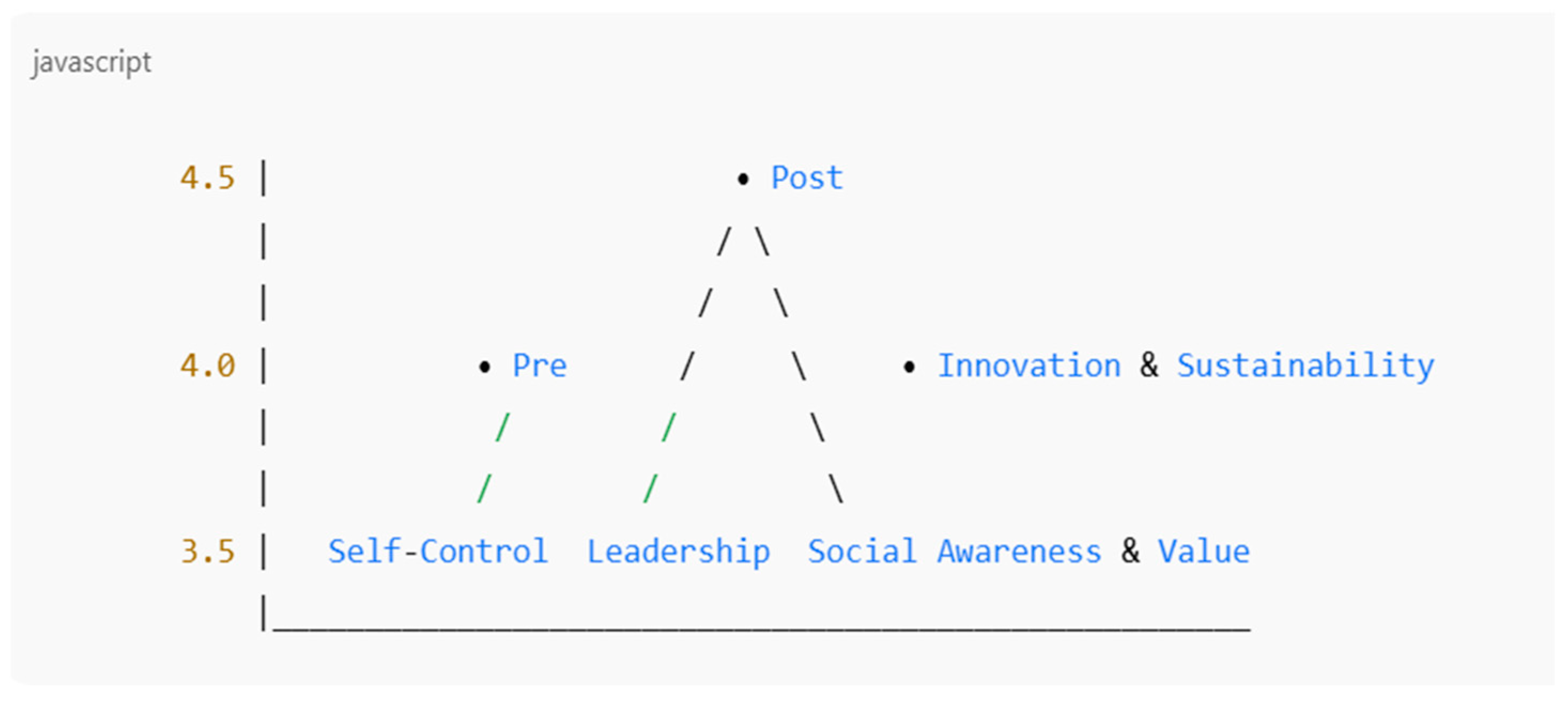
Disclaimer/Publisher’s Note: The statements, opinions and data contained in all publications are solely those of the individual author(s) and contributor(s) and not of MDPI and/or the editor(s). MDPI and/or the editor(s) disclaim responsibility for any injury to people or property resulting from any ideas, methods, instructions or products referred to in the content. |
© 2026 by the authors. Licensee MDPI, Basel, Switzerland. This article is an open access article distributed under the terms and conditions of the Creative Commons Attribution (CC BY) license.