Asymmetry Thresholds Reflecting the Visual Assessment of Forelimb Lameness on Circles on a Hard Surface
by
 , , , and
Claire Macaire
1,2,3 ,
,
Sandrine Hanne-Poujade
1,
Emeline De Azevedo
2,
Jean-Marie Denoix
2,
Virginie Coudry
2,
Sandrine Jacquet
2,
Lélia Bertoni
2,
Amélie Tallaj
2,
Fabrice Audigié
2,
Chloé Hatrisse
2,
Camille Hébert
1,
Pauline Martin
1,
Frédéric Marin
3 and
and
Henry Chateau
2,* 1
Labcom LIM-ENVA, LIM France, 24300 Nontron, France
2
CIRALE, USC 957 BPLC, Ecole Nationale Vétérinaire d’Alfort, 94700 Maisons-Alfort, France
3
Laboratoire de BioMécanique et BioIngénierie (UMR CNRS 7338), Centre of Excellence for Human and Animal Movement Biomechanics (CoEMoB), Université de Technologie de Compiègne (UTC), Alliance Sorbonne Université, 60200 Compiègne, France
*
Author to whom correspondence should be addressed.
Animals 2023, 13(21), 3319; https://doi.org/10.3390/ani13213319
Submission received: 24 August 2023
/
Revised: 20 October 2023
/
Accepted: 23 October 2023
/
Published: 25 October 2023
(This article belongs to the Special Issue Equine Gait Analysis: Translating Science into Practice)
Simple Summary
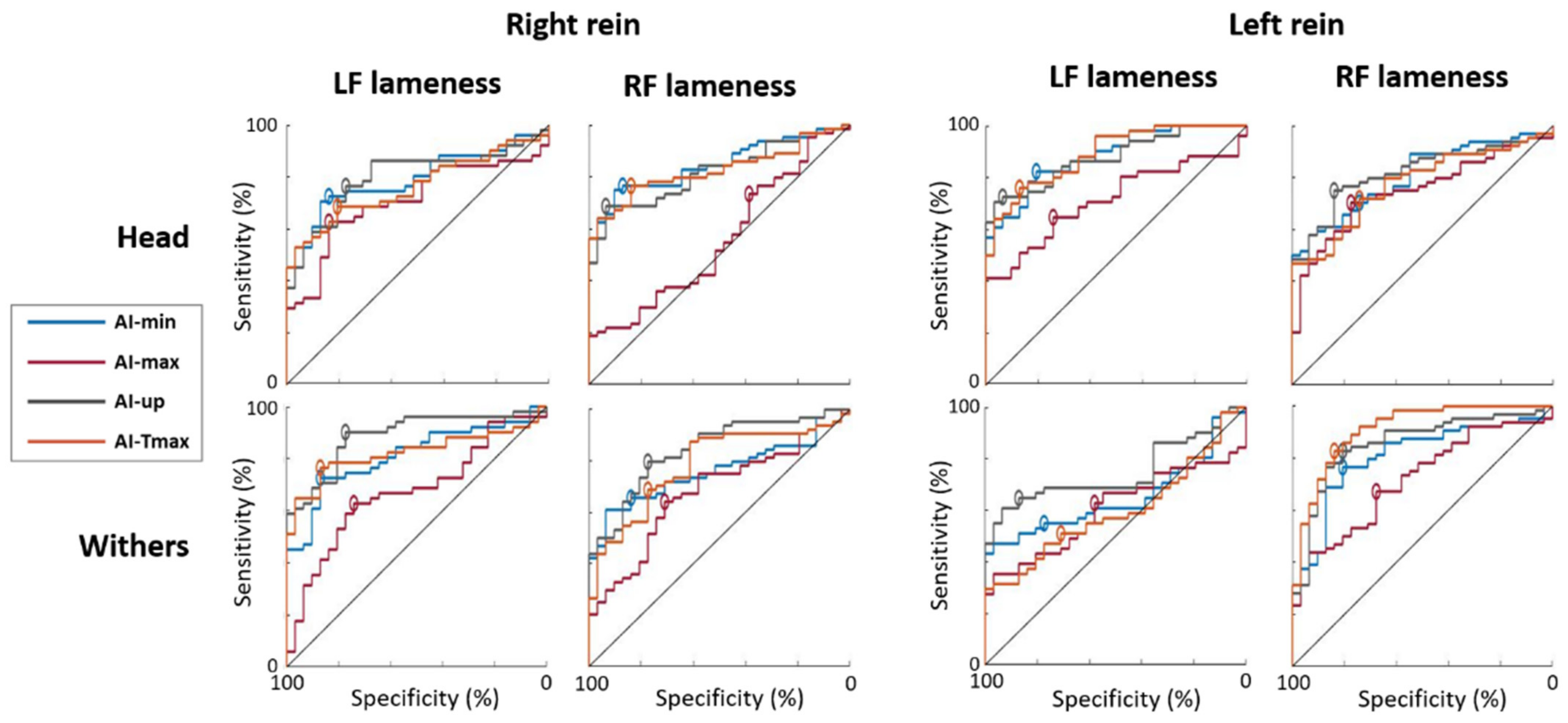
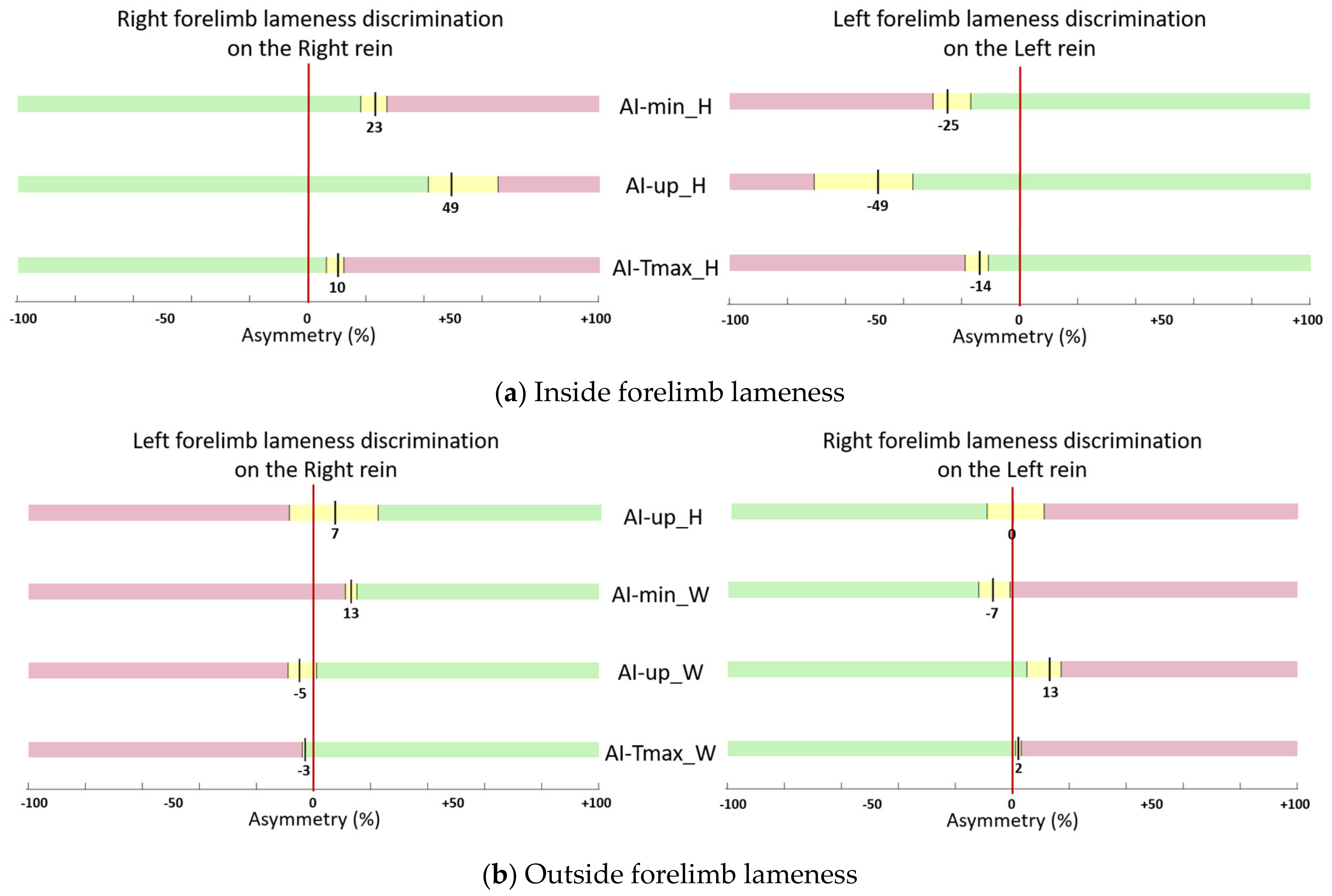
Veterinary lameness examination commonly involves a visual evaluation of a horse trotting on a circle. Lameness detection can be aided by objective gait analysis, which is used to quantify the movement asymmetry of horses. However, the asymmetry thresholds defined for the trot on a straight line are not applicable to the circles because turning induces physiological asymmetric movement. Four Asymmetry Indices (AIs) were calculated to compare the vertical movement of the head and of the withers between the right limb movement and the left limb movement during a trot stride. This study aims to select the AIs with good discriminative power between a group of sound horses and a group of horses showing consistent unilateral lameness (grade > 1/10) across both circle directions (clockwise, counter clockwise) on a hard surface, and to define the optimal threshold value, based on sensitivity and specificity. Head vertical movement asymmetry showed the highest sensitivity and specificity to detect forelimb lameness when the lame limb was on the inside of the circle, while withers vertical movement asymmetry showed the highest sensitivity and specificity to detect forelimb lameness when the lame limb was on the outside of the circle.
Abstract
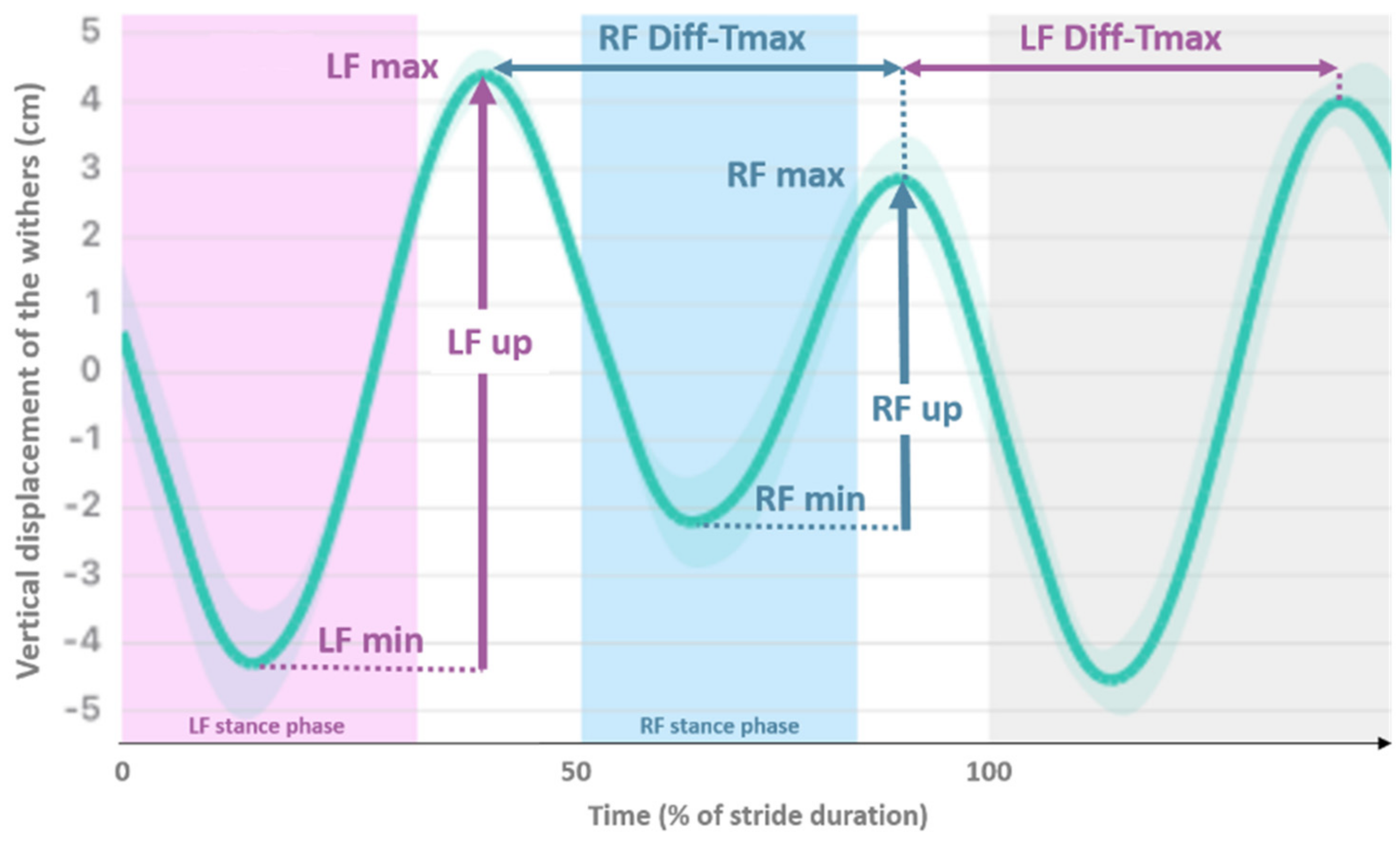
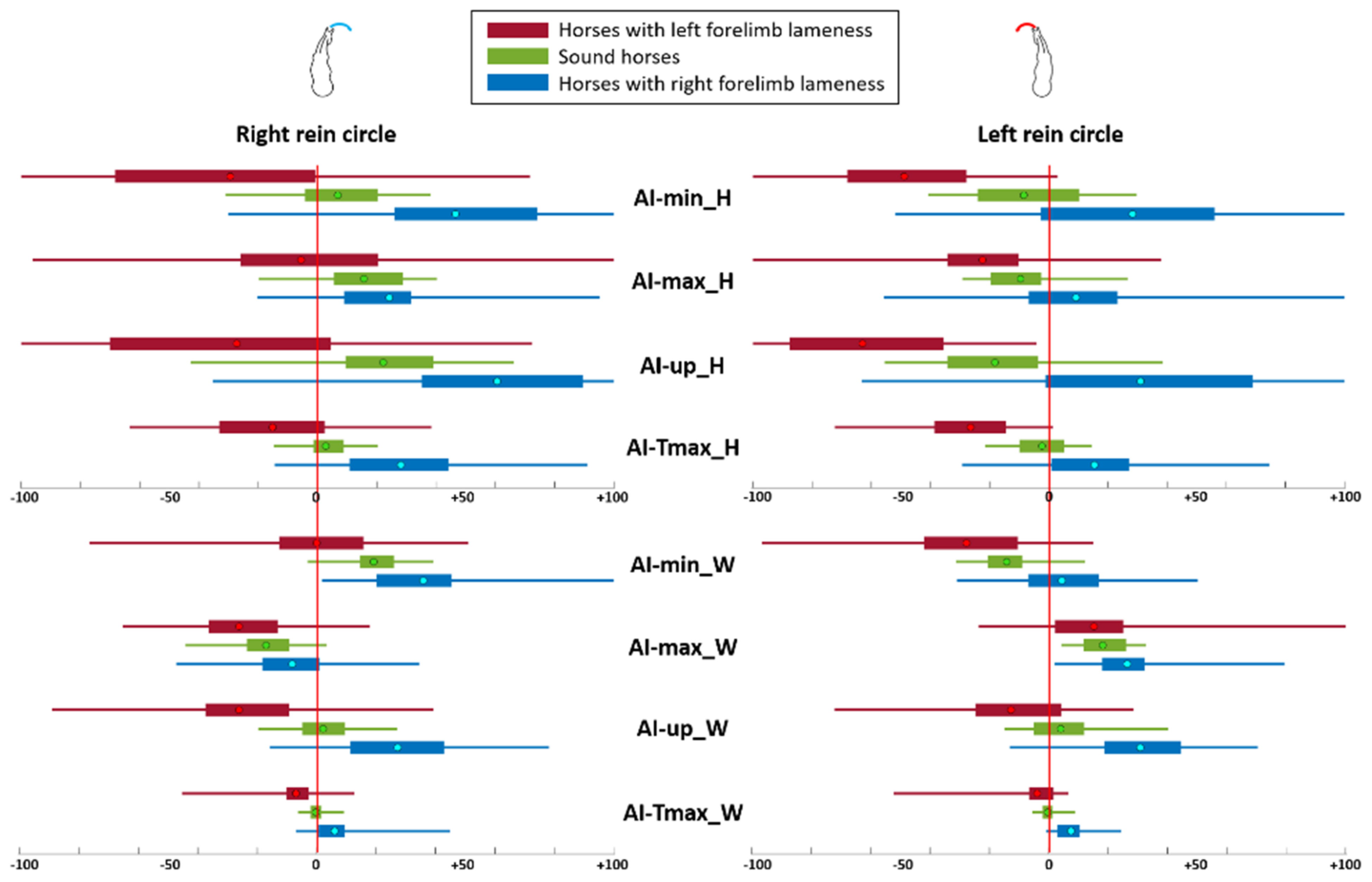
The assessment of lameness in horses can be aided by objective gait analysis tools. Despite their key role of evaluating a horse at trot on a circle, asymmetry thresholds have not been determined for differentiating between sound and lame gait during this exercise. These thresholds are essential to distinguish physiological asymmetry linked to the circle from pathological asymmetry linked to lameness. This study aims to determine the Asymmetry Indices (AIs) with the highest power to discriminate between a group of sound horses and a group of horses with consistent unilateral lameness across both circle directions, as categorized by visual lameness assessment conducted by specialist veterinarians. Then, thresholds were defined for the best performing AIs, based on the optimal sensitivity and specificity. AIs were calculated as the relative comparison between left and right minima, maxima, time between maxima and upward amplitudes of the vertical displacement of the head and the withers. Except the AI of maxima difference, the head AI showed the highest sensitivity (≥69%) and the highest specificity (≥81%) for inside forelimb lameness detection and the withers AI showed the highest sensitivity (≥72%) and the highest specificity (≥77%) for outside forelimb lameness detection on circles.