Characterization of the Rumen Microbiota and Volatile Fatty Acid Profiles of Weaned Goat Kids under Shrub-Grassland Grazing and Indoor Feeding
by
 , , ,
, , ,
Jiazhong Guo
1,† ,
,
Pengfei Li
1,†,
Shuai Liu
1,†,
Bin Miao
2,
Bo Zeng
1,3,
Yahui Jiang
1,
Li Li
1,3,
Linjie Wang
1,3,
Yu Chen
2 and
Hongping Zhang
1,* 1
College of Animal Science and Technology, Sichuan Agricultural University, Chengdu 611130, China
2
Nanjiang Yellow Goat Scientific Research Institute, Nanjiang 635600, China
3
Farm Animal Genetic Resources Exploration and Innovation Key Laboratory of Sichuan Province, Sichuan Agricultural University, Chengdu 611130, China
*
Author to whom correspondence should be addressed.
†
These authors contributed equally to this work.
Animals 2020, 10(2), 176; https://doi.org/10.3390/ani10020176
Submission received: 17 December 2019
/
Revised: 13 January 2020
/
Accepted: 20 January 2020
/
Published: 21 January 2020
(This article belongs to the Collection Veterinary Microbiology in Farm Animals)
Simple Summary
Although grazing and indoor feeding are both major production systems in the goat industry worldwide, the impacts of different feeding systems on rumen fermentation remain poorly understood. In this study, we observed large differences in microbial community compositions and volatile fatty acid profiles in the rumen of weaned goats among three feeding systems, which provides an in-depth understanding of rumen fermentation in response to changes in feeding systems.
Abstract
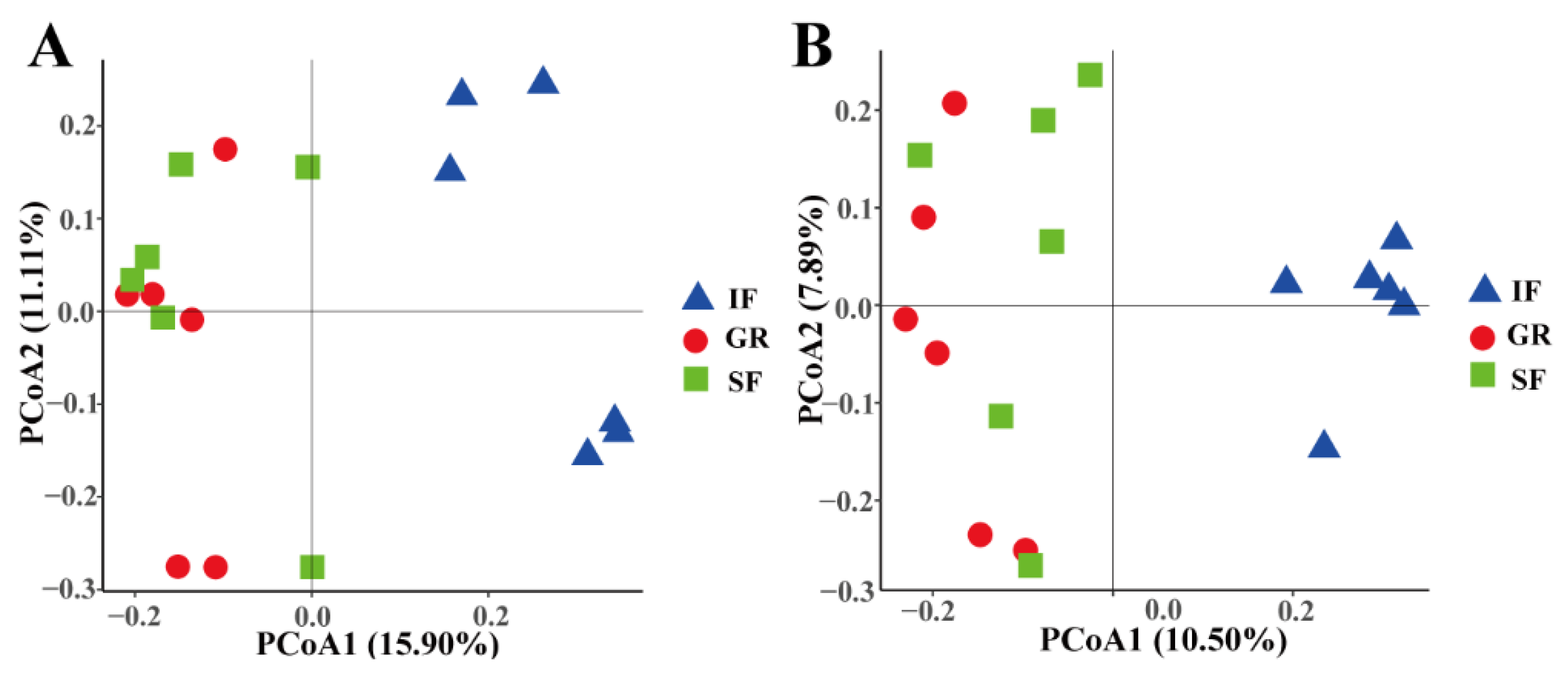
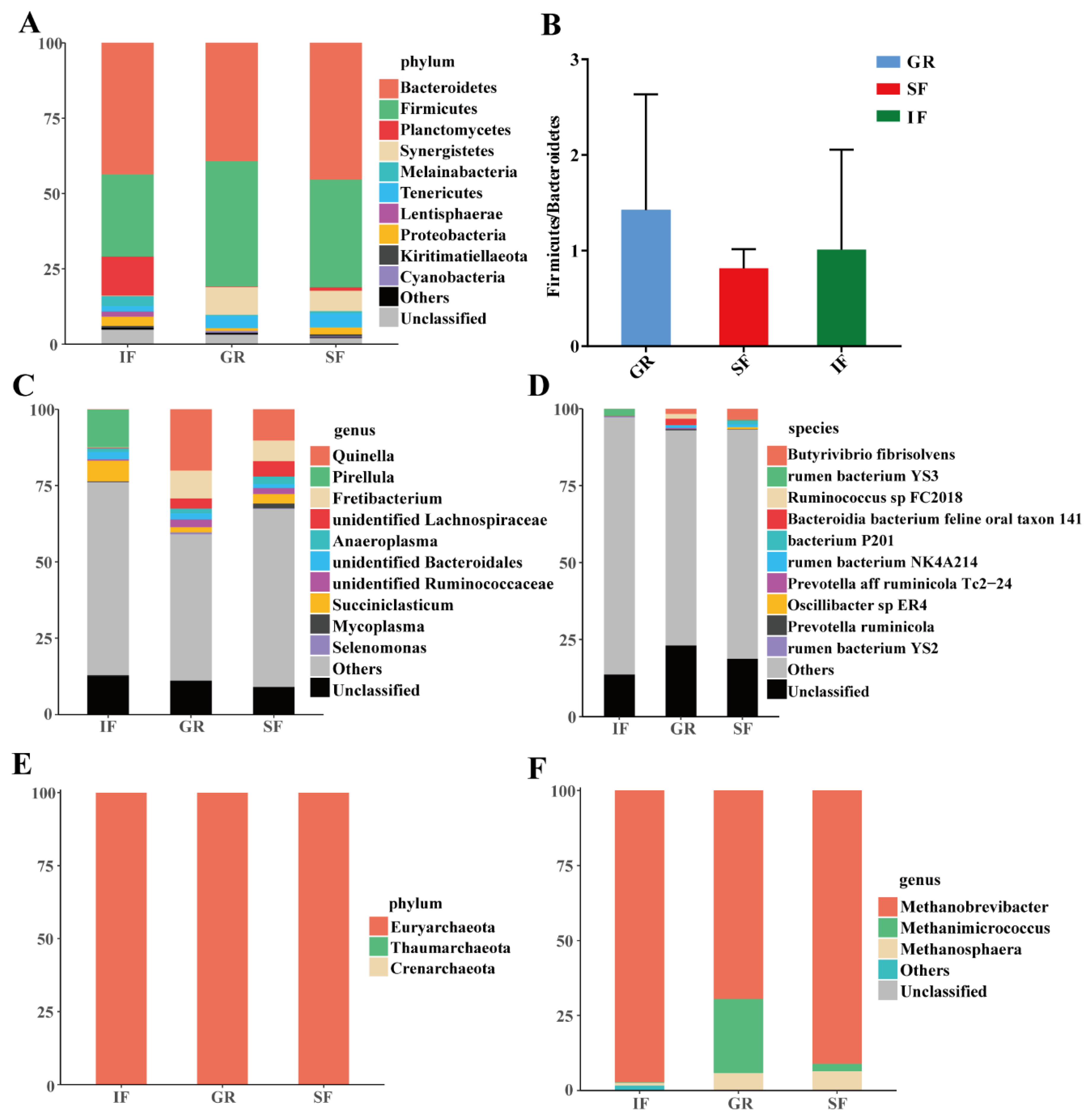
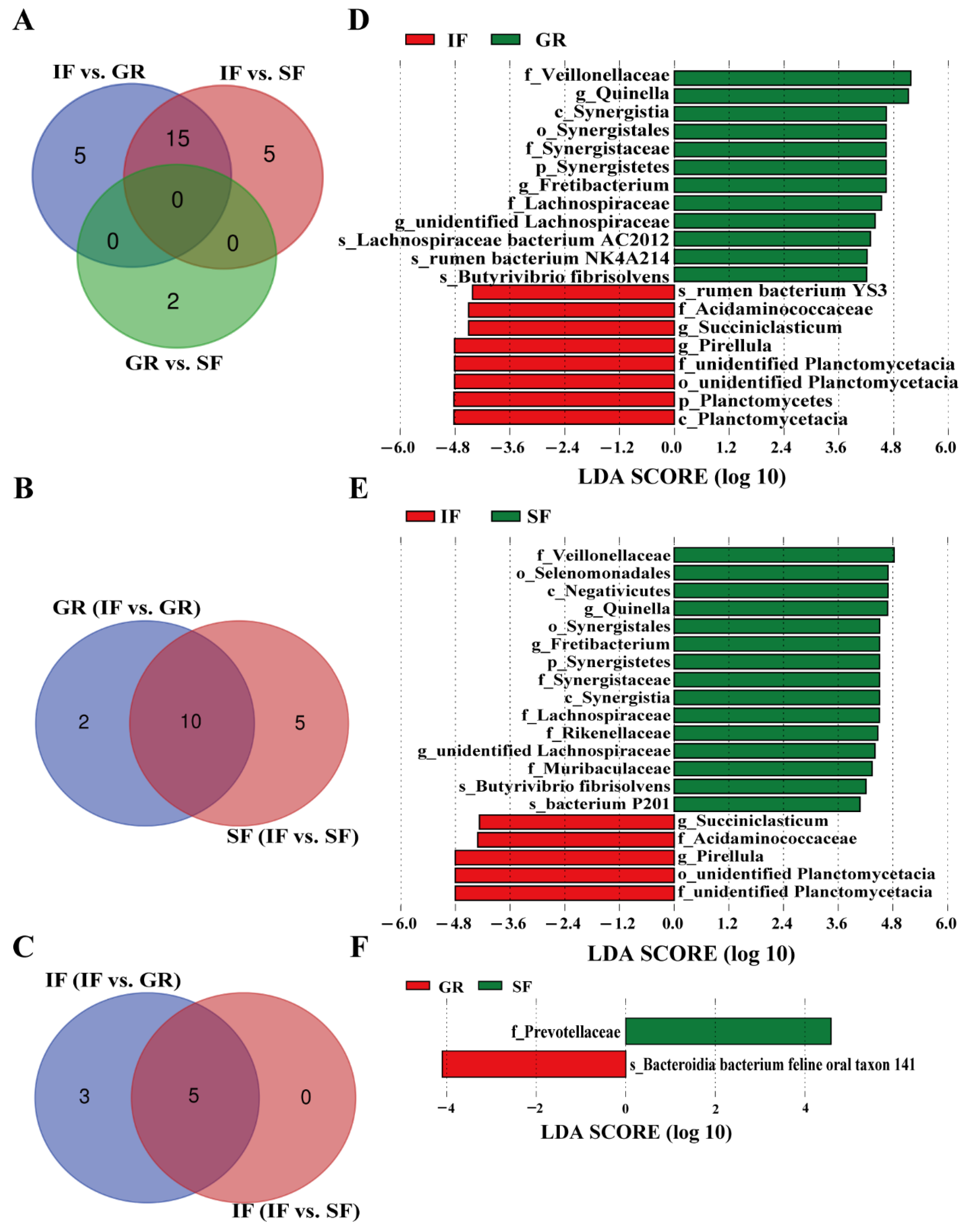
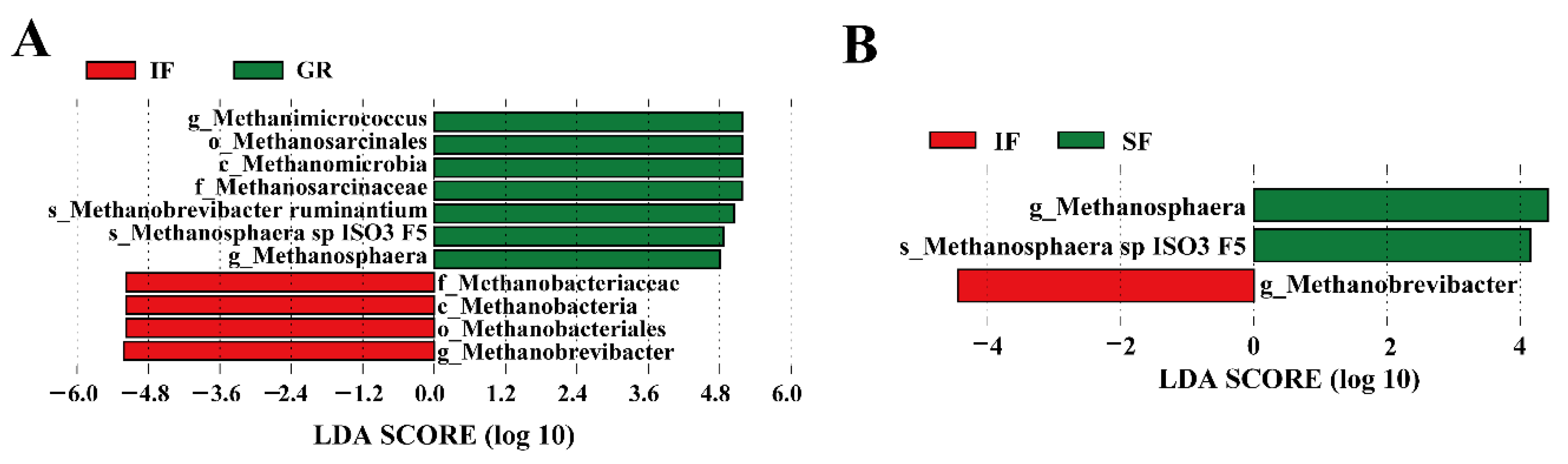
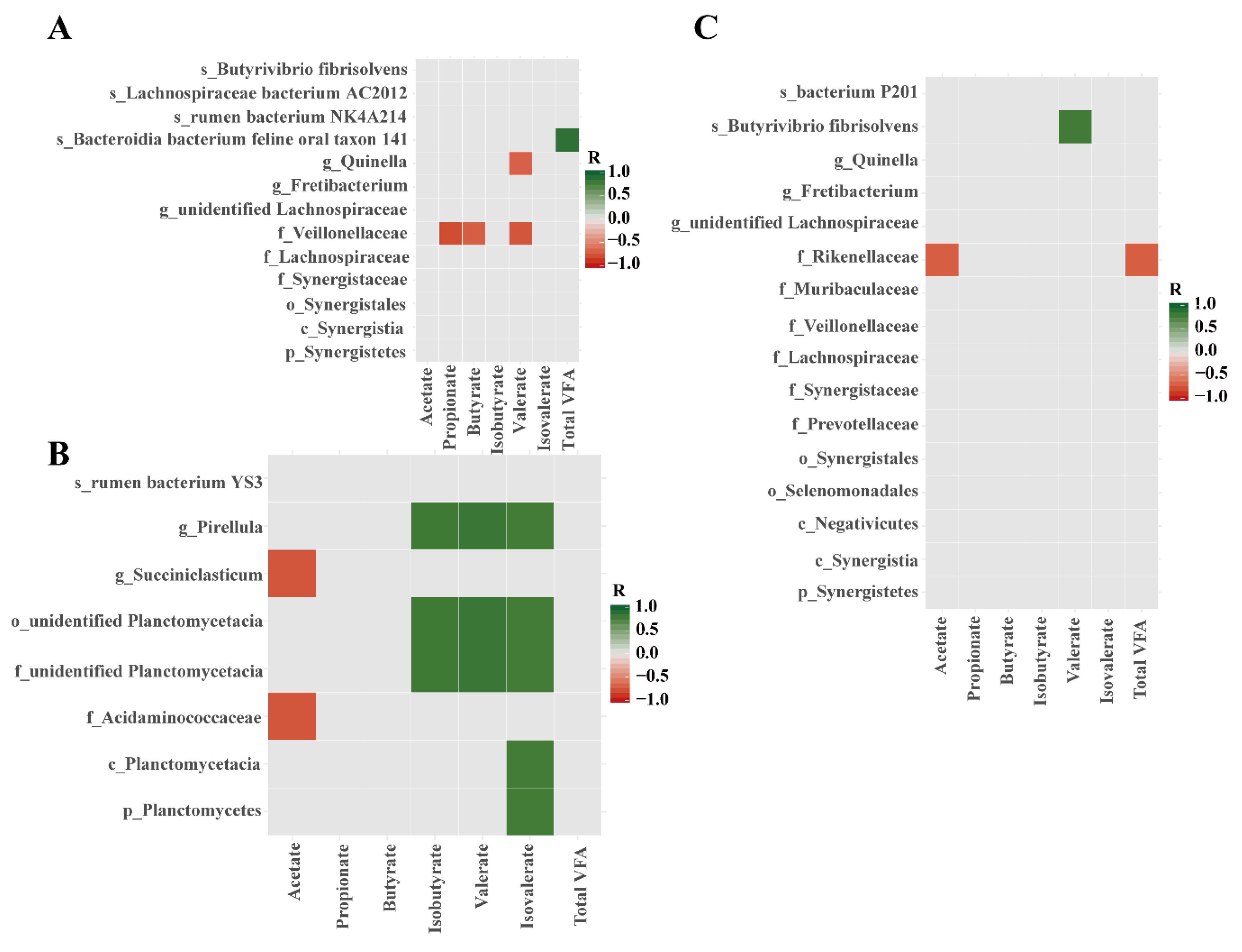
In this study, we conducted comparative analyses to characterize the rumen microbiota and volatile fatty acid (VFA) profiles of weaned Nanjiang Yellow goat kids under shrub-grassland grazing (GR), shrub-grassland grazing and supplementary feeding (SF), and indoor feeding (IF) systems. We observed significant differences (p < 0.05) in the concentrations of total VFA and the proportions of acetate and butyrate in the rumen fluid among the three groups, whereas the proportions of propionate and the acetate/propionate ratio did not differ substantially. Alpha diversity of the rumen bacterial and archaeal populations in the GR and SF kids was significantly higher (p < 0.05) than that in the IF goat kids, and significant differences (p < 0.05) in similarity were observed in the comparisons of GR vs. IF and SF vs. IF. The most predominant bacterial phyla were Bacteroidetes and Firmicutes across the three groups, and the archaeal community was mainly composed of Euryarchaeota. At the genus and species levels, the cellulose-degrading bacteria, including Lachnospiraceae, Ruminococcaceae and Butyrivibrio fibrisolvens, were abundant in the GR and SF groups. Furthermore, 27 bacterial and 11 unique archaeal taxa, such as Lachnospiraceae, Butyrivibrio fibrisolvens, and Methanobrevibacter ruminantium, were identified as biomarkers, and showed significantly different (p < 0.05) abundances among the three groups. Significant Spearman correlations (p < 0.05), between the abundances of several microbial biomarkers and the concentrations of VFAs, were further observed. In summary, our results demonstrated that the adaptation to grazing required more rumen bacterial populations due to complex forage types in shrub-grassland, although the rumen fermentation pattern did not change substantially among the three feeding systems. Some microbial taxa could be used as biomarkers for different feeding systems, particularly cellulose-degrading bacteria associated with grazing.
Keywords:
goat; rumen; microbiota; volatile fatty acid; grazing; 16S rRNA gene