Article

Longitudinal Microbiome Analysis in a Dextran Sulfate Sodium-Induced Colitis Mouse Model
1
Research Institute of Eco-Friendly Livestock Science, Institute of Green-Bio Science and Technology, Seoul National University, Pyeongchang, Gangwon 25354, Korea
2
Advanced Green Energy and Environment Institute, Handong Global University, Pohang 37554, Korea
3
Department of Agricultural Biotechnology, College of Agriculture and Life Sciences, Seoul National University, Seoul 08826, Korea
4
Department of Life Sciences, Handong Global University, Pohang 37554, Korea
5
Graduate School of International Agricultural Technology, Seoul National University, Pyeongchang, Gangwon 25354, Korea
*
Author to whom correspondence should be addressed.
These authors contributed equally to this work.
Microorganisms 2021, 9(2), 370; https://doi.org/10.3390/microorganisms9020370

Submission received: 23 January 2021 / Revised: 9 February 2021 / Accepted: 9 February 2021 / Published: 12 February 2021
(This article belongs to the Section Gut Microbiota)

Abstract

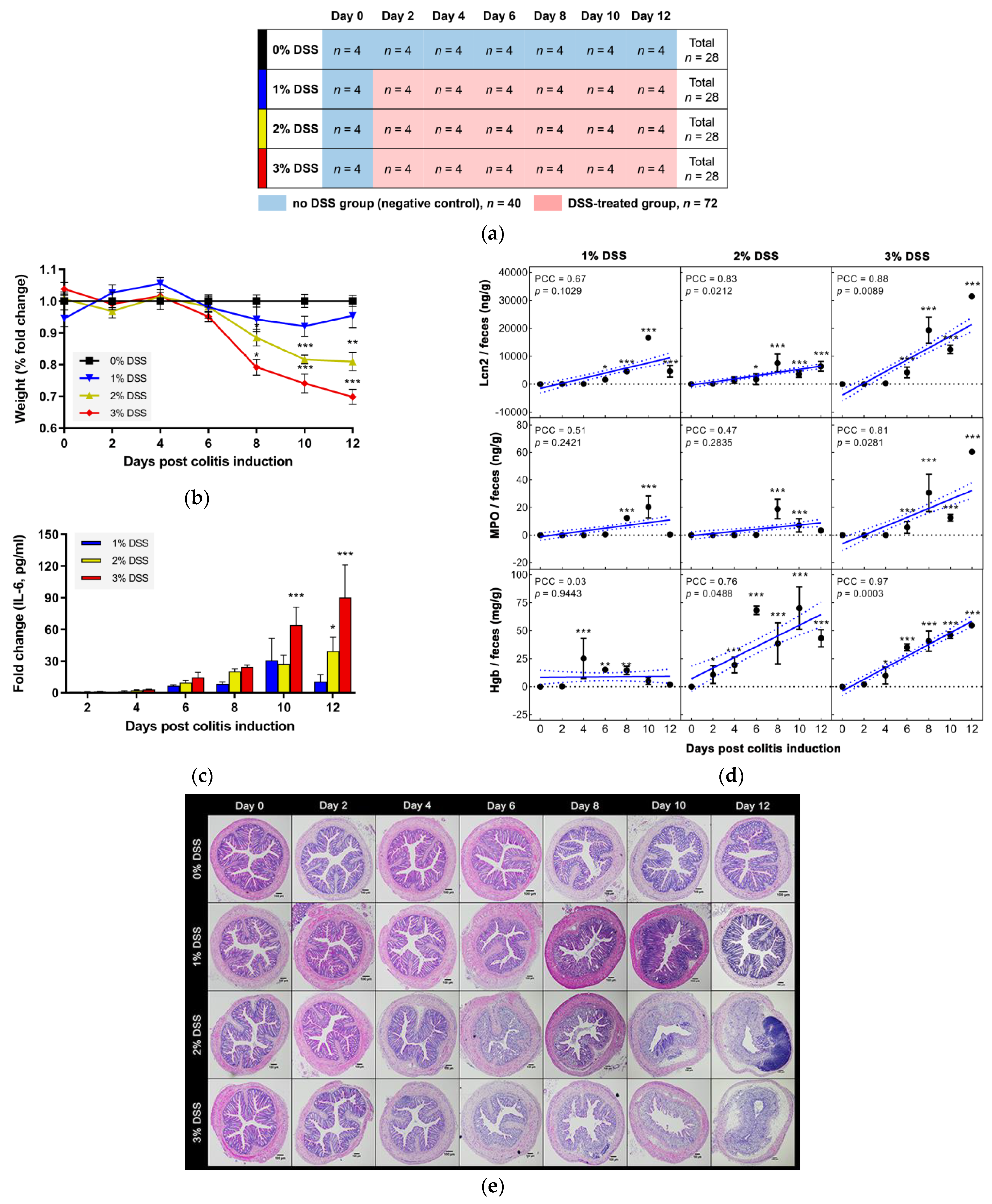
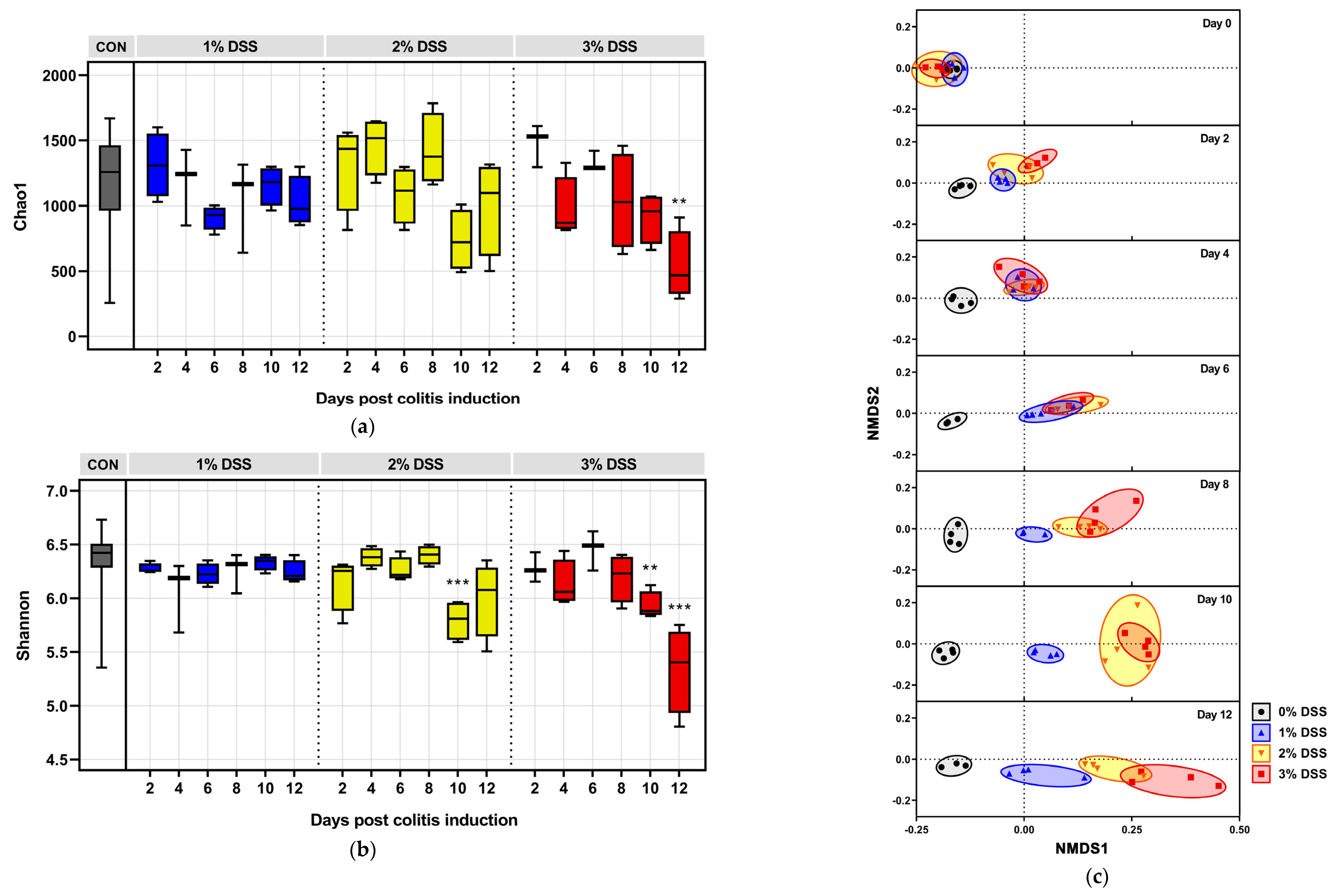
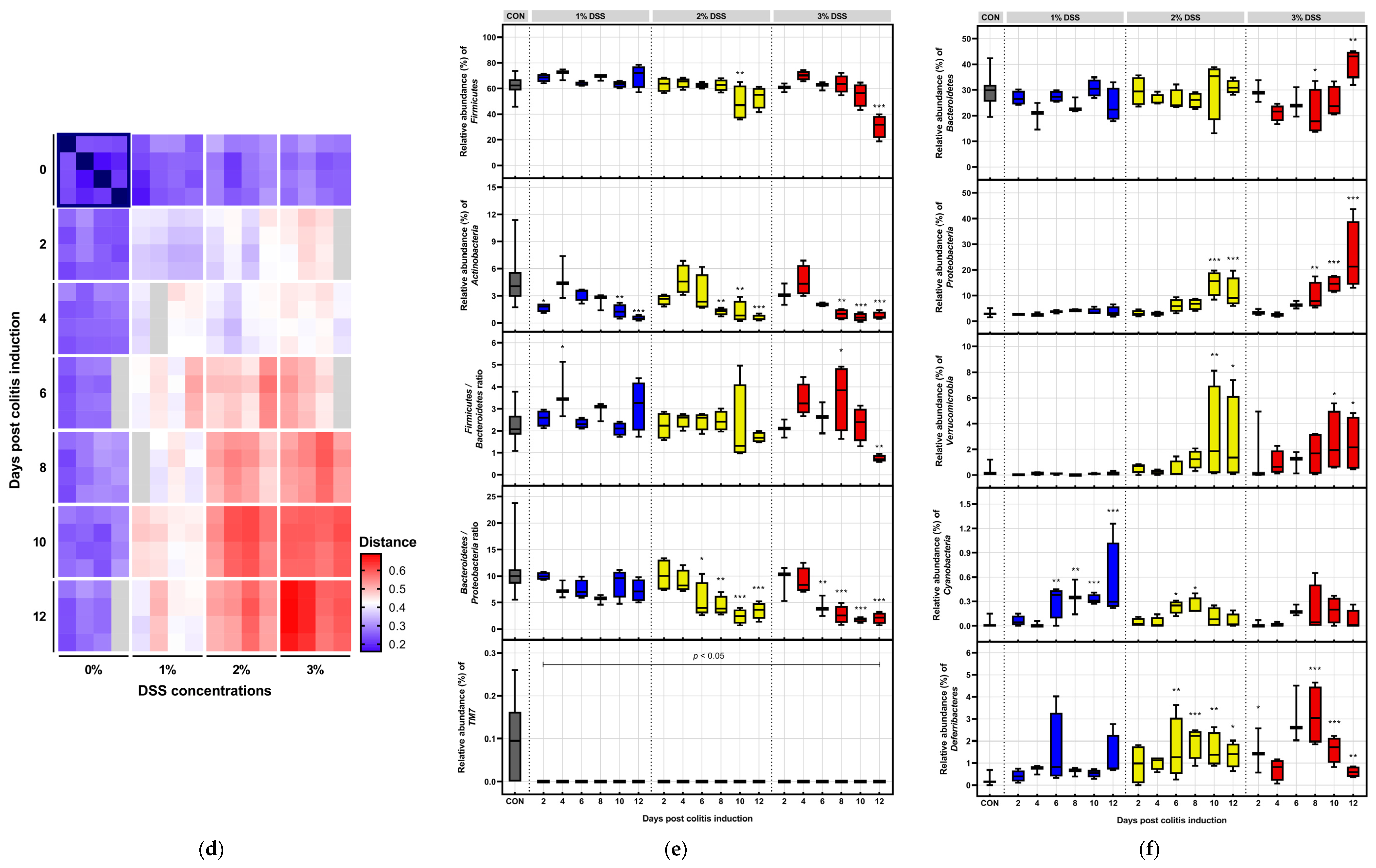
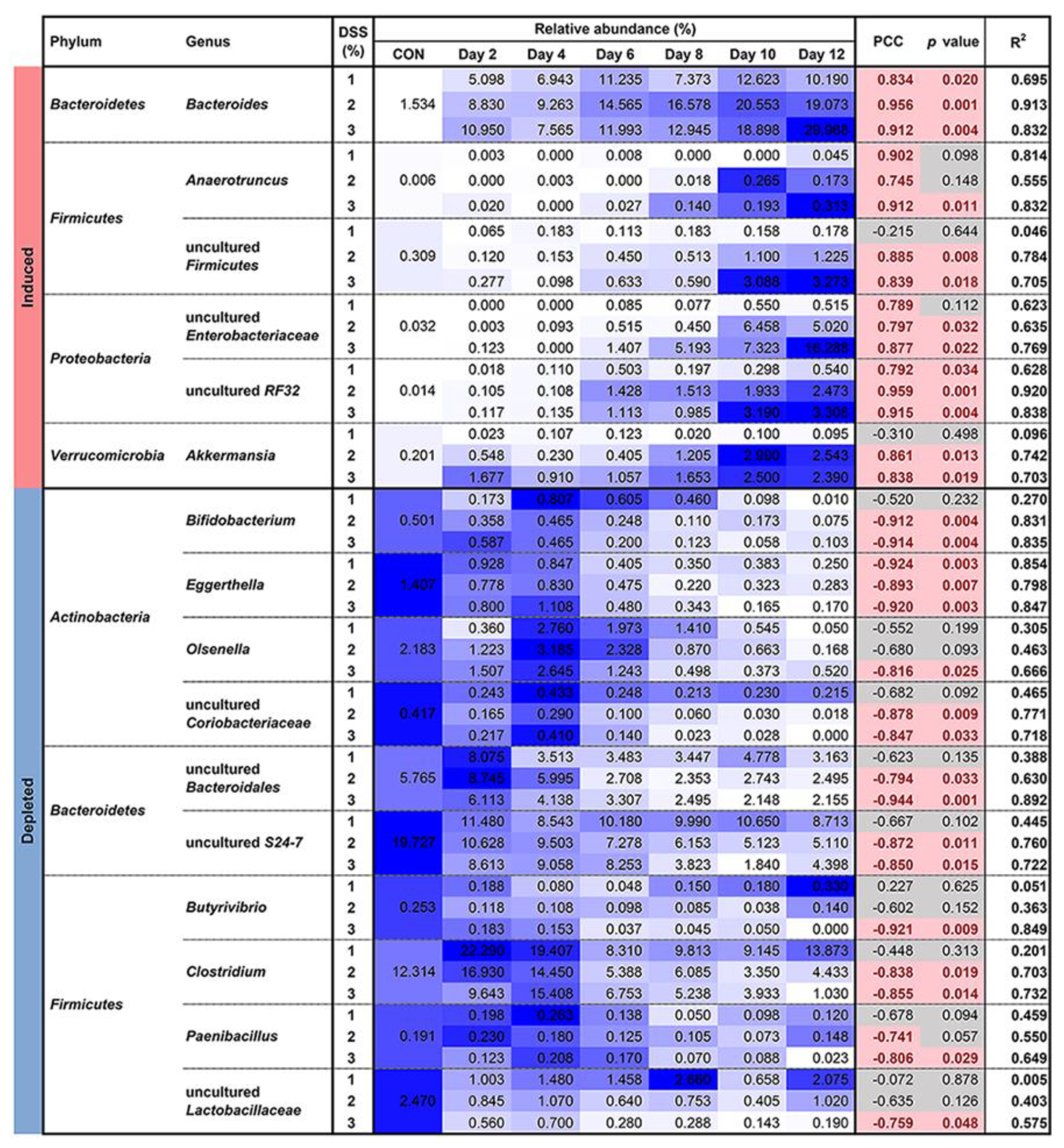
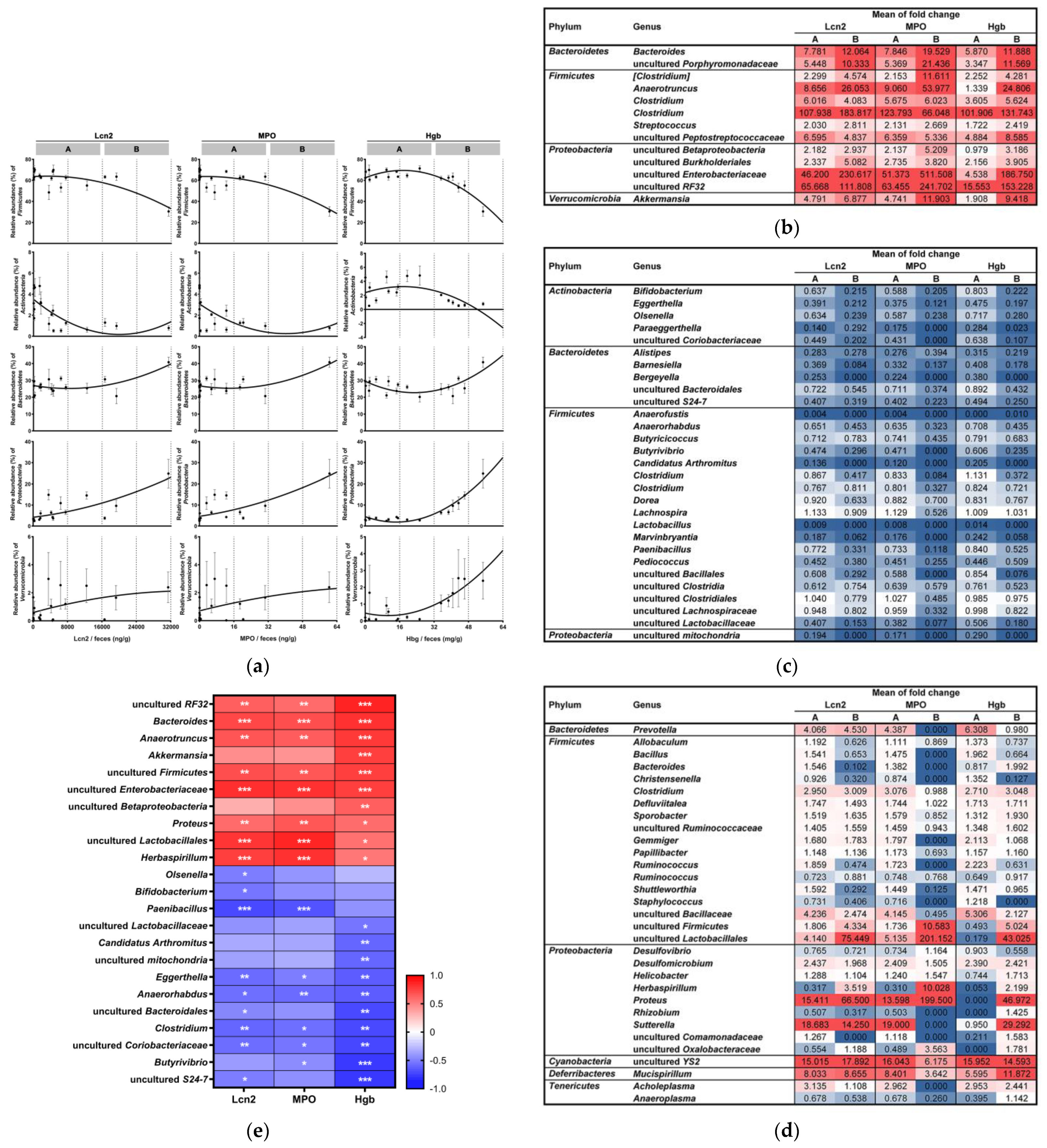
The role of the gut microbiota in the pathogenesis of inflammatory bowel disease (IBD) has been in focus for decades. Although metagenomic observations in patients/animal colitis models have been attempted, the microbiome results were still indefinite and broad taxonomic presumptions were made due to the cross-sectional studies. Herein, we conducted a longitudinal microbiome analysis in a dextran sulfate sodium (DSS)-induced colitis mouse model with a two-factor design based on serial DSS dose (0, 1, 2, and 3%) and duration for 12 days, and four mice from each group were sacrificed at two-day intervals. During the colitis development, a transition of the cecal microbial diversity from the normal state to dysbiosis and dynamic changes of the populations were observed. We identified genera that significantly induced or depleted depending on DSS exposure, and confirmed the correlations of the individual taxa to the colitis severity indicated by inflammatory biomarkers (intestinal bleeding and neutrophil-derived indicators). Of note, each taxonomic population showed its own susceptibility to the changing colitis status. Our findings suggest that an understanding of the individual susceptibility to colitis conditions may contribute to identifying the role of the gut microbes in the pathogenesis of IBD.
Keywords: intestinal microbiota; DSS-induced colitis development; longitudinal studies; dynamics; susceptibility; gut microbes intestinal microbiota; DSS-induced colitis development; longitudinal studies; dynamics; susceptibility; gut microbes