1. Introduction
The core control challenges of electro-hydraulic servo systems can be divided into two primary categories: position control and force control. Force control for these systems has been widely applied in industries such as material testing, active suspension, and injection molding [
1,
2,
3,
4]. However, most existing literature focuses primarily on position control [
5,
6,
7], with relatively little attention paid to force control-related issues. As reported in [
8], traditional proportional–integral–derivative (PID) controllers have significant limitations when addressing force control in hydraulic systems. Moreover, in specific application scenarios, the output force at the actuator end may not be directly measurable. In such cases, the force control problem of the servo system is converted into an equivalent pressure control problem.
To enhance the robustness of electro-hydraulic servo systems against parameter uncertainties and external disturbances, adaptive robust control has been proposed [
9], and this approach has subsequently been applied to various hydraulic servo systems [
10,
11,
12,
13,
14]. Xiao [
15] addressed the force tracking problem of single-rod hydraulic cylinders by developing a composite nonlinear control method based on sliding mode control. This method divides the entire system into linear and nonlinear subsystems, designs corresponding sliding mode reaching laws for each subsystem, and forces the nonlinear subsystem output to track the desired virtual input of the linear subsystem. Shen [
16] designed a composite controller integrating offline feedback control and online adaptive compensation to solve the force tracking problem of electro-hydraulic servo systems. For accurate pressure loading on the steering test bench of heavy-duty vehicles, Du [
17] developed a sliding mode controller, with experiments verifying its effectiveness in suppressing external disturbances. To resolve force loading disturbances in electro-hydraulic systems, Tang [
18] proposed a real-time nonlinear adaptive force control strategy. During controller design, they considered the nonlinearity of the servo valve and parameter uncertainties of typical electro-hydraulic systems, and used vibration disturbance information of the actuator to achieve accurate force tracking. Dakova [
19] developed a force tracking controller for valve-controlled hydraulic cylinder systems, where the controller’s proportional gain is adjusted in real time via a gain scheduling algorithm based on the dynamic characteristics of the reference signal. This avoids control gain overflow caused by mechanical coupling between the actuator and the structure. Flayyih [
20] adopted a non-standard backstepping sliding mode control method to design a virtual force tracking control algorithm for hydraulic actuators in automotive active suspension systems. Leveraging the sliding mode algorithm’s insensitivity to matched disturbances, system nonlinearities, parameter uncertainties, and road disturbances are effectively suppressed—significantly improving cockpit comfort and safety. For the electro-hydraulic control loading system in flight simulators, researchers also have proposed many methods, such as robust feedforward observer-based force control method [
21], torque tracking control method based on singular perturbation theory [
22] and observer-based backstepping control strategy [
23]. All these methods effectively enhance the dynamic loading performance of load simulators. However, most of the aforementioned controllers only address time-invariant parameter uncertainties. For electro-hydraulic servo systems, many physical parameters change with the operating environment. Furthermore, none of these controllers consider the impact of sensor noise on system control performance which may greatly limiting the application scope of the designed control algorithms.
To address sensor noise and unmeasurable system states, numerous observer-based control strategies have been proposed for electro-hydraulic servo systems [
24,
25,
26,
27,
28]. Reference [
29] presents a novel control strategy that estimates actuator chamber pressures from work port pressures using differential equations, eliminating the need for direct pressure or position sensors. The controller dynamically adjusts gains through fuzzy logic-based gain scheduling, enhancing adaptability across a wide range of operating conditions. Reference [
30] proposes an active disturbance rejection control method for electro-hydraulic servo systems, which employs a disturbance observer based on an extended state observer (ESO). Here, the ESO estimates the system’s unknown states and disturbances, while the disturbance observer reconstructs the system’s mismatched disturbances. Reference [
31] puts forward two motion control strategies for electro-hydraulic servo systems using linear extended state observers (LESOs). These observers are specifically designed to compensate for system uncertainties, thereby effectively enhancing system robustness. To reduce the impact of measurement noise on velocity signals, Reference [
31] also uses an LESO to reconstruct actuator velocity, and adopts a parameter adaptive mechanism to mitigate the influence of parameter uncertainties on system performance. Theoretical analysis shows that this control method can guarantee transient performance and predefined final tracking accuracy even in the presence of time-varying uncertainties. Notably, the ESOs used in References [
30,
31] are linear in structure. While they offer advantages such as simple architecture and convenient parameter tuning, they are highly sensitive to measurement noise. Designers must therefore make a trade-off between the observer’s estimation accuracy and its ability to suppress measurement noise. Thus, how to design a robust control strategy for electro-hydraulic servo pressure control systems that simultaneously accounts for measurement noise, time-varying parameter uncertainties, and external disturbances remains a highly challenging task.
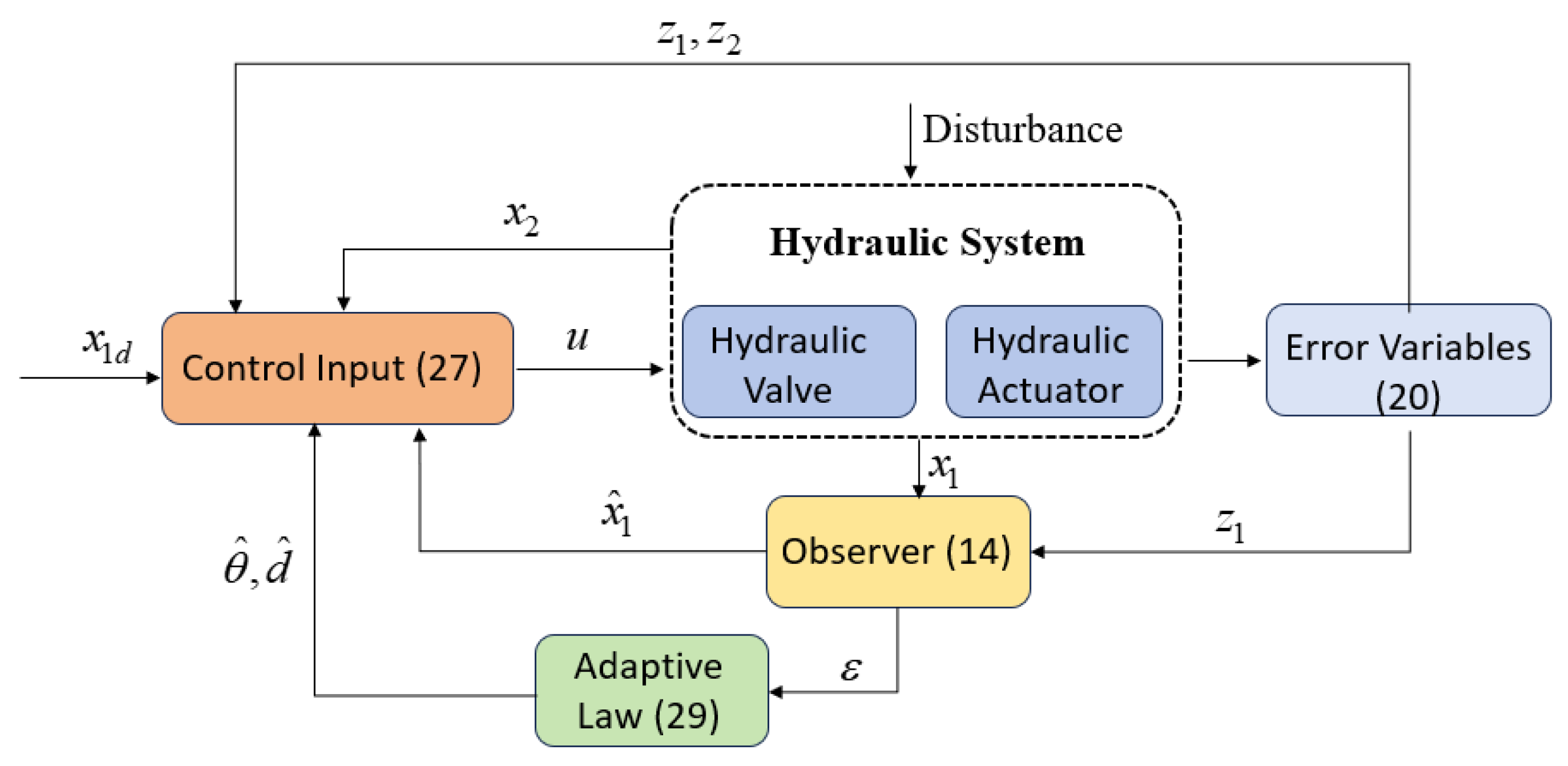
Building on the aforementioned research, this paper proposes an adaptive output feedback pressure control method for electro-hydraulic servo systems. This method simultaneously accounts for the system’s time-varying parameter uncertainties, measurement noise, and external disturbances, while ensuring the asymptotic stability of the system’s tracking error. Compared with existing research methods, the main contributions of this paper are summarized as follows:
(1) A pressure control method for electro-hydraulic servo systems based on a parameter adaptive mechanism is developed. Unlike existing parameter adaptation methods, the parameter adaptation mechanism designed in this paper is capable of addressing the adverse effects of time-varying parameters on system performance.
(2) A state estimation method that serially connects a filter and a state observer is constructed. This approach addresses the insufficient ability of traditional linear observers to attenuate high-frequency measurement noise, thereby improving state estimation accuracy.
(3) Unlike References [
30,
31], which only guarantee the bounded stability of the system, this paper provides theoretical proof that the system achieves asymptotic stability when subjected to time-varying disturbances and uncertainties.
The structure of this paper is organized as follows:
Section 2 introduces the mathematical model of the electro-hydraulic servo pressure control system. The observer and controller design are presented in
Section 3. The results of simulation and experimental verification are provided in
Section 4 and
Section 5. Finally,
Section 6 concludes the paper.
2. System Modeling
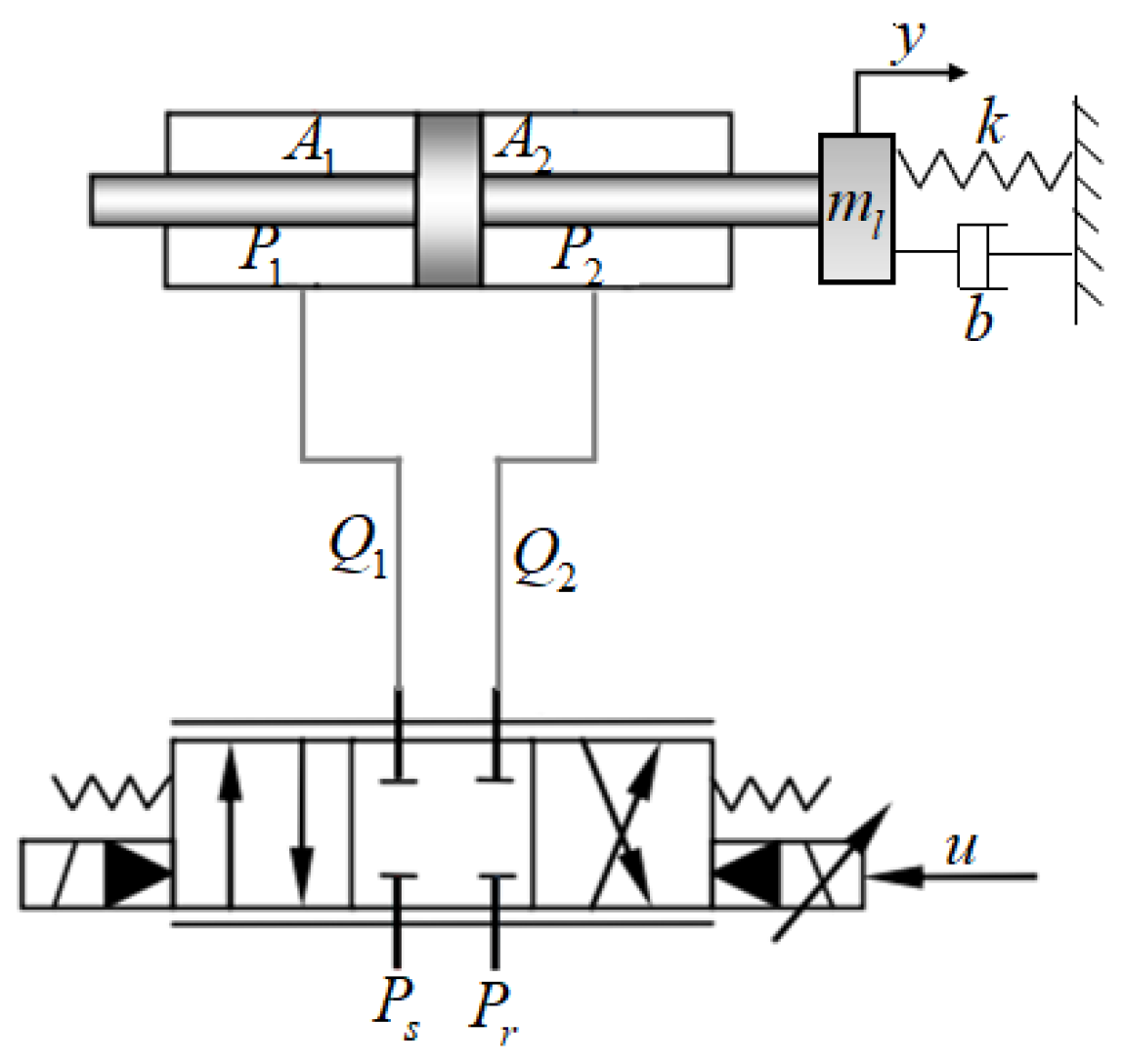
A schematic of the electro-hydraulic servo pressure control system studied in this paper is shown in
Figure 1, which is a typical valve-controlled cylinder where the environment or load force acts on the end of the piston rod. The pressure difference between the two chambers of the hydraulic cylinder is indirectly controlled by adjusting the flow rate of the proportional servo valve.
According to Newton’s Second Law, the dynamics of the load is given by
where
is the mass of the load,
is the load’s displacement,
and
are the pressure of the two chambers,
and
represent the effective areas of the two chambers of the hydraulic cylinder,
and
denote the equivalent viscous damping coefficient and elastic coefficient.
The pressure dynamic of the cylinder can be written as
where
and
are the initial volumes of the two chambers,
is the bulk modulus of the hydraulic oil,
is the internal leakage coefficient,
and
are the supplied and return flows. For zero-overlapped valves, the relationship between flow and spool displacement
is [
32,
33]
where
and
are the flow gain coefficients,
is the discharge coefficient,
and
are the spool valve area gradients.
and
represent the supply pressure and the tank pressure of the hydraulic oil respectively. The function
is defined as
According to the response characteristics of proportional servo valves, the spool displacement of servo valve can be related to the control input voltage
by the first-order dynamic equation
where
and
are the time constant and voltage–displacement conversion coefficient, respectively.
Suppose that the valve is symmetrical and matched, i.e.,
, then Equation (3) can be rewritten as
where
, and
By defining the system state variable as
, the model (2)–(7) can be expressed in a state space form as
where
,
,
,
,
,
,
is the unmodeled disturbance.
To overcome the influence of time-varying parameters, the state Equation (8) can be rewritten as
where
represent the upper bound of
, respectively,
represents the total uncertainty of the system, which is defined as
where
represents the parameter uncertainty.
Our goal is to design a controller that enables the pressure difference between the two chambers of the system to follow the given command signal as accurately as possible subject to both measurement noise, time-varying parameter uncertainty and external disturbances. Before the controller design, the following assumption and lemma are provided.
Assumption 1. The command signal of the system is second-order continuously differentiable. The unknown time-varying parameter satisfies , the parameter uncertainty is also bounded and satisfies , where and are all known positive constants.
Remark 1. The command signal is generally specified manually by the operator. To avoid system shocks and oscillations, it is typically configured as a continuous and smooth signal. In addition, under normal operating conditions, both and are bounded by and , respectively, and the pressure difference is much smaller than the supply pressure , which ensures that the parameter stays well away from zero. Other parameters in the system all represent the actual physical parameters of the hydraulic actuator and are bounded; thus, the parameter set can be guaranteed to be bounded. The total uncertainty consists of parameter uncertainty and disturbance uncertainty. The amplitude of the disturbance is directly related to its energy, based on the fact that the energy of the system in practical applications is always finite, combined with the boundedness of the parameters, it can be inferred that the total disturbance is also bounded.
Lemma 1. For any positive function and , there always exists a function and a non-negative function that satisfy
Proof. Considering
and
, it can be obtained that
then we can get
□
4. Simulation Verification
In this section, simulation verification was conducted on the control algorithm proposed in the previous section. The simulation parameters of the valve-controlled hydraulic cylinder system are shown in
Table 1. By changing the elastic modulus of the oil in real time, the parameter perturbation caused by temperature changes in the system was simulated. The simulation verification was conducted based on MATLAB/Simulink (R2020b), and the solver was selected as a variable step, the simulation step size was set to 0.1 ms and the simulation time was set to 10 s.
To fully verify the effectiveness of the proposed control algorithm, three controllers are selected for comparative analysis, as detailed below:
C1: A PI controller with feedforward, which is commonly used in engineering practice. Controller parameters are tuned via the trial-and-error method until the system’s output pressure tracks the given command signal with maximum accuracy. Specifically, the feedforward gain is set to 0.02, the proportional gain to 0.5, and the integral gain to 0.2.
C2: A controller with the same basic structure as the method proposed in this paper, except that the parameter adaptive mechanism is removed. During the control law design, average values of all time-varying parameters are adopted, all other control parameters are consistent with those of Controller C3.
C3: The output feedback adaptive controller constructed in this paper. The observer gain is set to , , , , , , , .
Furthermore, to evaluate the performance of each controller, the maximum, average, and standard deviation of the absolute value of the tracking error were used, represented as Max, Mean, and Std, respectively. Three simulation cases were run to verify the effectiveness of the designed control algorithm.
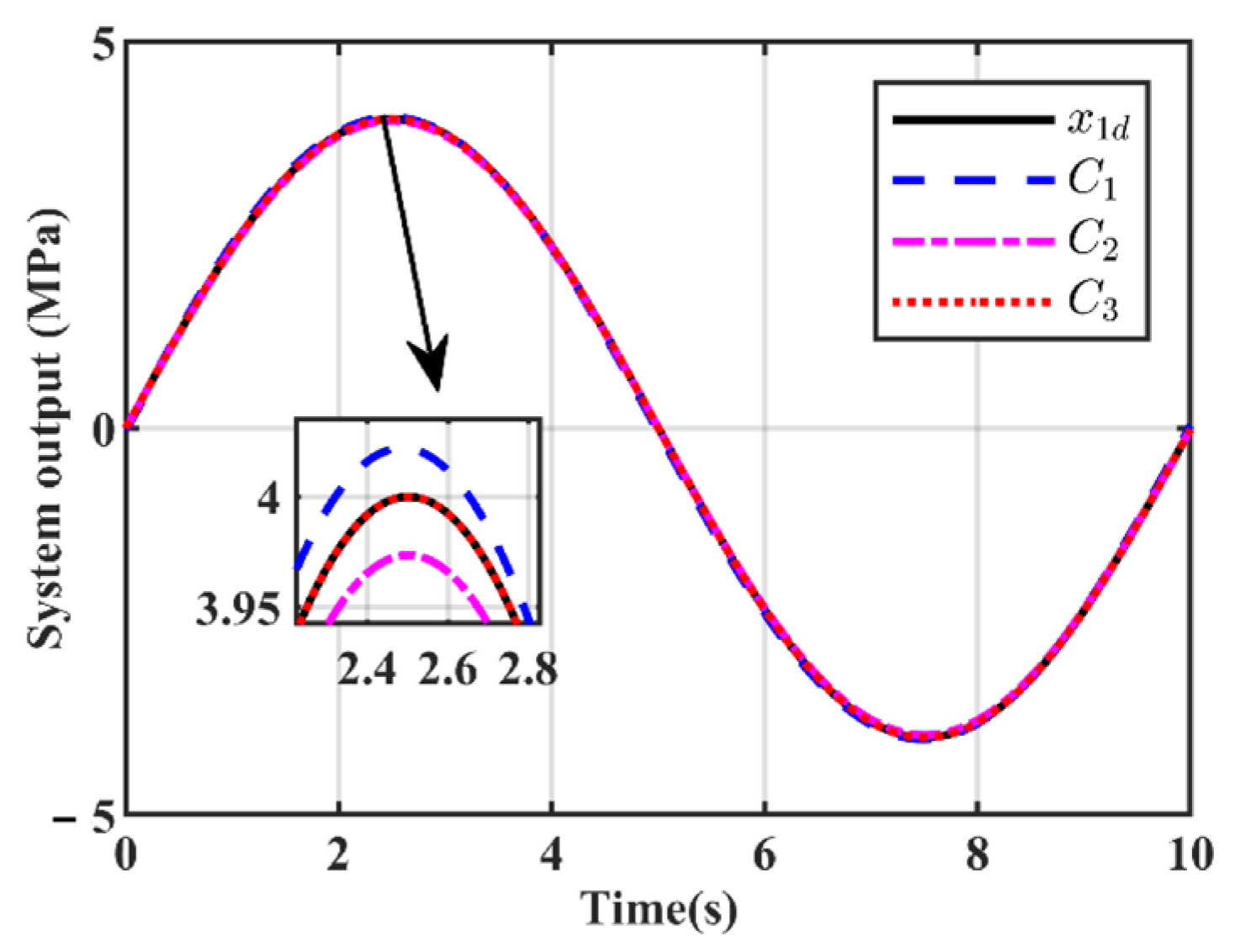
Case 1: First a low frequency command was employed to test the control accuracy of the proposed controller. The command signal is set to
MPa, and the corresponding simulation results are presented in
Figure 3,
Figure 4,
Figure 5,
Figure 6,
Figure 7 and
Figure 8.
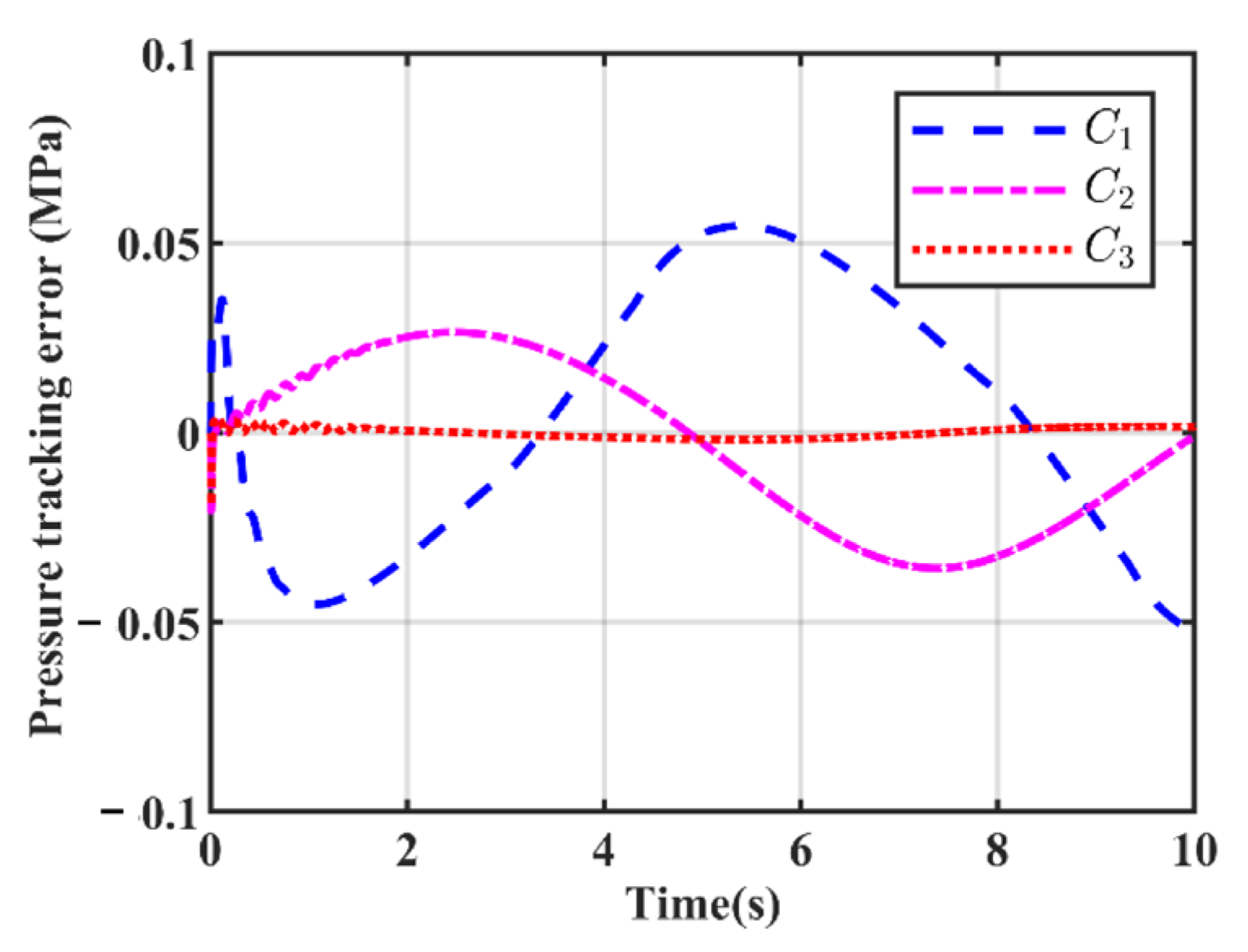
Figure 3 shows the system output responses under the three controllers. The tracking errors of the three controllers are depicted in
Figure 4. The specific performance indicators of the tracking errors are listed in
Table 2. As observed from
Figure 4 and
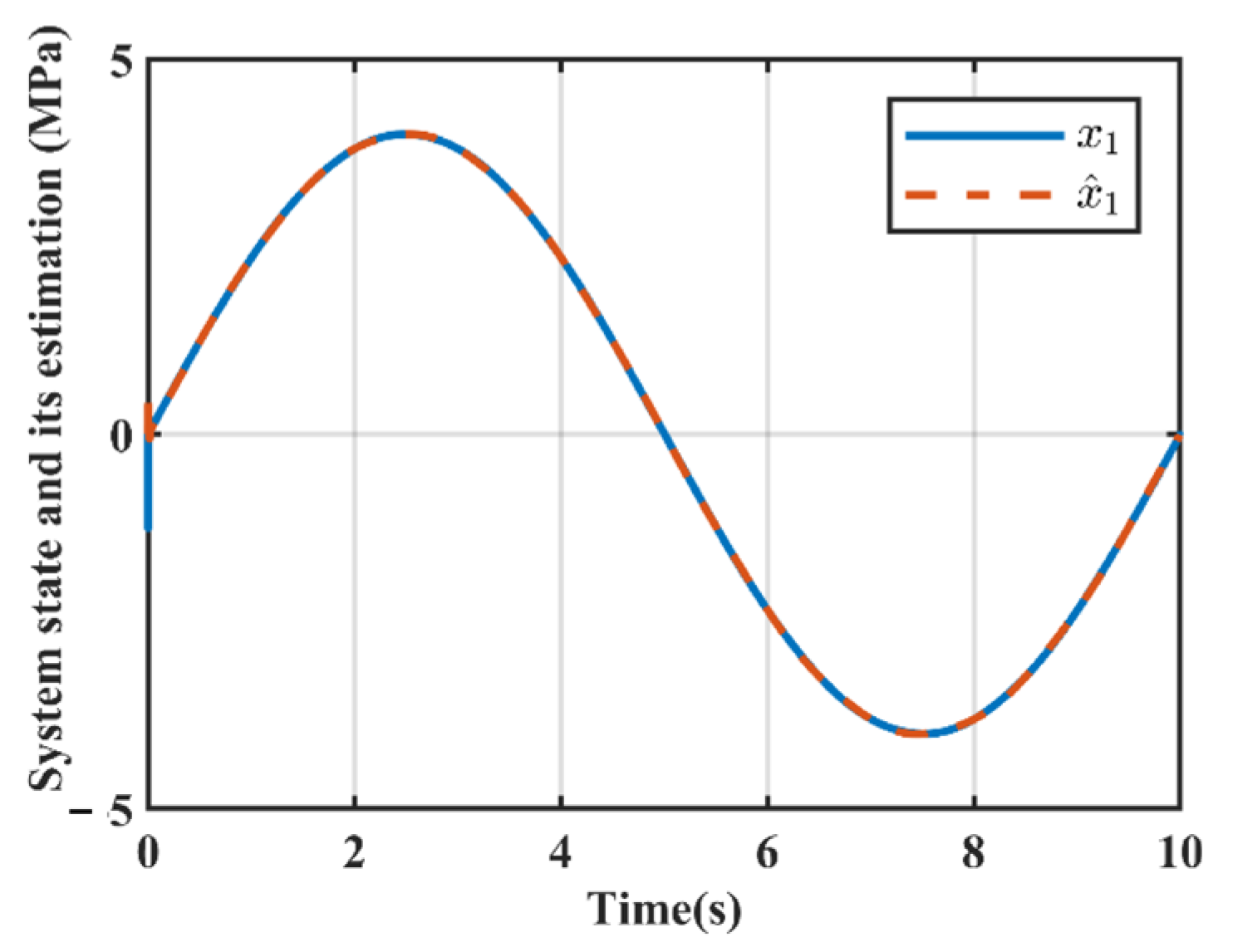
Table 2, it can be seen that, when tracking the low-frequency command signal, the control accuracy of the traditional PI controller C1 and the model-based controller without adaptive mechanism C2 is relatively close. This is primarily attributed to the integral term in the PI controller, which eliminates steady-state errors. In contrast, the proposed output feedback adaptive controller C3 achieves higher tracking accuracy than C2 among model-based controllers—fully demonstrating the effectiveness of the parameter adaptive mechanism designed in this paper. The observer’s estimation of the system output signal is illustrated in
Figure 5. At low frequencies, the constructed observer can accurately reconstruct the actual system output, verifying its reliability for state estimation.
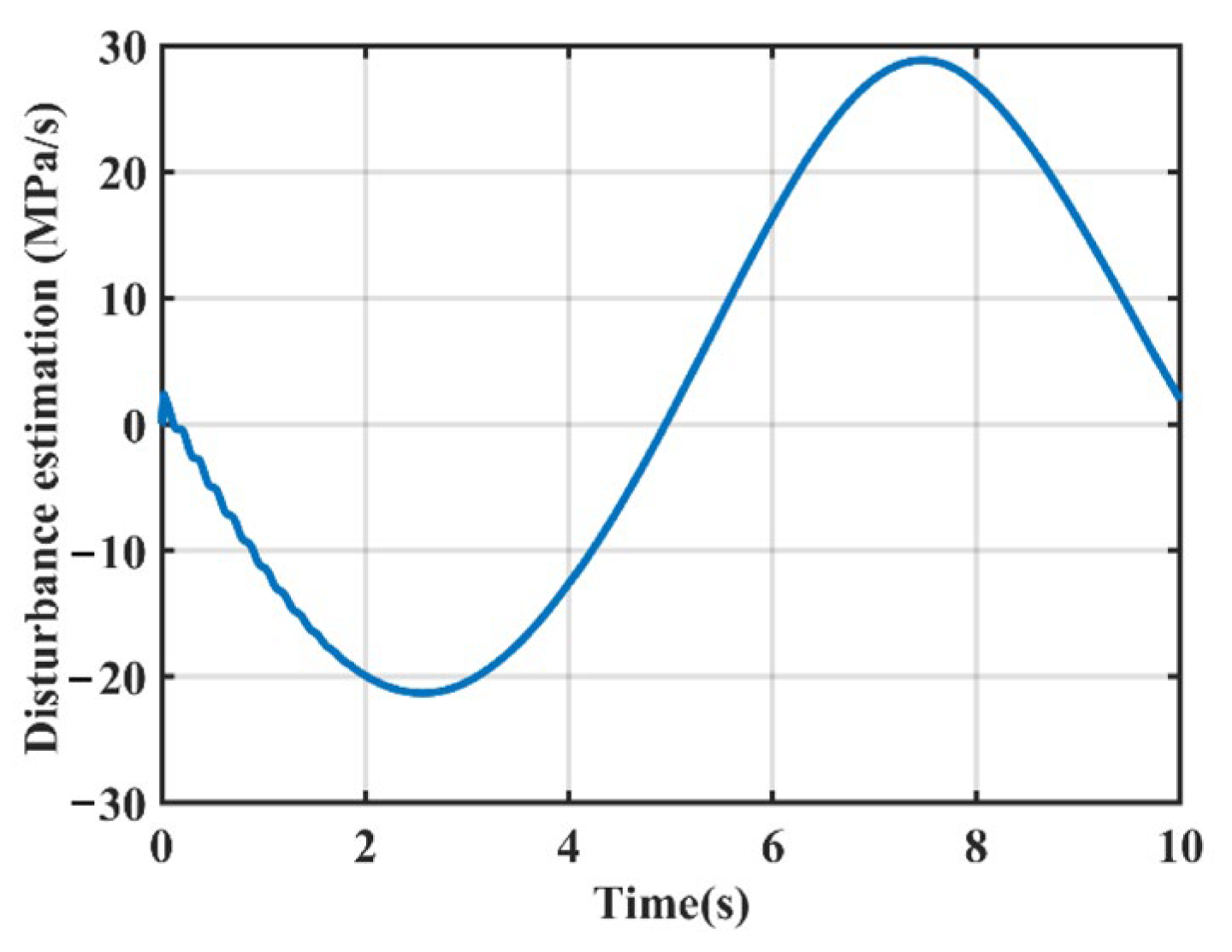
Figure 6 presents the output of the perturbation estimator. It can be seen that the perturbation estimation remains bounded throughout the simulation, which is consistent with the theoretical analysis.
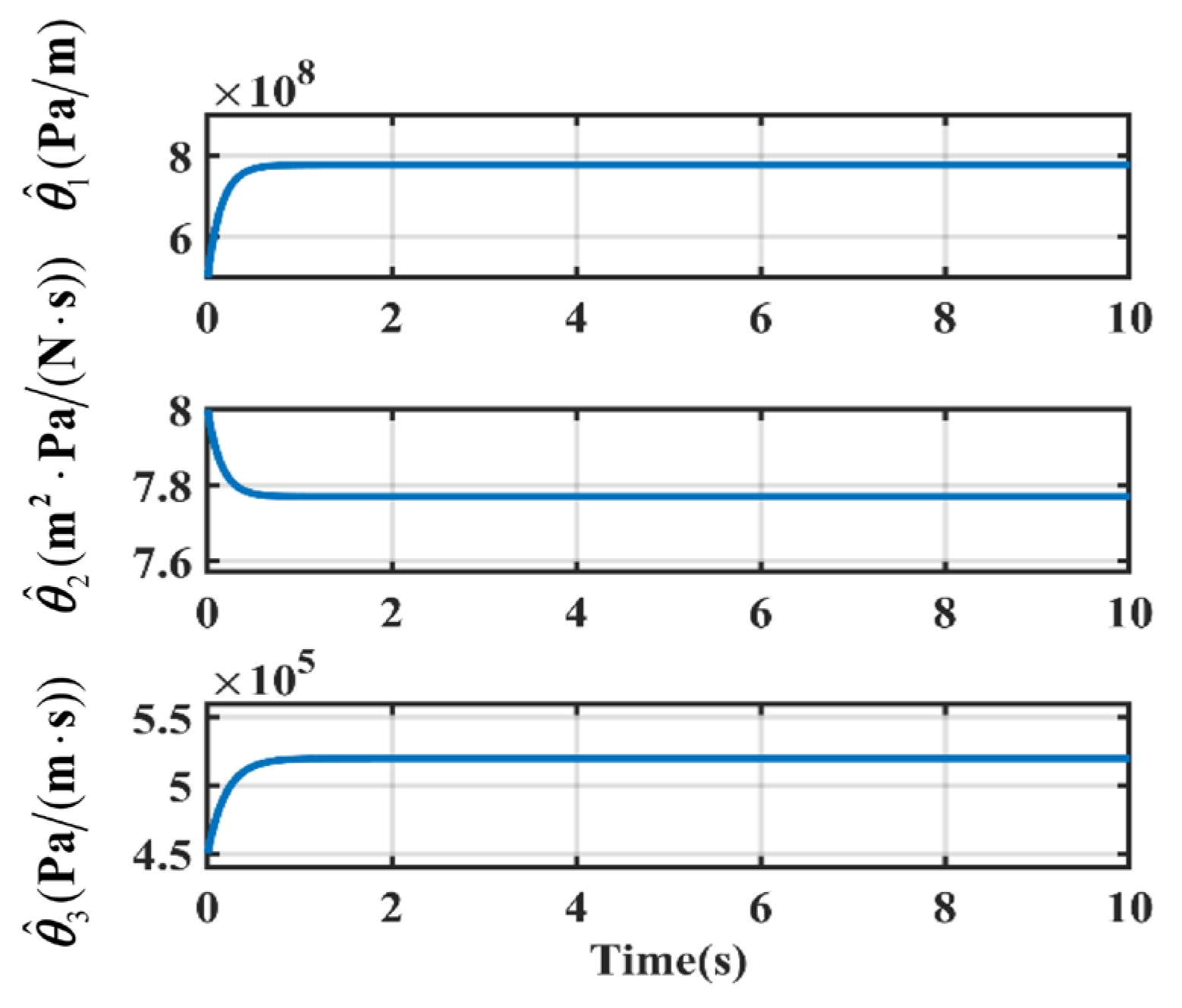
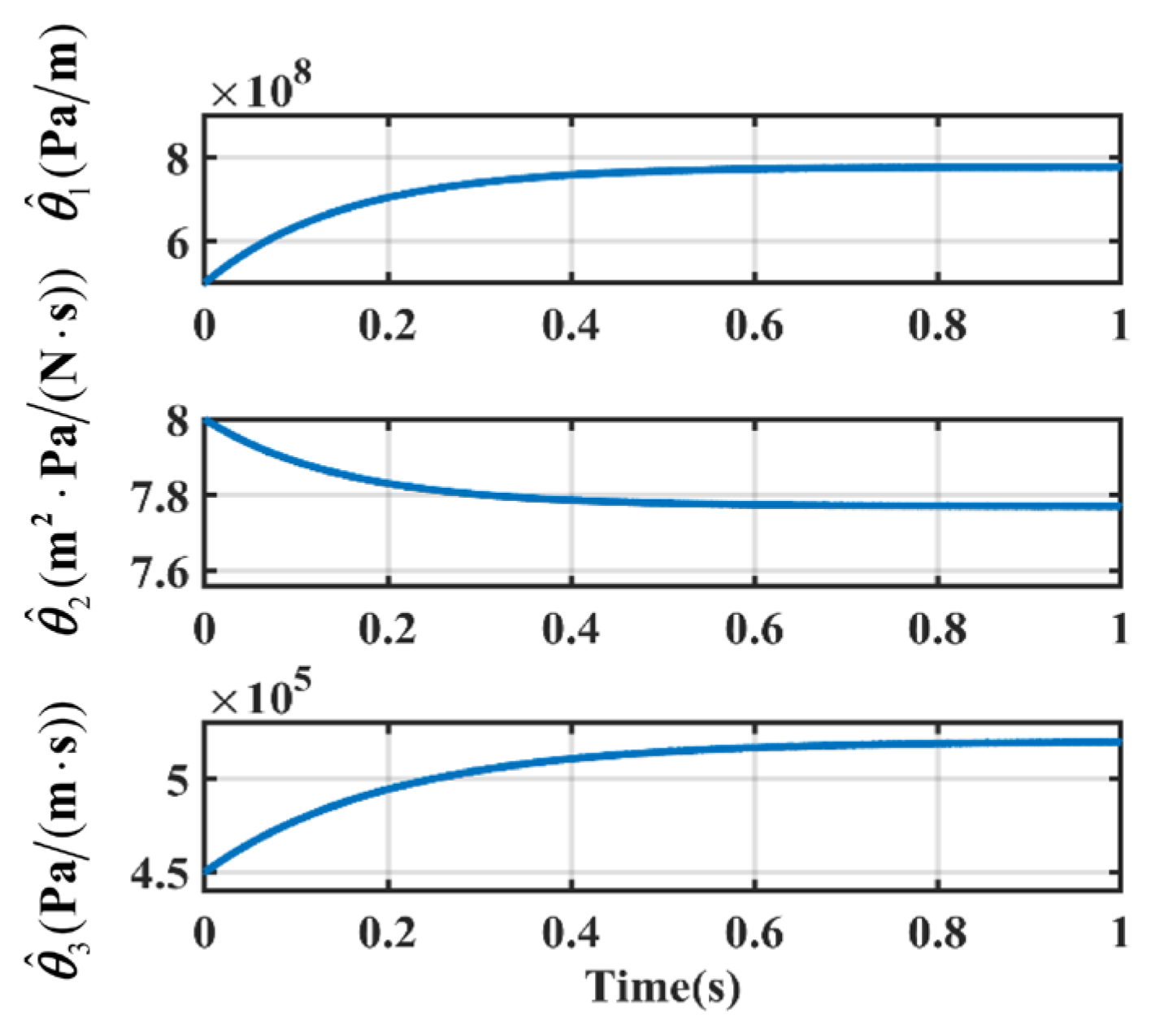
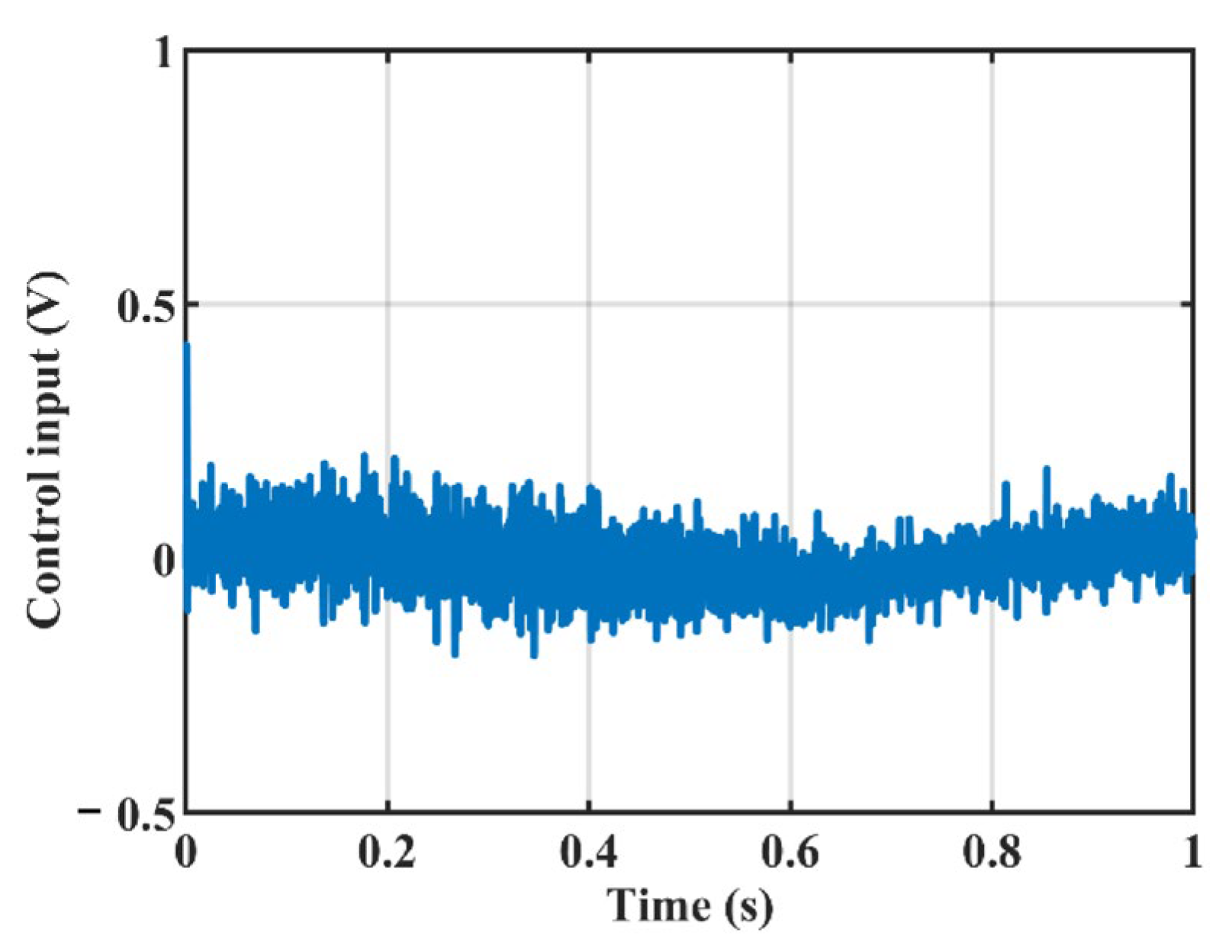
Figure 7 shows the variation trend of adaptive parameters. After a short transient period, all adaptive parameters converge to their steady-state values, indicating the stability of the adaptive mechanism. The control input of the proposed C3 controller is shown in
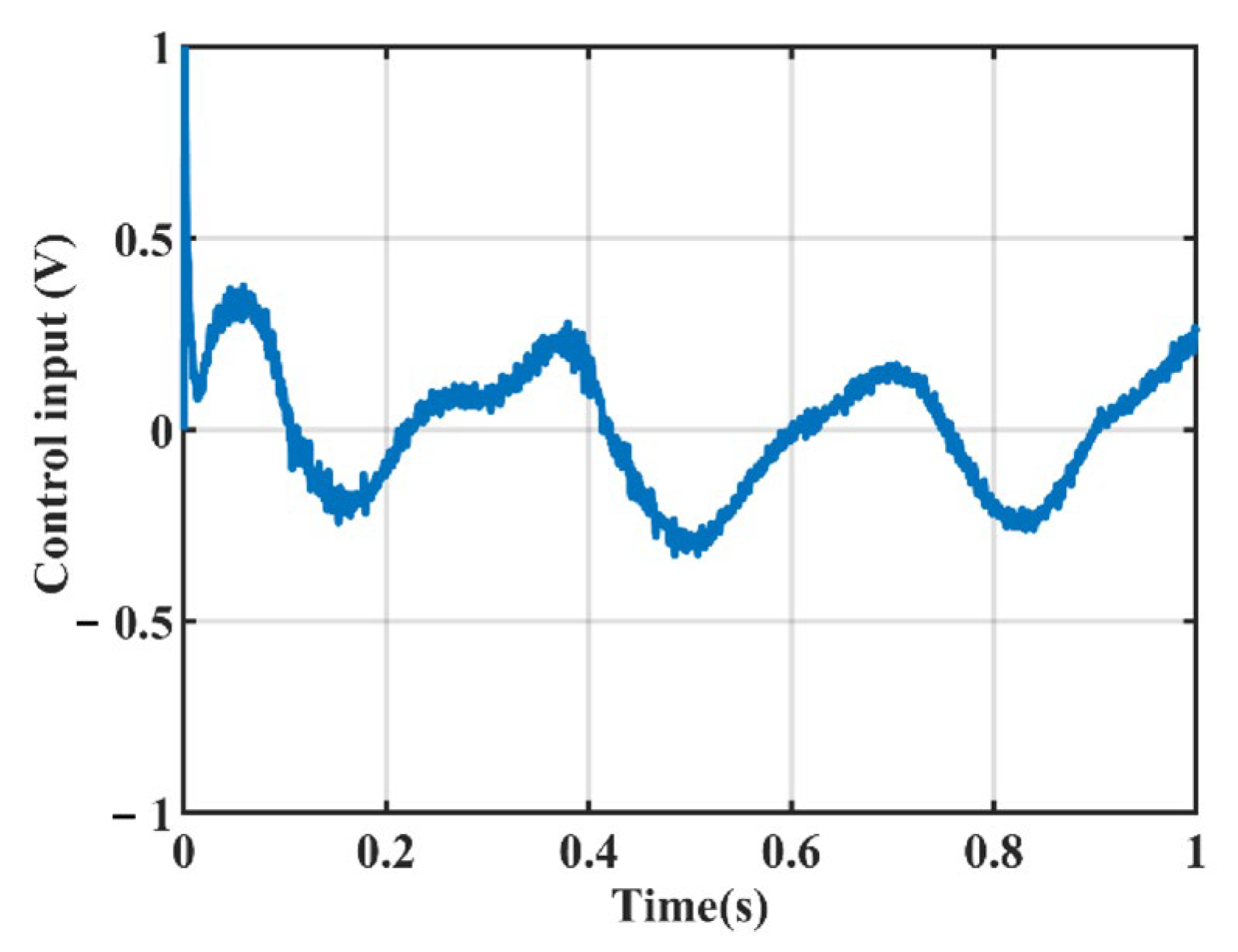
Figure 8. The control input is continuous and bounded, which satisfies the practical operation requirements of engineering applications.
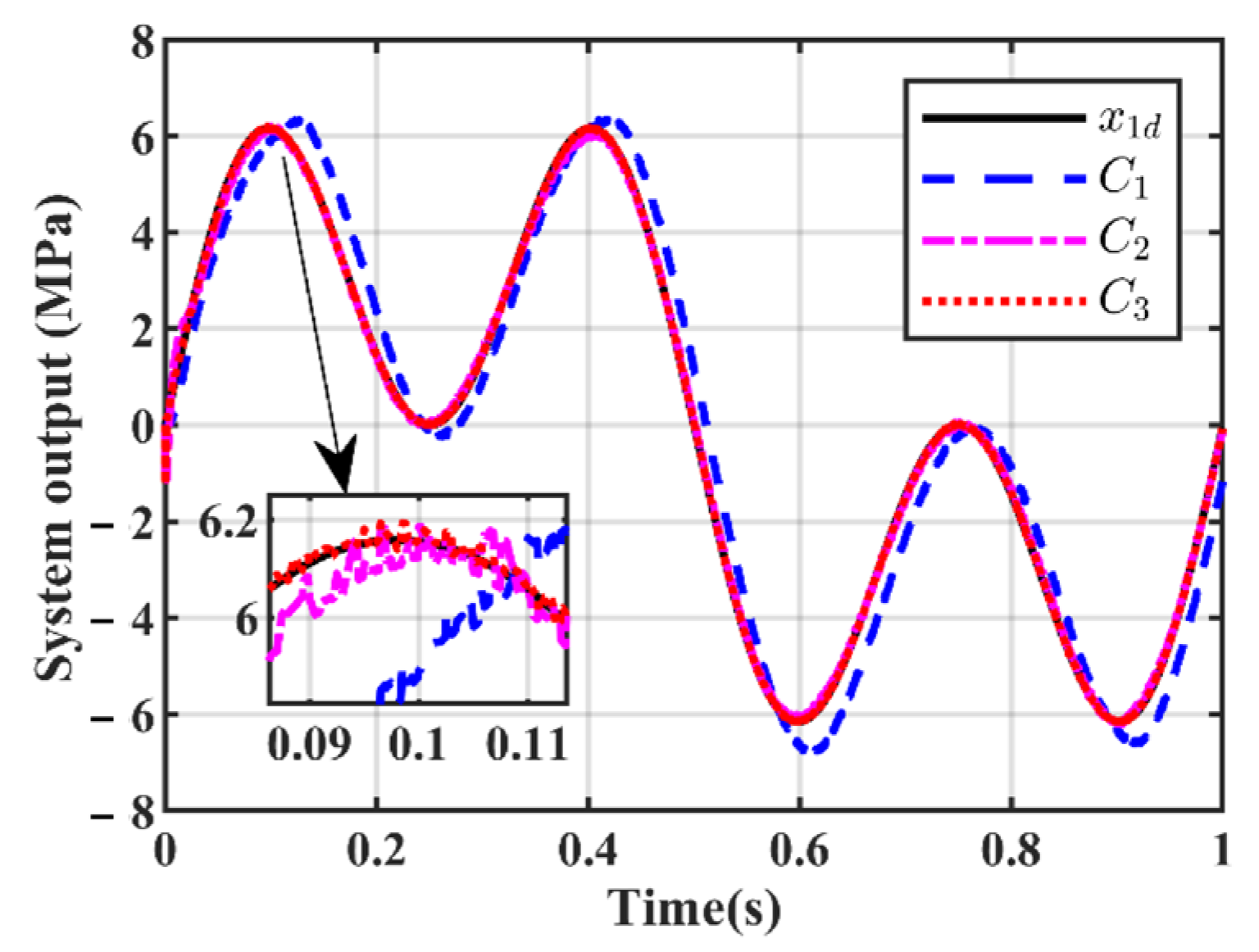
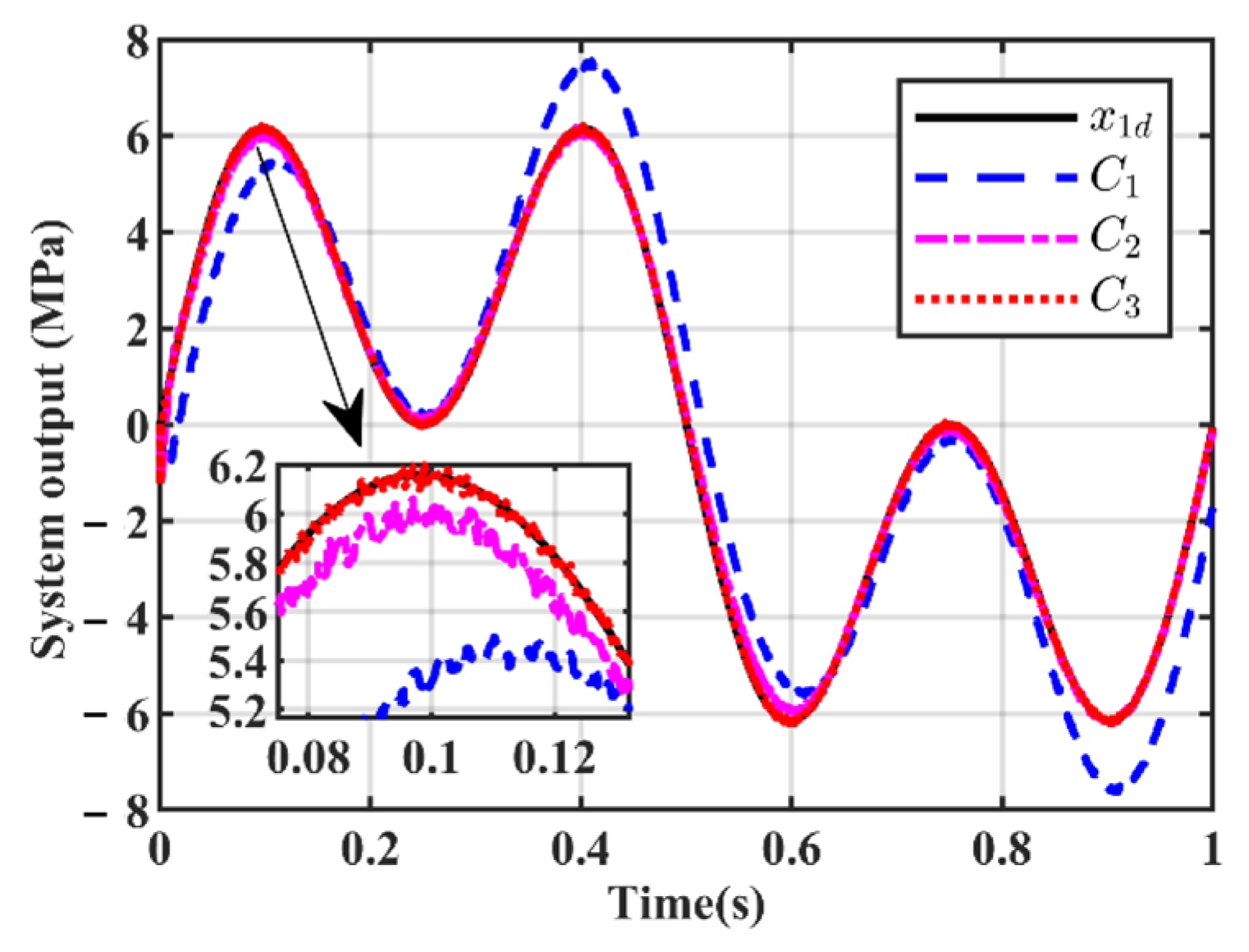
Case2: To test the tracking ability of the designed controller for high-frequency command signals and its suppression ability for measurement noise, the composite command signal was set to
MPa, and a white noise signal was added to the system output to simulate the measurement noise of the actual sensor. The corresponding simulation results are shown in
Figure 9,
Figure 10,
Figure 11,
Figure 12,
Figure 13 and
Figure 14.
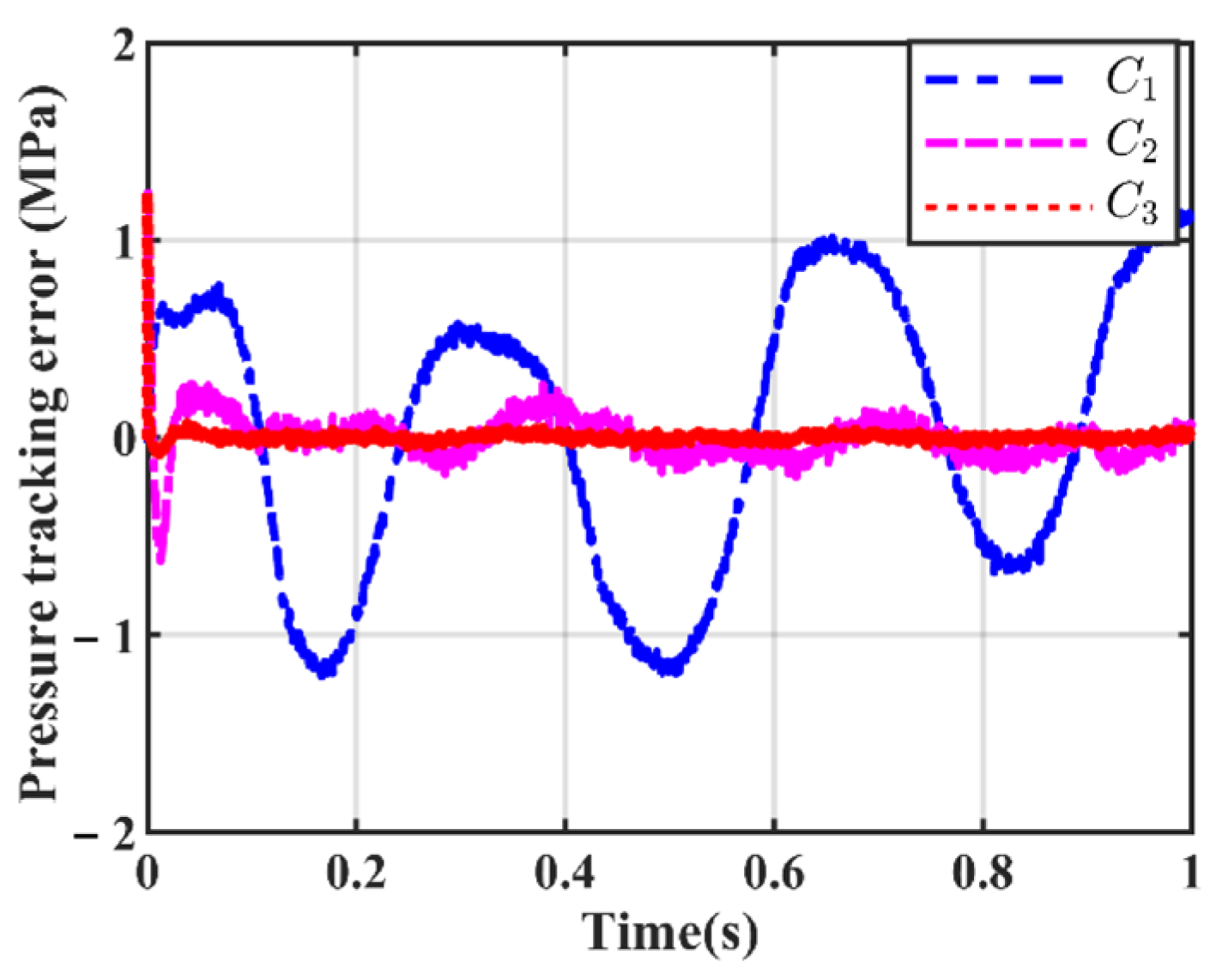
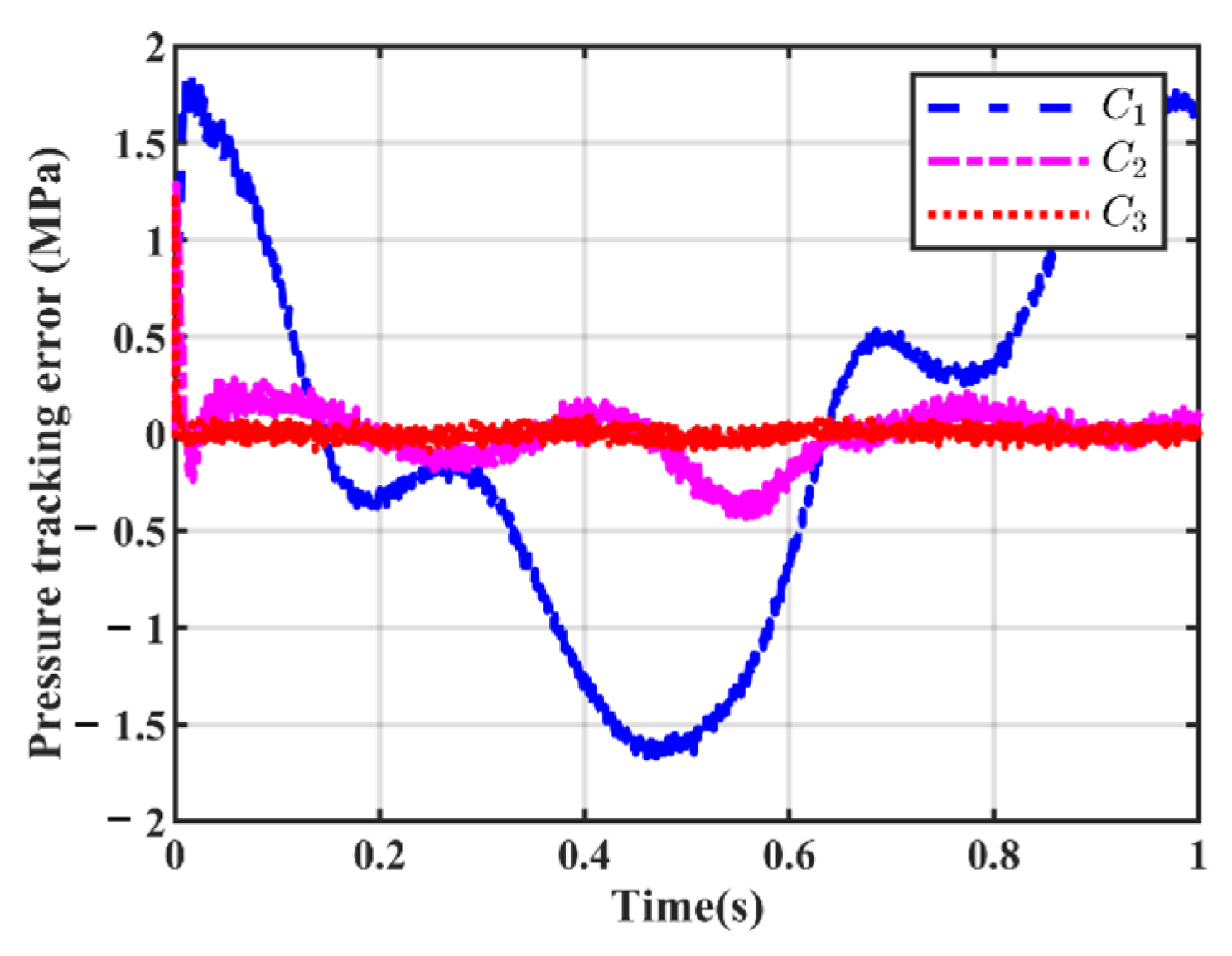
Figure 9 shows the output of the system under different control actions, the tracking error of the system under different controller are shown in
Figure 10, and
Table 3 presents the specific performance indicators of the tracking error. By combining
Figure 10 and
Table 3, it can be seen that when tracking high-frequency composite command signal, the performance of controllers C2 and C3 is far superior to that of controller C1, which fully demonstrates the superiority of model-based controller design. Furthermore, by comparing
Figure 4 and
Figure 10, it can be concluded that as the operating frequency of the system increases, the effect of the parameter adaptive mechanism weakens accordingly. This is reasonable because the rate of parameter convergence is already lower than the rate of parameter change caused by the change in the operating state.
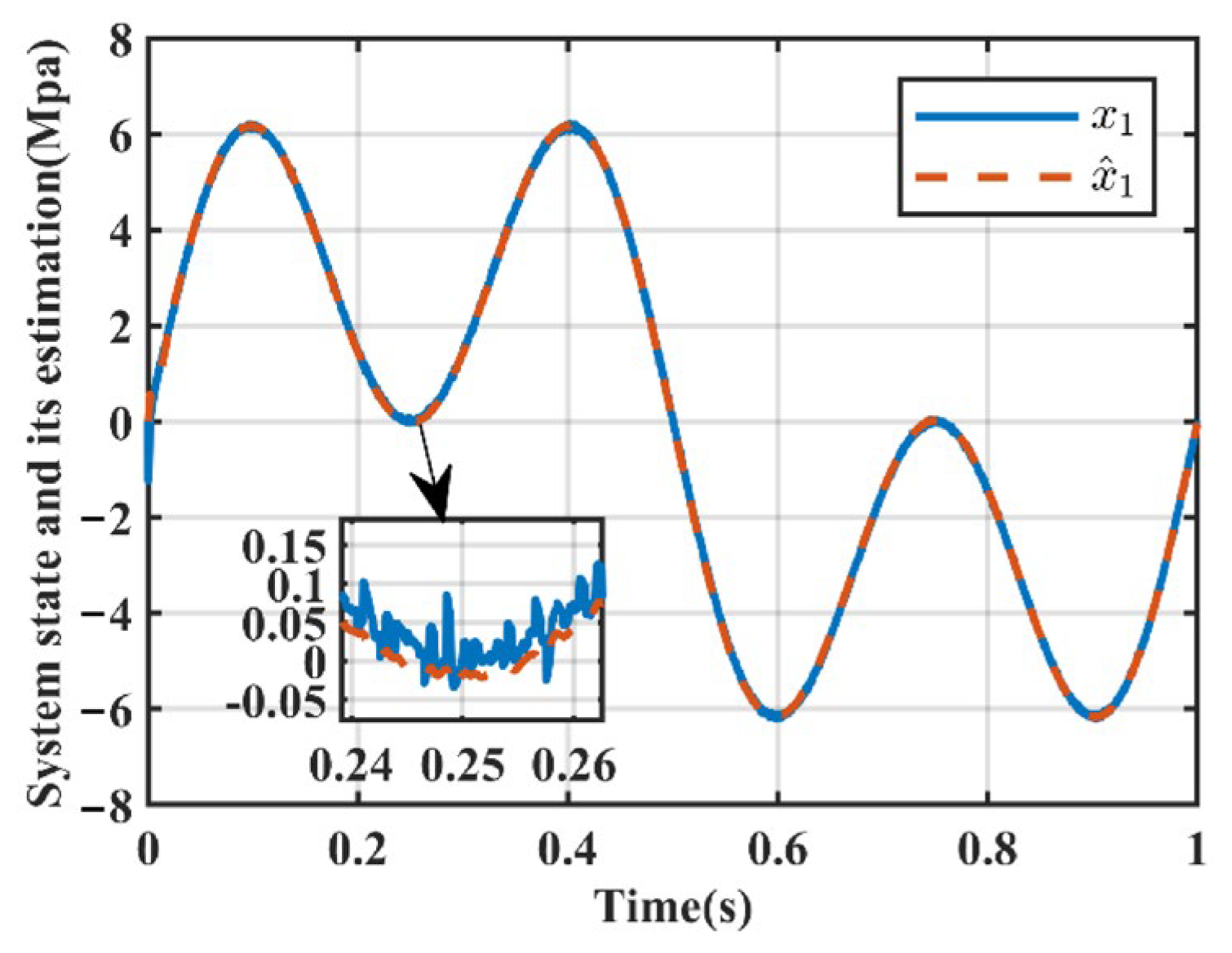
Figure 11 shows the output results of the system observer. It can be seen that compared with the original signal, the reconstructed system state is smoother, thereby effectively reducing the interference of high-frequency noise.
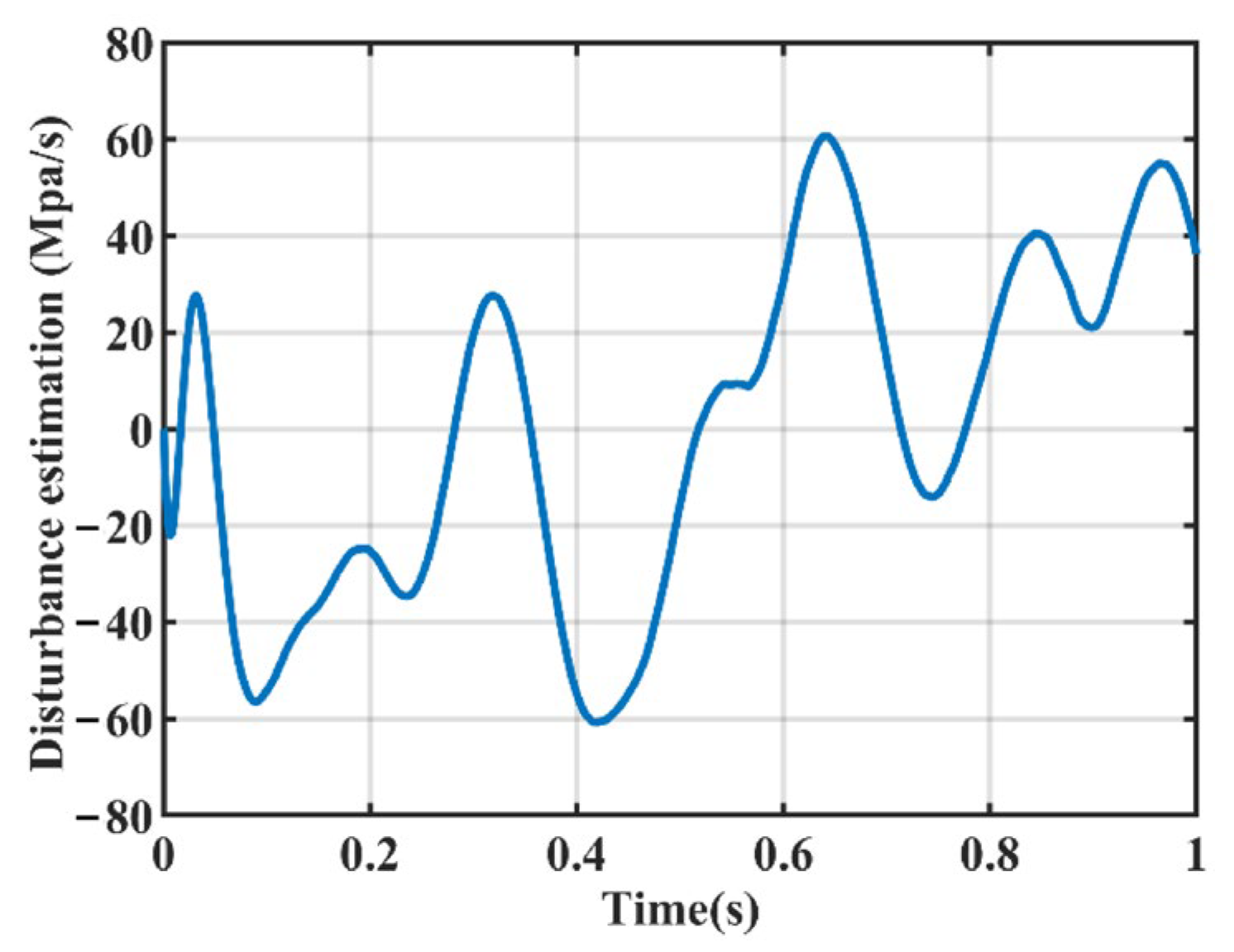
Figure 12 shows the result of the disturbance observer, the disturbance estimation is always bounded and varies with the change in the command signal. The estimated values of the adaptive parameters are depicted in
Figure 13, and all parameters are convergent.
Figure 14 shows the control input of the system under this working condition, which is also bounded.
Case 3: To test the robustness to load dynamics of the designed controller, a disturbance signal
is added to the system, and the command signal is selected to be consistent with that in case 2. The simulation results under this working condition are shown in
Figure 15 and
Figure 16.
Figure 15 shows the output pressures of the three controllers,
Figure 16 presents the pressure tracking errors, and
Table 4 shows the performance indicators of the three controllers in the last two cycles. Comparing
Figure 16 and
Figure 10, one can conclude that under the influence of external disturbances, the performance of the C1 controller becomes worse, while C2 and C3 can still maintain high tracking accuracy, and the tracking error of the C3 controller is less than 2%, which fully demonstrates the strong robustness of the controller designed in this paper to external disturbances or load dynamics.
5. Experimental Verification
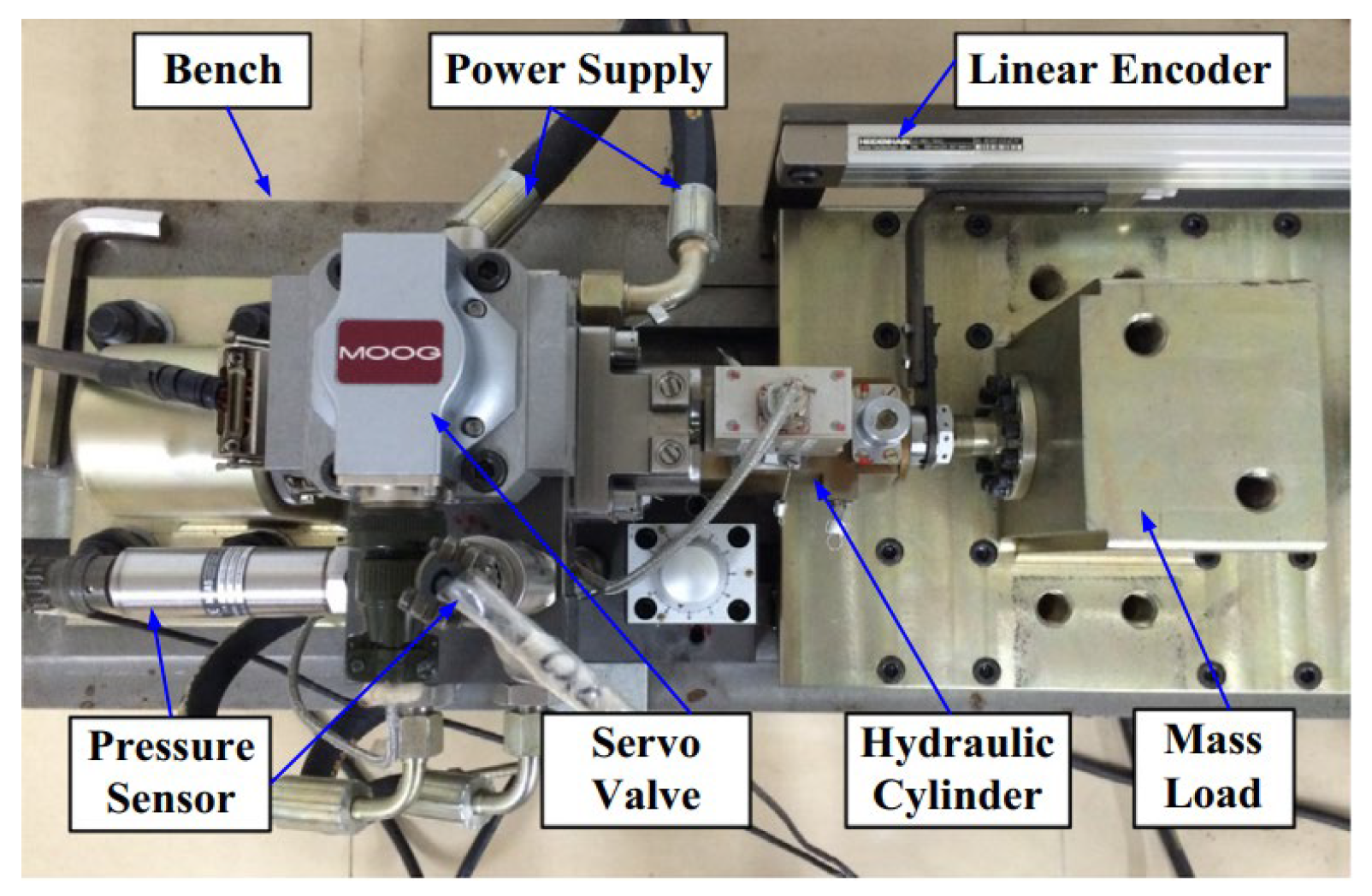
To further verify the effectiveness of the designed controller, comparative experiments were conducted on the electro-hydraulic servo motion platform shown in
Figure 17.
Table 5 summarizes the detailed hardware configuration of the platform, for more detailed physical parameters of the experimental platform, one can refer to reference [
31]. The implementation of the control algorithm relies on the RTX real-time operating system and the operation interface developed with Lab-Windows/CVI. The controller operates at a sampling frequency of 2 kHz.
The comparative experiments were also conducted based on the three controllers mentioned in the simulation. Compared with the simulation, the selection of controller parameters was made more conservative during the experiment due to the presence of sensor measurement noise and sampling delay. The parameter settings for each controller are as follows:
C1: Consistent with the simulation, the trial-and-error method was adopted to tune the control parameters. The feedforward gain was set to 0.08, the proportional gain to 0.5, and the integral gain to 0.15.
C2: Except for the lack of parameter adaptation mechanism, all other parameters are consistent with C3.
C3: The output feedback adaptive controller constructed in this paper. The observer gain is set to , , , , , , , .
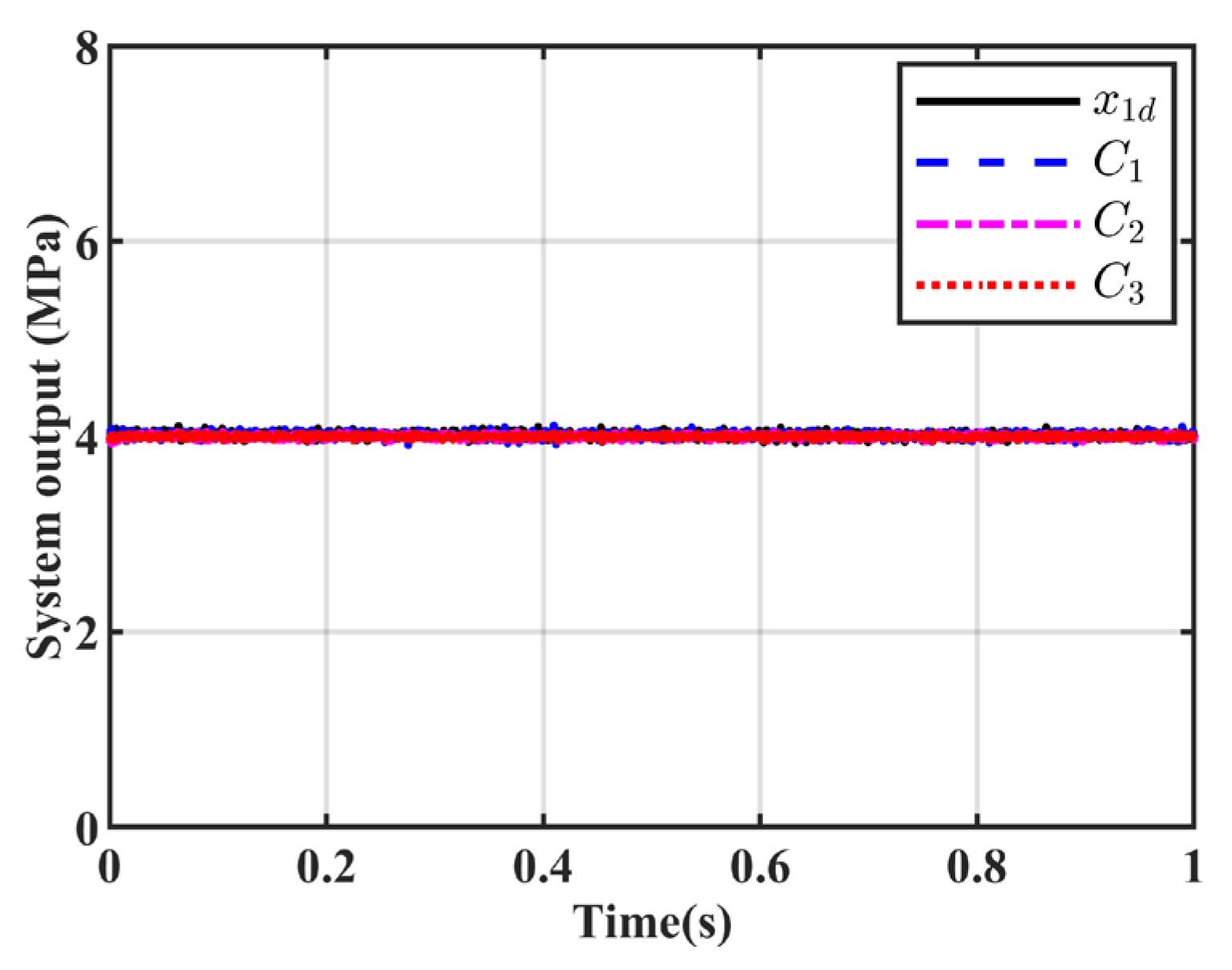
Case 1: To verify the static tracking performance of the designed controller, a constant pressure command with an amplitude of 4 MPa was given. The system outputs under the action of three controllers are illustrated in
Figure 18.
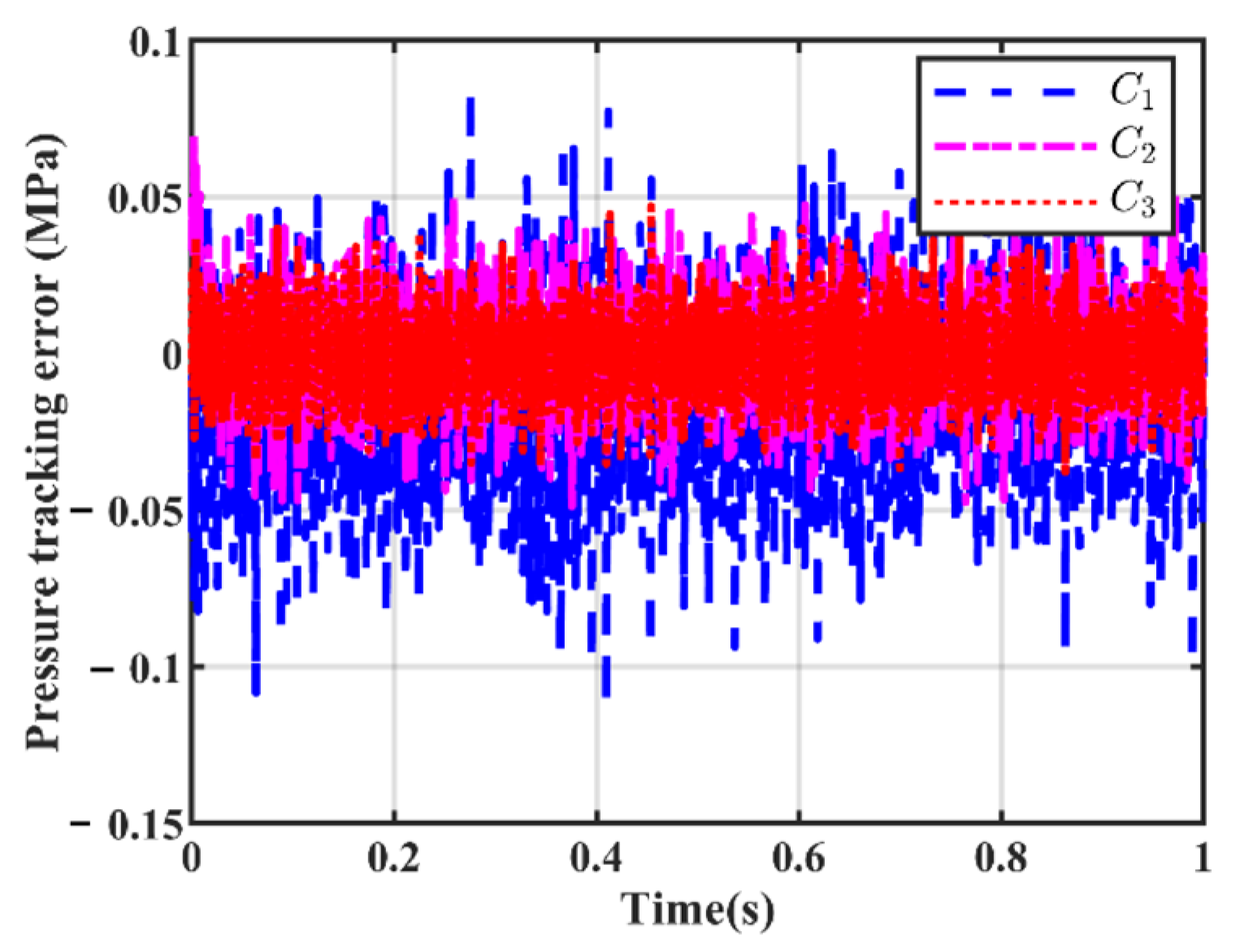
Figure 19 presents the static tracking errors of different controllers, and
Table 6 lists the performance indices of the three controllers. Combining the results in
Figure 19 and
Table 6, it can be observed that C3 achieves the highest tracking precision. In addition, due to the introduction of the state observer, the control accuracies of C2 and C3 are higher than that of C1, which fully validates the noise suppression capability of the observer proposed in this paper.
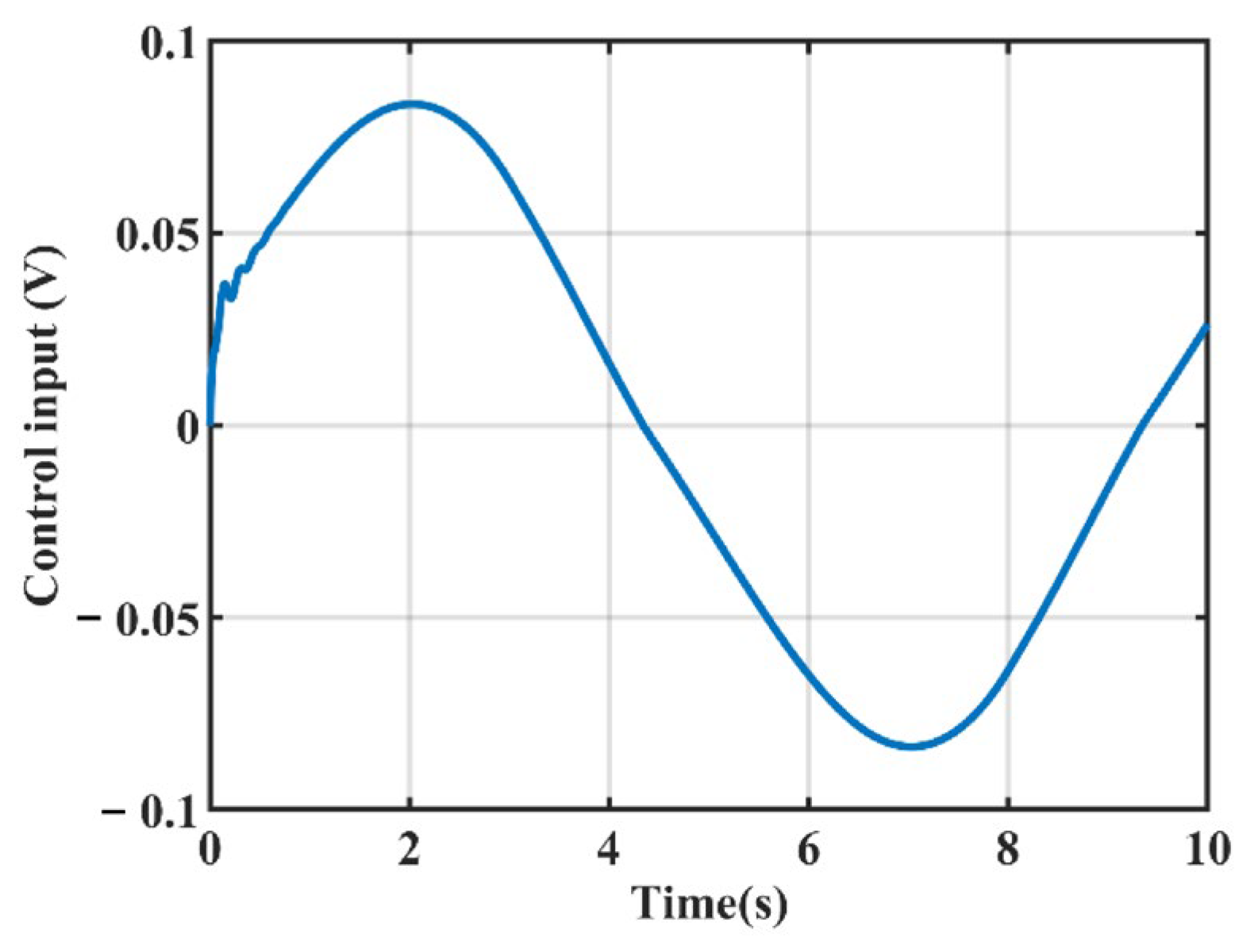
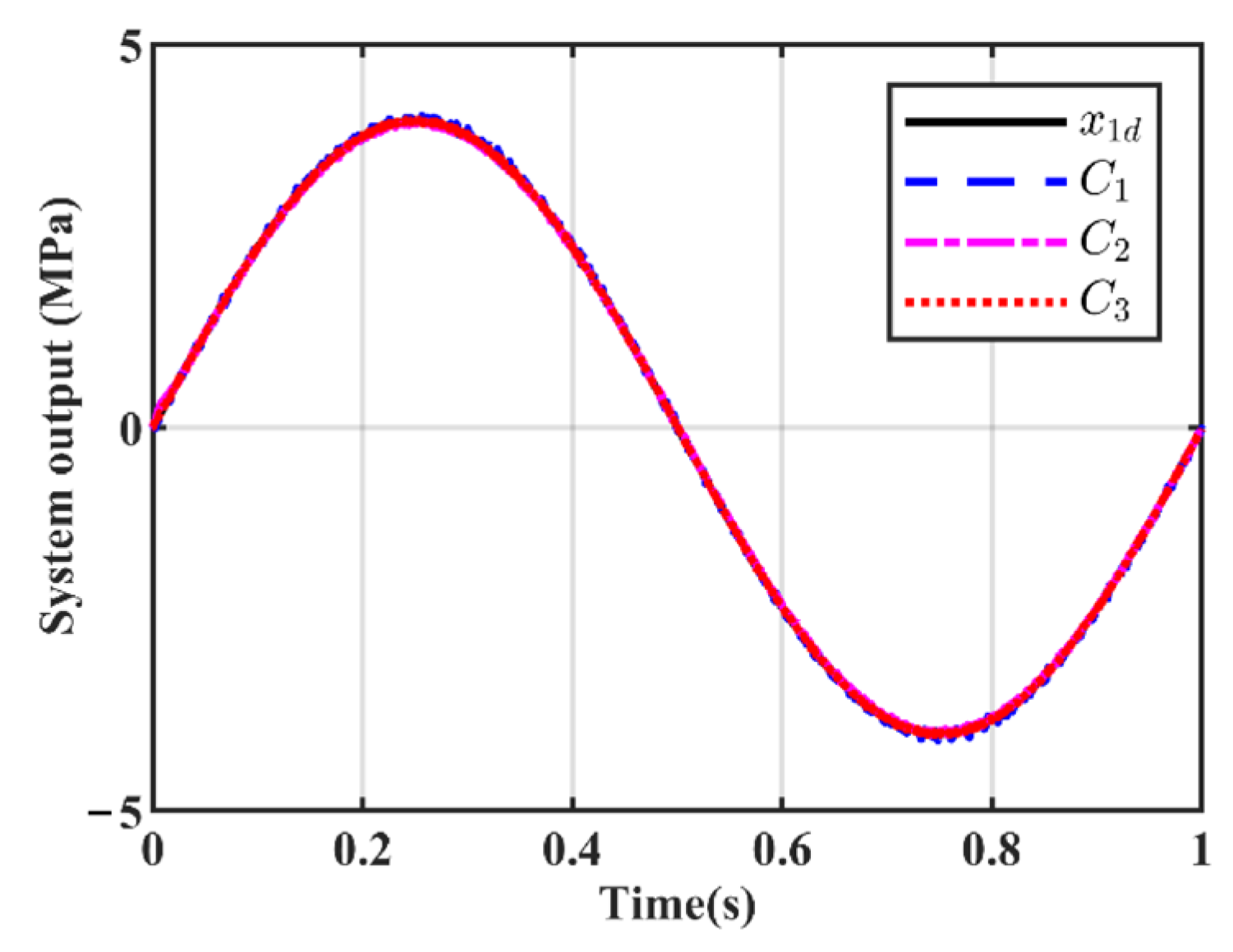
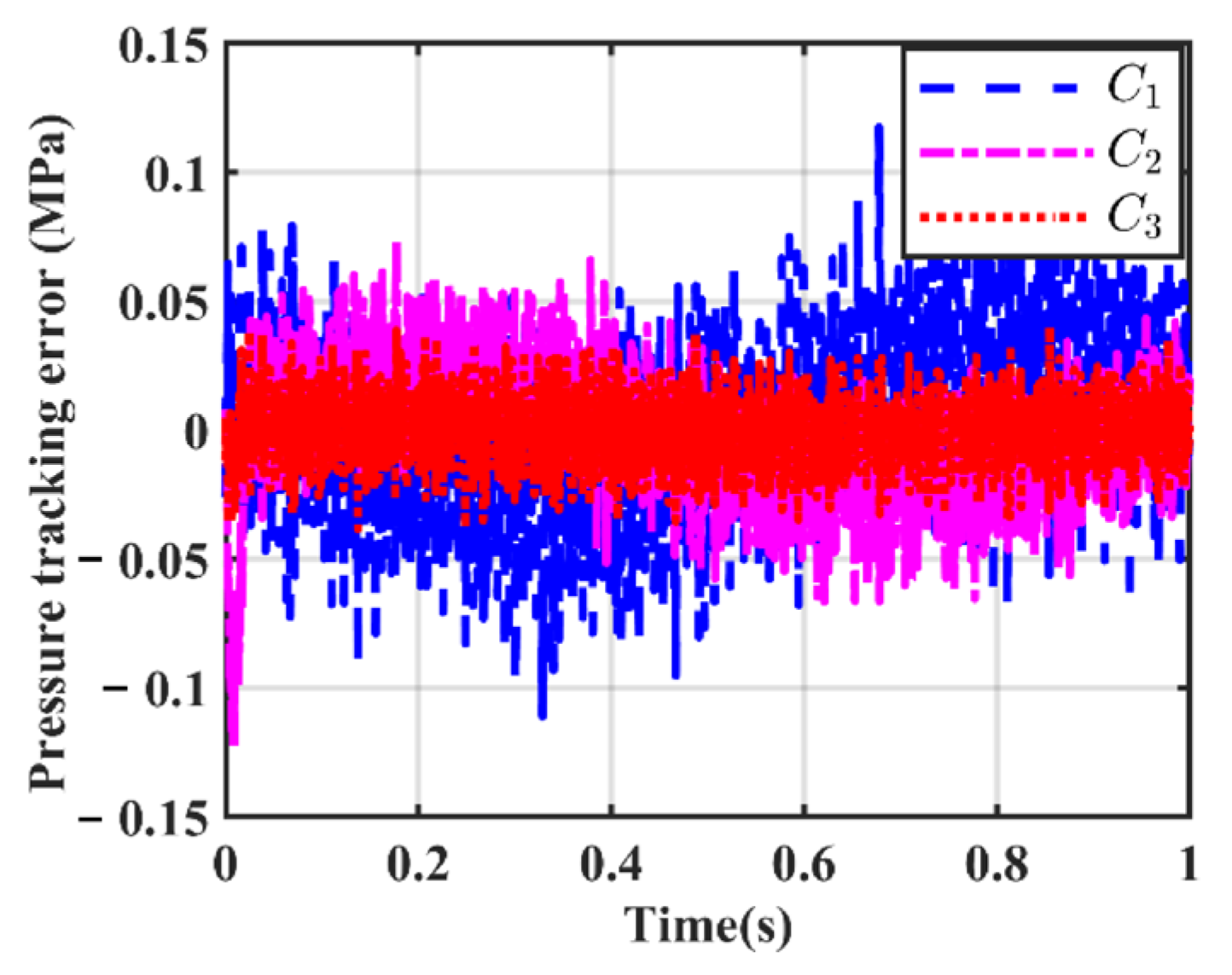
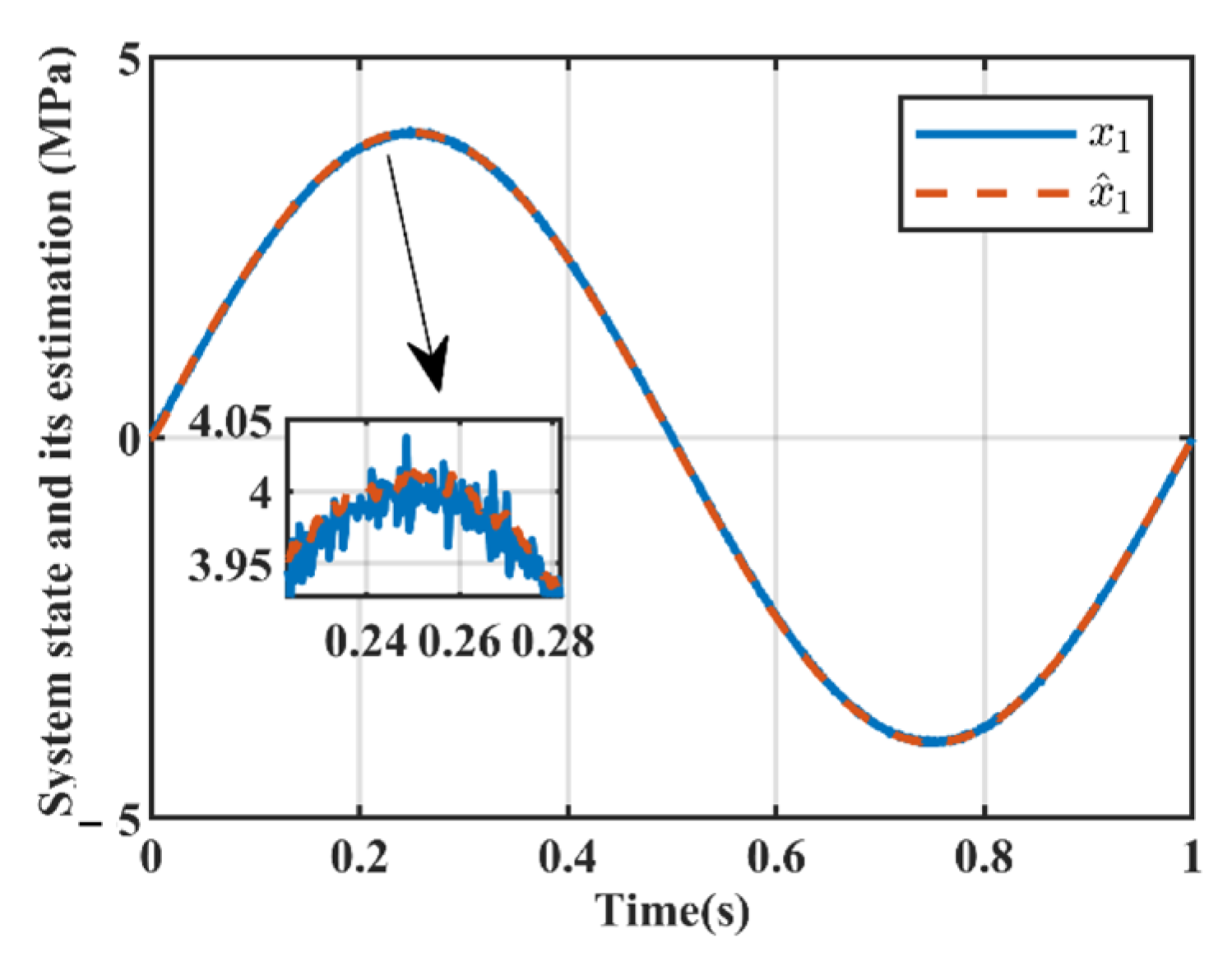
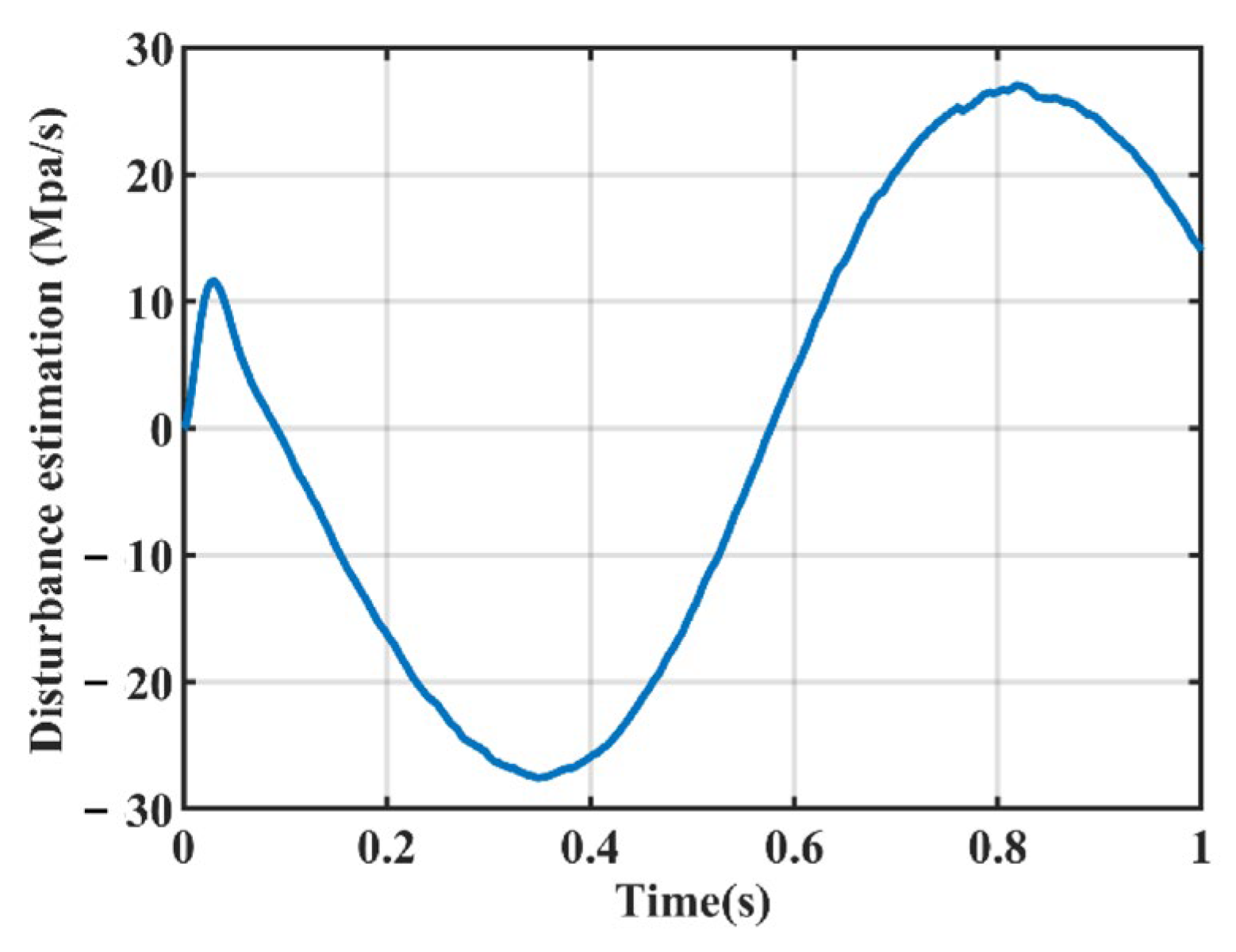
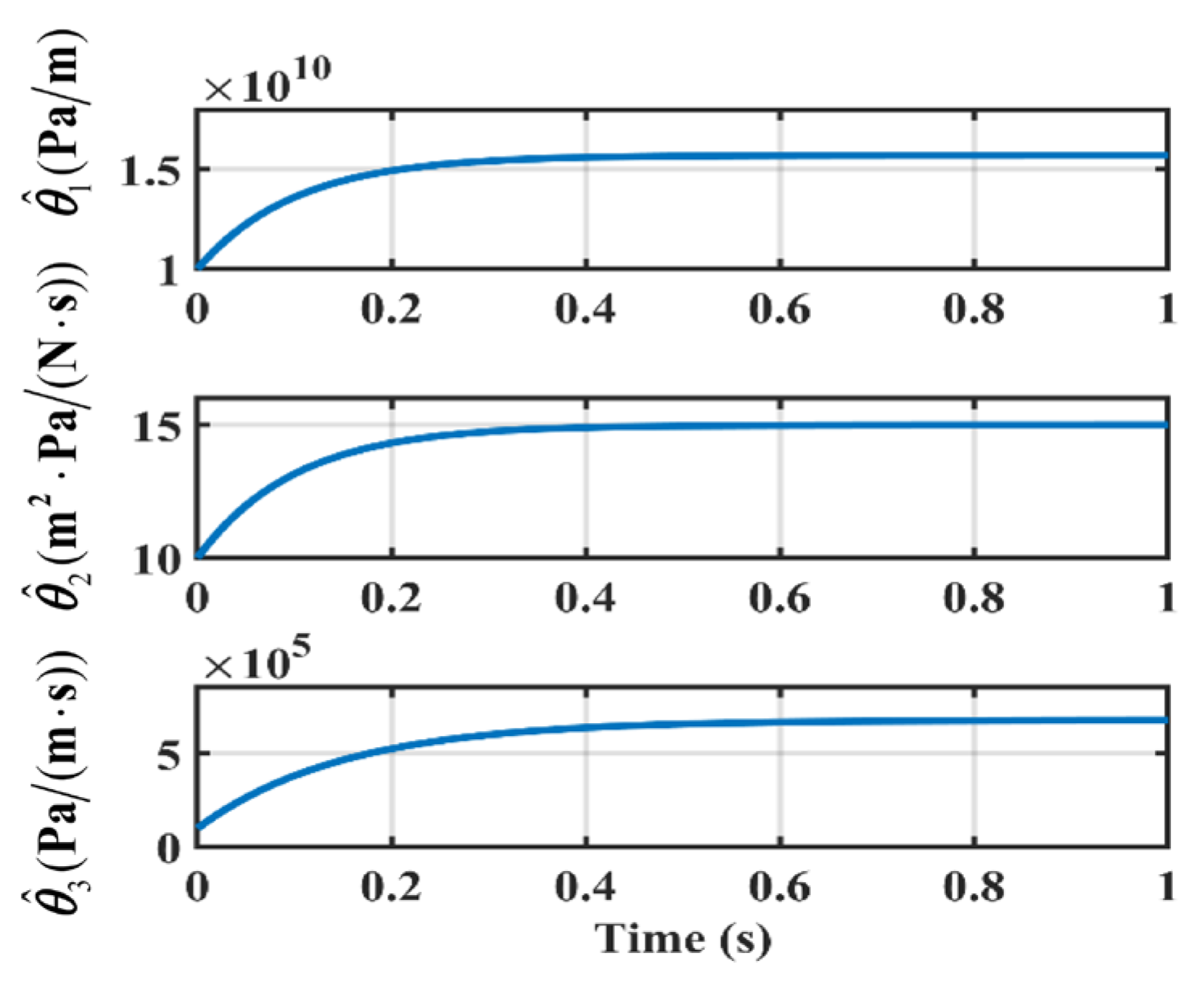
Case 2: To verify the dynamic tracking performance of the designed controllers, a sinusoidal pressure command with an amplitude of 4 MPa and a frequency of 0.1 Hz was given. The system outputs under the action of the three controllers are illustrated in
Figure 20.
Figure 21 presents the dynamic tracking errors of different controllers and
Table 7 lists the performance indices. Combining the results in
Figure 21 and
Table 7, it can be observed that in this case, Controller C3 still exhibits the optimal tracking performance.
Figure 22 shows the estimation of the system pressure by the state observer; as can be seen, consistent with the simulation results, the pressure estimation value is smoother compared with the original signal.
Figure 23 presents the estimation result of the disturbance observer, which is bounded. The estimation results of the adaptive parameters are shown in
Figure 24, all of which converge to their steady-state values within a finite time.
Figure 25 depicts the control input of the system, whose amplitude falls within the effective input range of the servo valve.