


Abstract
Wearable robotic devices for rehabilitation and assistive applications face a critical challenge: discomfort induced by prolonged pressure at the human–robot interface. Conventional attachment systems with static straps or rigid cuffs frequently exceed pain tolerance thresholds, limiting clinical acceptance and patient adherence. This study presents a novel dynamic pressure modulation system using thermally activated Twisted and Coiled Artificial Muscles (TCAMs). The system integrates a lightweight lattice structure (0.1 kg) with biocompatible silicone coating incorporating two TCAMs fabricated from silver-coated nylon 6,6 fibers (Shieldex 235/36 × 4 HCB). Electrothermal activation via 2 A constant current induces axial contraction, dynamically regulating circumferential pressure from 0.05 kgf/cm2 to 0.50 kgf/cm2 within physiological comfort ranges. Experimental validation on a wrist-worn prototype demonstrates precise pressure control, rapid response (5–10 s), and thermal safety through 8 mm Ecoflex insulation. The system enables on-demand interface stiffening during robotic actuation and controlled pressure release during rest periods, significantly enhancing comfort and device tolerability. This approach represents a promising solution for clinically viable wearable robotic devices supporting upper limb rehabilitation and activities of daily living.
1. Introduction
The rapid advancement of wearable robotic technologies has opened unprecedented opportunities for restoring motor functions in individuals affected by neurological disorders, traumatic injuries, or age-related impairments [1,2]. Exoskeletons and powered orthoses for upper-limb rehabilitation have demonstrated clinical efficacy in assisting Activities of Daily Living (ADLs), improving quality of life, and supporting intensive therapy protocols [3,4]. However, despite remarkable progress in actuation systems, control strategies, and design, a critical bottleneck persists: the Human–Robot Interface (HRI) remains a major source of discomfort, limiting pro-longed use and user acceptance [5,6].
The HRI encompasses all physical contact points between the robotic device and the human body, including straps, cuffs, and rigid anchors that must fulfill two conflicting requirements. First, they must provide sufficient mechanical coupling to effectively transmit forces and torques from the actuators to the user’s limbs without unwanted slippage or lost motion [7]. Second, they must ensure comfort by avoiding excessive pressure concentrations on soft tissues, which can lead to pain, skin lesions, or circulatory impairments during extended wear periods [8,9]. Conventional fixing systems employ passive solutions such as Velcro straps, pneumatic cuffs, or semi-rigid braces that maintain constant compression regardless of the device’s operational state [10,11]. While these approaches guarantee mechanical stability, they inevitably generate localized pressure peaks, particularly over bony prominences or regions with reduced subcutaneous tissue.
Quantitative studies on interface pressure have identified critical thresholds for user comfort and safety. Kermavnar et al. [12] reported discomfort thresholds ranging from 16 to 34 kPa and pain thresholds between 20–27 kPa in healthy subjects subjected to circumferential compression at the knee joint. Similar findings were confirmed for upper-limb applications, where prolonged pressure exceeding 25 kPa correlates with reports of numbness, tingling, and reduced adherence to rehabilitation protocols [13]. Furthermore, static fixation systems fail to adapt to dynamic changes during contraction, leading to either inadequate anchoring (if initially loose) or excessive pressure (if initially tight) [14]. This biomechanical mismatch underscores the need for adaptive interfaces capable of modulating their stiffness in real-time according to the device’s functional requirements.
Recent research has explored active pressure control strategies to address these limitations. Tamez-Duque et al. [9] developed pressure monitoring systems embedded in exoskeletons, enabling closed-loop adjustments via pneumatic inflation. Advances in flexible pressure sensor integration have enhanced monitoring capabilities and improved user comfort at the physical interface [15]. Asbeck et al. [16] implemented pneumatic control in soft exosuits for adaptive tension distribution, though pneumatic solutions introduce weight, system complexity, and portability constraints [16]. Alternative actuation approaches using shape memory alloys (SMAs) and dielectric elastomer actuators (DEAs) have been investigated for soft robotic interfaces, yet these technologies present limitations including constrained force output, slow thermal response times, or high-voltage requirements that complicate safe integration within wearable systems [17,18,19].
Twisted and Coiled Artificial Muscles (TCAMs) have recently emerged as a promising actuation technology for soft robotics and biomedical applications [20,21]. First introduced by Haines et al. [20], TCAMs are fabricated by over-twisting polymer fibers, typically nylon or polyethylene, until spontaneous coiling occurs, forming a spring-like structure. When heated electrothermally via conductive coatings (silver, copper, or carbon nanofibers), TCAMs exhibit significant axial contraction (up to 20%) due to the anisotropic thermal expansion of the polymer chains [22]. Compared to conventional actuators, TCAMs offer compelling advantages: low cost, high power-to-weight ratio (~5 kW/kg), silent operation, and inherent compliance [23,24]. Moreover, their linear muscle-like behavior and scalability make them particularly suitable for wearable applications where lightweight, flexible, and biomimetic actuation is paramount [25,26].
This work introduces a fixing system for wearable robotic devices leveraging TCAM actuation to achieve on-demand pressure modulation at the interface of the wrist. The system combines a lightweight, reticular structure designed for flexibility and wearability with biocompatible silicone cladding that houses two TCAMs while providing thermal insulation. Upon activation, the TCAMs contract axially, tightening the circumferential grip on the user’s limb to ensure rigid coupling during robot-assisted movements. Conversely, when the device is inactive or during rest phases, the TCAMs relax, reducing interface pressure below discomfort thresholds and enhancing long-term wearability. The key contributions of this study are threefold. First, we present a design methodology integrating mechanical optimization (reticular lattice), materials engineering (silicone molding), and soft actuation (TCAM fabrication) into a cohesive wearable interface solution. Second, we provide experimental validation of pressure modulation capabilities, demonstrating controlled transitions from 0.05 kgf/cm2 (baseline) to 0.50 kgf/cm2 (active state) within safe thermal limits verified through infrared thermography. Third, we discuss scalability and adaptability of the system to different anatomical sites (elbow, forearm) and exoskeleton architectures, paving the way for broader clinical translation. This article is a revised and expanded version of a paper presented at the 3rd International Conference of IFToMM for SDG (I4SDG2025), Villa San Giovanni, Calabria, Italy, 9–12 June 2025 [27].
The paper is organized as follows. Section 2 presents the design methodology of the dynamic fixing system, including lattice structure development, silicone–TCAM integration, TCAM fabrication, and material/thermal characterization. Section 3 details the experimental setup for thermal assessment and pressure modulation testing on human volunteers. Section 4 reports the quantitative results on material behavior, thermal performance, and pressure control. Finally, Section 5 discusses the findings, limitations, and future developments toward wearable robotic applications.
2. Materials and Methods
The development of the dynamic fastening system required an interdisciplinary design approach. This methodology was conceived to achieve adaptive pressure control while ensuring structural lightness, thermal safety and ergonomic comfort. The development process involved the design of a flexible lattice structure, the creation and characterization of TCAMs, the evaluation of the mechanical properties of the materials, and the definition of experimental protocols for thermo-mechanical validation. All these activities made it possible to define construction specifications and validation procedures aimed at reproducibility and optimization of the system.
2.1. Design of the Dynamic Fixing System
To achieve adaptive pressure control while maintaining a lightweight and ergonomic structure, the system consists of two main components: a flexible reticular frame providing mechanical support and breathability, and a compliant silicone layer embedding the TCAM to ensure a soft and stable interface with the user’s skin.
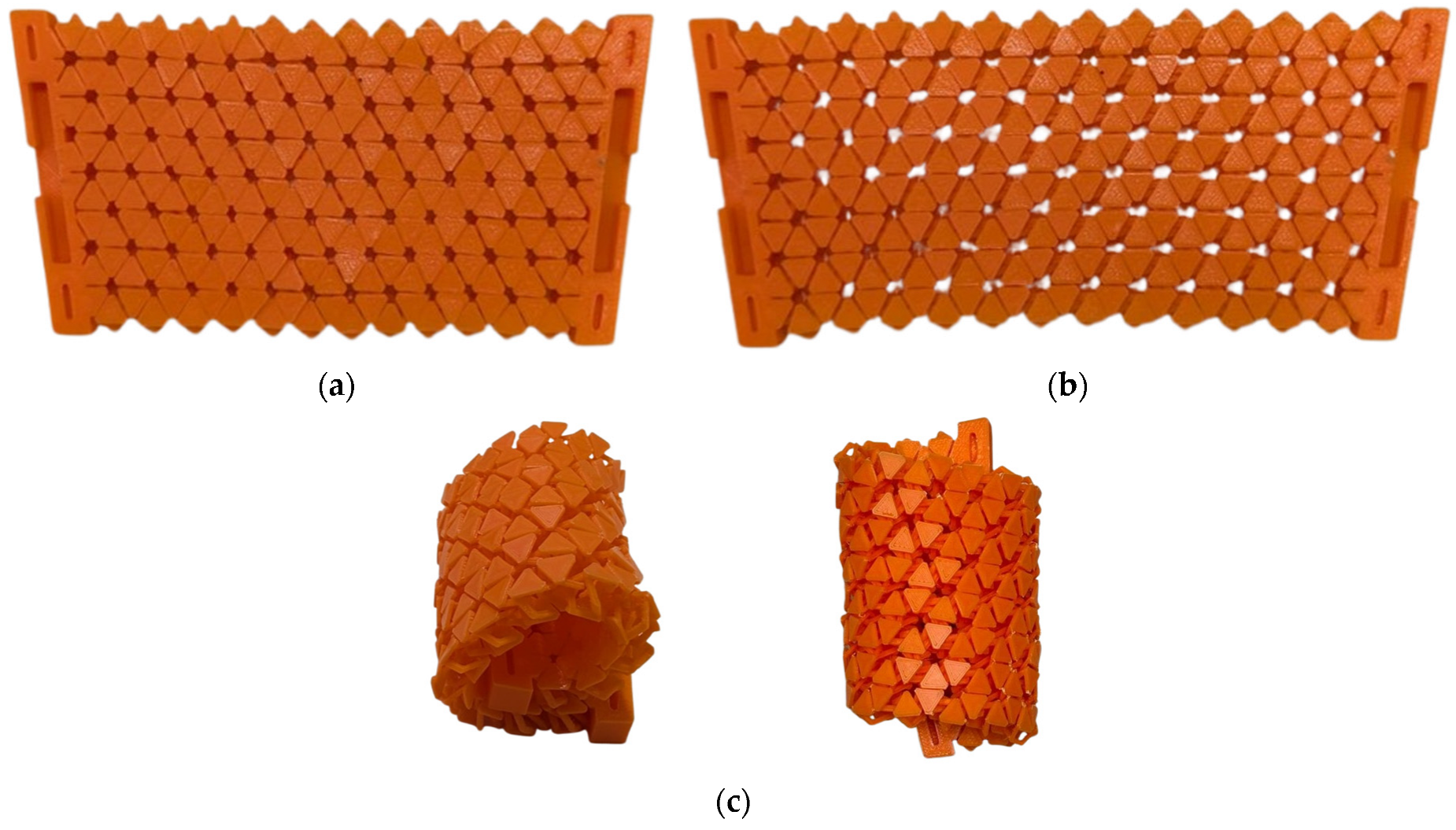
The reticular structure of the wristband was designed with overall dimensions of 125 mm in length, 60 mm in width and 8 mm in thickness, and a total mass of approximately 0.1 kg. The geometry adopts a triangular mesh topology consisting of equilateral elements with sides of 8 mm, capable of elastic deformation under bending while maintaining structural integrity under compression. The play between the meshes has been optimized to allow controlled movement of the elements, thus modulating the overall flexibility or stiffness of the structure. The density of the mesh has been strategically varied along the component: with greater filling (75%) in the load-bearing areas corresponding to the dorsal and ventral sides of the wrist and reduced filling (40%) in the lateral areas, to improve breathability and reduce overall weight. The wristband and the elastic deformation capacity of the structure are shown in Figure 1.
Figure 1.
Triangular mesh wristband design: (a) Closed mesh reticular structure; (b) Open mesh reticular structure; (c) Front and top view of the folded configuration showing the structure’s deformation capacity.
Polylactic acid (PLA) was selected as the structural material due to its favorable strength-to-weight ratio and compatibility with Fused Deposition Modeling (FDM) 3D printing, employing a gyroid infill pattern to optimize resistance to multidirectional loading. Two longitudinal grooves (12 mm wide, 6 mm deep) were integrated on the dorsal and ventral surfaces to accommodate the silicone-TCAM composite elements, with rounded edges (2 mm radius) that prevent stress concentrations and ensure seamless integration with the soft actuation layer.
The Ecoflex 00-30 AF silicone component (Smooth-On, Inc., Macungie, PA, USA) was used to provide thermal insulation and a compliant interface between the lattice structure and the skin. Given the high operating temperatures of TCAMs, which can reach up to 140 °C on the fiber surface during activation, thermal insulation is essential to ensure safe interaction with the user. This material was chosen for its low thermal conductivity, high extensibility compatible with TCAM contraction, certified biocompatibility for skin contact (ISO 10993 [28]), and antifungal properties that make it suitable for prolonged use.
The main mechanical and thermal properties of the material, determined according to ASTM D-638 [29] standard tests, are shown in Table 1.
Table 1.
Mechanical and thermal properties of PLA and Ecoflex 00-30 AF silicone rubber.
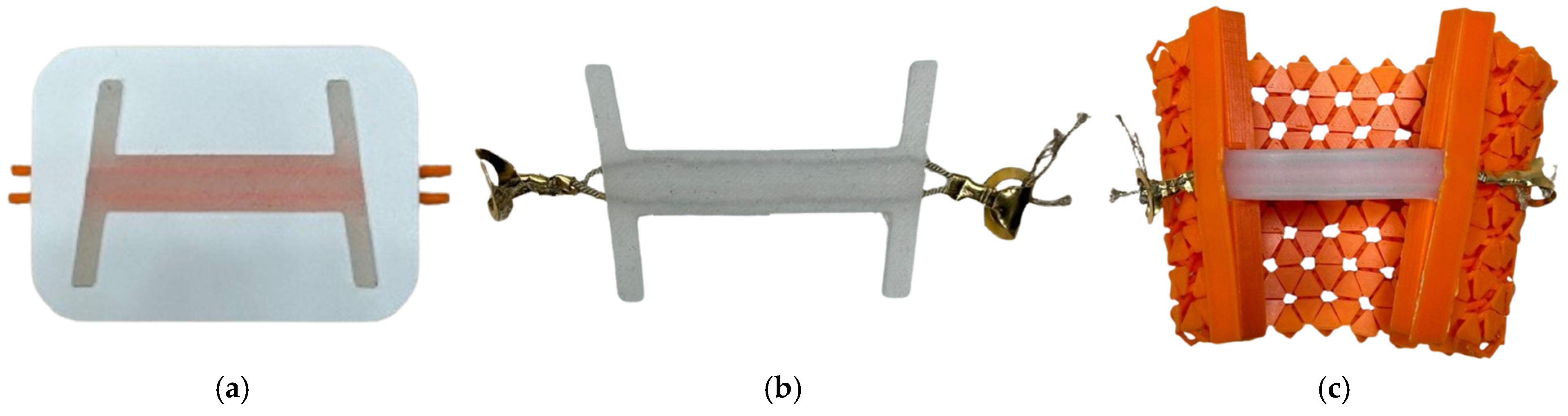
A custom mold was designed to ensure an 8 mm silicone thickness, optimizing thermal insulation while maintaining the component’s flexibility. Two parallel cylindrical rods were inserted to form the TCAM housing channels, while the contact surface was anatomically shaped to fit the average human wrist. The silicone casting procedure followed the manufacturer’s protocol, resulting in a part with a mass of 0.045 kg that contributes minimally to the overall weight while ensuring thermal insulation and mechanical flexibility. As shown in Figure 2, the process includes mold fabrication, silicone casting, component extraction with integration of the TCAMs into the internal channels, and final assembly into the wristband.
Figure 2.
Overview of the TCAM integration process: (a) 3D-printed ABS mold for silicone casting; (b) silicone component with TCAMs inserted in the internal channels; (c) fully assembled system.
2.2. TCAM Fabrication and Integration
The TCAMs were produced following established protocols, through a workflow divided into four sequential phases: precursor selection, twisting, winding and annealing.
A silver-coated nylon 6,6 multifilament yarn (Shieldex 235/36 × 4 HCB, Shieldex Trading USA, Inc.) was used as the precursor material [30]. The silver coating gives yarn electrical conductivity with a surface resistivity of approximately 40 Ω/m, enabling electrothermal actuation through Joule heating. Nylon 6,6 has anisotropic thermal expansion, characterized by a negative coefficient along the fiber axis (), which causes axial contraction in response to heating. The yarn architecture comprises 144 nylon filaments (average diameter ≈ 30 μm), organized into four layers of 36 filaments each. The linear density of the material is 235 dtex (23.5 g per 10,000 m), corresponding to an equivalent diameter of approximately 530 μm for the complete bundle.
The TCAMs were created using a customized motorized torsion apparatus, as described in [31], consisting of a DC motor with digital encoder (12 V, epicyclic ratio 1:50) to ensure controlled rotation, a linear guide (500 mm stroke) to maintain axial alignment, and an Arduino based controller for speed adjustment and cycle counting. A single Shieldex 235/36 × 4 HCB yarn was twisted and coiled with an S-twist (right) to form a TCAM. The precursor was secured between the motor shaft (upper end) and a weight support (lower end), applying a constant tensile load of 180 g to maintain uniform tension during twisting. The motor operated at 300 rpm for 40 s, introducing 200 rotations into a fiber with an initial length of 260 mm, corresponding to a torsion density of approximately 833 rotations/m. The insertion of torsion generates deformation energy that accumulates until it reaches a critical threshold, defined by the following equation:
where E is Young’s modulus of nylon 6,6 (approximately 3.5 GPa), I is the second moment of area, and F is the applied tensile force.
When the critical threshold was exceeded, the fiber wound around itself, forming a helical structure like a spring [32]. As the torsion increased beyond the critical point, the winding began with local instabilities and propagated bidirectionally until the entire fiber was transformed into a compact helix. The resulting structure measured approximately 65 mm in length (≈25% of the initial length), with a diameter of 0.8 mm, a pitch of 0.65 mm and a total of 94 turns. The winding angle, defined as the angle of the propeller relative to the horizontal plane, was measured using optical micrographs (Leica Microsystems, Wetzlar, Germany) and found to be 14.45 ± 0.22° (mean ± standard deviation, n = 10).
Immediately after winding, the TCAM exhibited residual stress due to the plastic deformation of the nylon chains. To stabilize the geometry and fix the spiral configuration, an annealing protocol was applied [33,34]. The tensile load was increased to 230 g (+28% compared to the production phase) to slightly extend the coil and separate the turns. Electrothermal annealing was performed by applying a constant current of 0.7 A for 12 ON/OFF cycles, each consisting of 60 s of heating and 60 s of cooling, with a duty cycle of 50%. This current was empirically defined to reach temperatures up to 140 °C, lower than the melting point of nylon (≈260 °C), sufficient to promote molecular relaxation without altering the crystalline phase. After annealing, the TCAM was left to stabilize for 10 min at room temperature under load. The manufacturing process is illustrated in Figure 3.
Figure 3.
Sequential stages of the TCAM manufacturing process (Reproduced from [31]).
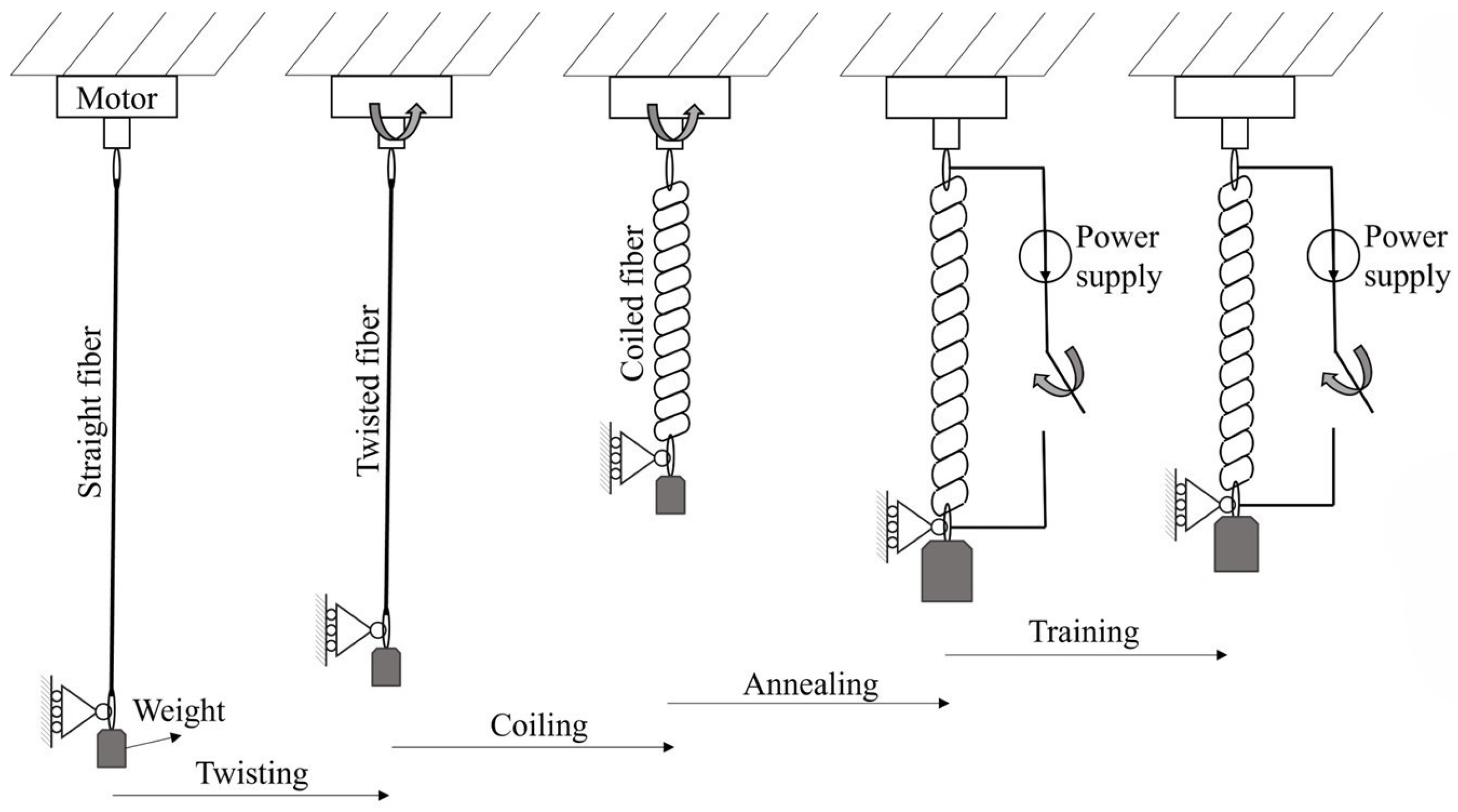
Subsequent measurements showed a final length of approximately 75 mm, an unchanged spiral diameter (≈0.8 mm) and an active stroke of 12 mm, corresponding to a 16% contraction compared to the length when 230 g is applied to the muscle.
The two TCAMs obtained were inserted into the preformed channels of the silicone component and connected to a common connector, forming a parallel electrical configuration. The silicone–TCAM composite was then integrated into the lattice structure and secured by interlocking covers at selected points, ensuring mechanical stability while maintaining high overall flexibility. The assembled system has a total mass of 0.145 kg, operates with two TCAMs in parallel, requires a power supply of 3–5 V at 2 A, and has a response time of approximately 10 s for a contraction between 10% and 90%.
3. Experimental Setup
This section presents the experimental results from a systematic characterization of the TCAM-based dynamic fixation system. Results are organized into three main aspects: material mechanical properties, thermal safety, and pressure modulation performance. Material testing confirms PLA suitability for structural support and Ecoflex silicone for compliant interfacing. Thermal analysis demonstrates that the two-TCAM configuration maintains surface temperatures within safe operational limits. Pressure modulation experiments on human volunteers quantify dynamic range, response speed, and repeatability. Overall, these findings validate the system’s technical feasibility, safety, and potential for clinical translation, supporting future development.
3.1. Material Characterization
The experimental characterization of the constituent materials was conducted to verify the manufacturer’s specifications and determine the mechanical properties relevant to the system design. Uniaxial tensile tests were performed on both the PLA structural component and the Ecoflex 00-30 AF silicone rubber, following ASTM D638 standard [29].
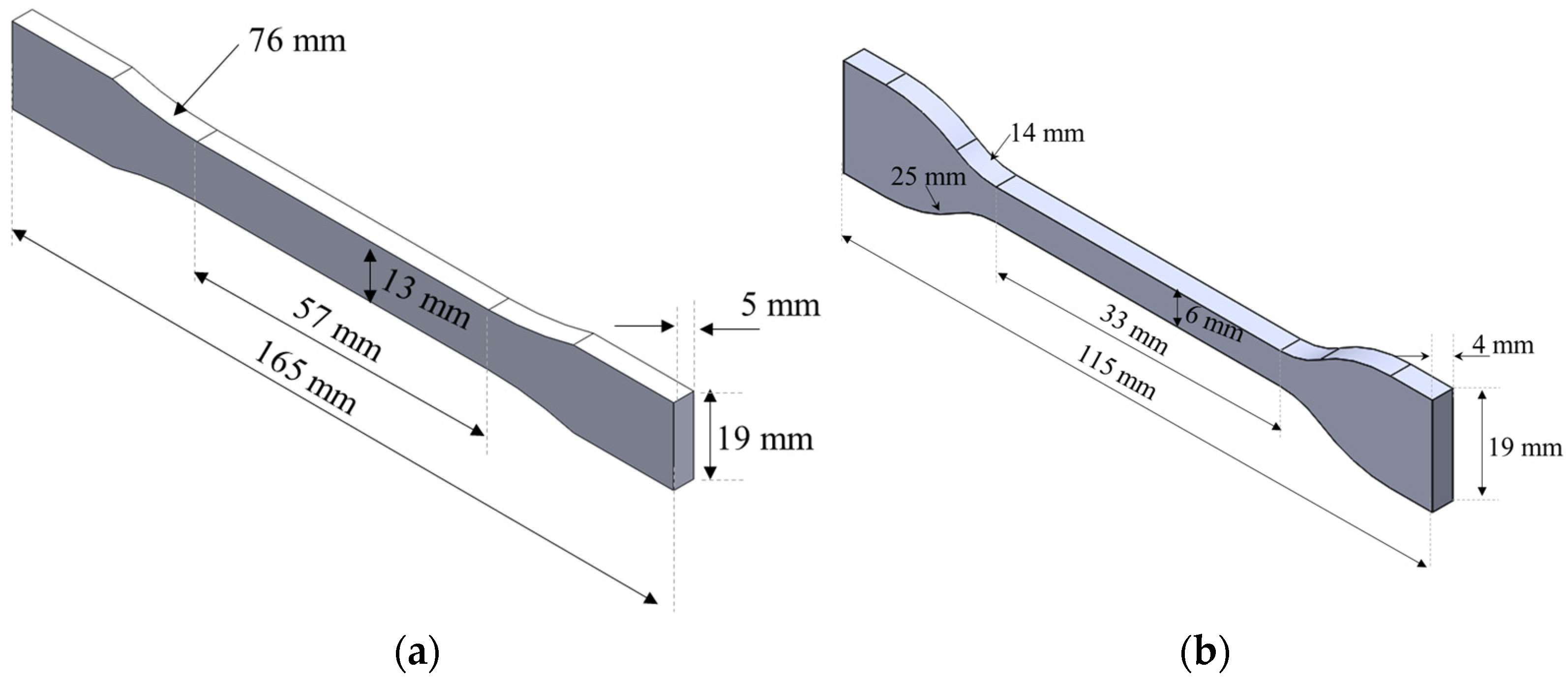
The PLA samples (Figure 4a) were produced by 3D printing using the Type I geometry specified by the standard, while the silicone specimens were fabricated according to the ASTM D638 [29] requirements for elastomeric materials (Figure 4b).
Figure 4.
Tensile test specimens: (a) PLA (ASTM D638 Type I); (b) Ecoflex silicone (ASTM D638 Type IV).
Tensile tests were conducted using an MTS Criterion Model 42 electromechanical testing machine (MTS Systems Corporation, Eden Prairie, MN, USA), testing three samples for each material to assess repeatability and production consistency.
For PLA, a 5 kN load cell and a crosshead speed of 2 mm/min were used to ensure quasi-static loading conditions. Tests on silicone were performed with a 100 N load cell and a crosshead speed of 25 mm/min, chosen to limit viscoelastic effects thus ensuring high strain rate values. The force-displacement data were acquired at a sampling frequency of 100 Hz for both materials.
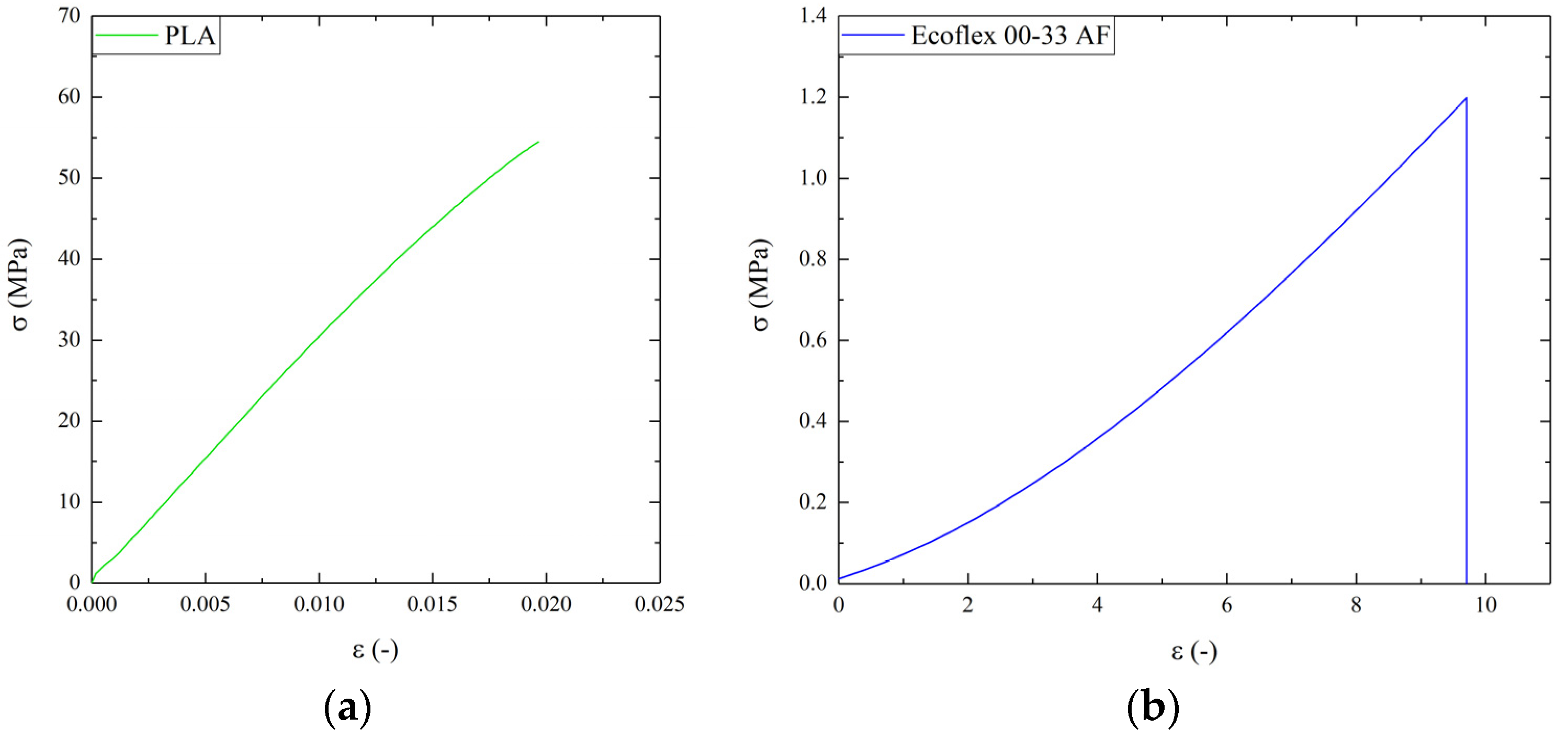
PLA deformation was measured using Digital Image Correlation (DIC). Before testing, the surface of the samples was prepared with a high-contrast spot pattern, obtained using a black spray, to ensure accurate tracking of deformations. On the other hand, for the silicone samples, deformation was calculated from the displacement of the crosshead, as the highly deformable nature of the material does not allow a stable spot pattern to be maintained during the test. Representative stress–strain curves obtained from tensile testing of PLA and Eco-flex silicone rubber are shown in Figure 5.
Figure 5.
Stress–strain curves: (a) PLA showing brittle fracture at ~50 MPa and 1.8% strain (n = 3); (b) Ecoflex exhibiting hyperelastic behavior with >100% elongation.
PLA exhibits characteristic brittle behavior with linear elasticity, consistent with the semicrystalline thermoplastic nature of polylactic acid (Figure 5a). Fracture occurs abruptly without significant plastic deformation. Stress–strain curves demonstrate excellent repeatability between samples, as evidenced by the low deviation values in Table 2. Silicone, on the other hand, exhibits nonlinear hyperelastic behavior typical of cross-linked elastomers (Figure 5b), with a monotonic increase up to extreme strains (~1000%), reaching approximately 1.2 MPa before failure. The ability to withstand strains greater than 900% confirms its exceptional extensibility, accommodating the contraction of TCAM (16%) with a large safety margin. Mechanical properties are summarized in Table 2.
Table 2.
Mechanical properties from tensile testing (mean ± SD, n = 3).
Mechanical characterization results confirm the suitability of both materials for the dynamic fixation system. The PLA component provides stiffness and strength, unattainable with soft materials (e.g., TPU), to maintain dimensional stability and transmit forces from the TCAM actuators to the limb interface, while the lattice structure offers flexibility to adapt to the wrist anatomy. Ecoflex silicone provides the necessary compliance and extensibility as a soft interface and insulation layer, demonstrating the ability to withstand large elastic deformations compatible with TCAM contractions. The low modulus of silicone compared to PLA (approximately three orders of magnitude lower) allows for the combination of rigid load transmission with uniform and comfortable pressure distribution, meeting requirements for mechanical efficiency and user comfort.
3.2. Thermal Analysis of TCAM Configurations
To ensure thermal safety and verify silicone insulation effectiveness, thermal characterization was performed using infrared thermography. A FLIR E76 thermal imaging camera (FLIR Systems, Wilsonville, OR, USA) was employed for non-contact temperature measurements. The camera was positioned perpendicular to the wristband surface at 1.0 m distance to ensure adequate spatial coverage while maintaining measurement accuracy. White silicone rubber (Ecoflex 00-30 AF) emissivity was calibrated by comparing infrared thermography data with measurements from a Type K thermocouple (Omega Engineering, Norwalk, CT, USA) applied directly to the surface, yielding an emissivity value of 0.89. Thermal images were acquired and synchronized with the pressure acquisition system to enable correlation between thermal and mechanical performance during device operation.
Three configurations were analyzed to evaluate TCAM quantity and insulation strategy influence on thermal safety and performance, as summarized in Table 3.
Table 3.
Experimental configurations for thermal characterization.
During each test, TCAMs were supplied with constant current values of 0.7 A, 1.4 A, and 2.1 A for configurations A, B, and C, respectively, as reported in Table 3. Each activation phase was followed by 60 s of passive cooling to evaluate both heating and cooling characteristics. Thermal images were processed using FLIR Tools software (Version 6.x, FLIR Systems, Wilsonville, OR, USA) to extract temperature profiles over time and assess spatial heat distribution on the wristband surface. According to ISO 13732-1 [34], the safety threshold for prolonged skin contact was established at 45 °C, representing the temperature above which thermal discomfort and potential tissue damage can occur with extended exposure [35].
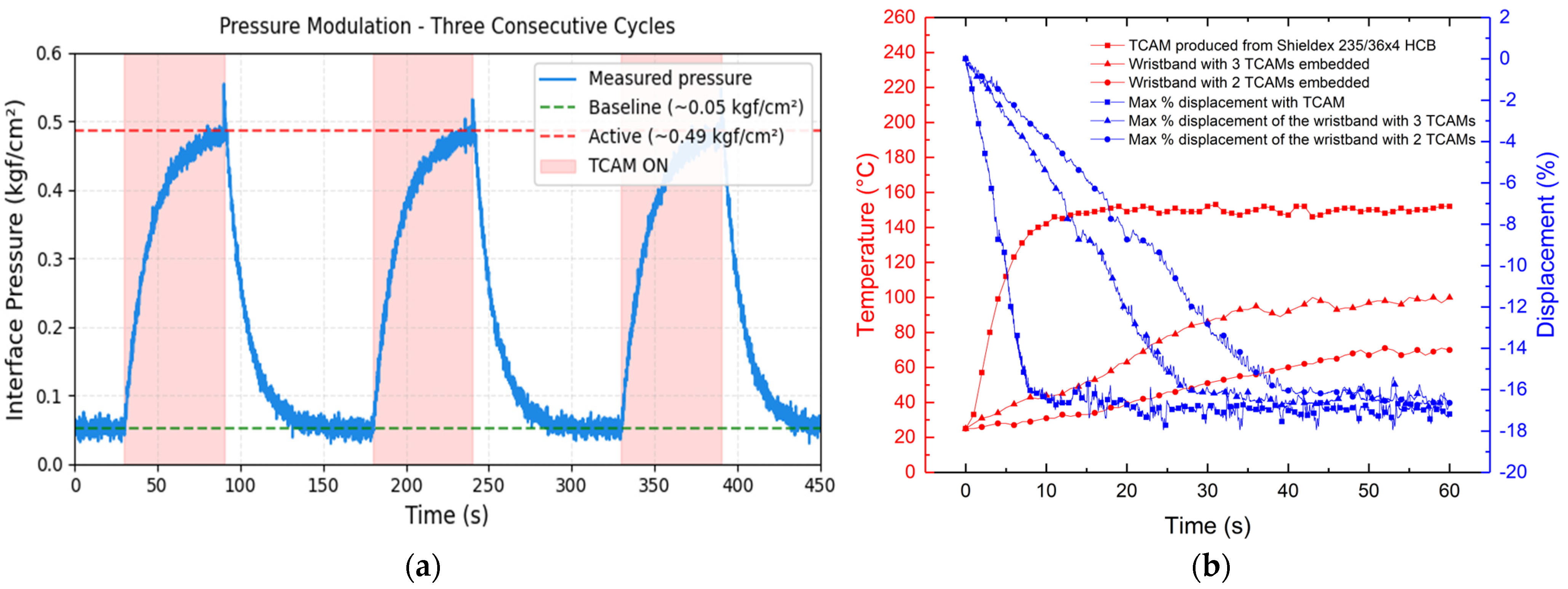
The temporal evolution of temperature in all three configurations is presented in Figure 6, showing both the pressure modulation profile (Figure 6a) and thermal trend with actuator displacement (Figure 6b), while Table 4 provides quantitative comparison of main thermal performance metrics. Although measured activation and relaxation times may appear high for typical wearable robotics, they are compatible with rehabilitation scenarios requiring slow and controlled movements. Nevertheless, the proposed actuation system could be adapted for applications involving faster motions, provided that adequate cooling mechanisms are incorporated to reduce thermal response times.
Figure 6.
Experimental results: (a) Pressure modulation over 3 cycles (pink-shaded regions indicate periods of TCAM activation); (b) Surface temperature and actuator displacement trend for A-C configurations during 60 s activation followed by 60 s cooling.
Table 4.
Thermal performance of TCAM configurations.
The A configuration showed a rapid increase in temperature, reaching around 152 °C within 15 s of activation. This result demonstrates the absolute need for thermal insulation to ensure safety in HRI, as direct fiber–skin contact would cause immediate damage to tissues. As shown in Figure 6b, thermal evolution is related to the displacement profile, with the maximum temperature reached at the maximum contraction.
The B configuration showed significantly higher thermal performance. The maximum surface temperature reached 70 °C after 60 s of continuous activation, a 54% reduction compared to the non-isolated configuration. The safety threshold of 45 °C was exceeded only after about 22 s, ensuring an adequate operating margin. This delay enables safe operation for short cycles (15–20 s), which is typical of dynamic pressure modulation strategies. As shown in Figure 6a, the cycles maintain a clear transition between the basal (~0.05 kgf/cm2) and active (~0.49 kgf/cm2) state. The combined analysis in Figure 6b shows that the mechanical response of the actuator remains stable even during thermal rise, confirming the absence of performance degradation. The thermal distribution is highly uniform, with gradients of less than 5 °C between the different areas of the cuff, as shown by infrared thermography. This uniformity demonstrates the effective diffusion of heat in the silicone layer and the absence of hot spots. The two-sided geometry of TCAM generates symmetrical heat sources, while the thermal conductivity of silicone (0.20 W/mK) ensures homogeneous thermal management over the entire surface.
The C configuration reached approximately 98 °C after 45 s, exceeding the safe threshold of 45 °C in just 12 s. The increase in the number of actuators generated an excess of heat greater than the dissipation capacity of the insulation layer. In addition, it showed higher thermal gradients (up to 8 °C), indicating a less uniform distribution. The displacement profile (Figure 6b), while showing a greater contractile force than configuration B, is limited by the excessive thermal load. These results demonstrate that increasing the number of TCAMs without changing thermal management compromises safety without proportional improvements.
Configuration B provided the optimal balance between performance and thermal safety, maintaining temperatures below risk thresholds during operating cycles while ensuring adequate contractile force required pressure modulation. The 22 s safety margin enables flexible protocols adaptable to different rehabilitation needs, while uniform heat distribution reduces local stress and improves long-term comfort. Volunteer feedback (n = 3) confirmed mild warmth perception without discomfort, even during prolonged 60 s cycles. No adverse skin reactions occurred, validating thermal insulation effectiveness. All subsequent tests employed configuration B as the validated design.
3.3. Pressure Modulation Testing Protocol
After thermal validation and selection of the optimal two-TCAM configuration, a comprehensive characterization of dynamic pressure modulation capabilities was conducted to quantify system performance under realistic conditions of use. The experimental setup was designed to evaluate the performance of the wristband under conditions representative of actual use as a wearable device.
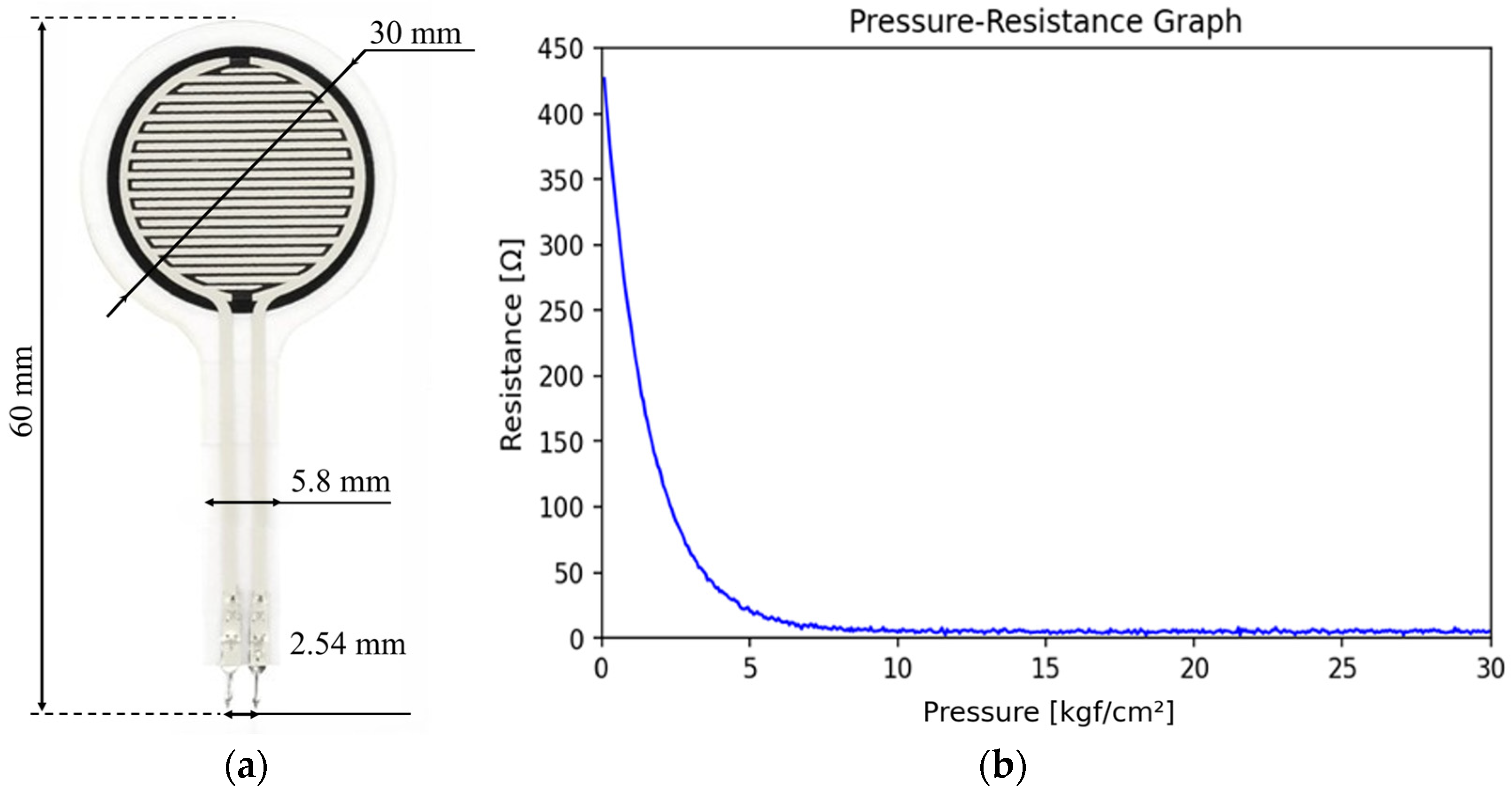
The interface pressure between the wristband and forearm was measured using a flexible resistive pressure sensor MD30-60 (Suzhou Leanstar Electronic Technology Co., Suzhou, China), shown in Figure 7a. The sensor, with a 33 mm active area and only 0.3 mm thickness, offers high flexibility and minimal interference with wrist movement or comfort. It operates over a 0–10 kgf force range with a resistance range of 10–450 Ω, featuring a response time below 10 ms and repeatability within ±3%. The sensor’s 3.3 cm2 active area allows conversion of measured force to interface pressure (0–3.03 kgf/cm2 range). Based on the piezoresistive principle, the sensor records resistance changes corresponding to the applied normal force, exhibiting the typical nonlinear piezoresistive response.
Before testing, the sensor was incrementally calibrated using known loads to correlate resistance and pressure. The resulting calibration curve (Figure 7b) showed the typical nonlinear piezoresistive behavior, with greater sensitivity at low pressures [27].
During the tests, the pressure sensor was placed on the ventral (anterior) surface of the forearm, about 3 cm distal to the crease of the wrist, in correspondence with the area of maximum contact pressure between the cuff and the limb. This anatomical location was selected based on preliminary tests that indicated the highest concentration of pressure at this point during TCAM activation.
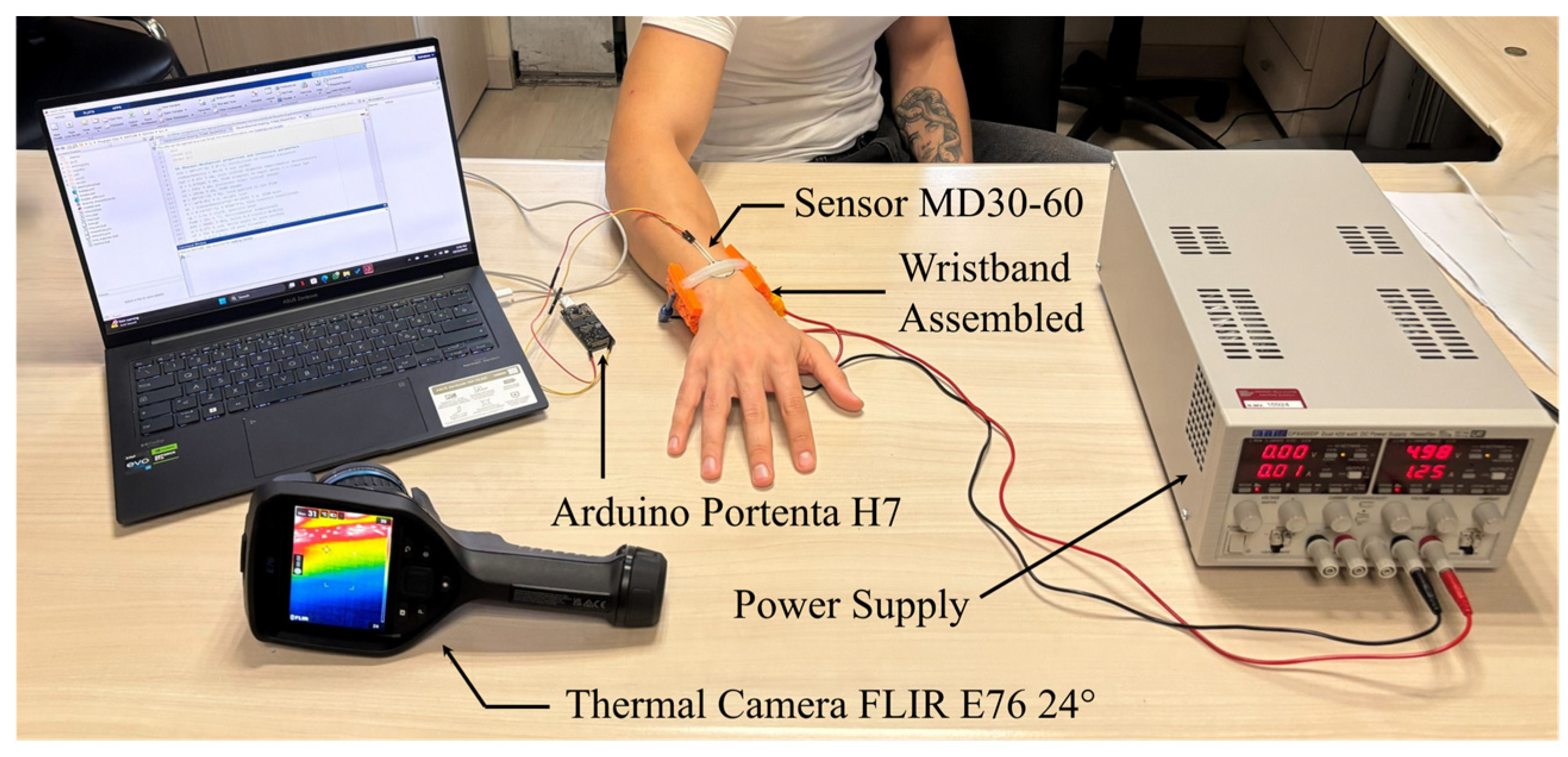
Acquisition and control were handled by an Arduino Portenta H7 board (Arduino, Ivrea, Italy), which collected sensor data and managed TCAMs. The power supply to the TCAMs, on the other hand, was provided by an Aim TTi CPX400DP (Aim-TTi, Huntingdon, UK) constant current power supply, set to 2.0 A, with the two actuators connected in parallel for synchronized thermal expansion.
The experimental protocol involved three consecutive cycles to assess transient response and steady-state repeatability. Each cycle comprised three phases: a 30 s baseline phase with inactive TCAMs to measure passive silicon pressure, a 60 s activation phase with constant current of 2.0 A at TCAMs to induce thermal contraction and pressure rise, and a 60 s relaxation phase with TCAMs off to allow cooling and return to the extended state. The total duration of each cycle was 150 s, allowing the dynamics of contraction and recovery to be analyzed, while the triple repetition provided evidence of repeatability. The full subject test took about 5 min, including preparation.
Figure 7.
MD30-60 flexible pressure sensor: (a) view of the sensor with its dimensions and construction geometry; (b) pressure-resistance characteristic curve obtained from calibration [27].
The experiments were conducted in healthy adult volunteers (n = 3), who provided verbally informed consent in accordance with the guidelines. Participants did not have vascular disorders, neurological conditions, or upper limb pathologies that could affect pressure tolerance or the validity of measurements. Validation in this study was limited to a proof-of-concept assessment of the proposed device. Future developments will involve a broader range of volunteers with diverse health conditions, including a sample size of at least 15 participants who will undergo extended laboratory testing across multiple sessions. Comprehensive clinical evaluation will be required before considering deployment in real rehabilitation settings.
During the tests, the subjects were seated comfortably with their forearm resting and their wrist in a neutral position, keeping their muscles relaxed to avoid interference with pressure readings. At the end of the three-cycle protocol, participants provided subjective assessments of comfort and reported any feelings of discomfort, pain, or thermal perception. The full experimental setup is shown in Figure 8.
Figure 8.
Experimental setup adopted during the tests.
4. Results and Discussion
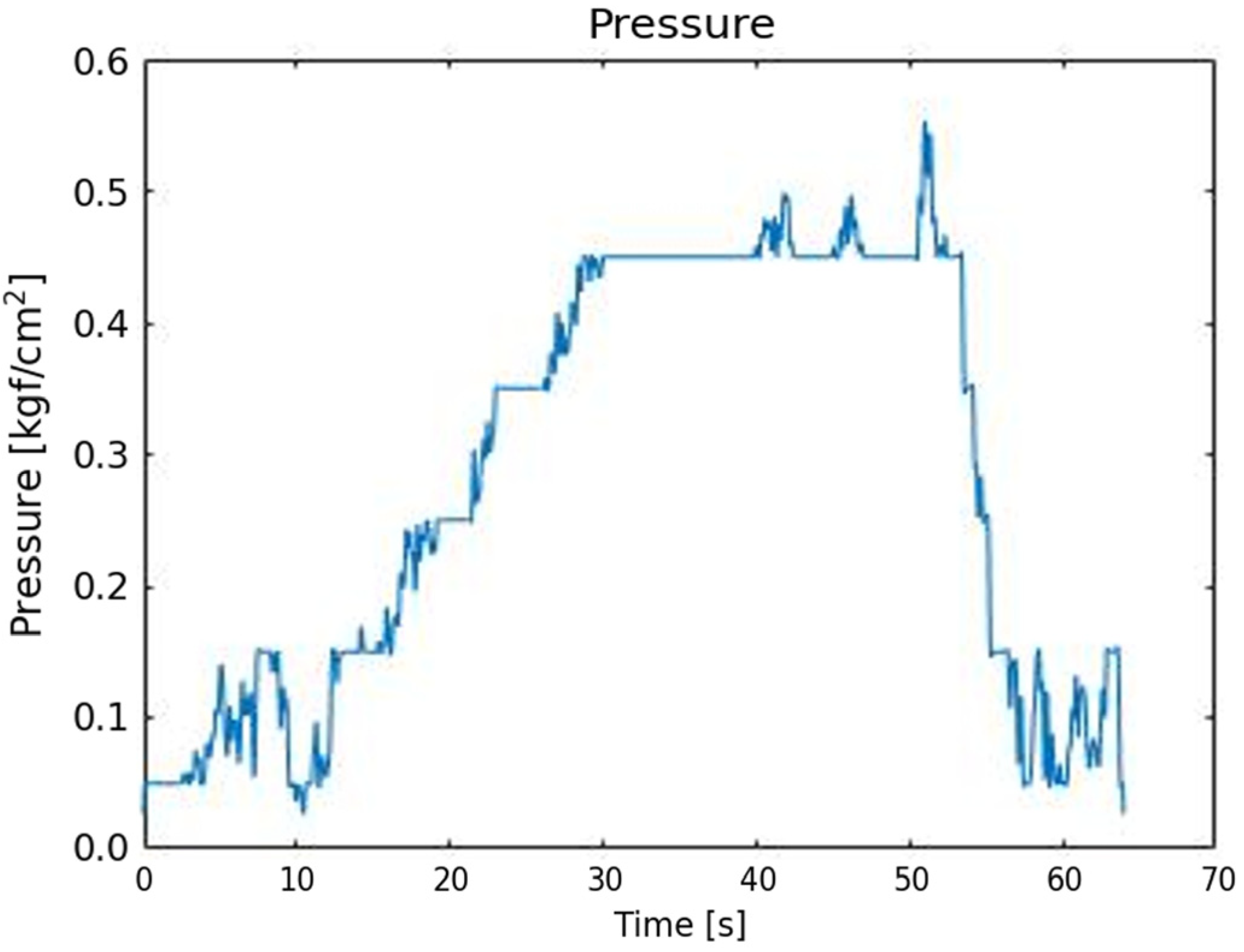
The pressure–time profiles acquired during three consecutive actuation cycles, shown in Figure 6a, clearly illustrate the dynamic response of the proposed system.
In the passive state with TCAM deactivated, the circumferential pressure generated by the elastic tension of the silicone alone measured 0.052 ± 0.008 kgf/cm2 (mean ± standard deviation, n = 9 tests on 3 volunteers). This value has been deliberately kept low to ensure comfort during prolonged use, while ensuring sufficient contact to prevent the device from slipping. When activated with a constant current of 2.0 A, the pressure increased progressively following an exponential kinetics characteristic of thermal systems, reaching 0.487 ± 0.031 kgf/cm2 after 60 s. This corresponds to a 9.4-fold increase over baseline, with an absolute gain of 0.435 kgf/cm2 (42.6 kPa). The maximum value achieved remains well below the pain thresholds reported in the literature (0.7–0.9 kgf/cm2), while ensuring an effective mechanical coupling for the transmission of forces between system and limb during assistive tasks. The temporal dynamics showed an asymmetrical behavior between activation and relaxation. Warm-up took 48 ± 6 s to reach 90% of maximum pressure, while cooling down took place more quickly in 35 ± 5 s. This difference reflects the underlying physical mechanisms: heating is controlled by electrical input and Joule heat storage, while cooling takes advantage of passive convective dissipation, which is more efficient due to the higher initial thermal gradient.
Figure 9 shows in detail the evolution of pressure during a single cycle, clearly highlighting the exponential upward and downward curves [27].
Figure 9.
Detailed pressure profile during single TCAM activation cycle showing progressive increase from baseline ~0.05 kgf/cm2 to active ~0.50 kgf/cm2 [27].
Statistical analysis demonstrated excellent repeatability, with coefficients of variation of 15.4% for baseline and 6.4% for focus. Lower variability in the active state indicates that forces generated from the actuator dominate over individual anatomical variations. Intra-subject repeatability was higher, with average CV (Coefficient of Variation) less than 5%, confirming stability and absence of degradation through cycles. Inter-subject variability, mainly due to differences in forearm circumference and compliance, did not compromise performance: all volunteers showed similar profiles with comparable dynamic ranges.
Subjective evaluations of the participants showed a good level of acceptance of the device. The passive state was described as comfortable and non-invasive, while during activation the subjects perceived a gradual sense of compression accompanied by mild warmth, without discomfort or pain. No volunteers requested early termination of the tests, confirming that the interface pressure remains within safe and comfortable limits.
Comparison with alternative technologies (Table 5) highlights the strengths of the TCAM system. With a 16% stroke and moderate power requirements (2 A at 3–5 V), the system achieves the lowest mass gain (+0.145 kg) among the solutions analyzed. The main limitation is the response time of about 50 s, which restricts applicability to contexts where state changes occur on time scales of minutes, such as in rehabilitation protocols where exercises are alternated or levels of assistance are adjusted.
Table 5.
Performance comparison of actuation technologies for wearable robotic interfaces.
The modulation ratio of 9.4 times far exceeds typical requirements (3–5 times) for dynamic fixation applications, ensuring sufficient operating headroom for different user populations with varying anatomical characteristics and tissue properties. This performance reserve also offers flexibility for future applications to other anatomical districts with different biomechanical requirements and loading conditions.
In summary, the experimental characterization established the following performance parameters: pressure range from 0.052 to 0.487 kgf/cm2 (9.4×), response times of 48 s (activation) and 35 s (relaxation), repeatability with CV < 6.5%, maximum surface temperature of 70 °C reached after 60 s, comfort rating of 7.3/10, added mass of 0.145 kg and consumption of 8–10 W during activation. These results demonstrate that the system achieves design objectives, providing effective pressure modulation while maintaining safety and comfort, and confirms the feasibility of integration into rehabilitation and assistive exoskeleton devices with adaptive human–robot interfaces.
5. Conclusions
This study presents the development and validation of a TCAM-based dynamic fastening system for wearable robotic devices. The system allows adaptive modulation of the interface pressure, overcoming the limitations of conventional constant compression belts that compromise user comfort. The proposed approach allows the transition from a yielding state at rest to a rigid anchor during robotic activity. The project integrates a lightweight lattice structure fabricated by additive manufacturing, biocompatible silicone for thermal insulation and thermally operated TCAM that generate controlled circumferential compression. Experimental characterization on a small cohort of human volunteers demonstrated a pressure modulation range of 9.4×, high repeatability (<6.5% variation) and surface temperatures within safe limits. TCAMs, based on commercially available silver-coated nylon fibers, offer simple and reproducible fabrication, 16% shrinkage (two-TCAM configuration), all-electric drive, inherent mechanical compliance for safety, quiet operation, and high working density. The total mass of the system of 0.145 kg demonstrates that dynamic fastening can be implemented without significant inertial loading.
Several limitations of the current implementation must guide future development. First, the pressure was measured using a single sensor positioned centrally on the ventral surface of the forearm. This methodological choice does not allow the characterization of spatial distribution of pressure along the circumference and length of the device. Future developments will integrate multi-point measurement or pressure mapping approaches to quantify interface non-uniformities and optimize system geometry. In addition, the thermal response time of ~50 s limits rapid pressure modulation, and the inherent characteristics of TCAMs require careful energy management, although duty cycles of 20–30% allow daily operation with portable batteries. The 8 mm silicone layer required for thermal safety reduces compactness. Experimental validation was limited to short laboratory tests on a small cohort, motivating further studies on larger populations for robust statistical analyses. Future development will follow multiple directions. The concept can extend to other anatomical regions (forearm, upper arm, elbow and lower limbs). Optimizing TCAM–silicone integration can reduce insulation thickness while maintaining surface temperatures below 43 °C during extended use. The incorporation of strain sensors into the silicone layer will enable closed-loop control of interface slippage, while IMU or EMG-based task recognition algorithms could enable autonomous operation. Thermal optimization through thinner fibers, pulsed heating, or active cooling can reduce response times. Clinical translation will require systematic validation through controlled trials in different patient populations, including realistic functional tasks and prolonged use. Long-term testing will evaluate material aging, mechanical fatigue, and joint reliability over thousands of cycles, simulating months or years of clinical use. User acceptance studies involving patients, clinicians, and caregivers will be critical to identifying barriers to adoption and refining the design. Despite remaining development efforts, this study demonstrates that TCAM-based dynamic fastening is a viable approach to improving comfort, safety, and functionality in wearable robots. The system advances the vision of lighter and more comfortable devices by addressing the critical interface between rigid robotic structures and compliant human tissues. With rehabilitation robotics moving toward widespread clinical and home use, innovations in HRI design will be essential to user acceptance, therapeutic outcomes, and quality of life for individuals with disabilities.
Author Contributions
Conceptualization, S.L., S.G., C.M., M.P., L.B. and G.C.; methodology, S.L., S.G., C.M. and M.P.; formal analysis, S.L., S.G., C.M. and M.P.; investigation, S.L., S.G., C.M. and M.P.; resources, L.B. and G.C.; data curation, S.L., S.G., C.M. and M.P.; writing—original draft preparation, S.L., S.G. and C.M.; writing—review and editing, S.L., S.G., C.M. and M.P.; supervision, L.B. and G.C.; project administration, G.C.; funding acquisition, G.C. All authors have read and agreed to the published version of the manuscript.
Funding
This research was funded by the PNRR “FAIR” project: “Development of green-aware methodologies for the design and use of innovative robots” (CUP H23C22000860006), and by the PNRR project “Age-It—Italian Ageing Society”, Task 3.4 Spoke 9, ECS_00000015, CUP H23C22000870006, both generously supported by the Italian Ministry of University and Research (MUR) under the National Recovery and Resilience Plan, Mission 4, Component 2, Investment 1.3—NextGenerationEU.
Institutional Review Board Statement
Not applicable.
Informed Consent Statement
Informed verbal consent was obtained from all subjects involved in the study. All participants, authors of this article, voluntarily participated in the experimental tests. This study does not report any personally identifiable or sensitive data.
Data Availability Statement
The original contributions presented in this study are included in the article. Further inquiries can be directed to the corresponding authors.
Conflicts of Interest
The authors declare no conflicts of interest.
Abbreviations
The following abbreviations are used in this manuscript:
| TCAM | Twisted and Coiled Artificial Muscle |
| ADL | Activities of Daily Living |
| HRI | Human–Robot Interface |
| SMA | Shape Memory Alloy |
| DEA | Dielectric Elastomer Actuator |
| PLA | Polylactic Acid |
| ABS | Acrylonitrile Butadiene Styrene |
| DIC | Digital Image Correlation |
| CV | Coefficient of Variation |
| IMU | Inertial Measurement Unit |
| EMG | Electromyography |
References
- Plaza, A.; Hernandez, M.; Puyuelo, G.; Garces, E.; Garcia, E. Lower-Limb Medical and Rehabilitation Exoskeletons: A Review of the Current Designs. IEEE Rev. Biomed. Eng. 2023, 16, 278–291. [Google Scholar] [CrossRef] [Scilit] [PubMed]
- Perrelli, M.; Lago, F.; Garofalo, S.; Bruno, L.; Mundo, D.; Carbone, G. A Critical Review and Systematic Design Approach for Innovative Upper-Limb Rehabilitation Devices. Robot. Auton. Syst. 2025, 183, 104835. [Google Scholar] [CrossRef] [Scilit]
- Cooper, R.A.; Smolinski, G.; Candiotti, J.L.; Satpute, S.; Grindle, G.G.; Sparling, T.L.; Nordstrom, M.J.; Yuan, X.; Symsack, A.; Lee, C.D.; et al. Current State, Needs, and Opportunities for Wearable Robots in Military Medical Rehabilitation and Force Protection. Actuators 2024, 13, 236. [Google Scholar] [CrossRef] [Scilit] [PubMed]
- Baldassarre, A.; Lulli, L.G.; Cavallo, F.; Fiorini, L.; Mariniello, A.; Mucci, N.; Arcangeli, G. Industrial Exoskeletons from Bench to Field: Human-Machine Interface and User Experience in Occupational Settings and Tasks. Front. Public Health 2022, 10, 1039680. [Google Scholar] [CrossRef] [Scilit]
- Hussain, S.; Ficuciello, F. Advancements in Soft Wearable Robots: A Systematic Review of Actuation Mechanisms and Physical Interfaces. IEEE Trans. Med. Robot. Bionics 2024, 6, 903–929. [Google Scholar] [CrossRef] [Scilit]
- Bessler-Etten, J.; Schaake, L.; Buurke, J.H.; Prange-Lasonder, G.B. Investigating Change of Discomfort During Repetitive Force Exertion Through an Exoskeleton Cuff. Appl. Ergon. 2024, 115, 104055. [Google Scholar] [CrossRef] [Scilit]
- Khalilian Motamed Bonab, A.; Chiaradia, D.; Frisoli, A.; Leonardis, D. A Framework for Modeling, Optimization, and Musculoskeletal Simulation of an Elbow–Wrist Exosuit. Robotics 2024, 13, 60. [Google Scholar] [CrossRef] [Scilit]
- Schiele, A.; van der Helm, F.C.T. Kinematic Design to Improve Ergonomics in Human Machine Interaction. IEEE Trans. Neural Syst. Rehabil. Eng. 2006, 14, 456–469. [Google Scholar] [CrossRef] [Scilit]
- Tamez-Duque, J.; Cobian-Ugalde, R.; Kilicarslan, A.; Venkatakrishnan, A.; Soto, R.; Contreras-Vidal, J.L. Real-Time Strap Pressure Sensor System for Powered Exoskeletons. Sensors 2015, 15, 4550–4563. [Google Scholar] [CrossRef] [Scilit]
- Zanotto, D.; Stegall, P.; Agrawal, S.K. Adaptive Assist-as-Needed Controller to Improve Gait Symmetry in Robot-Assisted Gait Training. In Proceedings of the IEEE International Conference on Robotics and Automation (ICRA), Hong Kong, China, 31 May–7 June 2014; pp. 724–729. [Google Scholar] [CrossRef] [Scilit]
- O’Neill, C.T.; Phipps, N.S.; Cappello, L.; Paganoni, S.; Walsh, C.J. A Soft Wearable Robot for the Shoulder: Design, Characterization, and Preliminary Testing. In Proceedings of the IEEE International Conference on Rehabilitation Robotics (ICORR), London, UK, 17–20 July 2017; pp. 1672–1678. [Google Scholar] [CrossRef] [Scilit]
- Kermavnar, T.; O’Sullivan, K.J.; de Eyto, A.; O’Sullivan, L.W. The Effect of Simulated Circumferential Soft Exoskeleton Compression at the Knee on Discomfort and Pain. Ergonomics 2020, 63, 618–628. [Google Scholar] [CrossRef] [Scilit]
- Kermavnar, T.; O’Sullivan, K.J.; de Eyto, A.; O’Sullivan, L.W. Relationship Between Interface Pressures and Pneumatic Cuff Inflation Pressure at Different Assessment Sites of the Lower Limb to Aid Soft Exoskeleton Design. Hum. Factors 2021, 63, 1061–1075. [Google Scholar] [CrossRef] [Scilit] [PubMed]
- Yandell, M.B.; Ziemnicki, D.M.; McDonald, K.A.; Zelik, K.E. Characterizing the Comfort Limits of Forces Applied to the Shoulders, Thigh and Shank to Inform Exosuit Design. PLoS ONE 2020, 15, e0228536. [Google Scholar] [CrossRef] [Scilit]
- Langlois, K.; Roels, E.; Van De Velde, G.; Espadinha, C.; Van Vlerken, C.; Verstraten, T.; Vanderborght, B.; Lefeber, D. Integration of 3D Printed Flexible Pressure Sensors into Physical Interfaces for Wearable Robots. Sensors 2024, 24, 2157. [Google Scholar] [CrossRef] [Scilit]
- Asbeck, A.T.; De Rossi, S.M.M.; Holt, K.G.; Walsh, C.J. A Biologically Inspired Soft Exosuit for Walking Assistance. Int. J. Robot. Res. 2015, 34, 744–762. [Google Scholar] [CrossRef] [Scilit]
- Rodrigue, H.; Wang, W.; Han, M.W.; Kim, T.J.Y.; Ahn, S.H. An Overview of Shape Memory Alloy-Coupled Actuators and Robots. Soft Robot. 2017, 4, 3–15. [Google Scholar] [CrossRef] [Scilit] [PubMed]
- Rodinò, S.; Maletta, C. Design considerations and applications of shape memory alloy-based actuation in morphing structures: A systematic review. Prog. Eng. Sci. 2024, 1, 100021. [Google Scholar] [CrossRef] [Scilit]
- Gu, G.Y.; Zhu, J.; Zhu, L.M.; Zhu, X. A Survey on Dielectric Elastomer Actuators for Soft Robots. Bioinspir. Biomim. 2017, 12, 011003. [Google Scholar] [CrossRef] [Scilit]
- Haines, C.S.; Lima, M.D.; Li, N.; Spinks, G.M.; Foroughi, J.; Madden, J.D.W.; Kim, S.H.; Fang, S.; Jung de Andrade, M.; Göktepe, F.; et al. Artificial Muscles from Fishing Line and Sewing Thread. Science 2014, 343, 868–872. [Google Scholar] [CrossRef] [Scilit]
- Garofalo, S.; Morano, C.; Perrelli, M.; Pagnotta, L.; Carbone, G.; Mundo, D.; Bruno, L. A Critical Review of Transitioning from Conventional Actuators to Artificial Muscles in Upper-Limb Rehabilitation Devices. J. Intell. Mater. Syst. Struct. 2024, 35, 1263–1290. [Google Scholar] [CrossRef] [Scilit]
- Aziz, S.; Naficy, S.; Foroughi, J.; Brown, H.R.; Spinks, G.M. Controlled and Scalable Torsional Actuation of Twisted Nylon 6 Fiber. J. Polym. Sci. B Polym. Phys. 2016, 54, 1278–1286. [Google Scholar] [CrossRef] [Scilit]
- Saharan, L.; Tadesse, Y. Fabrication Parameters and Performance Relationship of Twisted and Coiled Polymer Muscles. In Proceedings of the ASME 2016 International Mechanical Engineering Congress and Exposition, Phoenix, AZ, USA, 11–17 November 2016; p. V014T11A028. [Google Scholar] [CrossRef] [Scilit]
- Wu, L.; de Andrade, M.J.; Saharan, L.K.; Rome, R.S.; Baughman, R.H.; Tadesse, Y. Compact and Low-Cost Humanoid Hand Powered by Nylon Artificial Muscles. Bioinspir. Biomim. 2017, 12, 026004. [Google Scholar] [CrossRef] [Scilit] [PubMed]
- Mirvakili, S.M.; Hunter, I.W. Artificial Muscles: Mechanisms, Applications, and Challenges. Adv. Mater. 2018, 30, 1704407. [Google Scholar] [CrossRef] [Scilit] [PubMed]
- Yang, Y.; Chen, Y.; Li, Y.; Wang, Z.; Li, Y. Novel Design and Three-Dimensional Printing of Variable Stiffness Robotic Grippers. J. Mech. Robot. 2016, 8, 061010. [Google Scholar] [CrossRef] [Scilit]
- Perrelli, M.; Leone, S.; Garofalo, S.; Morano, C.; Carbone, G. Development of a Dynamic Fixing System for Wearable Robotics. In Proceedings of the I4SDG Workshop 2025—IFToMM for Sustainable Development Goals I4SDG 2025, Lamezia Terme, Italy, 9–11 June 2025; Mechanisms and Machine Science. Carbone, G., Quaglia, G., Eds.; Springer: Cham, Switzerland, 2025; Volume 180. [Google Scholar] [CrossRef] [Scilit]
- ISO 10993-1; Biological Evaluation of Medical Devices—Part 1: Requirements and General Principles for the Evaluation of Biological Safety Within a Risk-Management Process. International Organization for Standardization: Geneva, Switzerland, 2025.
- ASTM D638; Standard Test Method for Tensile Properties of Plastics. ASTM International: West Conshohocken, PA, USA, 2022.
- Shieldex. Shieldex 235/36 X4 HCB 2. Available online: https://www.shieldex.de/en/products/shieldex-235-36-x4-hcb-2/ (accessed on 21 November 2025).
- Garofalo, S.; Morano, C.; Pagnotta, L.; Bruno, L. Production Parameters and Thermo-Mechanical Performance of Twisted and Coiled Artificial Muscles (TCAMs). Eng. Proc. 2025, 85, 1. [Google Scholar] [CrossRef] [Scilit]
- Abbas, A.; Zhao, J. A Physics Based Model for Twisted and Coiled Actuator. In Proceedings of the IEEE International Conference on Robotics and Automation (ICRA), Singapore, 29 May–3 June 2017; pp. 6121–6126. [Google Scholar] [CrossRef] [Scilit]
- Luong, T.; Kim, K.; Seo, S.; Park, J.H.; Kim, Y.; Yang, S.Y.; Cho, K.H.; Koo, J.C.; Choi, H.R.; Moon, H. Modeling and Position Control of a High Performance Twisted-Coiled Polymer Actuator. In Proceedings of the 2018 15th International Conference on Ubiquitous Robots (UR), Honolulu, HI, USA, 26–30 June 2018; pp. 73–79. [Google Scholar] [CrossRef] [Scilit]
- ISO 13732-1:2006; Ergonomics of the Thermal Environment—Methods for the Assessment of Human Responses to Contact with Surfaces—Part 1: Hot Surfaces. International Organization for Standardization: Geneva, Switzerland, 2006.
- Hiraoka, M.; Nakamura, K.; Arase, H.; Asai, K.; Kaneko, Y.; John, S.W.; Tagashira, K.; Omote, A. Power-Efficient Low-Temperature Woven Coiled Fibre Actuator for Wearable Applications. Sci. Rep. 2016, 6, 36358. [Google Scholar] [CrossRef] [Scilit]







Disclaimer/Publisher’s Note: The statements, opinions and data contained in all publications are solely those of the individual author(s) and contributor(s) and not of MDPI and/or the editor(s). MDPI and/or the editor(s) disclaim responsibility for any injury to people or property resulting from any ideas, methods, instructions or products referred to in the content. |
© 2025 by the authors. Licensee MDPI, Basel, Switzerland. This article is an open access article distributed under the terms and conditions of the Creative Commons Attribution (CC BY) license (https://creativecommons.org/licenses/by/4.0/).