Quality Inspection of Automated Rebar Sleeve Connections Using Point Cloud Semantic Filtering and Geometry-Prior Segmentation


Abstract
1. Introduction
2. Related Works
2.1. Rebar Quality Inspection Based on Point Clouds
2.2. Point Cloud-Based Geometric Methods
3. Methods
3.1. Rebar Instance Segmentation
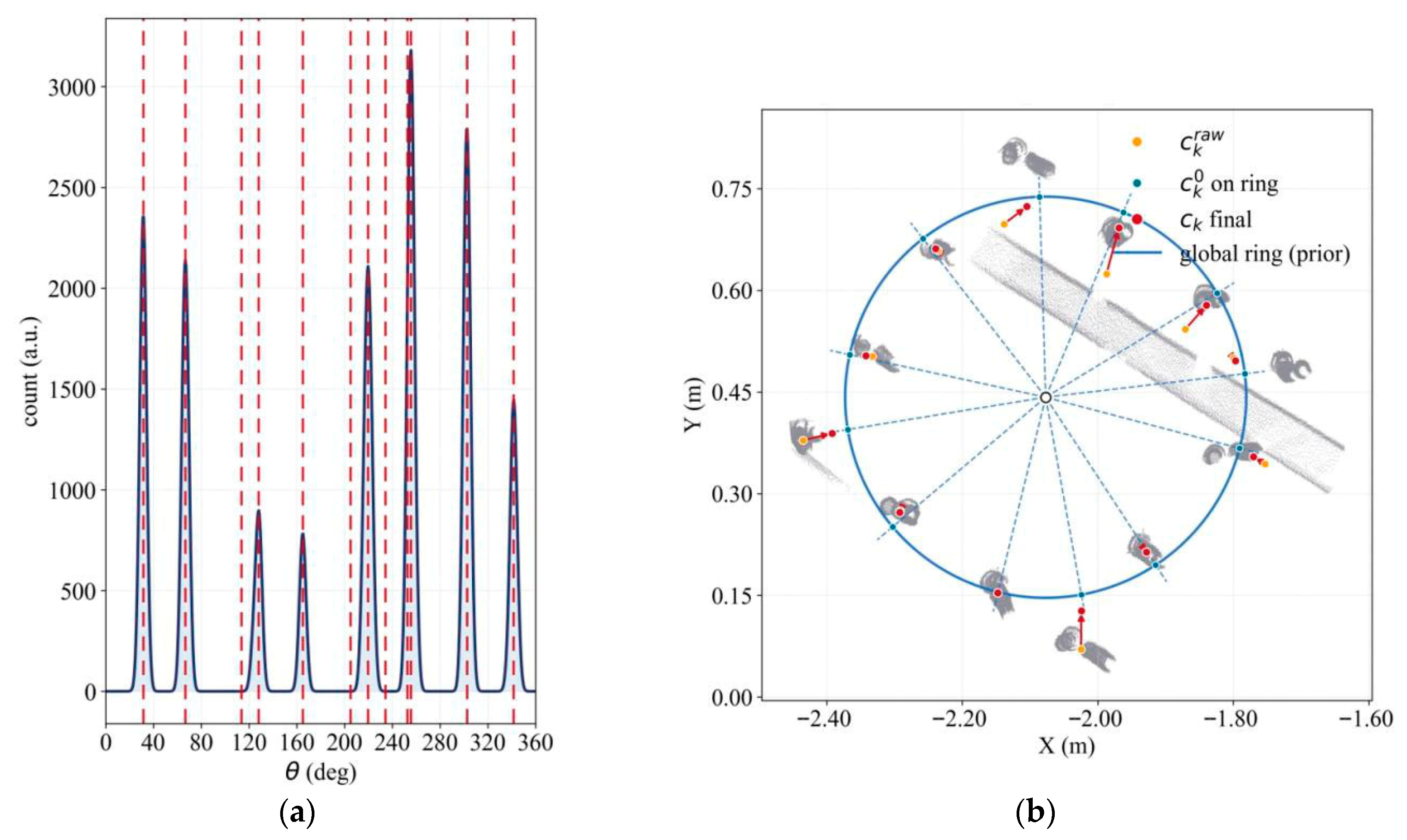
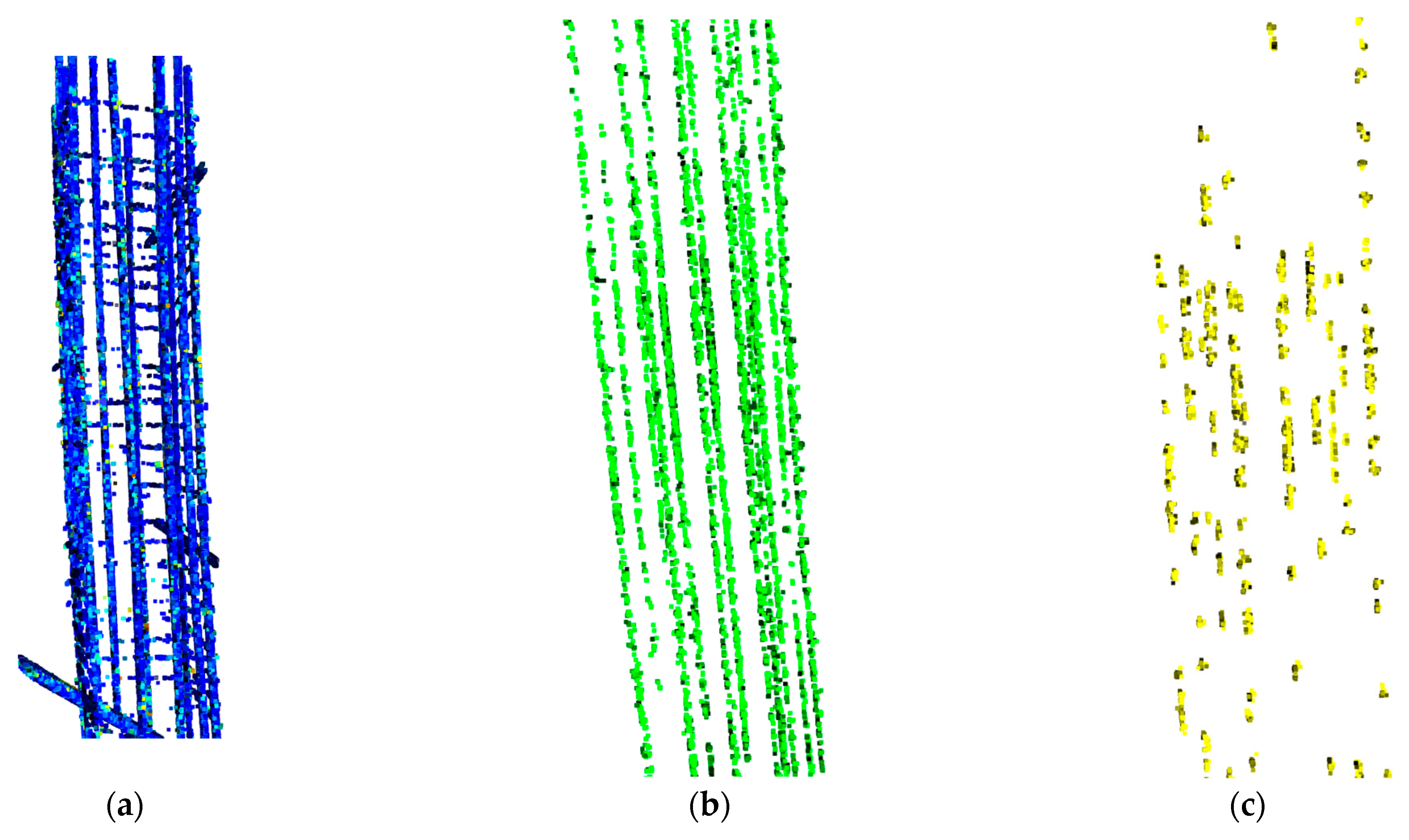
3.1.1. Polar Coordinate Mapping and Stirrup Semantic Filtering
3.1.2. Geometry-Prior Segmentation of Longitudinal Bars
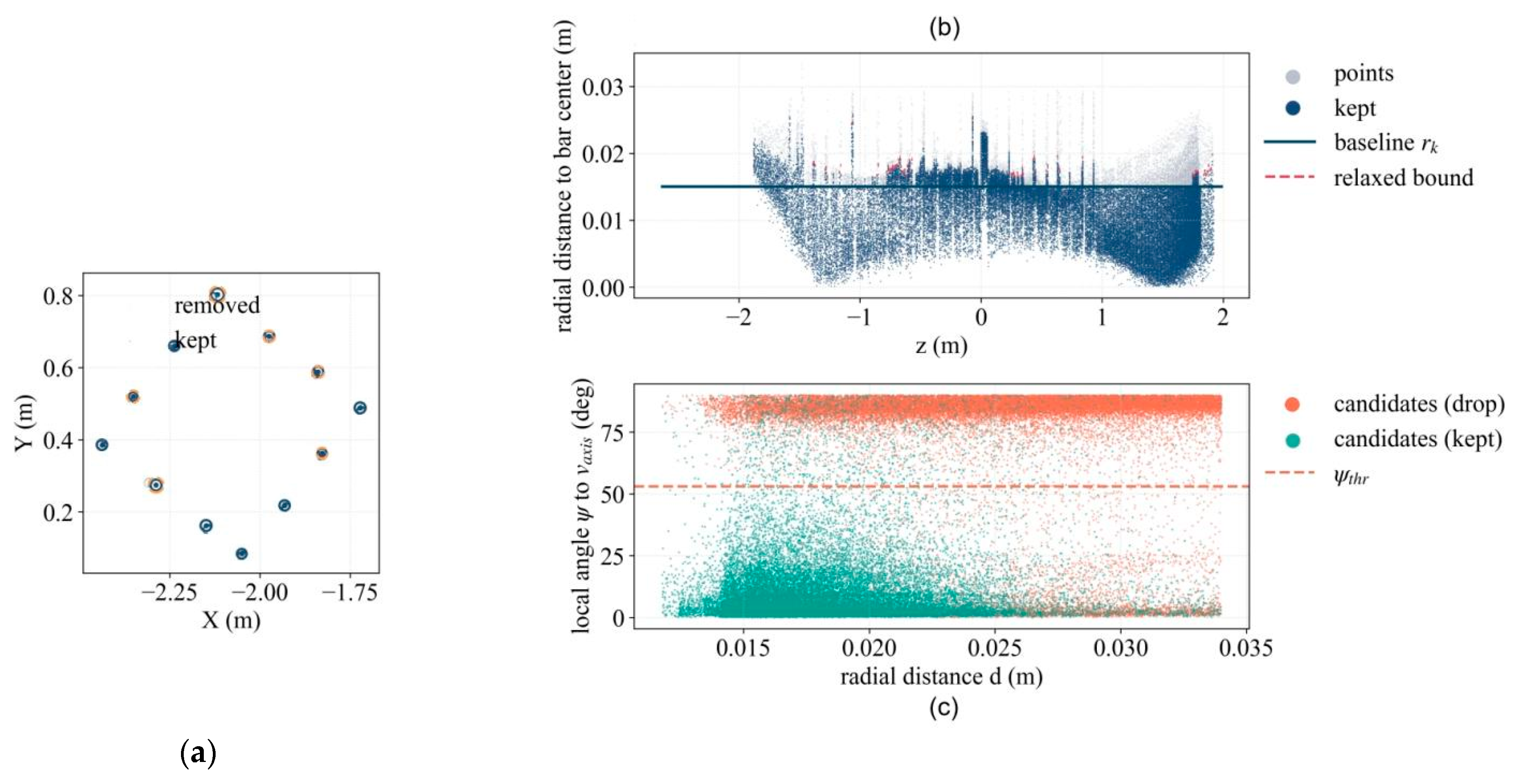
3.1.3. Domain Constraints and Adaptive Retention
3.2. Sleeve Detection and Parameterization
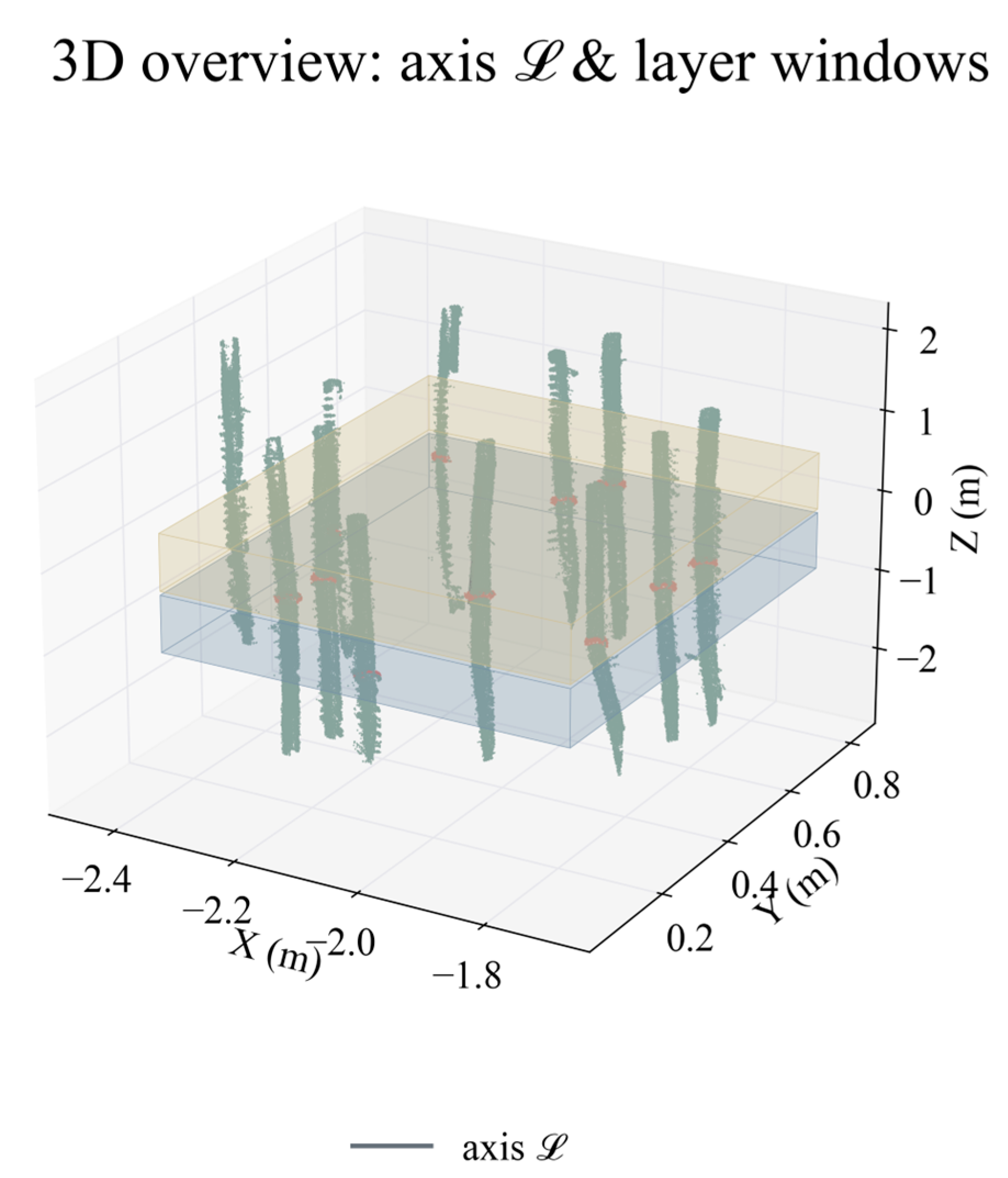
3.2.1. Axis Calibration and Geometric-Prior Reference Frame
3.2.2. Radial Section and Peak-Window Segmentation
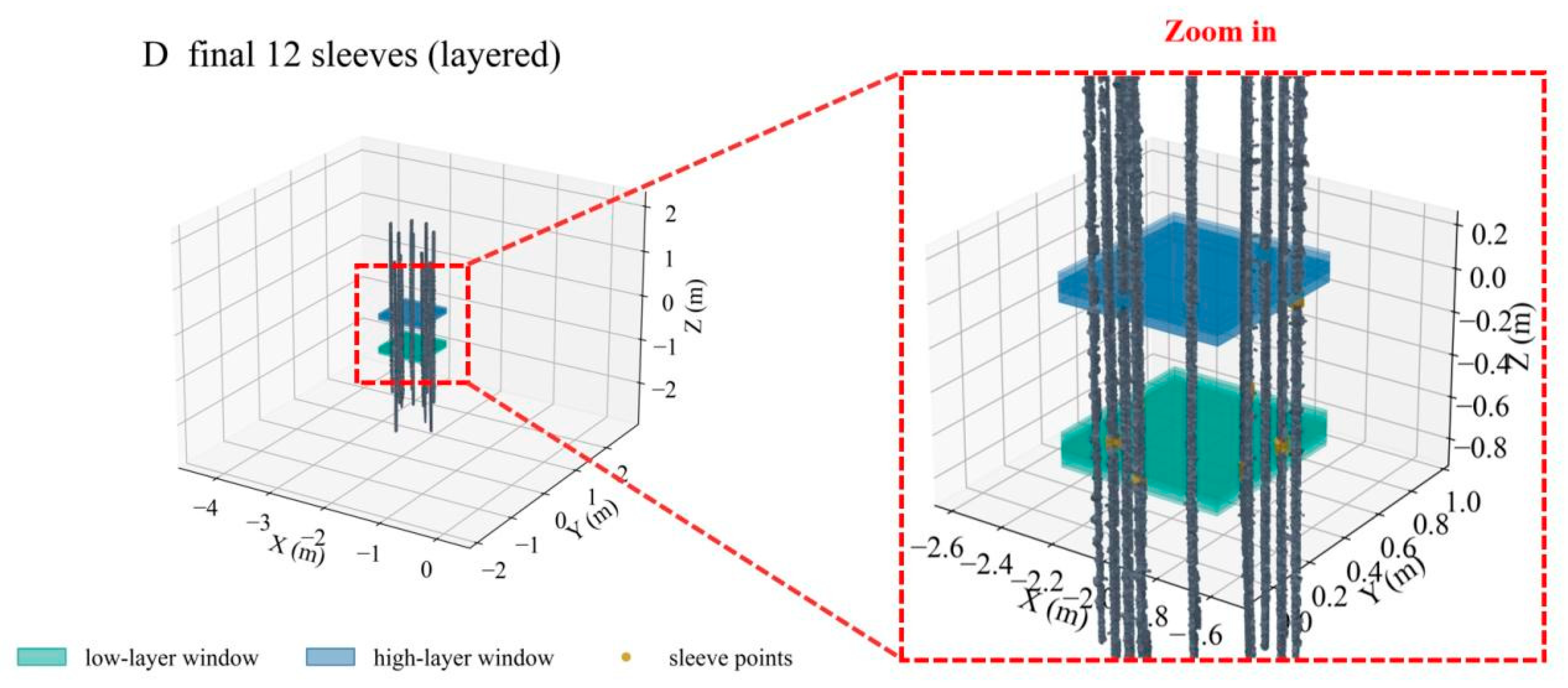
3.2.3. Layered Constraint Selection and Normative Parametrisation
3.3. Rebar Sleeve Connection Quality Assessment
3.3.1. Column Centre Line Estimation
3.3.2. Sleeve Instance Clustering and Centre Extraction
3.3.3. Projection Stratification and Statistical Indicators
4. Experiment
4.1. Experiment Settings
- E1: Cross-domain Pairwise Experiment (BIM and TLS).
- E2: Parameter Stability Analysis.
- E3: Ablation Experiment.
4.2. Data Acquisition
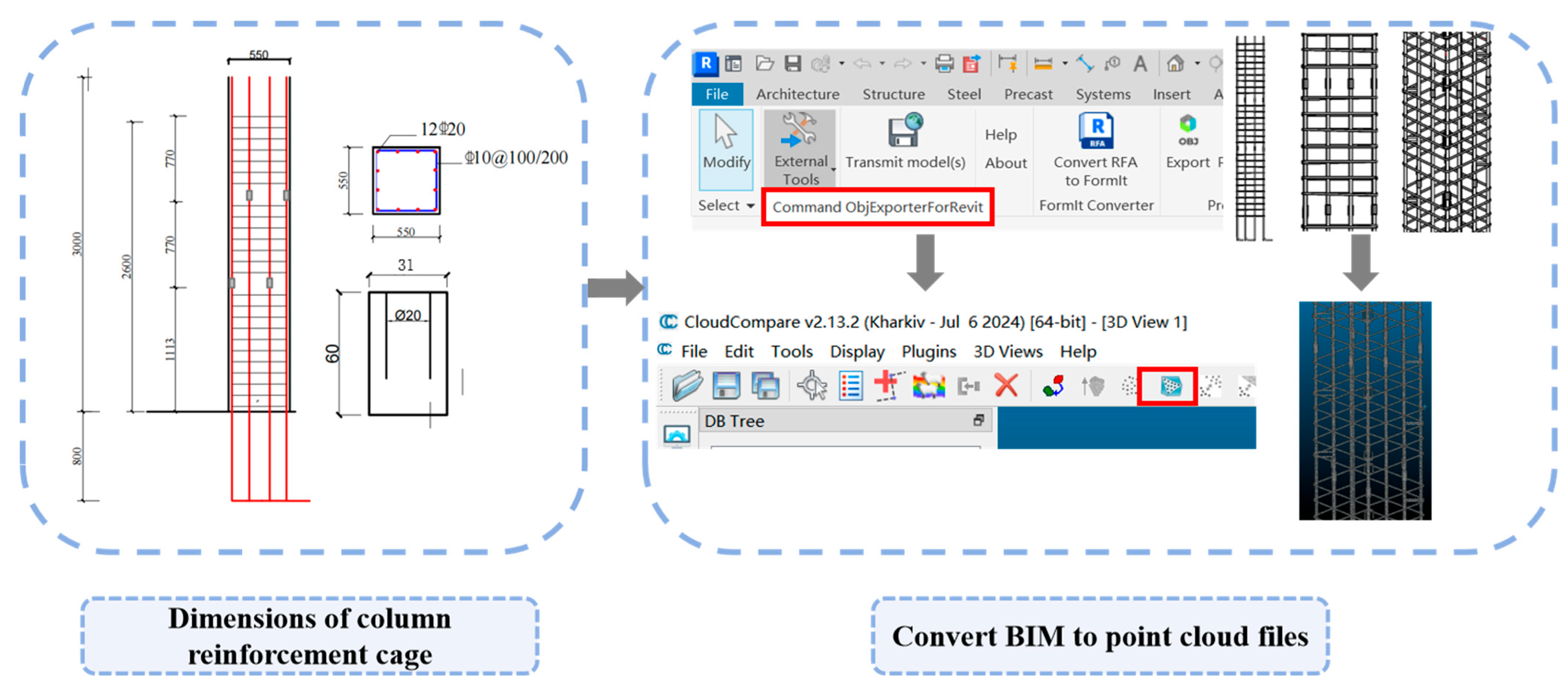
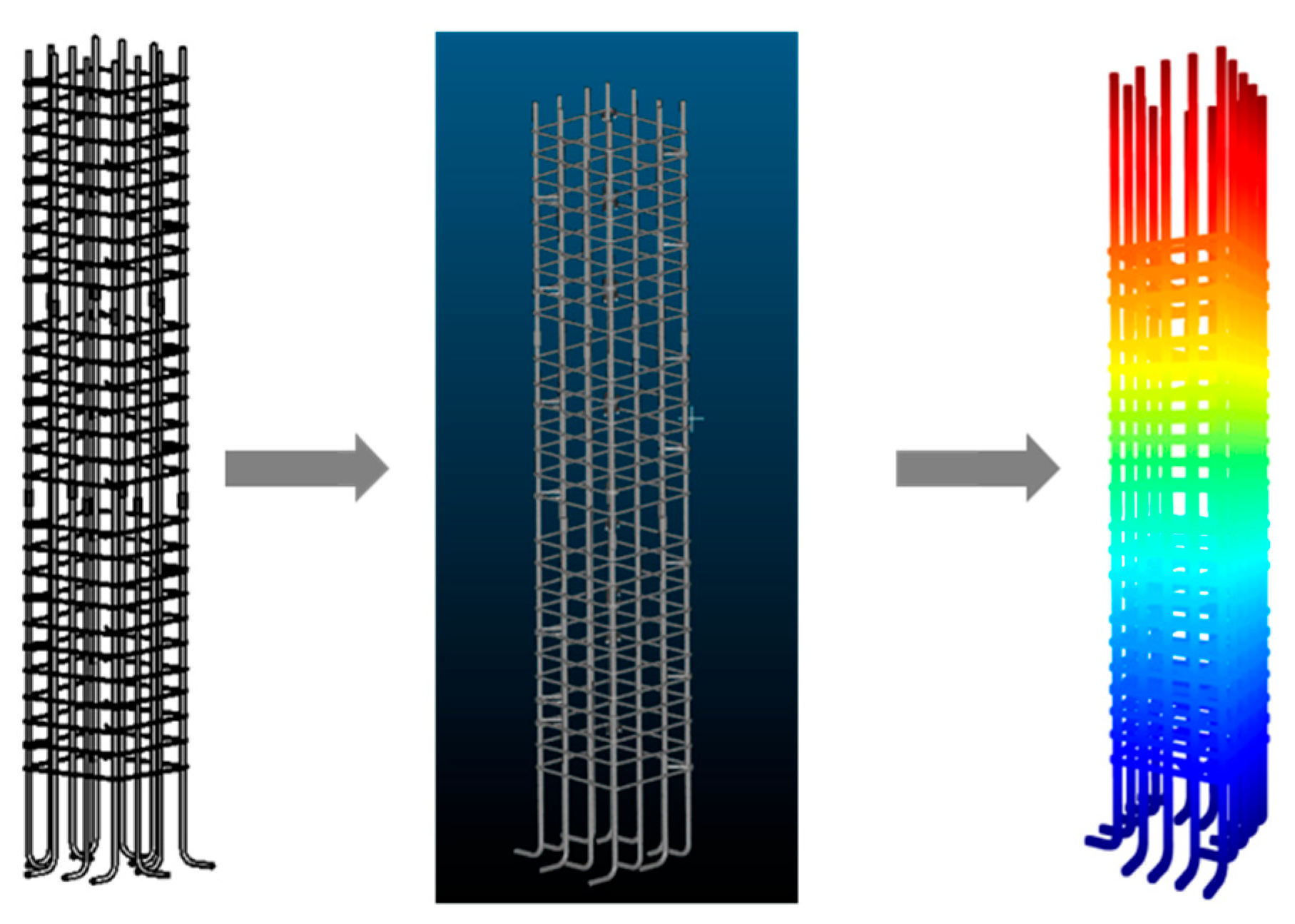
4.2.1. Generation and Preprocessing of Design Data in BIM
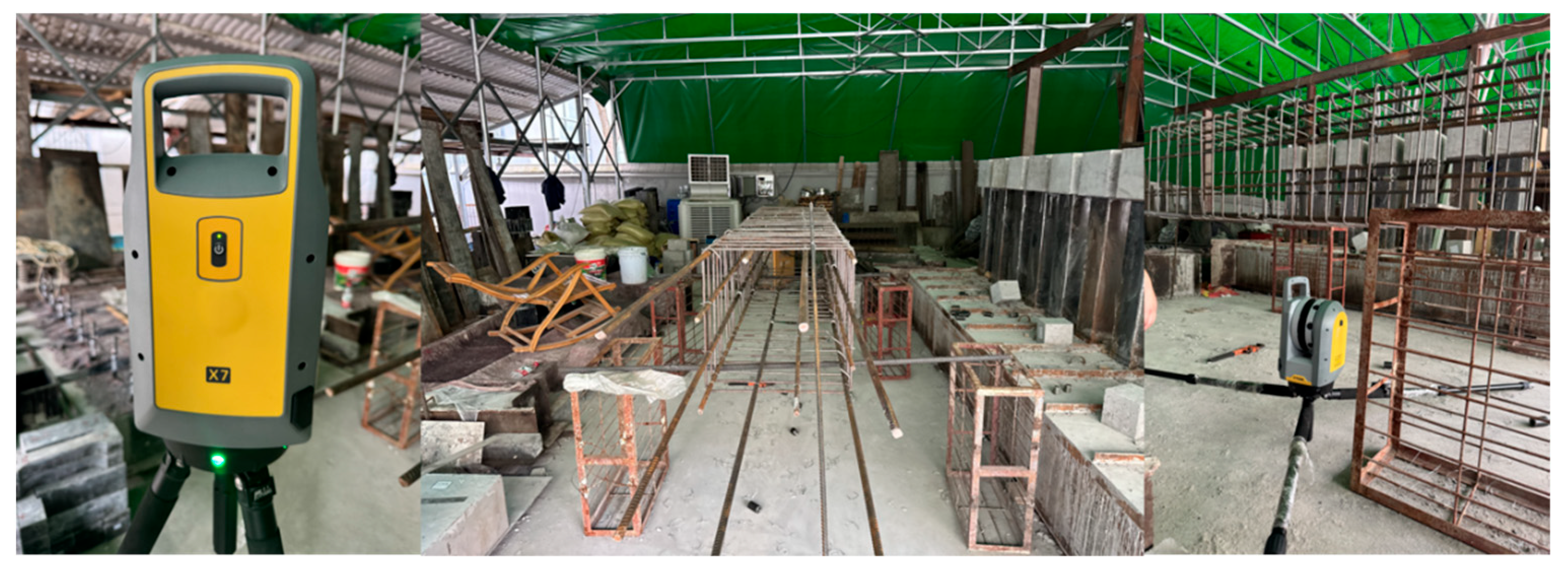
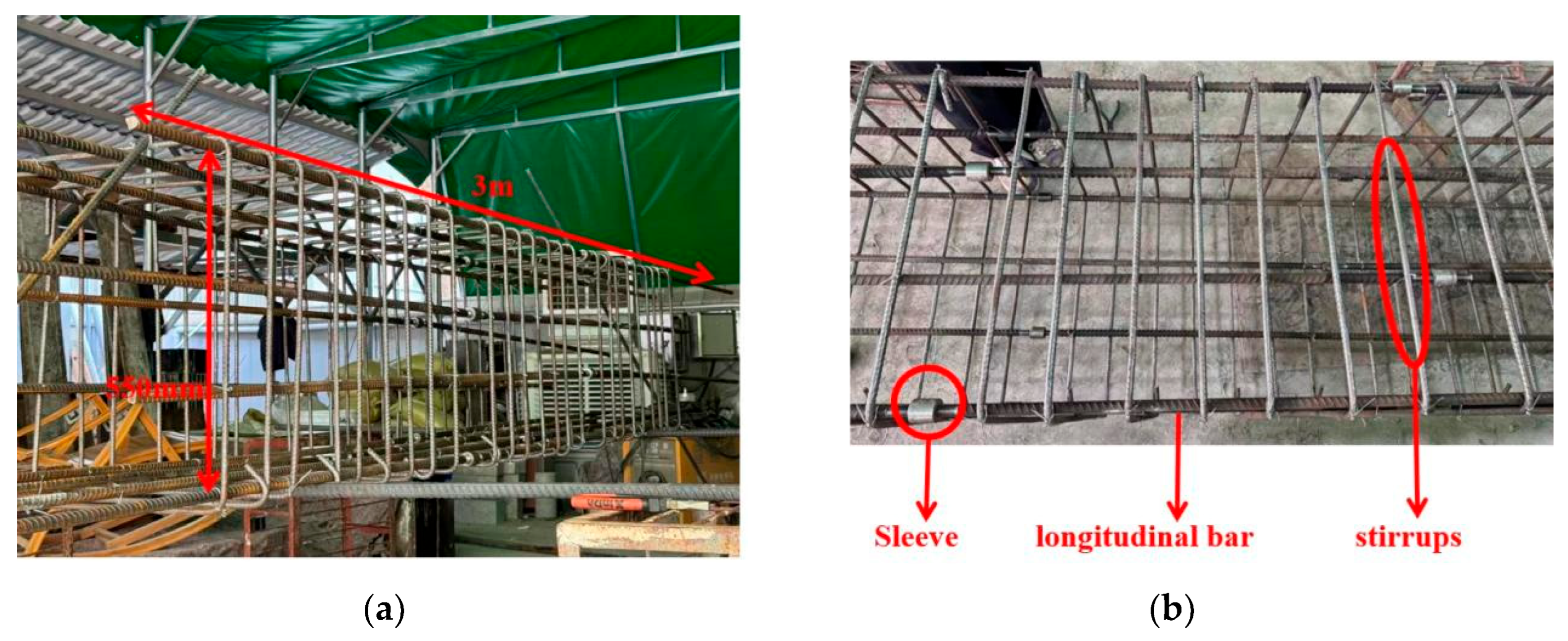
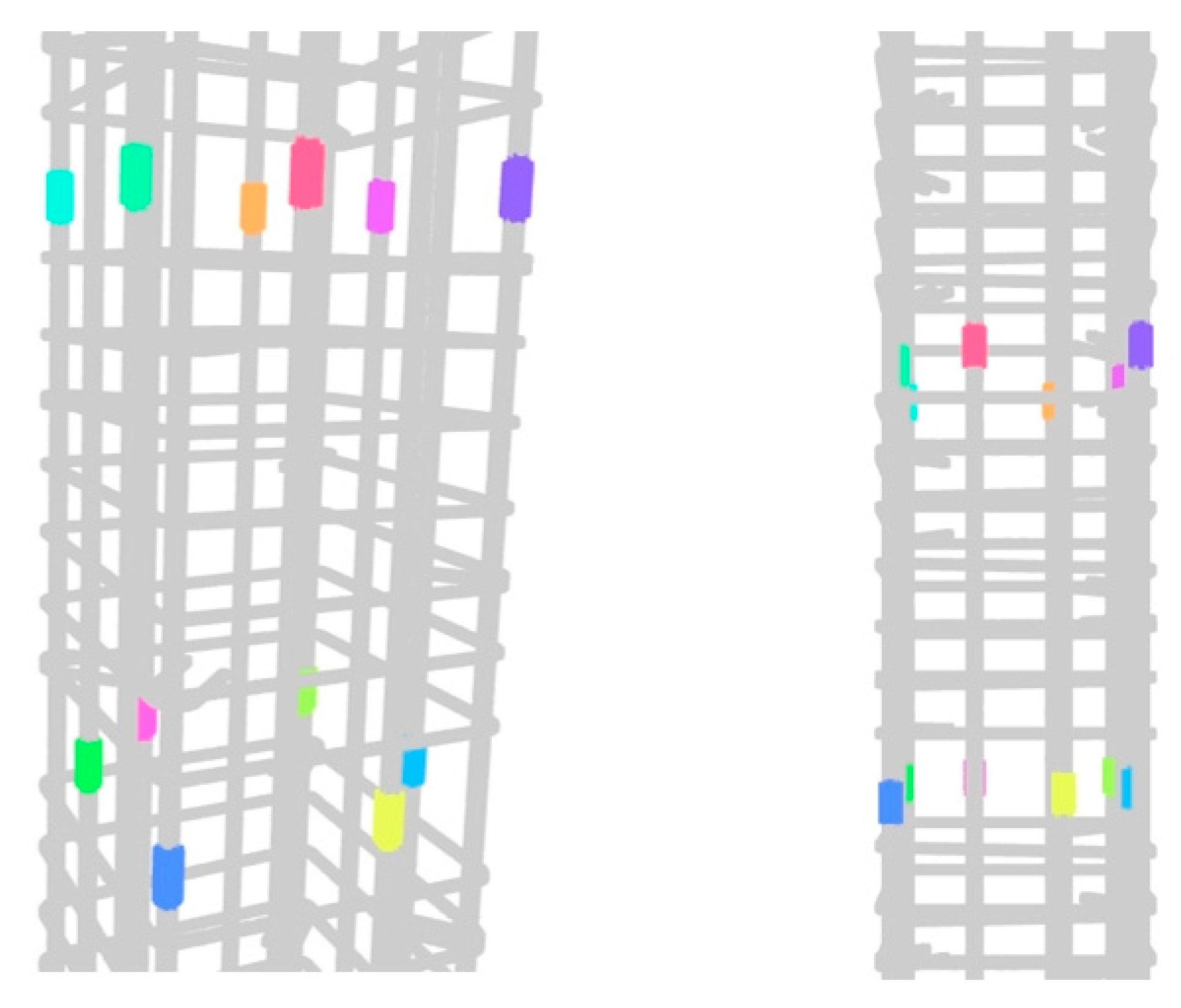
4.2.2. TLS On-Site Scan Data Preparation
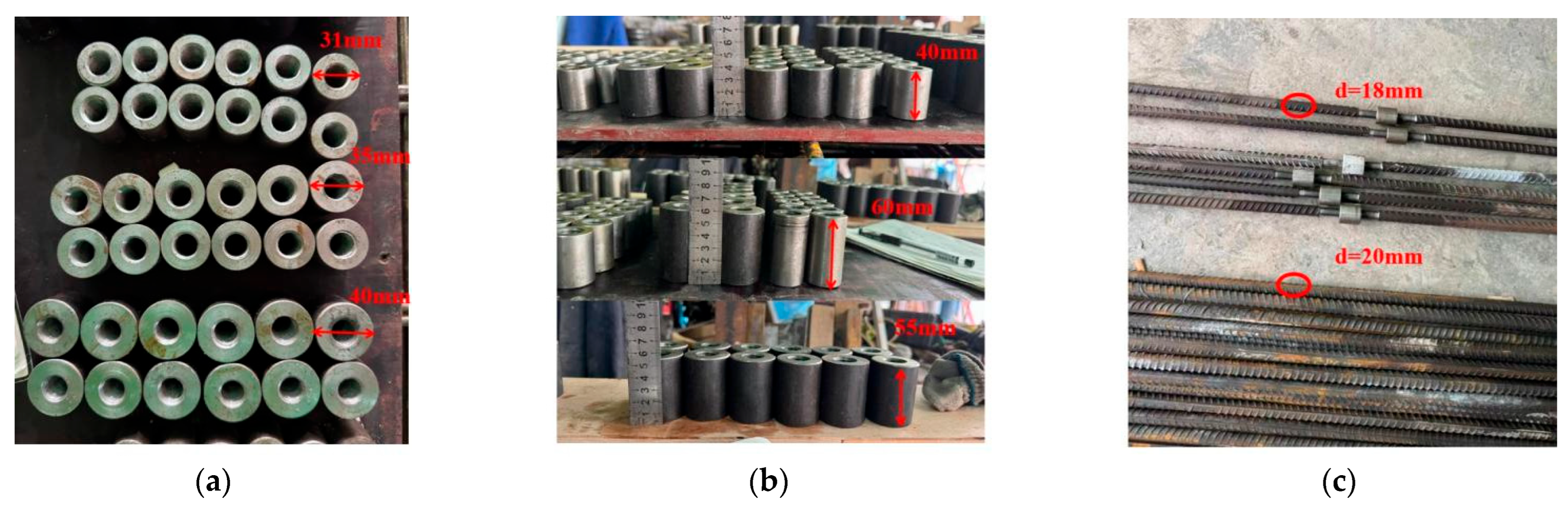
4.2.3. Data and Configuration
- (A)
- Outer Diameter Grouping (Nine Configurations).
- (B)
- Length Grouping (Six Configurations in Table 2).
- (C)
- Rebar Diameter Grouping (Three Configurations in Table 3).
4.3. Implementation Details
5. Results and Discussion
5.1. Methodology for System Evaluation in the BIM and TLS
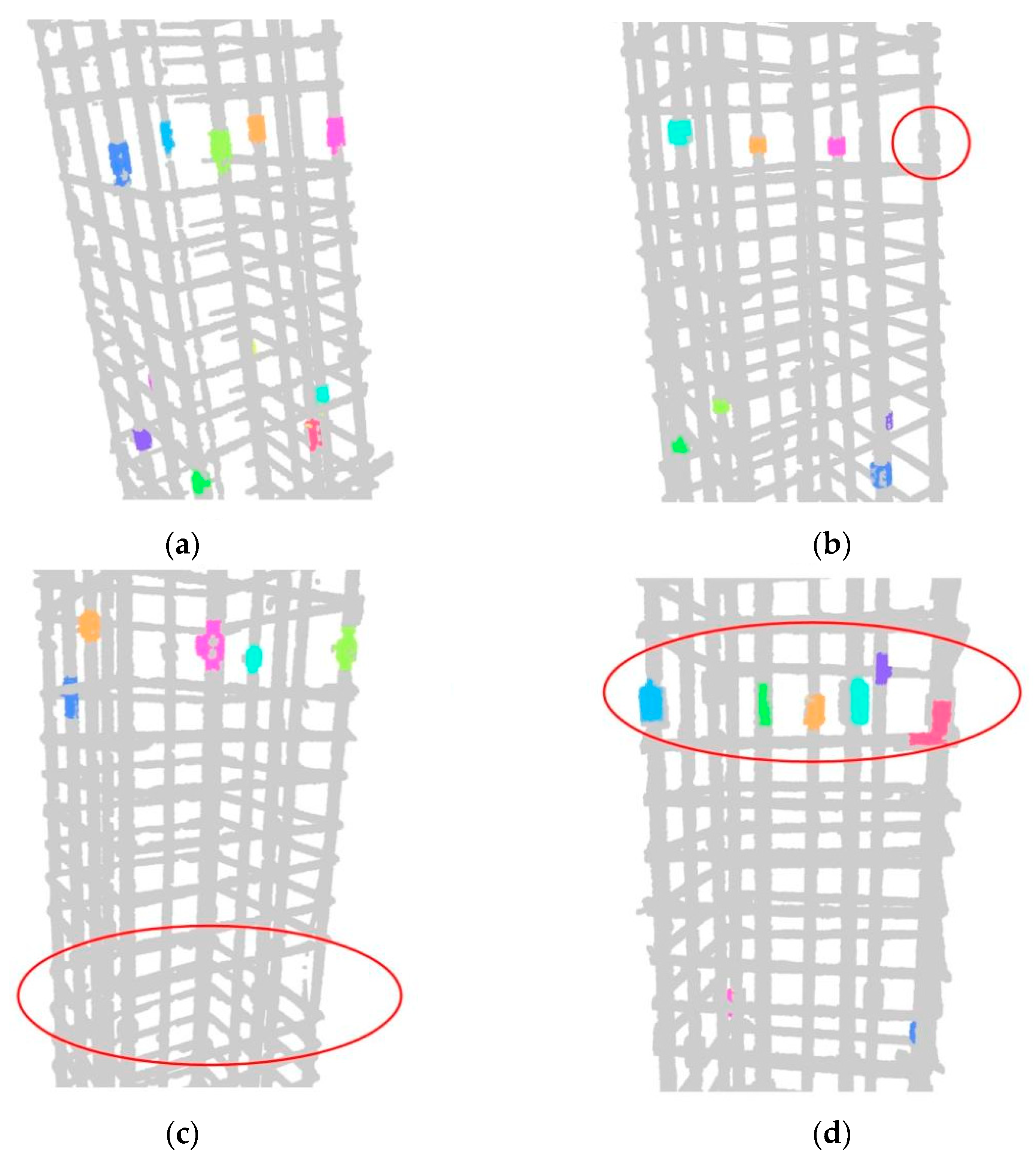
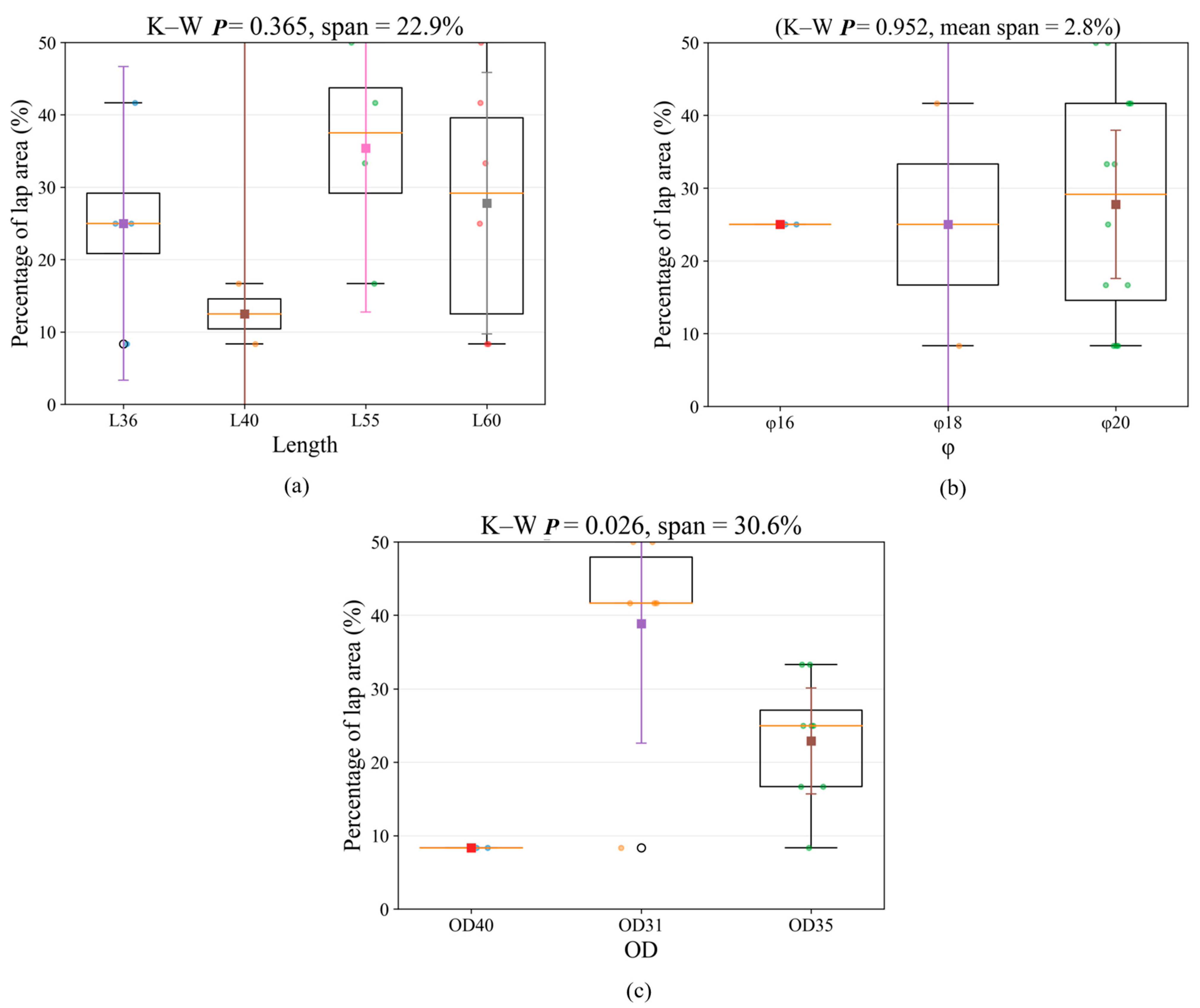
5.2. Parameter Stability in the Field Domain
5.3. Comparison of Sleeve Extraction Methods and Ablation Outcomes
6. Conclusions
Author Contributions
Funding
Data Availability Statement
Conflicts of Interest
Appendix A

| Symbol | Description | Unit/Range |
|---|---|---|
| v_axis | Estimated column axial direction via PCA | unit vector |
| c_glb | Global cross-sectional centre of column | m |
| covθ(z) | Angular coverage ratio at height z | (0, 1) |
| Δz | Height bin thickness | m |
| θk | Azimuth of k-th longitudinal bar | rad |
| rk(z) | Radial profile along bar axis | m |
| Δrk(z) | Relative radial enlargement (sleeve signal) | m |
| W = [zs, ze] | Axial window of a sleeve candidate | m |
| L | Sleeve length (ze − zs) | m |
| OD | Sleeve outer diameter | m |
| ρ(μ) | Overlap percentage in connection zone | % |
| IoU_z | One-dimensional intersection-over-union of sleeve extents along the axial (z) direction, used for sleeve matching and evaluation | (0, 1) |
References
- Rahman, R.; Dirar, S.; Jemaa, Y.; Theofanous, M.; Elshafie, M. Experimental Behavior and Design of Exterior Reinforced Concrete Beam-Column Joints Strengthened with Embedded Bars. J. Compos. Constr. 2018, 22, 04018047. [Google Scholar] [CrossRef]
- Anan, A.I.; Fawzy, K.; Moustafa, A. Enhancing the Structural Performance of Wide Shallow Beams through Welded Stirrups: A Comprehensive Parametric Study and Experimental Validation. Egypt. Int. J. Eng. Sci. Technol. 2024, 47, 61–75. [Google Scholar] [CrossRef]
- Su, J. Application of “Drilling and Grasping Method” in the Design and Construction of Anti-seepage Walls. Build. Struct. 2023, 8, 16–18. [Google Scholar] [CrossRef]
- GB 50010-2010; Code for Design of Concrete Structures. National Standard of the People’s Republic of China. China Architecture & Building Press: Beijing, China, 2010.
- 18G901-1; Concrete Structure Construction Steel Bar Arrangement Rules and Structural Details (Cast-in-Place Concrete Frame, Shear Wall). China Planning Press: Beijing, China, 2018.
- Wang, D.; Gao, L.; Zheng, J.; Xi, J.; Zhong, J. Automated recognition and rebar dimensional assessment of prefabricated bridge components from low-cost 3D laser scanner. Measurement 2025, 242, 115765. [Google Scholar] [CrossRef]
- Wang, Q.; Cheng, J.C.; Sohn, H. Automated estimation of reinforced precast concrete rebar positions using colored laser scan data. Comput. Aided Civ. Infrastruct. Eng. 2017, 32, 787–802. [Google Scholar] [CrossRef]
- Yuan, X.; Moreu, F.; Hojati, M. Cost-effective inspection of rebar spacing and clearance using rgb-d sensors. Sustainability 2021, 13, 12509. [Google Scholar] [CrossRef]
- Mori, K.; Spagnoli, A.; Murakami, Y.; Kondo, G.; Torigoe, I. A new non-contacting non-destructive testing method for defect detection in concrete. NDT E Int. 2002, 35, 399–406. [Google Scholar] [CrossRef]
- Wang, B.; Zhong, S.; Lee, T.-L.; Fancey, K.S.; Mi, J. Non-destructive testing and evaluation of composite materials/structures: A state-of-the-art review. Adv. Mech. Eng. 2020, 12, 1687814020913761. [Google Scholar] [CrossRef]
- Wu, C.; Yuan, Y.; Tang, Y.; Tian, B. Application of terrestrial laser scanning (TLS) in the architecture, engineering and construction (AEC) industry. Sensors 2022, 22, 265. [Google Scholar] [CrossRef]
- Ren, H.; Fu, Z.Q.; Zhang, Z.Y.; Ji, B.H.; Wang, Z.F. Geometric quality inspection of precast concrete components assisted by point cloud data. J. Build. Eng. 2025, 108, 112927. [Google Scholar] [CrossRef]
- Rashidi, M.; Mohammadi, M.; Kivi, S.S.; Abdolvand, M.M.; Truong-Hong, L.; Samali, B. A Decade of Modern Bridge Monitoring Using Terrestrial Laser Scanning: Review and Future Directions. Remote Sens. 2020, 12, 3796. [Google Scholar] [CrossRef]
- Sanhudo, L.; Ramos, N.M.M.; Martins, J.P.; Almeida, R.; Barreira, E.; Simoes, M.L.; Cardoso, V. A framework for in-situ geometric data acquisition using laser scanning for BIM modelling. J. Build. Eng. 2020, 28, 101073. [Google Scholar] [CrossRef]
- Mukupa, W. Change Detection and Deformation Monitoring of Concrete Structures Using Terrestrial Laser Scanning. Doctoral Dissertation, University of Nottingham, Nottingham, UK, 2017. Available online: https://eprints.nottingham.ac.uk/id/eprint/45156 (accessed on 12 March 2018).
- Li, F.; Kim, M.-K.; Lee, D.-E. Geometrical model based scan planning approach for the classification of rebar diameters. Autom. Constr. 2021, 130, 103848. [Google Scholar] [CrossRef]
- Kim, M.-K.; Thedja, J.P.P.; Chi, H.-L.; Lee, D.-E. Automated rebar diameter classification using point cloud data based machine learning. Autom. Constr. 2021, 122, 103476. [Google Scholar] [CrossRef]
- Yuan, X.; Smith, A.; Moreu, F.; Sarlo, R.; Lippitt, C.D.; Hojati, M.; Alampalli, S.; Zhang, S. Automatic evaluation of rebar spacing and quality using LiDAR data: Field application for bridge structural assessment. Autom. Constr. 2023, 146, 104708. [Google Scholar] [CrossRef]
- Li, L.; Mu, X.; Soma, M.; Wan, P.; Qi, J.; Hu, R.; Zhang, W.; Tong, Y.; Yan, G. An iterative-mode scan design of terrestrial laser scanning in forests for minimizing occlusion effects. IEEE Trans. Geosci. Remote Sens. 2020, 59, 3547–3566. [Google Scholar] [CrossRef]
- Ravaglia, J.; Fournier, R.A.; Bac, A.; Véga, C.; Côté, J.-F.; Piboule, A.; Rémillard, U. Comparison of Three Algorithms to Estimate Tree Stem Diameter from Terrestrial Laser Scanner Data. Forests 2019, 10, 599. [Google Scholar] [CrossRef]
- Shu, J.P.; Li, W.H.; Zhang, C.G.; Gao, Y.F.; Xiang, Y.Q.; Ma, L. Point cloud-based dimensional quality assessment of precast concrete components using deep learning. J. Build. Eng. 2023, 70, 106391. [Google Scholar] [CrossRef]
- Luo, D.; Wang, Y. Mining wooden pillar features from point cloud. In Proceedings of the 2009 International Conference on Information Technology and Computer Science, Kiev, Ukraine, 25–26 July 2009. [Google Scholar]
- Ishida, K.; Kano, N.; Kimoto, K. Shape recognition with point clouds in rebars. Gerontechnology 2012, 11, 89. [Google Scholar] [CrossRef]
- Li, Y.; Lu, Y.; Chen, J. A deep learning approach for real-time rebar counting on the construction site based on YOLOv3 detector. Autom. Constr. 2021, 124, 103602. [Google Scholar] [CrossRef]
- Kim, M.-K.; Thedja, J.P.P.; Wang, Q. Automated dimensional quality assessment for formwork and rebar of reinforced concrete components using 3D point cloud data. Autom. Constr. 2020, 112, 103077. [Google Scholar] [CrossRef]
- Akula, M.; Lipman, R.R.; Franaszek, M.; Saidi, K.S.; Cheok, G.S.; Kamat, V.R. Real-time drill monitoring and control using building information models augmented with 3D imaging data. Autom. Constr. 2013, 36, 1–15. [Google Scholar] [CrossRef]
- Nishio, K.; Nakamura, N.; Muraki, Y.; Kobori, K.-I. A Method of Core Wire Extraction from Point Cloud Data of Rebar. 2017. Available online: https://api.semanticscholar.org/CorpusID:210139692 (accessed on 21 May 2018).
- Yuan, X.; Smith, A.; Sarlo, R.; Lippitt, C.D.; Moreu, F. Automatic evaluation of rebar spacing using LiDAR data. Autom. Constr. 2021, 131, 103890. [Google Scholar] [CrossRef]
- Hodge, G.; Gattas, J.M. Geometric and semantic point cloud data for quality control of bridge girder reinforcement cages. Autom. Constr. 2022, 140, 104334. [Google Scholar] [CrossRef]
- Zhao, W.; Jiang, Y.; Liu, Y.; Shu, J. Automated recognition and measurement based on three-dimensional point clouds to connect precast concrete components. Autom. Constr. 2022, 133, 104000. [Google Scholar] [CrossRef]
- Chi, H.L.; Kim, M.K.; Liu, K.Z.; Thedja, J.P.P.; Seo, J.; Lee, D.E. Rebar inspection integrating augmented reality and laser scanning. Autom. Constr. 2022, 136, 104183. [Google Scholar] [CrossRef]
- Tan, Y.; Chen, L.; Huang, M.; Li, J.; Zhang, G. Automated geometric quality inspection for modular boxes using BIM and LiDAR. Autom. Constr. 2024, 164, 105474. [Google Scholar] [CrossRef]
- Shu, J.; Zhang, X.; Li, W.; Zeng, Z.; Zhang, H.; Duan, Y. Point cloud and machine learning-based automated recognition and measurement of corrugated pipes and rebars for large precast concrete beams. Autom. Constr. 2024, 165, 105493. [Google Scholar] [CrossRef]
- Ye, X.; Zhou, Y.; Guo, H.; Luo, Z. A computer vision-based approach to automatically extracting the aligning information of precast structural components. Autom. Constr. 2024, 164, 105478. [Google Scholar] [CrossRef]
- Rathod, H.; Debeck, S.; Gupta, R.; Chow, B. Applicability of GPR and a rebar detector to obtain rebar information of existing concrete structures. Case Stud. Constr. Mater. 2019, 11, e00240. [Google Scholar] [CrossRef]
- Gupta, M.; Khan, M.A.; Butola, R.; Singari, R.M. Advances in applications of Non-Destructive Testing (NDT): A review. Adv. Mater. Process. Technol. 2022, 8, 2286–2307. [Google Scholar] [CrossRef]
- Kot, P.; Muradov, M.; Gkantou, M.; Kamaris, G.S.; Hashim, K.; Yeboah, D. Recent Advancements in Non-Destructive Testing Techniques for Structural Health Monitoring. Appl. Sci. 2021, 11, 2750. [Google Scholar] [CrossRef]
- Shen, N.; Wang, B.; Ma, H.; Zhao, X.; Zhou, Y.; Zhang, Z.; Xu, J. A review of terrestrial laser scanning (TLS)-based technologies for deformation monitoring in engineering. Measurement 2023, 223, 113684. [Google Scholar] [CrossRef]
- Li, S.Y.; Le, Y.S.; Li, X.; Zhao, X.F. Bolt loosening angle detection through arrangement shape-independent perspective transformation and corner point extraction based on semantic segmentation results. Struct. Health Monit.-Int. J. 2025, 24, 761–777. [Google Scholar] [CrossRef]
- Deng, L.; Deng, H.; Liu, G.H.; Zhao, J.Q.; Huang, H.M.; Li, L.L. XLPE cable joint defects measurement method based on point cloud remapping. Measurement 2024, 226, 114139. [Google Scholar] [CrossRef]
- Fu, X.B.; Zhang, G.R.; Kong, T.; Zhang, Y.C.; Jing, L.; Li, Y.B. A Segmentation and Topology Denoising Method for Three-dimensional (3-D) Point Cloud Data Obtained from Laser Scanning. Lasers Eng. 2024, 57, 191–207. [Google Scholar]
- Nurunnabi, A.; Teferle, F.; Novo, A.; Balado, J.; Ientilucci, E. Derivation of Tree Stem Curve and Volume Using Point Clouds. In Proceedings of the 19th 3D GeoInfo Conference/31st EG-ICE International Workshop on Intelligent Computing in Engineering, Vigo, Spain, 1–5 July 2024. [Google Scholar] [CrossRef]
- Yu, C.Z.; Ji, F.; Xue, J.P. Cutting Plane Based Cylinder Fitting Method with Incomplete Point Cloud Data for Digital Fringe Projection. IEEE Access 2020, 8, 149385–149401. [Google Scholar] [CrossRef]
- Song, X.M.; Cui, T.; Zhang, D.X.; Yang, L.; He, X.T.; Zhang, K.L. Reconstruction and spatial distribution analysis of maize seedlings based on multiple clustering of point clouds. Comput. Electron. Agric. 2025, 235, 110196. [Google Scholar] [CrossRef]
- Noichl, F.; Pan, Y.D.; Borrmann, A. Automated steel structure model reconstruction through point cloud instance segmentation and parametric shape fitting. J. Inf. Technol. Constr. 2025, 30, 1099–1122. [Google Scholar] [CrossRef]
- Kim, Y.; Nguyen, C.H.P.; Choi, Y. Automatic pipe and elbow recognition from three-dimensional point cloud model of industrial plant piping system using convolutional neural network-based primitive classification. Autom. Constr. 2020, 116, 103236. [Google Scholar] [CrossRef]
- Tao, M.; Zhao, C.; Wang, J. Three-Dimensional Point Cloud Data Target Detection Based Method for Realizing Point Cloud Component Segmentation in Automatic Driving Field, Involves Predicting Component Type of Point, and Determining Component Segmentation Result Based on Component Type; Cas Objecteye Beijing Technology Co., Ltd. (CASO-Non-Standard): Beijing, China.
- Wang, X.M.; Li, X.C.; Tao, Z.Y. Point cloud registration algorithm based on statistical local feature description and matching. Chin. J. Liq. Cryst. Disp. 2024, 39, 89–99. [Google Scholar] [CrossRef]
- Luo, H.; Wang, C.; Wen, C.L.; Cai, Z.P.; Chen, Z.Y.; Wang, H.Y.; Yu, Y.T.; Li, J. Patch-Based Semantic Labeling of Road Scene Using Colorized Mobile LiDAR Point Clouds. IEEE Trans. Intell. Transp. Syst. 2016, 17, 1286–1297. [Google Scholar] [CrossRef]
- Cui, H.; Li, J.; Mao, Q.Z.; Hu, Q.W.; Dong, C.J.; Tao, Y.W. STSD: A large-scale benchmark for semantic segmentation of subway tunnel point cloud. Tunn. Undergr. Space Technol. 2024, 150, 105829. [Google Scholar] [CrossRef]
- Karsli, B.; Yilmazturk, F.; Bahadir, M.; Karsli, F.; Ozdemir, E. Automatic building footprint extraction from photogrammetric and LiDAR point clouds using a novel improved-Octree approach. J. Build. Eng. 2024, 82, 108281. [Google Scholar] [CrossRef]
- Liu, Z.S.; Liu, Z.H.; Sun, Z.; Zhang, Q.W.; Zhao, L.L. Intelligent detection method for construction quality of building structures based on point cloud data and BIM models. J. Build. Eng. 2025, 112, 113492. [Google Scholar] [CrossRef]






| Experimental Groups | Rebar Diameter (mm) | Length (mm) | Outer Diameter (mm) | Inner-to-Outer-Diameter Ratio |
|---|---|---|---|---|
| 1 | 20 | 60 | 31 | 1.55 |
| 35 | 1.75 | |||
| 40 | 2.0 | |||
| 2 | 18 | 36 | 28 | 1.56 |
| 31 | 1.55 | |||
| 35 | 1.75 | |||
| 3 | 16 | 32 | 25 | 1.56 |
| 28 | 1.75 | |||
| 31 | 1.94 |
| Experimental Groups | Rebar Diameter (mm) | Outer Diameter (mm) | Length (mm) |
|---|---|---|---|
| 1 | 20 | 31 | 40 |
| 55 | |||
| 60 | |||
| 2 | 20 | 35 | 40 |
| 55 | |||
| 60 |
| Experimental Groups | Rebar Diameter (mm) | Outer Diameter (mm) | Length (mm) |
|---|---|---|---|
| 1 | 20 | 31 | 40 |
| 18 | 31 | 36 | |
| 16 | 31 | 32 |
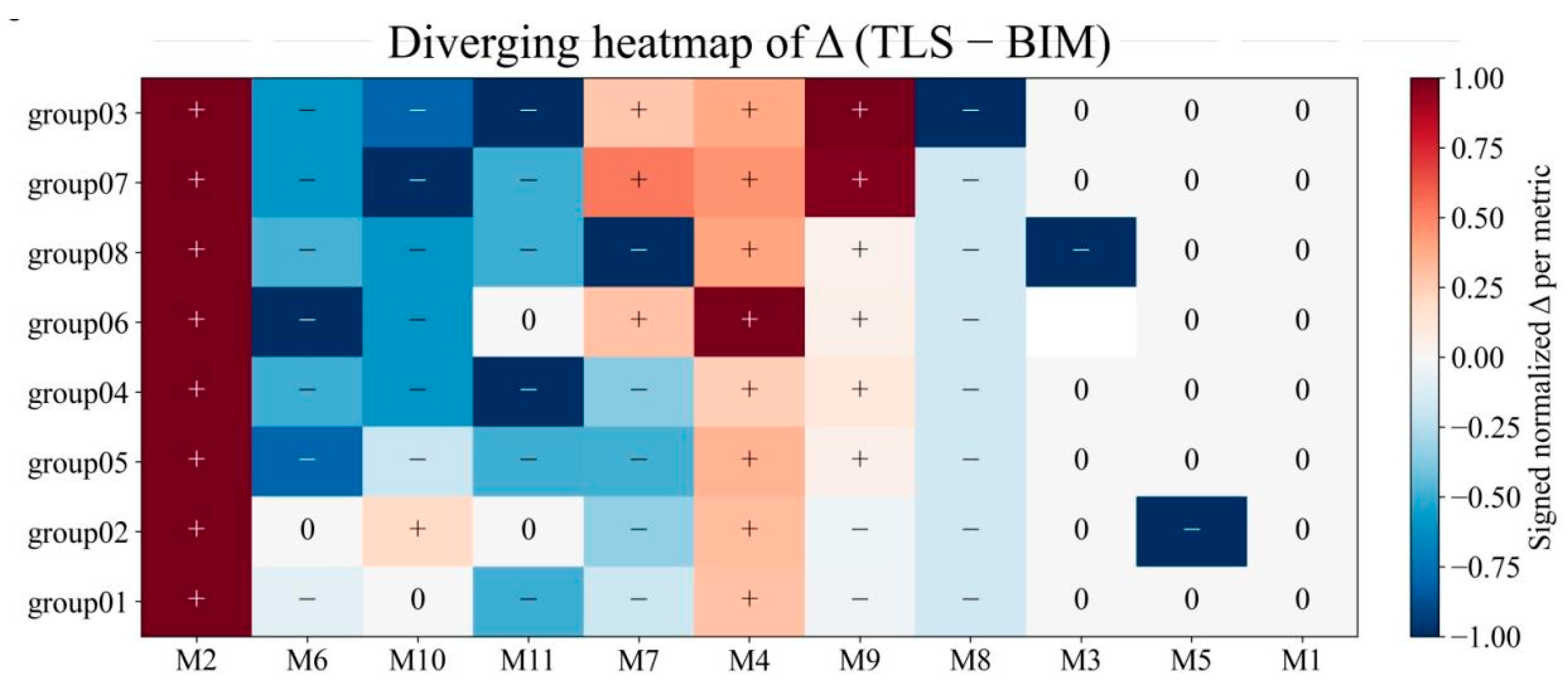
| Metric | BIM Mean ± SD | TLS Mean ± SD | Δ = TLS − BIM Mean ± SD | 95% CI (Δ) | p (Paired t) |
|---|---|---|---|---|---|
| Stirrup residual (%) ↓ (M1) | 0.00 ± 0.00 | 0.00 ± 0.00 | 0.00 ± 0.00 | [0.00, 0.00] | nan |
| Rebar loss (%) ↓ (M2) | 0.03 ± 0.06 | 100.00 ± 0.00 | 99.97 ± 0.06 | [99.92, 100.02] | 3.49 × 10⁻²⁴ |
| 12-bar detection rate (%) ↑ (M3) | 100.0 ± 0.0 | 85.7 ± 37.8 | −14.3 ± 37.8 | [−49.2, 20.7] | 0.356 |
| Centre error_xy (mm) ↓ (M4) | 0.00 ± 0.00 | 100.62 ± 56.00 | 100.62 ± 56.00 | [53.80, 147.44] | 0.00143 |
| Sleeve precision (%) ↑ (IoU_z ≥ 0.5) (M5) | 100.0 ± 0.0 | 98.9 ± 3.2 | −1.1 ± 3.2 | [−3.8, 1.6] | 0.351 |
| Sleeve recall (%) ↑ (IoU_z ≥ 0.5) (M6) | 100.0 ± 0.0 | 57.5 ± 27.6 | −42.5 ± 27.6 | [−65.6, −19.4] | 0.00335 |
| Runtime per 106 pts (ms) (M7) ↓ | 79,168 ± 44,662 | 50,050 ± 59,110 | −29,118 ± 91,127 | [−105,302, 47,066] | 0.396 |
| s count ↑ (M8) | 12.0 ± 0.0 | 10.4 ± 1.8 | −1.6 ± 1.8 | [−3.1, −0.1] | 0.0354 |
| s layer spacing median (m) ↓ (M9) | 0.784 ± 0.008 | 1.074 ± 0.478 | 0.290 ± 0.482 | [−0.113, 0.692] | 0.132 |
| Overlap area (%) low ↑ (M10) | 45.8 ± 6.3 | 27.1 ± 15.3 | −18.8 ± 17.1 | [−33.1, −4.4] | 0.0173 |
| Overlap area (%) high ↑ (M11) | 46.9 ± 4.3 | 38.5 ± 6.2 | −8.3 ± 6.3 | [−13.6, −3.1] | 0.00725 |
| Aspect | Legacy Curvature-Based Method (Ablation) | Proposed Geometry-Prior Method |
|---|---|---|
| Core principle | Local curvature segmentation and connectivity clustering | Semantic filtering with geometry priors and axial constraints |
| Training data requirement | None (training-free) | None (training-free) |
| Runtime efficiency (BIM) | Faster runtime (≈693 ± 290.66 ms per million points) | Slower but stable runtime (1492.70 ± 320.72 ms per million points) |
| Overlap area percentage (low-rise, BIM) | 104.17 ± 19.92% (exceeding physical limits) | 45.83 ± 6.30% |
| Overlap area percentage (high-rise, BIM) | 82.29 ± 22.90% (severe overestimation) | 46.88 ± 4.31% |
| Sleeve spacing (BIM) | Overestimated (1.38 ± 0.08 m) | Stable and realistic (0.78 ± 0.01 m) |
| Sensitivity to noise and occlusion (TLS) | High; severe distortion and duplicate aggregation observed | Lower; axial continuity and layer clustering preserved |
| Robustness to stirrup interference | Prone to erroneous axial and angular bridging | Effective suppression via layer-aware angular coverage |
| Compliance with “≥35d” spacing requirement | Unreliable due to distortion | 100.0% compliance |
| Compliance with “overlap area ≤ 50%” requirement | Frequently violated | 100.0% compliance |
| Suitability for engineering acceptance | Unsuitable due to extreme overestimation | Suitable for engineering quality inspection |
Disclaimer/Publisher’s Note: The statements, opinions and data contained in all publications are solely those of the individual author(s) and contributor(s) and not of MDPI and/or the editor(s). MDPI and/or the editor(s) disclaim responsibility for any injury to people or property resulting from any ideas, methods, instructions or products referred to in the content. |
© 2026 by the authors. Licensee MDPI, Basel, Switzerland. This article is an open access article distributed under the terms and conditions of the Creative Commons Attribution (CC BY) license.
Share and Cite
Wang, H.; Shi, Y.; Guo, J.; Chen, D. Quality Inspection of Automated Rebar Sleeve Connections Using Point Cloud Semantic Filtering and Geometry-Prior Segmentation. Buildings 2026, 16, 338. https://doi.org/10.3390/buildings16020338
Wang H, Shi Y, Guo J, Chen D. Quality Inspection of Automated Rebar Sleeve Connections Using Point Cloud Semantic Filtering and Geometry-Prior Segmentation. Buildings. 2026; 16(2):338. https://doi.org/10.3390/buildings16020338
Chicago/Turabian StyleWang, Haidong, Youyu Shi, Jingjing Guo, and Dachuan Chen. 2026. "Quality Inspection of Automated Rebar Sleeve Connections Using Point Cloud Semantic Filtering and Geometry-Prior Segmentation" Buildings 16, no. 2: 338. https://doi.org/10.3390/buildings16020338
APA StyleWang, H., Shi, Y., Guo, J., & Chen, D. (2026). Quality Inspection of Automated Rebar Sleeve Connections Using Point Cloud Semantic Filtering and Geometry-Prior Segmentation. Buildings, 16(2), 338. https://doi.org/10.3390/buildings16020338