Study on Dynamic Response of Rockfall-Impacted Pile-Column Bridge Piers Based on Scaled Model Tests


Abstract
1. Introduction
2. Dynamic Response Test Analysis
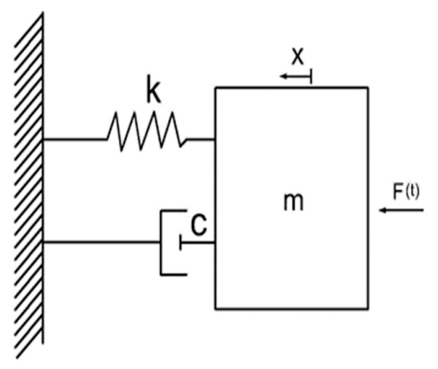
2.1. Differential Equation Analysis
2.2. Similarity Theory Analysis
3. Test Overview
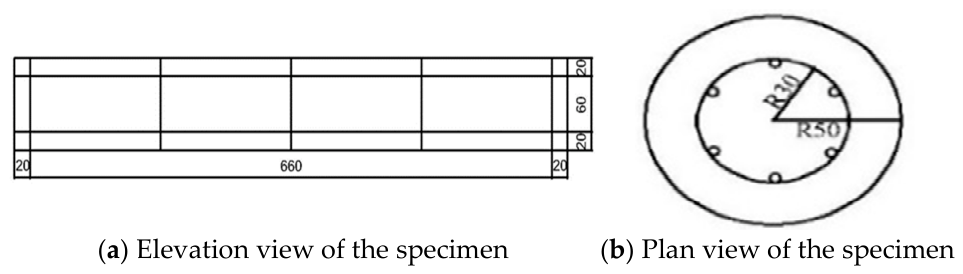
3.1. Model Design
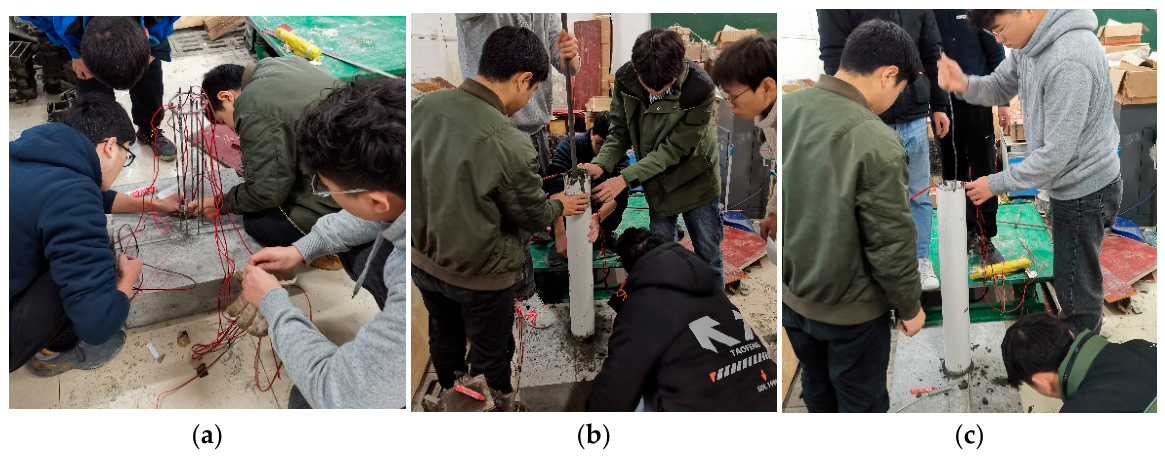
3.2. Model Fabrication
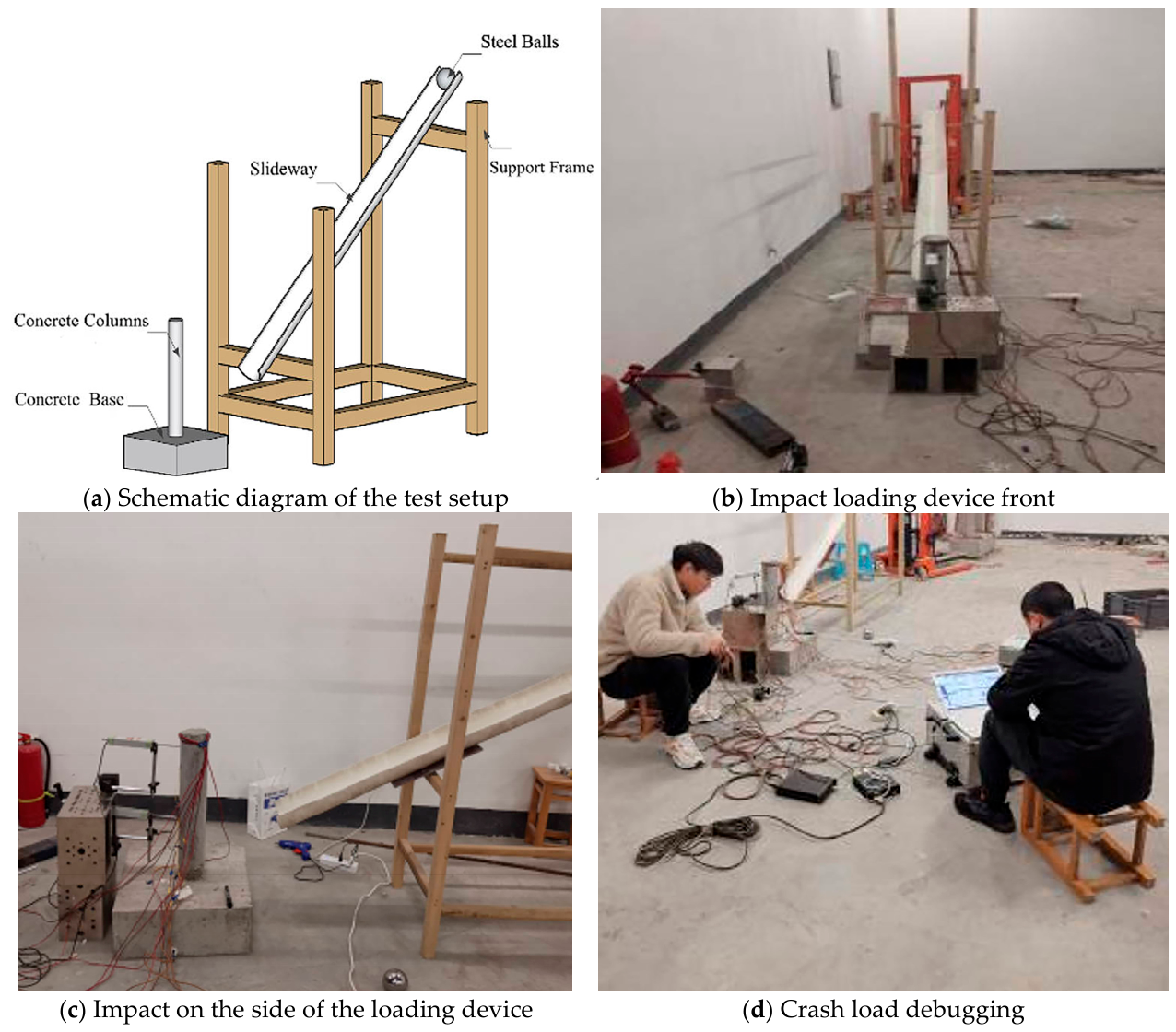
3.3. Test Setup and Loading
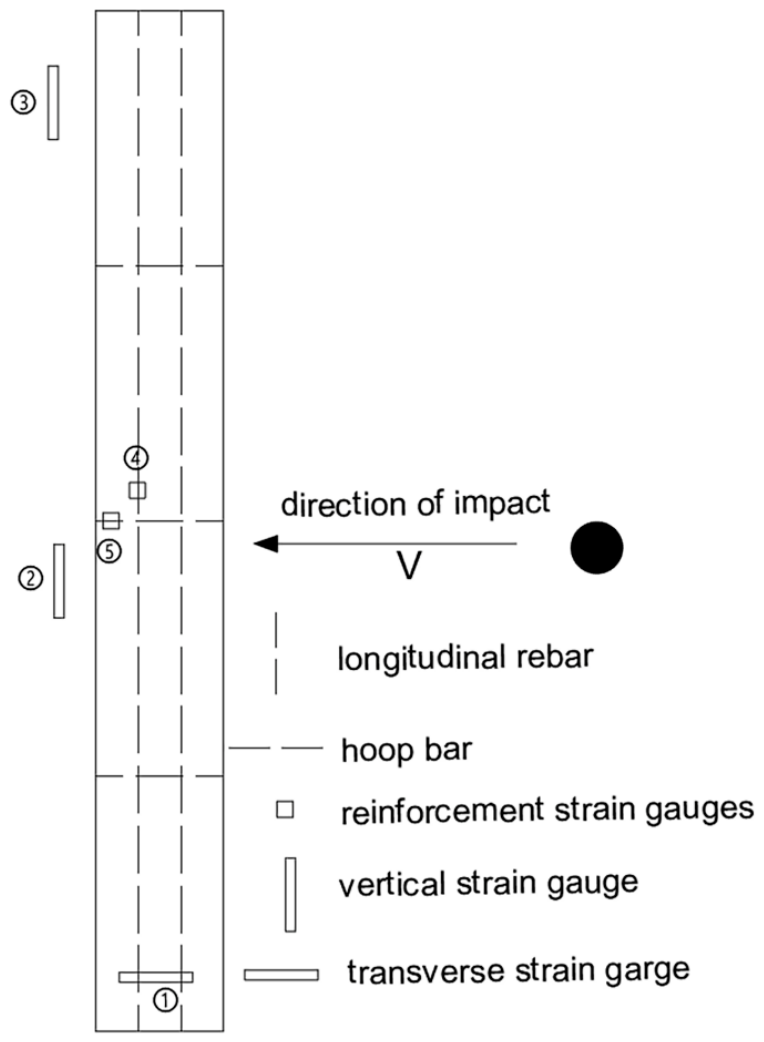
3.4. Test Instruments and Methods
- (1)
- The strain gauges, displacement sensor, and impact force sensor were connected to the DHDAS dynamic testing system. The system was then debugged until the indicator lights of all channels of the DHDAS dynamic testing system functioned properly, and the initial state was balanced and reset to zero.
- (2)
- The steel ball was released from an arbitrary position to slide down and impact an arbitrary position on the pier to check whether data acquisition from each channel was normal.
- (3)
- The position between the slide and the pier was adjusted, and the formal impact tests were carried out. The time-history curves of impact force, strain, and pier-top displacement under each working condition were acquired and saved in the DHDAS dynamic testing system. At the same time, the maximum impact force for each working condition was recorded, and the damage condition of the pier was observed.
4. Structural Dynamic Response Analysis
4.1. Analysis of Impact Force Time-History Curves
4.2. Concrete Strain Analysis
4.3. Steel Reinforcement Strain Analysis
5. Conclusions
- (1)
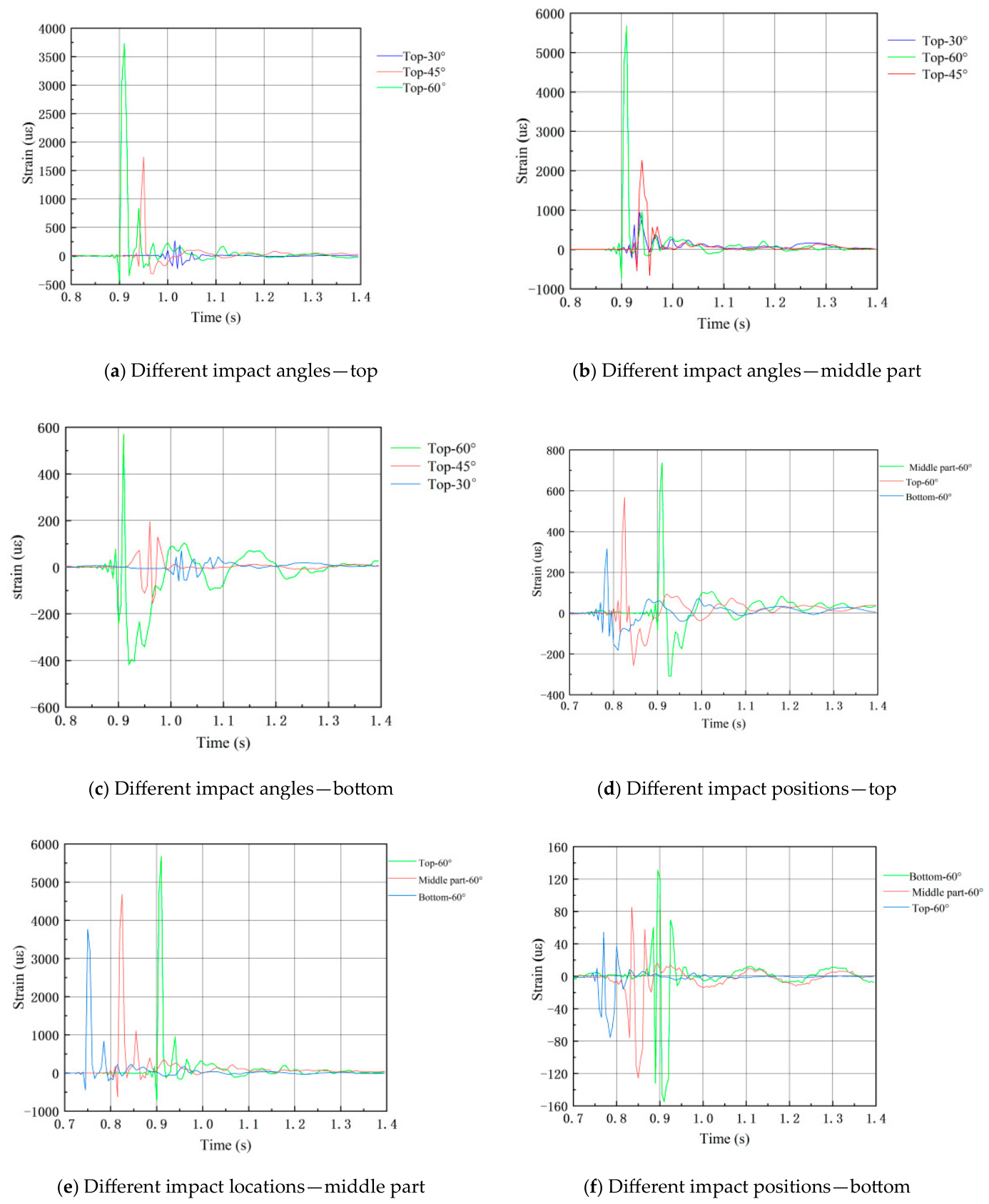
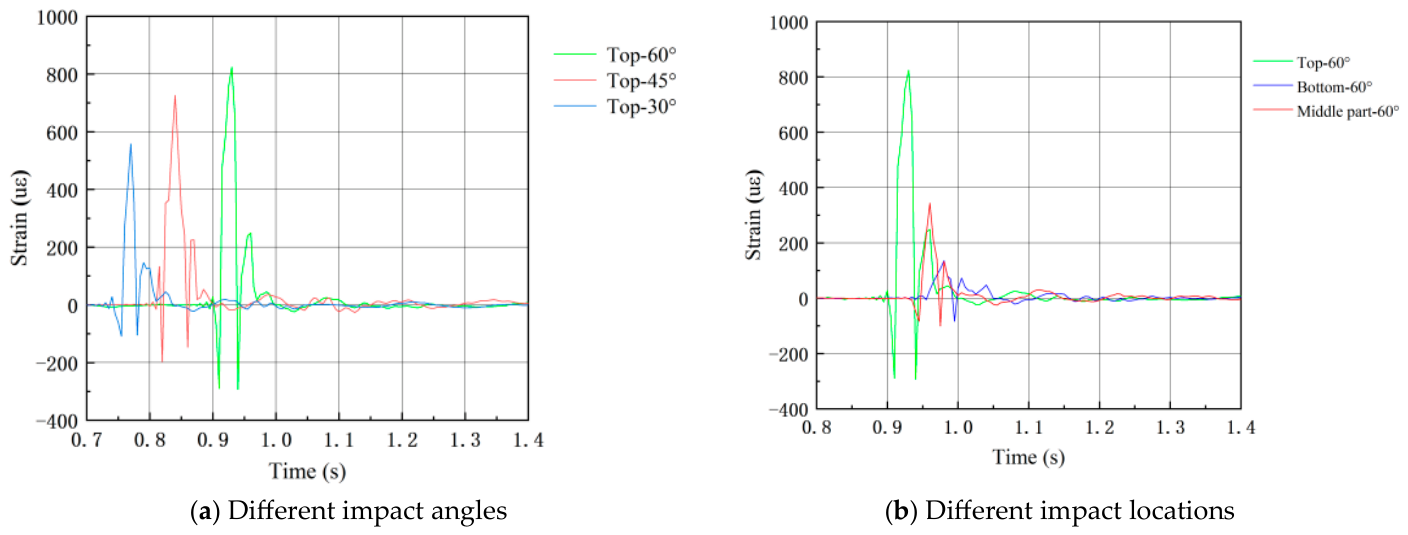
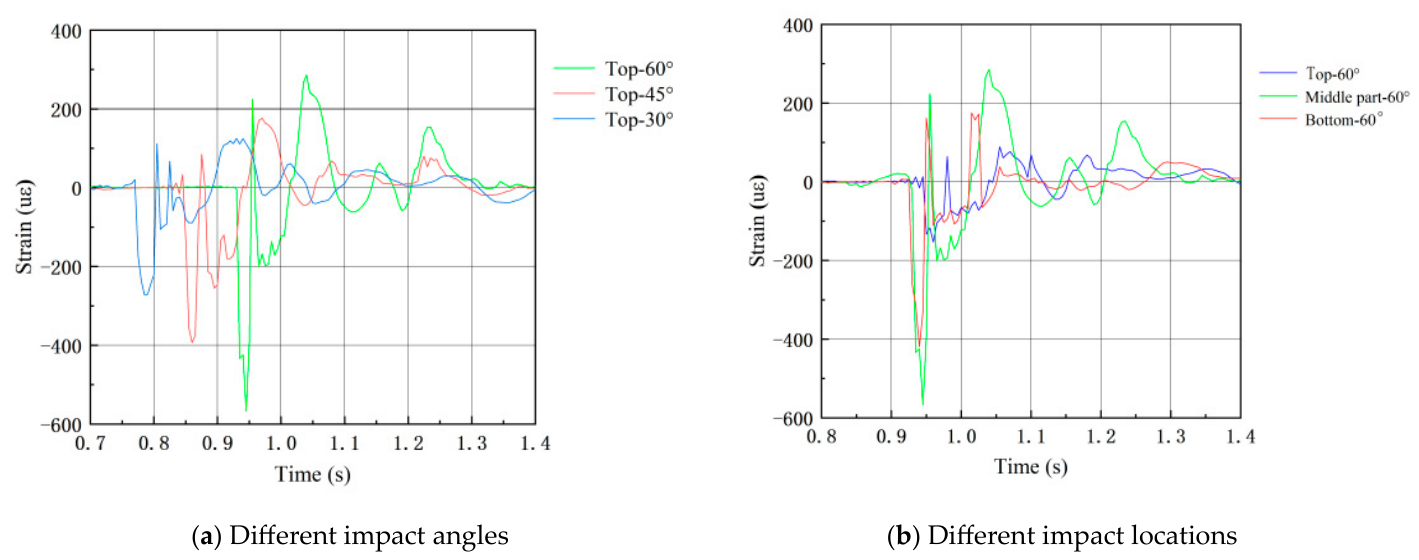
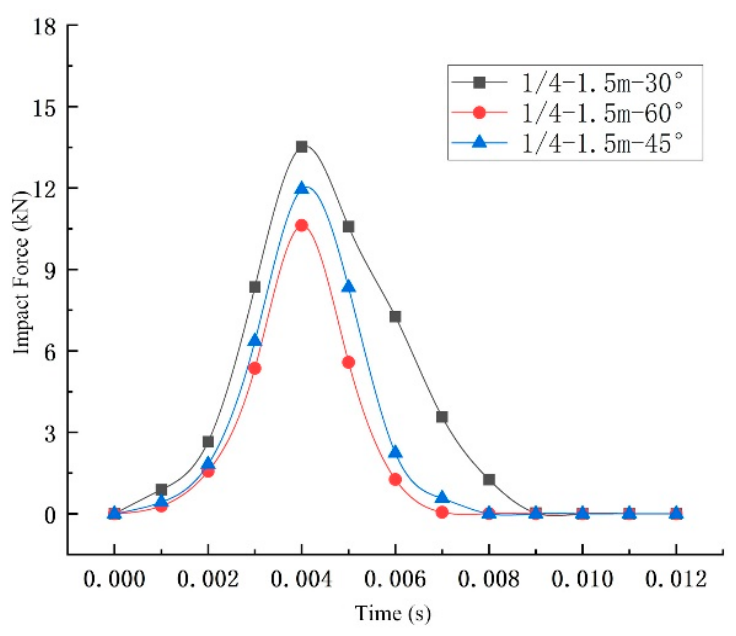
- As the impact angle of a rolling stone increases, the peak strains in the concrete and steel reinforcement at the impact location on the pier become higher. When the impact angle increases from 30° to 60°, the peak strain increases by approximately 22.8%. Unlike previous studies that have primarily focused on impact velocity and mass, this study quantitatively reveals the independent influence of the impact angle, providing an engineering correction reference value of 22.8%. This indicates that the impact angle is a key parameter governing the local damage degree of bridge piers, and impact risks at high angles should be prioritized in the design of impact-resistant protection.
- (2)
- The closer the impact position on the pier is to the bottom, the smaller the peak strain; the most significant strain response occurs at the middle position, followed by the top. This is because the bottom is constrained by the base and reinforced by the stirrup densification zone, which suppresses deformation development. Therefore, the middle part of the pier should be regarded as the key protection zone.
- (3)
- The peak strain of the steel reinforcement occurs within a very short delay after impact, and the stirrups exhibit mainly transverse orthogonal strain, while the longitudinal reinforcement exhibits mainly longitudinal orthogonal strain. The peak strain of the steel reinforcement also increases with increasing impact angle and decreases as the impact position moves downward, further validating the strain response pattern of the concrete.
- (4)
- Comparing the two types of influencing factors, the impact angle has a more significant effect on increasing the peak strain, indicating that controlling the angle between the trajectory of the rolling stone and the pier is more effective than adjusting the impact position. Existing research on the dynamic response of bridge piers under rolling stone impact remains limited. By revealing the strain patterns of steel reinforcement, this study provides a theoretical basis for the anti-impact design and stiffness enhancement of bridge piers. However, parameters such as the spacing and number of longitudinal reinforcements and stirrups still require further experimental data for validation.
- (5)
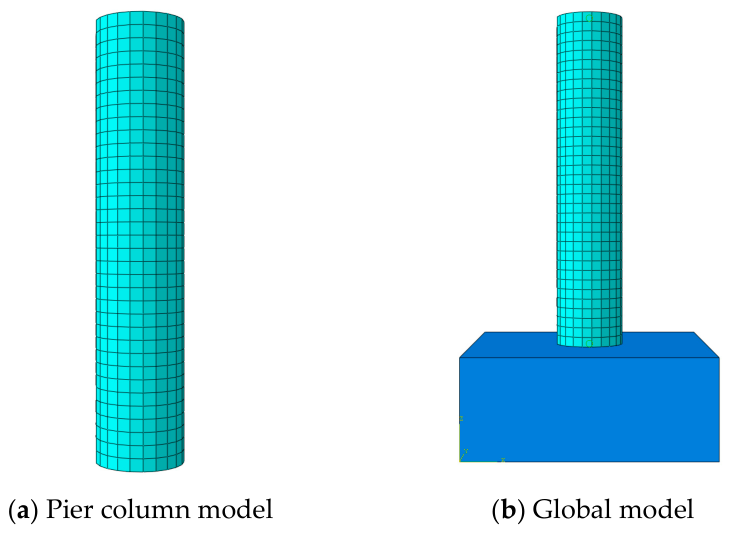
- Engineering application recommendations: Based on the quantitative findings regarding the critical impact angle (≥45°) and the priority protection zone (mid-height of the pier shaft), the following measures are recommended for the design of bridges in mountainous areas: ① In canyons and steep slope sections, the dominant incidence direction of rockfalls should be predicted, and the pier orientation or the layout of piers and abutments should be adjusted to reduce the probability of oblique impacts. ② Local reinforcement (e.g., stirrup densification, addition of an anti-impact layer) should be applied to the mid-height region of the pier shaft (approximately between 1/3 and 2/3 of the pier height). ③ Graded protection should be implemented according to impact angle zones (≥45°: high risk; 30–45°: moderate risk; ≤30°: low risk), thereby forming an integrated, impact-resistant design system that combines slope management with pier reinforcement. Numerical simulation cross-validation was not conducted in this study; a finite element model will be established in future work to complement and validate the experimental results.
Author Contributions
Funding
Data Availability Statement
Conflicts of Interest
References
- Wang, C. Study on Damage and Protection of Double-Column Pier Bridge in Western Mountainous Area Impacted by Rockfall. Master’s Thesis, Sichuan Normal University, Chengdu, China, 2021. [Google Scholar] [CrossRef]
- Wang, H. Research on Dynamic Response and Damage Collapse Mechanism of Beam Bridge Under Impact of Rockfall. Master’s Thesis, Guizhou Minzu University, Guiyang, China, 2024. [Google Scholar] [CrossRef]
- Lin, H. Study on the Failure Process and Damage Assessment of Reinforced Soil Retaining Wall Under Rockfall Impact. Master’s Thesis, Chongqing University, Chongqing, China, 2022. [Google Scholar] [CrossRef]
- Zhang, H. Dynamic Response and Protection of Lattice Pier Under Rockfall Impact. Master’s Thesis, Southwest University of Science and Technology, Mianyang, China, 2024. [Google Scholar] [CrossRef]
- TB 10003-2016; Railway Tunnel Design Code. Industrial Standard of the People’s Republic of China: Beijing, China, 2016.
- JTG 3370.1-2018; Highway Tunnel Design Code. Industrial Standard of the People’s Republic of China: Beijing, China, 2018.
- The Second Railway Survey and Design Institute. Railway Engineering Design Technical Manual; China Railway Publishing House: Beijing, China, 1999; pp. 141–191. [Google Scholar]
- Wang, H.; Lu, W.; Zhan, W. Dynamic response and damage mechanism of reinforced concrete beam bridges under rockfall impacts. Sci. Rep. 2025, 15, 5090. [Google Scholar] [CrossRef] [PubMed]
- Zhang, G.; Zhang, J.; He, C. Damage and protection of simply supported girder bridge pier: Rockfall impact. Structures 2025, 82, 110461. [Google Scholar] [CrossRef]
- Zhong, H.; Hao, C.; Yu, Z.; Lyu, L.; Wu, A. Damage assessment of RC bridge piers under rockfall impact and evaluation of a steel-sand protective structure. Structures 2023, 47, 607–624. [Google Scholar] [CrossRef]
- Fan, X.; He, A.; Liu, H.; Xia, G.; Zhou, Y.; Chen, J. Dynamic response of bridge damage by debris flow impact in mountainous area. J. Vib. Shock 2026, 45, 129–140. [Google Scholar] [CrossRef]
- Liu, C.; Yu, Z.; Liu, Y.; Huang, J.; Zhao, S. Influential factors of the maximum impact force of rock avalanche flow on a shed tunnel. J. Vib. Shock 2020, 39, 195–203+222. [Google Scholar] [CrossRef]
- Chen, Y.; Yao, C.; Zhou, X.; Zhao, S.; Chen, T.; Qiang, B. Influential factors of the maximum impact force of rock avalanche flow on bridge piers using DEM-FEM coupled method. J. Nat. Disasters 2024, 33, 65–74. [Google Scholar] [CrossRef]
- Cheng, M.; Guo, S.; Ta, P.; Cheng, J. Study on Damage Mechanisms of Concrete Piers Impacted by Debris Flow in Complex Terrain. J. Disaster Prev. Mitig. Eng. 2026, 46, 400–408. [Google Scholar] [CrossRef]
- Zhao, W.; Qian, J. Failure Mode and Impact Performance of Bridge Piers Subjected to Heavy Vehicle Collision. J. Disaster Prev. Mitig. Eng. 2019, 39, 67–74+88. [Google Scholar] [CrossRef]
- Li, B.; Gong, W.; Tang, H.; Wang, L. DEM Simulation of the Bridge Collapse under the Impact of Rock Avalanche: A Case Study of the 2020 Yaoheba Rock Avalanche in Southwest China. Bull. Eng. Geol. Environ. 2024, 83, 24. [Google Scholar] [CrossRef]
- Cheng, L. Numerical Analysis of the Dynamic Response of Concrete Bridge Piers under the Impact of Rock Debris Flow. Buildings 2024, 14, 1504. [Google Scholar] [CrossRef]
- Kafshgarkolaei, H.J.; Lotfollahi-Yaghin, M.A.; Mojtahedi, A. A modified orthonormal polynomial series expansion tailored to thin beams undergoing slamming loads. Ocean Eng. 2019, 182, 38–47. [Google Scholar] [CrossRef]
- Gu, Z. Study on the Dynamic Response and Experimental Research of Bridge Pier Under Rolling Stone-Collision. Master’s Thesis, Chongqing Jiaotong University, Chongqing, China, 2015. [Google Scholar]
- Liu, G.; Shi, C. Stress Analysis and Detennination of Strength for Compressed Masonry. Build. Struct. 2000, 3–7. [Google Scholar] [CrossRef]
- Ye, J. Principles of Structural Design; China Communications Press: Beijing, China, 2004. [Google Scholar]
- GB/T 50010-2010; Code for Design of Concrete Structures. China Architecture & Building Press: Beijing, China, 2024.
- Wang, Z.-J.; Liu, Q.; Jiang, Y.; Wu, L.-M.; Wang, H.; Wang, Y.; Wang, J.-W. Impact Force Algorithm and Parameters of Rolling Stone Impact Pier in Mountain Area. Adv. Civ. Eng. 2024, 2024, 5542305. [Google Scholar] [CrossRef]
- Gu, X.; Yu, Z.; Zhao, L.; Xu, H. Influence of Rockfall Impact Energy on Mountain Bridge Damage. J. Southwest Jiaotong Univ. 2016, 51, 1131–1137. [Google Scholar] [CrossRef]
- Wang, Z.; Li, J.; Ling, L.; Luo, H.; Wu, L.; Zhou, X.; Wang, Y. Strengthening Width on Local Damage to Circular Piers Caused by Rolling Boulder Impacts. Buildings 2025, 15, 4347. [Google Scholar] [CrossRef]
- Kopras, M.; Buczkowski, W.; Szymczak-Graczyk, A.; Walczak, Z.; Gogolik, S. Experimental validation of deflections of temporary excavation support plates with the use of 3D modelling. Materials 2022, 15, 4856. [Google Scholar] [CrossRef] [PubMed]
- Gogolik, S.; Kopras, M.; Szymczak-Graczyk, A.; Tschuschke, W. Experimental evaluation of the size and distribution of lateral pressure on the walls of the excavation support. J. Build. Eng. 2023, 15, 106831. [Google Scholar] [CrossRef]






| Water (kg/m3) | Cement (kg/m3) | Sand (kg/m3) | Coarse Aggregate (kg/m3) |
|---|---|---|---|
| 175 | 461 | 512 | 1252 |
| Condition Number | Impact Position | Fall Height (m) | |||||
|---|---|---|---|---|---|---|---|
| Z1 | Z1-1 | / | middle part | / | 1.5 | 1.25 | 1.0 |
| Z1-2 | / | middle part | / | 1.5 | 1.25 | 1.0 | |
| Z1-3 | / | middle part | / | 1.5 | 1.25 | 1.0 | |
| Z1-4 | / | middle part | / | 1.5 | 1.25 | 1.0 | |
| Z1-5 | / | middle part | / | 1.5 | 1.25 | 1.0 | |
| Z2 | Z2-1 | bottom | middle part | top | 1.5 | / | |
| Z2-2 | bottom | middle part | top | 1.5 | / | ||
| Z2-3 | bottom | middle part | top | 1.5 | / | / | |
| Z2-4 | bottom | middle part | top | 1.5 | / | / | |
| Z2-5 | bottom | middle part | top | 1.5 | / | / | |
| Instrument Name | Model | Range | Accuracy | Quantity |
|---|---|---|---|---|
| Impact force sensor | - | 0–100 kN | 1 N | 1 |
| Steel reinforcement strain gauge | 120-3AA | 20,000 με | - | 8 |
| Concrete strain gauge | 120-80AA | 20,000 με | - | 10 |
| Dynamic testing system | DH8352 | - | 1 MHz | 1 |
Disclaimer/Publisher’s Note: The statements, opinions and data contained in all publications are solely those of the individual author(s) and contributor(s) and not of MDPI and/or the editor(s). MDPI and/or the editor(s) disclaim responsibility for any injury to people or property resulting from any ideas, methods, instructions or products referred to in the content. |
© 2026 by the authors. Licensee MDPI, Basel, Switzerland. This article is an open access article distributed under the terms and conditions of the Creative Commons Attribution (CC BY) license.
Share and Cite
Wu, L.-M.; Wang, Z.-J.; Jiang, Y.; Jiang, J.; Huang, H.-X.-T.; Chen, Y.-S. Study on Dynamic Response of Rockfall-Impacted Pile-Column Bridge Piers Based on Scaled Model Tests. Buildings 2026, 16, 2152. https://doi.org/10.3390/buildings16112152
Wu L-M, Wang Z-J, Jiang Y, Jiang J, Huang H-X-T, Chen Y-S. Study on Dynamic Response of Rockfall-Impacted Pile-Column Bridge Piers Based on Scaled Model Tests. Buildings. 2026; 16(11):2152. https://doi.org/10.3390/buildings16112152
Chicago/Turabian StyleWu, Li-Ming, Zi-Jian Wang, Yi Jiang, Jian Jiang, Hu-Xin-Tong Huang, and Yu-Si Chen. 2026. "Study on Dynamic Response of Rockfall-Impacted Pile-Column Bridge Piers Based on Scaled Model Tests" Buildings 16, no. 11: 2152. https://doi.org/10.3390/buildings16112152
APA StyleWu, L.-M., Wang, Z.-J., Jiang, Y., Jiang, J., Huang, H.-X.-T., & Chen, Y.-S. (2026). Study on Dynamic Response of Rockfall-Impacted Pile-Column Bridge Piers Based on Scaled Model Tests. Buildings, 16(11), 2152. https://doi.org/10.3390/buildings16112152