Article

Devolatilization Kinetics of Different Types of Bio-Coals Using Thermogravimetric Analysis


by
Asmaa A. El-Tawil
1,*,
Hesham M. Ahmed
1,2,
Lena Sundqvist Ökvist
1,3 and
Bo Björkman
1
1
MiMeR, Luleå University of Technology, 97187 Luleå, Sweden
2
Central Metallurgical Research and Development Institute, P.O Box 87, Helwan, Cairo 11421, Egypt
3
Swerim AB, 97125 Luleå, Sweden
*
Author to whom correspondence should be addressed.
Metals 2019, 9(2), 168; https://doi.org/10.3390/met9020168
Submission received: 17 January 2019 / Revised: 28 January 2019 / Accepted: 29 January 2019 / Published: 1 February 2019
(This article belongs to the Special Issue Ironmaking and Steelmaking)

Abstract

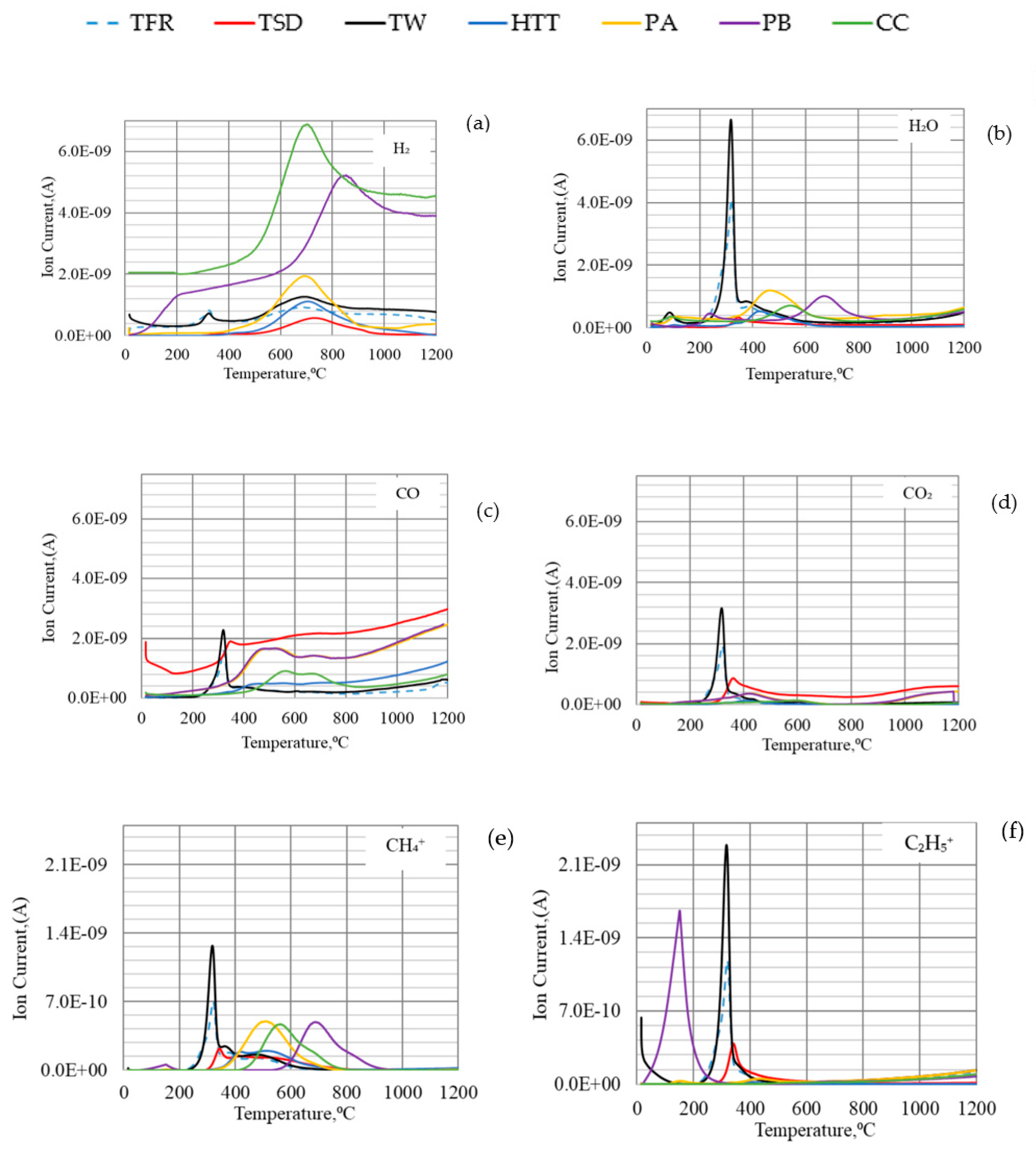
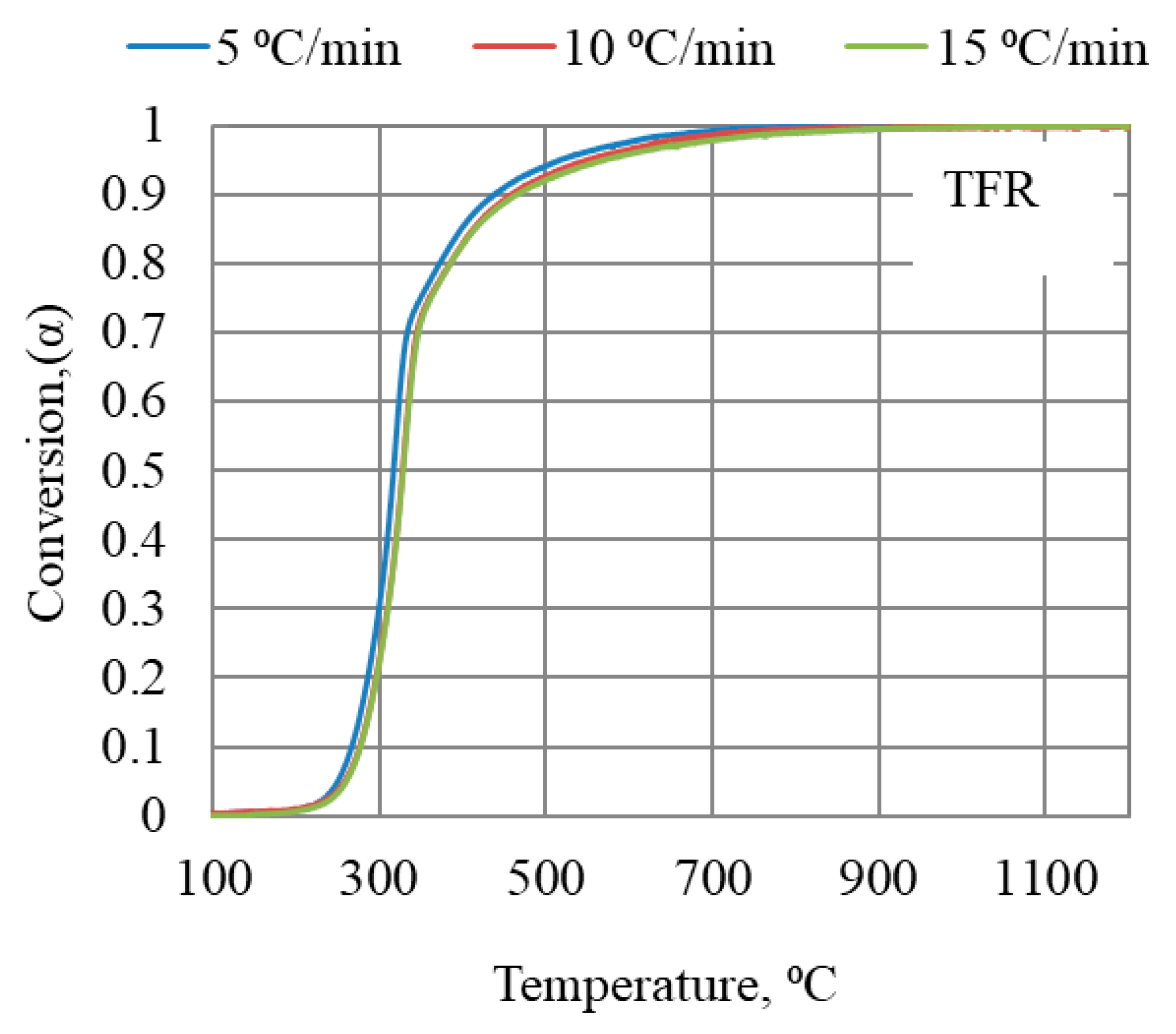
The interest of the steel industry in utilizing bio-coal (pre-treated biomass) as CO2-neutral carbon in iron-making is increasing due to the need to reduce fossil CO2 emission. In order to select a suitable bio-coal to be contained in agglomerates with iron oxide, the current study aims at investigating the thermal devolatilization of different bio-coals. A thermogravimetric analyzer (TGA) equipped with a quadrupole mass spectrometer (QMS) was used to monitor the weight loss and off-gases during non-isothermal tests with bio-coals having different contents of volatile matter. The samples were heated in an inert atmosphere to 1200 °C at three different heating rates: 5, 10, and 15 °C/min. H2, CO, and hydrocarbons that may contribute to the reduction of iron oxide if contained in the self-reducing composite were detected by QMS. To explore the devolatilization behavior for different materials, the thermogravimetric data were evaluated by using the Kissinger– Akahira–Sonuse (KAS) iso-conversional model. The activation energy was determined as a function of the conversion degree. Bio-coals with both low and high volatile content could produce reducing gases that can contribute to the reduction of iron oxide in bio-agglomerates and hot metal quality in the sustained blast furnace process. However, bio-coals containing significant amounts of CaO and K2O enhanced the devolatilization and released the volatiles at lower temperature.
Keywords: devolatilization; torrefied biomass; bio-coal; volatile matter; iso-conversional method devolatilization; torrefied biomass; bio-coal; volatile matter; iso-conversional method