Article

Active and Passive Filling Stir Repairing of AISI 304 Alloy

by
Vincenzo Lunetto
1,2,
Dario Basile
1,2,
Valentino Razza
1,2 and
Pasquale Russo Spena
1,2,*
1
Department of Management and Production Engineering, Politecnico di Torino, Corso Duca degli Abruzzi 24, 10129 Torino, Italy
2
Advanced Joining Technologies Laboratory J-Tech@PoliTO, Politecnico di Torino, Corso Duca degli Abruzzi 24, 10129 Torino, Italy
*
Author to whom correspondence should be addressed.
Metals 2024, 14(8), 911; https://doi.org/10.3390/met14080911
Submission received: 4 July 2024 / Revised: 6 August 2024 / Accepted: 8 August 2024 / Published: 11 August 2024
(This article belongs to the Special Issue Advances in Welding and Mechanical Joining of Metals)

Abstract

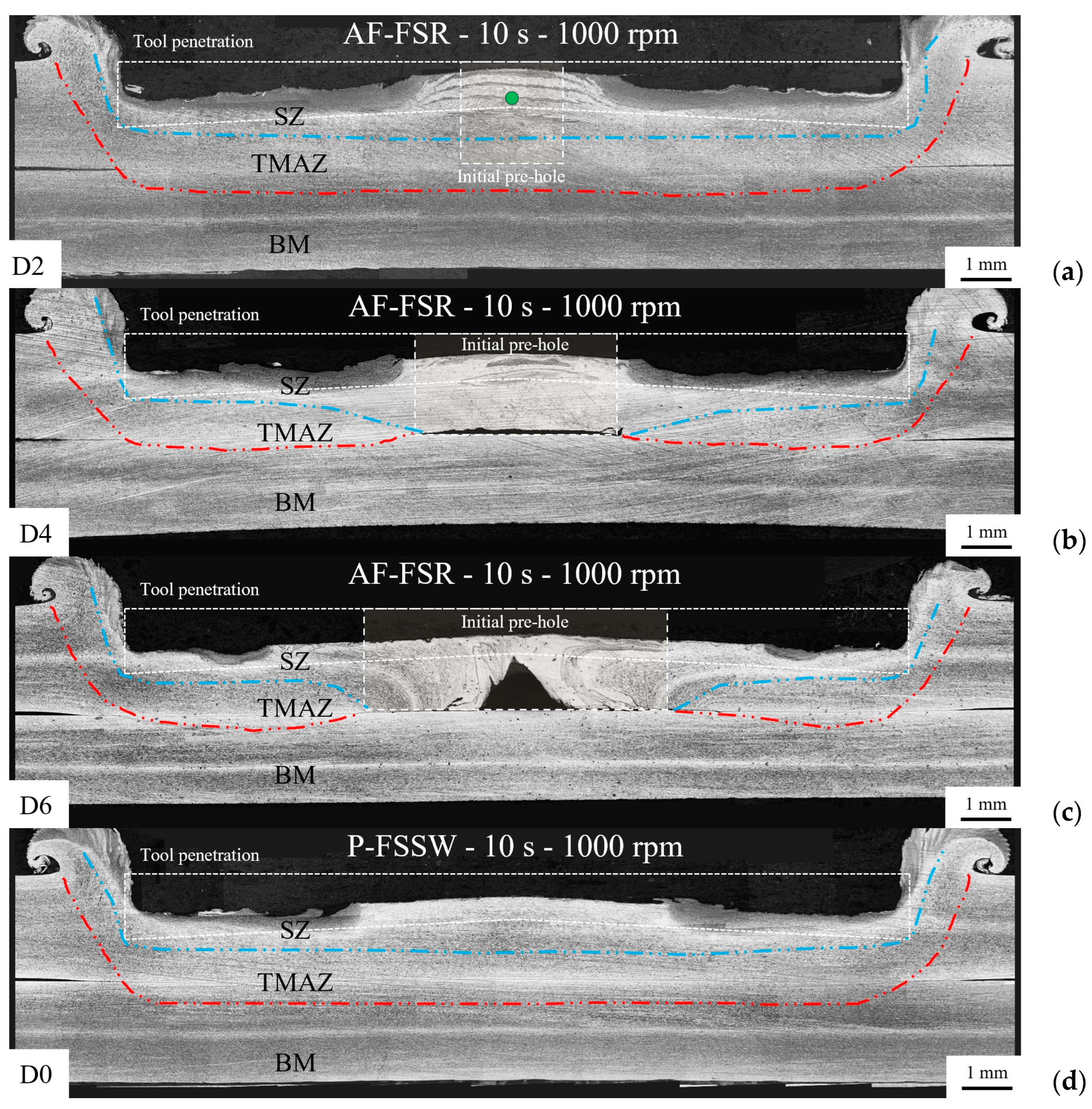
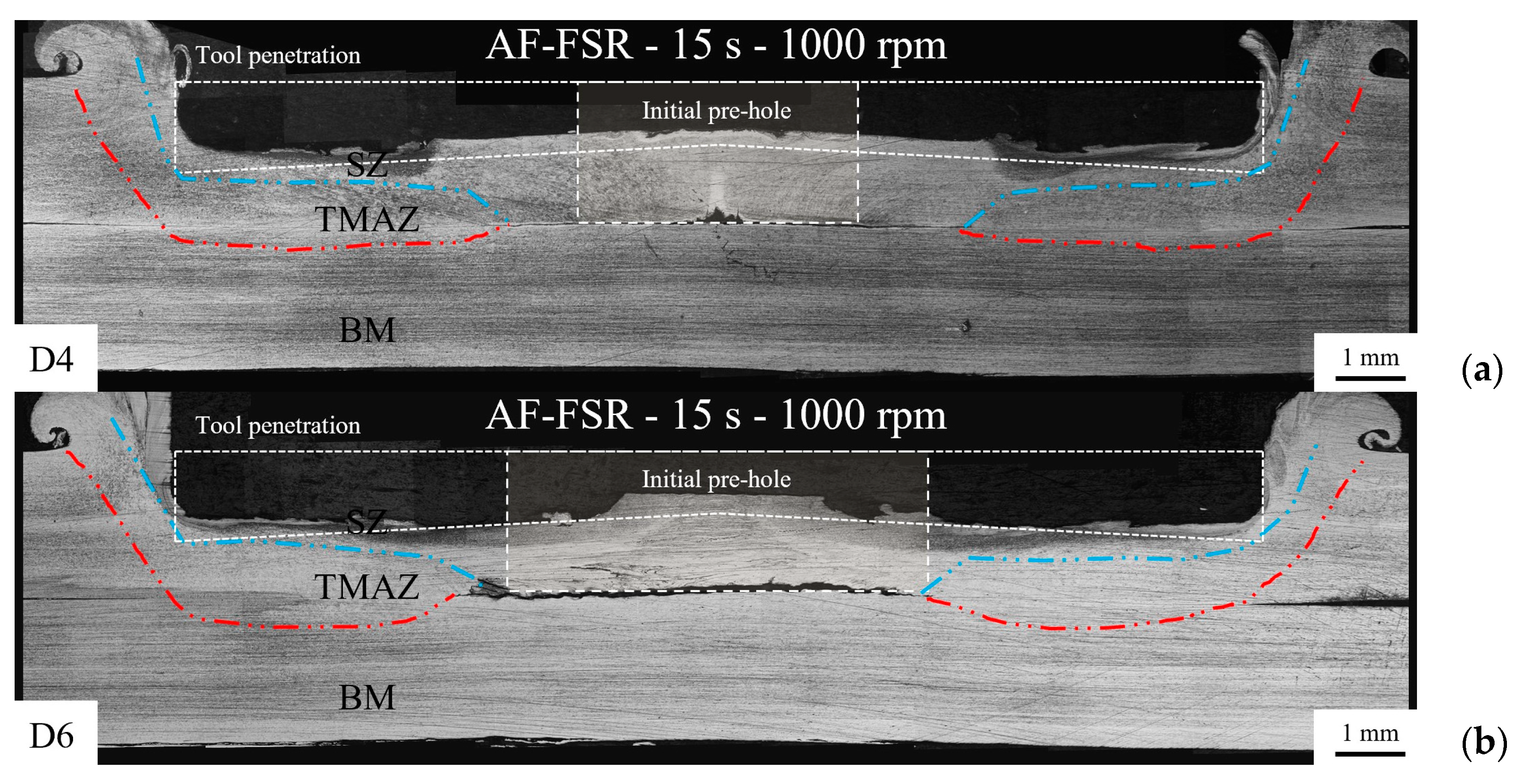
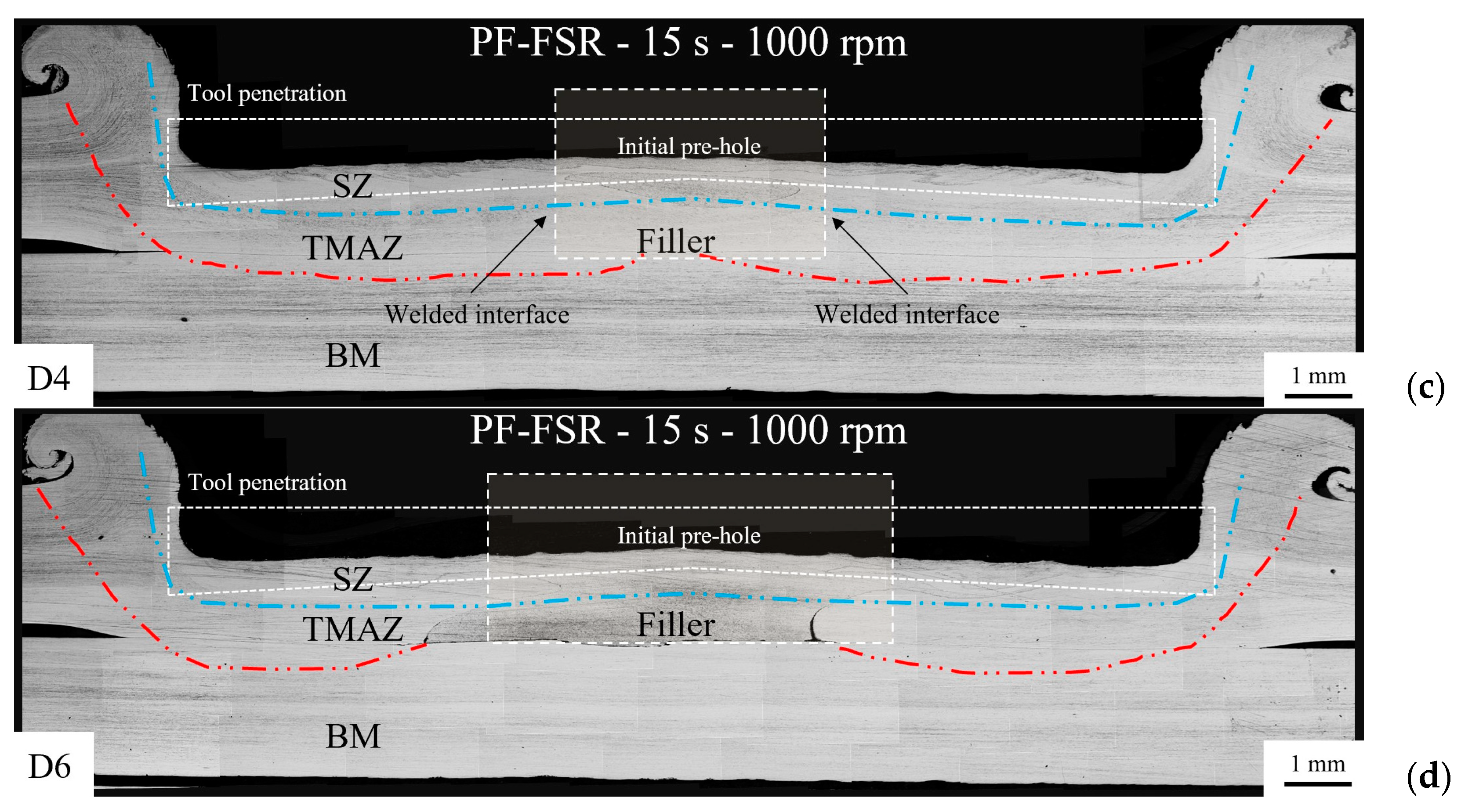
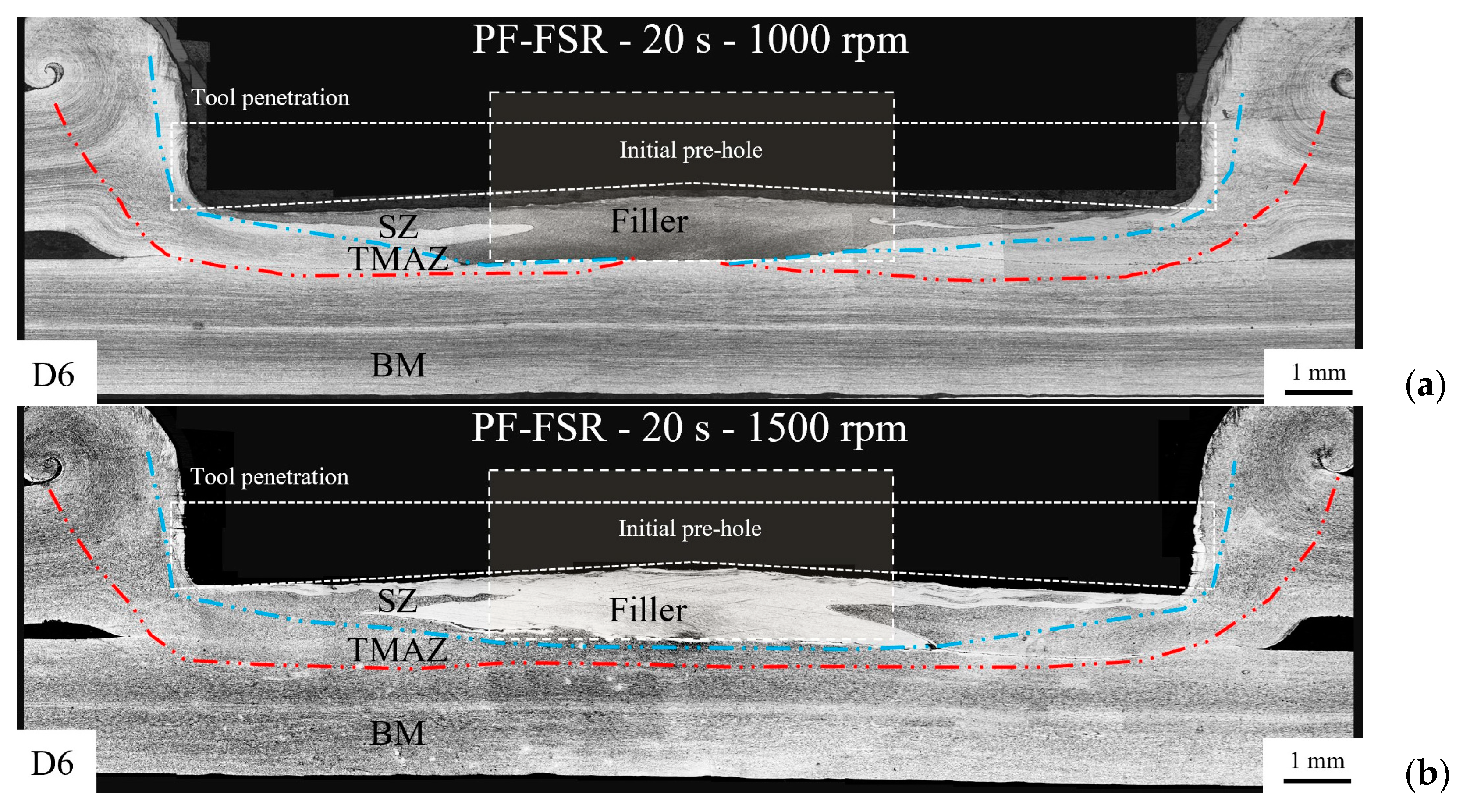
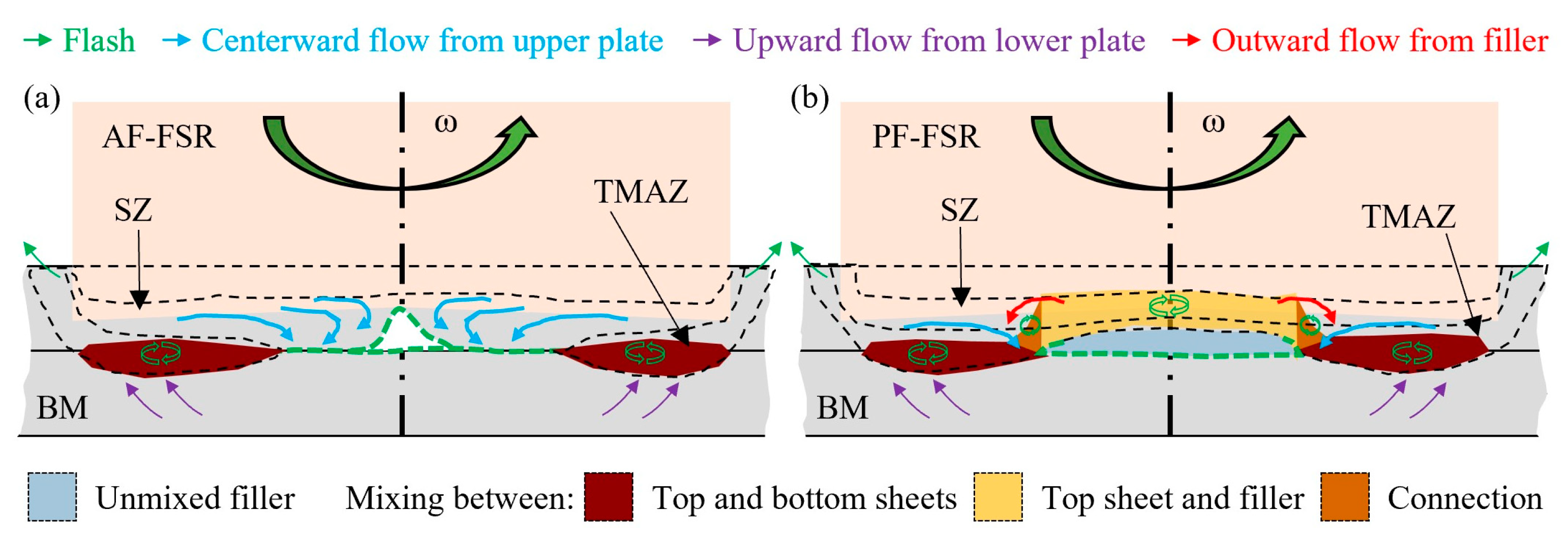
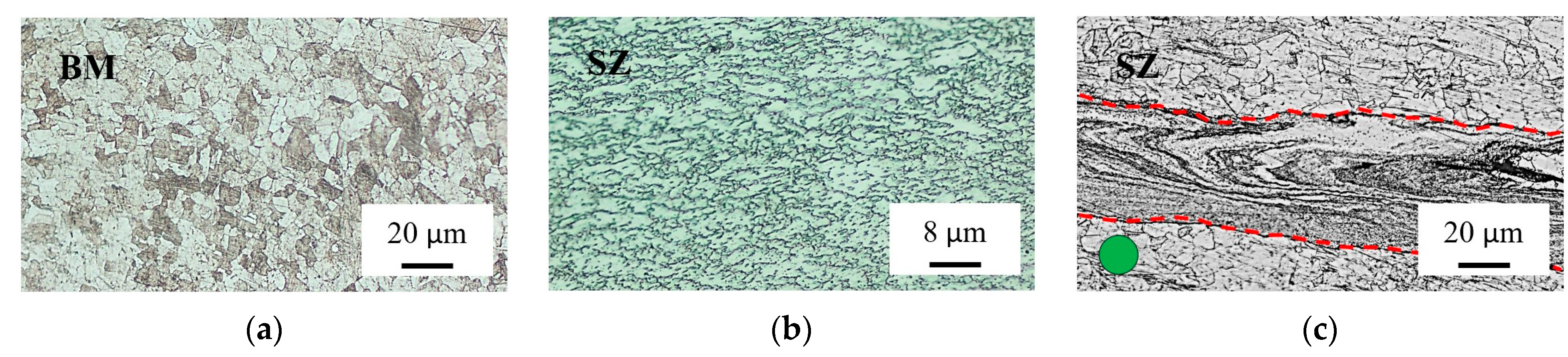
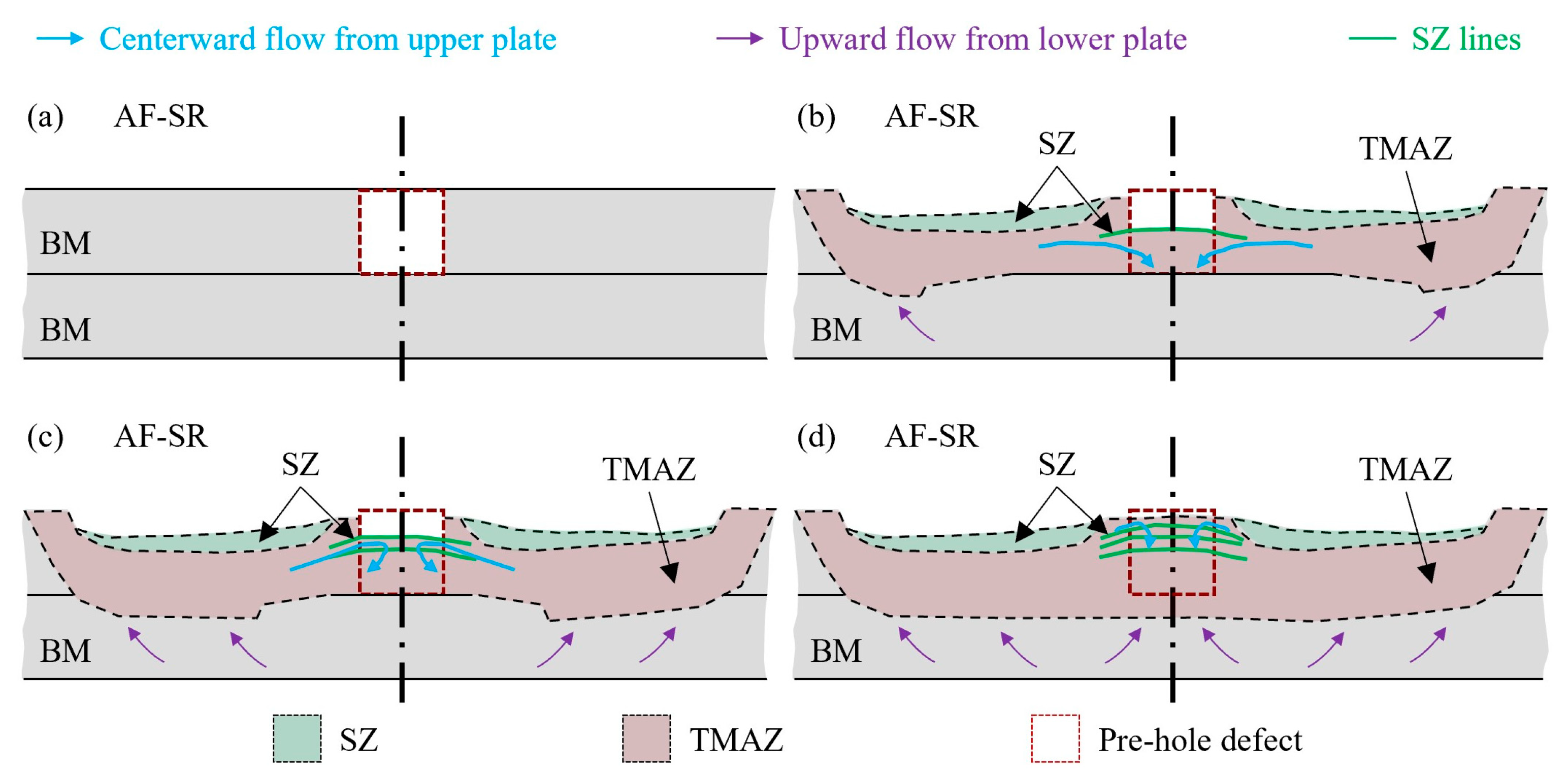
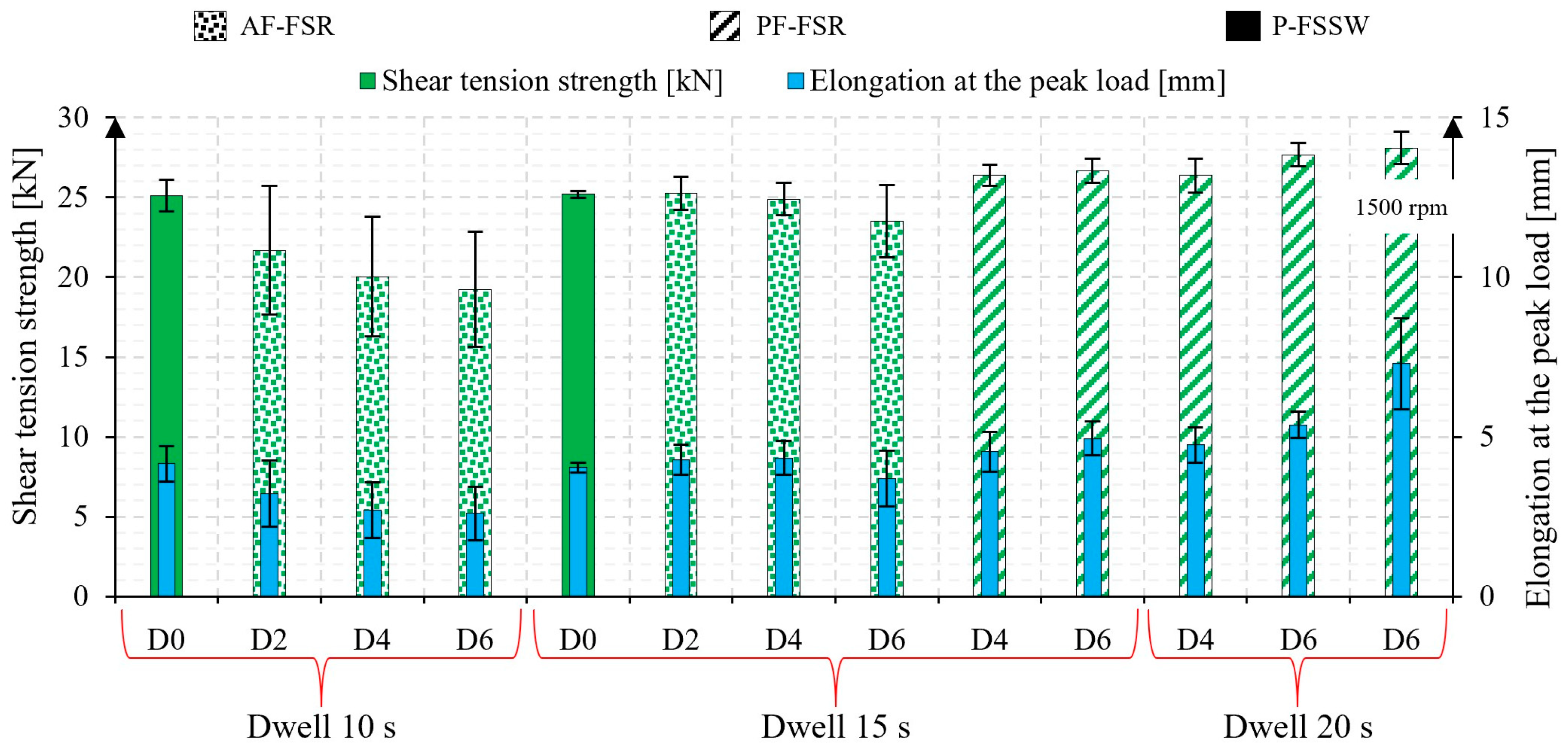
This study investigates active filling friction stir repair (AF-FSR) and passive filling friction stir repair (PF-FSR) for repairing AISI 304 stainless steel sheets, focusing on addressing the challenges posed by high melting point metals. The research involved repairing overlapping 2 mm thick sheets with pre-drilled holes of 2, 4, and 6 mm diameters, simulating broken components. Various process parameters, including rotational speed, dwell time, and the use of metal fillers, were tested to evaluate their impact on repair quality. The results demonstrated that PF-FSR provided superior mechanical strength to AF-FSR, particularly for larger pre-hole diameters. PF-FSR achieved higher shear tension strength due to better defect filling and reduced void formation, with shear tension strengths exceeding 25 kN for larger pre-holes and lower variability in strength measurements. AF-FSR was less effective for larger pre-holes, resulting in significant voids and reduced strength. Microstructural analysis revealed that PF-FSR facilitated more efficient material mixing and filling, minimizing unrepaired regions. However, excessive rotational speeds and dwell times in PF-FSR led to deformation and flash formation, highlighting the need for optimal parameter selection. Although further studies are needed, this study confirms the feasibility of FSR techniques for repairing small defects in AISI 304 steels, offering valuable insights for sustainable manufacturing practices in industries such as automotive and aerospace, where efficient and reliable repair methods are critical.
Keywords: repair; active filling friction stir repair; passive filling friction stir repair; pinless tool; automotive; aerospace repair; active filling friction stir repair; passive filling friction stir repair; pinless tool; automotive; aerospace