Article

A Numerical and Experimental Assessment of the Small Punch Creep Test for 316L(N) Stainless Steels

by
Karl-Fredrik Nilsson
1,*,
Daniele Baraldi
1,
Stefan Holmström
2 and
Igor Simonovski
1
1
European Commission, Joint Research Centre (JRC), 1755 LE Petten, The Netherlands
2
SCK-CEN, Belgian Nuclear Research Centre, 2400 Mol, Belgium
*
Author to whom correspondence should be addressed.
Metals 2021, 11(10), 1609; https://doi.org/10.3390/met11101609
Submission received: 30 August 2021 / Revised: 29 September 2021 / Accepted: 4 October 2021 / Published: 11 October 2021
(This article belongs to the Section Computation and Simulation on Metals)

Abstract

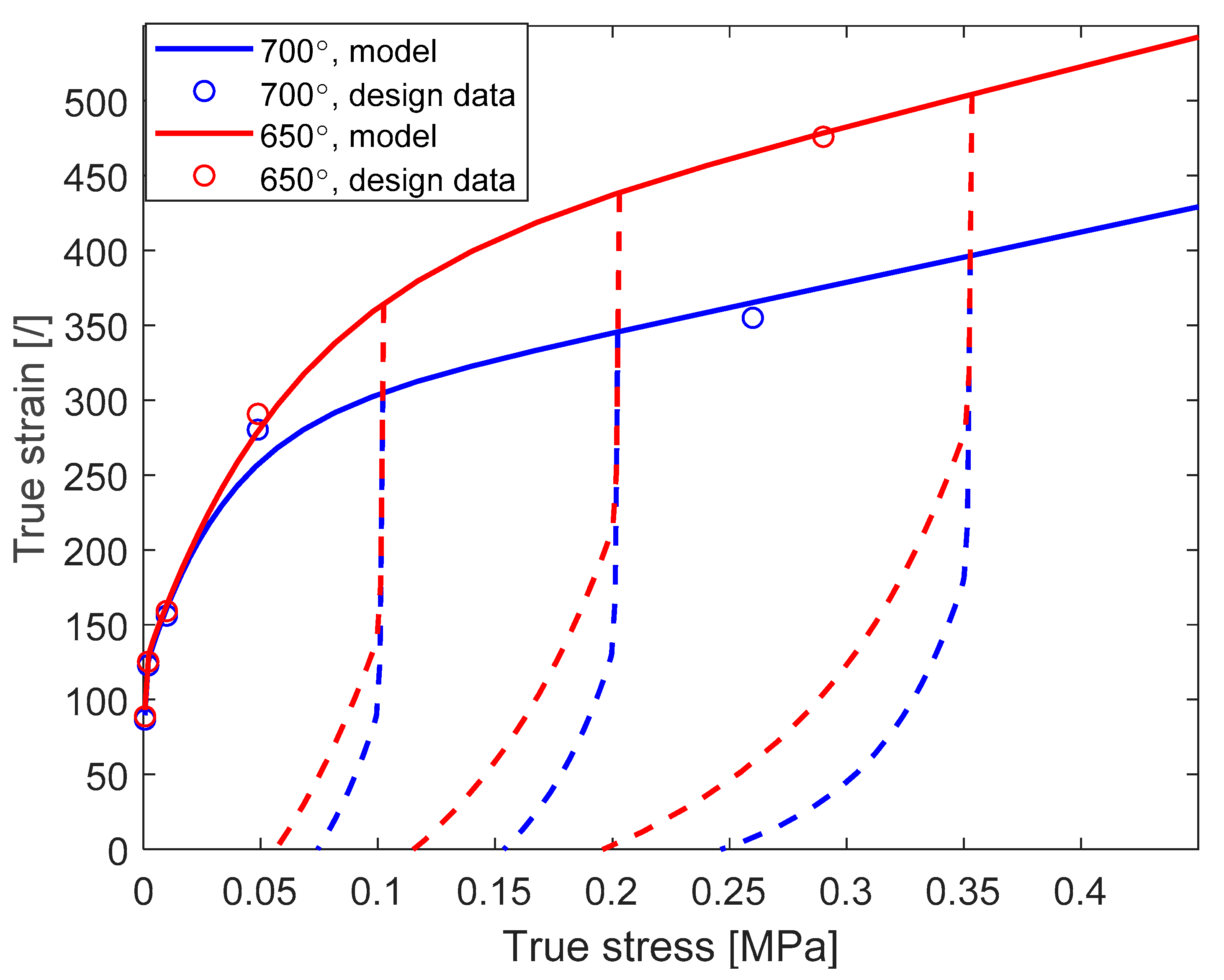
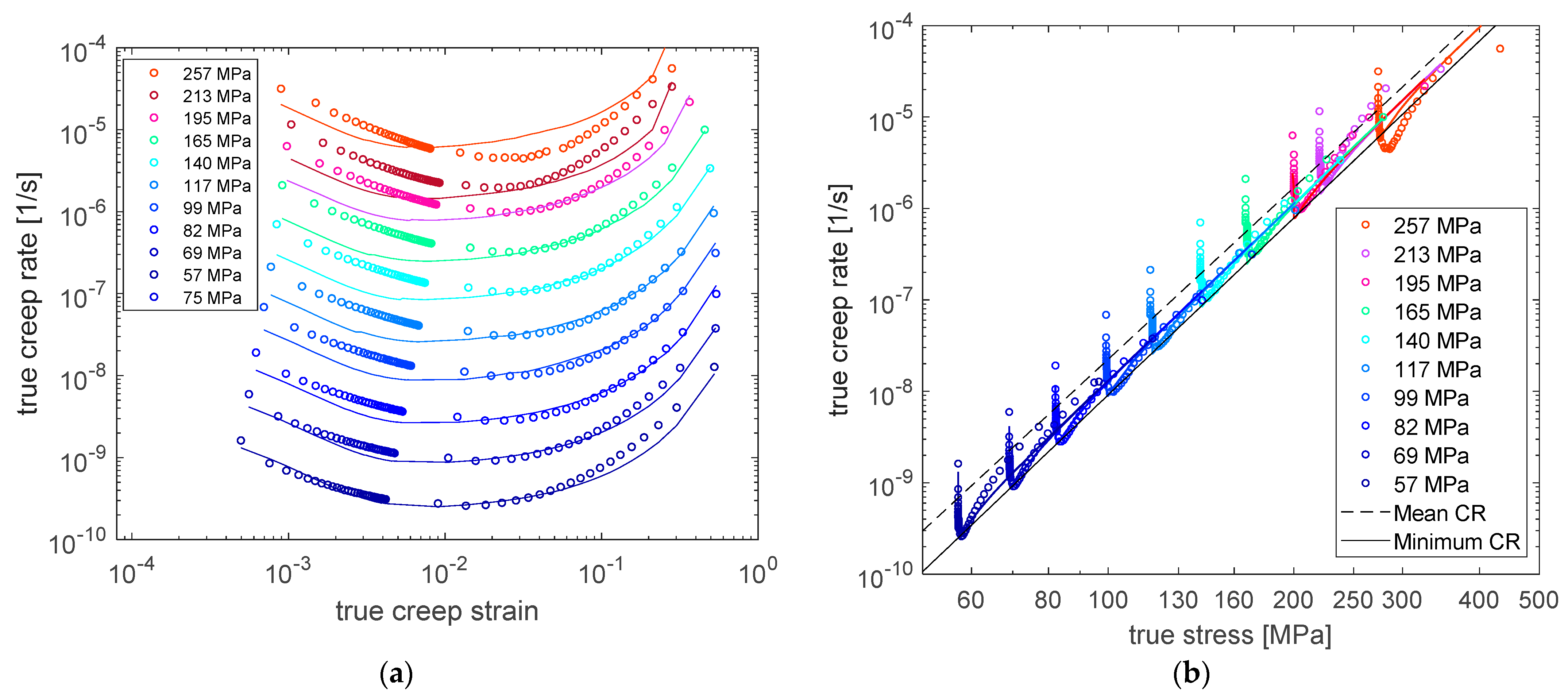
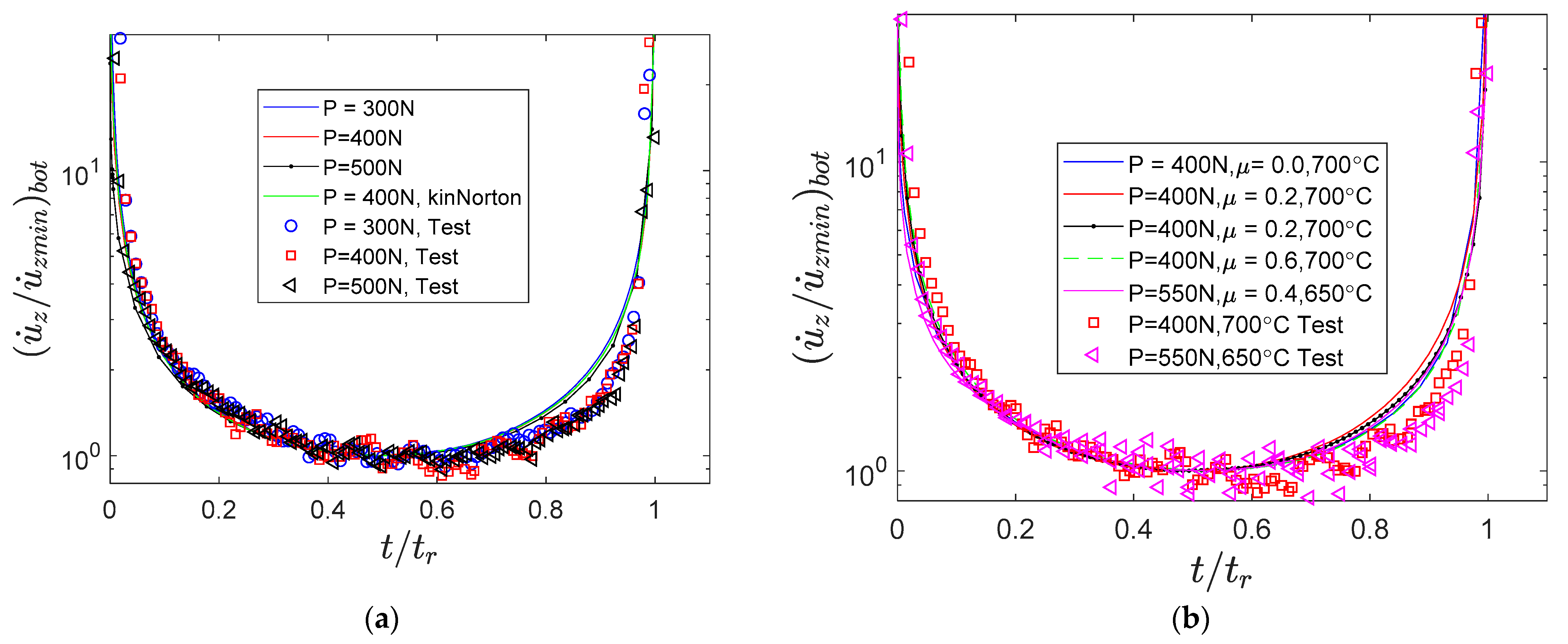
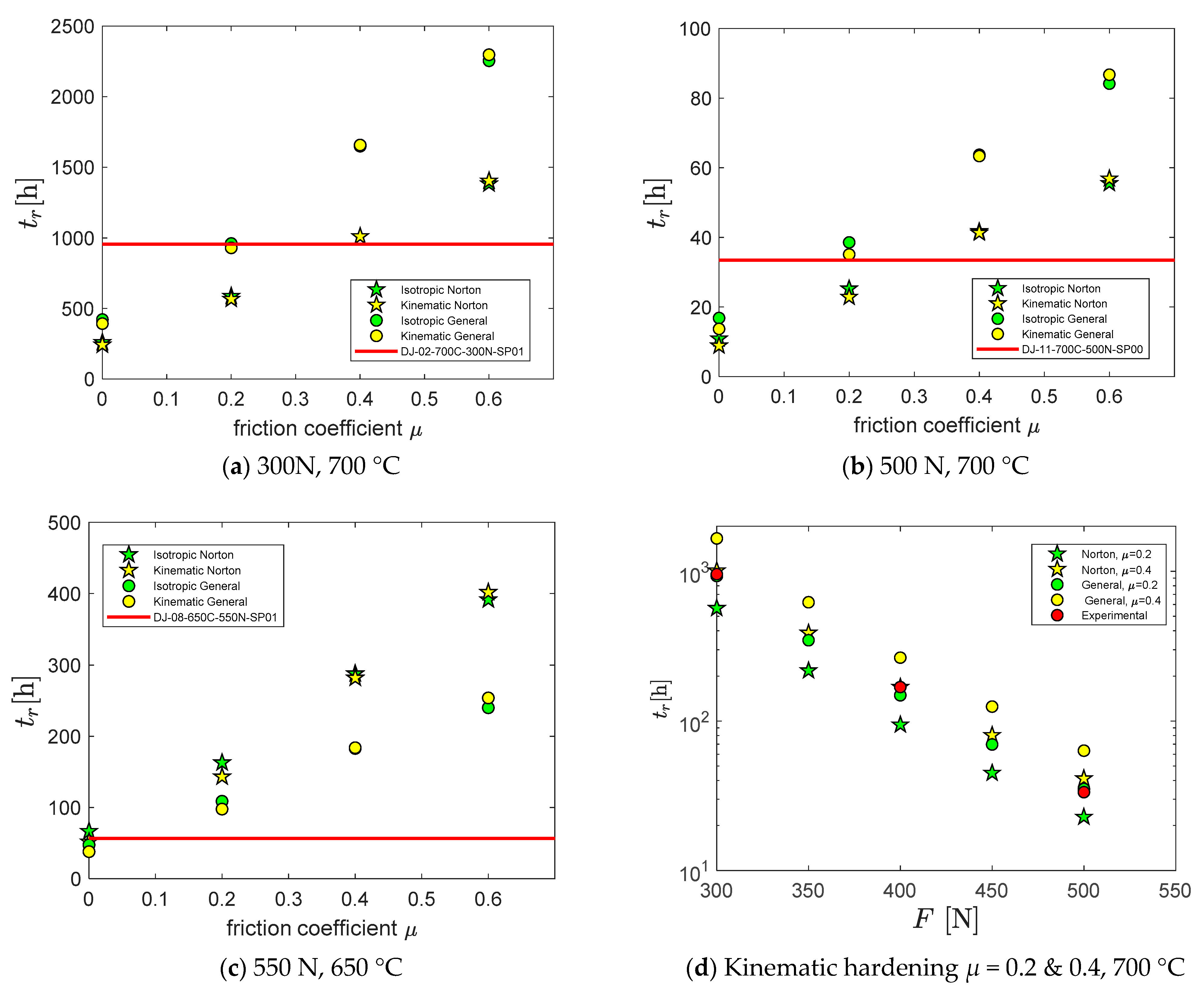
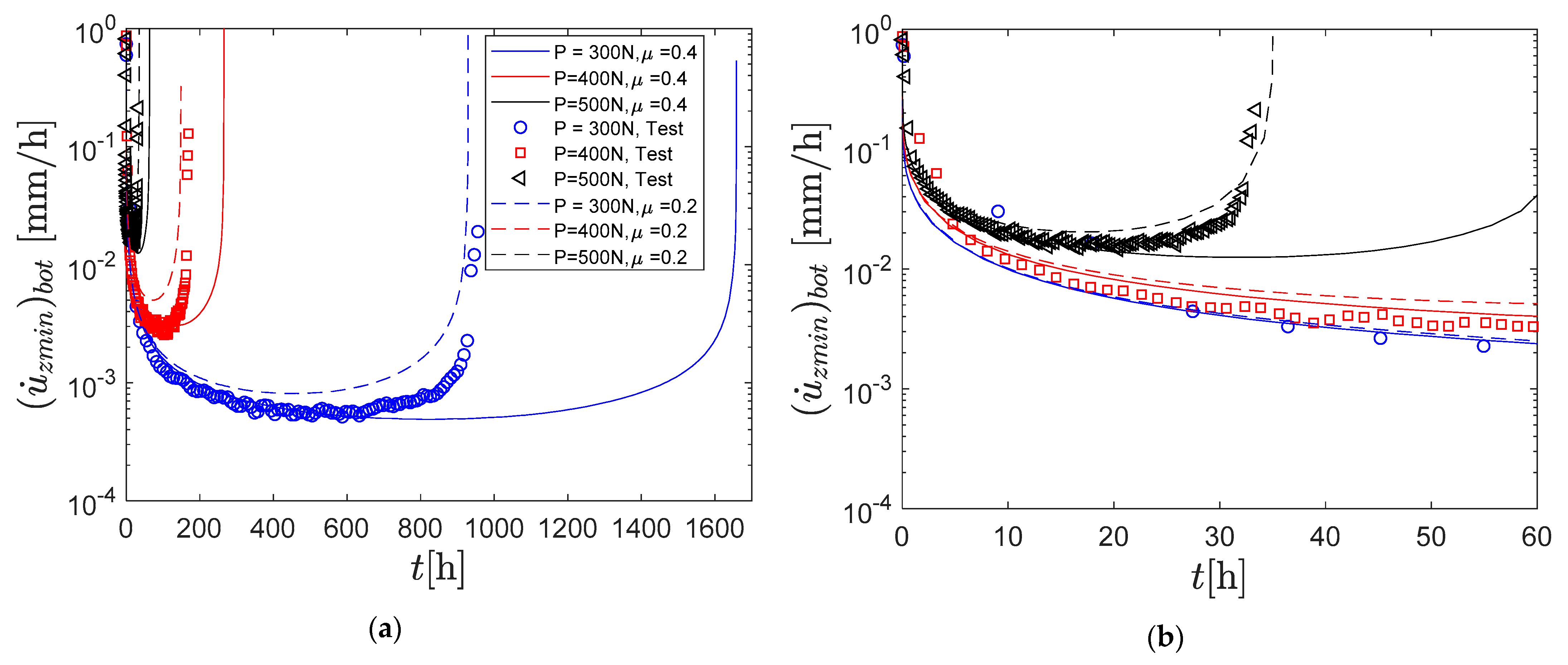
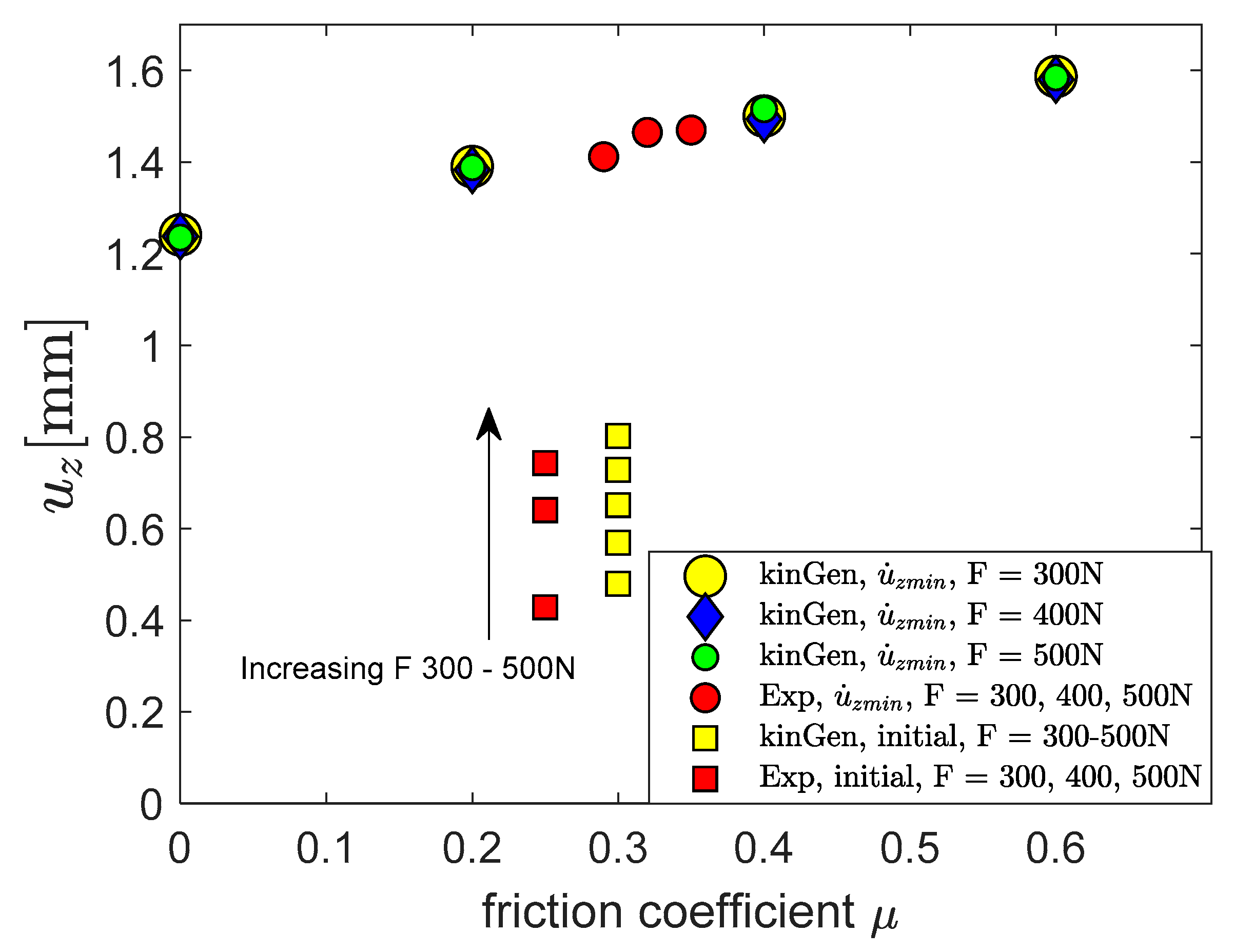
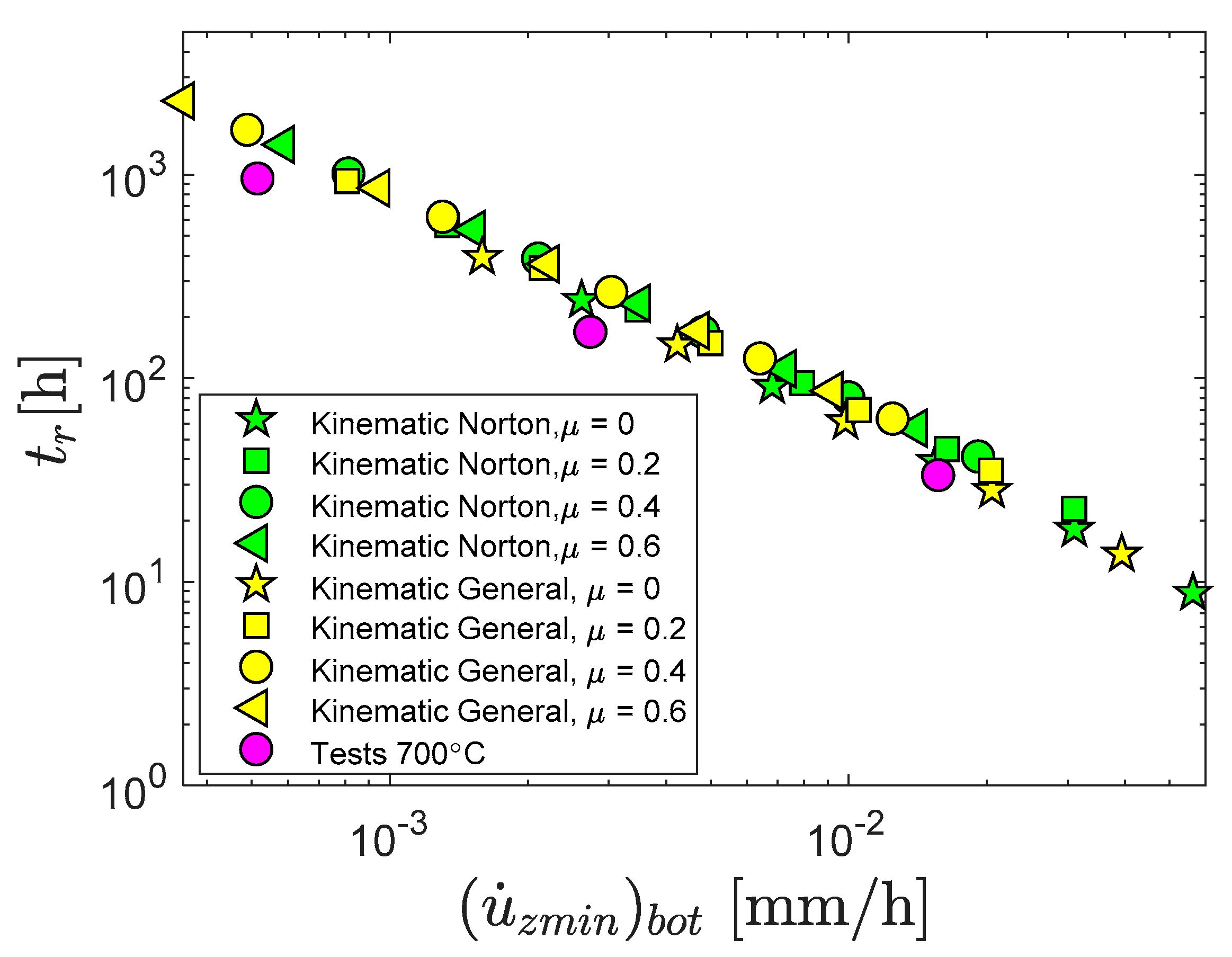
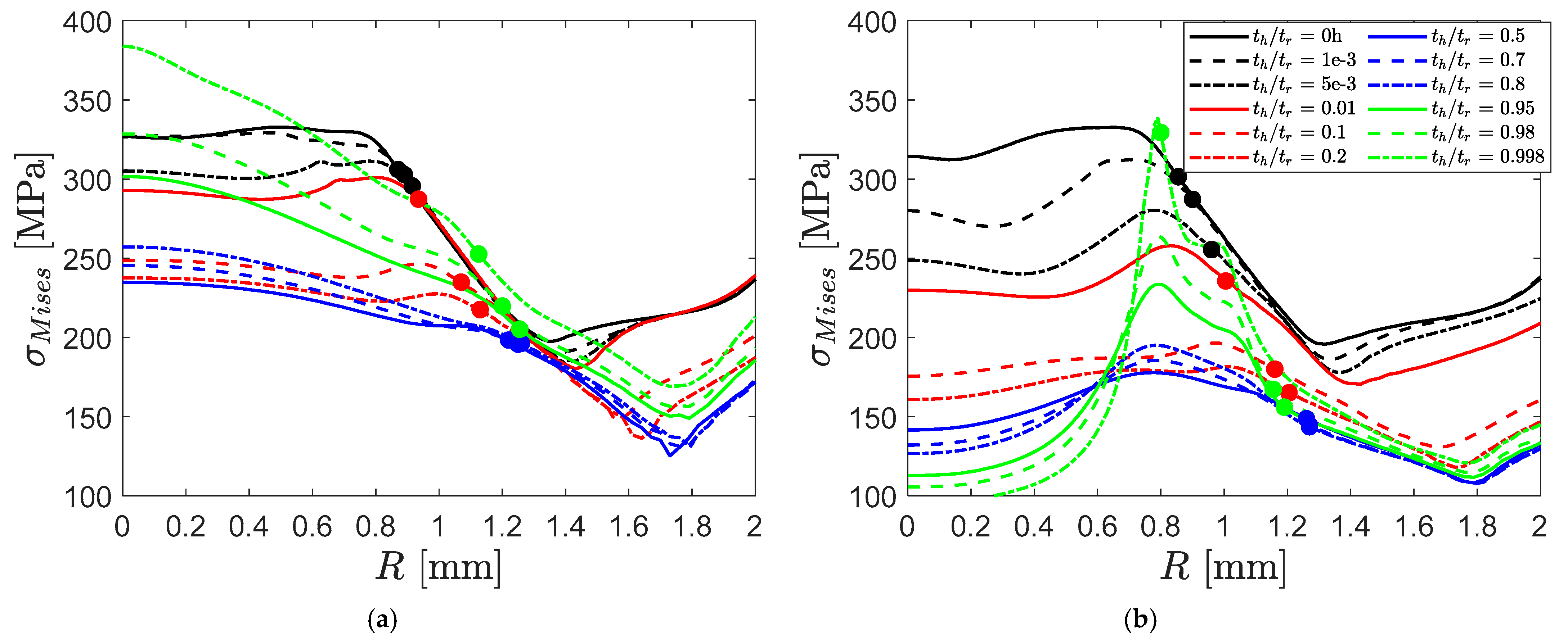
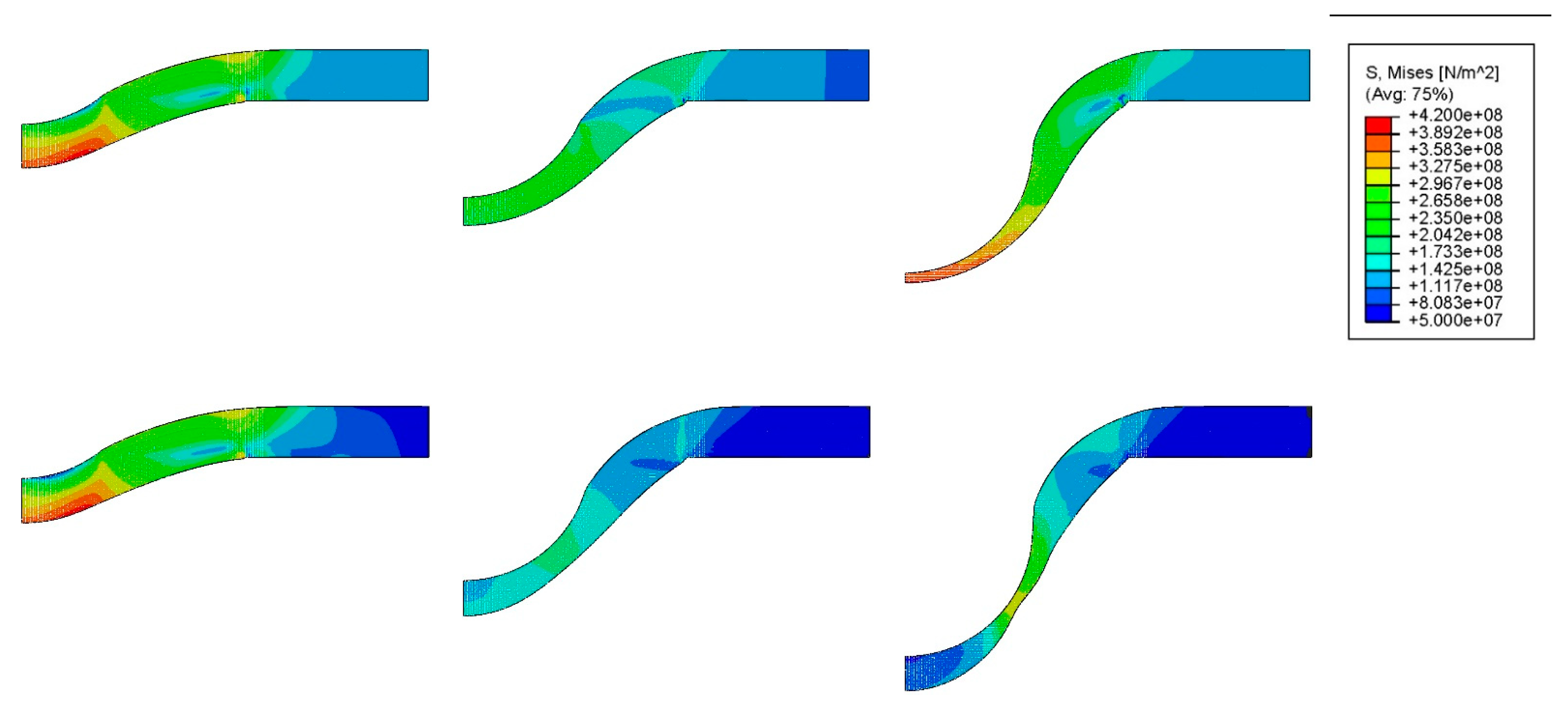
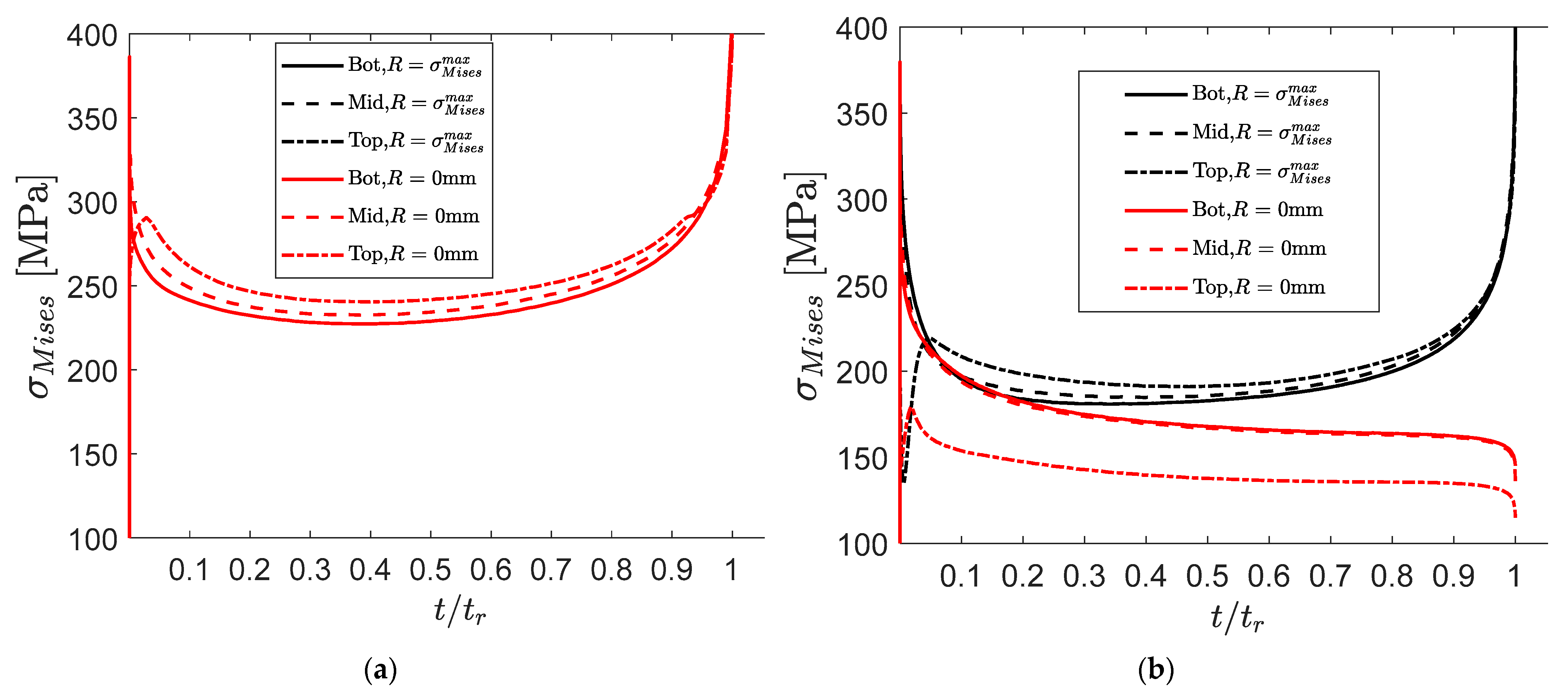
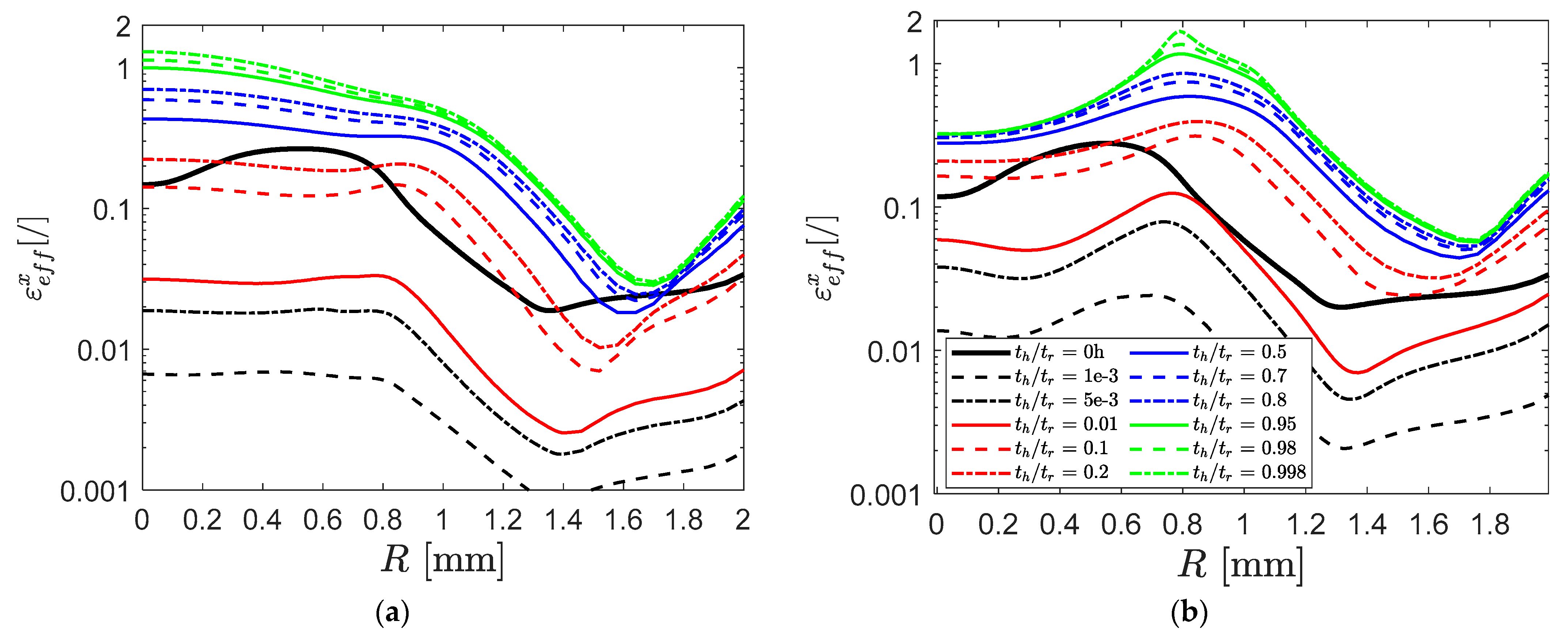
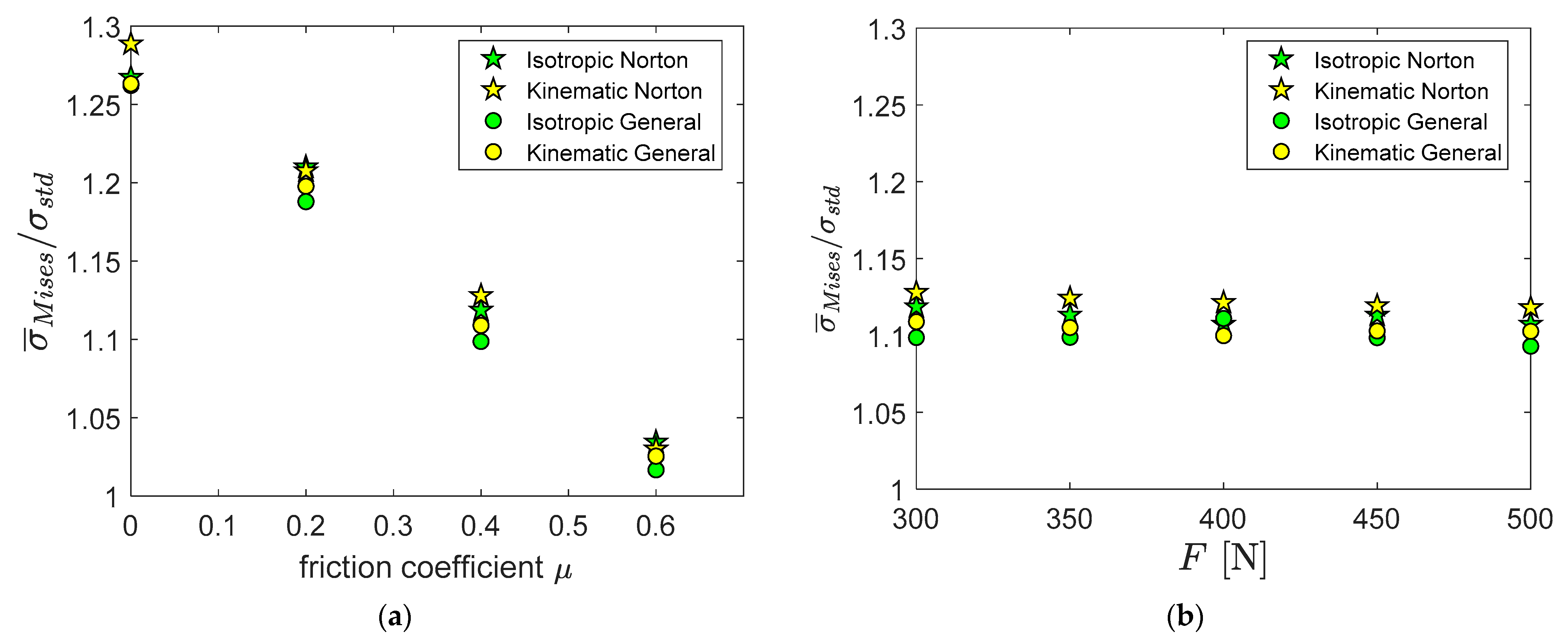
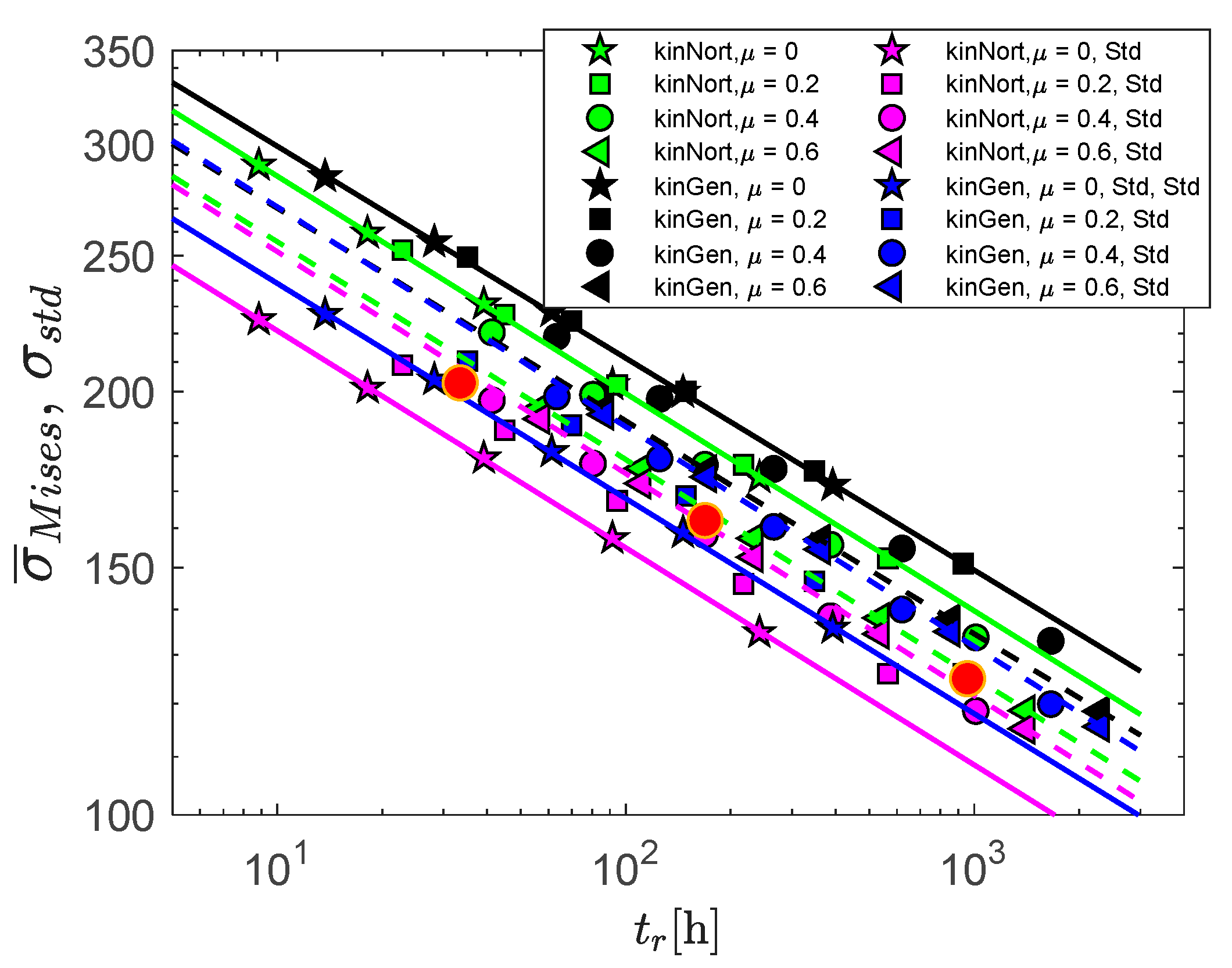
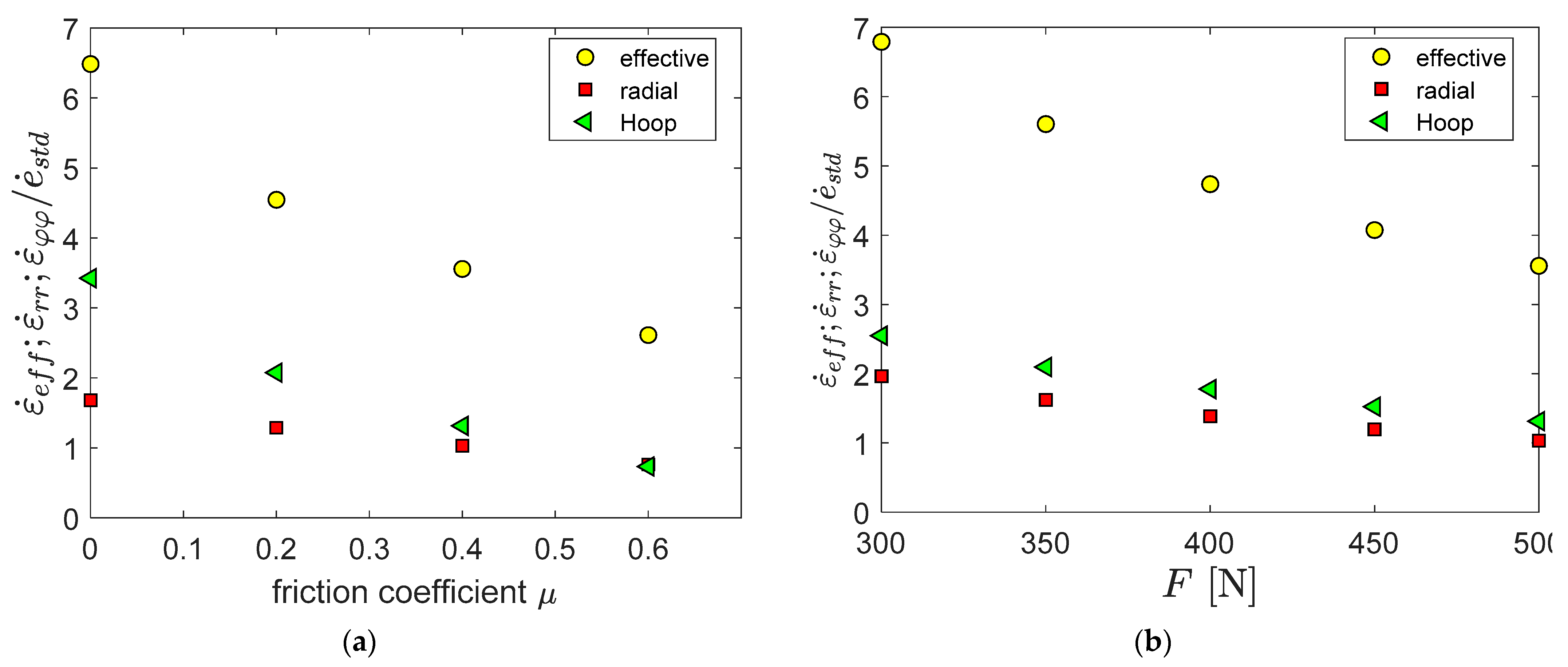
This paper presents a finite element analysis of the small punch creep test for 316L(N), which is compared with experimental data for 650 and 700 °C. Special emphasis is placed on (i) assessing the influence of friction and (ii) comparing two different creep models: the simple Norton creep and the more general creep model. The computed normalized deflection rate versus time is almost identical for all cases, which allows for scaling of the results. The computed time to rupture increases linearly with the friction coefficient due to a reduction in the mean stress. There is a good overall agreement between the experimental values and the computed deflection rate for a friction coefficient of around 0.3. It is shown that the initial reduction in deflection rate is due to stress relaxation and homogenization, and is only marginally affected by primary creep hardening. The computed results are compared with the equivalent stress and strain rates in the recently published small punch standard (EN 10371). The computed von Mises stresses at minimum deflection decrease linearly with the friction coefficient but are consistently slightly higher than the equivalent stress in the standard. For the strain rates, the computed values are significantly higher than the equivalent values in the standard. The presented simulations give a deeper insight of the small punch creep and impact of key parameters such the friction coefficient and in general as a guidance to refinement and improvement of the empirically based formulae in the standard.
Keywords: small punch test; 316l(N); creep; creep rupture; time to creep rupture; friction; finite element; stress relaxation; austenitic steel small punch test; 316l(N); creep; creep rupture; time to creep rupture; friction; finite element; stress relaxation; austenitic steel