Stress Resistance Traits under Different Thermal Conditions in Drosophila subobscura from Two Altitudes
by
 , , , , and
Katarina Erić
1,* ,
,
Aleksandra Patenković
1 ,
,
Pavle Erić
1,
Slobodan Davidović
1 ,
,
Marija Savić Veselinović
2,
Marina Stamenković-Radak
1,2 and
Marija Tanasković
1 1
Department of Genetics of Populations and Ecogenotoxicology, Institute for Biological Research “Siniša Stanković”—National Institute of the Republic of Serbia, University of Belgrade, Despot Stefan Blvd. 142, 11060 Belgrade, Serbia
2
Faculty of Biology, University of Belgrade, Studentski Trg 3, 11000 Belgrade, Serbia
*
Author to whom correspondence should be addressed.
Insects 2022, 13(2), 138; https://doi.org/10.3390/insects13020138
Submission received: 17 December 2021
/
Revised: 24 January 2022
/
Accepted: 25 January 2022
/
Published: 28 January 2022
(This article belongs to the Special Issue Selected Papers from the 1st International Electronic Conference on Entomology)
Simple Summary
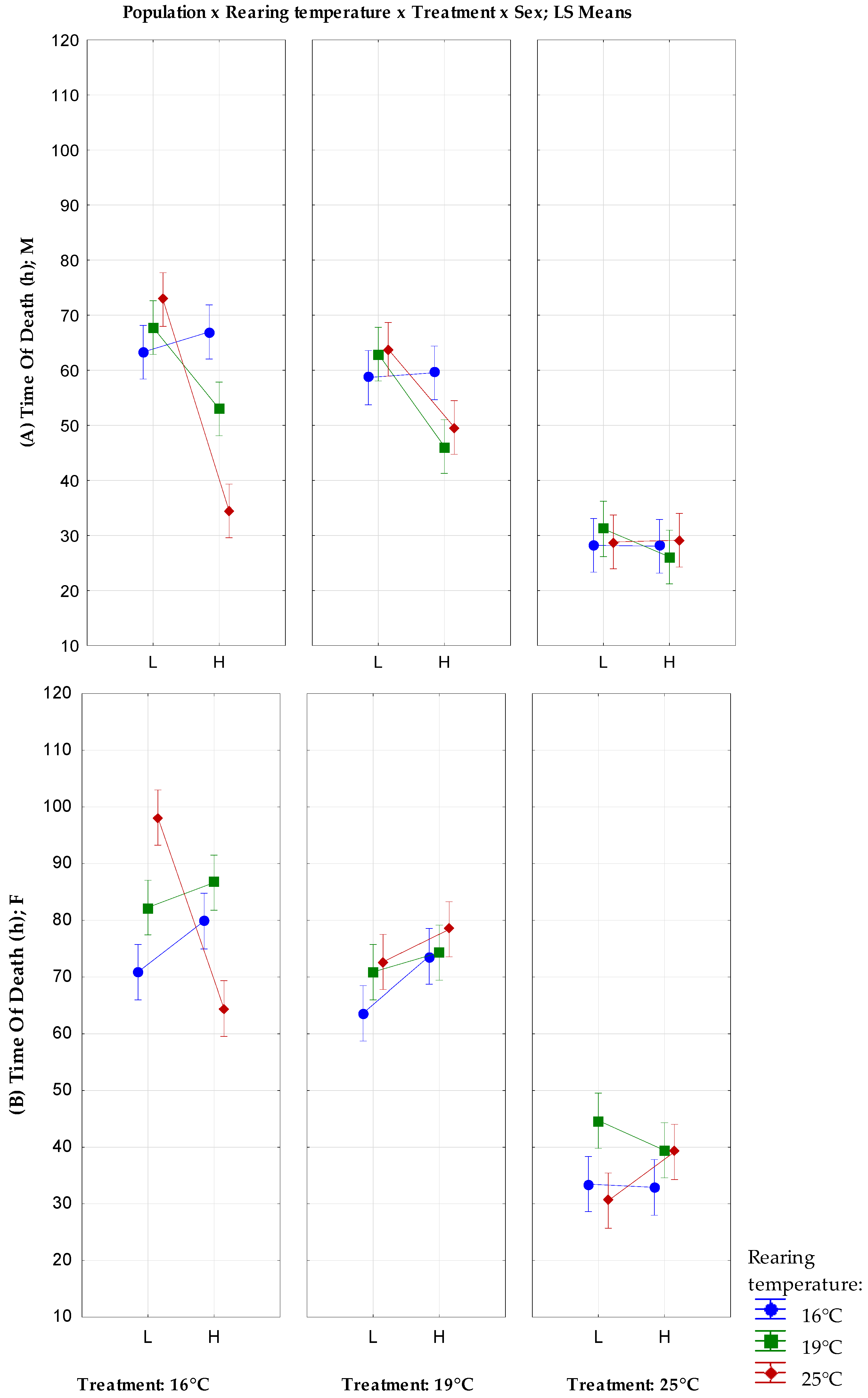
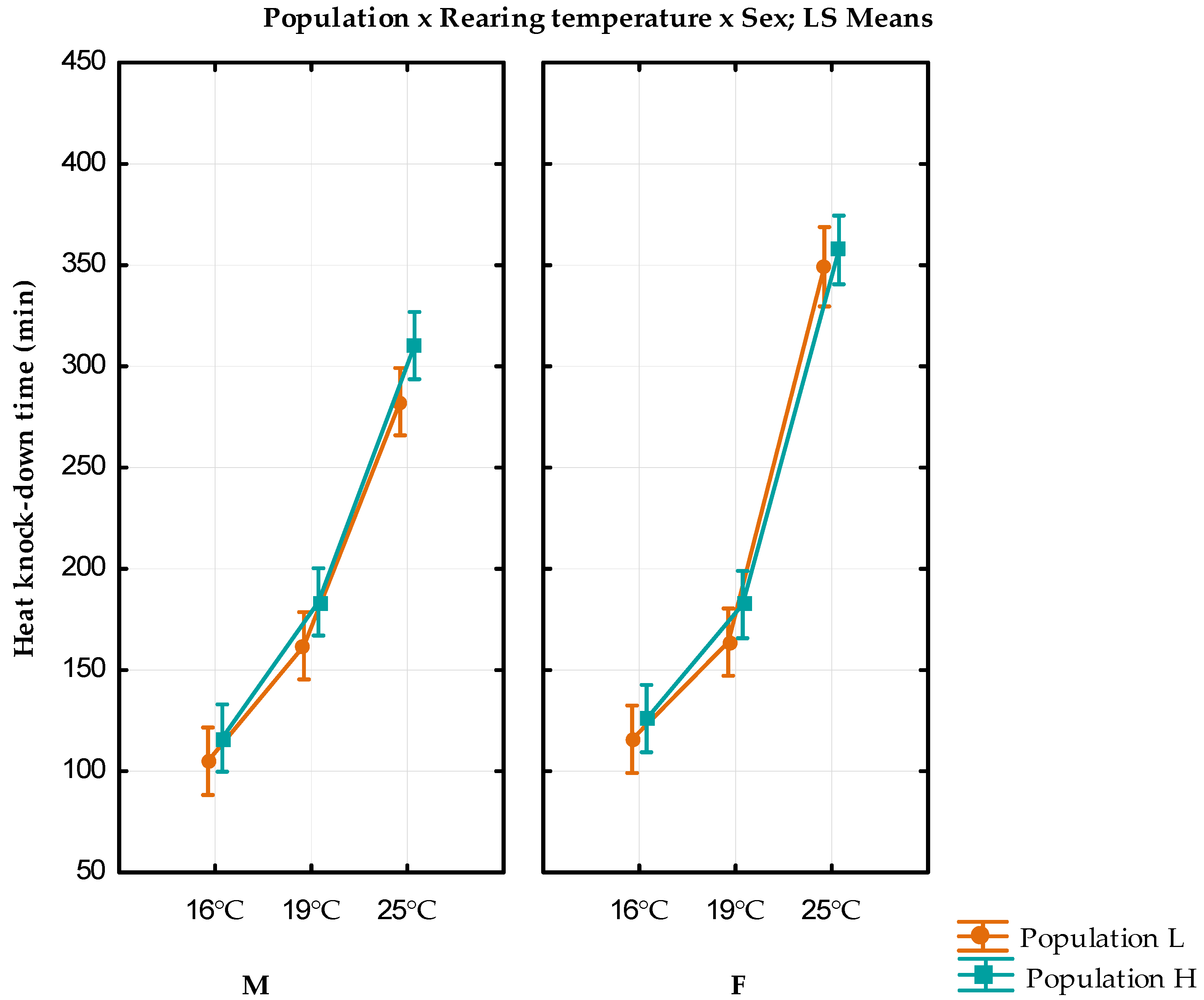
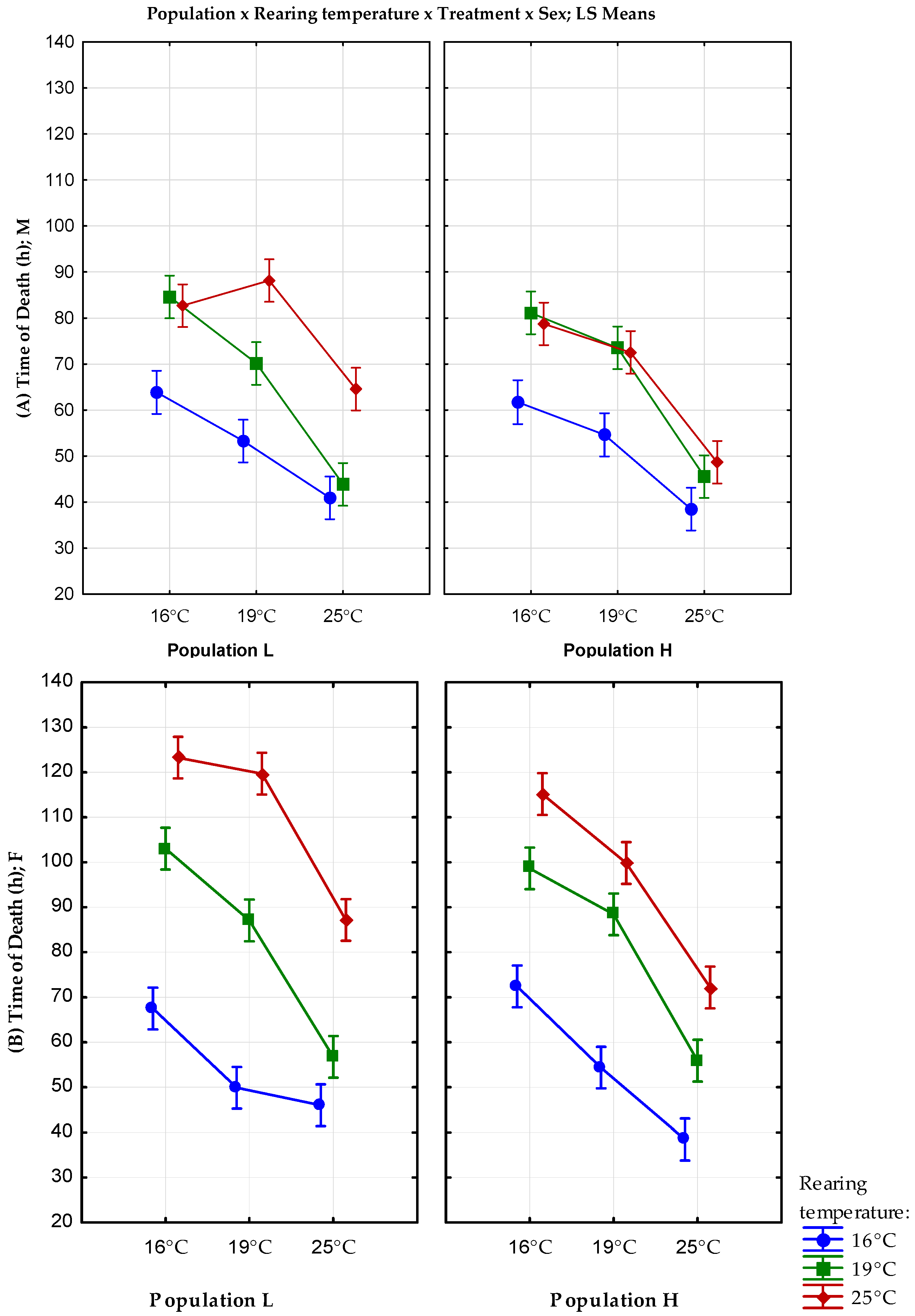
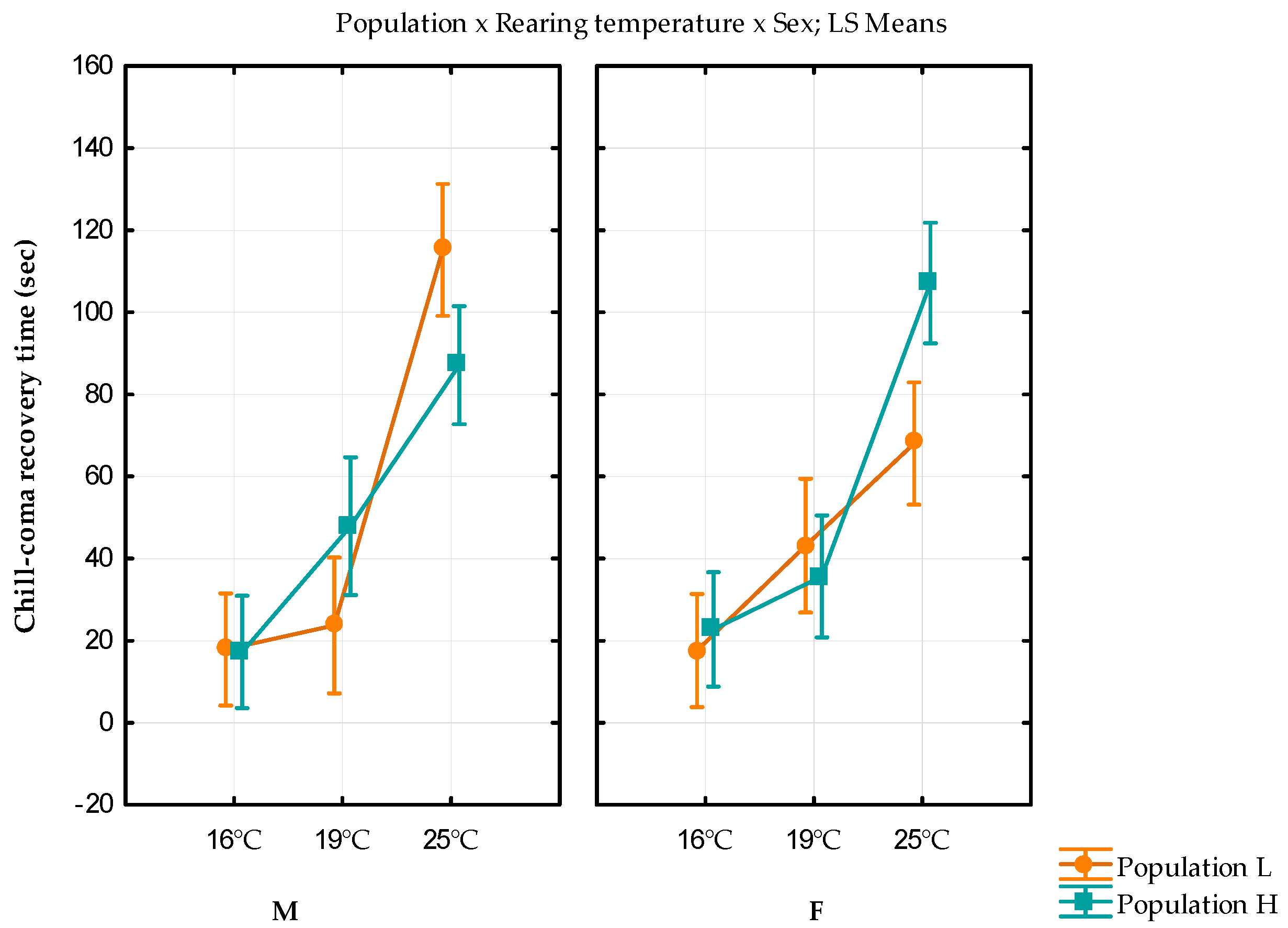
The global warming and rapid climate change that we are witnessing is generally influencing all of the living world, so all species must necessarily cope with these changes in order to survive. The ability to withstand environmental stress, especially during the last two decades, has been of great importance for any species’ long-term survival. For that purpose, we studied these abilities in the Drosophila subobscura species, which is known to be a good model organism for studying adaptations to environmental changes such as in temperature. We chose to investigate thermal stress responses in D. subobscura populations from two different altitudes, through four traits linked to stress tolerance: desiccation resistance, heat knock-down resistance, starvation resistance, and chill coma recovery time. Correlations between the populations’ origin and these traits were found, as well as the significant influence of the laboratory thermal conditions and sex on these traits showing that males and cold-adapted populations are expected to fare much worse in a fast-changing warming environment.
Abstract
Global warming and climate change are affecting many insect species in numerous ways. These species can develop diverse mechanisms as a response to variable environmental conditions. The rise in mean and extreme temperatures due to global warming and the importance of the population’s ability to adapt to temperature stress will further increase. In this study, we investigated thermal stress response, which is considered to be one of the crucial elements of population fitness and survival in fast-changing environments. The dynamics and variation of thermal stress resistance traits in D. subobscura flies originating from two natural populations sampled from different altitudes were analysed. Three different temperature regimes (25 °C, 19 °C, and 16 °C) were used for the F1 progeny from both localities to establish six experimental groups and investigate stress resistance traits: desiccation resistance, heat knock-down resistance, starvation resistance, and chill-coma recovery time. We detected that laboratory thermal conditions and population origin may have an effect on the analysed traits, and that sex also significantly influences stress resistance. Individuals from the lower altitude reared at higher temperatures show inferior resistance to thermal shock.