High Temperature Limits of Survival and Oviposition of Phormia regina (Meigen) and Lucilia sericata (Meigen)
by
 ,
,
Michael A. Monzon
1,*,
Lauren M. Weidner
2,
Travis W. Rusch
3,
Selen Nehrozoglu
4 and
George Hamilton
1 1
Department of Entomology, Rutgers, The State University of New Jersey, New Brunswick, NJ 08901, USA
2
School of Mathematical and Natural Sciences, New College of Interdisciplinary Arts and Sciences, Arizona State University, Glendale, AZ 85306, USA
3
School of Life Sciences, Arizona State University, Tempe, AZ 85281, USA
4
Animal and Plant Health Inspection Service (APHIS)—Plant Protection and Quarantine (PPQ), United Stated Department of Agriculture (USDA), Linden, NJ 07036, USA
*
Author to whom correspondence should be addressed.
Insects 2022, 13(11), 991; https://doi.org/10.3390/insects13110991
Submission received: 25 August 2022
/
Revised: 17 October 2022
/
Accepted: 20 October 2022
/
Published: 28 October 2022
(This article belongs to the Special Issue Advanced Research on Forensic Entomology)
Simple Summary
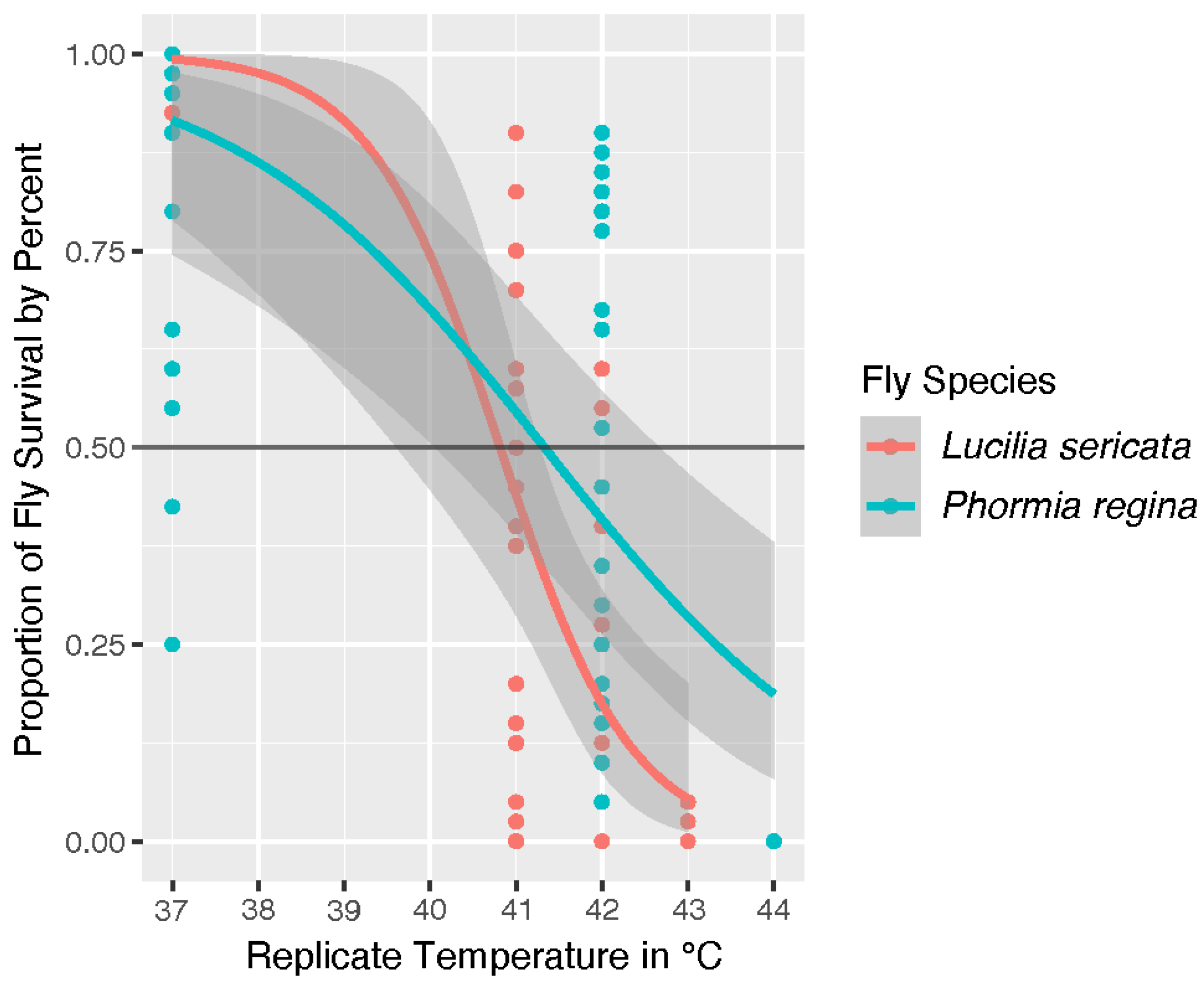
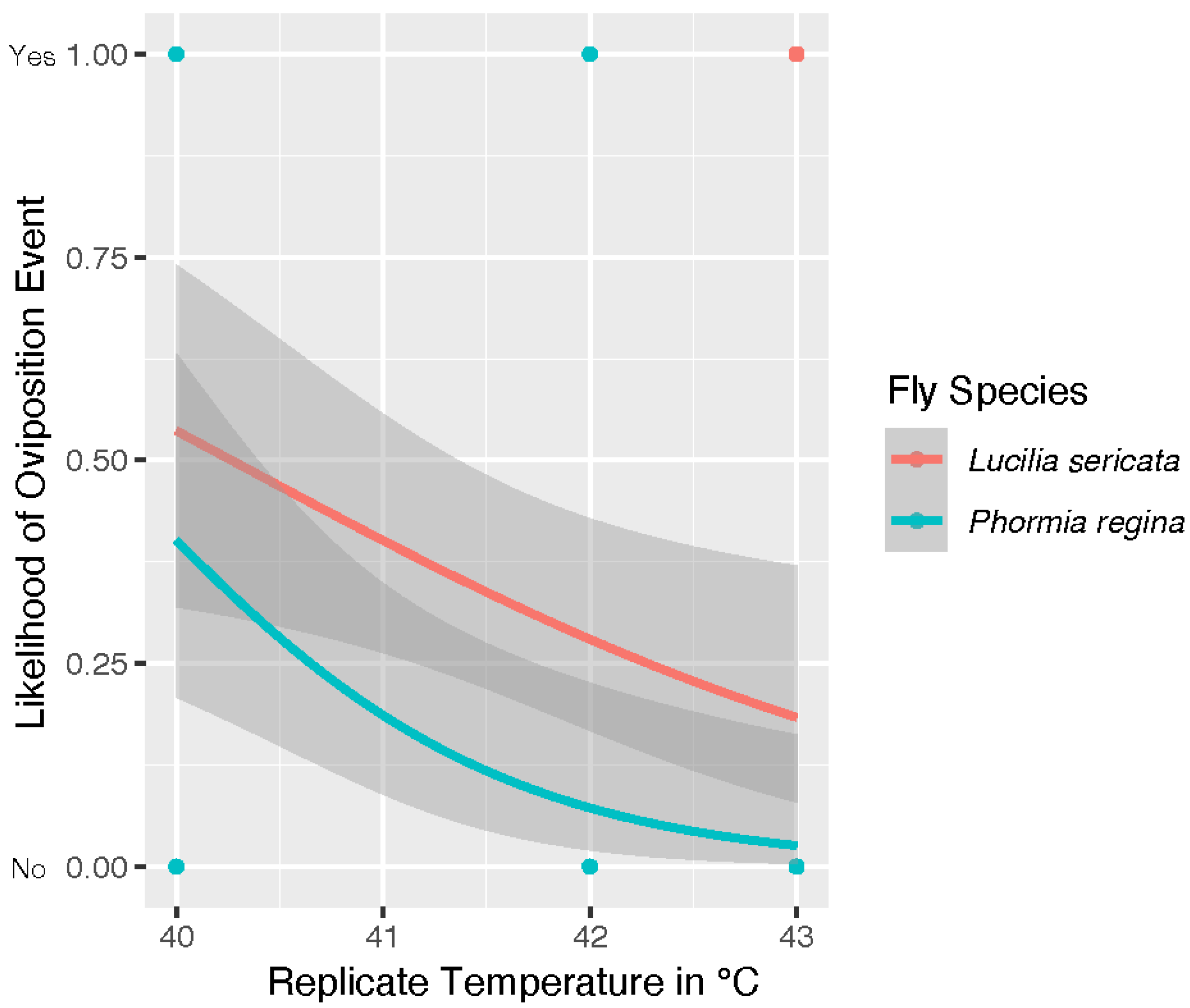
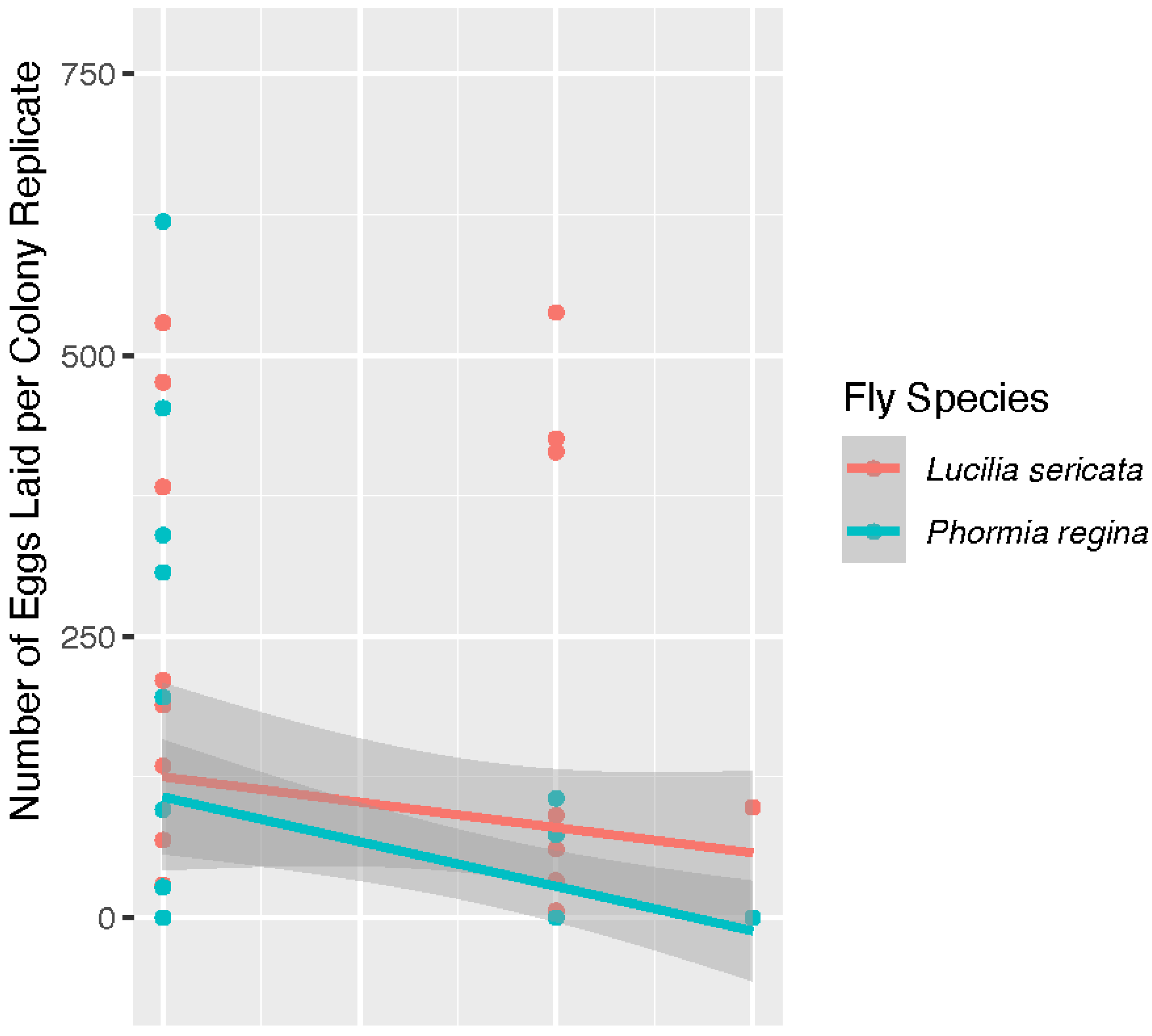
These experiments were conducted to investigate the impact of high temperatures on survival and egg laying of two forensically important blow flies, Phormia regina (Meigen) and Lucilia sericata (Meigen) (Diptera: Calliphoridae). Earlier experiments with closely related species indicated egg laying will stop below lethal temperatures. However, these data had not been collected for blow fly populations in the Mid-Atlantic United States. Upper and lower treatment temperatures were based on previous longevity studies of P. regina. Objective 1 was to determine the likely temperatures that resulted in 50% and 0% survival for both species. Survival trials were completed at 37 °C, 41 °C, 42 °C, 43 °C, and 44 °C. Objective 2 investigated the number of eggs laid at 40 °C, 42 °C and 43 °C for both species. For each temperature trial, adult flies were held in an incubator for 24 h. Both P. regina and L. sericata were reduced to 50% survival at ~41 °C, with 0% survival occurring for both species by 44 °C. Similarly, as temperature increased, the number of eggs laid decreased. Phormia regina ceased laying eggs by 41 °C, while L. sericata laid viable eggs until 43 °C. This experiment supports earlier work indicating female blow flies likely stop egg laying at adult fly sub-lethal temperatures and have complex mechanisms to mitigate extreme temperatures.
Abstract
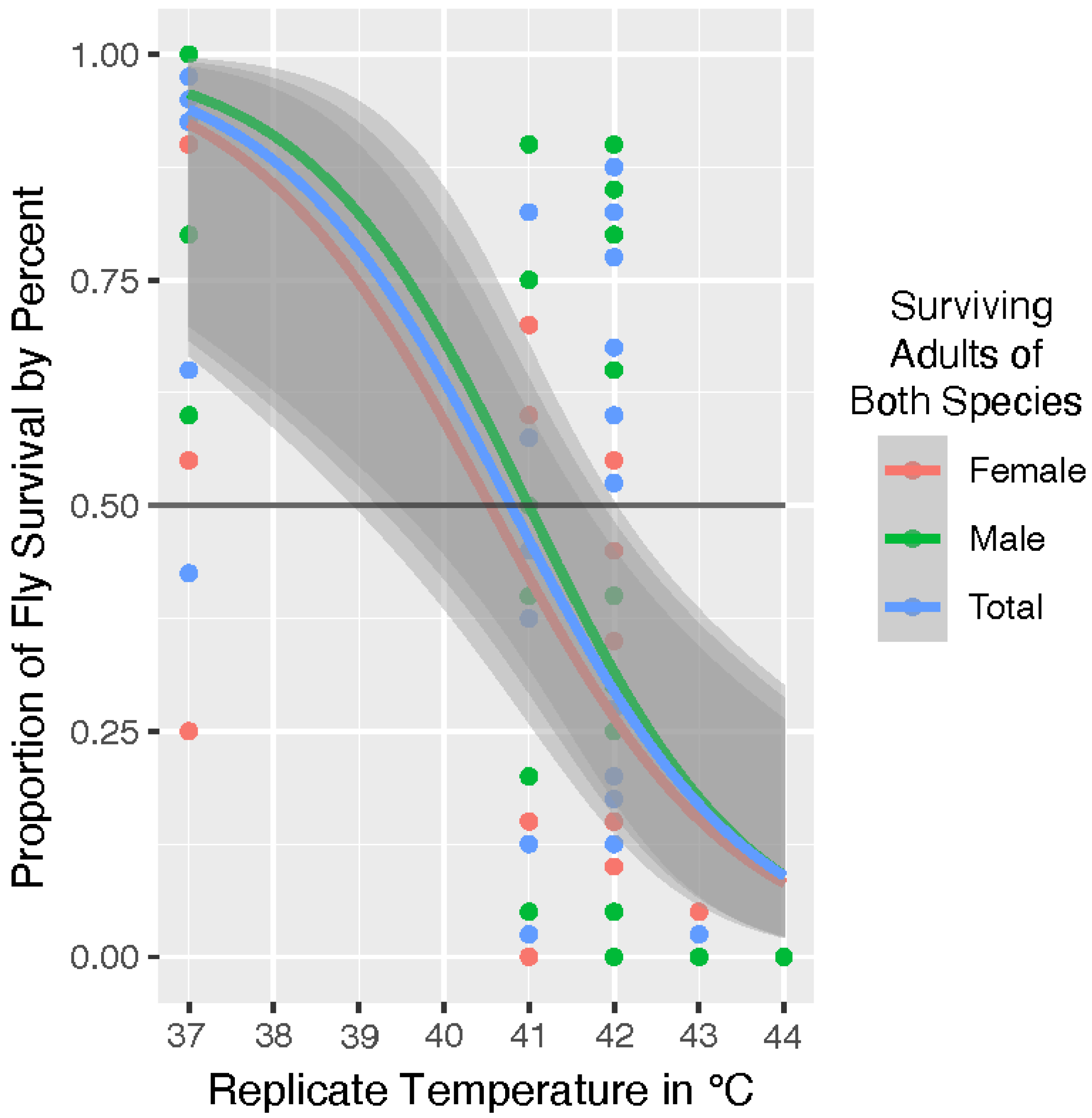
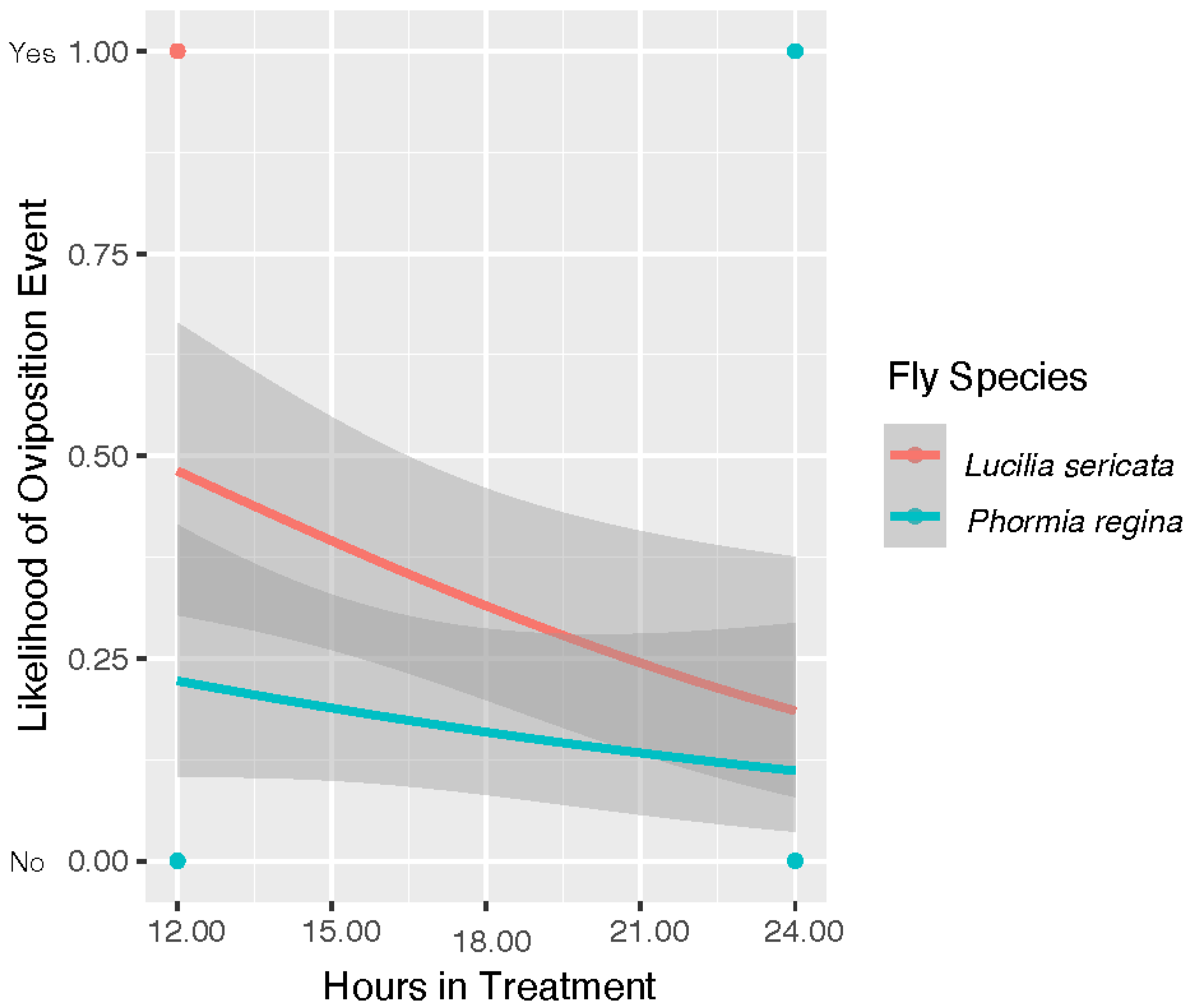
The temperature dependent development rates of blow flies allow blow flies to be used as biological clocks in forensic death investigations. However, the upper thermal limits of adult survival and oviposition, both required for producing larvae, remains largely unknown. Therefore, in this study we examined the impact of a range of temperatures between 37 °C and 44 °C on the likelihood of survival and egg-laying behavior of two species of medicolegal forensic importance, Lucilia sericata (Meigen) and Phormia regina (Meigen) (Diptera: Calliphoridae). To quantify the upper temperature limits of survival, adult fly colonies were exposed to 37 °C, 41 °C, 42 °C, 43 °C, and 44 °C for 24 h. Similarly for oviposition trials, adults of both species were exposed to 40 °C, 42 °C, and 43 °C with P. regina oviposition also observed at 41 °C. Trials lasted for 24 h with oviposition substrate replenished at the 12 h mark. A yes/no determination on egg deposition was made, eggs were counted, and a yes/no determination was made on egg hatch. Survival did not differ by species (p = 0.096). Overall, survival decreased with increasing temperatures, with ~100% at 37 °C, ~50% at 41 °C, ~37% at 42 °C, ~15% at 43 °C and 0% at 44 °C. Lucilia sericata laid eggs capable of hatch up to 43 °C, while Phormia regina egg-hatch was observed up to 41 °C. These results indicate a greater thermal tolerance of adult survival than for egg deposition and successful egg hatch, which supports previous experiments indicating blow flies stop laying eggs at sub-lethal temperatures. Furthermore, these data indicate that adult blow flies may find remains at or near time of death but may delay egg deposition until temperatures drop below an acceptable threshold.
Keywords:
thermal biology; survivorship; oviposition; mortality; fecundity