Mitochondrial DNA Variation in Peruvian Honey Bee (Apis mellifera L.) Populations Using the tRNAleu-cox2 Intergenic Region
by
 , , and
Julio Chávez-Galarza
* ,
,
Ruth López-Montañez
,
Alejandra Jiménez
,
Rubén Ferro-Mauricio
,
Juan Oré
,
Sergio Medina
,
Reyna Rea
and
Héctor Vásquez
Dirección de Desarrollo Tecnológico Agrario, Instituto Nacional de Innovación Agraria, Av. La Molina 1981, Lima 15024, Peru
*
Author to whom correspondence should be addressed.
Insects 2021, 12(7), 641; https://doi.org/10.3390/insects12070641
Submission received: 7 June 2021
/
Revised: 6 July 2021
/
Accepted: 9 July 2021
/
Published: 14 July 2021
(This article belongs to the Section Insect Ecology, Diversity and Conservation)
Simple Summary
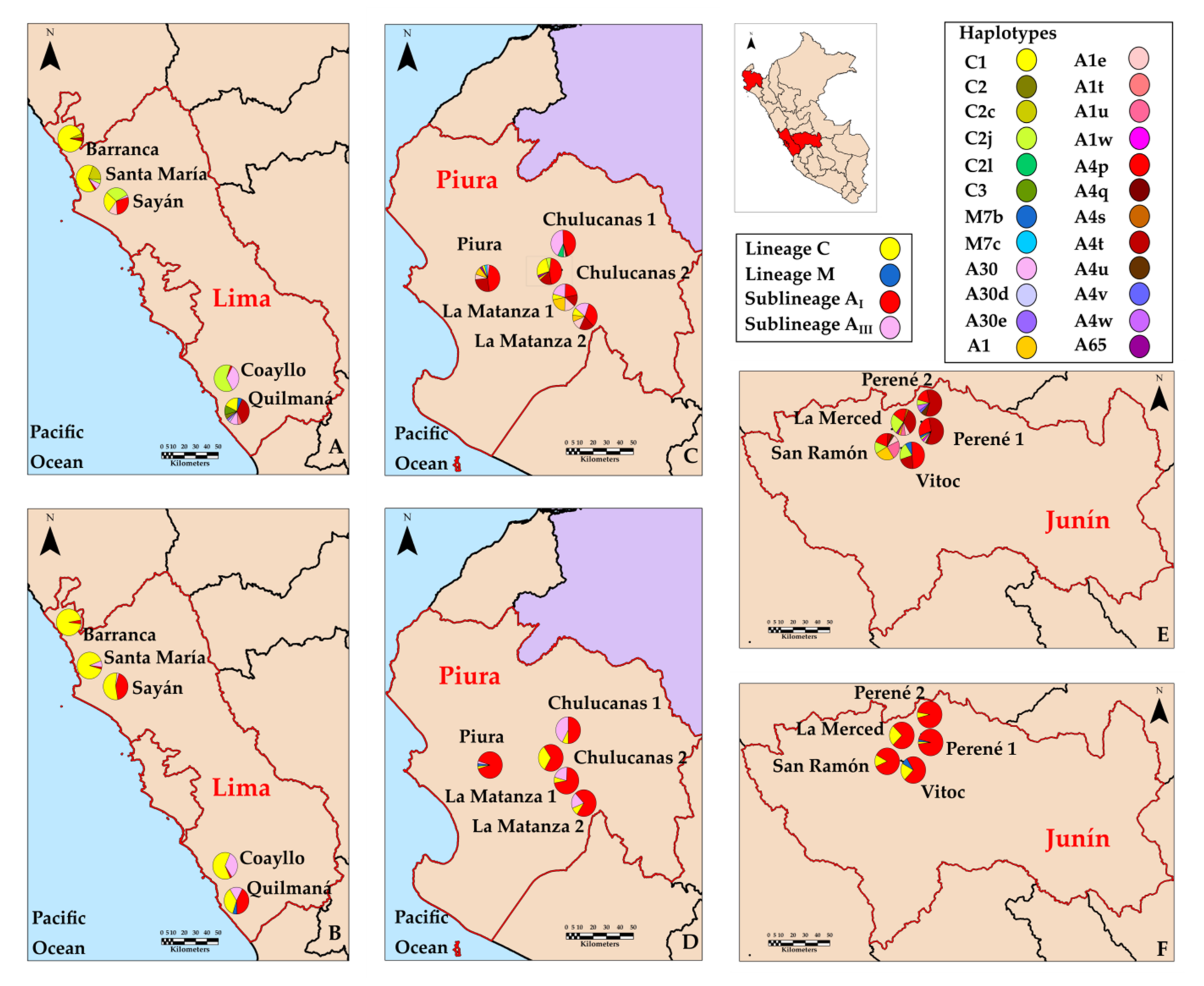
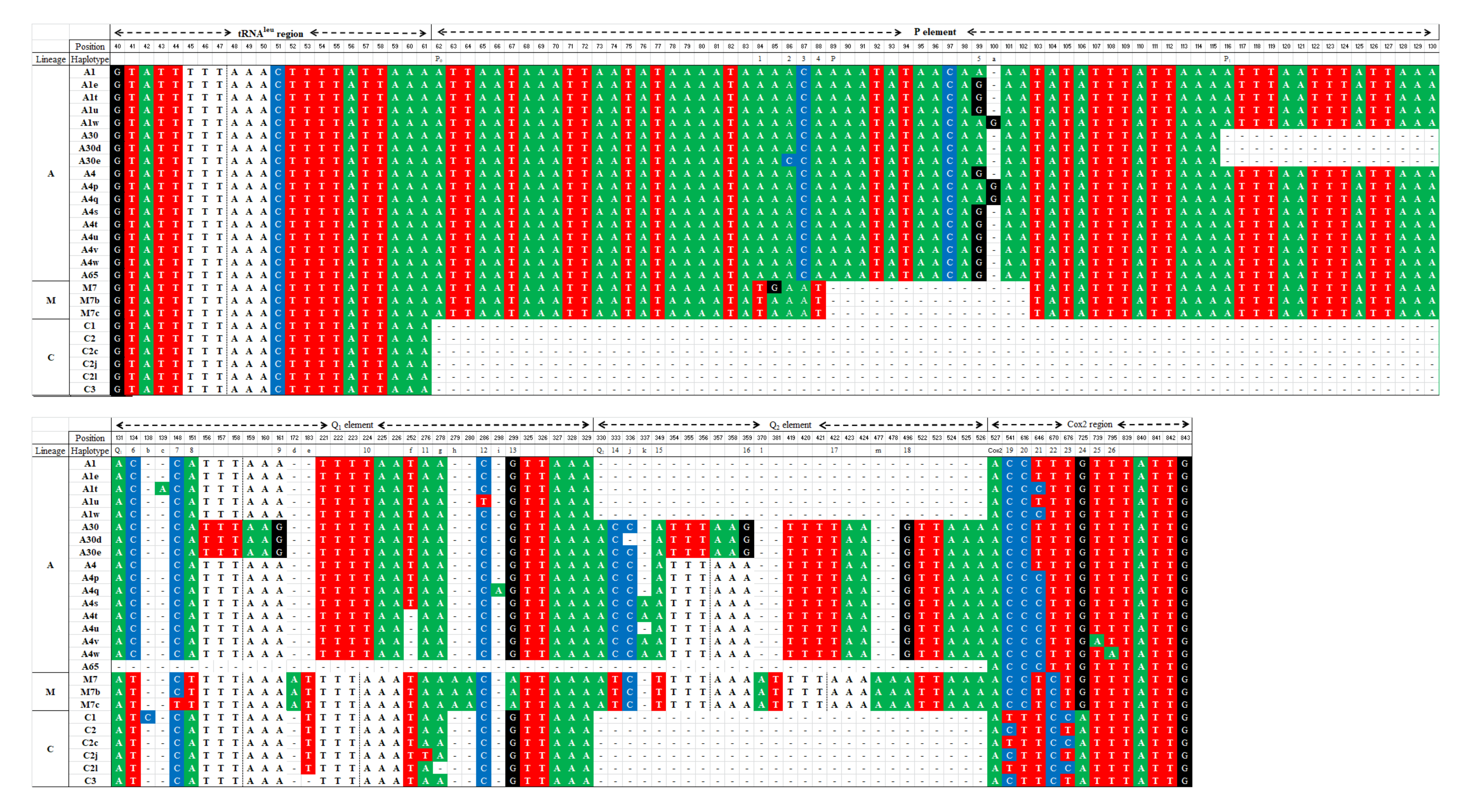
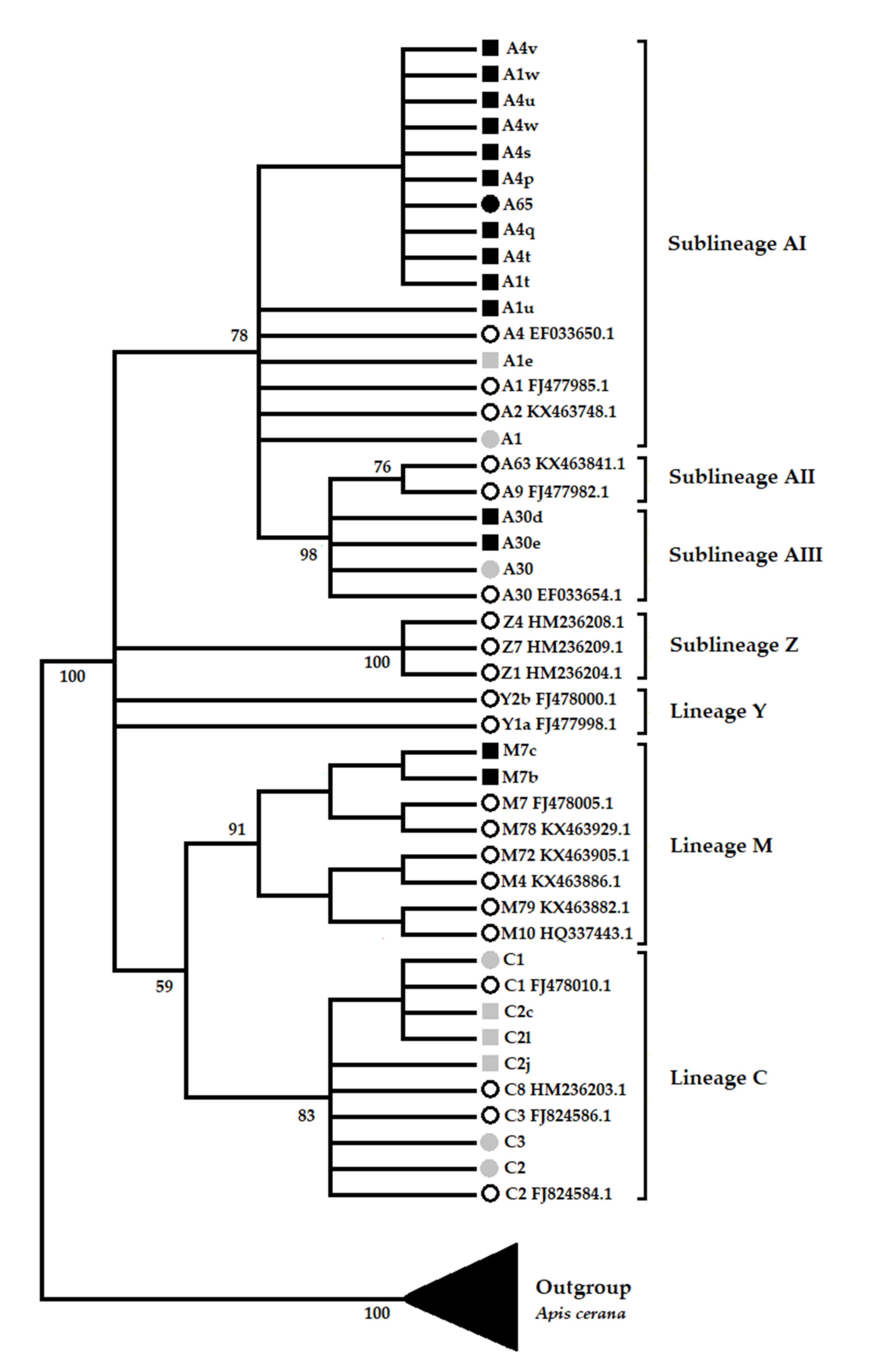
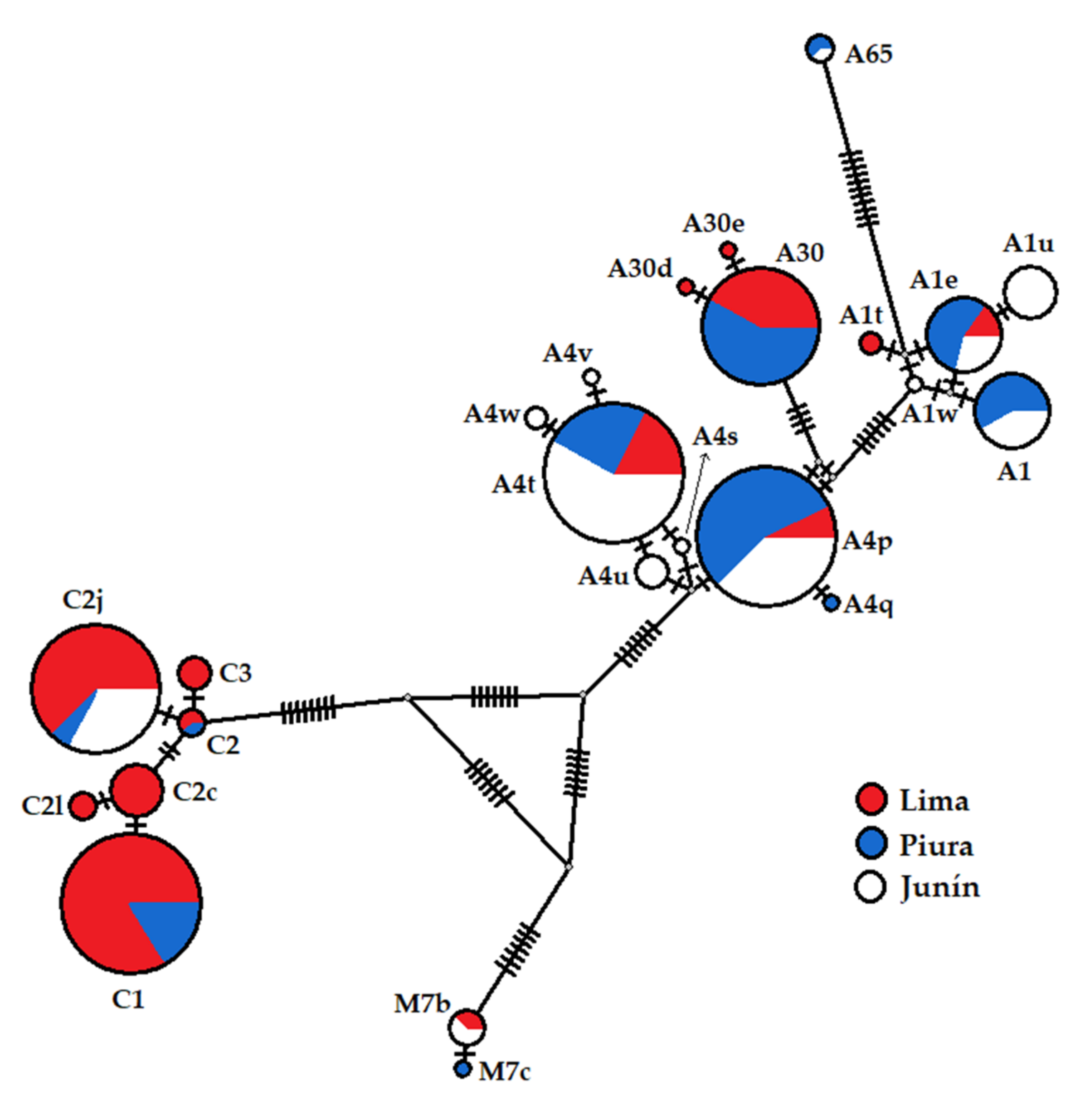
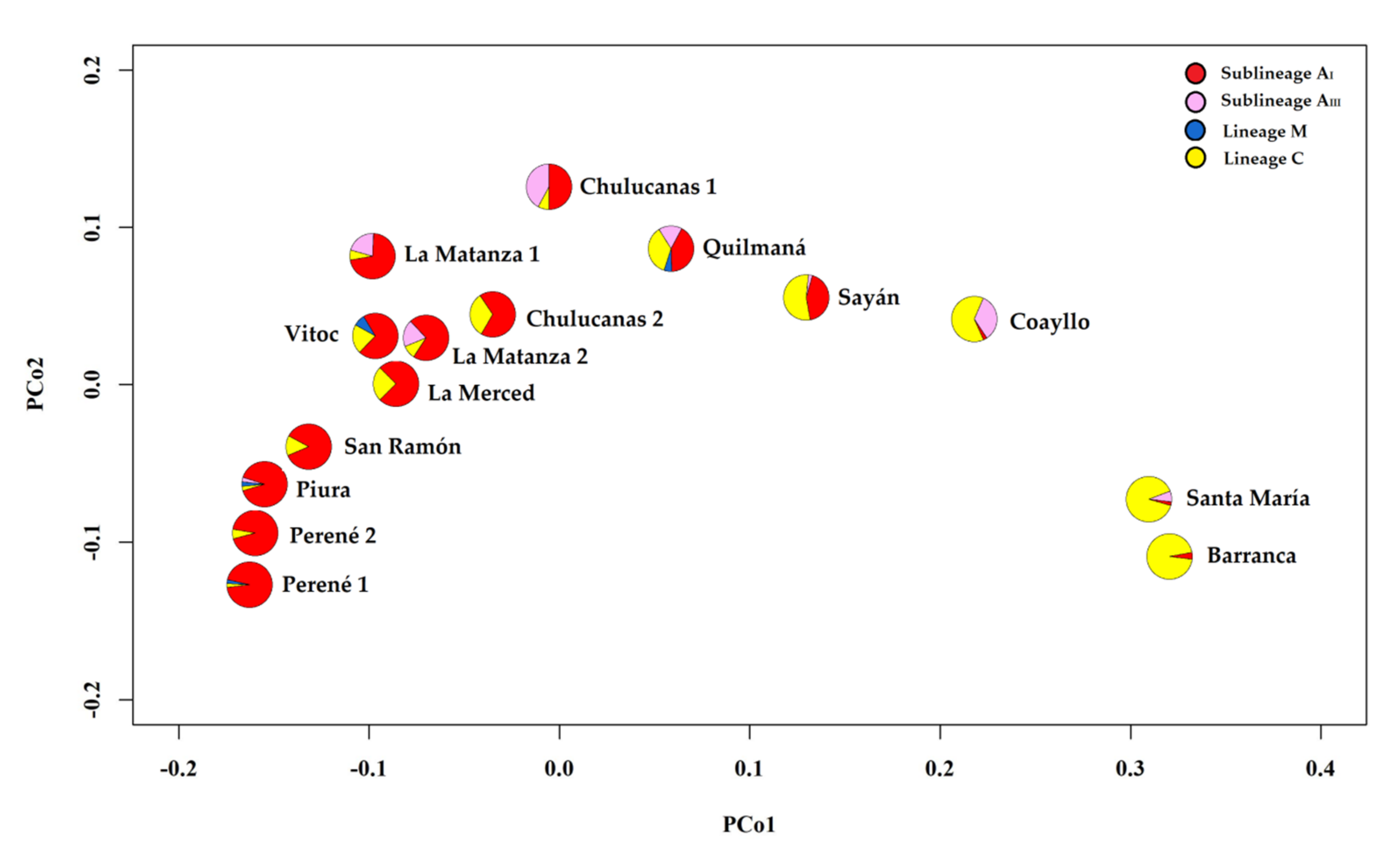
Currently, the genetic diversity of Peruvian honey bee populations is unknown. Only two studies were carried out and suggest that many regions of Peru present Africanized honey bee colonies and a varied degree of Africanization. To molecularly characterize and know more about the genetic background of Peruvian honey bees, the highly polymorphic tRNAleu-cox2 was used. This study analyzed 512 colonies in three regions of Peru: Lima, Piura, and Junín. The results indicated that 65% colonies correspond to lineage A (African), 33.8% colonies to lineage C (Eastern European), and 1.2% colonies to lineage M (Western European). A total of 24 haplotypes were identified: 16 haplotypes belong to lineage A (sub-lineage AI (13), sub-lineage AIII (03)), lineage C (06), and lineage M (02), and 15 of them are for the first time reported and represented by A1t, A1u, A1w, A4p, A4q, A4s, A4t, A4u, A4v, A4w, 30d, A30e, A65, M7b, and M7c. Piura and Lima presented higher proportions of African haplotypes and lower proportions of haplotypes from lineage C than Lima. Very few haplotypes of lineage M were identified, whose presence could be due to accidental purchases or traces of honey bee introductions from lineage M in the 19th century. Hence, studies about the diversity and genetic structure of Peruvian honey bee populations are necessary to promote adequate, sustainable management and establish conservation and breeding programs.
Abstract
Mitochondrial DNA variations of Peruvian honey bee populations were surveyed by using the tRNAleu-cox2 intergenic region. Only two studies have characterized these populations, indicating the presence of Africanized honey bee colonies in different regions of Peru and varied levels of Africanization, but the current status of its genetic diversity is unknown. A total of 512 honey bee colonies were sampled from three regions to characterize them. Our results revealed the presence of European and African haplotypes: the African haplotypes identified belong to sub-lineage AI (13) and sub-lineage AIII (03), and the European haplotypes to lineages C (06) and M (02). Of 24 haplotypes identified, 15 new sequences are reported here (11 sub-lineage AI, 2 sub-lineage AIII, and 2 lineage M). Peruvian honey bee populations presented a higher proportion from African than European haplotypes. High proportions of African haplotype were reported for Piura and Junín, unlike Lima, which showed more European haplotypes from lineage C. Few colonies belonging to lineage M would represent accidental purchase or traces of the introduction into Peru in the 19th century.
Keywords:
Apis mellifera; haplotype; mitochondrial diversity