



Skip Content
You are currently on the new version of our website. Access the old version .

Lubricants

Lubricants is an international, peer-reviewed, open access journal on tribology, published monthly online by MDPI.

Quartile Ranking JCR - Q2 (Engineering, Mechanical)

All Articles (2,599)

Tribological Properties of Biolubricants: A Comprehensive Bibliometric and Trend Analysis

  • M. Marliete F. Melo Neta,
  • Rodolpho R. C. Monteiro and
  • Francisco Murilo Tavares Luna
  • + 2 authors

Interest in replacing petroleum-based lubricants with bio-based alternatives is driven by growing demand for lubricants, in contrast to a decreasing supply of products derived from fossil resources, coupled with environmental concerns. Biolubricants offer several advantages over conventional petroleum-based lubricants, such as biodegradability and renewability. Researchers have been seeking solutions for these challenges over the years, employing various approaches, including the use of different raw materials, chemical modifications, and different types of additives. This review evaluates a total of 504 articles published between 2010 and 2025 in the Scopus database, with the help of RStudio, using the bibliometrix package. The objective is to provide an integrated bibliometric and systematic analysis, presenting the research landscape on the tribological properties of biolubricants, which may contribute to the development of novel investigation initiatives in the field. The main thematic trends, researchers, journals, and most active countries and institutions have been evaluated. Additionally, the most cited studies, recent advances and existing gaps are presented and discussed.

7 February 2026

Stribeck Curve.

Experimental Investigation of a Highly Loaded Half-Journal Bearing

  • James Layton,
  • Humberto Medina and
  • Carol Eastwick
  • + 4 authors

A dedicated experimental rig is presented for a half-journal bearing operating under highly loaded, well-controlled hydrodynamic lubrication conditions relevant to turbomachinery. The apparatus combines pressure measurements in the film, distributed temperature measurements in the shaft and bush, and ultrasonic film-thickness measurements that map the circumferential film-thickness profile across the lubrication region. Experiments are reported for normal loads of 5–20 kN and shaft speeds of 1000–4000 rpm with controlled oil supply conditions. The measured pressure and temperature trends are consistent with established hydrodynamic lubrication behaviour. The film thickness measurements confirm full-film operation across the tested operating envelope, while indicating increased uncertainty in regions affected by cavitation. A correlation for the temperature rise due to viscous heating is proposed as a compact representation of the data. The rig design and accompanying measurements provide a benchmark-quality data set intended for validation and development of thermal elasto-hydrodynamic lubrication (TEHL)/computational fluid dynamics (CFD) models under high load and speed conditions.

6 February 2026

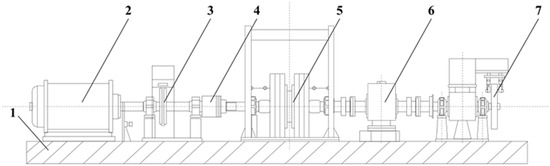
Schematic of the experimental facility.

The spherical assembly mechanical end-face seal, a pivotal component of the liquid rocket engine turbopump, holds direct influence over the performance of the turbopump. This paper introduces a approach for assessing the reliability of mechanical seals. The proposed method formulates a dimensionless reliability factor, R, derived from multiple sets of monitoring data collected during the operation of the seal. The health status of the seal can be evaluated based on the value of R. The computation of R is contingent on two main elements: firstly, it relies on the threshold of evaluation parameters obtained from laboratory tests, and secondly, it incorporates the weight of parameters derived from expert experience using fuzzy set theory. And then R can be calculated by substituting real-time monitoring data of the seal. The efficacy of the proposed method was substantiated through testing and verification using two sets of real-world engineering data, and was subsequently compared with methods currently employed in engineering. The results indicate that the proposed method surpasses existing methods in terms of accuracy and sensitivity. Furthermore, the data upon which it is based can be easily monitored in an engineering context, thereby enhancing its relevance and potential for widespread application in engineering.

6 February 2026

Spherically assembled mechanical seal and experimental cell.

Wear, a critical factor governing the performance and durability of mechanical systems, is typically characterized using point-contact and line-contact test configurations. However, it remains unclear whether the wear trends observed in one test configuration would be observed in the other configuration under the same nominal conditions. In this study, ball-on-disk (ASTM G99) and block-on-ring (ASTM G77) tests were conducted under an identical maximum Hertzian contact stress and sliding speed, using the same material pair and lubricating oil, to clarify which contact configuration exhibits more wear and why. The results show that, under the same Hertzian contact stress, the line-contact configuration exhibits a specific wear rate two orders of magnitude higher than the point-contact configuration, despite exhibiting a lower and more stable coefficient of friction. The disk wear is negligible and the ball shows only mild material loss, whereas the line-contact system displays wear rates several orders of magnitude higher, with the rotating ring contributing the dominant share of the total wear. White-light interferometry and scanning electron microscopy observations reveal directional, groove-dominated surface morphologies on the ball and disk, while wear on the block is confined to edge-localized regions and the worn ring surface has smooth, polished morphology. Energy-dispersive X-ray spectroscopy confirms that a Zn- and P-rich tribofilm forms exclusively on the ring surface. Finite element analysis shows stress amplification at the finite line-contact edges, explaining the observed wear severity. These results demonstrate that matching Hertzian contact stress alone is insufficient to ensure comparable wear behavior between point and line contacts.

5 February 2026

Experimental setups and corresponding schematics: (a) block-on-ring test assembly, (b) ball-on-disk test assembly, (c) schematic of the block-on-ring configuration, and (d) schematic of the ball-on-disk configuration. The directions of normal load and rotational motion are indicated with arrows in the schematics.

News & Conferences

Issues

Open for Submission

Editor's Choice

Reprints of Collections

Tribology in Vehicles
Reprint

Tribology in Vehicles

Editors: Shuwen Wang, John Williams, David Charles Barton, Chunxing Gu
Advances in Boundary Lubrication
Reprint

Advances in Boundary Lubrication

Editors: William Chong

Get Alerted

Add your email address to receive forthcoming issues of this journal.

XFacebookLinkedIn
Lubricants - ISSN 2075-4442