Article

Predicting Risk of Antenatal Depression and Anxiety Using Multi-Layer Perceptrons and Support Vector Machines

1
Department of Biomedical Engineering, SMME, National University of Sciences & Technology (NUST), Islamabad 44000, Pakistan
2
Department of Computing, SEECS, National University of Sciences & Technology (NUST), Islamabad 44000, Pakistan
3
Department of Electrical and Computer Engineering, Faculty of Engineering and Applied Sciences, Memorial University of Newfoundland, St Johns, NL A1B 3X5, Canada
4
Institute of Population Health Sciences, University of Liverpool, Liverpool L69 3BX, UK
*
Author to whom correspondence should be addressed.
J. Pers. Med. 2021, 11(3), 199; https://doi.org/10.3390/jpm11030199
Submission received: 4 February 2021 / Revised: 2 March 2021 / Accepted: 8 March 2021 / Published: 12 March 2021
(This article belongs to the Section Epidemiology)

Abstract

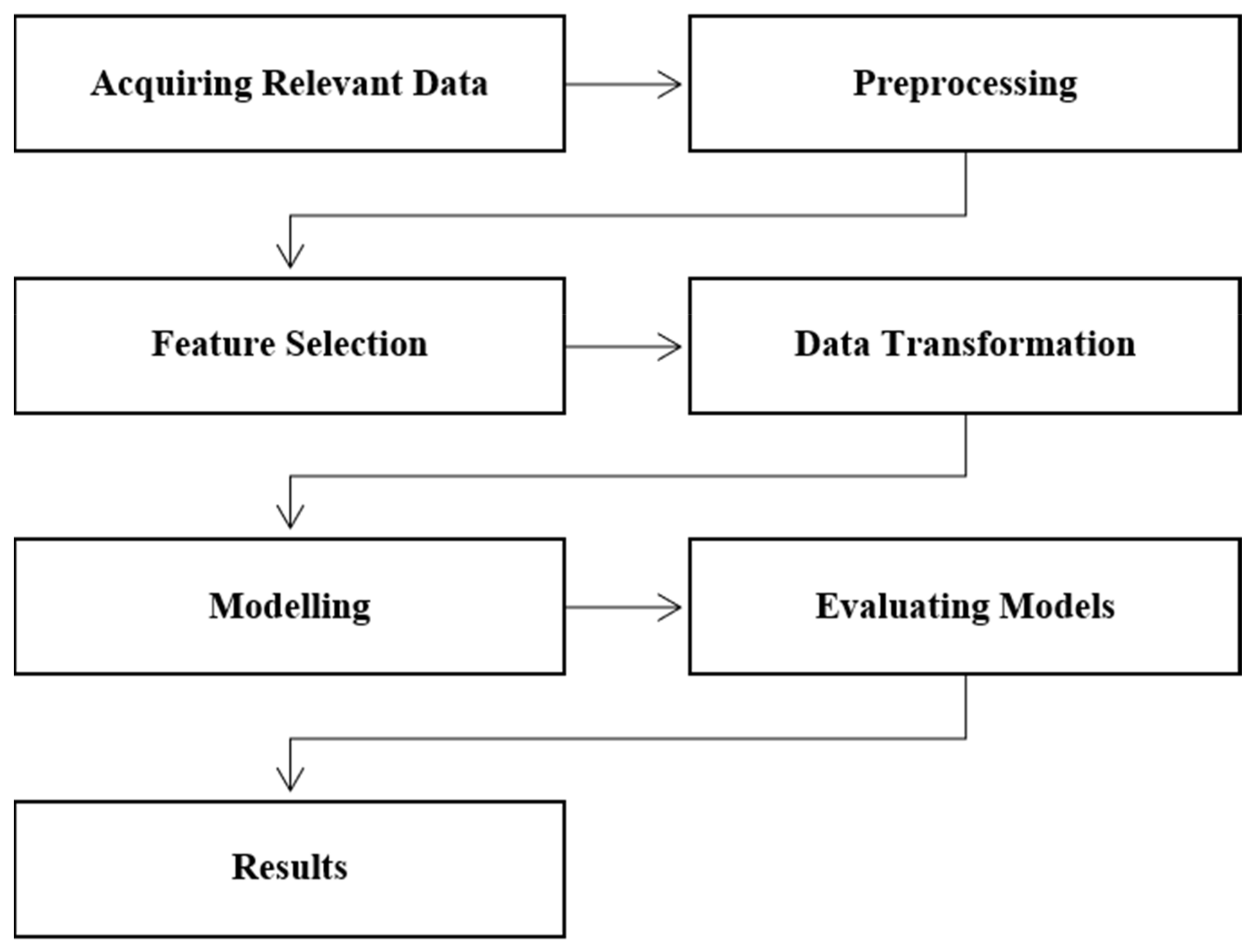
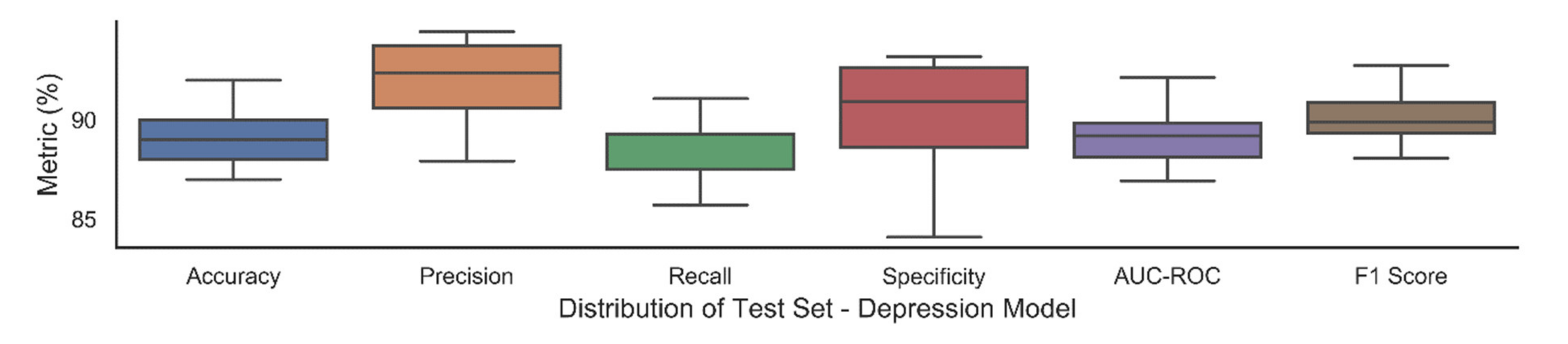
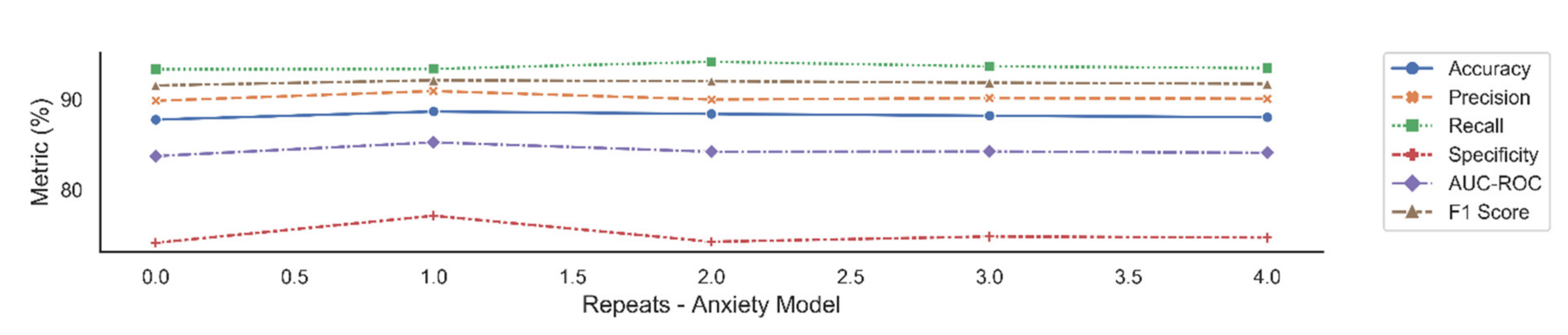
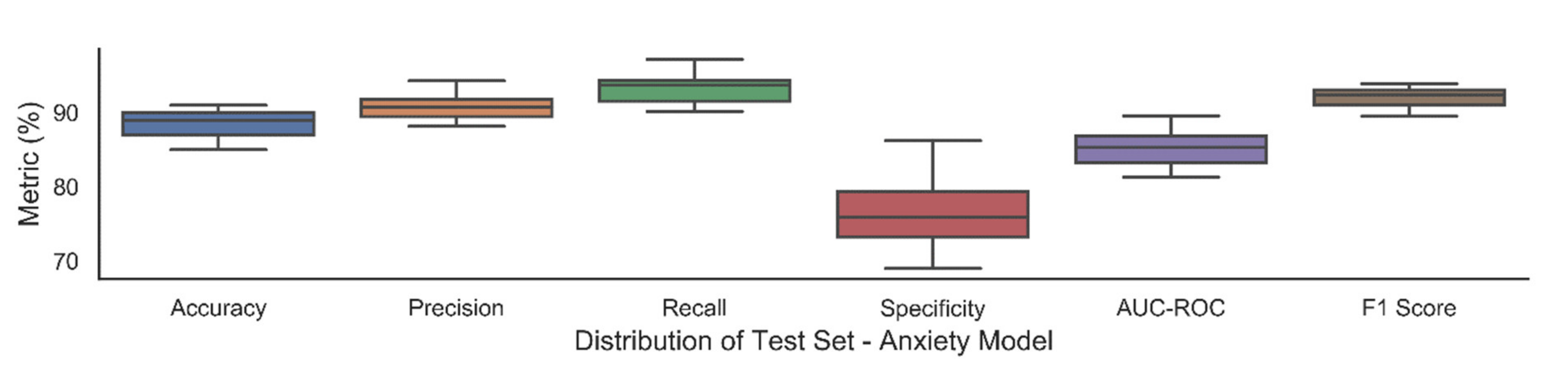
Perinatal depression and anxiety are defined to be the mental health problems a woman faces during pregnancy, around childbirth, and after child delivery. While this often occurs in women and affects all family members including the infant, it can easily go undetected and underdiagnosed. The prevalence rates of antenatal depression and anxiety worldwide, especially in low-income countries, are extremely high. The wide majority suffers from mild to moderate depression with the risk of leading to impaired child–mother relationship and infant health, few women end up taking their own lives. Owing to high costs and non-availability of resources, it is almost impossible to diagnose every pregnant woman for depression/anxiety whereas under-detection can have a lasting impact on mother and child’s health. This work proposes a multi-layer perceptron based neural network (MLP-NN) classifier to predict the risk of depression and anxiety in pregnant women. We trained and evaluated our proposed system on a Pakistani dataset of 500 women in their antenatal period. ReliefF was used for feature selection before classifier training. Evaluation metrics such as accuracy, sensitivity, specificity, precision, F1 score, and area under the receiver operating characteristic curve were used to evaluate the performance of the trained model. Multilayer perceptron and support vector classifier achieved an area under the receiving operating characteristic curve of 88% and 80% for antenatal depression and 85% and 77% for antenatal anxiety, respectively. The system can be used as a facilitator for screening women during their routine visits in the hospital’s gynecology and obstetrics departments.
Keywords: mental disorders; multilayer perceptrons; predictive models; public healthcare; ReliefF; support vector machines mental disorders; multilayer perceptrons; predictive models; public healthcare; ReliefF; support vector machines