Skip to Content
MachinesMachines
  • Article
  • Open Access

24 March 2026

Thermo-Mechanical Analysis and Fatigue Life Estimation of Shrink-Fit Tool Holders

,
and
1
Department of Mechanical Engineering, Faculty of Technology, University of Afyon Kocatepe, 03200 Afyonkarahisar, Turkey
2
Department of Mechanical Engineering, Faculty of Engineering and Architecture, Recep Tayyip Erdoğan University, 53100 Rize, Turkey
3
Department of Mechanical Engineering, Faculty of Engineering and Natural Sciences, Ankara Yıldırım Beyazıt University, 06010 Ankara, Turkey
*
Author to whom correspondence should be addressed.

Abstract

The present study investigates the thermo-mechanical behaviour and fatigue life associated with the shrink-fit process of shrink-fit tool holders. These holders are an indispensable component of high-precision and high-speed machining processes in modern manufacturing industries. Shrink-fit holders are subjected to elevated levels of stress as a consequence of repeated heating and cooling cycles, which can result in clamping fatigue over time. In this study, a three-dimensional finite element model (FEM) of a holder manufactured from H13 tool steel in accordance with BT40 standards was created using ANSYS software. The numerical analyses included transient thermal and structural analyses, consisting of a 4.5-s induction heating stage at 10 kW power, followed by a 1200-s cooling process. The analysis yielded results that were corroborated by the experimental data. It was established that, upon the conclusion of the heating process, the temperature in the conical region of the holder attained a range of approximately 388–417 °C. Furthermore, it was ascertained that a radial expansion of approximately 17.2–22 µm, which is required for the successful insertion of the cutting tool into the inner bore, was achieved. The fatigue life prediction, which constitutes the main focus of the study, applied the Soderberg criterion and evaluated two basic loading scenarios: the first tool assembly and repeated tool assembly cycles. The calculations yielded a life estimate of approximately 12,407 cycles for the first tool assembly cycle and approximately 19,400 cycles for the repeated tool assembly cycle. Accordingly, the repeated tool assembly condition exhibited a longer fatigue life than the first tool assembly condition. The enhanced longevity observed in the repeated tool assembly scenario is attributed to the stress cycle not fully reaching zero during this process, resulting in a lower stress amplitude.

1. Introduction

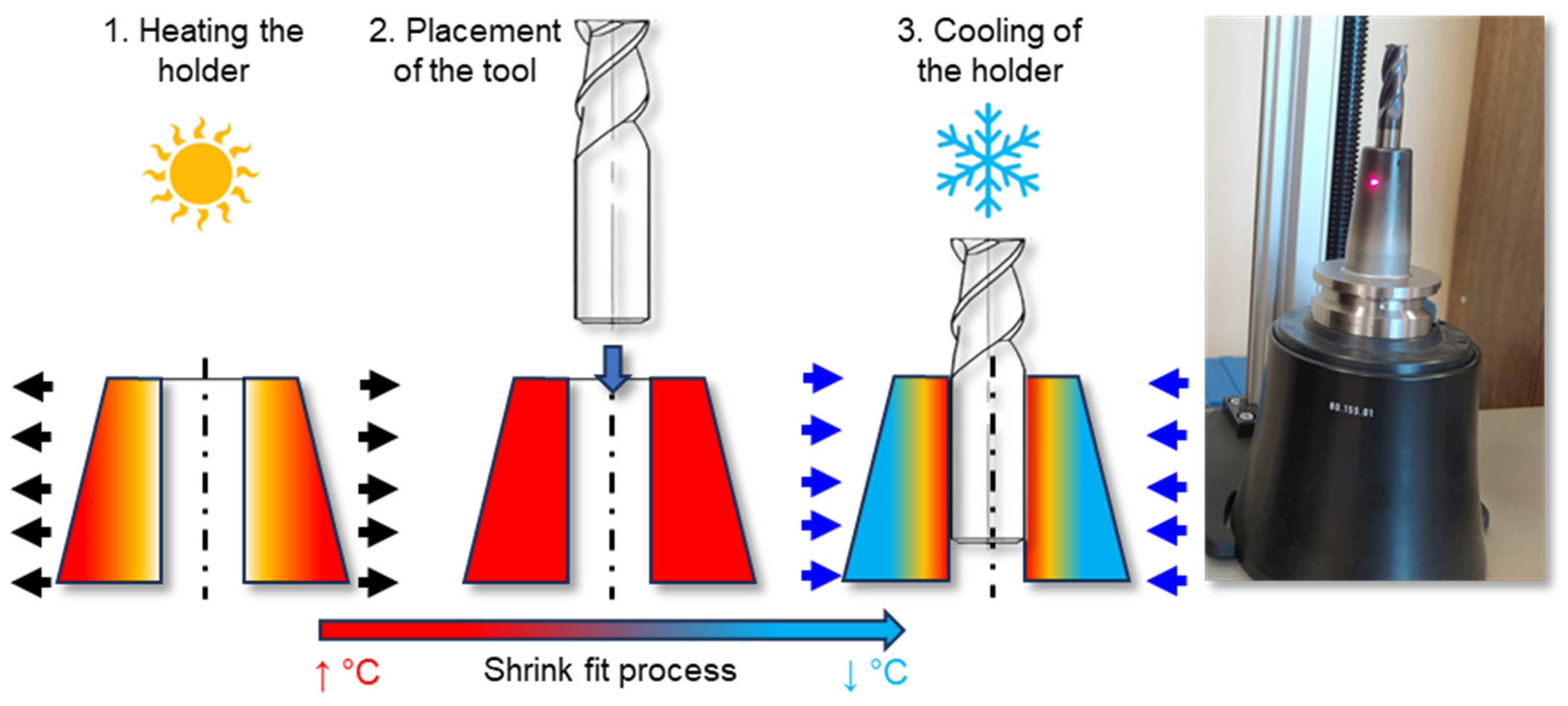
A shrink-fit holder connects the machine tool to the milling cutter and is one of the fundamental and indispensable components for high-precision and efficient high-speed machining processes in the manufacturing industry [1]. Particularly in the aerospace, defense, offshore, and oil and gas industries, where large, deep cavities and complex freeform features are often milled, clamping accuracies in the range of 2 to 3 μm or even below are expected [2]. Shrink-fit holders are characterized in particular by their rigidity, clamping force, and rotational balance, which leads to higher precision in high-speed milling. One of the most important factors affecting the performance of shrink-fit holders is the contact condition generated by the interference fit between the holder and the tool. The clamping opening must be heated by a heating device until it is larger than the tool and can be inserted into the shrink-fit holder (Figure 1). As it cools, a high contact pressure develops between the clamping opening and the tool, ensuring stable clamping [3]. More generally, recent studies have shown that tool holder design can strongly affect process stability, stress level, and tool life. For example, Fernández-Lucio et al. [4] reported that a torsional-compliance tool holder reduced peak stress during the reversal stage, improved process stability, and increased tool life, highlighting the importance of holder design in machining performance. Previous studies on shrink-fit tool holders have mainly focused on overall performance, mechanical properties and heating methods. For example, Wu et al. [5] proposed an induction-heating approach for shrink-fit tool holders and showed, through electromagnetic and transient thermal analyses supported by experiments, that the heating efficiency and temperature distribution can be significantly improved by coil design optimization. They also reported that the optimal heating parameters depend on holder size and demonstrated reliable insertion/removal temperatures for BT40-SF tool holders, highlighting the importance of the heating stage in shrink-fit applications. More recently, Chen and Lee [6] developed a magnetic induction heating coil structure for shrink-fit tool holders and showed that improved thermal uniformity during heating can enhance clamping stability, reduce vibration, and lower machined surface roughness, while also shortening tool-change time. Shrink-fit holders are subject to high stresses due to frequent heating and cooling, which can lead to clamp fatigue, but there are few studies on this topic [7,8]. However, this is an important factor, as clamping fatigue can lead to high tool wear, poor surface quality and, in the worst case, damage to the shrink-fit holder and the machine tool. Such an analysis poses certain difficulties due to its non-linear nature, which is why the finite element method (FEM) is suitable [9].
Figure 1. Working principle of the shrink-fit holder.
The FEM thermo-mechanical analysis is used in a wide range of engineering applications where high temperature distributions and mechanical loads act together. In the aerospace and energy sectors, finite element-based thermo-mechanical modeling techniques are extensively used for life prediction and design optimization of gas turbine blades under high temperatures, centrifugal stress, and thermal fatigue [10]. In the electronics and microelectronics field, the stress distribution, deflection, and thermal fatigue life of printed circuit board assemblies (PCBA), 3D integrated packages, and solder joints under thermal cycles are also determined based on these simulations [11]. In manufacturing and machining applications, thermo-mechanical models are widely used to determine thermal expansion, contact pressure, and stress distributions in interference-fit assemblies such as shrink-fit tool holders, press-fit shafts, and bearing housings. In the case of shrink-fit holders, these analyses also provide the basis for evaluating interface stiffness, damping characteristics, and fatigue life [8,12]. Furthermore, modeling of thermo-mechanical fatigue and damage development in advanced packaging and solder alloys is performed using finite element models calibrated with accelerated aging tests, and life correlations are derived to predict life in critical regions [13]. These few examples show that thermo-mechanical FE analysis has become an established method for both design and prediction of engineering problems of varying scales.
Parameters such as the temperature distribution, thermal expansion, contact pressure, and stress distribution formed at the interface between the tool and the holder can be obtained with high accuracy. In the study by Arslan [14], the expansion of the inner diameter caused by the inductive heating of the clamping opening and the insertion of the tool, as well as the contact pressure distribution resulting after cooling, were modeled in two dimensions. The results showed that for safe and efficient torque transmission in shrink-fit connections, the contact pressure and elastic equivalent stresses must be kept below the material yield limit. Another important consideration in the thermo-mechanical analysis of shrink-fit holders is the contact stiffness and contact force formed at the shrink-fit holder interface. In the study by Liao et al. [15], a method was proposed for determining the contact stiffness and contact force in a shrink-fit holder connection. In this method, the relationship between contact stiffness and normal contact load was derived using Hertz contact theory and fractal geometry theory, and the contact force was calculated using FEM. Furthermore, the effect of radial tightness, tool insertion length, and rotational speed on contact behavior was analyzed. In addition to thermal effects, the mechanical stresses and fatigue behavior occurring in shrink-fit tool holders should also be considered in thermo-mechanical analyses. In the study conducted by Lai et al. [8], the thermal and contact stresses generated during the shrink-fit clamping process were analyzed in two dimensions using the software ANSYS. Hazardous areas were identified and fatigue life was evaluated in these areas. Furthermore, the accuracy of the FE fatigue analysis was demonstrated by measuring the workpiece vibration signal and surface roughness in milling tests performed after 500 clamping cycles. In the study by Bauer et al. [16], the usability of EN24 steel instead of standard H13 steel in the production of shrink-fit tool holders was investigated. It was stated that the thermal properties of the alternative material were different, but its mechanical properties were similar. FE structural and thermal stress analyses and fatigue analyses showed that the alternative material could be used under certain conditions and that production costs could be reduced. The contact stiffness and damping properties at the holder and tool interface directly affect the dynamic behavior of the shrink-fit connection. In the study by Schmitz et al. [12], the continuous contact stiffness and damping profile between the tool and holder in the shrink-fit connection were modeled using the finite element method, and these values were used to predict the frequency response function. The obtained model was experimentally validated and shown to be usable in predicting the dynamic characteristics of the shrink-fit connection. More recently, Brecher et al. [17] proposed an extended tool model updating approach for shrink-fit tool assemblies, in which joint stiffness and the effective diameter of the fluted segment were identified from freely constrained frequency response functions. Their results showed that the updated tool and holder model could predict the dynamic behavior of different shrink-fit tool assemblies with good accuracy and could be used to avoid the excitation of critical chatter frequencies during process planning. Grossi et al. [18] also investigated the dynamic prediction of holder and tool assemblies by means of fully predictive 3D finite element models and evaluated their effect on tool-tip frequency response functions and stability lobe diagrams. For shrink-fit assemblies, they reported that the high connection stiffness allows the joint to be approximated as rigid with good accuracy, and showed that the predicted FRFs can be used for chatter stability assessment in milling
Despite the available studies on shrink-fit holder contact mechanics, interface stiffness, and fatigue behavior, the literature still lacks an integrated framework that combines experimentally supported transient thermal analysis, three-dimensional thermo-mechanical stress evolution, and fatigue life estimation under different practical clamping scenarios. In particular, the distinction between the first tool assembly and repeated tool replacement cycles has not been sufficiently clarified, although these two cases generate different stress histories and therefore may lead to different fatigue lives. To address this gap, the present study develops a three-dimensional finite element model of a BT40 shrink-fit holder, validates the thermal stage using measured temperature data, and evaluates the thermo-mechanical response during heating and cooling. Based on the resulting time-dependent stress fields, the fatigue life is estimated using the Soderberg criterion for two different operating scenarios: initial tool assembly and tool replacement.

2. Material and Method

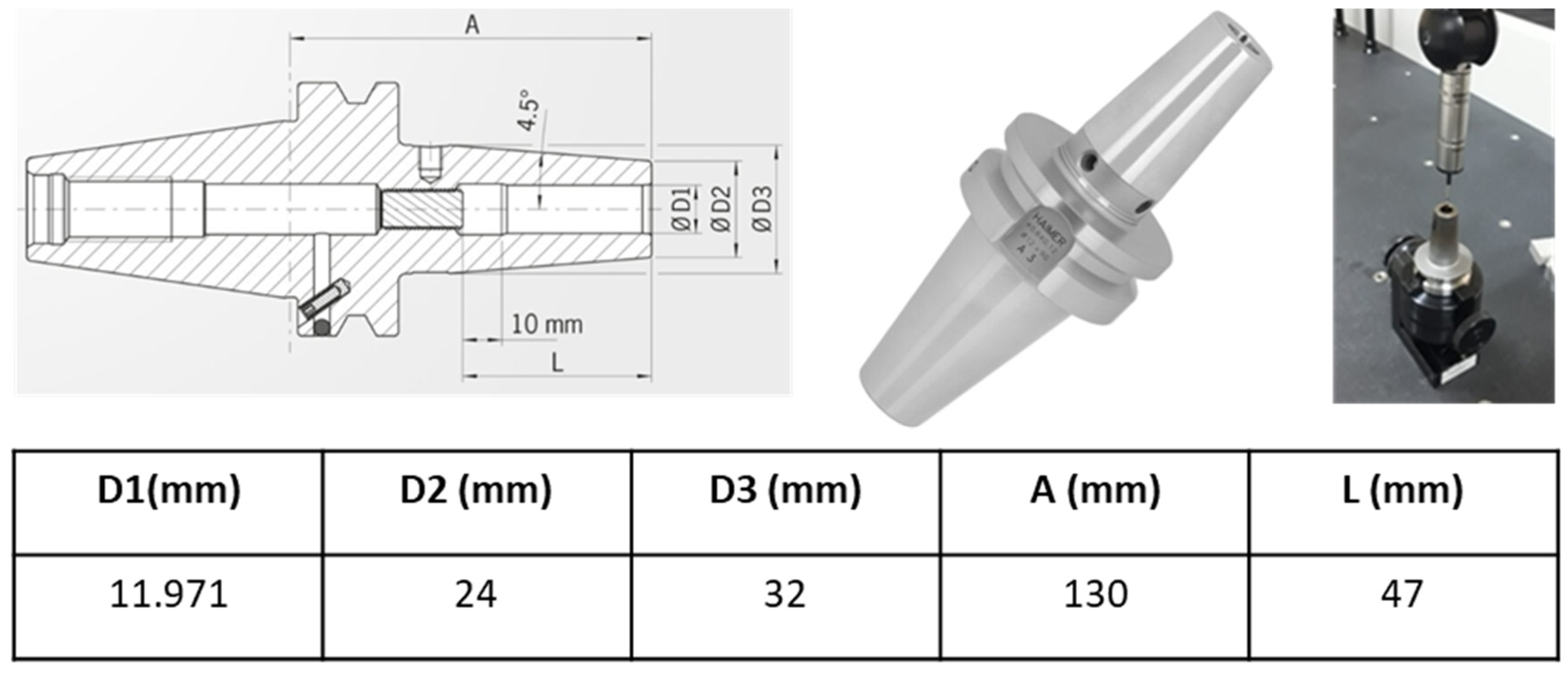
In industrial applications, H13 tool steel is commonly used as the shrink-fit tool holder material, while the cutting tool material is tungsten carbide. The tool holder is a Haimer, Igenhausen, Germany, brand BT40 standard, and a coordinate measuring machine (CMM) was used to determine the hole diameter (Figure 2). The actual diameter of the tool holder, whose nominal value is 12 mm, was measured as 11.971 mm, resulting in a diameter difference of 29 µm. Since the R7 tolerance was closer to the CMM measurement, this value was taken into account in the numerical solutions. Although the measured diameter difference was 29 µm, a total diameter difference of 34 µm was adopted in the numerical model based on the R7/h6 tolerance limits.
Figure 2. Technical features and dimensions of the shrink-fit holder JIS B 6339-2, BT40 [19].

Temperature Measurement

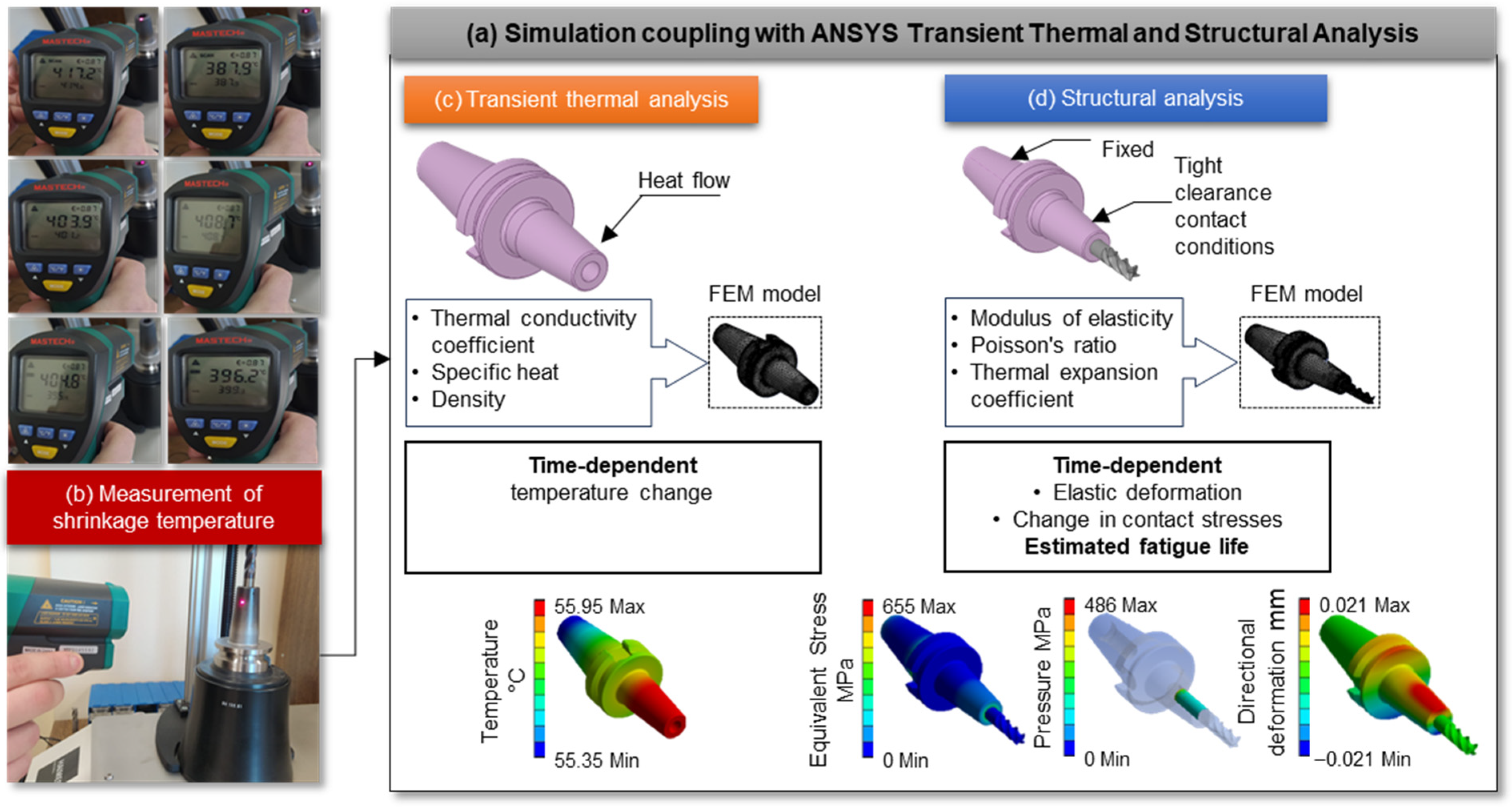
The Haimer brand power clamp basic model was used for mounting the tool holder. The device has a power of 10 kW, and the heating time can be automatically adjusted depending on the tool holder diameter. The programmed heating time for the 10–12 mm diameter range is 4.5 s. During this time, the 10 kW induction coil heats at full power. At the end of 4.5 s, the temperature in the tool holder was measured using a thermometer capable of contactless temperature measurement. After six different measurements taken at different times, the average temperature in the tool holder was recorded as 403 ± 5° C. The thermal properties of the tool holder material and cutting tool materials used are also provided (Table 1).
Table 1. Thermal and mechanical properties of H13 tool holder material and cutting tool.

3. FEM Model of Shrink-Fit Holder

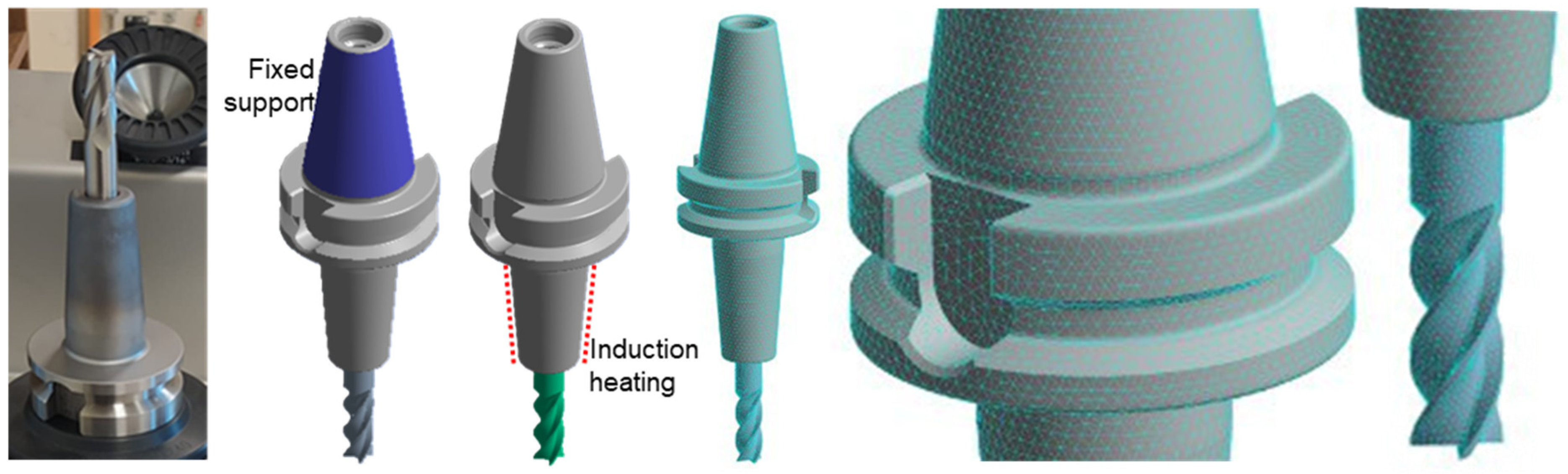
The geometries of the shrink-fit holder and the milling tool were modeled using SolidWorks 2020 CAD software and imported into ANSYS 2020 software. The FEM model was then generated using tetrahedral meshes and consists of a total of 335,132 elements and 513,051 nodes (Figure 3). The average mesh skewness was 0.255, which is acceptable as it is below 0.5. The mesh metric analysis yielded a mean value of 0.813. This value is generally considered acceptable if it is above 0.6. The clamping shaft was fixed for the simulation. For the area between the tool shank and the inner wall of the holder, friction contact conditions with a friction coefficient of μ = 0.20 (friction coefficient for the carbide tool/steel interface) were assumed [14].
Figure 3. FEM model.
For the transient FE analysis (Figure 4b) of the shrink-fit holder, heat flow was applied to the conical area (Figure 4a) and the numerical calculation was performed over a period of t = 1200 s. In the transient thermal FE model, induction heating was represented by the application of a heat flux to the conical compression zone of the shrink-fit holder (see Figure 3). This zone is directly affected by the induction coil during the actual interference fit process. The initial temperature of the model was established at room temperature (22 °C). During the heating phase, the shrink-fit holder was the sole component subjected to thermal loading; the cutting tool was assumed to remain at room temperature and be installed after the heating step. This assumption is consistent with the initial assembly scenario examined in the study. The induction heating time is very short (4.5 s), and the main objective of the thermal analysis is to capture the rapid temperature increase and the resulting local expansion in the compression zone. At this stage, heat losses to the environment from free surfaces were neglected, and all non-contacting outer surfaces were assumed to be adiabatic. This simplification is consistent with the highly localized heating behaviour observed in the simulations, where the temperature is mainly concentrated in the conical region and the rest of the holder remains at lower temperature levels. Following the removal of the heat source, a 1200-s cooling phase was simulated in order to capture the practical evolution of temperature, thermal deformation and contact stress during contraction. Although the tool holder did not fully cool to room temperature within 1200 s, this duration was sufficient to capture the peak thermal response during heating and the subsequent evolution of elastic deformation and contact stress during cooling. For this reason, no calculations were performed over even longer periods of time.
Figure 4. Workflow of the thermo-mechanical and fatigue analysis.
In the structural analysis (Figure 4c), both the shrink-fit holder and the cutting tool were taken into account. The heat load data obtained from the thermal analysis was transferred to the structural analysis. The thermal expansion coefficients of the tool holder and the cutting tool were also defined as material properties.
A fatigue analysis was performed based on the time-dependent thermo-mechanical stress fields that developed in the tool holder during the shrink-fit process. Two different thermo-mechanical loading scenarios were considered for the shrink-fit process: (i) heating only the tool holder and then mounting the cutting tool, and (ii) changing the tool in the holder.
During the induction heating of the tool holder, thermal expansion occurs, and the inner diameter widens, allowing the cutting tool to be inserted into the holder bore. At this stage, since there is no effective contact between the tool and the holder, the contact pressure is negligible. In contrast, the stresses occurring in the shrink-fit holder body are thermal in origin. During the cooling process, the falling temperature of the tool holder and the associated material contraction cause the contact between the cutting tool and the inner surface of the holder to be restored and the contact pressure gradually increases. In this phase, the equivalent stresses occurring in the tool holder body also increase with the rising contact pressure. In the repeated tool assembly scenario, the holder is initially heated while the tool is still mounted in order to remove and replace the cutting tool. Before heating, contact stresses occur in the tool holder due to the contact pressure. As the temperature in the clamping opening increases, the contact stresses decrease and thermally induced stress occurs. After cooling after the tool has been inserted, the tool holder begins to shrink and contact stresses occur again at the interface.

4. Calculation of Fatigue Life

Fatigue-life analysis of the shrink-fit holder was performed for two representative loading scenarios. The Soderberg criterion was used for the service life calculations (Equation (1)). It should be noted that the Soderberg-based life prediction in this study is intended as a conservative engineering approximation for comparing different shrink-fit loading scenarios. Because the local thermo-mechanical stress state at the tool–holder interface is complex and may involve high contact stresses, more advanced multiaxial or strain-based fatigue models could be considered in future studies when detailed cyclic material data become available.
σ a S e + σ m S y = 1 n
where σ a is alternating stress, σ m limiting safe mean stress, S e is fatigue limit, S y is yield stress and n is the safety factor [21]. In the present calculations, the safety factor n was taken as 1.0. The Wöhler curve (S-N curve) for the tool holder material was derived from literature data and experimentally determined data for H13 tool steel [8,22].
σ m = σ m a x + σ m i n 2
σ a = σ m a x σ m i n 2
The mean stress and alternating stress calculated from Equations (2) and (3) were used in the Soderberg criteria to determine the allowable fatigue limit under mean-stress effects. These relations provide different fatigue-limit estimates depending on the material strength parameter considered. Among them, Soderberg gives the most conservative prediction, whereas Goodman and Gerber provide less conservative linear and parabolic approximations, respectively (Equation (4)).
S e = σ a 1 σ m σ y
The fatigue life of the shrink-fit tool holder was estimated using the Basquin relation based on the S-N behavior of H13 tool steel. After determining the mean stress and alternating stress from Equations (2) and (3), and evaluating the allowable fatigue condition under mean-stress effects, the corresponding cycle life was calculated from the stress–life relationship of the holder material.
σ a = σ f 2 N b
where σ f is the fatigue strength coefficient, N is the number of cycles to failure, and b is the fatigue strength exponent.
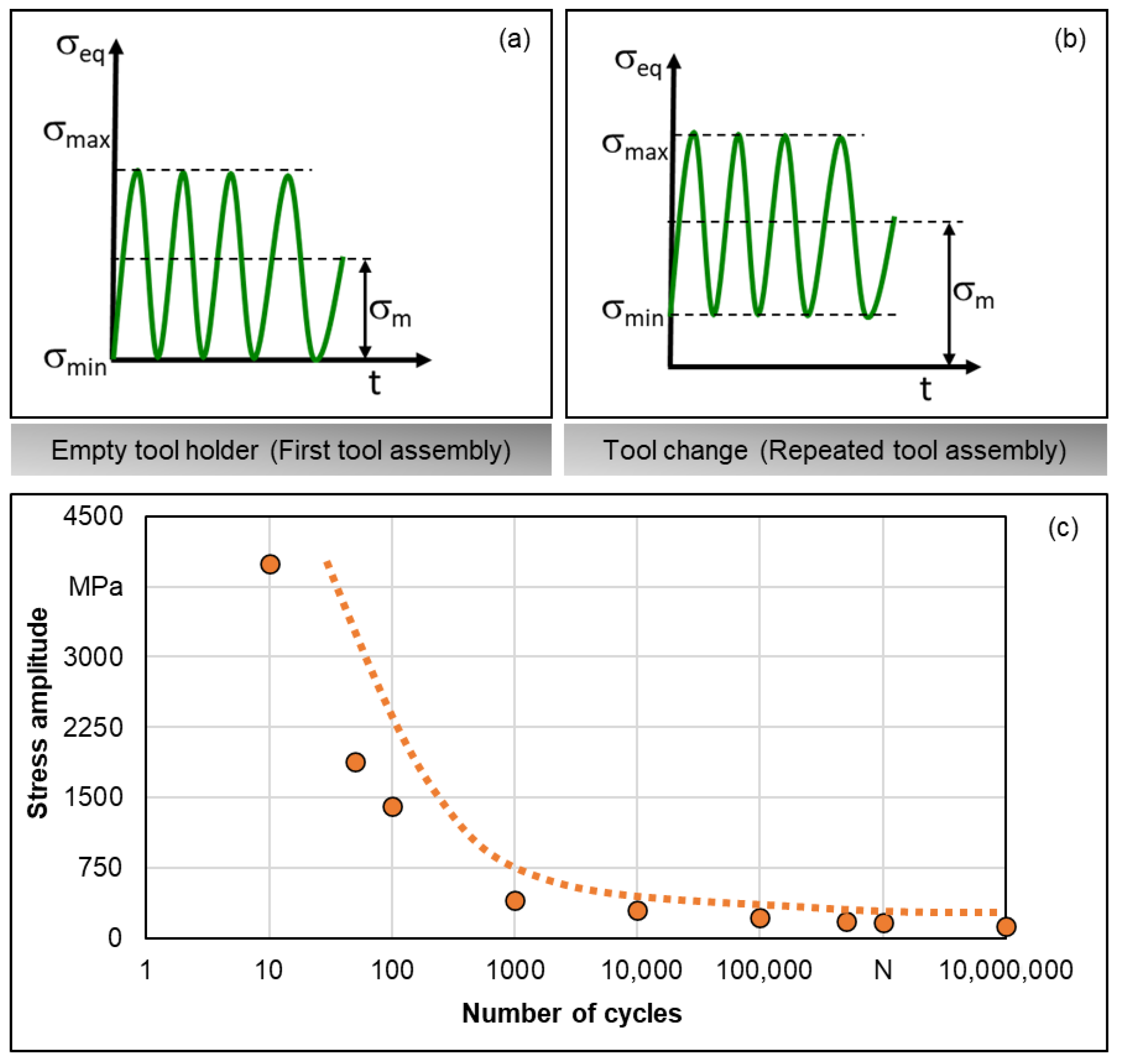
To evaluate the fatigue life of the shrink-fit tool holder, two different practical loading scenarios were considered in this study: (i) the first tool assembly cycle (Figure 5a), in which the holder is heated before the cutting tool is inserted, and (ii) the repeated tool replacement cycle, (Figure 5b) in which the tool is already mounted at the beginning of the heating stage. Since these two cases generate different thermo-mechanical stress histories, they were assessed separately in the fatigue calculations. In addition, the S-N curve of H13 tool steel (Figure 5c), which is the material of the shrink-fit holder, was used as the basis of the stress–life approach for estimating the corresponding fatigue life of the holder.
Figure 5. (a) Schematic representation of the shrink-fit loading scenario for an empty tool holder during the first tool assembly; (b) schematic representation of the shrink-fit loading scenario during tool change under repeated tool assembly; (c) stress–life relation used in the fatigue-life assessment for the H13 tool holder material.

5. Results

5.1. Transient Thermal Analysis Results

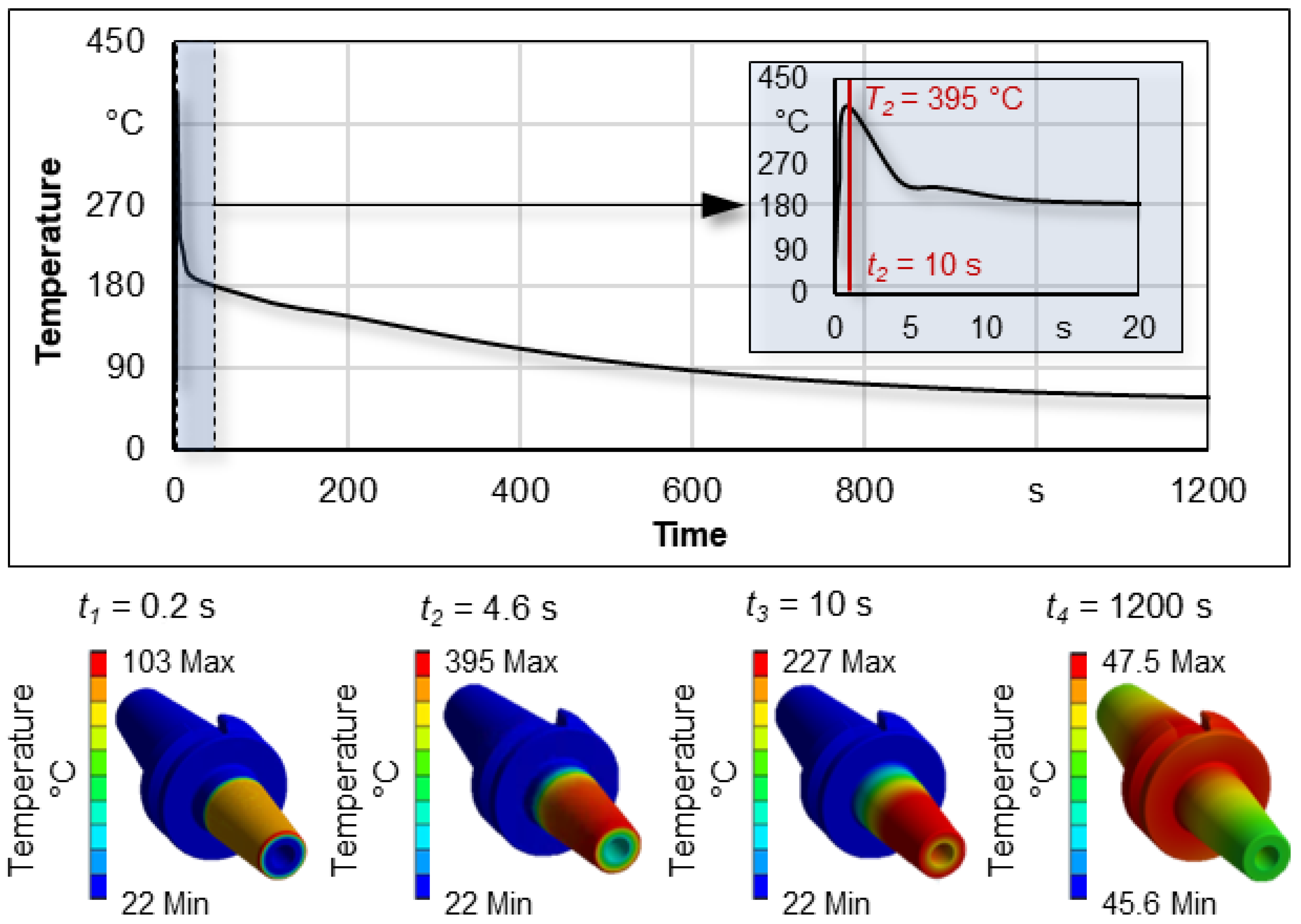
Figure 6 shows the transient thermal analysis results for the shrink-fit holder. The transient thermal analysis results indicate that the temperature distribution during the heating and cooling process of the shrink-fit holder is highly consistent with the physically expected behavior. Under the applied 10 kW thermal load, the temperature in the conical region rapidly peaked at T = 395 °C in approximately t = 4.3 s and then decreased significantly in the first 100 s after the heat input was stopped, falling back to the T = 120–150 °C range. During the subsequent 1200-s period, the temperature decreased slowly in a logarithmic trend and remained above the ambient temperature due to the high mass thermal capacity of the holder. The temperature distribution obtained from the analysis confirms the characteristic local heating behavior of shrink-fit processes, revealing that heat is concentrated particularly in the conical region, while the rest of the body remains at lower temperatures. These results are consistent with experimental measurements and show that the 4–5 s heating interval, where the thermal expansion difference at the interface is most critical, is the reference loading condition for subsequent structural stress analyses. Thus, the transient model provides a reliable thermal scenario for evaluating thermo-mechanical behavior and ensures the scientific foundation of structural analyses investigating the stress development of shrink assembly.
Figure 6. Transient thermal analysis results of the shrink-fit tool holder: time-dependent variation and distribution of the temperature in the conical region under different heating processes.
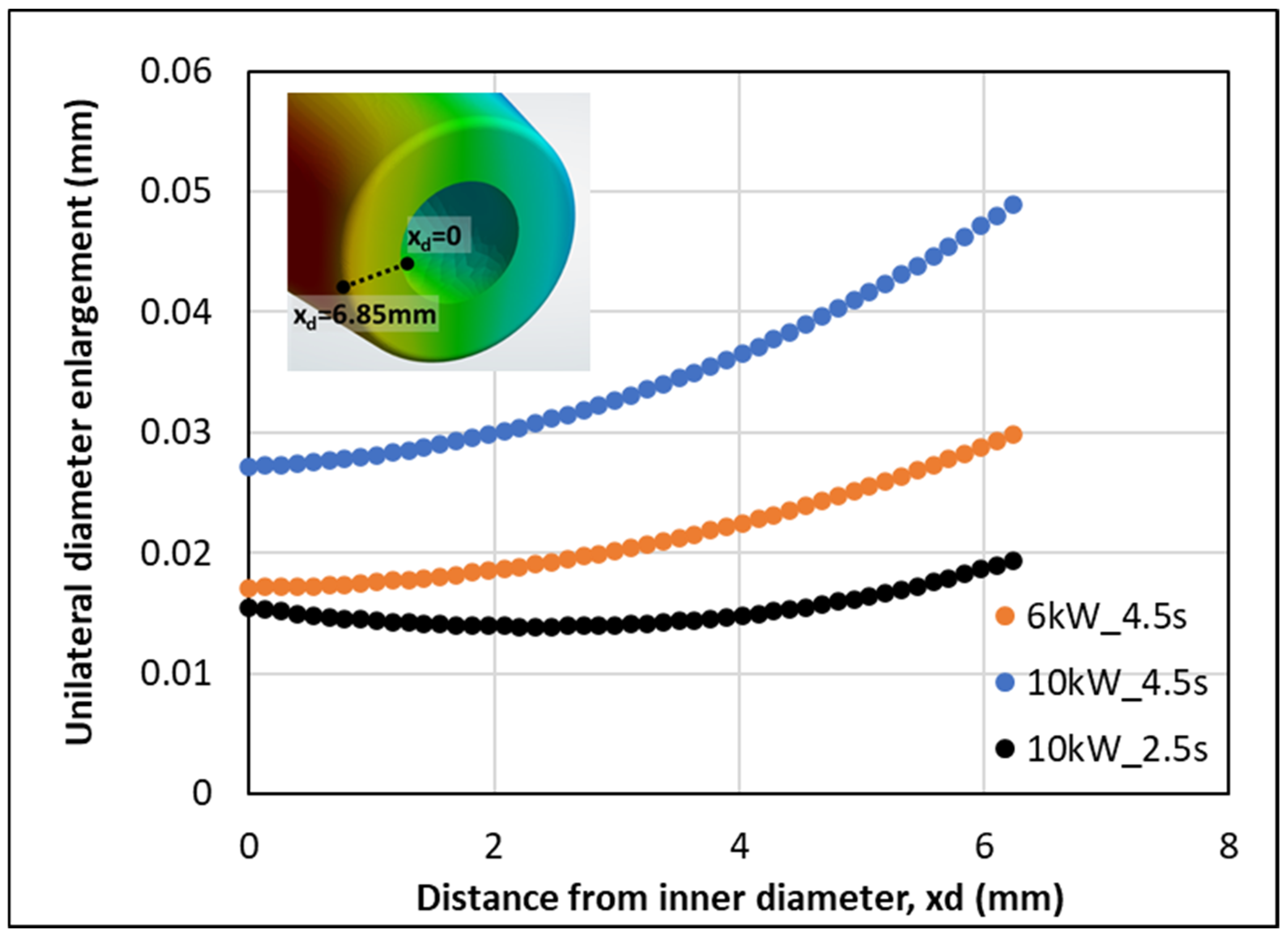
Figure 7 shows how the unilateral diameter enlargement—calculated by mapping the transient thermal results into the static structural model—changes through the holder wall thickness, from the inner bore outward (xd = 0 to 6.85 mm). The plot compares three induction-heating cases: 6 kW–4.5 s, 10 kW–4.5 s, and 10 kW–2.5 s. At the inner diameter (xd = 0 mm), the predicted unilateral enlargement is about 0.017 mm, 0.027 mm, and 0.015 mm, respectively. From an assembly standpoint, the inner surface (xd = 0) is the key location because this is where the required opening must be achieved. Using the predefined unilateral tool–holder clearance of 17 µm as a reference, the 6 kW–4.5 s case essentially meets the target with only a small margin, which should allow the tool to be inserted without excessive interference. The 10 kW–2.5 s case, however, stays below the 17 µm threshold (around 0.015 mm), so a full opening at the bore is not expected under this condition alone. In practical terms, this would mean increasing the heating time, raising the energy input, or improving heating efficiency—for example by optimizing coil position, coupling, or focusing the heating more effectively on the conical region. The 10 kW–4.5 s case provides a much larger opening margin (about 0.027 mm at xd = 0), but that benefit comes with a higher thermal load, which can increase thermo-mechanical stresses in the holder and may affect service life. Finally, the fact that all curves rise with increasing xd indicates that expansion is not uniform across the wall thickness. Enlargement increases toward the outer side, consistent with a through-thickness temperature gradient and stronger thermal expansion in the outer regions. Overall, Figure 7 helps define the shrink-fit process window by showing not only whether the inner-diameter opening is achieved, but also how each heating scenario drives the overall level of expansion throughout the holder wall.
Figure 7. The variation in thermal expansion across the wall thickness in hole diameter, obtained by structural analysis after transient thermal heating.
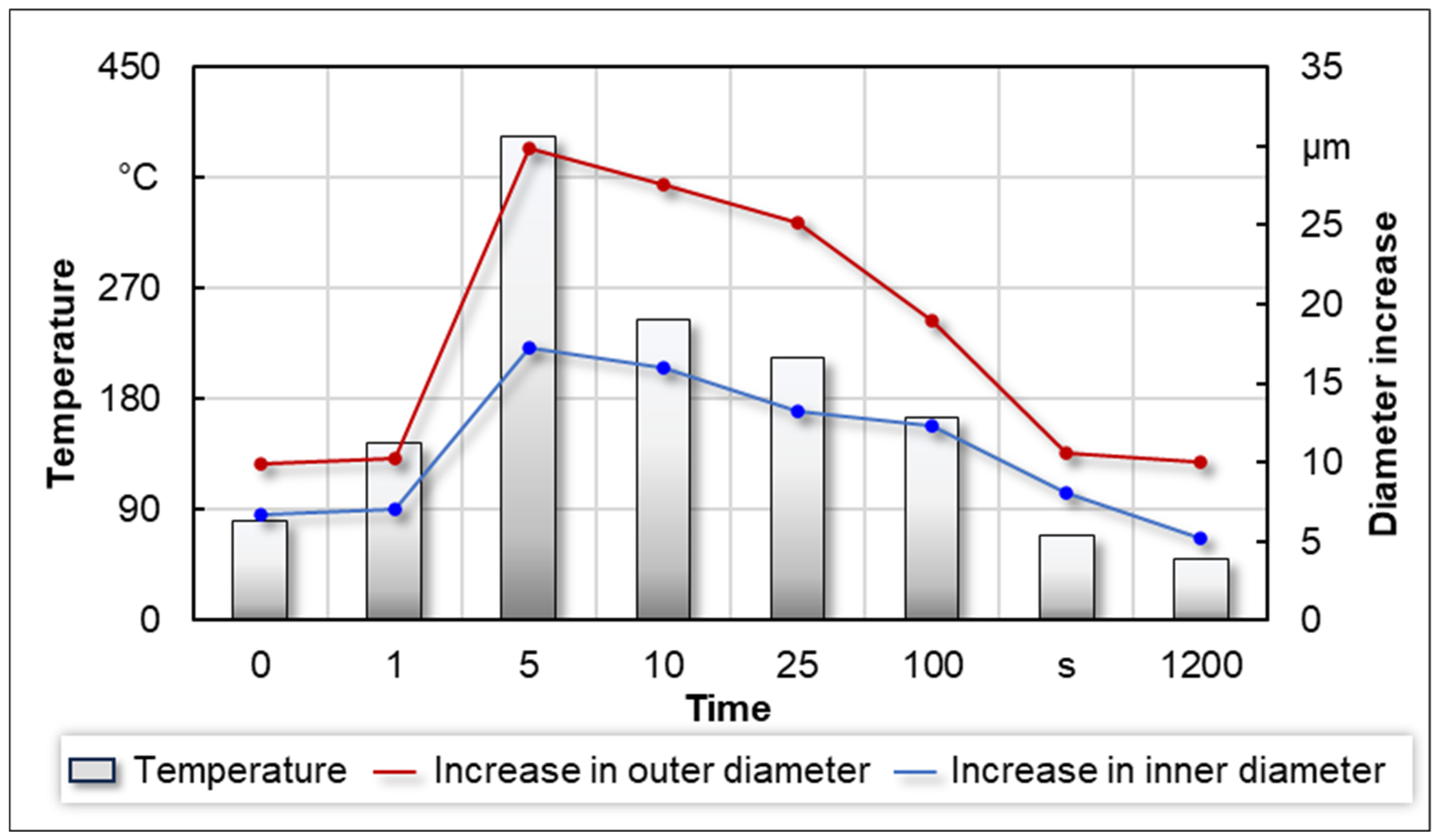
Heating the shrink-fit holder causes sufficient thermal expansion in the clamping opening, enabling the cutting tool to be inserted into the holder. In the modeling study, this process was carried out as part of the step shown in Figure 4c; the radial expansion caused by heating the holder was obtained numerically, completing the relevant stage. After the cutting tool is placed in the holder, the cooling process begins, and the holder tends to return to its initial dimensions, gripping the cutting tool with the necessary clamping pressure in the circumferential direction. This cooling and gripping process is modeled in the step given in Figure 4d. Figure 8 shows the time-dependent change in temperature and inner and outer diameter increases during the heating and subsequent cooling process of the shrink-fit tool holder. During the initial 4.5-s heating phase, the temperature rose to approximately T = 394 °C, and parallel to this increase, thermal expansion of approximately 42 µm in the outer diameter and 22 µm in the inner diameter occurred. Since heat is transferred from the outer surface to the inner region, the outer diameter increase was always higher than the inner diameter increase, which is consistent with the fundamental characteristic of shrink-fit behavior. After the heat source was cut off, the temperature began to drop rapidly; between t = 10–25 s, the temperature dropped to T = 200–240 °C, and both the inner and outer diameters began to shrink. During the advanced cooling period, the temperature dropped to T = 160 °C at 100 s and to approximately T = 65 °C at 500 s; throughout this process, the holder body shrunk, increasing the clamping pressure around the tool. Although the holder did not reach full room temperature due to the analysis time being limited to 1200 s, at the end of this period, the outer diameter increase had decreased to approximately 12 µm, and the inner diameter increase to 6 µm, and most of the thermal expansion had disappeared. In actual application, cooling continues until the tool holder reaches room temperature. However, due to the excessive length of the solution time, the cooling period was limited to t = 1200 s in this study. At the end of the analysis, the temperature of the holder remained at approximately T = 48 °C after 1200 s. It should also be noted that the predicted temperature and radial expansion values are affected by the assumed thermo-mechanical properties of H13 tool steel. In particular, temperature-dependent thermal conductivity, specific heat, thermal expansion, and elastic–plastic material behavior may influence the quantitative results, although the present model showed good agreement with the experimentally measured temperature after heating.
Figure 8. Temporal change in temperature and diameter of the shrink-fit holder after transient thermal and structural analysis.
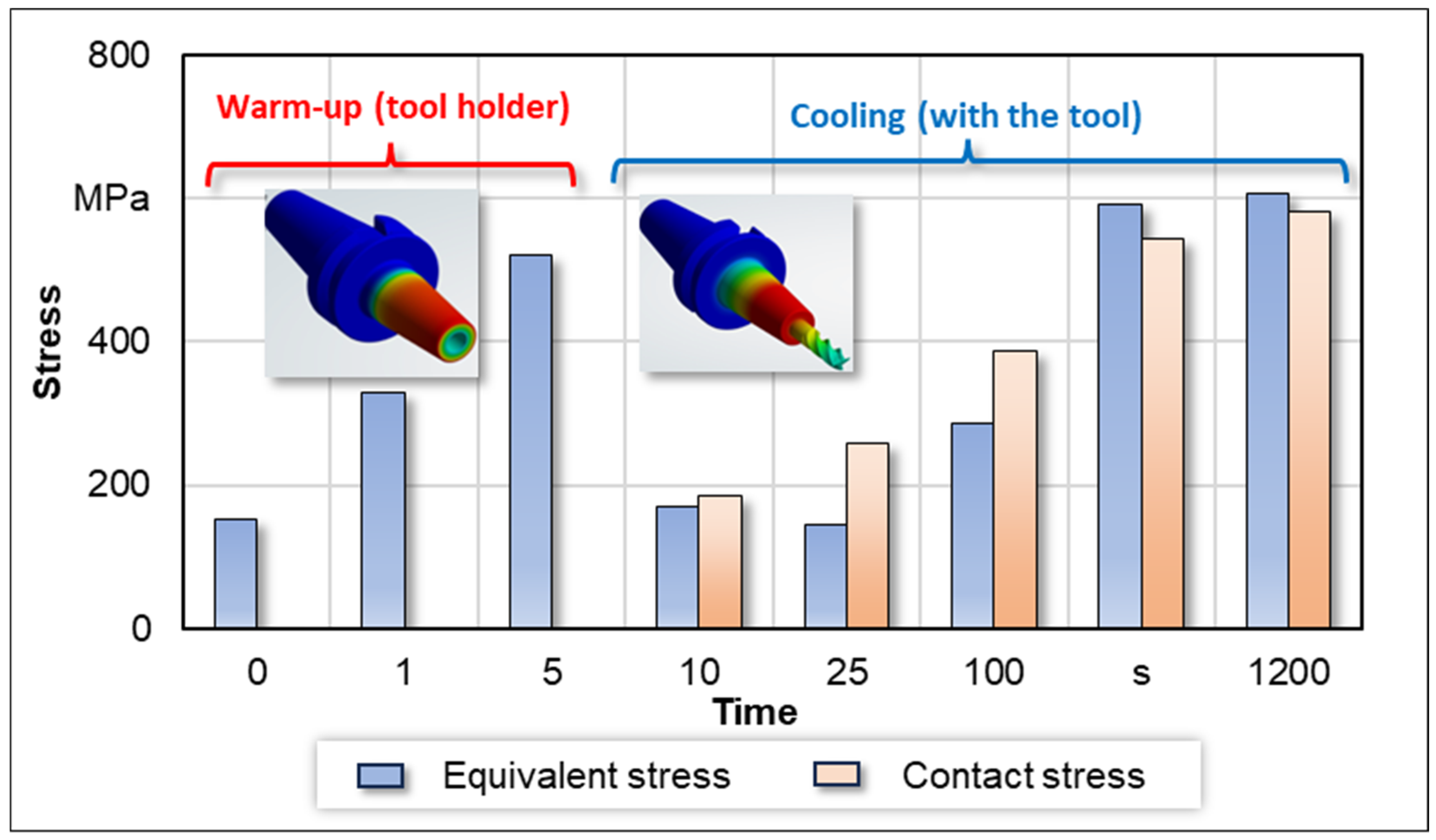
The maximum temperature at the end of the heating stage was obtained as approximately T = 394 °C in Figure 8, and significant thermal stresses occur in the holder body within this temperature range. During the cooling that begins after the cutting tool is inserted, an increase in both contact stress and total interference pressure is an expected result. At this stage, two different stress components originating from different sources are active simultaneously in the tool holder: (i) thermal stresses and (ii) mechanical stresses resulting from interference fit. Time-dependent stress changes under the combined effect of these two loading types are shown in detail in Figure 9.
Figure 9. Thermo-mechanical analysis (initial heating for 4.5 s, followed by cooling for 1200 s including the tool).
Figure 9 shows the thermo-mechanical behavior of the shrink-fit clamping process, showing the stresses experienced solely by the tool holder during the initial 4.5-s heating phase and the time-dependent change in equivalent and contact stresses during the subsequent cooling process that begins with the installation of the cutting tool. During the heating phase, as the temperature rapidly increased, the equivalent stresses in the holder body rose significantly, while the contact stress remained at zero since the tool had not yet been mounted. Upon reaching the maximum temperature at the 4.5-s mark, the equivalent stress peaks, representing the holder’s maximum thermal expansion state. Following the insertion of the cutting tool into the holder at this point, the cooling process begins, and both equivalent stress and contact stress are observed to increase steadily. This increase is due to the rise in shrink-fit pressure caused by the holder shrinking as the temperature drops and gripping the tool shank. In particular, the approach of the contact stress to the equivalent stress levels at the t = 100 s and t = 1200 s time steps indicates that the mechanical interaction at the tool holder interface significantly strengthens as cooling progresses.
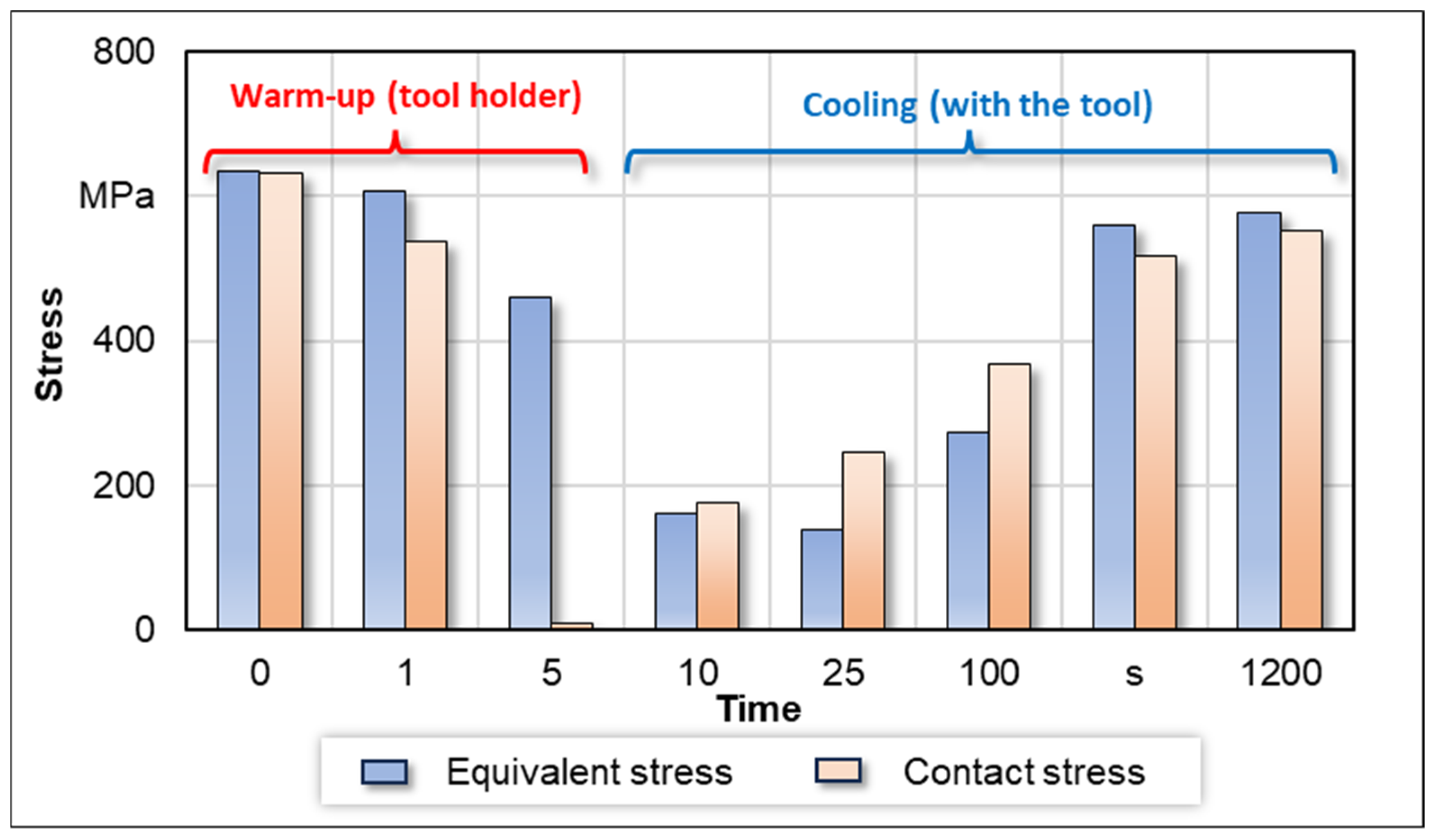
Figure 10 shows the time-dependent change in equivalent and contact stresses during the heating–cooling cycle performed with the cutting tool mounted in the tool holder. During the initial 4.5-s heating phase, as the holder’s temperature rapidly increased, both the equivalent stress and contact stress remained at very high levels; in particular, the occurrence of contact stresses above 600 MPa at the t = 0.1 s and t = 0.5 s time steps indicates that the tool was under significant mechanical interaction within the holder during heating. This situation differs from Figure 9; since the cutting tool was not yet mounted during the heating phase, the contact stress was zero up to t = 4.5 s. When mounted, however, the tool holder interface responds simultaneously to thermal expansion, causing contact stress to exist from the beginning of heating; however, as thermal expansion relieves the interference, the contact stress decreases during the early heating stage. During the cooling process that begins when the heat source is cut off, the contact stresses show a short-term decrease in the 10–25 s range, but as cooling progresses, these stresses increase again due to the shrinkage of the holder around the tool, reaching high and stable values after t = 100 s. The equivalent stress exhibits a similar trend; as cooling proceeds, the contribution of thermal expansion decreases, whereas the mechanical stress component arising from the shrink-fit interference becomes dominant. While Figure 9 shows only thermal stress during the heating phase, here both thermal and mechanical interactions occur simultaneously, resulting in significantly higher contact stresses, especially in the first seconds of heating. However, in both cases, the steady increase in contact stresses as the cooling phase progresses confirms the fundamental principle that the shrink-fit mechanism creates higher clamping pressure during cooling.
Figure 10. Time-dependent variation in equivalent and contact stresses during the heating–cooling cycle of the shrink-fit holder with the tool mounted.

5.2. Predicted Fatigue Life of the Shrink-Fit Holder

Figure 9 and Figure 10 present the time-dependent equivalent/contact stress histories that provide the maximum and minimum stress values required to define the shrink-fit assembly process as a fatigue stress cycle. In the first assembly scenario shown in Figure 9, the contact stress remains zero during the initial heating period of t = 4.5 s because the cutting tool has not yet been inserted, whereas the equivalent stress in the holder body increases due to thermal expansion. After the tool is installed at the end of 4.5 s, the cooling stage begins and the contraction of the holder generates the shrink-fit pressure. Accordingly, both the contact stress and the equivalent stress increase. In the heating–cooling cycle shown in Figure 10, where the tool is already mounted from the beginning, contact exists throughout the cycle and high contact stresses occur particularly in the early heating stage. As cooling proceeds, the shrink-fit effect becomes dominant again and the stresses rise toward a stable level.
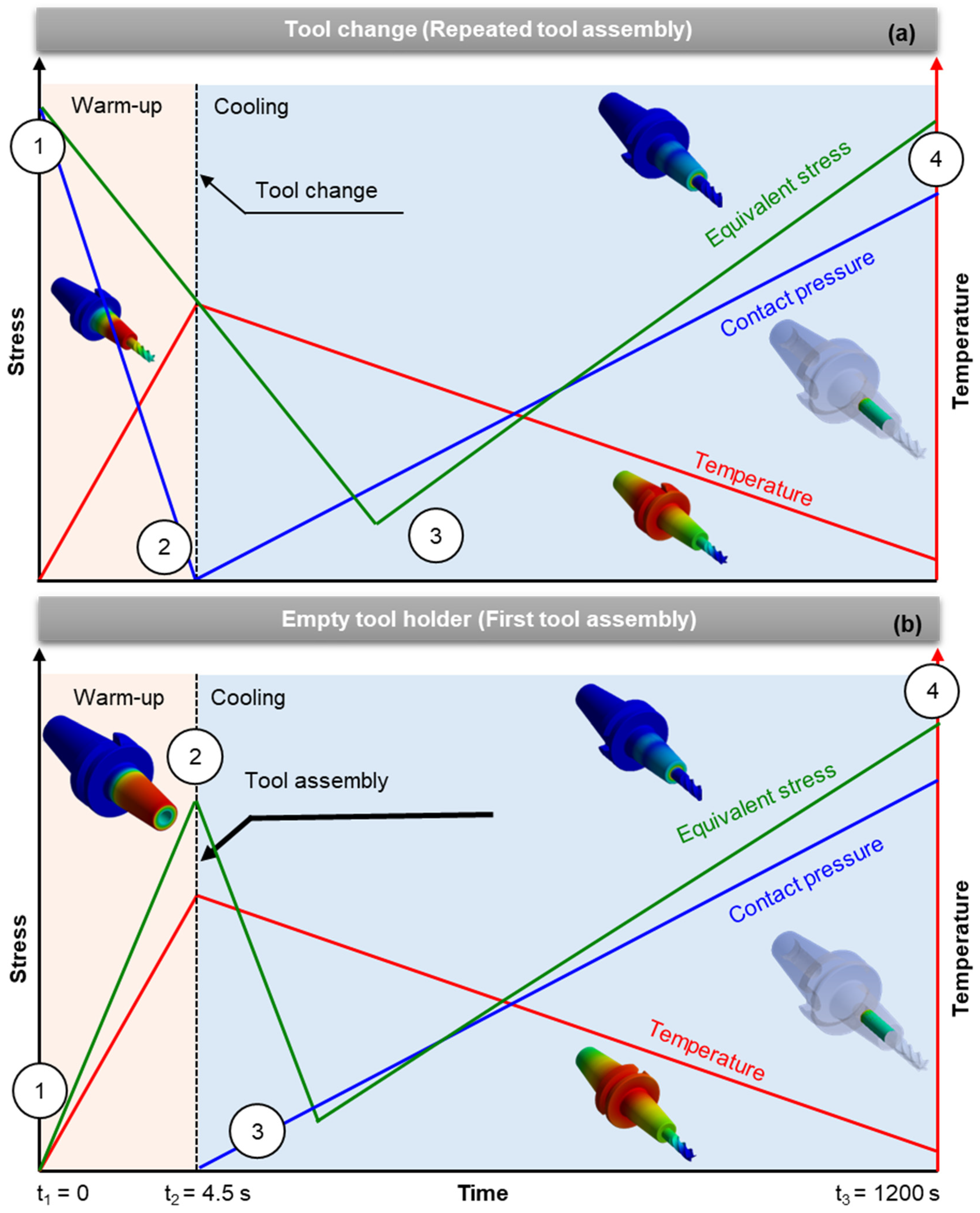
Figure 11 schematically summarizes the stress variation obtained from Figure 9 and Figure 10 in a form suitable for fatigue calculations. Based on Equations (2) and (3), the fatigue assessment requires the maximum stress, minimum stress, mean stress, and stress amplitude of one representative shrink-fit cycle. In this study, the maximum stress was taken as the maximum equivalent stress occurring in the shrink-fit holder during one assembly cycle, while the minimum stress was taken as the minimum stress occurring in the holder during the same cycle. Since the highest stress levels were observed on the inner surface of the shrink-fit holder, where contact between the holder and the cutting tool occurs, the stress values used in the fatigue calculations were extracted from this critical inner contact surface. Accordingly, in the initial assembly case, the maximum stress corresponds to point 4 and the minimum stress corresponds to point 1 in Figure 11, whereas in the tool replacement case, the maximum stress corresponds to point 1 and the minimum stress corresponds to point 3. These σmax and σmin values were then used in Equations (2) and (3) to determine the mean stress and stress amplitude of the cycle. Thus, Figure 11 enables distinguishing the loading characteristics of the “initial shrinkage” and “tool change” scenarios (oscillating variable/general variable) while directly visualizing the average and variable stress components used in fatigue analysis. In this study, fatigue life was estimated using the Soderberg criterion based on the σmax and σmin values extracted from Figure 9 and Figure 10. In the present fatigue assessment, residual stresses from prior cycles were not explicitly accumulated; instead, each loading case was evaluated as an idealized representative cycle based on its corresponding thermo-mechanical stress history.
Figure 11. Time-dependent variation in temperature (red), contact pressure (blue), and equivalent stress (green) throughout the shrink-fit assembly cycle: (a) initial tool assembly for the blank tool holder, (b) repeated shrink-fit scenario during tool change.
Table 2 summarizes the fatigue-life input parameters used for the two shrink-fit loading scenarios considered in this study. For each case, the maximum and minimum stress values obtained from the thermo-mechanical analysis were used to calculate the mean stress and alternating stress. In addition, the Basquin constants derived from the S-N data of H13 tool steel are presented. Based on these parameters, the fatigue life of the shrink-fit holder was evaluated according to the Soderberg criterion for the initial tool assembly and repeated tool replacement conditions.
Table 2. Stress parameters and fatigue-life calculation constants for the two shrink-fit loading scenarios based on the Soderberg criterion.
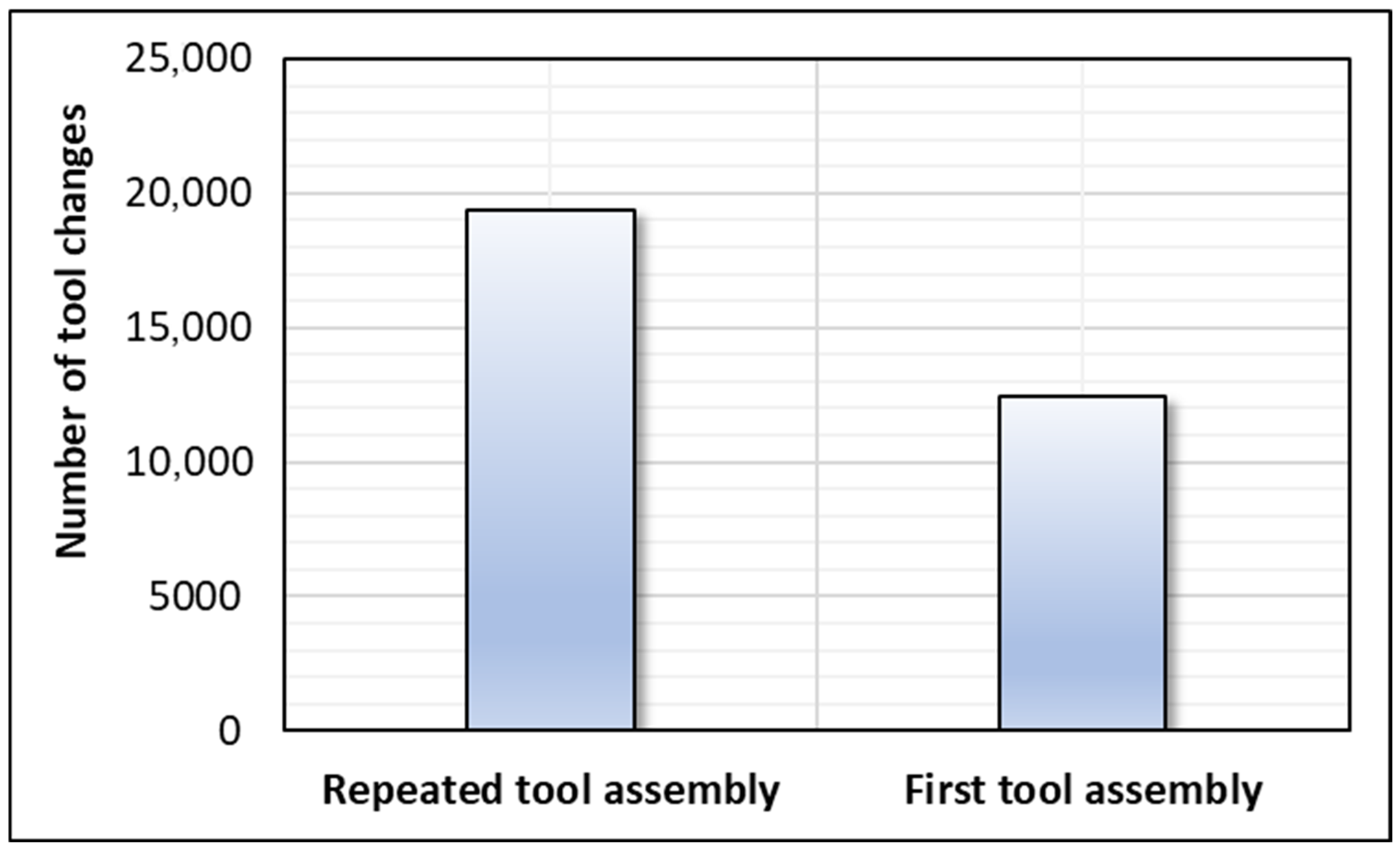
Figure 12 compares the fatigue life predictions obtained using the Soderberg criterion for two loading scenarios: (i) first tool assembly and (ii) repeated tool assembly. These results were calculated from the fatigue cycles determined at the critical point using the average stress and stress amplitude derived from the σmax–σmin values extracted from the time histories in Figure 9 and Figure 10. As shown in Figure 12, the predicted life for the repeated tool assembly case is approximately 19,400 cycles, whereas the predicted life for the first tool assembly case is approximately 12,407 cycles. Therefore, the repeated tool assembly condition provides roughly 1.6 times higher fatigue life than the first tool assembly condition. This difference arises from the nature of the stress cycle in the two cases. In the first assembly condition, the minimum stress is assumed to be approximately zero (σmin ≅ 0), which increases the stress amplitude. In contrast, during repeated tool assembly, because the tool is already mounted, the stress cycle does not decrease to zero; instead, σ m i n remains at a finite level associated with the contact relaxation during heating (point 3 in Figure 11), leading to a lower stress amplitude. Since mean-stress-based fatigue approaches such as the Soderberg model are highly sensitive to stress amplitude, the larger amplitude in the first assembly case results in a shorter predicted fatigue life.
Figure 12. Number of cycles obtained for the service life of the shrink-fit tool holder under two different assembly conditions.
The results presented in Figure 12 were obtained by considering only the stresses generated during the shrink-fit heating and cooling process. Since the cutting forces and torque arising during machining were not included, additional analyses that incorporate cutting loads are required to provide a more realistic assessment of service life under actual operating conditions. As shown in Figure 12, the repeated tool assembly condition provides a longer fatigue life than the first tool assembly condition. This indicates that, in terms of fatigue induced by the shrink-fit process, leaving the cutting tool mounted in the holder during idle periods leads to a less severe subsequent shrink-fit cycle. The repeated assembly process produces a lower stress amplitude than the first assembly condition, which has a positive effect on fatigue life. It should also be noted that the fatigue performance of the shrink-fit holder is closely related to the interference pressure. As the diameter difference increases, both the contact pressure and the resulting stress amplitude in the holder increase, leading to a reduction in fatigue life. On the other hand, a decrease in the diameter difference reduces the torque that the tool holder can transmit during cutting.

6. Conclusions

This study investigated the thermo-mechanical behaviour and fatigue life of a BT40 shrink-fit tool holder during the induction heating and cooling cycle by means of a three-dimensional finite element model. The numerical results showed that the applied thermal loading produced the radial expansion required for tool insertion and that the subsequent cooling stage governed the evolution of contact pressure and equivalent stress in the holder. Based on the stress histories extracted from the critical region, fatigue life was evaluated using the Soderberg criterion for two representative loading cases, namely first tool assembly and repeated tool assembly. The main findings of the study can be summarized as follows:
  • The transient thermal analysis showed that the heating stage generated sufficient thermal expansion in the clamping region to allow the insertion of the cutting tool, and the predicted temperature and expansion values were in good agreement with the experimental observations.
  • The thermo-mechanical response of the holder changed significantly during the process. During heating, the stress state was mainly governed by thermal expansion, whereas during cooling the mechanical stresses associated with shrink-fit interference and contact pressure became dominant.
  • In the repeated tool assembly case, where the tool was already mounted at the beginning of the heating stage, high initial contact stresses were observed. As cooling progressed, the shrink-fit effect became dominant and both the equivalent stress and the contact pressure approached stable levels.
  • Fatigue-life calculations based on the Soderberg criterion indicated that the predicted life was approximately 12,407 cycles for the first tool assembly condition and approximately 19,400 cycles for the repeated tool assembly condition.
  • The repeated tool assembly condition therefore exhibited approximately 1.6 times longer fatigue life than the first tool assembly condition. This result is mainly attributed to the lower stress amplitude in the repeated assembly cycle, since the minimum stress does not decrease to zero.
  • These findings indicate that, from the standpoint of shrink-fit-induced fatigue, leaving the cutting tool mounted in the holder during idle periods results in a less severe subsequent shrink-fit cycle and is associated with a longer predicted fatigue life.
  • The results presented in this study consider only the stresses generated during the shrink-fit heating and cooling process. Since machining-induced cutting forces and torque were not included, additional analyses incorporating cutting loads are required for a more realistic evaluation of service life under actual operating conditions.
  • The fatigue performance of the shrink-fit holder is also closely related to the diameter difference between the tool and the holder. An increase in diameter difference raises the contact pressure and the resulting stress amplitude in the holder, which is expected to reduce fatigue life; however, reducing the diameter difference may also decrease the torque transmission capacity during machining.

Author Contributions

K.A.: Conceptualization, Formal Analysis, Investigation, Methodology, Project Administration. E.O.: Data Curation, Investigation, Validation, Visualization, Writing—Original Draft Preparation; A.Ç.: Writing—Review & Editing. All authors have read and agreed to the published version of the manuscript.

Funding

This work was supported by grants from the Scientific and Technological Research Council of Turkey (TUBITAK) and the Support Program for Scientific and Technological Research Projects-1001 [grant number 224M283].

Data Availability Statement

Data will be made available on request.

Conflicts of Interest

The authors declare no conflicts of interest.

References

  1. Aoyama, T.; Inasaki, I. Performances of HSK Tool Interfaces under High Rotational Speed. CIRP Ann. 2001, 50, 281–284. [Google Scholar] [CrossRef]
  2. Cheng, X.; Liu, J.C.; Zheng, G.M. Study on the high-precision shrink-fit holders for micro/nano milling. In Joint International Mechanical, Electronic and Information Technology Conference (JIMET 2015); Atlantis Press: Dordrecht, The Netherlands, 2015. [Google Scholar]
  3. Rosenthal, O.; Hintze, W.; Möller, C. Assessment of tool holder performance in roughing with end mills. Prod. Eng. Res. Devel 2020, 14, 253–263. [Google Scholar] [CrossRef]
  4. Fernández-Lucio, P.; Gil Del Val, A.; Plaza, S.; Pereira, O.; Fernández-Valdivielso, A.; López de Lacalle, L.N. Threading holder based on axial metal cylinder pins to reduce tap risk during reversion instant. Alex. Eng. J. 2023, 66, 845–859. [Google Scholar] [CrossRef]
  5. Wu, X.; Li, C.; Sun, S.; Tong, R.; Li, Q. A Study on the Heating Method and Implementation of a Shrink-Fit Tool Holder. Energies 2019, 12, 3416. [Google Scholar] [CrossRef]
  6. Chen, C.; Lee, M. Development of magnetic induction heating device structure for improved thermal uniformity in shrink-fit tool holders to reduce surface roughness in CNC machined workpieces. Appl. Therm. Eng. 2025, 264, 125514. [Google Scholar] [CrossRef]
  7. Ostad Ali Akbari, V.; Postel, M.; Kuffa, M.; Wegener, K. Improving stability predictions in milling by incorporation of toolholder sound emissions. CIRP J. Manuf. Sci. Technol. 2022, 37, 359–369. [Google Scholar] [CrossRef]
  8. Lai, Z.; Zhao, Z.; Guo, T.; Luo, Y.; Zhou, H.; Li, C. Clamping Fatigue Properties of Shrink-Fit Holder. Micromachines 2022, 13, 1263. [Google Scholar] [CrossRef] [PubMed]
  9. Schmitz, T. Modal interactions for spindle, holders, and tools. Procedia Manuf. 2020, 48, 457–465. [Google Scholar] [CrossRef]
  10. Amri, A.E.; Yakhloufi Haddou, M.E.; Khamlichi, A. Measurement of Dynamic Fracture in Hot Forming Processing Effect of Steel Elongation and Temperature. Procedia Struct. Integr. 2017, 5, 363–368. [Google Scholar] [CrossRef]
  11. Zheng, R.; Li, W.; Cheng, M.; Zheng, H.; Zhao, Z.; Wan, G.; Jia, Y. Cross-scale finite element analysis of PCBA thermal cycling based on manufacturing history for more accurate fatigue life prediction of solder joints. Microelectron. Reliab. 2024, 160, 115473. [Google Scholar] [CrossRef]
  12. Schmitz, T.L.; Powell, K.; Won, D.; Scott Duncan, G.; Gregory Sawyer, W.; Ziegert, J.C. Shrink fit tool holder connection stiffness/damping modeling for frequency response prediction in milling. Int. J. Mach. Tools Manuf. 2007, 47, 1368–1380. [Google Scholar] [CrossRef]
  13. Lederer, M.; Kotas, A.B.; Khatibi, G. Lifetime modeling of solder joints based on accelerated mechanical testing and Finite Element Analysis. Power Electron. Devices Compon. 2023, 4, 100034. [Google Scholar] [CrossRef]
  14. Arslan, M.A. Coupled thermal/structural contact analyses of shrink-fit tool holder. Proc. Inst. Mech. Eng. Part B J. Eng. Manuf. 2014, 228, 715–724. [Google Scholar] [CrossRef]
  15. Liao, J.; Zhang, J.; Feng, P.; Yu, D.; Wu, Z. Identification of contact stiffness of shrink-fit tool-holder joint based on fractal theory. Int. J. Adv. Manuf. Technol. 2017, 90, 2173–2184. [Google Scholar] [CrossRef]
  16. Bauer, M.; Karabaić, D.; Kršulja, M.; Jurcan, M. An Investigation Into the Applicability of EN24 Steel for Shrink-Fit Tool Holders for CNC Milling Machines. Trans. FAMENA 2024, 48, 47–62. [Google Scholar] [CrossRef]
  17. Brecher, C.; Chavan, P.; Fey, M. Efficient joint identification and fluted segment modelling of shrink-fit tool assemblies by updating extended tool models. Prod. Eng. Res. Devel 2021, 15, 21–33. [Google Scholar] [CrossRef]
  18. Grossi, N.; Montevecchi, F.; Scippa, A.; Campatelli, G. 3D Finite Element Modeling of Holder-Tool Assembly for Stability Prediction in Milling. Procedia CIRP 2015, 31, 527–532. [Google Scholar] [CrossRef]
  19. Haimer. Shrink-Fit Tool Holder Standart. Available online: https://shop.haimer.com/tr/Shrink-Fit-Chuck-Standard-Version-JIS-B-6339-2-BT40/1-WA-2-052000-3-052010-4-051000-5-051005 (accessed on 21 January 2026).
  20. Available online: https://steelprogroup.com/tool-steel/grades/h13/properties/technical-data/ (accessed on 2 January 2026).
  21. de Castro, P.M. Clarification on Classical Fatigue Design for Biaxial Stress Fields. Designs 2024, 8, 125. [Google Scholar] [CrossRef]
  22. Garcias, J.F.; Martins, R.F.; Branco, R.; Marciniak, Z.; Macek, W.; Pereira, C.; Santos, C. Quasistatic and fatigue behavior of an AISI H13 steel obtained by additive manufacturing and conventional method. Fatigue Fract. Eng. Mat. Struct. 2021, 44, 3384–3398. [Google Scholar] [CrossRef]
Disclaimer/Publisher’s Note: The statements, opinions and data contained in all publications are solely those of the individual author(s) and contributor(s) and not of MDPI and/or the editor(s). MDPI and/or the editor(s) disclaim responsibility for any injury to people or property resulting from any ideas, methods, instructions or products referred to in the content.

Article Metrics

Citations

Article Access Statistics

Article metric data becomes available approximately 24 hours after publication online.