Fluorite Composition Constraints on the Genesis of the Weishan REE Deposit, Luxi Terrane



Abstract
1. Introduction
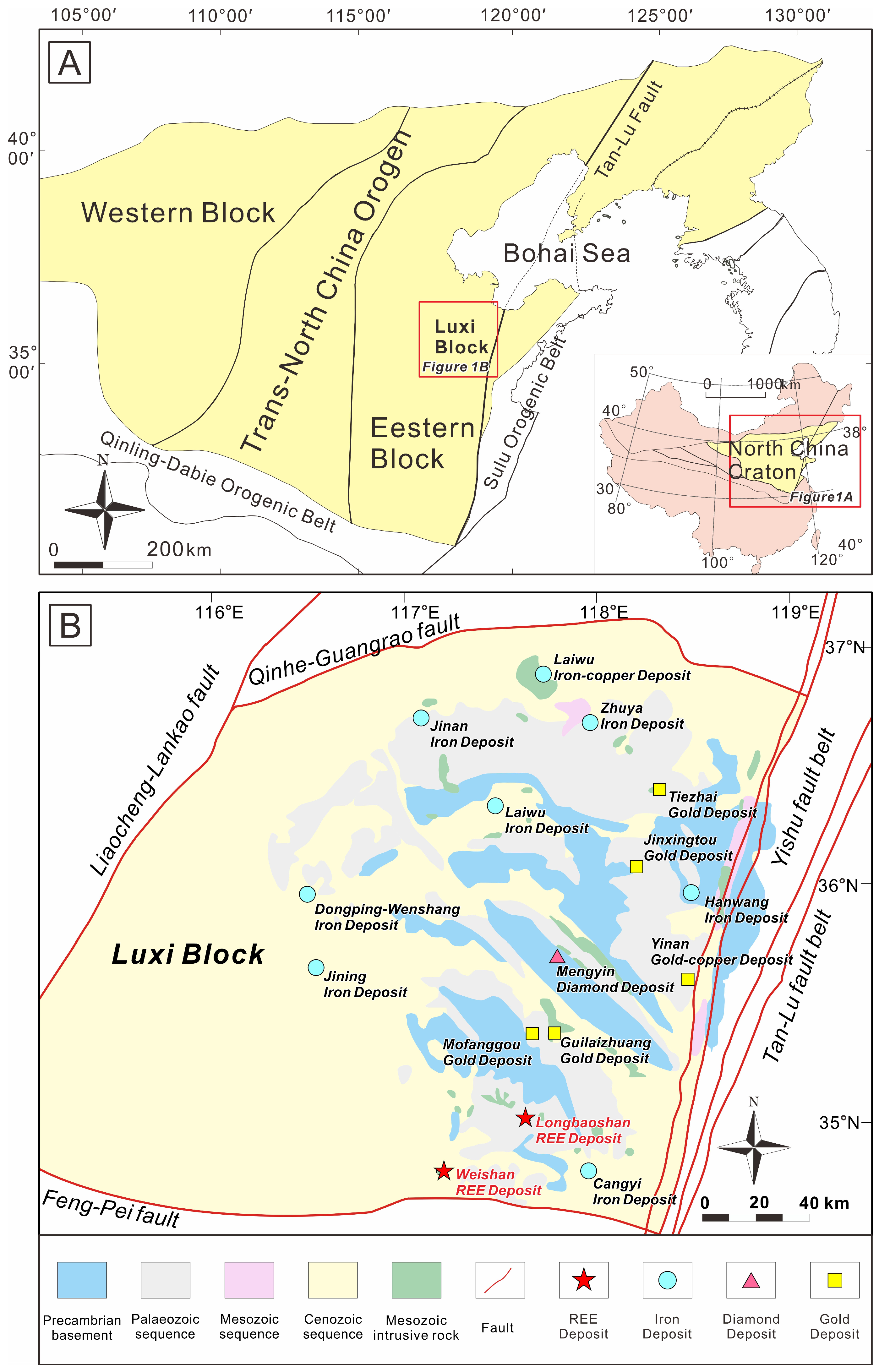
2. Regional Geology
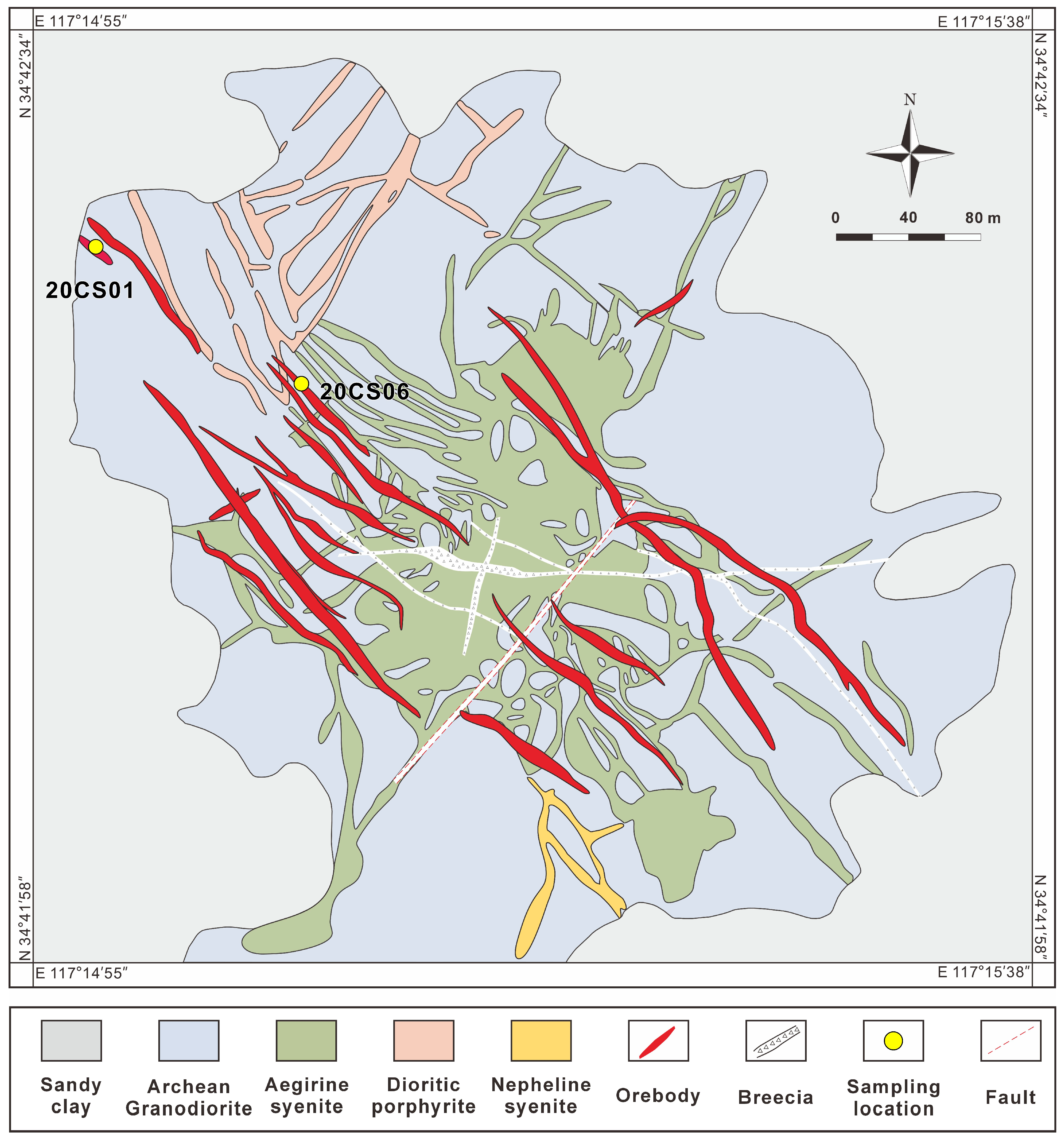
3. Deposit Geology
4. Samples and Analytical Methods
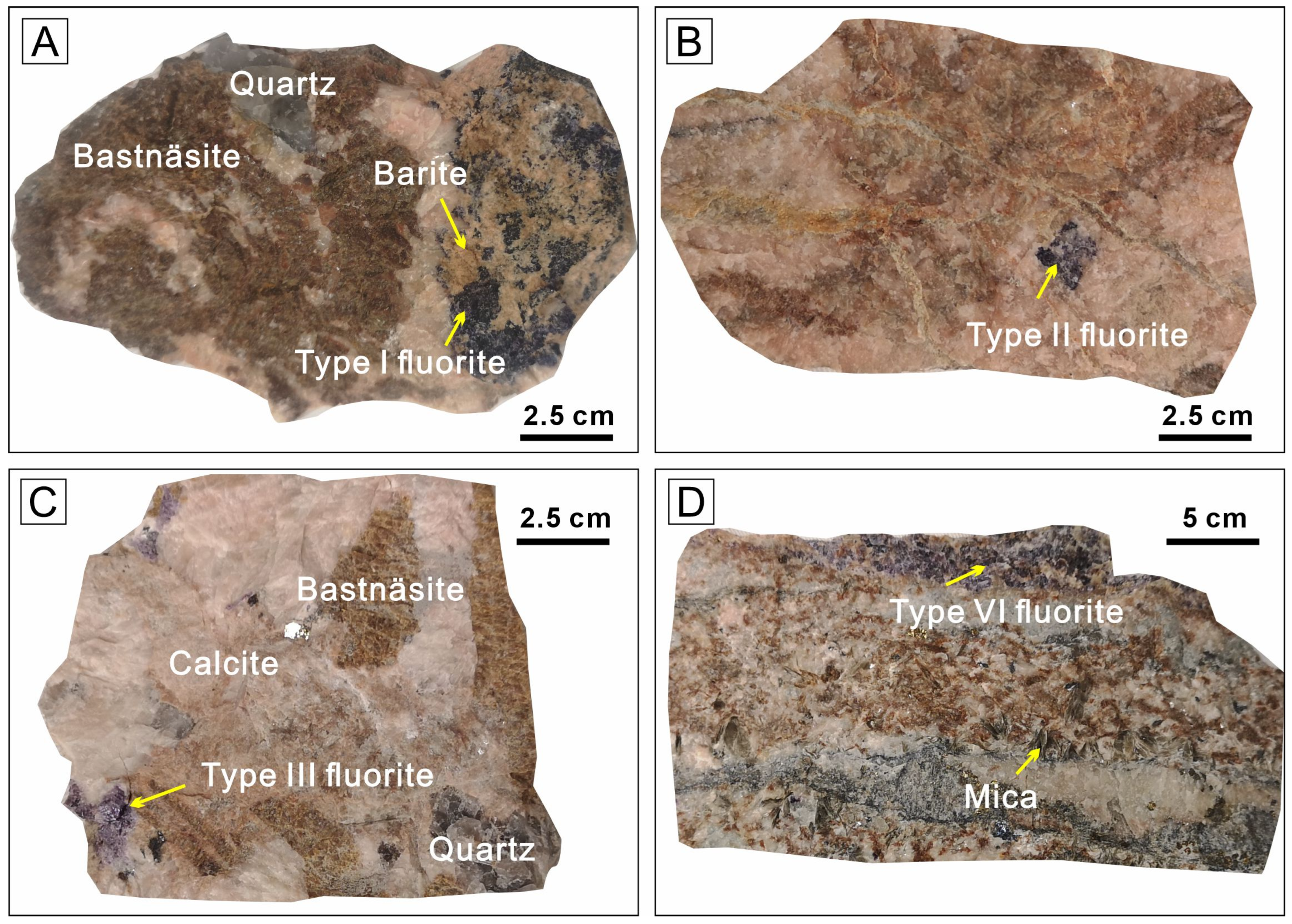
4.1. Sample Descriptions
4.2. Analytical Methods
5. Results
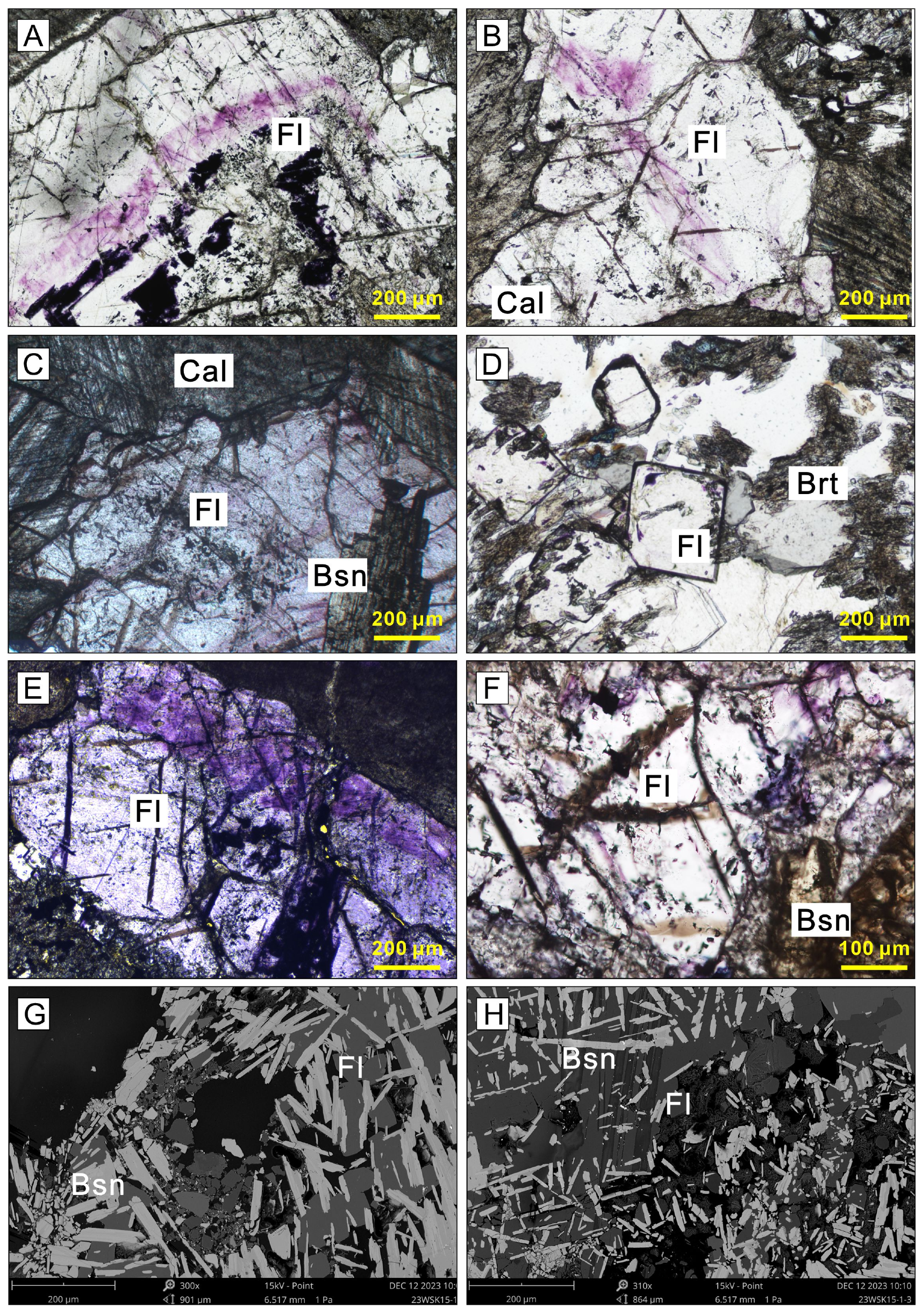
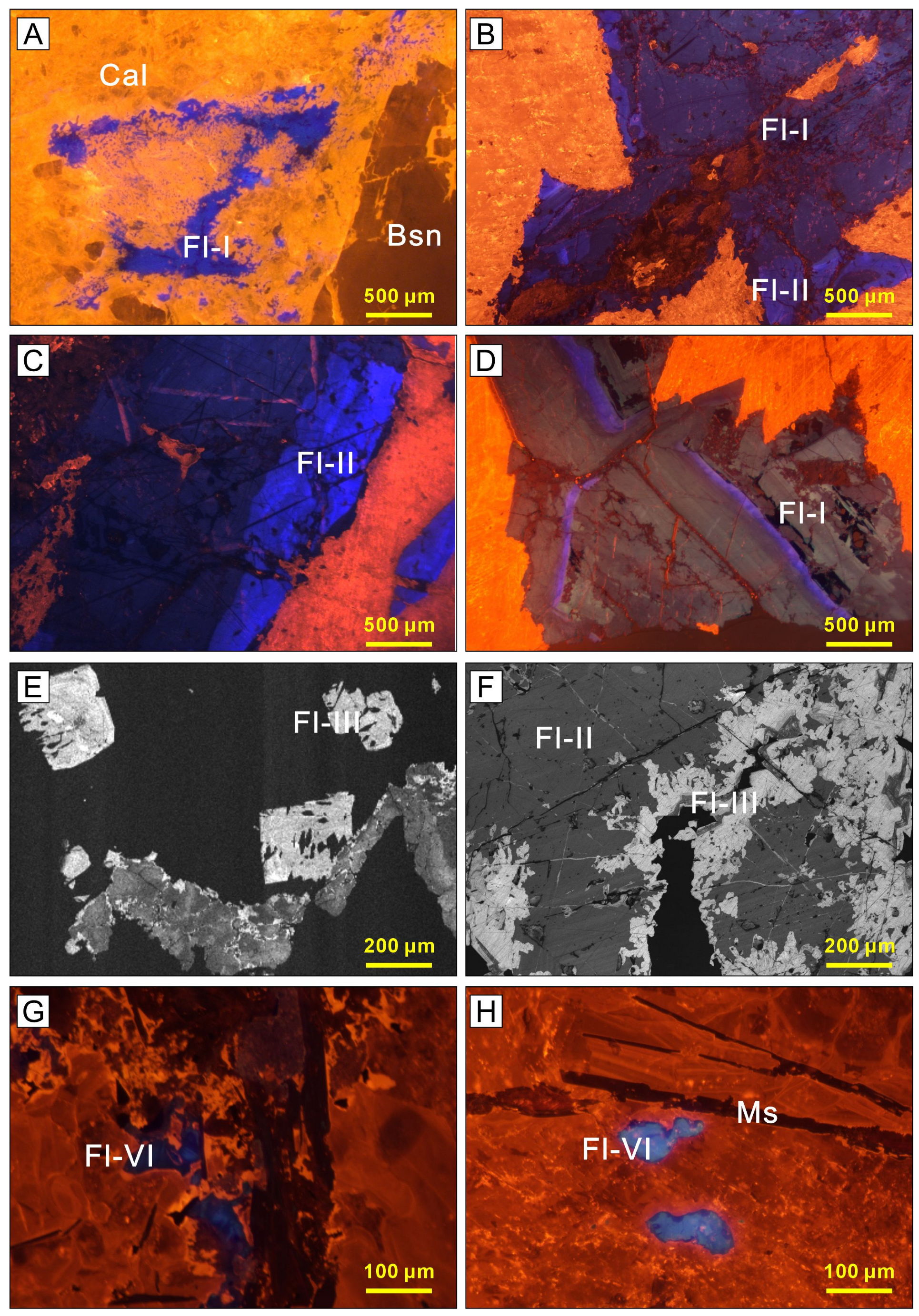
5.1. Petrography of Fluorite
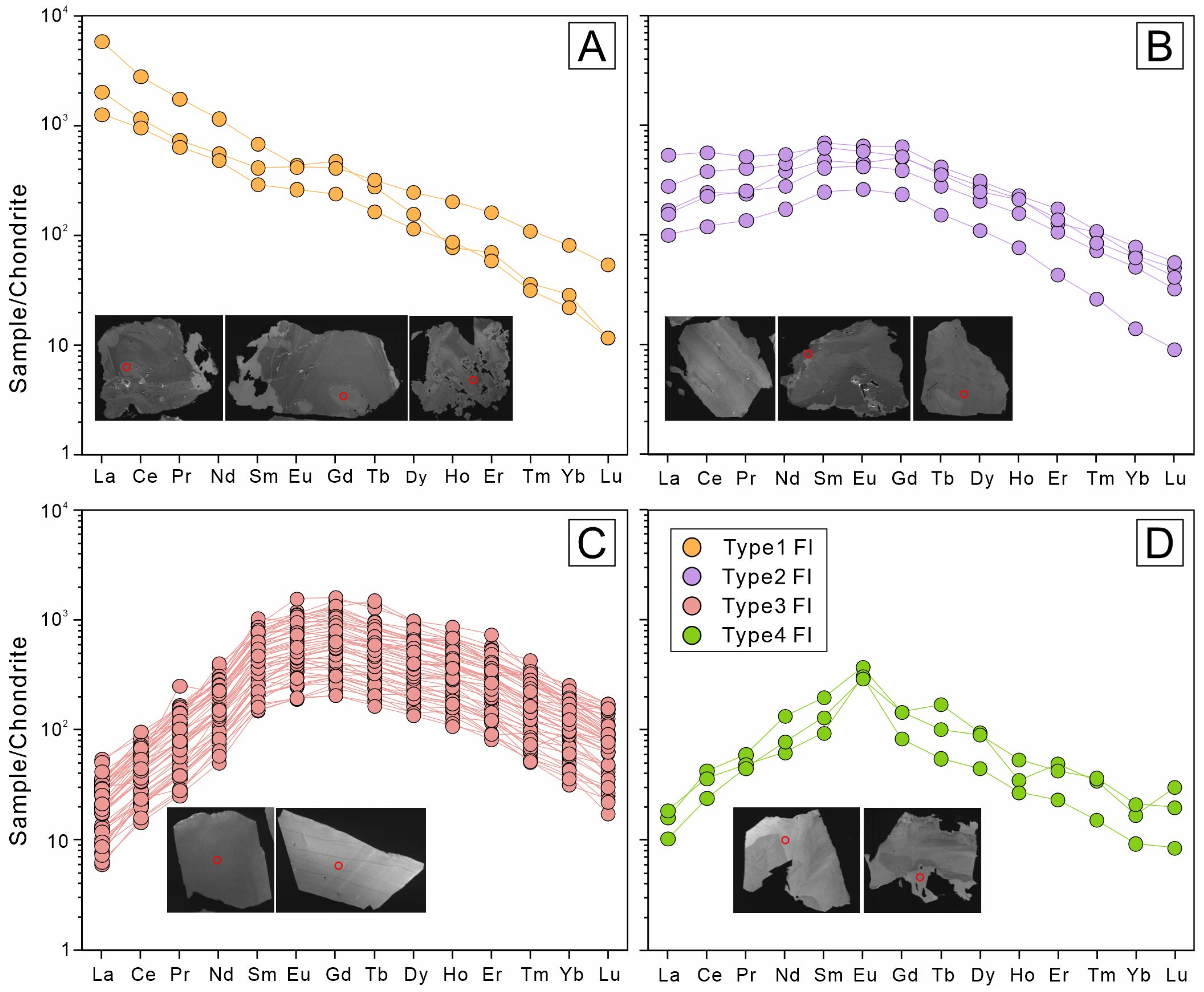
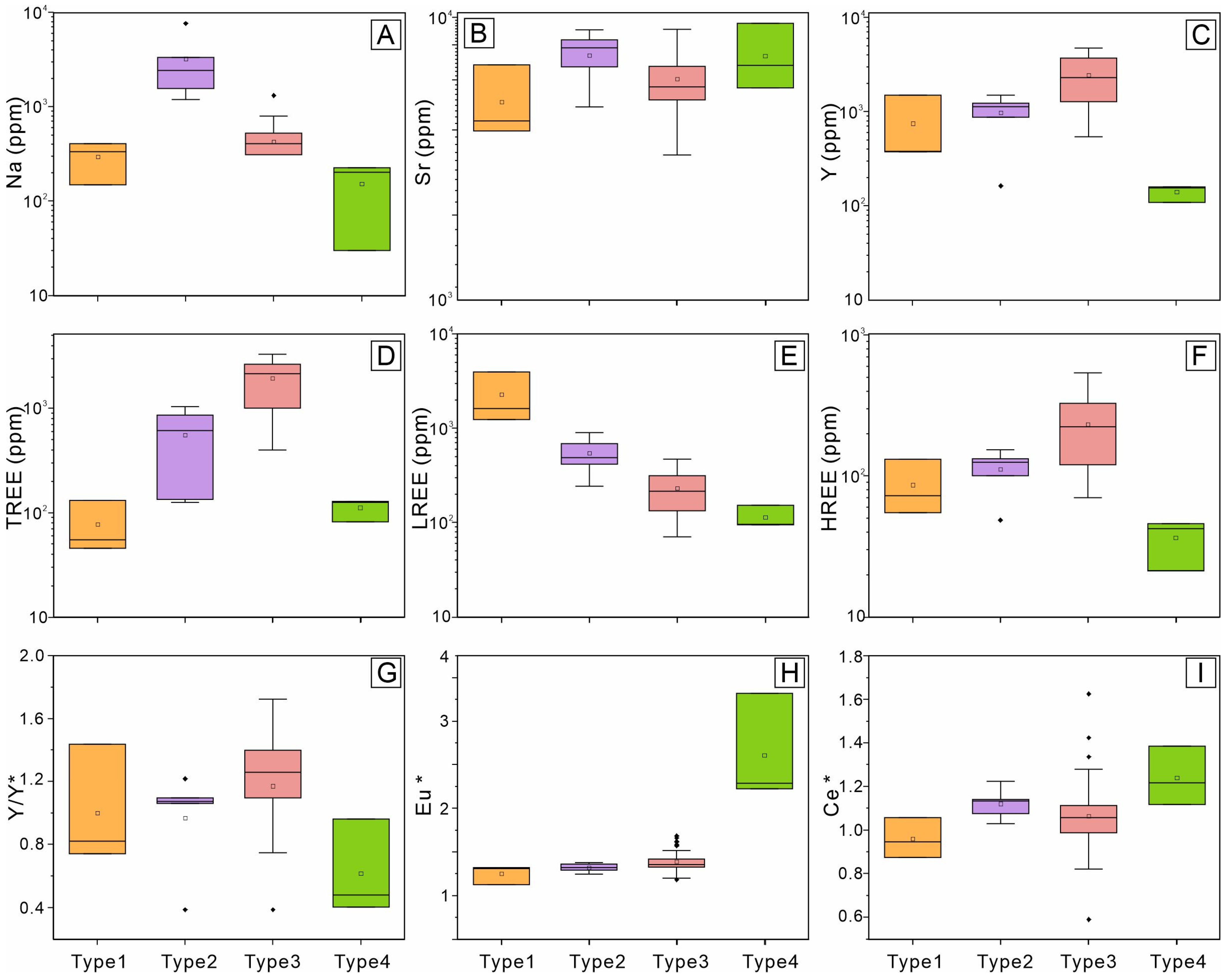
5.2. Geochemical Composition
6. Discussion
6.1. Precipitation Mechanisms of Fluorite
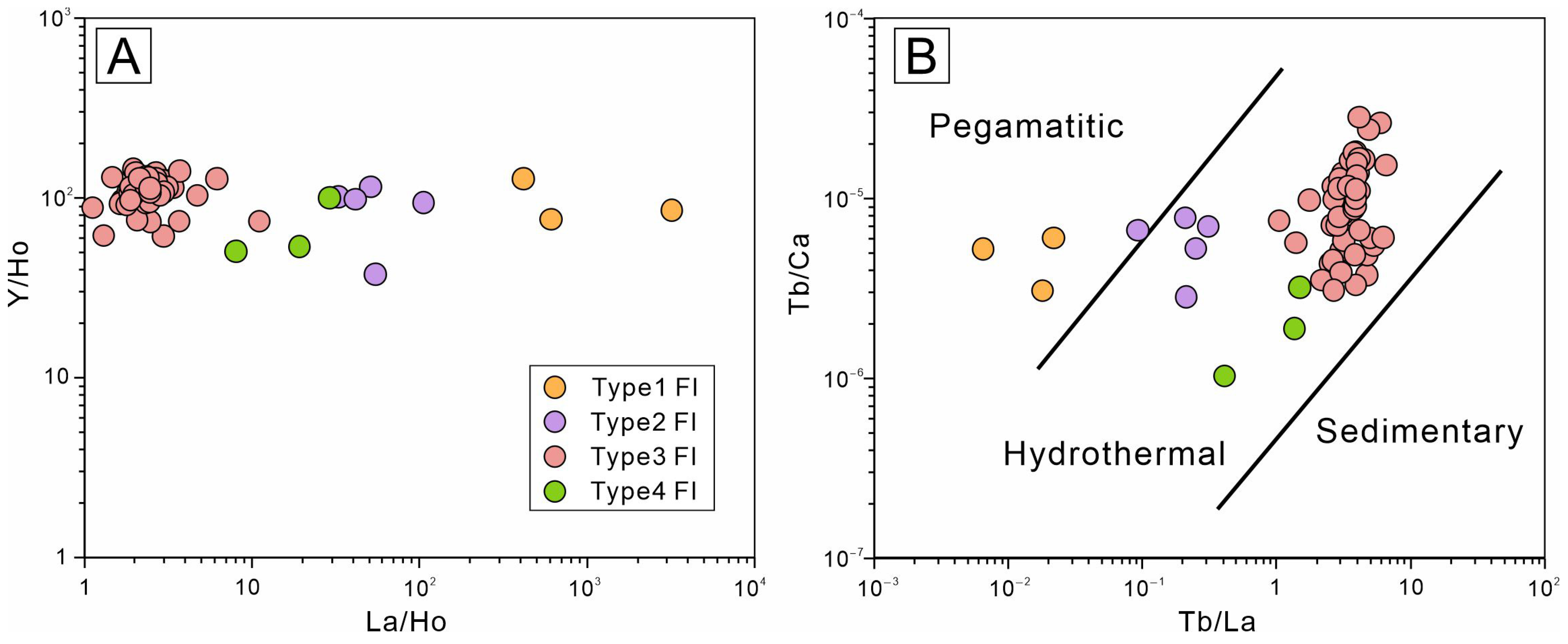
6.2. Physicochemical Conditions of Mineralization
6.3. Implications for REE Mineralization
7. Conclusions
Supplementary Materials
Author Contributions
Funding
Data Availability Statement
Acknowledgments
Conflicts of Interest
References
- Qiu, K.; Yu, H.; Wu, M.; Geng, J.; Ge, X.; Gou, Z.; Taylor, R.D. Discrete Zr and REE mineralization of the Baerzhe rare-metal deposit, China. Am. Mineral. 2019, 104, 1487–1502. [Google Scholar] [CrossRef] [Scilit]
- Wu, M.; Samson, I.M.; Qiu, K.; Zhang, D. Concentration Mechanisms of Rare Earth Element-Nb-Zr-Be Mineralization in the Baerzhe Deposit, Northeast China: Insights from Textural and Chemical Features of Amphibole and Rare Metal Minerals. Econ. Geol. 2021, 116, 651–679. [Google Scholar] [CrossRef] [Scilit]
- Xie, Y.; Xia, J.; Cui, K.; Qu, Y.; Liang, P.; Zhong, R. Rare earth elements deposits in China: Spatio-temporal distribution and ore-forming processes. Chin. Sci. Bull. 2020, 65, 3794–3808. [Google Scholar] [CrossRef] [Scilit]
- Xie, Y.; Verplanck, P.L.; Hou, Z.; Zhong, R. Mineral Deposits of China; Society of Economic Geologists: Littleton, CO, USA, 2019; pp. 509–552. [Google Scholar]
- Fan, H.; Niu, H.; Li, X.; Yang, K.; Yang, Z.; Wang, Q. The types, ore genesis and resource perspective of endogenic REE deposits in China. Chin. Sci. Bull. 2020, 65, 3778–3793. [Google Scholar] [CrossRef] [Scilit]
- Chakhmouradian, A.R.; Zaitsev, A.N. Rare Earth Mineralization in Igneous Rocks: Sources and Processes. Elements 2012, 8, 347–353. [Google Scholar] [CrossRef] [Scilit]
- Beard, C.D.; Goodenough, K.M.; Borst, A.M.; Wall, F.; Siegfried, P.R.; Deady, E.A.; Pohl, C.; Hutchison, W.; Finch, A.A.; Walter, B.F.; et al. Alkaline-Silicate REE-HFSE Systems. Econ. Geol. 2023, 118, 177–208. [Google Scholar] [CrossRef] [Scilit]
- Chakhmouradian, A.R.; Wall, F. Rare Earth Elements: Minerals, Mines, Magnets (and More). Elements 2012, 8, 333–340. [Google Scholar] [CrossRef] [Scilit]
- Liu, Y.; Chakhmouradian, A.R.; Hou, Z.; Song, W.; Kynický, J. Development of REE mineralization in the giant Maoniuping deposit (Sichuan, China): Insights from mineralogy, fluid inclusions, and trace-element geochemistry. Mineral. Depos. 2018, 54, 701–718. [Google Scholar] [CrossRef] [Scilit]
- Smith, M.P.; Moore, K.; Kavecsánszki, D.; Finch, A.A.; Kynicky, J.; Wall, F. From mantle to critical zone: A review of large and giant sized deposits of the rare earth elements. Geosci. Front. 2016, 7, 315–334. [Google Scholar] [CrossRef] [Scilit]
- Xu, C.; Kynicky, J.; Chakhmouradian, A.R.; Li, X.; Song, W. A case example of the importance of multi-analytical approach in deciphering carbonatite petrogenesis in South Qinling orogen: Miaoya rare-metal deposit, central China. Lithos 2015, 227, 107–121. [Google Scholar] [CrossRef] [Scilit]
- Xu, C.; Kynický, J.; Smith, M.P.; Kopriva, A.; Brtnický, M.; Urubek, T.; Yang, Y.; Zhao, Z.; He, C.; Song, W. Origin of heavy rare earth mineralization in South China. Nat. Commun. 2017, 8, 14598. [Google Scholar] [CrossRef] [Scilit]
- Qiu, K.-F.; Deng, J.; Li, S.-S.; Jowitt, S.; Hetherington, C.J.; Balen, D. Roles and perspectives of A- and I-type magmas in rare earth element and gold mineralization. GSA Bull. 2023, 136, 1238–1250. [Google Scholar] [CrossRef] [Scilit]
- Broom-Fendley, S.; Styles, M.T.; Appleton, J.D.; Gunn, G.; Wall, F. Evidence for dissolution-reprecipitation of apatite and preferential LREE mobility in carbonatite-derived late-stage hydrothermal processes. Am. Mineral. 2016, 101, 596–611. [Google Scholar] [CrossRef] [Scilit]
- Makin, S.A.; Simandl, G.; Marshall, D. Fluorite and its potential as an indicator mineral for carbonatite related rare earth element deposits. In Geological Fieldwork 2013, British Columbia Ministry of Energy and Mines, British Columbia Geological Survey Paper 2014-1; British Columbia Geological Survey: Victoria, BC, Canada, 2014; pp. 207–212. [Google Scholar]
- Öztürk, H.; Altuncu, S.; Hanilçi, N.; Kasapçı, C.; Goodenough, K.M. Rare earth element-bearing fluorite deposits of Turkey: An overview. Ore Geol. Rev. 2019, 105, 423–444. [Google Scholar] [CrossRef] [Scilit]
- Xu, C.; Taylor, R.N.; Li, W.; Kynicky, J.; Chakhmouradian, A.R.; Song, W. Comparison of fluorite geochemistry from REE deposits in the Panxi region and Bayan Obo, China. J. Asian Earth Sci. 2012, 57, 76–89. [Google Scholar] [CrossRef] [Scilit]
- Bühn, B.; Rankin, A.H.; Schneider, J.; Dulski, P. The nature of orthomagmatic, carbonatitic fluids precipitating REE,Sr-rich fluorite: Fluid-inclusion evidence from the Okorusu fluorite deposit, Namibia. Chem. Geol. 2002, 186, 75–98. [Google Scholar] [CrossRef] [Scilit]
- Hou, Z.; Tian, S.; Xie, Y.; Yang, Z.; Yuan, Z.; Yin, S.; Yi, L.; Fei, H.; Zou, T.; Bai, G.; et al. The Himalayan Mianning–Dechang REE belt associated with carbonatite–alkaline complexes, eastern Indo-Asian collision zone, SW China. Ore Geol. Rev. 2009, 36, 65–89. [Google Scholar] [CrossRef] [Scilit]
- Smith, M.P.; Campbell, L.S.; Kynicky, J. A review of the genesis of the world class Bayan Obo Fe–REE–Nb deposits, Inner Mongolia, China: Multistage processes and outstanding questions. Ore Geol. Rev. 2015, 64, 459–476. [Google Scholar] [CrossRef] [Scilit]
- Yu, X.; Tang, H.; Han, Z.; Li, C. Geological Characteristics and Origin of Rare Earth Elements Deposits Related with Alkaline Rock in the Chishan-Longbaoshan Area, Shandong Province. Acta Geol. Sin. 2012, 84, 407–417. [Google Scholar]
- Peishan, Z.; Xueming, Y.; Kejie, T. Mineralogy and Geology of Rare Earths in China; Vision Sports Publishing: Surrey, UK, 1996. [Google Scholar]
- Williams-Jones, A.E.; Samson, I.M.; Olivo, G.R. The Genesis of Hydrothermal Fluorite-REE Deposits in the Gallinas Mountains, New Mexico. Econ. Geol. 2000, 95, 327–341. [Google Scholar] [CrossRef]
- Vasyukova, O.V.; Williams-Jones, A.E.; Blamey, N.J.F. Fluid evolution in the Strange Lake granitic pluton, Canada: Implications for HFSE mobilisation. Chem. Geol. 2016, 444, 83–100. [Google Scholar] [CrossRef] [Scilit]
- Gysi, A.P.; Williams-Jones, A.E.; Collins, P. Lithogeochemical Vectors for Hydrothermal Processes in the Strange Lake Peralkaline Granitic REE-Zr-Nb Deposit. Econ. Geol. 2016, 111, 1241–1276. [Google Scholar] [CrossRef] [Scilit]
- Gysi, A.P.; Williams-Jones, A.E. Hydrothermal mobilization of pegmatite-hosted REE and Zr at Strange Lake, Canada: A reaction path model. Geochim. Cosmochim. Acta 2013, 122, 324–352. [Google Scholar] [CrossRef] [Scilit]
- Siegel, K.; Vasyukova, O.V.; Williams-Jones, A.E. Magmatic evolution and controls on rare metal-enrichment of the Strange Lake A-type peralkaline granitic pluton, Québec-Labrador. Lithos 2018, 308–309, 34–52. [Google Scholar] [CrossRef] [Scilit]
- Qiu, K.-F.; Romer, R.L.; Long, Z.-Y.; Yu, H.-C.; Turner, S.; Wan, R.-Q.; Li, X.-Q.; Gao, Z.-Y.; Deng, J. Potassium isotopes as a tracer of hydrothermal alteration in ore systems. Geochim. Cosmochim. Acta 2024, 368, 185–196. [Google Scholar] [CrossRef] [Scilit]
- Qiu, K.-F.; Long, Z.-Y.; Romer, R.L.; Halama, R.; Williams-Jones, A.E.; Yu, H.-C.; Li, S.-S.; Wu, M.-Q.; Deng, J. The mantle source of REE-rich alkaline silicate magmas can be enriched by continent-derived sediment subduction. Nat. Commun. 2025, 16, 11191. [Google Scholar] [CrossRef] [Scilit] [PubMed]
- Anenburg, M.; Broom-Fendley, S.; Chen, W. Formation of Rare Earth Deposits in Carbonatites. Elements 2021, 17, 327–332. [Google Scholar] [CrossRef] [Scilit]
- Andrade, F.R.D.; Möller, P.; Lüders, V.; Dulski, P.; Gilg, H.A. Hydrothermal rare earth elements mineralization in the Barra do Itapirapuã carbonatite, southern Brazil: Behaviour of selected trace elements and stable isotopes (C, O). Chem. Geol. 1999, 155, 91–113. [Google Scholar] [CrossRef] [Scilit]
- Li, M.Y.H.; Zhou, M.-F. Hyper-enrichment of heavy rare earth element in highly evolved granites through multiple hydrothermal mobilization. Am. Mineral. 2024, 109, 1945–1959. [Google Scholar] [CrossRef] [Scilit]
- Cherniak, D.J.; Zhang, X.Y.; Wayne, N.K.; Watson, E.B. Sr, Y, and REE diffusion in fluorite. Chem. Geol. 2001, 181, 99–111. [Google Scholar] [CrossRef] [Scilit]
- Magyarosi, Z. Late-magmatic processes in the St. Lawrence Granite: Implications for fluorite mineralization. J. Geochem. Explor. 2022, 239, 107014. [Google Scholar] [CrossRef] [Scilit]
- Alvin, M.P.; Dunphy, J.M.; Groves, D.I. Nature and genesis of a carbonatite-associated fluorite deposit at Speewah, East Kimberley region, Western Australia. Mineral. Petrol. 2004, 80, 127–153. [Google Scholar] [CrossRef] [Scilit]
- Huang, Y.-Q.; Wu, M.-Q.; Germain, B.; Yu, H.-C.; Qiao, B.-X.; Zhao, Z.-G.; Qiu, K.-F. Geodynamic setting and ore formation of the Younusisayi thorium deposit in the Altyn orogenic belt, NW China. Ore Geol. Rev. 2022, 140, 104552. [Google Scholar] [CrossRef] [Scilit]
- Agangi, A.; Kamenetsky, V.S.; McPhie, J. The role of fluorine in the concentration and transport of lithophile trace elements in felsic magmas: Insights from the Gawler Range Volcanics, South Australia. Chem. Geol. 2010, 273, 314–325. [Google Scholar] [CrossRef] [Scilit]
- Pan, Y.; Fleet, M.E. Rare earth element mobility during prograde granulite facies metamorphism: Significance of fluorine. Contrib. Mineral. Petrol. 1996, 123, 251–262. [Google Scholar] [CrossRef] [Scilit]
- Salvi, S.; Fontan, F.o.; Monchoux, P.; Williams-Jones, A.E.; Moine, B. Hydrothermal Mobilization of High Field Strength Elements in Alkaline Igneous Systems: Evidence from the Tamazeght Complex (Morocco). Econ. Geol. 2000, 95, 559–576. [Google Scholar] [CrossRef] [Scilit]
- Tagirov, B.; Schott, J.; Harrichourry, J.-C.; Salvi, S. Experimental study of aluminum speciation in fluoride-rich supercritical fluids. Geochim. Cosmochim. Acta 2002, 66, 2013–2024. [Google Scholar] [CrossRef] [Scilit]
- Chebotarev, D.A.; Veksler, I.V.; Wohlgemuth-Ueberwasser, C.; Doroshkevich, A.G.; Koch-Müller, M. Experimental study of trace element distribution between calcite, fluorite and carbonatitic melt in the system CaCO3 + CaF2 + Na2CO3 ± Ca3(PO4)2 at 100 MPa. Contrib. Mineral. Petrol. 2018, 174, 4. [Google Scholar] [CrossRef] [Scilit]
- Duan, Z.-P.; Jiang, S.-Y.; Su, H.-M.; Zhu, X.-Y.; Jiang, B.-B. Textural features and in situ trace element analysis of fluorite from the Wujianfang fluorite deposit, Inner Mongolia (NE China): Insights into fluid metasomatism and ore-forming process. Ore Geol. Rev. 2022, 147, 104982. [Google Scholar] [CrossRef] [Scilit]
- Onuma, N.; Higuchi, H.; Wakita, H.; Nagasawa, H. Trace element partition between two pyroxenes and the host lava. Earth Planet. Sci. Lett. 1968, 5, 47–51. [Google Scholar] [CrossRef] [Scilit]
- Shannon, R. Revised Effective Ionic Radii and Systematic Studies of Interatomic Distances in Halides and Chalcogenides. Acta Cryst. 1976, 32, 751–767. [Google Scholar] [CrossRef] [Scilit]
- Bühn, B.; Schneider, J.; Dulski, P.; Rankin, A.H. Fluid–rock interaction during progressive migration of carbonatitic fluids, derived from small-scale trace element and Sr, Pb isotope distribution in hydrothermal fluorite. Geochim. Cosmochim. Acta 2003, 67, 4577–4595. [Google Scholar] [CrossRef] [Scilit]
- Richardson, C.K.; Holland, H.D. Fluorite deposition in hydrothermal systems. Geochim. Cosmochim. Acta 1979, 43, 1327–1335. [Google Scholar] [CrossRef] [Scilit]
- Moeller, P.; Bau, M.; Dulski, P.; Lüders, V. REE and yttrium fractionation in fluorite and their bearing on fluorite formation. In Proceedings of the Ninth Quadrennial IAGOD Symposium, Beijing, China, 12–18 August 1998; pp. 575–592. [Google Scholar]
- Schwinn, G.; Markl, G. REE systematics in hydrothermal fluorite. Chem. Geol. 2005, 216, 225–248. [Google Scholar] [CrossRef] [Scilit]
- Zhai, M.G. Tectonic evolution and metallogenesis of North China Craton. Miner. Deposits 2010, 29, 24–36. [Google Scholar] [CrossRef]
- Wu, F.-Y.; Xu, Y.-G.; Gao, S.; Zheng, J.-P. Lithospherie thinning and destruction of the North China Craton. Acta Petrol. Sin. 2008, 24, 1145–1174. [Google Scholar]
- Zhao, J.-H.; Zhou, M.-F. Neoproterozoic adakitic plutons in the northern margin of the Yangtze Block, China: Partial melting of a thickened lower crust and implications for secular crustal evolution. Lithos 2008, 104, 231–248. [Google Scholar] [CrossRef] [Scilit]
- Zhu, R.-X.; Chen, L.; Wu, F.-Y.; Liu, J.-L. Timing, scale and mechanism of the destruction of the North China Craton. Sci. China Earth Sci. 2011, 41, 583–592. [Google Scholar] [CrossRef] [Scilit]
- Liu, Y.; Gao, S.; Hu, Z.; Gao, C.; Zong, K.; Wang, D. Continental and Oceanic Crust Recycling-induced Melt–Peridotite Interactions in the Trans-North China Orogen: U–Pb Dating, Hf Isotopes and Trace Elements in Zircons from Mantle Xenoliths. J. Petrol. 2010, 51, 537–571. [Google Scholar] [CrossRef] [Scilit]
- Li, S.-S.; Santosh, M.; Cen, K.; Teng, X.-M.; He, X.-F. Neoarchean convergent margin tectonics associated with microblock amalgamation in the North China Craton: Evidence from the Yishui Complex. Gondwana Res. 2016, 38, 113–131. [Google Scholar] [CrossRef] [Scilit]
- Li, S.S.; Qiu, K.F.; Hernández-Uribe, D.; Gao, Y.X.; Santosh, M.; Huang, H.C.; Zheng, Z.Y.; Zhang, Z.L.; Gao, S.C. Water Recycling in the Deep Earth: Insights From Integrated μ-XRF, THz-TDS Spectroscopy, TG, and DCS of High-Pressure Granulite. J. Geophys. Res. Solid Earth 2023, 128, e2022JB025915. [Google Scholar] [CrossRef] [Scilit]
- Li, S.-S.; Santosh, M.; Teng, X.-M.; He, X.-F. Paleoproterozoic arc-continent collision in the North China Craton: Evidence from the Zanhuang Complex. Precambrian Res. 2016, 286, 281–305. [Google Scholar] [CrossRef] [Scilit]
- Mao, J.-W.; Xie, G.-Q.; Zhang, Z.-H.; Li, X.-F.; Wang, Y.-T.; Zhang, C.-Q.; Li, Y.-F. Mesozoic large-scale metallogenic pulses in North China and corresponding geodynamie settings. Acta Petrol. Sin. 2005, 21, 171–190. [Google Scholar]
- Qiu, K.-F.; Deng, J.; Laflamme, C.; Long, Z.-Y.; Wan, R.-Q.; Moynier, F.; Yu, H.-C.; Zhang, J.-Y.; Ding, Z.-J.; Goldfarb, R. Giant Mesozoic gold ores derived from subducted oceanic slab and overlying sediments. Geochim. Cosmochim. Acta 2023, 343, 133–141. [Google Scholar] [CrossRef] [Scilit]
- Qiu, K.-F.; Romer, R.L.; Long, Z.-Y.; Williams-Jones, A.E.; Yu, H.-C.; Turner, S.; Wang, Q.-F.; Li, S.-S.; Zhang, J.-Y.; Duan, H.-R.; et al. The role of an oxidized lithospheric mantle in gold mobilization. Sci. Adv. 2024, 10, eado6262. [Google Scholar] [CrossRef] [Scilit] [PubMed]
- Long, Z.-Y.; Qiu, K.-F.; Halama, R.; Yu, H.-C.; Zhang, J.-Y.; Li, S.-S.; Han, G.-L.; Gao, Z.-Y.; Ding, Z.-J.; Deng, J. Reappraisal of potassium isotopic composition of the continental lithospheric mantle: Insights from calc-alkaline lamprophyres in the eastern North China Craton. GSA Bull. 2025, 137, 4399–4412. [Google Scholar] [CrossRef] [Scilit]
- He, D.; Qiu, K.-F.; Simon, A.; Pokrovski, G.; Yu, H.-C.; Connolly, J.; Li, S.-S.; Turner, S.; Wang, Q.-F.; Yang, M.-F.; et al. Mantle oxidation by sulfur drives the formation of giant gold deposits in subduction zones. Proc. Natl. Acad. Sci. USA 2024, 121, e2404731121. [Google Scholar] [CrossRef] [Scilit]
- Goldfarb, R.; Qiu, K.; Deng, J.; Chen, Y.; Yang, L. Orogenic gold deposits of China. In Mineral Deposits of China; SEG Special Publications 22; Society of Economic Geologists: Littleton, CO, USA, 2019; Chapter 8; pp. 263–324. Available online: https://pubs.geoscienceworld.org/segweb/books/edited-volume/2452/chapter-abstract/137847688/Chapter-8-Orogenic-Gold-Deposits-of-China?redirectedFrom=fulltext (accessed on 7 January 2026).
- Qiu, K.-F.; Goldfarb, R.J.; Deng, J.; Yu, H.-C.; Gou, Z.-Y.; Ding, Z.-J.; Wang, Z.-K.; Li, D.-P. Gold deposits of the Jiaodong Peninsula, eastern China. In Geology of the World’s Major Gold Deposits and Provinces; Society of Economic Geologists: Littleton, CO, USA, 2020. [Google Scholar]
- Deng, J.; Yang, L.-Q.; Groves, D.I.; Zhang, L.; Qiu, K.-F.; Wang, Q.-F. An integrated mineral system model for the gold deposits of the giant Jiaodong province, eastern China. Earth Sci. Rev. 2020, 208, 103274. [Google Scholar] [CrossRef] [Scilit]
- Deng, J.; Qiu, K.-F.; Wang, Q.-F.; Goldfarb, R.; Yang, L.-Q.; Zi, J.-W.; Geng, J.-Z.; Ma, Y. In situ dating of hydrothermal monazite and implications for the geodynamic controls on ore formation in the Jiaodong gold province, eastern China. Econ. Geol. 2020, 115, 671–685. [Google Scholar] [CrossRef] [Scilit]
- Yang, Z.; Wu, M.; Li, S.; Yu, H.; Diao, X.; Gao, Y.; Jiadong, M.; Zhi, C.; Shang, Z.; Xi, J.; et al. The origin of glimmerite and its significance to rare earth element mineralization: Insights from the Longbaoshan deposit in North China Craton. Ore Geol. Rev. 2025, 184, 106698. [Google Scholar] [CrossRef] [Scilit]
- Lan, T.-G.; Fan, H.; Hu, F.-F.; Tomkins, A.; Yang, K.-F.; Liu, Y. Multiple crust–mantle interactions for the destruction of the North China Craton: Geochemical and Sr–Nd–Pb–Hf isotopic evidence from the Longbaoshan alkaline complex. Lithos 2011, 122, 87–106. [Google Scholar] [CrossRef] [Scilit]
- Moeller, P.; Parekh, P.; Schneider, H.J. The application of Tb/Ca—Tb/La abundance ratios to problems of fluorite genesis. Miner. Depos. 1976, 11, 111–116. [Google Scholar] [CrossRef] [Scilit]
- Palmer, D.; Williams-Jones, A. Genesis of the carbonatite-hosted fluorite deposit at Amba Dongar, India: Evidence from fluid inclusions, stable isotopes, and whole rock-mineral geochemistry. Econ. Geol. 1996, 91, 934–950. [Google Scholar] [CrossRef] [Scilit]
- Schneider, H.J.; Möller, P.; Parekh, P.P. Rare earth elements distribution in fluorites and carbonate sediments of the east-alpine mid-triassic sequences in the Nördliche Kalkalpen. Mineral. Depos. 1975, 10, 330–344. [Google Scholar] [CrossRef] [Scilit]
- Wang, C.; Liu, J.; Zhang, H.; Zhang, X.; Zhang, D.; Xi, Z.; Wang, Z. Geochronology and mineralogy of the Weishan carbonatite in Shandong province, eastern China. Geosci. Front. 2019, 10, 769–785. [Google Scholar] [CrossRef] [Scilit]
- Zhao, L.-Y.; Lan, T.-G.; Fan, H.-R.; Lan, J.; Wang, H.; Terry Chen, W.; Hu, H.-L.; Li, D.-J. Origin and mineralization processes of REE during magmatic-hydrothermal evolution: Insights from in-situ geochemistry of calcite from the Weishan REE deposit, eastern North China Craton. Ore Geol. Rev. 2023, 162, 105676. [Google Scholar] [CrossRef] [Scilit]
- Peretyazhko, I.; Savina, E. Fluoride-Calcium (F Ca) melt in rhyolitic magma: Evidence from fluorite-rich rhyolites of the Nyalga basin, Central Mongolia. Lithos 2020, 354–355, 105348. [Google Scholar] [CrossRef] [Scilit]
- Peretyazhko, I.; Savina, E.; Karmanov, N.; Dmitrieva, A. Immiscibility of fluoride–calcium and silicate melts in trachyrhyolitic magma: Data on acidic volcanic rocks from the Nyalga Basin, Central Mongolia. Petrology 2018, 26, 389–413. [Google Scholar] [CrossRef] [Scilit]
- Vasyukova, O.; Williams-Jones, A.E. Fluoride–silicate melt immiscibility and its role in REE ore formation: Evidence from the Strange Lake rare metal deposit, Québec-Labrador, Canada. Geochim. Cosmochim. Acta 2014, 139, 110–130. [Google Scholar] [CrossRef] [Scilit]
- Vasyukova, O.; Williams-Jones, A.E. The evolution of immiscible silicate and fluoride melts: Implications for REE ore-genesis. Geochim. Cosmochim. Acta 2016, 172, 205–224. [Google Scholar] [CrossRef] [Scilit]
- Zaitsev, A.; Marks, M.; Wenzel, T.; Spratt, J.; Sharygin, V.; Strekopytov, S.; Markl, G. Mineralogy, geochemistry and petrology of the phonolitic to nephelinitic Sadiman volcano, Crater Highlands, Tanzania. Lithos 2012, 152, 66–83. [Google Scholar] [CrossRef] [Scilit]
- Yang, L.; Hinsberg, V. Liquid immiscibility in the CaF2-granite system and trace element partitioning between the immiscible liquids. Chem. Geol. 2019, 511, 28–41. [Google Scholar] [CrossRef] [Scilit]
- Peretyazhko, I.; Zagorsky, V.; Savina, E.; Sapozhnikov, A. Immiscibility of calcium fluoride and aluminosilicate melts in ongonite from the Ary-Bulak intrusion, Eastern Transbaikal region. Dokl. Earth Sci. 2007, 413, 315–320. [Google Scholar] [CrossRef] [Scilit]
- Bau, M.; Dulski, P. Comparative study of yttrium and rare-earth element behaviours in fluorine-rich hydrothermal fluids. Contrib. Mineral. Petrol. 1995, 119, 213–223. [Google Scholar] [CrossRef]
- Bau, M. Controls on the fractionation of isovalent trace elements in magmatic and aqueous systems: Evidence from Y/Ho, Zr/Hf, and lanthanide tetrad effect. Contrib. Mineral. Petrol. 1996, 123, 323–333. [Google Scholar] [CrossRef] [Scilit]
- Shock, E.; Helgeson, H.; Sverjensky, D. Calculation of the thermodynamic and transport properties of aqueous species at high pressures and temperatures: Standard partial molal properties of inorganic neutral species. Geochim. Cosmochim. Acta 1989, 53, 2157–2183. [Google Scholar] [CrossRef] [Scilit]
- Payne, M.R.; Gysi, A.P.; Hurtig, N.C. Hydrothermal fluorite solubility experiments and mobility of REE in acidic to alkaline solutions from 100 to 250 °C. Chem. Geol. 2023, 617, 121256. [Google Scholar] [CrossRef] [Scilit]
- Migdisov, A.A.; Williams-Jones, A.E. Hydrothermal transport and deposition of the rare earth elements by fluorine-bearing aqueous liquids. Mineral. Depos. 2014, 49, 987–997. [Google Scholar] [CrossRef] [Scilit]
- Walker, J.; Choppin, G. Thermodynamic Parameters of Fluoride Complexes of the Lanthanides. Adv. Chem. 1967, 71, 127–140. [Google Scholar] [CrossRef] [Scilit]
- Loges, A.; Migdisov, A.; Wagner, T.; Williams-Jones, A.; Markl, G. An experimental study of the aqueous solubility and speciation of Y(III) fluoride at temperatures up to 250 °C. Geochim. Cosmochim. Acta 2013, 123, 403–415. [Google Scholar] [CrossRef] [Scilit]
- Moeller, P. Hydrogeology of Crystalline Rocks; Springer: Berlin/Heidelberg, Germany, 2000; pp. 227–246. [Google Scholar]
- Bilal, B. Thermodynamic study of Eu3+/Eu2+ redox reaction in aqueous solutions at elevated temperatures and pressures by means of cyclic voltammetry. Z. Naturforsch. A 1991, 46, 1108–1116. [Google Scholar] [CrossRef] [Scilit]
- Sverjensky, D. Europium equilibria in aqueous solution. Earth Planet. Sci. Lett. 1984, 67, 70–78. [Google Scholar] [CrossRef] [Scilit]
- Li, J.-K.; Yuan, Z.-Z.; Bai, G.; Chen, Y.-C.; Wang, D.-H.; Ying, L.-J.; Zhang, J. Ore-Forming Fluid Evolvement And Its Controlling To REE(Ag)Mneralizing in The Wshan Deposit, Shandong. J. Miner. Petrol. 2009, 29, 60–68. [Google Scholar] [CrossRef]
- Hintzen, R.; Werner, W.; Hauck, M.; Klemd, R.; Fischer, L. Multistage fluorite mineralization in the southern Black Forest, Germany: Evidence from rare earth element (REE) geochemistry. Eur. J. Mineral. 2023, 35, 403–426. [Google Scholar] [CrossRef] [Scilit]
- Zeng, X.; Li, X.; Fan, H.; Lan, T.; Lan, J.; Su, J.; Zhang, P.; Yang, K.; Zhao, X. Generation of REE-rich syenite-(carbonatite) complex through lithosphere-asthenosphere interaction: An in-situ Sr–Nd–O isotopic study of the Mesozoic Weishan pluton, Northern China. J. Asian Earth Sci. 2022, 230, 105191. [Google Scholar] [CrossRef] [Scilit]
- Nasraoui, M.; Toulkeridis, T.; Clauer, N.; Bilal, E. Differentiated hydrothermal and meteoric alterations of the Lueshe carbonatite complex (Democratic Republic of Congo) identified by a REE study combined with a sequential acid-leaching experiment. Chem. Geol. 2000, 165, 109–132. [Google Scholar] [CrossRef] [Scilit]
- Migdisov, A.A.; Williams-Jones, A.E. An experimental study of the solubility and speciation of neodymium (III) fluoride in F-bearing aqueous solutions. Geochim. Cosmochim. Acta 2007, 71, 3056–3069. [Google Scholar] [CrossRef] [Scilit]
- Migdisov, A.A.; Williams-Jones, A.E.; Wagner, T. An experimental study of the solubility and speciation of the Rare Earth Elements (III) in fluoride- and chloride-bearing aqueous solutions at temperatures up to 300 °C. Geochim. Cosmochim. Acta 2009, 73, 7087–7109. [Google Scholar] [CrossRef] [Scilit]



Disclaimer/Publisher’s Note: The statements, opinions and data contained in all publications are solely those of the individual author(s) and contributor(s) and not of MDPI and/or the editor(s). MDPI and/or the editor(s) disclaim responsibility for any injury to people or property resulting from any ideas, methods, instructions or products referred to in the content. |
© 2026 by the authors. Licensee MDPI, Basel, Switzerland. This article is an open access article distributed under the terms and conditions of the Creative Commons Attribution (CC BY) license.
Share and Cite
Gao, Y.-X.; Li, S.-S.; Liu, C.-P.; Wu, M.-Q.; Shang, Z.; Yang, Z.-Y.; Wang, X.-Y.; Qiu, K.-F. Fluorite Composition Constraints on the Genesis of the Weishan REE Deposit, Luxi Terrane. Minerals 2026, 16, 69. https://doi.org/10.3390/min16010069
Gao Y-X, Li S-S, Liu C-P, Wu M-Q, Shang Z, Yang Z-Y, Wang X-Y, Qiu K-F. Fluorite Composition Constraints on the Genesis of the Weishan REE Deposit, Luxi Terrane. Minerals. 2026; 16(1):69. https://doi.org/10.3390/min16010069
Chicago/Turabian StyleGao, Yi-Xue, Shan-Shan Li, Chuan-Peng Liu, Ming-Qian Wu, Zhen Shang, Ze-Yu Yang, Xin-Yi Wang, and Kun-Feng Qiu. 2026. "Fluorite Composition Constraints on the Genesis of the Weishan REE Deposit, Luxi Terrane" Minerals 16, no. 1: 69. https://doi.org/10.3390/min16010069
APA StyleGao, Y.-X., Li, S.-S., Liu, C.-P., Wu, M.-Q., Shang, Z., Yang, Z.-Y., Wang, X.-Y., & Qiu, K.-F. (2026). Fluorite Composition Constraints on the Genesis of the Weishan REE Deposit, Luxi Terrane. Minerals, 16(1), 69. https://doi.org/10.3390/min16010069