Article

Petrogenesis of the Granitic Dykes in the Yangshan Gold Belt: Insights from Zircon U-Pb Chronology, Petrography, and In-Situ Hf Isotope Analysis


1
College of Earth Science, Chengdu University of Technology, Chengdu 610059, China
2
Research Center of Applied Geology, China Geological Survey, Chengdu 610036, China
*
Author to whom correspondence should be addressed.
Minerals 2023, 13(6), 718; https://doi.org/10.3390/min13060718
Submission received: 16 April 2023 / Revised: 18 May 2023 / Accepted: 21 May 2023 / Published: 24 May 2023
(This article belongs to the Special Issue Geochronology, Geochemistry and Petrogenesis of Magmatic Rocks)

Abstract

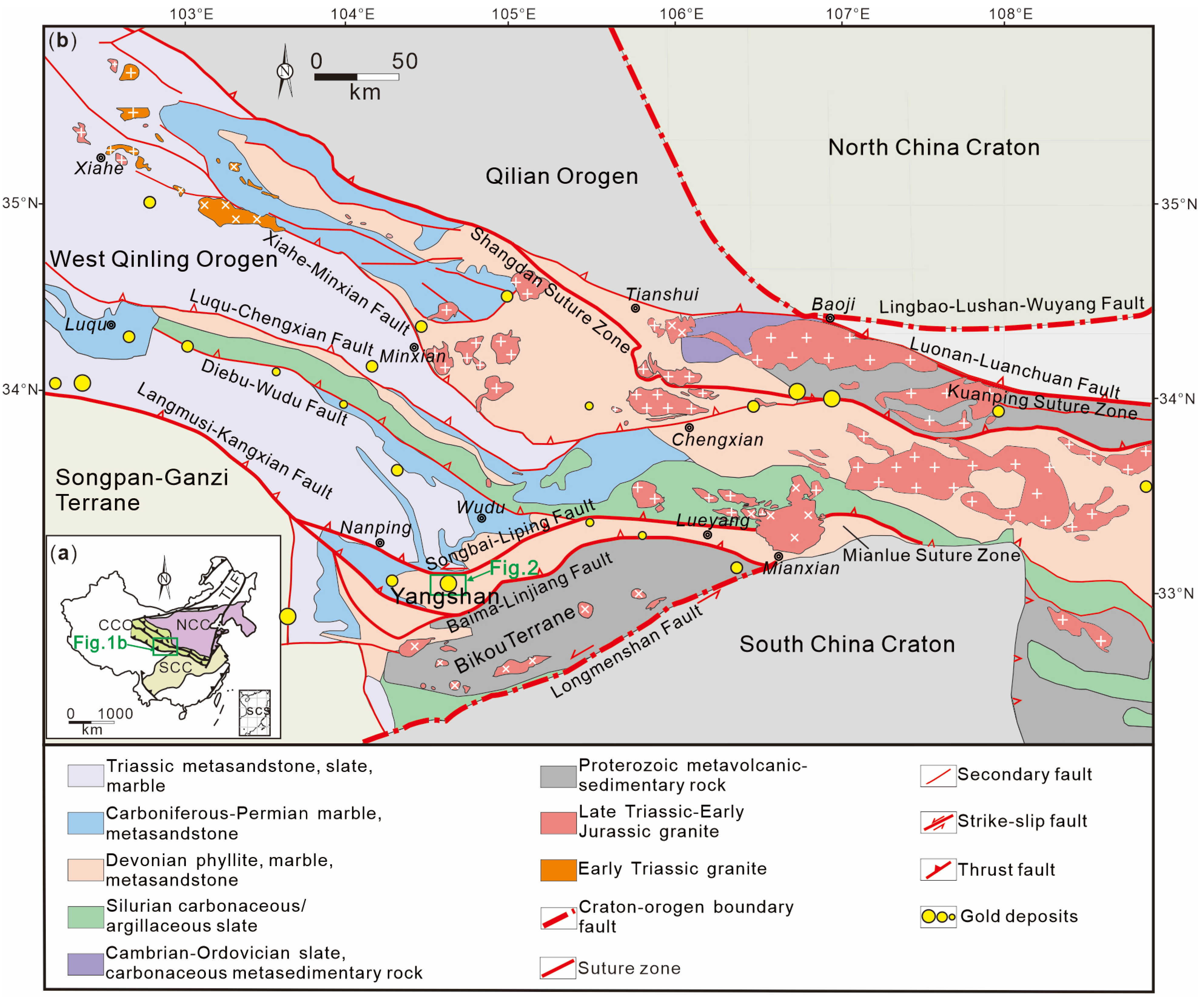
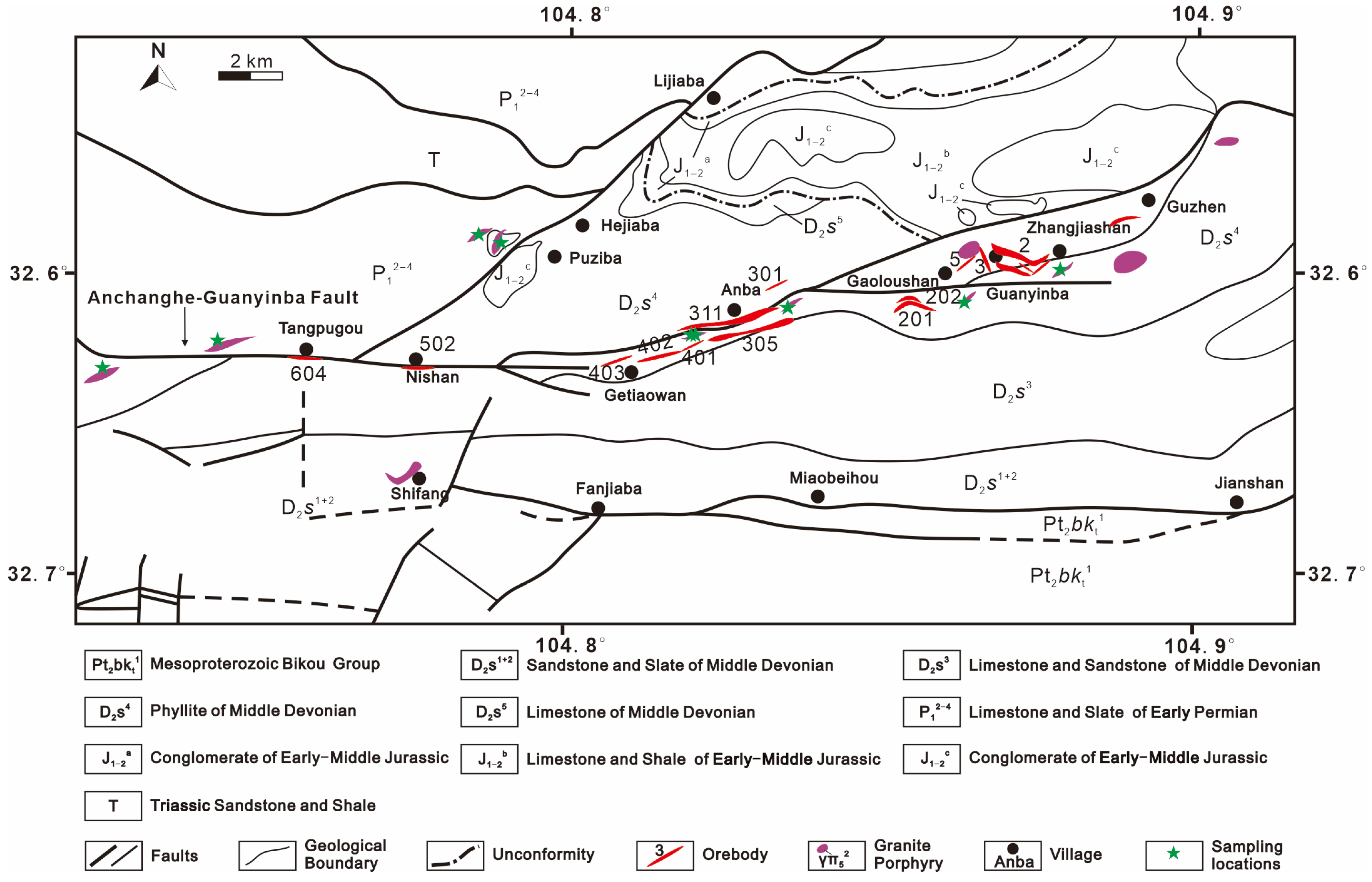
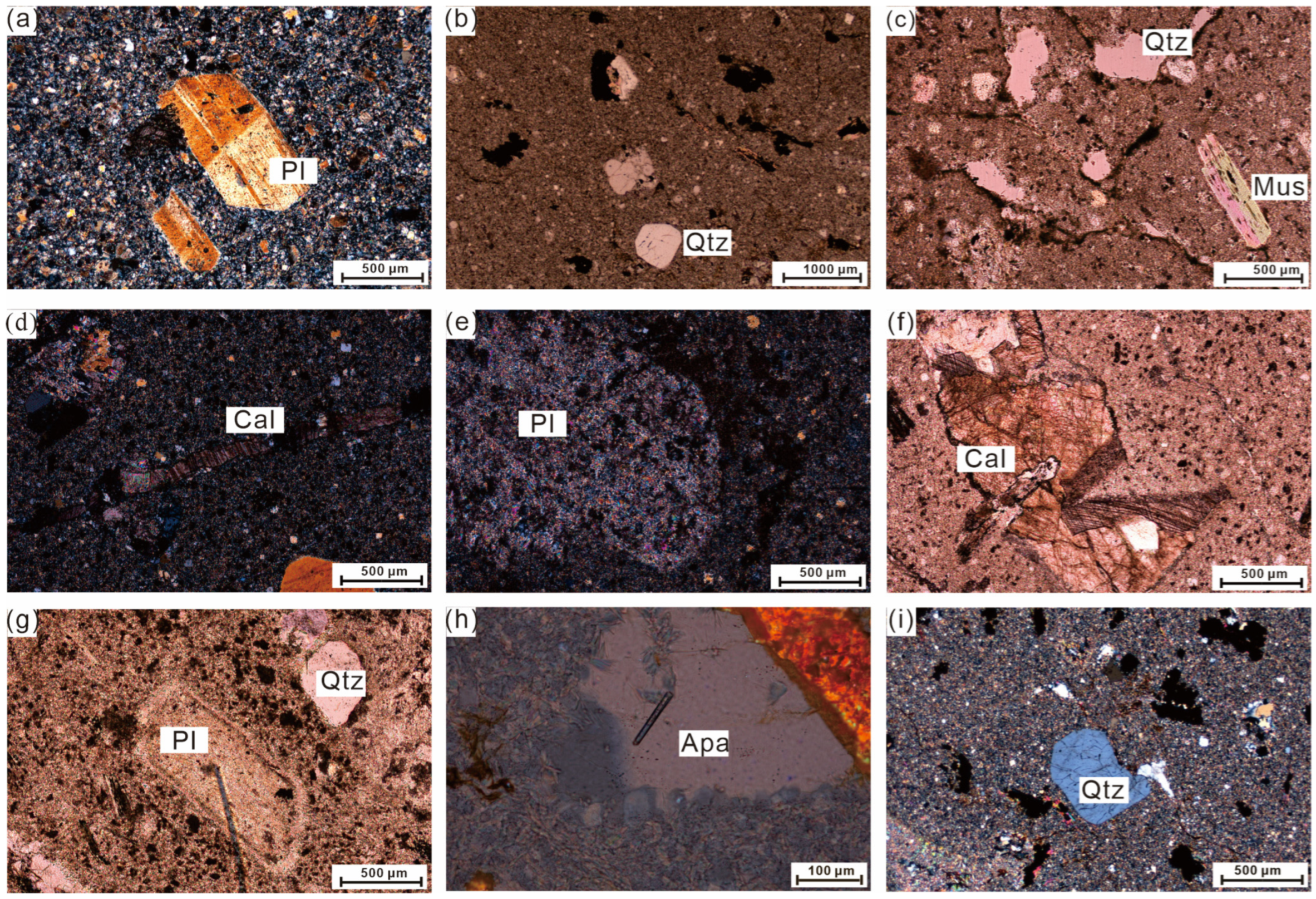
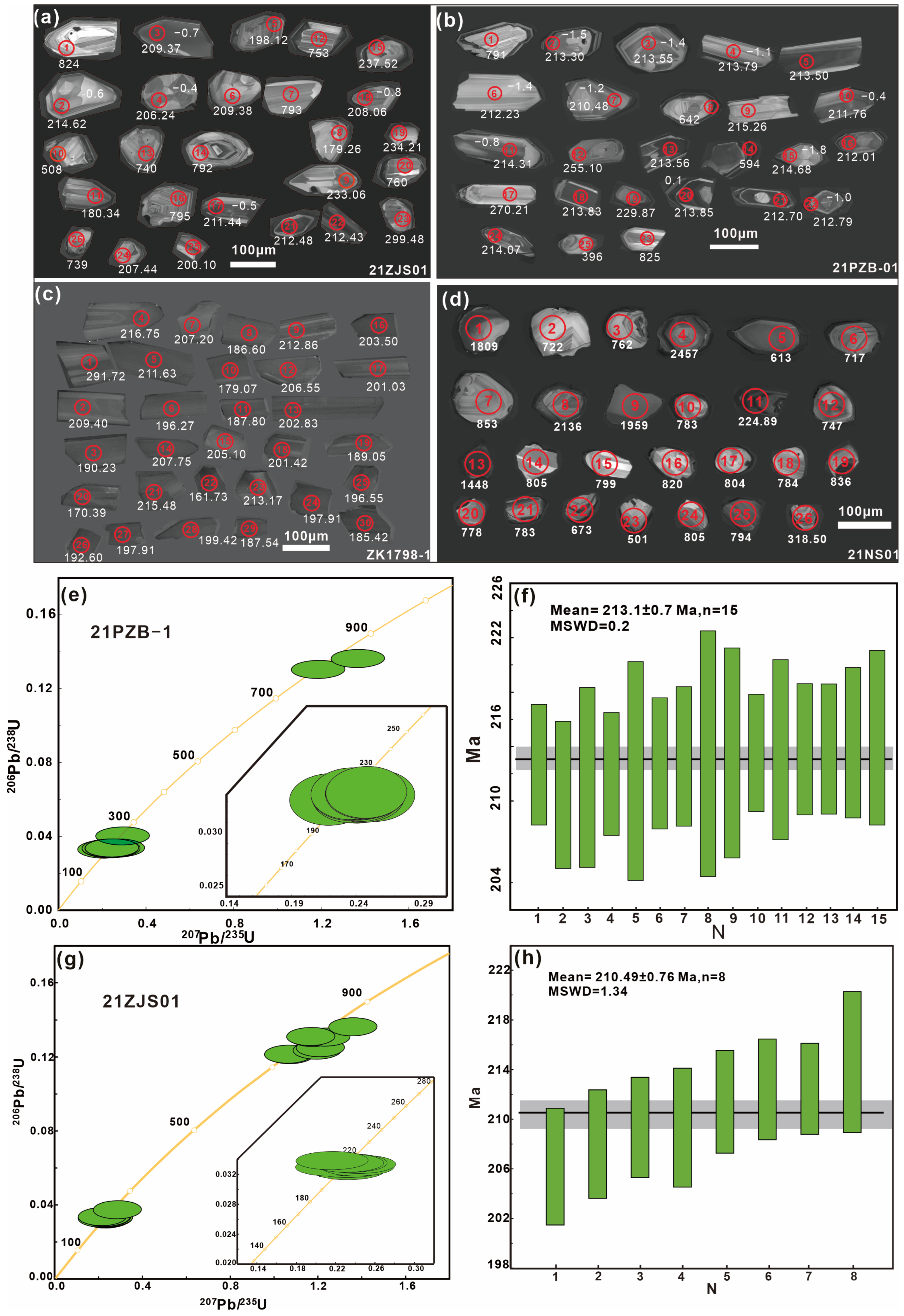
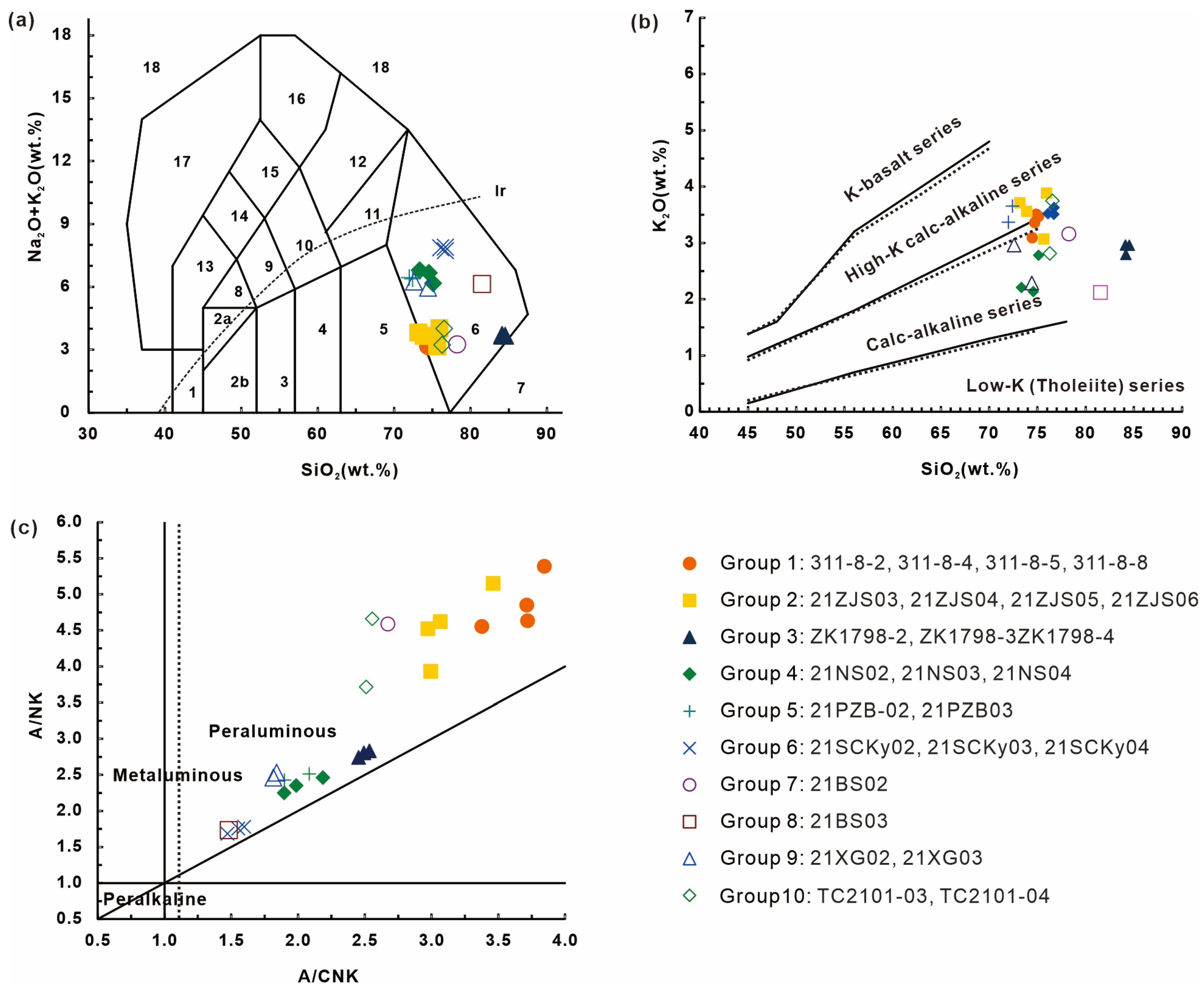
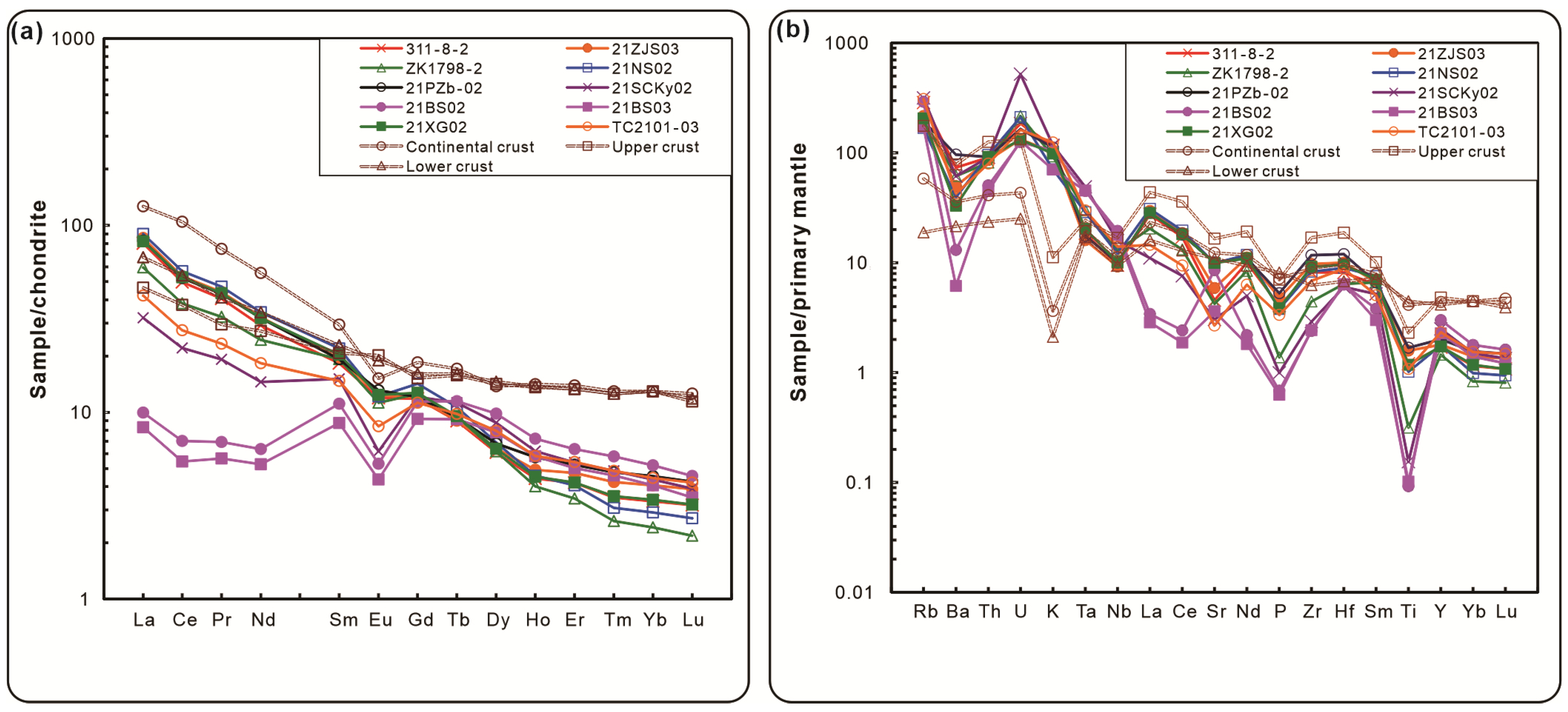
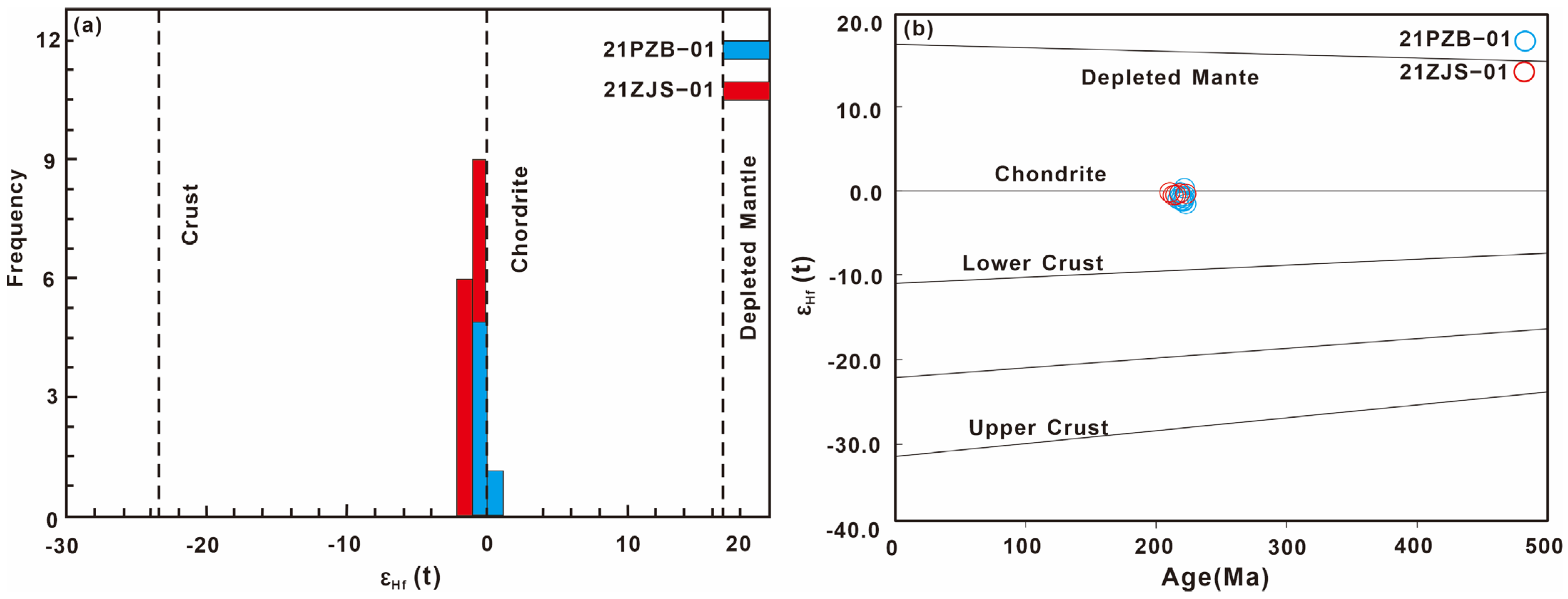
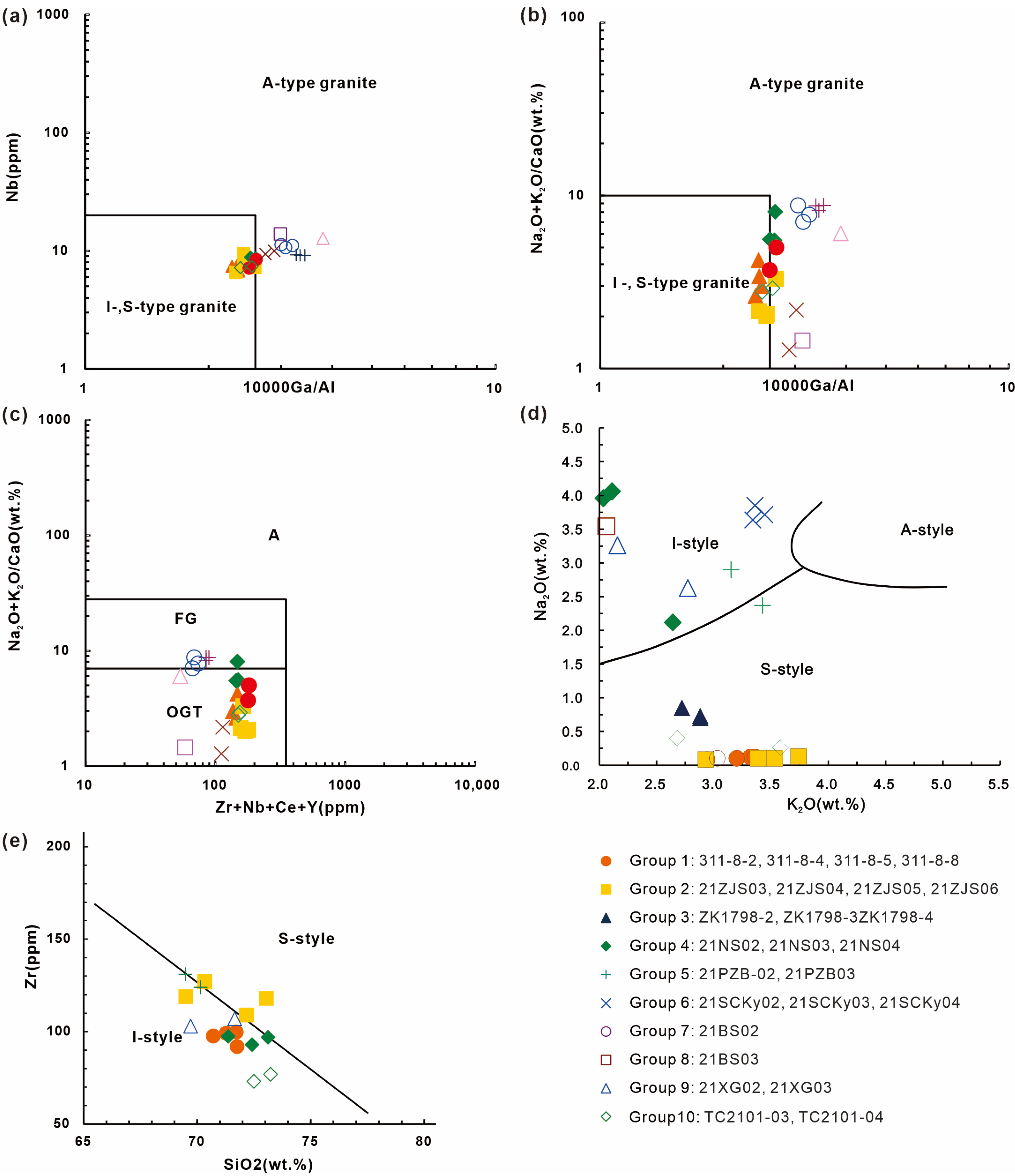
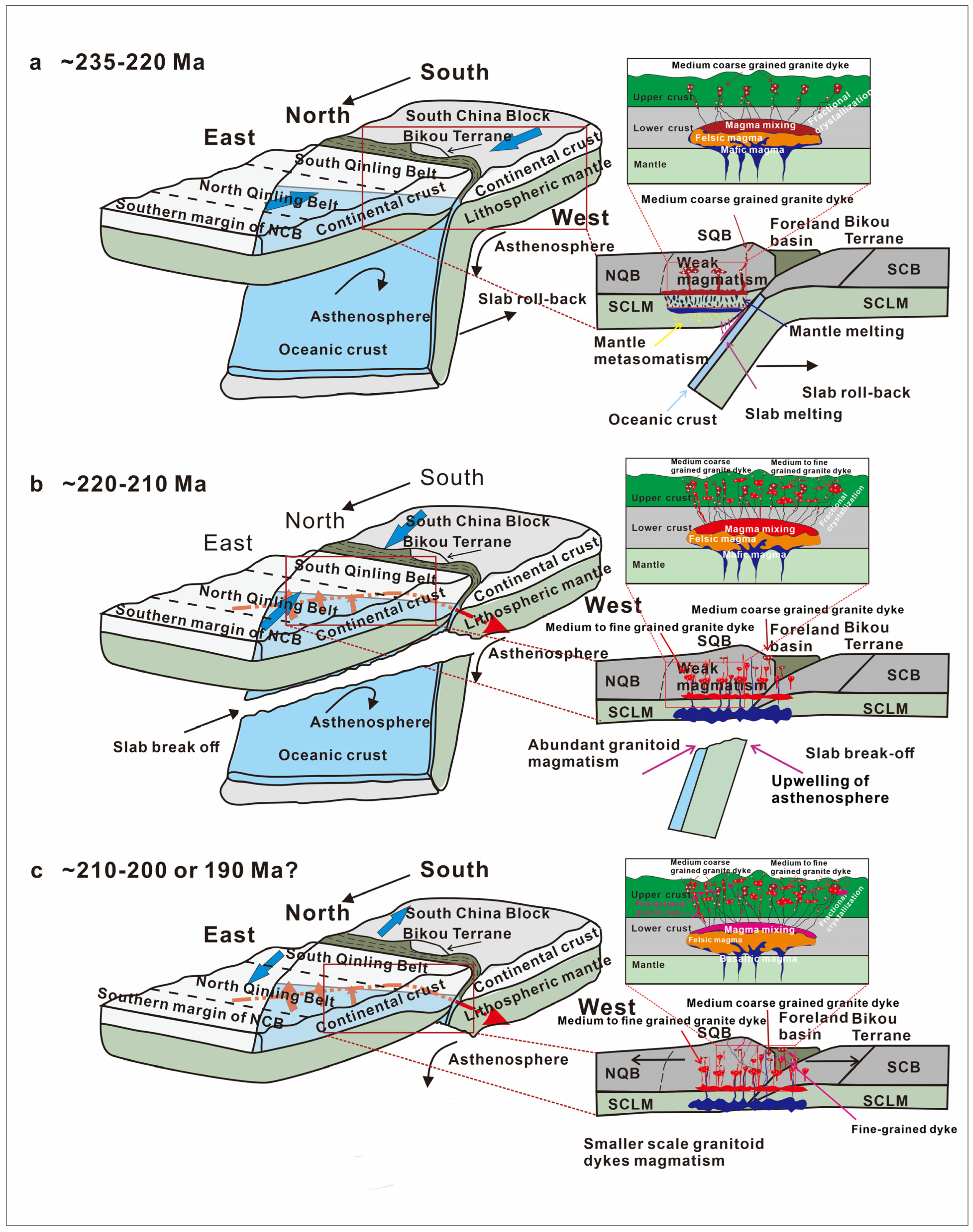
The Yangshan gold belt is renowned for its igneous rock formations, particularly dykes that form in tectonically weak zones. Some of these rock formations exhibit a close spatial relationship with gold mineralization, and a tiny portion of the granitic dykes serve as gold ore bodies by themselves. In order to investigate the nature of granitic dykes and their association with gold mineralization, we conducted a comprehensive study consisting of zircon U-Pb chronology, petrography, and in situ Hf isotope analysis of 25 granitic dyke samples collected from east to west across the belt. According to LA-ICP-MS zircon U-Pb dating results, the granitic dykes inherited zircon ages that are concentrated between 745.0 and 802.0 Ma, and magmatic intrusion ages that mainly fall between 201.0 and 213 Ma. Moreover, the granitic dykes display a calc-alkaline to high-K calc-alkaline peraluminous series, which is relatively enriched in light over heavy REE, with moderate Eu anomalies. These dykes are rich in large-ion lithophile elements and poor in high-field-strength elements. The zircon Lu-Hf isotope data range from εHf(t) values of −1.5 to 0.1, mantle model (TDM1) ages range from 859 to 937 Ma, and crustal model (TDM2) ages range from 1111 to 1218 Ma. The granitic dykes found in the Yangshan gold belt were formed between 200 and 213 Ma ago, during a period of intracontinental extension following the late collision between the Yangtze plate and Qinling microplates. These dykes originated from the volcanic basement of the Mesoproterozoic Bikou Group, which was formed by the melting of the upper crust under the crustal thickening caused by the subduction and collision of the Qinling microplate. Subsequently, the dykes were transported along a tectonically weak zone, assimilating surrounding rocks and undergoing a transformation from “I”-type to “S”-type granite before finally evolving into granite with specific “A”-type characteristics. Our study provides new insights into the petrogenesis of granitic dykes in the Yangshan gold belt, as well as the relationship between gold mineralization and magmatic activity, which has significant implications for mineral exploration and the geological understanding of gold mineralization in this region.
Keywords: Western Qinling Orogen; Yangshan gold belt; granite dykes; geochemistry; zircon chronology; Hf isotope Western Qinling Orogen; Yangshan gold belt; granite dykes; geochemistry; zircon chronology; Hf isotope