Skip Content
You are currently on the new version of our website. Access the old version .

Symmetry

Symmetry is an international, peer-reviewed, open access journal covering research on symmetry/asymmetry phenomena wherever they occur in all aspects of natural sciences, and is published monthly online by MDPI.

Quartile Ranking JCR - Q2 (Multidisciplinary Sciences)

All Articles (16,813)

Conventional assessments of fault rupture propagation in overlying soil layers often rely on static or quasi-static analysis, neglecting the dynamic nature of fault displacement and inertial effects. This study develops a comprehensive simulation method for the entire process from rupture initiation to propagation under dynamic fault displacement. The method integrates a nonlinear elastic constitutive model based on the Hardin backbone curve with a non-uniform input technique for seismic waves on both sides of the fault using viscoelastic artificial boundaries. To demonstrate the distinct capabilities of this dynamic method, we conduct a comparative study on normal and reverse faulting driven by fault displacement time histories of identical magnitude but opposite sense. The simulations reveal that: (1) the fault displacement required for rupture initiation and propagation remains consistent between dynamic and quasi-static analyses; (2) crucially, the proposed method captures the transient dynamic response of fault rupture in the overlying soil. The study confirms that the proposed dynamic simulation framework is essential for resolving transient peak responses, oscillatory behavior, and deformation features associated with different faulting mechanisms, providing a more realistic tool for seismic risk assessment compared to conventional static approaches.

7 February 2026
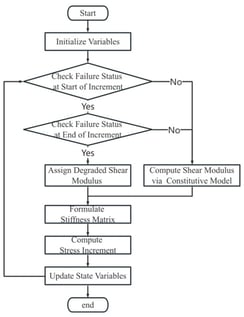
Flowchart of the VUMAT subroutine.

We show that the FLRW metric, modified to include interrelated variation in the speed of light and gravitational constants, leads to Friedmann equations containing terms that behave like dark matter and dark energy without the cosmological constant. When we permit tired light (TL) to contribute to the redshift due to the expanding universe, thus defined by covarying coupling constants (CCCs), the resulting CCC+TL model has a critical density that is just enough to account for the baryon matter in the universe. The CCC+TL cosmology model is consistent with all of the observations that we had the time and the resources to study, including BAOs (baryon acoustic oscillations), the CMB (cosmic microwave background) sound horizon angular size, the time dilation effect, galaxy formation time scales at cosmic dawn, galaxy rotation curves, gravitational lensing, galaxy cluster and ultra-faint dwarf galaxy dynamics, and the mass, size, density, and luminosity evolution of galaxies. We briefly review them in this paper. Additionally, the new model does not suffer from the coincidence problem of the ΛCDM model and complies with the recent DESI findings of an increasing dark energy density with redshift. We present the fundamentals of the CCC+TL model and discuss its applications to some decisive observations. We have considered temporal variation in the constant for cosmological studies and their spherically symmetric variation in astrophysical situations. We conclude that the illusion of dark matter and dark energy in cosmological and astrophysical observations originates from CCC.

6 February 2026

The evolution of various energy densities in the CCC+TL model plotted against the redshift (BM—baryonic matter, 
  
    α
    E
  
—
  
    α
  
 energy, and 
  
    α
    M
  
—
  
    α
  
 matter). (This figure is taken from [41]).

With the increasing integration of high-proportion renewable energy, power systems are exhibiting low-inertia and low-damping characteristics, posing severe challenges to frequency stability. This paper proposes a coordinated supplementary frequency regulation strategy utilizing electrolytic aluminum (EA) loads and a hybrid energy storage system (HESS). Firstly, a system frequency response model is established, incorporating EA, electrochemical energy storage, pumped hydro storage, and conventional generation units. Secondly, an improved variable filter time constant controller is designed, supplemented by fuzzy logic, to achieve adaptive power allocation under different disturbance magnitudes. Concurrently, regulation intervals are defined based on the area control error (ACE), enabling a tiered response from source-grid-load resources. Simulation results demonstrate that under a severe disturbance of 0.05 p.u., the proposed strategy reduces the maximum frequency deviation from 0.198 Hz to 0.054 Hz, achieving a 72.7% performance improvement, and shortens the system settling time by 59.5%. Furthermore, the state of charge (SOC) of the electrochemical storage is successfully maintained within the range of [0.482, 0.505], effectively balancing frequency regulation performance and device lifespan. The findings demonstrate the effectiveness of the proposed strategy in enhancing the frequency resilience of low-inertia power grids.

6 February 2026

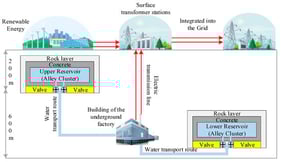
Illustration of a comprehensive pumped-hydro storage facility built within a decommissioned subterranean mine.

This paper presents a probabilistic, multi-layered framework designed to forecast the longevity and security of cryptographic systems under the dual pressures of classical and quantum computational threats. The model integrates thermodynamic decay analogies, stochastic transitions via Hidden Markov Models, and an adapted financial option pricing method to quantify cryptographic degradation, strategic risk, and transition readiness. This framework can guide standardization roadmaps, cipher retirement, or quantum-migration planning, guiding proactive, instead of reactive, crypto agility. Furthermore, it provides a quantitative methodology to complement the current opinions expressed in surveys, as well as a qualitative approach to cryptographic security risk projections.

6 February 2026

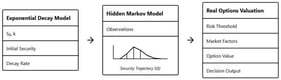
Model integration architecture showing inputs, outputs, and information flow across the three-stage framework.

News & Conferences

Issues

Open for Submission

Editor's Choice

Reprints of Collections

Symmetry/Asymmetry Studies in Modern Power Systems
Reprint

Symmetry/Asymmetry Studies in Modern Power Systems

Editors: Tao Zhou, Cheng Wang, Zhong Chen, Lei Chen
Symmetry/Asymmetry of Differential Equations in Biomathematics
Reprint

Symmetry/Asymmetry of Differential Equations in Biomathematics

Editors: Liang Zhang, Junli Liu, Tailei Zhang

Get Alerted

Add your email address to receive forthcoming issues of this journal.

XFacebookLinkedIn
Symmetry - ISSN 2073-8994