


Abstract
With the increasing integration of high-proportion renewable energy, power systems are exhibiting low-inertia and low-damping characteristics, posing severe challenges to frequency stability. This paper proposes a coordinated supplementary frequency regulation strategy utilizing electrolytic aluminum (EA) loads and a hybrid energy storage system (HESS). Firstly, a system frequency response model is established, incorporating EA, electrochemical energy storage, pumped hydro storage, and conventional generation units. Secondly, an improved variable filter time constant controller is designed, supplemented by fuzzy logic, to achieve adaptive power allocation under different disturbance magnitudes. Concurrently, regulation intervals are defined based on the area control error (ACE), enabling a tiered response from source-grid-load resources. Simulation results demonstrate that under a severe disturbance of 0.05 p.u., the proposed strategy reduces the maximum frequency deviation from 0.198 Hz to 0.054 Hz, achieving a 72.7% performance improvement, and shortens the system settling time by 59.5%. Furthermore, the state of charge (SOC) of the electrochemical storage is successfully maintained within the range of [0.482, 0.505], effectively balancing frequency regulation performance and device lifespan. The findings demonstrate the effectiveness of the proposed strategy in enhancing the frequency resilience of low-inertia power grids.
1. Introduction
In June 2023, the National Energy Administration issued the “Blue Book on the Development of New-Type Power Systems,” proposing the construction of a new-type power system with continuously increasing penetration of renewable energy to promote the green transition of the energy sector [1,2]. However, renewable energy sources such as wind and solar exhibit strong stochasticity and high volatility, introducing significant asymmetry into the power balance and impacting system frequency stability [3]. Maintaining the symmetry of power supply and demand, particularly frequency stability, is paramount for grid operation. Relying solely on conventional thermal power units is insufficient to symmetrically mitigate these frequency fluctuations in the new-type power system. Consequently, tapping into the frequency regulation potential from the source-load-storage sides, aiming for a symmetrical and robust response to grid disturbances, has become a research focus for scholars worldwide [4]. As a technologically mature and widely deployed energy storage system (ESS), pumped storage serves as a critical solution for grid frequency regulation and peak shaving [5]. Given the abundance of abandoned mines in northwestern and southwestern China, proposals have been made in recent years by researchers to repurpose the extensive underground spaces of these mines into pumped storage power stations [6]. Compared with conventional pumped storage power stations, which are constrained by geographical conditions, water resource distribution, and the risk of damaging the surrounding ecological environment, abandoned mine pumped storage (AMPS) power stations offer advantages such as lower construction costs, reduced environmental impact, and more efficient land use [7,8]. From the perspective of resilient mining area distribution networks, a frequency regulation strategy based on the coordinated control of abandoned mine pumped storage and supercapacitors has been proposed in one study [9], which can effectively maintain the frequency stability of mining area power grids. Based on distributed coal mine underground reservoir technology, a peak-shaving system for AMPS power stations was constructed [10]. In one study, a HESS integrating AMPS, batteries, and photovoltaics was developed, and an optimized scheduling strategy proposed based on this system significantly improved the photovoltaic accommodation rate [11]. Given that the response time, reserve capacity, and regulation rate of pumped storage struggle to meet the multi-timescale frequency regulation demands of new-type power systems, the introduction of new types of energy storage for grid frequency regulation is hence required.
Stability is the cornerstone of power system operation. With the increasing integration of renewable energy, frequency stability is becoming more closely coupled with voltage and transient stability [12,13]. The system’s inherent inertia H and damping factors D are critical parameters that govern the transient frequency response following a disturbance, ensuring that the system avoids desynchronization during the incipient phase of a power swing [14]. While conventional turbines provide vital primary frequency support through their governors [15], their relatively slow mechanical response limits their effectiveness in low-inertia scenarios. Consequently, coordinating fast-acting resources, such as electrolytic aluminum (EA) industrial loads and hybrid energy storage, has become essential for modern grid frequency resilience.
Electrochemical energy storage (EES) has become a crucial frequency regulation resource for renewable energy power plants owing to its advantages such as rapid response and long cycle life [16]. However, a single energy storage technology alone is often inadequate to meet the frequency regulation requirements of power grids with a high penetration of renewable energy. The abundant mining resources in the Yunnan region, coupled with the rapid deployment of EES projects, create favorable conditions for investigating HESS that integrate electrochemical and pumped storage technologies. Meanwhile, the National Energy Administration has explicitly emphasized the need to develop diversified new types of energy storage to enhance the balancing capability of the power system [17]. In the field of HESS, existing research has primarily focused on suppressing minor frequency fluctuations through improved filtering algorithms or optimized control strategies [18,19,20]. However, under large disturbance scenarios, the recovery speed and maximum frequency deviation suppression capability of these methods remain inadequate. The introduction of load-side resources, such as flexible industrial loads like electrolytic aluminum (EA), can effectively expand the scope of frequency regulation resources.
EAL, with its advantages of rapid response characteristics and large power capacity, represents an ideal high-quality frequency regulation resource for the Yunnan power grid [21]. Prior studies have integrated such loads into frequency regulation through methods such as VSC-HVDC grid integration [22], utilization of voltage characteristics [23], or model predictive control [24], achieving certain positive results. However, as a high-energy-consumption load, frequent and independent response of electrolytic aluminum to renewable energy fluctuations may adversely affect production stability and power quality. Therefore, achieving coordinated control between hybrid energy storage systems and EAL is crucial for enhancing system frequency resilience.
Extensive research has been conducted on the coordination of multi-source regulation resources. For instance, one study [25] investigates the synergistic operation of HESS and proposes a control framework to effectively enhance grid frequency stability. While [26] provides valuable insights into power allocation among storage units, our work differs significantly in terms of resource integration and control hierarchy. Specifically, this paper incorporates the high-capacity flexibility of EAL and AMPS, considering their unique physical constraints. Moreover, a symmetrical coordination framework based on ACE interval partitioning is developed, which allows for a more granular response compared to the strategy in [27].
Despite the advancements in HESS and EAL control, several gaps remain. Conventional filtering algorithms typically utilize fixed parameters, which lack flexibility in power allocation under varying disturbance intensities. Furthermore, the rapid modulation potential of EAL is often decoupled from the HESS control loop, leading to a lack of defined operational boundaries for multi-resource coordination. Additionally, the energy recovery process of storage units frequently overlooks the secondary impact on grid frequency stability. To bridge these gaps, this paper proposes an ACE-based adaptive strategy that emphasizes the symmetrical cooperation between load-side and storage-side resources.
The main contributions of this paper are summarized as follows:
Multi-Resource Symmetrical Coordination: A unified frequency regulation framework is established that integrates electrolytic aluminum industrial loads, AMPS and EES, achieving deep coordination among source-load-storage resources.
Adaptive Power Allocation via Variable Filter: An improved filter based on the ACE and its rate of change is designed. This allows for the dynamic adjustment of filter time constants according to disturbance characteristics, optimizing power split between high-frequency EES and low-frequency pumped storage.
Constrained SOC Recovery Strategy: A novel SOC recovery method is proposed. By incorporating frequency deadband constraints, the strategy ensures the energy balance of EES units without inducing secondary frequency deviations.
Tiered Frequency Response Scheme: An ACE-based operational zone partitioning strategy is developed, clearly defining the participation boundaries for EAL and HESS across sub-emergency and emergency scenarios to enhance system robustness.
The remainder of this paper is organized as follows: Section 2 details the mathematical models of the integrated frequency regulation system, including thermal power units, AMPS, EES, and EAL. Section 3 describes the proposed secondary frequency regulation strategy for electrochemical storage, focusing on the adaptive weighting factors and the SOC recovery mechanism. In Section 4, the synergistic control framework based on the variable filter time constant and ACE interval partitioning is presented. Section 5 provides the simulation results and performance analysis under various disturbance scenarios. Finally, Section 6 concludes the paper.
2. Frequency Regulation Control Model of HESS with Electrolytic Aluminum Loads
2.1. Thermal Power Unit Model
Upon receiving a frequency regulation signal, a thermal power unit sequentially delivers active power output through its governor and reheat turbine system. The corresponding frequency response model is given by
where TG is the thermal unit governor time constant; FHP, TRH, TCH, are the reheater gain, heater time constant and turbine time constant, respectively; s is the Laplace transform operator.
The transfer function of the generator and load is modeled as
where H is the generator inertia time constant, and D is the load damping factor.
2.2. Composite Energy Storage Model
2.2.1. Abandoned Mine Pumped Storage Plant Model
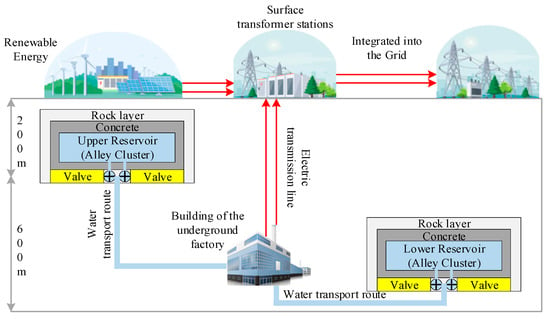
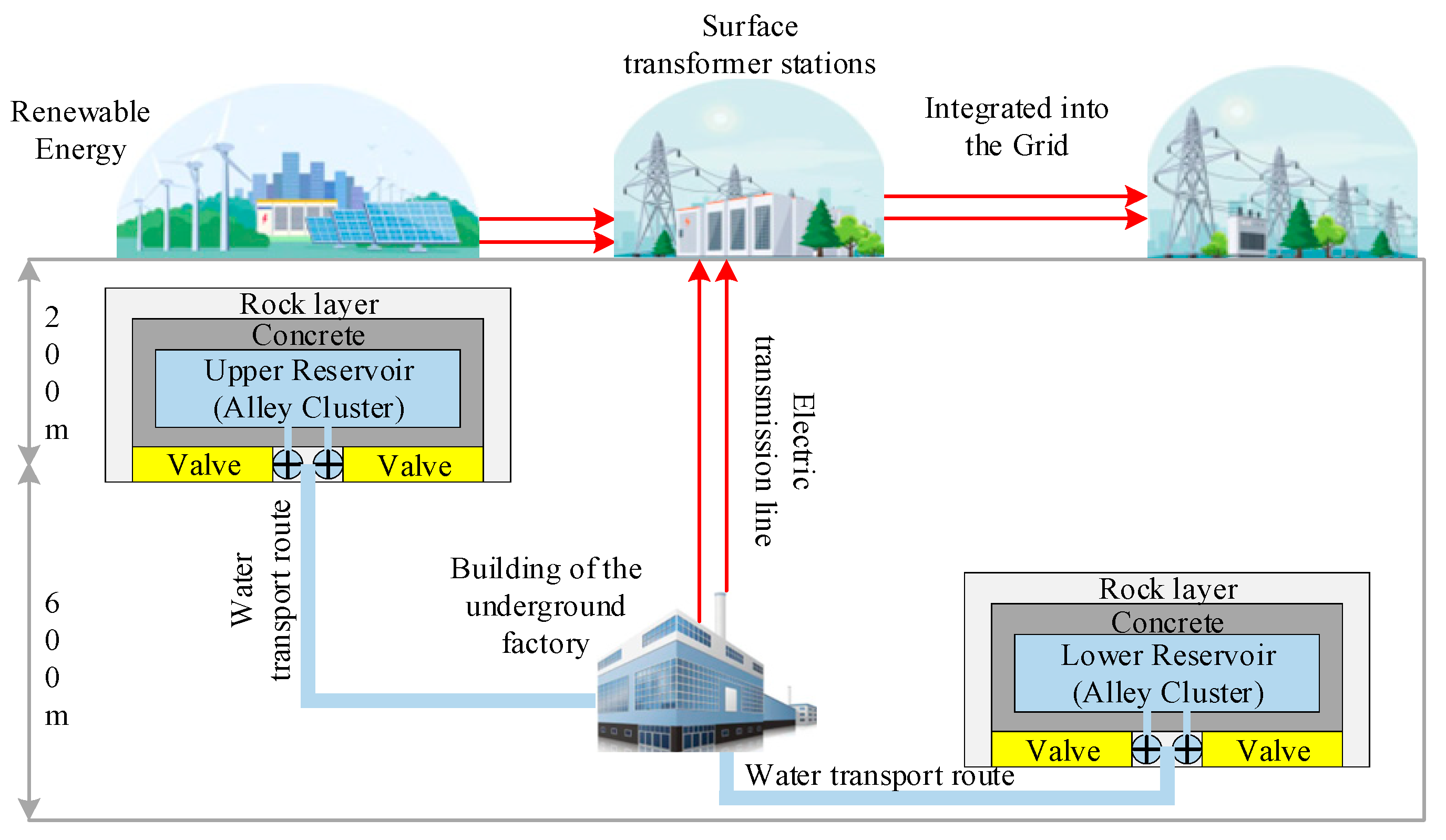
Currently, abandoned mine pumped storage power stations can be classified into semi-underground and fully underground types, with capacities categorized as large-scale (102–103 MW) and small-to-medium-scale (10−2–102 MW). Considering the head conditions of mines in Yunnan and the low evaporation characteristics of underground reservoirs, this study adopts a small-to-medium-scale fully underground configuration. The upper and lower reservoirs are constructed in tunnel networks and goaf areas at depths of 200 m and 800 m underground, respectively [28]. As illustrated in Figure 1, both the upper and lower reservoirs of the power station are formed by tunnel networks, protected externally by concrete and rock mass. They are connected to the underground powerhouse through valves and water conveyance tunnels, with the generated power eventually integrated into the grid alongside other energy sources.
Figure 1.
Illustration of a comprehensive pumped-hydro storage facility built within a decommissioned subterranean mine.
The turbine transfer function for the case can be expressed as
where TW is the water flow inertia time constant.
The governor systems for hydraulic turbines are broadly categorized into electro-hydraulic and mechanical-hydraulic types. Given its closer alignment with the operational characteristics of modern hydroelectric generating units, the electro-hydraulic governor is selected for investigation in this study. Its transfer function is expressed as Equation (4):
where TH is the governor time constant of the hydraulic turbine; Kp, Ki and Kd are the proportional, differential and integral coefficients of the governor, respectively; R is the turbine’s modulation coefficient.
The mathematical modeling of the AMPS in this section primarily focuses on its physical characteristics as a high-capacity stabilization resource. Unlike traditional PPS control logic, which often requires the units to respond indiscriminately to minor frequency fluctuations, the proposed modeling of Gpps(s) serves a distinct functional role as a medium-to-long term support link. This characterization provides a necessary foundation for the subsequent coordination framework, allowing the PPS to be decoupled from high-frequency noise and utilized specifically for large-scale power compensation. Such a design ensures that the dynamic potential of the mine-based storage is leveraged effectively while minimizing mechanical wear through selective activation.
2.2.2. Electrochemical Energy Storage Model
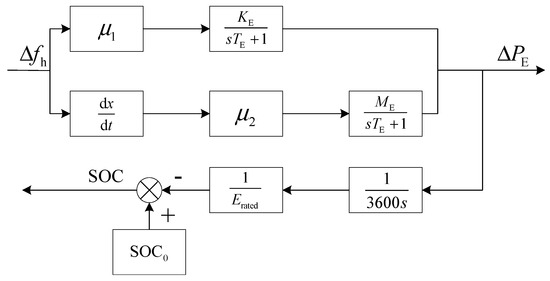
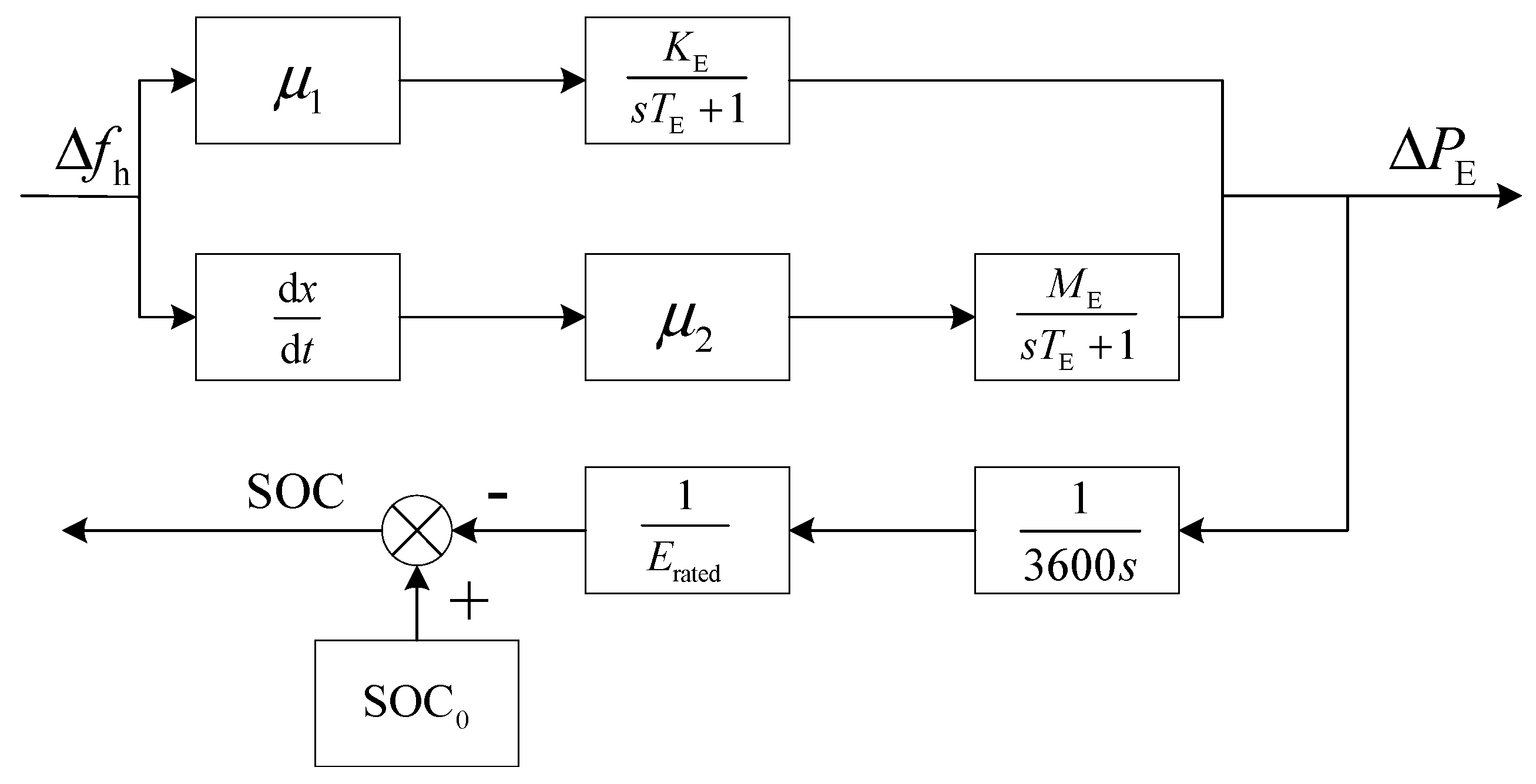
The transfer function model of electrochemical energy storage is shown in Figure 2. This model represents the electrochemical energy storage system as a first-order inertial element, which is commonly used to analyze its capability to participate in system frequency response. The mathematical representation is given by
where GE(s) is the transfer function model of the EES; TE is the battery delay response time constant; ΔPE, ΔPKE and ΔPME are the regulation output, virtual sag output and virtual inertia output of the electrochemical energy storage, respectively; μ1, μ2 are the weight factors of the virtual sag and virtual inertia control, respectively; KE, ME are the virtual sag coefficients and the virtual inertia coefficients of the electrochemical energy storage, respectively; Δfh is the high-frequency after the frequency dividing process; SOC(t) and SOC0 are the charge state quantity of the electrochemical energy storage, and initial time, respectively; Erated is the total electric quantity of the electrochemical energy storage.
Figure 2.
Transfer function diagram of electrochemical energy storage.
2.3. Aluminium Electrolysis Load Model
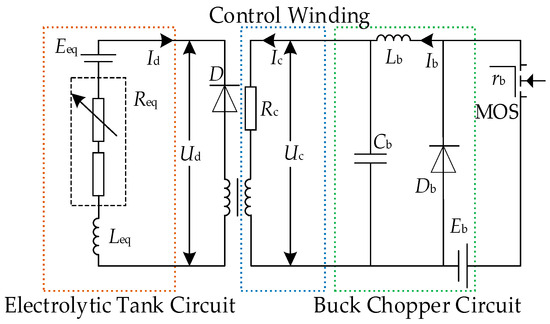
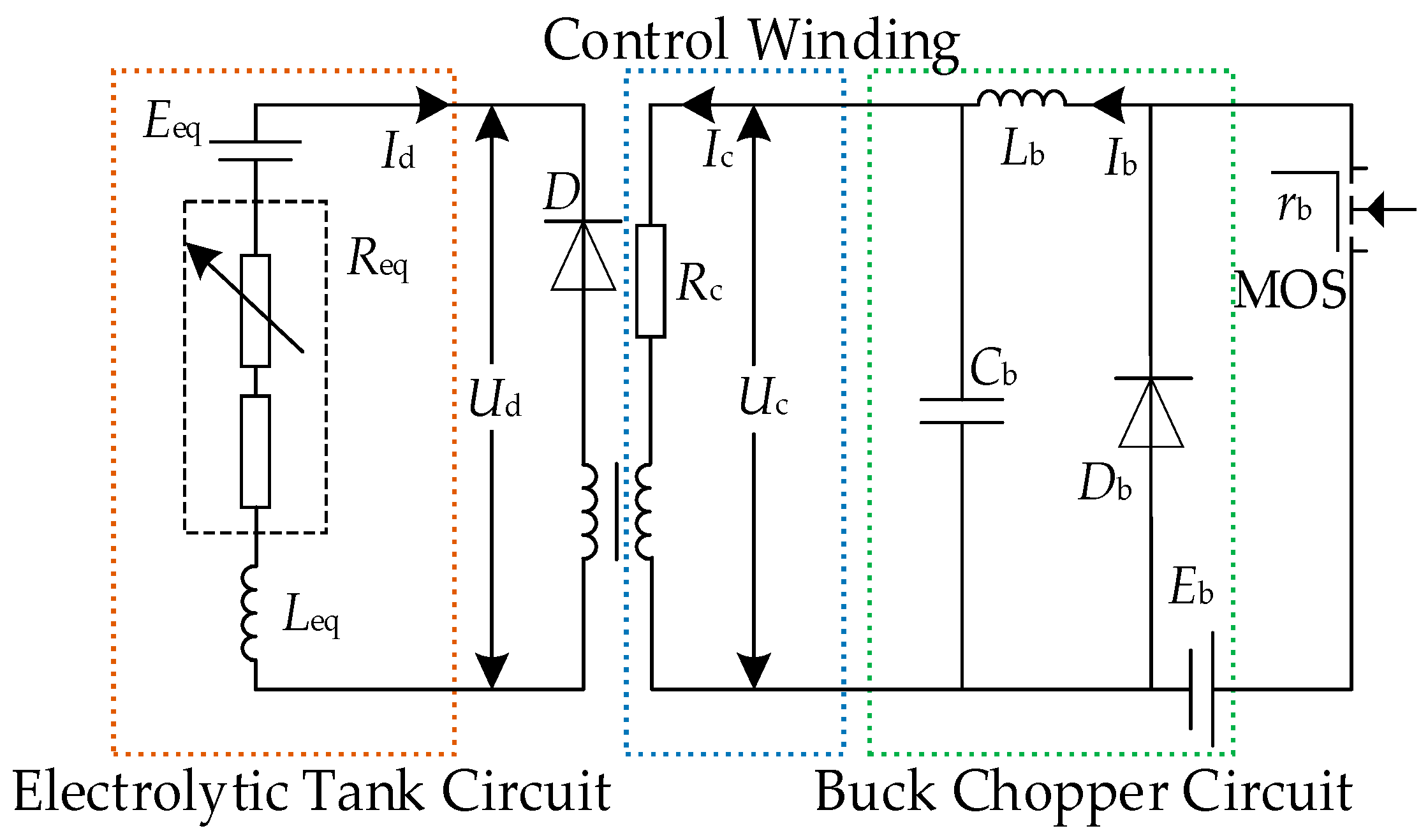
The control circuit of the electrolytic aluminium load is shown in Figure 3, and its circuit model adopts the control based on self-saturated reactor, which ensures the efficiency of the electrolytic aluminium production, and at the same time, it can improve the accuracy of the load regulation.
Figure 3.
Control circuit diagram of electrolytic aluminium load.
The model is mainly composed of electrolytic tank, control winding and Buck chopper circuit, the electrolytic tank consists of back EMF Eeq, equivalent resistance Req and equivalent inductance Leq in series, Ud, Id respectively, for the electrolytic tank voltage and current, Uc, Ic and Rc respectively, for the control winding voltage, current and resistance, Eb, Ib, Lb and Cb respectively, for the power supply voltage of the Buck circuit, current, inductance and capacitance, rb for the internal resistance of the MOSFET tube. Then, the state space equation of the electrolytic aluminium load is:
where state variable x = [Ib, Uc, Ic, Ud, Id], is the derivative of the state variable; input u = [d], d is the duty cycle; y is the output.
The detailed definitions of the system matrices A, B, C, and D are provided below:
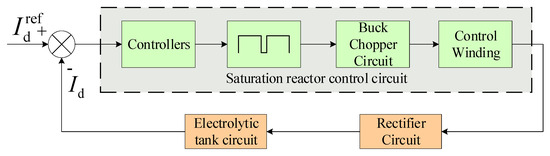
The EA load control flow is shown in Figure 4, to ensure the production benefits of the electrolytic aluminium plant, its participation in frequency regulation will be limited by the self-saturated reactor regulating depth and the actual production of the electrolytic aluminium load series of current regulation range is controlled in the range of −10%~10%. The power that can be supported by the electrolytic aluminium plant to the grid is
where Pd is the active power consumed by the electrolysis tank; PAL is the power of the electrolytic aluminium plant to support the power grid; K1 and K2, respectively, are the downward and upward adjustment coefficients of the EAL participating in frequency regulation.
Figure 4.
Flow chart of electrolytic aluminium load control.
While electrolytic aluminum loads offer rapid modulation potential, their participation is subject to strict thermo-chemical and production constraints. First, the modulation depth is typically limited to ±5%~±10% of the rated power to maintain the thermal equilibrium of the electrolytic cells and ensure magnetic field stability. Second, the modulation duration is restricted (usually within 15–30 min) to prevent adverse effects on the purity of the molten aluminum and the physical integrity of the cathodes. These constraints are essential to ensure that frequency regulation does not compromise the core industrial production process.
3. Proposed Secondary Frequency Regulation Control Strategy for Electrochemical Energy Storage
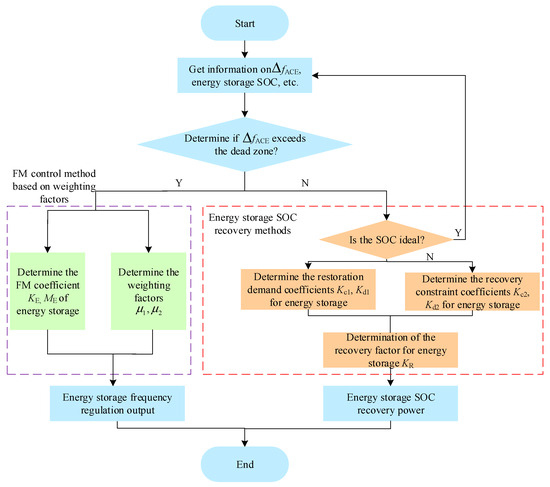
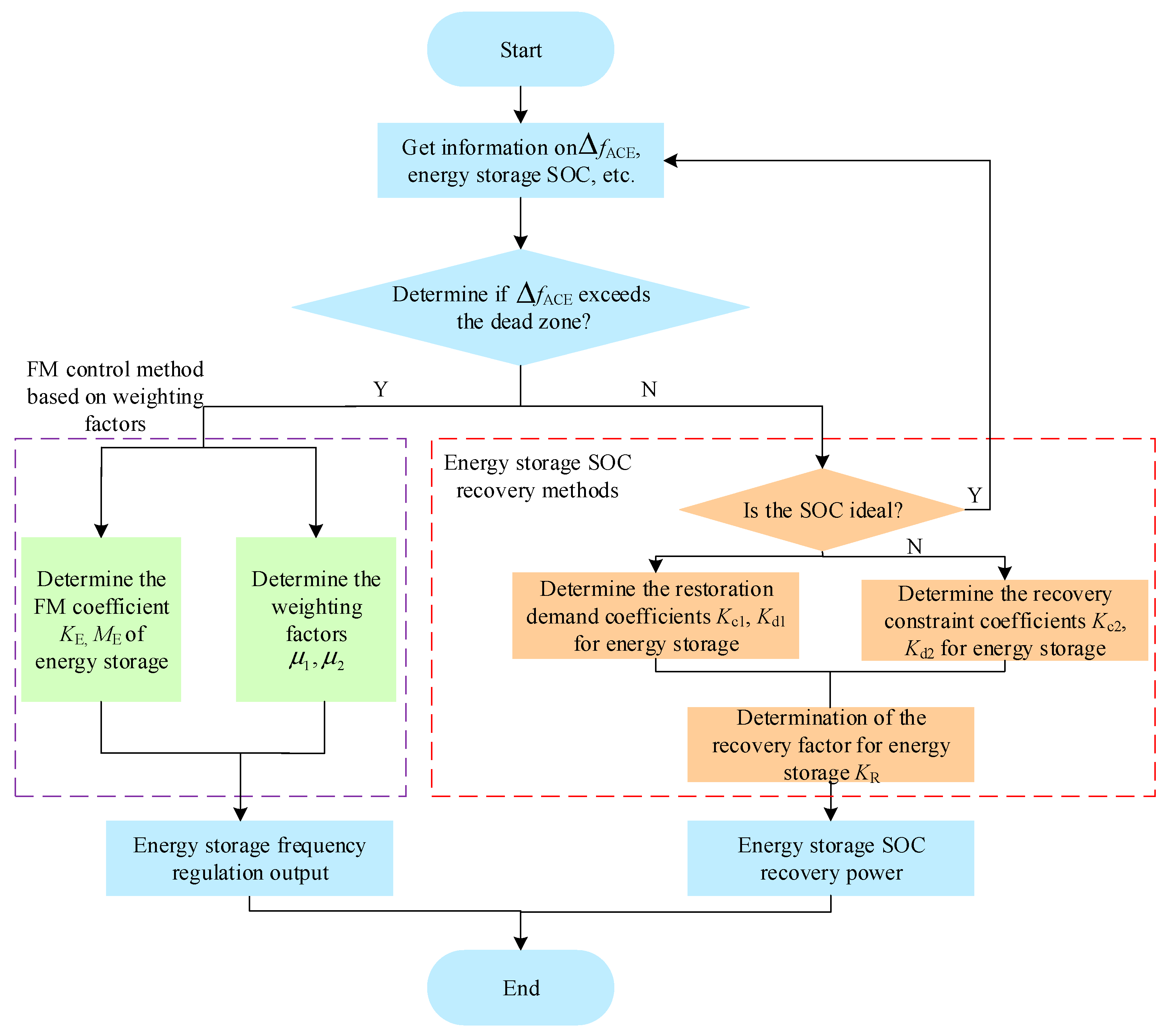
The control strategy for electrochemical energy storage participating in secondary frequency regulation, as proposed in this paper, is illustrated in Figure 5. This strategy initially detects whether the ACE exceeds the deadband. If not, the reserve capacity of thermal power units is utilized to optimize the SOC of the energy storage system, thereby preventing overcharging or over-discharging. When the ACE exceeds the deadband, it is decomposed into high-frequency and low-frequency components via a variable time constant filter. Based on the high-frequency component and its rate of change, the energy storage system adaptively adjusts the weighting coefficients of virtual droop and inertia control to rapidly suppress frequency fluctuations.
Figure 5.
Control flow chart of electrochemical energy storage participating in secondary frequency modulation.
3.1. Frequency Regulation Control Method Based on Weighting Factors
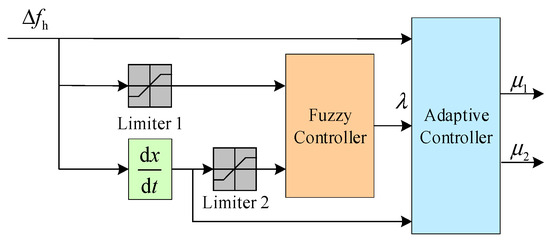
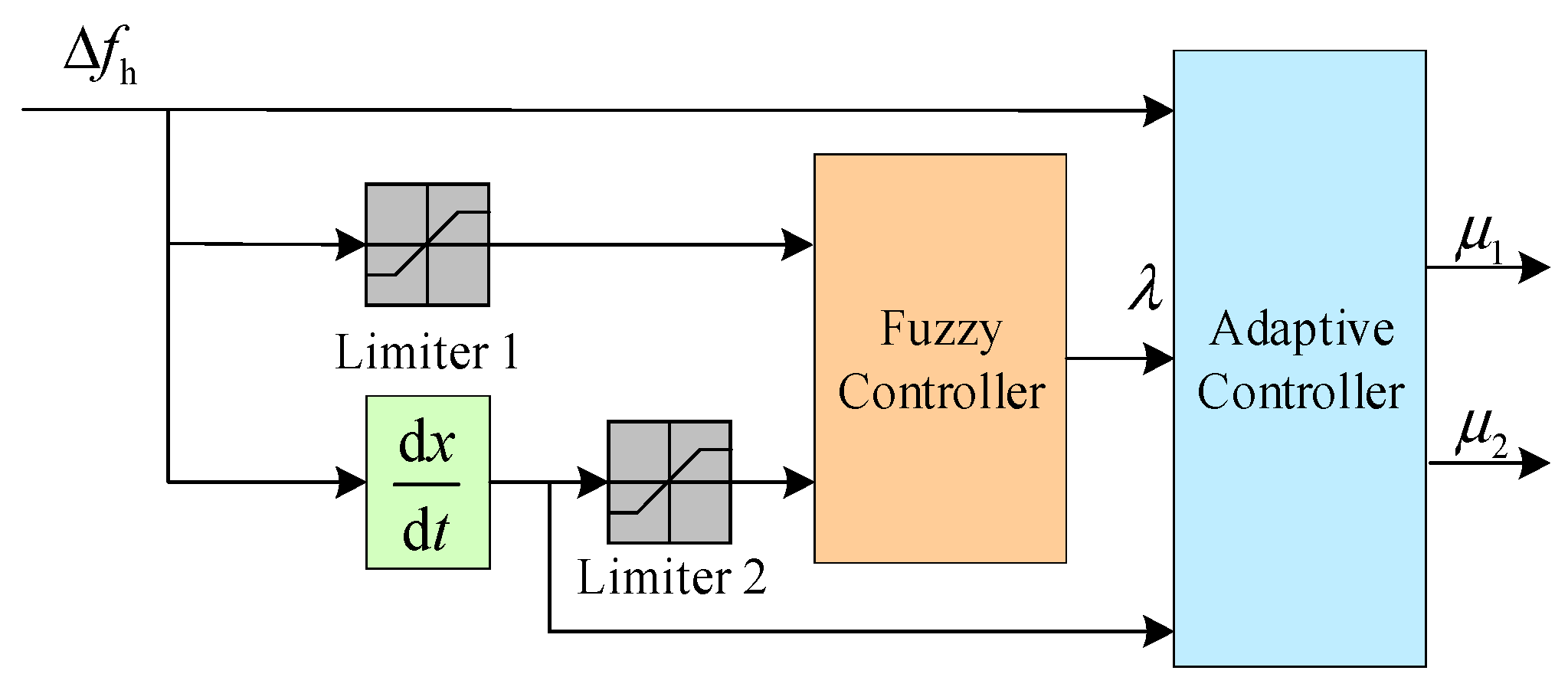
During secondary frequency regulation, the coordinated action of the two control strategies must be ensured, and their weighting coefficients need to be determined in practical applications. To this end, a fuzzy logic control method is adopted in this paper to dynamically compute the weights of the two control modes. The weighting factors μ1 and μ2 are dynamically calculated based on the system frequency deviation and its rate of change, with real-time outputs provided by the fuzzy logic controller. The structure of this controller is illustrated in Figure 6.
Figure 6.
Adaptive adjustment of weight factors based on fuzzy control.
After normalization of the input and output variables, the universe of discourse for both input variables |Δfh| and |dΔfh| is defined as [−1, 1], while the output variable λ is defined over [0, 1]. The fuzzy subsets for both input variables are {NB, NM, NS, Z, PS, PM, PB}, and for the output variable are {Z (Zero), S (Small), M (Medium), B (Large), VB (Very Large)}. Triangular membership functions are adopted for all input and output variables. Table 1 presents the fuzzy logic control rules.
Table 1.
Fuzzy control rules for high frequency signal and its rate of change.
In the architectural design of the fuzzy controller (Figure 7), the saturation blocks, Limiter 1 and Limiter 2, are implemented to ensure the reliability of the control input and to prevent the controller from entering an ill-defined state during extreme events. The parameter settings for these limiters are derived from the frequency security standards issued by the State Grid Corporation of China. According to the SGCC grid code, the permissible steady-state frequency deviation is typically constrained within ±0.2 Hz, and the rate of change in frequency (RoCoF) is generally maintained within ±1 Hz/s for safe operation. Consequently, the threshold for Limiter 1 is set to ±0.2 Hz and Limiter 2 to ±1 Hz/s. These constraints ensure that the fuzzy logic inference operates within a range that is technically consistent with realistic power system operational requirements.
Figure 7.
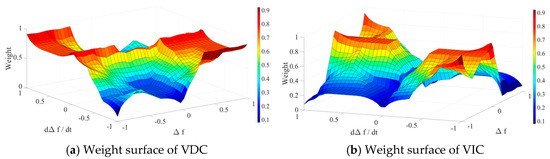
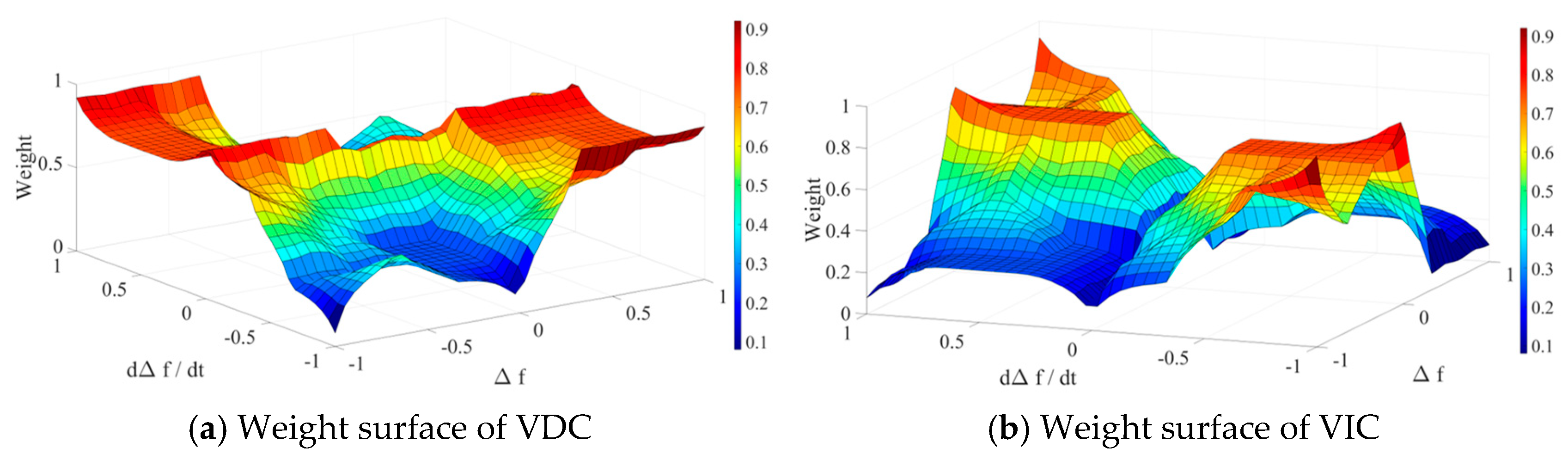
Fuzzy control output surface.
The fuzzy logic controller is employed to handle the inherent non-linearity and uncertainty in grid frequency fluctuations. The motivation behind using |Δfh| and |dΔfh| as inputs is to balance the instantaneous deviation compensation (virtual droop) and the rate-of-change suppression. Unlike fixed weighting factors, the fuzzy inference system provides a smooth transition between these modes, effectively neutralizing measurement noise and ensuring a symmetrical response to both step and continuous disturbances.
After obtaining the weighting coefficient λ, it is fed into the adaptive controller together with the high-frequency signal and its rate of change. Following the adaptive selection process, the virtual droop weighting factor μ1 is derived as shown in Equation (14), while the virtual inertia weighting factor μ2 is determined according to Table 2.
Table 2.
Adaptive selection of weight factor.
To prevent overcharging or over-discharging, which can adversely affect the service life of the energy storage system, the SOC is considered during secondary frequency regulation. In this paper, the SOC is divided into six ranges: minimum (Smin), relatively low (S0), moderately low (Slow), moderately high (Shigh), relatively high (S1), and maximum (Smax). Taking the virtual droop control coefficient KE as an example, this coefficient comprises both a charging control coefficient Kc and a discharging control coefficient Kd. When the SOC is in the optimal range, i.e., S(t) ∈ (Slow, Shigh), KE is set to its maximum value. The charging and discharging coefficients for the virtual droop control are given by Equations (15) and (16), respectively:
where KE,max is the maximum value of the virtual inertia control coefficient, α and β are both adaptive factors. Smin, Slow, Shigh, Smax represent the minimum, moderately low, moderately high, and maximum SOC thresholds of the EES, respectively.·
To make the output of virtual sag control and virtual inertia control in electrochemical energy storage appropriate, this paper makes the virtual inertia coefficient equal to the virtual sag coefficient, i.e., KE = ME.
3.2. Power Recovery Method Considering SOC and Frequency Deviation Constraints
During secondary frequency regulation, when the ACE frequency deviation signal ΔfACE remains within the deadband and the SOC is in an undesirable condition, a recovery coefficient must be calculated based on the SOC. This coefficient directs the energy storage SOC toward an optimal range while preventing ΔfACE from exceeding the normal regulation zone during the recovery process.
(1) SOC constraints
From the perspective of the energy storage system’s intrinsic recovery needs, and to facilitate the analysis of its recovery demand coefficient under different SOC levels, the recovery output depth is determined based on the current SOC. The charging and discharging recovery demand coefficients, Rc1 and Rd1, calculated according to the SOC, are given by Equations (17) and (18), respectively:
(2) Frequency deviation constraint
Since the SOC has to avoid the system frequency exceeding the frequency regulation dead zone when recovering, from the recovery constraint of the system, in order to facilitate the analysis of the memory recovery constraint coefficients under different ACE frequency deviation signals, the h is partitioned, i.e., , , , , , , , correspond to the lower dead band limit, the minimum value, the smaller value, the smaller value, the larger value, the larger value and the maximum value of the ACE frequency deviation signals, respectively, the upper dead band limit, different ACE frequency deviation signal intervals correspond to different recovery constraint coefficients0, and the charging and discharging recovery constraint coefficients calculated based on the ACE frequency deviation signals are shown in (19) and (20), respectively:
where , , , , , , , correspond to the lower dead band limit, the minimum value, the smaller value, the smaller value, the larger value, the larger value and the maximum value of the ACE frequency deviation signals, respectively.
To ensure grid frequency remains within permissible limits during the recovery of the energy storage system’s output power, an integrated consideration of both the battery’s SOC recovery requirements and the power system’s load-bearing limit is required. The corresponding SOC recovery coefficient is specified in Equation (21):
(3) SOC recovery factor
Once the SOC recovery coefficient is determined, the recovery output power of the energy storage system can be calculated to restore the SOC of the electrochemical energy storage to its optimal range. The recovery output power for the electrochemical energy storage SOC is expressed as Equation (22):
4. Cooperative Frequency Regulation Strategies for Composite Energy Storage Systems Considering Aluminum Loads
4.1. Control Strategy for Composite Energy Storage System Based on Variable Filter Time Constant
To address the issues of SOC limit violations in electrochemical energy storage and frequent start-stop operations of pumped storage units in hybrid energy storage systems, this paper proposes an adaptive frequency allocation strategy based on the rate of change in ACE. This strategy decomposes the frequency deviation signal through an adaptive filter and allocates the components to pumped storage (low-frequency) and electrochemical energy storage (high-frequency), respectively, enabling coordinated frequency regulation. The filter expression is given by Equation (23):
where TN0 is the initial value of the filter time constant; ΔTN is the variation in the filter time constant.
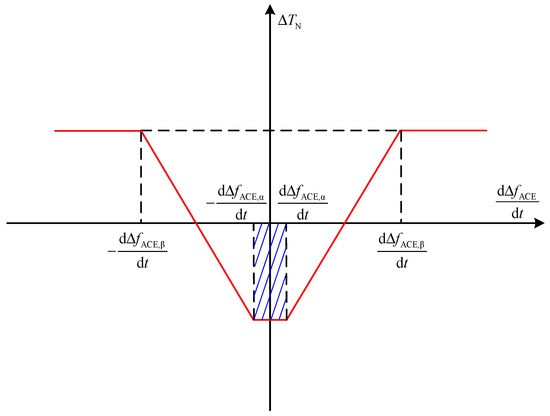
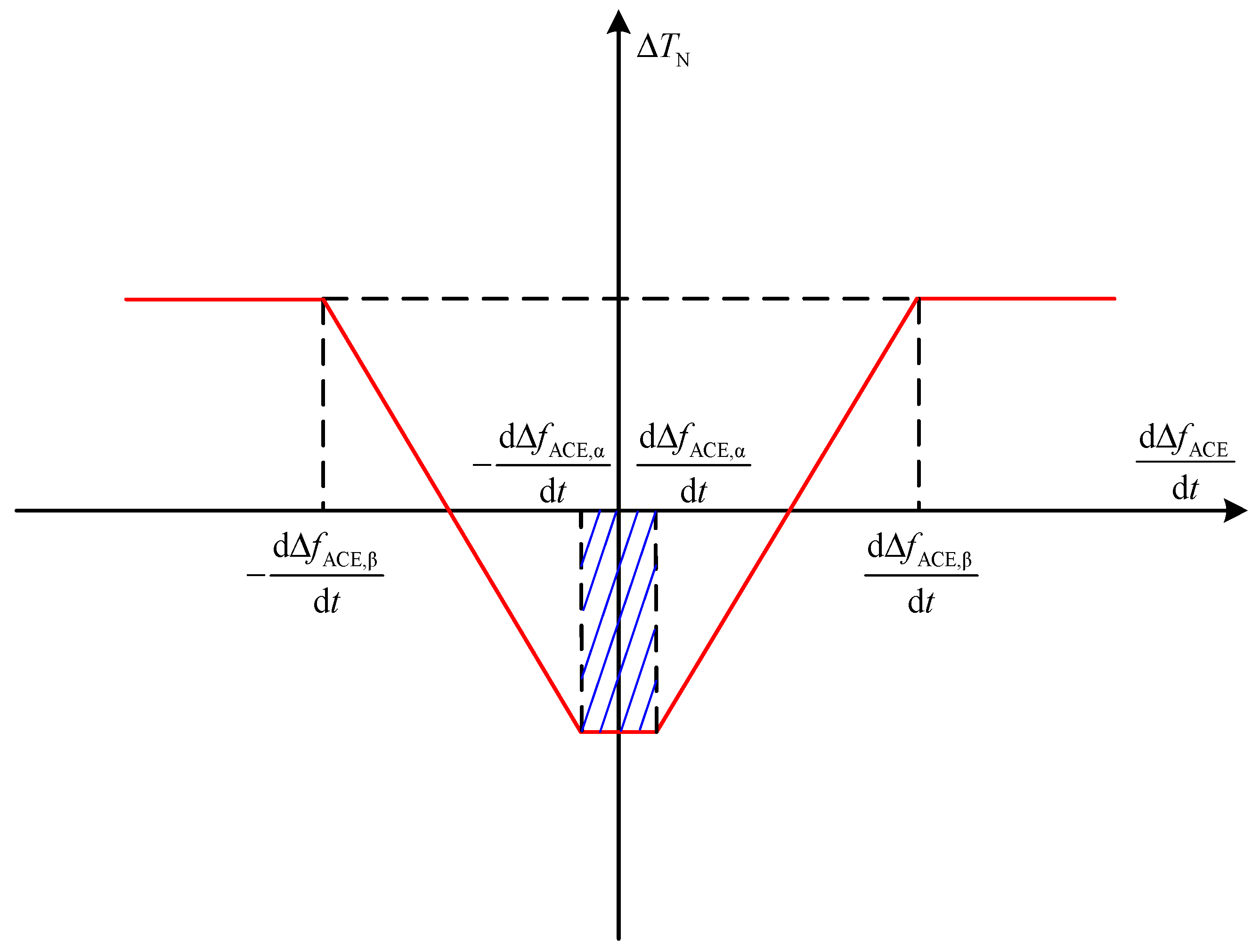
The relationship curve between the variation in filtering time constant and the rate of change of ACE frequency deviation is shown in Figure 8. The selection of the variable filter time constant mapping is motivated by the distinct response dynamics of the HESS components. During the incipient phase of a disturbance where dΔfACE is high, a reduced TN is prioritized to facilitate rapid power injection from the electrochemical storage, thereby minimizing the primary frequency dip. As the system stabilizes, TN is increased to smoothly transfer the regulation burden to the high-capacity abandoned mine pumped storage units. This adaptive mechanism prevents premature EES exhaustion while alleviating mechanical wear on the hydraulic units.
Figure 8.
ΔTN and |dΔfACE/dt| curves.
Based on the relationship curve between the filter time constant and the rate of change in the ACE frequency deviation, their corresponding relationship is expressed by Equation (15). To facilitate subsequent simulation data processing, the rate of change in the ACE frequency deviation is normalized in this study, with dΔfACE,α/dt and dΔfACE,β/dt set to 0.1 and 0.9, respectively.
4.2. Partitioning Rules for Frequency Regulation Intervals
When load fluctuations in the power grid result in power deficit or surplus, different frequency regulation resources respond to the commands of the coordinated control strategy by adjusting their active power to achieve power balance of the electrical power system. The ACE interval partitioning strategy is illustrated in Figure 9.
Figure 9.
Diagram of ACE interval division.
(1) When |Δf| ≤ Δfdb, the grid operates within the regulation deadband. In this scenario, only the electrochemical energy storage performs SOC recovery, while other frequency regulation resources remain inactive. This maintains the energy storage SOC within the optimal range, thereby preventing overcharging or over-discharging.
(2) When Δfdb < |Δf| ≤ ΔfCES, the grid enters the normal regulation zone. During this condition, only conventional thermal power units participate in frequency regulation.
(3) When ΔfCES < |Δf| ≤ ΔfAL, the grid operates in the sub-emergency regulation zone. Under such circumstances, the hybrid energy storage system assists conventional thermal power units in grid frequency regulation. A variable-filter time constant controller decomposes the ACE frequency deviation signal into high-frequency and low-frequency components, with the low-frequency component handled by abandoned mine pumped storage plants and the high-frequency component managed by electrochemical energy storage.
(4) When ΔfAL < |Δf| ≤ ΔfOVER, the grid enters the emergency regulation zone. Here, restoring grid frequency takes the highest priority, with conventional thermal power units, the hybrid energy storage system, and electrolytic aluminum loads jointly participating in frequency regulation.
(5) When |Δf| > ΔfOVER, the grid reaches the super-emergency regulation zone. In this state, neither the hybrid energy storage system nor conventional thermal power units can suppress grid frequency fluctuations, and all frequency regulation resources fail to respond. Ultimately, system frequency can only be gradually restored to a safe range through forced load-shedding operations.
where ΔP is the frequency regulation output of the load, ΔPG is the frequency regulation output of the thermal power units, and ΔPPPS is the frequency regulation output of the mine waste pumped storage power plants.
To bridge the gap between theoretical control and industrial production safety, the physical limitations of the aluminum electrolysis load are integrated into the logic of Section 4.2 via a ‘Condition-Triggered + Output-Clamped’ mechanism.
First, to respect the duration constraint and maintain production stability, the aluminum load is not employed for continuous regulation. As illustrated in the ACE interval partitioning (Figure 10), it is designated as a high-tier contingency resource. The load modulation is only triggered when the system frequency deviation enters the ‘Emergency’ zone (|Δf| > ΔfAL), indicating that the primary and secondary regulation capacities of thermal and hybrid storage units are exhausted. This threshold-based initiation minimizes the frequency of interventions and preserves the thermal balance of the electrolysis cells.
Figure 10.
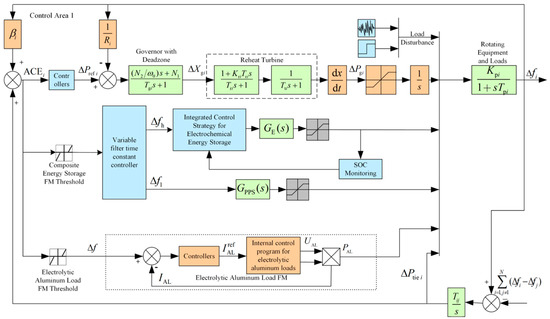
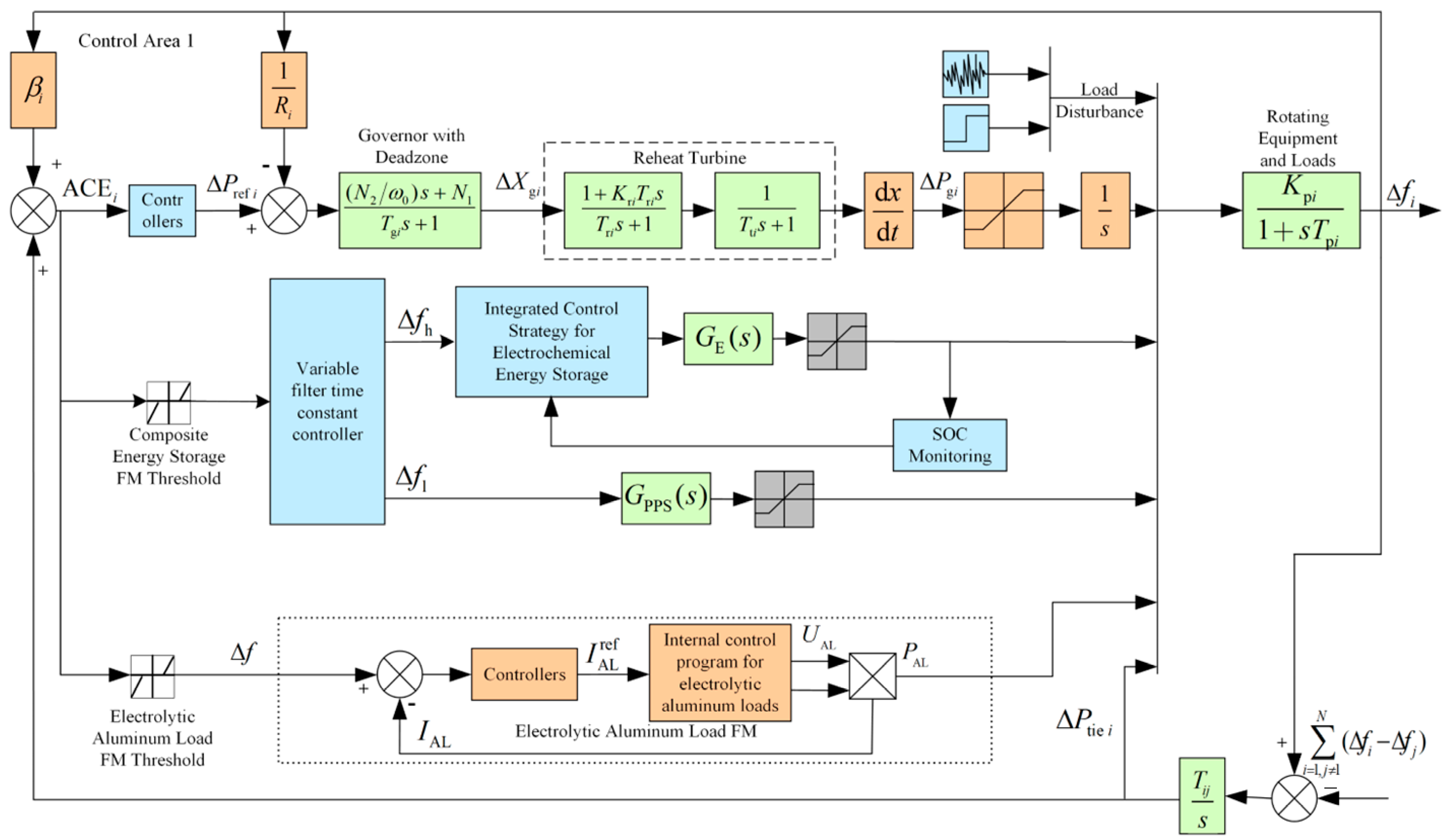
Cooperative control frequency response model of composite energy storage system with electrolytic aluminum load.
Second, the modulation depth constraint is expressed by mapping the calculated frequency regulation requirement to a physical power limit. In Equation (25), the control command ΔPAL,cmd is subjected to a saturation operator before execution.
5. Simulation Analysis
This paper models the frequency regulation process of a two-area system incorporating electrolytic aluminum loads and a HESS using the MATLAB/Simulink simulation platform. The architecture of this model is shown in Figure 10. The installed capacity of conventional thermal power units in the system is set to 500 MW. Area 1 is equipped with EAL and the HESS, where the EAL has an installed capacity of 306 MW, and the remaining load in the system has an installed capacity of 194 MW.
5.1. Robustness Evaluation and Optimal Parameter Determination Under Varying H and D
Before evaluating the cooperative strategy under specific disturbance scenarios, it is essential to establish the controller’s robustness against variations in system physical parameters, namely the inertia constant (H) and damping factor (D), which represent varying grid strengths. A comprehensive sensitivity analysis was conducted by varying H from 3.0 to 5.0 s (representing a transition from a low-inertia to a standard grid) and D from 0.8 to 1.2 p.u. Simultaneously, the control parameter TN0 was tested at 5 s,10 s, and 15 s to identify the optimal configuration. The system simulation parameters are shown in Table 3.
Table 3.
Simulation Parameters and Settings.
The results, summarized in Table 4, indicate that while a decrease in H or D naturally leads to larger frequency deviations, the proposed controller with TN0 = 10 s consistently yields the lowest ITAE indices and maintains the frequency nadir within a safe margin (<0.1 Hz even in low-inertia cases). In contrast, a smaller TN0 (5 s) causes excessive EES power chattering in low-damping scenarios, whereas a larger TN0 (15 s) results in sluggish recovery. Consequently, the combination of H = 5.0, D = 1.0, and TN0 = 10 s is adopted as the baseline for subsequent case studies in Section 5.2 and Section 5.3 to demonstrate more complex multi-resource coordination.
Table 4.
Results of Parameter Sensitivity Analysis.
5.2. Analyzing the Frequency Regulation Performance of the Variable Filter Time Constant Controller
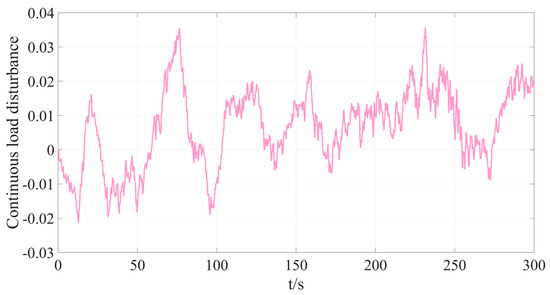
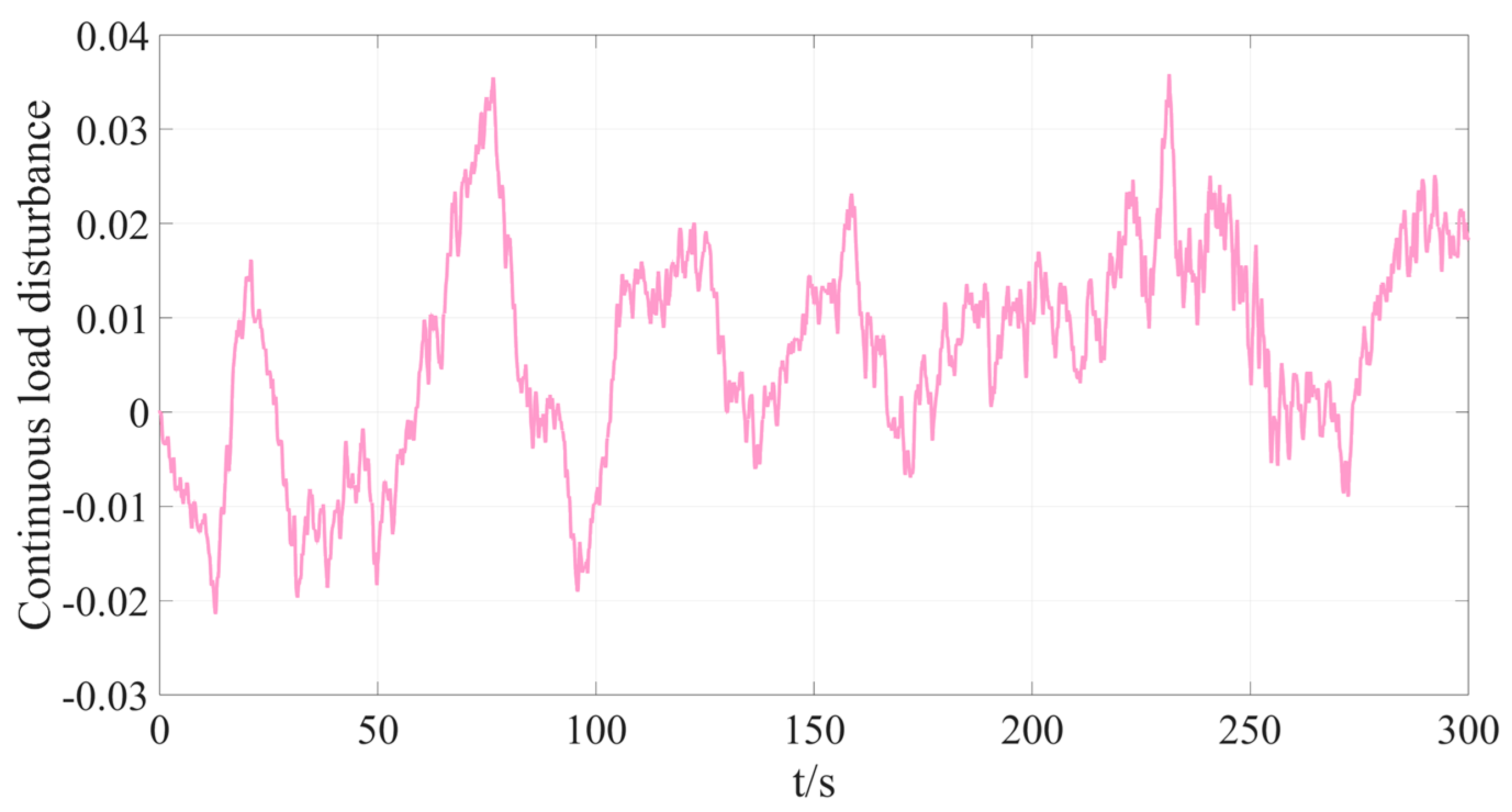
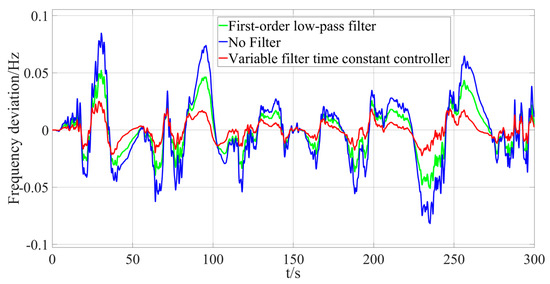
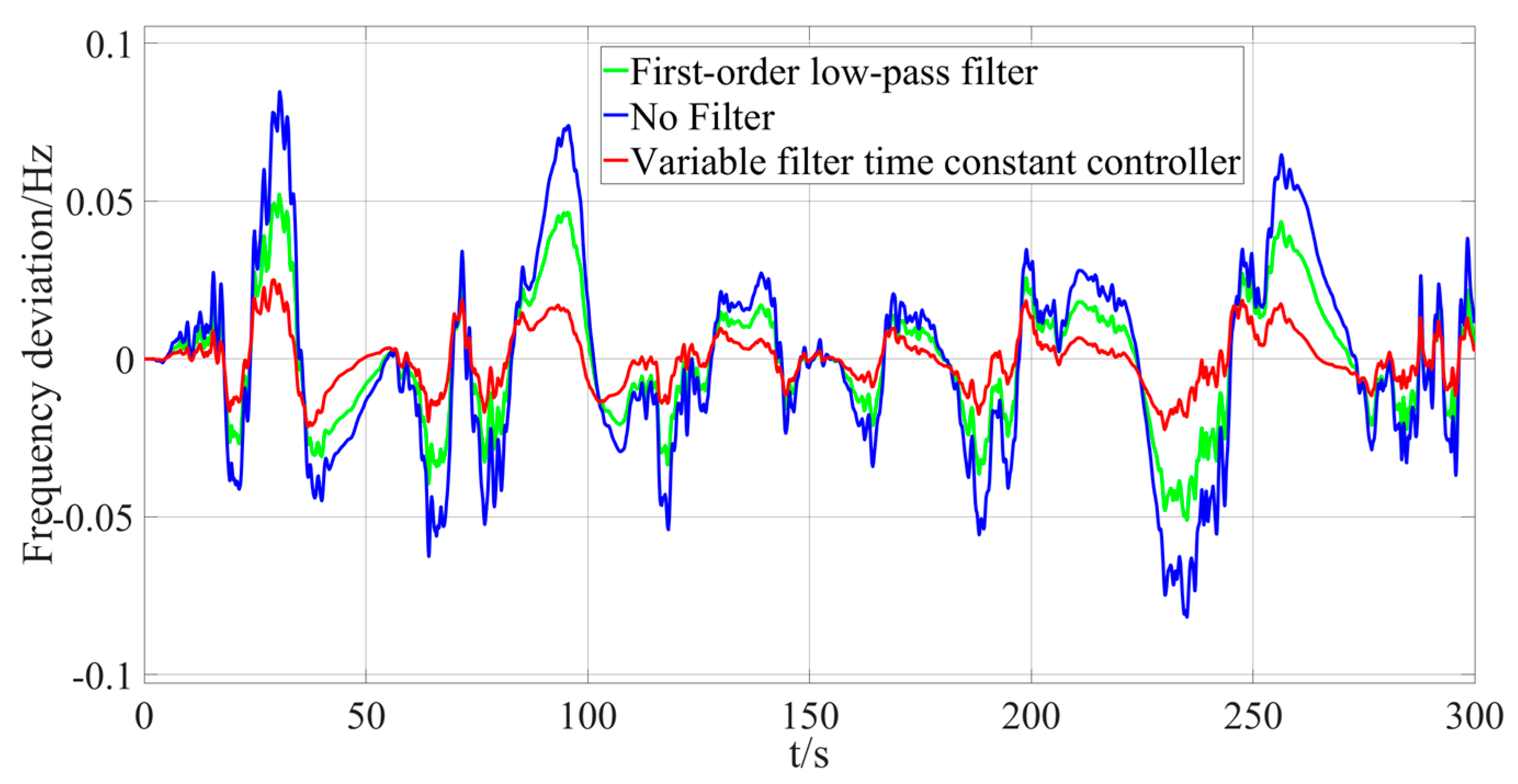
A 5 min continuous load fluctuation data segment from an actual power grid was applied as the analysis sample and introduced into the control area. In the simulation, the sampling period was set to 0.1 s, and the corresponding load disturbance profile is shown in Figure 11. To validate the effectiveness of the proposed controller, simulations were conducted under identical grid load fluctuations for three scenarios: without a filter, with a first-order low-pass filter, and with the proposed variable time constant filter. The simulation results are presented in Figure 12.
Figure 11.
Continuous disturbance of the load curve.
Figure 12.
System frequency change curve.
It is about 0.032 Hz smaller than the case without filter, and the oscillation is reduced, but the regulation time is not significantly shortened. When the system adopts the variable filter time constant controller designed in this paper, the system oscillation is smaller, the control time is also shortened, and the maximum frequency difference is reduced to 0.024 Hz, which verifies that the variable filter time constant controller has better dynamic continuous performance.
5.3. Simulation Analysis of Electrochemical Energy Storage Strategies
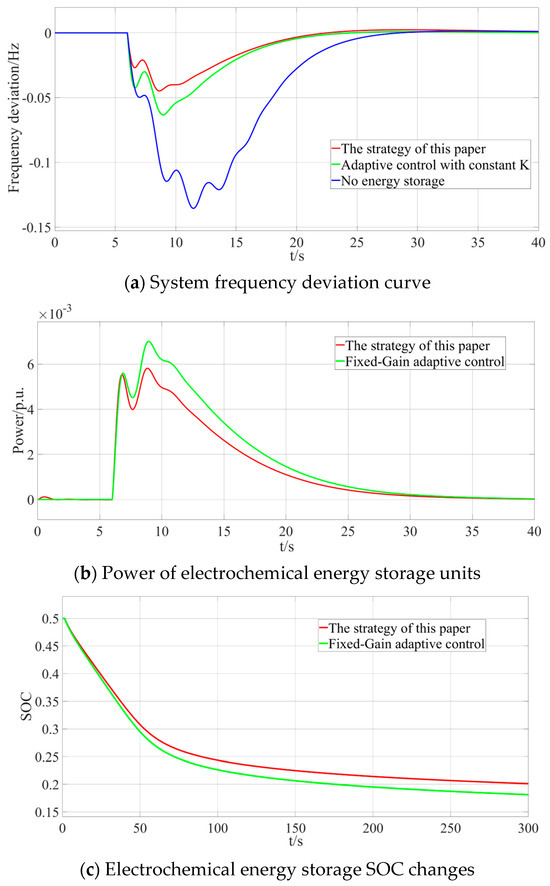
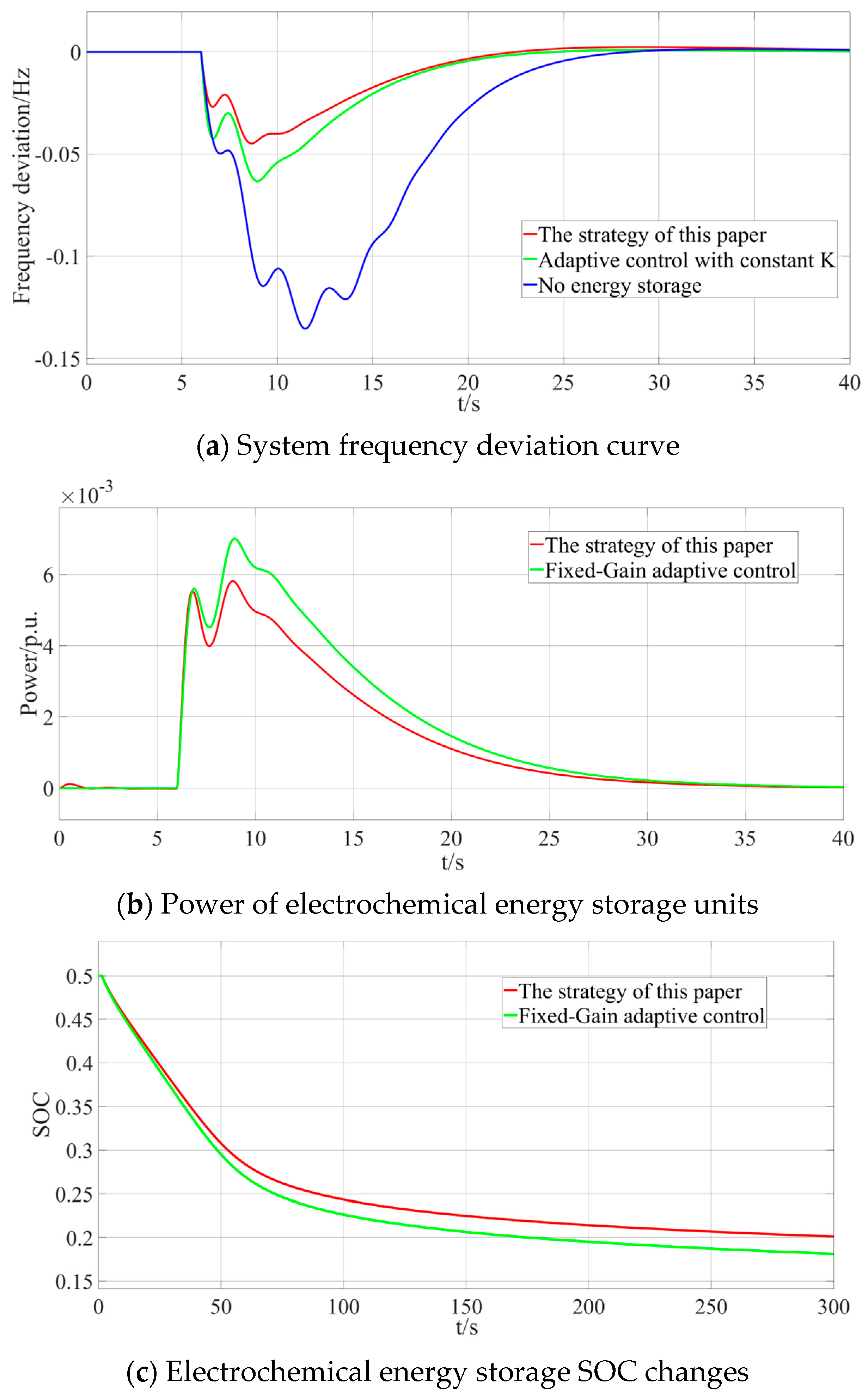
To verify the effectiveness of the electrochemical energy storage strategy proposed in this paper, the configured capacity of the electrochemical energy storage is set to 0.5 MWh and the initial SOC value is 0.5. After a sudden load increase of 0.04 p.u. at 6 s, the system enters the sub-emergency frequency regulation zone, at this time, it is necessary for the conventional unit, abandoned mine pumped storage and electrochemical storage to jointly participate in frequency regulation, and the proposed electrochemical storage frequency regulation strategy is compared with the fixed-K adaptive control and no storage, and the frequency deviation, electrochemical storage system output and its SOC change curves in the three scenarios are shown in Figure 13.
Figure 13.
Frequency deviation, output of electrochemical energy storage system and SOC change curve under step disturbance.
A step disturbance of 0.04 p.u. (20 MW) is applied at t = 6 s to evaluate the performance of the proposed EES strategy. This magnitude is specifically chosen to drive the system frequency into the ‘Sub-emergency’ regulation zone (ΔfCES < |Δf| ≤ ΔfAL) as defined in Section 4.2. In this zone, the coordination between EES and abandoned mine pumped storage (PPS) is prioritized to stabilize the grid. The disturbance occurs at t = 6 s to ensure that the simulation has reached a complete initial steady state, thereby eliminating any start-up numerical transients and allowing for an accurate assessment of the EES output and SOC recovery behavior following the ‘sudden’ power deficit.
As can be seen from Figure 13, the load surges by 0.04 p.u. at 6 s. The frequency fluctuation deviation of the system is large when relying solely on the conventional frequency regulation unit, and the maximum frequency difference reaches 0.135 Hz. When the electrochemical energy storage added to the composite energy storage system is controlled by fixed-K adaptive control, the maximum frequency deviation of the system is reduced to 0.063 Hz, whereas the system frequency deviation is limited to 0.05 Hz when the electrochemical energy storage strategy proposed in this paper is used. Meanwhile, the storage power under the proposed electrochemical energy storage strategy is reduced by 17% compared to the fixed K adaptive control, and its SOC is improved by 9.8% compared to the fixed K adaptive control, which avoids overcharging and over discharging of the electrochemical energy storage, and results in better maintenance of the SOC of the electrochemical energy storage system.
5.4. Cooperative Control Strategy Participation in Grid Frequency Control Performance Analysis
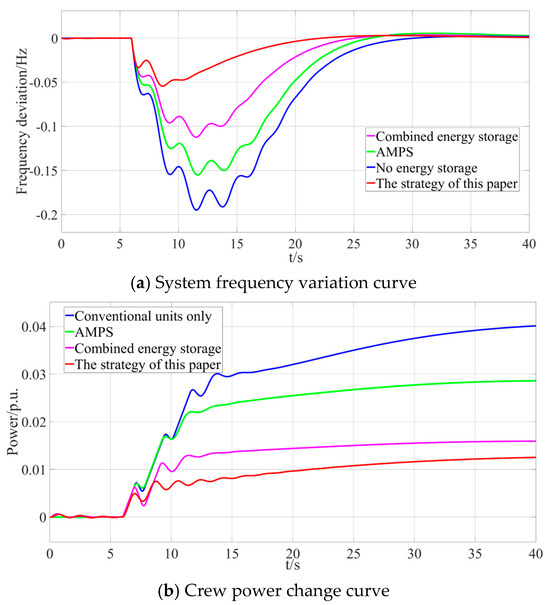
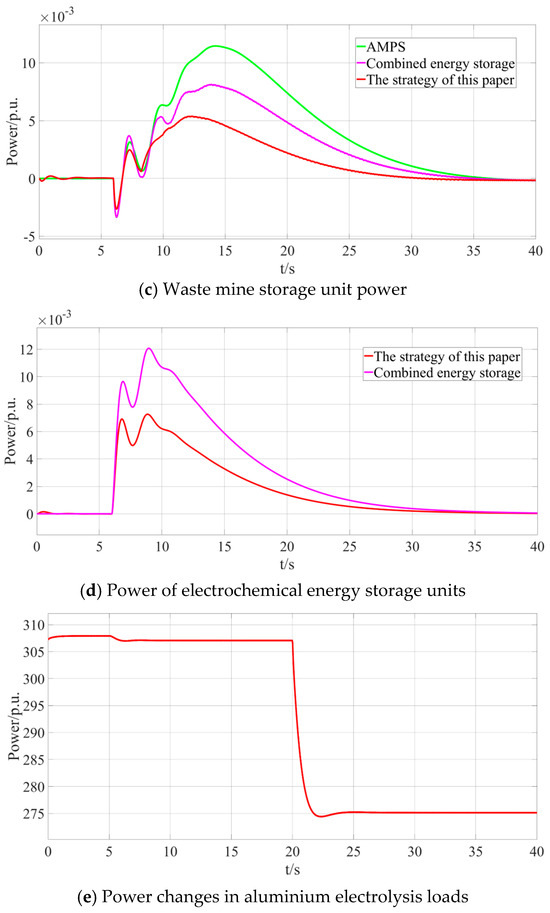
Assuming that the grid is initially under normal operation, the load increases suddenly by 0.05 p.u. at 6 s. At this time, the system is in the emergency regulation zone due to excessive load increment, which requires the joint participation of conventional thermal power units, abandoned mine pumped storage power stations, electrochemical energy storage and electrolytic aluminium loads in frequency regulation, and the simulation results are shown in Figure 14.
Figure 14.
Simulation results under step disturbance.
As shown in Figure 14, the maximum frequency difference is 0.195 Hz when relying on the conventional frequency regulation unit alone in emergency situations. Under the two scenarios of relying only on waste mine pumped storage for frequency regulation and using composite energy storage for frequency regulation, the maximum frequency difference is reduced to 0.155 Hz and 0.112 Hz, respectively, which significantly improves the frequency regulation performance compared with that when only the conventional unit is used for frequency regulation, and the value of the maximum frequency difference is further reduced to 0.054 Hz after adopting the method proposed in this paper. At the same time, the method proposed in this paper can reduce the depth of action of the waste mine pumped storage and electrochemical energy storage compared to conventional methods and relying on a single frequency regulation source. In the strategy proposed in this paper, the power of the aluminium electrolytic load is reduced from 306 MW to 297 MW, releasing 9 MW of active power, and under the action of the aluminium electrolytic load, the tailings pumped storage plant and the electrochemical storage have a faster response and a smaller depth of action, which reduces mechanical wear of the tailings pumped storage plant, avoids overcharging or over discharging of the electrochemical storage, and extends their life.
To evaluate the performance more comprehensively, standard control indices are reported, including settling time (ts, defined as the time to enter and remain within ±0.02 Hz), overshoot (Mp), the Integral of Time-weighted Absolute Error (ITAE), SOC operational range, and the peak power action of the abandoned mine pumped storage (PPS) unit.
Table 5 summarizes the comparative indices for four scenarios under a 0.05 p.u. step disturbance. The proposed strategy achieves the lowest ITAE (3.42), which is 65.5% lower than the PPS-only case, indicating superior cumulative error suppression. Furthermore, by coordinating with the aluminum load, the peak power demand on PPS is reduced by 31.1% (from 0.045 p.u. to 0.031 p.u.), effectively alleviating mechanical fatigue. The EES unit also maintains a healthy SOC within a narrow range of [0.482, 0.500], ensuring device longevity while achieving rapid frequency restoration within 18.2 s.
Table 5.
Comparison of Performance Indices Under Step Disturbance.
6. Conclusions
In this paper, a symmetrical cooperative frequency control strategy integrating electrolytic aluminum loads and a HESS is proposed and validated. The main quantitative findings are as follows:
(1) Under a severe 0.05 p.u. step disturbance, the proposed strategy reduces the maximum frequency deviation from 0.198 Hz to 0.054 Hz, achieving a 72.7% improvement in frequency nadir suppression compared to conventional thermal-only regulation.
(2) The settling time of the grid frequency is shortened by approximately 59.5%, and the frequency recovery slope is significantly enhanced, mitigating the risks of large-scale renewable energy disconnection triggered by high RoCoF.
(3) The collaborative logic maintains the State of Charge (SOC) of the electrochemical storage within a narrow and safe range of [0.482, 0.505], effectively preventing over-discharge and extending device longevity while ensuring sufficient reserve capacity.
(4) The ACE-based zoning approach ensures a tiered response where EA loads and pumped storage are activated only during high-stress contingencies, optimizing the utilization of flexible resources.
It should be clarified that the simulation model developed in this study is based on System Frequency Response (SFR) transfer functions. While this lumped-parameter modeling approach is highly efficient and widely accepted for evaluating secondary frequency regulation and mid-to-long term dynamics, it presents certain limitations:
The SFR model assumes a uniform frequency across the entire power grid, thereby neglecting the spatial frequency distribution and inter-area oscillations found in large-scale multi-area interconnected systems.
The use of transfer functions simplifies the high-order nonlinear switching characteristics of power electronic interfaces and the complex electromagnetic transient processes within synchronous generators. Future work will aim to validate the proposed cooperative strategy within a more detailed electromagnetic transient (EMT) framework and multi-node network topologies to account for these localized variations.
With the new power system and “carbon peaking and carbon neutrality” goals of continuous promotion, the grid frequency stability problem is becoming more and more prominent, this paper only from the theoretical level to consider the electrolytic aluminium load, abandoned mine pumping station and electrochemical energy storage and other resources to participate in the grid secondary frequency regulation, in order to ensure that the composite energy storage and electrolytic aluminium loads to participate in the frequency regulation auxiliary services market, the composite energy storage optimal capacity allocation, relevant government policies and operation mechanisms still need to be further studied [29,30].
Author Contributions
W.T., Conceptualization, validation; writing—original draft preparation; X.L., validation; writing—original draft preparation, formal analysis; Y.L., validation, writing—original draft preparation; X.M., investigation, funding acquisition; Z.S., investigation, writing—original draft preparation; H.Y., writing—original draft preparation; G.L., writing—original draft preparation; Z.L., funding acquisition, writing—original draft preparation. All authors have read and agreed to the published version of the manuscript.
Funding
This research received no external funding by the National Natural Science Foundation of China (No. 52277104); Science and Technology Project of China Southern Power Grid Co., Ltd. (No. YNKJXM20230453); Yunnan Major Scientific and Technological Projects (No. 202402AF080006); Yunnan Fundamental Research Projects (No. 202301AT070455).
Data Availability Statement
All data supporting the findings of this study are included within the article. The original results presented here are fully contained in this publication, and any further inquiries may be directed to the corresponding author.
Conflicts of Interest
Weiye Teng and Xi Mo were employed by the company “Yunnan Electric Power Dispatching Control Center”. The authors declare that this study received funding from Science and Technology Project of China Southern Power Grid Co., Ltd. (No. YN-KJXM20230453). The funder had the following involvement with the study: Conceptualization; Writing—original draft.
Abbreviations
The following abbreviations are used in this manuscript:
| SOC | State of Charge |
| ACE | Area control error |
| HESS | Hybrid Energy Storage System |
| ESS | Energy Storage System |
| EES | Electrochemical Energy Storage |
| EAL | Electrolytic aluminum load |
| AMPS | Abandoned mine pumped storage |
References
- Li, X.; Li, Y.; Tan, Q.; Zhang, S. Bi-objective robust dispatch model for virtual power plant with security-economy-green equilibrium in the new-type power system. Energy Convers. Manag. 2025, 344, 120253. [Google Scholar] [CrossRef] [Scilit]
- National Energy Administration. A Blue Book on the Development of the New Power System [EB]. 2 June 2023. Available online: http://www.nea.gov.cn/2023-06/02/c_1310724249.htm (accessed on 2 June 2023).
- Hu, J.; Liu, X.; Shahidehpour, M.; Xia, S. Optimal Operation of Energy Hubs With Large-Scale Distributed Energy Resources for Distribution Network Congestion Management. IEEE Trans. Sustain. Energy 2021, 12, 1755–1765. [Google Scholar] [CrossRef] [Scilit]
- Wang, J.; Du, W.; Yang, D.; Liu, G.; Chen, H. An Optimal Scheduling Method of Virtual Power Plant Cluster Considering Generation-grid-load-storage Coordination. In Proceedings of the 2021 6th Asia Conference on Power and Electrical Engineering (ACPEE), Chongqing, China, 8–11 April 2021; pp. 1048–1052. [Google Scholar]
- Shi, L.; Lao, W.; Wu, F.; Zheng, T.; Lee, K.Y. Frequency Regulation Control and Parameter Optimization of Doubly-Fed Induction Machine Pumped Storage Hydro Unit. IEEE Access 2022, 10, 102586–102598. [Google Scholar] [CrossRef] [Scilit]
- Wu, X.; Shang, W.; Ma, Z.; Teng, W.; Zhang, S.; Luo, H. Coordinated control method for pumped and flywheel hybrid energy storage system. Energy Storage Sci. Technol. 2023, 12, 468–476. [Google Scholar]
- Ren, Y.; Sun, K.; Zhang, K.; Han, Y.; Zhang, H.; Wang, M.; Jing, X.; Mo, J.; Zou, W.; Xing, X. Optimization of the capacity configuration of an abandoned mine pumped storage/wind/photovoltaic integrated system. Appl. Energy 2024, 374, 124089. [Google Scholar] [CrossRef] [Scilit]
- Xie, H.; Hou, Z.; Gao, F.; Zhou, L.; Gao, Y.N. A new technology of pumped-storage power in underground coal mine: Principles, present situation and future. J. China Coal Soc. 2015, 40, 965–972. [Google Scholar]
- Zhong, R.; Teng, S.; Liang, R.; Shen, X. Research on Frequency Elasticity Enhancement Method of Mining Area Power Grid Based on Hybrid Energy Storage System. Power Syst. Technol. 2019, 43, 2291–2298. [Google Scholar]
- Li, T.; Gu, D.; Li, J.; Dong, B.; Liu, S. Construction of pumped storage peak shaving system for mine water based on abandoned coal mine goaf. Coal Sci. Technol. 2018, 46, 93–98. [Google Scholar]
- Liang, Z.; Li, M.; Zhou, M.; Gao, B.; Chen, F. Optimal scheduling strategy for PV-abandoned mine pumped storage-battery hybrid power generation system for PV energy consumption. Sci. Technol. Rev. 2021, 39, 52–58. [Google Scholar]
- Li, C.; Yang, Y.; Mao, X.; Xiong, X.; Dragicevic, T. Modeling, control and stabilization of virtual synchronous generator in future power electronics-dominated power systems: A survey of challenges, advances, and future trends. Int. J. Electr. Power Energy Syst. 2025, 171, 111001. [Google Scholar] [CrossRef] [Scilit]
- Yang, D.-Q.; Li, M.-J.; Ma, T.; Ni, J.-W.; Han, Z.-Y. Study on adaptive VSG parameters and SOC control strategy for PV-HESS primary frequency regulation. Energy 2025, 314, 133909. [Google Scholar] [CrossRef] [Scilit]
- Papageorgiou, P.G.; Oureilidis, K.O.; Christoforidis, G.C. Adaptive frequency regulation in a low-inertia low-voltage AC microgrid with multiple hybrid storage systems and photovoltaics. Sustain. Energy Grids Netw. 2025, 44, 102040. [Google Scholar] [CrossRef] [Scilit]
- Al-Kaoaz, H.N.A.; Alsammak, A.N.B. Utilizing hybrid renewable energy systems for enhancing transient stability in power grids: A comprehensive review. J. Eur. Des Syst. Autom. 2023, 56, 687–696. [Google Scholar] [CrossRef] [Scilit]
- Guo, X.; Wang, C.; Qian, W. A Review of Equalization Methods for Battery Energy Storage System. Trans. China Electrotech. Soc. 2024, 39, 4204–4225. [Google Scholar]
- National Energy Administration. Transcript of the National Energy Administration’s Press Conference in the First Quarter of 2024 [EB/OL]. 25 January 2024. Available online: https://www.nea.gov.cn/2024-01/25/c_1310762019.htm (accessed on 6 May 2024).
- Zhang, S.; Li, P.; Zhang, Y.; Liu, X. Secondary Frequency Modulation Strategy of Composite Energy Storage Based on Variable Filter Time Constant and Fuzzy Control. J. Shanghai Jiaotong Univ. 2025, 59, 1370–1382. [Google Scholar]
- Liu, J.; Zhu, S.; Liu, P.; Wu, P. Coordinated control strategy for wind turbine and energy storage equipment considering system frequency safety and stability constraints. Power Syst. Prot. Control 2024, 52, 73–84. [Google Scholar]
- Zhu, F.; Zhou, X.; Zhang, Y.; Xu, D.; Fu, J. A load frequency control strategy based on disturbance reconstruction for multi-area interconnected power system with hybrid energy storage system. Energy Rep. 2021, 7, 8849–8857. [Google Scholar] [CrossRef] [Scilit]
- Feng, Z.; Li, S.; Zhu, S.; Li, Z.; Bai, X. Frequency Regulation Signal Reduction Methods for Aluminum Smelters. J. Syst. Simul. 2020, 32, 2332–2340. [Google Scholar]
- Su, H.; Yang, S.; Duan, M.; Yang, Y. Sources-grid-load Cooperative Secondary Frequency Control Under Aluminum Smelter Loads Response. J. Harbin Univ. Sci. Technol. 2023, 28, 46–56. [Google Scholar]
- Liao, S.; Zhang, M.; Xu, J.; Li, J.; Wang, Y.; Ke, D.; Sun, Y.; Yu, J. Frequency Stability Control Method for Electrolytic Aluminum Participation in Power Grid Considering the Static Voltage Stability Constraints. Proc. CSEE 2022, 42, 6727–6740. [Google Scholar]
- Jiang, H.; Lin, J.; Song, Y. MPC-Based Frequency Control With Demand-Side Participation: A Case Study in an Isolated Wind-Aluminum Power System. IEEE Trans. Power Syst. 2015, 30, 3327–3337. [Google Scholar] [CrossRef] [Scilit]
- Yang, Y.; Yan, H.; Wang, J.; Liu, W.; Yan, Z. System Optimization Scheduling Considering the Full Process of Electrolytic Aluminum Production and the Integration of Thermal Power and Energy Storage. Energies 2025, 18, 598. [Google Scholar] [CrossRef] [Scilit]
- Wen, Z.; Jiang, P.; Song, Z.; Li, L.; Jiang, Y.; Liang, T. Development status and progress of pumped storage in underground space of closed/abandoned mines. J. China Coal Soc. 2024, 49, 1358–1374. [Google Scholar]
- Gao, X.; Yuan, Z. Development of the underground reservoirs of pumped-storage hydropower and key hydraulics issues. J. Hydraul. Eng. 2023, 54, 1058–1069. [Google Scholar]
- Bao, P.; Wen, Z.; Cheng, D.; Liu, M. Hierarchical control of aluminum smelter loads for primary frequency support considering control cost. Int. J. Electr. Power Energy Syst. 2020, 122, 106202. [Google Scholar] [CrossRef] [Scilit]
- Huang, X.; Ge, S.; Yu, K. Power Loss Reduction Analysis Based on Load Features of Electrolytic Aluminum. Power Syst. Clean Energy 2017, 33, 77–81. [Google Scholar]
- Fang, F.; Liu, Y.; Wang, B. Optimal Load Allocation Strategy of Flywheel-Thermal Power Coordinated Secondary Frequency Regulation Based on Non-dominated Sorting Genetic Algorithm-II. Autom. Electr. Power Syst. 2024, 48, 79–88. [Google Scholar]



Disclaimer/Publisher’s Note: The statements, opinions and data contained in all publications are solely those of the individual author(s) and contributor(s) and not of MDPI and/or the editor(s). MDPI and/or the editor(s) disclaim responsibility for any injury to people or property resulting from any ideas, methods, instructions or products referred to in the content. |
© 2026 by the authors. Licensee MDPI, Basel, Switzerland. This article is an open access article distributed under the terms and conditions of the Creative Commons Attribution (CC BY) license.