Article

A Study on the Spatio-Temporal Evolution Characteristics of Social Development Levels in China

1
Institute of Geographic Sciences and Natural Resources Research, Chinese Academy of Sciences, Beijing 100101, China
2
University of Chinese Academy of Sciences, Beijing 100049, China
3
School of Public Policy and Management, University of Chinese Academy of Sciences, Beijing 100049, China
*
Author to whom correspondence should be addressed.
Land 2024, 13(5), 565; https://doi.org/10.3390/land13050565
Submission received: 25 March 2024 / Revised: 16 April 2024 / Accepted: 18 April 2024 / Published: 23 April 2024

Abstract

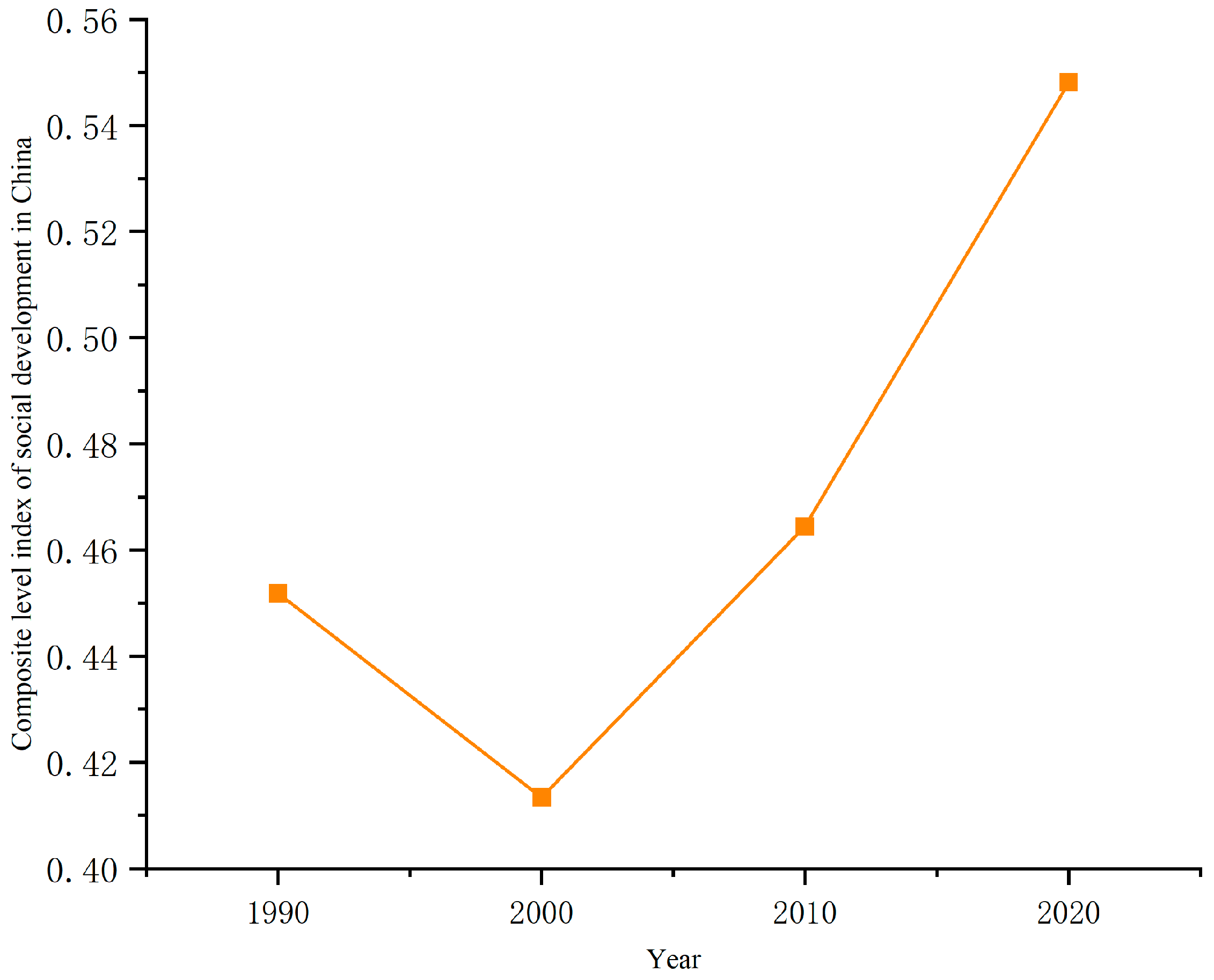
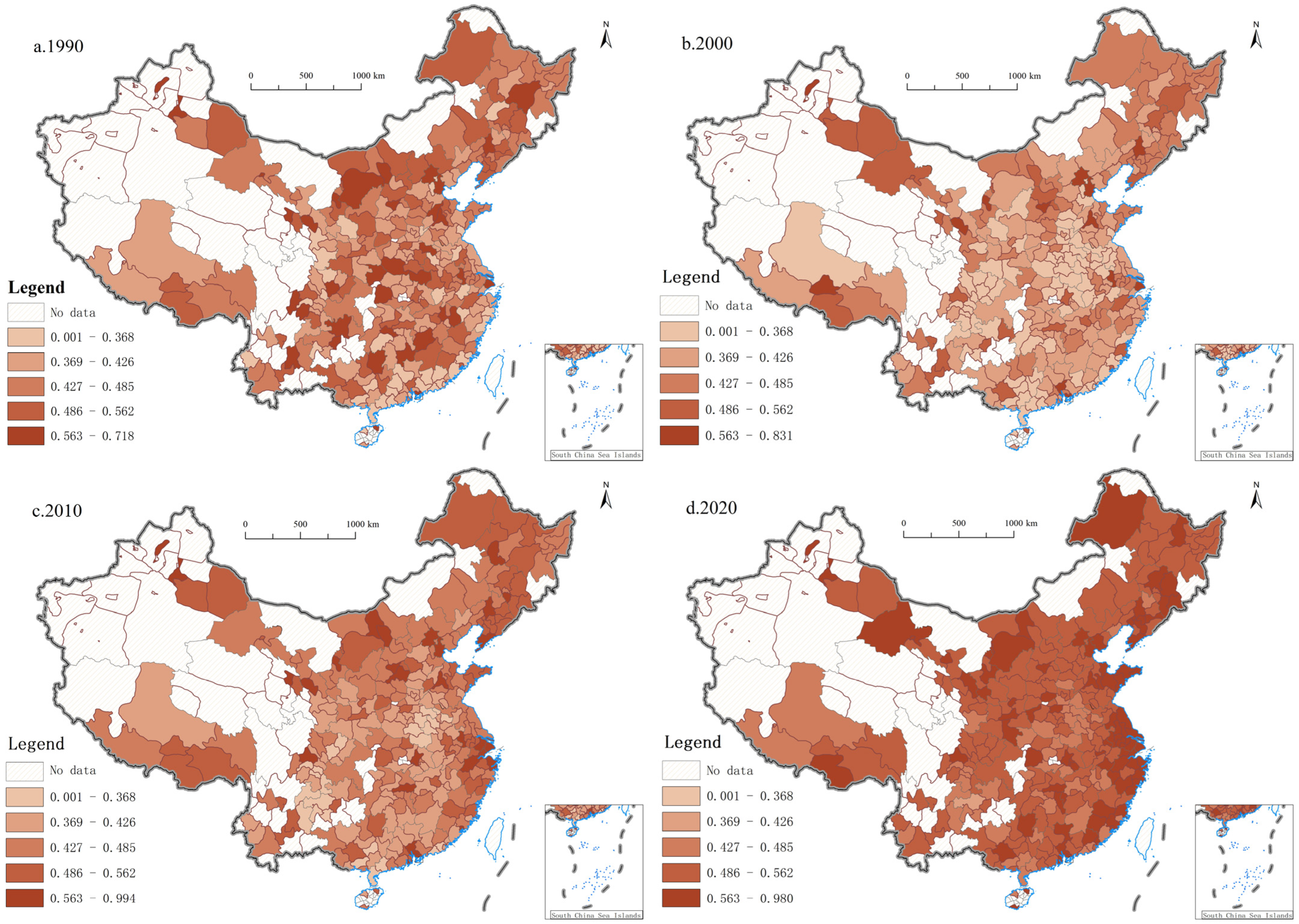
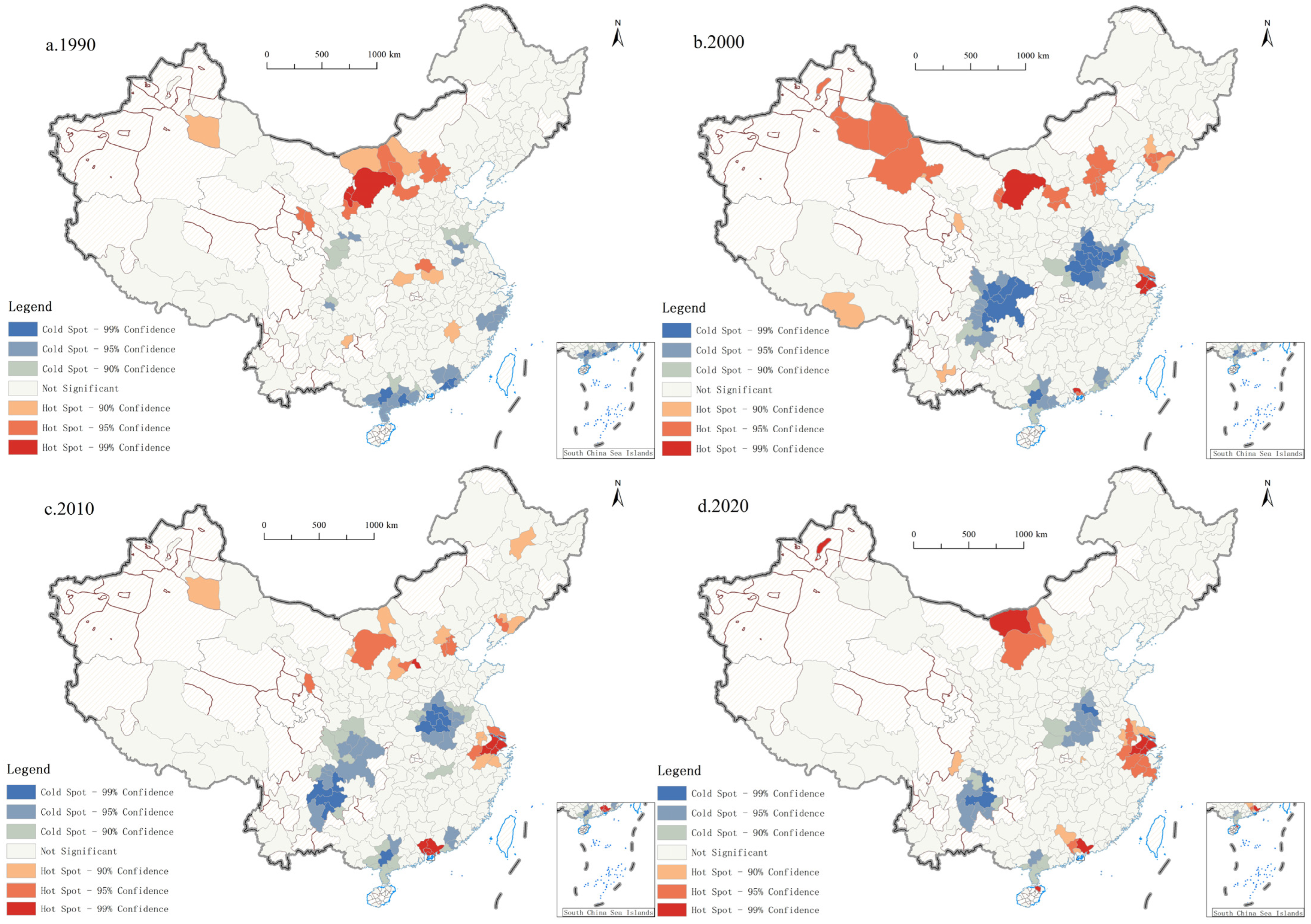
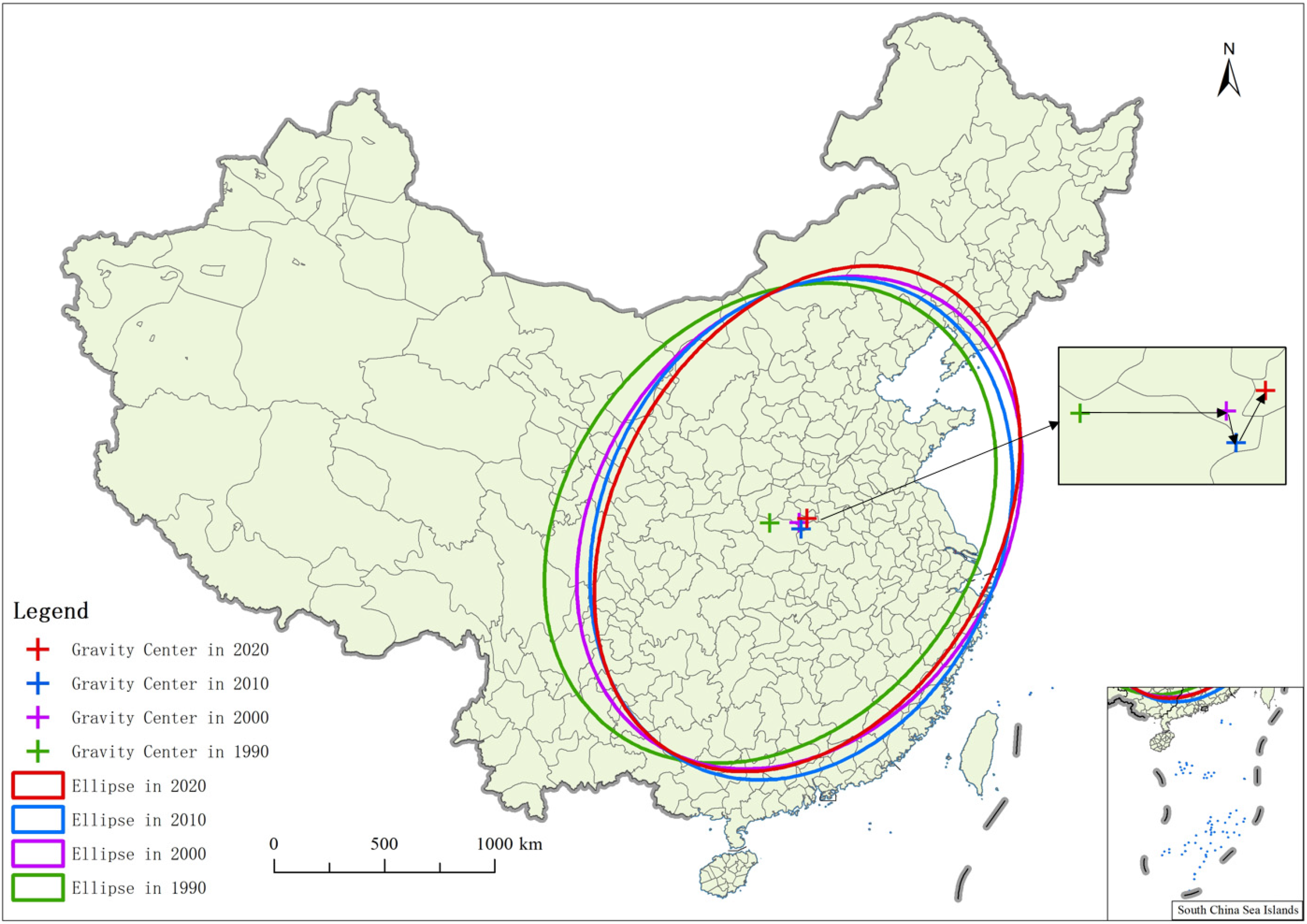
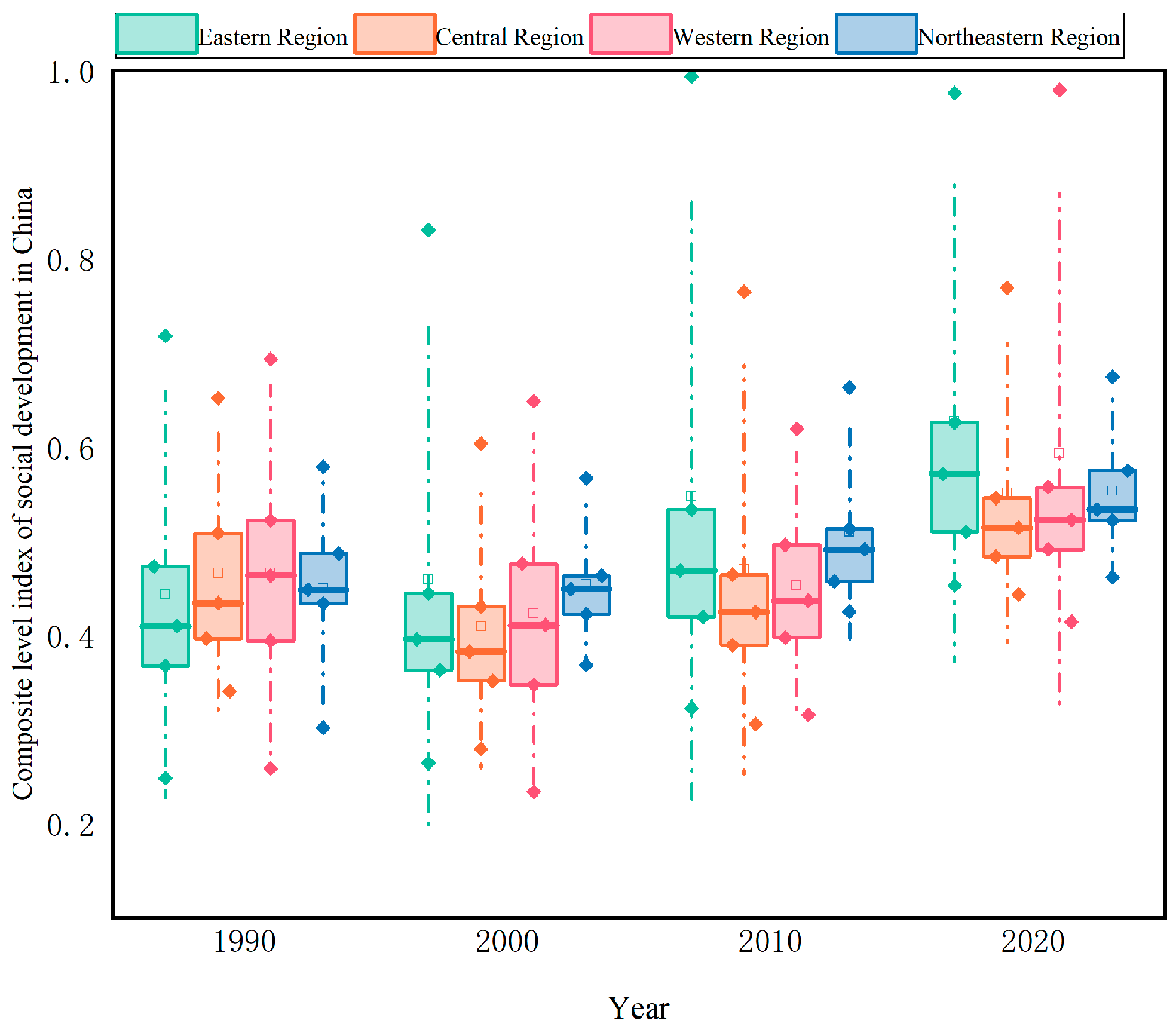
With the increase in regional economic development disparities, a regional coordinated development strategy is put forward that prioritizes human welfare and holistic social progress over a purely materialistic growth model. To address the challenges of balanced regional development, this paper has developed a multidimensional assessment framework of social development encompassing education, healthcare, culture, and social security. Using the entropy weight TOPSIS method, this study measures the social development level across 296 Chinese prefecture-level cities from 1990 to 2020. It explores the spatio-temporal evolution characteristics of China’s social development level through the Dagum Gini coefficient decomposition method and exploratory spatial data analysis. The results indicate that (1) the level of social development in China exhibits a fluctuating upward trend over the time series, showing a phase-wise pattern of decline–rise–rise; (2) there is a clear heterogeneity in the level of social development, with a general hierarchy of Eastern, Northeastern, Western, and Central regions in terms of social development; (3) spatially, China’s social development level has evolved from a patchy distribution in 1990 to a clustered distribution around urban agglomerations by 2020, with pronounced characteristics of spatial imbalance; (4) the level of social development in China displays varying degrees of spatial clustering, with this trend intensifying over time; and (5) over the period 1990–2020, the overall disparity in China’s social development level presents a fluctuating trend, with a notable reduction after an initial increase, and regional disparities following the order of Central, Western, Eastern, and Northeastern regions. This research offers valuable insights for policymakers and scholars seeking to understand and enhance China’s social development landscape.
Keywords: social development level; spatio-temporal evolution; spatial agglomeration; regional disparities; balanced development social development level; spatio-temporal evolution; spatial agglomeration; regional disparities; balanced development