You are currently viewing a new version of our website. To view the old version click .
Land
  • Article
  • Open Access

8 December 2025

Spatiotemporal Impact of Metro on Land Use Types and Development Intensity

,
,
,
and
1
School of Architecture and Urban Planning, Chongqing University, Chongqing 400030, China
2
Guangzhou Urban Planning & Design Survey Research Institute Co., Ltd., Guangzhou 510060, China
3
College of Construction Engineering, Guizhou Polytechnic of Construction, Guiyang 550000, China
4
Wuhan Natural Resources Conservation and Utilization Center, Wuhan 430014, China
This article belongs to the Special Issue A Livable City: Rational Land Use and Sustainable Urban Space (Second Edition)

Abstract

The metro system is a key driver of urban land use development; however, its spatiotemporal impact mechanisms remain insufficiently understood. This study investigates the effects of metro development on land use types and development intensity in Wuhan, China, from 2014 to 2019, and employs a Geographically and Temporally Weighted Regression (GTWR) model to capture the spatiotemporal heterogeneity of these impacts. Results show that metro construction significantly promotes land use transformation along metro lines, especially from non-construction land to residential and commercial uses, while also increasing development intensity. GTWR analysis further reveals that metro network characteristics, station attributes, and built environment features surrounding stations strongly influence land development. These impacts exhibit pronounced spatiotemporal heterogeneity, becoming more pronounced over time as the metro network extends into suburban areas. The findings provide valuable insights for urban and transportation planners, supporting the formulation of strategies for integrated land use development and metro network expansion.

1. Introduction

The metro exerts a broad, far-reaching, and long-lasting influence on urban land use. This is primarily due to the substantial improvement in accessibility and land value around stations brought about by metro construction, which facilitates land development along metro lines [1], often leading to high levels of land intensification [2]. Since the 1980s, in response to the negative impacts of traffic congestion, air pollution, and urban sprawl associated with rapid urbanization [3], there has been growing recognition that, under the dual constraints of resource limitations and environmental sustainability, metro systems serve as a critical foundation for the spatial expansion of large cities and for promoting sustainable urban development [4]. As a result, the metro has assumed an increasingly prominent and influential role in shaping urban land use patterns.
Numerous studies have consistently demonstrated the relationship between metro systems and urban land use [5,6]. Classical location theory posits that metro construction can significantly enhance regional accessibility along its route and increase surrounding land values [1]. As accessibility improves and land values rise, market mechanisms often stimulate land use development along metro lines, leading to transformations in land use types. This process has been empirically validated by several studies [7,8,9]. Additionally, the ‘density-distance’ curve offers a theoretical explanation for the variation in urban development intensity from urban centers to suburban areas, highlighting the spatial heterogeneity of land use development intensity across urban regions [10]. However, metro construction can significantly alter this pattern by enhancing land accessibility and value along metro lines, thereby exerting a notable influence on development intensity [1]. This suggests that urban development intensity is no longer solely determined by proximity to the city center, but rather by the combined effects of transit-oriented development and travel distance [11].
While numerous studies have confirmed that metro construction stimulates land development along its route and increases development intensity [12,13], they often fail to address a critical question: when and where does the metro affect land use development within the city? This issue is primarily shaped by three key factors. First, although metro systems significantly enhance regional accessibility and land values along the route, the degree of impact varies spatially due to differences in network connectivity and station characteristics [14]. This spatial heterogeneity, driven by market mechanisms, leads to uneven land use development along metro lines. Second, in most cities, urban development precedes metro construction [15]. As a result, there are significant differences in the existing built environment across different regions, which is also a crucial factor influencing land use development. Third, due to financial constraints and evolving development strategies, cities often adopt different planning orientations over time [16]. Consequently, even areas with similar metro accessibility may exhibit significant spatial and temporal differences in development outcomes. Therefore, to gain deeper insights into the mechanisms through which metro systems influence land use development, it is essential to utilize long-term panel data, combined with information on metro network characteristics, station attributes, and the surrounding built environment. Such an approach enables a more comprehensive understanding of the spatiotemporal impacts of metro systems across different urban contexts and time periods.
To address these gaps, this study focuses on Wuhan, China. By incorporating diverse sources of big data in Wuhan, such as land use data, building profile data, and points of interest (POI) data, spanning the years 2014 to 2019, we examine the spatiotemporal evolution features of land use types and development intensity along the metro lines. We then apply a Geographically and Temporally Weighted Regression (GTWR) model to explore the spatial and temporal impacts of metro network characteristics, station attributes, and the surrounding built environment on land use types and development intensity. This study makes a dual-fold contribution. Theoretically, it utilizes longitudinal data while controlling for other influencing factors, providing deeper insights into the mechanisms driving changes in land use types and development intensity along metro lines. Practically, by revealing the patterns of changes in land use types and development intensity, the findings can guide transportation and urban planning agencies in formulating effective policies for metro network expansion and land use planning, thereby promoting the coordinated development of metro systems and urban land use.

2. Literature Review

In theory, metro investments enhance the accessibility of land along metro routes, subsequently promoting land use development along these routes [17]. Location theory in urban economics posits that transportation is a key determinant of land locational advantage, which in turn influences the optimal allocation of urban land functions. Economic agents select locations that maximize their profits or utility [2,18,19]. As a result, areas with superior transportation access are more likely to be designated for commercial and other high-rent uses [20,21]. Furthermore, the construction and operation of metro systems necessitate substantial capital investments. To ensure the sustainable operation of these systems, areas surrounding metro stations often exhibit high-density development patterns [22,23]. This trend is driven by two primary factors: first, high-density development provides the critical population threshold needed to support public transit, thereby increasing fare revenue [24]. Second, in some countries, local governments can directly capture land value appreciation through land transactions surrounding metro stations. Hong Kong, for example, is renowned for its well-established “rail + real estate” development model [25,26]. Accordingly, under a well-structured land use model, land within Transit-Oriented Development (TOD) areas near metro stations is expected to be developed at higher densities [1,27]. However, existing studies has typically focused on changes in either land use type or development intensity around metro stations [2], with limited attention to their combined effects.
A growing body of research has demonstrated significant spatiotemporal heterogeneity in land use types and development intensity around different metro stations [14,28,29]. The underlying cause of this phenomenon lies in the nature of metro systems as dynamic and evolving complex network system, where stations assume different functional roles within the network [30]. Some studies have employed complex network analysis methods, introducing indicators such as betweenness centrality, closeness centrality, and global accessibility to quantify the network attributes of stations. These studies have found that stations located at the core of the metro network or those with higher accessibility tend to experience more dramatic changes in surrounding land use types and a significant increase in development intensity [14,31]. Similarly, stations functioning as transfer hubs or featuring a greater number of exits tend to have higher network connectivity and stronger linkages with surrounding areas, thereby facilitating more intensive land development [21,32]. Terminal stations, serving as boundary nodes of the network, often play key roles in traffic aggregation and dispersal. Their “gateway” effect makes them more attractive to the market, enhancing the development potential of adjacent land [33]. Furthermore, metro construction in many cities often coincides with broader urban renewal processes, making the station opening time another critical factor influencing the development intensity of surrounding land [12]. Nevertheless, some studies have also found that significant impacts on surrounding land development typically emerge only after the commencement of metro operations [34].
On the other hand, the existing built environment surrounding metro stations also plays a crucial role in shaping changes in land use types and development intensity [35]. In many cities, central areas have already undergone substantial development prior to metro construction, thereby limiting the potential for land use restructuring through the introduction of metro systems. Previous studies have found that central urban districts, due to their high commercial value and greater market attention, typically exhibit higher development intensity and are more likely to experience land use conversion toward high value-added uses such as commercial or residential functions [36]. However, the impact of metro on land use is highly dependent on land developability. Central urban areas are often saturated in terms of development, restricting the scope for further land use change. In contrast, inner suburban areas generally have more available land for development. As a result, metro construction significantly enhances land value and accessibility in these areas, thereby accelerating the transformation of land use patterns [28]. It is important to note that land development is not driven solely by economic value, but is also comprehensively influenced by factors such as population density and land use mixture, which collectively contribute to the maximization of overall benefits [14,37]. Therefore, a comprehensive understanding of the existing built environment around metro stations is essential to fully capture the effects of metro system development on surrounding land use.
In summary, while the existing literature has provided substantial evidence on the impact of the metro on land use, there is still a lack of research that comprehensively investigates the spatiotemporal heterogeneity of this impact in terms of both land use types and development intensity. Additionally, a more thorough understanding of the metro’s influence on land use development over time and across space requires the integration of metro network characteristics, station attributes, and built environment features. Therefore, this study incorporates these factors into a Geographically and Temporally Weighted Regression (GTWR) model to investigate the mechanisms through which metro systems influence land use development along their routes.

3. Research Design

3.1. Study Area

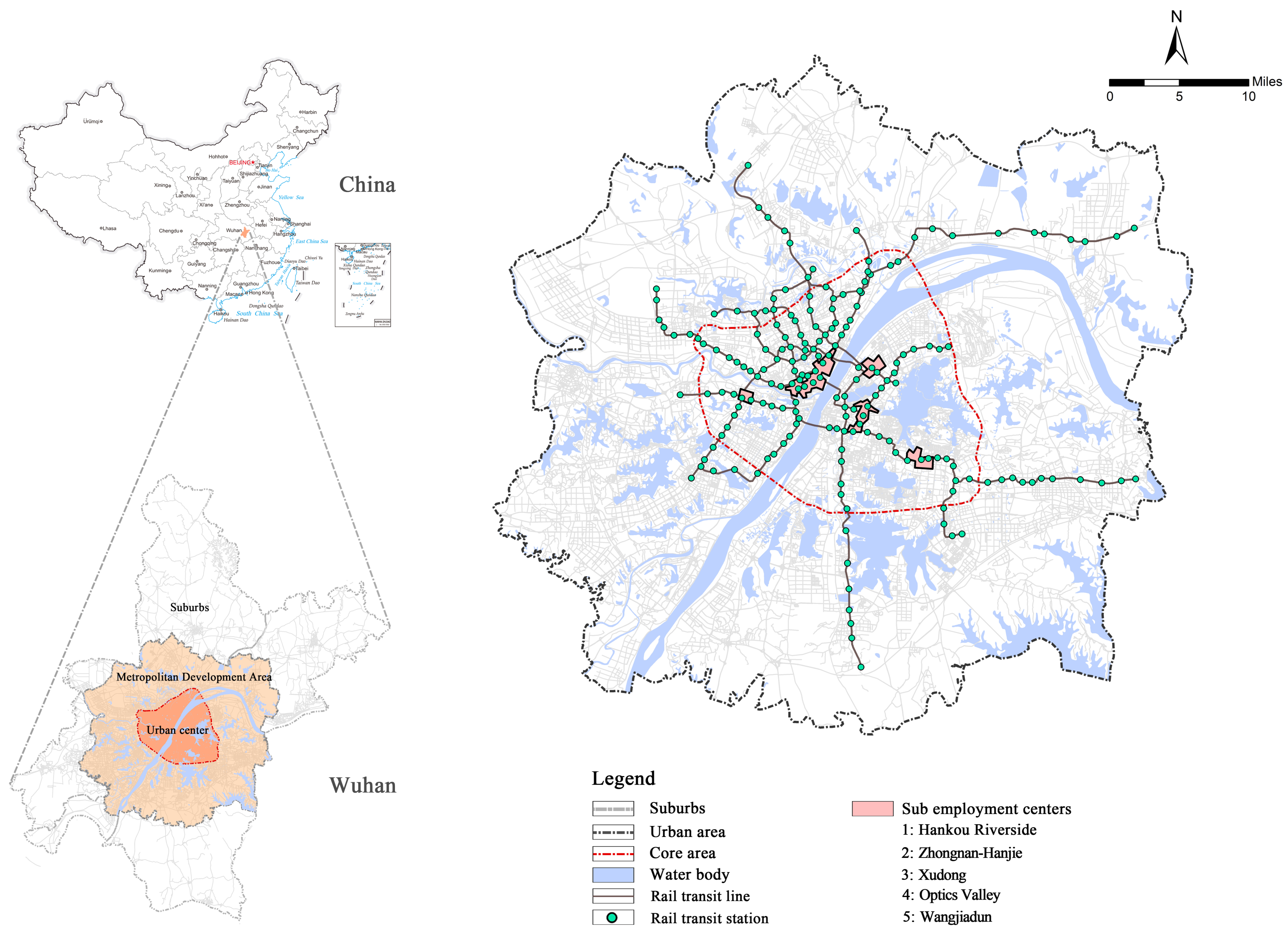
The spatial scope of this study covers the Wuhan Metropolitan Development Area (WMD), with a temporal focus on the years 2014 to 2019. Considering the impact of the COVID-19 on urban development and construction in early 2020, research beyond 2019 was not conducted. Wuhan’s urban spatial structure can be broadly delineated into the urban center, WMD, and the outer suburban district. The urban center is situated within the Third Ring Road., while the WMD has been the primary expansion zone for Wuhan in recent years. The existing metro network is in both the urban center and the WMD. In addition, Wuhan’s metro system evolved from 58 stations in 2014 to 189 stations in 2019 (transfer stations are not counted repeatedly), marking a historic shift from a “H”-shaped structure to a networked structure. Similar to other cities [38], the continuous improvement of the metro network has played a pivotal role in stimulating land-use development along transit corridors and has supported Wuhan’s gradual transition from a monocentric to a more polycentric urban form, resulting in the emergence of five urban subcenters (as shown in Figure 1). The continuous improvement of the metro network has effectively stimulated land use development along the route, and metro has become a pivotal driver in shaping the new urban development pattern. In line with existing research [39], the spatial scope of this study is the 800 m buffer zone around each metro station. Given the high station density in Wuhan’s urban center area [40], these buffers already cover most of the main built-up districts, and overlapping areas are delineated using Voronoi polygons to avoid duplication.
Figure 1. Research area.

3.2. Data

We employed land use data spanning the years 2014 to 2019, sourced from the Wuhan Municipal Department of Natural Resources and Planning Management. The original data was categorized using the secondary class codes of the Chinese “Urban Land Classification and Planning Construction Land Standard” (GB 50137-2011) [41]. However, due to the excessive granularity and complexity of this coding system, it was not conducive to subsequent data statistics and analysis. Consequently, this study merged the data according to the first-level major categories outlined in the “Urban Land Classification and Planning Construction Land Standard”. Moreover, existing research has indicated that the land use properties along metro routes primarily involve a transition from other land types to residential and commercial land [36,42]. The acquired land use data often include mixed commercial and residential categories, making it impractical to discern the proportions of various land types within these mixed areas. To address this, our study calculates the combined area encompassing both residential and commercial land within the metro station’s catchment area to depict alterations in land use types within that vicinity. Furthermore, this study employs the plot ratio as a metric to quantify the intensity of land use development, which is the most commonly used indicator to represent land use development intensity.
This study focuses on exploring the temporal and spatial effects of metro development on land use. Building upon existing research [43], the independent variables considered in this study encompass three main aspects: metro network characteristics, metro station attributes, and the built environment features surrounding metro stations (Table 1). Specifically, metro network characteristics are measured using betweenness centrality, closeness centrality, and global accessibility; metro station attributes consider whether they are transfer stations, whether they are terminal stations, the count of exits, and the opening time of the metro. Built environment features are assessed using the “5Ds” framework—density, diversity, design, destination and distance. All data were collected for the years 2014–2019. Metro network data, metro station attributes data, and population distribution data were provided by the Wuhan Institute of Transportation Strategy Development, while POI data were obtained through web scraping from the Amap platform.
Table 1. Definitions and descriptive statistics of the variables.

3.3. Method and Materials

This study aims to examine the spatiotemporal impact of metro on land use types and development intensity. Given the capability of the GTWR model to capture the spatiotemporal variations in the effects of explanatory variables on the dependent variables [43], the model is employed as the primary analytical method. In addition, to validate the robustness and credibility of the empirical results, several representative stations are selected for further analysis using Wuhan’s land-use data, on-site observations of actual development conditions around the stations, and metro ridership data. The land-use data are obtained from the Wuhan Municipal Department of Natural Resources and Planning Management, the development conditions are documented through field surveys, and the ridership data are provided by the Wuhan Transport Development Research Institute.
Before employing the regression model, we conducted a VIF test on all variables. The VIF for all variables was less than 5, indicating the absence of a serious multicollinearity issue. Given that ordinary least squares (OLS) regression is the most frequently employed analytical approach in previous research examining the metro’s impact on land use, this study initially utilizes the OLS model to examine the influence of the metro on land use development. The fundamental assumption of OLS is that the residuals are random and isotropic, and its model can be formulated as follows:
y = X β + ε
where y denotes the dependent variable, X denotes the independent variable, β denotes the coefficient, and ε denotes the vector of random error terms.
However, as the regression parameters are assumed to be stable in OLS, the calculated regression coefficients do not exhibit spatial differences. Nonetheless, when addressing practical problems, sample data often display spatial heterogeneity, making it challenging to meet the assumed conditions and requirements of OLS. Moreover, because the influence of the metro on land use types and land use development intensity not only exhibits spatial heterogeneity but also temporal heterogeneity. Therefore, this study further adopts the GTWR model to investigate the impacts of metro on land use types and land use development intensity. In contrast to alternative spatiotemporal models, the GTWR model more effectively captures the spatiotemporal non-stationary relationship of the weighted function. As a temporal extension of GWR, GTWR incorporates a temporal dimension into the regression model to investigate local spatiotemporal effects [43]. The GTWR model can be formulated as follows:
y i = β 0 u i , v i , t i + k β k u i , v i , t i X i k + ε i i = 1,2 , , n
where y i represents the dependent variable of the i th metro station, X i k denotes the k th independent variable of the i th metro station, u i , v i , t i are the spatiotemporal coordinates of location i within the spatiotemporal observation, u i , v i , t i denote longitude, latitude, and time, respectively. β 0 u i , v i , t i denotes the intercept value, while β k u i , v i , t i X i k represents a set of parameter values for the i th metro station. β k u i , v i , t i X i k undergoes transformation in the spatiotemporal domain, enabling the GTWR model to capture spatiotemporal non-stationary simultaneously. Local regression coefficients of the GTWR model are estimated based on locally weighted OLS. The estimated parameters are expressed as follows:
β u i , v i , t i = X T W u i , v i , t i X 1 X T W u i , v i , t i Y
where the weighting matrix W u i , v i , t i represents the spatiotemporal weighting matrix at the spatiotemporal coordinates u i , v i , t i . In this study, the Gaussian kernel function is employed to compute the most efficient spatiotemporal weighting matrix, and it is calculated as follows:
W i j = e x p d i j S T 2 h 2
In the method of Huang et al. [43], the spatiotemporal distance is calculated as follows:
d S T = λ u i u j 2 v i v j 2 + μ t i + t j 2
where h represents a non-negative parameter that diminishes in influence as the spatiotemporal distance d i j S T between locations i and j increases. The value of W u i , v i , t i depends on the bandwidth h , and the optimal bandwidth is determined by minimizing the cross-validation value. Ultimately, this study applies the GTWR model within ArcGIS 10.7, utilizing the GTWR plug-in developed by Huang et al. [44].

4. Land Use Types and Metro Development

4.1. Analysis of Land Use Type Change Characteristics

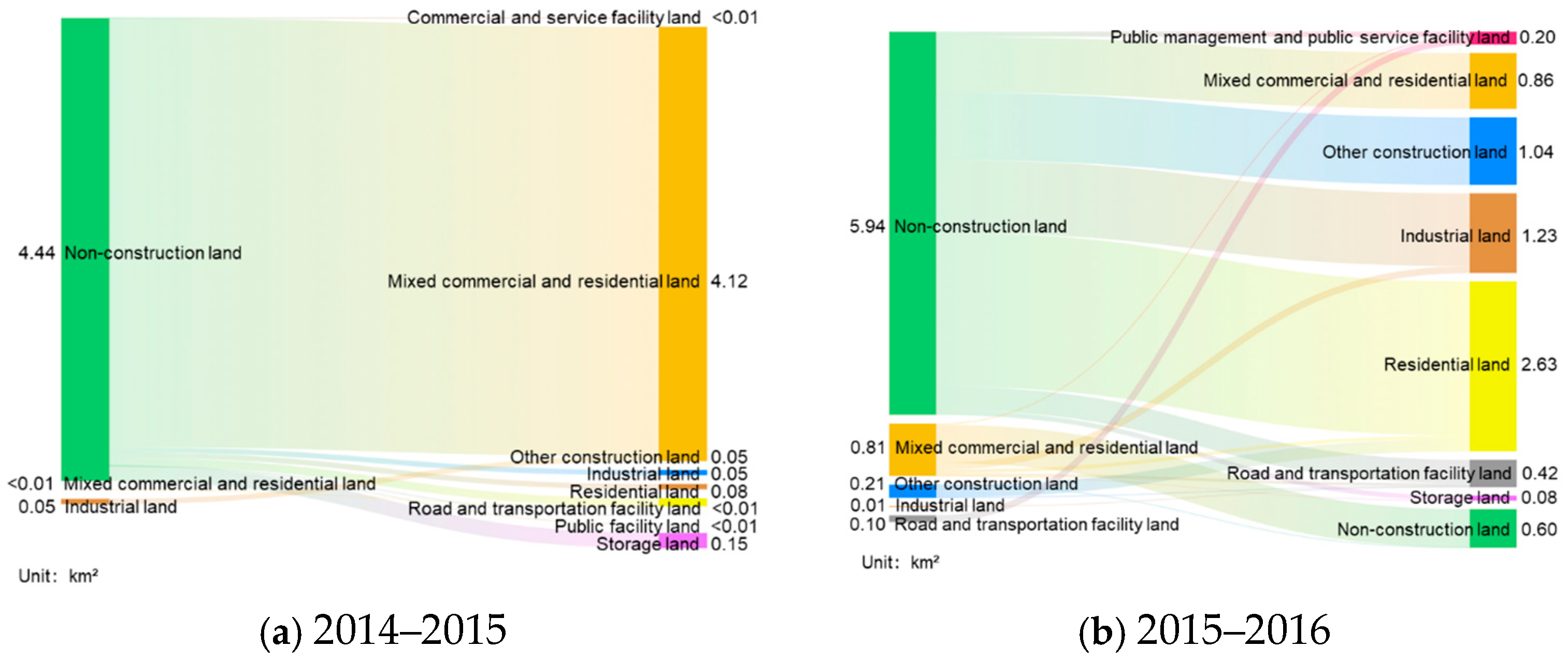
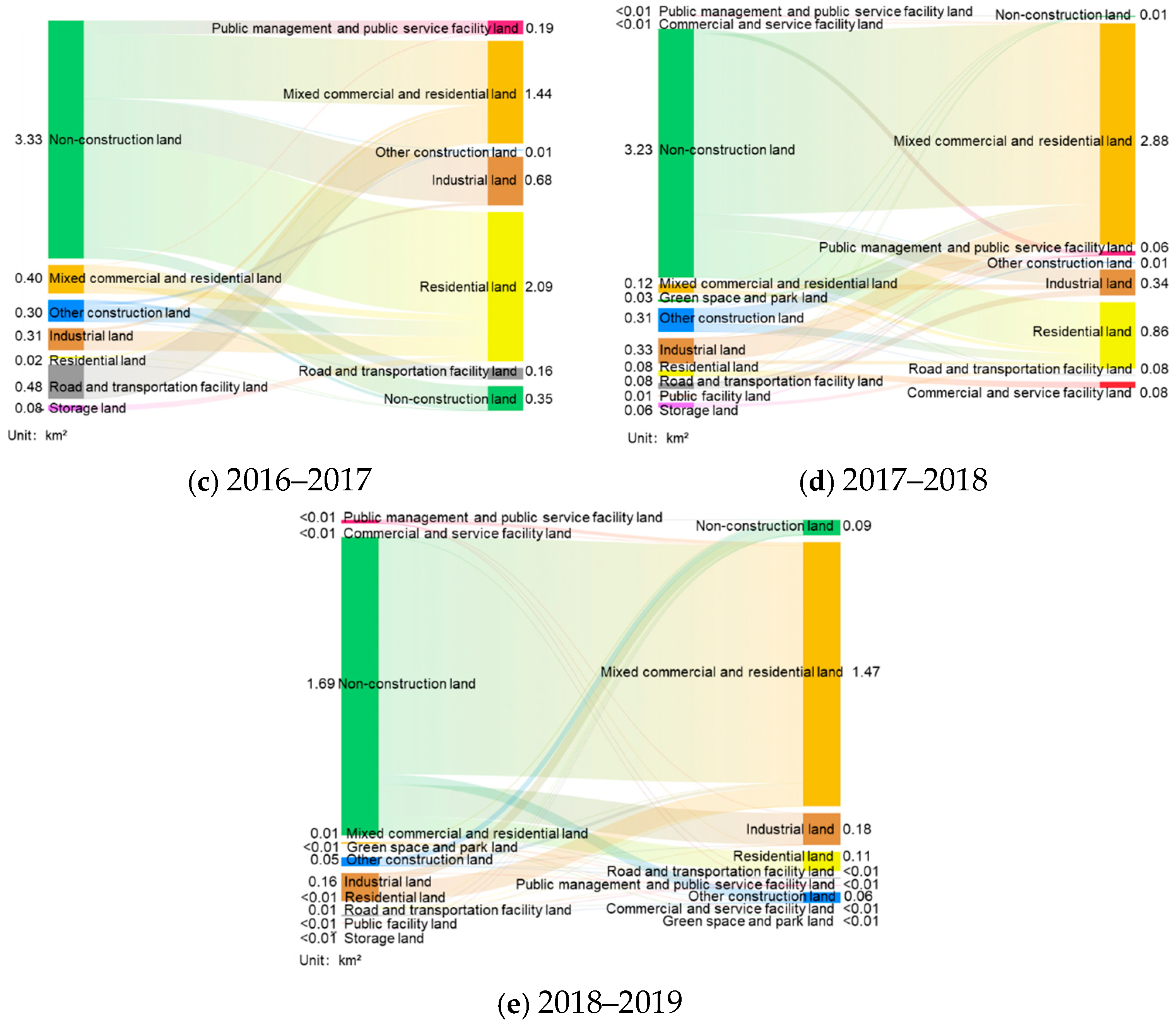
Figure 2 illustrates the transfer matrix of land use types within the metro station’s catchment area from 2014 to 2019. From the figure, it is evident that the primary source of growth for various land use types throughout the study period is the transfer out of non-construction land. The overall extent of non-construction land transferred out amounted to 18.64 km2, constituting 82.31% of all land transfers. Among these, the highest conversion occurred in 2015–2016, reaching 5.94 km2. However, there has been a general downward trend in the transfer out of non-construction land over time. Regarding land transfers in, the largest increase was observed in mixed commercial and residential land, accounting for 10.77 km2 or 47.58% of the total transfers in. The second largest increase was in residential land, amounting to 5.78 km2, or 25.51% of all transfers in. While these findings reaffirm previous studies that metro construction predominantly shifts land use toward residential and commercial purposes [28], they also raise important considerations regarding ecological and agricultural land conservation. The large-scale conversion of non-construction land—much of which includes water and agricultural areas—can potentially compromise ecological functions and reduce agricultural capacity. Previous studies have shown that [45], with the expansion of urbanization in Wuhan encroaching on water bodies, summer surface temperatures have increased significantly. Ensuring a proper balance between urban development and environmental protection is therefore of critical importance.
Figure 2. Transfer Matrix of Land Use Types around Metro Stations.

4.2. Overall Regression Analysis of Land Use Type Changes

Table 2 displays the results of OLS and GTWR models in investigating the impact of the metro on land use types around metro stations. The table reveals that the R2 and R2 Adjusted values for the GTWR model are 0.820 and 0.817, respectively, significantly surpassing those of the OLS model, which are 0.302 and 0.288. This indicates that our data is more appropriate for the GTWR model rather than the OLS model. The OLS regression results indicate that betweenness centrality, transfer station, exit quantity, opening time, resident population density, the number of sports facilities, and the number of shopping centers exert a notable positive influence on the extent of residential and commercial land within the metro station’s catchment area. Conversely, global accessibility, closeness centrality and the distance to the sub-city center, has a significant negative effect. The GTWR model results elucidate the varying local correlations between the examined variables and the residential and commercial land area within the metro station’s catchment area. The local coefficients of spatial and temporal observations for all significant factors fluctuate between negative and positive values, indicating that the influence of the examined variables on the residential and commercial land area within the catchment area of metro station varies significantly across different time periods and locations.
Table 2. Results from the OLS and GTWR Model on land use types.

4.3. Temporal Trends in Estimated Coefficients of Land Use Types

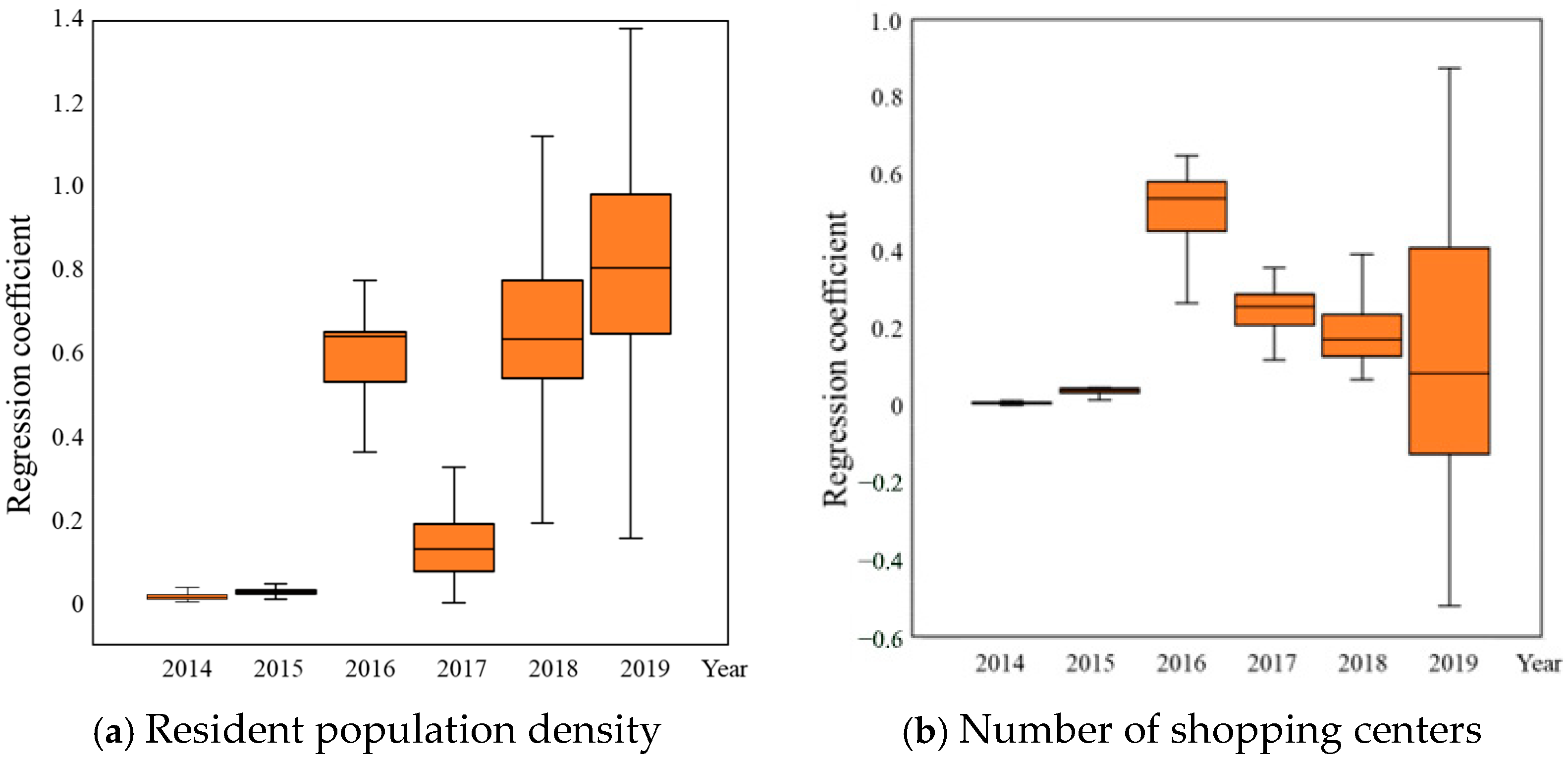
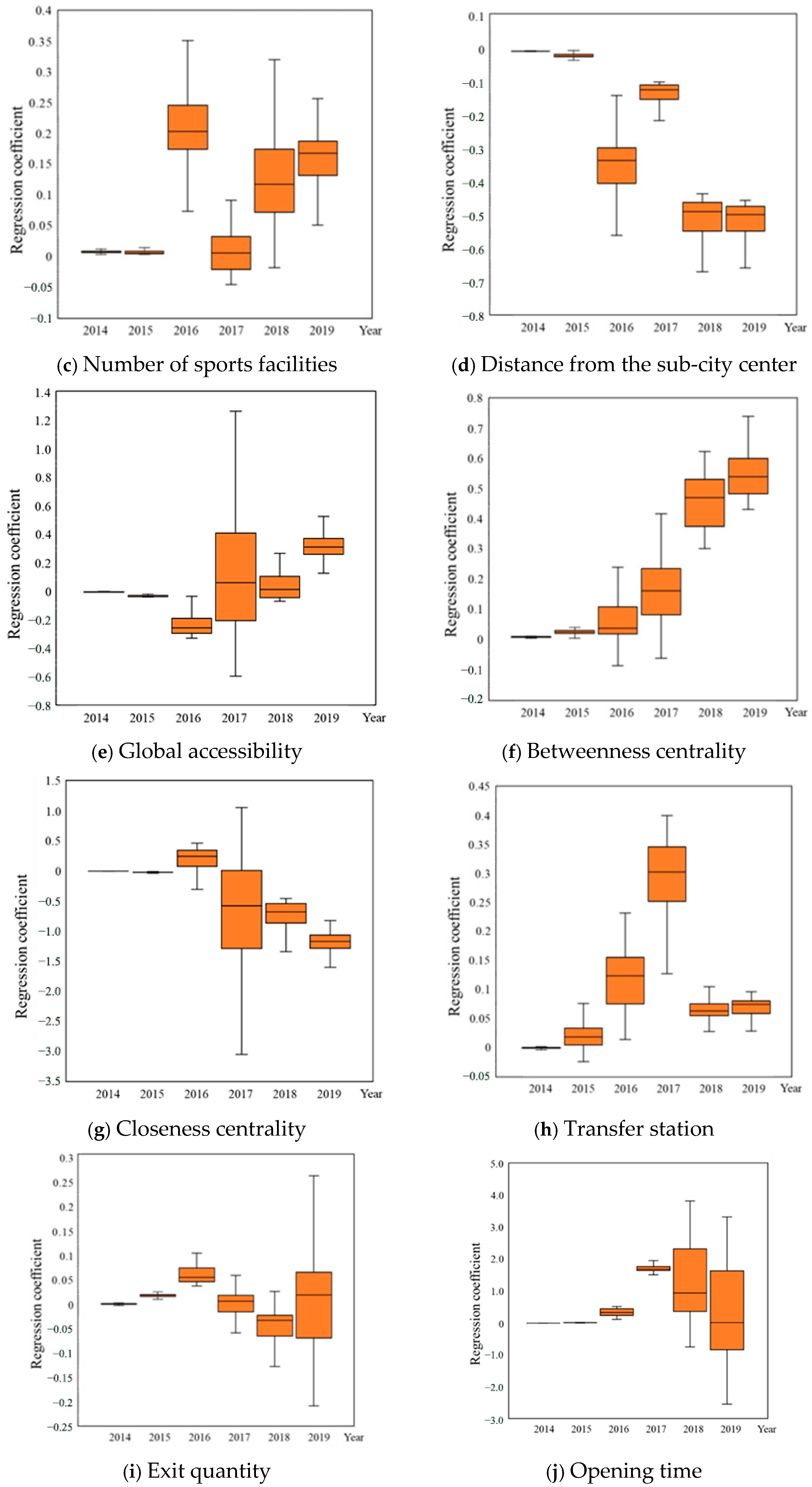
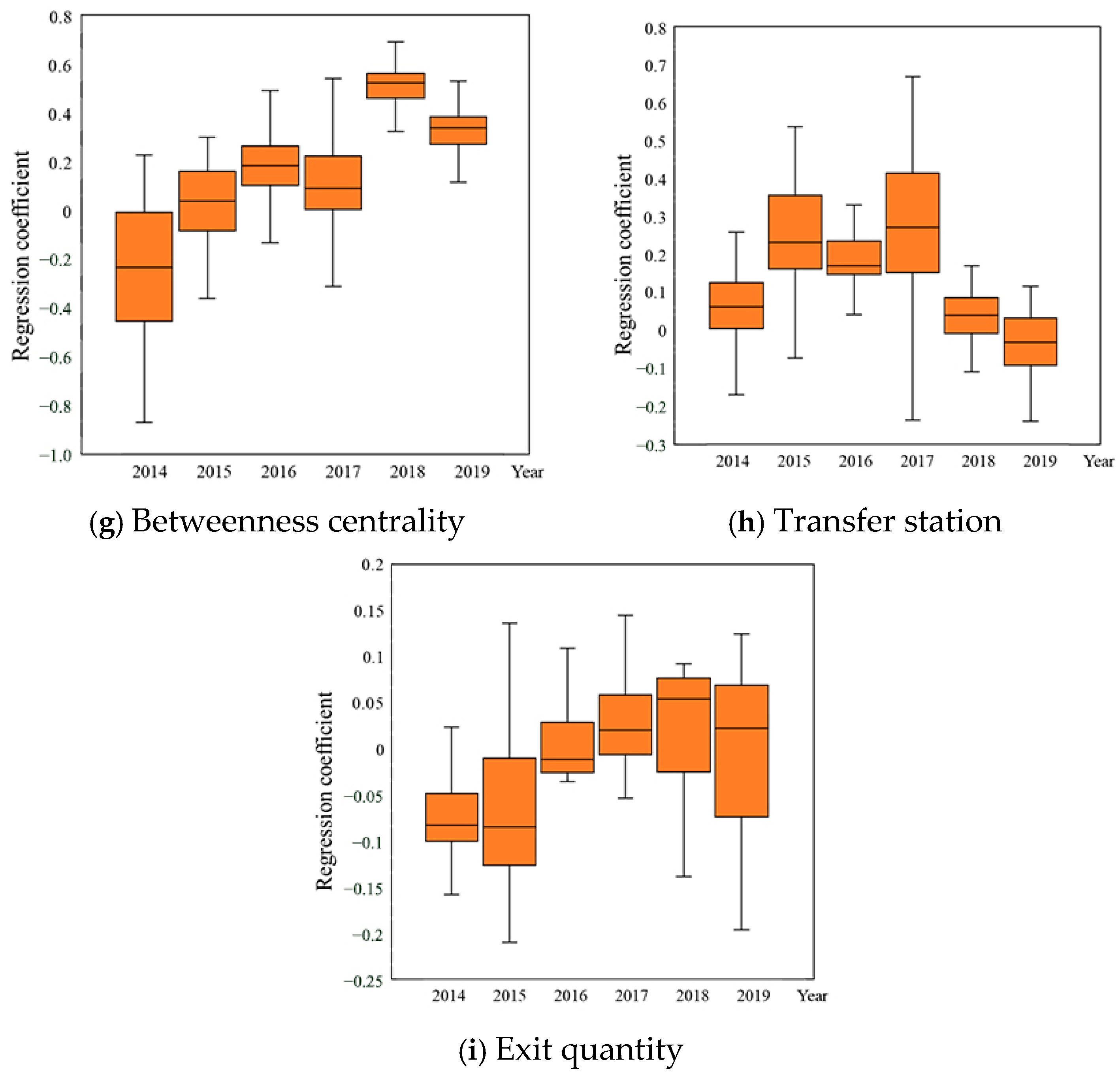
Figure 3 illustrates the time-averaged coefficients of the significant influence factors for 1134 stations across six different time periods. In general, these influencing factors exhibit varying time-averaged coefficients in different time segments. Firstly, in terms of metro network features, the time coefficient for betweenness centrality is predominantly positive, whereas those for proximity centrality are generally negative, and the time coefficient for global accessibility falls between negative and positive values. Secondly, about metro station features, the time coefficients for transfer station and opening time are generally positive. However, the time coefficients for exit quantity fluctuate between positive and negative values. Thirdly, concerning the built environment, resident population density demonstrates a noteworthy positive impact on land use change. The time-averaged coefficients for the number of sports facilities and the number of shopping centers are typically positive, except for a few specific time periods. While the time-averaged coefficient for the distance to the sub-city center is negative. Furthermore, it is worth noting that the boxes of the time coefficients for almost all variables are small in 2014–2015, indicating a more centralized distribution of the factor estimation coefficients. This is because the number of metro stations constructed during this period was relatively small and concentrated mainly in the city center, resulting in limited variation in their impacts on surrounding land-use change. After 2016, the boxes representing these coefficients become notably elongated, signifying an increasingly discrete distribution of factor estimate coefficients. This corresponds to the rapid expansion of metro stations in both number and spatial extent—from the central districts toward the suburban areas—leading to greater heterogeneity in the effects across different station locations [14].
Figure 3. Box Plots of Key Factors Influencing Land Use Type for Metro Stations.

4.4. Spatial Heterogeneity Analysis of Land Use Types

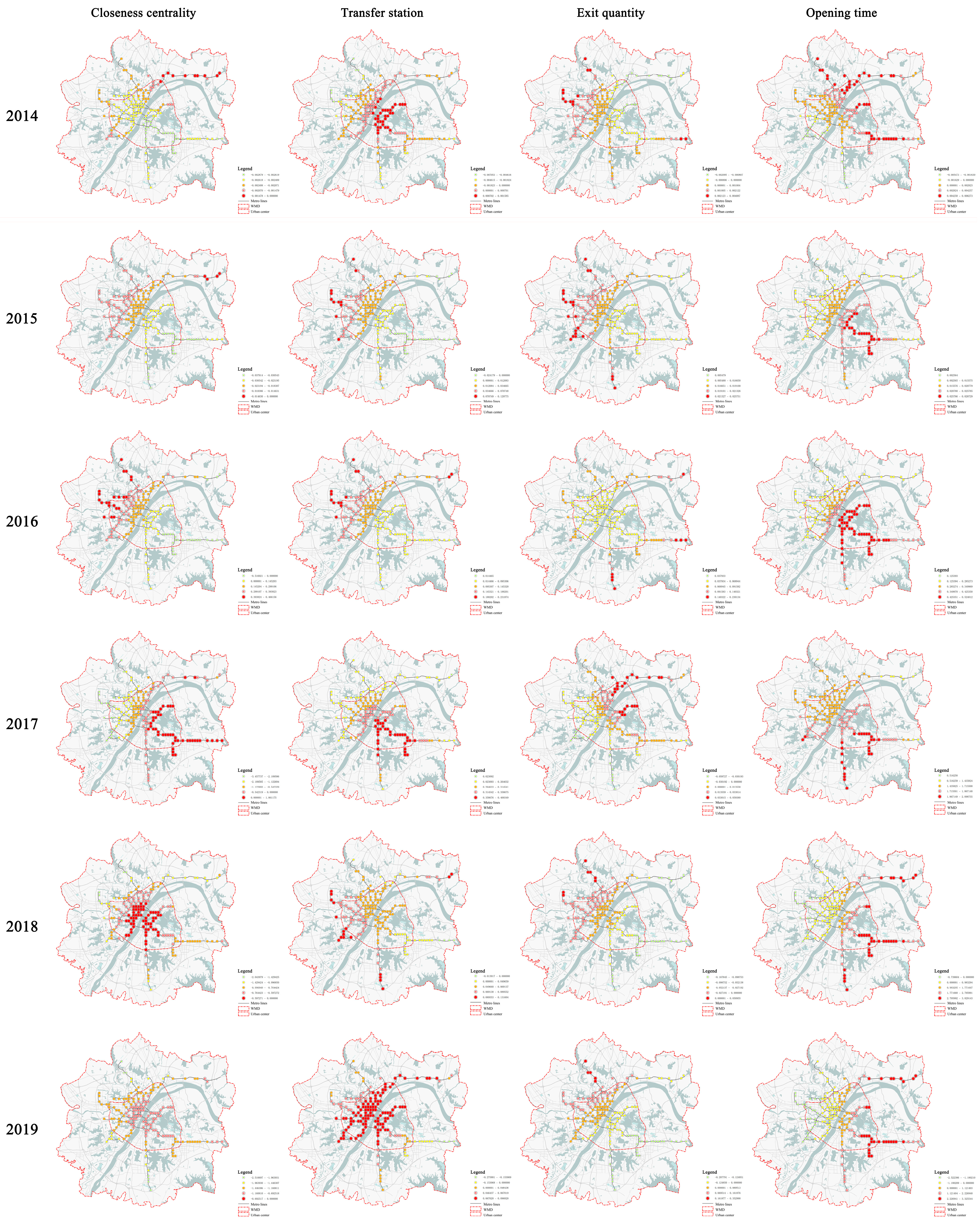
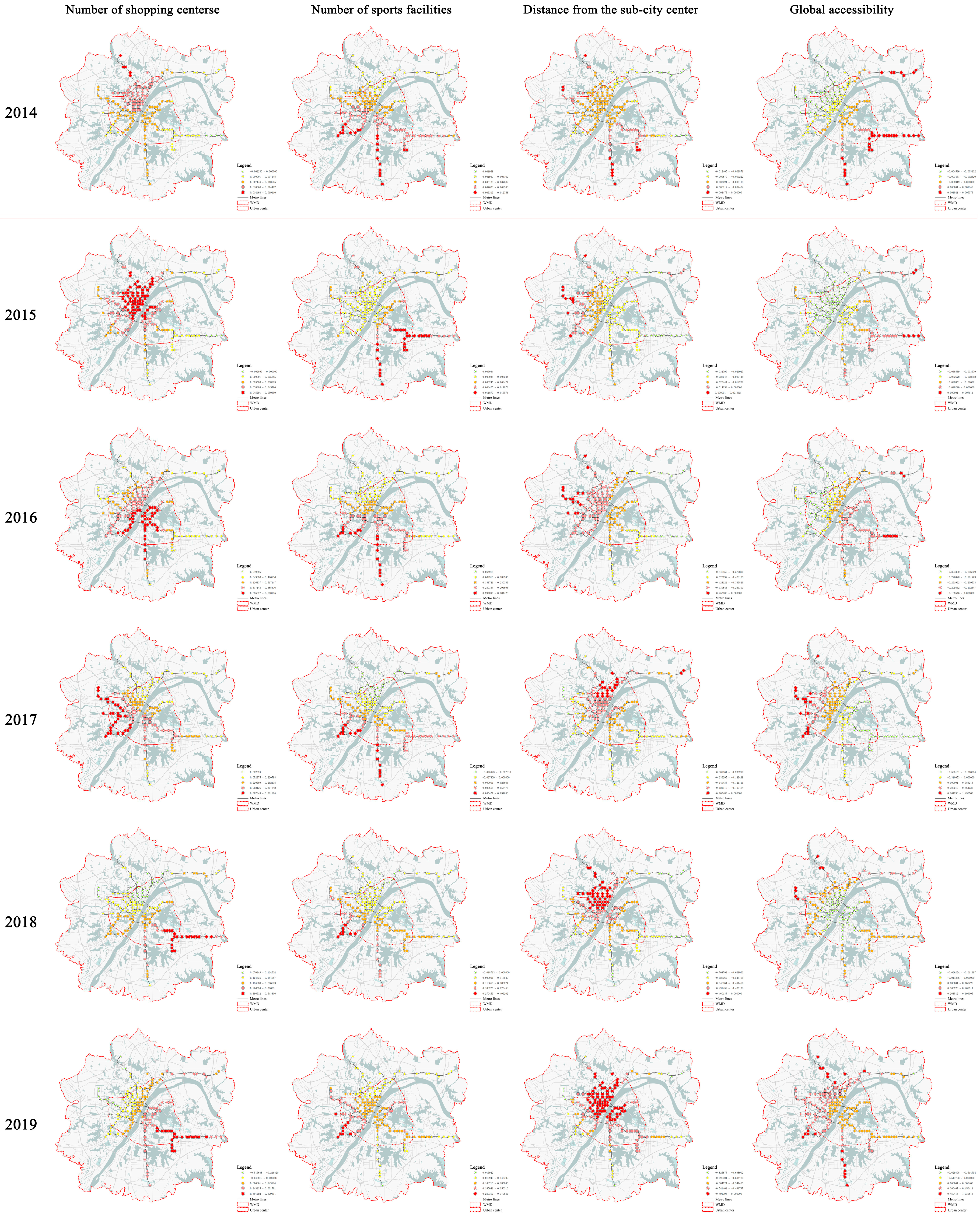
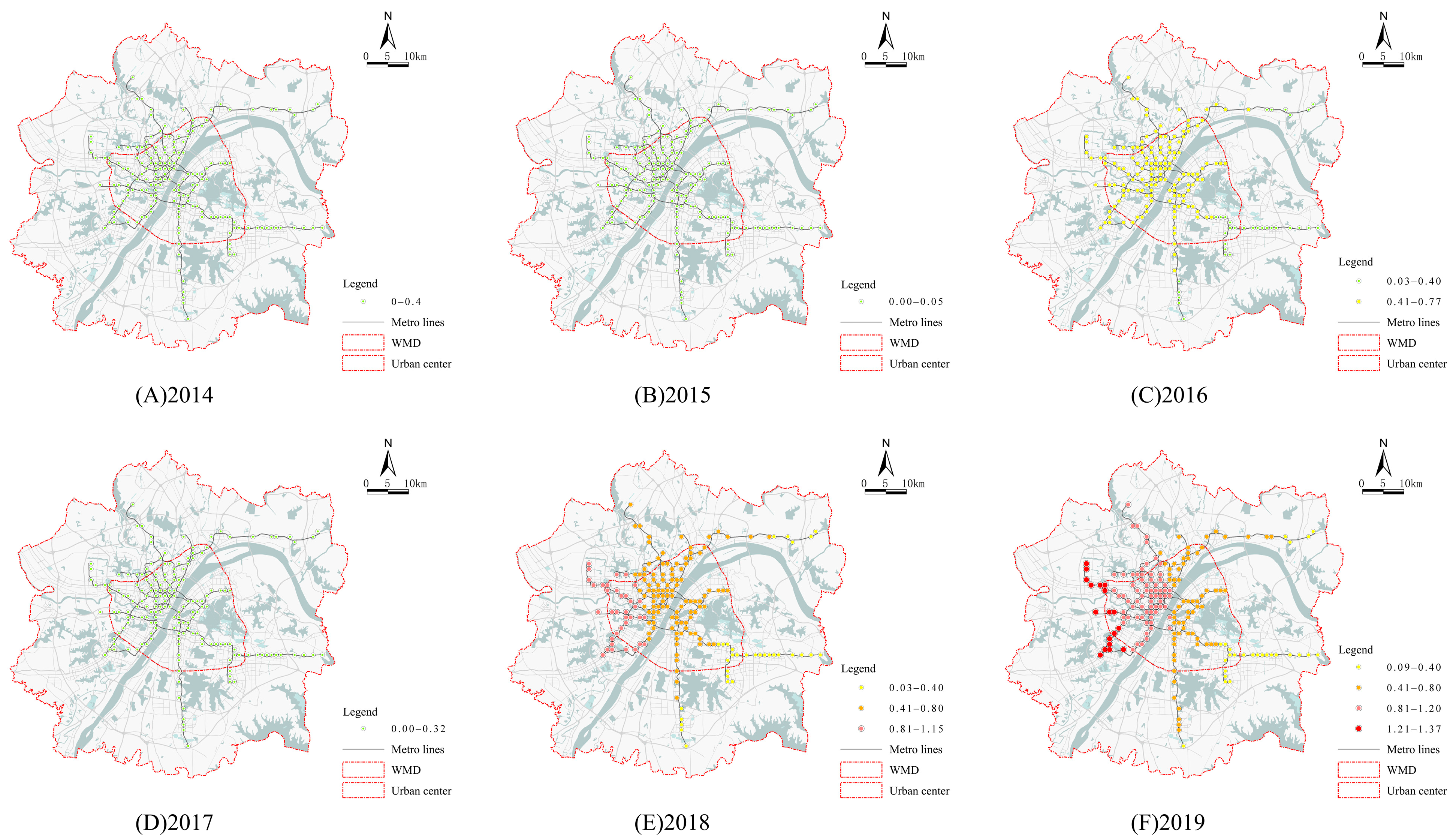
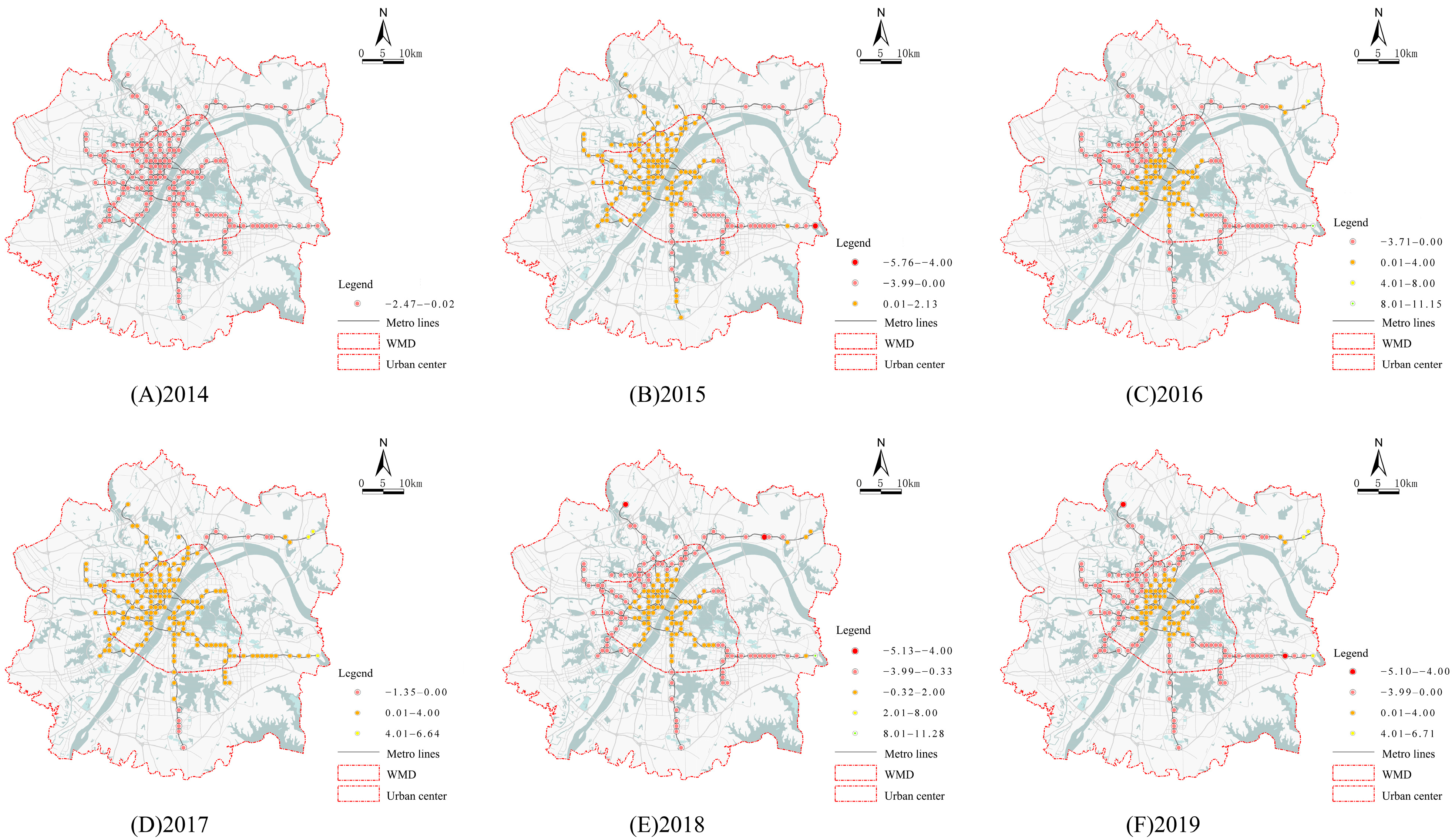
Figure 4 and Figure 5 illustrates the spatial distribution characteristics of the local regression coefficients for resident population density and betweenness centrality from 2014 to 2019 (please refer to the Appendix A for local regression coefficients of other variables), which were generated using ArcGIS 10.7. Overall, the effects of various factors on land use types exhibit significant spatial heterogeneity, and the local coefficients also vary considerably across different years. Prior to 2018, the magnitude of these effects was relatively small; however, following the transition of the metro network from a tree-like to a ring-based structure in 2018, the influence of these factors increased substantially. In addition, most factors exert stronger effects in the WMD than in the urban center.
Figure 4. Spatial distribution of local regression coefficients reflecting the influence of population density on land use types.
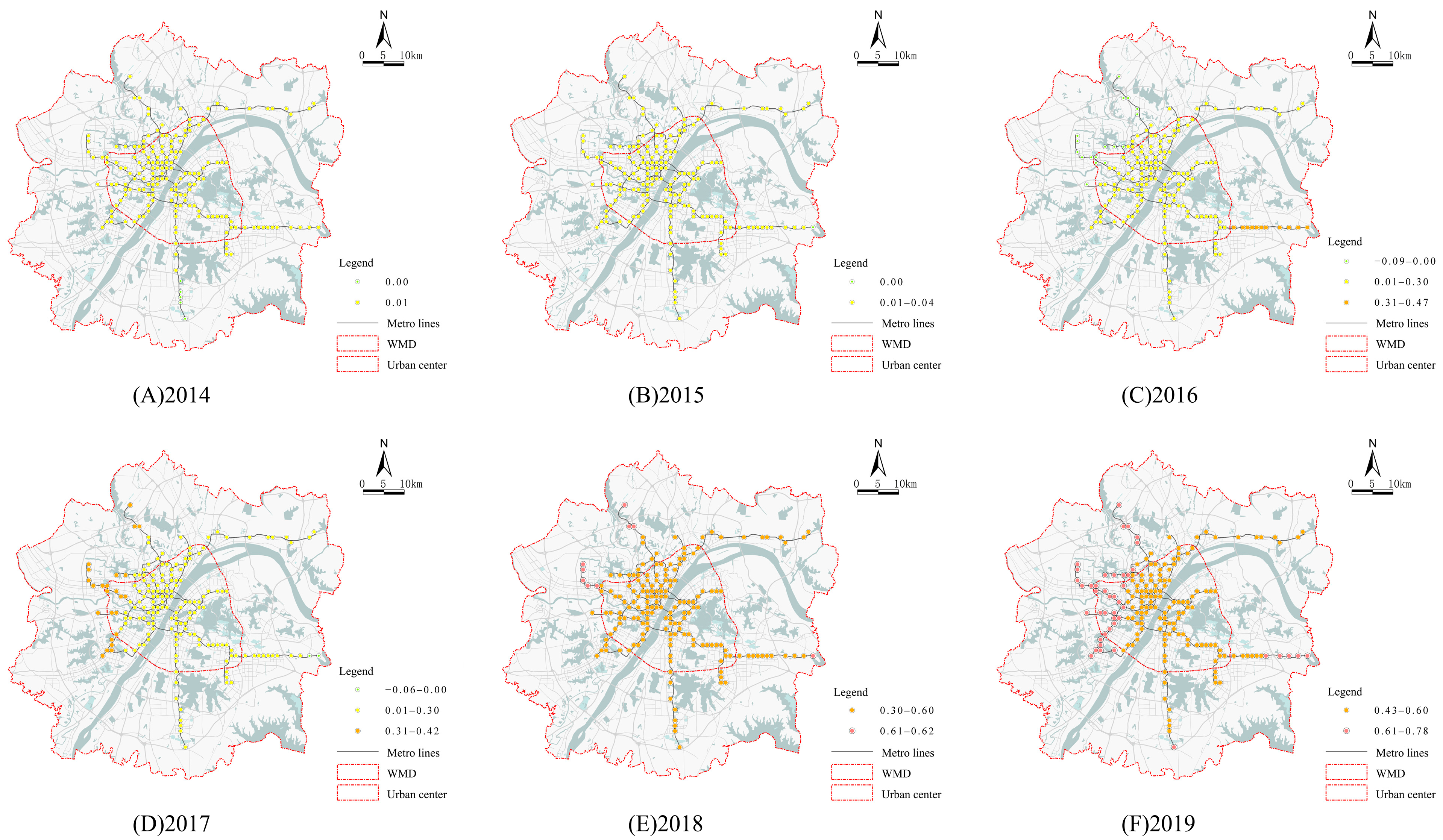
Figure 5. Spatial Distribution Characteristics of Local Regression Coefficients for betweenness centrality.
Figure 4 shows that between 2014 and 2017, the influence of resident population density on residential and commercial land development along metro corridors was relatively limited, but this effect increased markedly in 2018 and further intensified in 2019. Spatially, the impact was stronger in central urban areas, reflecting the steady increase in population density and the corresponding demand for residential and commercial development. However, the largest effects were observed in the inner suburban areas, where the availability of developable land is greater and improvements in metro accessibility effectively stimulated population growth and land development in these regions.
Similarly, between 2014 and 2017, betweenness centrality of metro stations had a limited effect on residential and commercial land development along the lines (Figure 5). This is because, although the metro network had undergone initial expansion during this period, inter-line connectivity remained weak, resulting in relatively low betweenness centrality for most stations. After the formation of a ring-shaped network, station betweenness centrality increased significantly, particularly at stations located at the ends of the network, which effectively enhanced surrounding land values. In addition, compared with central urban areas, inner suburban regions offer more developable land, further facilitating residential and commercial development along the metro corridors.

5. Land Use Development Intensity and Metro Development

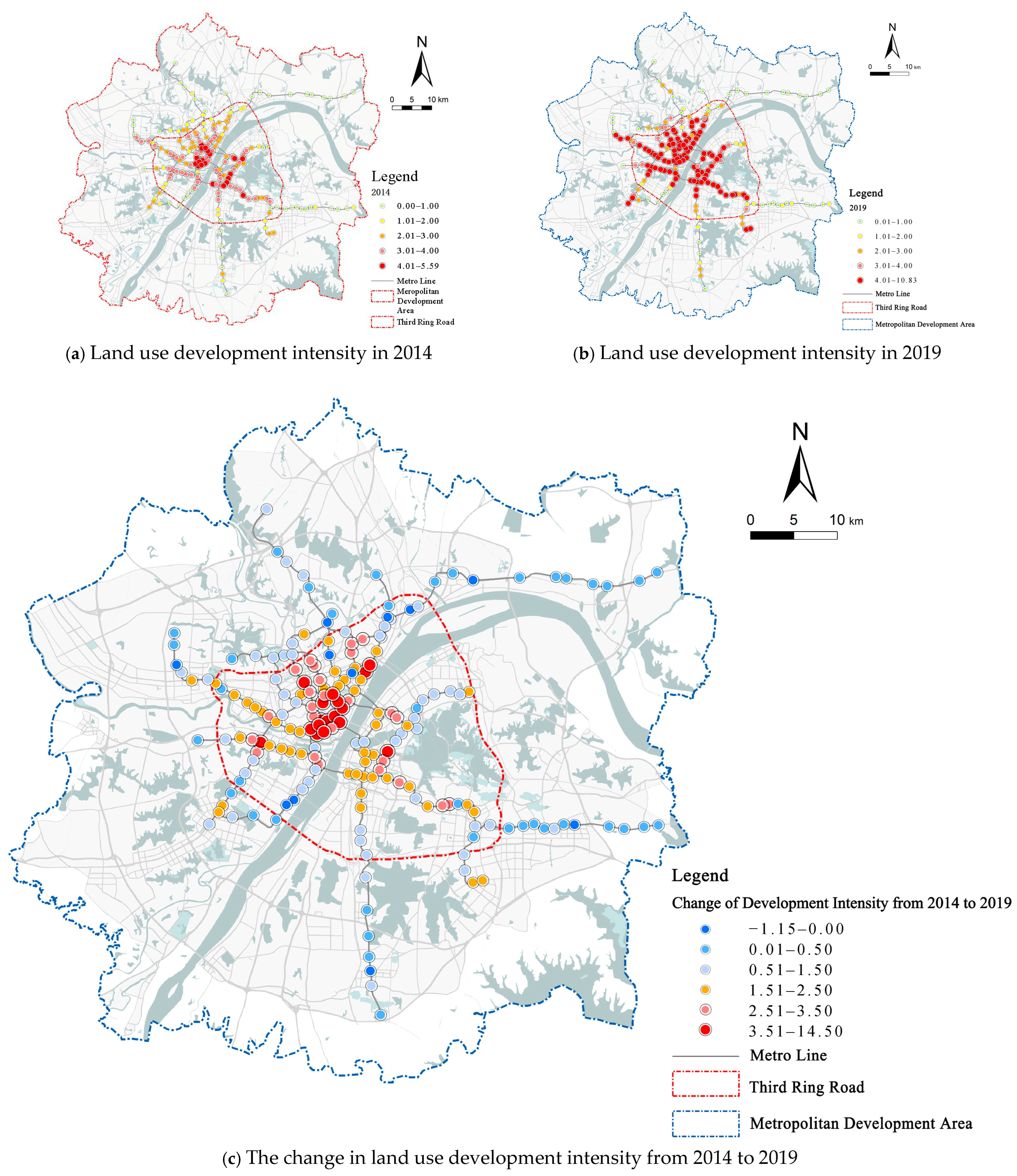
5.1. Analysis of Land Use Development Intensity Change Characteristics

Figure 6 displays the land use development intensity around metro stations in 2014 and 2019 while also comparing changes in development intensity between the two periods. The figure reveals that the development intensity of Wuhan exhibited a declining trend radiating outward from the core area along the Yangtze River and Hanshui River between 2014 and 2019. However, it is important to note that overall development intensity in 2019 is significantly higher than that in 2014. Through comparison, it was found that the development intensity around a total of 178 metro stations had significantly increased, accounting for over 94%. Eleven metro stations saw a slight decrease in land development intensity, primarily due to ongoing metro construction or line transformation. It can be anticipated that these areas will also witness a substantial increase in development intensity in the short term. These findings align with previous studies indicating that metro construction effectively boosts land values along the route [11,35,45], stimulates land investment, and ultimately enhances land development intensity along the route.
Figure 6. Land use development intensity around metro stations.

5.2. Overall Regression Analysis of Development Intensity Changes

Table 3 presents the outcomes from OLS and GTWR models in investigating the impact of the metro on land use development intensity. Similar to the effects on land use types, the non-stationary GTWR model demonstrates a better fit compared to the static OLS model. The OLS regression results indicate that betweenness centrality, transfer station, exit quantity, resident population density, the number of sports facilities, and the number of shopping centers exhibit a significant positive effect on land use development intensity in the vicinity of metro stations. Conversely, global accessibility the distance to the city center, and the distance to the sub-city center show a significant negative impact on land use development intensity. Similarly, the GTWR model results elucidate the varying local correlations between the examined variables and land use development intensity within the metro station’s catchment area. The local coefficients of spatial and temporal observations for all significant factors also fluctuate between negative and positive values, indicating that the influence of the examined variables on land use development intensity within the catchment area of metro station varies significantly across different time periods and locations.
Table 3. Results from the OLS and GTWR Model on land use development intensity.

5.3. Temporal Trends in Estimated Coefficients of Land Use Development Intensity

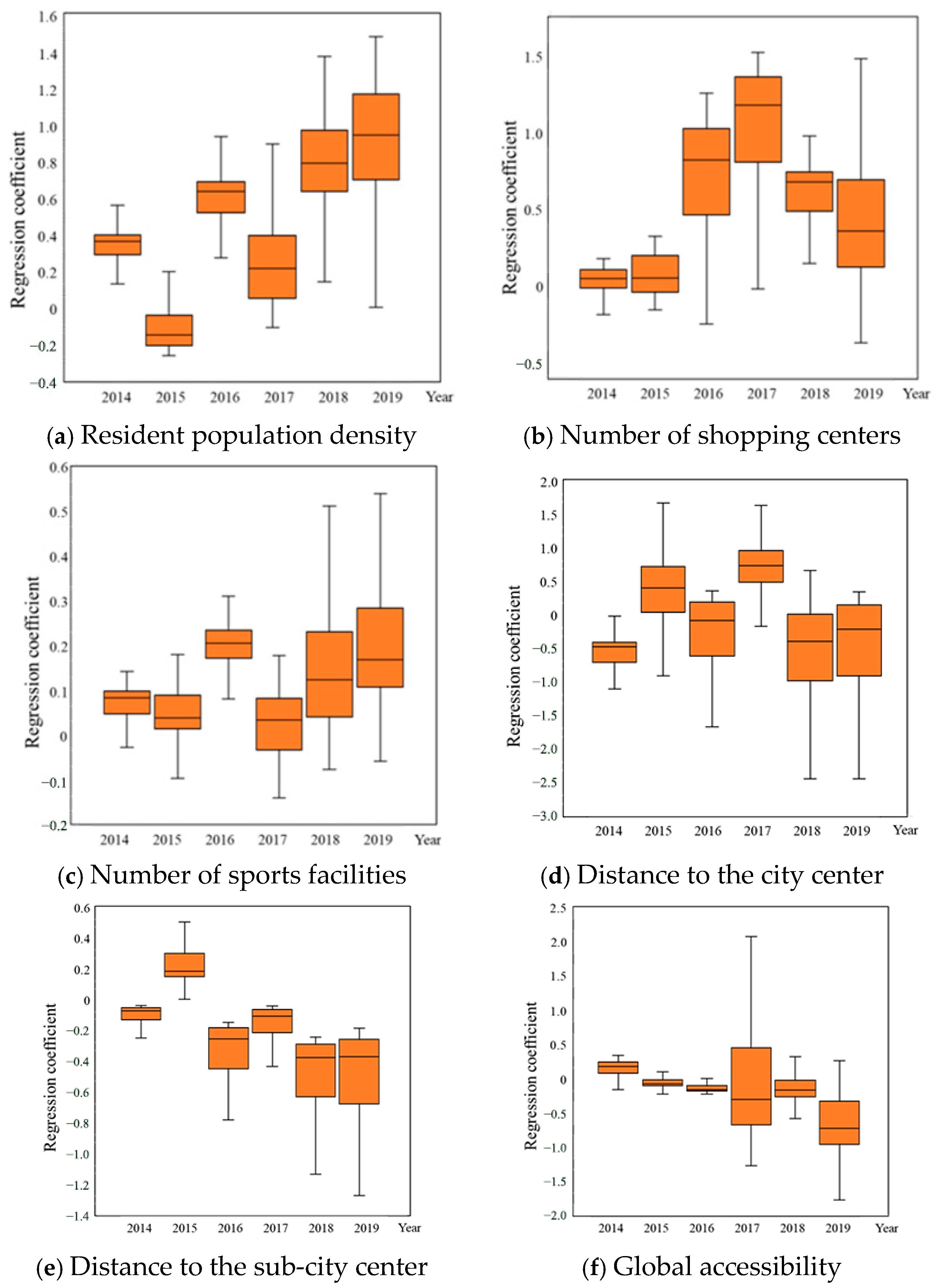
Figure 7 displays the time-averaged coefficients of the significant influence factors for 1134 stations across six different time periods. In terms of metro network features, the time coefficients for global accessibility and betweenness centrality fluctuate between positive and negative values. Notably, the time coefficients for global accessibility show an overall trend from positive to negative during the period from 2014 to 2019, whereas betweenness centrality exhibits a trend from negative to positive. Regarding metro station features, the time coefficient for transfer station is generally positive, while the time coefficient for exit quantity fluctuates between positive and negative values. Concerning the built environment, the time-averaged coefficients for resident population density, the number of sports facilities, and the number of shopping centers are generally positive. While the time-averaged coefficient for the distance to the city center and the distance to the sub-city center are negative. Different from the effects on land use types, the size of the boxes for various factors was noticeably larger during 2014–2015, indicating a more pronounced impact of metro development on development intensity. Additionally, the boxes for some factors exhibit a trend of initially increasing and then decreasing in size. This corresponds to findings from previous research [10,46,47], indicating that during the early stages of metro construction, the impact on land use development intensity in the vicinity is more significant, with more dispersion. However, with the passage of time, the influence gradually diminishes, and the degree of dispersion decreased accordingly.
Figure 7. Box Plots of Key Factors Influencing Land Use Development Intensity for Metro Stations.

5.4. Spatial Heterogeneity Analysis of Land Use Development Intensity

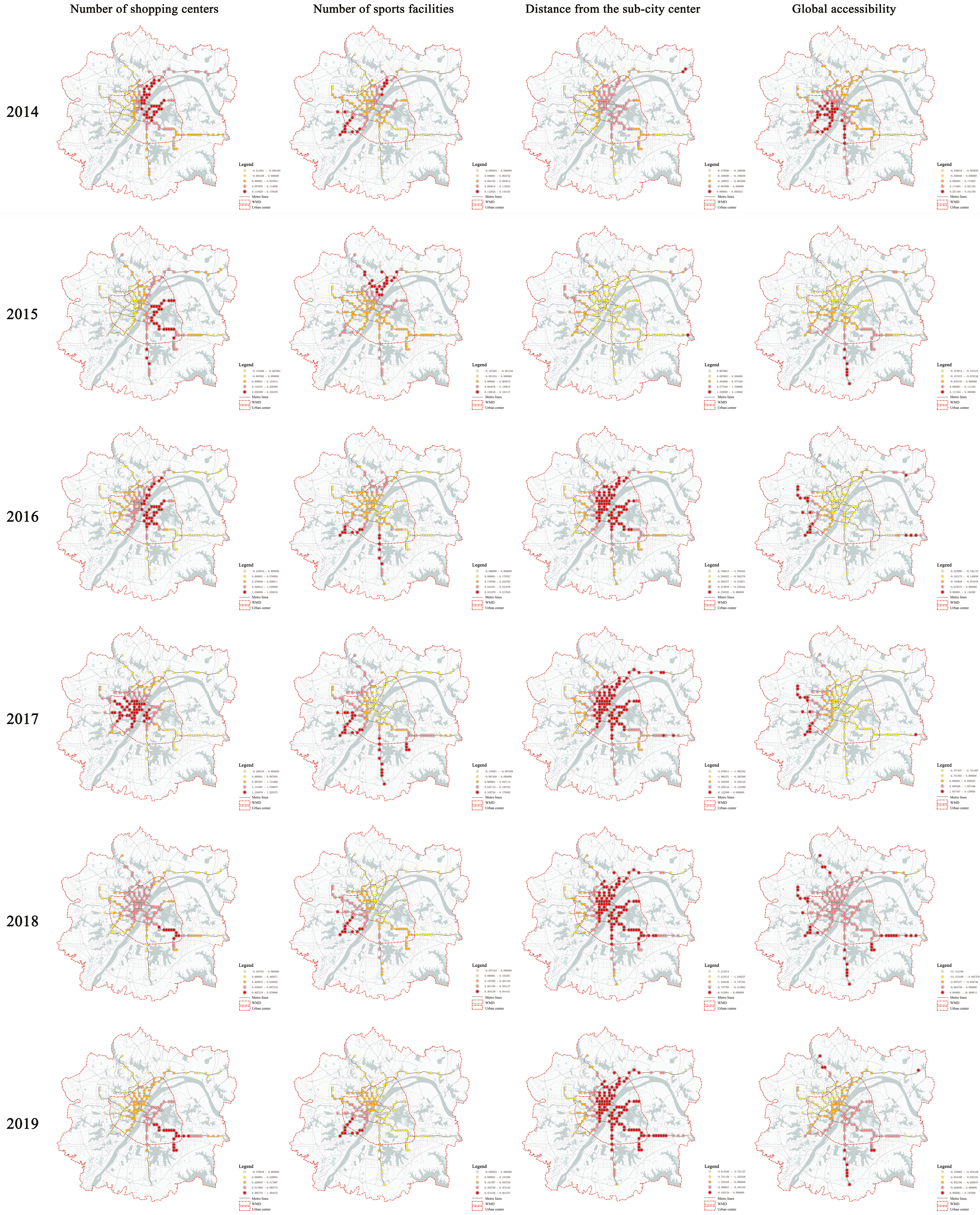
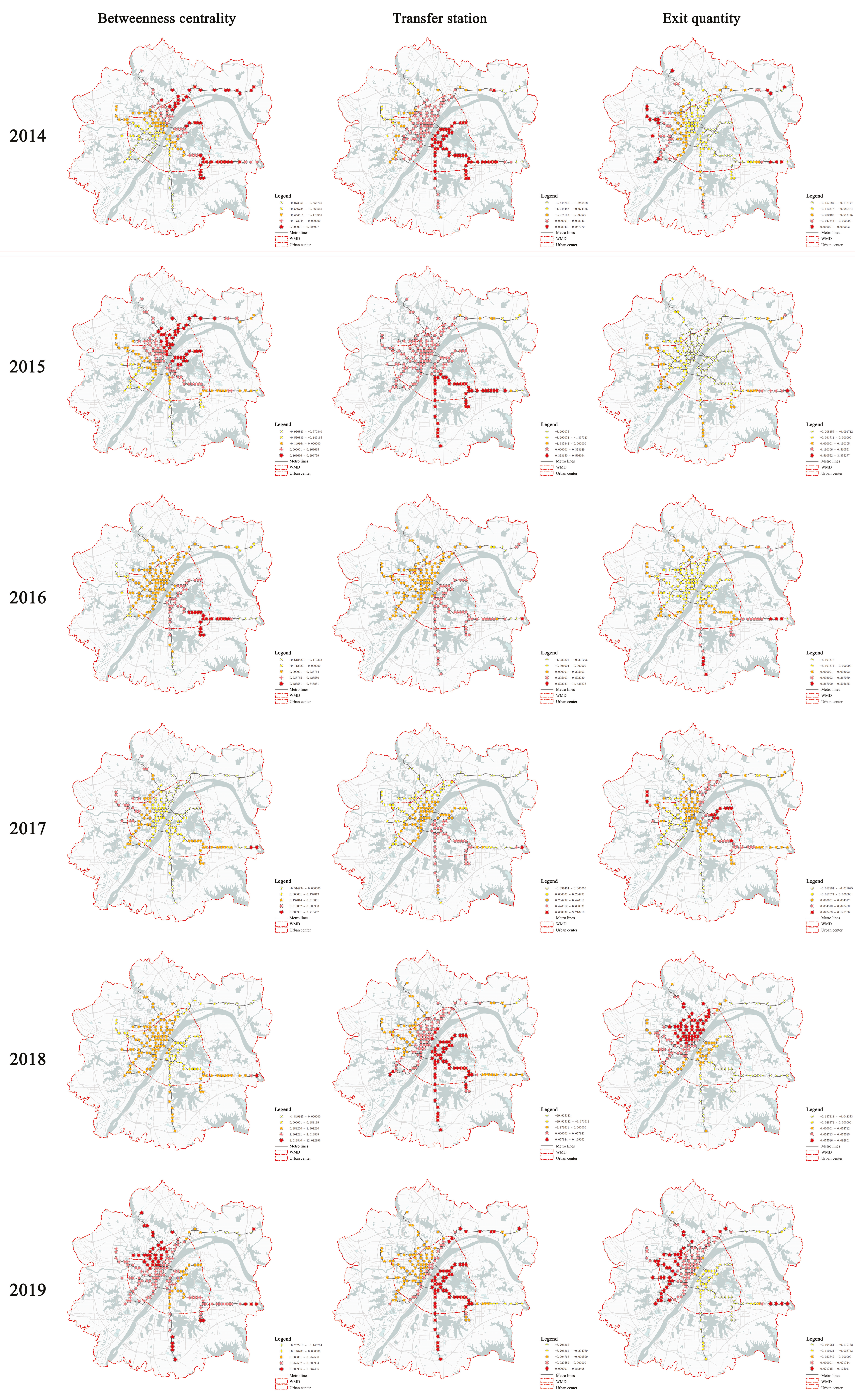
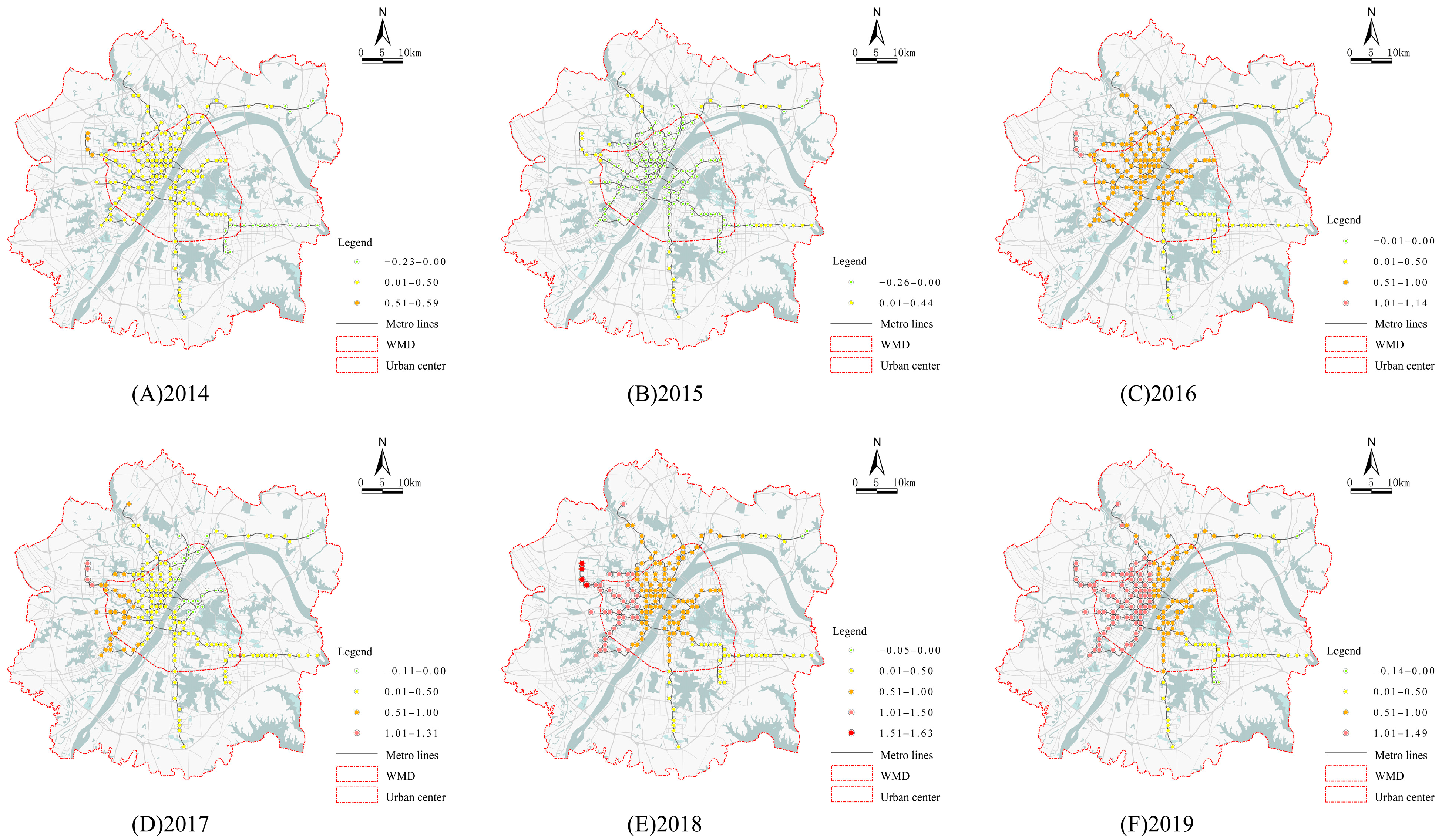
Figure 8 and Figure 9 illustrates the spatial distribution features of the local regression coefficients for distance to the city centers from 2014 to 2019 (please refer to the Appendix B for local regression coefficients of other significant variables). Overall, like the impact on land use types, the effects of each factor on land use development intensity also exhibit significant spatial and temporal heterogeneity.
Figure 8. Spatial distribution of local regression coefficients reflecting the influence of population density on land-use development.
Figure 9. Spatial Distribution Characteristics of Local Regression Coefficients for Distance from The City Centers.
Figure 8 illustrates the effect of resident population density on land-use development intensity. It can be observed that the impact was relatively limited during 2014–2015, but began to strengthen from 2016 onwards. The spatial distribution of this effect and its influence across different land-use types exhibited similar patterns, gradually extending from the central urban areas to the suburban regions over time, with the most pronounced effects occurring in near-suburban areas.
Figure 9 shows the influence of distance to the city center on land-use development intensity. Consistent with most existing studies [10], this effect generally exhibits a negative trend. Considering the temporal evolution of local regression coefficients, in 2014, the spatial heterogeneity was not significant due to the limited number of metro stations, most of which were concentrated in the urban core. However, following the further expansion of Wuhan’s metro network in 2015, the spatial heterogeneity of the effect of distance to the city center on development intensity gradually emerged, with the most significant impacts still primarily located in the urban core. Moreover, similar to other influencing factors, the spatial heterogeneity of the effect of distance to the city center along metro corridors became more pronounced after the metro network formed a loop in 2018. Overall, the core areas within the Third Ring Road exert a positive influence on development intensity, which gradually diminishes with increasing distance from the city center and eventually turns negative. A similar pattern was observed in 2019, with even more pronounced spatial heterogeneity.

6. Discussion

6.1. Key Findings

Metro construction serves as a significant driver influencing land use development. While numerous prior studies have explored the relationship between metro systems and land use development along transit corridors [5,6], a comprehensive understanding of the spatiotemporal characteristics and driving mechanisms of land use change along metro lines remains limited. This study addresses these gaps by focusing on Wuhan, China. Using land use data from 2014 to 2019, we identify spatiotemporal trends in land use types and development intensity along metro routes. Furthermore, we apply a Geographically and Temporally Weighted Regression (GTWR) model to investigate the driving factors behind these variations. The study yields four main findings:
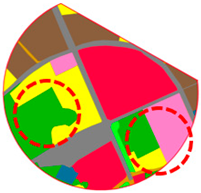
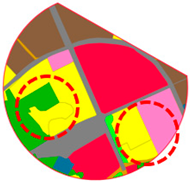
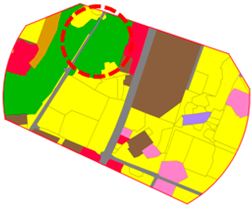
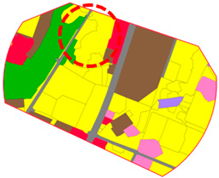
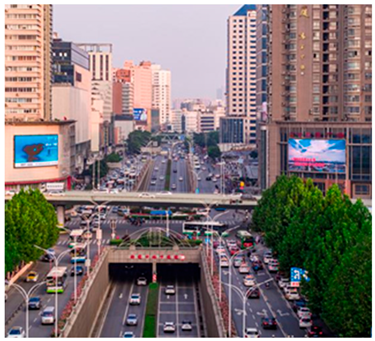
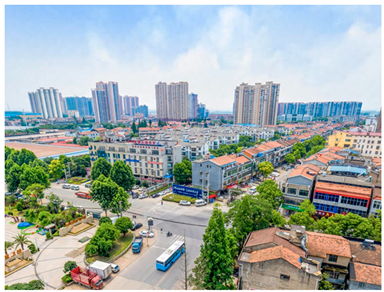
Firstly, metro construction has effectively driven land use development along the route, primarily resulting in the conversion of non-construction land into residential and commercial land. This finding aligns with studies conducted in Minneapolis and St. Paul in the United States and in Beijing, China [34,48]. The enhanced accessibility brought about by metro construction increases the attractiveness of areas near metro stations, encouraging both households and businesses to pay a premium for proximity. Furthermore, an analysis of changes in land use development intensity along metro lines reveals that the spatial pattern of development intensity remains largely consistent before and after metro construction. Overall, it exhibits the characteristics of high density in central areas and lower density in periphery zones, which is consistent with the classical “density-distance” curve [11]. However, after the construction of the metro, development intensity significantly increased along metro lines. Notably, the most substantial increases in development intensity occurred in the urban core areas, while the inner suburban zones exhibited a gradual rise in development intensity over time. These results align with previous findings [35,49], which suggest that while urban centers experience an initial surge in development following metro operation, the limited availability of developable land in central areas gradually shifts development toward nearby suburban areas with more available land. As shown in Table 4, stations located in the central area (e.g., Jianghan Road) had no developable land remaining around them as early as 2014, whereas stations in the inner suburban area (e.g., Hongtu Boulevard) and those in the outer suburban area (e.g., Longyang Village) still possessed substantial amounts of land available for development. Notably, much of the new development around metro stations involves the conversion of non-construction land into construction land. Such large-scale conversion, particularly from agricultural or ecologically sensitive areas, may pose environmental challenges.
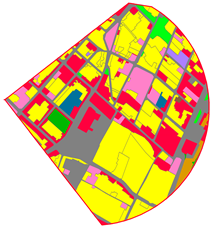
Table 4. Land use types change at representative stations.
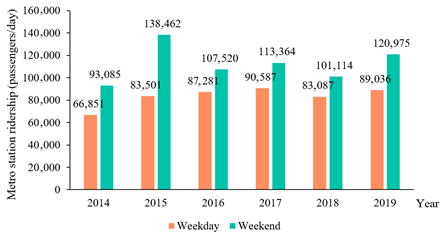
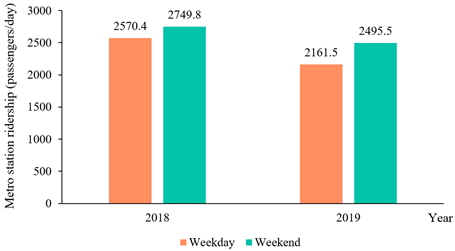
Secondly, metro network characteristics and metro station attributes exert varying degrees of impact on land use types and development intensity along metro lines. Notably, the betweenness centrality and transfer functionality of metro stations significantly promote both the transformation of surrounding areas into residential and commercial land uses and increases in development intensity. In contrast, global accessibility has a negative impact on both outcomes. This finding aligns with previous studies [14], which suggest that metro network centers and transfer stations tend to have higher ridership and greater market recognition, making them more likely to evolve into high-density commercial and residential agglomeration area. Conversely, stations with high global accessibility are often located at the network periphery or in outer suburban areas. Despite these stations have good accessibility, they lack the locational advantages of central nodes, thereby limiting development potential. As shown in Table 5, stations located at the core of the metro network (e.g., Jiedaokou) are more likely to evolve into commercial centers and exhibit substantially higher metro ridership, whereas stations situated at the network edge (e.g., Wuhu) experience slower surrounding development and considerably lower ridership. Additionally, exit quantity and the opening time positively influence the extent of residential and commercial land, indicating that areas with better facility provision and earlier development are more likely to achieve land use conversion. Closeness centrality, however, exhibits a negative impact, possibly reflecting that secondary nodes or peripheral zones have yet to develop significant agglomeration advantages, resulting in a lag in land development. It is worth noting that exit quantity, the opening time, and closeness centrality show no significant effect on development intensity. This may be because development intensity is influenced not only by transportation infrastructure but also by broader constraints. Previous studies have shown that factors such as the availability of developable land around metro stations, local socioeconomic conditions, and relevant policy frameworks also exert significant impacts on development around metro stations [12,50].
Table 5. Development conditions and metro ridership around representative stations.
Third, built environment features surrounding metro stations have significant impacts on both land use types and development intensity along metro lines. Specifically, resident population density, number of shopping centers and sports facilities, are positively associated with the expansion of residential and commercial land uses, as well as increases in development intensity around metro stations. These findings are consistent with previous studies [35], suggesting that areas with higher population density exhibit stronger demand for housing, thereby have a stronger impetus for land use conversion. Moreover, commercial and recreational facilities, as key urban functional nodes, can enhance the attractiveness and economic vitality of surrounding areas, thereby accelerating land development and value enhancement. In addition, similar to numerous previous studies [10,33], distance from the sub-city center shows a negative association with both land use types and development intensity, indicating that areas closer to sub-city centers benefit from spillover effects related to employment and service functions, which promote functional optimization and more intensive land use in the surrounding areas. In contrast, stations located farther from sub-city centers tend to lack such driving forces, resulting in weaker impetus for land conversion and development intensity. It is also noteworthy that distance from the city center has a significant negative impact on development intensity but does not significantly affect the transformation of residential and commercial land. This may be because areas located far from the city center typically possess lower commercial value, which restrains the increase in development intensity. Meanwhile, land use types in central urban areas are often already dominated by residential and employment functions, forming relatively stable spatial patterns. Thereby, the effect of distance changes on the transformation of land use types is limited.
Fourth, the driving mechanisms of land use transformation and development intensity along metro lines exhibit pronounced spatiotemporal heterogeneity. Boxplot analysis shows that in the early stages of metro development, most influencing factors displayed relatively small interquartile ranges, indicating limited spatial variation. This reflects the initially constrained impact of a limited metro network, which primarily serves central urban areas. As the metro network expands, its influence on land use becomes more pronounced, accompanied by a marked increase in the dispersion of driving factors. Further visualization of the GTWR local regression results indicates that most driving factors exert stronger effects on land use transformation and development intensity in suburban and peri-urban areas, whereas their impacts in central urban areas are comparatively weaker. Moreover, the spatial extent of these effects tends to diffuse outward from the urban core. This pattern aligns with previous findings suggesting that metro construction initially affects areas with high commercial value near city centers, but land availability ultimately determines the intensity of development, leading to a gradual outward expansion of metro-induced impacts as cities grow [31]. Notably, as metro networks become completer and more interconnected, the local regression coefficients of most driving factors increase, reflecting the enhanced influence of more integrated network structures. This supports existing evidence that ring-shaped or looped metro networks can improve operational efficiency and further strengthen the land development potential along metro corridors [14,30].

6.2. Policy Implications

The findings of this study can help government officials and urban planners better understand the long-term impacts of metro construction on land use development along metro lines, thereby informing the formulation of more effective land development strategies.
First, land use optimization along metro lines can be strategically coordinated with key stages of metro development. Given the significant role of metro construction in promoting the conversion of non-construction land into residential and commercial uses, planning efforts may consider aligning land use adjustment and regulatory plan updates scheme that are synchronized with metro development. In particular, directing the transformation of developable land toward high-intensity and mixed-use functions in central urban areas could help maximize the benefits of improved accessibility [2]. Moreover, in response to the asynchronous effects of metro construction on development intensity across urban inner and outer circles, efforts should focus on urban renewal and functional upgrading within central urban areas in the early stages of metro operation, and the convenience of metro may be utilized to enhance the city’s core competitiveness. In the mid-to-late stages, attention could shift toward the rational development of land in inner suburban and peripheral areas of the city. This can be regulating the timing of land leasing and guiding the spatial allocation of high-quality urban functions, supported by land supply mechanisms and fiscal incentives. However, it is important to note that a substantial portion of new construction land originates from the conversion of non-construction land. Large-scale conversions—especially from agricultural land or ecologically sensitive areas—may pose environmental challenges, underscoring the need to balance urban development with ecological conservation.
Second, the functional attributes of metro stations can inform differentiated development strategies. For hub stations with high betweenness centrality and transfer functions, promoting mixed-use, high-density, and high-efficiency projects could help foster sub-city centers or district-level cores [47]. For stations located on the network periphery and characterized by high global accessibility but lacking locational advantages, development may be oriented toward public services and daily-life commercial facilities to enhance neighborhood livability. In addition, stations with multiple exits and earlier opening times may present opportunities for targeted land use transformation projects, while peripheral stations with lower centrality may require phased infrastructure investment and gradual development guidance. In practice, these strategies could be operationalized through coordinated public–private partnership (PPP) projects, targeting station-area redevelopment while aligning developer incentives with planning objectives.
Third, optimizing the built environment can support the functional transformation and development potential of land around metro stations. Given the observed positive effects of residential population density, as well as the number of shopping centers and sports facilities on land use types and development intensity, it is recommended to enhance the provision of public services and commercial facilities surrounding metro stations [1,23]. Such improvements can foster livable and business-friendly urban environments, thereby increasing the attractiveness and market vitality of station areas. Furthermore, building on the finding that proximity to sub-city centers positively influences intensive land development, planners can proactively design a well-integrated mix of employment, residential, and service functions around metro stations located near sub-city centers. Implementation could involve scheduling land use approvals in line with station-area development plans, combined with targeted fiscal support for specific functional upgrades.
Finally, acknowledging the spatiotemporal heterogeneity of metro impacts can guide phased and region-specific land use strategies. Metro systems often exert stronger influence on central areas initially, with peripheral effects increasing as the network expands [14]. Land use guidance policies may therefore be aligned with the opening stages of metro lines, supporting urban regeneration in central zones and facilitating function zoning, infrastructure construction, and land banking in peripheral areas as the network evolves [51]. Moreover, prioritizing the development of ring-shaped metro networks could enhance land use efficiency along metro corridors [14]. Policy implementation should also incorporate systematic monitoring and evaluation mechanisms to assess the effectiveness of these strategies and adjust operational measures as needed. However, it is important to note that policy implementation should balance planning objectives with market dynamics, investment costs, and anticipated socio-economic benefits to ensure sustainable and practicable outcomes.

6.3. Limitation

This study also exhibits several limitations that warrant further exploration. First, the dataset (2014–2019) does not capture the post-pandemic period. Given the shifts in land market dynamics and travel behavior following COVID-19—such as remote working and changing residential preferences—the long-term effects of metro systems on land development may differ from the patterns observed in this study [18]. Future work incorporating post-pandemic data would help assess whether these structural changes have reshaped development around metro stations. Second, although metro proximity plays a decisive role in shaping land use, this study focuses only on an 800 m buffer, following common practice in existing research [33]. Extending the spatial scope and comparing impacts across multiple buffer distances could provide a more comprehensive understanding of metro-induced development patterns. Third, the GTWR model relies on linear assumptions and cannot fully capture potential non-linear relationships or address endogeneity. Future studies may consider integrating modelling approaches that jointly accommodate non-linearity, spatial dependence, and endogeneity to deepen insights into the mechanisms underlying metro-driven land use changes. Fourth, subjective influencing factors—such as residents’ socio-economic characteristics, travel preferences, and policy conditions—were not included. Incorporating both objective (e.g., objective drivers such as land-use structure, built environment indicators, and accessibility measures) and subjective drivers (e.g., residents’ socio-economic characteristics, travel preferences, and relevant policy contexts), and further integrating scenario-based forecasting or land-use simulation models, could help anticipate future development trajectories along metro corridors and provide stronger support for proactive, people-oriented urban planning. Lastly, this study focuses on Wuhan as a case study, and its conclusions may not be fully generalizable to other cities. Future research should include cities with different contexts to derive more broadly applicable findings.

7. Conclusions

This study employed a GTWR model to examine the impacts of metro construction on land use types and development intensity along metro corridors, while controlling for station-level built environment features. The results indicate that metro development significantly accelerates the conversion of non-construction land into residential and commercial uses and effectively increases land development intensity along metro lines. It is also important to note that the substantial conversion of non-construction land induced by metro construction underscores the need to balance ecological benefits with economic development, so as to prevent potential environmental degradation. Metro network characteristics, station attributes, and surrounding built environment conditions all play critical roles in shaping land use conversion and intensifying development. Building on these findings, we recommend coordinating metro construction with land development by formulating synchronized adjustment strategies that promote high-intensity, mixed-use transformation in central urban areas and guide orderly, phased growth in peripheral zones. Differentiated station-area development strategies are also necessary, taking into account metro network characteristics to strengthen the comprehensive development potential of hub stations while enhancing the livability and vibrancy of peripheral station areas. Optimizing the built environment emerges as a key pathway for improving public services and commercial facilities, thereby encouraging functional land transformation. At the same time, dynamic regulation and spatially differentiated guidance strategies are essential, grounded in the spatiotemporal evolution of metro-induced impacts. Priority is warranted for constructing ring-shaped metropolitan metro networks, as these efforts support the transition from monocentric to polycentric, cluster-based urban spatial structures and advance efficient, balanced, and sustainable spatial development.

Author Contributions

Conceptualization: Y.X., H.Y. and H.L.; Methodology: Y.X. and W.Z.; Software: Y.X., J.W. and W.Z.; Validation: Y.X., J.W. and W.Z.; Resources: J.W.; Data Curation: W.Z.; Writing—Original Draft: Y.X. and J.W.; Writing—Review and Editing: H.L.; Supervision: H.Y. and H.L. All authors have read and agreed to the published version of the manuscript.

Funding

This research received no external funding.

Data Availability Statement

The authors do not have permission to share data.

Conflicts of Interest

Author Yunfei Xu was employed by the company Guangzhou Urban Planning & Design Survey Research Institute Co., Ltd. The remaining authors declare that the research was conducted in the absence of any commercial or financial relationships that could be construed as a potential conflict of interest.

Appendix A

Figure A1. Spatial distribution characteristics of the mean values of local regression coefficients for built environment on land use types.

Appendix B

Figure A2. Spatial distribution characteristics of the mean values of local regression coefficients for built environment on land use development intensity.

References

  1. Zhang, M.; Wang, L. The Impacts of Mass Transit on Land Development in China: The Case of Beijing. Res. Transp. Econ. 2013, 40, 124–133. [Google Scholar] [CrossRef]
  2. Zhao, P.; Yang, H.; Kong, L.; Liu, Y.; Liu, D. Disintegration of Metro and Land Development in Transition China: A Dynamic Analysis in Beijing. Transp. Res. Part A Policy Pract. 2018, 116, 290–307. [Google Scholar] [CrossRef]
  3. Batty, M. The Size, Scale, and Shape of Cities. Science 2008, 319, 769–771. [Google Scholar] [CrossRef]
  4. Cao, J.; Cao, X. The Impacts of LRT, Neighbourhood Characteristics, and Self-Selection on Auto Ownership: Evidence from Minneapolis-St. Paul. Urban Stud. 2014, 51, 2068–2087. [Google Scholar] [CrossRef]
  5. Fu, F.; Jia, X.; Wu, D.; Zhao, Q.; Fang, H.; Lin, L.; Aye, L. Evolution and Prediction of Land Use around Metro Stations. Front. Environ. Sci. 2023, 11, 1106019. [Google Scholar] [CrossRef]
  6. Bhattacharjee, S.; Goetz, A.R. The Rail Transit System and Land Use Change in the Denver Metro Region. J. Transp. Geogr. 2016, 54, 440–450. [Google Scholar] [CrossRef]
  7. Cervero, R.; Kang, C.D. Bus Rapid Transit Impacts on Land Uses and Land Values in Seoul, Korea. Transp. Policy 2011, 18, 102–116. [Google Scholar] [CrossRef]
  8. Yang, J.; Cao, J.; Zhou, Y. Elaborating Non-Linear Associations and Synergies of Subway Access and Land Uses with Urban Vitality in Shenzhen. Transp. Res. Part A Policy Pract. 2021, 144, 74–88. [Google Scholar] [CrossRef]
  9. Lee, R.J.; Sener, I.N. The Effect of Light Rail Transit on Land Use in a City without Zoning. J. Transp. Land Use 2017, 10, 541–556. [Google Scholar] [CrossRef]
  10. Pan, H.; Zhang, M. Rail Transit Impacts on Land Use: Evidence from Shanghai, China. Transp. Res. Rec. 2008, 2048, 16–25. [Google Scholar] [CrossRef]
  11. Guan, C.H. Spatial Distribution of High-Rise Buildings and Its Relationship to Public Transit Development in Shanghai. Transp. Policy 2019, 81, 371–380. [Google Scholar] [CrossRef]
  12. Lin, D.; Broere, W.; Cui, J. Metro Systems and Urban Development: Impacts and Implications. Tunn. Undergr. Space Technol. 2022, 125, 104509. [Google Scholar] [CrossRef]
  13. Lyu, G.; Bertolini, L.; Pfeffer, K. Developing a TOD Typology for Beijing Metro Station Areas. J. Transp. Geogr. 2016, 55, 40–50. [Google Scholar] [CrossRef]
  14. Yan, X.; Liu, Y.; Sun, H.; Li, J.; Yang, H. Spatiotemporal Impacts of Metro Network Structure on Land Use Change. J. Urban Manag. 2024, 13, 183–200. [Google Scholar] [CrossRef]
  15. Chen, Z.; He, Q.; Su, X.; Yuan, Y.; Chen, S. The Opening Conditions of the Metro and Its Early Characteristics: A Historical Perspective. Tunn. Undergr. Space Technol. 2021, 108, 103732. [Google Scholar] [CrossRef]
  16. Owusu, F. Conceptualizing Livelihood Strategies in African Cities: Planning and Development Implications of Multiple Livelihood Strategies. J. Plan. Educ. Res. 2007, 26, 450–465. [Google Scholar] [CrossRef]
  17. Fu, F.; Jia, X.; Zhao, Q.; Tian, F.; Wei, D.; Zhao, Y.; Zhang, Y.; Zhang, J.; Hu, X.; Yang, L. Predicting Land Use Change around Railway Stations: An Enhanced CA-Markov Model. Sustain. Cities Soc. 2024, 101, 105138. [Google Scholar] [CrossRef]
  18. Yang, L.; Liang, Y.; He, B.; Yang, H.; Lin, D. COVID-19 Moderates the Association between to-Metro and by-Metro Accessibility and House Prices. Transp. Res. D Transp. Environ. 2023, 114, 103571. [Google Scholar] [CrossRef]
  19. Guzman, L.A. A Strategic and Dynamic Land-Use Transport Interaction Model for Bogotá and Its Region. Transp. B 2019, 7, 707–725. [Google Scholar] [CrossRef]
  20. Cervero, R.; Day, J. Suburbanization and Transit-Oriented Development in China. Transp. Policy 2008, 15, 315–323. [Google Scholar] [CrossRef]
  21. Yang, J.; Quan, J.; Yan, B.; He, C. Urban Rail Investment and Transit-Oriented Development in Beijing: Can It Reach a Higher Potential? Transp. Res. Part A Policy Pract. 2016, 89, 140–150. [Google Scholar] [CrossRef]
  22. Ibraeva, A.; Van Wee, B.; de Almeida Correia, G.H.; Pais Antunes, A. Longitudinal Macro-Analysis of Car-Use Changes Resulting from a TOD-Type Project: The Case of Metro Do Porto (Portugal). J. Transp. Geogr. 2021, 92, 103036. [Google Scholar] [CrossRef]
  23. Su, S.; Zhao, C.; Zhou, H.; Li, B.; Kang, M. Unraveling the Relative Contribution of TOD Structural Factors to Metro Ridership: A Novel Localized Modeling Approach with Implications on Spatial Planning. J. Transp. Geogr. 2022, 100, 103308. [Google Scholar] [CrossRef]
  24. Ding, C.; Cao, X. How Does the Built Environment at Residential and Work Locations Affect Car Ownership? An Application of Cross-Classified Multilevel Model. J. Transp. Geogr. 2019, 75, 37–45. [Google Scholar] [CrossRef]
  25. Cervero, R.; Murakami, J. Rail and Property Development in Hong Kong: Experiences and Extensions. Urban Stud. 2009, 46, 2019–2043. [Google Scholar] [CrossRef]
  26. Wang, X.; Tong, D.; Gao, J.; Chen, Y. The Reshaping of Land Development Density through Rail Transit: The Stories of Central Areas vs. Suburbs in Shenzhen, China. Cities 2019, 89, 35–45. [Google Scholar] [CrossRef]
  27. Peng, J.; Fu, X.; Wu, C.; Dai, Q.; Yang, H. Comparative Analysis of Nonlinear Impacts on the Built Environment within Station Areas with Different Metro Ridership Segments. Travel. Behav. Soc. 2025, 38, 100898. [Google Scholar] [CrossRef]
  28. Tan, R.; He, Q.; Zhou, K.; Xie, P. The Effect of New Metro Stations on Local Land Use and Housing Prices: The Case of Wuhan, China. J. Transp. Geogr. 2019, 79, 102488. [Google Scholar] [CrossRef]
  29. Yang, L.; Lu, Y.; Cao, M.; Wang, R.; Chen, J. Assessing Accessibility to Peri-Urban Parks Considering Supply, Demand, and Traffic Conditions. Landsc. Urban Plan. 2025, 257, 105313. [Google Scholar] [CrossRef]
  30. Derrible, S.; Kennedy, C. The Complexity and Robustness of Metro Networks. Phys. A Stat. Mech. Its Appl. 2010, 389, 3678–3691. [Google Scholar] [CrossRef]
  31. Peng, J.; Cui, C.; Qi, J.; Ruan, Z.; Dai, Q.; Yang, H. The Evolvement of Rail Transit Network Structure and Impact on Travel Characteristics: A Case Study of Wuhan. ISPRS Int. J. Geo-Inf. 2021, 10, 789. [Google Scholar] [CrossRef]
  32. Xu, W.; Yang, L. Evaluating the Urban Land Use Plan with Transit Accessibility. Sustain. Cities Soc. 2019, 45, 474–485. [Google Scholar] [CrossRef]
  33. Li, Z.; Han, Z.; Xin, J.; Luo, X.; Su, S.; Weng, M. Transit Oriented Development among Metro Station Areas in Shanghai, China: Variations, Typology, Optimization and Implications for Land Use Planning. Land Use Policy 2019, 82, 269–282. [Google Scholar] [CrossRef]
  34. Cao, X.; Porter-Nelson, D. Real Estate Development in Anticipation of the Green Line Light Rail Transit in St. Paul. Transp. Policy 2016, 51, 24–32. [Google Scholar] [CrossRef]
  35. Yang, J.; Su, P.; Cao, J. On the Importance of Shenzhen Metro Transit to Land Development and Threshold Effect. Transp. Policy 2020, 99, 1–11. [Google Scholar] [CrossRef]
  36. Higgins, C.D.; Ferguson, M.R.; Kanaroglou, P.S. Light Rail and Land Use Change: Rail Transit’s Role in Reshaping and Revitalizing Cities. J. Public Transp. 2014, 17, 93–112. [Google Scholar] [CrossRef]
  37. Li, Z.; Ren, S.; Hu, N.; Liu, Y.; Qin, Z.; Goh, R.S.M.; Hou, L.; Veeravalli, B. Equality of Public Transit Connectivity: The Influence of Mass Rapid Transit Services on Individual Buildings for Singapore. Transp. B 2019, 7, 576–595. [Google Scholar] [CrossRef]
  38. Balsas, C.J.L. A Study of Porto’s Polycentric Metropolitan Development and Governance at the Turn of the Millennium. Int. J. Reg. Local Hist. 2020, 15, 131–145. [Google Scholar] [CrossRef]
  39. Yang, H.; Lu, Y.; Wang, J.; Zheng, Y.; Ruan, Z.; Peng, J. Understanding Post-Pandemic Metro Commuting Ridership by Considering the Built Environment: A Quasi-Natural Experiment in Wuhan, China. Sustain. Cities Soc. 2023, 96, 104626. [Google Scholar] [CrossRef]
  40. Yang, H.; Peng, J.; Zhang, Y.; Luo, X.; Yan, X. Understanding the Spatiotemporal Impacts of the Built Environment on Different Types of Metro Ridership: A Case Study in Wuhan, China. Smart Cities 2023, 6, 2282–2307. [Google Scholar] [CrossRef]
  41. GB 50137–2011; Code for Classification of Urban Land Use and Planning Standards of Development Land. Ministry of Housing and Urban-Rural Development of the People’s Republic of China: Beijing, China, 2011.
  42. Loo, B.P.Y.; Chen, C.; Chan, E.T.H. Rail-Based Transit-Oriented Development: Lessons from New York City and Hong Kong. Landsc. Urban Plan. 2010, 97, 202–212. [Google Scholar] [CrossRef]
  43. Ewing, R.; Cervero, R. Travel and the Built Environment. J. Am. Plan. Assoc. 2010, 76, 265–294. [Google Scholar] [CrossRef]
  44. Huang, B.; Wu, B.; Barry, M. Geographically and Temporally Weighted Regression for Modeling Spatio-Temporal Variation in House Prices. Int. J. Geogr. Inf. Sci. 2010, 24, 383–401. [Google Scholar] [CrossRef]
  45. Deng, X.; Cao, Q.; Wang, L.; Wang, W.; Wang, S.; Wang, L. Understanding the Impact of Urban Expansion and Lake Shrinkage on Summer Climate and Human Thermal Comfort in a Land-water Mosaic Area. J. Geophys. Res. Atmos. 2022, 127, e2021JD036131. [Google Scholar] [CrossRef]
  46. Sung, H.; Choi, K.; Lee, S.; Cheon, S.H. Exploring the Impacts of Land Use by Service Coverage and Station-Level Accessibility on Rail Transit Ridership. J. Transp. Geogr. 2014, 36, 134–140. [Google Scholar] [CrossRef]
  47. Yang, J.; Chen, J.; Le, X.; Zhang, Q. Density-Oriented versus Development-Oriented Transit Investment: Decoding Metro Station Location Selection in Shenzhen. Transp. Policy 2016, 51, 93–102. [Google Scholar] [CrossRef]
  48. Sun, G.; Zhao, J.; Webster, C.; Lin, H. New Metro System and Active Travel: A Natural Experiment. Environ. Int. 2020, 138, 105605. [Google Scholar] [CrossRef]
  49. Cervero, R.; Landis, J. Twenty years of the Bay Area Rapid Transit system: Land use and development impacts. Transp. Res. Part A Policy Pract. 1997, 31, 309–333. [Google Scholar] [CrossRef]
  50. Wang, J.; Tan, W.; Huang, J. Extending TOD through the Interrelationship between Transport and Land Use: A Case Study of Beijing. Land Use Policy 2024, 144, 107257. [Google Scholar] [CrossRef]
  51. Hurst, N.B.; West, S.E. Public Transit and Urban Redevelopment: The Effect of Light Rail Transit on Land Use in Minneapolis, Minnesota. Reg. Sci. Urban Econ. 2014, 46, 57–72. [Google Scholar] [CrossRef]
Disclaimer/Publisher’s Note: The statements, opinions and data contained in all publications are solely those of the individual author(s) and contributor(s) and not of MDPI and/or the editor(s). MDPI and/or the editor(s) disclaim responsibility for any injury to people or property resulting from any ideas, methods, instructions or products referred to in the content.

Article Metrics

Citations

Article Access Statistics

Multiple requests from the same IP address are counted as one view.