Feasibility and Statistical Analysis of Sulfanilic Acid Degradation in a Batch Photo-Fenton Process



Abstract
1. Introduction
2. Materials and Methods
2.1. Materials
2.2. Preparation of Synthetic SA-Contained Wastewater
2.3. Analytical Method
2.3.1. pH Measurement
2.3.2. TOC Analysis
2.4. Design of Experiments and Analysis of Data
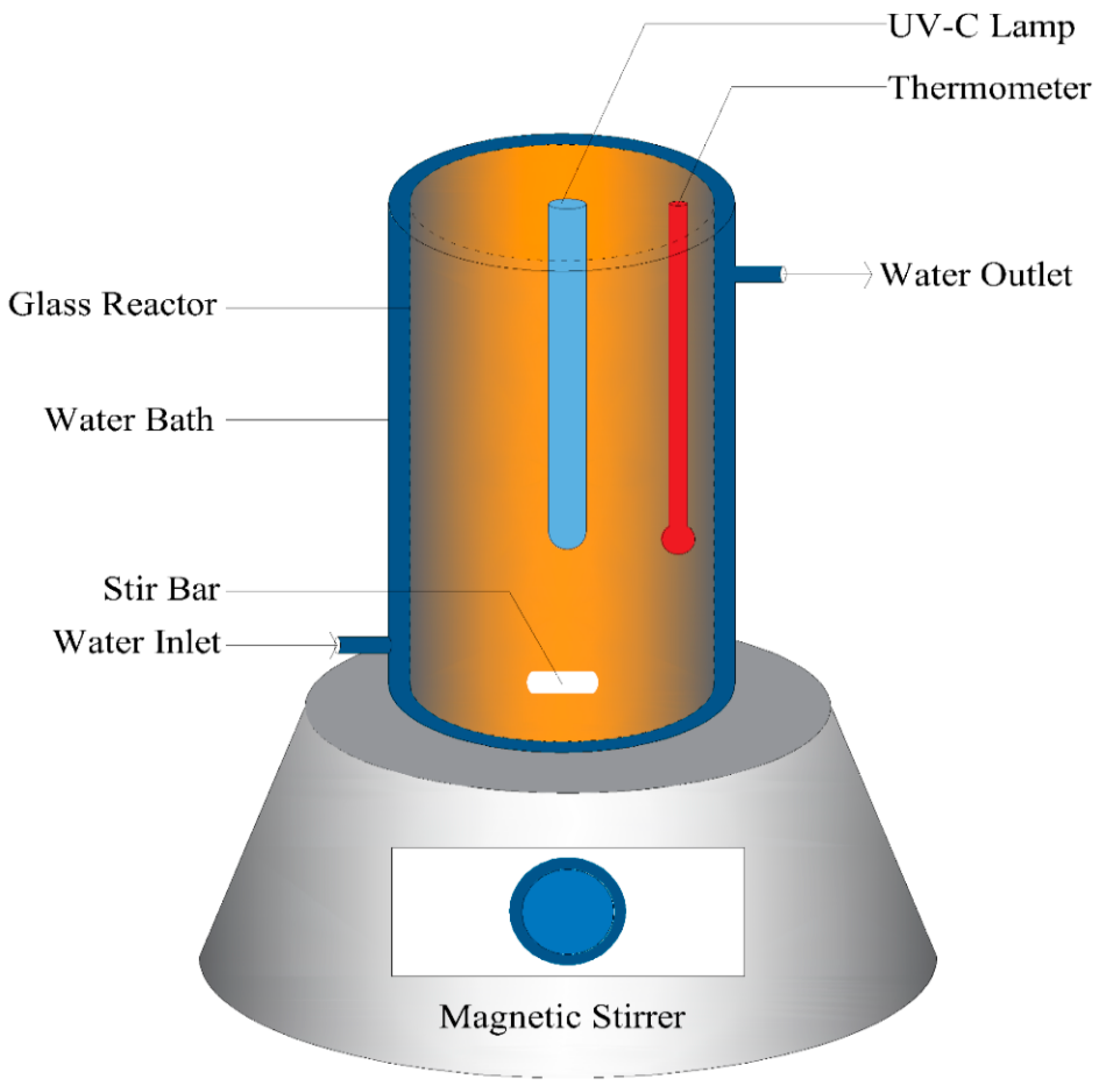
2.5. Experimental Setup and Procedure
3. Results and Discussion
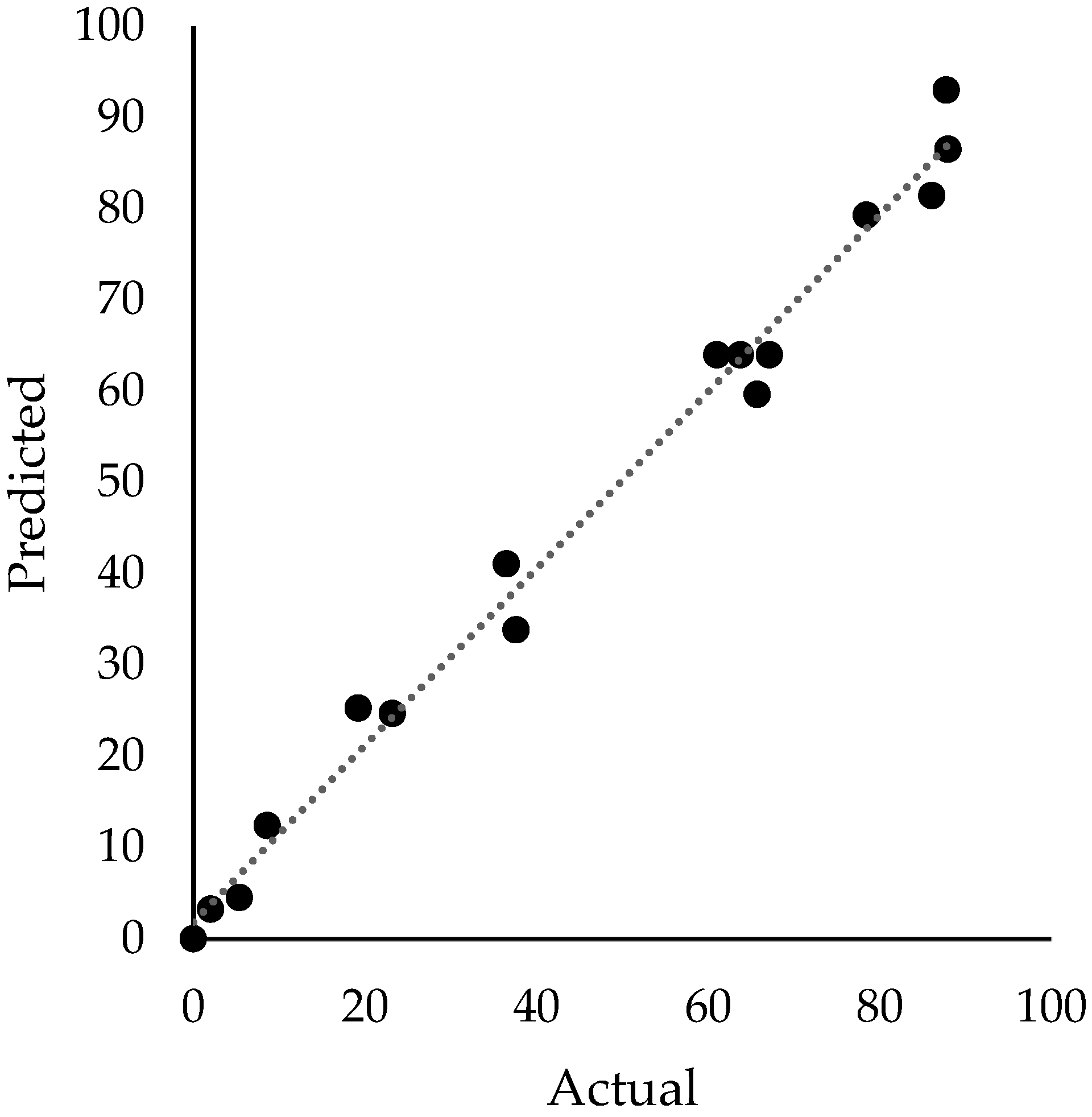
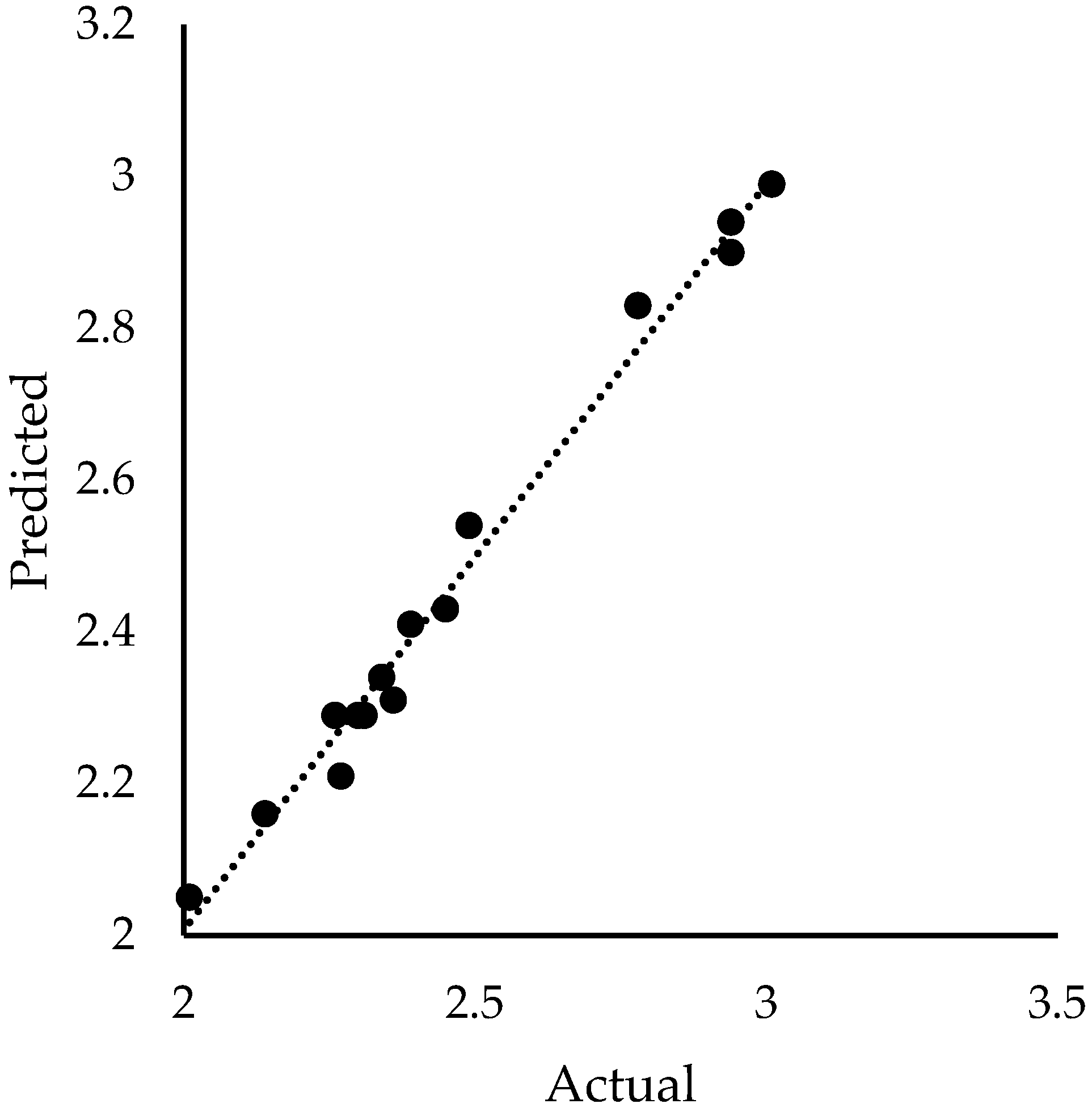
3.1. Data-Driven Prediction Model and ANOVA
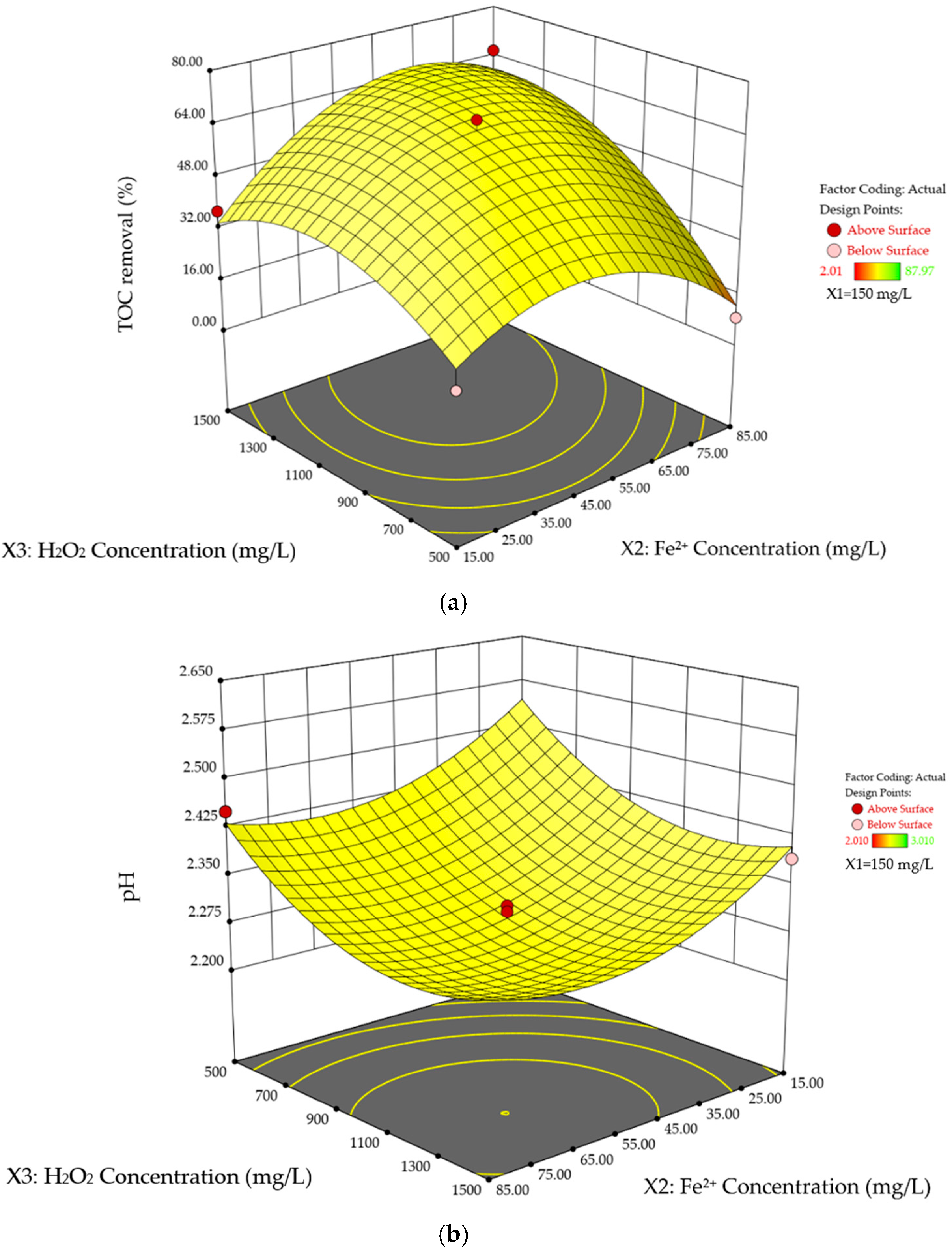
3.2. Interactive Effects of Fe2+ and H2O2 on %TOC Removal and pHFinal
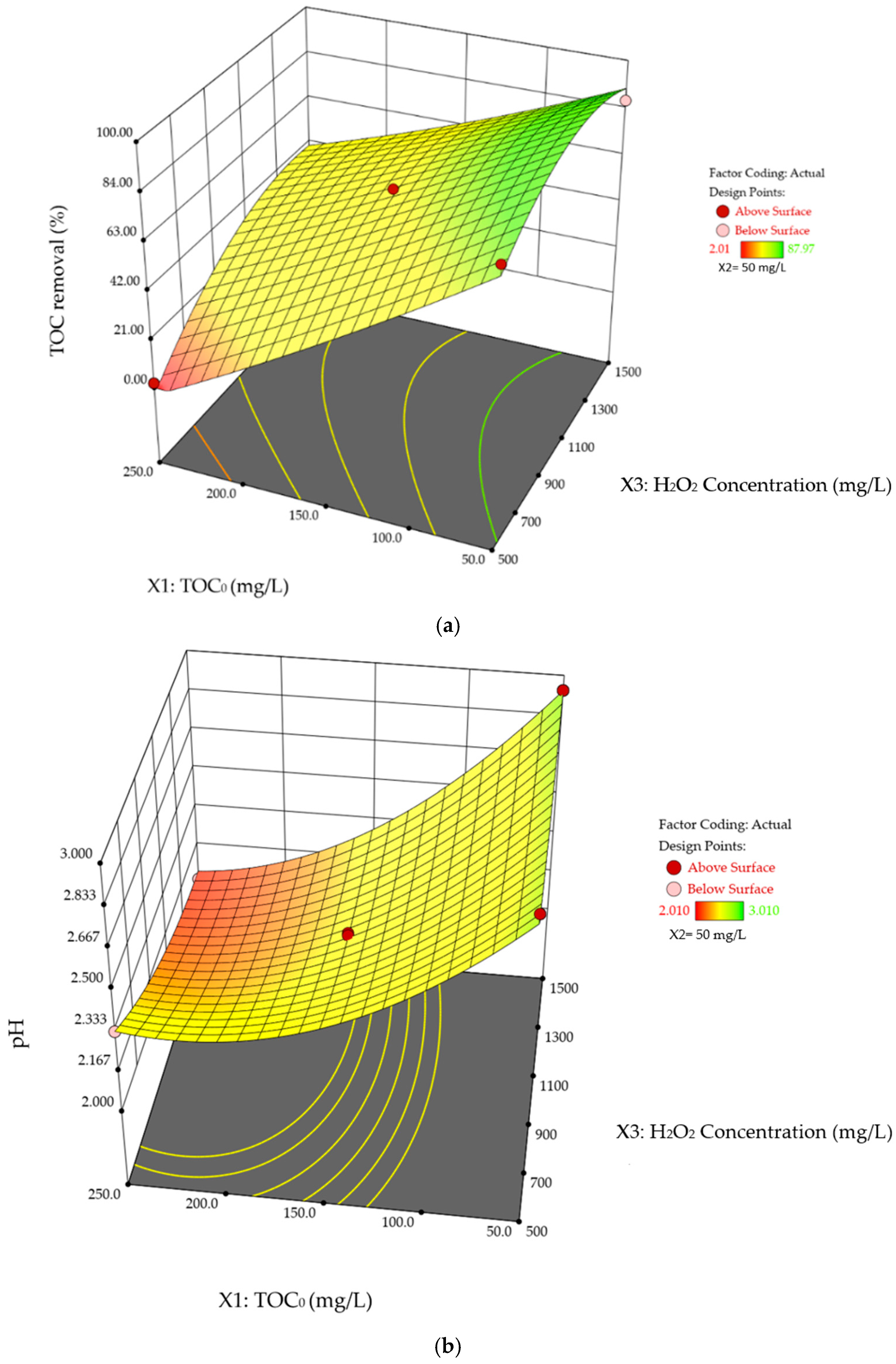
3.3. Interactive Effects of TOC0 and H2O2 on %TOC Removal and pHFinal
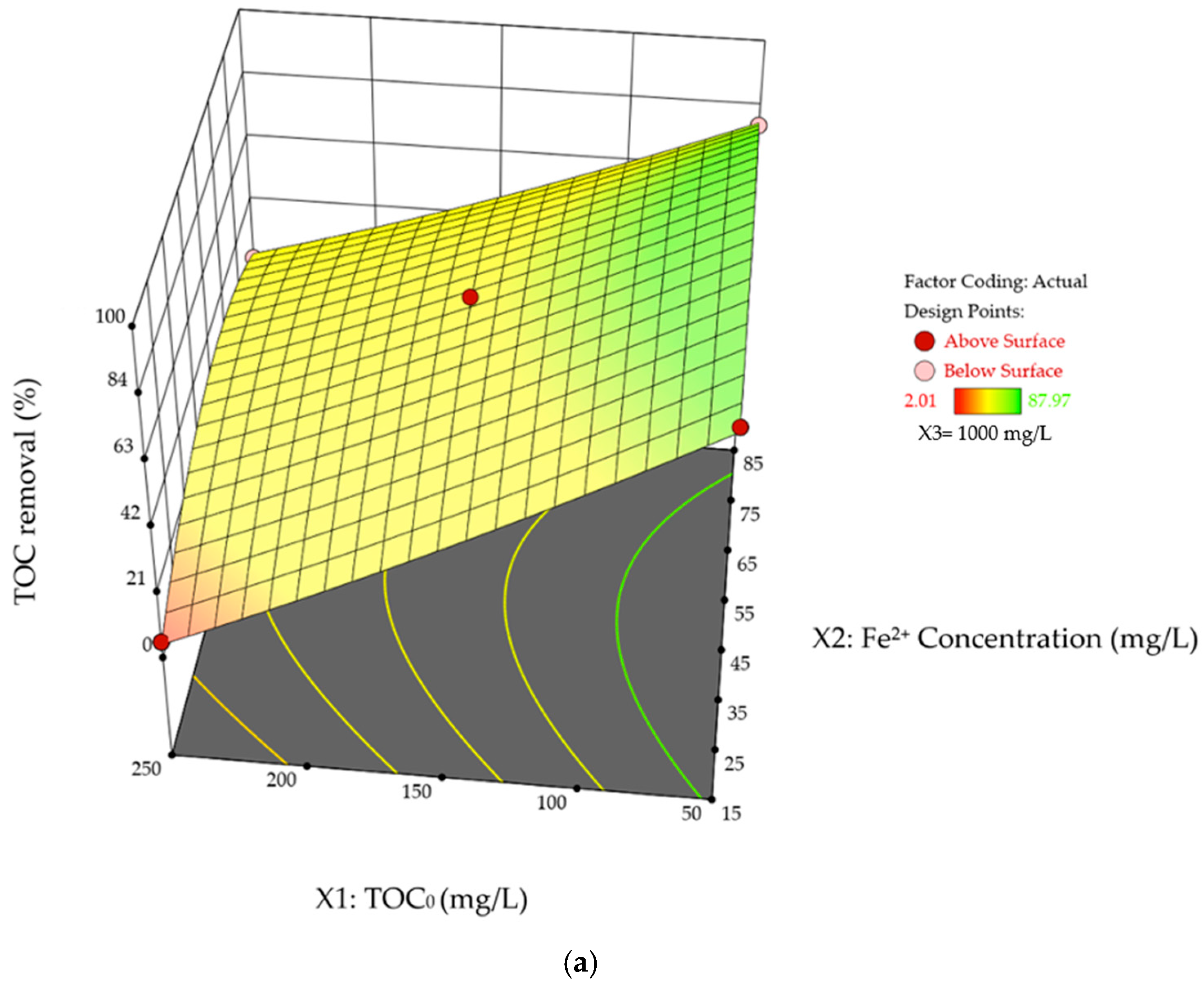
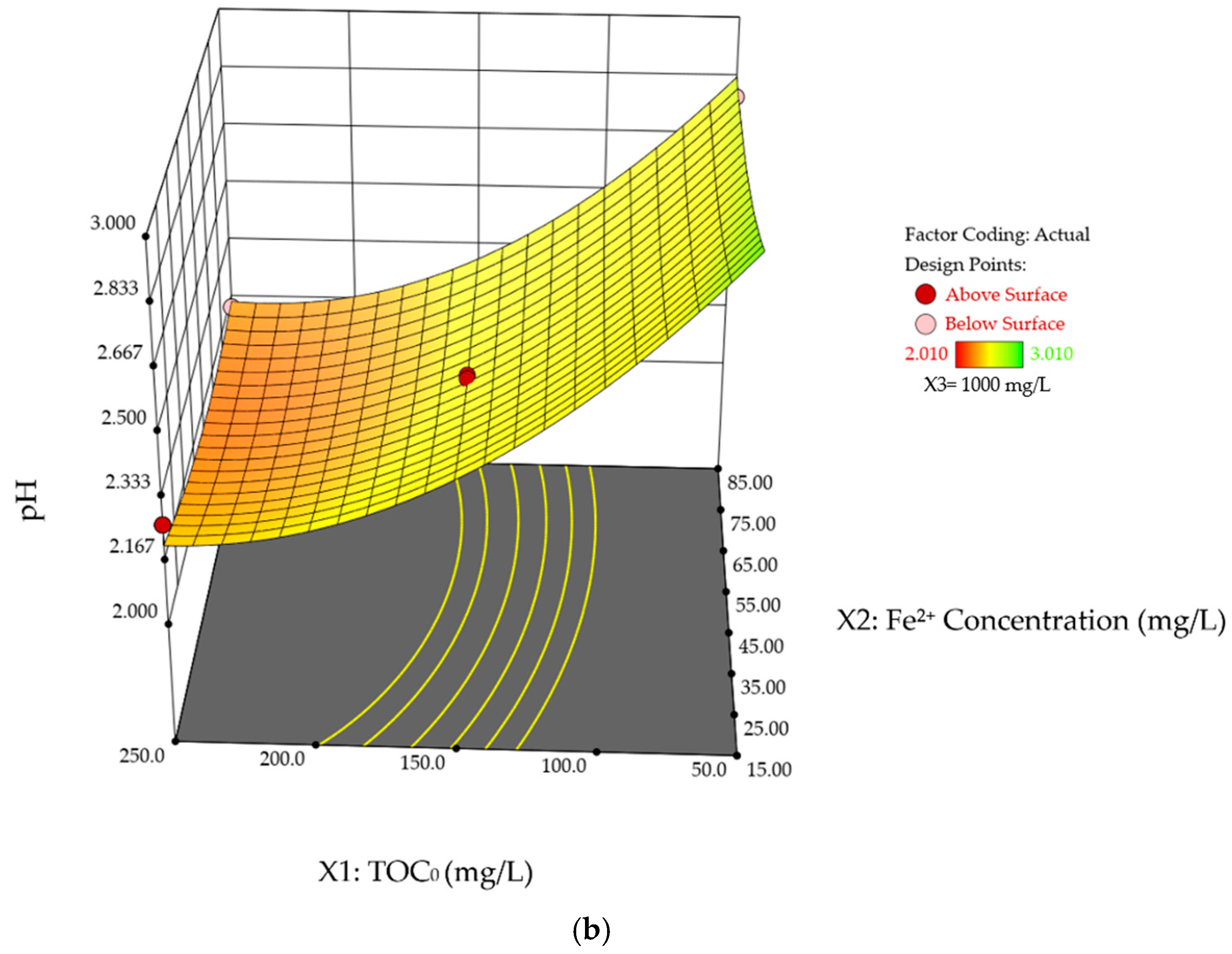
3.4. Interactive Effects of TOC0 and Fe2+ on %TOC Removal and pHFinal
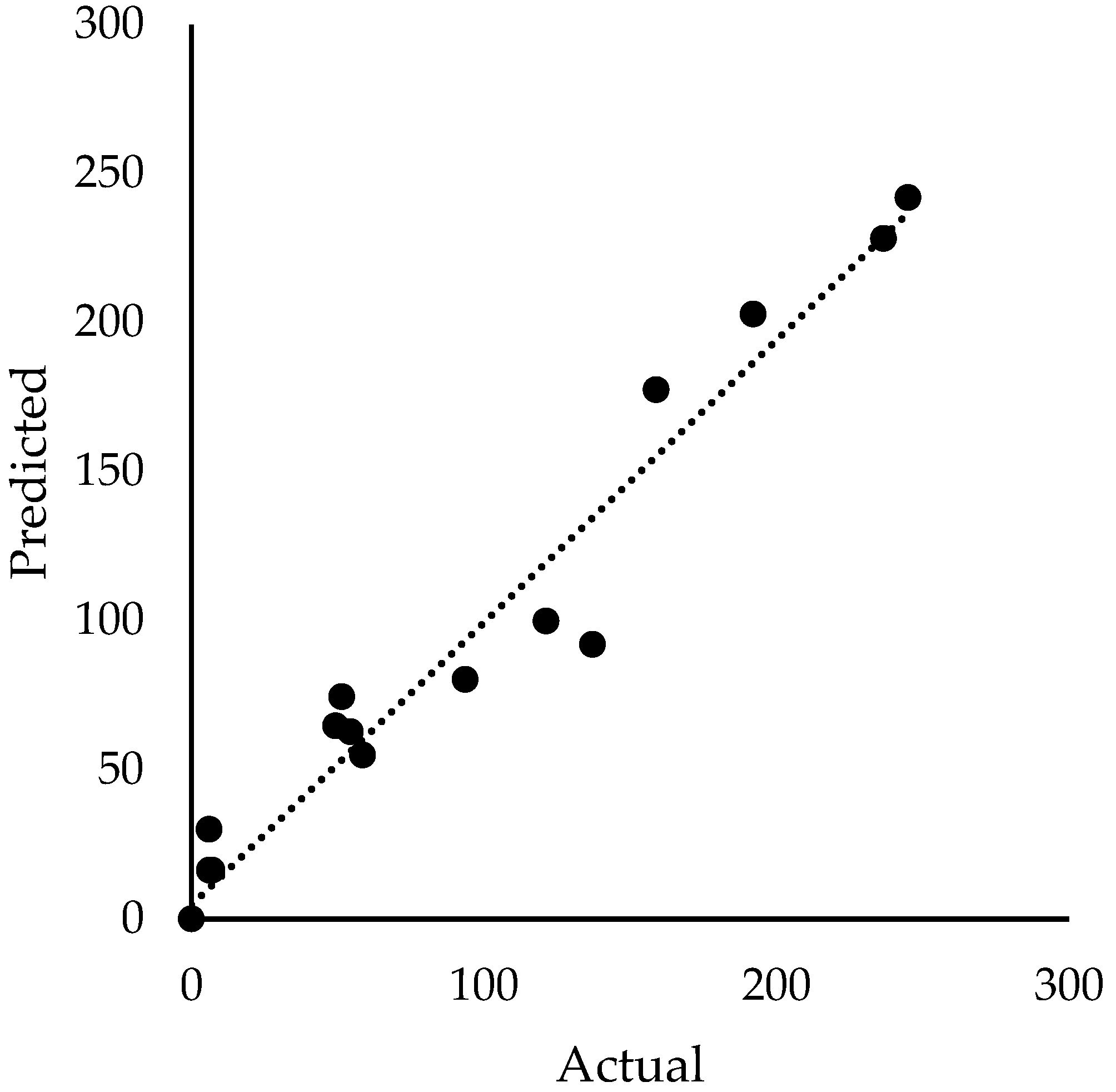
3.5. Potential Use of TOC0 and pHFinal as Indicators for TOCFinal
3.6. Optimization of Operating Conditions
4. Conclusions
Author Contributions
Funding
Data Availability Statement
Conflicts of Interest
Abbreviations
| Acronyms | |
| ANOVA | Analysis of Variance |
| AOPs | Advanced Oxidation Process |
| BBD | Box-Behnken Design |
| Corrected total SS | Corrected Total Sum of Squares |
| df | Degree of Freedom |
| DOE | Design of Experiments |
| IC | Inorganic Carbon |
| NDIR | Nondispersive Infrared |
| POC | Purgeable Organic Carbon |
| RSM | Response Surface Methodology |
| SA | Sulfanilic Acid |
| TOC | Total Organic Carbon |
| UV | Ultraviolet |
| Symbols | |
| CO2 | Carbon Dioxide |
| Fe2+ | Ferrous Iron |
| Fe3+ | Ferric Iron |
| h | Planck’s Constant |
| HO• | Hydroxyl Radical |
| Hydroperoxyl Radical | |
| H2O2 | Hydrogen Peroxide |
| RH | Undegraded Organic Pollutant |
| Organic Radical | |
| pHInitial | Initial pH |
| pHFinal | Final pH |
| TOC0 | Initial Total Organic Carbon Content (mg/L) |
| TOCFinal | Final Total Organic Carbon Content of Feed (mg/L) |
| x1 | Initial Total Organic Carbon Content (mg/L) |
| x2 | Ferrous Iron Concentration (mg/L) |
| x3 | Hydrogen Peroxide Concentration (mg/L) |
| Y1 | Predicted %TOC Removal |
| Y2 | Predicted Final pH |
| Light Frequency |
References
- El-Ghenymy, A.; Garcia-Segura, S.; Rodríguez, R.M.; Brillas, E.; El Begrani, M.S.; Abdelouahid, B.A. Optimization of the Electro-Fenton and Solar Photoelectro-Fenton Treatments of Sulfanilic Acid Solutions Using a Pre-Pilot Flow Plant by Response Surface Methodology. J. Hazard. Mater. 2012, 221–222, 288–297. [Google Scholar] [CrossRef]
- El-Ghenymy, A.; Garrido, J.A.; Centellas, F.; Arias, C.; Cabot, P.L.; Rodríguez, R.M.; Brillas, E. Electro-Fenton and Photoelectro-Fenton Degradation of Sulfanilic Acid Using a Boron-Doped Diamond Anode and an Air Diffusion Cathode. J. Phys. Chem. A 2012, 116, 3404–3412. [Google Scholar] [CrossRef]
- Wei, M.-C.; Wang, K.-S.; Lin, I.-C.; Hsiao, T.-E.; Lin, Y.-N.; Tang, C.-T.; Chen, J.-C.; Chang, S.-H. Rapid Regeneration of Sulfanilic Acid-Sorbed Activated Carbon by Microwave with Persulfate. Chem. Eng. J. 2012, 193–194, 366–371. [Google Scholar] [CrossRef]
- Barsing, P.; Tiwari, A.; Joshi, T.; Garg, S. Application of a Novel Bacterial Consortium for Mineralization of Sulphonated Aromatic Amines. Bioresour. Technol. 2011, 102, 765–771. [Google Scholar] [CrossRef]
- Juárez-Ramírez, C.; Galíndez-Mayer, J.; Ruiz-Ordaz, N.; Ramos-Monroy, O.; Santoyo-Tepole, F.; Poggi-Varaldo, H. Steady-State Inhibition Model for the Biodegradation of Sulfonated Amines in a Packed Bed Reactor. New Biotechnol. 2015, 32, 379–386. [Google Scholar] [CrossRef] [PubMed]
- Wang, J.; Liu, G.; Lu, H.; Jin, R.; Zhou, J. Degradation of 1-amino-4-bromoanthraquinone-2-sulfonic Acid Using Combined Airlift Bioreactor and TiO2-photocatalytic Ozonation. J. Chem. Technol. Biotechnol. 2013, 88, 970–974. [Google Scholar] [CrossRef]
- Zhou, R.; Li, T.; Su, Y.; Li, C.; Jin, X.; Ren, H. Removal of Sulfanilic Acid from Wastewater by Thermally Activated Persulfate Process: Oxidation Performance and Kinetic Modeling. J. Chem. Technol. Biotechnol. 2019, 94, 3208–3216. [Google Scholar] [CrossRef]
- Al-Amrani, W.A.; Hanafiah, M.A.K.M.; Lim, P.-E. Influence of Hydrophilicity/Hydrophobicity on Adsorption/Desorption of Sulfanilic Acid Using Amine-Modified Silicas and Granular Activated Carbon. Desalination Water Treat. 2022, 249, 109–118. [Google Scholar] [CrossRef]
- Sun, Y.; Wang, Y.; Peng, Z.; Liu, Y. Treatment of High Salinity Sulfanilic Acid Wastewater by Bipolar Membrane Electrodialysis. Sep. Purif. Technol. 2022, 281, 119842. [Google Scholar] [CrossRef]
- Andreozzi, R.; Campanella, L.; Fraysse, B.; Garric, J.; Gonnella, A.; Lo Giudice, R.; Marotta, R.; Pinto, G.; Pollio, A. Effects of Advanced Oxidation Processes (AOPs) on the Toxicity of a Mixture of Pharmaceuticals. Water Sci. Technol. 2004, 50, 23–28. [Google Scholar] [CrossRef]
- GilPavas, E.; Correa-Sánchez, S.; Acosta, D.A. Using Scrap Zero Valent Iron to Replace Dissolved Iron in the Fenton Process for Textile Wastewater Treatment: Optimization and Assessment of Toxicity and Biodegradability. Environ. Pollut. 2019, 252, 1709–1718. [Google Scholar] [CrossRef] [PubMed]
- Li, A.; Wu, Q.-Y.; Tian, G.-P.; Hu, H.-Y. Effective Degradation of Methylisothiazolone Biocide Using Ozone: Kinetics, Mechanisms, and Decreases in Toxicity. J. Environ. Manag. 2016, 183, 1064–1071. [Google Scholar] [CrossRef]
- Sahoo, M. Degradation and Mineralization of Organic Contaminants by Fenton and Photo-Fenton Processes: Review of Mechanisms and Effects of Organic and Inorganic Additives. Res. J. Chem. Environ. 2011, 15, 96–112. [Google Scholar]
- Yazdanbakhsh, A.; Eslami, A.; Massoudinejad, M.; Avazpour, M. Enhanced Degradation of Sulfamethoxazole Antibiotic from Aqueous Solution Using Mn-WO3/LED Photocatalytic Process: Kinetic, Mechanism, Degradation Pathway and Toxicity Reduction. Chem. Eng. J. 2020, 380, 122497. [Google Scholar] [CrossRef]
- Pignatello, J.J.; Oliveros, E.; MacKay, A. Advanced Oxidation Processes for Organic Contaminant Destruction Based on the Fenton Reaction and Related Chemistry. Crit. Rev. Environ. Sci. Technol. 2006, 36, 1–84. [Google Scholar] [CrossRef]
- Khankhasaeva, S.T.; Dambueva, D.V.; Dashinamzhilova, E.T.; Gil, A.; Vicente, M.A.; Timofeeva, M.N. Fenton Degradation of Sulfanilamide in the Presence of Al, Fe-Pillared Clay: Catalytic Behavior and Identification of the Intermediates. J. Hazard. Mater. 2015, 293, 21–29. [Google Scholar] [CrossRef] [PubMed]
- Khankhasaeva, S.T.; Badmaeva, S.V. Removal of P-Aminobenzenesulfanilamide from Water Solutions by Catalytic Photo-Oxidation over Fe-Pillared Clay. Water Res. 2020, 185, 116212. [Google Scholar] [CrossRef]
- Wanchai, K.; Pichon, R. Synthesis of Fe3O4@chitosan Beads for Degradation of Sulfanilamide Using Photo-Fenton Process. In Proceedings of the Second Materials Research Society of Thailand International Conference, Pattaya, Thailand, 10–12 July 2019; p. 130002. [Google Scholar]
- Ganiyu, S.O.; De Araújo, M.J.G.; De Araújo Costa, E.C.T.; Santos, J.E.L.; Dos Santos, E.V.; Martínez-Huitle, C.A.; Pergher, S.B.C. Design of Highly Efficient Porous Carbon Foam Cathode for Electro-Fenton Degradation of Antimicrobial Sulfanilamide. Appl. Catal. B Environ. 2021, 283, 119652. [Google Scholar] [CrossRef]
- Litter, M.I. Introduction to Photochemical Advanced Oxidation Processes for Water Treatment. In Environmental Photochemistry Part II; Boule, P., Bahnemann, D.W., Robertson, P.K.J., Eds.; The Handbook of Environmental Chemistry; Springer-Verlag: Berlin/Heidelberg, Germany, 2005; Volume 2M, pp. 325–366. ISBN 978-3-540-00269-7. [Google Scholar]
- Oturan, M.A.; Aaron, J.-J. Advanced Oxidation Processes in Water/Wastewater Treatment: Principles and Applications. A Review. Crit. Rev. Environ. Sci. Technol. 2014, 44, 2577–2641. [Google Scholar] [CrossRef]
- Parsa, Z.; Dhib, R.; Mehrvar, M. Continuous UV/H2O2 Process: A Sustainable Wastewater Treatment Approach for Enhancing the Biodegradability of Aqueous PVA. Sustainability 2024, 16, 7060. [Google Scholar] [CrossRef]
- Manna, M.; Sen, S. Advanced Oxidation Process: A Sustainable Technology for Treating Refractory Organic Compounds Present in Industrial Wastewater. Environ. Sci. Pollut. Res. 2022, 30, 25477–25505. [Google Scholar] [CrossRef] [PubMed]
- Su, Y.; Zhang, Q.; Song, G.; Fu, W.; Zhou, M.; Zhang, Y. Removal of Sulfamethazine by a Flow-Fenton Reactor with H2O2 Supplied with a Two-Compartment Electrochemical Generator. Sep. Purif. Technol. 2022, 301, 122038. [Google Scholar] [CrossRef]
- Chen, G.; Cheng, K.Y.; Ginige, M.P.; Kaksonen, A.H. Aerobic Degradation of Sulfanilic Acid Using Activated Sludge. Water Res. 2012, 46, 145–151. [Google Scholar] [CrossRef]
- Rana, S.; Kumar, A.; Dhiman, P.; Mola, G.T.; Sharma, G.; Lai, C.W. Recent Advances in Photocatalytic Removal of Sulfonamide Pollutants from Waste Water by Semiconductor Heterojunctions: A Review. Mater. Today Chem. 2023, 30, 101603. [Google Scholar] [CrossRef]
- Bezerra, M.A.; Santelli, R.E.; Oliveira, E.P.; Villar, L.S.; Escaleira, L.A. Response Surface Methodology (RSM) as a Tool for Optimization in Analytical Chemistry. Talanta 2008, 76, 965–977. [Google Scholar] [CrossRef]
- Pariente, M.; Martinez, F.; Melero, J.; Botas, J.; Velegraki, T.; Xekoukoulotakis, N.; Mantzavinos, D. Heterogeneous Photo-Fenton Oxidation of Benzoic Acid in Water: Effect of Operating Conditions, Reaction by-Products and Coupling with Biological Treatment. Appl. Catal. B Environ. 2008, 85, 24–32. [Google Scholar] [CrossRef]
- Baran, W.; Adamek, E.; Sobczak, A.; Sochacka, J. The Comparison of Photocatalytic Activity of Fe-Salts, TiO2 and TiO2/FeCl3 during the Sulfanilamide Degradation Process. Catal. Commun. 2009, 10, 811–814. [Google Scholar] [CrossRef]
- Gul, S.; Hussain, S.; Khan, H.; Arshad, M.; Khan, J.R.; Motheo, A.D.J. Integrated AI-Driven Optimization of Fenton Process for the Treatment of Antibiotic Sulfamethoxazole: Insights into Mechanistic Approach. Chemosphere 2024, 357, 141868. [Google Scholar] [CrossRef]
- Hamad, D.; Mehrvar, M.; Dhib, R. Photochemical Kinetic Modeling of Degradation of Aqueous Polyvinyl Alcohol in a UV/H2O2 Photoreactor. J. Polym. Environ. 2018, 26, 3283–3293. [Google Scholar] [CrossRef]
- Hoang, N.T.; Mwazighe, F.M. The Various Effects of Hydrogen Phosphate and Bicarbonate in the Degradation of Some Pollutants in the UV/Chlorine and the UV/H2O2 Processes. J. Water Process Eng. 2024, 57, 104646. [Google Scholar] [CrossRef]
- La Manna, P.; De Carluccio, M.; Iannece, P.; Vigliotta, G.; Proto, A.; Rizzo, L. Chelating Agents Supported Solar Photo-Fenton and Sunlight/H2O2 Processes for Pharmaceuticals Removal and Resistant Pathogens Inactivation in Quaternary Treatment for Urban Wastewater Reuse. J. Hazard. Mater. 2023, 452, 131235. [Google Scholar] [CrossRef]
- Dimić, D.S.; Milenković, D.A.; Avdović, E.H.; Nakarada, Đ.J.; Dimitrić Marković, J.M.; Marković, Z.S. Advanced Oxidation Processes of Coumarins by Hydroperoxyl Radical: An Experimental and Theoretical Study, and Ecotoxicology Assessment. Chem. Eng. J. 2021, 424, 130331. [Google Scholar] [CrossRef]
- Hsueh, C.L.; Huang, Y.H.; Wang, C.C.; Chen, C.Y. Degradation of Azo Dyes Using Low Iron Concentration of Fenton and Fenton-like System. Chemosphere 2005, 58, 1409–1414. [Google Scholar] [CrossRef] [PubMed]
- Panizza, M.; Cerisola, G. Electro-Fenton Degradation of Synthetic Dyes. Water Res. 2009, 43, 339–344. [Google Scholar] [CrossRef]
- Zhang, M.; Dong, H.; Zhao, L.; Wang, D.; Meng, D. A Review on Fenton Process for Organic Wastewater Treatment Based on Optimization Perspective. Sci. Total Environ. 2019, 670, 110–121. [Google Scholar] [CrossRef]
- Kang, Y.W.; Hwang, K.-Y. Effects of Reaction Conditions on the Oxidation Efficiency in the Fenton Process. Water Res. 2000, 34, 2786–2790. [Google Scholar] [CrossRef]
- Merz, J.H.; Waters, W.A. 511. The Oxidation of Aromatic Compounds by Means of the Free Hydroxyl Radical. J. Chem. Soc. Resumed 1949, 2427–2433. [Google Scholar] [CrossRef]
- Walling, C.; Kato, S. Oxidation of Alcohols by Fenton’s Reagent. Effect of Copper Ion. J. Am. Chem. Soc. 1971, 93, 4275–4281. [Google Scholar] [CrossRef]
- Yildiz, S.; Olabi, A. Effect of Fe2+ and Fe0 Applied Photo-Fenton Processes on Sludge Disintegration. Chem. Eng. Technol. 2021, 44, 95–103. [Google Scholar] [CrossRef]
- Mijangos, F.; Varona, F.; Villota, N. Changes in Solution Color During Phenol Oxidation by Fenton Reagent. Environ. Sci. Technol. 2006, 40, 5538–5543. [Google Scholar] [CrossRef]
- Duprez, D.; Delanoë, F.; Barbier, J.; Isnard, P.; Blanchard, G. Catalytic Oxidation of Organic Compounds in Aqueous Media. Catal. Today 1996, 29, 317–322. [Google Scholar] [CrossRef]
- Liu, Y.; Wang, J. Degradation of Sulfamethazine by Gamma Irradiation in the Presence of Hydrogen Peroxide. J. Hazard. Mater. 2013, 250–251, 99–105. [Google Scholar] [CrossRef] [PubMed]
- Baran, W.; Adamek, E.; Sobczak, A.; Makowski, A. Photocatalytic Degradation of Sulfa Drugs with TiO2, Fe Salts and TiO2/FeCl3 in Aquatic Environment—Kinetics and Degradation Pathway. Appl. Catal. B Environ. 2009, 90, 516–525. [Google Scholar] [CrossRef]
- Parsa, Z.; Dhib, R.; Mehrvar, M. pH and UVA Real-time Data Feasibility for Monitoring Aqueous PVA Degradation in a Continuous Pilot-scale UV/H2O2 Photoreactor: Experimental and Statistical Analysis. Can. J. Chem. Eng. 2025, 103, 6056–6071. [Google Scholar] [CrossRef]
- Kalinski, I.; Juretic, D.; Kusic, H.; Peternel, I.; Bozic, A.L. Structural Aspects of the Degradation of Sulfoaromatics by the UV/H2O2 Process. J. Photochem. Photobiol. Chem. 2014, 293, 1–11. [Google Scholar] [CrossRef]
- Sigma-Aldrich. Sulfanilic Acid SAFETY DATA SHEET; MilliporeSigma Canada Ltd.: Oakville, ON, Canada, 2025. [Google Scholar]
- Sigma-Aldrich. Oxalic Acid SAFETY DATA SHEET; MilliporeSigma Canada Ltd.: Oakville, ON, Canada, 2024. [Google Scholar]
- Honeywell International Inc. Formic Acid SAFETY DATA SHEET; Honeywell International Inc.: Morris Plains, NJ, USA, 2021. [Google Scholar]




| Independent Variable | Representative Symbol | Coded Level and Actual Range | ||
|---|---|---|---|---|
| −1 | 0 | 1 | ||
| TOC0 Concentration (mg/L) | 50 | 150 | 250 | |
| Fe2+ Concentration (mg/L) | 15 | 50 | 85 | |
| H2O2 Concentration (mg/L) | 500 | 1000 | 1500 | |
| Run | Independent Coded Variable | %TOC Removal | pHFinal | ||||
|---|---|---|---|---|---|---|---|
| x1 | x2 | x3 | Observed y1 | Predicted Y1 | Observed y2 | Predicted Y2 | |
| 1 | 0 | 1 | 1 | 65.7 | 59.7 | 2.40 | 2.30 |
| 2 | −1 | 0 | 1 | 87.8 | 93.0 | 2.94 | 2.94 |
| 3 | 0 | 0 | 0 | 61.0 | 64.1 | 2.26 | 2.29 |
| 4 | 1 | 1 | 0 | 23.2 | 24.7 | 2.14 | 2.16 |
| 5 | −1 | 0 | −1 | 86.1 | 81.5 | 2.94 | 2.9 |
| 6 | 0 | 1 | −1 | 8.62 | 12.4 | 2.45 | 2.43 |
| 7 | −1 | −1 | 0 | 88.0 | 86.5 | 3.01 | 2.99 |
| 8 | 0 | 0 | 0 | 67.1 | 64.0 | 2.31 | 2.29 |
| 9 | 1 | 0 | 1 | 36.5 | 41.1 | 2.01 | 2.05 |
| 10 | 0 | −1 | 1 | 37.6 | 33.9 | 2.39 | 2.41 |
| 11 | 0 | −1 | −1 | 19.2 | 25.3 | 2.49 | 2.54 |
| 12 | 1 | 0 | −1 | 2.01 | 3.23 | 2.34 | 2.34 |
| 13 | 1 | −1 | 0 | 5.36 | 4.53 | 2.27 | 2.21 |
| 14 | −1 | 1 | 0 | 78.5 | 79.3 | 2.78 | 2.83 |
| 15 | 0 | 0 | 0 | 63.8 | 64.0 | 2.30 | 2.29 |
| Parameter | Value |
|---|---|
| Lamp wavelength | UV-C, Large emission band centred at 254 nm |
| Lamp wattage | 9 W |
| Lamp voltage | 60 V |
| Length of lamp (base face) | 129 mm |
| Model manufacturer | PLS9W/TUV |
| Manufacturer | LSE Lighting |
| Experimental Condition | TOC0 (mg/L) | Fe2+ (mg/L) | H2O2 (mg/L) | %TOC Removal |
|---|---|---|---|---|
| UV | 150 | N/A | N/A | N/A |
| UV/H2O2 | 150 | N/A | 1150 | N/A |
| Fenton | 150 | 46.8 | 1150 | 18.3 |
| photo-Fenton | 150 | 46.8 | 1150 | 78.8 |
| Fe2+ Concentration (mg/L) | Fe2+/TOC0 (w/w) | References |
|---|---|---|
| 66.0–72.0 | 1.01–3.45 | [16] |
| 52.5–210 | 0.198–14.2 | [28] |
| 55.9 | 7.75 | [29] |
| 2.50–15.0 | 0.0260–0.633 | [30] |
| 15.0–85.0 | 0.060–1.70 | Present Study |
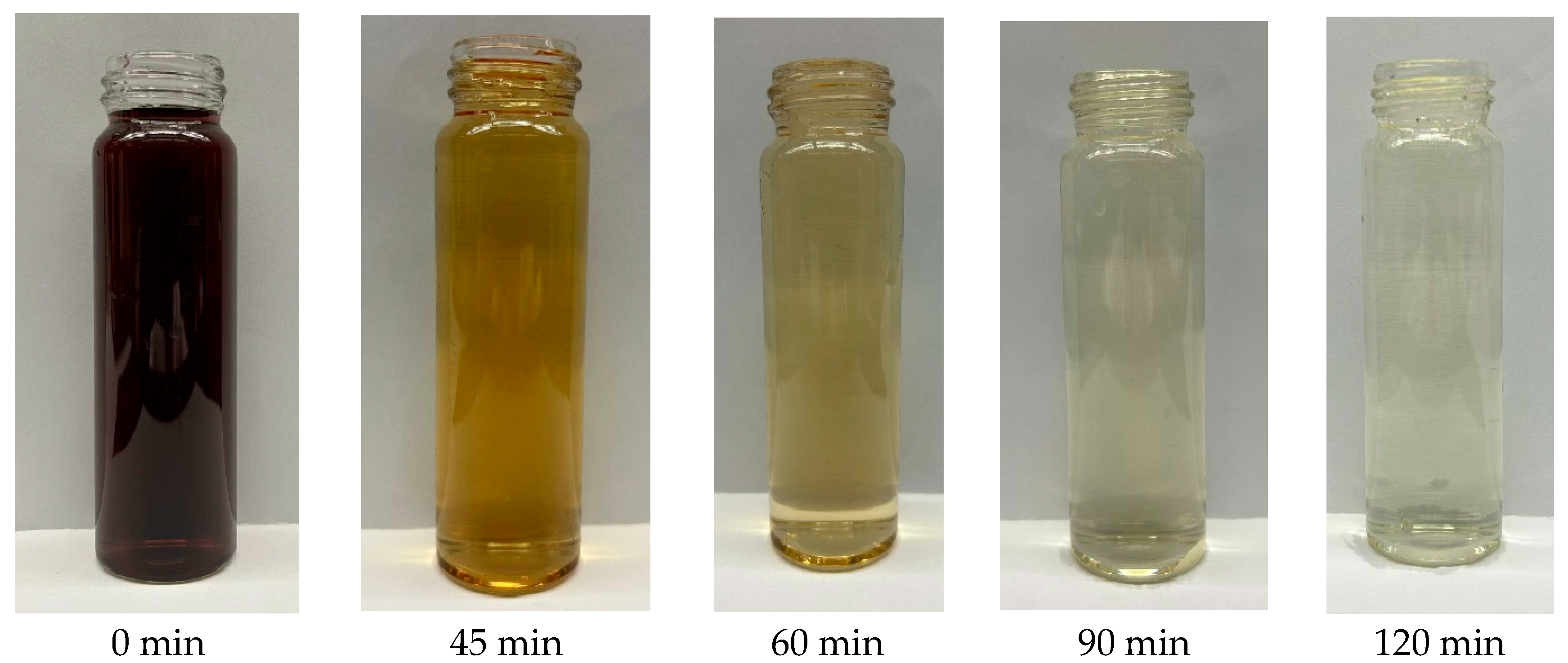
| Run | 120 min | 90 min | 60 min | 45 min | Optimum Time |
|---|---|---|---|---|---|
| 1 | 0.801 | 1.07 | 1.45 | 1.46 | 45 min |
| 2 | 0.792 | 1.05 | 1.52 | 1.95 | 45 min |
| 3 | 0.788 | 0.962 | 1.37 | 1.36 | 60 min |
| 4 | 0.302 | 0.358 | 0.514 | 0.516 | 45 min |
| 5 | 0.806 | 1.05 | 1.48 | 1.91 | 45 min |
| 6 | 0.173 | 0.156 | 0.152 | 0.192 | 45 min |
| 7 | 0.823 | 1.10 | 1.58 | 1.96 | 45 min |
| 8 | 0.779 | 1.01 | 1.37 | 1.49 | 45 min |
| 9 | 0.623 | 0.801 | 0.738 | 0.810 | 45 min |
| 10 | 0.790 | 0.800 | 0.648 | 0.836 | 45 min |
| 11 | 0.243 | 0.306 | 0.354 | 0.427 | 45 min |
| 12 | 0.176 | 0.128 | 0.157 | 0.045 | 120 min |
| 13 | 0.183 | 0.166 | 0.146 | 0.119 | 120 min |
| 14 | 0.803 | 1.06 | 1.50 | 1.74 | 45 min |
| 15 | 0.786 | 1.02 | 1.38 | 1.42 | 45 min |
| Sum of Squares | df | Mean Squares | F-Value | p-Value | |||
|---|---|---|---|---|---|---|---|
| TOC removal model (Y1) | 1.359 × 10⁴ | 9 | 1.510 × 10³ | 33.71 | 0.0006 | significant | |
| 9.319 × 10³ | 1 | 9.329 × 10³ | 2.083 × 10² | <0.0001 | significant | ||
| 83.46 | 1 | 83.46 | 1.860 | 0.2305 | |||
| 1.559 × 10³ | 1 | 1.559 × 10³ | 34.80 | 0.0020 | significant | ||
| 1.871 × 10² | 1 | 1.871 × 10² | 4.180 | 0.0964 | |||
| 2.685 × 10² | 1 | 2.685 × 10² | 5.990 | 0.0581 | |||
| 3.740 × 10² | 1 | 3.740 × 10² | 8.350 | 0.0342 | significant | ||
| 23.55 | 1 | 23.55 | 0.5257 | 0.5009 | |||
| 1.164 × 10³ | 1 | 1.164 × 10³ | 25.99 | 0.0038 | significant | ||
| 6.659 × 10² | 1 | 6.659 × 10² | 14.87 | 0.0119 | significant | ||
| Residual | 2.240 × 10² | 5 | 44.80 | ||||
| Corrected total SS | 13,814.08 | 14 | |||||
| R2 | 0.9840 | ||||||
| Adjusted R2 | 0.9550 | ||||||
| Predicted R2 | 0.7590 | ||||||
| Adeq Precision | 17.61 | ||||||
| Sum of Squares | df | Mean Squares | F-Value | p-Value | |||
|---|---|---|---|---|---|---|---|
| pH response model (Y2) | 1.310 | 9 | 0.1453 | 42.29 | 0.0003 | significant | |
| 1.060 | 1 | 1.060 | 3.082 × 10² | <0.0001 | significant | ||
| 2.310 × 10⁻² | 1 | 2.310 × 10⁻² | 6.730 | 0.0486 | significant | ||
| 3.380 × 10⁻² | 1 | 3.380 × 10⁻² | 9.840 | 0.0258 | significant | ||
| 2.500 × 10⁻³ | 1 | 2.500 × 10⁻³ | 0.728 | 0.4326 | |||
| 2.720 × 10⁻² | 1 | 2.720 × 10⁻² | 7.930 | 0.0373 | significant | ||
| 0 | 1 | 0 | 7.300 × 10⁻³ | 0.9353 | |||
| 0.144 | 1 | 0.144 | 41.93 | 0.0013 | significant | ||
| 1.440 × 10⁻² | 1 | 1.440 × 10⁻² | 4.200 | 0.0958 | |||
| 1.810 × 10⁻² | 1 | 1.810 × 10⁻² | 5.270 | 0.0702 | |||
| Residual | 1.720 × 10⁻² | 5 | 3.400 × 10⁻³ | ||||
| Corrected total SS | 1.32 | 14 | |||||
| R2 | 0.9870 | ||||||
| Adjusted R2 | 0.9637 | ||||||
| Predicted R2 | 0.8071 | ||||||
| Adeq Precision | 19.77 | ||||||
| Run | TOC0 | %TOC Removal (120 min) | %TOC Removal (45 min) | pHFinal (120 min) | pHFinal (45 min) | pHInitial |
|---|---|---|---|---|---|---|
| 1 | 150 | 96.1 | 65.7 | 2.68 | 2.36 | 2.93 |
| 2 | 50 | 95.1 | 87.8 | 2.87 | 2.94 | 3.36 |
| 3 | 150 | 94.5 | 61.0 | 2.57 | 2.26 | 2.92 |
| 4 | 250 | 24.9 | 23.2 | 2.25 | 2.14 | 2.76 |
| 5 | 50 | 96.8 | 86.1 | 2.83 | 2.94 | 3.31 |
| 6 | 150 | 20.8 | 8.62 | 2.50 | 2.45 | 2.94 |
| 7 | 50 | 98.7 | 88.0 | 3.11 | 3.01 | 3.33 |
| 8 | 150 | 93.5 | 67.1 | 2.59 | 2.31 | 2.92 |
| 9 | 250 | 74.7 | 36.5 | 2.20 | 2.01 | 2.76 |
| 10 | 150 | 94.8 | 37.6 | 2.55 | 2.39 | 2.97 |
| 11 | 150 | 29.2 | 19.2 | 2.50 | 2.49 | 2.97 |
| 12 | 250 | 21.2 | 2.01 | 2.57 | 2.34 | 2.75 |
| 13 | 250 | 21.9 | 5.36 | 2.22 | 2.27 | 2.74 |
| 14 | 50 | 96.4 | 78.4 | 2.73 | 2.78 | 3.34 |
| 15 | 150 | 94.3 | 63.8 | 2.65 | 2.30 | 2.92 |
| Sum of Squares | df | Mean Squares | F-Value | p-Value | |||
|---|---|---|---|---|---|---|---|
| TOCFinal mg/L (Y) | 9.064 × 10⁴ | 2 | 4.532 × 10⁴ | 99.16 | <0.0001 | significant | |
| 4.715 × 10⁴ | 1 | 4.715 × 10⁴ | 1.032 × 10² | <0.0001 | significant | ||
| 1.013 × 10⁴ | 1 | 1.013 × 10⁴ | 22.17 | 0.0005 | significant | ||
| Residual | 5.484 × 10³ | 12 | 4.570 × 10² | ||||
| Corrected total SS | 9.611 × 10⁴ | 14 | |||||
| R2 | 0.9429 | ||||||
| Adjusted R2 | 0.9334 | ||||||
| Predicted R2 | 0.9197 | ||||||
| Adeq Precision | 26.85 | ||||||
| Optimum Solution | Predicted Process Responses | Observed Process Responses | ||||
|---|---|---|---|---|---|---|
| %TOC Removal | pHFinal | %TOC Removal | pHFinal | |||
| 54.2 | 33.7 | 1403 | 89.2 | 2.93 | 85.3 | 2.92 |
Disclaimer/Publisher’s Note: The statements, opinions and data contained in all publications are solely those of the individual author(s) and contributor(s) and not of MDPI and/or the editor(s). MDPI and/or the editor(s) disclaim responsibility for any injury to people or property resulting from any ideas, methods, instructions or products referred to in the content. |
© 2025 by the authors. Licensee MDPI, Basel, Switzerland. This article is an open access article distributed under the terms and conditions of the Creative Commons Attribution (CC BY) license (https://creativecommons.org/licenses/by/4.0/).
Share and Cite
Chang, C.; Mehrvar, M.; Parsa, Z. Feasibility and Statistical Analysis of Sulfanilic Acid Degradation in a Batch Photo-Fenton Process. Water 2025, 17, 3440. https://doi.org/10.3390/w17233440
Chang C, Mehrvar M, Parsa Z. Feasibility and Statistical Analysis of Sulfanilic Acid Degradation in a Batch Photo-Fenton Process. Water. 2025; 17(23):3440. https://doi.org/10.3390/w17233440
Chicago/Turabian StyleChang, Chao, Mehrab Mehrvar, and Zahra Parsa. 2025. "Feasibility and Statistical Analysis of Sulfanilic Acid Degradation in a Batch Photo-Fenton Process" Water 17, no. 23: 3440. https://doi.org/10.3390/w17233440
APA StyleChang, C., Mehrvar, M., & Parsa, Z. (2025). Feasibility and Statistical Analysis of Sulfanilic Acid Degradation in a Batch Photo-Fenton Process. Water, 17(23), 3440. https://doi.org/10.3390/w17233440