You are currently viewing a new version of our website. To view the old version click .
Water
  • Article
  • Open Access

4 December 2025

Hydrothermal Modification of Coal Gangue for Cd2+ and Pb2+ Adsorption: Modelling and Optimization of Process Parameters by Response Surface Methodology
,
,
and
1
Shendong Coal Group Co., Ltd., Shenmu 719315, China
2
State Key Laboratory of Water Resource Protection and Utilization in Coal Mining, Beijing 102211, China
3
National Institute of Clean-and-Low-Carbon Energy (NICE), Beijing 102211, China
*
Author to whom correspondence should be addressed.
This article belongs to the Special Issue Research and Application of Novel Adsorption and Catalytic Materials in Water Pollution Control

Abstract

Hydrothermal treatment has been demonstrated as a highly effective approach to enhance the adsorption properties of coal gangue (CG) for Cd2+ and Pb2+. This study evaluated the influence of NaOH concentration (X1), hexadecyltrimethylammonium bromide dosage (X2) and hydrothermal duration (X3) on the modified CG’s composition and its adsorption capacities for Cd2+ (qe,Cd) and Pb2+ (qe,Pb). Response Surface Methodology (RSM) was utilized to explore the interactions among these variables, while XRD, SEM-EDX, FTIR and XPS techniques were employed to elucidate the adsorption mechanisms. The results reveal that hydrothermal treatment facilitated the formation of zeolite materials in the modified CG samples. Optimal conditions for Cd2+ adsorption (qe,Cd = 58.4 mg/g) were determined as X1 = 2.9 mol/L, X2 = 1 g and X3 = 16.8 h. For Pb2+ adsorption (qe,Pb = 233.6 mg/g), the optimal conditions were X1 = 2.4 mol/L, X2 = 0.57 g and X3 = 20.7 h. RSM analysis indicated that X3 significantly influences qe,Cd with the appropriate range of 14–18 h, while all three factors (X1, X2 and X3) notably affect qe,Pb, with suitable ranges identified as follows: X1 = 1.8–3 mol/L, X2 = 0.4–0.8 g and X3 = 16–24 h. The primary adsorption mechanism for Cd2+ and Pb2+ was determined to be ion exchange, with additional Pb2+ removal achieved through the precipitation of cerussite (PbCO3).

1. Introduction

Over the past decades, heavy metal ions released from industrial activities such as mining operations, electroplating, ceramics production, alkaline battery manufacturing and pigment processing have emerged as a significant environmental concern due to their toxicity and persistence [1]. Various techniques have been developed to remove heavy metal ions from aqueous solutions, including solvent extraction, microbiological degradation, reverse osmosis, electrodialysis, and adsorption. Among these, adsorption stands out as one of the most effective approaches. For large-scale applications, it is crucial to select an adsorbent that balances cost-effectiveness with removal efficiency [2,3,4].
CG is a kind of hazardous solid waste generated during coal mining and washing processes, typically accounts for 15–20% of the total raw coal output [5]. It is estimated that the accumulated CG in China has exceeded 700 million tons, with an annual production of approximately 0.9 million tons in recent years [6]. Given its primary chemical constituents, Al2O3 and SiO2, as well as its predominant mineral composition of kaolin, coal gangue has emerged as a promising raw material for preparing heavy metal adsorbents [7]. Two main approaches for utilizing CG in this context include modifying it to produce CG-based adsorbents and converting it into CG-based zeolite materials through zeolitization.
Various modification techniques have been investigated to enhance the adsorption performance of CG, including calcination [8,9,10], acid washing [9,10], alkali washing [11,12], hydrothermal treatment [13,14] and intercalation [15,16]. Qiu et al. [8] developed a novel calcination method by incorporating sodium tetraborate (Na2B4O7·10H2O), which increased the adsorption capacity for Mn2+ from 3.4 to 24.4 mg/g. Additionally, they employed hydrothermal treatment to modify CG, achieving an improved Cd2+ adsorption capacity of 183.7 mg/g [13]. Gao et al. [11] found that HCl modification was more effective than KOH modification for enhancing the adsorption capacity of CG for U6+. Jabłońska et al. [9] compared the structural and surface properties of natural CG with CG modified using H2NO3, H2O2 and calcination. Furthermore, modified CG-SH was synthesized through surface grafting of CG with (3-mercaptopropyl) trimethoxysilane [15], resulting in maximum adsorption capacities of 332.8, 110.4 and 179.2 mg/g for Pb2+, Cd2+ and Hg2+, respectively.
Alkaline fusion-assisted hydrothermal crystallization is the most widely used method for synthesizing zeolites from CG [17]. Researchers have successfully produced various zeolites from CG, including NaX [2,18,19], NaY [6] and NaA [19]. Lu et al. [18] synthesized NaX zeolite from CG, achieving adsorption capacities of 45.05 mg/g for Cu2+ and 44.53 mg/g for Co2+. Ge et al. [2] reported an impressive Pb2+ adsorption capacity of 457 mg/g under optimal conditions using NaX zeolite derived from CG. Bu et al. [6] produced NaY zeolite from CG and identified ion exchange as the primary mechanism for Pb2+ adsorption. Jin et al. [20] developed a cost-effective method for synthesizing NaA zeolite from CG by eliminating the high-temperature alkali fusion process, which typically requires significant amounts of NaOH. Acid leaching is critical for zeolite synthesis when CG has high iron and quartz content [21]. Additionally, Li et al. [22] prepared a zeolite-activated carbon composite from CG through CO2 activation followed by hydrothermal synthesis.
Compared to CG-based zeolite materials, modified CG generally exhibits lower adsorption efficiency but significantly reduced processing costs, making it more feasible for industrial-scale applications. In our prior research, we evaluated the impacts of three modification techniques (i.e., acid washing, alkali washing and hydrothermal treatment) on adsorption performance, identifying hydrothermal modification as the most effective approach for enhancing the adsorption of Cd2+ and Pb2+ under controlled conditions [14]. This study focuses on optimizing key parameters of the hydrothermal process, including NaOH concentration, HTAB dosage and treatment duration, with particular emphasis on their interactive effects. Using RSM, we systematically investigated these interactions, while advanced characterization techniques such as XRD, SEM-EDX, FTIR and XPS techniques were used to elucidate the adsorption mechanisms. The results of this study can provide valuable guidance for the production of low-cost CG-based adsorbents for heavy metal ions.

2. Materials and Methods

2.1. Materials

The CG utilized in this study was obtained from the Yangshita mine in Inner Mongolia, hereafter referred to as YST. Its chemical composition was analyzed using X-ray fluorescence spectroscopy (XRF-1800, Shimadzu, Kyoto, Japan). According to the results presented in Table 1, the molar ratio of SiO2 to Al2O3 was determined to be 5.13. Proximate analysis was conducted in accordance with the Chinese national standard GB/T 212-2008 [23]. The contents of moisture, ash, volatile matter and fixed carbon were found to be 2.39 wt.%, 84.12 wt.%, 8.22 wt.% and 5.27 wt.%, respectively.
Table 1. Main chemical composition of the CG sample.
The initial CG sample was first ground and passed through a sieve to collect particles under 180 μm, which were then oven-dried at 105 °C over 24 h. The dried material obtained was thereafter employed in the modification procedure. All chemical reagents, namely HCl, NaOH, hexadecyltrimethylammonium bromide (HTAB), CdCl2 and Pb(NO3)2, were supplied by Sinopharm Chemical Reagent Co., Ltd. (Shanghai, China). Among these, NaOH, CdCl2 and Pb(NO3)2 were of analytical grade. HCl (36–38%) and HTAB (99%) were utilized without further purification.

2.2. Hydrothermal Modification of CG

The hydrothermal modification of CG was carried out based on the method reported by Qiu et al. [13]. Typically, 10 g of CG was mixed with 100 mL of 2 M NaOH solution and 1 g of HTAB in a 200 mL three-necked round-bottom flask fitted with a reflux condenser. The reaction was performed under continuous stirring at 100 °C for 24 h. After the reaction, the colloidal suspension obtained was vacuum-filtered, rinsed thoroughly with distilled water, and the collected solid was dried at 105 °C for 12 h to produce the hydrothermally modified CG. To identify optimal modification conditions, single-factor tests were conducted by varying key parameters as listed in Table 2. These included NaOH concentration (1–4 M), HTAB mass (0.25–2 g) and treatment time (12–30 h), while keeping other experimental settings unchanged.
Table 2. Reaction condition of hydrothermal modification of CG.
In an earlier study, CG was first calcined at 600 °C for 5 h in a muffle furnace prior to hydrothermal treatment [14]. However, this high-temperature calcination step is energy-intensive and contributes to increased processing costs. Therefore, in the present study, we also explore the impact of calcination pretreatment on the adsorption properties of the modified CG. Calcined CG and uncalcined CG underwent hydrothermal treatment under specified conditions: a NaOH concentration of 2 mol/L, an HTAB dosage of 1 g and a hydrothermal duration of 24 h. The resulting modified CG samples were designated as CG-C-HY and CG-HY, respectively.

2.3. Box–Behnken Method

The Box–Behnken design, a RSM approach, was implemented via Design Expert 13 software [24,25] to formulate the experimental scheme and construct a predictive model. This design aimed to optimize the process parameters and identify the conditions for maximum adsorption capacity. The independent variables investigated were NaOH concentration (X1), HTAB dosage (X2) and hydrothermal treatment time (X3). The corresponding adsorption capacities for Cd2+ and Pb2+ served as the response variables. As shown in Table 3, each factor was tested across a range established in prior single-factor experiments, with all other conditions held constant. It is noteworthy that the values presented in Table 3 are the actual values used in the experiments.
Table 3. Experimental design in the Box–Behnken method.

2.4. Adsorption Capacity Test of Cd2+ and Pb2+

Stock solutions of Cd2+ and Pb2+ (100 mg/L) were prepared by dissolving CdCl2·2.5H2O and Pb(NO3)2 in distilled water, respectively. The initial pH values of these solutions were approximately 6 for Cd2+ solution and 5 for Pb2+ solution. In the batch adsorption tests, 0.1 g of the modified CG was introduced into 50 mL of the Cd2+ solution, whereas a smaller mass of 0.02 g was used for the Pb2+ solution at the same volume. These mixtures were then agitated continuously for 1800 min at room temperature on a horizontal shaker (HY-2, Supo, Shaoxing, China). This extended duration was chosen to ensure the adsorption process reached equilibrium [14]. Subsequently, the samples were filtered using a 0.45 μm membrane, and the residual metal ion concentrations in the filtrate were analyzed with a UV-visible spectrophotometer (UV-1100, Mapada, Shanghai, China) [26]. The testing procedure is briefly outlined in the Supporting Material. The adsorption capacity was finally calculated using Equation (1) [14]:
q e = c 0 c e × V m
where qe stands for the adsorption capacity in mg/g. The terms c0 and ce signify the initial and equilibrium concentrations of the heavy metal ions, respectively (mg/L). V is the volume of the solution (L), and m is the mass of the adsorbent (g). To ensure reliability, all adsorption tests were performed in triplicate, and the reported results are based on the mean values. The adsorption capacities for Cd2+ and Pb2+ are specifically denoted as qe,Cd and qe,Pb, respectively. Statistical analysis of the adsorption capacity data was performed using Tukey’s test in OriginPro 2017 software. The significance of differences was determined based on the calculated p-values and indicated with asterisk-based significance codes: one asterisk (*) denotes a significant difference (p < 0.05), two asterisks (**) represent a highly significant difference (p < 0.01), three asterisks (***) indicate an extremely significant difference (p < 0.001) and “ns” denotes no significant difference (p ≥ 0.05).

2.5. Characterization of Modified CG

The crystalline phases present in the modified CG samples were identified by X-ray diffraction (XRD) on a Bruker D8 diffractometer (Billerica, MA, USA) with Cu Kα radiation (λ = 0.15418 nm), operating at 40 kV and 100 mA. Diffraction patterns were recorded across a 2θ interval of 5–60° at a scanning speed of 10°/min. Sample morphology was assessed using a ZEISS Gemini SEM 300 scanning electron microscope (SEM), Oberkochen, Germany.
To elucidate the adsorption mechanism, the samples were characterized both before and after the adsorption process using EDX, XPS and FTIR. Elemental distribution mapping of heavy metals was conducted with a Bruker XFlash Detector 5010 energy dispersive spectrometer (Ettlingen, Germany). XPS analysis was performed on a Thermo Escalab 250XI instrument (Waltham, MA, USA) employing an Al-Kα X-ray source (hv = 1486.6 eV), with survey scans covering binding energies from 0 to 1300 eV. FTIR spectra were collected using a Nicolet 6700 spectrometer (Waltham, MA, USA), scanning the mid-IR region from 400 to 4000 cm−1.

3. Results

3.1. Effect of Calcination Pretreatment on CG Modification

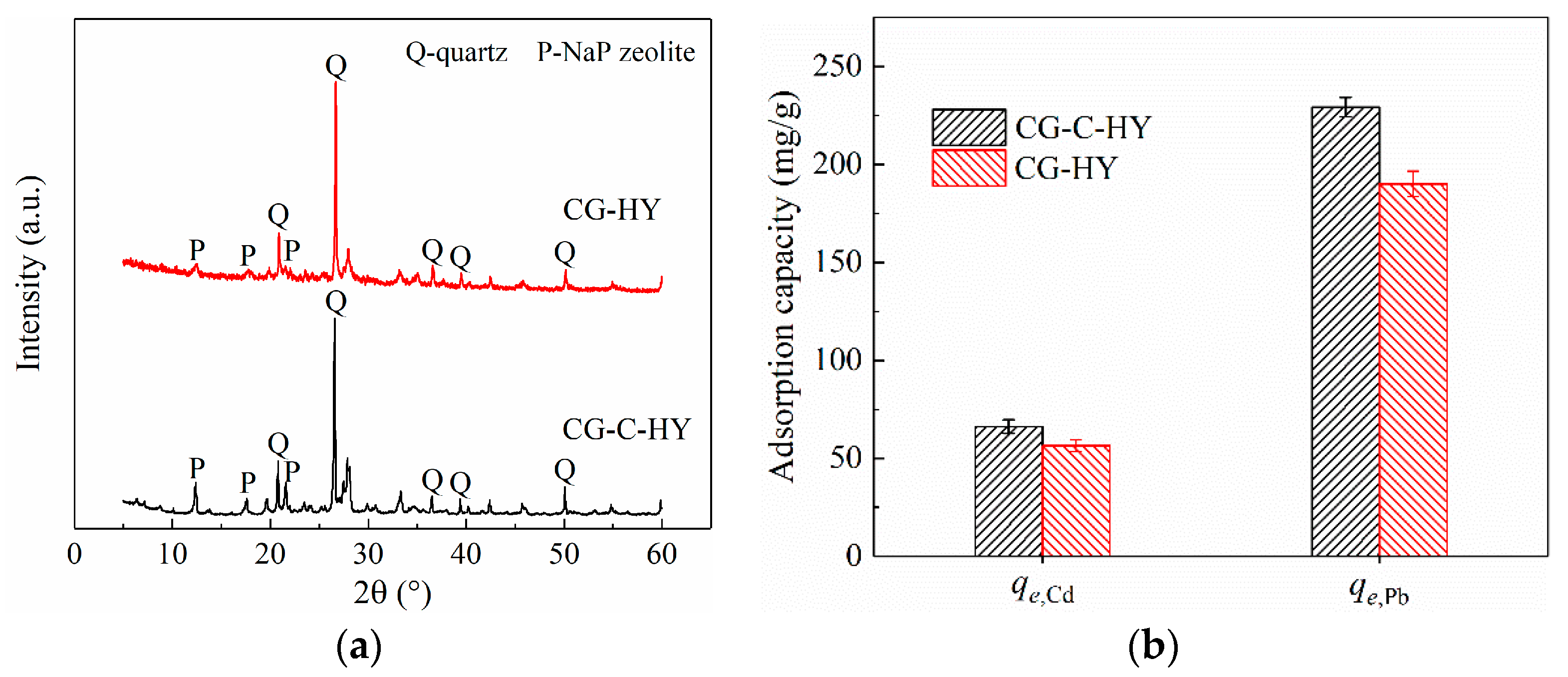
Figure 1 presents the XRD spectra and adsorption capacities of the modified CG samples. In Figure 1a, it can be observed that NaP zeolite was formed after calcination and hydrothermal treatment. NaP zeolite could also be synthesized when the raw CG underwent only hydrothermal treatment; however, the diffraction intensity was notably lower. Figure 1b shows that CG-C-HY exhibited better adsorption performance than CG-HY, though the difference between the two was relatively modest, with qe,Cd and qe,Pb values of approximately 10 and 40 mg/g, respectively. Based on these results, the high-energy-consuming calcination process was excluded from the hydrothermal modification of CG samples. No CG samples underwent high-temperature calcination prior to the hydrothermal modification process described in the following sections.
Figure 1. The impact of calcination pretreatment on the XRD pattern and adsorption capacity of the modified CG. (a) XRD patterns. (b) adsorption capacity.

3.2. Effect of Different Parameters on CG Modification

3.2.1. Effect of NaOH Concentration on CG Modification

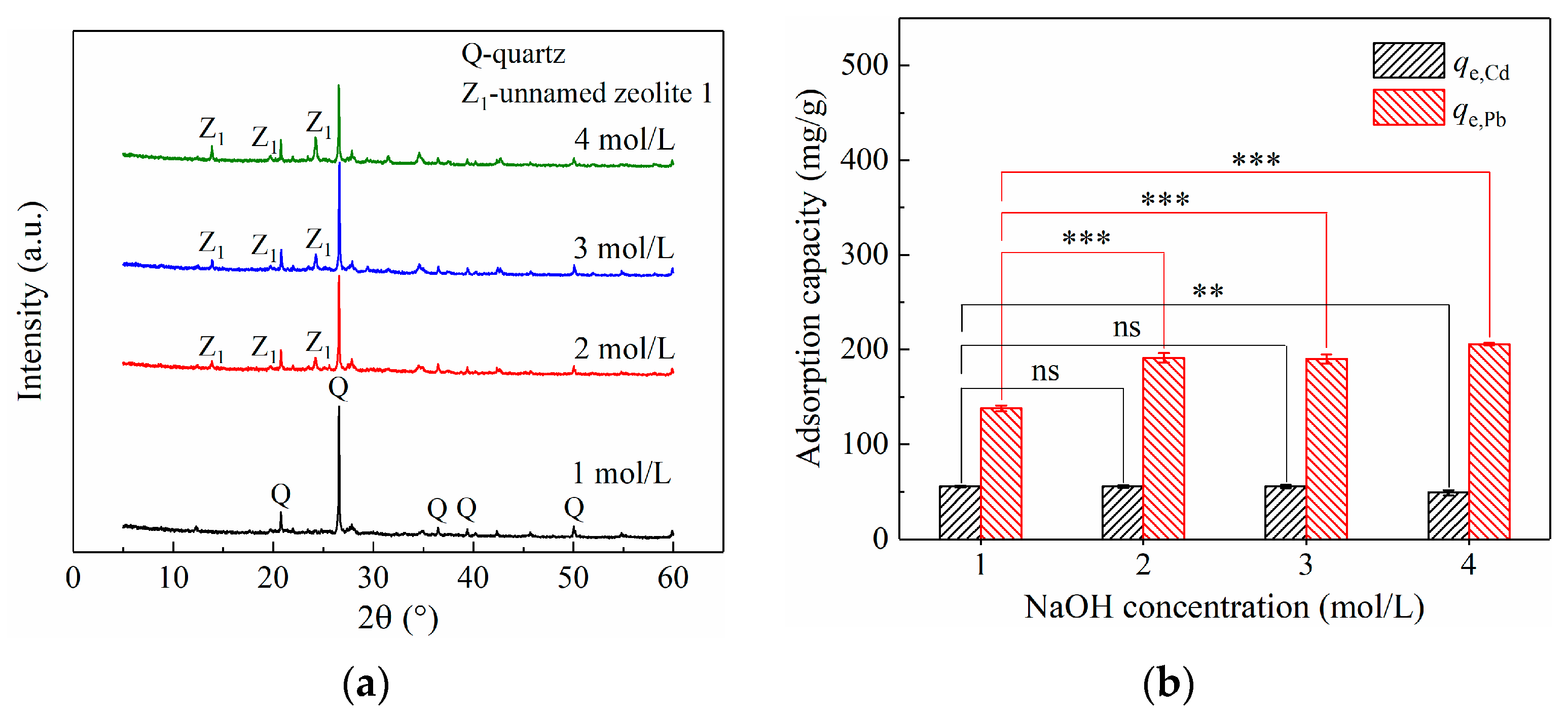
The impact of NaOH concentration on both the crystalline phase evolution and the adsorption performance of the modified CG is presented in Figure 2. As shown in Figure 2a, the XRD pattern of the sample treated with 1 mol/L NaOH is predominantly characterized by quartz. This indicates that the alkalinity at this level was inadequate to sufficiently dissolve the Si and Al components in CG for zeolite crystallization. In contrast, with the NaOH concentration elevated to 2 mol/L and beyond, a distinct zeolite phase identified as Na8(Al6Si6O24)(NO2)2·3H2O (labeled Z1) emerges. The diffraction peaks for this phase intensify with further increases in NaOH concentration. Correspondingly, Figure 2b demonstrates a consistent enhancement in qe,Pb with rising NaOH concentration. This trend is closely linked to the increased yield of the zeolite phase and the consequent creation of more active adsorption sites. Statistical analysis revealed that NaOH concentration had a significant effect on qe,Pb. In contrast, a NaOH concentration of up to 4 mol/L was required to exert a significant effect on qe,Cd.
Figure 2. The impact of NaOH concentration on the XRD pattern and adsorption capacity of the modified CG. (a) XRD patterns. (b) adsorption capacity. (Two asterisks (**) represent a highly significant difference (p < 0.01), three asterisks (***) indicate an extremely significant difference (p < 0.001) and “ns” denotes no significant difference (p ≥ 0.05).)

3.2.2. Effect of HTAB Dosage on CG Modification

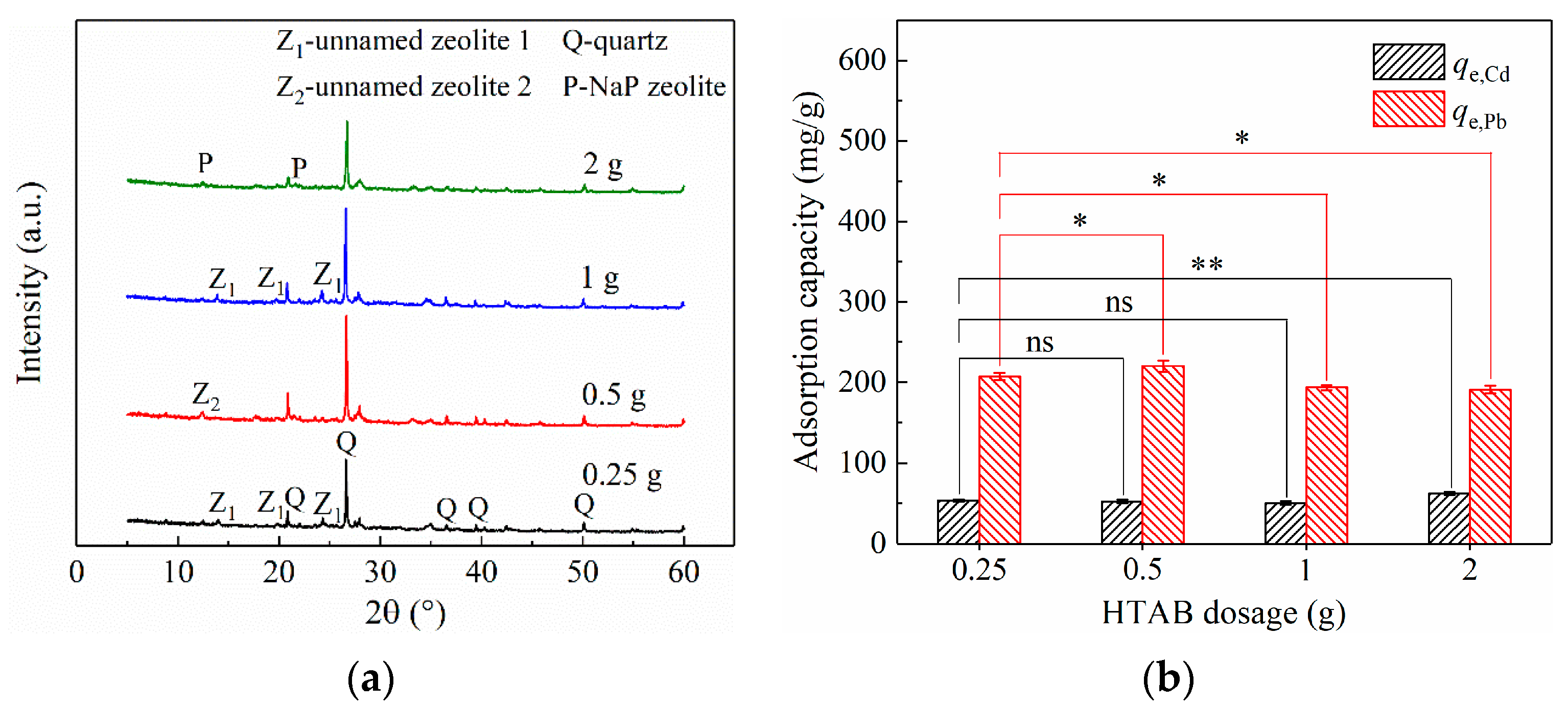
Figure 3 shows the influence of HTAB dosage on the characteristics of the modified CG products. As shown in Figure 3a, the formation of two distinct zeolitic phases, denoted as Z1 and Z2, was observed within the HTAB dosage range of 0.25 to 1 g. These phases were identified as Na8(Al6Si6O24)(NO2)2∙3H2O and K5Ca2(Al9Si23O64)∙24H2O, respectively. NaP zeolite was identified when 2 g of HTAB was used. HTAB is commonly employed as a modifier for coal-based solid wastes in previous studies. It is hypothesized that HTAB functions as an organic template, promoting the formation of crystalline NaP zeolite. Figure 3b shows that, with increasing HTAB dosage, qe,Pb initially increased and then decreased, reaching a maximum value of 213.4 mg/g at 0.5 g. In contrast, qe,Cd exhibited a peak value of 62.4 mg/g at 2 g. The observed disparity in adsorption performance may be attributed to distinct removal mechanisms for Cd2+ and Pb2+. Specifically, the formation of NaP zeolite during modification primarily enhances Cd2+ uptake, while the treatment with 0.5 g of HTAB favors the adsorption of Pb2+. Statistical analysis indicated that a HTAB dosage of 2 g was required to significantly affect qe,Cd, implying that enhancing qe,Cd may necessitate an increase in HTAB usage. Furthermore, HTAB dosage exhibited a moderate yet discernible influence on qe,Pb across the investigated range.
Figure 3. The impact of HTAB dosage on the XRD pattern and adsorption capacity of the modified CG. (a) XRD patterns. (b) adsorption capacity. (One asterisk (*) denotes a significant difference (p < 0.05), two asterisks (**) represent a highly significant difference (p < 0.01) and “ns” denotes no significant difference (p ≥ 0.05).)

3.2.3. Effect of Hydrothermal Treatment Duration on CG Modification

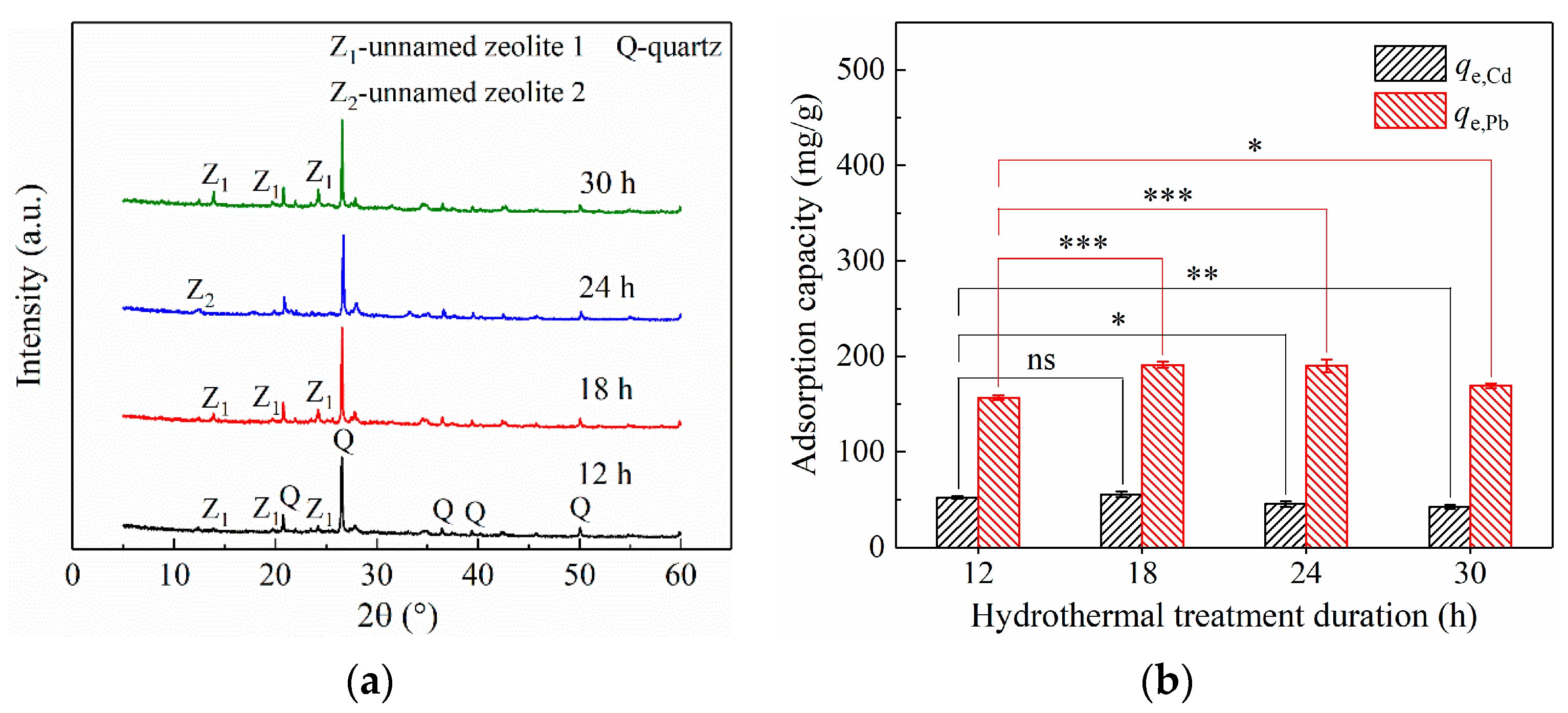
Figure 4 illustrates the effects of hydrothermal treatment duration on the XRD pattern and adsorption capacity of the modified CG samples. As shown in Figure 4a, a zeolite material Na8(Al6Si6O24)(NO2)2∙3H2O (denoted as Z1) is formed after 12 h of hydrothermal treatment, with diffraction intensity increasing as the treatment duration is extended. This is because a longer processing time facilitates the polymerization of silicate and aluminate ions, promoting the formation of zeolite with higher crystallinity. However, a different zeolite phase K5Ca2(Al9Si23O64)∙24H2O (denoted as Z2) is identified after 24 h of treatment. This may result from the complex phase transitions occurring during the zeolite formation from coal-based solid wastes. During crystallization, the aluminosilicate gel first gives rise to metastable intermediates, which then gradually transform into more stable crystalline phases over time. At a hydrothermal treatment duration of 18 h, both qe,Cd and qe,Pb reached their maximum values of 55.5 and 191.1 mg/g, respectively. This suggests that excessively long processing times may be detrimental, and an optimal treatment duration is required to achieve the best adsorption performance. Statistical analysis revealed that the duration of hydrothermal treatment influenced both qe,Cd and qe,Pb, with a more pronounced effect on qe,Pb.
Figure 4. The impact of hydrothermal treatment duration on the XRD pattern and adsorption capacity of the modified CG. (a) XRD patterns. (b) adsorption capacity. (One asterisk (*) denotes a significant difference (p < 0.05), two asterisks (**) represent a highly significant difference (p < 0.01), three asterisks (***) indicate an extremely significant difference (p < 0.001) and “ns” denotes no significant difference (p ≥ 0.05).)

3.3. Optimization of Modification Conditions by RSM

3.3.1. RSM Model Fitting

The adsorption data from the 17 trials designed by the Box–Behnken method are summarized in Table 3. To model the responses, second-order polynomial equations were fitted to the experimental data for qe,Cd and qe,Pb using RSM. The resulting quadratic models are given in Equations (2) and (3).
qe,Cd = 24.98 − 5.63X1 − 9.34X2 + 4.54X3 + 2.21X1X2 + 0.108X1X3 − 0.063X2X3 + 0.636X12 + 6.12X22 − 0.148X32
qe,Pb = −216.62 + 123.03X1 + 231.13X2 + 23.61X3 + 6.77X1X2 + 0.438X1X3 − 0.419X2X3 − 28.46X12 − 208.63X22 − 0.591X32

3.3.2. Analysis of Variance (ANOVA) Tests

The significance and adequacy of the developed models were evaluated through ANOVA. The results are shown in Tables S1 and S2 for qe,Cd and qe,Pb, respectively. The results demonstrate that both models are statistically significant at a 95% confidence level. This conclusion is supported by high F-values (9.64 for qe,Cd and 26.27 for qe,Pb) and notably low p-values (0.0034 for qe,Cd and 0.0001 for qe,Pb). In this analysis, the p-value indicates the probability of error, with values below 0.05 denoting statistical significance, and those under 0.0001 reflecting a particularly strong effect. For qe,Cd, the significant terms are X3 and X32. For qe,Pb, X1, X2, X3, X12, X22 and X32 are identified as significant. Among these, hydrothermal treatment duration (X3) and NaOH concentration (X1) emerge as the most influential factors for Cd2+ and Pb2+ adsorption, respectively, as confirmed by their substantial F-values (36.55 and 48.98) and minimal p-values (≤0.0005).

3.3.3. Variables Interactions Analysis

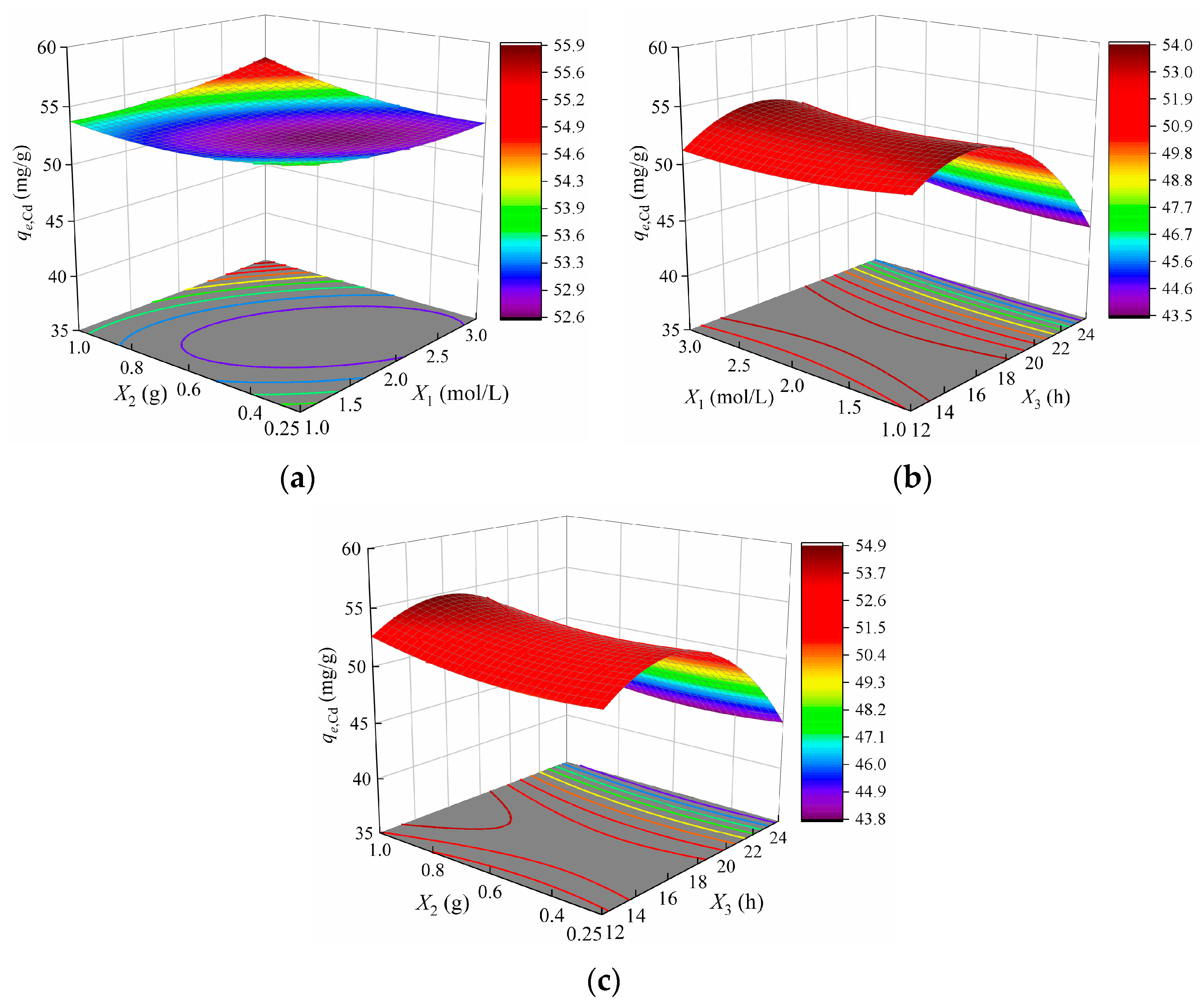
Figure 5 illustrates the combined effects of NaOH concentration, HTAB dosage and hydrothermal treatment duration on the adsorption capacity for Cd2+. The RSM plot in Figure 5a appears relatively flat, suggesting that both NaOH concentration and HTAB dosage have a minimal impact on qe,Cd. However, Figure 5b,c demonstrate that the hydrothermal treatment duration has a significant effect on the Cd2+ adsorption capacity. For instance, when the HTAB dosage is 0.625 g and the NaOH concentration is 2 mol/L, qe,Cd initially increases and then decreases as the treatment duration extends from 12 to 24 h, reaching a maximum of 53.2 mg/g at 16 h. To reduce the cost of preparing modified CG for Cd2+ adsorption, a lower HTAB dosage and NaOH concentration can be chosen while maintaining the treatment duration within the range of 14 to 18 h.
Figure 5. Combined effects of X1 (NaOH concentration), X2 (HTAB dosage) and X3 (Hydrothermal duration) on the adsorption capacity for Cd2+. (a) X1 and X2, X3 = 18 h. (b) X2 and X3, X1 = 2 mol/L. (c) X1 and X3, X2 = 0.625 g.
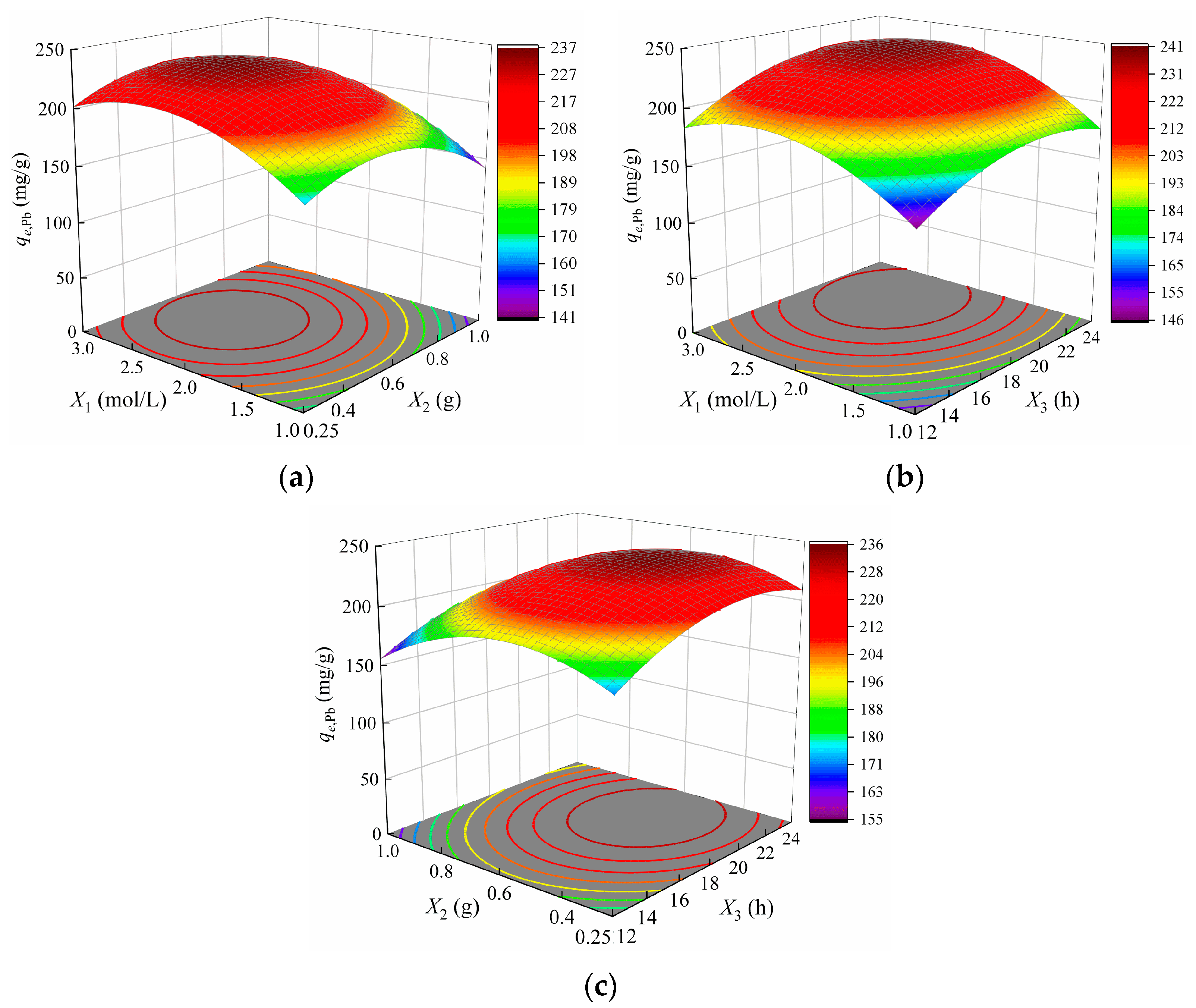
Figure 6 illustrates the combined effects of the variables on the adsorption capacity for Pb2+. All three RSM plots exhibit a saddle-shaped profile, suggesting that each of the three factors significantly impacts the Pb2+ adsorption capacity. For example, at an HTAB dosage of 0.625 g and a hydrothermal treatment duration of 18 h, the qe,Pb reached a maximum of 235.5 mg/g when the NaOH concentration was 2.4 mol/L. The adsorption capacity initially increased, then decreased as the NaOH concentration varied from 1 to 3 mol/L. To optimize the adsorption performance of the modified CG for Pb2+, all three parameters must be adjusted within specific ranges: NaOH concentration between 1.8 and 3 mol/L, HTAB dosage between 0.4 and 0.8 g, and hydrothermal treatment time between 16 and 24 h.
Figure 6. Combined effects of X1 (NaOH concentration), X2 (HTAB dosage) and X3 (Hydrothermal duration) on the adsorption capacity for Pb2+. (a) X1 and X2, X3 = 18 h. (b) X2 and X3, X1 = 2 mol/L. (c) X1 and X3, X2 = 0.625 g.

3.3.4. Validation

The optimization results indicated that the maximum qe,Cd value (55.9 mg/g) would be achieved under the following conditions: 2.9 mol/L NaOH, 1 g HTAB and a hydrothermal treatment time of 16.8 h. For qe,Pb, the model predicted an optimal capacity of 240.2 mg/g with parameters set at 2.4 mol/L NaOH, 0.57 g HTAB and a duration of 20.7 h. To validate these predictions, verification experiments were performed at the specified optimum conditions, yielding measured capacities of 58.4 mg/g for Cd2+ and 233.6 mg/g for Pb2+. The strong consistency between the experimental and predicted values successfully corroborates the reliability of the regression models.

3.4. Characterization of Modified CG Before and After Adsorption

To further elucidate the adsorption mechanisms, the modified CG samples prepared under optimized conditions were characterized both before and after adsorption using XRD, SEM-EDS, FTIR and XPS techniques. The samples were labeled as CG-HY-1 and CG-HY-2 for the modified CG samples prior to adsorption for Cd2+ and Pb2+, respectively, and as CG-HY-1 (Cd) and CG-HY-2 (Pb) after adsorption.

3.4.1. XRD

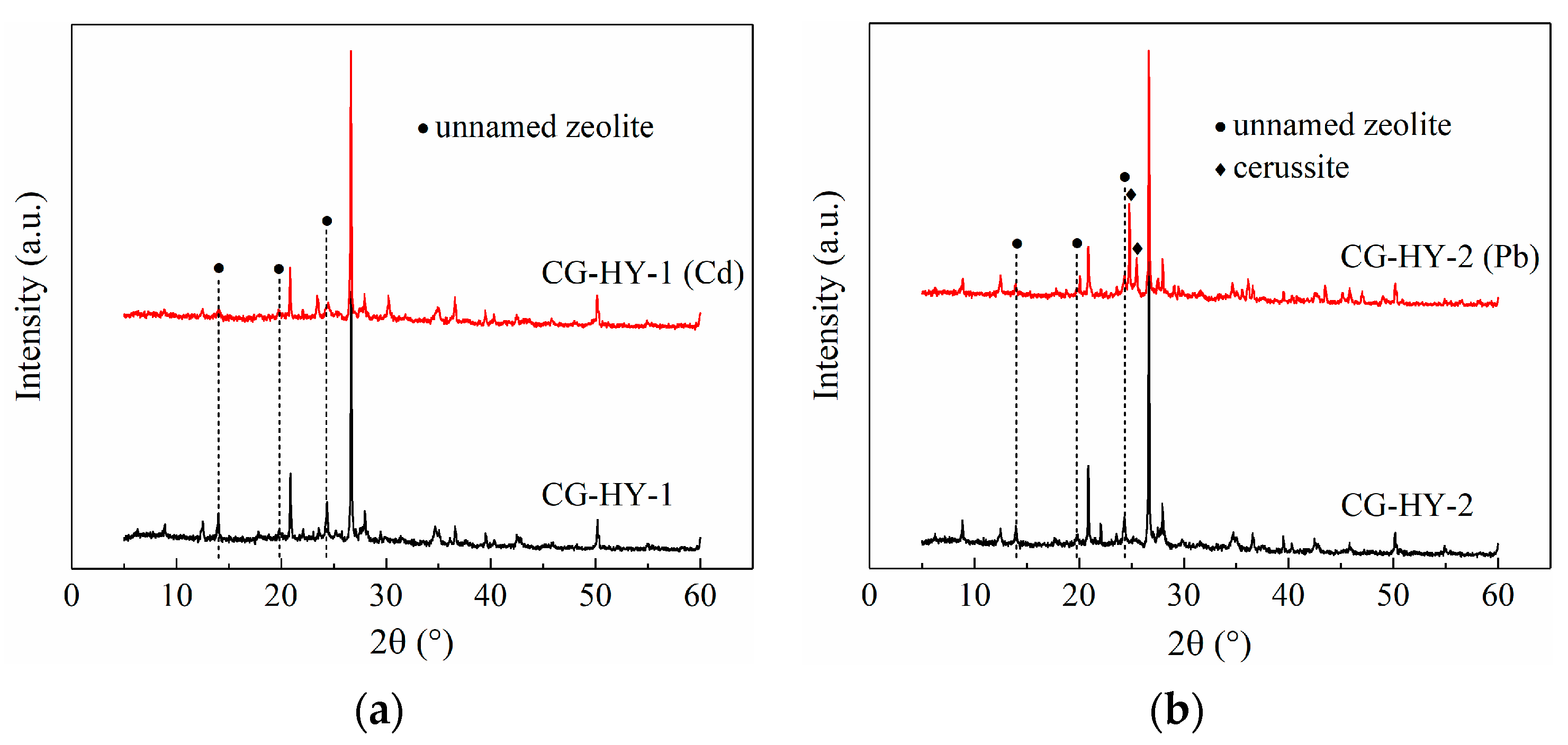
Figure 7 illustrates that minor alterations can be observed in the XRD patterns after the adsorption of Cd2+ and Pb2+ ions. Specifically, the peaks corresponding to the lattice planes of the zeolite material Na8(Al6Si6O24)(NO2)2∙3H2O show a decrease post-adsorption. This reduction is likely due to the introduction of hydrated Cd2+ and Pb2+ into the zeolite pore structure, which may have disrupted the crystal lattice to some extent, leading to a decline in the overall crystallinity of the material. Additionally, cerussite (PbCO3) was identified in the CG-HY-2 (Pb) sample, indicating that Pb2+ could also be retained in the modified CG through precipitation.
Figure 7. XRD patterns of the hydrothermally modified CG samples before and after adsorption. (a) CG-HY-1. (b) CG-HY-2.

3.4.2. SEM-EDX

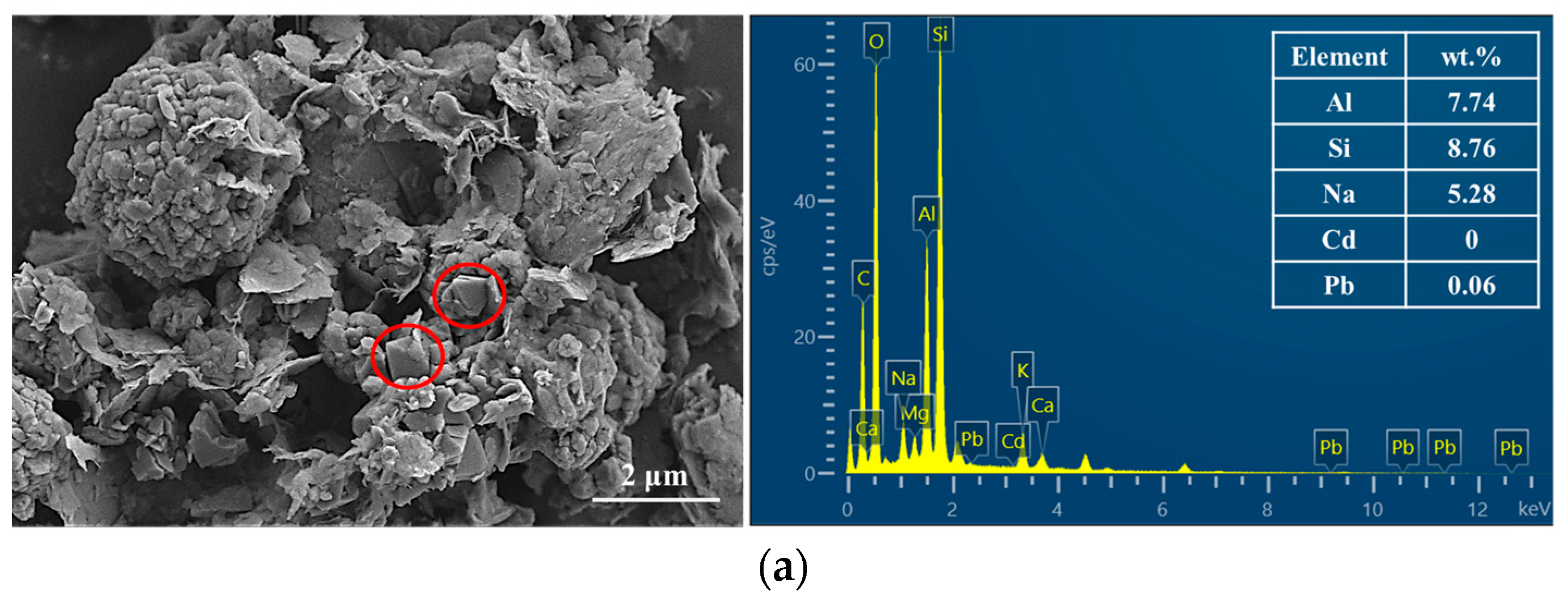
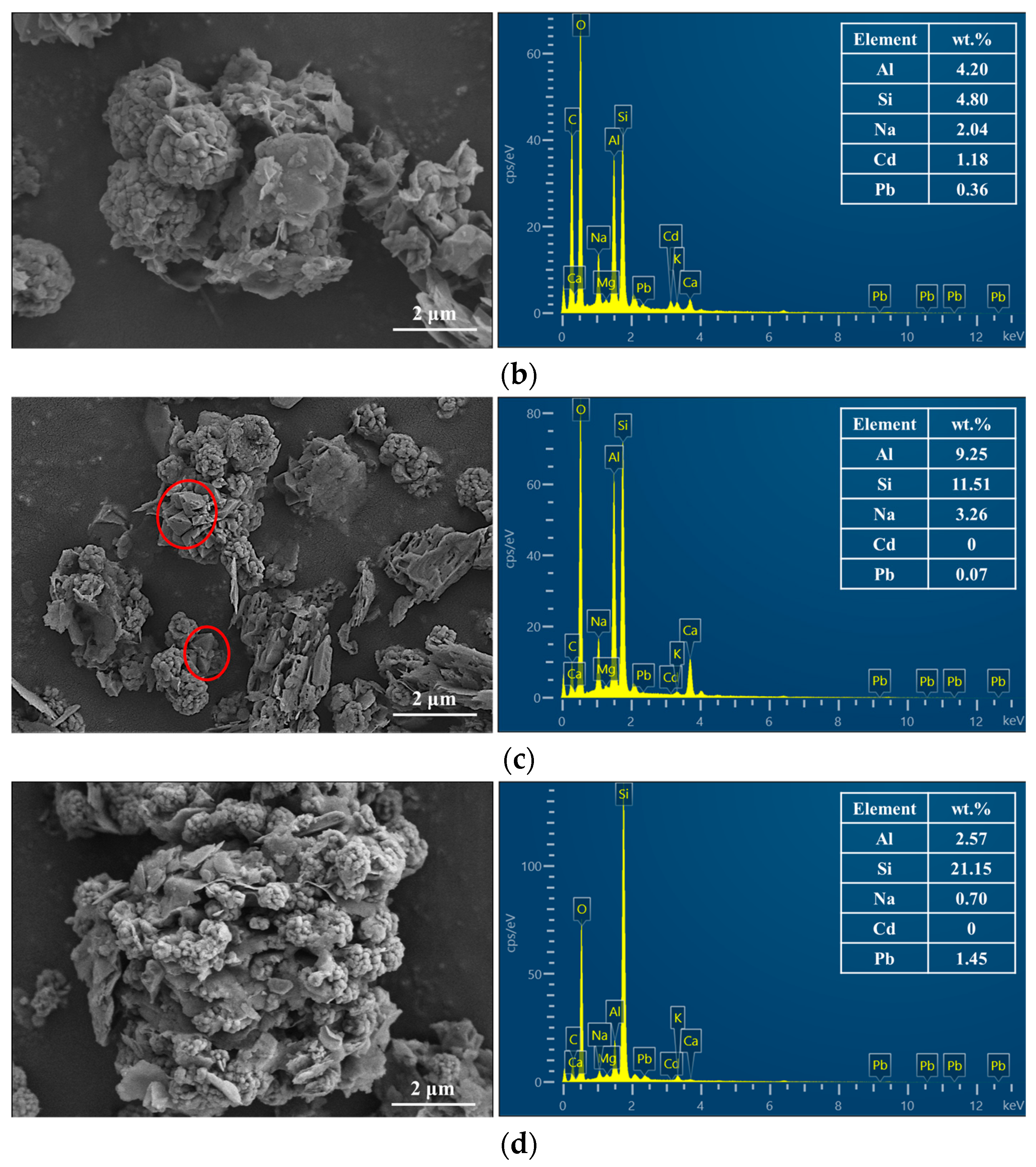
Figure 8 shows the SEM images and EDX spectra of modified CG samples after the adsorption of Cd2+ and Pb2+. The SEM images reveal the presence of aggregated small particles in these samples. Given that the CG samples did not undergo calcination pretreatment, it is hypothesized that the NaOH solution only dissolved a limited amount of Si4+ and Al3+, leading to the formation of crystal nuclei of zeolite materials. As shown in Figure 8a,c, octahedral granules are observed adhering to the surfaces of CG particles, which are inferred to be well-crystallized zeolite structures. However, these granules are no longer visible after the adsorption of Cd2+ and Pb2+ (Figure 8b,d), potentially due to the occupation of zeolite pore channels by Cd2+ and Pb2+ ions, disrupting the crystal lattice structure. The EDX analysis further confirms adsorption, as evidenced by the increase in Cd and Pb content from 0 and 0.07 wt.% to 1.18 wt.% and 1.45 wt.%, respectively. Simultaneously, a reduction in Na content was observed, which is attributed to an ion-exchange mechanism, where Na+ ions in the zeolite framework are replaced by Cd2+ and Pb2+ ions.
Figure 8. SEM images and EDX spectra of modified CG samples following the adsorption of Cd2+ and Pb2+. (a) CG-HY-1. (b) CG-HY-1 (Cd). (c) CG-HY-2. (d) CG-HY-1 (Pb). (The octahedral granules in the red circles are presumed to be well-crystallized zeolite structures.)

3.4.3. FTIR

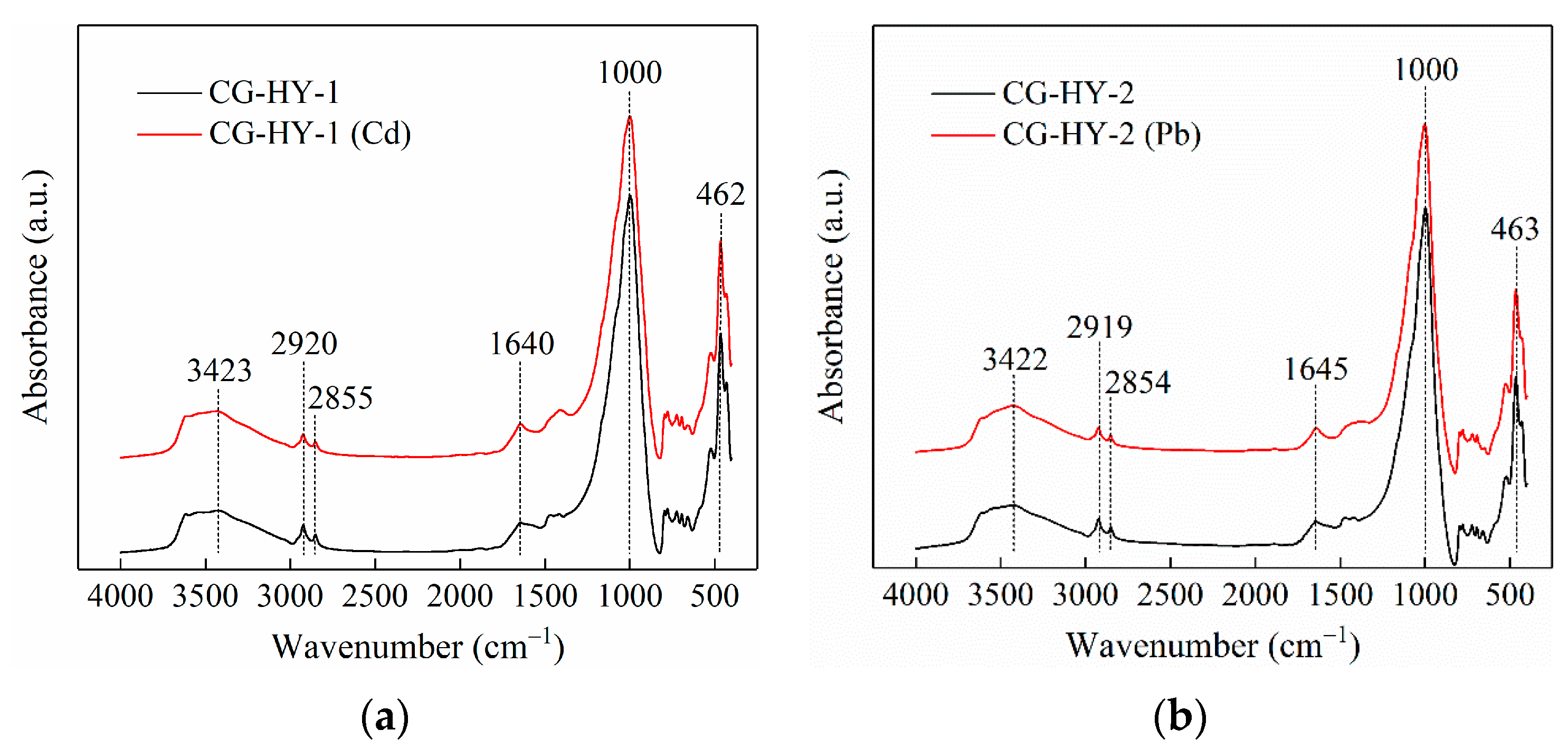
The FTIR spectra of the modified CG samples, both before and after metal ion adsorption, are displayed in Figure 9. A prominent absorption band at 3423 cm−1 is assigned to the O–H stretching vibration. The feature near 1640 cm−1 is associated with H–O–H bending. The presence of peaks at approximately 2920 and 2855 cm−1, which correspond to the asymmetric and symmetric C–H stretching vibrations, may be attributed to the successful incorporation of the hexadecyltrimethylammonium surfactant into the material framework, as well as to the inherent organic matter present in the CG. The strong absorption at 1000 cm−1 originates from the asymmetric stretching of Si–O–Si/Al bonds, and the peak at 460 cm−1 is characteristic of the D4R ring vibrations in zeolitic structures. Following the adsorption of Cd2+ and Pb2+, the core spectral features of the adsorbent remained largely intact, indicating that the adsorption process did not induce major changes to its fundamental chemical structure.
Figure 9. FTIR spectra of the hydrothermally modified CG samples before and after adsorption. (a) CG-HY-1. (b) CG-HY-2.

3.4.4. XPS

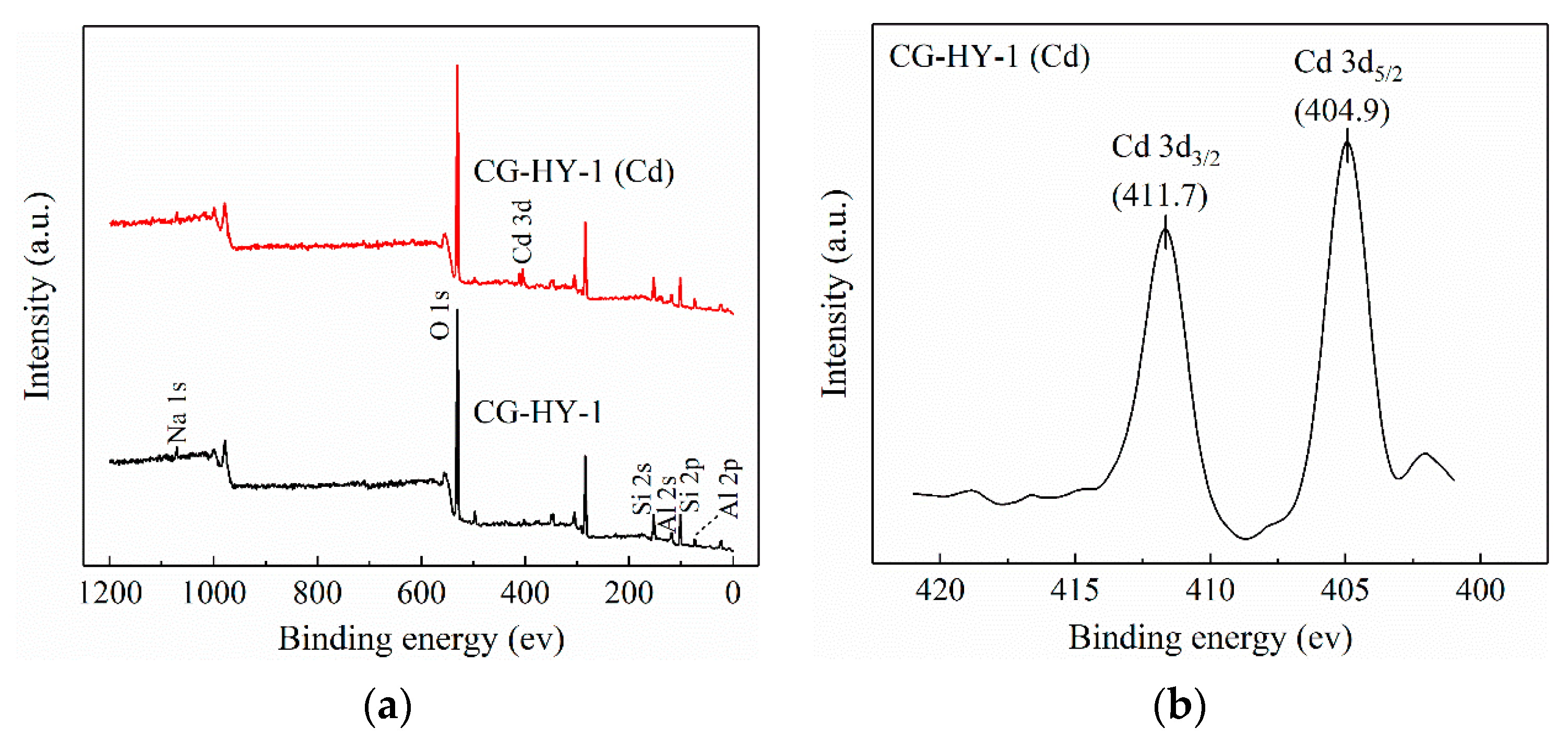
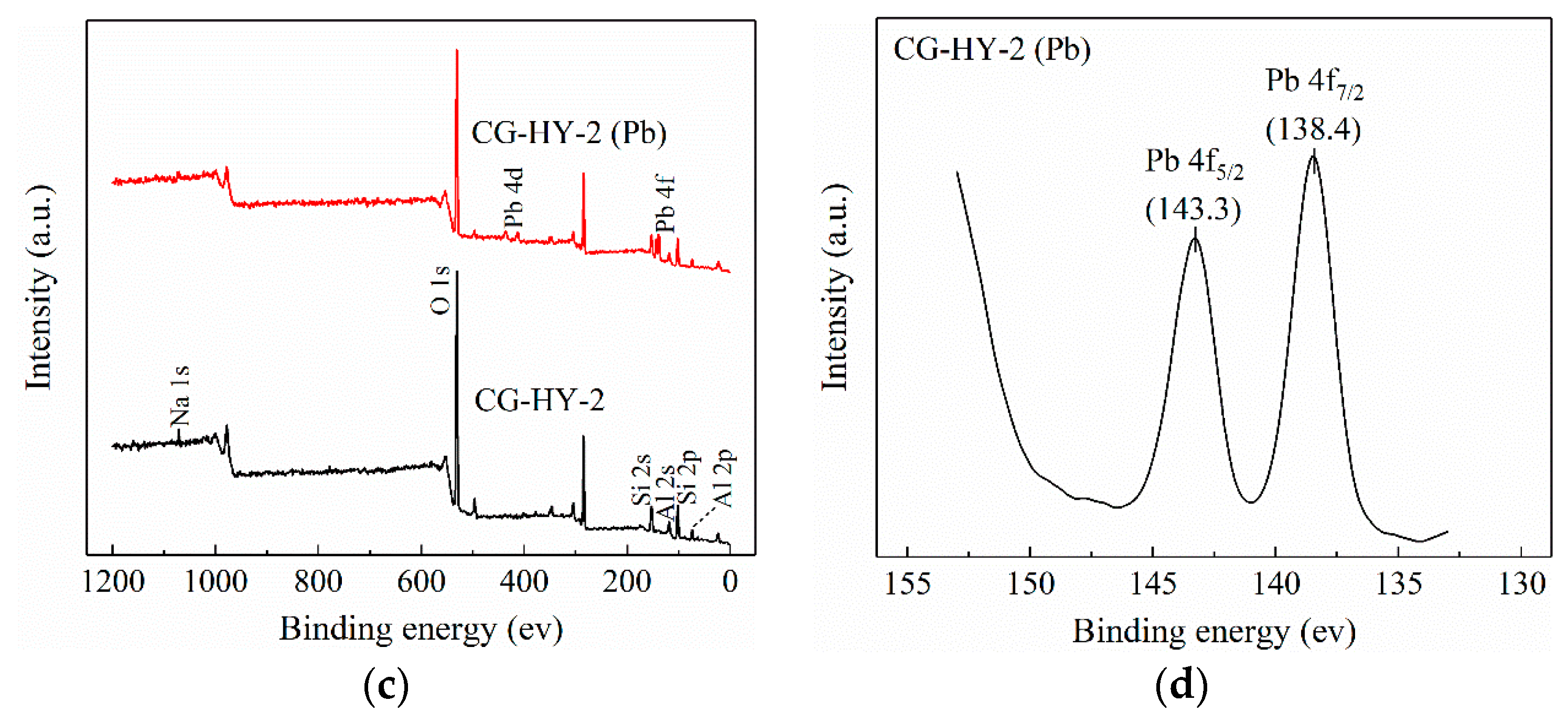
Figure 10 displays the results of XPS analysis conducted on the modified CG samples both before and after the adsorption of Cd2+ and Pb2+ ions. As illustrated in Figure 10a,c, the full spectra confirm that the binding energies of Na 1s, O 1s, Si 2p and Al 2p in CG-HY-1 and CG-HY-2 align well with previously reported values in the literature [6,27]. The adsorption of Cd2+ onto CG-HY-1 is validated by the two newly observed peaks at 404.9 eV and 411.7 eV, corresponding to Cd 3d5/2 and Cd 3d3/2, respectively, as shown in Figure 10b. Likewise, Figure 10d demonstrates the adsorption of Pb2+ onto CG-HY-2, evidenced by peaks at 138.4 eV and 143.3 eV, characteristic of Pb 4f7/2 and Pb 4f5/2, respectively. A marked reduction in the Na 1s peak intensity in CG-HY-2 (Pb) compared to that in CG-HY-2 indicates that ion exchange occurs between Pb2+ and Na+ ions during the adsorption process. These findings from XPS analysis are consistent with those obtained through SEM-EDX.
Figure 10. XPS results of the modified CG samples before and after the adsorption of Cd2+ and Pb2+. (a) full spectrum of CG-HY-1. (b) Cd 3d of CG-HY-1. (c) full spectrum of CG-HY-2. (d) Pb 4f of CG-HY-2.

4. Discussion

4.1. Synthesis Strategies for Low-Cost Hydrothermally Modified CG Adsorbents

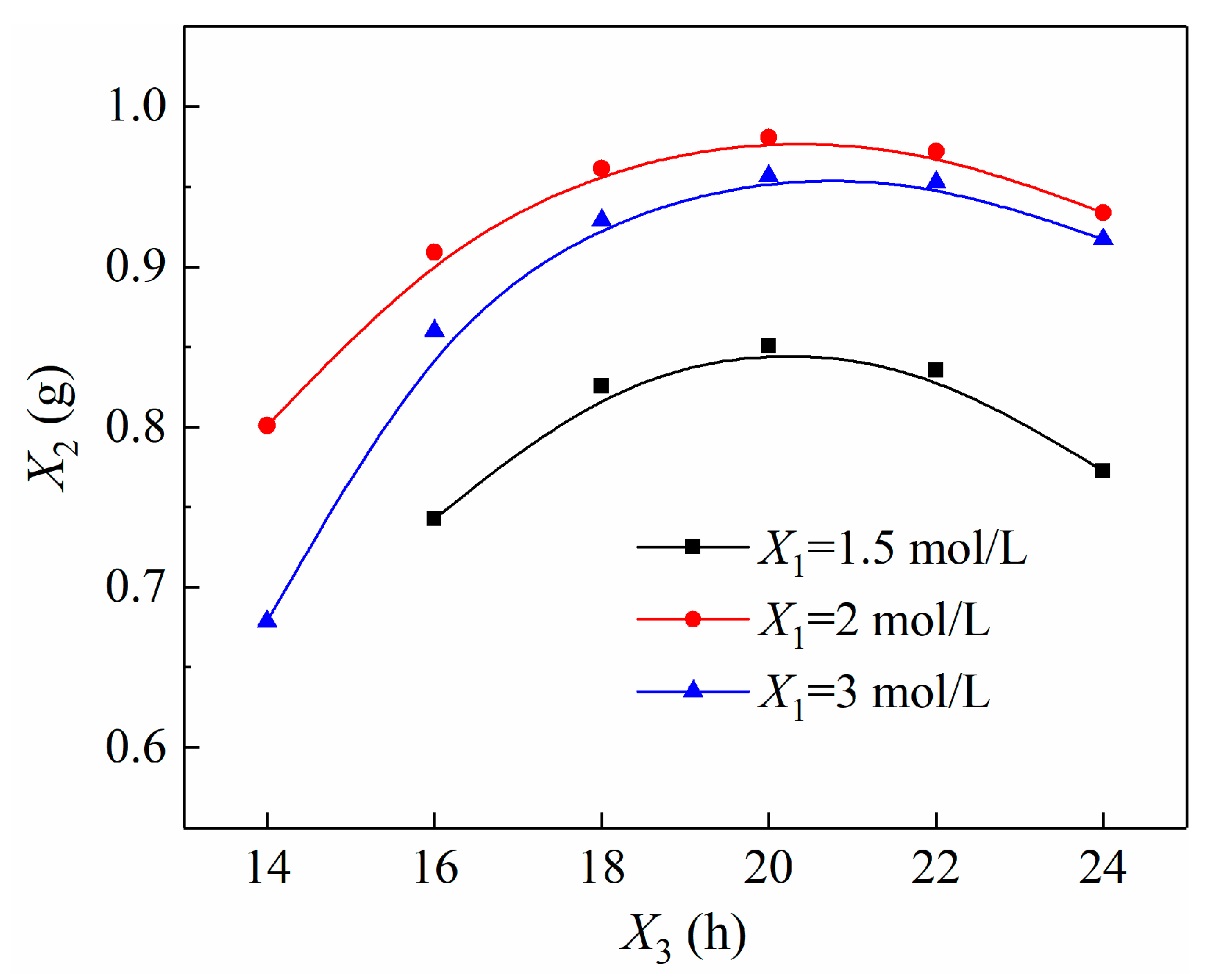
This study employed a hydrothermal method to modify CG for the preparation of an adsorbent targeting Cd2+ and Pb2+. Although pre-calcination prior to hydrothermal modification improved the adsorption capacity of the modified CG (CG-C-HY), the difference compared to the non-calcined sample (CG-HY) was not statistically significant. Therefore, the high-cost, high-temperature calcination step can be omitted to reduce production expenses. Furthermore, for the hydrothermal modification of CG, hydrothermal duration (X3) was identified as a critical factor affecting the adsorption capacity for Cd2+, while NaOH concentration (X1), HTAB dosage (X2) and hydrothermal duration (X3) all significantly influenced the equilibrium adsorption capacity for Pb2+. Given the high cost of HTAB, optimizing NaOH concentration and treatment duration to minimize HTAB usage presents a cost-effective strategy for adsorbent synthesis. By constraining qe,Pb at 200 mg/g and analyzing the interplay among these three variables using Equation (3), the results are presented in Figure 11. The analysis indicates that when the hydrothermal duration is less than 20 h, the required HTAB dosage increases with prolonged treatment time, leading to higher modification costs. In contrast, when the duration exceeds 20 h, the HTAB dosage decreases. Similarly, at a fixed treatment duration, the HTAB dosage initially increases and then decreases with increasing NaOH concentration. Overall, the minimum HTAB dosage of 0.68 g is achieved at a NaOH concentration of 3 mol/L and a treatment duration of 14 h. Since the price of industrial-grade HTAB is five times or even higher than that of industrial-grade NaOH, and the hydrothermal process is conducted at a low temperature of only 100 °C (resulting in low energy consumption and cost), reducing the dosage of HTAB can significantly enhance the industrial scale-up potential of this modification process.
Figure 11. The relationship between HTAB dosage (X2) and hydrothermal treatment duration (X3) at a given qe,Pb of 200 mg/g.

4.2. Adsorption Mechanism of Hydrothermally Modified CG for Cd2+ and Pb2+

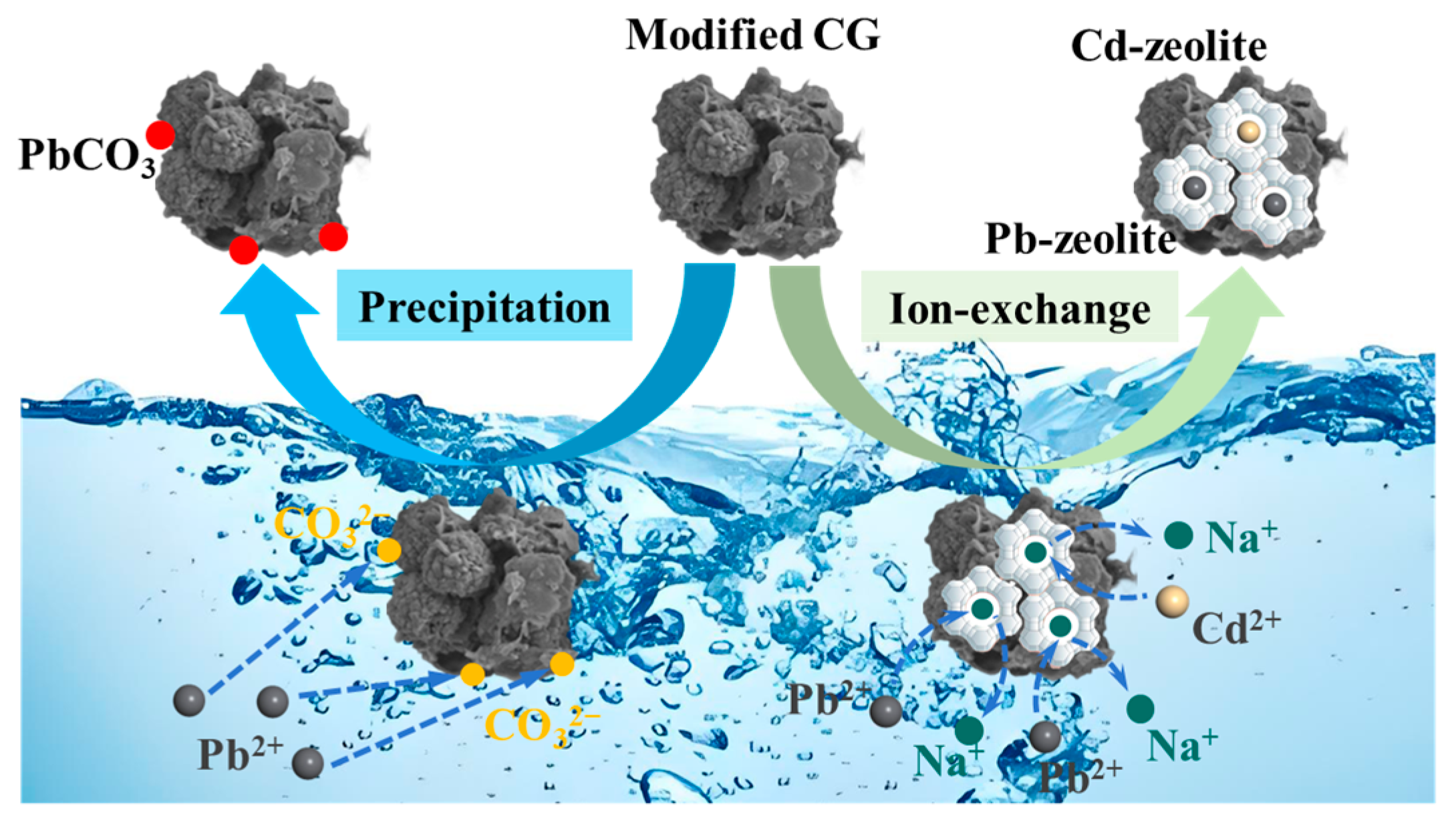
Characterization of the hydrothermally modified CG samples before and after metal uptake points to ion exchange as the dominant mechanism for the removal of Cd2+ and Pb2+. In this process, Cd2+ and Pb2+ ions migrate into the zeolite pores and replace the Na+ ions that balance the framework’s negative charge. This exchange is evidenced by a considerable decrease in Na+ content post-adsorption, along with a concomitant reduction in the intensity of the characteristic zeolite XRD peaks. Such findings are consistent with reports in the literature [6]. Bu et al. [6] attributed a shift in the I(2 2 0)/I(3 1 1) intensity ratio of NaY zeolite after Pb2+ adsorption to the displacement of Na+ ions from supercages by Pb2+. Furthermore, precipitation contributes to the removal of Pb2+. The identification of cerussite (PbCO3) in the CG-HY-2 (Pb) sample suggests that carbonate ions released from the CG component reacted with Pb2+ to form an insoluble precipitate. A parallel mechanism was reported by Lyu et al. [28], who identified the formation of PbCO3 and Pb3(CO3)2(OH)2 during Pb2+ adsorption on modified red mud and concluded that the removal involved both ion exchange and precipitation. Figure 12 summarizes the adsorption mechanism of Cd2+ and Pb2+ by modified CG.
Figure 12. Mechanism diagram of Cd2+ and Pb2+ adsorption by modified CG.
The adsorption capacity results in this study further indicate that the uptake of Pb2+ by hydrothermally modified CG samples is approximately three times higher than that of Cd2+. This difference can be attributed to two main factors. First, a portion of Pb2+ is removed through precipitation. Second, the relative atomic mass of Pb (207.2) is nearly twice that of Cd (112.4), which also contributes to the higher measured adsorption capacity for Pb2+ in mass-based units. Moreover, the hydrated ionic radius of Cd2+ (0.43 nm) is larger than that of Pb2+ (0.40 nm), suggesting that Cd2+ may have limited access to certain exchange sites within the zeolite structure compared to Pb2+. It is therefore inferred that the number of exchangeable sites available for Cd2+ in hydrothermally modified coal gangue is fewer than those for Pb2+.

4.3. Adsorption Capacity of Hydrothermally Modified CG for Cd2+ and Pb2+

Table 4 compares the adsorption capacities of hydrothermally modified CG synthesized in this study with those of adsorbents reported in the literature for Cd2+ and Pb2+. Although the adsorption conditions differ between this study and the literature, the data in the table remain reasonably comparable. In our previous study, we found that the raw CG from Yangshita Mine exhibited qe,Cd and qe,Pb values of only 7.7 and 26.8 mg/g, respectively. After hydrothermal modification, these values significantly increased to 72.7 and 247.5 mg/g [14]. In this study, CG was not subjected to high-temperature calcination (600 °C) pretreatment. Under the optimized modification conditions, qe,Cd and qe,Pb reached 58.4 and 233.6 mg/g, respectively. The zeolitization of CG is an effective method for enhancing adsorption capacity. In our previous study, NaX-type zeolite synthesized through alkali fusion-hydrothermal treatment achieved qe,Cd and qe,Pb values of 187.5 and 427.6 mg/g, respectively [29]. Shang et al. [15] prepared mercapto-modified coal gangue with qe,Cd and qe,Pb values of 110.4 and 332.8 mg/g, respectively, which are notably higher than those of the hydrothermally modified CG prepared in this study. However, their method involves a complex procedure requiring multiple reagents including H2SO4, KMnO4, N2H4·H2O, MPTMS (3-mercaptopropyl trimethoxysilane) and methanol, through steps of acid washing, oxidation and sulfurization. Obviously, although both zeolite synthesis and mercapto modification can enhance qe,Cd and qe,Pb, they are associated with drawbacks such as multi-step processes and high costs.
Table 4. Adsorption capacity of different adsorbents used for removal of Cd2+ and Pb2+.
Regarding the enhancement of qe,Cd of CG, Jin et al. [30] prepared a low-cost analcime-coal composite adsorbent from CG, achieving a qe,Cd of 54.1 mg/g, which is comparable to the hydrothermally modified CG in this study. Their method eliminates the need for high-temperature alkali fusion, thereby reducing synthesis costs and energy consumption, demonstrating significant potential for industrial-scale application. Zhao et al. [12] modified CG via a low-temperature alkali roasting approach, increasing qe,Cd to 70.7 mg/g. However, the mass ratio of KOH to CG employed in their process was 3:2, indicating substantial alkali consumption, which limits its industrial feasibility. It should be noted that Qiu et al. [13] achieved a qe,Cd of 183.7 mg/g through hydrothermal treatment of circulating fluidized bed fly ash from a coal gangue-fired power plant, approaching the adsorption capacity of NaX zeolite synthesized from Yangshita CG [29] and significantly exceeding the performance of the hydrothermally modified CG in this study. They also identified the zeolitic phases formed in the material as the active components responsible for adsorption. This enhancement could be primarily attributed to the transformation of inert mineral phases in CG into active phases during high-temperature combustion, which facilitates zeolite formation under subsequent hydrothermal conditions.

4.4. Future Perspectives

Cadmium ions (Cd2+) represent a pollutant of primary concern in CG from the Shendong mining area, China. When CG is used in backfilling and reclamation projects, Cd2+ can be leached by rainfall, posing a potential risk of groundwater contamination [29]. A promising mitigation strategy involves blending the CG with a CG-based adsorbent within the backfill material. The incorporated adsorbent can immobilize Cd2+, thereby reducing the toxicity and environmental mobility of this heavy metal. While this study employed a low-cost hydrothermal modification method to synthesize a CG-based adsorbent, its adsorption capacity for Cd2+ remains limited. To enhance the Cd2+ uptake performance of modified CG, future research could explore the following directions: (1) Utilizing mesoporous templates such as poly dimethyl diallyl ammonium chloride during synthesis to generate zeolitic structures with larger pore sizes [34]. This approach aims to create more accessible ion-exchange sites for Cd2+, facilitating its diffusion and capture. (2) Incorporating other materials such as biochar [27] or iron-manganese oxides [35] during the modification process. These components can enhance the overall adsorption capacity and promote co-precipitation mechanisms for Cd2+ removal. (3) Functionalizing the CG surface with sulfide ions (S2−) [36]. Given the exceptionally low solubility product (Ksp) of CdS, the introduction of S2− provides specific sites for the effective precipitation and immobilization of Cd2+.

5. Conclusions

This study investigated the modification of CG via hydrothermal treatment and evaluated its adsorption performance for Cd2+ and Pb2+. The modification parameters, including NaOH concentration (X1), hexadecyltrimethylammonium bromide dosage (X2) and hydrothermal duration (X3), were optimized using RSM method. Various characterization techniques were employed to elucidate the adsorption mechanisms. The main findings are summarized as follows:
(1)
The optimal modification conditions for Cd2+ adsorption (qe,Cd = 58.4 mg/g) were determined as X1 = 2.9 mol/L, X2 = 1 g and X3 = 16.8 h. For Pb2+ adsorption (qe,Pb = 233.6 mg/g), the optimal parameters were X1 = 2.4 mol/L, X2 = 0.57 g and X3 = 20.7 h.
(2)
Hydrothermal duration was identified as a critical factor influencing Cd2+ adsorption, with a suitable range of 14–18 h. For Pb2+ adsorption, all three parameters—X1, X2, X3—played significant roles, with optimal ranges of X1 = 1.8–3 mol/L, X2 = 0.4–0.8 g, and X3 = 16–24 h.
(3)
Hydrothermal modification promoted the formation of zeolite structures in the modified CG, enhancing its adsorption properties. The primary adsorption mechanism for Cd2+ and Pb2+ involved ion exchange, with additional Pb2+ removal attributed to the precipitation of cerussite (PbCO3).

Supplementary Materials

The following supporting information can be downloaded at: https://www.mdpi.com/article/10.3390/w17233441/s1, Determination of the concentration of Cd2+ and Pb2+; Table S1: Analysis of variance for qe,Cd; Table S2: Analysis of variance for qe,Pb.

Author Contributions

Conceptualization, writing—original draft, X.W. and N.G.; methodology, investigation, X.W., N.G., J.F. and S.L.; validation, writing—review and editing, N.G., J.F. and S.L.; resources, supervision, project administration, funding acquisition, N.G.; data curation, X.W. and J.F.; visualization, S.L. All authors have read and agreed to the published version of the manuscript.

Funding

This work was supported by the CHN Energy Investment Group (GJNY-24-34) and the Open Fund of State Key Laboratory of Water Resource Protection and Utilization in Coal Mining (GJNY-21-41-19).

Data Availability Statement

The original contributions presented in this study are included in the article. Further inquiries can be directed to the corresponding author.

Conflicts of Interest

Author Xiaolong Wang was employed by the company Shendong Coal Group Co., Ltd. Authors Nan Guo, Jie Fang and Shoubiao Li were employed by the company National Institute of Clean-and-Low-Carbon Energy.

Abbreviations

The following abbreviations are used in this manuscript:
CGCoal gangue
RSMResponse surface methodology
YSTCoal gangue sample obtained from Yangshita coal mine
HTABHexadecyltrimethylammonium bromide
CG-C-HYHydrothermally modified CG sample with calcination pretreatment
CG-HYHydrothermally modified CG sample without calcination pretreatment
X1NaOH concentration
X2Hexadecyltrimethylammonium bromide dosage
X3Hydrothermal duration
qe,CdAdsorption capacity of modified coal gangue for Cd2+
qe,PbAdsorption capacity of modified coal gangue for Pb2+
QQuartz
Z1Unnamed zeolite 1
Z2Unnamed zeolite 2
PNaP zeolite
CG-HY-1Modified CG sample under optimized conditions for Cd2+ adsorption
CH-HY-2Modified CG sample under optimized conditions for Pb2+ adsorption
CG-HY-1 (Cd)CG-HY-1 sample after Cd2+ adsorption
CH-HY-2 (Pb)CG-HY-2 sample after Pb2+ adsorption
KspSolubility product

References

  1. Ezzeddine, Z.; Batonneau-Gener, I.; Ghssein, G.; Pouilloux, Y. Recent advances in heavy metal adsorption via organically modified mesoporous silica: A review. Water 2025, 17, 669. [Google Scholar] [CrossRef]
  2. Ge, Q.; Moeen, M.; Tian, Q.; Xu, J.; Feng, K. Highly effective removal of Pb2+ in aqueous solution by Na-X zeolite derived from coal gangue. Environ. Sci. Pollut. Res. 2020, 27, 7398–7408. [Google Scholar] [CrossRef]
  3. Kuldeyev, E.; Seitzhanova, M.; Tanirbergenova, S.; Tazhu, K.; Doszhanov, E.; Mansurov, Z.; Azat, S.; Nurlybaev, R.; Berndtsson, R. Modifying natural zeolites to improve heavy metal adsorption. Water 2023, 15, 2215. [Google Scholar] [CrossRef]
  4. Nasseh, N.; Khosravi, R.; Rumman, G.A.; Ghadirian, M.; Eslami, H. Adsorption of Cr (VI) ions onto powdered activated carbon synthesized from Peganum harmala seeds by ultrasonic waves activation. Environ. Technol. Innov. 2021, 21, 101277. [Google Scholar] [CrossRef]
  5. Zhu, L.; Yao, Q.; Xu, Q.; Li, Y.; Li, X. Experimental study on the purification mechanism of mine water by coal gangue. Water 2023, 15, 697. [Google Scholar] [CrossRef]
  6. Bu, N.; Liu, X.; Song, S.; Liu, J.; Yang, Q.; Li, R.; Zheng, F.; Yan, L.; Zhen, Q.; Zhang, J. Synthesis of NaY zeolite from coal gangue and its characterization for lead removal from aqueous solution. Adv. Powder Technol. 2020, 31, 2699–2710. [Google Scholar] [CrossRef]
  7. Ge, Q.; Tian, Q.; Hou, R.; Wang, S. Combing phosphorus-modified hydrochar and zeolite prepared from coal gangue for highly effective immobilization of heavy metals in coal-mining contaminated soil. Chemosphere 2022, 291, 132835. [Google Scholar] [CrossRef]
  8. Qiu, R.; Cheng, F. Modification of waste coal gangue and its application in the removal of Mn2+ from aqueous solution. Water Sci. Technol. 2016, 74, 524–534. [Google Scholar] [CrossRef] [PubMed]
  9. Jabłońska, B.; Kityk, A.V.; Busch, M.; Huber, P. The structural and surface properties of natural and modified coal gangue. J. Environ. Manag. 2017, 190, 80–90. [Google Scholar] [CrossRef] [PubMed]
  10. Peng, L.; Wang, R.; Cheng, H.; Zhang, L.; He, Y.; Yin, C.; Zhang, X. Investigation on the adsorption performance of modified coal gangues to p-hydroxybenzenesulfonic acid. Korean J. Chem. Eng. 2023, 40, 1767–1774. [Google Scholar] [CrossRef]
  11. Gao, Y.; Huang, J.; Li, M.; Dai, Z.; Jiang, R.; Zhang, J. Chemical modification of combusted coal gangue for U(VI) adsorption: Towards a waste control by waste strategy. Sustainability 2021, 13, 8421. [Google Scholar] [CrossRef]
  12. Zhao, H.; Li, P.; He, X. Remediation of cadmium contaminated soil by modified gangue material: Characterization, performance and mechanisms. Chemosphere 2022, 290, 133347. [Google Scholar] [CrossRef] [PubMed]
  13. Qiu, R.; Cheng, F.; Huang, H. Removal of Cd2+ from aqueous solution using hydrothermally modified circulating fluidized bed fly ash resulting from coal gangue power plant. J. Clean. Prod. 2018, 172, 1918–1927. [Google Scholar] [CrossRef]
  14. Chang, Z.; Lu, C.; Bai, L.; Guo, N.; Xing, Z.; Yan, Y. Removal of Cd2+ and Pb2+ from an aqueous solution using modified coal gangue: Characterization, performance, and mechanisms. Processes 2024, 12, 2095. [Google Scholar] [CrossRef]
  15. Shang, Z.; Zhang, L.W.; Zhao, X.; Liu, S.; Li, D. Removal of Pb(II), Cd(II) and Hg(II) from aqueous solution by mercapto-modified coal gangue. J. Environ. Manag. 2019, 231, 391–396. [Google Scholar] [CrossRef]
  16. Zhang, X.; Li, M.; Su, Y.; Du, C. A novel and green strategy for efficient removing Cr(VI) by modified kaolinite-rich coal gangue. Appl. Clay Sci. 2021, 211, 106208. [Google Scholar] [CrossRef]
  17. Zhang, X.; Li, C.; Zheng, S.; Di, Y.; Sun, Z. A review of the synthesis and application of zeolites from coal-based solid wastes. Int. J. Miner. Metall. Mater. 2022, 29, 1–21. [Google Scholar] [CrossRef]
  18. Lu, X.; Shi, D.; Chen, J. Sorption of Cu2+ and Co2+ using zeolite synthesized from coal gangue: Isotherm and kinetic studies. Environ. Earth Sci. 2017, 76, 591. [Google Scholar] [CrossRef]
  19. Chen, J.; Lu, X. Synthesis and characterization of zeolites NaA and NaX from coal gangue. J. Mater. Cycles Waste Manag. 2018, 20, 489–495. [Google Scholar] [CrossRef]
  20. Jin, Y.; Li, L.; Liu, Z.; Zhu, S.; Wang, D. Synthesis and characterization of low-cost zeolite NaA from coal gangue by hydrothermal method. Adv. Powder Technol. 2021, 32, 791–801. [Google Scholar] [CrossRef]
  21. Kong, D.; Jiang, R. Preparation of NaA zeolite from high iron and quartz contents coal gangue by acid leaching—Alkali melting activation and hydrothermal synthesis. Crystals 2021, 11, 1198. [Google Scholar] [CrossRef]
  22. Li, H.; Zheng, F.; Wang, J.; Zhou, J.; Huang, X.; Chen, L.; Hu, P.; Gao, J.; Zhen, Q.; Bashir, S.; et al. Facile preparation of zeolite-activated carbon composite from coal gangue with enhanced adsorption performance. Chem. Eng. J. 2020, 390, 124513. [Google Scholar] [CrossRef]
  23. GB/T 212-2008; Proximate Analysis of Coal. Standards Press of China: Beijing, China, 2008.
  24. Ren, Z.; Li, Z.; Tang, H.; Yang, L.; Zhu, J.; Jing, Q. Analysis of response surface and artificial neural network for Cr(Ⅵ) removal column experiment. Water 2025, 17, 1211. [Google Scholar] [CrossRef]
  25. Tong, S.; Liu, G.; Meng, X.; Huang, C.; Chen, S.; Xiang, Z.; Liu, W.; Shen, J.; Wang, Y. Carbon reduction strategies for typical wastewater treatment processes (A2/O): Response surface optimization, mechanism, and application analysis. Water 2025, 17, 2505. [Google Scholar] [CrossRef]
  26. Watanabe, H.; Ohmori, H. Dual-wavelength spectrophotometric determination of Cadmium with cadion. Talanta 1979, 26, 959–961. [Google Scholar] [CrossRef]
  27. Boostani, H.R.; Najafi-Ghiri, M.; Khalili, D. Comparative effectiveness of pristine and H3PO4-modified biochar in combination with bentonite to immobilize cadmium in a calcareous soil. Sci. Rep. 2025, 15, 14301. [Google Scholar] [CrossRef] [PubMed]
  28. Lyu, F.; Niu, S.; Wang, L.; Liu, R.; Sun, W.; He, D. Efficient removal of Pb(II) ions from aqueous solution by modified red mud. J. Hazard. Mater. 2021, 406, 124678. [Google Scholar] [CrossRef]
  29. Chang, Z.; Yan, Y.; Bai, L.; Guo, N.; Xing, Z.; Lu, C. Synthesis and characterization of NaX zeolite from coal gangue and its efficacy in cd and pb remediation in water and soil. ACS Omega 2024, 9, 51237–51252. [Google Scholar] [CrossRef]
  30. Jin, Y.; Liu, Z.; Han, L.; Zhang, Y.; Li, L.; Zhu, S.; Li, Z.P.J.; Wang, D. Synthesis of coal-analcime composite from coal gangue and its adsorption performance on heavy metal ions. J. Hazard. Mater. 2022, 423, 127027. [Google Scholar] [CrossRef] [PubMed]
  31. Zhao, Y. Review of the natural, modified, and synthetic zeolites for heavy metals removal from wastewater. Environ. Eng. Sci. 2016, 33, 443–454. [Google Scholar] [CrossRef]
  32. Huang, X.; Zhao, H.; Zhang, G.; Li, J.; Yang, Y.; Ji, P. Potential of removing Cd(II) and Pb(II) from contaminated water using a newly modified fly ash. Chemosphere 2020, 242, 125148. [Google Scholar] [CrossRef] [PubMed]
  33. Ibrahim, H.; Jamil, T.; Hegazy, E. Application of zeolite prepared from Egyptian kaolin for the removal of heavy metals: II. Isotherm models. J. Hazard. Mater. 2010, 182, 842–847. [Google Scholar] [CrossRef] [PubMed]
  34. Jiang, X.Y.; Zhao, C.; Hu, X.M.; Tong, Z.F.; Yun, J.G.; Wei, N.H.; Wang, K.J.; Liu, C.X.; Zou, Y.; Chen, Z.H. Utilization of coal gangue for preparing high-silica porous materials with excellent ad/desorption performance on VOCs. J. Chem. Technol. Biotechnol. 2022, 97, 3498–3510. [Google Scholar] [CrossRef]
  35. Angaru, G.K.R.; Lingamdinne, L.P.; Choi, Y.L.; Koduru, J.R.; Chang, Y.Y. Catalytic binary oxides decorated zeolite as a remedy for As(III) polluted groundwater: Synergistic effects and mechanistic analysis. J. Environ. Chem. Eng. 2023, 11, 109544. [Google Scholar] [CrossRef]
  36. Jang, J.H.; Geum, D.E.; Jaber, M.; Park, P. Sulfide-occluded zeolite X for effective removal of Hg2+ from aqueous systems. Chem. Eng. J. 2025, 514, 163188. [Google Scholar] [CrossRef]
Disclaimer/Publisher’s Note: The statements, opinions and data contained in all publications are solely those of the individual author(s) and contributor(s) and not of MDPI and/or the editor(s). MDPI and/or the editor(s) disclaim responsibility for any injury to people or property resulting from any ideas, methods, instructions or products referred to in the content.

Article Metrics

Citations

Article Access Statistics

Multiple requests from the same IP address are counted as one view.