


Abstract
Groundwater is an important resource for domestic use and irrigation in the Yinchuan region of northwest China. However, the quality of groundwater in this region is declining due to human activities, with adverse effects on human health. In order to study the effects of chemical elements in groundwater on human health, the human health risk of drinking groundwater was calculated based on the actual situation in China and on the U.S. Environmental Protection Agency (USEPA) model. Moreover, the sensitivity of contaminant exposure in drinking water wells was quantified using Monte Carlo simulation to minimize uncertainty in conjunction with USEPA risk assessment techniques, with the aim to identify the major carcinogenic factors. In addition, Visual Minteq was used to analyze the possible ionic forms of the major factors in the hydrogeological environment of the study area. The results showed that the mean CR values for As were 2.94 × 10−0.5 and 5.93 × 10−0.5 for the dry and rainy seasons, respectively, while for 2018 they were 5.48 × 10−0.5 and 3.59 × 10−0.5, respectively. In parallel, the CR values for children for 2017 were 6.28 × 10−0.5 and 1.27 × 10−0.4, respectively, and 1.17 × 10−0.4 and 7.67 × 10−0.5, respectively, indicating a considerably higher carcinogenic risk for children than for adults. results of the sensitivity analysis of Cr6+ and As using Crystal Ball software showed association values of 0.9958 and 1 for As and 0.0948 and 0 for Cr in the dry and rainy seasons in 2017, and 0.7424 and 0.5759 for As and 0.6237 and 0.8128 for Cr in the dry and rainy seasons in 2018, respectively. Only in the rainy season of 2018, the association values for As were lower than those for Cr, indicating that As is more sensitive to total carcinogenic risk. The results of the visual coinage model analysis showed that among all the possible ionic forms of As, the activity of HAsO42− had the largest logarithmic value and that of H3AsO4 had the smallest value, regardless of pH changes. This indicates that HAsO42− is the ionic form of As with the main carcinogenic factor in the hydrogeological environment of the study area. Therefore, corresponding environmental control measures need to be taken in time to strengthen the monitoring and control of As, especially HAsO42−, in the groundwater of the study area. This study is of great significance for Yinchuan city to formulate groundwater pollution risk management and recovery.
1. Introduction
Water resources are one of the most important natural resources on earth and indispensable and irreplaceable for the survival of all living beings, as well as for human life and production activities [1,2,3]. Groundwater is an important component of the Earth’s water resources; compared to other water sources, it has the advantages of good quality, lower investments required for its exploitation, lower susceptibility to pollution, and multi-year regulation [4]. These characteristics are an important guarantee to maintain the virtuous cycle of the water resources system and have a positive impact on national livelihood, people’s health and safety, and sustainable social development [5,6]. In recent years, groundwater extraction in China reached about 2.7 billion cubic meters per year, a number that is currently increasing. Moreover, 400 Chinese cities and about 45% of agricultural irrigation rely on groundwater as a source of water supply. Agricultural, industrial, and domestic activities are the main sources of groundwater pollution [7], mainly consisting of heavy metals [8,9], organic matter [10,11], As [12,13,14], and chromium contamination [15].
At present, groundwater pollution is a serious problem in China. According to the results of a statistical analysis of groundwater quality in 118 cities and regions nationwide, the majority of urban groundwater suffers from a certain degree of point-source and surface pollution, with 64% of urban groundwater severely polluted, 33% mildly polluted [16], and only 3% of urban groundwater basically clean [17,18]. Due to groundwater pollution, an increasing number of cities and regions are suffering from water shortage, posing rising risks to human health. According to the World Health Organization (WHO), 80% of the diseases suffered by third-world citizens are caused by water pollution [19]. Most cities in northwestern China use groundwater as their only drinking water supply. In these areas, the contamination of groundwater is expected to directly affect the health of citizens who use it for drinking purposes. Especially, the large land development projects in the Loess region and the proposed revival of the Silk Road Economic Belt may have a significant impact on the quantity and quality of groundwater, and require urgent and comprehensive research [20,21,22].
The study area of the present research is adjacent to the upper reaches of the Yellow River; it includes Xingqing District, Xixia District, Jinfeng District, Yongning County, and Helan County. It borders the Helan Mountains to the west and the west bank of the Yellow Rivulet River to the east. The exploited groundwater resources in Yinchuan are equal to 4.8842 × 10⁸ m3/a, accounting for 28.8% of the exploitable groundwater resources, equal to 16.9317 × 10⁸ m3/a, indicating a serious over-exploitation of groundwater in local areas. Groundwater is used mainly for urban domestic purposes, and also for industrial, and rural human and animal drinking water purposes [23]. In general, the ecological environment in the study area is very fragile [24].
Chen et al. found different degrees of carcinogenic and non-carcinogenic health risks from drinking groundwater in Yinchuan Plain; moreover, the health risks from inorganic contaminants such as arsenic, lead, and Cr(V) were found to be greater than those from organic contaminants such as benzene, trichloroethylene, toluene, 1.2-dichloroethane, and 1.1-dichloroethylene. More in detail, the carcinogenic and non-carcinogenic risk rates of arsenic were found to be equal to 47.3% and 8.6% respectively, i.e., considerably greater than those from other protective layer, which are also considered priority control contaminants for groundwater in Yinchuan Plain [25]. Therefore, considering the importance of groundwater in this region, in this study a health risk assessment of groundwater was conducted for the study area.
Currently, most of the health risk assessment site methods are based on the EPA health risk assessment model [26], but due to the uncertainty of the input parameters, the resulting health risk calculation results are highly uncertain. However, the Monte Carlo model can solve this problem by probabilistic methods.
The main objectives of this study are as follows: (1) to analyze the current groundwater distribution in the Yinchuan Plain through a data survey; (2) Monte Carlo and visual coinage are used to determine the main influencing factors and possible ion forms in hydrogeology, and conduct a health risk assessment of groundwater in Yinchuan City, providing support for strengthening the supervision and control of groundwater in the region.
2. Study Area
2.1. Location and Climate
The study area of this research is the Yinchuan region in northwest China. Geographically, the study area encompasses the Xingqing District, Xixia District, Jinfeng District, Yongning County, and Helan County, and is located near the upper reaches of the Yellow River. It is bounded by the Helan Mountains in the west, and the Yellow River’s western bank in the east. The Yinchuan region has a typical continental climate characterized by a long winter, a short summer, low levels of rain and frequent droughts, high wind and evaporation, and dramatic temperature changes [27,28]. The dry season runs from February to May, while the rainy season runs from June to September. The total precipitation in the rainy season accounts for about 70% of the total rainfall throughout the whole year.
2.2. Topography and Geomorphology
Geomorphologically, the Yinchuan region is higher in the west and lower in the east, and the southern part is higher than the northern one. The western part is occupied by the Helan Mountains, reaching an altitude of 1500~3200 m. The central part is characterized by a flat plain tilted from southwest to northeast, which is formed by flood, alluvial flood, river, and lake deposits. The terrain of the Taoling salt platform in the eastern part is undulating. There are several loess-like clay sand, silty sand, sand gravel, and other strata accumulated due to flood and aeolian deposits, with a small amount of Quaternary gravel residue between them. The topography and geomorphology of the Yinchuan area today were formed through the comprehensive influence of physical, chemical, and biological effects across a long geological period. Based on the sedimentary origin, the terrain of the study area can be divided into erosion, accumulation, and aeolian terrain. Based on the morphology, it can be divided into the piedmont alluvial plain and alluvial plain. The accumulation terrain includes first-order terrace, second-order terrace, low-level alkaline beach, and the Yellow River floodplain. The aeolian terrain includes fixed, semi-fixed, and active dunes.
The study area is located in the Yinchuan fault basin. To the east, the Yellow River fault is connected with the Ordos block. To the west, the eastern foot of the Helan Mountains is connected with the mountain transition. A series of faults developed in the plain, some controlling the boundary of the plain, and some hiding inside the plain. The fault dips steeply towards the center of the plain, resulting in a “ladder” fault depression. The east-west and northwest faults mainly control the north-south boundary of the plain, and some are hidden in the plain [29,30,31,32]. The distribution and properties of faults with different strikes vary greatly.
The exposed strata in the study area are mainly Quaternary strata, which can be divided into four series according to age: early, middle, late Pleistocene, and Holocene. On the cross-section, Yinchuan pool sinks towards the center. The middle part of the Quaternary stratum is the deepest, and the East and west gradually become shallower
2.3. Groundwater
The flow of groundwater follows the terrain trend from west to east, although the specific direction and conditions of runoff vary across the whole area. In the study area, the groundwater is pore-water, according to the formation conditions and distribution, it can be divided into phreatic and confined aquifers. Hydrogeological conditions in the study area are, of course, controlled by formation lithology. It can be divided into two areas. The west is a single river aquifer, and the East is a multi-layer structure. The thickness of a single aquifer is thickened from north to south, and the general thickness is 230–265 m. The thickness of the phreatic aquifer within the multilayer structure zone is only 20–60 m. This study targeted the Phreatic aquifer. There are two major recharge sources of groundwater in the Yinchuan area: natural and artificial recharge. Natural recharge occurs mainly through atmospheric precipitation, lateral runoff, and flood loss, while artificial recharge occurs mainly through irrigation infiltration, groundwater irrigation recharge, and drainage system leakage. Evaporative discharge, with a proportion of more than 45%, exceeds manual mining and lateral runoff, which are the two other main discharge modes in the region [33]. Lateral runoff mainly occurs toward the Yellow River and drainage ditches.
3. Materials and Methods
3.1. Sample Collection and Analysis
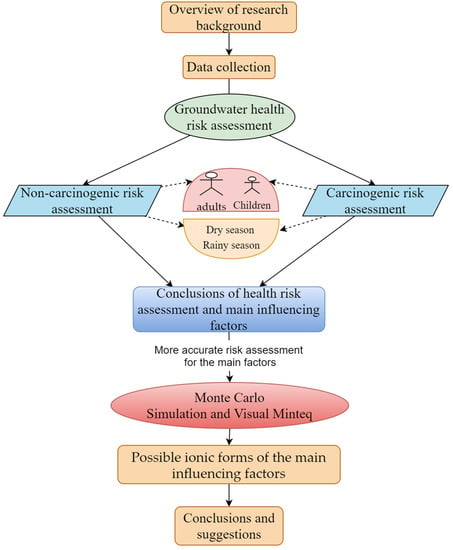
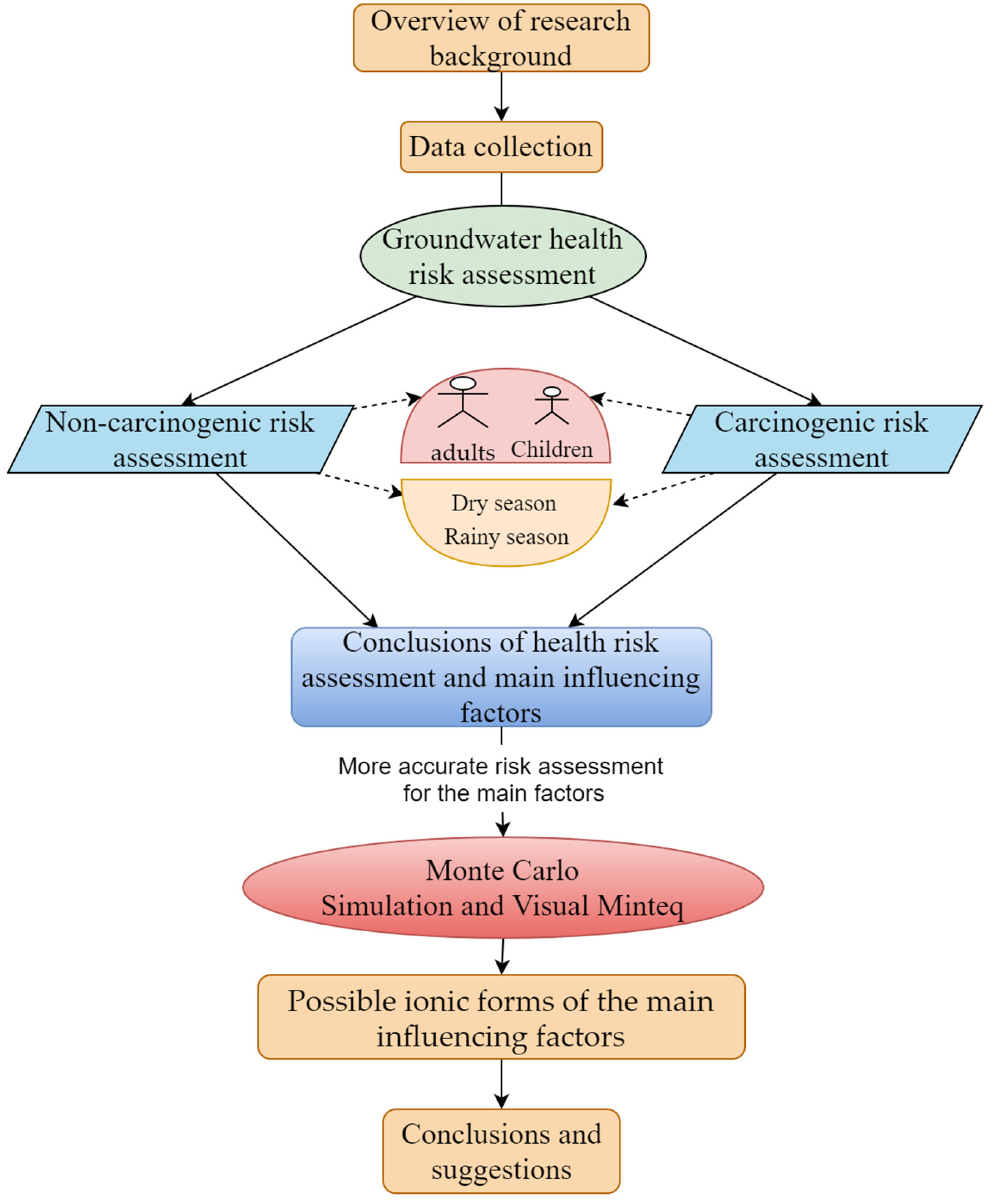
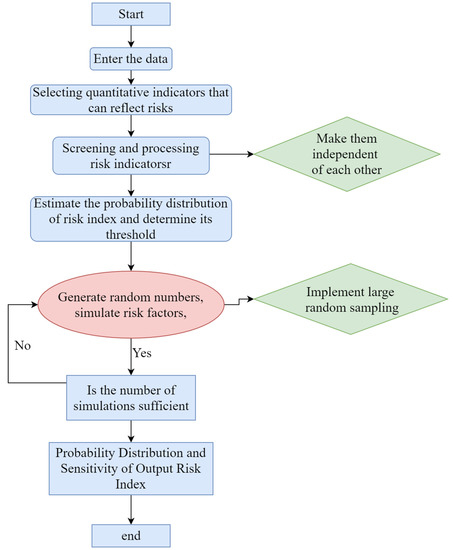
The study flowchart is shown below, which shows the overall idea of the study, from the background investigation, and data collection, to health risk assessment, using the Monte Carlo model and Visual Minteq, finally deriving the main ion morphology of carcinogenic factors.
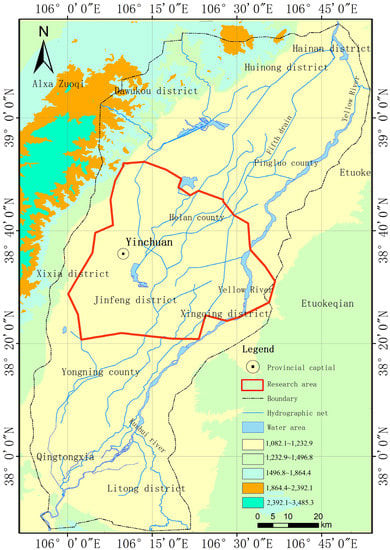
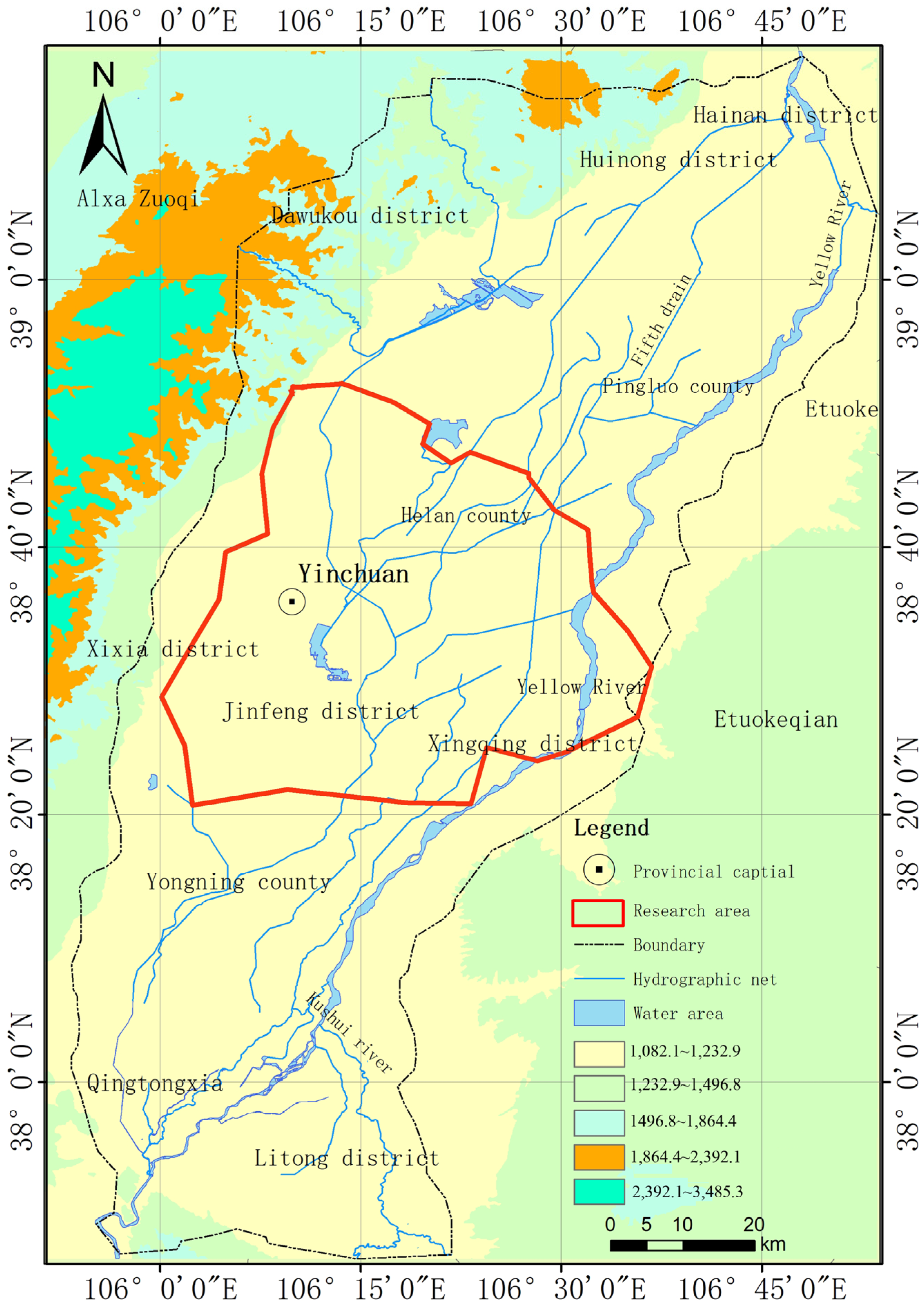
In this study, 49 groups of monitoring points with relatively continuous and complete observations were selected as the analysis data (20–30 m below the ground surface); the location of all the monitoring points is shown in Figure 1. These data were collected by the Groundwater Dynamic Monitoring Network of the Ningxia Hui Autonomous Region in 2017–2018 (the dry season (March–April) and the rainy season (July–August)). The collection, sealing, and transportation of water samples were carried out in strict accordance with national technical regulations [31]. Detailed test methods, instrument specifications, and detection limits for each indicator are shown in Table 1. The pH and conductivity of groundwater samples were measured in the field, while other parameters were measured in the laboratory. Test parameters include Na+, Ca2+, Mg2+, K+, HCO3−, SO42−, Cl−, As, Cr6+, total hardness (TH), and total dissolved solids (TDS), which were analyzed in the laboratory of the Hebei GEO University using standard methods recommended by technical specifications for environmental monitoring of groundwater. The accuracy of the test results was measured by the calculation of percent charge balance errors (%CBE), as follows:
Figure 1.
Study area, geological profile, and location of samplings.
Table 1.
Analytical methods, instruments, and detection limits of physiochemical parameters.
The study flowchart is shown below (Figure 2), which shows the overall idea of the study, from background investigation, data collection, to health risk assessment, using the Monte Carlo model and Visual Minteq, finally deriving the main ion morphology of carcinogenic factors.
Figure 2.
Research idea flowchart.
The final detection results show that the relative error of all samples was <±5%, indicating that all 49 samples could be used for analysis.
3.2. Health Risk Assessment
The main pathways through which heavy metals pose human health risks are dermal contact and food chain. Human health risks resulting from direct or indirect exposure to groundwater can be assessed by the models recommended by the Ministry of Environmental Protection of Environmental Protection of China, based on models of the United States Environmental Protection Agency (USEPA). Data were analyzed according to the concentration period of precipitation (dry or rainy season) and human physiology (i.e., adults and children) [32,33]. Based on the actual situation in China, the Chinese model adopts specific parameters, which are presented in Table 2.
Table 2.
Limit values of several parameters for oral intake and skin contact by type of sensitive group.
The average daily dose for oral intake and dermal contact was calculated as follows:
where Intakeoral is the average daily dose of oral intake (mg (kg/d)−1); DA and SA are defined as the exposure dose (mg/cm2) and skin contact area (cm2) of each event, respectively; and C indicates the concentration of pollutants in groundwater (mg/L−1) obtained by laboratory tests. The limit values of oral intake and skin contact of several parameters for the two sensitive groups investigated are illustrated in Table 2.
The non-carcinogenic risk of oral intake and skin contact was calculated as follows:
where HQ and RfD indicate the non-carcinogenic hazard quotients and the reference doses, respectively [34]. In this study, the RfD values of Mn, NO2−, Fe, F, Pb, Cr6+, Cd, As, and ammonia nitrogen (in terms of N), were found to be 0.14, 0.1, 0.3, 0.04, 0.0014, 0.0003, 0.003, 0.0003, and 0.97 mg (kg d) 1, respectively [35]. RfDdermal indicates a gastrointestinal absorption factor that can be calculated by RfDoral. Apart from the value of BASgi for Cr6 + which was 0.025, the other values BASgi were all equal to 1.
The non-carcinogenic risk of oral intake and skin contact absorption was calculated as the total risk, as follows:
where HI is a health risk assessment index, which refers to the sum of multiple HQs of multiple substances through the two exposure pathways considered. HQ and HI values lower than 1 are considered safe for human health [36,37]. By contrast, residents may face non-carcinogenic risks when these values exceed 1. The standard value of HI was proposed by the Ministry of Environmental Protection of the China in 2014.
In this study, As and Cr6+ were considered the main carcinogenic factors; their carcinogenic health risk values were calculated as follows:
where the SForal values of As and Cr6+ were set at 1.5 and 0.5 mg (kg/day)−1, respectively; and CR indicates the risk of cancer. According to the regulations of the Ministry of Environmental Protection of China, the acceptable limit value for both parameters is 0.6 [38]. When the calculated value exceeds the limit value, this indicates that there is a risk of cancer in the region, and that it is necessary to take corresponding environmental control measures in time [39].
3.3. Monte Carlo Simulation and Visual Minteq
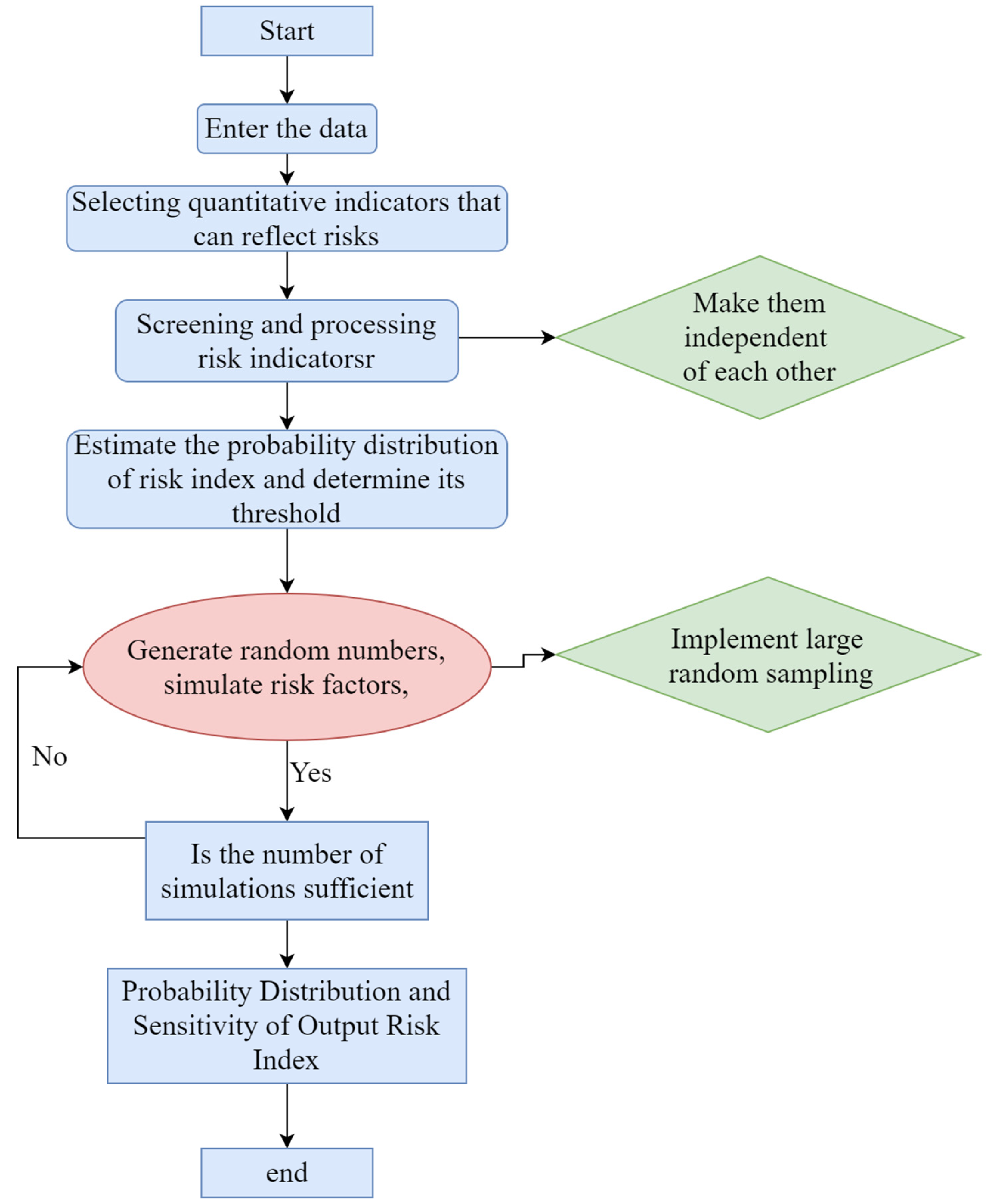
Due to individual differences and sampling limitations, the results of the health risk calculation were highly uncertain. In order to overcome this defect, this study used the Monte Carlo Simulation (MCS) method, which is a probabilistic statistical mathematical method to evaluate uncertainty by random sampling each variable value [40]. This simulation method was combined with the U.S. Environmental Protection Agency risk assessment technology to quantify and minimize the uncertainty, and analyze the sensitivity of pollutant exposure in drinking water wells. Different numbers related to each variable were sampled for a large number of digital repetition operations. The main steps are as follows: (1) The respective distribution functions were fitted to the data of each variable, and the hypothetical variable was defined; (2) The calculation formula was inputted and the decision variable was defined; (3) A random sampling was conducted from the distribution of the hypothetical variables; (4) The randomly selected parameter sequence was used for a large number of repeated operations, to obtain as output the probability distribution of the operation results (Figure 3). In this study, the Monte Carlo Model with 10,000 iterations was used to evaluate the carcinogenic risk of exposure to As and Cr6+ for children and adults during the rainy and dry seasons from 2017 to 2018. Then, sensitivity analysis was carried out using the MCS method with 10,000 repetitions using Oracle Crystal Ball®. Finally, the frequency diagram and sensitivity analysis diagram drawn by it were used to identify the input parameters with the greatest impact on the output of the risk assessment model. After using the sensitivity analysis to obtain the main influencing factors of health risk assessment results, Visual Minteq was used to analyze the possible ion forms of the main factors in the hydrogeological environment of the study area.
Figure 3.
Monte Carlo model operation flowchart.
4. Results and Discussion
4.1. Health Risk Assessment
4.1.1. Health Risk Assessment
The concentrations of ions in water were used to assess the possible health risks from human exposure to drinking water through both oral intake and skin contact. This study considered two groups, namely adults and children [41], and evaluated the carcinogenic risk of eight ions and the non-carcinogenic risk of two heavy metal ions [42].
4.1.2. Non-Carcinogenic Risk Assessment
The Hazard Index (HI) was used to measure non-carcinogenic health risk as the sum of the hazard quotients (HQs) from both oral intake and dermal contact of several parameters including F−, NH4+, NO2−, NO3−, Cr6+, Mn, As, Fe (including Fe2+, Fe3+), and others, as shown in Table 3 and Table 4 [43]. From 2017 to 2018, a total of 17 sampling points for adults and 67 for children had an HI index value higher than 1, with the latter far exceeding the number of the former.
Table 3.
Non-carcinogenic risk assessment for adults.
Table 4.
Non-carcinogenic risk assessment for children.
4.1.3. Carcinogenic Risk Assessment
The International Agency for Cancer Research classified five elements (i.e., chromium, cadmium, arsenic, nickel, and cobalt) as possible carcinogens (IARC, 2013). Since cadmium and cobalt have no SF, the oral intake and skin contact for chromium, arsenic, and nickel were considered pathways of human contact, with a special focus on arsenic. In Table 3 and Table 4, it can be seen that from 2017 to 2018 a total of 114 records of CR, which indicate the carcinogenic risk of adults and children, exceeded the value of 1 × 10−0.6, demonstrating that the study area was seriously polluted, and that the main pollution factor was As. From 2017 to 2018, the average CR values for adults for As in the study area were 2.94 × 10−0.5, 5.93 × 10−0.5, 5.48 × 10−0.5, and 3.59 × 10−0.5 (Table 5), respectively, while those of children were 6.28 × 10−0.5, 1.27 × 10−0.4, 1.17 × 10−0.4, and 7.67 × 10−0.5, respectively, which were higher than those of adults (Table 6). Therefore, we mainly analyzed the influence of As ions on children’s health risk and the possible ion forms under local hydrogeological conditions (Table 7).
Table 5.
Summary of data for As.
Table 6.
Non-carcinogenic risk assessment for children.
Table 7.
Carcinogenic risk assessment for children.
4.2. Risk Characterization Based on MCS
MCS allows to iteratively generate time series by setting up a stochastic process, calculating parameter estimates and statistics, and studying the characteristics of their distribution. Because As and Cr6+ concentrations vary under local hydrogeological conditions and population properties, this study used a Crystal Ball model based on MCS to produce an assessment of the possible carcinogenic health risks to children.
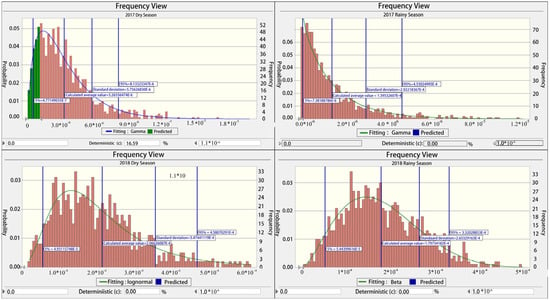
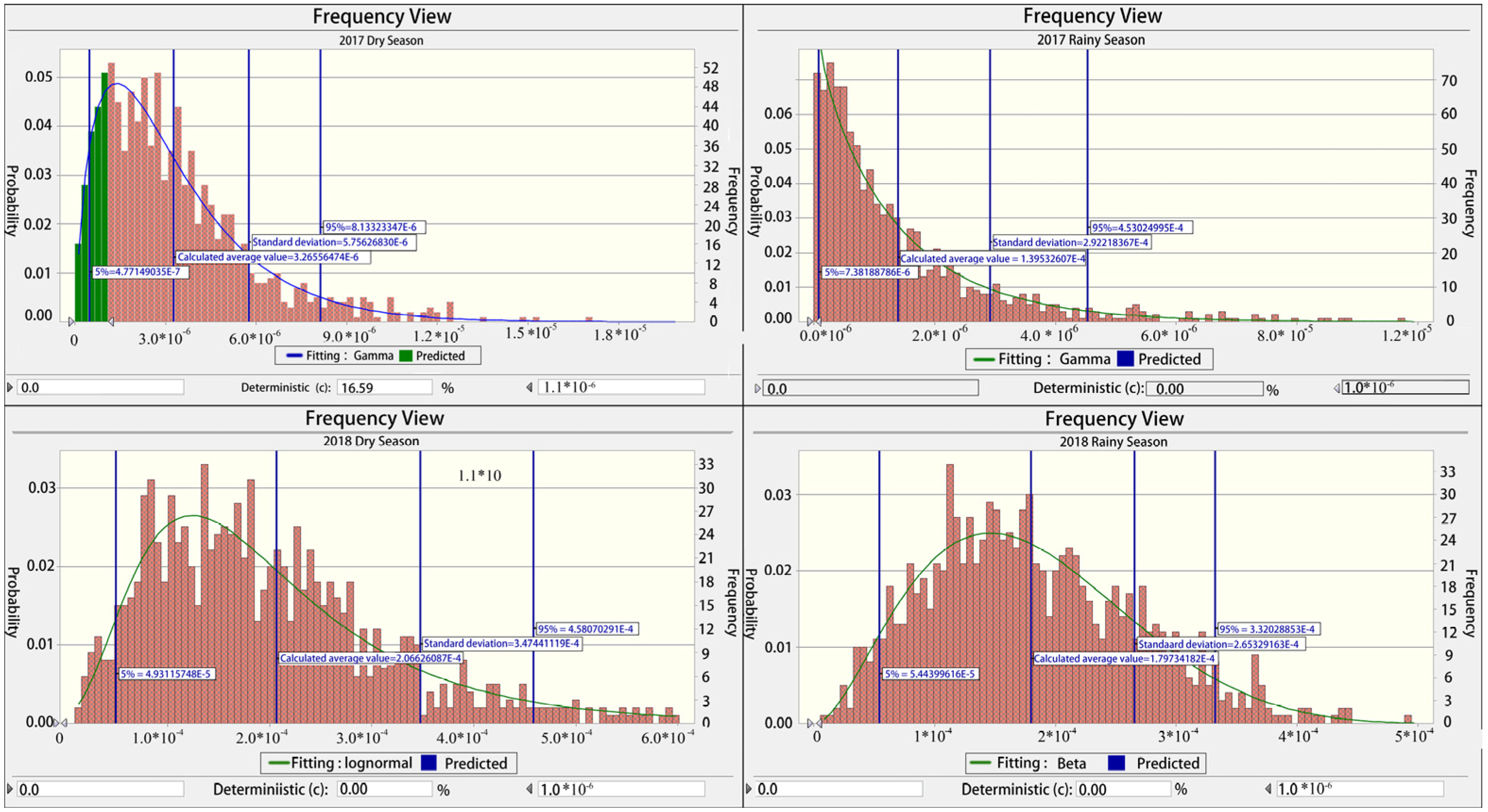
As shown in Figure 4, The forecast for the 2017 dry season ranged from 0–1.80 × 10−0.5, with a mean of 3.26 × 10−0.6 and a standard deviation of 5.75 × 10−0.6, while the forecast for the rainy season of the same year ranged from 0–1.00 × 10−0.3, with a mean of 1.39 × 10−0.4 and a standard deviation of 2.92 × 10−0.4. The forecast for the 2018 dry season ranged from 0–6.00 × 10−0.4, with a mean of 2.06 × 10−0.4 and a standard deviation of 3.47 × 10−0.4, while the forecast for the rainy season of the same year ranged from 0–5.00 × 10−0.4, with a mean of 1.79 × 10−0.4 and a standard deviation of 2.65 c. The simulations yielded a CR for children between 0 and 1 × 10−0.6 with probabilities in 2017 of 16.59% and 0%, and in 2018 of 0% and 0% for the dry and rainy season, respectively, indicating that children are at a higher health risk and prompt action on this respect should be considered. MCS can also be used to determine the sensitivity of the chosen parameters depending on their uncertainty [44,45,46]. In fact, different parameters have different sensitivities to carcinogenic risk values. Accordingly, in this study, the analysis of the effect of As and Cr on carcinogenic risk was performed.
Figure 4.
Assessment of the possible carcinogenic health risks to children.
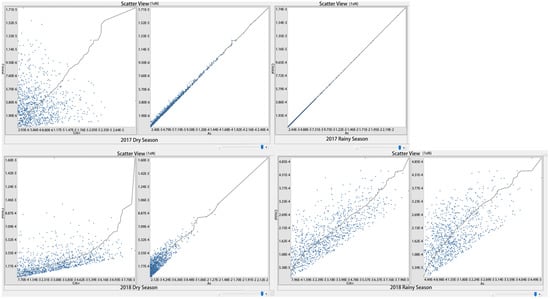
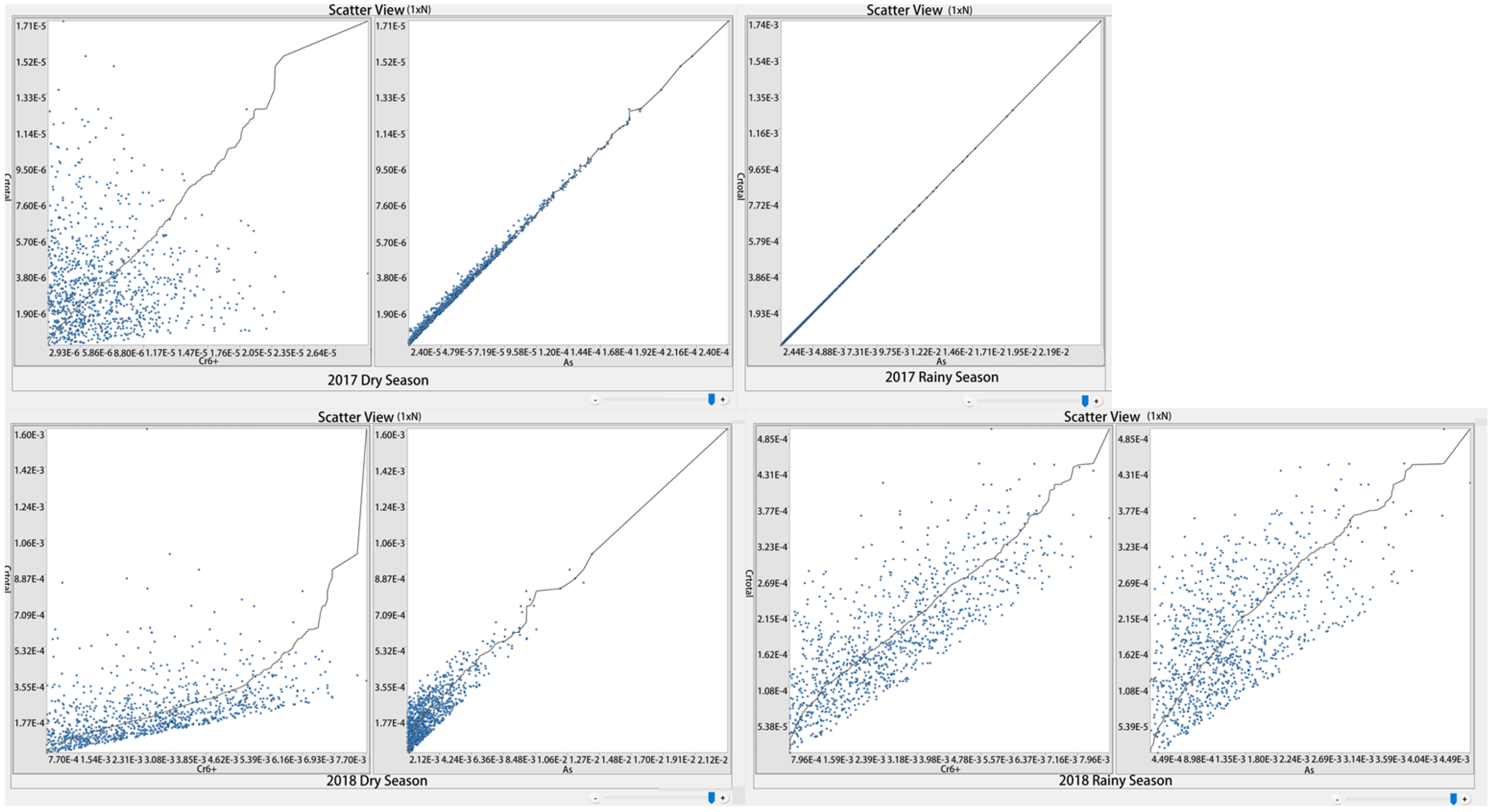
As shown in Figure 5, the association values for As in the dry and rainy seasons for 2017 were 0.9958 and 1, respectively, and Cr was 0, while the association values for As in the 2018 dry and rainy seasons were 0.7424 and 0.5759, respectively, and Cr was 0.6237 and 0.8182, respectively. As you can see, during the 2018 rainy season, the association value of As was lower than the association value of Cr. In the 2017 dry rainy season and the 2018 dry season, the association value of As was higher than the correlation value of Cr.
Figure 5.
Association values for As and Cr.
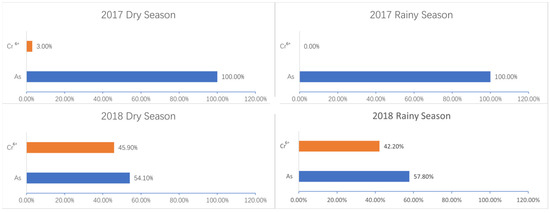
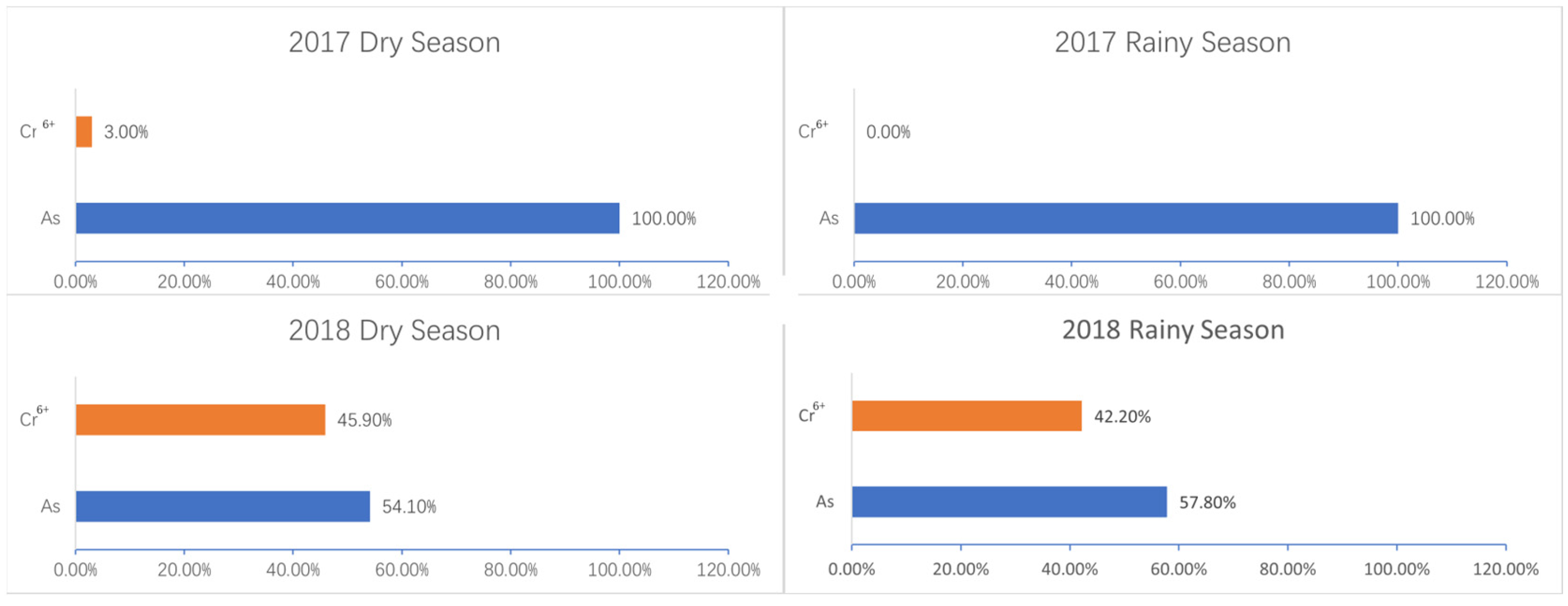
Moreover, as can be seen in Figure 6, in 2017 the sensitivity of As was 100%, while that of Cr was 3% and 0% in the dry and rainy seasons, respectively. In 2018, the sensitivity of As was 54.1% and 57.8% and that of Cr was 45.9% and 42.2% in the dry and rainy seasons, respectively. This indicates that As was the most sensitive to total carcinogenic risk [47].
Figure 6.
Sensitivity of As and Cr.
Based on these results, the analysis of the possible patterns of As present in the water environment of the study area was conducted.
In summary, in this study, limited data were employed through the use of MCS to determine probability density functions and confidence intervals for carcinogenic risks, and an uncertainty analysis was performed to reveal the possible influence of various parameters on human health risks [48].
4.3. Visual Minteq Model Analysis
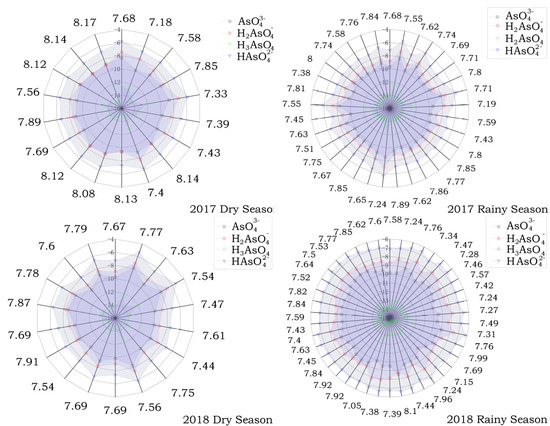
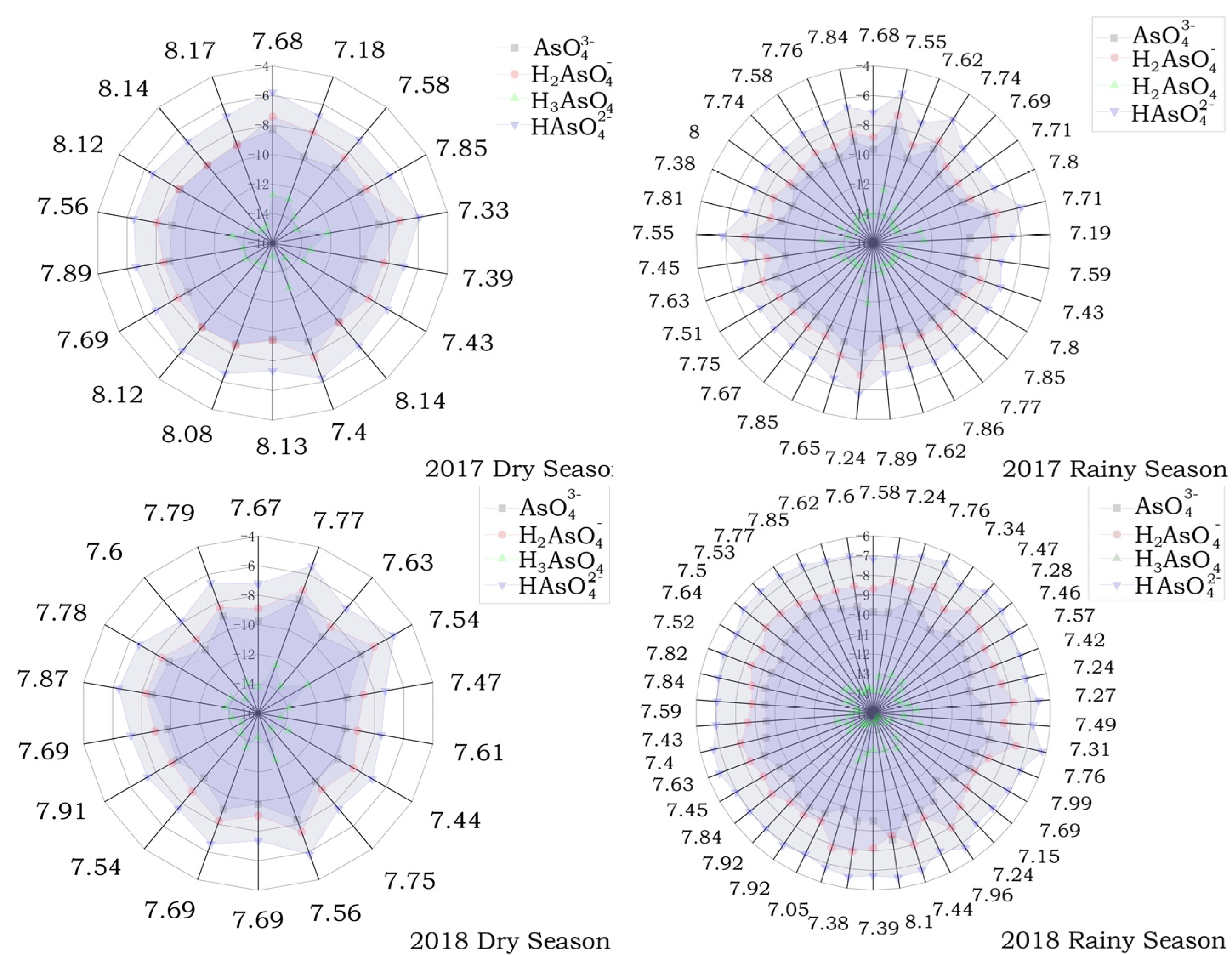
In order to further analyze the possible ionic forms that could be formed as a result of chemical reactions between As ions and other ions in the water environment of the study area, Visual Minteq was used to simulate the pH, ion concentrations, and possible products of the water environment. The data to be entered included pH, temperature, K+, Na+, Ca2+, Mg2+, Fe2+, and As. The possible compounds of As produced by the simulations in the study area context are depicted in Figure 7 and include AsO43−, H2AsO4−, H3AsO4 and HAsO42−. As can be seen from Figure 7, among all the possible ionic forms of As formed during the wet and dry seasons of 2017 and 2018, the activity of HAsO42− had the largest logarithmic value while that of H3AsO4 had the smallest value, regardless of pH change. The minimum and maximum values for HAsO42− were −7.331 and −5.784 in the 2017 dry season and −7.274 and −5.645 in the wet season, respectively. The minimum and maximum values for HAsO42− were −7.85 and −5.371 in the 2018 dry season and −7.342 and −6.212 in the wet season, respectively. The minimum and maximum values for H3AsO4 were −15.142 and −12.222 in the dry season and −14.648 and −11.895 in the rainy season, respectively. The minimum and maximum values of H3AsO4 were −14.75 and −12.129 in the 2018 dry season and −14.666 and −12.509 in the rainy season, respectively.
Figure 7.
Logarithmic values of the activities of the possible compounds of As generated by the simulations.
5. Conclusions and Recommendations
In this study, 49 sets of observations from relatively continuous and complete monitoring sites were used to compare the health risks posed to adults and children by oral intake and dermal contact with drinking water in Yinchuan during the dry and rainy seasons in 2017 and 2018, assessing the health risks of Mn, NO2−, Fe, F, Pb, Cr6+, Cd, As, and ammonia nitrogen. According to these data, the HI index exceeded the value of 1 at 17 sampling points for adults and 67 for children. The average CR values for adults for As in the study area for 2017 were 2.94 × 10−0.5 and 5.93 × 10−0.5 for the dry and rainy seasons, respectively, while for 2018 they were 5.48 × 10−0.5 and 3.59 × 10−0.5, respectively. In parallel, the CR values for children for 2017 were 6.28 × 10−0.5 and 1.27 × 10−0.4, respectively, and 1.17 × 10−0.4 and 7.67 × 10−0.5, respectively, indicating a considerably higher carcinogenic risk for children than for adults.
The results of the sensitivity analysis of Cr6+ and As using Crystal Ball software showed that in 2017 the association values were 0.9958 and 1 for As and 0.0948 and 0 for Cr for the dry and rainy seasons, respectively, while in 2018 they were 0.7424 and 0.5759 for As and 0.6237 and 0.8182 for Cr for the dry and rainy seasons, respectively. This means that the association values for As were lower than those for Cr only in the 2018 rainy season, indicating that As is most sensitive to overall carcinogenic risk.
The results of the visual coinage model analysis allowed us to conclude that the activity of HAsO42− had the largest logarithmic value, while that of H3AsO4 had the smallest logarithmic value among all the possible ionic forms of As, regardless of the change in pH. This indicates that HAsO42 is the ionic form of As with the main carcinogenic factor in the hydrogeological environment of the study area.
Based on these results, it is recommended to strengthen the monitoring and control of As, especially of HAsO42−, levels in groundwater in the study area.
Author Contributions
Conceptualization, Z.M. and J.L.; methodology, M.Z.; software, D.Y.; validation, Z.M., J.L. and M.Z.; formal analysis, Y.Z.; investigation, Z.M.; resources, Y.Z.; data curation, M.Z.; writing—original draft preparation, M.Z.; writing—review and editing, D.Y.; visualization, Z.G.; supervision, Z.G.; project administration, Y.Z.; funding acquisition, Z.G. All authors have read and agreed to the published version of the manuscript.
Funding
This research is funded by Open project of Hebei key laboratory of geological resources and environmental monitoring and protection (JCYKT202101); Natural Science Foundation of Hebei Province of China (D2022403016); Hebei water conservancy science and technology plan project (2021-45). Hebei University Science and technology research project (ZD2022119); Science and technology innovation team project of Hebei GEO University (KJCXTD-2021-14); Introduction of foreign intelligence project in Hebei province in 2021 (2021ZLYJ-1).
Institutional Review Board Statement
Not applicable.
Informed Consent Statement
Not applicable.
Data Availability Statement
Data availability statement can be said to be the monitoring data of Hebei Institute of hydrogeology and engineering geology, real and reliable.
Acknowledgments
The author thanks Hebei Geological Environment Monitoring Institute, and Hebei Institute of hydrogeology and engineering geology providing real and reliable data.
Conflicts of Interest
The authors declare no conflict of interest.
References
- Li, P.; Li, X.; Meng, X.; Li, M.; Zhang, Y. Appraising Groundwater Quality and Health Risks from Contamination in a Semiarid Region of Northwest China. Expo. Health 2016, 8, 361–379. [Google Scholar] [CrossRef]
- Li, P.; Qian, H. Human health risk assessment for chemical pollutants in drinking water source in Shizuishan city-northwest china. Iran. J. Environ. Health Sci. Eng. 2011, 8, 41–48. [Google Scholar]
- Wang, X. Groundwater resources development and utilization in China. In Inner Mongolia; Inner Mongolia People’s Publishing House: Hohhot, China, 1992. [Google Scholar]
- Zivanovic, V.; Jemcov, I.; Dragisic, V.; Atanackovic, N.; Magazinovic, S. Karst groundwater source protection based on the time-dependent vulnerability assessment model: Crnica springs case study, eastern Serbia. Environ. Earth Sci. 2016, 75, 1224. [Google Scholar] [CrossRef]
- Tai, T.; Wang, J.; Wang, Y.; Bai, L. Groundwater pollution risk evaluation method research progress in our country. J. Beijing Norm. Univ. Nat. Sci. 2012, 6, 648–653. (In Chinese) [Google Scholar]
- Li, P.; Qian, H.; Wu, J. Accelerate research on land creation. Nature 2014, 510, 29–31. [Google Scholar] [CrossRef]
- Wang, Q.; Wang, J. Research on groundwater pollution and its prevention-control policy in China. J. China Univ. Geosci. 2008, 8, 72–75. [Google Scholar]
- Anokhin, Y. Toxic aluminium and heavy metals in groundwater of middle Russia: Health risk assessment. Int. J. Environ. Res. Public Health 2005, 2, 214–218. [Google Scholar]
- Wongsasuluk, P.; Chotpantarat, S.; Siriwong, W.; Robson, M. Heavy metal contamination and human health risk assessment in drinking water from shallow groundwater wells in an agricultural area in Ubon Ratchathani province, Thailand. Environ. Geochem. Health 2014, 36, 169–182. [Google Scholar] [CrossRef]
- Manecki, P.; Gałuszka, A. Groundwater quality as a geoindicator of organochlorine pesticide contamination after pesticide tomb reclamation: A case study of Franciszkowo, northwestern Poland. Environ. Earth Sci. 2012, 67, 2441–2447. [Google Scholar] [CrossRef] [Green Version]
- Han, D.; Tong, X.; Jin, M.; Hepburn, E.; Tong, C.; Song, X. Evaluation of organic contamination in urban groundwater surrounding a municipal landfill, Zhoukou, China. Environ. Monit. Assess. 2013, 185, 3413–3444. [Google Scholar] [CrossRef]
- Akter, A.; Ali, M. Arsenic contamination in groundwater and its proposed remedial measures. Int. J. Environ. Sci. Technol. 2011, 8, 433–443. [Google Scholar] [CrossRef] [Green Version]
- Nasrabadi, T.; Bidabadi, N. Evaluating the spatial distribution of quantitative risk and hazard level of arsenic exposure in groundwater, case study of Qorveh County, Kurdistan Iran. Iran J. Environ. Health Sci. Eng. 2013, 10, 30. [Google Scholar] [CrossRef] [Green Version]
- Uddin, M.; Harun-Ar-Rashid, A.; Hossain, S.; Hafiz, M.; Nahar, K.; Mubin, S. Slowarsenic poisoning of the contaminated groundwater users. Int. J. Environ. Sci. Technol. 2006, 3, 447–453. [Google Scholar] [CrossRef] [Green Version]
- Song, G. Study on the Mechanism of Chromium Pollution in Groundwater; Xi’an College of Engineering: Xi’An, China, 1997. [Google Scholar]
- Jing, S.; Wang, L.; Chen, Q.; Wu, B. Research on evaluation and countermeasures to present status of groud water environment in Tianjin. North. Environ. 2012, 6, 40–42. [Google Scholar]
- Deepesh, M.; Kumar, J.; Singh, V.; Chinchu, M. Assessment and mapping of groundwater vulnerability to pollution: Current status and challenges. Earth-Sci. Rev. 2018, 185, 901–927. [Google Scholar]
- Wang, G.; Liu, Z.; Gao, Y.; Fan, Q. Study on groundwater resources and the protective strategy in shiyang river basin. J. Arid. Land Resour. Environ. 2007, 21, 48–51. [Google Scholar]
- World Health Organization. Guidelines for Drinking Water Quality, 4th ed.; WHO: Geneva, Switzerland, 2011. [Google Scholar]
- Zhou, Y.; Wei, A.; Li, J.; Li, Y.; Li, J. Groundwater Quality Evaluation and Health Risk Assessment in the Yinchuan Region, Northwest China. Expo. Health 2016, 8, 443–456. [Google Scholar] [CrossRef]
- Teng, Y.; Jie, S.; Zhai, Y.; Wang, J. A review on the overlay and index method for groundwater pollution risk assessment. Adv. Earth Sci. 2012, 27, 1140–1147. [Google Scholar]
- Liu, S.; Wang, H. Review on Groundwater Pollution Risk Assessment in China. In Proceedings of the 2012 4th International Conference on Environmental Science and Information Application Technology (ESIAT 2012), Shanghai, China, 12 November 2012. [Google Scholar]
- Lai, Y.; Li, Y.; Song, W.; Zhou, L.; Song, Y. Current situation and countermeasures of exploitation and utilization of groundwater resources in Shenzhen. Environ. Sci. Survey 2018, 37, 25–27. [Google Scholar]
- Qian, H.; Li, P.; Howard, K.; Yang, C.; Zhang, X. Assessment of groundwater vulnerability in the Yinchuan Plain, Northwest China using OREADIC. Environ. Monit. Assess. 2012, 6, 3613–3628. [Google Scholar] [CrossRef]
- Chen, X.; Zhu, L.; Liu, J. Study on health risk evaluation and risk control of drinking groundwater in Yinchuan Plain. Anhui Agric. Sci. 2019, 47, 7. [Google Scholar]
- Mohammadpour, A.; Gharehchahi, E.; Badeenezhad, A.; Parseh, I.; Khaksefidi, R.; Golaki, M.; Dehbandi, R.; Azhdarpoor, A.; Derakhshan, Z.; Rodriguez Chueca, J.; et al. Nitrate in Groundwater Resources of Hormozgan Province, Southern Iran: Concentration Estimation, Distribution and Probabilistic Health Risk Assessment Using Monte Carlo Simulation. Water 2022, 14, 564. [Google Scholar] [CrossRef]
- Zhang, H.; Qian, H.; Chen, J.; Qiao, L. Assessment of Groundwater Chemistry and Status in a Heavily Used Semi-Arid Region with Multivariate Statistical Analysis. Water 2014, 6, 2212–2232. [Google Scholar] [CrossRef] [Green Version]
- Zhang, X.; Qian, H.; Wu, H.; Chen, J.; Qiao, L. Multivariate Analysis of Confined Groundwater Hydrochemistry of a Long-Exploited Sedimentary Basin in Northwest China. J. Chem. 2016, 2016, 3812125. [Google Scholar] [CrossRef]
- Li, P.; Wu, Q.; Wu, J. Groundwater suitability for drinking and agricultural usage in Yinchuan area, China. Int. J. Environ. Sci. 2010, 1, 1241–1249. [Google Scholar]
- Qian, H.; Li, P. Hydrochemical characteristics of groundwater in Yinchuan plain and their control factors. Asian J. Chem. 2011, 23, 2927–2938. [Google Scholar]
- Paul, R.; Brindha, K.; Gowrisankar, G.; Mou, L.; Mahesh, K. Identification of hydrogeochemical processes controlling groundwater quality in Tripura, Northeast India using evaluation indices, GIS, and multivariate statistical methods. Environ. Earth Sci. 2019, 78, 470. [Google Scholar] [CrossRef]
- Yin, Z.; Duan, R.; Li, P.; Li, W. Water quality characteristics and health risk assessment of main water supply reservoirs in Taizhou City, East China. Hum. Ecol. Risk Assess. 2021, 27, 2142–2160. [Google Scholar] [CrossRef]
- Mustafa, K.G.; Nadia, R.M.; Zafar, I.S.; Jalal, U.; Saima, N.; Ur, R.J.; Ijaz, H.A.; Amin, M.K. The determination of potentially toxic elements (PTEs) in milk from the Southern Cities of Punjab, Pakistan: A health risk assessment study. J. Food Compos. Anal. 2022, 108, 104446. [Google Scholar] [CrossRef]
- Kumar, D.L.; Kumar, P.K.; Ratnakar, D.; Vurimindi, H. Health risk assessment of nitrate and fluoride toxicity in groundwater contamination in the semi-arid area of Medchal, South India. Appl. Water Sci. 2022, 12, 11. [Google Scholar] [CrossRef]
- Chen, G.; Wang, X.; Wang, R. Health risk assessment of potentially harmful elements in subsidence water bodies using a Monte Carlo approach: An example from the Huainan coal mining area, China. Ecotoxicol. Environ. Saf. 2019, 171, 737–745. [Google Scholar] [CrossRef]
- Shukla, S.; Saxena, A.; Khan, R.; Li, P. Spatial analysis of groundwater quality and human health risk assessment in parts of Raebareli district, India. Environ. Earth Sci. 2021, 80, 800. [Google Scholar] [CrossRef]
- Junjie, B.; Fufang, G.; Cong, P.; Jun, L. Characteristics of nitrate and heavy metals pollution in Huixian Wetland and its health risk assessment. Alex. Eng. J. 2022, 61, 9031–9042. [Google Scholar] [CrossRef]
- Nhu, H.M.; Le, V.P.; Vinh, B.T.; Pham, H.; Khai, H.Q. Health risk assessment of arsenic in drinking groundwater: A case study in a central high land area of Vietnam. In Proceedings of the IOP Conference Series: Earth and Environmental Science, Al-Qadisiyah, Iraq, 19–20 January 2022. [Google Scholar] [CrossRef]
- Nsabimana, A.; Li, P.; He, S.; He, X.; Alam, S.; Fida, M. Health Risk of the Shallow Groundwater and Its Suitability for Drinking Purpose in Tongchuan, China. Water 2021, 13, 3256. [Google Scholar] [CrossRef]
- Ahmad, B.; Majid, R.; Hassan, P.; Iman, P.; Fariba, A.; Saeid, R. Factors affecting the nitrate concentration and its health risk assessment in drinking groundwater by application of Monte Carlo simulation and geographic information system. Hum. Ecol. Risk Assess. Int. J. 2019, 27, 1458–1471. [Google Scholar]
- Mthembu, P.; Elumalai, V.; Li, P.; Uthandi, S.; Rajmohan, N.; Chidambaram, S. Integration of heavy metal pollution indices and health risk assessment of groundwater in semi-arid coastal aquifers, South Africa. Expo. Health 2022, 14, 487–502. [Google Scholar] [CrossRef]
- Geng, M.; Qi, H.; Liu, X.; Gao, B.; Yang, Z.; Lu, W.; Sun, R. Occurrence and health risk assessment of selected metals in drinking water from two typical remote areas in China. Environ. Sci. Pollut. Res. 2016, 23, 8462–8469. [Google Scholar] [CrossRef]
- Qu, L.; Huang, H.; Xia, F.; Liu, Y.; Dahlgren, R.A.; Zhang, M.; Mei, K. Risk analysis of heavy metal concentration in surface waters across the rural-urban interface of the Wen-Rui Tang River, China. Environ. Pollut. 2018, 237, 639–649. [Google Scholar] [CrossRef] [Green Version]
- Sy, A.; Jian, Z.; Sxc, B.; Cc, C.; Jx, A.; Xl, A. Status assessment and probabilistic health risk modeling of metals accumulation in agriculture soils across China: A synthesis. Environ. Int. 2019, 128, 165–174. [Google Scholar]
- Ns, A.; Msr, B.; Mba, C.; Jlz, C.; Hhn, C.; Wg, C. Industrial metal pollution in water and probabilistic assessment of human health risk. J. Environ. Manag. 2017, 185, 70–78. [Google Scholar]
- Ghuniem, M.; Khorshed, M.; El-Safty, S.; Souaya, E.; Khalil, M. Potential human health risk assessment of potentially toxic elements intake via consumption of soft drinks purchased from different Egyptian markets. Int. J. Environ. Anal. Chem. 2020, 1–23. [Google Scholar] [CrossRef]
- Wang, L.; Li, P.; Duan, R.; He, X. Occurrence, Controlling Factors and Health Risks of Cr6+ in Groundwater in the Guanzhong Basin of China. Expo. Health 2022, 14, 239–251. [Google Scholar] [CrossRef]
- Wang, Y.; Li, P. Appraisal of shallow groundwater quality with human health risk assessment in different seasons in rural areas of the Guanzhong Plain (China). Environ. Res. 2022, 207, 112210. [Google Scholar] [CrossRef] [PubMed]

Publisher’s Note: MDPI stays neutral with regard to jurisdictional claims in published maps and institutional affiliations. |
© 2022 by the authors. Licensee MDPI, Basel, Switzerland. This article is an open access article distributed under the terms and conditions of the Creative Commons Attribution (CC BY) license (https://creativecommons.org/licenses/by/4.0/).