Tumor Acidosis Boosts Antibody-Driven Cytotoxic Potential of Neutrophils

 , , , ,
  , and
, and
Highlights
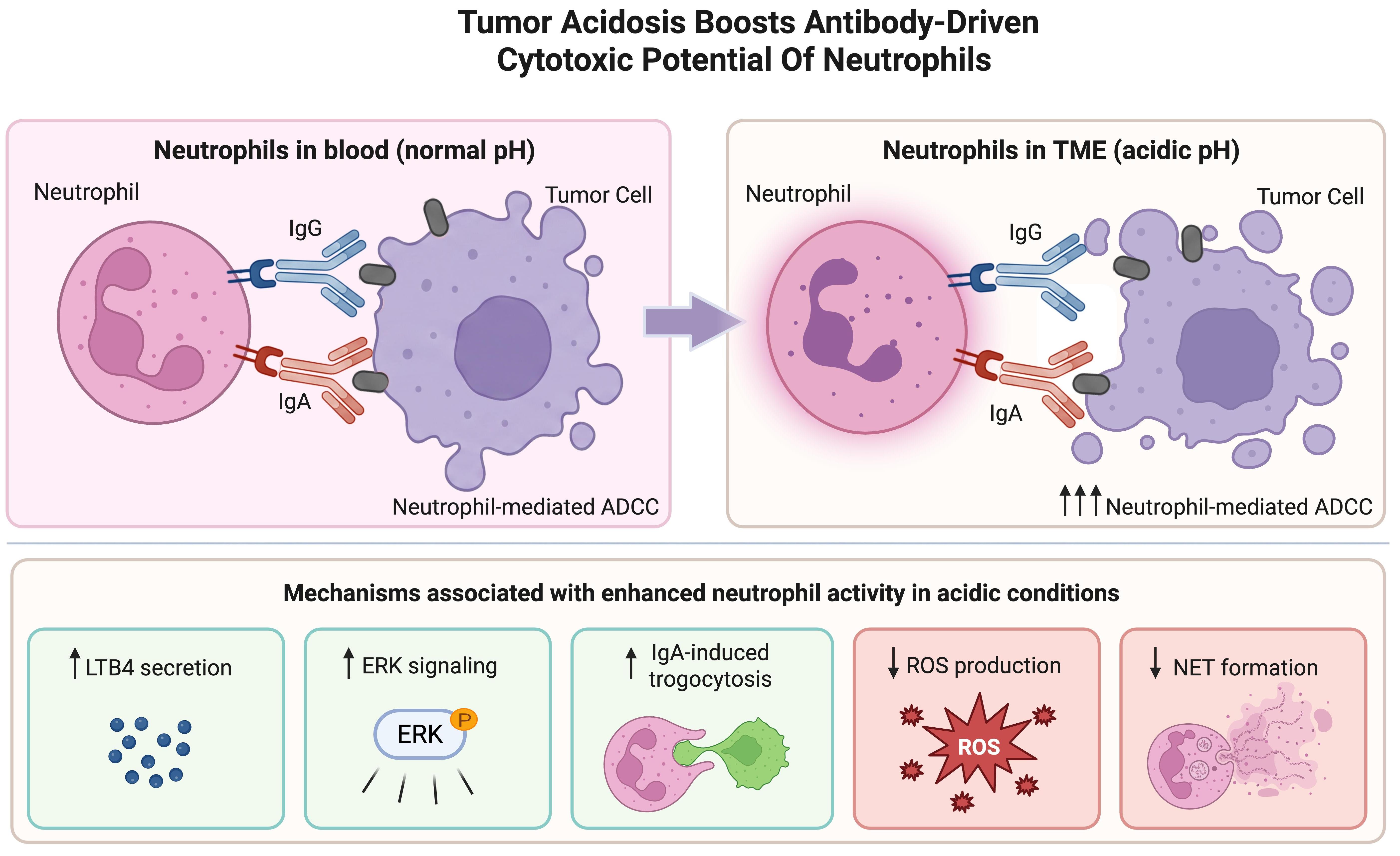
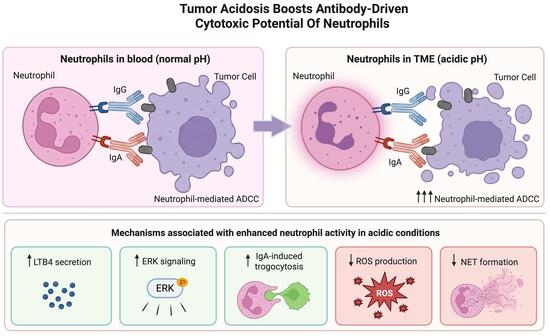
- Unlike other immune cells, acidity enhances both IgG- and IgA-mediated antibody-dependent tumor cell killing by human neutrophils.
- Acidic pH increases IgA-mediated trogocytosis, LTB4 secretion, and Erk signaling, while reducing ROS production and NET formation.
- Neutrophils respond differently from other immune effector cells to extracellular acidity, revealing a distinct regulation of antibody-mediated antitumor activity in the tumor microenvironment.
- These findings highlight the potential of neutrophil-engaging antibody therapies, including IgA-based approaches, for tumors with acidic microenvironments.
Abstract
1. Introduction
2. Materials and Methods
2.1. Cell Culture and Cell Lines
2.2. Antibodies and Reagents
2.3. PBMC/Neutrophil Isolation and Overnight Incubation
2.4. 51Cr Release ADCC Assay
2.5. Flow Cytometry Assay
2.6. Trogocytosis
2.7. Fc Binding Assays
2.8. Superoxide Production
2.9. NETosis ELISA and Immunofluorescence Microscopy
2.10. Multiplex Cytokine Assay
2.11. LTB4 Measurements
2.12. Live-Cell Imaging
2.13. Immunoblot
2.14. Data Processing and Statistical Analysis
3. Results
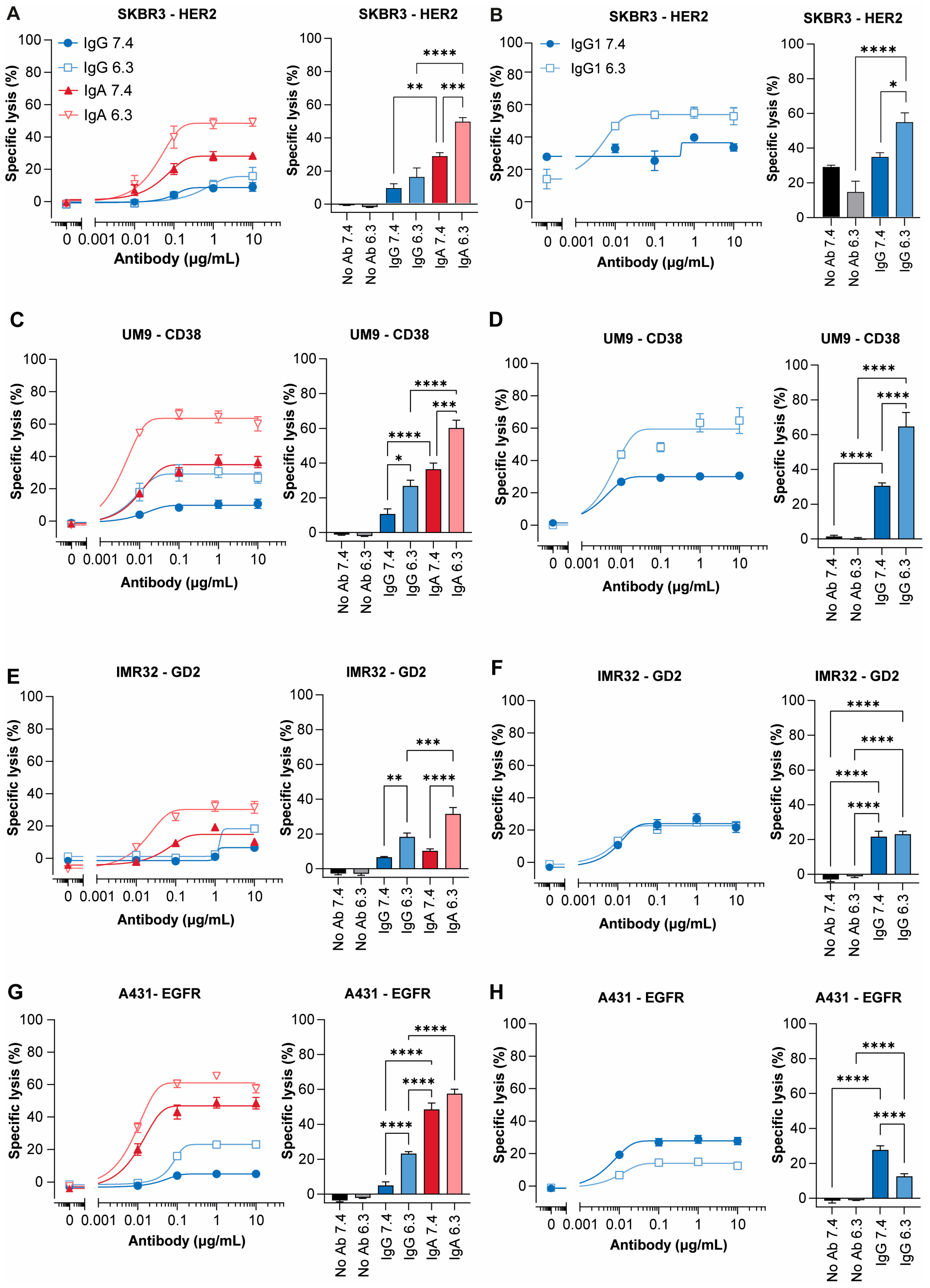
3.1. Enhanced Antibody-Mediated Lysis with Both IgG and IgA in Acidic Environment
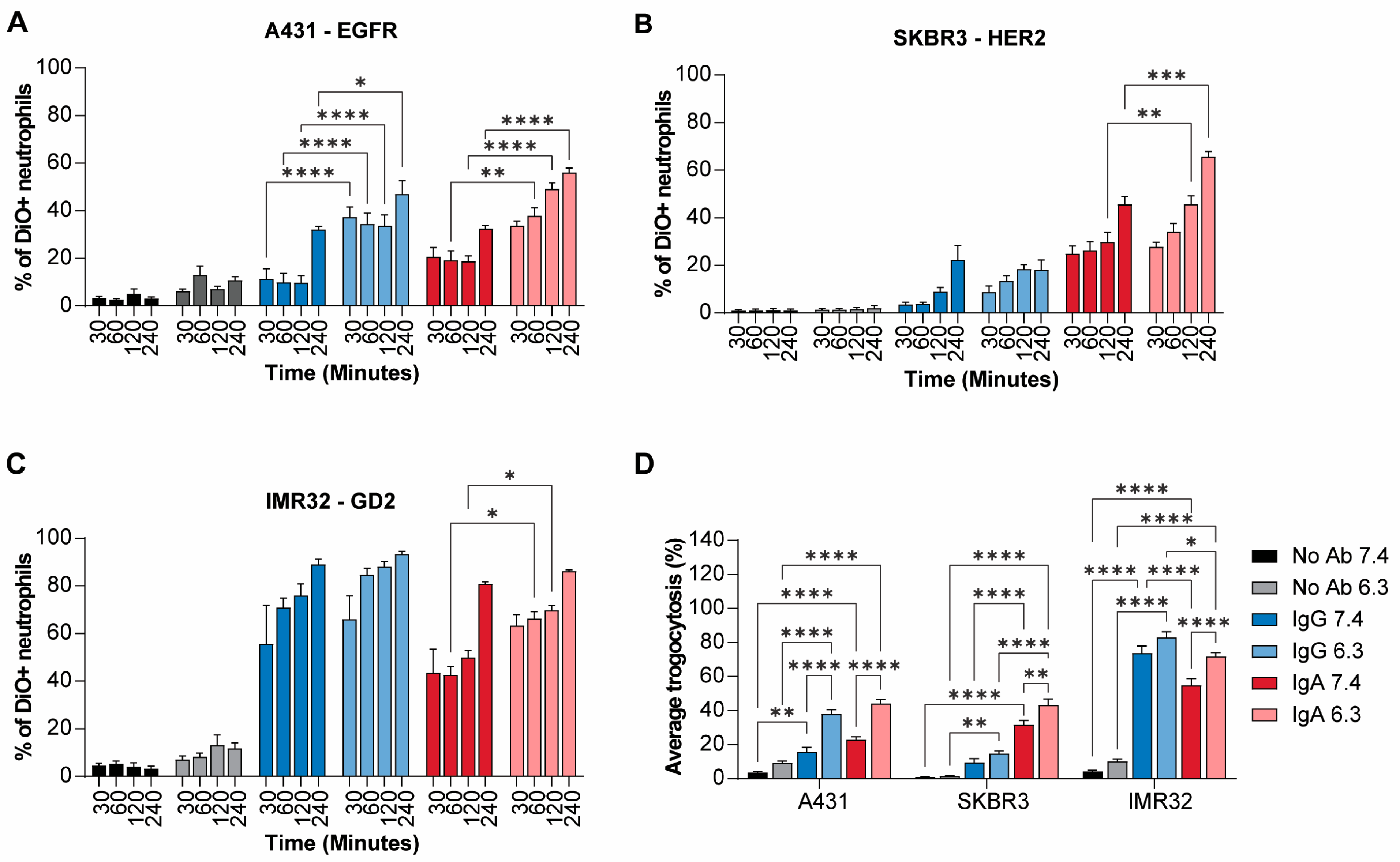
3.2. Acidic pH Enhances Mainly IgA-Mediated Trogocytosis
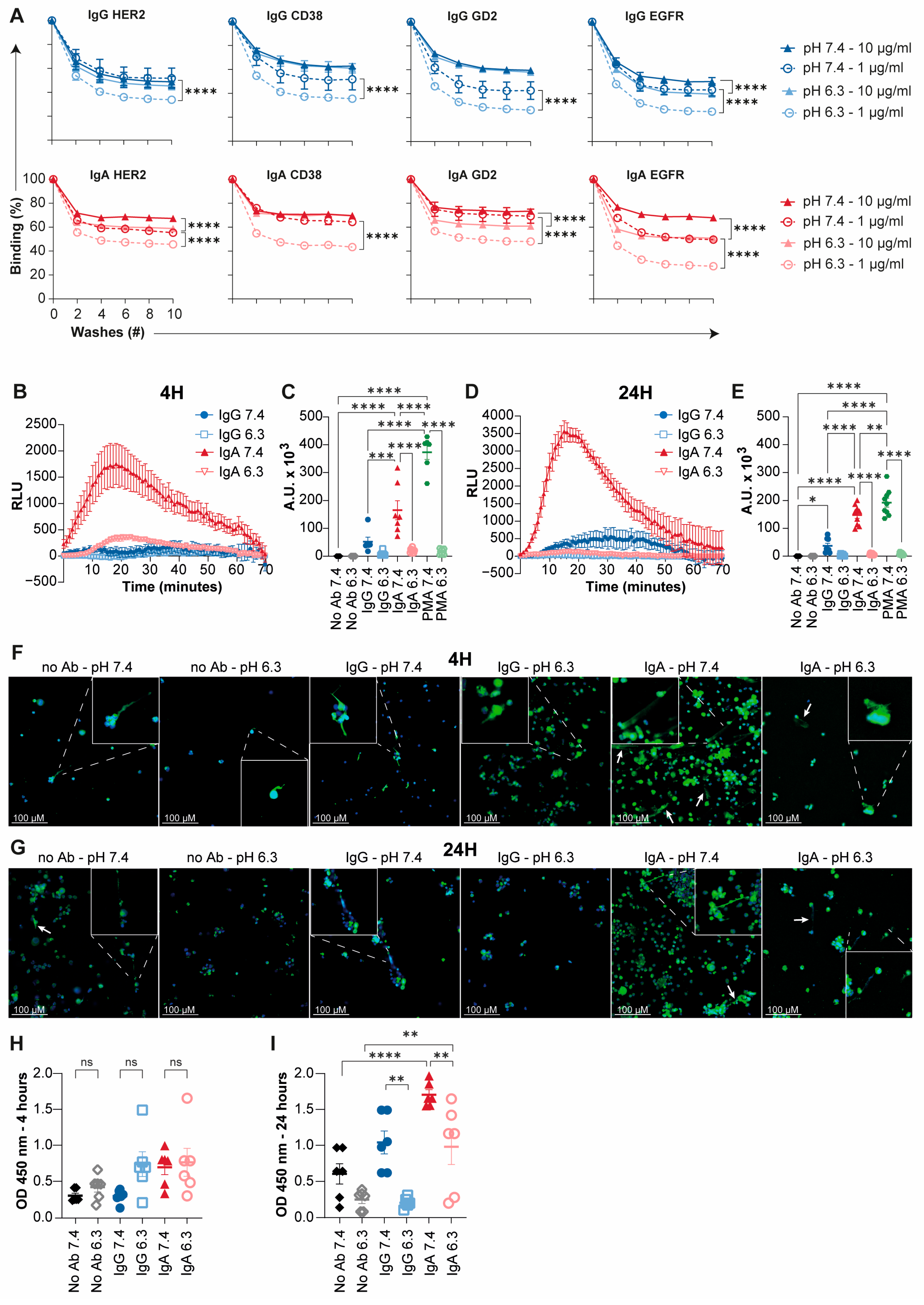
3.3. Extracellular Acidosis Influences Antibody Binding, ROS Production and NETosis of Neutrophils
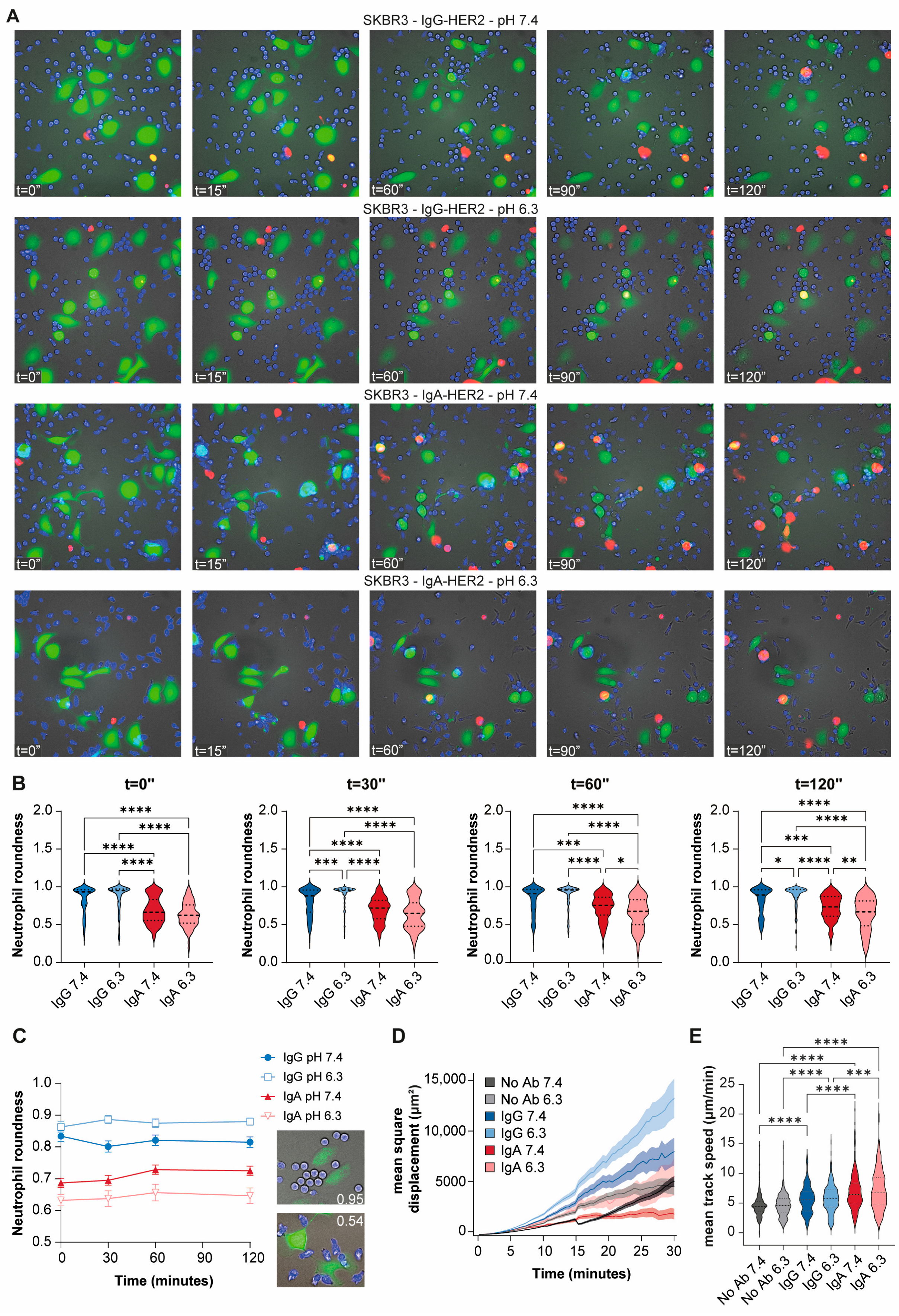
3.4. Acidic pH Alters Neutrophil Morphology and Behavior
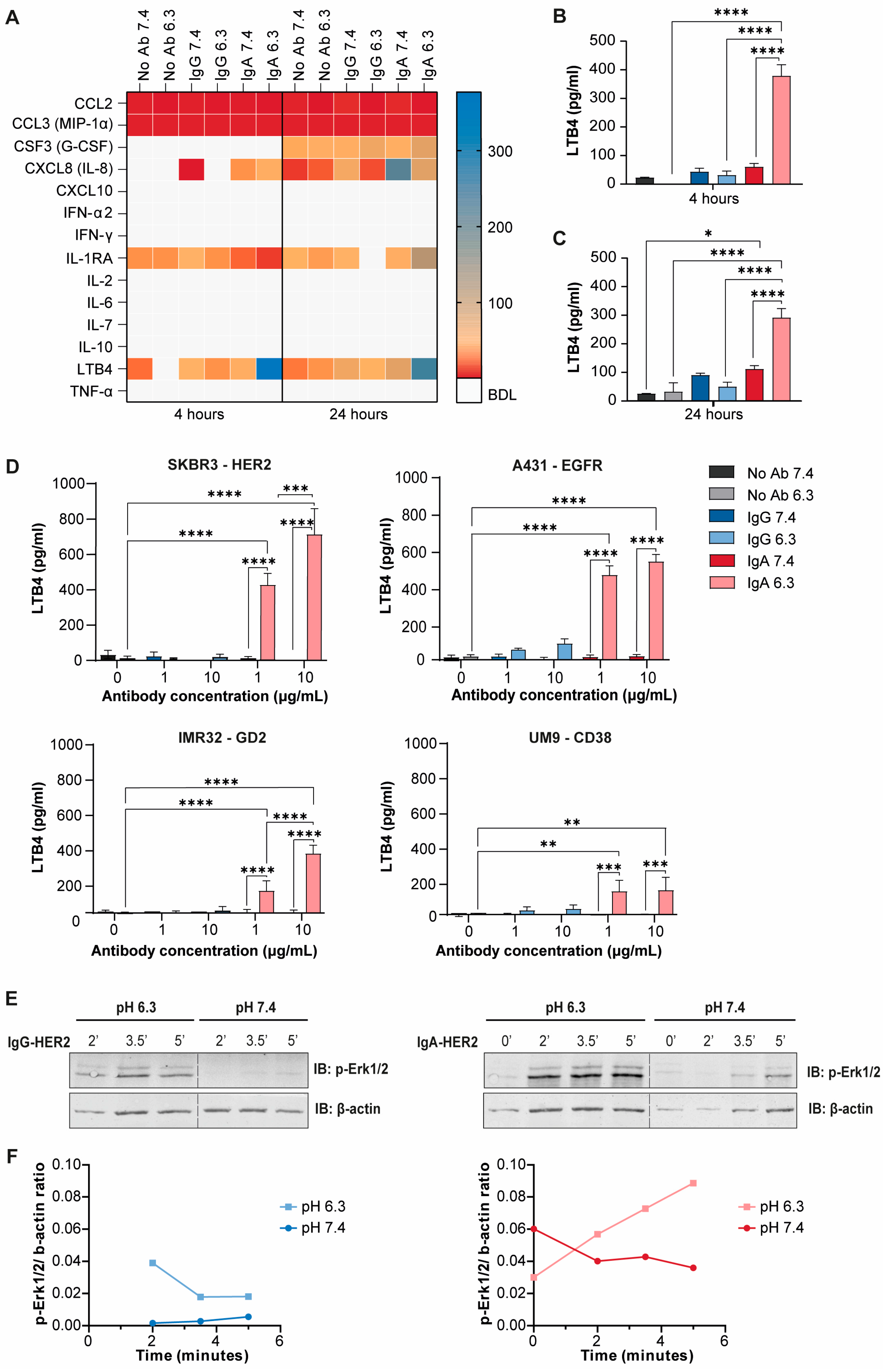
3.5. IgA Triggers LTB4 Release and Enhances Erk1/2 Signaling at Acidic pH
4. Discussion
5. Conclusions
Supplementary Materials
Author Contributions
Funding
Institutional Review Board Statement
Informed Consent Statement
Data Availability Statement
Acknowledgments
Conflicts of Interest
Abbreviations
| ADCC | Antibody-dependent cellular cytotoxicity |
| BLT1 | LTB4 receptor 1 |
| CFSE | Carboyfluorescein succinimidyl ester |
| 51Cr | Chromium-51 |
| CSF3 | Granulocyte colony-stimulating factor, or G-CSF |
| CTV | Cell Trace Violet |
| EGFR | Epidermal growth factor receptor |
| Erk | Extracellular signal-regulated kinase |
| ELISA | Enzyme-linked immunosorbent assay |
| FcαRI | Fc alpha receptor: CD89 |
| FcR | Fc receptor |
| FBS | Fetal bovine serum |
| G-CSF | Granulocyte colony-stimulating factor, or CSF3 |
| GD2 | Disialoganglioside 2 |
| HER2 | Human epidermal growth factor receptor 2 |
| IFN | Interferon |
| ITAM | Immunoreceptor tyrosine-based activation motif |
| LTB4 | Leukotriene B4 |
| mAbs | Monoclonal antibody |
| MAPK | Mitogen-activated protein kinase |
| MFI | Mean fluorescence intensity |
| MPO | Myeloperoxidase |
| NET | Neutrophil extracellular trap |
| NK | Natural killer |
| PBMC | Peripheral blood mononuclear cell |
| PFA | Paraformaldehyde |
| PMA | Phorbol myristate acetate |
| PMN | Polymorphonuclear leukocyte |
| RBC | Red blood cell |
| RLU | Relative light unit |
| ROS | Reactive oygen species |
| SEM | Standard error of the mean |
| TANs | Tumor-associated neutrophils |
| TME | Tumor microenvironment |
References
- Warburg, O. On the Origin of Cancer Cells. Science 1956, 123, 309–314. [Google Scholar] [CrossRef] [Scilit] [PubMed]
- Ward, C.; Meehan, J.; Gray, M.E.; Murray, A.F.; Argyle, D.J.; Kunkler, I.H.; Langdon, S.P. The Impact of Tumour PH on Cancer Progression: Strategies for Clinical Intervention. Explor. Target. Antitumor Ther. 2020, 1, 71–100. [Google Scholar] [CrossRef] [Scilit] [PubMed]
- Corbet, C.; Feron, O. Tumour Acidosis: From the Passenger to the Driver’s Seat. Nat. Rev. Cancer 2017, 17, 577–593. [Google Scholar] [CrossRef] [Scilit] [PubMed]
- Omran, Z.; Scaife, P.; Stewart, S.; Rauch, C. Physical and Biological Characteristics of Multi Drug Resistance (MDR): An Integral Approach Considering PH and Drug Resistance in Cancer. Semin. Cancer Biol. 2017, 43, 42–48. [Google Scholar] [CrossRef] [Scilit] [PubMed]
- Persi, E.; Duran-Frigola, M.; Damaghi, M.; Roush, W.R.; Aloy, P.; Cleveland, J.L.; Gillies, R.J.; Ruppin, E. Systems Analysis of Intracellular PH Vulnerabilities for Cancer Therapy. Nat. Commun. 2018, 9, 2997. [Google Scholar] [CrossRef] [Scilit] [PubMed]
- Vaupel, P.; Multhoff, G. Revisiting the Warburg Effect: Historical Dogma versus Current Understanding. J. Physiol. 2021, 599, 1745–1757. [Google Scholar] [CrossRef] [Scilit] [PubMed]
- Nakagawa, Y.; Negishi, Y.; Shimizu, M.; Takahashi, M.; Ichikawa, M.; Takahashi, H. Effects of Extracellular PH and Hypoxia on the Function and Development of Antigen-Specific Cytotoxic T Lymphocytes. Immunol. Lett. 2015, 167, 72–86. [Google Scholar] [CrossRef] [Scilit] [PubMed]
- Müller, B.; Fischer, B.; Kreutz, W. An Acidic Microenvironment Impairs the Generation of Non-Major Histocompatibility Complex-Restricted Killer Cells. Immunology 2000, 99, 375–384. [Google Scholar] [CrossRef] [Scilit] [PubMed]
- Fischer, B.; Müller, B.; Fischer, K.G.; Baur, N.; Kreutz, W. Acidic PH Inhibits Non-MHC-Restricted Killer Cell Functions. Clin. Immunol. 2000, 96, 252–263. [Google Scholar] [CrossRef] [Scilit] [PubMed]
- Pilon-Thomas, S.; Kodumudi, K.N.; El-Kenawi, A.E.; Russell, S.; Weber, A.M.; Luddy, K.; Damaghi, M.; Wojtkowiak, J.W.; Mulé, J.J.; Ibrahim-Hashim, A.; et al. Neutralization of Tumor Acidity Improves Antitumor Responses to Immunotherapy. Cancer Res. 2016, 76, 1381–1390, Correction in Cancer Res. 2017, 77, 2552. https://doi.org/10.1158/0008-5472.CAN-17-0559. [Google Scholar] [CrossRef] [Scilit] [PubMed]
- Furumaya, C.; Martinez-Sanz, P.; Bouti, P.; Kuijpers, T.W.; Matlung, H.L. Plasticity in Pro- and Anti-Tumor Activity of Neutrophils: Shifting the Balance. Front. Immunol. 2020, 11, 2100. [Google Scholar] [CrossRef] [Scilit] [PubMed]
- Leusen, J.H.W. IgA as Therapeutic Antibody. Mol. Immunol. 2015, 68, 35–39. [Google Scholar] [CrossRef] [Scilit] [PubMed]
- Brandsma, A.M.; Bondza, S.; Evers, M.; Koutstaal, R.; Nederend, M.; Marco Jansen, J.H.; Rösner, T.; Valerius, T.; Leusen, J.H.W.; Ten Broeke, T. Potent Fc Receptor Signaling by IgA Leads to Superior Killing of Cancer Cells by Neutrophils Compared to IgG. Front. Immunol. 2019, 10, 704. [Google Scholar] [CrossRef] [Scilit] [PubMed]
- Tsioumpekou, M.; Krijgsman, D.; Leusen, J.H.W.; Olofsen, P.A. The Role of Cytokines in Neutrophil Development, Tissue Homing, Function and Plasticity in Health and Disease. Cells 2023, 12, 1981. [Google Scholar] [CrossRef] [Scilit] [PubMed]
- Behnen, M.; Möller, S.; Brozek, A.; Klinger, M.; Laskay, T. Extracellular Acidification Inhibits the ROS-Dependent Formation of Neutrophil Extracellular Traps. Front. Immunol. 2017, 8, 184. [Google Scholar] [CrossRef] [Scilit] [PubMed]
- Trevani, A.S.; Andonegui, G.; Giordano, M.; López, D.H.; Gamberale, R.; Minucci, F.; Geffner, J.R. Extracellular Acidification Induces Human Neutrophil Activation. J. Immunol. 1999, 162, 4849–4857. [Google Scholar] [CrossRef] [Scilit]
- Overdijk, M.B.; Jansen, J.H.M.; Nederend, M.; Lammerts van Bueren, J.J.; Groen, R.W.J.; Parren, P.W.H.I.; Leusen, J.H.W.; Boross, P. The Therapeutic CD38 Monoclonal Antibody Daratumumab Induces Programmed Cell Death via Fcγ Receptor-Mediated Cross-Linking. J. Immunol. 2016, 197, 807–813. [Google Scholar] [CrossRef] [Scilit] [PubMed]
- Stip, M.C.; Evers, M.; Nederend, M.; Chan, C.; Reiding, K.R.; Damen, M.J.; Heck, A.J.R.; Koustoulidou, S.; Ramakers, R.; Krijger, G.C.; et al. IgA Antibody Immunotherapy Targeting GD2 Is Effective in Preclinical Neuroblastoma Models. J. Immunother. Cancer 2023, 11, e006948. [Google Scholar] [CrossRef] [Scilit] [PubMed]
- Brandsma, A.M.; Broeke, T.T.; Nederend, M.; Meulenbroek, L.A.P.M.; Van Tetering, G.; Meyer, S.; Jansen, J.H.M.; Buitrago, M.A.B.; Nagelkerke, S.Q.; Németh, I.; et al. Simultaneous Targeting of FcgRs and FcaRI Enhances Tumor Cell Killing. Cancer Immunol. Res. 2015, 3, 1316–1324. [Google Scholar] [CrossRef] [Scilit] [PubMed]
- Ershov, D.; Phan, M.S.; Pylvänäinen, J.W.; Rigaud, S.U.; Le Blanc, L.; Charles-Orszag, A.; Conway, J.R.W.; Laine, R.F.; Roy, N.H.; Bonazzi, D.; et al. TrackMate 7: Integrating State-of-the-Art Segmentation Algorithms into Tracking Pipelines. Nat. Methods 2022, 19, 829–832. [Google Scholar] [CrossRef] [Scilit] [PubMed]
- Matlung, H.L.; Babes, L.; Zhao, X.W.; van Houdt, M.; Treffers, L.W.; van Rees, D.J.; Franke, K.; Schornagel, K.; Verkuijlen, P.; Janssen, H.; et al. Neutrophils Kill Antibody-Opsonized Cancer Cells by Trogoptosis. Cell Rep. 2018, 23, 3946–3959.e6. [Google Scholar] [CrossRef] [Scilit] [PubMed]
- Faes, S.; Dormond, O. Systemic Buffers in Cancer Therapy: The Example of Sodium Bicarbonate; Stupid Idea or Wise Remedy? Med. Chem. 2015, 5, 540–544. [Google Scholar]
- Lu, P.; Ruan, D.; Huang, M.; Tian, M.; Zhu, K.; Gan, Z.; Xiao, Z. Harnessing the Potential of Hydrogels for Advanced Therapeutic Applications: Current Achievements and Future Directions. Signal Transduct. Target. Ther. 2024, 9, 166. [Google Scholar] [CrossRef] [Scilit] [PubMed]
- Zhang, X.; Lin, Y.; Gillies, R.J. Tumor PH and Its Measurement. J. Nucl. Med. 2010, 51, 1167–1170. [Google Scholar] [CrossRef] [Scilit] [PubMed]
- Hong, G.; Antaris, A.L.; Dai, H. Near-Infrared Fluorophores for Biomedical Imaging. Nat. Biomed. Eng. 2017, 1, 0010. [Google Scholar] [CrossRef] [Scilit]
- Zhang, Y.; Zhang, G.; Zeng, Z.; Pu, K. Activatable Molecular Probes for Fluorescence-Guided Surgery, Endoscopy and Tissue Biopsy. Chem. Soc. Rev. 2022, 51, 566–593. [Google Scholar] [CrossRef] [Scilit] [PubMed]
- Hoebe, R.A.; Van Oven, C.H.; Gadella, T.W.J.; Dhonukshe, P.B.; Van Noorden, C.J.F.; Manders, E.M.M. Controlled Light-Exposure Microscopy Reduces Photobleaching and Phototoxicity in Fluorescence Live-Cell Imaging. Nat. Biotechnol. 2007, 25, 249–253. [Google Scholar] [CrossRef] [Scilit] [PubMed]
- Butin-Israeli, V.; Bui, T.M.; Wiesolek, H.L.; Mascarenhas, L.; Lee, J.J.; Mehl, L.C.; Knutson, K.R.; Adam, S.A.; Goldman, R.D.; Beyder, A.; et al. Neutrophil-Induced Genomic Instability Impedes Resolution of Inflammation and Wound Healing. J. Clin. Investig. 2019, 129, 712–726. [Google Scholar] [CrossRef] [Scilit] [PubMed]
- Jaillon, S.; Ponzetta, A.; Di Mitri, D.; Santoni, A.; Bonecchi, R.; Mantovani, A. Neutrophil Diversity and Plasticity in Tumour Progression and Therapy. Nat. Rev. Cancer 2020, 20, 485–503. [Google Scholar] [CrossRef] [Scilit] [PubMed]
- Masucci, M.T.; Minopoli, M.; Del Vecchio, S.; Carriero, M.V. The Emerging Role of Neutrophil Extracellular Traps (NETs) in Tumor Progression and Metastasis. Front. Immunol. 2020, 11, 1749. [Google Scholar] [CrossRef] [Scilit] [PubMed]
- Park, J.; Wysocki, R.W.; Amoozgar, Z.; Maiorino, L.; Fein, M.R.; Jorns, J.; Schott, A.F.; Kinugasa-Katayama, Y.; Lee, Y.; Won, N.H.; et al. Cancer Cells Induce Metastasis-Supporting Neutrophil Extracellular DNA Traps. Sci. Transl. Med. 2016, 8, 361ra138. [Google Scholar] [CrossRef] [Scilit] [PubMed]
- Albrengues, J.; Shields, M.A.; Ng, D.; Park, C.G.; Ambrico, A.; Poindexter, M.E.; Upadhyay, P.; Uyeminami, D.L.; Pommier, A.; Küttner, V.; et al. Neutrophil Extracellular Traps Produced during Inflammation Awaken Dormant Cancer Cells in Mice. Science 2018, 361, eaao4227. [Google Scholar] [CrossRef] [Scilit] [PubMed]
- Youn, J.I.; Gabrilovich, D.I. The Biology of Myeloid-Derived Suppressor Cells: The Blessing and the Curse of Morphological and Functional Heterogeneity. Eur. J. Immunol. 2010, 40, 2969–2975. [Google Scholar] [CrossRef] [Scilit] [PubMed]
- Xu, Y.; Loison, F.; Luo, H.R. Neutrophil Spontaneous Death is Mediated by Down-Regulation of Autocrine Signaling through GPCR, PI3Kγ, ROS, and Actin. Proc. Natl. Acad. Sci. USA 2010, 107, 2950–2955. [Google Scholar] [CrossRef] [Scilit] [PubMed]
- Khan, M.A.; Philip, L.M.; Cheung, G.; Vadakepeedika, S.; Grasemann, H.; Sweezey, N.; Palaniyar, N. Regulating NETosis: Increasing PH Promotes NADPH Oxidase-Dependent NETosis. Front. Med. 2018, 5, 19. [Google Scholar] [CrossRef] [Scilit] [PubMed]
- Gatenby, R.A.; Gawlinski, E.T.; Gmitro, A.F.; Kaylor, B.; Gillies, R.J. Acid-Mediated Tumor Invasion: A Multidisciplinary Study. Cancer Res. 2006, 66, 5216–5223. [Google Scholar] [CrossRef] [Scilit] [PubMed]
- Helmlinger, G.; Yuan, F.; Dellian, M.; Jain, R.K. Interstitial PH and PO2 Gradients in Solid Tumors in Vivo: High-Resolution Measurements Reveal a Lack of Correlation. Nat. Med. 1997, 3, 177–182. [Google Scholar] [CrossRef] [Scilit] [PubMed]
- Stock, C. PH-Regulated Single Cell Migration. Pflug. Arch. 2024, 476, 639–658. [Google Scholar] [CrossRef] [Scilit] [PubMed]
- Lammermann, T.; Afonso, P.V.; Angermann, B.R.; Wang, J.M.; Kastenmuller, W.; Parent, C.A.; Germain, R.N. Neutrophil swarms require LTB4 and integrins at sites of cell death in vivo. Nature 2013, 498, 371–375. [Google Scholar] [CrossRef] [Scilit] [PubMed]
- Song, Z.; Bhattacharya, S.; Clemens, R.A.; Dinauer, M.C. Molecular regulation of neutrophil swarming in health and disease: Lessons from the phagocyte oxidase. iScience 2023, 26, 108034. [Google Scholar] [CrossRef] [Scilit] [PubMed]
- Kenawy, H.I.; Boral, I.; Bevington, A. Complement-Coagulation Cross-Talk: A Potential Mediator of the Physiological Activation of Complement by Low PH. Front. Immunol. 2015, 6, 215. [Google Scholar] [CrossRef] [Scilit] [PubMed]
- Oster, L.; Schröder, J.; Rugi, M.; Schimmelpfennig, S.; Sargin, S.; Schwab, A.; Najder, K. Extracellular PH Controls Chemotaxis of Neutrophil Granulocytes by Regulating Leukotriene B4 Production and Cdc42 Signaling. J. Immunol. 2022, 209, 136–144. [Google Scholar] [CrossRef] [Scilit] [PubMed]
- Holtrop, T.; Budding, K.; Brandsma, A.M.; Leusen, J.H.W. Targeting the High Affinity Receptor, FcγRI, in Autoimmune Disease, Neuropathy, and Cancer. Immunother. Adv. 2022, 2, ltac011. [Google Scholar] [CrossRef] [Scilit] [PubMed]
- Serezani, C.H.; Aronoff, D.M.; Sitrin, R.G.; Peters-Golden, M. FcγRI Ligation Leads to a Complex with BLT1 in Lipid Rafts That Enhances Rat Lung Macrophage Antimicrobial Functions. Blood 2009, 114, 3316–3324. [Google Scholar] [CrossRef] [Scilit] [PubMed]
- Talla, U.; Bozonet, S.M.; Parker, H.A.; Hampton, M.B.; Vissers, M.C.M. Prolonged Exposure to Hypoxia Induces an Autophagy-like Cell Survival Program in Human Neutrophils. J. Leukoc. Biol. 2019, 106, 1367–1379. [Google Scholar] [CrossRef] [Scilit] [PubMed]
- Hannah, S.; Mecklenburgh, K.; Rahman, I.; Bellingan, G.J.; Greening, A.; Haslett, C.; Chilvers, E.R. Hypoxia Prolongs Neutrophil Survival In Vitro. FEBS Lett. 1995, 372, 233–237. [Google Scholar] [CrossRef] [Scilit] [PubMed]
- Vier, J.; Groth, M.; Sochalska, M.; Kirschnek, S. The Anti-Apoptotic Bcl-2 Family Protein A1/Bfl-1 Regulates Neutrophil Survival and Homeostasis and Is Controlled via PI3K and JAK/STAT Signaling. Cell Death Dis. 2016, 7, e2103. [Google Scholar] [CrossRef] [Scilit] [PubMed]
- Koenderman, L.; Tesselaar, K.; Vrisekoop, N. Human Neutrophil Kinetics: A Call to Revisit Old Evidence. Trends Immunol. 2022, 43, 868–876. [Google Scholar] [CrossRef] [Scilit] [PubMed]
- Li, P.; Nijhawan, D.; Budihardjo, I.; Srinivasula, S.M.; Ahmad, M.; Alnemri, E.S.; Wang, X. Cytochrome c and DATP-Dependent Formation of Apaf-1/Caspase-9 Complex Initiates an Apoptotic Protease Cascade. Cell 1997, 91, 479–489. [Google Scholar] [CrossRef] [Scilit] [PubMed]
- El Kebir, D.; de Oliveira Lima dos Santos, E.; Mansouri, S.; Sekheri, M.; Filep, J.G. Mild Acidosis Delays Neutrophil Apoptosis via Multiple Signaling Pathways and Acts in Concert with Inflammatory Mediators. J. Leukoc. Biol. 2017, 102, 1389–1400. [Google Scholar] [CrossRef] [Scilit] [PubMed]




| Antibody | Clone | Label | Company | Catalog Number |
|---|---|---|---|---|
| 7-AAD | BD Pharmingen | 559925 | ||
| Annexin V | PE | BD Biosciences | 556421 | |
| CD14 | M5E2 | FITC | BD | 555397 |
| CD14 | HCD14 | PerCP-Cy5.5 | Biolegend | 325622 |
| CD16 | 3G8 | PE | BD Pharmingen | 555407 |
| CD16 | 3G8 | PE-Cy7 | BD | 557744 |
| CD16 | eBioCB16 | APC | Affymetrix | 17-0168 |
| CD19 | HIB19 | APC | Biolegend | 302212 |
| CD20 | 2H7 | APC-H7 | BD Pharmingen | 560734 |
| CD3 | OKT3 | BV510 | Biolegend | 317332 |
| CD32 | FL18.26 | FITC | BD Pharmingen | 555448 |
| CD56 | NCAM 16.2 | PE/Cy-7 | BD | 335826 |
| CD56 | NCAM HCD56 | BV510 | Sony Biotechnology | 2191700 |
| CD64 | 10.1 | AF647 | Sony Biotechnology | 2125060 |
| CD66b | G10F5 | V450 | BD | 561649 |
| CD89 | A59 | PE | BD Pharmingen | 555686 |
| CD89 | A59 | PerCP-Cy5.5 | Biolegend | 354109 |
| MPO | 4A4 | Bio-Rad | 0400-0002 | |
| MPO | MPO-7 | FITC | Agilent | F071401-2 |
| p-Erk1/2 | Cell Signaling Technology | CST 9102S | ||
| β-actin | AC-74 | Merck | A2228-100UL | |
| IRDYE 680rd goat anti-mouse IgG | Li-Cor | LI 926-68070 | ||
| IRDYE 800cw goat anti-rabbit IgG | Li-Cor | LI 926-32211 | ||
Disclaimer/Publisher’s Note: The statements, opinions and data contained in all publications are solely those of the individual author(s) and contributor(s) and not of MDPI and/or the editor(s). MDPI and/or the editor(s) disclaim responsibility for any injury to people or property resulting from any ideas, methods, instructions or products referred to in the content. |
© 2026 by the authors. Licensee MDPI, Basel, Switzerland. This article is an open access article distributed under the terms and conditions of the Creative Commons Attribution (CC BY) license.
Share and Cite
Holtrop, T.; van der Peet, I.C.; Hendriks, I.S.T.; Kardol-Hoefnagel, T.; Schol, R.B.; Lustig, M.; Budding, K.; Leusen, J.H.W.; Olofsen, P.A.; Tsioumpekou, M. Tumor Acidosis Boosts Antibody-Driven Cytotoxic Potential of Neutrophils. Cells 2026, 15, 1663. https://doi.org/10.3390/cells15181663
Holtrop T, van der Peet IC, Hendriks IST, Kardol-Hoefnagel T, Schol RB, Lustig M, Budding K, Leusen JHW, Olofsen PA, Tsioumpekou M. Tumor Acidosis Boosts Antibody-Driven Cytotoxic Potential of Neutrophils. Cells. 2026; 15(18):1663. https://doi.org/10.3390/cells15181663
Chicago/Turabian StyleHoltrop, Tosca, Ida C. van der Peet, Ilona S. T. Hendriks, Tineke Kardol-Hoefnagel, Robin B. Schol, Marta Lustig, Kevin Budding, Jeanette H. W. Leusen, Patricia A. Olofsen, and Maria Tsioumpekou. 2026. "Tumor Acidosis Boosts Antibody-Driven Cytotoxic Potential of Neutrophils" Cells 15, no. 18: 1663. https://doi.org/10.3390/cells15181663
APA StyleHoltrop, T., van der Peet, I. C., Hendriks, I. S. T., Kardol-Hoefnagel, T., Schol, R. B., Lustig, M., Budding, K., Leusen, J. H. W., Olofsen, P. A., & Tsioumpekou, M. (2026). Tumor Acidosis Boosts Antibody-Driven Cytotoxic Potential of Neutrophils. Cells, 15(18), 1663. https://doi.org/10.3390/cells15181663