S1PR2 Signaling in the Lung: Understanding Its Role in Health and Disease


Highlights
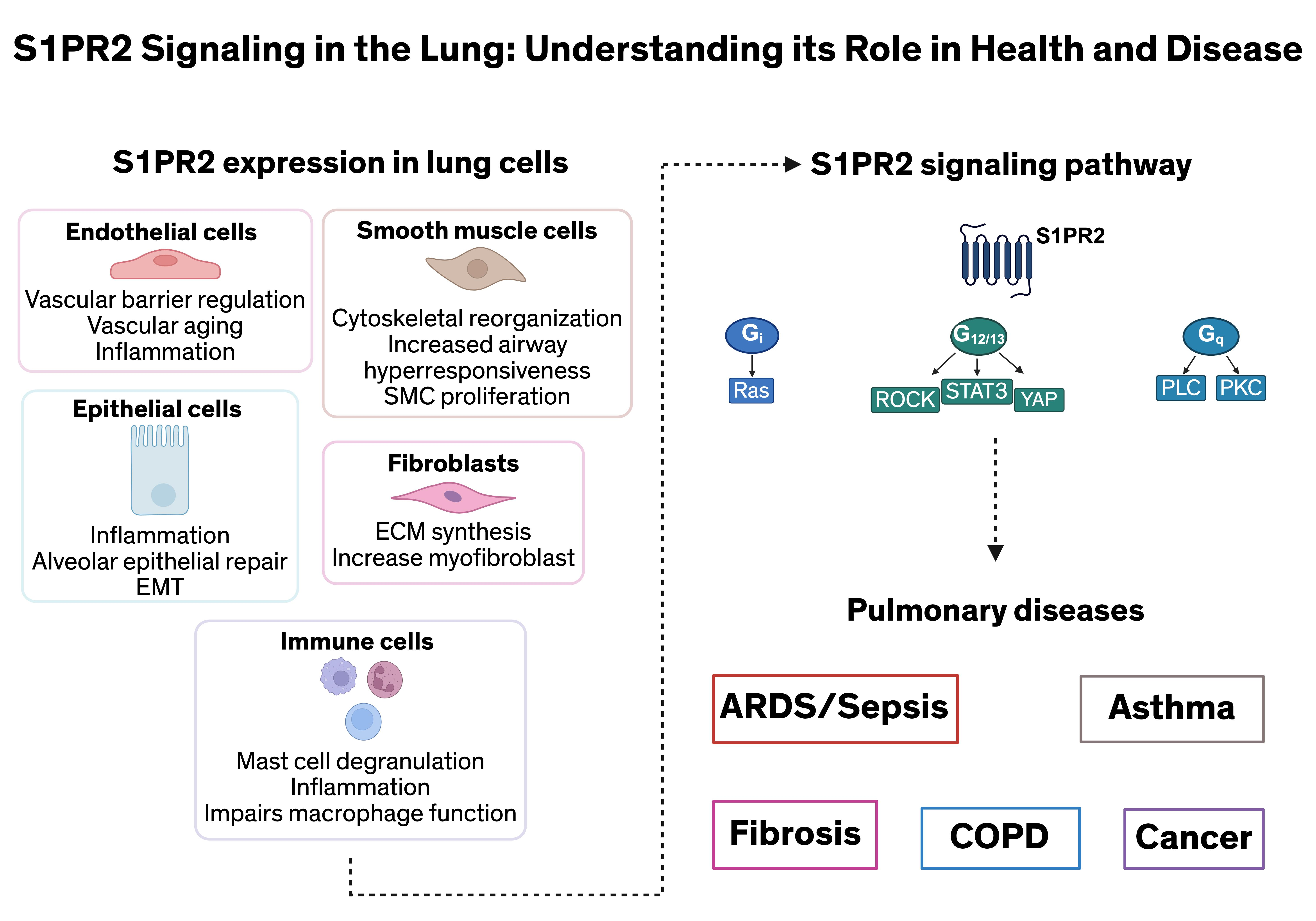
- S1PR2 exhibits distinct cell-type specific expression patterns in the lung, including endothelial, epithelial, immune, fibroblasts, and smooth muscle cells, each contributing to unique functional outcomes in tissue homeostasis and injury responses.
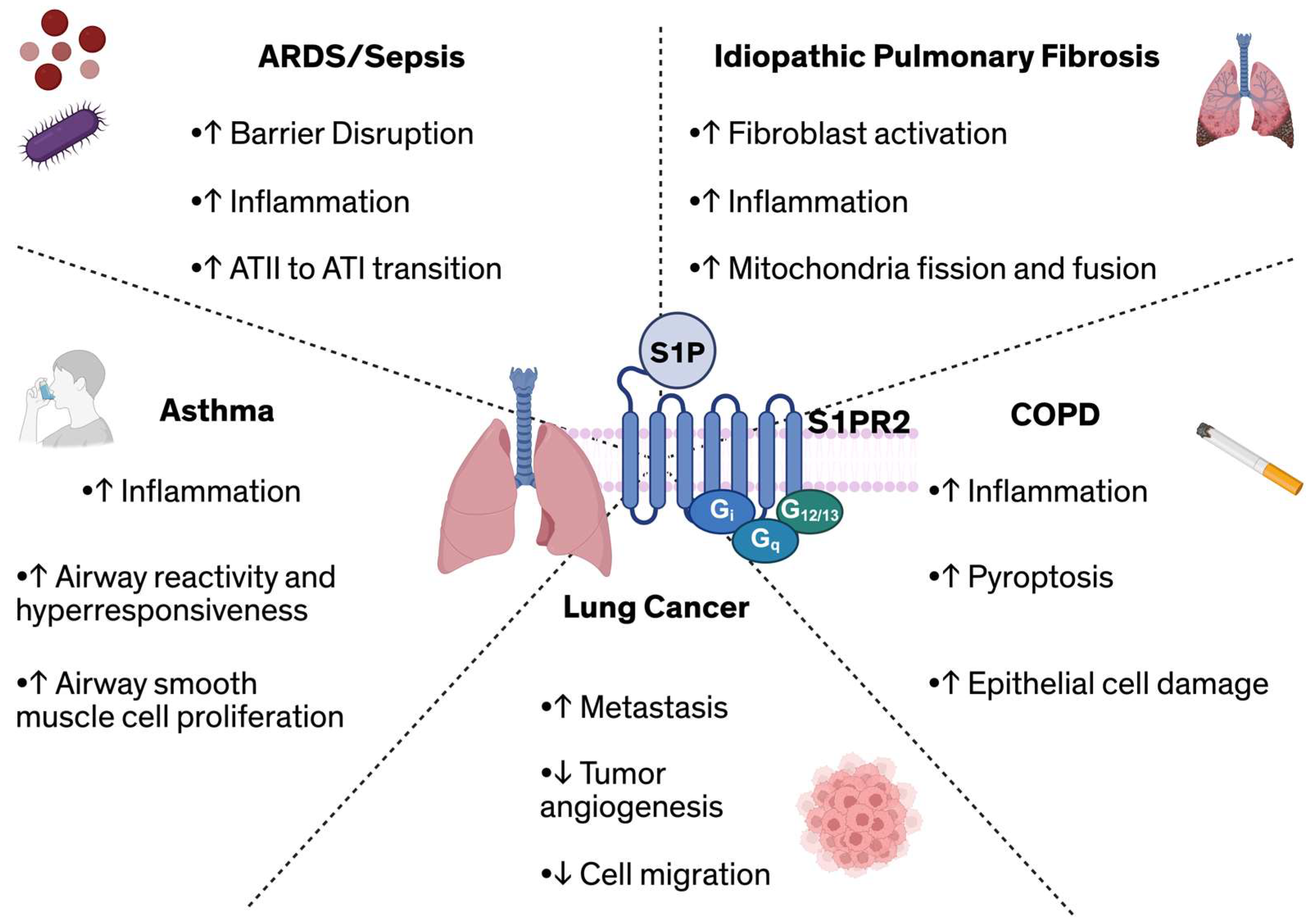
- S1PR2 plays mechanistically important roles across multiple lung diseases, influencing processes such as vascular permeability, inflammation, airway reactivity, and fibrotic remodeling.
- S1PR2 signaling is complex and context-dependent, with its effect varying by cell type, microenvironment, and disease state.
- Therapeutic targeting of S1PR2 remains underdeveloped, highlighting the need for deeper investigation into cell-specific and disease-specific interventions and more selective modulators.
Abstract
1. Introduction
2. S1P Receptors
2.1. S1PR1/EDG-1
2.2. S1PR2/EDG-5
2.3. S1PR3/EDG-3
2.4. S1PR4/EDG-6
2.5. S1PR5/EDG-8
3. S1PR2 in Lung Cells
3.1. Endothelial Cells
3.2. Epithelial Cells
3.3. Immune Cells
3.4. SMC
3.5. Fibroblasts
4. S1PR2 in Lung Disease
4.1. ARDS/Sepsis
4.2. Pulmonary Fibrosis
4.3. Asthma
4.4. Additional Lung Diseases
5. Conclusions
Author Contributions
Funding
Institutional Review Board Statement
Informed Consent Statement
Data Availability Statement
Acknowledgments
Conflicts of Interest
Abbreviations
| ABC | ATP-binding cassette |
| ALI | Acute lung injury |
| ARDS | Acute respiratory distress syndrome |
| ATI | Alveolar Type I |
| ATII | Alveolar Type II |
| BALF | Bronchoalveolar lavage fluid |
| Brms1 | Breast cancer metastasis suppressor 1 |
| CNS | Central nervous system |
| COPD | Chronic obstructive pulmonary disease |
| CSE | Cigarette smoke extract |
| ECs | Endothelial cells |
| ECM | Extracellular matrix |
| Edg | Endothelial differentiation gene |
| EMT | Epithelial-to-mesenchymal transition |
| eNOS | Endothelial nitric oxide |
| GPCR | G-protein coupled receptors |
| ICU | Intensive care unit |
| IPF | Idiopathic pulmonary fibrosis |
| LPS | Lipopolysaccharide |
| PAH | Pulmonary arterial hypertension |
| S1P | Sphingosine-1-phosphate |
| S1PR | Sphingosine-1-phosphate receptors |
| SMCs | Smooth muscle cells |
| SphK | Sphingosine kinase |
| Spns2 | Spinster homolog 2 |
| YAP | Yes associate protein |
References
- Maceyka, M.; Harikumar, K.B.; Milstien, S.; Spiegel, S. Sphingosine-1-Phosphate Signaling and Its Role in Disease. Trends Cell Biol. 2012, 22, 50–60. [Google Scholar] [CrossRef]
- Camerer, E.; Regard, J.B.; Cornelissen, I.; Srinivasan, Y.; Duong, D.N.; Palmer, D.; Pham, T.H.; Wong, J.S.; Pappu, R.; Coughlin, S.R. Sphingosine-1-Phosphate in the Plasma Compartment Regulates Basal and Inflammation-Induced Vascular Leak in Mice. J. Clin. Investig. 2009, 119, 1871–1879. [Google Scholar] [CrossRef] [PubMed]
- Schwab, S.R.; Cyster, J.G. Finding a Way out: Lymphocyte Egress from Lymphoid Organs. Nat. Immunol. 2007, 8, 1295–1301. [Google Scholar] [CrossRef]
- Spiegel, S.; Milstien, S. The Outs and the Ins of Sphingosine-1-Phosphate in Immunity. Nat. Rev. Immunol. 2011, 11, 403–415. [Google Scholar] [CrossRef] [PubMed]
- Hannun, Y.A.; Obeid, L.M. Author Correction: Sphingolipids and Their Metabolism in Physiology and Disease. Nat. Rev. Mol. Cell Biol. 2018, 19, 673. [Google Scholar] [CrossRef]
- Snook, C.F.; Jones, J.A.; Hannun, Y.A. Sphingolipid-Binding Proteins. Biochim. Biophys. Acta Mol. Cell Biol. Lipids 2006, 1761, 927–946. [Google Scholar] [CrossRef]
- Liu, H.; Chakravarty, D.; Maceyka, M.; Milstien, S.; Spiegel, S. Sphingosine Kinases: A Novel Family of Lipid Kinases. Prog. Nucleic Acid Res. Mol. Biol. 2002, 71, 493–511. [Google Scholar] [CrossRef]
- Olivera, A.; Allende, M.L.; Proia, R.L. Shaping the Landscape: Metabolic Regulation of S1P Gradients. Biochim. Biophys. Acta Mol. Cell Biol. Lipids 2013, 1831, 193–202. [Google Scholar] [CrossRef]
- Serra, M.; Saba, J.D. Sphingosine 1-Phosphate Lyase, a Key Regulator of Sphingosine 1-Phosphate Signaling and Function. Adv. Enzym. Regul. 2010, 50, 349–362. [Google Scholar] [CrossRef]
- Proia, R.L.; Hla, T. Emerging Biology of Sphingosine-1-Phosphate: Its Role in Pathogenesis and Therapy. J. Clin. Investig. 2015, 125, 1379–1387. [Google Scholar] [CrossRef] [PubMed]
- Christoffersen, C.; Obinata, H.; Kumaraswamy, S.B.; Galvani, S.; Ahnström, J.; Sevvana, M.; Egerer-Sieber, C.; Muller, Y.A.; Hla, T.; Nielsen, L.B.; et al. Endothelium-Protective Sphingosine-1-Phosphate Provided by HDL-Associated Apolipoprotein M. Proc. Natl. Acad. Sci. USA 2011, 108, 9613–9618. [Google Scholar] [CrossRef] [PubMed]
- Okajima, F. Plasma Lipoproteins Behave as Carriers of Extracellular Sphingosine 1-Phosphate: Is This an Atherogenic Mediator or an Anti-Atherogenic Mediator? Biochim. Biophys. Acta Mol. Cell Biol. Lipids 2002, 1582, 132–137. [Google Scholar] [CrossRef]
- Takabe, K.; Paugh, S.W.; Milstien, S.; Spiegel, S. “Inside-Out” Signaling of Sphingosine-1-Phosphate: Therapeutic Targets. Pharmacol. Rev. 2008, 60, 181–195. [Google Scholar] [CrossRef]
- Yu, H.; Naoki, K.; Atsuo, K.; Akihito, Y.; Tsuyoshi, N. The Sphingosine 1-Phosphate Transporter, SPNS2, Functions as a Transporter of the Phosphorylated Form of the Immunomodulating Agent FTY720. J. Biol. Chem. 2011, 286, 1758–1766. [Google Scholar] [CrossRef]
- Kihara, Y.; Maceyka, M.; Spiegel, S.; Chun, J. Lysophospholipid Receptor Nomenclature Review: IUPHAR Review 8. Br. J. Pharmacol. 2014, 171, 3575–3594. [Google Scholar] [CrossRef]
- Takuwa, Y.; Du, W.; Qi, X.; Okamoto, Y.; Takuwa, N.; Yoshioka, K. Roles of Sphingosine-1-Phosphate Signaling in Angiogenesis. World J. Biol. Chem. 2010, 1, 298–306. [Google Scholar] [CrossRef] [PubMed]
- Mendelson, K.; Evans, T.; Hla, T. Sphingosine 1-Phosphate Signalling. Development 2013, 141, 5–9. [Google Scholar] [CrossRef]
- Quint, P.; Ruan, M.; Pederson, L.; Kassem, M.; Westendorf, J.J.; Khosla, S.; Oursler, M.J. Sphingosine 1-Phosphate (S1P) Receptors 1 and 2 Coordinately Induce Mesenchymal Cell Migration through S1P Activation of Complementary Kinase Pathways. J. Biol. Chem. 2013, 288, 5398–5406. [Google Scholar] [CrossRef]
- Spiegel, S.; Cuvillier, O.; Edsall, L.C.; Kohama, T.; Menzeleev, R.; Olah, Z.; Olivera, A.; Pirianov, G.; Thomas, D.M.; Tu, Z.; et al. Sphingosine-1-Phosphate in Cell Growth and Cell Deatha. Ann. N. Y. Acad. Sci. 1998, 845, 11–18. [Google Scholar] [CrossRef]
- Sun, G.; Wang, B.; Wu, X.; Cheng, J.; Ye, J.; Wang, C.; Zhu, H.; Liu, X. How Do Sphingosine-1-Phosphate Affect Immune Cells to Resolve Inflammation? Front. Immunol. 2024, 15, 1362459. [Google Scholar] [CrossRef] [PubMed]
- Ebenezer, D.L.; Fu, P.; Natarajan, V. Targeting Sphingosine-1-Phosphate Signaling in Lung Diseases. Pharmacol Ther. 2016, 168, 143–157. [Google Scholar] [CrossRef]
- Anwar, M.; Mehta, D. Post-Translational Modifications of S1PR1 and Endothelial Barrier Regulation. Biochim. Biophys. Acta Mol. Cell Biol. Lipids 2020, 1865, 158760. [Google Scholar] [CrossRef]
- Mohammed, S.; Harikumar, K.B. Corrigendum: Sphingosine 1-Phosphate: A Novel Target for Lung Disorders. Front. Immunol. 2018, 9, 1628. [Google Scholar] [CrossRef]
- Gong, C.; Jin, Y.; Wang, X.; Mao, J.; Wang, D.; Yu, X.; Chen, S.; Wang, Y.; Ma, D.; Fang, X.; et al. Lack of S1PR2 in Macrophage Ameliorates Sepsis-Associated Lung Injury through Inducing IL-33–Mediated Type 2 Immunity. Am. J. Respir. Cell Mol. Biol. 2024, 70, 215–225. [Google Scholar] [CrossRef] [PubMed]
- Xu, H.; Xu, F.; Lu, H.; Chen, J.; Huang, X.; Chen, Y.; Lin, L. S1PR2 Is Important for Cigarette Smoke-Induced Pyroptosis in Human Bronchial Epithelial Cells. Arch. Méd. Res. 2023, 54, 277–286. [Google Scholar] [CrossRef]
- Zhao, J.; Okamoto, Y.; Asano, Y.; Ishimaru, K.; Aki, S.; Yoshioka, K.; Takuwa, N.; Wada, T.; Inagaki, Y.; Takahashi, C.; et al. Sphingosine-1-Phosphate Receptor-2 Facilitates Pulmonary Fibrosis through Potentiating IL-13 Pathway in Macrophages. PLoS ONE 2018, 13, e0197604. [Google Scholar] [CrossRef] [PubMed]
- Chun, J.; Hla, T.; Lynch, K.R.; Spiegel, S.; Moolenaar, W.H. International Union of Basic and Clinical Pharmacology. LXXVIII. Lysophospholipid Receptor Nomenclature. Pharmacol. Rev. 2010, 62, 579–587. [Google Scholar] [CrossRef] [PubMed]
- Okamoto, Y.; Wang, F.; Yoshioka, K.; Takuwa, N.; Takuwa, Y. Sphingosine-1-Phosphate-Specific G Protein-Coupled Receptors as Novel Therapeutic Targets for Atherosclerosis. Pharmaceuticals 2011, 4, 117–137. [Google Scholar] [CrossRef]
- Taha, T.A.; Argraves, K.M.; Obeid, L.M. Sphingosine-1-Phosphate Receptors: Receptor Specificity versus Functional Redundancy. Biochim. Biophys. Acta Mol. Cell Biol. Lipids 2004, 1682, 48–55. [Google Scholar] [CrossRef]
- Sic, H.; Kraus, H.; Madl, J.; Flittner, K.-A.; von Münchow, A.L.; Pieper, K.; Rizzi, M.; Kienzler, A.-K.; Ayata, K.; Rauer, S.; et al. Sphingosine-1-Phosphate Receptors Control B-Cell Migration through Signaling Components Associated with Primary Immunodeficiencies, Chronic Lymphocytic Leukemia, and Multiple Sclerosis. J. Allergy Clin. Immunol. 2014, 134, 420–428.e15. [Google Scholar] [CrossRef]
- Chen, H.; Chen, K.; Huang, W.; Staudt, L.M.; Cyster, J.G.; Li, X. Structure of S1PR2–Heterotrimeric G13 Signaling Complex. Sci. Adv. 2022, 8, eabn0067. [Google Scholar] [CrossRef]
- Yang, J.; Castle, B.E.; Hanidu, A.; Stevens, L.; Yu, Y.; Li, X.; Stearns, C.; Papov, V.; Rajotte, D.; Li, J. Sphingosine Kinase 1 Is a Negative Regulator of CD4+ Th1 Cells. J. Immunol. 2005, 175, 6580–6588. [Google Scholar] [CrossRef]
- Li, X.; Stankovic, M.; Bonder, C.S.; Hahn, C.N.; Parsons, M.; Pitson, S.M.; Xia, P.; Proia, R.L.; Vadas, M.A.; Gamble, J.R. Basal and Angiopoietin-1–Mediated Endothelial Permeability Is Regulated by Sphingosine Kinase-1. Blood 2008, 111, 3489–3497. [Google Scholar] [CrossRef]
- zu Heringdorf, D.M.; Lass, H.; Alemany, R.; Laser, K.T.; Neumann, E.; Zhang, C.; Schmidt, M.; Rauen, U.; Jakobs, K.H.; van Koppen, C.J. Sphingosine Kinase-mediated Ca2+ Signalling by G-protein-coupled Receptors. EMBO J. 1998, 17, 2830–2837. [Google Scholar] [CrossRef]
- Rosen, H.; Gonzalez-Cabrera, P.J.; Sanna, M.G.; Brown, S. Sphingosine 1-Phosphate Receptor Signaling. Annu. Rev. Biochem. 2009, 78, 743–768. [Google Scholar] [CrossRef]
- Windh, R.T.; Lee, M.-J.; Hla, T.; An, S.; Barr, A.J.; Manning, D.R. Differential Coupling of the Sphingosine 1-Phosphate Receptors Edg-1, Edg-3, and H218/Edg-5 to the Gi, Gq, and G12 Families of Heterotrimeric G Proteins. J. Biol. Chem. 1999, 274, 27351–27358. [Google Scholar] [CrossRef] [PubMed]
- Liu, Y.; Wada, R.; Yamashita, T.; Mi, Y.; Deng, C.-X.; Hobson, J.P.; Rosenfeldt, H.M.; Nava, V.E.; Chae, S.-S.; Lee, M.-J.; et al. Edg-1, the G Protein–Coupled Receptor for Sphingosine-1-Phosphate, Is Essential for Vascular Maturation. J. Clin. Investig. 2000, 106, 951–961. [Google Scholar] [CrossRef] [PubMed]
- Baeyens, A.; Fang, V.; Chen, C.; Schwab, S.R. Exit Strategies: S1P Signaling and T Cell Migration. Trends Immunol. 2015, 36, 778–787. [Google Scholar] [CrossRef] [PubMed]
- Li, Q.; Li, Y.; Lei, C.; Tan, Y.; Yi, G. Sphingosine-1-Phosphate Receptor 3 Signaling. Clin. Chim. Acta 2021, 519, 32–39. [Google Scholar] [CrossRef]
- Wang, P.; Yuan, Y.; Lin, W.; Zhong, H.; Xu, K.; Qi, X. Roles of Sphingosine-1-Phosphate Signaling in Cancer. Cancer Cell Int. 2019, 19, 295. [Google Scholar] [CrossRef]
- Messias, C.V.; Santana-Van-Vliet, E.; Lemos, J.P.; Moreira, O.C.; Cotta-de-Almeida, V.; Savino, W.; Mendes-da-Cruz, D.A. Sphingosine-1-Phosphate Induces Dose-Dependent Chemotaxis or Fugetaxis of T-ALL Blasts through S1P1 Activation. PLoS ONE 2016, 11, e0148137. [Google Scholar] [CrossRef]
- Matloubian, M.; Lo, C.G.; Cinamon, G.; Lesneski, M.J.; Xu, Y.; Brinkmann, V.; Allende, M.L.; Proia, R.L.; Cyster, J.G. Lymphocyte Egress from Thymus and Peripheral Lymphoid Organs Is Dependent on S1P Receptor 1. Nature 2004, 427, 355–360. [Google Scholar] [CrossRef]
- Garris, C.S.; Wu, L.; Acharya, S.; Arac, A.; Blaho, V.A.; Huang, Y.; Moon, B.S.; Axtell, R.C.; Ho, P.P.; Steinberg, G.K.; et al. Defective Sphingosine 1-Phosphate Receptor 1 (S1P1) Phosphorylation Exacerbates TH17-Mediated Autoimmune Neuroinflammation. Nat. Immunol. 2013, 14, 1166–1172. [Google Scholar] [CrossRef]
- Garcia, J.G.N.; Liu, F.; Verin, A.D.; Birukova, A.; Dechert, M.A.; Gerthoffer, W.T.; Bamberg, J.R.; English, D. Sphingosine 1-Phosphate Promotes Endothelial Cell Barrier Integrity by Edg-Dependent Cytoskeletal Rearrangement. J. Clin. Investig. 2001, 108, 689–701. [Google Scholar] [CrossRef]
- Chavez, A.; Schmidt, T.T.; Yazbeck, P.; Rajput, C.; Desai, B.; Sukriti, S.; Giantsos-Adams, K.; Knezevic, N.; Malik, A.B.; Mehta, D. S1PR1 Tyr143 Phosphorylation Downregulates Endothelial Cell Surface S1PR1 Expression and Responsiveness. J. Cell Sci. 2015, 128, 878–887. [Google Scholar] [CrossRef]
- Singleton, P.A.; Dudek, S.M.; Chiang, E.T.; Garcia, J.G.N. Regulation of Sphingosine 1-phosphate-induced Endothelial Cytoskeletal Rearrangement and Barrier Enhancement by S1P1 Receptor, PI3 Kinase, Tiam1/Rac1, and A-actinin. FASEB J. 2005, 19, 1646–1656. [Google Scholar] [CrossRef] [PubMed]
- Garnier, O.; Vilgrain, I. Dialogue between VE-Cadherin and Sphingosine 1 Phosphate Receptor1 (S1PR1) for Protecting Endothelial Functions. Int. J. Mol. Sci. 2023, 24, 4018. [Google Scholar] [CrossRef]
- O’Sullivan, C.; Dev, K.K. The Structure and Function of the S1P1 Receptor. Trends Pharmacol. Sci. 2013, 34, 401–412. [Google Scholar] [CrossRef]
- Weigel, C.; Bellaci, J.; Spiegel, S. Sphingosine-1-Phosphate and Its Receptors in Vascular Endothelial and Lymphatic Barrier Function. J. Biol. Chem. 2023, 299, 104775. [Google Scholar] [CrossRef] [PubMed]
- Liu, L.; Zhai, C.; Pan, Y.; Zhu, Y.; Shi, W.; Wang, J.; Yan, X.; Su, X.; Song, Y.; Gao, L.; et al. Sphingosine-1-Phosphate Induces Airway Smooth Muscle Cell Proliferation, Migration, and Contraction by Modulating Hippo Signaling Effector YAP. Am. J. Physiol. Lung Cell. Mol. Physiol. 2018, 315, L609–L621. [Google Scholar] [CrossRef] [PubMed]
- Lin, S.; Pandruvada, S.; Yu, H. Inhibition of Sphingosine-1-Phosphate Receptor 2 by JTE013 Promoted Osteogenesis by Increasing Vesicle Trafficking, Wnt/Ca2+, and BMP/Smad Signaling. Int. J. Mol. Sci. 2021, 22, 12060. [Google Scholar] [CrossRef]
- Goparaju, S.K.; Jolly, P.S.; Watterson, K.R.; Bektas, M.; Alvarez, S.; Sarkar, S.; Mel, L.; Ishii, I.; Chun, J.; Milstien, S.; et al. The S1P2 Receptor Negatively Regulates Platelet-Derived Growth Factor-Induced Motility and Proliferation. Mol. Cell. Biol. 2005, 25, 4237–4249. [Google Scholar] [CrossRef] [PubMed]
- Jayant, G.; Kuperberg, S.; Somnay, K.; Wadgaonkar, R. The Role of Sphingolipids in Regulating Vascular Permeability in Idiopathic Pulmonary Fibrosis. Biomedicines 2023, 11, 1728. [Google Scholar] [CrossRef]
- Sanchez, T.; Skoura, A.; Wu, M.T.; Casserly, B.; Harrington, E.O.; Hla, T. Induction of Vascular Permeability by the Sphingosine-1-Phosphate Receptor–2 (S1P2R) and Its Downstream Effectors ROCK and PTEN. Arter. Thromb. Vasc. Biol. 2007, 27, 1312–1318. [Google Scholar] [CrossRef] [PubMed]
- Lee, J.-F.; Gordon, S.; Estrada, R.; Wang, L.; Siow, D.L.; Wattenberg, B.W.; Lominadze, D.; Lee, M.-J. Balance of S1P1 and S1P2 Signaling Regulates Peripheral Microvascular Permeability in Rat Cremaster Muscle Vasculature. Am. J. Physiol. Hear. Circ. Physiol. 2009, 296, H33–H42. [Google Scholar] [CrossRef]
- Cui, H.; Okamoto, Y.; Yoshioka, K.; Du, W.; Takuwa, N.; Zhang, W.; Asano, M.; Shibamoto, T.; Takuwa, Y. Sphingosine-1-Phosphate Receptor 2 Protects against Anaphylactic Shock through Suppression of Endothelial Nitric Oxide Synthase in Mice. J. Allergy Clin. Immunol. 2013, 132, 1205–1214.e9. [Google Scholar] [CrossRef]
- Igawa, S.; Ohzono, A.; Pham, P.; Wang, Z.; Nakatsuji, T.; Dokoshi, T.; Nardo, A.D. Sphingosine 1-Phosphate Receptor 2 Is Central to Maintaining Epidermal Barrier Homeostasis. J. Investig. Dermatol. 2021, 141, 1188–1197.e5. [Google Scholar] [CrossRef] [PubMed]
- Yang, J.; Tang, X.; Li, B.; Shi, J. Sphingosine 1-Phosphate Receptor 2 Mediated Early Stages of Pancreatic and Systemic Inflammatory Responses via NF-Kappa B Activation in Acute Pancreatitis. Cell Commun. Signal. 2022, 20, 157. [Google Scholar] [CrossRef]
- Yu, H. Sphingosine-1-Phosphate Receptor 2 Regulates Proinflammatory Cytokine Production and Osteoclastogenesis. PLoS ONE 2016, 11, e0156303. [Google Scholar] [CrossRef]
- Sun, X.; Singleton, P.A.; Letsiou, E.; Zhao, J.; Belvitch, P.; Sammani, S.; Chiang, E.T.; Moreno-Vinasco, L.; Wade, M.S.; Zhou, T.; et al. Sphingosine-1–Phosphate Receptor–3 Is a Novel Biomarker in Acute Lung Injury. Am. J. Respir. Cell Mol. Biol. 2012, 47, 628–636. [Google Scholar] [CrossRef]
- Sobel, K.; Menyhart, K.; Killer, N.; Renault, B.; Bauer, Y.; Studer, R.; Steiner, B.; Bolli, M.H.; Nayler, O.; Gatfield, J. Sphingosine 1-Phosphate (S1P) Receptor Agonists Mediate Pro-Fibrotic Responses in Normal Human Lung Fibroblasts via S1P2 and S1P3 Receptors and Smad-Independent Signaling. J. Biol. Chem. 2013, 288, 14839–14851. [Google Scholar] [CrossRef]
- Qiu, H.; Liu, J.; You, J.; Zhou, O.; Hao, C.; Shu, Y.; Ma, D.; Zou, W.; Zhang, L.; Liu, E.; et al. Inhibition of Sphingosine 1-Phosphate Receptor 3 Ameliorates Bleomycin-Induced Pulmonary Fibrosis by Suppressing Macrophage M2 Polarization. Genes Dis. 2025, 12, 101244. [Google Scholar] [CrossRef]
- Nagahashi, M.; Takabe, K.; Terracina, K.P.; Soma, D.; Hirose, Y.; Kobayashi, T.; Matsuda, Y.; Wakai, T. Sphingosine-1-Phosphate Transporters as Targets for Cancer Therapy. Biomed Res. Int. 2014, 2014, 651727. [Google Scholar] [CrossRef]
- Lee, M.-J.; Thangada, S.; Claffey, K.P.; Ancellin, N.; Liu, C.H.; Kluk, M.; Volpi, M.; Sha’afi, R.I.; Hla, T. Vascular Endothelial Cell Adherens Junction Assembly and Morphogenesis Induced by Sphingosine-1-Phosphate. Cell 1999, 99, 301–312. [Google Scholar] [CrossRef]
- Bryan, A.M.; Poeta, M.D. Sphingosine-1-phosphate Receptors and Innate Immunity. Cell. Microbiol. 2018, 20, e12836. [Google Scholar] [CrossRef]
- Kono, M.; Mi, Y.; Liu, Y.; Sasaki, T.; Allende, M.L.; Wu, Y.-P.; Yamashita, T.; Proia, R.L. The Sphingosine-1-Phosphate Receptors S1P1, S1P2, and S1P3 Function Coordinately during Embryonic Angiogenesis. J. Biol. Chem. 2004, 279, 29367–29373. [Google Scholar] [CrossRef] [PubMed]
- Wu, J.; Liang, Y.; Fu, P.; Feng, A.; Lu, Q.; Unwalla, H.J.; Marciano, D.P.; Black, S.M.; Wang, T. Sphingosine-1-Phosphate Receptor 3 Induces Endothelial Barrier Loss via ADAM10-Mediated Vascular Endothelial-Cadherin Cleavage. Int. J. Mol. Sci. 2023, 24, 16083. [Google Scholar] [CrossRef] [PubMed]
- Shea, B.S.; Opal, S.M. The Role of S1PR3 in Protection from Bacterial Sepsis. Am. J. Respir. Crit. Care Med. 2017, 196, 1500–1502. [Google Scholar] [CrossRef] [PubMed]
- Hou, J.; Chen, Q.; Wu, X.; Zhao, D.; Reuveni, H.; Licht, T.; Xu, M.; Hu, H.; Hoeft, A.; Ben-Sasson, S.A.; et al. S1PR3 Signaling Drives Bacterial Killing and Is Required for Survival in Bacterial Sepsis. Am. J. Respir. Crit. Care Med. 2017, 196, 1559–1570. [Google Scholar] [CrossRef]
- Wang, Y.; Wang, C.; He, Q.; Chen, G.; Yu, J.; Cang, J.; Zhong, M. Inhibition of Sphingosine-1-Phosphate Receptor 3 Suppresses ATP-Induced NLRP3 Inflammasome Activation in Macrophages via TWIK2-Mediated Potassium Efflux. Front. Immunol. 2023, 14, 1090202. [Google Scholar] [CrossRef]
- Peng, J.; Tang, R.; He, J.; Yu, Q.; Wang, D.; Qi, D. S1PR3 Inhibition Protects against LPS-Induced ARDS by Inhibiting NF-κB and Improving Mitochondrial Oxidative Phosphorylation. J. Transl. Med. 2024, 22, 535. [Google Scholar] [CrossRef]
- Chen, H.; Wang, J.; Zhang, C.; Ding, P.; Tian, S.; Chen, J.; Ji, G.; Wu, T. Sphingosine 1-Phosphate Receptor, a New Therapeutic Direction in Different Diseases. Biomed. Pharmacother. 2022, 153, 113341. [Google Scholar] [CrossRef]
- Luker, A.J.; Wukitch, A.; Kulinski, J.M.; Ganesan, S.; Kabat, J.; Lack, J.; Frischmeyer-Guerrerio, P.; Metcalfe, D.D.; Olivera, A. Sphingosine-1-Phosphate Receptor 4 Links Neutrophils and Early Local Inflammation to Lymphocyte Recruitment into the Draining Lymph Node to Facilitate Robust Germinal Center Formation. Front. Immunol. 2024, 15, 1427509. [Google Scholar] [CrossRef]
- Yuan, Y.; Jia, G.; Wu, C.; Wang, W.; Cheng, L.; Li, Q.; Li, Z.; Luo, K.; Yang, S.; Yan, W.; et al. Structures of Signaling Complexes of Lipid Receptors S1PR1 and S1PR5 Reveal Mechanisms of Activation and Drug Recognition. Cell Res. 2021, 31, 1263–1274. [Google Scholar] [CrossRef]
- Brocklyn, J.R.V.; Gräler, M.H.; Bernhardt, G.; Hobson, J.P.; Lipp, M.; Spiegel, S. Sphingosine-1-Phosphate Is a Ligand for the G Protein-Coupled Receptor EDG-6. Blood 2000, 95, 2624–2629. [Google Scholar] [CrossRef]
- Gräler, M.H.; Grosse, R.; Kusch, A.; Kremmer, E.; Gudermann, T.; Lipp, M. The Sphingosine 1-phosphate Receptor S1P4 Regulates Cell Shape and Motility via Coupling to Gi and G12/13. J. Cell. Biochem. 2003, 89, 507–519. [Google Scholar] [CrossRef]
- Pankratz, N.; Schick, U.M.; Zhou, Y.; Zhou, W.; Ahluwalia, T.S.; Allende, M.L.; Auer, P.L.; Bork-Jensen, J.; Brody, J.A.; Chen, M.-H.; et al. Meta-Analysis of Rare and Common Exome Chip Variants Identifies S1PR4 and Other Loci Influencing Blood Cell Traits. Nat. Genet. 2016, 48, 867–876. [Google Scholar] [CrossRef]
- Dillmann, C.; Mora, J.; Olesch, C.; Brüne, B.; Weigert, A. S1PR4 Is Required for Plasmacytoid Dendritic Cell Differentiation. Biol. Chem. 2015, 396, 775–782. [Google Scholar] [CrossRef] [PubMed]
- Olesch, C.; Ringel, C.; Brüne, B.; Weigert, A. Beyond Immune Cell Migration: The Emerging Role of the Sphingosine-1-phosphate Receptor S1PR4 as a Modulator of Innate Immune Cell Activation. Mediat. Inflamm. 2017, 2017, 6059203. [Google Scholar] [CrossRef] [PubMed]
- Ley, S.; Weigert, A.; Weichand, B.; Henke, N.; Mille-Baker, B.; Janssen, R.A.J.; Brüne, B. The Role of TRKA Signaling in IL-10 Production by Apoptotic Tumor Cell-Activated Macrophages. Oncogene 2013, 32, 631–640. [Google Scholar] [CrossRef] [PubMed]
- Golfier, S.; Kondo, S.; Schulze, T.; Takeuchi, T.; Vassileva, G.; Achtman, A.H.; Gräler, M.H.; Abbondanzo, S.J.; Wiekowski, M.; Kremmer, E.; et al. Shaping of Terminal Megakaryocyte Differentiation and Proplatelet Development by Sphingosine-1-Phosphate Receptor S1P 4. FASEB J. 2010, 24, 4701–4710. [Google Scholar] [CrossRef]
- Hansen, L.; Lohfink, N.; Vutukuri, R.; Kestner, R.-I.; Trautmann, S.; Hecht, M.; Wagner, P.V.; Spitzer, D.; Khel, M.I.; Macas, J.; et al. Endothelial Sphingosine-1-Phosphate Receptor 4 Regulates Blood-Brain Barrier Permeability and Promotes a Homeostatic Endothelial Phenotype. J. Neurosci. 2022, 42, 1908–1929. [Google Scholar] [CrossRef]
- Spampinato, S.F.; Merlo, S.; Sano, Y.; Kanda, T.; Sortino, M.A. Protective Effect of the Sphingosine-1 Phosphate Receptor Agonist Siponimod on Disrupted Blood Brain Barrier Function. Biochem. Pharmacol. 2021, 186, 114465. [Google Scholar] [CrossRef]
- Drouillard, A.; Mathieu, A.-L.; Marçais, A.; Belot, A.; Viel, S.; Mingueneau, M.; Guckian, K.; Walzer, T. S1PR5 Is Essential for Human Natural Killer Cell Migration toward Sphingosine-1 Phosphate. J. Allergy Clin. Immunol. 2018, 141, 2265–2268.e1. [Google Scholar] [CrossRef]
- Evrard, M.; Wynne-Jones, E.; Peng, C.; Kato, Y.; Christo, S.N.; Fonseca, R.; Park, S.L.; Burn, T.N.; Osman, M.; Devi, S.; et al. Sphingosine 1-Phosphate Receptor 5 (S1PR5) Regulates the Peripheral Retention of Tissue-Resident Lymphocytes. J. Exp. Med. 2021, 219, e20210116. [Google Scholar] [CrossRef]
- Jaillard, C.; Harrison, S.; Stankoff, B.; Aigrot, M.S.; Calver, A.R.; Duddy, G.; Walsh, F.S.; Pangalos, M.N.; Arimura, N.; Kaibuchi, K.; et al. Edg8/S1P5: An Oligodendroglial Receptor with Dual Function on Process Retraction and Cell Survival. J. Neurosci. 2005, 25, 1459–1469. [Google Scholar] [CrossRef]
- van Doorn, R.; Pinheiro, M.A.L.; Kooij, G.; Lakeman, K.; van het Hof, B.; van der Pol, S.M.; Geerts, D.; van Horssen, J.; van der Valk, P.; van der Kam, E.; et al. Sphingosine 1-Phosphate Receptor 5 Mediates the Immune Quiescence of the Human Brain Endothelial Barrier. J. Neuroinflamm. 2012, 9, 133. [Google Scholar] [CrossRef] [PubMed]
- Sammani, S.; Moreno-Vinasco, L.; Mirzapoiazova, T.; Singleton, P.A.; Chiang, E.T.; Evenoski, C.L.; Wang, T.; Mathew, B.; Husain, A.; Moitra, J.; et al. Differential Effects of Sphingosine 1–Phosphate Receptors on Airway and Vascular Barrier Function in the Murine Lung. Am. J. Respir. Cell Mol. Biol. 2010, 43, 394–402. [Google Scholar] [CrossRef] [PubMed]
- Chen, Q.; Rehman, J.; Chan, M.; Fu, P.; Dudek, S.M.; Natarajan, V.; Malik, A.B.; Liu, Y. Angiocrine Sphingosine-1-Phosphate Activation of S1PR2-YAP Signaling Axis in Alveolar Type II Cells Is Essential for Lung Repair. Cell Rep. 2020, 31, 107828. [Google Scholar] [CrossRef] [PubMed]
- Tsikis, S.T.; Hirsch, T.I.; Fligor, S.C.; Quigley, M.; Puder, M. Targeting the Lung Endothelial Niche to Promote Angiogenesis and Regeneration: A Review of Applications. Front. Mol. Biosci. 2022, 9, 1093369. [Google Scholar] [CrossRef]
- Wang, L.; Bittman, R.; Garcia, J.G.N.; Dudek, S.M. Junctional Complex and Focal Adhesion Rearrangement Mediates Pulmonary Endothelial Barrier Enhancement by FTY720 S-Phosphonate. Microvasc. Res. 2015, 99, 102–109. [Google Scholar] [CrossRef]
- Zhang, G.; Yang, L.; Kim, G.S.; Ryan, K.; Lu, S.; O’Donnell, R.K.; Spokes, K.; Shapiro, N.; Aird, W.C.; Kluk, M.J.; et al. Critical Role of Sphingosine-1-Phosphate Receptor 2 (S1PR2) in Acute Vascular Inflammation. Blood 2013, 122, 443–455. [Google Scholar] [CrossRef]
- Wang, L.; Letsiou, E.; Wang, H.; Belvitch, P.; Meliton, L.N.; Brown, M.E.; Bandela, M.; Chen, J.; Garcia, J.G.N.; Dudek, S.M. MRSA-Induced Endothelial Permeability and Acute Lung Injury Are Attenuated by FTY720 S-Phosphonate. Am. J. Physiol. Lung Cell. Mol. Physiol. 2022, 322, L149–L161. [Google Scholar] [CrossRef]
- Zhao, J.; Garcia, D.; Gartung, A.; Lee, M.-J. Sphingosine-1-Phosphate Receptor Subtype 2 Signaling in Endothelial Senescence-Associated Functional Impairments and Inflammation. Curr. Atheroscler. Rep. 2015, 17, 26. [Google Scholar] [CrossRef]
- Lu, H.; Yuan, H.; Chen, S.; Huang, L.; Xiang, H.; Yang, G.; Deng, H.; Zhou, J. Senescent Endothelial Dysfunction Is Attributed to the Up-Regulation of Sphingosine-1-Phosphate Receptor-2 in Aged Rats. Mol. Cell. Biochem. 2012, 363, 217–224. [Google Scholar] [CrossRef] [PubMed]
- Leiva-Juárez, M.M.; Kolls, J.K.; Evans, S.E. Lung Epithelial Cells: Therapeutically Inducible Effectors of Antimicrobial Defense. Mucosal Immunol. 2018, 11, 21–34. [Google Scholar] [CrossRef]
- Terashita, T.; Kobayashi, K.; Nagano, T.; Kawa, Y.; Tamura, D.; Nakata, K.; Yamamoto, M.; Tachihara, M.; Kamiryo, H.; Nishimura, Y. Administration of JTE013 Abrogates Experimental Asthma by Regulating Proinflammatory Cytokine Production from Bronchial Epithelial Cells. Respir. Res. 2016, 17, 146. [Google Scholar] [CrossRef]
- O’Sullivan, M.J.; Hirota, N.; Martin, J.G. Sphingosine 1-Phosphate (S1P) Induced Interleukin-8 (IL-8) Release Is Mediated by S1P Receptor 2 and Nuclear Factor κB in BEAS-2B Cells. PLoS ONE 2014, 9, e95566. [Google Scholar] [CrossRef] [PubMed]
- Milara, J.; Navarro, R.; Juan, G.; Peiró, T.; Serrano, A.; Ramón, M.; Morcillo, E.; Cortijo, J. Sphingosine-1-Phosphate Is Increased in Patients with Idiopathic Pulmonary Fibrosis and Mediates Epithelial to Mesenchymal Transition. Thorax 2012, 67, 147. [Google Scholar] [CrossRef]
- Graf, J.; Trautmann-Rodriguez, M.; Sabnis, S.; Kloxin, A.M.; Fromen, C.A. On the Path to Predicting Immune Responses in the Lung: Modeling the Pulmonary Innate Immune System at the Air-Liquid Interface (ALI). Eur. J. Pharm. Sci. 2023, 191, 106596. [Google Scholar] [CrossRef] [PubMed]
- Oskeritzian, C.A.; Price, M.M.; Hait, N.C.; Kapitonov, D.; Falanga, Y.T.; Morales, J.K.; Ryan, J.J.; Milstien, S.; Spiegel, S. Essential Roles of Sphingosine-1–Phosphate Receptor 2 in Human Mast Cell Activation, Anaphylaxis, and Pulmonary Edema. J. Exp. Med. 2010, 207, 465–474. [Google Scholar] [CrossRef] [PubMed]
- Oskeritzian, C.A.; Hait, N.C.; Wedman, P.; Chumanevich, A.; Kolawole, E.M.; Price, M.M.; Falanga, Y.T.; Harikumar, K.B.; Ryan, J.J.; Milstien, S.; et al. The Sphingosine-1-Phosphate/Sphingosine-1-Phosphate Receptor 2 Axis Regulates Early Airway T-Cell Infiltration in Murine Mast Cell–Dependent Acute Allergic Responses. J. Allergy Clin. Immunol. 2015, 135, 1008–1018.e1. [Google Scholar] [CrossRef] [PubMed]
- Hou, J.; Chen, Q.; Zhang, K.; Cheng, B.; Xie, G.; Wu, X.; Luo, C.; Chen, L.; Liu, H.; Zhao, B.; et al. Sphingosine 1-Phosphate Receptor 2 Signaling Suppresses Macrophage Phagocytosis and Impairs Host Defense against Sepsis. Anesthesiology 2015, 123, 409–422. [Google Scholar] [CrossRef]
- Hirst, S.J. Encyclopedia of Respiratory Medicine. Artic. Titles S 2006, 96–105. [Google Scholar] [CrossRef]
- Maguire, T.J.A.; Yung, S.; Ortiz-Zapater, E.; Kayode, O.S.; Till, S.; Corrigan, C.; Siew, L.Q.C.; Knock, G.A.; Woszczek, G. Sphingosine-1-Phosphate Induces Airway Smooth Muscle Hyperresponsiveness and Proliferation. J. Allergy Clin. Immunol. 2023, 152, 1131–1140.e6. [Google Scholar] [CrossRef]
- Chiba, Y.; Suzuki, K.; Uechi, M.; Kurihara, E.; Goto, K.; Sakai, H.; Misawa, M. Downregulation of Sphingosine-1-Phosphate Receptors in Bronchial Smooth Muscle of Mouse Experimental Asthma. Pharmacol. Res. 2010, 62, 357–363. [Google Scholar] [CrossRef] [PubMed]
- Wang, J.; Yan, X.; Feng, W.; Wang, Q.; Shi, W.; Chai, L.; Zhang, Q.; Chen, Y.; Liu, J.; Qu, Z.; et al. S1P Induces Proliferation of Pulmonary Artery Smooth Muscle Cells by Promoting YAP-Induced Notch3 Expression and Activation. J. Biol. Chem. 2021, 296, 100599. [Google Scholar] [CrossRef]
- Khan, S.A.; Goliwas, K.F.; Deshane, J.S. Sphingolipids in Lung Pathology in the Coronavirus Disease Era: A Review of Sphingolipid Involvement in the Pathogenesis of Lung Damage. Front. Physiol. 2021, 12, 760638. [Google Scholar] [CrossRef]
- Ushakumary, M.G.; Riccetti, M.; Perl, A.T. Resident Interstitial Lung Fibroblasts and Their Role in Alveolar Stem Cell Niche Development, Homeostasis, Injury, and Regeneration. Stem Cell Transl. Med. 2021, 10, 1021–1032. [Google Scholar] [CrossRef]
- Wang, X.Q.; Mao, L.J.; Fang, Q.H.; Kobayashi, T.; Kim, H.J.; Sugiura, H.; Kawasaki, S.; Togo, S.; Kamio, K.; Liu, X.; et al. Sphingosylphosphorylcholine Induces α-Smooth Muscle Actin Expression in Human Lung Fibroblasts and Fibroblast-Mediated Gel Contraction via S1P2 Receptor and Rho/Rho-Kinase Pathway. Prostaglandins Other Lipid Mediat. 2014, 108, 23–30. [Google Scholar] [CrossRef]
- Singer, M.; Deutschman, C.S.; Seymour, C.W.; Shankar-Hari, M.; Annane, D.; Bauer, M.; Bellomo, R.; Bernard, G.R.; Chiche, J.-D.; Coopersmith, C.M.; et al. The Third International Consensus Definitions for Sepsis and Septic Shock (Sepsis-3). JAMA 2016, 315, 801–810. [Google Scholar] [CrossRef]
- Xu, H.; Sheng, S.; Luo, W.; Xu, X.; Zhang, Z. Acute Respiratory Distress Syndrome Heterogeneity and the Septic ARDS Subgroup. Front. Immunol. 2023, 14, 1277161. [Google Scholar] [CrossRef]
- Huppert, L.; Matthay, M.; Ware, L. Pathogenesis of Acute Respiratory Distress Syndrome. Semin. Respir. Crit. Care Med. 2019, 40, 031–039. [Google Scholar] [CrossRef]
- Xu, Q.; Chen, J.; Zhu, Y.; Xia, W.; Liu, Y.; Xu, J. JTE-013 Alleviates Inflammatory Injury and Endothelial Dysfunction Induced by Sepsis In Vivo and Vitro. J. Surg. Res. 2021, 265, 323–332. [Google Scholar] [CrossRef] [PubMed]
- Song, F.; Hou, J.; Chen, Z.; Cheng, B.; Lei, R.; Cui, P.; Sun, Y.; Wang, H.; Fang, X. Sphingosine-1-Phosphate Receptor 2 Signaling Promotes Caspase-11–Dependent Macrophage Pyroptosis and Worsens Escherichia Coli Sepsis Outcome. Anesthesiology 2018, 129, 311–320. [Google Scholar] [CrossRef]
- Yu, X.; Hu, X.; Wang, D.; Cui, P.; Zeng, M.; Li, M.; Gong, C.; Huang, D.; Wang, Y.; Zhang, K.; et al. Macrophage S1PR2 Drives Sepsis-Induced Immunosuppression by Exacerbating Mitochondrial Fragmentation. Am. J. Respir. Cell Mol. Biol. 2025, 72, 615–626. [Google Scholar] [CrossRef]
- Kulkarni, H.S.; Lee, J.S.; Bastarache, J.A.; Kuebler, W.M.; Downey, G.P.; Albaiceta, G.M.; Altemeier, W.A.; Artigas, A.; Bates, J.H.T.; Calfee, C.S.; et al. Update on the Features and Measurements of Experimental Acute Lung Injury in Animals: An Official American Thoracic Society Workshop Report. Am. J. Respir. Cell Mol. Biol. 2022, 66, e1–e14. [Google Scholar] [CrossRef]
- Shen, Y.; Song, J.; Wang, Y.; Chen, Z.; Zhang, L.; Yu, J.; Zhu, D.; Zhong, M. M2 Macrophages Promote Pulmonary Endothelial Cells Regeneration in Sepsis-Induced Acute Lung Injury. Ann. Transl. Med. 2019, 7, 142. [Google Scholar] [CrossRef] [PubMed]
- Linch, S.N.; Kelly, A.M.; Danielson, E.T.; Pero, R.; Lee, J.J.; Gold, J.A. Mouse Eosinophils Possess Potent Antibacterial Properties In Vivo. Infect. Immun. 2009, 77, 4976–4982. [Google Scholar] [CrossRef] [PubMed]
- Wolters, P.J.; Collard, H.R.; Jones, K.D. Pathogenesis of Idiopathic Pulmonary Fibrosis. Annu. Rev. Pathol. Mech. Dis. 2014, 9, 157–179. [Google Scholar] [CrossRef]
- Huang, L.S.; Sudhadevi, T.; Fu, P.; Punathil-Kannan, P.-K.; Ebenezer, D.L.; Ramchandran, R.; Putherickal, V.; Cheresh, P.; Zhou, G.; Ha, A.W.; et al. Sphingosine Kinase 1/S1P Signaling Contributes to Pulmonary Fibrosis by Activating Hippo/YAP Pathway and Mitochondrial Reactive Oxygen Species in Lung Fibroblasts. Int. J. Mol. Sci. 2020, 21, 2064. [Google Scholar] [CrossRef]
- Zhou, J.; Song, Y.; Wang, X.; Li, X.; Liu, C.; Tian, C.; Wang, C.; Li, L.; Yan, G.; Cui, H. JTE-013 Alleviates Pulmonary Fibrosis by Affecting the RhoA/YAP Pathway and Mitochondrial Fusion/Fission. Pharmaceuticals 2023, 16, 1444. [Google Scholar] [CrossRef] [PubMed]
- Mammoliti, O.; Palisse, A.; Joannesse, C.; Bkassiny, S.E.; Allart, B.; Jaunet, A.; Menet, C.; Coornaert, B.; Sonck, K.; Duys, I.; et al. Discovery of the S1P2 Antagonist GLPG2938 (1-[2-Ethoxy-6-(Trifluoromethyl)-4-Pyridyl]-3-[[5-Methyl-6-[1-Methyl-3-(Trifluoromethyl)Pyrazol-4-Yl]Pyridazin-3-Yl]Methyl]Urea), a Preclinical Candidate for the Treatment of Idiopathic Pulmonary Fibrosis. J. Med. Chem. 2021, 64, 6037–6058. [Google Scholar] [CrossRef]
- Mims, J.W. Asthma: Definitions and Pathophysiology. Int. Forum Allergy Rhinol. 2015, 5, S2–S6. [Google Scholar] [CrossRef] [PubMed]
- Holgate, S.T.; Wenzel, S.; Postma, D.S.; Weiss, S.T.; Renz, H.; Sly, P.D. Asthma. Nat. Rev. Dis. Prim. 2015, 1, 15025. [Google Scholar] [CrossRef] [PubMed]
- Liu, H.; Li, L.; Chen, Z.; Song, Y.; Liu, W.; Gao, G.; Li, L.; Jiang, J.; Xu, C.; Yan, G.; et al. S1PR2 Inhibition Attenuates Allergic Asthma Possibly by Regulating Autophagy. Front. Pharmacol. 2021, 11, 598007. [Google Scholar] [CrossRef]
- Teran, L.M. CCL Chemokines and Asthma. Immunol. Today 2000, 21, 235–242. [Google Scholar] [CrossRef]
- Takuwa, N.; Du, W.; Kaneko, E.; Okamoto, Y.; Yoshioka, K.; Takuwa, Y. Tumor-Suppressive Sphingosine-1-Phosphate Receptor-2 Counteracting Tumor-Promoting Sphingosine-1-Phosphate Receptor-1 and Sphingosine Kinase 1—Jekyll Hidden behind Hyde. Am. J. Cancer Res. 2011, 1, 460–481. [Google Scholar]
- Ponnusamy, S.; Selvam, S.P.; Mehrotra, S.; Kawamori, T.; Snider, A.J.; Obeid, L.M.; Shao, Y.; Sabbadini, R.; Ogretmen, B. Communication between Host Organism and Cancer Cells Is Transduced by Systemic Sphingosine Kinase 1/Sphingosine 1-phosphate Signalling to Regulate Tumour Metastasis. EMBO Mol. Med. 2012, 4, 761–775. [Google Scholar] [CrossRef]
- Barnawi, J.; Tran, H.; Jersmann, H.; Pitson, S.; Roscioli, E.; Hodge, G.; Meech, R.; Haberberger, R.; Hodge, S. Potential Link between the Sphingosine-1-Phosphate (S1P) System and Defective Alveolar Macrophage Phagocytic Function in Chronic Obstructive Pulmonary Disease (COPD). PLoS ONE 2015, 10, e0122771. [Google Scholar] [CrossRef]
- Niethamer, T.K.; Stabler, C.T.; Leach, J.P.; Zepp, J.A.; Morley, M.P.; Babu, A.; Zhou, S.; Morrisey, E.E. Defining the Role of Pulmonary Endothelial Cell Heterogeneity in the Response to Acute Lung Injury. eLife 2020, 9, e53072. [Google Scholar] [CrossRef] [PubMed]
- Chang, M.; Zhao, M.; Whang, E.M.; Lee, R.A.; Scott, D.K.; Wang, J.-C. The Sphingosine-1-Phosphate Receptor 2 S1PR2 Mediates Chronic Glucocorticoid Exposure-Induced Hepatic Steatosis and Hypertriglyceridemia. J. Biol. Chem. 2025, 301, 110353. [Google Scholar] [CrossRef] [PubMed]
- Nikolakis, D.; Teichert, C.; Grootjans, J.; van de Sande, M.G.H.; D’Haens, G.R. The Effect of Sphingosine-1-Phosphate Receptor Modulator Treatment on Leukocyte Subsets across Different Clinical Indications: A Systematic Review. Autoimmun. Rev. 2025, 24, 103934. [Google Scholar] [CrossRef]
- Pérez-Jeldres, T.; Alvarez-Lobos, M.; Rivera-Nieves, J. Targeting Sphingosine-1-Phosphate Signaling in Immune-Mediated Diseases: Beyond Multiple Sclerosis. Drugs 2021, 81, 985–1002. [Google Scholar] [CrossRef]
- Levesque, M.V.; Cartier, A.; Lin, Y.-C.; Sah, R.K.; Zhang, H.; Chaube, B.; Bhaumik, M.; Körbelin, J.; Suárez, Y.; Fernández-Hernando, C.; et al. Inflamed Endothelial Cells Express S1PR1 Inhibitor CD69 to Induce Vascular Leak. J. Biol. Chem. 2025, 301, 110455. [Google Scholar] [CrossRef] [PubMed]



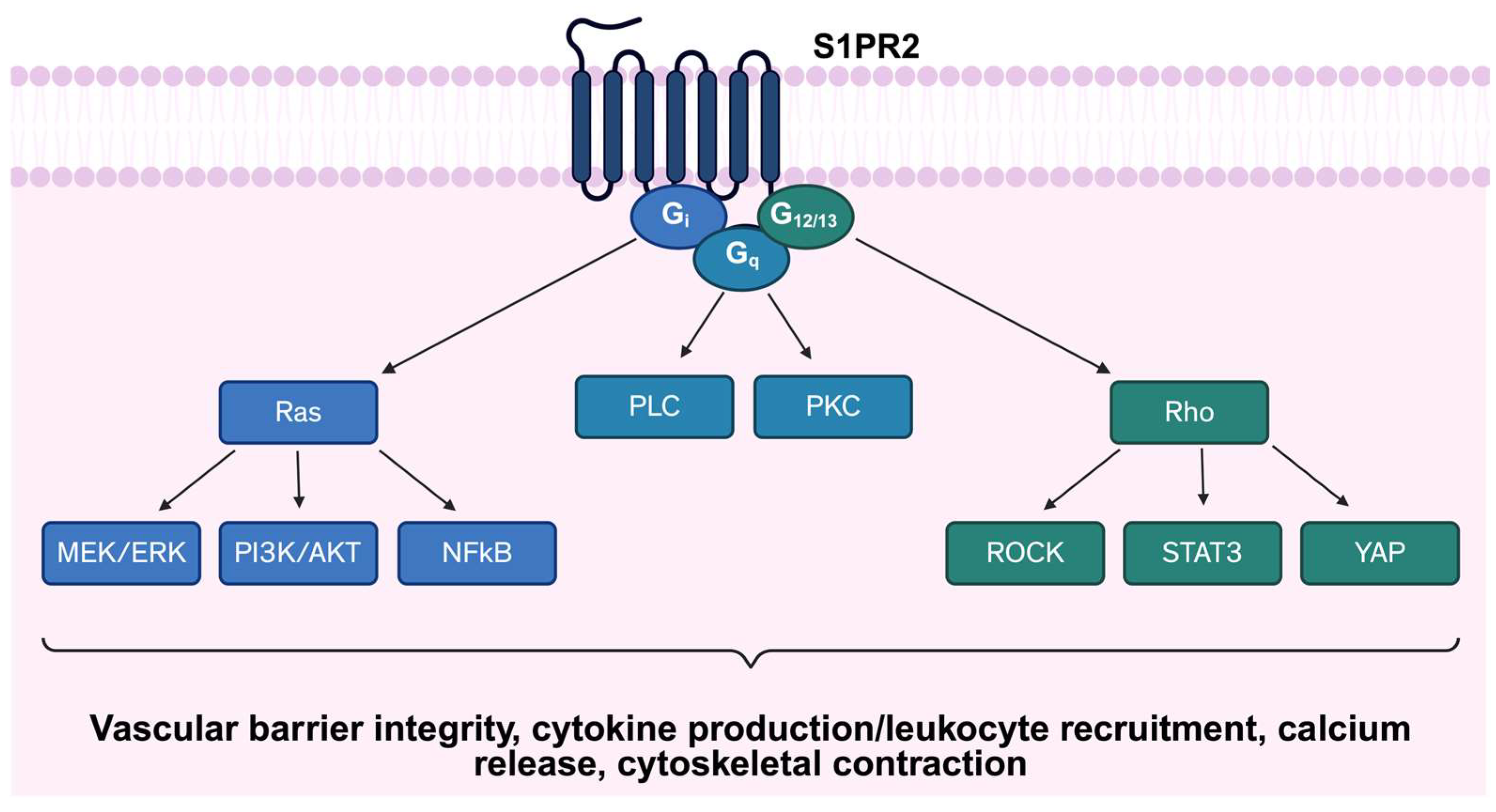
| Cell Type | Associated Signaling Molecules | Cellular Function | References | |
|---|---|---|---|---|
 | Endothelial | Rho/ROCK, AKT, MAPK, NFkB | Vascular barrier integrity, cytokine production, leukocyte recruitment, reduced cell migration | [54,56,92,95] |
 | Airway Epithelium | STAT3, NFkB | Cytokine and chemokine recruitment | [97,98] |
 | Alveolar Epithelium | YAP, RhoA, SMAD3 | Alveolar repair, EMT | [89,99] |
 | Mast | STAT3 | Mast cell degranulation, recruitment of inflammatory mediators and immune cells | [101,102] |
 | Macrophage | RhoA, STAT6 | Restriction of cell migration and phagocytic activity, promotes profibrotic macrophage signaling | [24,26,54,103] |
 | Smooth muscle | STAT3, NOTCH3, YAP | Increased cell motility, contractility, and proliferation | [104,106,107,108] |
 | Fibroblast | PI3K/AKT | Increased ECM synthesis, increased fibroblast to myofibroblast transition, increased myofibroblast proliferation | [109,110] |
Disclaimer/Publisher’s Note: The statements, opinions and data contained in all publications are solely those of the individual author(s) and contributor(s) and not of MDPI and/or the editor(s). MDPI and/or the editor(s) disclaim responsibility for any injury to people or property resulting from any ideas, methods, instructions or products referred to in the content. |
© 2025 by the authors. Licensee MDPI, Basel, Switzerland. This article is an open access article distributed under the terms and conditions of the Creative Commons Attribution (CC BY) license.
Share and Cite
Ha, A.W.; Garcia, J.G.N.; Dudek, S.M. S1PR2 Signaling in the Lung: Understanding Its Role in Health and Disease. Cells 2026, 15, 10. https://doi.org/10.3390/cells15010010
Ha AW, Garcia JGN, Dudek SM. S1PR2 Signaling in the Lung: Understanding Its Role in Health and Disease. Cells. 2026; 15(1):10. https://doi.org/10.3390/cells15010010
Chicago/Turabian StyleHa, Alison W., Joe G. N. Garcia, and Steven M. Dudek. 2026. "S1PR2 Signaling in the Lung: Understanding Its Role in Health and Disease" Cells 15, no. 1: 10. https://doi.org/10.3390/cells15010010
APA StyleHa, A. W., Garcia, J. G. N., & Dudek, S. M. (2026). S1PR2 Signaling in the Lung: Understanding Its Role in Health and Disease. Cells, 15(1), 10. https://doi.org/10.3390/cells15010010