Platelet Subpopulations in Health and Disease: Heterogeneity, Clinical Associations, and Therapeutic Targeting

Abstract
1. Background
2. Early Evidence of Platelet Heterogeneity
3. Progress in Understanding Platelet Subpopulations Through Recent Advances
4. Platelet Subpopulations Based on Age and Activation: Characteristics and Role in Diseases
4.1. Reticulated Platelets
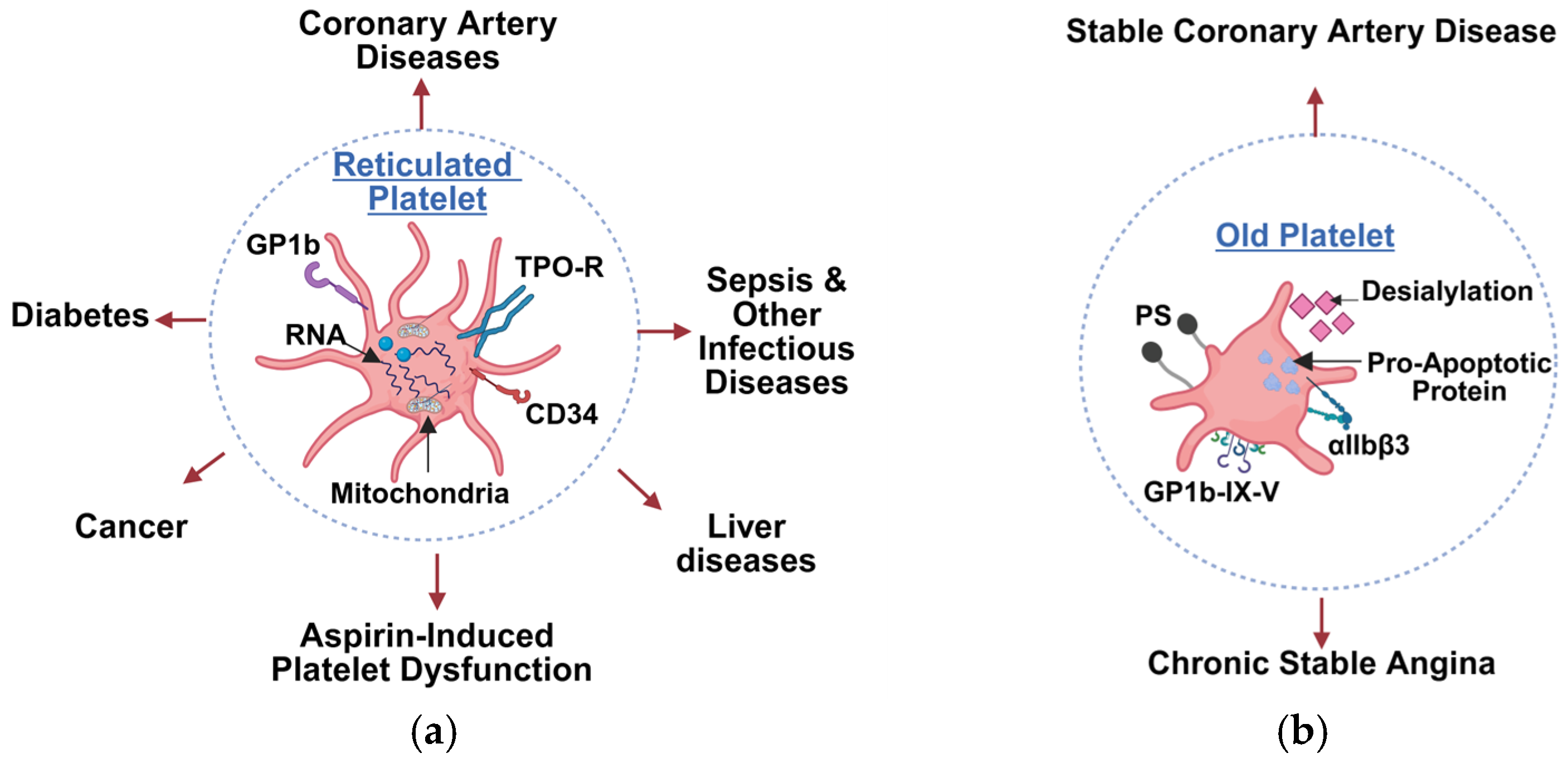
Reticulated Platelets in Health and Disease
4.2. Functional Subtypes of Activated Platelets and Their Roles in Disease
4.2.1. Aggregatory Platelets
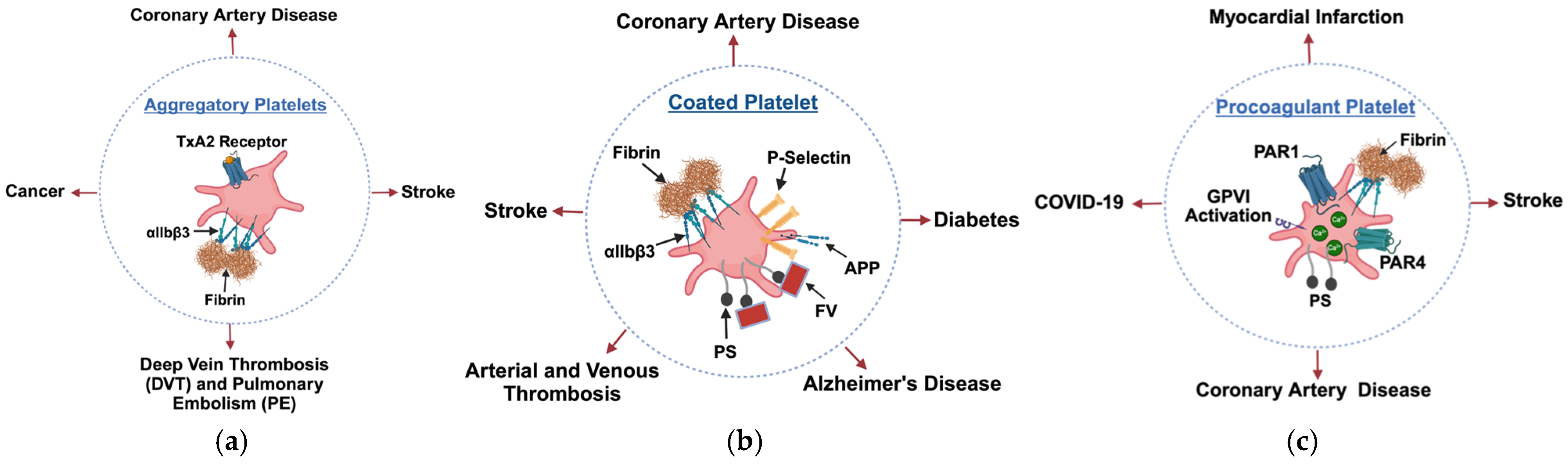
Aggregatory Platelets in Health and Disease
4.2.2. Coated Platelets
Coated Platelets in Health and Disease
4.2.3. Procoagulant Platelets
Procoagulant Platelets in Health and Disease
5. Therapy Used to Target Platelet Subpopulations
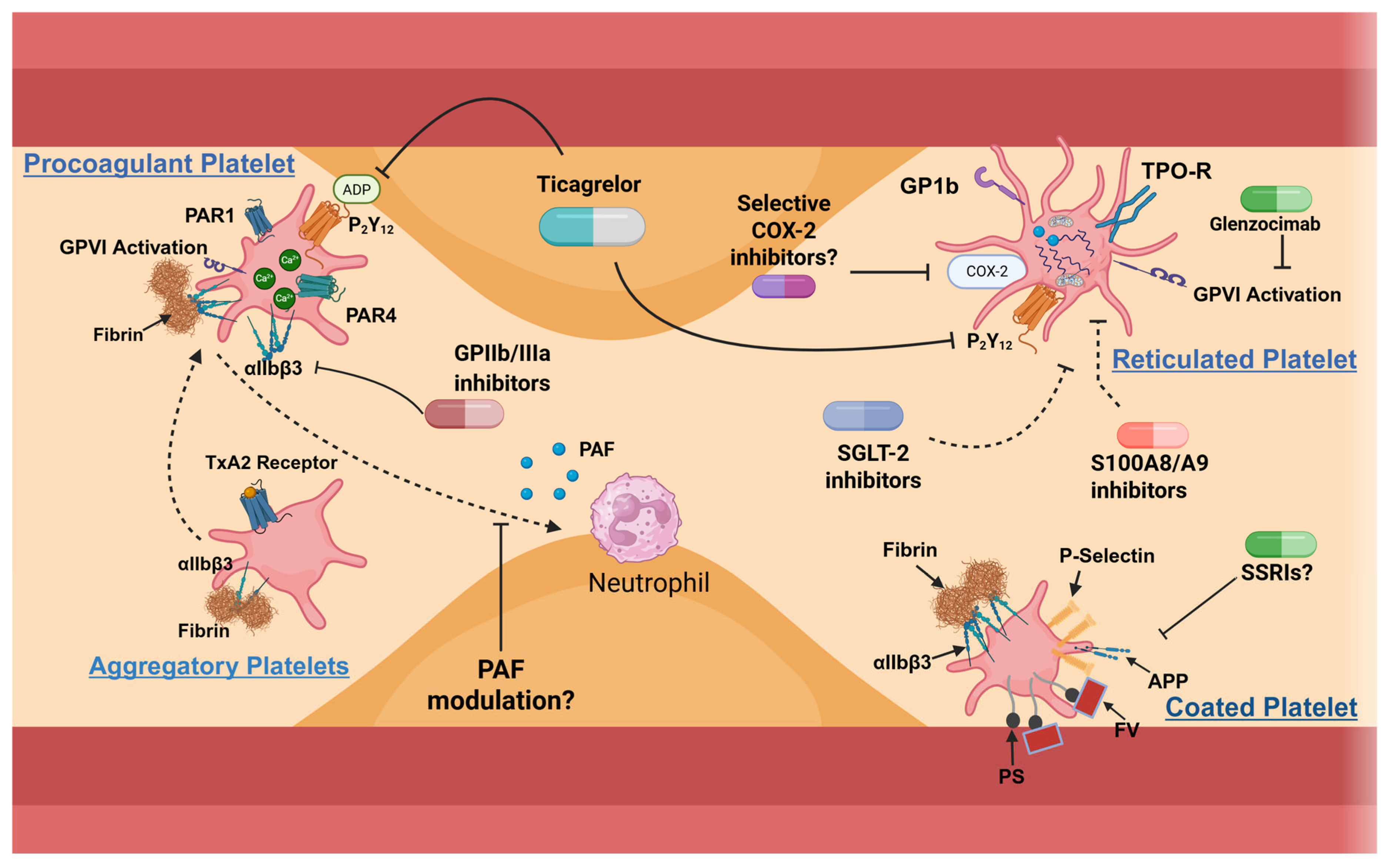
5.1. Targeting Reticulated Platelets
5.2. Targeting Coated Platelets
5.3. Targeting Procoagulant Platelets
6. Conclusions
Author Contributions
Funding
Data Availability Statement
Acknowledgments
Conflicts of Interest
References
- Passacquale, G.; Sharma, P.; Perera, D.; Ferro, A. Antiplatelet Therapy in Cardiovascular Disease: Current Status and Future Directions. Br. J. Clin. Pharmacol. 2022, 88, 2686–2699. [Google Scholar] [CrossRef]
- Michelson, A.D.; Frelinger, A.L.; Furman, M.I. Resistance to Antiplatelet Drugs. Eur. Heart J. Suppl. 2006, 8, G53–G58. [Google Scholar] [CrossRef]
- Hawken, T.N.; Berenson, A.M.; Klopfenstein, J.; Leithead, C.C.; Brinster, C.J.; Sternbergh, W.C.; Money, S.R.; Ramee, S.; Fort, D.; Bazan, H.A. Clopidogrel Resistance Is Common in Patients Undergoing Vascular and Coronary Interventions. J. Vasc. Surg. 2021, 73, e25–e26. [Google Scholar] [CrossRef]
- Kang, H.G.; Lee, S.J.; Heo, S.H.; Chang, D.-I.; Kim, B.J. Clopidogrel Resistance in Patients With Stroke Recurrence Under Single or Dual Antiplatelet Treatment. Front. Neurol. 2021, 12, 652416. [Google Scholar] [CrossRef] [PubMed]
- Webber, A.J.; Firkin, B.G. Two Populations of Platelets. Nature 1965, 205, 1332. [Google Scholar] [CrossRef]
- Karpatkin, S. Heterogeneity of Human Platelets. I. Metabolic and Kinetic Evidence Suggestive of Young and Old Platelets. J. Clin. Investig. 1969, 48, 1073–1082. [Google Scholar] [CrossRef]
- Karpatkin, S. Heterogeneity of Human Platelets. II. Functional Evidence Suggestive of Young and Old Platelets. J. Clin. Investig. 1969, 48, 1083–1087. [Google Scholar] [CrossRef]
- Thompson, C.B.; Eaton, K.A.; Princiotta, S.M.; Rushin, C.A.; Valeri, C.R. Size Dependent Platelet Subpopulations: Relationship of Platelet Volume to Ultrastructure, Enzymatic Activity, and Function. Br. J. Haematol. 1982, 50, 509–519. [Google Scholar] [CrossRef]
- Ingram, M.; Coopersmith, A. Reticulated Platelets Following Acute Blood Loss. Br. J. Haematol. 1969, 17, 225–229. [Google Scholar] [CrossRef]
- Corash, L.; Tan, H.; Gralnick, H. Heterogeneity of Human Whole Blood Platelet Subpopulations. I. Relationship between Buoyant Density, Cell Volume, and Ultrastructure. Blood 1977, 49, 71–87. [Google Scholar] [CrossRef]
- Dale, G.L.; Friese, P.; Hynes, L.A.; Burstein, S.A. Demonstration That Thiazole-Orange-Positive Platelets in the Dog Are Less than 24 Hours Old. Blood 1995, 85, 1822–1825. [Google Scholar] [CrossRef]
- Penington, D.G.; Streatfield, K.; Roxburgh, A.E. Megakaryocytes and the Heterogeneity of Circulating Platelets. Br. J. Haematol. 1976, 34, 639–653. [Google Scholar] [CrossRef] [PubMed]
- Rand, M.L.; Packham, M.A.; Mustard, J.F. Survival of Density Subpopulations of Rabbit Platelets: Use of 51Cr-or 111In-Labeled Platelets to Measure Survival of Least Dense and Most Dense Platelets Concurrently. Blood 1983, 61, 362–367. [Google Scholar] [CrossRef]
- Penington, D.G.; Lee, N.L.; Roxburgh, A.E.; McGready, J.R. Platelet Density and Size: The Interpretation of Heterogeneity. Br. J. Haematol. 1976, 34, 365–376. [Google Scholar] [CrossRef] [PubMed]
- Corash, L.; Costa, J.L.; Shafer, B.; Donlon, J.A.; Murphy, D. Heterogeneity of Human Whole Blood Platelet Subpopulations. III. Density-Dependent Differences in Subcellular Constituents. Blood 1984, 64, 185–193. [Google Scholar] [CrossRef]
- Polanowska-Grabowska, R.; Raha, S.; Gear, A.R.L. Adhesion Efficiency, Platelet Density and Size. Br. J. Haematol. 1992, 82, 715–720. [Google Scholar] [CrossRef]
- Behnke, O.; Forer, A. Blood Platelet Heterogeneity: Evidence for Two Classes of Platelets in Man and Rat. Br. J. Haematol. 1993, 84, 686–693. [Google Scholar] [CrossRef]
- Boneu, B.; Boneu, A.; Raisson, C.; Guiraud, R.; Biermé, R. Kinetics of Platelet «populationså in the Stationary State. Thromb. Res. 1973, 3, 605–611. [Google Scholar] [CrossRef]
- Davizon-Castillo, P.; Rowley, J.W.; Rondina, M.T. Megakaryocyte and Platelet Transcriptomics for Discoveries in Human Health and Disease. Arterioscler. Thromb. Vasc. Biol. 2020, 40, 1432–1440. [Google Scholar] [CrossRef] [PubMed]
- Sun, S.; Jin, C.; Si, J.; Lei, Y.; Chen, K.; Cui, Y.; Liu, Z.; Liu, J.; Zhao, M.; Zhang, X.; et al. Single-Cell Analysis of Ploidy and the Transcriptome Reveals Functional and Spatial Divergency in Murine Megakaryopoiesis. Blood 2021, 138, 1211–1224. [Google Scholar] [CrossRef]
- Battinelli, E.M.; Thon, J.N.; Okazaki, R.; Peters, C.G.; Vijey, P.; Wilkie, A.R.; Noetzli, L.J.; Flaumenhaft, R.; Italiano, J.E. Megakaryocytes Package Contents into Separate α-Granules That Are Differentially Distributed in Platelets. Blood Adv. 2019, 3, 3092–3098. [Google Scholar] [CrossRef]
- Lee, P.; Balbi, C.; Allemann, M.S.; Ghosh, A.; Wang, T.; Bacigaluppi, M.; Akhmedov, A.; Camici, G.G.; Lüscher, T.F.; Fontana, A.; et al. Age- and Sex-Specific Transcriptomic Changes Drive the Prothrombotic Potential of Megakaryocytes. Biomark. Res. 2025, 13, 128. [Google Scholar] [CrossRef]
- Davizon-Castillo, P.; McMahon, B.; Aguila, S.; Bark, D.; Ashworth, K.; Allawzi, A.; Campbell, R.A.; Montenont, E.; Nemkov, T.; D’Alessandro, A.; et al. TNF-α–Driven Inflammation and Mitochondrial Dysfunction Define the Platelet Hyperreactivity of Aging. Blood 2019, 134, 727–740. [Google Scholar] [CrossRef]
- Gnanenthiran, S.R.; Pennings, G.J.; Reddel, C.J.; Campbell, H.; Kockx, M.; Hamilton, J.R.; Chen, V.M.; Kritharides, L. Identification of a Distinct Platelet Phenotype in the Elderly: ADP Hypersensitivity Coexists With Platelet PAR (Protease-Activated Receptor)-1 and PAR-4–Mediated Thrombin Resistance. Arterioscler. Thromb. Vasc. Biol. 2022, 42, 960–972. [Google Scholar] [CrossRef]
- Södergren, A.L.; Ramström, S. Platelet Subpopulations Remain despite Strong Dual Agonist Stimulation and Can Be Characterised Using a Novel Six-Colour Flow Cytometry Protocol. Sci. Rep. 2018, 8, 1441. [Google Scholar] [CrossRef] [PubMed]
- Blair, T.A.; Michelson, A.D.; Frelinger, A.L. Mass Cytometry Reveals Distinct Platelet Subtypes in Healthy Subjects and Novel Alterations in Surface Glycoproteins in Glanzmann Thrombasthenia. Sci. Rep. 2018, 8, 10300. [Google Scholar] [CrossRef]
- Hindle, M.S.; Spurgeon, B.E.J.; Cheah, L.T.; Webb, B.A.; Naseem, K.M. Multidimensional Flow Cytometry Reveals Novel Platelet Subpopulations in Response to Prostacyclin. J. Thromb. Haemost. 2021, 19, 1800–1812. [Google Scholar] [CrossRef] [PubMed]
- Johnson, L.; Lei, P.; Waters, L.; Padula, M.P.; Marks, D.C. Identification of Platelet Subpopulations in Cryopreserved Platelet Components Using Multi-Colour Imaging Flow Cytometry. Sci. Rep. 2023, 13, 1221. [Google Scholar] [CrossRef]
- Vadgama, A.; Boot, J.; Dark, N.; Allan, H.E.; Mein, C.A.; Armstrong, P.C.; Warner, T.D. Multiparameter Phenotyping of Platelets and Characterization of the Effects of Agonists Using Machine Learning. Res. Pract. Thromb. Haemost. 2024, 8, 102523. [Google Scholar] [CrossRef] [PubMed]
- Qiu, X.; Nair, M.G.; Jaroszewski, L.; Godzik, A. Deciphering Abnormal Platelet Subpopulations in Inflammatory Diseases through Machine Learning and Single-Cell Transcriptomics. bioRxiv 2023. [Google Scholar] [CrossRef]
- Qiu, X.; Nair, M.G.; Jaroszewski, L.; Godzik, A. Deciphering Abnormal Platelet Subpopulations in COVID-19, Sepsis and Systemic Lupus Erythematosus through Machine Learning and Single-Cell Transcriptomics. Int. J. Mol. Sci. 2024, 25, 5941. [Google Scholar] [CrossRef]
- Machlus, K.R.; Italiano, J.E. The Incredible Journey: From Megakaryocyte Development to Platelet Formation. J. Cell Biol. 2013, 201, 785–796. [Google Scholar] [CrossRef] [PubMed]
- Allan, H.E.; Vadgama, A.; Armstrong, P.C.; Warner, T.D. Platelet Ageing: A Review. Thromb. Res. 2023, 231, 214–222. [Google Scholar] [CrossRef]
- Mazzi, S.; Lordier, L.; Debili, N.; Raslova, H.; Vainchenker, W. Megakaryocyte and Polyploidization. Exp. Hematol. 2018, 57, 1–13. [Google Scholar] [CrossRef]
- Hoffmann, J.J.M.L.; van den Broek, N.M.A.; Curvers, J. Reference Intervals of Reticulated Platelets and Other Platelet Parameters and Their Associations. Arch. Pathol. Lab. Med. 2013, 137, 1635–1640. [Google Scholar] [CrossRef]
- Mezzano, D.; Hwang, K.; Catalano, P.; Aster, R.H. Evidence That Platelet Buoyant Density, but Not Size, Correlates with Platelet Age in Man. Am. J. Hematol. 1981, 11, 61–76. [Google Scholar] [CrossRef] [PubMed]
- Hille, L.; Lenz, M.; Vlachos, A.; Grüning, B.; Hein, L.; Neumann, F.; Nührenberg, T.G.; Trenk, D. Ultrastructural, Transcriptional, and Functional Differences between Human Reticulated and Non-reticulated Platelets. J. Thromb. Haemost. 2020, 18, 2034–2046. [Google Scholar] [CrossRef]
- Allan, H.E.; Hayman, M.A.; Marcone, S.; Chan, M.V.; Edin, M.L.; Maffucci, T.; Joshi, A.; Menke, L.; Crescente, M.; Mayr, M.; et al. Proteome and Functional Decline as Platelets Age in the Circulation. J. Thromb. Haemost. 2021, 19, 3095–3112. [Google Scholar] [CrossRef] [PubMed]
- Bongiovanni, D.; Santamaria, G.; Klug, M.; Santovito, D.; Felicetta, A.; Hristov, M.; von Scheidt, M.; Aslani, M.; Cibella, J.; Weber, C.; et al. Transcriptome Analysis of Reticulated Platelets Reveals a Prothrombotic Profile. Thromb. Haemost. 2019, 119, 1795–1806. [Google Scholar] [CrossRef]
- Kieffer, N.; Guichard, J.; Farcet, J.-P.; Vainchenker, W.; Breton-Gorius, J. Biosynthesis of Major Platelet Proteins in Human Blood Platelets. Eur. J. Biochem. 1987, 164, 189–195. [Google Scholar] [CrossRef]
- Angénieux, C.; Dupuis, A.; Gachet, C.; de la Salle, H.; Maître, B. Cell Surface Expression of HLA I Molecules as a Marker of Young Platelets. J. Thromb. Haemost. 2019, 17, 1511–1521. [Google Scholar] [CrossRef]
- Chen, H.-L.; Wang, Q.-Y.; Qi, R.-M.; Cai, J.-P. Identification of the Changes in the Platelet Proteomic Profile of Elderly Individuals. Front. Cardiovasc. Med. 2024, 11, 1384679. [Google Scholar] [CrossRef]
- Armstrong, P.C.; Allan, H.E.; Kirkby, N.S.; Gutmann, C.; Joshi, A.; Crescente, M.; Mitchell, J.A.; Mayr, M.; Warner, T.D. Temporal In Vivo Platelet Labeling in Mice Reveals Age-Dependent Receptor Expression and Conservation of Specific MRNAs. Blood Adv. 2022, 6, 6028–6038. [Google Scholar] [CrossRef]
- Cao, Z.; Soleimani Samarkhazan, H. Immature Platelet Fraction in Cardiology. Clin. Chim. Acta 2026, 579, 120600. [Google Scholar] [CrossRef]
- Jung, H.; Jeon, H.-K.; Kim, H.-J.; Kim, S.-H. Immature Platelet Fraction: Establishment of a Reference Interval and Diagnostic Measure for Thrombocytopenia. Ann. Lab. Med. 2010, 30, 451–459. [Google Scholar] [CrossRef] [PubMed]
- McBane, R.D.; Gonzalez, C.; Hodge, D.O.; Wysokinski, W.E. Propensity for Young Reticulated Platelet Recruitment into Arterial Thrombi. J. Thromb. Thrombolysis 2014, 37, 148–154. [Google Scholar] [CrossRef]
- Lakkis, N.; Dokainish, H.; Abuzahra, M.; Tsyboulev, V.; Jorgensen, J.; Ponce De Leon, A.; Saleem, A. Reticulated Platelets in Acute Coronary Syndrome: A Marker of Platelet Activity. J. Am. Coll. Cardiol. 2004, 44, 2091–2093. [Google Scholar] [CrossRef] [PubMed]
- Larsen, S.B.; Grove, E.L.; Hvas, A.-M.; Kristensen, S.D. Platelet Turnover in Stable Coronary Artery Disease—Influence of Thrombopoietin and Low-Grade Inflammation. PLoS ONE 2014, 9, e85566. [Google Scholar] [CrossRef]
- Martin, J.F.; Plumb, J.; Kilbey, R.S.; Kishk, Y.T. Changes in Volume and Density of Platelets in Myocardial Infarction. BMJ 1983, 287, 456–459. [Google Scholar] [CrossRef] [PubMed]
- Kristensen, S.D.; Roberts, K.M.; Kishk, Y.T.; Martin, J.F. Accelerated Atherogenesis Occurs Following Platelet Destruction and Increases in Megakaryocyte Size and DNA Content. Eur. J. Clin. Investig. 1990, 20, 239–247. [Google Scholar] [CrossRef]
- Papanas, N.; Symeonidis, G.; Maltezos, E.; Mavridis, G.; Karavageli, E.; Vosnakidis, T.; Lakasas, G. Mean Platelet Volume in Patients with Type 2 Diabetes Mellitus. Platelets 2004, 15, 475–478. [Google Scholar] [CrossRef]
- Lee, R.H.; Bergmeier, W. Sugar Makes Neutrophils RAGE: Linking Diabetes-Associated Hyperglycemia to Thrombocytosis and Platelet Reactivity. J. Clin. Investig. 2017, 127, 2040–2043. [Google Scholar] [CrossRef] [PubMed]
- Kraakman, M.J.; Lee, M.K.S.; Al-Sharea, A.; Dragoljevic, D.; Barrett, T.J.; Montenont, E.; Basu, D.; Heywood, S.; Kammoun, H.L.; Flynn, M.; et al. Neutrophil-Derived S100 Calcium-Binding Proteins A8/A9 Promote Reticulated Thrombocytosis and Atherogenesis in Diabetes. J. Clin. Investig. 2017, 127, 2133–2147. [Google Scholar] [CrossRef]
- Gurbel, P.A.; Bliden, K.P.; Hiatt, B.L.; O’Connor, C.M. Clopidogrel for Coronary Stenting. Circulation 2003, 107, 2908–2913. [Google Scholar] [CrossRef] [PubMed]
- Martin, J.F.; Kristensen, S.D.; Mathur, A.; Grove, E.L.; Choudry, F.A. The Causal Role of Megakaryocyte–Platelet Hyperactivity in Acute Coronary Syndromes. Nat. Rev. Cardiol. 2012, 9, 658–670. [Google Scholar] [CrossRef]
- Würtz, M.; Grove, E.L.; Wulff, L.N.; Kaltoft, A.K.; Tilsted, H.H.; Jensen, L.O.; Hvas, A.-M.; Kristensen, S.D. Patients With Previous Definite Stent Thrombosis Have a Reduced Antiplatelet Effect of Aspirin and a Larger Fraction of Immature Platelets. JACC Cardiovasc. Interv. 2010, 3, 828–835. [Google Scholar] [CrossRef]
- McAdam, B.F.; Byrne, D.; Morrow, J.D.; Oates, J.A. Contribution of Cyclooxygenase-2 to Elevated Biosynthesis of Thromboxane A 2 and Prostacyclin in Cigarette Smokers. Circulation 2005, 112, 1024–1029. [Google Scholar] [CrossRef] [PubMed]
- Zimmermann, N.; Wenk, A.; Kim, U.; Kienzle, P.; Weber, A.-A.; Gams, E.; Schrör, K.; Hohlfeld, T. Functional and Biochemical Evaluation of Platelet Aspirin Resistance After Coronary Artery Bypass Surgery. Circulation 2003, 108, 542–547. [Google Scholar] [CrossRef]
- Dragani, A.; Pascale, S.; Recchiuti, A.; Mattoscio, D.; Lattanzio, S.; Petrucci, G.; Mucci, L.; Ferrante, E.; Habib, A.; Ranelletti, F.O.; et al. The Contribution of Cyclooxygenase-1 and -2 to Persistent Thromboxane Biosynthesis in Aspirin-Treated Essential Thrombocythemia: Implications for Antiplatelet Therapy. Blood 2010, 115, 1054–1061. [Google Scholar] [CrossRef]
- Guthikonda, S.; Lev, E.I.; Patel, R.; Delao, T.; Bergeron, A.L.; Dong, J.-F.; Kleiman, N.S. Reticulated Platelets and Uninhibited COX-1 and COX-2 Decrease the Antiplatelet Effects of Aspirin. J. Thromb. Haemost. 2007, 5, 490–496. [Google Scholar] [CrossRef]
- Lee, S.-W.; Jeong, S.; Kim, Y.J.; Noh, J.E.; Rho, K.N.; Kim, H.-O.; Cho, H.-J.; Yang, D.H.; Hwang, E.C.; Kyun Bae, W.; et al. Enhanced Thrombopoiesis Supplies PD-L1 to Circulating Immune Cells via the Generation of PD-L1-Expressing Platelets in Patients with Lung Cancer. J. Immunother. Cancer 2025, 13, e010193. [Google Scholar] [CrossRef]
- Murphy, L.; Inchauspé, J.; Valenzano, G.; Holland, P.; Sousos, N.; Belnoue-Davis, H.L.; Li, R.; Jooss, N.J.; Benlabiod, C.; Murphy, E.; et al. Platelets Sequester Extracellular DNA, Capturing Tumor-Derived and Free Fetal DNA. Science 2025, 389, eadp3971. [Google Scholar] [CrossRef]
- Zanetto, A.; Toffanin, S.; Campello, E.; Radu, C.M.; Gavasso, S.; Burra, P.; Russo, F.P.; Senzolo, M.; Simioni, P. Reticulated Platelets Are Increased and Hyper-Activated in Patients with Cirrhosis, Especially Those with Poor Outcome. Dig. Liver Dis. 2024, 56, 1327–1334. [Google Scholar] [CrossRef] [PubMed]
- Nomura, T.; Kubota, Y.; Kitanaka, A.; Kurokouchi, K.; Inage, T.; Saigo, K.; Iseki, K.; Baba, N.; Yamaoka, G.; Arai, T.; et al. Immature Platelet Fraction Measurement in Patients with Chronic Liver Disease: A Convenient Marker for Evaluating Cirrhotic Change. Int. J. Lab. Hematol. 2010, 32, 299–306. [Google Scholar] [CrossRef]
- Wong, C.K.E.; Namdarian, B.; Chua, J.; Chin, X.; Speirs, R.; Nguyen, T.; Fankhauser, M.; Pedersen, J.; Costello, A.J.; Corcoran, N.M.; et al. Levels of a Subpopulation of Platelets, but Not Circulating Endothelial Cells, Predict Early Treatment Failure in Prostate Cancer Patients after Prostatectomy. Br. J. Cancer 2012, 107, 1564–1573. [Google Scholar] [CrossRef]
- Cohen, A.; Harari, E.; Cipok, M.; Laish-Farkash, A.; Bryk, G.; Yahud, E.; Sela, Y.; Lador, N.K.; Mann, T.; Mayo, A.; et al. Immature Platelets in Patients Hospitalized with Covid-19. J. Thromb. Thrombolysis 2021, 51, 608–616. [Google Scholar] [CrossRef]
- Liu, Q.; Song, M.; Yang, B.; Xia, R. Clinical Significance of Measuring Reticulated Platelets in Infectious Diseases. Medicine 2017, 96, e9424. [Google Scholar] [CrossRef]
- De Blasi, R.A.; Cardelli, P.; Costante, A.; Sandri, M.; Mercieri, M.; Arcioni, R. Immature Platelet Fraction in Predicting Sepsis in Critically Ill Patients. Intensive Care Med. 2013, 39, 636–643. [Google Scholar] [CrossRef] [PubMed]
- Vaughan, J.; Wiggill, T.; Munster, M. Immature Platelet Fraction Levels in a Variety of Bone Marrow Pathologies in South African HIV-Positive Patients with Thrombocytopenia. Hematology 2014, 19, 417–423. [Google Scholar] [CrossRef]
- Stalker, T.J.; Traxler, E.A.; Wu, J.; Wannemacher, K.M.; Cermignano, S.L.; Voronov, R.; Diamond, S.L.; Brass, L.F. Hierarchical Organization in the Hemostatic Response and Its Relationship to the Platelet-Signaling Network. Blood 2013, 121, 1875–1885. [Google Scholar] [CrossRef] [PubMed]
- Munnix, I.C.A.; Kuijpers, M.J.E.; Auger, J.; Thomassen, C.M.L.G.D.; Panizzi, P.; van Zandvoort, M.A.M.; Rosing, J.; Bock, P.E.; Watson, S.P.; Heemskerk, J.W.M. Segregation of Platelet Aggregatory and Procoagulant Microdomains in Thrombus Formation. Arterioscler. Thromb. Vasc. Biol. 2007, 27, 2484–2490. [Google Scholar] [CrossRef]
- Lesyk, G.; Jurasz, P. Advances in Platelet Subpopulation Research. Front. Cardiovasc. Med. 2019, 6, 138. [Google Scholar] [CrossRef]
- Jackson, S.P. The Growing Complexity of Platelet Aggregation. Blood 2007, 109, 5087–5095. [Google Scholar] [CrossRef]
- Ruggeri, Z.M.; Dent, J.A.; Saldívar, E. Contribution of Distinct Adhesive Interactions to Platelet Aggregation in Flowing Blood. Blood 1999, 94, 172–178. [Google Scholar] [CrossRef]
- Merten, M.; Thiagarajan, P. P-Selectin Expression on Platelets Determines Size and Stability of Platelet Aggregates. Circulation 2000, 102, 1931–1936. [Google Scholar] [CrossRef]
- Yakimenko, A.O.; Verholomova, F.Y.; Kotova, Y.N.; Ataullakhanov, F.I.; Panteleev, M.A. Identification of Different Proaggregatory Abilities of Activated Platelet Subpopulations. Biophys. J. 2012, 102, 2261–2269. [Google Scholar] [CrossRef]
- Blaskó, G.; Pál, A.; Das, N.; Srivastava, L.M. Differences in the Platelet Proaggregatory Activity of Immune Complexes Isolated from Patients with Myocardial Infarction or Pulmonary Cancer. Platelets 1999, 10, 105–109. [Google Scholar] [CrossRef] [PubMed]
- Kulkarni, S.; Woollard, K.J.; Thomas, S.; Oxley, D.; Jackson, S.P. Conversion of Platelets from a Proaggregatory to a Proinflammatory Adhesive Phenotype: Role of PAF in Spatially Regulating Neutrophil Adhesion and Spreading. Blood 2007, 110, 1879–1886. [Google Scholar] [CrossRef] [PubMed]
- Jobe, S.M.; Leo, L.; Eastvold, J.S.; Dickneite, G.; Ratliff, T.L.; Lentz, S.R.; Di Paola, J. Role of FcRgamma and Factor XIIIA in Coated Platelet Formation. Blood 2005, 106, 4146–4151. [Google Scholar] [CrossRef] [PubMed]
- Mattheij, N.J.A.; Swieringa, F.; Mastenbroek, T.G.; Berny-Lang, M.A.; May, F.; Baaten, C.C.F.M.J.; van der Meijden, P.E.J.; Henskens, Y.M.C.; Beckers, E.A.M.; Suylen, D.P.L.; et al. Coated Platelets Function in Platelet-Dependent Fibrin Formation via Integrin AIIbβ3 and Transglutaminase Factor XIII. Haematologica 2016, 101, 427–436. [Google Scholar] [CrossRef]
- Maroney, S.A.; Haberichter, S.L.; Friese, P.; Collins, M.L.; Ferrel, J.P.; Dale, G.L.; Mast, A.E. Active Tissue Factor Pathway Inhibitor Is Expressed on the Surface of Coated Platelets. Blood 2007, 109, 1931–1937. [Google Scholar] [CrossRef]
- Alberio, L.; Safa, O.; Clemetson, K.J.; Esmon, C.T.; Dale, G.L. Surface Expression and Functional Characterization of Alpha-Granule Factor V in Human Platelets: Effects of Ionophore A23187, Thrombin, Collagen, and Convulxin. Blood 2000, 95, 1694–1702. [Google Scholar] [CrossRef]
- Alberio, L.J.; Clemetson, K.J. All Platelets Are Not Equal: COAT Platelets. Curr. Hematol. Rep. 2004, 3, 338–343. [Google Scholar]
- Naber, K.; Mauler, M.; Schanze, N.; Kröning, P.; Stallmann, D.; Duerschmied, D.; Westermann, D.; Gauchel, N. Serotonin Transporter Deficiency, but Not Absence of Platelet Serotonin, Impairs Thrombus Formation in a Model of Deep Vein Thrombosis. Res. Pract. Thromb. Haemost. 2025, 9, 102970. [Google Scholar] [CrossRef]
- Hamilton, S.F.; Miller, M.W.; Thompson, C.A.; Dale, G.L. Glycoprotein IIb/IIIa Inhibitors Increase COAT-Platelet Production In Vitro. J. Lab. Clin. Med. 2004, 143, 320–326. [Google Scholar] [CrossRef]
- Dale, G.L.; Friese, P.; Batar, P.; Hamilton, S.F.; Reed, G.L.; Jackson, K.W.; Clemetson, K.J.; Alberio, L. Stimulated Platelets Use Serotonin to Enhance Their Retention of Procoagulant Proteins on the Cell Surface. Nature 2002, 415, 175–179. [Google Scholar] [CrossRef] [PubMed]
- Prodan, C.I.; Joseph, P.M.; Vincent, A.S.; Dale, G.L. Coated-Platelets in Ischemic Stroke: Differences between Lacunar and Cortical Stroke. J. Thromb. Haemost. 2008, 6, 609–614. [Google Scholar] [CrossRef] [PubMed]
- Prodan, C.I.; Stoner, J.A.; Cowan, L.D.; Dale, G.L. Higher Coated-Platelet Levels Are Associated with Stroke Recurrence Following Nonlacunar Brain Infarction. J. Cereb. Blood Flow Metab. 2013, 33, 287–292. [Google Scholar] [CrossRef] [PubMed]
- Kirkpatrick, A.C.; Stoner, J.A.; Dale, G.L.; Rabadi, M.; Prodan, C.I. Higher Coated-Platelet Levels in Acute Stroke Are Associated with Lower Cognitive Scores at Three Months Post Infarction. J. Stroke Cerebrovasc. Dis. 2019, 28, 2398–2406. [Google Scholar] [CrossRef]
- Kirkpatrick, A.C.; Vincent, A.S.; Dale, G.L.; Prodan, C.I. Increased Platelet Procoagulant Potential Predicts Recurrent Stroke and TIA after Lacunar Infarction. J. Thromb. Haemost. 2020, 18, 660–668. [Google Scholar] [CrossRef]
- Ribeiro, E.; Kirkpatrick, A.; Gatchoff, P.; Xu, C.; Vincent, A.; Mathews, E.; Guthery, L.; Dale, G.; Prodan, C. Lower Coated-Platelet Potential Is Associated with Major Hemorrhagic Complications After Discharge in Patients with Non-Lacunar Brain Infarction (P2-5.030). Neurology 2024, 102, 5733. [Google Scholar] [CrossRef]
- Prodan, C.I.; Vincent, A.S.; Padmanabhan, R.; Dale, G.L. Coated-Platelet Levels Are Low in Patients With Spontaneous Intracerebral Hemorrhage. Stroke 2009, 40, 2578–2580. [Google Scholar] [CrossRef]
- Prodan, C.I.; Vincent, A.S.; Dale, G.L. Coated Platelet Levels Correlate With Bleed Volume in Patients With Spontaneous Intracerebral Hemorrhage. Stroke 2010, 41, 1301–1303. [Google Scholar] [CrossRef] [PubMed]
- Prodan, C.I.; Vincent, A.S.; Dale, G.L. Coated-Platelet Levels Are Persistently Elevated in Patients with Mild Traumatic Brain Injury. J. Head. Trauma. Rehabil. 2014, 29, 522–526. [Google Scholar] [CrossRef] [PubMed]
- McSharry, C. Coated-Platelets Can Predict Risk of Alzheimer Disease. Nat. Rev. Neurol. 2011, 7, 128. [Google Scholar] [CrossRef]
- Prodan, C.I.; Ross, E.D.; Stoner, J.A.; Cowan, L.D.; Vincent, A.S.; Dale, G.L. Coated-Platelet Levels and Progression from Mild Cognitive Impairment to Alzheimer Disease. Neurology 2011, 76, 247–252. [Google Scholar] [CrossRef]
- Segot, A.; Adler, M.; Aliotta, A.; Matthey-Guirao, E.; Nagler, M.; Bertaggia Calderara, D.; Grandoni, F.; Gomez, F.J.; Alberio, L. Low COAT Platelets Are Frequent in Patients with Bleeding Disorders of Unknown Cause (BDUC) and Can Be Enhanced by DDAVP. J. Thromb. Haemost. 2022, 20, 1271–1274. [Google Scholar] [CrossRef] [PubMed]
- Dave, R.G.; Geevar, T.; Aaron, S.; Ninan Benjamin, R.; Mammen, J.; Kumar, S.; Vijayan, R.; Gowri, M.; Nair, S.C. Diagnostic Utility of Flow Cytometry Based Coated-platelets Assay as a Biomarker to Predict Thrombotic or Hemorrhagic Phenotype in Acute Stroke. Cytometry B Clin. Cytom. 2022, 102, 246–253. [Google Scholar] [CrossRef]
- Reddy, E.C.; Rand, M.L. Procoagulant Phosphatidylserine-Exposing Platelets In Vitro and In Vivo. Front. Cardiovasc. Med. 2020, 7, 15. [Google Scholar] [CrossRef]
- Szasz, R.; Dale, G.L. Thrombospondin and Fibrinogen Bind Serotonin-Derivatized Proteins on COAT-Platelets. Blood 2002, 100, 2827–2831. [Google Scholar] [CrossRef]
- Dale, G.L. REVIEW ARTICLE: Coated-Platelets: An Emerging Component of the Procoagulant Response. J. Thromb. Haemost. 2005, 3, 2185–2192. [Google Scholar] [CrossRef]
- Wolfs, J.L.N. Generation of Procoagulant Activity in Blood Cells: Studies on the Process of Lipid Scrambling. Doctoral Thesis, Maastricht University, Maastricht, The Netherlands, 2009. [Google Scholar]
- Abbasian, N.; Millington-Burgess, S.L.; Chabra, S.; Malcor, J.-D.; Harper, M.T. Supramaximal Calcium Signaling Triggers Procoagulant Platelet Formation. Blood Adv. 2020, 4, 154–164. [Google Scholar] [CrossRef] [PubMed]
- Choo, H.-J.; Kholmukhamedov, A.; Zhou, C.; Jobe, S. Inner Mitochondrial Membrane Disruption Links Apoptotic and Agonist-Initiated Phosphatidylserine Externalization in Platelets. Arterioscler. Thromb. Vasc. Biol. 2017, 37, 1503–1512. [Google Scholar] [CrossRef] [PubMed]
- Mattheij, N.J.A.; Gilio, K.; van Kruchten, R.; Jobe, S.M.; Wieschhaus, A.J.; Chishti, A.H.; Collins, P.; Heemskerk, J.W.M.; Cosemans, J.M.E.M. Dual Mechanism of Integrin AIIbβ3 Closure in Procoagulant Platelets. J. Biol. Chem. 2013, 288, 13325–13336. [Google Scholar] [CrossRef]
- Kile, B.T. The Role of the Intrinsic Apoptosis Pathway in Platelet Life and Death. J. Thromb. Haemost. 2009, 7, 214–217. [Google Scholar] [CrossRef]
- Schoenwaelder, S.M.; Yuan, Y.; Josefsson, E.C.; White, M.J.; Yao, Y.; Mason, K.D.; O’Reilly, L.A.; Henley, K.J.; Ono, A.; Hsiao, S.; et al. Two Distinct Pathways Regulate Platelet Phosphatidylserine Exposure and Procoagulant Function. Blood 2009, 114, 663–666. [Google Scholar] [CrossRef] [PubMed]
- Hua, V.M.; Abeynaike, L.; Glaros, E.; Campbell, H.; Pasalic, L.; Hogg, P.J.; Chen, V.M.Y. Necrotic Platelets Provide a Procoagulant Surface during Thrombosis. Blood 2015, 126, 2852–2862. [Google Scholar] [CrossRef]
- Choo, H.-J.; Saafir, T.B.; Mkumba, L.; Wagner, M.B.; Jobe, S.M. Mitochondrial Calcium and Reactive Oxygen Species Regulate Agonist-Initiated Platelet Phosphatidylserine Exposure. Arterioscler. Thromb. Vasc. Biol. 2012, 32, 2946–2955. [Google Scholar] [CrossRef]
- Pasalic, L.; Wing-Lun, E.; Lau, J.K.; Campbell, H.; Pennings, G.J.; Lau, E.; Connor, D.; Liang, H.P.; Muller, D.; Kritharides, L.; et al. Novel Assay Demonstrates That Coronary Artery Disease Patients Have Heightened Procoagulant Platelet Response. J. Thromb. Haemost. 2018, 16, 1198–1210. [Google Scholar] [CrossRef] [PubMed]
- Lee, C.S.M.; Selvadurai, M.V.; Pasalic, L.; Yeung, J.; Konda, M.; Kershaw, G.W.; Favaloro, E.J.; Chen, V.M. Measurement of Procoagulant Platelets Provides Mechanistic Insight and Diagnostic Potential in Heparin-Induced Thrombocytopenia. J. Thromb. Haemost. 2022, 20, 975–988. [Google Scholar] [CrossRef]
- Zhao, L.; Bi, Y.; Kou, J.; Shi, J.; Piao, D. Phosphatidylserine Exposing-Platelets and Microparticles Promote Procoagulant Activity in Colon Cancer Patients. J. Exp. Clin. Cancer Res. 2016, 35, 54. [Google Scholar] [CrossRef] [PubMed]
- Kaiser, R.; Dewender, R.; Mulkers, M.; Stermann, J.; Rossaro, D.; Di Fina, L.; Li, L.; Gold, C.; Schmid, M.; Kääb, L.; et al. Procoagulant Platelet Activation Promotes Venous Thrombosis. Blood 2024, 144, 2546–2553. [Google Scholar] [CrossRef]
- Vulliamy, P.; Gillespie, S.; Armstrong, P.C.; Allan, H.E.; Warner, T.D.; Brohi, K. Histone H4 Induces Platelet Ballooning and Microparticle Release during Trauma Hemorrhage. Proc. Natl. Acad. Sci. USA 2019, 116, 17444–17449. [Google Scholar] [CrossRef]
- Colwell, J.A. Treatment for the Procoagulant State in Type 2 Diabetes. Endocrinol. Metab. Clin. N. Am. 2001, 30, 1011–1030. [Google Scholar] [CrossRef]
- RAZMARA, M.; HJEMDAHL, P.; Östenson, C.-G.; LI, N. Platelet Hyperprocoagulant Activity in Type 2 Diabetes Mellitus: Attenuation by Glycoprotein IIb/IIIa Inhibition. J. Thromb. Haemost. 2008, 6, 2186–2192. [Google Scholar] [CrossRef]
- Edvardsson, M.; Oweling, M.; Järemo, P. Small Procoagulant Platelets in Diabetes Type 2. Thromb. Res. 2020, 195, 1–7. [Google Scholar] [CrossRef]
- Denorme, F.; Manne, B.K.; Portier, I.; Petrey, A.C.; Middleton, E.A.; Kile, B.T.; Rondina, M.T.; Campbell, R.A. COVID-19 Patients Exhibit Reduced Procoagulant Platelet Responses. J. Thromb. Haemost. 2020, 18, 3067–3073. [Google Scholar] [CrossRef]
- Althaus, K.; Möller, P.; Uzun, G.; Singh, A.; Beck, A.; Bettag, M.; Bösmüller, H.; Guthoff, M.; Dorn, F.; Petzold, G.C.; et al. Antibody-Mediated Procoagulant Platelets in SARS-CoV-2-Vaccination Associated Immune Thrombotic Thrombocytopenia. Haematologica 2021, 106, 2170–2179. [Google Scholar] [CrossRef]
- Pelzl, L.; Singh, A.; Funk, J.; Witzemann, A.; Marini, I.; Zlamal, J.; Weich, K.; Abou-Khalel, W.; Hammer, S.; Uzun, G.; et al. Antibody-mediated Procoagulant Platelet Formation in COVID-19 Is AKT Dependent. J. Thromb. Haemost. 2022, 20, 387–398. [Google Scholar] [CrossRef] [PubMed]
- Bongiovanni, D.; Han, J.; Klug, M.; Kirmes, K.; Viggiani, G.; von Scheidt, M.; Schreiner, N.; Condorelli, G.; Laugwitz, K.-L.; Bernlochner, I. Role of Reticulated Platelets in Cardiovascular Disease. Arterioscler. Thromb. Vasc. Biol. 2022, 42, 527–539. [Google Scholar] [CrossRef] [PubMed]
- Stratz, C.; Nührenberg, T.; Valina, C.; Löffelhardt, N.; Mashayekhi, K.; Ferenc, M.; Trenk, D.; Neumann, F.-J.; Hochholzer, W. Impact of Reticulated Platelets on the Antiplatelet Effect of the Intravenous P2Y12-Receptor Inhibitor Cangrelor. Thromb. Haemost. 2018, 118, 362–368. [Google Scholar] [CrossRef]
- Ibrahim, H.; Nadipalli, S.; DeLao, T.; Guthikonda, S.; Kleiman, N.S. Immature Platelet Fraction (IPF) Determined with an Automated Method Predicts Clopidogrel Hyporesponsiveness. J. Thromb. Thrombolysis 2012, 33, 137–142. [Google Scholar] [CrossRef]
- Kirmes, K.; Han, J.; Klug, M.; Bloxham, C.J.; Babyak, O.; Bernett, J.; Arend, L.; Manz, Q.; Raka, L.; Schwartz, L.; et al. Reticulated Platelets in Coronary Artery Disease: A Multidimensional Approach Unveils Prothrombotic Signalling and Novel Therapeutic Targets. Eur. Heart J. 2025, 46, 4901–4917. [Google Scholar] [CrossRef]
- Fiorucci, S.; Santucci, L.; Wallace, J.L.; Sardina, M.; Romano, M.; del Soldato, P.; Morelli, A. Interaction of a Selective Cyclooxygenase-2 Inhibitor with Aspirin and NO-Releasing Aspirin in the Human Gastric Mucosa. Proc. Natl. Acad. Sci. USA 2003, 100, 10937–10941. [Google Scholar] [CrossRef]
- Asgari, A.; Lesyk, G.; Poitras, E.; Govindasamy, N.; Terry, K.; To, R.; Back, V.; Rudzinski, J.K.; Lewis, J.D.; Jurasz, P. Platelets Stimulate Programmed Death-ligand 1 Expression by Cancer Cells: Inhibition by Anti-platelet Drugs. J. Thromb. Haemost. 2021, 19, 2862–2872. [Google Scholar] [CrossRef]
- Tornyos, D.; Meuer, M.; Lukács, R.; El Alaoui El Abdallaoui, O.; Kupó, P.; Faludi, R.; Komócsi, A. Cardiovascular Outcomes in Patients Treated with Sodium-Glucose Transport Protein 2 Inhibitors, a Network Meta-Analysis of Randomized Trials. Front. Cardiovasc. Med. 2022, 9, 1041200. [Google Scholar] [CrossRef] [PubMed]
- Bengtsson, A.A.; Sturfelt, G.; Lood, C.; Rönnblom, L.; van Vollenhoven, R.F.; Axelsson, B.; Sparre, B.; Tuvesson, H.; Öhman, M.W.; Leanderson, T. Pharmacokinetics, Tolerability, and Preliminary Efficacy of Paquinimod (ABR-215757), a New Quinoline-3-carboxamide Derivative: Studies in Lupus-prone Mice and a Multicenter, Randomized, Double-blind, Placebo-controlled, Repeat-dose, Dose-ranging Study in Patients with Systemic Lupus Erythematosus. Arthritis Rheum. 2012, 64, 1579–1588. [Google Scholar] [CrossRef] [PubMed]
- Wallentin, L.; Becker, R.C.; Budaj, A.; Cannon, C.P.; Emanuelsson, H.; Held, C.; Horrow, J.; Husted, S.; James, S.; Katus, H.; et al. Ticagrelor versus Clopidogrel in Patients with Acute Coronary Syndromes. N. Engl. J. Med. 2009, 361, 1045–1057. [Google Scholar] [CrossRef]
- Mayer, K.; Hein-Rothweiler, R.; Schüpke, S.; Janisch, M.; Bernlochner, I.; Ndrepepa, G.; Sibbing, D.; Gori, T.; Borst, O.; Holdenrieder, S.; et al. Efficacy and Safety of Revacept, a Novel Lesion-Directed Competitive Antagonist to Platelet Glycoprotein VI, in Patients Undergoing Elective Percutaneous Coronary Intervention for Stable Ischemic Heart Disease. JAMA Cardiol. 2021, 6, 753. [Google Scholar] [CrossRef]
- Nichetti, F.; Ligorio, F.; Zattarin, E.; Signorelli, D.; Prelaj, A.; Proto, C.; Galli, G.; Marra, A.; Apollonio, G.; Porcu, L.; et al. Is There an Interplay between Immune Checkpoint Inhibitors, Thromboprophylactic Treatments and Thromboembolic Events? Mechanisms and Impact in Non-Small Cell Lung Cancer Patients. Cancers 2019, 12, 67. [Google Scholar] [CrossRef] [PubMed]
- Prodan, C.I.; Joseph, P.M.; Vincent, A.S.; Dale, G.L. Coated-platelet Levels Are Influenced by Smoking, Aspirin, and Selective Serotonin Reuptake Inhibitors. J. Thromb. Haemost. 2007, 5, 2149–2151. [Google Scholar] [CrossRef]
- Tang, W.H.W.; Lincoff, A.M. Diabetes, Coronary Intervention, and Platelet Glycoprotein IIb/IIIa Blockade. Circulation 2004, 110, 3618–3620. [Google Scholar] [CrossRef] [PubMed][Green Version]
- Chew, D.P.; Bhatt, D.L.; Sapp, S.; Topol, E.J. Increased Mortality With Oral Platelet Glycoprotein IIb/IIIa Antagonists. Circulation 2001, 103, 201–206. [Google Scholar] [CrossRef] [PubMed]
- Chen, B.; Vousden, K.A.; Naiman, B.; Turman, S.; Sun, H.; Wang, S.; Vinall, L.M.K.; Kemp, B.P.; Kasturiangan, S.; Rees, D.G.; et al. Humanised Effector-Null FcγRIIA Antibody Inhibits Immune Complex-Mediated Proinflammatory Responses. Ann. Rheum. Dis. 2019, 78, 228–237. [Google Scholar] [CrossRef] [PubMed]



| Feature | Aggregatory | Coated (COAT) | Procoagulant |
|---|---|---|---|
| Biological roles | Form the thrombus core, ensuring cohesion and stability | Retain α-granule and plasma proteins linked to coagulation | Provide a platform for coagulation complex assembly and thrombin generation |
| Formation trigger | Classical platelet activation (e.g., ADP, thrombin) | Dual stimulation (e.g., thrombin + collagen) | Strong dual stimulation (thrombin + collagen) or regulated apoptosis/necrosis |
| Key receptors/proteins | Active αIIbβ3, P-selectin | Initially active αIIbβ3, GPVI/FcRγ, transglutaminases (FXIII, TG2), serotonin | PS exposure, αIIbβ3 inactivated (high-Ca2+ subset) or active (low-Ca2+ subset), TMEM16F, mPTP, Bak/Bax |
| Membrane integrity/morphology | Preserve membrane integrity, no PS exposure | Preserved integrity, PS exposure, surface protein retention | Loss of integrity (necrotic/apoptotic subsets), ballooning, PS exposure |
| Granules and content | Active α-granule secretion, fibrinogen/VWF adhesion | Retain FV, fibrinogen, VWF, thrombospondin, fibronectin, α2-antiplasmin | Retain procoagulant factors, release microparticles |
| Role under shear | Dominant under venous and moderate arterial shear; VWF important at high shear | Form under extreme vascular injury with collagen exposure + sustained thrombin generation | Active in thrombi across shear ranges; key in venous thrombi, trauma, cancer, diabetes |
| Mechanism/Problem | Underlying Biology | Therapeutic Strategy/Target | Rationale | Clinical Stage/Evidence Level |
|---|---|---|---|---|
| High platelet turnover → newly formed RPs | RPs are more reactive, preferentially recruited to thrombus cores. | Use reversible P2Y12 inhibitors (e.g., ticagrelor, cangrelor) instead of irreversible drugs (clopidogrel, prasugrel) | Switch to drugs with sustained plasma levels or reversible binding → Continuous inhibition of newly formed platelets; maintains antiplatelet effect despite turnover | PLATO trial (multicenter, randomized, double-blind): Ticagrelor vs. Clopidogrel in patients with ACS reduced death, MI, or stroke; no increase in major bleeding overall but increased non-procedure-related bleeding [129]. |
| Hyperreactive reticulated platelets in CAD | Increased proteomic expression of GPVI, and PI3K-mediated signaling | GPVI inhibition (glenzocimab, revacept), PI3K inhibition (LY294002) | Targeting these pathways can mitigate RP hyperreactivity and thrombotic risk | Preclinical evidence from transcriptomic, proteomic, and functional studies [124] Phase II clinical trial in patients with stable ischemic heart disease undergoing elective PCI → revacept (anti-GPVI) was safe with few bleeding events but did not reduce myocardial injury [130]. |
| COX-2–mediated thromboxane A2 production | RPs express higher COX-2, which is less sensitive to low-dose aspirin | COX-2 selective inhibition or adjusted aspirin dosing | Blocks TxA2 production in RPs, reducing residual platelet activation | While in vitro inhibition of platelet COX-2 reduced TxB2 [60], clinical data are mixed: in patients undergoing cardiac bypass surgery, COX-2 inhibition with celecoxib did not decrease thromboxane synthesis, highlighting the need for further investigation [58]. |
| Reticulated platelets (RPs) contribute to cancer progression and immune evasion | In non-small cell lung cancer, RPs express PD-L1, which promotes immune checkpoint resistance | VEGF, PDGF, αIIbβ3 integrin (eptifibatide) | Blocking VEGF or PDGF, or inhibiting αIIbβ3, reverses RP-mediated immunosuppression and restores T cell activity | An exploratory study involving NSCLC patients (APOLLO study) demonstrated an initial association between anti-platelet and immune checkpoint inhibitor treatment and longer progression-free survival and a trend toward better overall survival [131] |
| Diabetes-associated reduced antiplatelet efficacy and enhanced thrombotic risk | Hyperglycemia → neutrophil S100A8/A9 → Kupffer cell IL-6 → hepatic TPO → megakaryocyte proliferation → RPs; elevated MPV and monocyte-platelet aggregates correlate with HbA1c | Glycemic control (SGLT2 inhibitors), S100A8/A9 inhibitors (ABR-215757), IL-6/TPO modulation | Reduces RPs production, platelet hyperactivity, and restores antiplatelet therapy effectiveness | The small-molecule S100A8/A9 inhibitor ABR-215757 has shown promise in preclinical models by suppressing RP-driven atherogenesis [53,128]. |
| Mechanism/Problem | Underlying Biology | Therapeutic Strategy/ Target | Rationale | Clinical Stage/Evidence Level |
|---|---|---|---|---|
| HIT | HIT antibodies activate platelets via FcγRIIa in a heparin-dependent manner, enhancing thrombin generation | Target FcγRII⍺ | Blocking FcγRIIa or inhibiting procoagulant platelets can reduce thrombotic risk | VIB9600 (humanized anti-FcγRIIA): shown effective and safe in preclinical primate studies; currently investigational for immune-mediated inflammatory conditions (e.g., sepsis) [135]. |
| Hypercoagulable state in colon cancer | PS-exposing platelets and MPs increase with cancer stage, promoting FXa and thrombin generation | PS blockade (lactadherin) | Inhibiting PS exposure reduces clotting and hypercoagulability | In advanced (stage II–IV) colon cancer, antiplatelet therapy insufficient; PS inhibition remains investigational in preclinical settings [112]. |
| Venous thrombosis (DVT/PE) | Procoagulant platelets enriched in thrombi; regulators TMEM16F and cyclophilin D control platelet procoagulant activity | Pharmacological inhibition (methazolamide), genetic targeting of TMEM16F/cyclophilin D | Selective inhibition reduces thrombus formation while preserving normal hemostasis | MZA effective in vitro and in vivo (reduced PS exposure and arterial thrombosis in preclinical studies); potential hematocrit-related side effects need further evaluation [113]. |
| Trauma-induced platelet dysfunction | Histone H4 triggers platelet ballooning, PS exposure, and microparticle release, promoting thromboinflammation | Target histone-mediated platelet activation or procoagulant signaling | Reducing procoagulant platelet formation may limit coagulopathy and inflammation after trauma | Targeting histone-mediated platelet activation or procoagulant signaling remains hypothesis-driven and will need further investigations [114]. |
| Diabetes-associated hypercoagulability | Platelets show increased PS exposure, factor Va binding, microparticle release; small platelets exhibit spontaneous procoagulant activation | Glycoprotein ⍺IIbβ3 blockade | Reduces PS exposure, FVa binding, and thrombin generation, lowering thrombotic risk in diabetics | Chronic GPIIb/IIIa inhibition in T2DM remains preclinical/exploratory [116], with previous oral inhibitors failing in ACS due to safety concerns [133,134]. |
| COVID-19 thromboinflammatory complications | Dysregulated procoagulant platelet responses; PI3K-AKT signaling mediates PS and CD62P expression; cyclophilin D essential for procoagulant formation | PI3K/AKT inhibitors, targeting cyclophilin D or FcγRIIa | Modulation of procoagulant platelet pathways may reduce microvascular thrombosis and thromboinflammatory damage | BAY1125976 and BYL719 (PI3K/AKT inhibitors) have been shown to be effective in preclinical/experimental settings [120]. |
| VITT | Anti-PF4 antibodies trigger platelet procoagulant activation, PS exposure, and P-selectin upregulation | Target PF4-antibody interaction, FcγRIIa, or procoagulant platelet formation | Prevents formation of procoagulant platelets and widespread thrombosis | Preclinical investigation [119]. |
Disclaimer/Publisher’s Note: The statements, opinions and data contained in all publications are solely those of the individual author(s) and contributor(s) and not of MDPI and/or the editor(s). MDPI and/or the editor(s) disclaim responsibility for any injury to people or property resulting from any ideas, methods, instructions or products referred to in the content. |
© 2025 by the authors. Licensee MDPI, Basel, Switzerland. This article is an open access article distributed under the terms and conditions of the Creative Commons Attribution (CC BY) license.
Share and Cite
Gautam, D.; Goggi, G.; Battinelli, E.M. Platelet Subpopulations in Health and Disease: Heterogeneity, Clinical Associations, and Therapeutic Targeting. Cells 2026, 15, 11. https://doi.org/10.3390/cells15010011
Gautam D, Goggi G, Battinelli EM. Platelet Subpopulations in Health and Disease: Heterogeneity, Clinical Associations, and Therapeutic Targeting. Cells. 2026; 15(1):11. https://doi.org/10.3390/cells15010011
Chicago/Turabian StyleGautam, Deepa, Giovanni Goggi, and Elisabeth M. Battinelli. 2026. "Platelet Subpopulations in Health and Disease: Heterogeneity, Clinical Associations, and Therapeutic Targeting" Cells 15, no. 1: 11. https://doi.org/10.3390/cells15010011
APA StyleGautam, D., Goggi, G., & Battinelli, E. M. (2026). Platelet Subpopulations in Health and Disease: Heterogeneity, Clinical Associations, and Therapeutic Targeting. Cells, 15(1), 11. https://doi.org/10.3390/cells15010011