Review

An Overview of Smart Irrigation Management for Improving Water Productivity under Climate Change in Drylands


1
Xinjiang Institute of Ecology and Geography, Chinese Academy of Sciences, Urumqi 830011, China
2
Cele National Station of Observation and Research for Desert-Grassland Ecosystem, Cele 848300, China
3
University of Chinese Academy of Sciences, Beijing 100049, China
4
Faculty of Environmental Science and Engineering, Kunming University of Science and Technology, Kunming 650500, China
*
Author to whom correspondence should be addressed.
Agronomy 2023, 13(8), 2113; https://doi.org/10.3390/agronomy13082113

Submission received: 30 June 2023 / Revised: 7 August 2023 / Accepted: 9 August 2023 / Published: 11 August 2023

Abstract

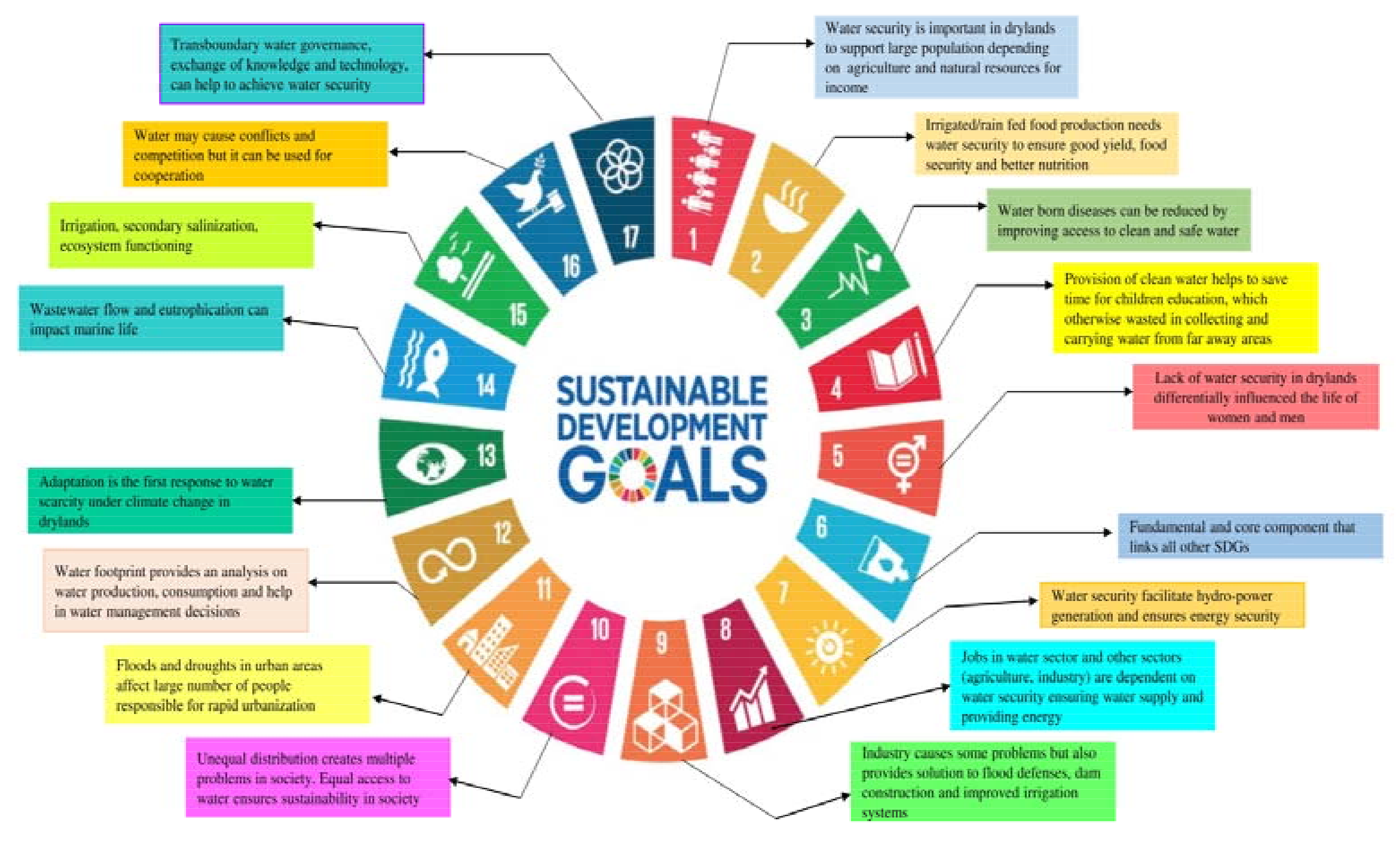
Global drylands, covering about 41% of Earth’s surface and inhabited by 38% of the world’s population, are facing the stark challenges of water scarcity, low water productivity, and food insecurity. This paper highlights the major constraints to agricultural productivity, traditional irrigation scheduling methods, and associated challenges, efforts, and progress to enhance water use efficiency (WUE), conserve water, and guarantee food security by overviewing different smart irrigation approaches. Widely used traditional irrigation scheduling methods (based on weather, plant, and soil moisture conditions) usually lack important information needed for precise irrigation, which leads to over- or under-irrigation of fields. On the other hand, by using several factors, including soil and climate variation, soil properties, plant responses to water deficits, and changes in weather factors, smart irrigation can drive better irrigation decisions that can help save water and increase yields. Various smart irrigation approaches, such as artificial intelligence and deep learning (artificial neural network, fuzzy logic, expert system, hybrid intelligent system, and deep learning), model predictive irrigation systems, variable rate irrigation (VRI) technology, and unmanned aerial vehicles (UAVs) could ensure high water use efficiency in water-scarce regions. These smart irrigation technologies can improve water management and accelerate the progress in achieving multiple Sustainable Development Goals (SDGs), where no one gets left behind.
Keywords: drylands; food insecurity; irrigation management; smart irrigation; sustainable development goals; water scarcity drylands; food insecurity; irrigation management; smart irrigation; sustainable development goals; water scarcity