Research on the Frost-Heave Feature of Roadbed Soil Reinforced by Polyurethane Using Distributed Fiber-Optic Sensing


Abstract
1. Introduction
2. Materials and Methods
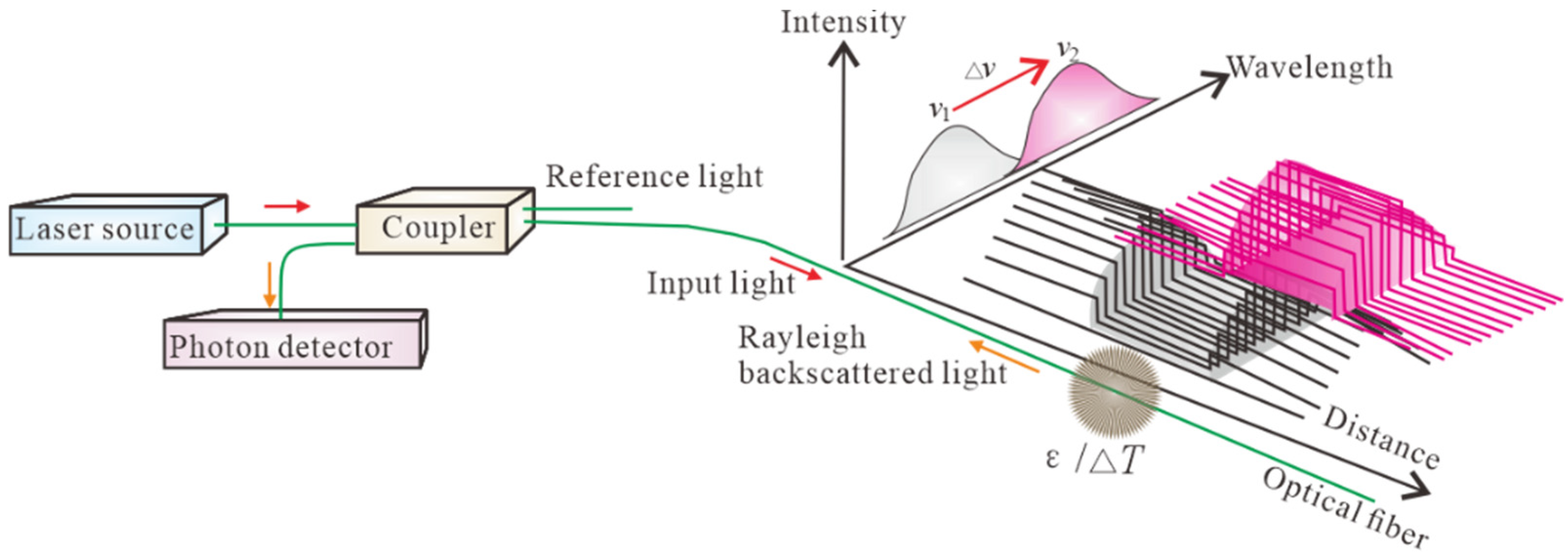
2.1. Theories of Soil Freezing and Strain Monitoring Principle of OFDR
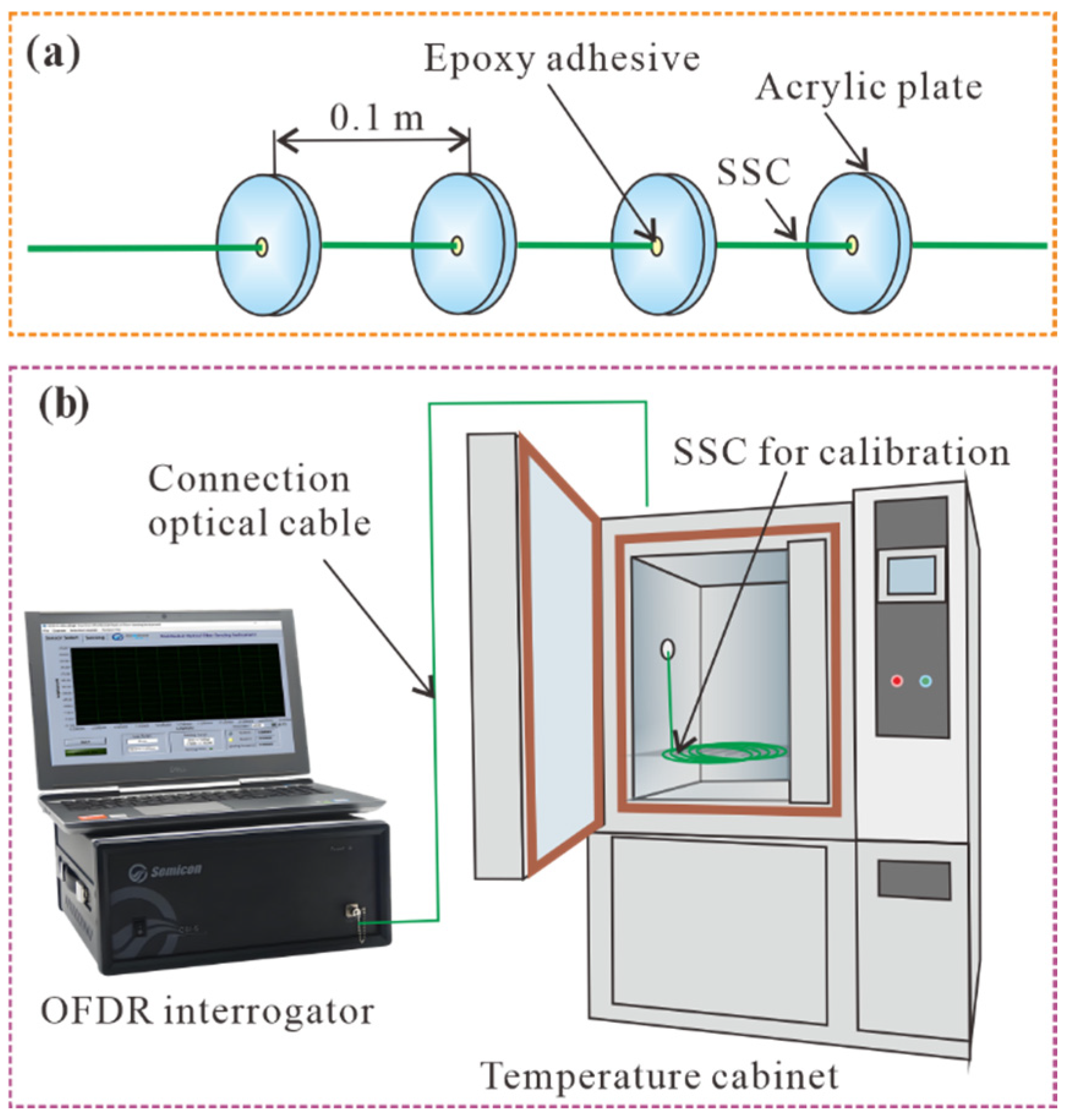
2.2. Sensor Calibration
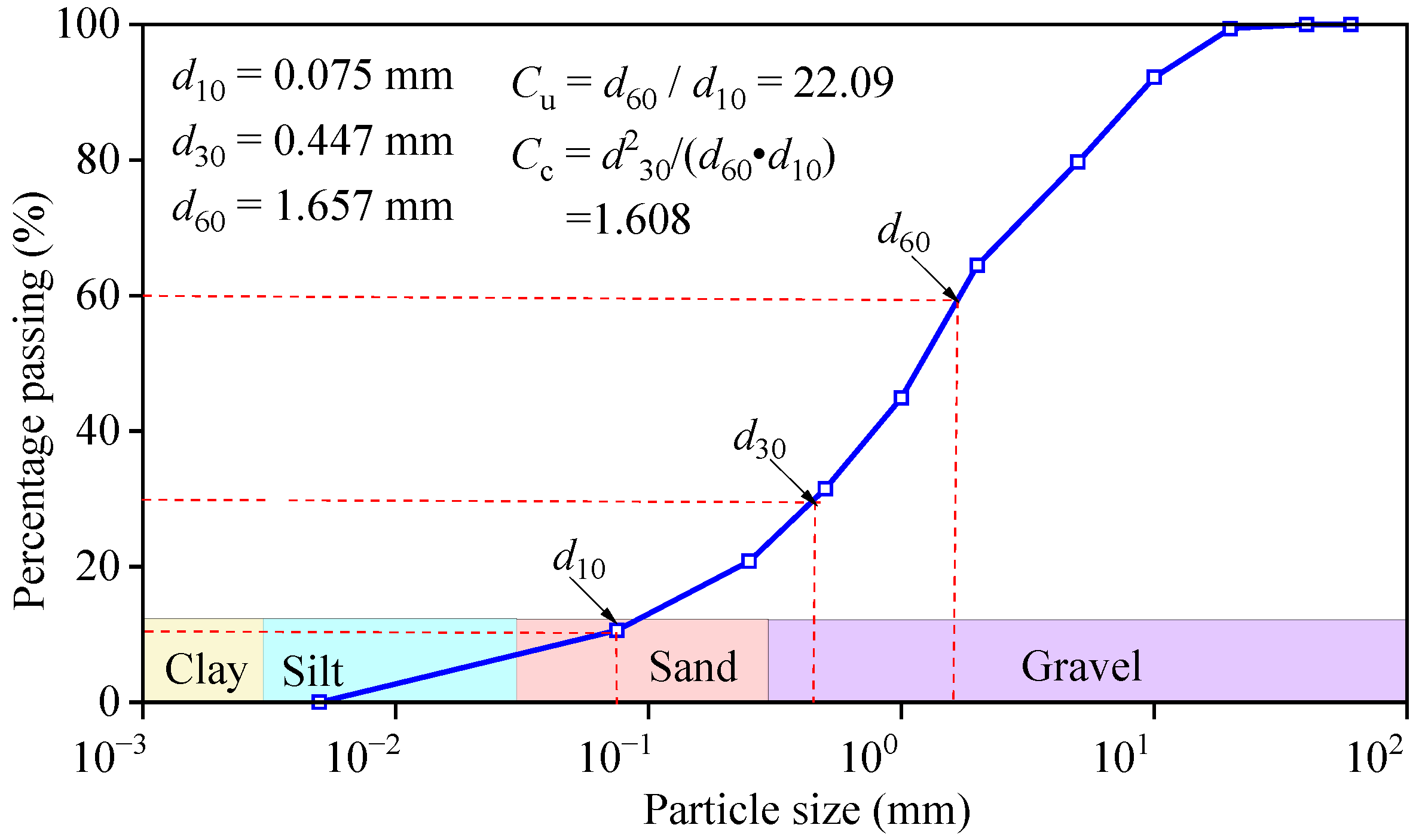
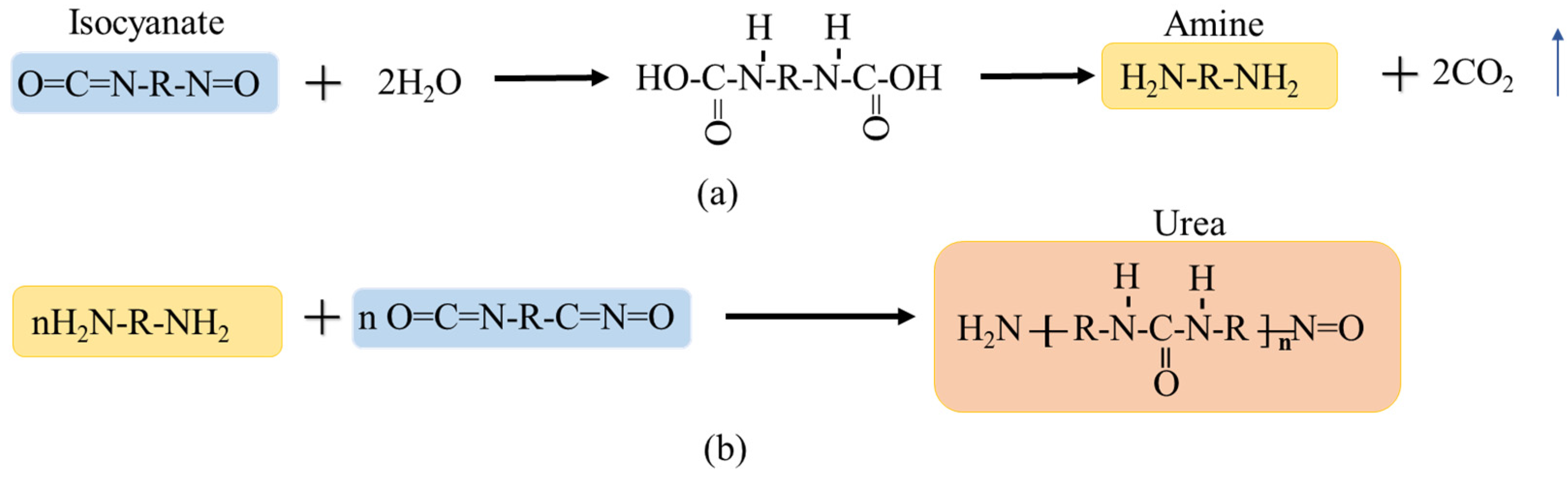
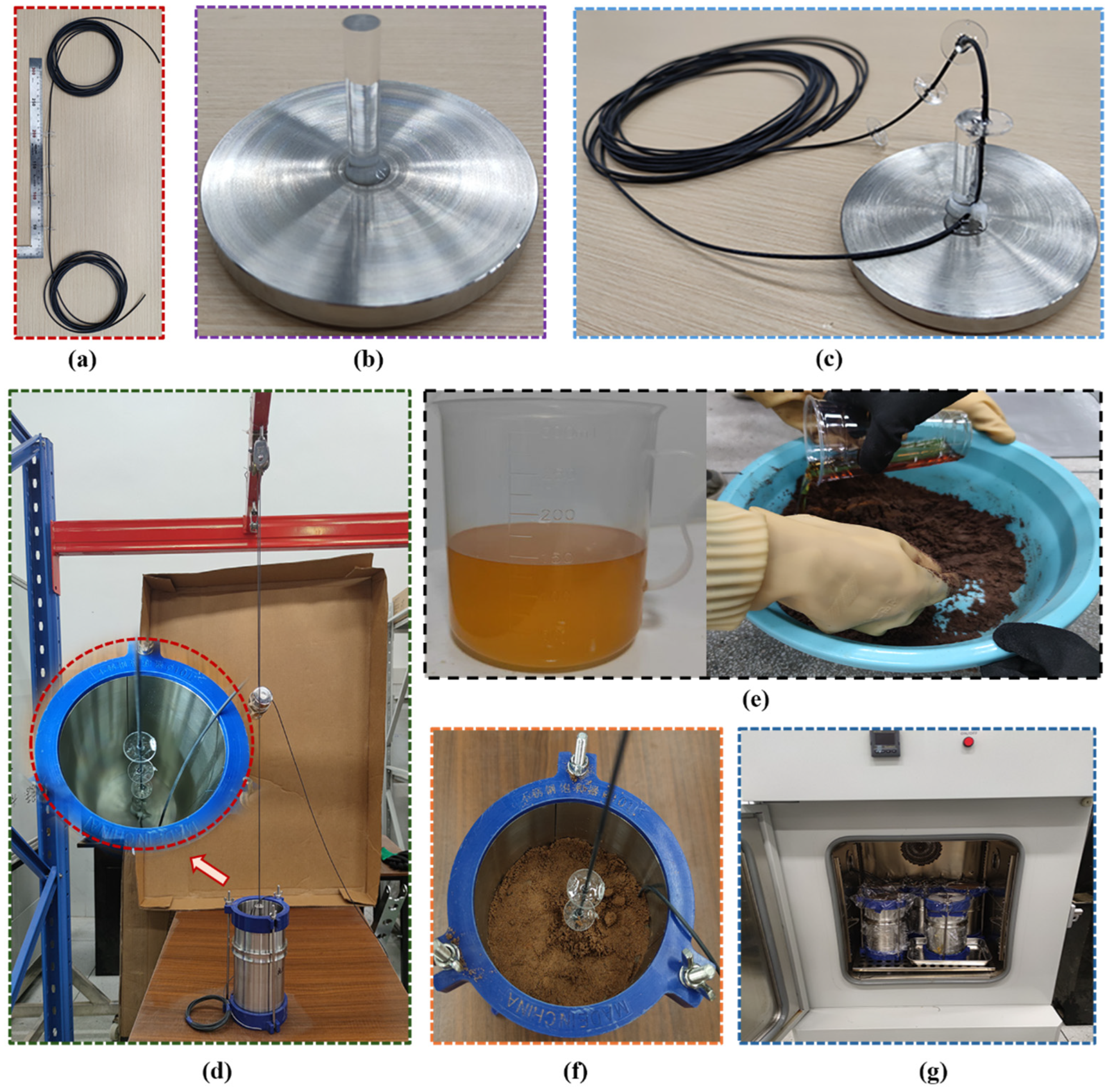
2.3. Experimental Materials and Procedures
3. Results and Discussion
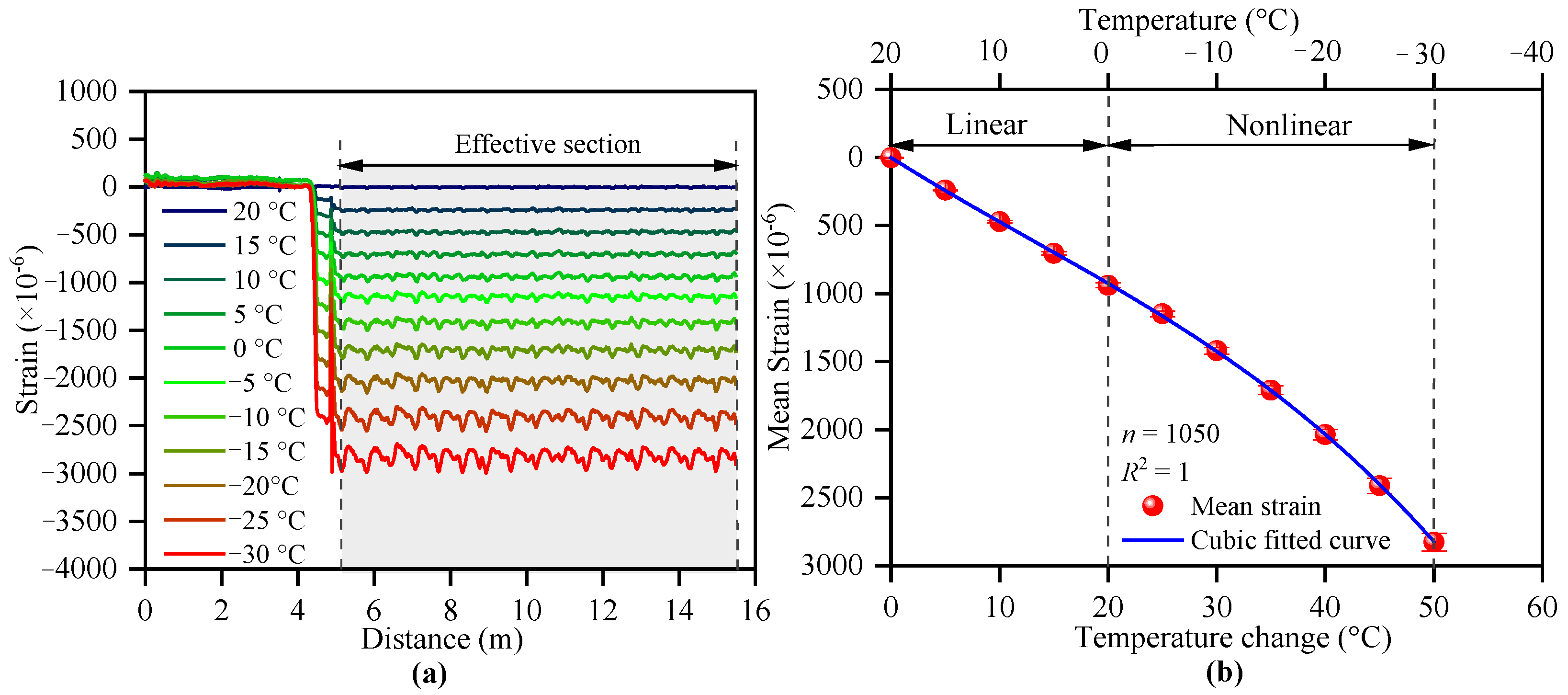
3.1. Temperature Compensation Calibrations of SSC
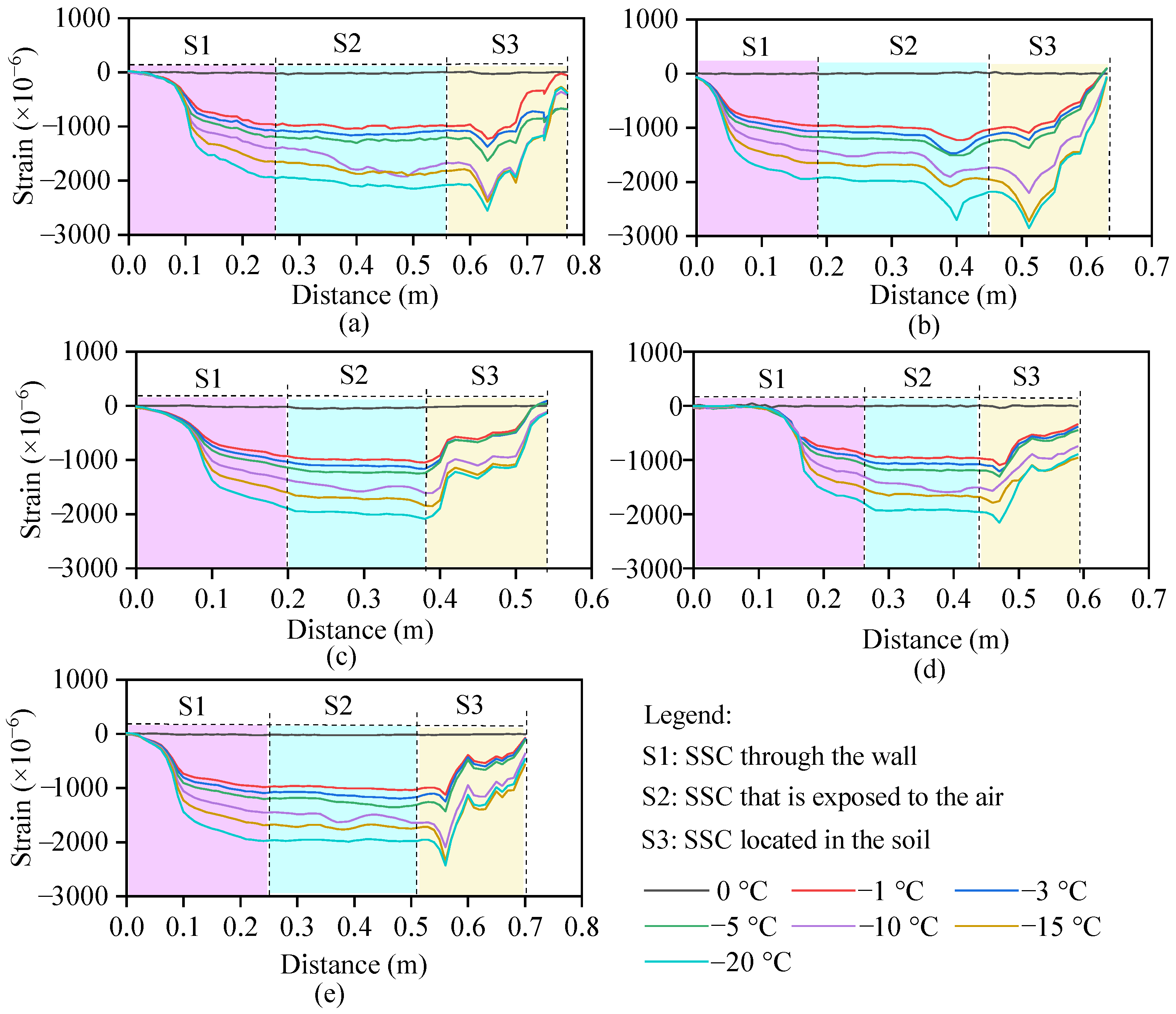
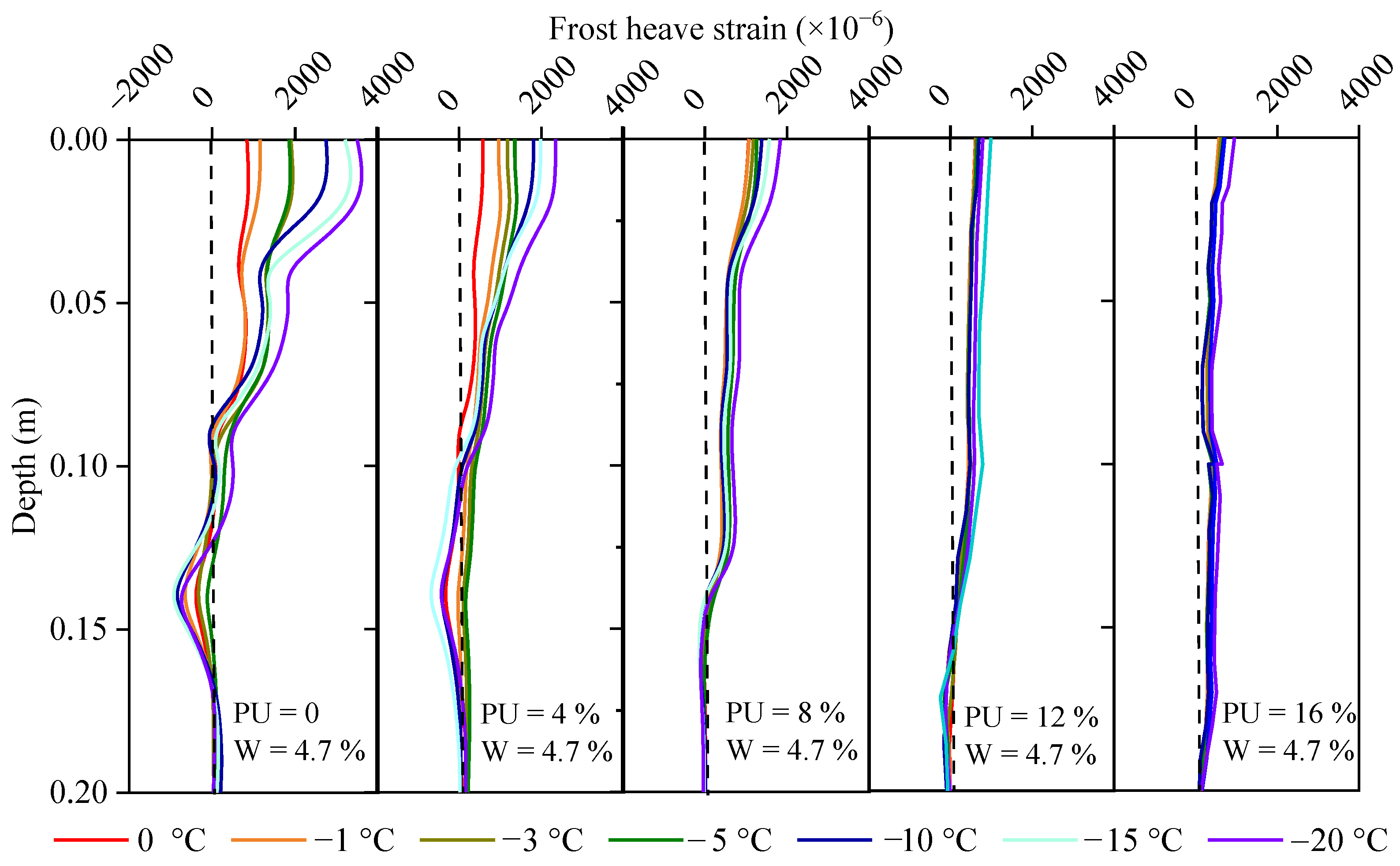
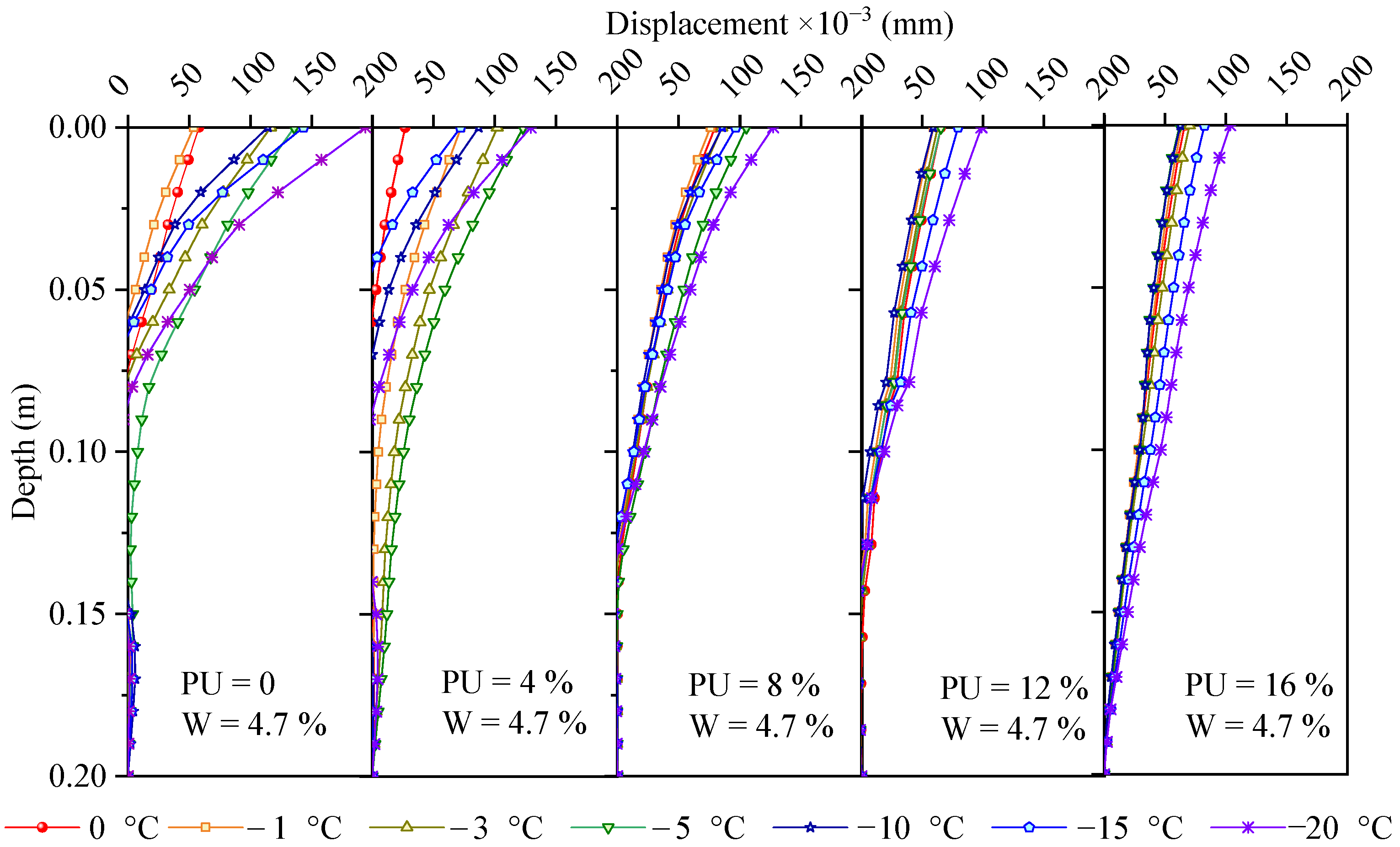
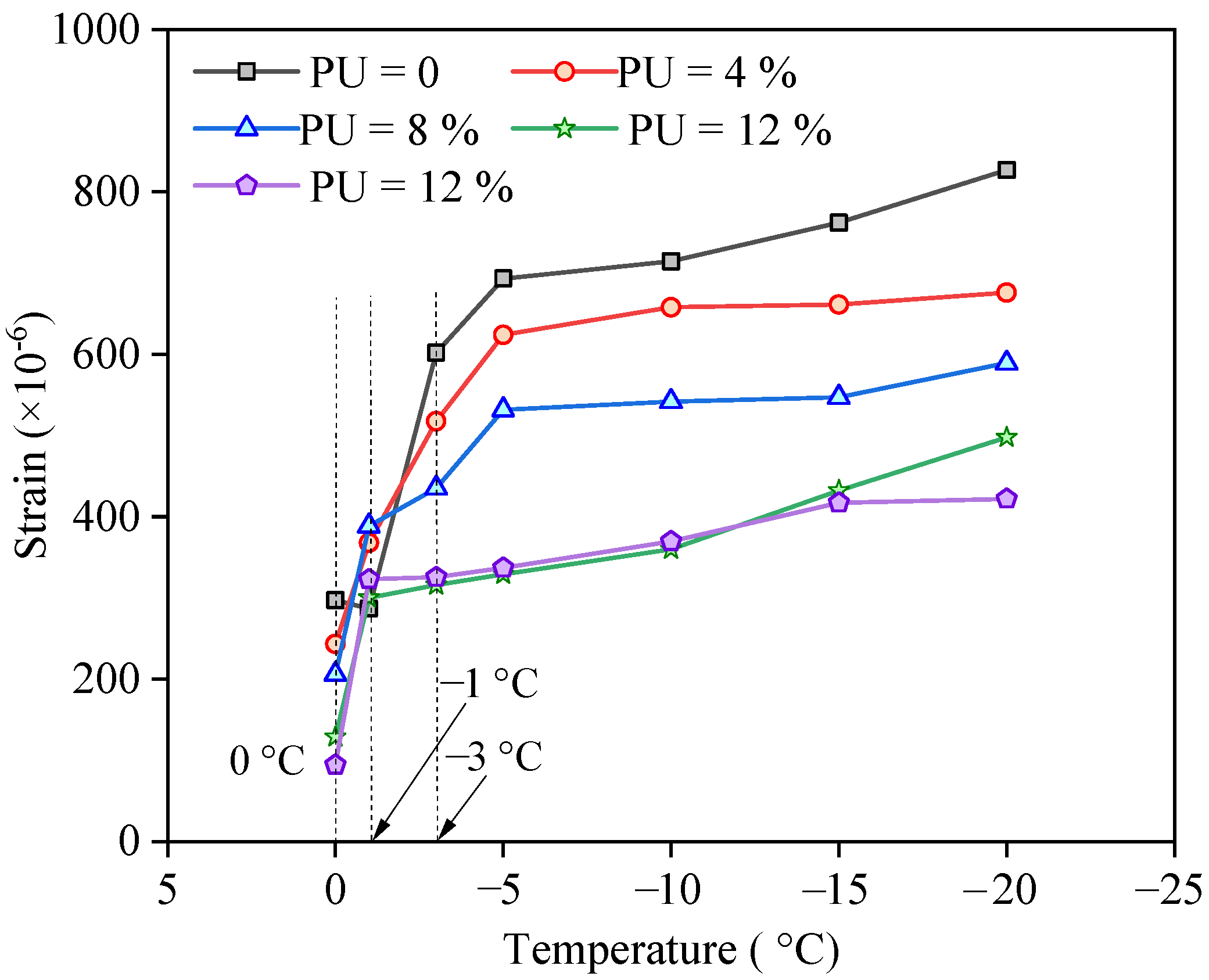
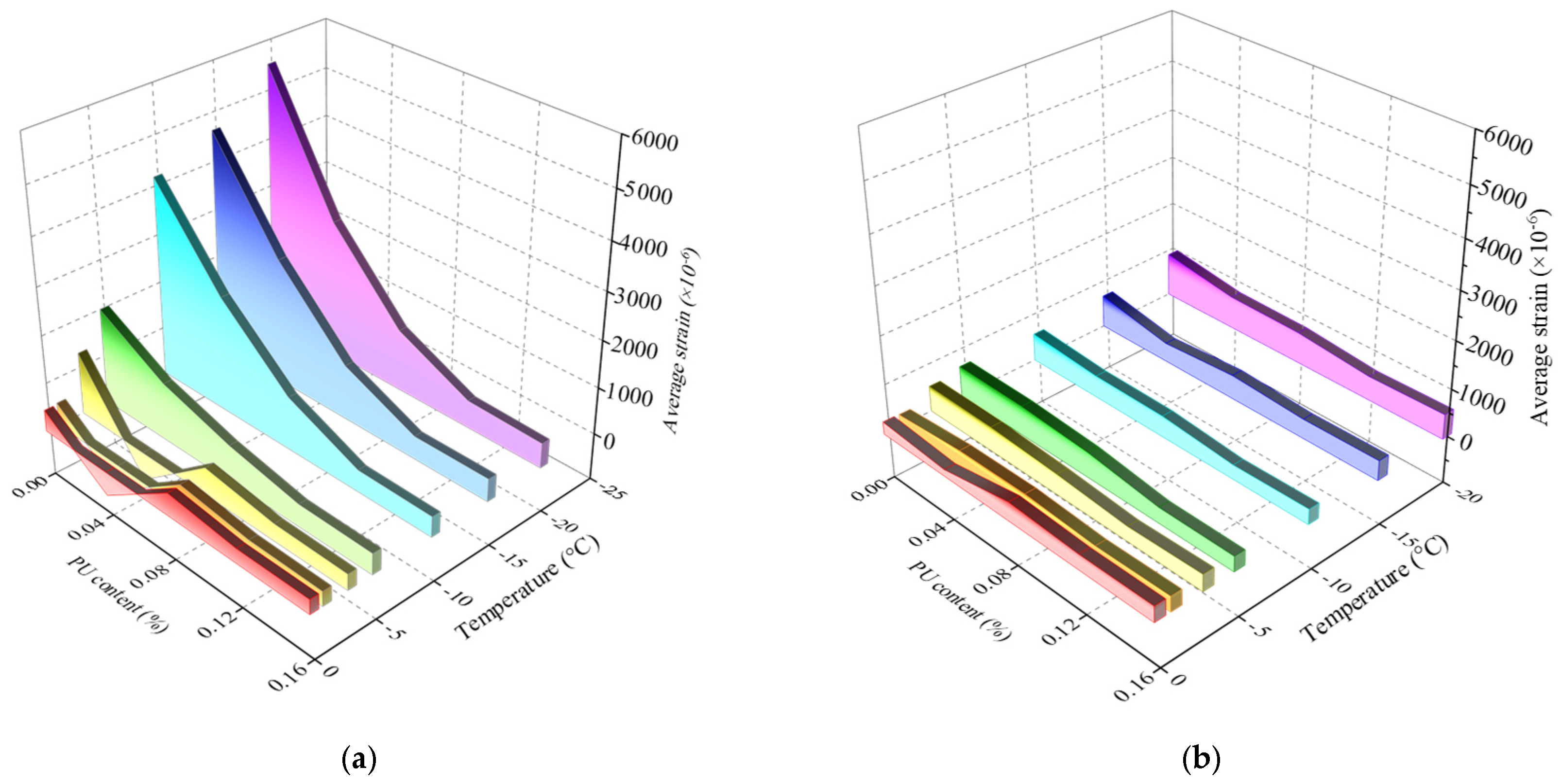
3.2. Frost Heave of PU-Reinforced Soil with Different Contents of PU
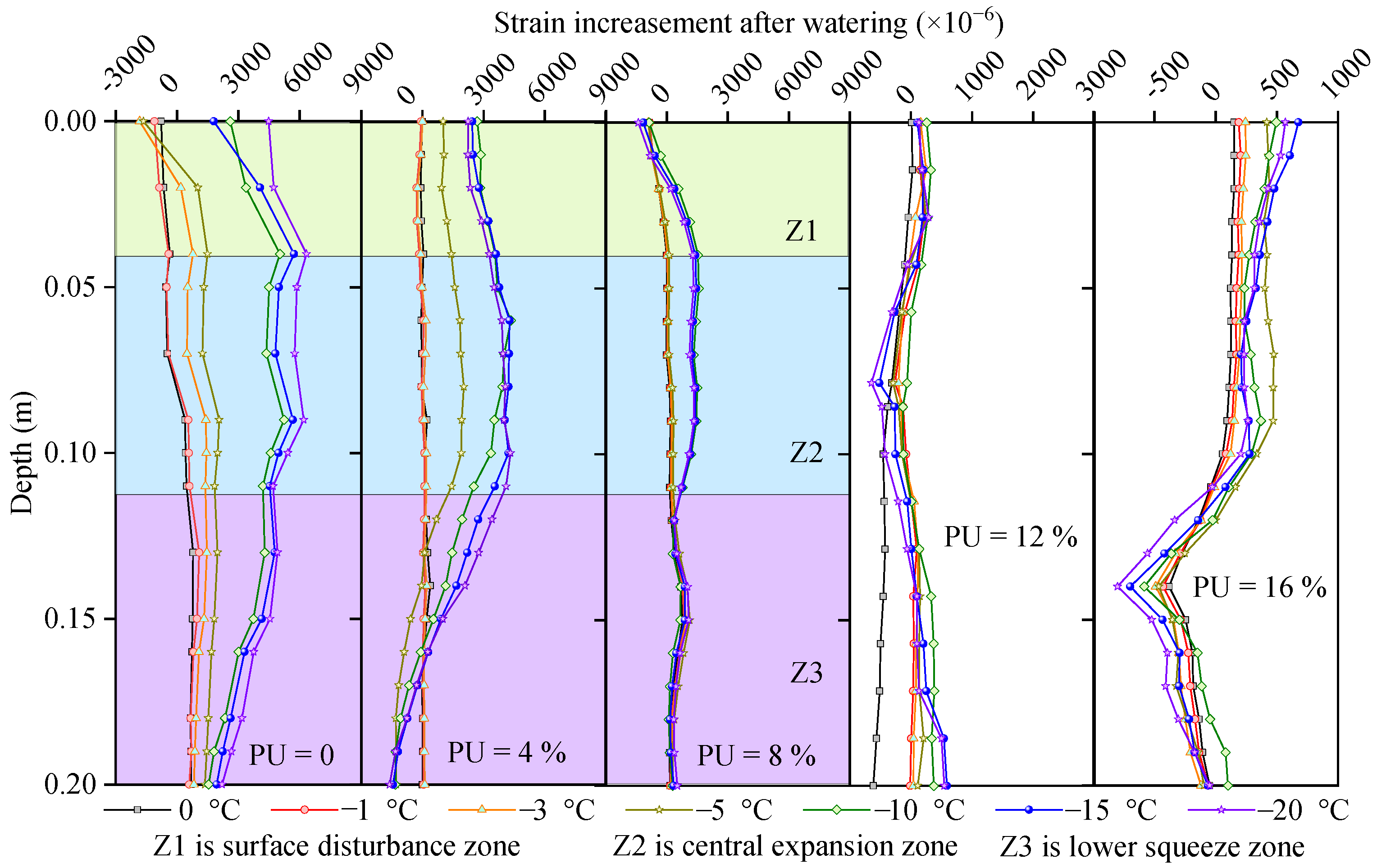
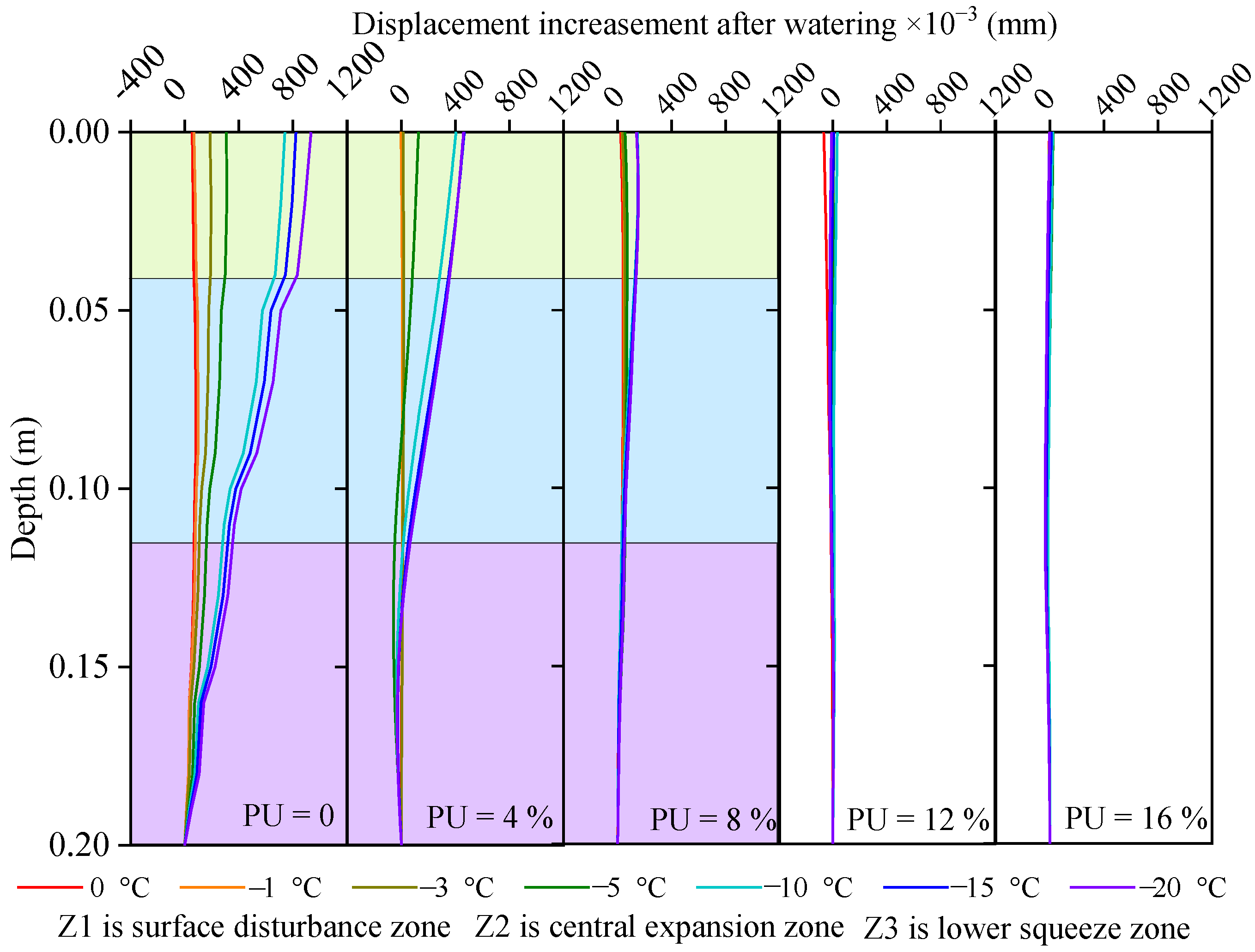
3.3. Influence of Adding Water on Frost Heave in PU-Reinforced Soil
4. Conclusions
Author Contributions
Funding
Data Availability Statement
Conflicts of Interest
Abbreviations
| EPS | Expanded polystyrene |
| FBG | Fiber Bragg grating |
| FOS | Fiber optic sensors |
| FWD | Falling Weight Deflectometer |
| GPR | Ground penetrating radar |
| OFDR | Optical frequency-domain reflectometry |
| PU | Polyurethane |
| SSC | Strain-sensing cable |
| XPS | Extruded polystyrene |
References
- Chen, H.; Gao, X.; Wang, Q. Research progress and prospect of frozen soil engineering disasters. Cold Reg. Sci. Technol. 2023, 212, 103901. [Google Scholar] [CrossRef]
- Wu, Z.; Chu, C.; Bi, J.; Wang, G.; Cao, W.; Lu, Y.; Sun, T.; Tai, B. Warming performance of a novel high-speed railway embankment in seasonally frozen ground regions. Constr. Build. Mater. 2024, 426, 136145. [Google Scholar] [CrossRef]
- Li, C.; Yang, L.; Luo, C.; Liu, H.; Wan, X. Frost heaving strain monitoring for lining structure in extreme cold and high-altitude area with FBG strain sensors. Measurement 2022, 196, 110918. [Google Scholar] [CrossRef]
- Cui, K.; Qin, X. Landslide risk assessment of frozen soil slope in Qinghai Tibet Plateau during spring thawing period under the coupling effect of moisture and heat. Nat. Hazard 2022, 115, 2399–2416. [Google Scholar] [CrossRef]
- Zhang, S.; Niu, F.; Wang, J.; Dong, T. Evaluation of damage probability of railway embankments in permafrost regions in Qinghai–Tibet Plateau. Eng. Geol. 2021, 284, 106027. [Google Scholar] [CrossRef]
- Wang, H.; Guo, C.; Wang, S.; Chu, X.; Zhang, J.; Wang, C.; Yue, L.; Wang, F. Insights into the thermal insulation capability of a new polyurethane polymer subgrade material: An in-situ field test on the Qinghai–Tibet highway. Transp. Geotech. 2024, 46, 101240. [Google Scholar] [CrossRef]
- Chen, L.; Lai, Y.; Fortier, D.; Harris, S.A. Impacts of snow cover on the pattern and velocity of air flow in air convection embankments of sub-Arctic regions. Renew. Energy 2022, 199, 1033–1046. [Google Scholar] [CrossRef]
- Zhang, Z.; Yu, Q.; Wang, J.; Wang, X.; Luo, X. Bidirectional convection mechanism and cooling performance of road embankment with a new duct-ventilated slope in permafrost regions. Cold Reg. Sci. Technol. 2021, 191, 103360. [Google Scholar] [CrossRef]
- Qian, J.; Yu, Q.H.; Wu, Q.B.; You, Y.H.; Guo, L. Analysis of asymmetric temperature fields for the duct-ventilated embankment of highway in permafrost regions. Cold Reg. Sci. Technol. 2016, 132, 1–6. [Google Scholar] [CrossRef]
- Niu, F.; Jiang, H.; Su, W.; Jiang, W.; He, J. Performance degradation of polymer material under freeze-thaw cycles: A case study of extruded polystyrene board. Polym. Test. 2021, 96, 107067. [Google Scholar] [CrossRef]
- Guo, F.; Shi, H.; Cheng, M.; Gao, W.; Yang, H.; Miao, Q. A Study of the Insulation Mechanism and Anti-Frost Heave Effects of Polystyrene Boards in Seasonal Frozen Soil. Water 2018, 10, 979. [Google Scholar] [CrossRef]
- Zhang, K.; Ren, J.; Du, W.; Luo, L.; Liu, J.; Deng, S. Thermal insulation performance and dynamic response of anti-freeze subgrade of high-speed railway in seasonally frozen regions. Transp. Geotech. 2023, 42, 101081. [Google Scholar] [CrossRef]
- Wang, C.; Diao, Y.; Guo, C.; Wu, H.; Guan, H.; Qin, L.; Chu, X.; Du, X. Experimental study on the mechanical behaviour of silty soil stabilized with polyurethane. Constr. Build. Mater. 2024, 416, 135251. [Google Scholar] [CrossRef]
- Zhou, X.; Zhang, Y.; Li, L.; Zhao, G.; Xu, S. Adhesive performance and impermeability mechanism of loess embankment using caster oil-based polyurethane reinforce. Constr. Build. Mater. 2023, 364, 130006. [Google Scholar] [CrossRef]
- Somarathna, H.M.C.C.; Raman, S.N.; Mohotti, D.; Mutalib, A.A.; Badri, K.H. The use of polyurethane for structural and infrastructural engineering applications: A state-of-the-art review. Constr. Build. Mater. 2018, 190, 995–1014. [Google Scholar] [CrossRef]
- Song, J.; Johnson, D.W.; Huang, J.; Saslow, S. Water reactive polyurethane grouting for deep vadose zone contaminant immobilization. Eng. Geol. 2025, 347, 107945. [Google Scholar] [CrossRef]
- Barrias, A.; Casas, J.R.; Villalba, S. A Review of Distributed Optical Fiber Sensors for Civil Engineering Applications. Sensors 2016, 16, 748. [Google Scholar] [CrossRef] [PubMed]
- Meng, S.; Sun, Y.; Wang, M. Fiber Bragg grating sensors for subgrade deformation monitoring in seasonally frozen regions. Struct. Control Health Monit. 2019, 27, 2472. [Google Scholar] [CrossRef]
- Wu, B.; Zhu, H.H.; Liu, T.X.; Wang, D.Y.; Hu, L.L.; Li, B. Experimental investigation of interfacial behavior of fiber optic cables embedded in frozen soil for in-situ deformation monitoring. Measurement 2023, 215, 112843. [Google Scholar] [CrossRef]
- Little, J.D.; Sandall, H.; Walegur, M.T.; Nelson, F.E. Application of differential global positioning systems to monitor frost heave and thaw settlement in tundra environments. Permafr. Periglac. Process. 2003, 14, 349–357. [Google Scholar] [CrossRef]
- Grygierek, M.; Sternik, K.J. Identification of Pavement Model Parameters in the Area of Discontinuous Surface Deformation Based on FWD Tests. Int. J. Civ. Eng. 2020, 19, 265–282. [Google Scholar] [CrossRef]
- Qi, S.; Li, G.; Chen, D.; Chai, M.; Zhou, Y.; Du, Q.; Cao, Y.; Tang, L.; Jia, H. Damage properties of the block-stone embankment in the Qinghai–Tibet highway using ground-penetrating radar imagery. Remote Sens. 2022, 14, 2950. [Google Scholar] [CrossRef]
- Yu, G.; Cheng, H.R.; Jiang, H.T.; Liu, G.D.; Liu, B.G.; Chen, F.D.; Lu, B.H. Research on the OFDR strain measurement method based on similarity features of dual-segment RSS. Opt. Express 2024, 32, 26640–26652. [Google Scholar] [CrossRef]
- Xue, Y.; Dai, W.; Wang, X.; Li, C.; He, J. Development of OFDR-based inclination sensor for deformation measurement of foundation pile. Measurement 2024, 231, 114618. [Google Scholar] [CrossRef]
- Xu, J.J.; Tang, C.S.; Yang, Y.; Zeng, Z.J.; Li, L.; Cheng, Q.; Zhang, X.Y.; Shi, B. Monitoring soil cracking using OFDR-based distributed temperature sensing framework. Geoderma 2024, 452, 117090. [Google Scholar] [CrossRef]
- Wu, D.; Ma, D.; Wang, C.; Liu, H.; Liu, X. Frost heave deformation and mechanism of canal with high groundwater table in seasonally frozen region. Environ. Earth Sci. 2023, 82, 583. [Google Scholar] [CrossRef]
- McKenzie, J.M.; Voss, C.I.; Siegel, D.I. Groundwater flow with energy transport and water–ice phase change: Numerical simulations, benchmarks, and application to freezing in peat bogs. Adv. Water Resour. 2007, 30, 966–983. [Google Scholar] [CrossRef]
- Tai, B.; Liu, J.; Wang, T.; Shen, Y.; Li, X. Numerical modelling of anti-frost heave measures of high-speed railway subgrade in cold regions. Cold Reg. Sci. Technol. 2017, 141, 28–35. [Google Scholar] [CrossRef]
- Xu, J.J.; Tang, C.S.; Cheng, Q.; Vahedifard, F.; Liu, B.; Shi, B. Monitoring and early detection of soil desiccation cracking using distributed fibre optical sensing. Géotechnique 2024, 74, 431–442. [Google Scholar] [CrossRef]
- Kishida, K.; Yamauchi, Y.; Guzik, A. Study of optical fibers strain-temperature sensitivities using hybrid Brillouin-Rayleigh system. Photonic Sens. 2013, 4, 1–11. [Google Scholar] [CrossRef]
- You, R.; Ren, L.; Song, G. A novel fiber Bragg grating (FBG) soil strain sensor. Measurement 2019, 139, 85–91. [Google Scholar] [CrossRef]
- Cao, D.F.; Zhu, H.H.; Guo, C.C.; Wu, J.H.; Fatahi, B. Investigating the hydro-mechanical properties of calcareous sand foundations using distributed fiber optic sensing. Eng. Geol. 2021, 295, 106440. [Google Scholar] [CrossRef]
- Cao, D.F.; Shukla, S.K.; Yang, L.Q.; Guo, C.C.; Wu, J.H.; Wang, F.M. Responses of calcareous sand foundations to variations of groundwater table and applied loads. J. Rock Mech. Geotech. Eng. 2021, 14, 1266–1279. [Google Scholar] [CrossRef]
- Huang, J.; Kogbara, R.B.; Hariharan, N.; Masad, E.A.; Little, D.N. A state-of-the-art review of polymers used in soil stabilization. Constr. Build. Mater. 2021, 305, 124685. [Google Scholar] [CrossRef]
- Zhang, T.; Cao, D.; Guo, C.; Wang, F. Mechanical properties and reinforcement mechanism study of sulfate saline soil solidified by polyurethane and water glass. Case Stud. Constr. Mater. 2025, 22, e04328. [Google Scholar] [CrossRef]
- Cao, D.; Fan, L.; Huang, R.; Guo, C. Investigation of the Mechanical Properties of Reinforced Calcareous Sand Using a Permeable Polyurethane Polymer Adhesive. Materials 2024, 17, 5277. [Google Scholar] [CrossRef] [PubMed]
- Shen, M.; Zhou, Z.; Ma, W.; Wen, Z.; Liu, F.; Zheng, J. A new measurement method of volumetric frost heave deformation of freezing soil under complex pressure and constraint conditions. Measurement 2024, 231, 114627. [Google Scholar] [CrossRef]
- Teng, J.; Kou, J.; Yan, X.; Zhang, S.; Sheng, D. Parameterization of soil freezing characteristic curve for unsaturated soils. Cold Reg. Sci. Technol. 2020, 170, 202928. [Google Scholar] [CrossRef]
- Cao, D.; Zhu, H.H.; Zhu, W.; Liu, Z.; Wang, H.; Wu, J. Frozen and unfrozen moisture content estimation in coral calcareous sand during artificial freezing. Eng. Geol. 2024, 343, 107770. [Google Scholar] [CrossRef]
- Teng, J.; Zhong, Y.; Zhang, S.; Sheng, D. A mathematic model for the soil freezing characteristic curve: The roles of adsorption and capillarity. Cold Reg. Sci. Technol. 2021, 181, 103178. [Google Scholar] [CrossRef]
- Chen, H.; Du, H.; Guo, H.T.; Kong, F.S.; Zhang, Z.Q. Freezing strain characteristics and mechanisms of unsaturated frozen soil: Analysis of matric suction and water–ice phase change. Acta Geotech. 2024, 19, 7243–7260. [Google Scholar] [CrossRef]
- Wang, H.; Cao, D.F.; Guo, C.C.; Wang, F.M.; Zhu, W. Thermal-hydro performance research of the ice-supported frozen soil roadbed after reinforcing using polyurethane. Energy 2025, 338, 138919. [Google Scholar] [CrossRef]
- Liu, T.X.; Zhu, H.H.; Li, Q.; Wu, B.; Li, H.J.; Hu, L.L.; Yan, D.M. Experimental study on progressive interfacial methanical behaviors using fiber optic sensing cable in frozen soil. J. Rock Mech. Geotech. Eng. 2025, 17, 1828–1846. [Google Scholar] [CrossRef]
- Wu, B.; Zhu, H.H.; Guo, X.H.; Wang, D.Y.; Wang, C.; Meguid, M.A. Experimental investigation of thermo-hydro-mechanical interactions in frozen soil using an integrated monitoring system frozen soil using an integrated monitoring system. Eng. Geol. 2025, 353, 108136. [Google Scholar] [CrossRef]
- Zhang, Q.; Liu, Y.; Dai, F. A frost heave pressure model for fractured rocks subjected to repeated freeze-thaw deterioration. Eng. Geol. 2024, 337, 107587. [Google Scholar] [CrossRef]
- Hao, X.; Ma, W.; Feng, W.; Wen, Z.; Zhang, L.; Chen, S. Investigation on the frost heave-induced pressure and hydro-thermal processes in freezing soil under rigid constraint and hydraulic pressure. Eng. Geol. 2023, 323, 107238. [Google Scholar] [CrossRef]
- Lu, X.; Zhang, F.; Qin, W.; Zheng, H.; Feng, D. Experimental investigation on frost heave characteristics of saturated clay soil under different stress levels and temperature gradients. Cold Reg. Sci. Technol. 2021, 192, 103379. [Google Scholar] [CrossRef]
- Wang, P.; Zhou, G. Frost-heaving pressure in geotechnical engineering materials during freezing process. Int. J. Min. Sci. Technol. 2018, 28, 287–296. [Google Scholar] [CrossRef]



| Component | SiO2 | Al2O3 | CaO | Fe2O3 | K2O | MgO | Others |
|---|---|---|---|---|---|---|---|
| Percent (%) | 74.63 | 9.74 | 7.03 | 2.99 | 2.55 | 1.44 | 1.62 |
| A | B | C | D | ||||
|---|---|---|---|---|---|---|---|
| Value | Standard Error | Value | Standard Error | Value | Standard Error | Value | Standard Error |
| −926.43 | 4.15 | 46.51 | 0.47 | −0.23 | 0.02 | 0.01 | 0 |
| PU = 4% | PU = 8% | PU = 12% | PU = 16% | ||||
|---|---|---|---|---|---|---|---|
| Strain Reduction | Displacement Reduction | Strain Reduction | Displacement Reduction | Strain Reduction | Displacement Reduction | Strain Reduction | Displacement Reduction |
| 32.77% | 33.27% | 34.36% | 47.43 | 49.10% | 71.65% | 46.61% | 72.77% |
| PU Content | PU = 4% | PU = 8% | PU = 12% | PU = 16% |
|---|---|---|---|---|
| Frost-heave displacement increasement percent after watering | 49.34% | 14.93% | 7.48% | 0.16% |
Disclaimer/Publisher’s Note: The statements, opinions and data contained in all publications are solely those of the individual author(s) and contributor(s) and not of MDPI and/or the editor(s). MDPI and/or the editor(s) disclaim responsibility for any injury to people or property resulting from any ideas, methods, instructions or products referred to in the content. |
© 2025 by the authors. Licensee MDPI, Basel, Switzerland. This article is an open access article distributed under the terms and conditions of the Creative Commons Attribution (CC BY) license (https://creativecommons.org/licenses/by/4.0/).
Share and Cite
Li, J.; Cao, D. Research on the Frost-Heave Feature of Roadbed Soil Reinforced by Polyurethane Using Distributed Fiber-Optic Sensing. Polymers 2025, 17, 3269. https://doi.org/10.3390/polym17243269
Li J, Cao D. Research on the Frost-Heave Feature of Roadbed Soil Reinforced by Polyurethane Using Distributed Fiber-Optic Sensing. Polymers. 2025; 17(24):3269. https://doi.org/10.3390/polym17243269
Chicago/Turabian StyleLi, Jinyong, and Dingfeng Cao. 2025. "Research on the Frost-Heave Feature of Roadbed Soil Reinforced by Polyurethane Using Distributed Fiber-Optic Sensing" Polymers 17, no. 24: 3269. https://doi.org/10.3390/polym17243269
APA StyleLi, J., & Cao, D. (2025). Research on the Frost-Heave Feature of Roadbed Soil Reinforced by Polyurethane Using Distributed Fiber-Optic Sensing. Polymers, 17(24), 3269. https://doi.org/10.3390/polym17243269