A Novel Approach of Promoting Adhesion of Reinforcing Cord to Elastomers by Plasma Polymerization


Abstract
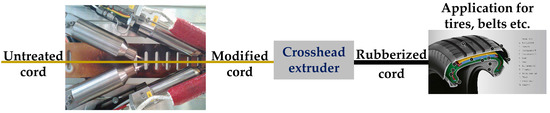
1. Introduction
2. Materials and Methods
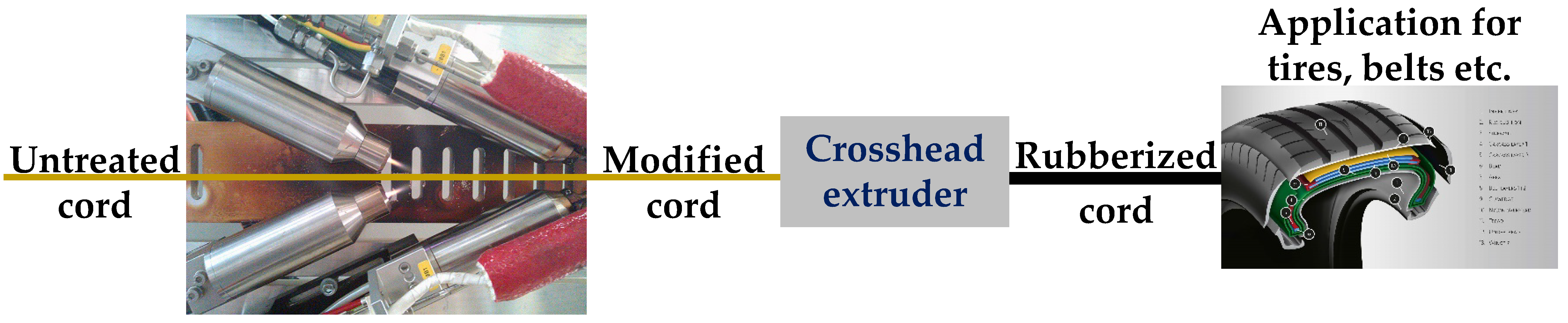
- Plasma treatment (with precursor)
- Dipping of the activated cord with the coupling agent
- Controlled drying of the dipped cord
- Co-vulcanization of dipped cord and rubber
- Evaporation temperature: 110 °C
- Pre-drying of cord: no
- Flow rate (FR): 300 g/h, 400 g/h
- Ionization gas (ION): air, nitrogen
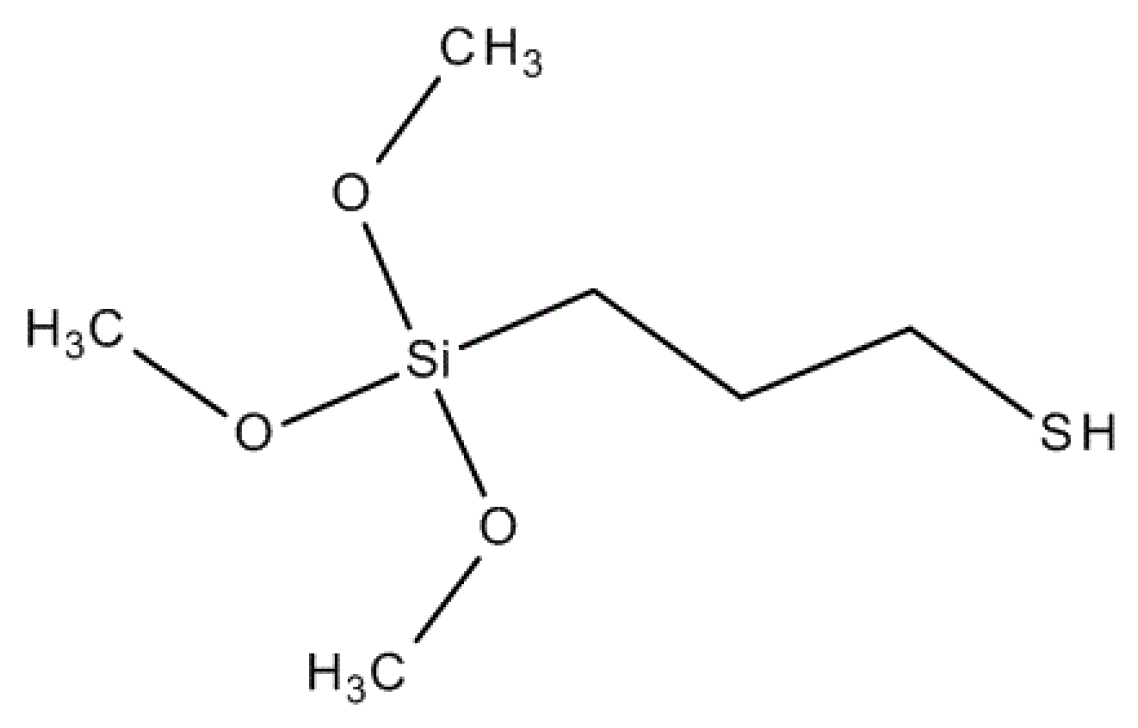
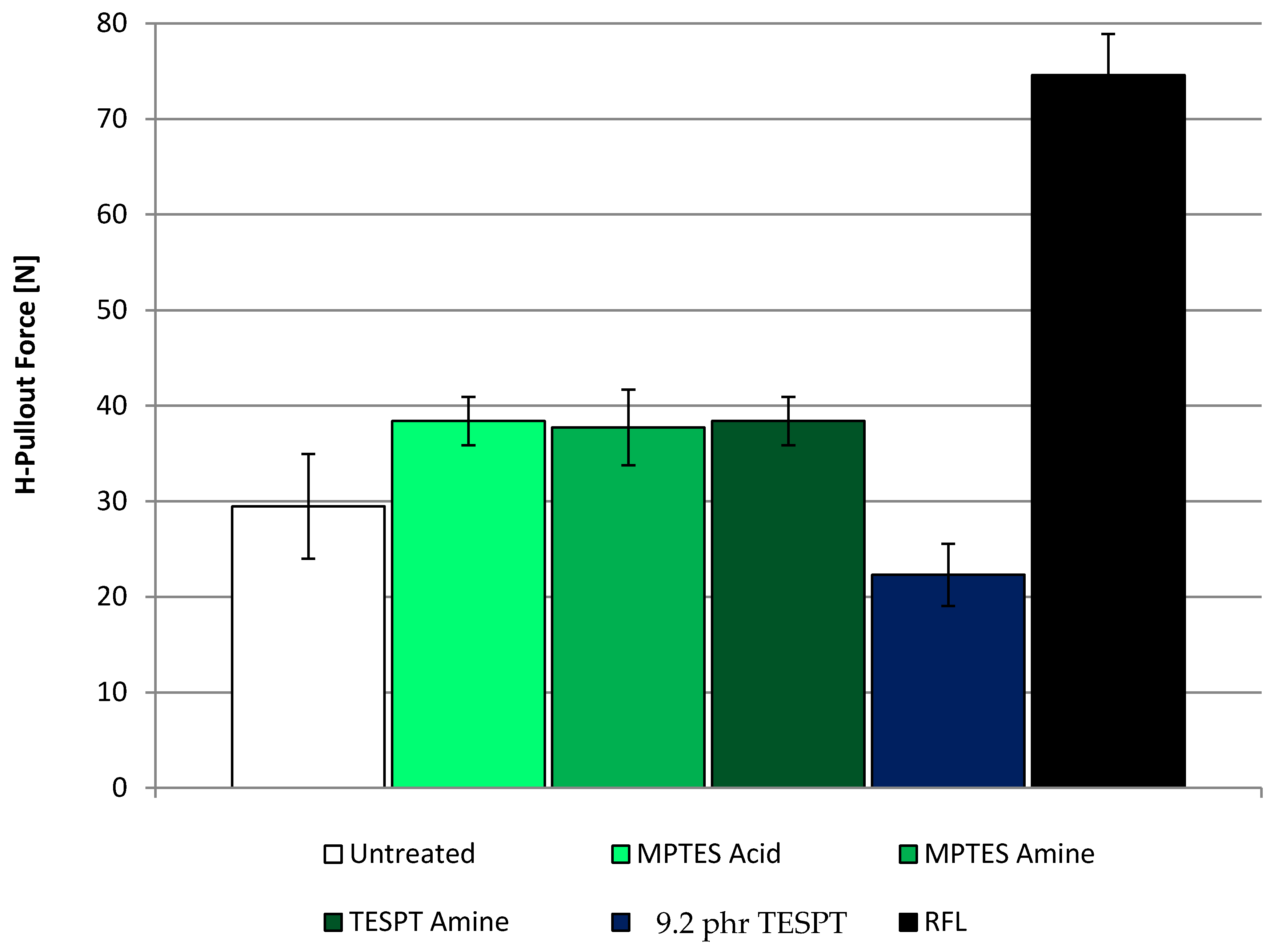
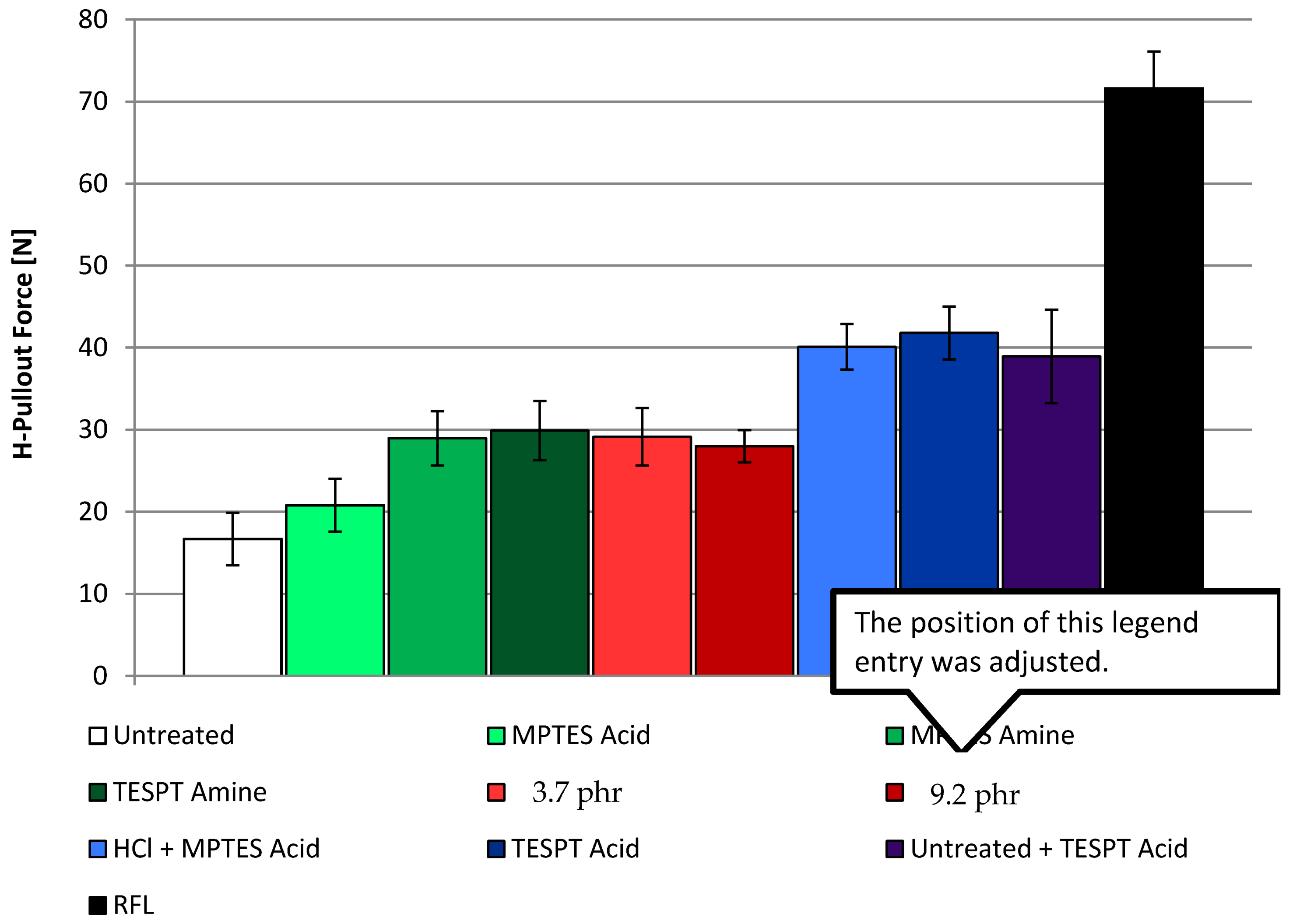
- Incorporation of the coupling agent directly into the rubber as an ingredient of the compound. This was done on a two-roll-mill using the reference compound given in Table 2. As the required amount of coupling agent for a successful cord-to-rubber bonding was unknown, two concentration levels were used: 3.7 and 9.2 parts per hundred rubber (phr). A disadvantage of this method is that the silanization process has to occur in the rubber phase during vulcanization: ethanol as side product is generated and cannot evaporate under these circumstances. This may cause porosity later on and may even affect the adhesion values.
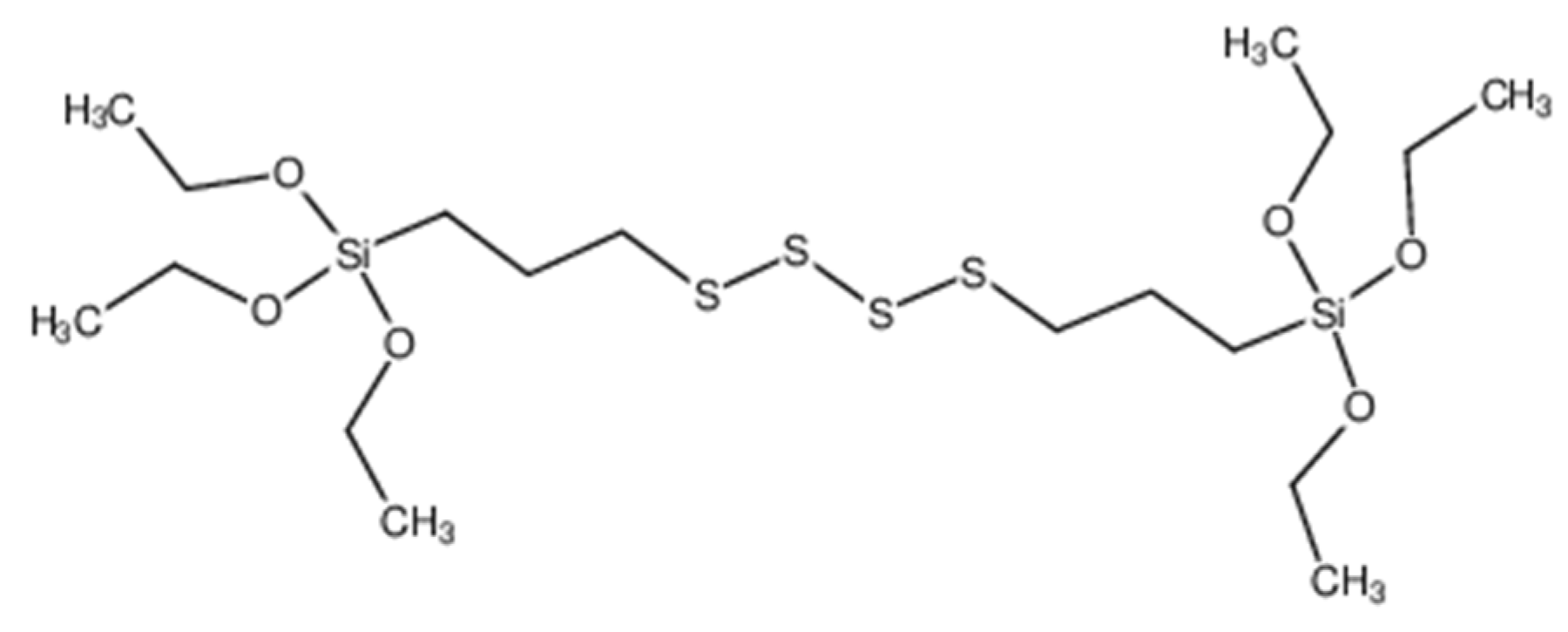
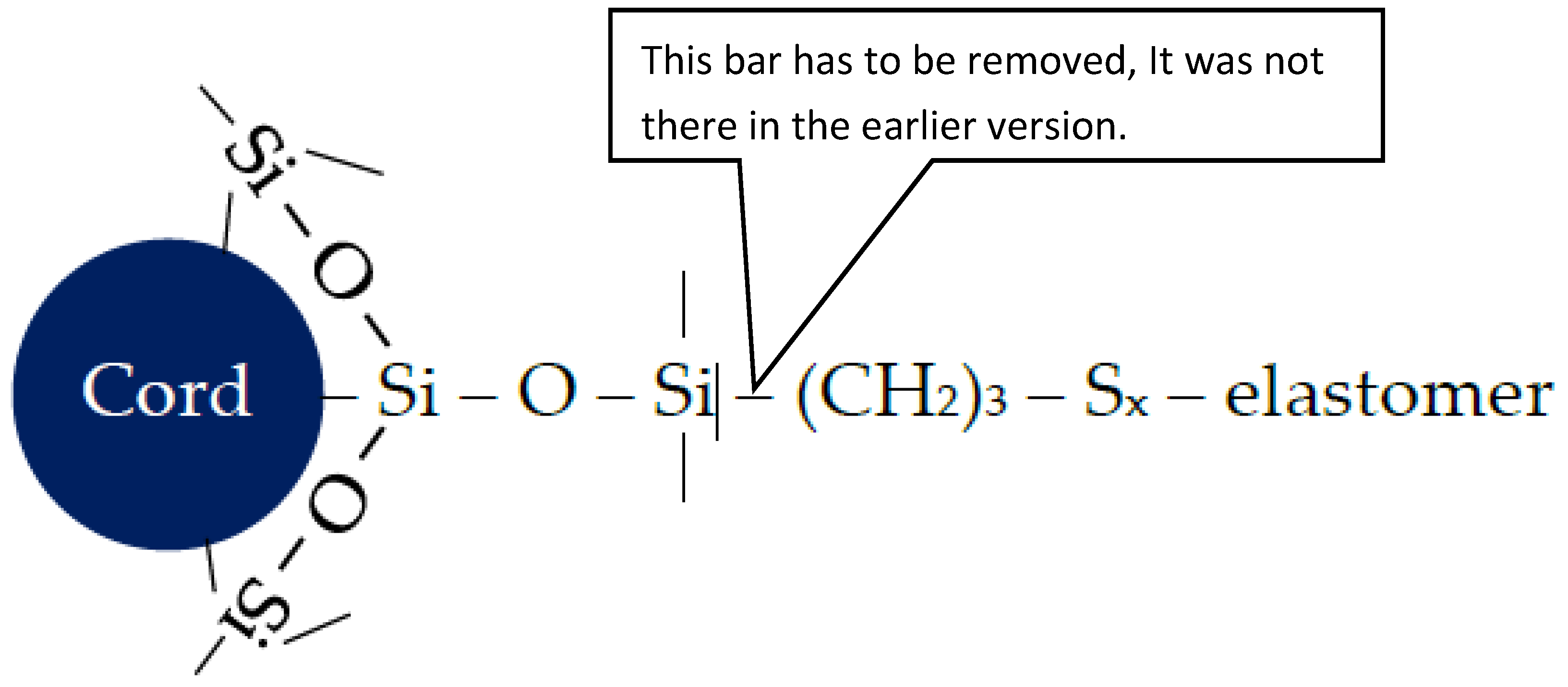
- A dipping bath containing the coupling agent was used to deposit the latter onto the TEOS coated cord. Subsequently, after the dipping step a drying step in an oven was required. While drying the cord, the silanization reaction can take place and ethanol as reaction byproduct can easily evaporate. The previously mentioned disadvantage of having ethanol residues trapped in the rubber is, therefore, avoided. Afterwards, the so-prepared cord was vulcanized together with the unmodified reference rubber compound given in Table 2. The initial dipping was done with the Bath I composition, which was prepared according to the recipe shown in Table 3. As buffer, either acetic acid or triethylamine were used, as the entire process would run very slow under pH-neutral conditions. The process is sensitive to the concentration of the coupling agent, as high concentrations can cause TESPT oligomerization instead of a reaction with the silanol groups on the cord surface. The dipping time was 60 minutes at room temperature in a closed embodiment.
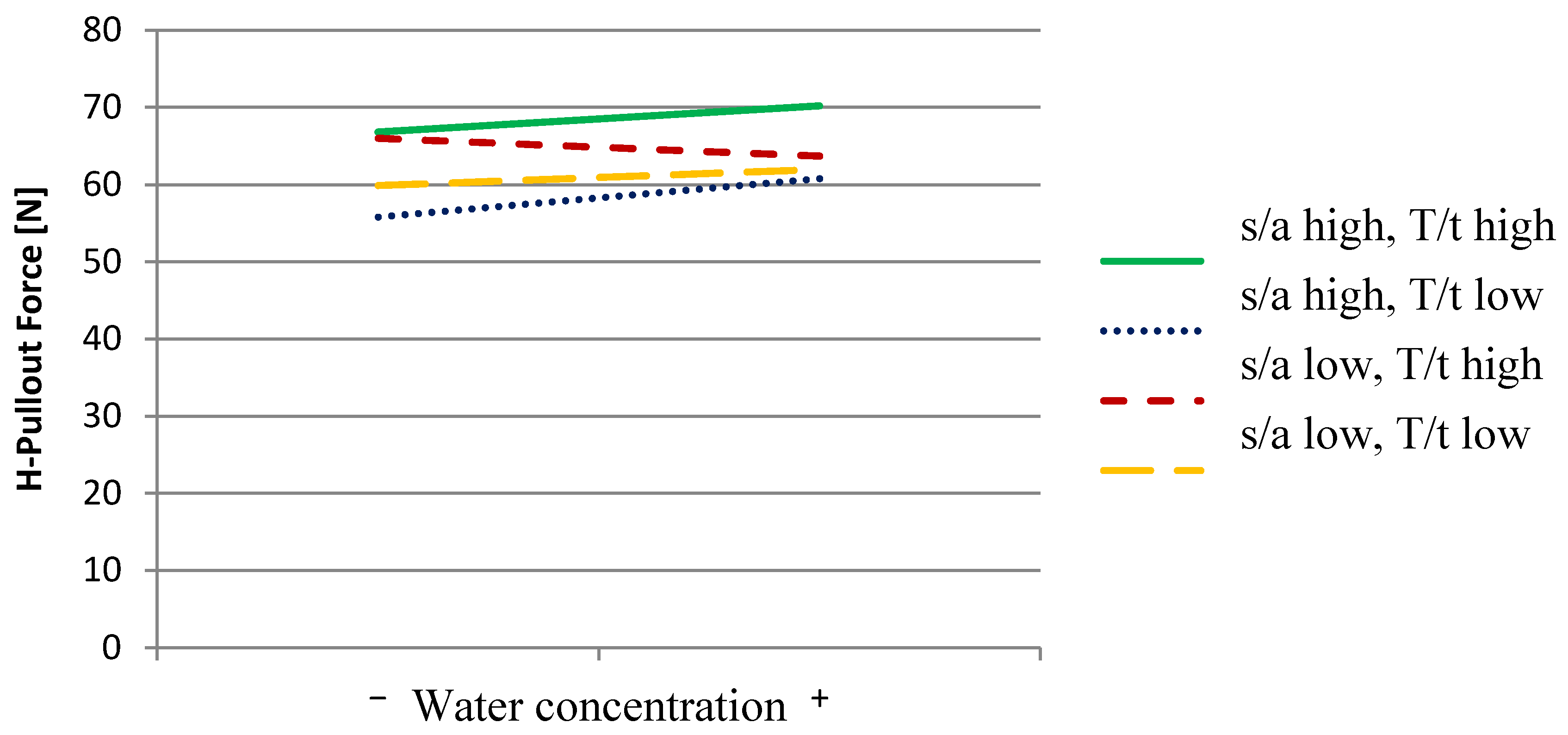
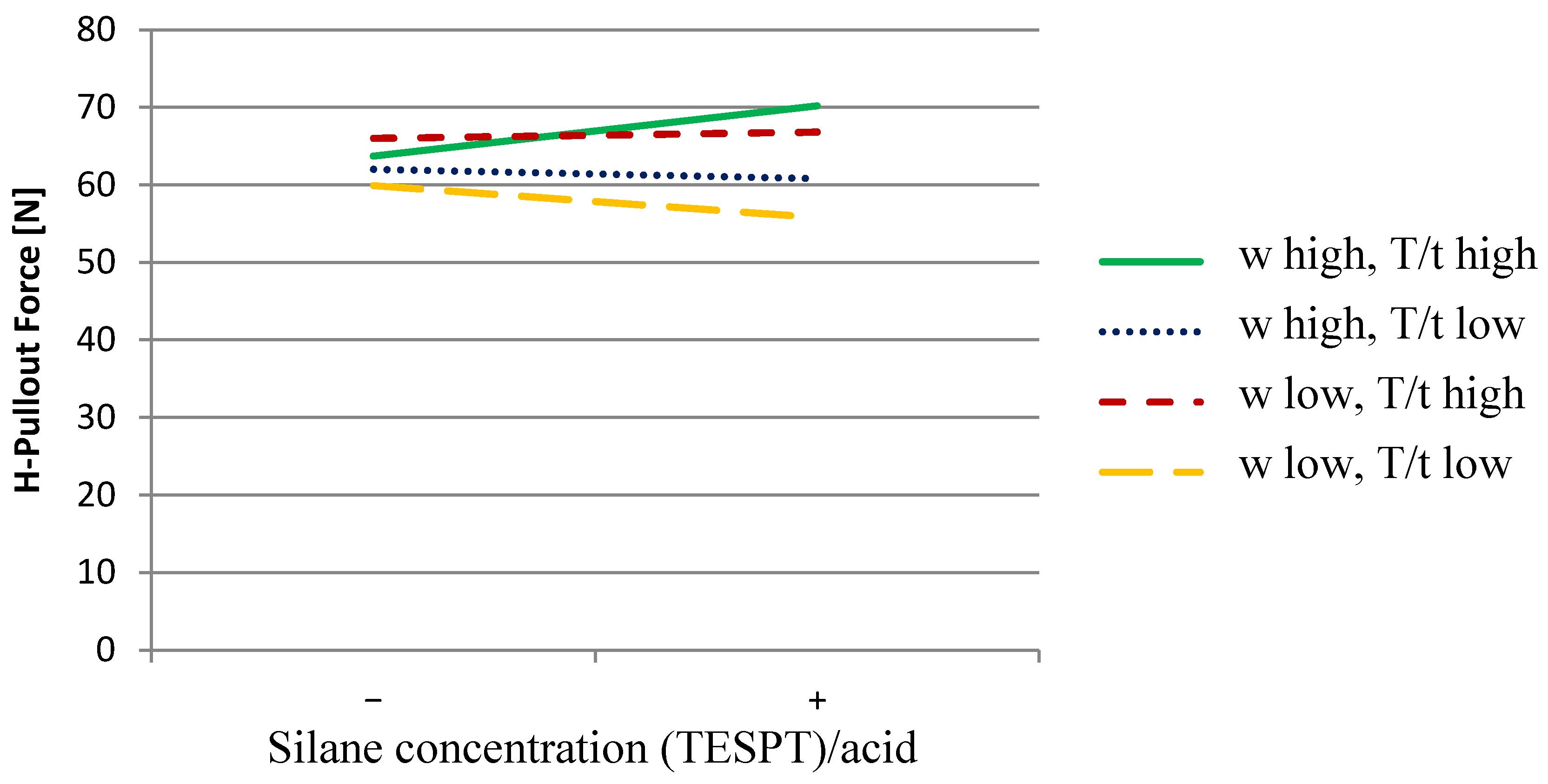
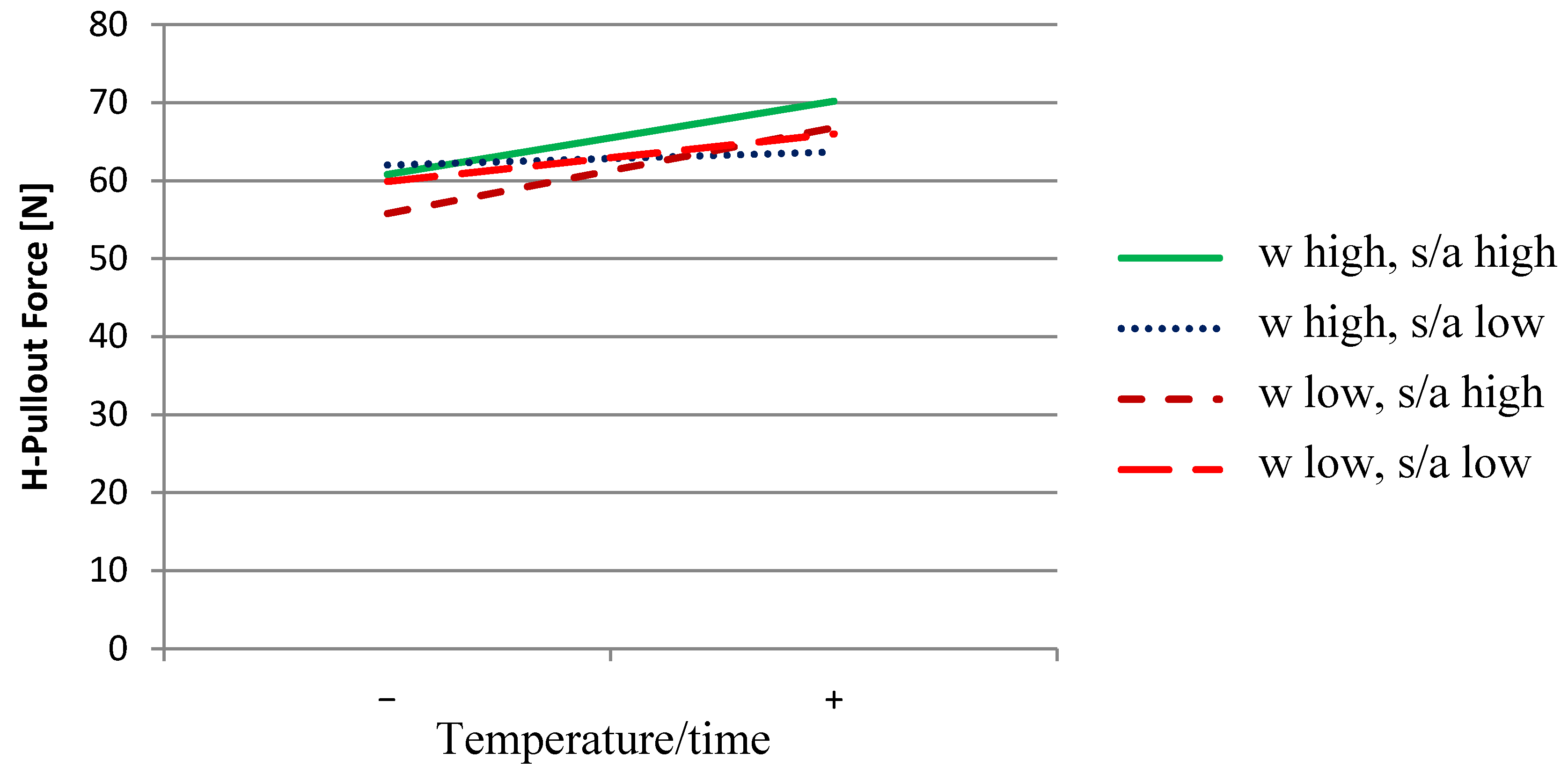
- A+ = 9 mL A− = 1.8 mL
- B+ = 4.35 mL TESPT, 4 mL acid B− = 0.87 mL TESPT, 1 mL acid
- C+ = 120 °C, 2 min C− = 60 °C, 120 min
3. Results
3.1. Rayon Cord
- Treatment speed: 10 m/min
- TEOS flow rate: 150 g/h
- Evaporation temperature: 200 °C
- Pre-drying of cord: no
- Repetition of the Bath I type dipping with a small amount of hydrochloric acid (HCl) added. HCl donates H+ ions, which can react with oxygen to increase the number of available OH groups.
- Dipping the cord in Bath II with an increased amount of demineralized water and acetic acid, which is expected to increase the number of available OH groups.
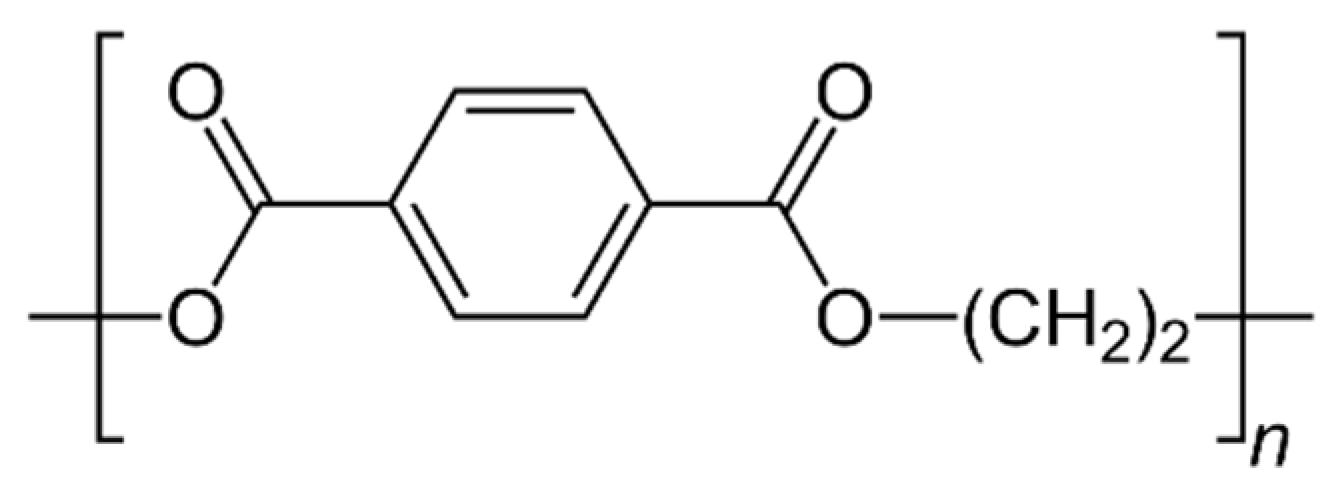
3.2. Polyester Cord
- Cord speed: 10 m/min
- TEOS flow rate: 150 g/h
- Evaporation temperature: 200 °C
- Pre-drying of cord: no
3.3. Applying H2O as a Precursor Instead of TEOS
- 95 mL Ethanol
- 5 mL H2O
- 5 wt% TESPT
- 2 wt% acetic acid
- Cord speed: 10 m/min
- Evaporation temperature: 110 °C
- Pre-drying of cord: no
4. Discussion
5. Conclusions
Author Contributions
Funding
Conflicts of Interest
References
- Charch, W.H.; Buffalo, N.Y.; Maney, D.B. Laminated Structure and Method for Preparing Same. U.S. Patent No2128635, 30 August 1938. [Google Scholar]
- Wennekes, W.B.; Datta, R.N.; Noordermeer, J.W.M. Mechanistic investigations into the Adhesion between RFL-treated cords and rubber. Part I: The influence of rubber curatives. Rubber Chem. Technol. 2007, 80, 545–564. [Google Scholar] [CrossRef] [Scilit]
- Wennekes, W.B.; Datta, R.N.; Noordermeer, J.W.M. Mechanistic investigations into the Adhesion between RFL-treated cords and rubber. Part II: The influence of the Vinyl-Pyridine Content of the RFL-latex. Rubber Chem. Technol. 2007, 80, 565–579. [Google Scholar] [CrossRef] [Scilit]
- Wennekes, W.B.; Datta, R.N.; Noordermeer, J.W.M.; Elkink, F. Fiber adhesion to rubber compounds. Rubber Chem. Technol. 2008, 81, 523–540. [Google Scholar] [CrossRef] [Scilit]
- Bekaert; Cordenka; Kordsa. Introduction to tire reinforcement materials. Reader provided for a course given at the Tire Technology Conference, Tyre Technology Expo, Cologne, Germany, 10–12 February 2015; p. 13. [Google Scholar]
- Pocius, A.V. Adhesion and Adhesives Technology; Hanser Publishers: Munich, Germany, 2012. [Google Scholar]
- Franta, I. Elastomers and Rubber Compounding Materials; Elsevier: Amsterdam, The Netherlands, 1989. [Google Scholar]
- Shishoo, R. Textile Advances in the Automotive Industry; Elsevier: Amsterdam, The Netherlands, 2008. [Google Scholar]
- Mondadori, N.M.L.; Nunes, R.C.; Bresciani Canto, L.; Zattera, A. Composites of recycled PET reinforced with short glass fiber. J. Thermoplast. Compos. Mater. 2012, 25, 747–764. [Google Scholar] [CrossRef] [Scilit]
- Wootton, D.B. The Application of Textiles in Rubber; Rapra Technology LTD: Shrewsbury, UK, 2001. [Google Scholar]
- Formaldehyde Registration Dossier; European Chemicals Agency, ECHA: Helsinki, Finland, 2012.
- Cevahir, N.N.; Acar, A.E.; Bas, S. A Dipping Material for Cord Fabrics and a Production Method Thereof. Patent WO2014091376 A1, 19 June 2014. [Google Scholar]
- Solomon, T.S. Two-Step Process for Dipping Textile Cord or Fabric and Resorcinol/Formaldehyde-Free Composition Used Therein. Patent CA1249386 A1, 18 September 1989. [Google Scholar]
- Bas, S.; Ergun, B. A Method for Producing Fiber Reinforced Rubber Comprising Unsaturated Bonds. Patent WO2014020570 A2, 6 Ferbruary 2014. [Google Scholar]
- Lawton, E. Bonding of Poly (Ethylene Terephthalate) Induced by Low-Temperature Plasmas. U.S. Patent No. 3,853,657, 10 December 1974. [Google Scholar]
- Sharma Satish, C. Adhesion of Aramid Cords to Rubber. U.S. Patent No. 4,469,748A, 4 September 1984. [Google Scholar]
- Shuttleworth, D.; Mowdood, S.K. Process for the Surface Treatment of Polymers for Reinforcement-to-Rubber Adhesion. U.S. Patent No. 5,053,246A, 1 October 1991. [Google Scholar]
- Shuttleworth, D.; Mowdood, S.K. Process for the Surface Treatment of Polymers for Reinforcement-to-Rubber Adhesion. U.S. Patent No. 5,283,119A, 1 September 1994. [Google Scholar]
- Morin, B.G.; Maria, M.D.F. Vinyl Compound Plasma Pre-Treatment for Promoting the Adhesion between Textiles and Rubber Compounds. U.S. Patent No. 6,096,156A, 1 August 2000. [Google Scholar]
- Parker, D.K.; Shuttleworth, D. Process to Produce Reinforced Tire Cords with Plasma Treated Fibers Incorporated into a Rubber/Blocked Isocyanate Composition. U.S. Patent No. 5,501,880A, 26 March 1996. [Google Scholar]
- Rodewald, S.; Siffer, F.G.A. Plasmapolymerisierungsdüse, Luftplasmasystem damit und Verfahren zur Abscheidung eines Polymermaterials. Patent EP2326152 A2, 25 May 2011. [Google Scholar]
- Siffer, F.G.A.; Gillick, J.G. Atmospheric Plasma Treatment of Reinforcement Cords and Use in Rubber Articles. U.S. Patent No. 20,110,241,269 A1, 6 October 2011. [Google Scholar]
- Siffer, F.G.A.; Gillick, J.G. Atmospheric Plasma Treatment of Reinforcement Cords and Use in Rubber Articles. Patent EP2716695 A1, 21 November 2014. [Google Scholar]
- Siffer, F.G.A.; Hebelman, J.B.; Gillick, J.G.; Gersman, M.L.; Chandra, D.; Qu, D.; Botts, B.P.; Vangeneugden, D.L.; Verheyde, B.; Van Hoof, E.C.M. Atmospheric Plasma Treatment of Reinforcement Cords and Use in Rubber Articles. U.S. Patent No. 2018294070 A1, 11 October 2018. [Google Scholar]
- Ueno, K.; Sugimotot, H. Method for Treating Fibers. U.S. Patent No. 4,606,930A, 19 Auguet 1986. [Google Scholar]
- Krump, H.; Hudec, J.; Jasso, M.; Dayss, E.; Crimmann, P. Surface modification of PET by two different types of plasma reactors. Kautsch. Gummi Kunstst. 2004, 57, 662–667. [Google Scholar]
- Janypka, P.; Suriova, V. Method of Treatment of Textile Reinforcing Materials to Increase Their Adhesion to Rubber Compound. Patent WO2006135347 A1, 21 December 2006. [Google Scholar]
- Mihalik, P.; Suriova, V. Device for Manufacturing Rubberized Fabric Cord, Suitable to Be Used as Wound Overlapping Breaker. Patent WO2006088436 A1, 24 August 2006. [Google Scholar]
- Tonon, C.; Grimberg, G. Process for Treating a Body of Stainless Steel so as to Promote Its Adherence to a Rubber Composition. Patent EP0738748 A1, 28 September 1999. [Google Scholar]
- Michelin. Available online: https://www.michelin.in/auto/home-auto/innovation (accessed on 7 February 2019).
- Luginsland, H.-D. Reactivity of the sulfur chains of the tetrasulfane silane Si69 and the disulfane silane TESPD. Kautsch. Gummi Kunstst. 2000, 53, 10–23. [Google Scholar]
- Hunsche, A.; Görl, U.; Koban, H.-G.; Lehmann, T. Investigations on the reaction silica/organosilane and organosilane/polymer-Part 2. Kinetic aspects of the silica-organosilane reaction. Kautsch. Gummi Kunstst. 1998, 51, 525. [Google Scholar]
- Louis, A.; Noordermeer, J.W.M.; Dierkes, W.K.; Blume, A. Plasma modification of polymeric single end cords as an alternative to RFL treatment. In Proceedings of the Fall 192th Technical Meeting of the Rubber Division ACS, Cleveland, OH, USA, 10–12 October 2017. [Google Scholar]







| Frequency (kHz) | Actual Voltage (V) | Actual Current (A) | Calculated Power (kW) |
|---|---|---|---|
| 25 | 296 | 12 | 3.5 |
| Ingredients | Specification | phr |
|---|---|---|
| NR | Standard Vietnamese Rubber SVR5 | 60.0 |
| BR | Buna cis-132 (98% cis), Styron | 20.0 |
| SBR | Kralex 1723 (with 37.5 phr extender oil TDAE), Synthos | 27.5 |
| N-660 | Reinforcing carbon black | 40.0 |
| Zinc oxide | Activator | 3.0 |
| Stearic acid | Activator | 2.0 |
| Naphthenic oil | Nytex 840, Nynas | 13.0 |
| TMQ | Antioxidant (2,2,4-trimethyl-1,2-dihydroquinoline) | 0.5 |
| 6PPD | Antioxidant (octylated diphenylamine) | 1.0 |
| MBTS | Accelerator (2-Mercaptobenzothiazole disulfide) | 0.1 |
| TBBS | Accelerator (n-tert-butyl-2-benzothiazole sulfenamide) | 0.7 |
| S OT20 | Insoluble sulfur | 2.8 |
| PVI | Scorch inhibitor (n-cyclohexylthio phthalimide) | 0.1 |
| Ingredients | Bath I | wt% | Bath II | wt% |
|---|---|---|---|---|
| Ethanol | 50.0 g | 92.9 | 22.2 g | 80.0 |
| Demin. water | 2.6 g | 4.9 | 4.0 g | 14.4 |
| Coupling agent | 1.1 g | 2.0 | 1.0 g | 3.6 |
| Catalyst | 0.1 g | 0.2 | 0.6 g | 2.0 |
| Total | 53.8 g | 100.0 | 27.8 g | 100.0 |
| PET | Conditions | H-Pullout Force [N] | |||
|---|---|---|---|---|---|
| Sample | ION | FR [g/h] | DIP 1 | DIP 2 | Incorp. |
| H2O | Air | 300 | 42.1 | 40.5 | 40.0 |
| H2O | Air | 400 | 40.7 | 42.8 | 40.2 |
| H2O | N2 | 400 | - | - | 59.8 |
| RFL | - | - | - | - | 83.0 |
| Rayon | Conditions | H-Pullout Force (N) | ||
|---|---|---|---|---|
| Sample | ION | FR (g/h) | DIP | Incorp. |
| H2O | Air | 300 | 45.1 | 44.8 |
| H2O | Air | 400 | 41.5 | 48.8 |
| H2O | N2 | 400 | DoE* | 54.1 |
| RFL | - | - | - | 75.0 |
| DoE | H-Pullout Force (N) | |
|---|---|---|
| [A/B/C] | Value | Standard Deviation |
| CP | 54.5 | 7.9 |
| +++ | 70.2 | 6.0 |
| +−+ | 63.7 | 5.3 |
| −++ | 66.8 | 6.6 |
| −−+ | 66.0 | 6.2 |
| ++− | 60.8 | 4.2 |
| +−− | 62.0 | 6.4 |
| −+− | 55.8 | 4.8 |
| −−− | 59.9 | 5.3 |
© 2019 by the authors. Licensee MDPI, Basel, Switzerland. This article is an open access article distributed under the terms and conditions of the Creative Commons Attribution (CC BY) license (http://creativecommons.org/licenses/by/4.0/).
Share and Cite
Dierkes, W.; Louis, A.; Noordermeer, J.; Blume, A. A Novel Approach of Promoting Adhesion of Reinforcing Cord to Elastomers by Plasma Polymerization. Polymers 2019, 11, 577. https://doi.org/10.3390/polym11040577
Dierkes W, Louis A, Noordermeer J, Blume A. A Novel Approach of Promoting Adhesion of Reinforcing Cord to Elastomers by Plasma Polymerization. Polymers. 2019; 11(4):577. https://doi.org/10.3390/polym11040577
Chicago/Turabian StyleDierkes, Wilma, André Louis, Jacques Noordermeer, and Anke Blume. 2019. "A Novel Approach of Promoting Adhesion of Reinforcing Cord to Elastomers by Plasma Polymerization" Polymers 11, no. 4: 577. https://doi.org/10.3390/polym11040577
APA StyleDierkes, W., Louis, A., Noordermeer, J., & Blume, A. (2019). A Novel Approach of Promoting Adhesion of Reinforcing Cord to Elastomers by Plasma Polymerization. Polymers, 11(4), 577. https://doi.org/10.3390/polym11040577