
Thermal Characterization and Theoretical Optical Assessment of Fe-Rich Scoria-Based Glasses Prepared from Natural and Industrial Waste Resources


Abstract
1. Introduction
2. Experimental Procedure
2.1. Raw Material
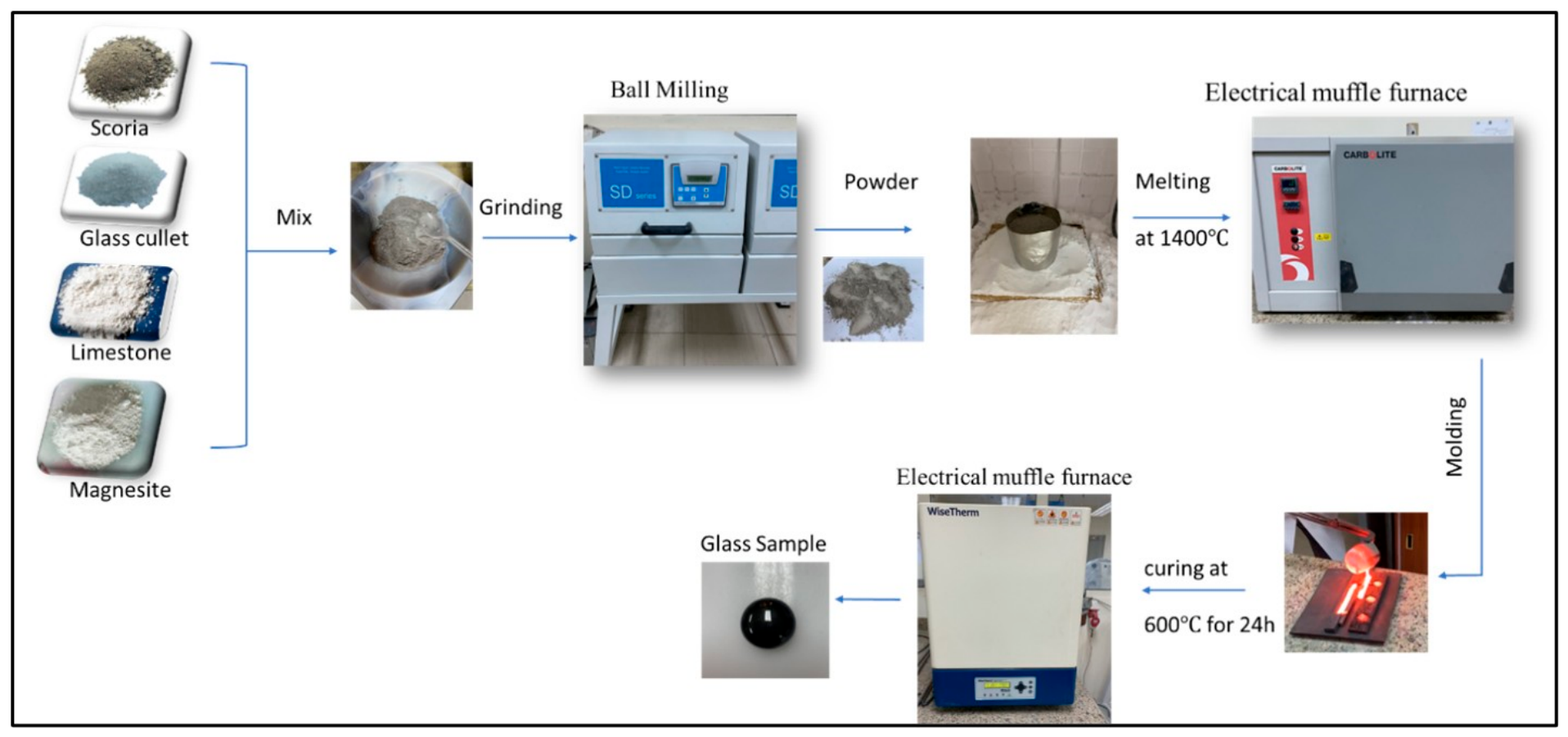
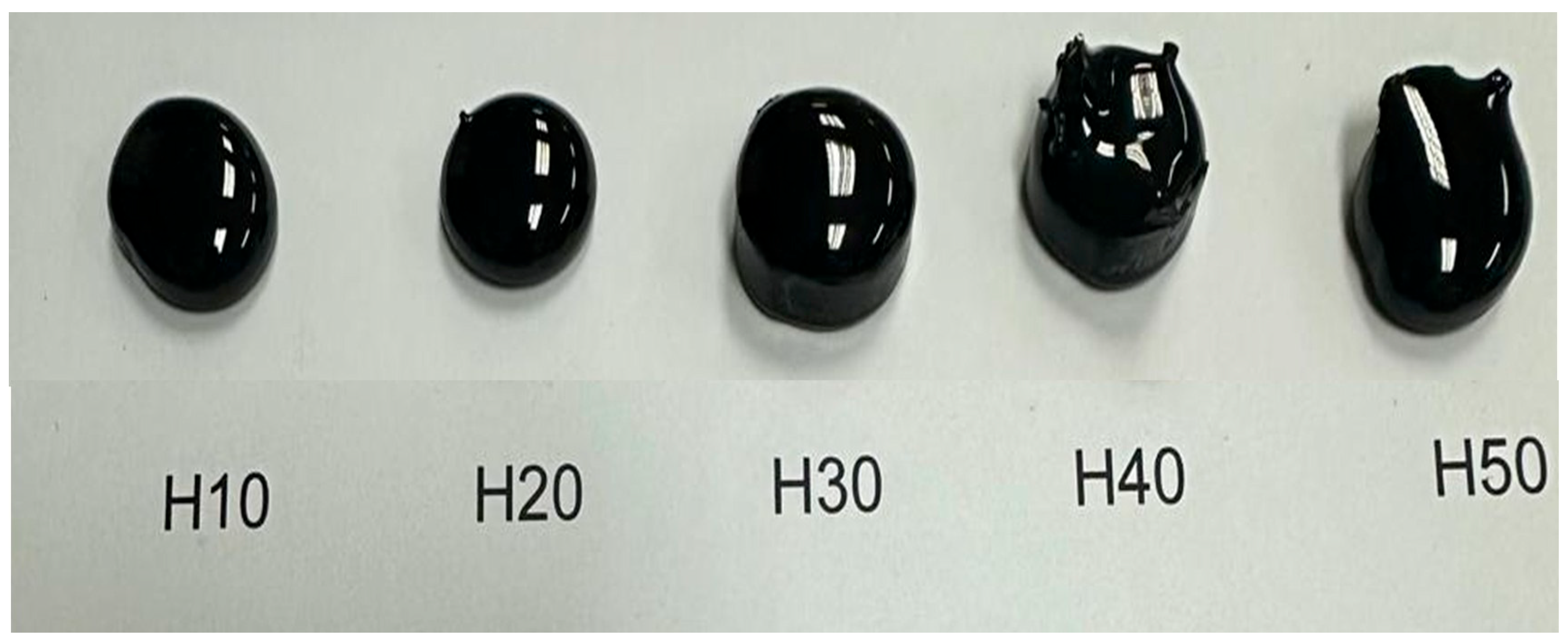
2.2. Batch Preparation
2.3. Differential Thermal Analysis, XRD, and SEM
2.4. Theoretical Optical Assessment
3. Results and Discussion
3.1. Thermal Properties
3.2. Density and Structural Considerations
3.3. Effect of Heat Treatment on Structural and Microstructural Properties
3.4. Theoretical Calculation of Optical Properties
3.5. Correlation Between Composition, Thermal Stability, and Optical Assessment
4. Conclusions
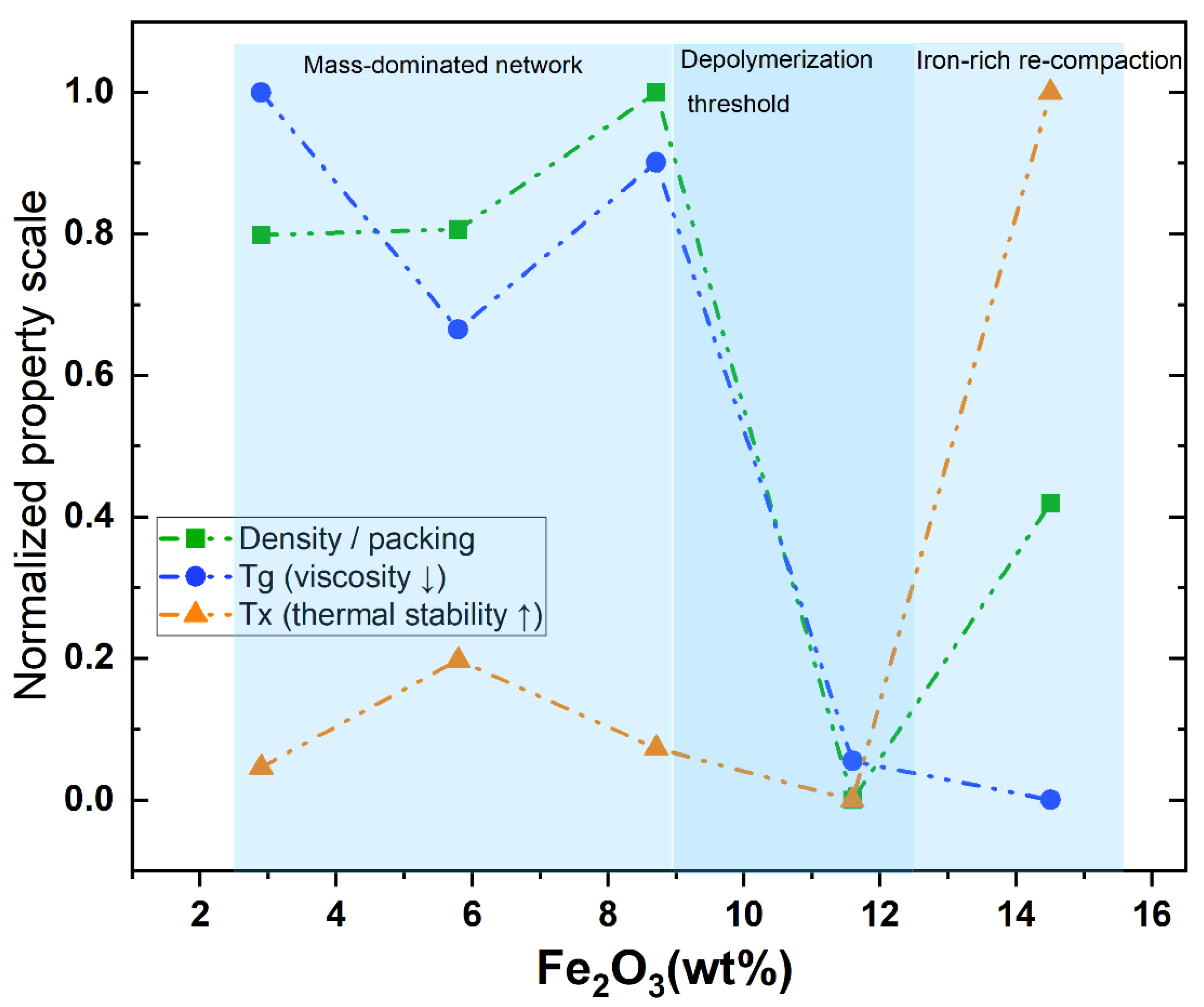
- Increasing Fe2O3 concentration significantly affects the thermal behavior of glasses, indicating its critical role in controlling the structure and crystallization of glasses.
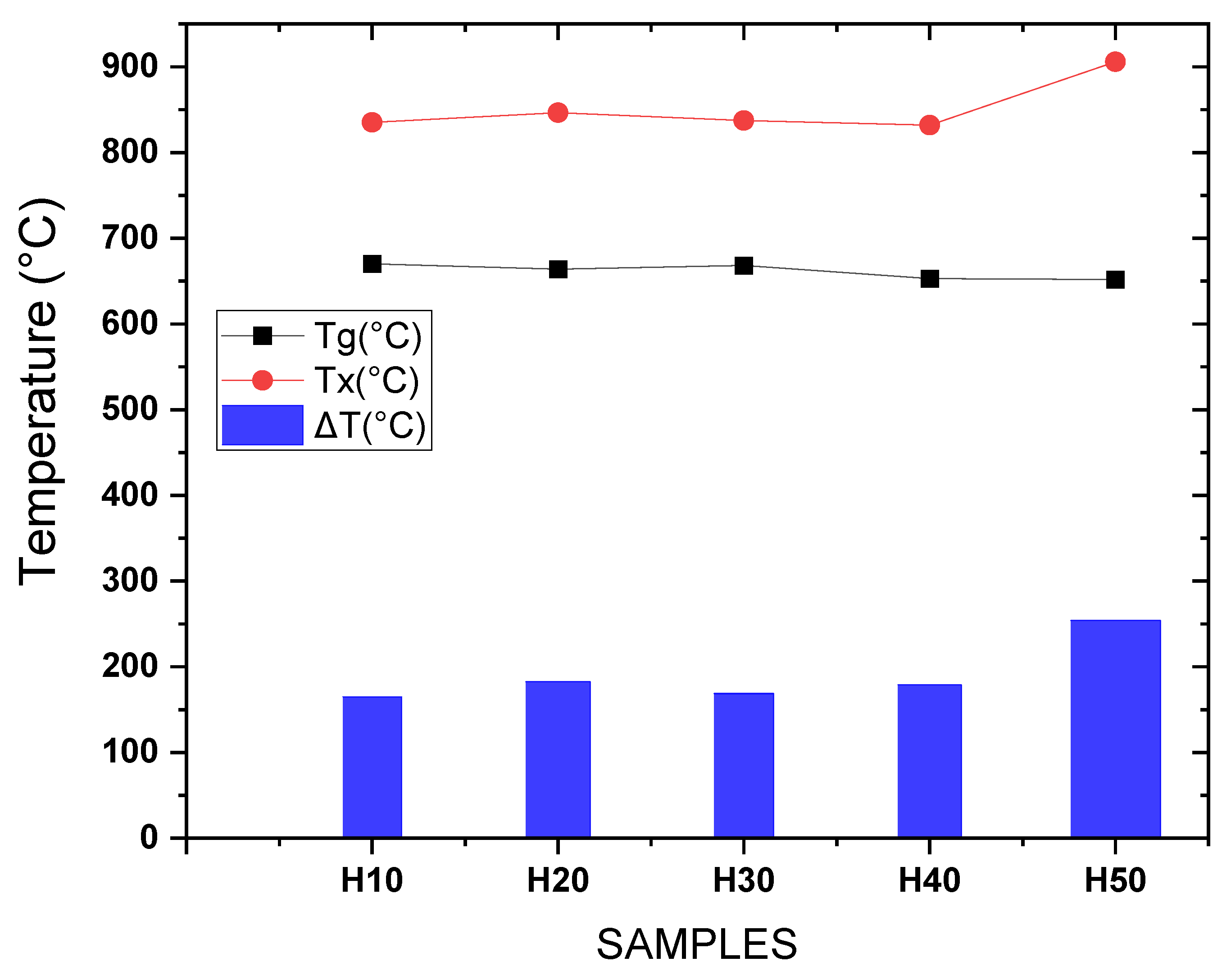
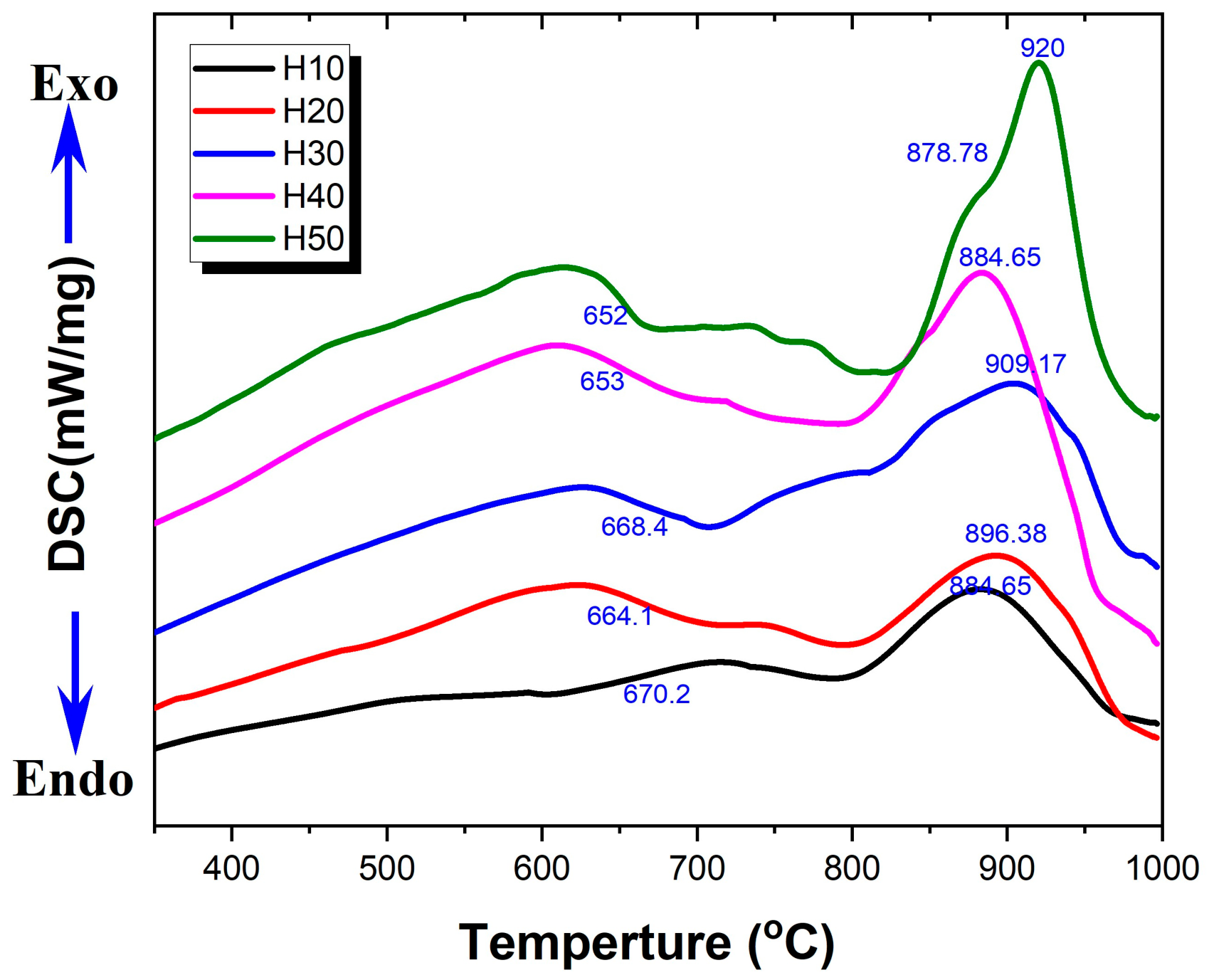
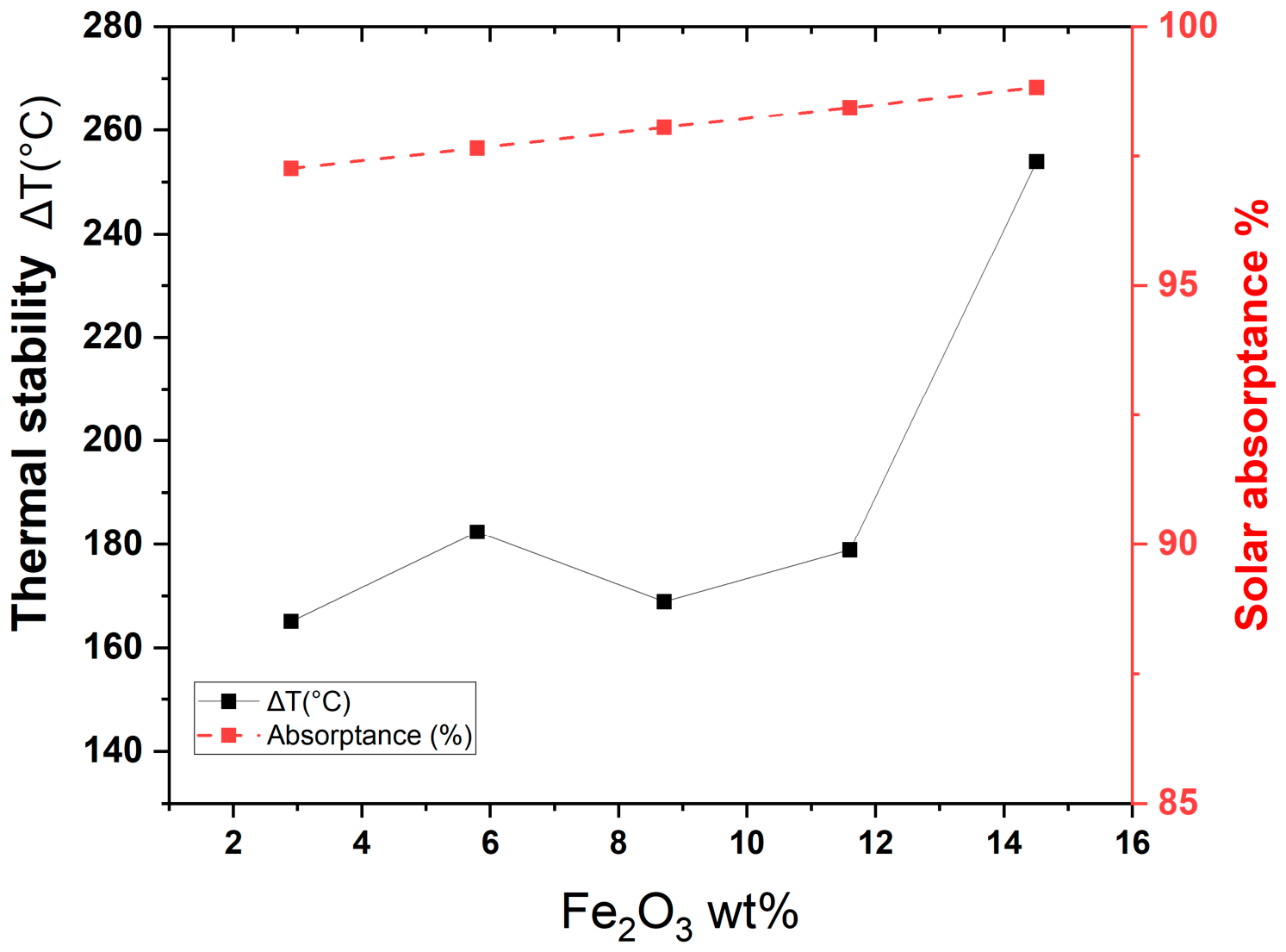
- The thermal stability (∆T = Tx − Tg) increased from 165.1 to 254 °C, demonstrating excellent thermal stability and resistance to crystallization for high-temperature applications and glass–ceramic production.
- Density measurements showed a non-monotonic compositional dependence due to the combined effect of Fe2O3 enrichment and network structural modification.
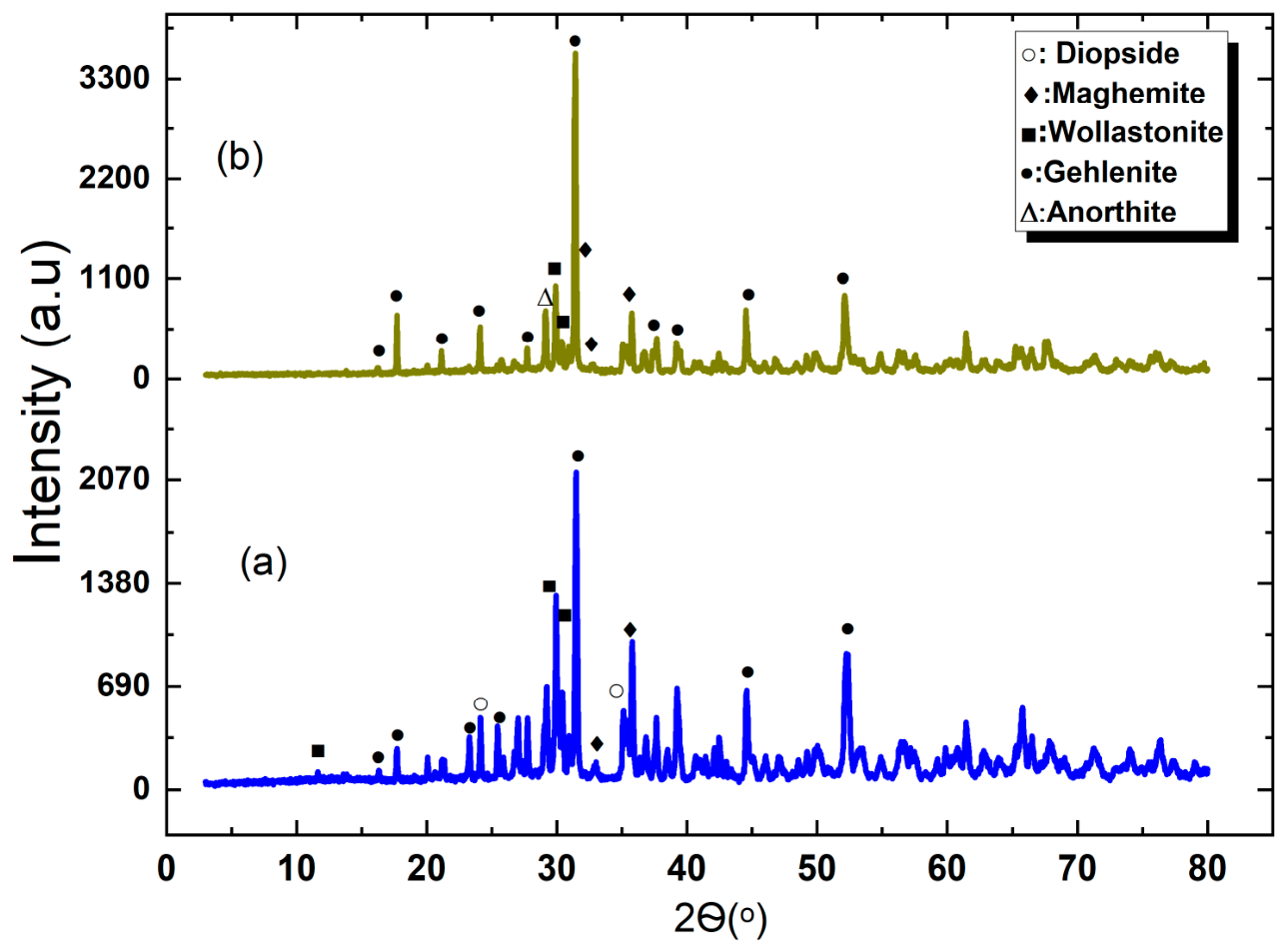
- Heat treatment of the Fe-rich scoria-based glass (H50) at 900 °C and at 950 °C promoted controlled crystallization and the formation of crystalline phases including diopside, gehlenite, wollastonite, maghemite, and anorthite, as confirmed by XRD.
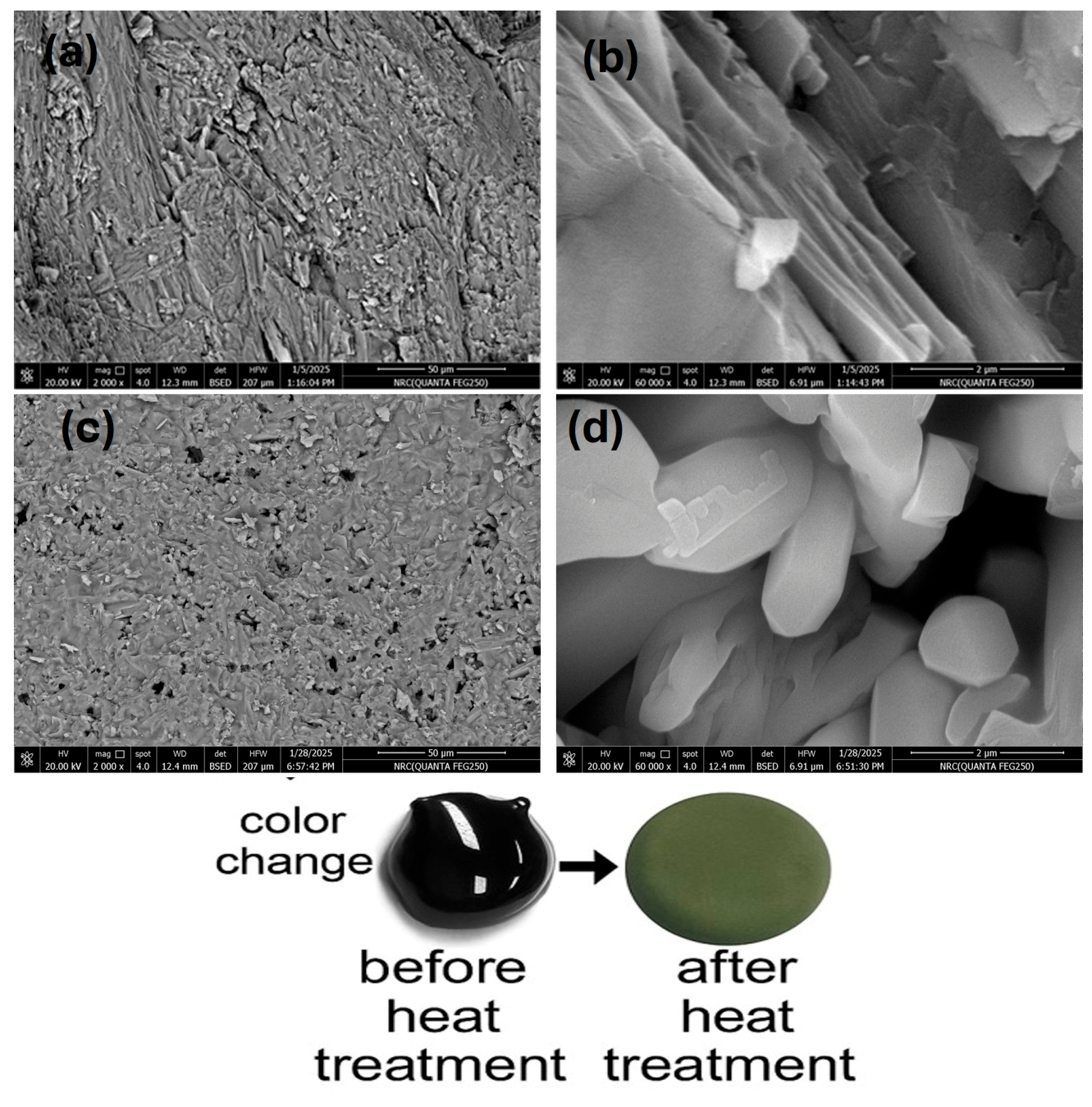
- SEM observation revealed progressive crystal growth and microstructural densification with increasing heat treatment temperature, indicating the transformation from glass to glass–ceramic.
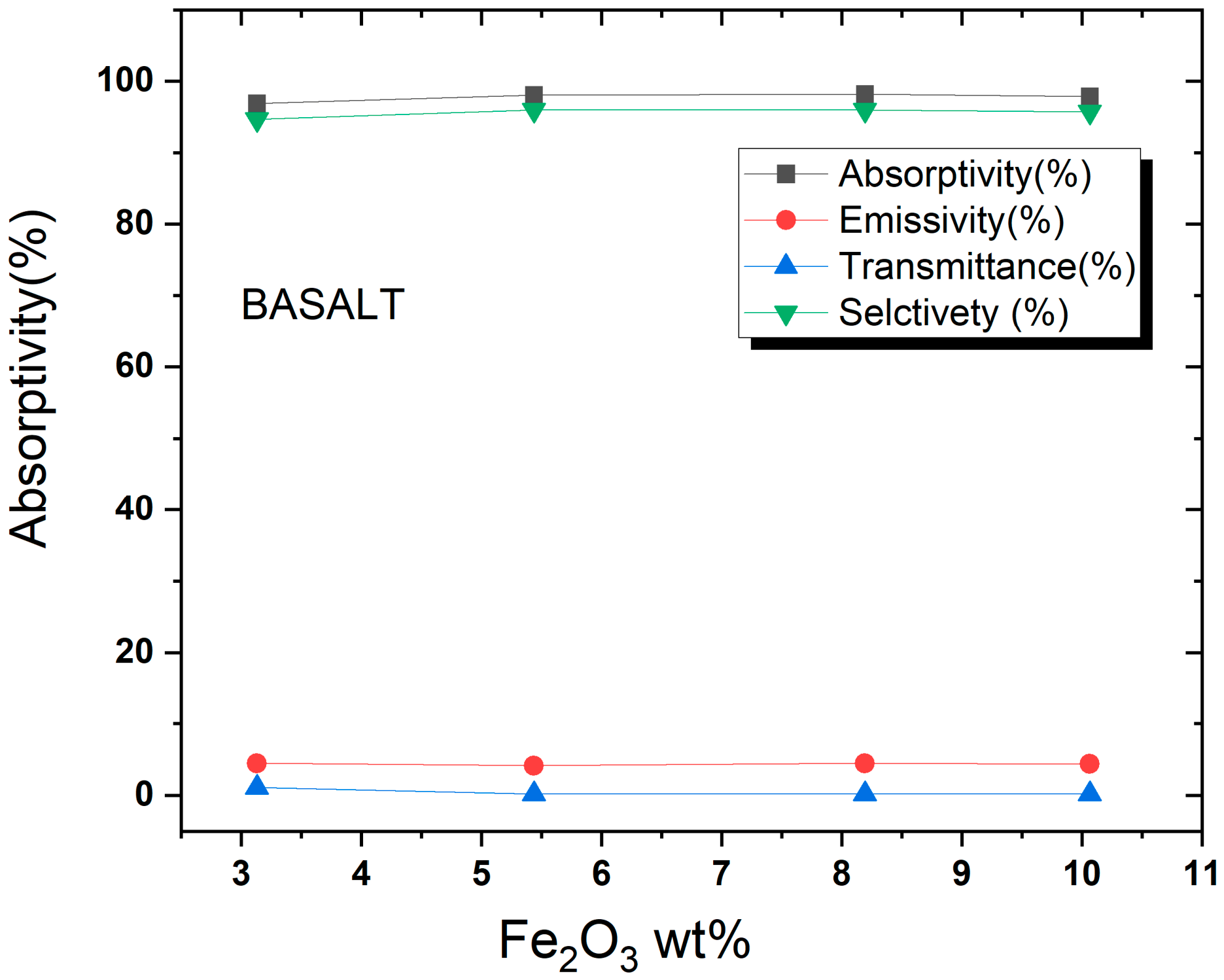
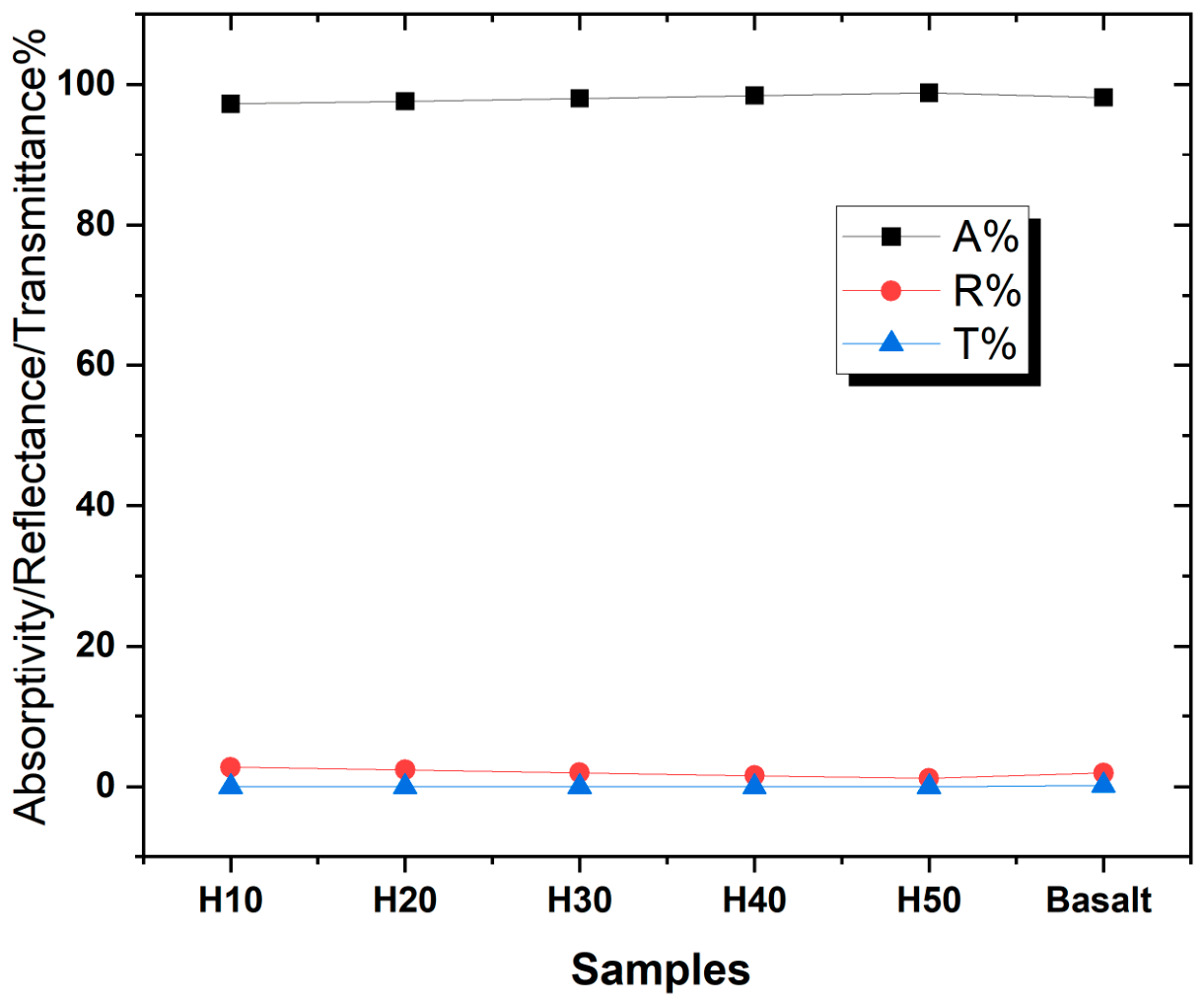
- A semi-empirical optical assessment based on literature-derived models suggested increased absorptance from 97.26% to 98.83% and reduced reflectance with increasing Fe2O3 content.
- The results demonstrate that scoria-based glass systems with high Fe2O3 content have thermal stability and controllable crystallization behavior while providing a sustainable route for the utilization of natural and recycled industrial resources. These characteristics highlight their potential for glass–ceramic and other high-temperature materials applications.
Funding
Institutional Review Board Statement
Informed Consent Statement
Data Availability Statement
Acknowledgments
Conflicts of Interest
References
- Khater, G.A.; El-Kheshen, A.A.; Farag, M.M.; Shendy, H.; Nasralla, N.H.S. Preparation and characterization of low-cost albite and wollastonite glass-ceramics based on natural raw materials. Next Mater. 2025, 9, 101183. [Google Scholar] [CrossRef] [Scilit]
- Khater, G.A.; Gomaa, M.M.; Kang, J.; Yue, Y.; Mahmoud, M.A. Thermal, electrical and physical properties of glasses based on basaltic rocks. Silicon 2020, 12, 645–653. [Google Scholar] [CrossRef] [Scilit]
- El Mahallawy, N.A.; Ragab, K.S.; Megahed, H.; Khater, G.A. Novel solar absorber from cement industry waste. Sol. Energy Mater. Sol. Cells 2025, 280, 113308. [Google Scholar] [CrossRef] [Scilit]
- Alraddadi, S.; Assaedi, H. Thermal and mechanical properties of glass–ceramics based on slate and natural raw materials. Silicon 2023, 15, 1871–1882. [Google Scholar]
- Khater, G.A.; El-Kheshen, A.A.; Farag, M.M. Synthesise and characterization of cordierite and wollastonite glass—Ceramics derived from industrial wastes and natural raw materials. Materials 2022, 15, 3534. [Google Scholar] [CrossRef] [Scilit] [PubMed]
- Höland, W.; Beall, G.H.; Smith, C.M. Glass-ceramics: From ideas to products. J. Am. Ceram. Soc. 2025, 108, e20086. [Google Scholar]
- Shendy, H.; Khater, G.A.; Shahien, M.G.; Zayed, A.M. Preparation of innovative glass-ceramic materials based on mica schist within the CaO–MgO–Al2O3–SiO2 system. Open Ceram. 2024, 17, 100545. [Google Scholar] [CrossRef] [Scilit]
- Deubener, J.; Höland, W. Nucleation and crystallization of glasses and glass-ceramics. Front. Mater. 2017, 4, 14. [Google Scholar] [CrossRef] [Scilit]
- Santos, G.; Benzarti, Z.; Cavaleiro, D.; Figueiredo, L.; Carvalho, S.; Devesa, S. Optimization of black nickel coatings’ electrodeposit onto steel. Coatings 2024, 14, 1125. [Google Scholar] [CrossRef] [Scilit]
- Khater, G.A.; Nabawy, B.S.; Kang, J.; Yue, Y.; Mahmoud, M.A. Magnetic and electrical properties of glass and glass-ceramics based on weathered basalt. Silicon 2020, 12, 2921–2940. [Google Scholar] [CrossRef] [Scilit]
- Colak, S.C.; Birdogan, S.; Aral, E.; Kılıc, G. Formation of black glass to be used in solar collectors as absorbent and CuO and Fe2O3’s effect on this glass. Int. J. Hydrogen Energy 2009, 34, 5196–5200. [Google Scholar] [CrossRef] [Scilit]
- Kumar, M.; Sivaiah, P.; Kumar, A.; Kumar, D.; Pandey, S.; Singh, A.K.; Ahmed, F.D.; Hasnain, S.M. Simulation of metal ceramic single layer coatings for solar energy applications. Mater. Sci. Energy Technol. 2024, 7, 85–90. [Google Scholar] [CrossRef] [Scilit]
- Sato, T.; Tanaka, M. Black Synthetic Quartz Glass and Process for Producing the Black Synthetic Quartz Glass. WO2008105191A1. 17 January 2008. Available online: https://patents.google.com/patent/WO2008105191A1/en (accessed on 1 January 2020).
- Tripanagnostopoulos, Y.; Souliotis, M.; Nousia, T.H. Solar collectors with colored absorbers. Sol. Energy 2000, 68, 343–356. [Google Scholar] [CrossRef] [Scilit]
- Colak, S.C. Production and investigation of black glasses as absorber materials: Transition metal ions doped silicate glasses. Phys. B Condens. Matter 2018, 550, 354–359. [Google Scholar] [CrossRef] [Scilit]
- Sable, D.B.; Khirade, P.P.; Birajdar, S.D.; Pandit, A.A.; Jadhav, K.M. Effect of iron oxide (Fe2O3) on the structural, optical, electrical, and dielectric properties of SrO–V2O5 glasses. Glass Phys. Chem. 2017, 43, 302–312. [Google Scholar] [CrossRef] [Scilit]
- Meo, S. Effect of cement dust exposure on phagocytic function of polymorphonuclear neutrophils in cement mill workers. Int. J. Occup. Med. Environ. Health 2008, 21, 133–139. [Google Scholar] [CrossRef] [Scilit] [PubMed]
- Mishra, R.K.; Avinashi, S.K.; Shweta Kumari, S.; Gautam, C. Synergistic effect of Fe2O3 doping on physical, structural, optical, and radiation shielding characteristics of the glasses in a system (30-x) BaO–30TiO2–40SiO2–xFe2O3 (0 ≤ x≤ 6) for optoelectronic applications. J. Inorg. Organomet. Polym. Mater. 2024, 34, 1379–1402. [Google Scholar]
- Aloraini, D.A.; Almuqrin, A.; Albarzan, B.; Shaaban, K.S.; Wahab, E.A. Impact of Fe2O3 on Structural Properties, Nonlinear Optical Behavior, and Radiation Shielding Efficiency of Lead Phosphate Glasses: Aloraini, Almuqrin, Albarzan, Shaaban, and Wahab. JOM 2025, 77, 9894–9909. [Google Scholar] [CrossRef] [Scilit]
- Henaish, A.M.A.; Issa, S.A.; Zakaly, H.M.; Tekin, H.O.; Abouhaswa, A. Characterization of optical and radiation shielding behaviors of ferric oxide reinforced bismuth borate glass. Phys. Scr. 2021, 96, 075801. [Google Scholar] [CrossRef] [Scilit]
- Michalski, J.R.; Kraft, M.D.; Sharp, T.G.; Williams, L.B.; Christensen, P.R. Mineralogical constraints on the high-silica Martian surface component observed by TES. Icarus 2005, 174, 161–177. [Google Scholar] [CrossRef] [Scilit]
- Liu, C.; Tong, X.; Yang, C.; Jiang, L.; Li, Y.; Zhang, L.; Ding, B.; Liu, Z.; Huang, H.; Li, H. Preparation and dielectric properties of the amorphous basaltic glass. Silicon 2022, 14, 3623–3628. [Google Scholar]
- Horgan, B.H.; Smith, R.J.; Cloutis, E.A.; Mann, P.; Christensen, P.R. Acidic weathering of basalt and basaltic glass: 1. Near-infrared spectra, thermal infrared spectra, and implications for Mars. J. Geophys. Res. Planets 2017, 122, 172–202. [Google Scholar] [CrossRef] [Scilit]
- Alraddadi, S.; Assaedi, H. Phase Evolution, Mechanical, and Electrical Properties of Lightweight Ceramic Prepared Using Scoria at Low Temperature. Crystals 2024, 14, 929. [Google Scholar] [CrossRef] [Scilit]
- Alraddadi, S. Crystal Structure, Microstructure, and Dielectric and Electrical Properties of Ceramic Material Prepared Using Volcanic Ash. Crystals 2024, 14, 817. [Google Scholar] [CrossRef] [Scilit]
- Alraddadi, S.; Saeed, A.; Assaedi, H. Effect of thermal treatment on the structural, electrical, and dielectric properties of volcanic scoria. J. Mater. Sci. Mater. Electron. 2020, 31, 11688–11699. [Google Scholar] [CrossRef] [Scilit]
- Eldera, S.S.; Aldawsari, S.; Hamzawy, E.M. Utilization of waste glass with natural pozzolan in the production of self-glazed glass-ceramic materials. Nanotechnol. Rev. 2023, 12, 20220565. [Google Scholar] [CrossRef] [Scilit]
- Uma, C.S.; Malhotra, L.K.; Chopra, K.L. Cobalt oxide-iron oxide selective coatings for high temperature applications. Bull. Mater. Sci. 1986, 8, 385–389. [Google Scholar] [CrossRef] [Scilit]
- El-Depsy, A.; Shawky, A.M. Calculation of reflectance and transmittance of coating with optical rough surfaces. In Proceedings of the of the 8th Conference on Nuclear and Particle Physics, Hurghada, Egypt, 20–24 November 2011; pp. 271–280. [Google Scholar]
- Gahmousse, A.; Ferria, K.; Rubio, J.; Cornejo, N.; Tamayo, A. Influence of Fe2O3 on the structure and near-infrared emissivity of aluminosilicate glass coatings. Appl. Phys. A 2020, 126, 732. [Google Scholar] [CrossRef] [Scilit]
- Khater, G.A.; Saudi, H.A.; Abd-Allah, W.M. Glass and glass-ceramics based on weathered basaltic rock for radiation shielding applications. Silicon 2022, 14, 7449–7459. [Google Scholar]
- Li, X.; Zang, X.; Xing, X.; Li, J.; Ma, Y.; Li, T. Effect of Fe2O3 on the crystallization behavior of glass-ceramics produced from secondary nickel slag. Metals 2022, 12, 164. [Google Scholar] [CrossRef] [Scilit]
- Mahallawy, N.; Shoeib, M.; Eletriby, S. Effect of Sol-Gel Process Parameters on Optical Properties of CuCoMnO x Selective Coat for Solar Energy Applications. J. Am. Sci. 2016, 12, 41–48. [Google Scholar]
- Joly, M.; Antonetti, Y.; Python, M.; Gonzalez, M.; Gascou, T.; Hessler, A.; Schueler, A. Energy-efficient sol-gel process for production of nanocomposite absorber coatings for tubular solar thermal collectors. In Proceedings of CISBAT 2013 Cleantech for Smart Cities and Buildings; EPFL: Lausanne, Switzerland, 2013; Volume 1, pp. 11–16. [Google Scholar]
- Jaworske, D.A.; Shumway, D.A. Solar selective coatings for high temperature applications. In Space Technology and Applications International Forum-STAIF 2003 (No. CP-654); American Institute of Physics: College Park, MD, USA, 2003. [Google Scholar]





| Main Constituents (wt%) | Scoria | Glass Cullet | Limestone | Magnesite |
|---|---|---|---|---|
| SiO2 | 42.67 | 73.23 | 0.68 | 2.85 |
| Al2O3 | 16.03 | 1.88 | 0.65 | 1.94 |
| Fe2O3tot. | 14.63 | 0.07 | 0.35 | 1.48 |
| TiO2 | 2.30 | 0.03 | --- | ---- |
| MgO | 6.53 | 0.57 | 0.98 | 36.92 |
| CaO | 9.40 | 9.92 | 54.00 | 8.56 |
| ZrO2 | 0.05 | --- | --- | ---- |
| BaO | - | 0.01 | --- | ----- |
| P2O5 | 0.40 | 0.04 | ---- | ---- |
| Na2O | 3.46 | 13.45 | ---- | ---- |
| K2O | 0.71 | 0.15 | ----- | ---- |
| L.O.I. | 2.33 | 0.29 | 43.34 | 48.14 |
| Batch No. | Batch Composition% | Batch Constituents% | |||||||
|---|---|---|---|---|---|---|---|---|---|
| SiO2 | Al2O3 | Fe2O3 | CaO | MgO | Scoria | Glass Cullet | Limestone | Magnesite | |
| H10 | 50.16 | 13.87 | 2.90 | 23.41 | 9.67 | 57.92 | 15.80 | 16.04 | 10.24 |
| H20 | 49.96 | 12.33 | 5.80 | 23.32 | 8.59 | 55.58 | 19.13 | 18.02 | 7.28 |
| H30 | 49.77 | 10.79 | 8.71 | 23.22 | 7.52 | 51.37 | 22.43 | 19.75 | 6.45 |
| H40 | 49.57 | 9.25 | 11.60 | 23.14 | 6.44 | 44.83 | 26.47 | 20.63 | 5.62 |
| H50 | 49.37 | 7.71 | 14.51 | 23.04 | 5.37 | 37.56 | 30.77 | 21.12 | 4.72 |
| Sample | Fe2O3 (wt%) | Density (g·cm−3) | Tg (°C) | Tx (°C) | Tp (°C) | ΔT = Tx − Tg (°C) |
|---|---|---|---|---|---|---|
| H10 | 2.90 | 2.7719 | 670.2 | 835.3 | 884.65 | 165.1 |
| H20 | 5.80 | 2.7733 | 664.1 | 846.5 | 896.38 | 182.4 |
| H30 | 8.71 | 2.8072 | 668.4 | 837.3 | 909.1 | 168.9 |
| H40 | 11.60 | 2.6321 | 653.0 | 831.9 | 884.65 | 178.9 |
| H50 | 14.51 | 2.7055 | 652.0 | 905.9 | 920 | 253.9 |
| Glass-based Basalt [2,10] | 10.07 | 2.791–2.967 | 730 | - | 880–913 | 150–183 |
| Sample | Fe2O3 (wt%) | Density | Absorptivity A (%) | Emissivity ε (%) | Transmittance T (%) | Selectivity S (%) | Reflectance R (%) |
|---|---|---|---|---|---|---|---|
| H10 | 2.9 | 2.77187 | 97.26 | 4.37 | 0 | 95.08 | 2.74 |
| H20 | 5.8 | 2.77327 | 97.65 | 4.37 | 0 | 95.47 | 2.35 |
| H30 | 8.71 | 2.80724 | 98.05 | 4.38 | 0 | 95.86 | 1.95 |
| H40 | 11.6 | 2.63213 | 98.44 | 4.38 | 0 | 96.24 | 1.56 |
| H50 | 14.51 | 2.7055 | 98.83 | 4.39 | 0 | 96.63 | 1.17 |
| H50 at 900 °C HT | 14.51 | 97.93 | 6.39 | 0 | 94.73 | 2.07 | |
| H50 at 950 °C HT | 14.51 | 97.88 | 6.50 | 0 | 94.63 | 2.12 |
Disclaimer/Publisher’s Note: The statements, opinions and data contained in all publications are solely those of the individual author(s) and contributor(s) and not of MDPI and/or the editor(s). MDPI and/or the editor(s) disclaim responsibility for any injury to people or property resulting from any ideas, methods, instructions or products referred to in the content. |
© 2026 by the author. Licensee MDPI, Basel, Switzerland. This article is an open access article distributed under the terms and conditions of the Creative Commons Attribution (CC BY) license.
Share and Cite
Alraddadi, S. Thermal Characterization and Theoretical Optical Assessment of Fe-Rich Scoria-Based Glasses Prepared from Natural and Industrial Waste Resources. Crystals 2026, 16, 436. https://doi.org/10.3390/cryst16070436
Alraddadi S. Thermal Characterization and Theoretical Optical Assessment of Fe-Rich Scoria-Based Glasses Prepared from Natural and Industrial Waste Resources. Crystals. 2026; 16(7):436. https://doi.org/10.3390/cryst16070436
Chicago/Turabian StyleAlraddadi, Shoroog. 2026. "Thermal Characterization and Theoretical Optical Assessment of Fe-Rich Scoria-Based Glasses Prepared from Natural and Industrial Waste Resources" Crystals 16, no. 7: 436. https://doi.org/10.3390/cryst16070436
APA StyleAlraddadi, S. (2026). Thermal Characterization and Theoretical Optical Assessment of Fe-Rich Scoria-Based Glasses Prepared from Natural and Industrial Waste Resources. Crystals, 16(7), 436. https://doi.org/10.3390/cryst16070436