1. Introduction
Invar is the name of the Fe-Ni alloy with chemical compositions of 64% Fe and 36% Ni. Its most important characteristic is the low value of the coefficient of thermal expansion (CTE) and the fact that it does not vary in a wide temperature range (below Curie temperature) [
1]. Invar’s CTE at the ambient temperature is less than 2 × 10
−6 °C
−1, as compared with the coefficient of thermal expansion of most metals, which is at (10–20) × 10
−6 °C
−1 [
2]. Also, due to the high content of Ni, Invar alloy has good corrosion resistance. Invar alloy was developed by Swiss physicist Charles Édouard Guillaume in 1896 [
3]. Due to its properties, Invar alloys have many uses, especially in the defense and aerospace industries, navigation systems, high-precision mechanical instruments, electronic industry, or large cryogenic liquid containers [
4,
5]. Invar alloy represents a real challenge regarding machinability, due to its high plasticity (30–40% elongation) and as a result of its strong work-hardening, with negative effects on machining tools [
6]. Another disadvantage that makes the machining of Invar difficult is its low thermal conductivity [
7]. A different way to obtain Invar parts without these disadvantages is powder metallurgy technology. The basic principle of this technology is the sintering of a mixture of Fe (64%) and Ni (36%) elemental powders. However, the costs of obtaining Invar in this way are quite high due to the high sintering temperature (1350–1400 °C), the long holding time (60 min or more), and the special sintering atmosphere (hydrogen/argon gas) [
8]. In addition to the high costs, following classical sintering, the resulting structure is usually a two-phase one, in accordance with the Fe-Ni equilibrium diagram [
9]. The two phases that appear in the structure are: a Ni-based solid solution with a FCC network and a Fe-based solid solution with a BCC network. It is known that the Invar crystalline network is FCC, so the phase with the BCC network is an undesirable one. This will have a negative effect on the CTE value and on the temperature range, in which this value is low [
10]. Usually, in order to obtain a single phase in the Invar structure when it is obtained by classical technologies (melting and casting), a series of heat treatments is applied [
4,
11]. These heat treatments also increase the cost of Invar alloys. To eliminate these inconveniences, unconventional techniques to obtain Invar and Invar matrix composites, far from equilibrium, such as mechanical alloying and spark plasma sintering, have been used [
12,
13,
14]. Mechanical alloying followed by spark plasma sintering has also been successfully applied for the synthesis of metal matrix composites (Invar, superalloy) reinforced with ceramic particles (Al
2O
3, TiC) with the aim of maintaining the nanocrystalline structure resulting from mechanical alloying [
15,
16]. However, these techniques are difficult to implement on a large scale in industry. Mechanical alloying is a powder-processing technique for producing materials in a non-equilibrium state. It is well known that mechanical alloying leads to the refinement of the microstructure, resulting in powder particles with very fine crystallites, often down to nanometer levels. By obtaining nanometric crystallites, the resulting large specific surface will facilitate diffusion processes during sintering. Also, the high defect densities induced by MA accelerate diffusion processes. Due to the increased diffusivity in nanocrystalline materials, sintering (and therefore densification) takes place at temperatures much lower than those in coarse-grained materials. This is likely to reduce the grain growth [
17]. The aim of this work is to obtain Invar compacts by classical sintering in industrial conditions (sintering temperature, holding time, and sintering atmosphere specific to sintering ferrous parts) from mechanically alloyed Invar powders and study the influence of these conditions on density, structure, coefficient of thermal expansion, and hardness. Also, in order to compensate for the difference between the sintering temperatures of Invar and those of ferrous parts obtained by sintering, as well as to attempt to increase the density of the sintered compacts, in this work we propose to apply double sintering to mechanically alloyed Invar powder (work-hardened), along with an intermediate re-pressing step between the two sintering stages.
The novelty of this research lies in producing sintered Invar parts (an expensive material used in the aerospace industry) under industrial conditions specific to ferrous alloys (i.e., at a lower sintering temperature), thereby reducing costs.
2. Materials and Methods
Two types of samples with Invar composition were obtained by simple and double sintering from mechanically alloyed powders. In the first experiment, Invar powders were synthesized by a mechanical alloying technique from a mixture of 64% Fe and 36% Ni elemental powders. NC100.24 iron powder (minimum of 99.2% Fe purity) and 123-carbonyl nickel (minimum of 99.5% Ni purity) were used. The apparent density of NC100.24 Fe powder (Hoganas supplier) was 2.45 g/cm
3 and the density that was obtained after pressing at 500 MPa was 6.79 g/cm
3. The 123-carbonyl Ni powder (Vale supplier) used had an apparent density of 2.3 g/cm
3 and a Fisher Sub-Sieve Size of less than 4 µm. The mechanical alloying time was 16 h. There was a 30 min break after each hour of mechanical alloying. MA was performed in a high-energy planetary ball mill (Fritch Pulverisette 6, Fritch GmbH, Idar-Oberstein, Germany) using hardened steel vials and balls (the ball to powder mass ratio—BPR—was 10:1 and the vial rotation speed was 350 rpm). The milling process was carried out in an argon atmosphere in order to prevent the oxidation of the sample. Also, the mechanical alloying process was performed without using any type of PCA. From the Invar mechanically alloyed powders, we made cylindrical samples with diameters of 1.2 mm by pressing at 500 MPa in a cylindrical die. A total of 10 g of Invar powder was used for each sample. MoS
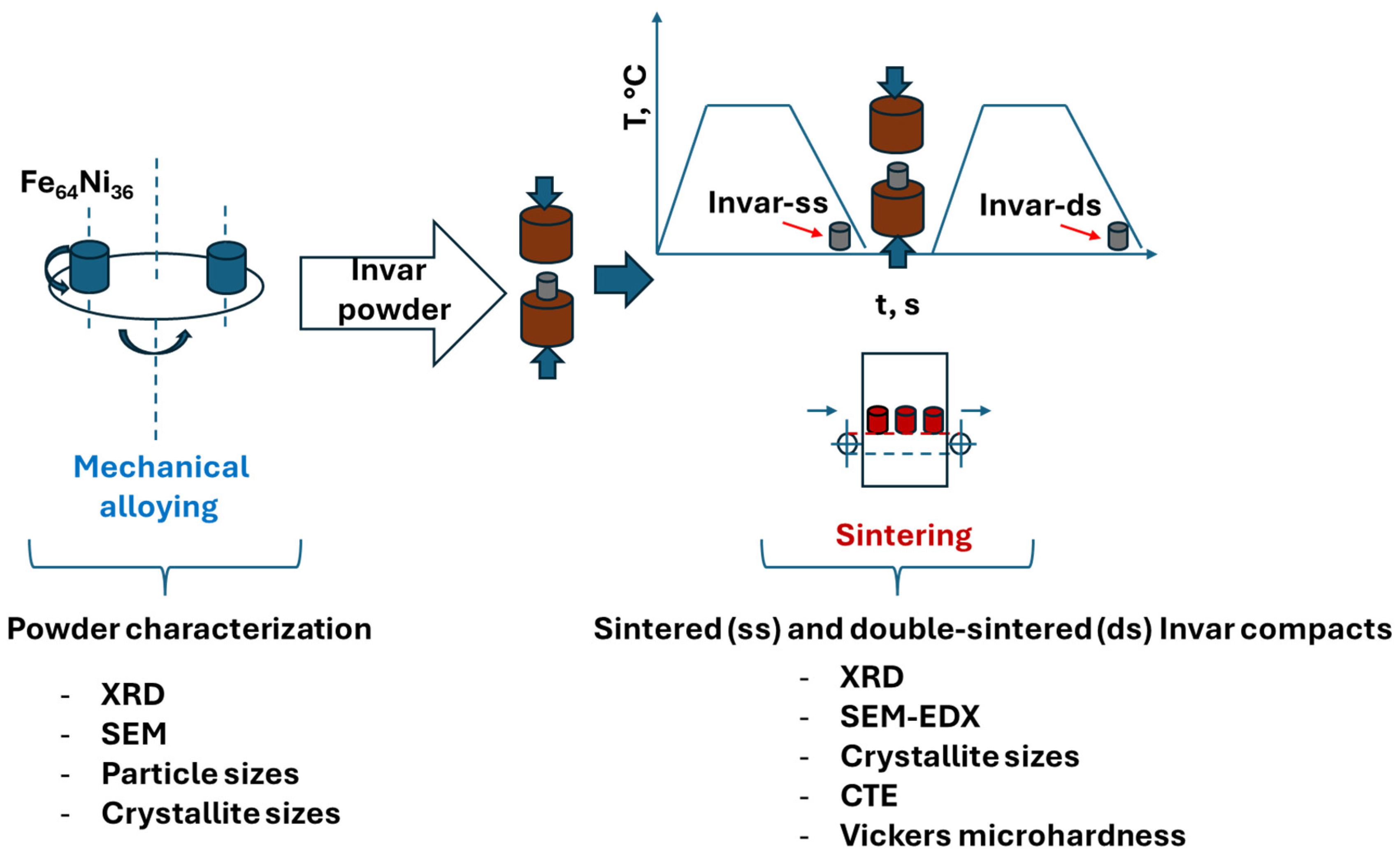
2 was used to lubricate punches. The green compacts were then sintered in a continuous belt furnace (CREMER Thermoprozessanlagen GmbH, Düren-Konzendorf, Germany) at 1120 °C with 30 min holding time in endogas. The cooling rate was 25 °C/min from sintering temperature to 300 °C. Hereafter, these samples will be referred to as Invar-ss. Part of the sintered samples were re-pressed at 500 MPa and then sintered once more at the same temperature with the same holding time. These samples will be referred to as double-sintered samples (Invar-ds). The schematic representation of the work methodology is illustrated in
Figure 1.
In order to investigate the microstructure of the sintered samples and map distribution of elements, an Optika inversed metallographic microscope (Optika Srl, Ponteranica, Italy) and A JEOL-JSM 5600 LV (JEOL, Tokyo, Japan) scanning electron microscope (SEM) coupled with an energy-dispersive X-ray (EDX) spectrometer (Oxford Instruments UltimMax65, High Wycombe, UK) were used. The metallographic samples were prepared by grinding, polishing, and subsequently etched with aqua regia. The Archimedes method (extrapolation technique) was used to measure the sintered samples densities. The measurements were made in distilled water at 25 °C. The identification of the phases present in the structure was carried out by X-ray diffraction, using an Inel Equinox 3000 diffractometer (INEL, Artenay, France) with a Co radiation (λCo Kα = 0.17903 nm) diffractometer. The diffraction patterns were recorded in the angular range of 2θ = 40–100°. Acquisition was performed in one step in the entire 2 theta range, specific for an INEL diffractometer, and the exposure time for each diffraction was 10 min. The detection limit was 2%. The crystallite size was computed using a well-crystallized (annealed and with a crystallite size larger than 10 µm) Ni sample, using the Williamson Hall and Scherrer methods. CTE was computed based on dilatometric measurements that were performed with an Ulbricht–Weiss vertical dilatometer (Christian Ulbricht GmbH & Co. KG, Seiffen, Germany) using a heating rate of 5 °/min. The heating process was carried out in air. The hardness was determined with micro-Vickers hardness tester equipment manufactured by INSIZE (INSIZE Co., Ltd., Suzhou, China). Intender loading was 0.05 kg. The space between indents was 0.5 mm, and the hold time was 10 s. HV0.05 median values were computed as the average of three tests.
3. Results and Discussions
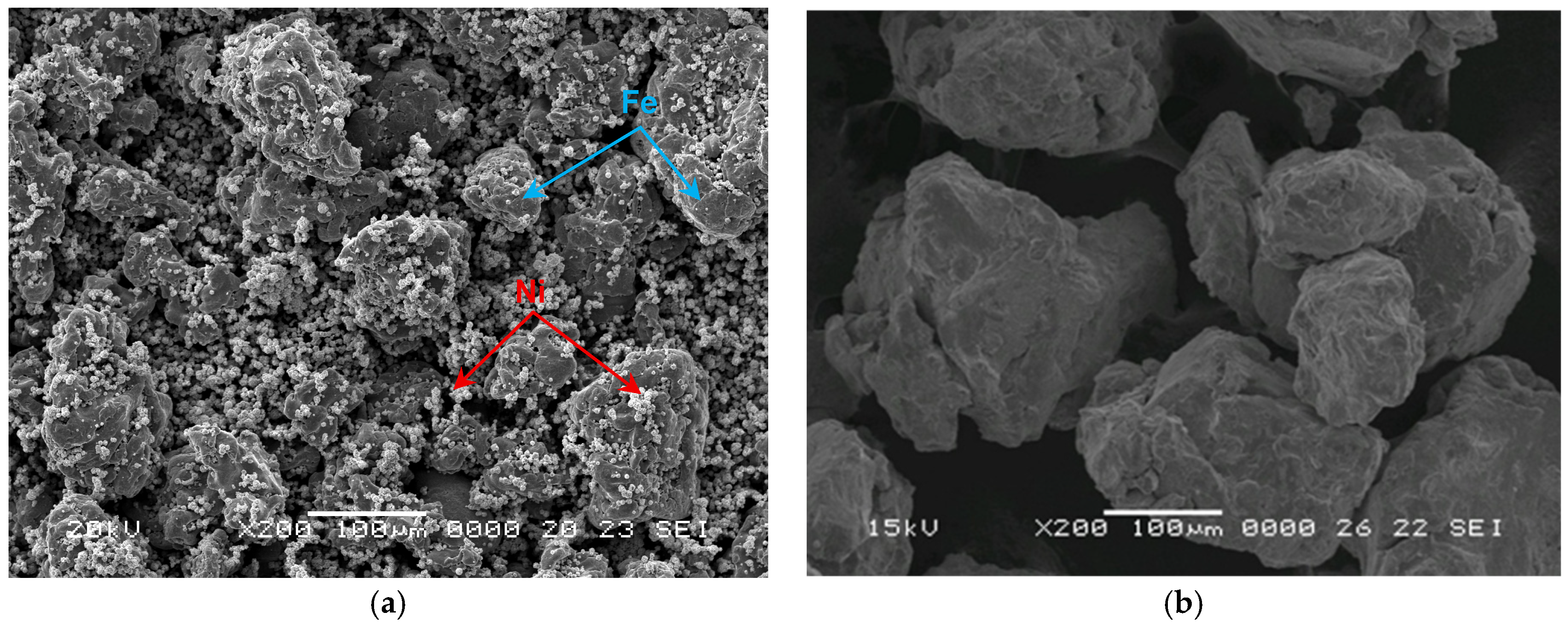
In order to obtain the Invar powder, the mixture of Fe and Ni elemental powders was subjected to mechanical alloying for 16 h. The SEM images of elemental powders mixture and Invar mechanically alloyed powder are shown in
Figure 2. Ni (small particles) and Fe (large particles) are indicated on
Figure 2a with arrows.
It can be observed that the Invar particles (
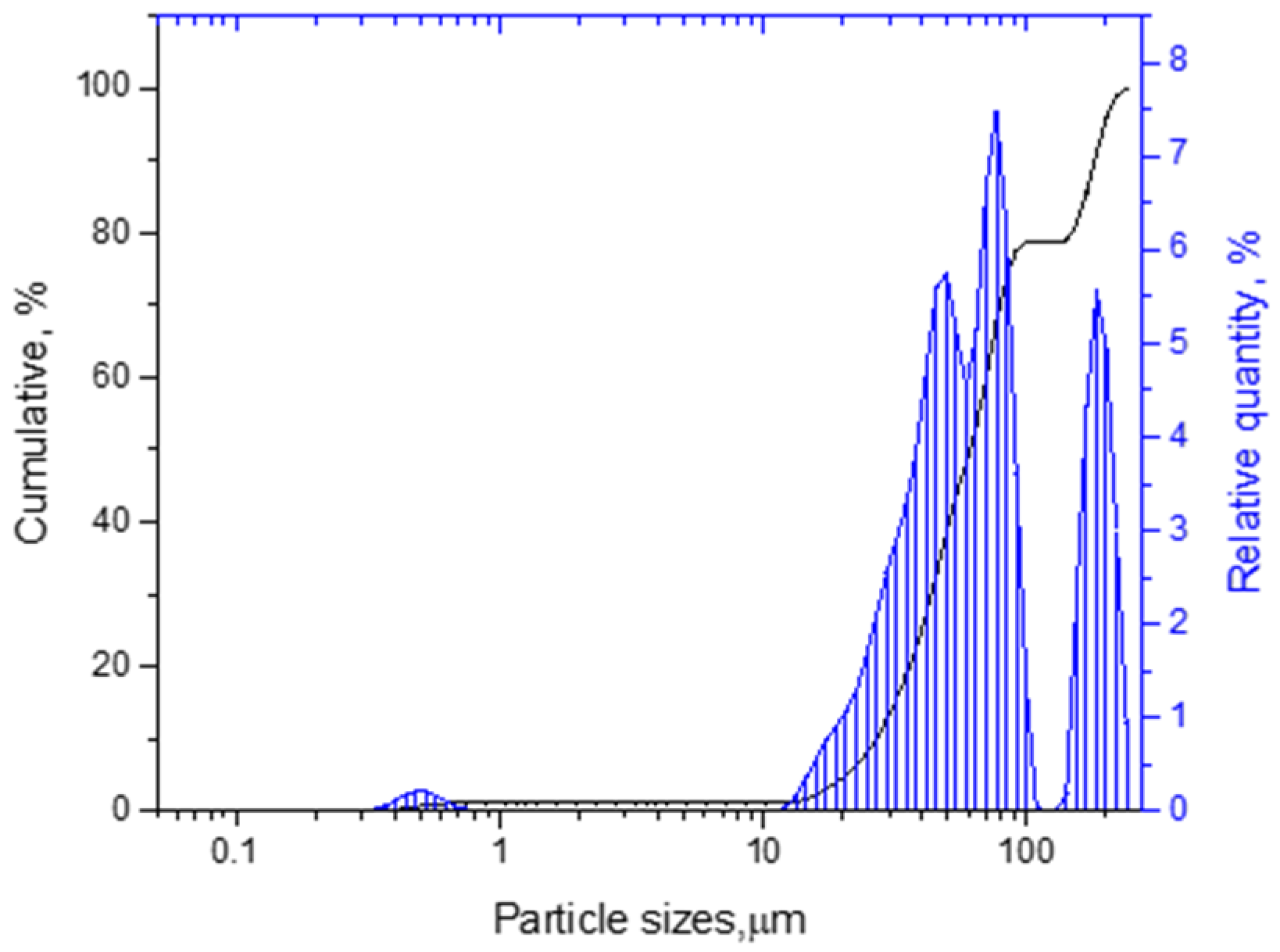
Figure 2b) are flattened with a multilayer structure, and its shape is irregular. Both large particles (larger than 100 µm) resulting from cold-welding and small particles (smaller than 20 µm) resulting from fragmentation processes characteristic of the mechanical alloying process are identified. The particle sizes distribution of Invar 16 h mechanical alloyed powder is shown in
Figure 3. It can be noticed that the Invar powders present a wide (0.3–250 µm) multimodal distribution. Three modes of powder distribution can be observed. A very fine powder with less than 2% and with a particle size less than 1 µm was obtained. The second one, which represents the major particles, ranged from 10 to 100 µm, which represents about 76%, and the third represents about 22%. Itis worth mentioning that the second type of particles that are the major part have two main maxima at 45 and 80 µm. The third one has particle sizes ranging from 100 to 250 µm. The D50 value of Invar mechanically alloyed powder is 60.7 µm. Following the mechanical alloying process, Invar powder exhibits a wide particle size distribution range between 26.8 µm (D10) and 180.6 µm (D90). These results are in agreement with SEM analyses.
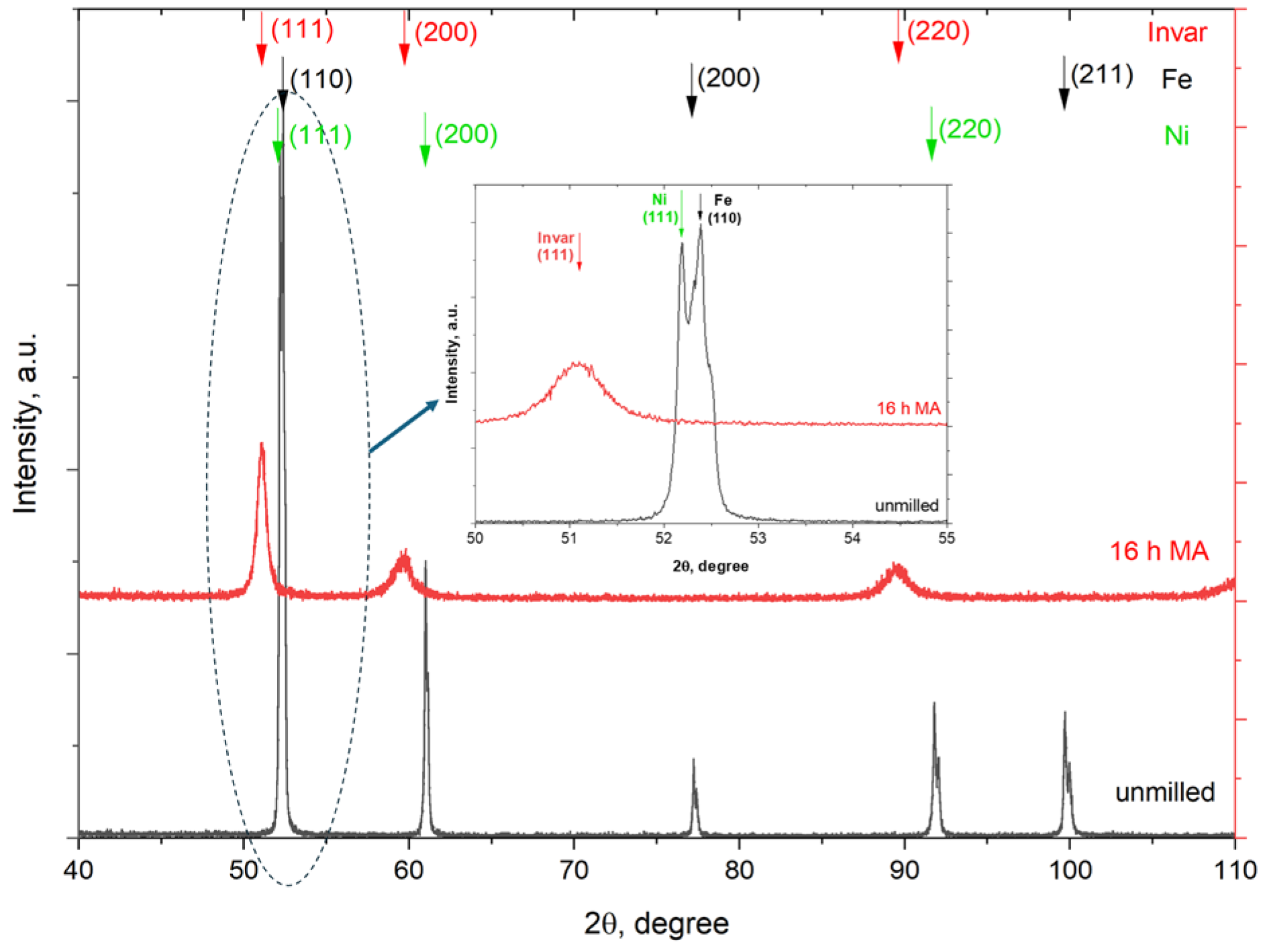
Figure 4 shows the X-ray diffraction pattern of Fe-36 at.% Ni unmilled powder mixture and Invar 16 h mechanically alloyed powder. Only Invar characteristic peaks were identified, which shows that after 16 h of milling the mixture of elemental Fe and Ni powders, an Invar alloy powder with a FCC structure (γ-phase) was obtained (JCPDS file 47-1405 [
18]). Also, in
Figure 4, a detail is presented showing the most intense peaks of Fe (110) and Ni (111) from the initial powder mixture and of Invar after 16 h of milling. The disappearance of the peaks corresponding to Fe and Ni after 16 h of milling is highlighted, as well as the presence of only the Invar (111) characteristic peak. The average crystallite size of Invar milled powder is 14.5 nm and was computed using the Williamson–Hall method [
19]. The nanocrystalline structure and the presence of defects typically induced by the mechanical allying process enhance the sintering process. Cylindrical samples were made from Invar powders by uniaxial pressing.
In
Table 1, the densities and relative density of Invar compacts are shown, sintered (ss) and double-sintered (ds) at 1120 °C. To measure the densities of the sintered samples, the Archimedes method was used. The samples were weighed first in air and then in liquid; the difference between the two weights was multiplied by the liquid density. The relative density was determined by the ratio between the sample density and the theoretical density of Invar (ρ
Invar = 8.11 g/cm
3 [
20]).
The relative densities of the sintered samples obtained from Invar powder are relatively low (74% for Invar-ss and 78.6% for Invar-ds samples). These low values can be attributed to the fact that, because of the mechanical alloying process, the obtained Invar powder was work-hardened. For this reason, compressibility is negatively affected, with consequences on the density values of Invar sintered samples. Invar-ds exhibits a 7.4% higher relative density compared to Invar-ss as a result of re-pressing and the longer (twice as long) sintering time. The longer sintering time promotes densification by enhancing both the growth of sintering necks and their diameter due to diffusion processes [
21].
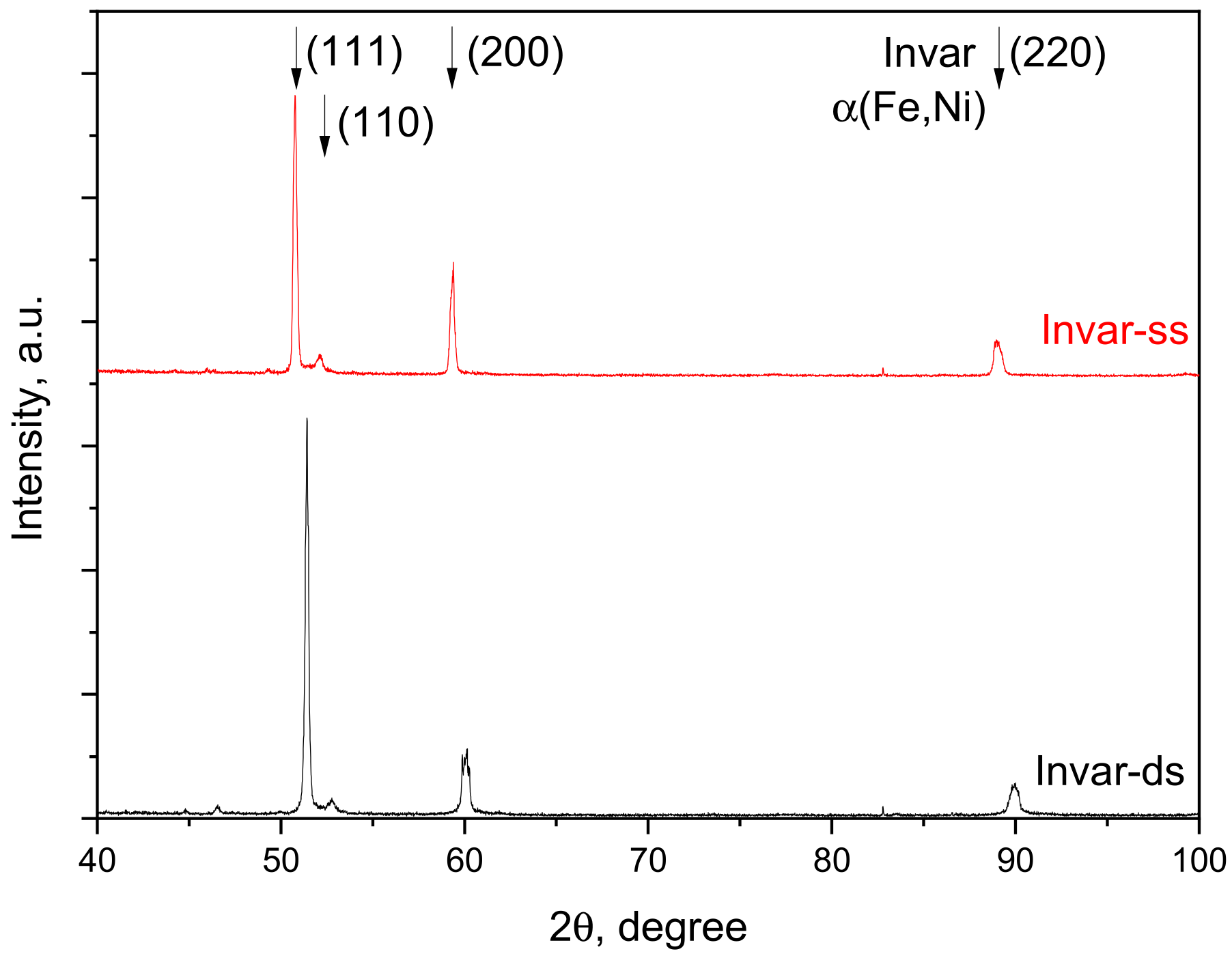
The X-ray diffraction patterns of Invar-ss and Invar-ds are presented in
Figure 5. Compared to the diffraction pattern of mechanically alloyed Invar powder, in the case of sintered compacts, both in the diffraction patterns of the Invar-ss and that of Invar-ds samples, characteristic peaks of a Fe-based solid solution with the BCC crystal network are also identified (JCPDS file 37-0474 [
22]). The volumetric fraction of the Fe base phase with the BCC structure (α-phase) was determined using the following relation, which applies to the Co radiation used by the diffractometer:
where:
Ibcc—integrated intensity of (110) peak and
Ifcc—integrated intensity of (111) peak [
23]. Accordingly, the volume fraction of the α-phase in the Invar-ss sample is 9% and 2% in the Invar-ds sample.
The α-phase appears in the structure of the Invar-ss sample after sintering because the Invar powder obtained by mechanical alloying is in a metastable state, inhomogeneous at the atomic level, and the sintering temperature will favor the formation of the α-phase in the structure. After mechanical alloying, the Invar powder is not homogenous at the nanoscale level, even for the longest milling time [
24]. During the mechanical alloying process, some iron impurification occurs from milling bodies and this impurification, along with the atomic-level inhomogeneity in the mechanically alloyed powder, acts like a crystallization center following sintering. Its quantity decreases after the double-sintering process because the homogenization of the structure occurs, with Ni stabilizing the γ-phase in this case. This is confirmed by the change in the lattice parameter of the γ phase, which increases from 0.353 nm (Invar-ss sample) to 0.356 nm for the Invar-ds sample, which is closer to the lattice parameter of Invar (0.359 nm—JCPDS file no. 47-1405).
The average crystallite size and the lattice strain of the Invar phase from MA powder and sintered samples were determined using the Williamson–Hall formula [
19]:
where:
β—full width at half maximum (FWHM) of the diffraction peak (in radians extracted by Gaussian fitting),
—Bragg angle (
θ = 2
θ/2),
k—shape factor (0.9),
λ is the X-ray wavelength (1.7903 Ǻ),
D—average crystallite size, and
ε—lattice strain.
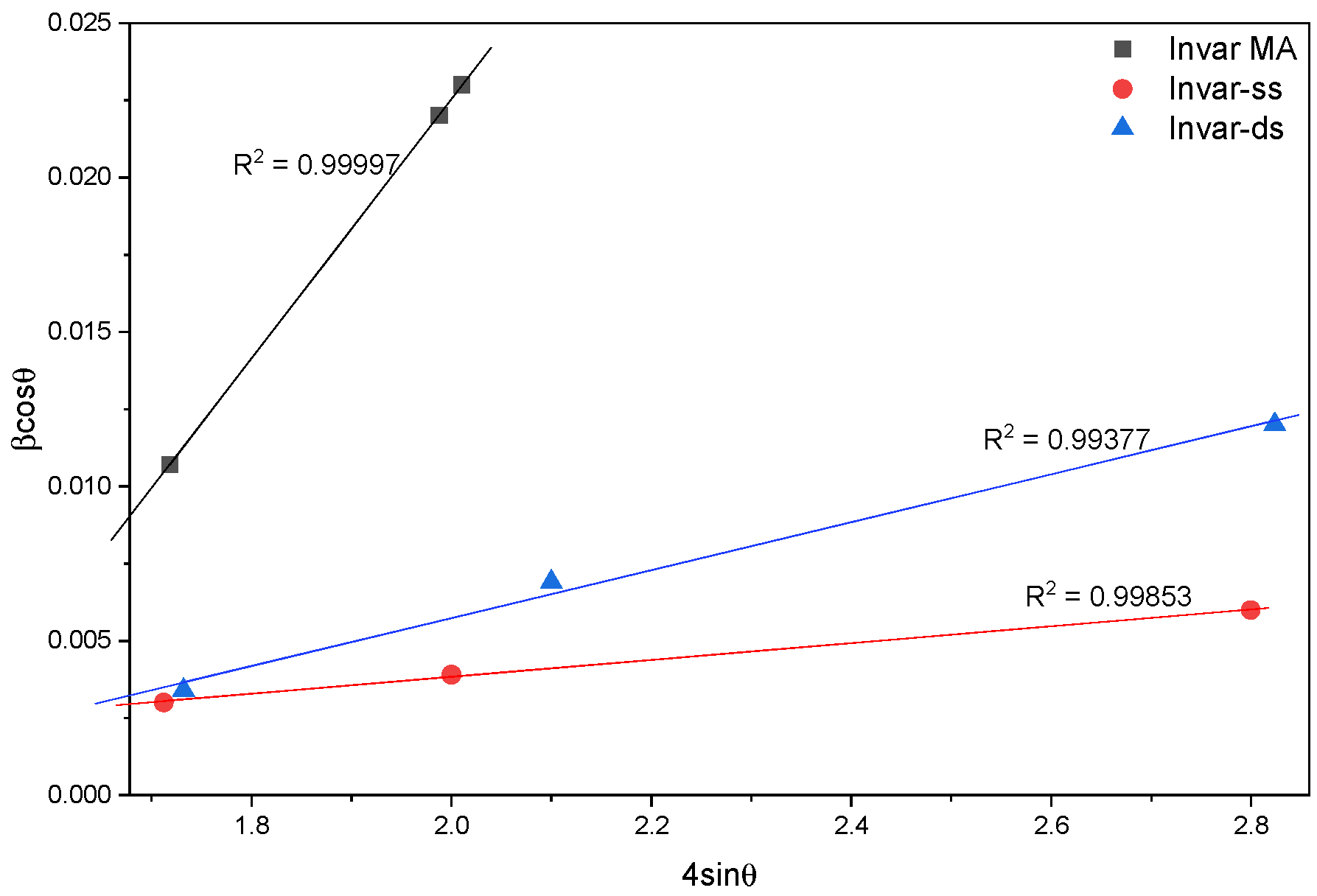
Williamson–Hall plots of Invar 16 h MA, Invar-ss, and Invar-ds samples are shown in
Figure 6. In order to compute the crystallite sizes, we used a value of the Y-axis intercept equal to the product of
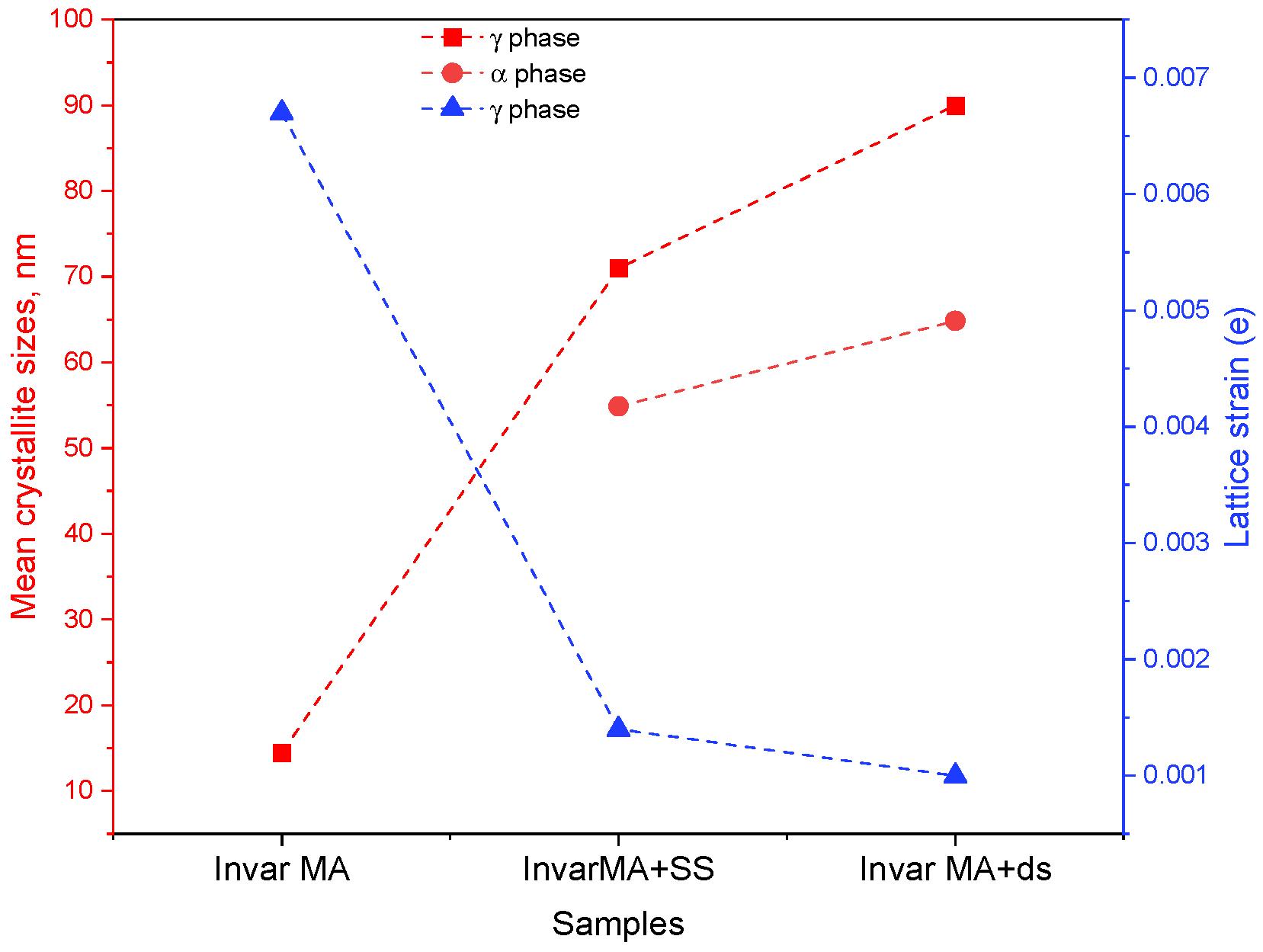
β·cosθ. The lattice stains represent the slope of the line. Thus, the obtained values were used to plot the average grain sizes and lattice strain of Invar mechanically alloyed powders and of Invar sintered and double-sintered samples (
Figure 7). For the α-phase, the Scherrer Formula (3) was used to calculate the average crystallite sizes, since only the most intense peak (110) was identified in the X-ray diffraction pattern from
Figure 5 [
25].
where:
—FWHM of the diffraction peak (in radians),
—Bragg angle (
θ = 2
θ/2),
k—shape factor (0.9),
λ is the X-ray wavelength (1.7903 Ǻ), and
D—average crystallite size.
To compute the crystallite sizes and lattice strains of Invar mechanically alloyed powder, simple-sintered sample (Invar-ss), and double-sintered sample (Invar-ds), the Y-axis intercept and slope values from Williams–Hall plots (
Figure 6) were used and are listed in
Table 2.
After sintering, the crystallite size of the Invar-ss sample reached approximately 70 nm for the γ-phase and about 52 nm for the α-phase. The mean crystallite size of the Invar-ds sample is approximately 90 nm for the γ-phase and 65 nm for the α-phase. The crystallite growth observed in the Invar-ss sample (from 14.5 nm to around 70 nm) compared to the crystallite size of Invar mechanically alloyed powder can be explained by the fact that the mechanically alloyed powder was heavily cold-worked, containing numerous defects induced during the milling process. As a result, recrystallization is activated at a lower energy level. The crystallite growth in the Invar-ds sample (by approximately 20 nm compared to Invar-ss sample) is much smaller because, after the first sintering stage, internal stresses and the cold-worked state are eliminated, and keeping in mind that the recrystallization process is one which implies growth by diffusion, a prolonged sintering time increases the crystallite size. In this case, a much higher energy is implied, and crystallite growth is prominent. Thus, the crystallites of the γ-phase grow by approximately 25% after double sintering. The α-phase has small crystallites (52 nm) because they nucleate during the first sintering stage of the mechanically alloyed Invar powder. Following double sintering, crystallite growth occurs via diffusion but is less pronounced since most internal stresses are relieved during the first sintering step. Consequently, the average crystallite size of α-phase in the Invar-ds sample reaches 65 nm. The crystallites growth following double sintering amounts to 28%, a value very close to the growth of the γ-phase crystallites.
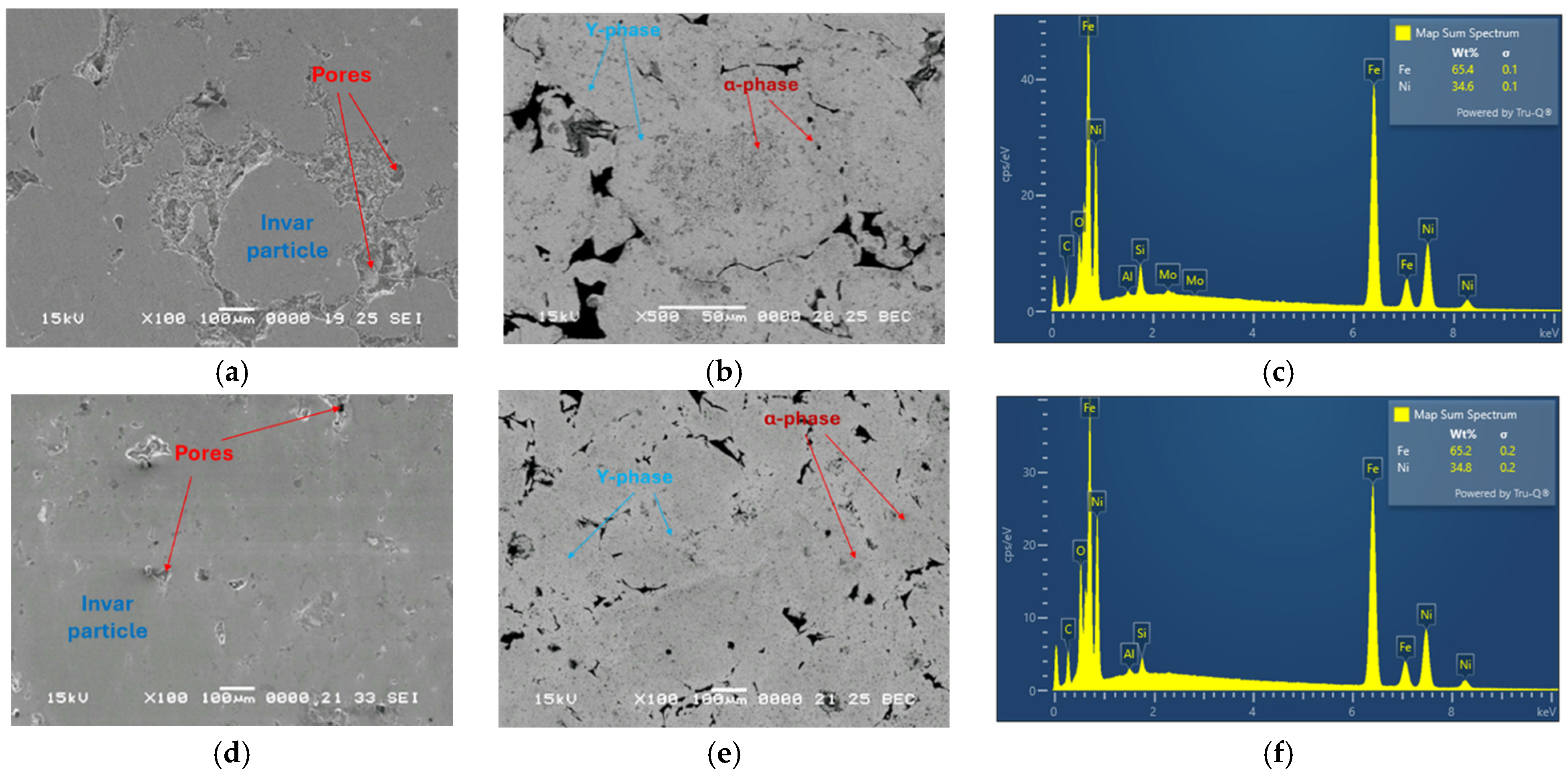
The SEM images obtained by secondary electrons (SEIs) and the back-scattering electrons (BSEs) and the EDX spectra of Invar sintered samples are shown in
Figure 8. It can be observed that the Invar-ss sample shows larger and more numerous pores (
Figure 8a,b) compared to the Invar-ds sample (
Figure 8c,d), which is in agreement with the calculated relative density values (compactness). The pores are distributed towards the edge of the Invar particles. Also, α and γ phases are identified in both the Invar-ss and Invar-ds microstructures. The EDX spectra (
Figure 8c,f) of both samples show that the Fe content is higher than that corresponding to Invar, probably due to Fe contamination during milling. Also, in the EDX spectra, we can identify Al, Si, Mo, and O. The values of these extra elements are below a range of 0.3–0.5%. The presence of Al and Si can be attributed to the preparation process of the metallographic samples (from sandpaper and alumina used for polishing). Also, oxygen may have come from alumina used in the polishing process. Because the die and punches used to obtain the green compacts were lubricated with MoS
2, Mo was also identified in the spectra. The presence of O is attributed to superficial oxides that may have appeared during the sintering process. It can be seen that sintering was carried out under industrial conditions specific to ferrous materials. The atmosphere, sintering temperature, and holding time were chosen so as to reduce any oxides absorbed on the green compacts, and, moreover, to avoid any contamination during sintering.
From the EDX spectra results, it can be seen that the atomic Fe/Ni ratio in the Invar-ss compacts reaches 66/34. At this composition, the Invar alloy is shifted in the two-phase region (Fe-rich) of the Fe–Ni equilibrium phase diagram, which thermodynamically favors the formation of the α phase. This deviation affects the CTE, as it is well known that any deviation from the Fe64Ni36 (at. %) composition significantly changes its value.
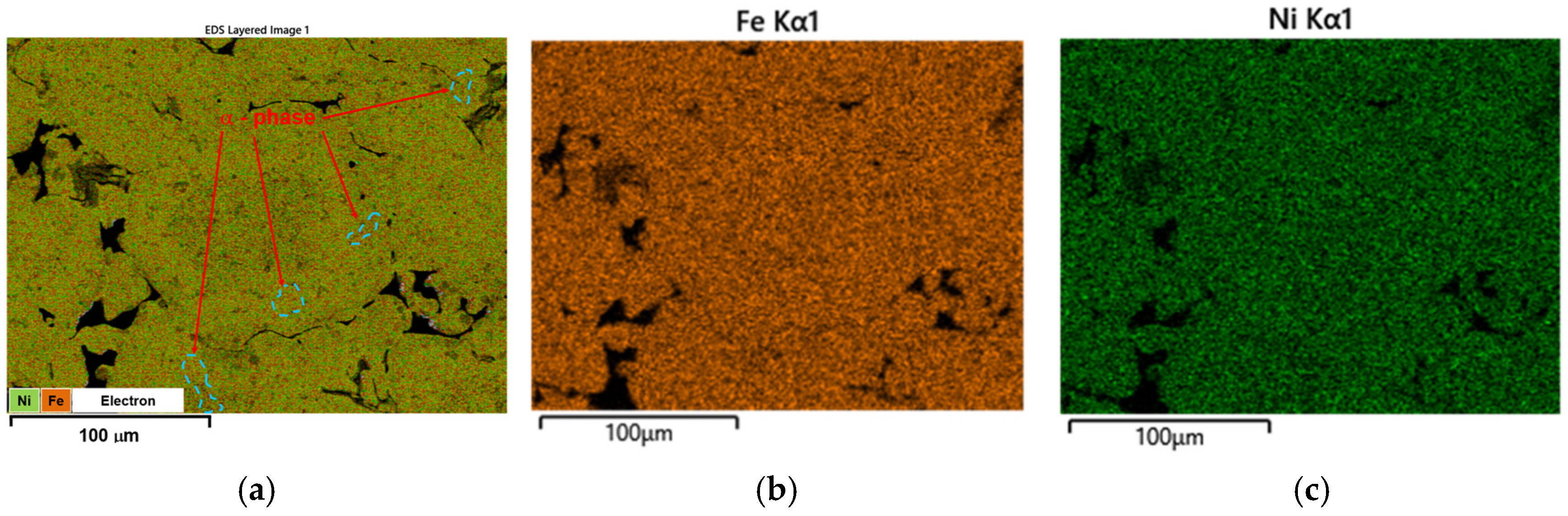
The distribution maps of the elements in the Invar-ss sample are illustrated in
Figure 9 by overlapping the results on SEM images. Despite the relative homogeneity shown by the Fe (
Figure 9b) and Ni (
Figure 9c) distribution maps, Fe-rich zones identified as the α-phase can be observed in
Figure 9a.
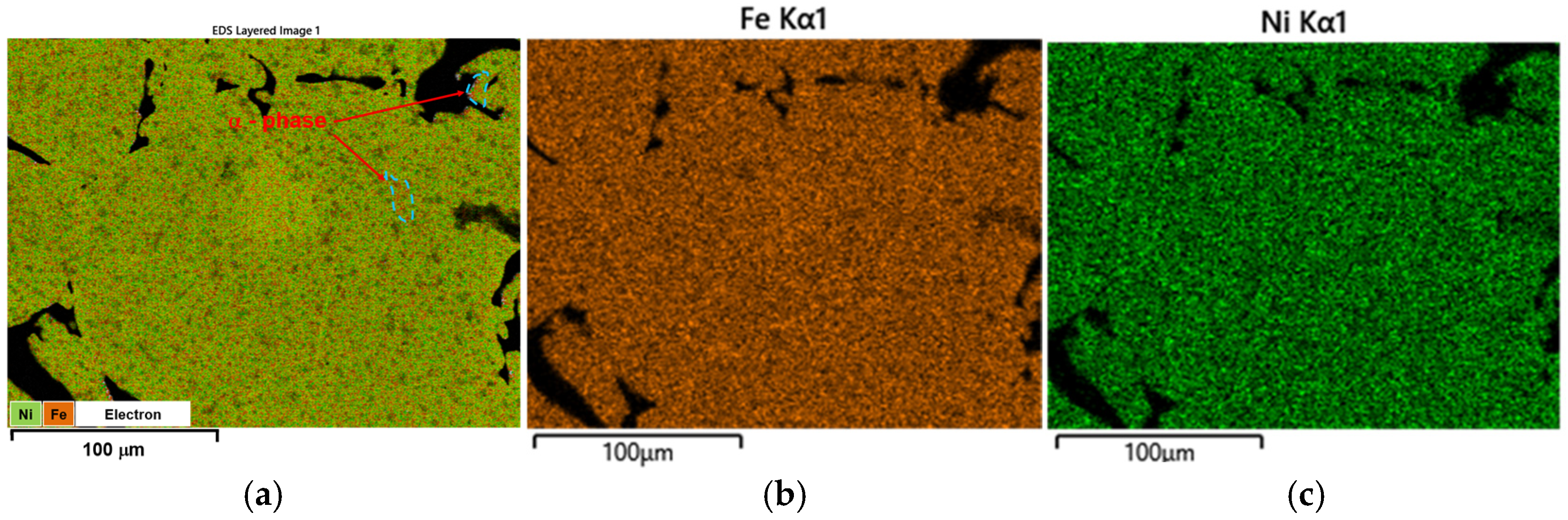
Figure 10 shows the SEM and EDX analyses of the Invar-ds sample. Similar to the EDX analysis of the Invar-ss sample, the distribution maps of the Invar-ds sample also show a relatively homogeneous distribution of Fe and Ni (
Figure 10b,c), but small Fe-rich areas (clusters) can be observed, indicating the presence of the α-phase.
The α-phase can be observed along the edges of the former Invar particles and around the pores (
Figure 10a). This confirms our supposition that the α-phase is formed by pre-existent α clusters, most probably caused by contamination.
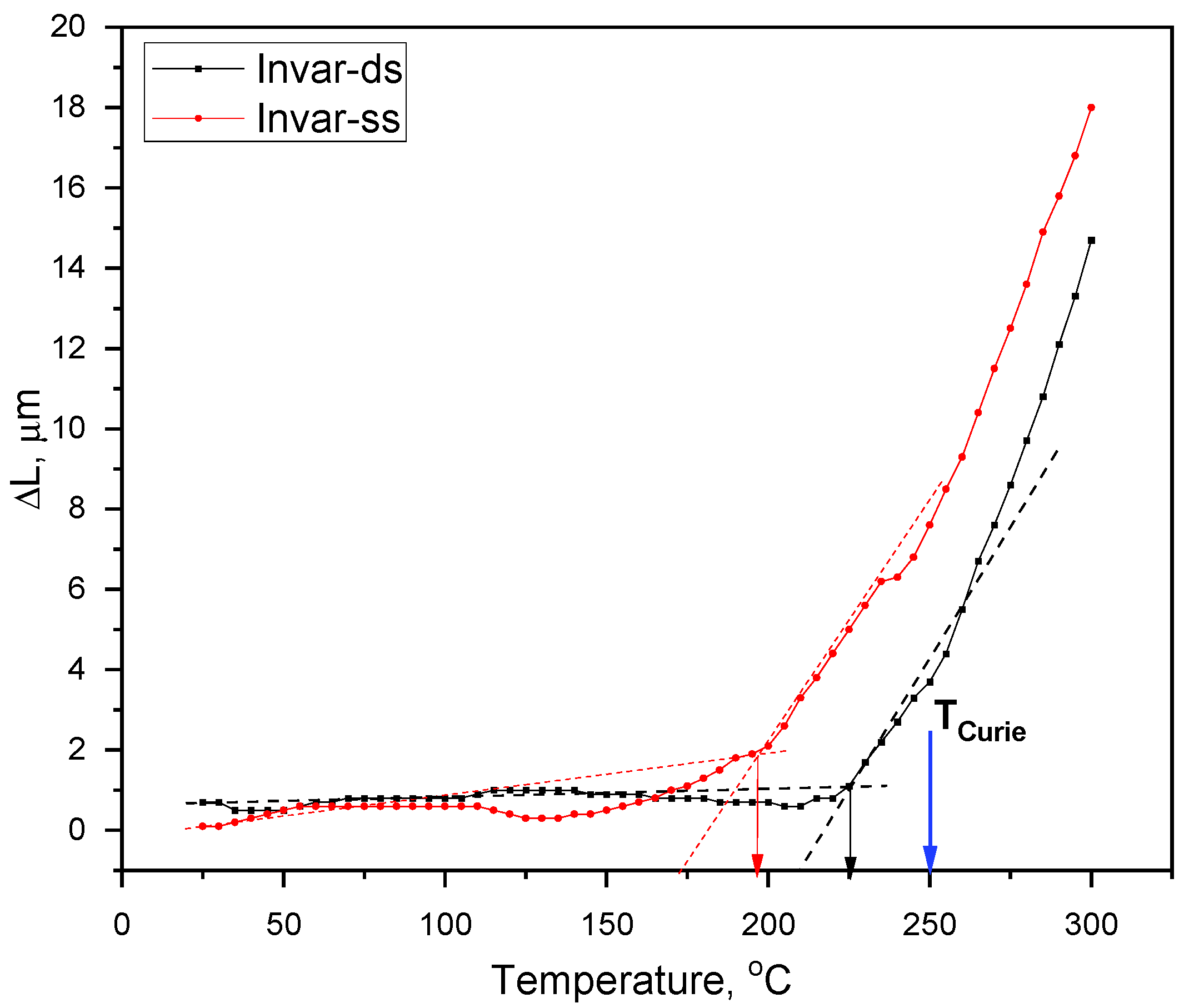
Both the sintered samples, Invar-ss and Invar-ds, were heated up to 300 °C to determine the coefficient of thermal expansion (CTE).
Figure 11 shows the Δ
L versus temperature evolution.
The expansion curve of the Invar-ss sample exhibits two distinct regions. The inflection point, which represents the intersection of the linear fits of the two distinct regions, is marked with a red arrow.
In the first region, up to 195 °C, a negligible variation of Δ
L with increasing in temperature was observed, indicating that the sample slightly expanded. In the temperature range between 195 °C and 300 °C, Δ
L increases proportionally with the increasing temperature. The expansion curve corresponding to the Invar-ds sample also exhibits the same two distinct regions. Also, the inflexion point of the linearly fitted zones is marked with a black arrow. Compared to Invar-ss, the range corresponding to the expansion curve in which Δ
L is almost invariant with the temperature increase is larger, up to 225 °C, which indicates better dimensional stability of the double-sintered sample. Each of the two regions on the expansion curves corresponds to a distinct coefficient of thermal expansion (CTE). The CTE values were computed with the following:
where
l0—initial length of the sample, Δ
L—sample extension, and Δ
T—temperature range.
In
Table 3, the values of the CTE correspond to each zone from the expansion curves of the Invar-ss and Invar-ds samples.
The CTE value of the Invar-ss samples is 0.6 × 10
−6 °C
−1 up to 195 °C, close to values corresponding to Invar obtained by melting and casting [
26,
27], spark plasma sintering [
28], or sintering of elemental Fe and Ni powders at a temperature of 1350 °C [
8]. In the temperature range of 195–300 °C, the CTE increases over 20 times reaching 11.5 × 10
−6, °C
−1, a value characteristic of ordinary steels [
29]. Additionally, the increase in the coefficient of thermal expansion is strongly influenced by the presence of the alpha phase in the structure (the Fe-rich solid solution with a bcc lattice), which has a CTE of around 12 × 10
−6, °C
−1 [
30].
A low CTE value (0.5 × 10⁻⁶, °C−1), characteristic of Invar, was also identified for the Invar-ds sample. The primary distinction from the Invar-ss sample lies in the considerably broader temperature range (25–225 °C) over which this low CTE value is sustained. This behavior is attributed to the significantly reduced fraction of the α-phase present within the microstructure. Between 225 and 300 °C, the CTE values are close and show a similar trend to those of the Invar-ss sample.
The microhardness of the Invar-ss and Invar-ds samples was investigated by Vickers method. In order to determine the microhardness values, two areas were selected in each sample: one where the γ-phase formed the majority, and the other at the edge of the former Invar particles (where the α-phase predominates).
Table 4 shows the HV0.05 values of both samples: Invar-ss and Invar-ds.
It can be observed that the HV0.05 values of the Invar-ss sample are lower than the values of the Invar-ds sample in both analyzed areas. Also, at the edge of the former Invar particles (α-phase), the HV0.05 values are higher than in the center of the particle (γ-phase). The higher values of the Invar-ds sample can be explained by its higher compactness. Also, the higher hardness of the area where the α-phase predominates can be attributed to its BCC crystal lattice.




 ,
,